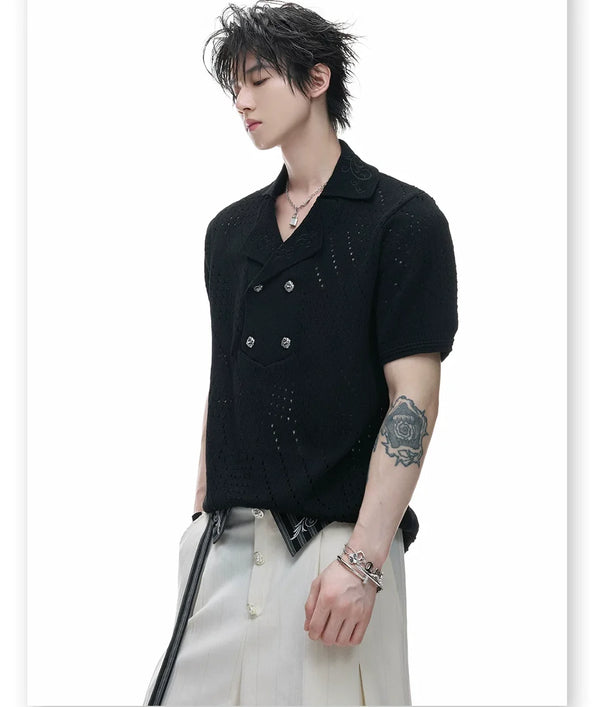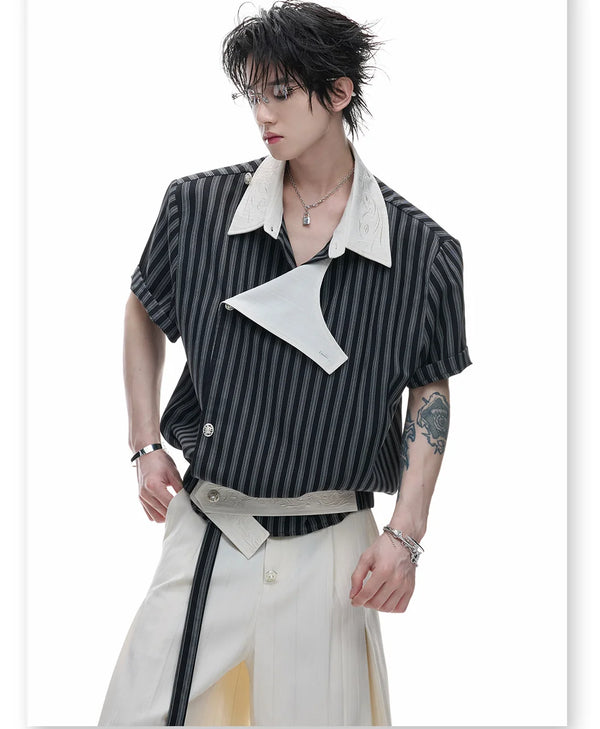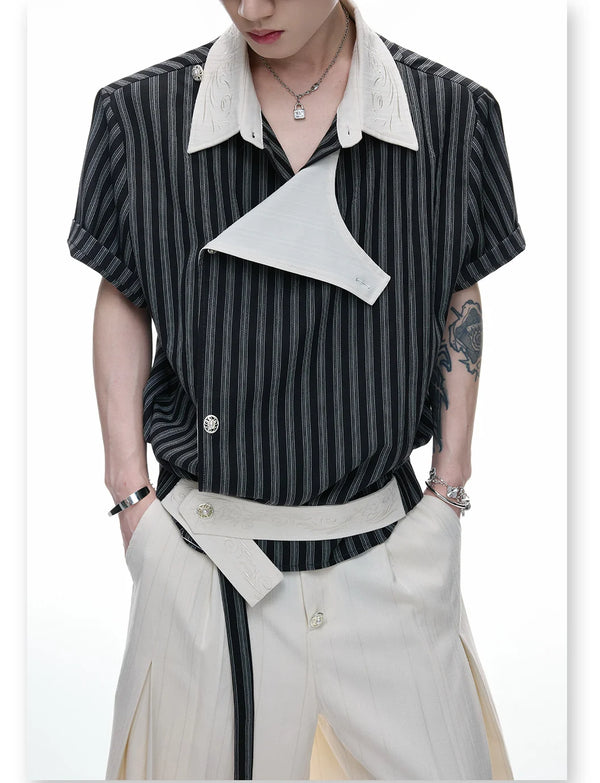
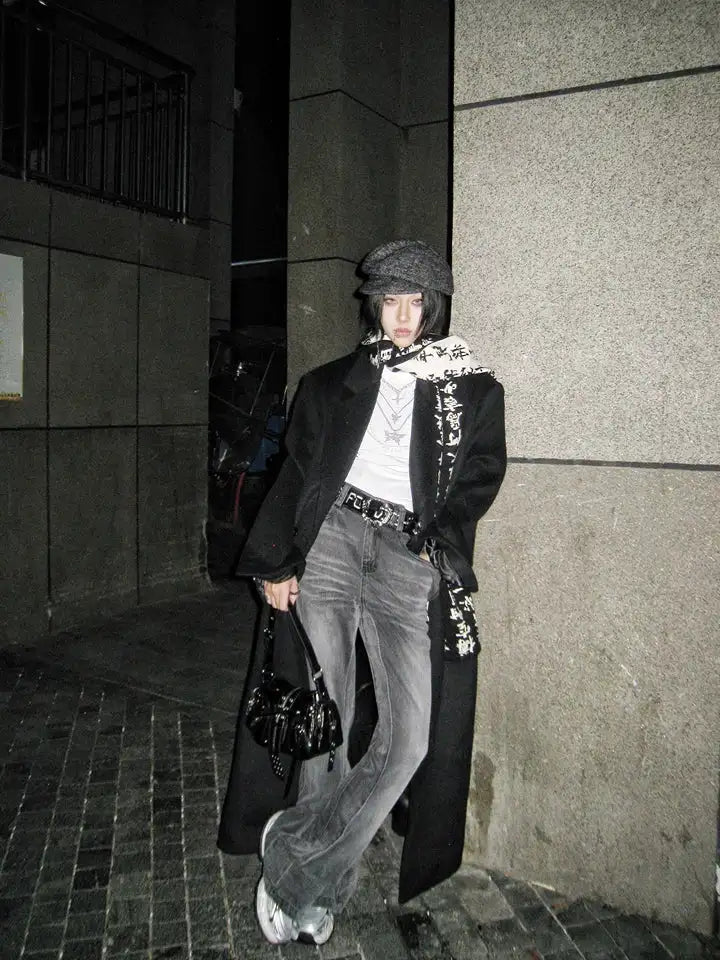

You have been saving Poetcore images on Pinterest for weeks. Cream blouses with volume sleeves. Wool blazers in dark brown. Mary Janes on wooden parquet. In the mirror it ends up looking like a graduation photo nobody wanted. The pieces are not the problem. The problem is that “Poetcore outfits women” on Google throws back five different looks — and four of them are Coquette, Dark Academia or Old-Money preppy with a Pinterest filter.
Since Pinterest Predicts 2026, Poetcore has been the literary-romantic fashion code that magazines sell as the “comeback of intellectual elegance.” In practice it is a three-element system: one clean basic, one romantic piece, one deliberate downward length line. When all three land, the look reads as Poetcore. Miss one and it tips into one of the four neighbouring aesthetics.
This guide separates Poetcore from its sister codes, translates the Pinterest image into real outfit formulas, and shows the silhouette rules that tip your look from “costumed” to “refined.” Plus the most common mistakes we see again and again on Pinterest and TikTok — and the Pieces that put two wearable formulas in your wardrobe within a week.
How the look moves in 12 seconds between meeting and café:
What & Where
What is Poetcore fashion — and where does the look come from?
Poetcore is the literary-romantic fashion movement declared one of the three big Pinterest Predicts trends for 2026 at the end of 2025. Pinterest had registered a 240-percent rise in searches for “vintage blazer” and “oversized turtleneck.” From that the platform built the name: Poetcore — the wardrobe of someone who reads poems instead of posting them.
Visually the look quotes the early 20th century. The Brontë sisters, Sylvia Plath, Virginia Woolf. Add three more modern references: Rory Gilmore (accessible), Jo March in Greta Gerwig’s adaptation of Little Women (rebellious), Marguerite Duras (purist). What the four share is not the pieces — it is the attitude. Clothing as an extension of thinking, not as performance.
Materially, Poetcore comes down to four fabric families: wool (blazer, coat, knit), linen (blouse, summer suit), satin-back crepe (midi skirt), and heavy cotton poplin (trousers, shirt). Shine is out. Synthetics are out. What you wear should drape, not sit shrink-wrapped. That is the first visible break from Coquette, which does exactly the opposite.
Definition
The key pieces — what a Poetcore wardrobe really needs
Forget the generic Pinterest lists with twenty pieces. A working Poetcore wardrobe for women comes down to seven categories. Each with a clear function. If one category is missing, exactly one lever is missing in the outfit system — and you notice it at the mirror right away.
7
Core pieces cover every formula
2
Textures at most per outfit
3–5 cm
Heel height Mary Jane / loafer
1
voluminous element per look
These four numbers are the test. Break one — three textures instead of two, stiletto instead of loafer, two voluminous elements — and the look tips. The pieces are not the problem. The discipline in the combination is.
The seven categories you really need:
- Poet blouse — volume at the sleeve (balloon, bishop or juliet), a calm collar, in cream, ecru or dusty rose. The one piece that instantly identifies your look as Poetcore.
- Midi skirt — A-line or slightly flared, length between knee and ankle, in wool, satin-back crepe or heavy viscose. Colours: burgundy, taupe, charcoal, forest green.
- Wide-leg trousers — high waist, wide leg from the hip, crease optional. Replaces the midi skirt 1:1 with a more masculine undertone that grounds the look.
- Structured blazer — slightly oversized, shoulder just two to three centimetres above your natural line, single-breasted, in dark brown, charcoal or camel. Your frame.
- Wool coat — knee- to calf-length, single-breasted or as a wrap. No hood, no sporty details. The outermost layer from October to March.
- Mary Janes or loafers — both in leather, both with a heel between three and five centimetres. Choose one direction per season and stick with it. Stilettos are out, sneakers all the more so.
- Structured bag — satchel, box bag or small tote that holds its shape even when empty. In cognac, dark brown or black. Slouch bags read as boho, not as Poetcore.
What does not belong shows most easily in three pieces: cropped tops, shiny polyester, anything in pastel. They throw the look into Coquette or Y2K — and both have their own code that you do not play with when you want Poetcore.
5 formulas
The 5 Poetcore outfit formulas for women
Five formulas cover office, weekend, gallery opening, date night and summer. Each consists of three of the seven core pieces plus exactly one accessory. None needs extra shopping — you build them from what you have or add on purpose.
Which of the five suits you depends less on taste than on the day. One formula per occasion in the wardrobe is enough to avoid deciding anew every morning. Anyone trying to build all five at once buys half of it again for nothing.
Category · Blazer
The vintage blazer look — the top discipline
Type “Poetcore” into Pinterest and one in three of the first images shows a blazer. It is the main visual signal of the code. And it is the point where most women’s looks fail — not because the blazer is wrong, but because its fit on the body is off. A Poetcore blazer falls two to three centimetres over the natural shoulder line, sits smooth at the back, and its sleeve length ends exactly at the wrist bone. More turns the blazer into a bathrobe; less turns it into a suit jacket.
Three blazer cuts work in Poetcore: the single-breasted wool blazer in dark brown or charcoal (classic), the pinstripe vintage blazer with a slightly boxy shoulder (90s iteration, back in the run on TikTok right now), and the cropped blazer over high-waist trousers (for women with a short upper body). Double-breasted belongs to Old Money, not Poetcore.
If you make only one investment, it is the wool blazer in dark brown or charcoal. It works in four of the five outfit formulas and survives every season. Vintage versions from the resale market beat any new blazer in the same price bracket — the wool is denser, the construction cleaner.
Category · Knit
Knit, cardigan, oversized turtleneck — the layer that makes the look
If Pinterest 2026 declares a single piece the women’s sweater trend, it is the oversized turtleneck in cream or oatmeal. It is the second big Poetcore code, right after the blazer. And the same cut works for six different occasions — from Sunday brunch to gallery opening evening. All that varies is what sits above and below it.
The three knit types that really carry in Poetcore women: first the oversized turtleneck (the obvious main piece, in cream, oatmeal, forest, burgundy). Second the wool-blend button cardigan (the in-between layer, open at the front over a blouse or buttoned up as a sweater replacement). Third the ribbed-knit sweater in a figure-hugging fit (the contrast signal — tight on top, wide below as wide-leg trousers).
Rule of thumb for the knit choice: the smoother the trousers below, the more structured the knit above may be. A wide-leg pinstripe trouser takes a cable-knit cardigan. A leather flare trouser takes only a plain ribbed sweater. When the textures collide, the look tips into vintage costume.
Category · Bottoms
Wide-leg, pinstripe, midi skirt — the bottom logic
Skinny jeans are as dead in Poetcore as stiletto boots. What has taken their place is volume — but controlled volume. The high-waist wide-leg trouser, the pinstripe wool trouser with a crease, the A-line midi skirt in heavy fabric. All three share that they fall from the hip instead of clinging to the leg. That is the second big silhouette decision — and it happens at the bottom.
Working Poetcore bottoms have three properties: first a high waist (for the optical lengthening of the leg line and the clear waist point). Second a falling cut from the hip (wide-leg, A-line, trumpet — never skinny, never slim). Third a heavy fabric (wool, twill, satin-back crepe — polyester stretch is out immediately). Pinstripes are allowed and, right now on TikTok, a clear Poetcore signal; check only in subtle tones.
If you want to buy a single trouser that suits three of the five formulas, take the pinstripe wide-leg in charcoal or dark brown. It carries blazer, turtleneck and poet blouse equally well — and gives every outfit the vertical line Poetcore needs.
Colours & fabrics
Colours & fabrics — what looks refined, what looks dated
The question “which clothing looks refined” with Poetcore women almost always lands on the fabric, not the colour. Wool looks refined. Linen looks refined. Heavy viscose looks refined. Polyester stretch looks cheap, no matter how expensive the piece was. In the Poetcore vocabulary, “refined” is the direct function of weight and drape — if the fabric falls cleanly, the look reads as refined. If it creases, shines or clings statically, it tips into dated at once.
The colour palette of Poetcore women 2026 comes down to eight tones, sorted by frequency on Pinterest: cream, oatmeal, dark brown, charcoal, burgundy, forest green, midnight navy, black. Within this palette you may mix almost freely — as long as every look has a dark anchor. A completely cream outfit reads as insecure; a completely black outfit reads as Office Siren, not as Poetcore.
What reliably tips the look into dated is three fabric sins: shiny polyester (main cause of the “graduation photo” effect), synthetic stretch pieces that are too tight (destroys the falling cut at once), and pastel colours outside the Poetcore palette (baby blue and light pink tip into Coquette). What keeps the look refined is the consistency: same material family, same colour temperature, clean drape.
Accessories
Accessories — brooch, book, fountain pen
At the end of 2025 Pinterest declared two accessories Poetcore signatures: the brooch and the fountain pen. Neither is jewellery in the classic sense — they are visible commitments to an attitude. A gold brooch on the blazer lapel reads as Poetcore, three gold chains at the neck as Vamp Romantic. A fountain pen from the coat’s inner pocket reads as Poetcore, an Apple Pencil as tech bro. The symbolism makes up 80 percent of the effect here.
The five Poetcore accessories that really work:
- Brooch — one, on the lapel or collar. Vintage gold tone, small to medium motif (letter, animal, geometric shape). No rhinestone brooch — that tips into Glamoratti.
- Narrow belt — leather, in cognac or dark brown, two to three centimetres wide. Over the blazer or with the wide-leg trousers. Not over the wool coat — that becomes a bathrobe belt.
- Structured bag — satchel or box bag, medium-sized, always shape-stable. One per season is enough.
- Wool or silk scarf — in a colour from the Poetcore palette, loose around the neck or as a hair band. In summer the replacement for the missing knit texture.
- Book or notebook — visible in the hand or in the bag. Sounds silly, is not: Pinterest images with a visible book perform three to four times better than without. The object extends the attitude the look claims.
Anyone wearing at most two of these five at once sits in Poetcore. Anyone taking three or more — brooch plus belt plus scarf plus hair band plus gold ring — lands in Costumed. Poetcore shares this discipline with Old Money and Quiet Luxury; for both the same rule of thumb applies: fewer accents, each with a function.
Styling logic
How to actually style Poetcore — the three silhouette rules
You can own all seven core pieces and still look wrong at the mirror — if the silhouette tips. Female Poetcore looks follow three principles that together create the falling, vertical, slightly earthy line you keep seeing on Pinterest without being able to name it.
Rule one: the waist point always exists. Even under oversized layers. A half-tucked top, a narrow belt over the blazer, a wrap detail on the coat — somewhere in the outfit the waist has to be visible or suggested. Without a waist point, Poetcore becomes “I am just wearing big clothes.”
Rule two: exactly one voluminous element. Either the top is wide (poet blouse, oversized sweater) or the bottom is wide (wide-leg trousers, A-line skirt) — never both at once. Both wide equals shapeless. Both tight equals too strict. The tension between tight and wide is what makes the look interesting.
Rule three: the hem line goes downward. Mini is out. The hem ends between mid-knee and ankle. That lengthens, gives gravitas, prevents the school-uniform effect that arises when Mary Janes meet a short skirt. For the detailed application of these three rules to concrete Pieces:
But Poetcore does not stand alone — the look overlaps at several edges with other literary-feminine aesthetics. Dark Academia shares the academic depth, Office Siren shares the structured blazer, Vamp Romantic shares the material weight. Anyone who has Poetcore down can read these neighbouring codes and mix them on purpose without slipping into cosplay.
The four most important neighbours — each with its own guide, in case you want to go deeper:
Seasonal
Poetcore in spring vs. winter
In winter Poetcore is easy. Wool coat, pinstripe trousers, oversized turtleneck, loafers. Six layers if needed, all from the Poetcore palette, all working. The challenge comes in spring and summer, when coat and knit fall away — and with them the largest visual surface that has carried the look so far.
Spring 2026 comes down for Poetcore women to a simple material swap: wool out, linen in. Heavy knit out, cotton poplin in. The unstructured linen blazer in sand or oatmeal becomes the summer main piece — open over a camisole, sleeves pushed up to three-quarters. The silhouettes stay: wide-leg, midi, Mary Janes. Only the weight goes out.
In autumn the movement runs backwards: linen out, wool in. Camisole out, turtleneck in. The wool coat joins in October, the heavy knit in November. Once you have the five outfit formulas down, you build the seasonal versions of them with three to four swapped pieces — the rest of the code stays stable.
What does not work
The 6 most common Poetcore mistakes — what makes the look tip
Poetcore has six spots where it reliably tips with women’s outfits — no matter how expensive the individual pieces were. If you avoid only one of them, make it mistake number one.
Action
How to start in Poetcore — the first 4 pieces
You do not need twenty pieces to wear Poetcore. You need four that will be in 80 percent of the outfits. Everything else builds around them.
In order: a wool blazer in dark brown or charcoal — slightly oversized, single-breasted (your biggest investment, lasts ten years if you do not buy cheap). A pinstripe wide-leg trouser with a high waist. An oversized turtleneck in cream or oatmeal. Mary Janes or loafers in cognac or dark brown, heel height three to five centimetres. A gold brooch as the optional fifth piece — but only once the first four land.
Outfits for real
Poetcore for real — how this looks on Pinterest and the street
Before you build your own outfit, look at how other women wear Poetcore. The five formulas from above look different in the real feed than in lookbook photos — less perfect, more layer movement, often a single Pinterest detail (the brooch, the book, the scarf in the hair) that tips the whole look.
This is the fastest way to check whether Poetcore sits on your body type at all — before you spend money.
To close
Poetcore is attitude, not costume
If you remember one thing from this guide, make it this: Poetcore does not work via pieces, but via the three silhouette rules. Whoever has the code down builds five clean formulas with seven core pieces. Whoever only buys Pinterest pieces has a full wardrobe without a single outfit that lands.
The whole logic of this guide reduces to one sentence:
The three silhouette rules have been stable since the Pinterest Predicts 2026 wave and will stay that way — trends in the literary-feminine spectrum usually hold three to four seasons before they shift. But you do not have to wait until you know all three rules by heart. Start with the formula most likely to suit your day. What you do not know you learn by wearing it.
And that is the point: Poetcore reads in theory like a corset of rules, but in practice does not feel like one. Once you have the code down, every further formula is a variation of the same seven core pieces — not a new invention.
FAQ
Frequently asked questions about Poetcore outfits women
The questions we often get by DM and email — short, clear, no detour.
What actually is Poet Core fashion?
Which clothing looks refined in Poetcore?
Which clothing looks dated in Poetcore?
What are the most important pieces for a Poetcore blazer look?
What are Polyvore outfits — and do they suit Poetcore?
What does the 3-3-3 rule for clothing say — and does it apply to Poetcore?
Can I wear Poetcore in summer too?
What separates Poetcore women from Coquette?
What do you think?
Tell us on @fuga_studios
About the author
Philipp Fuge — Founder · Berlin
Founder of Fūga Studios. Writes the journal himself. Berlin · Shanghai · Tokyo · Poznań — four cities, one logic.