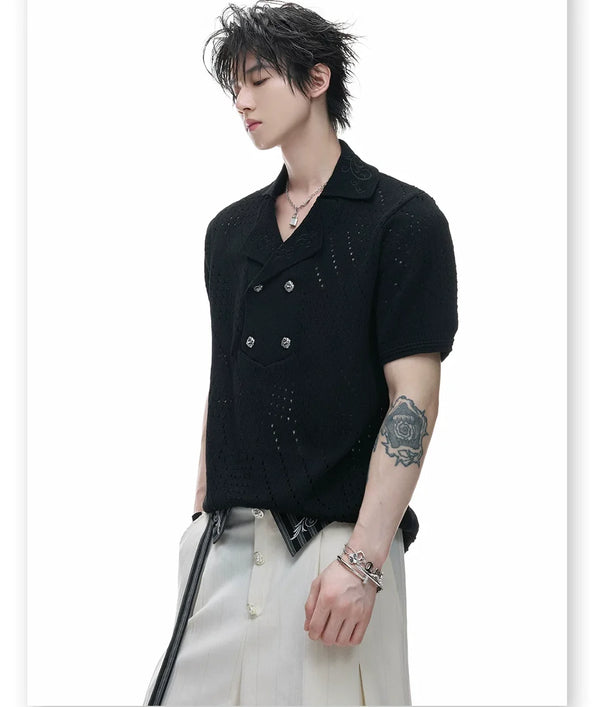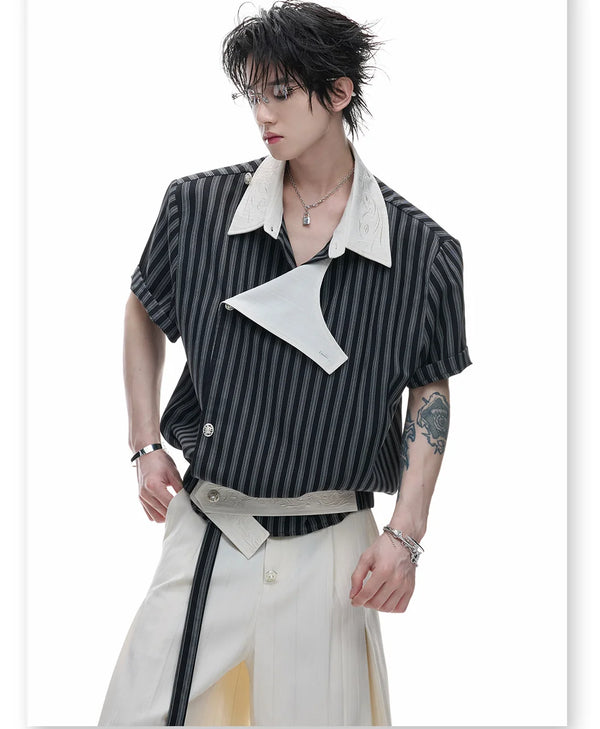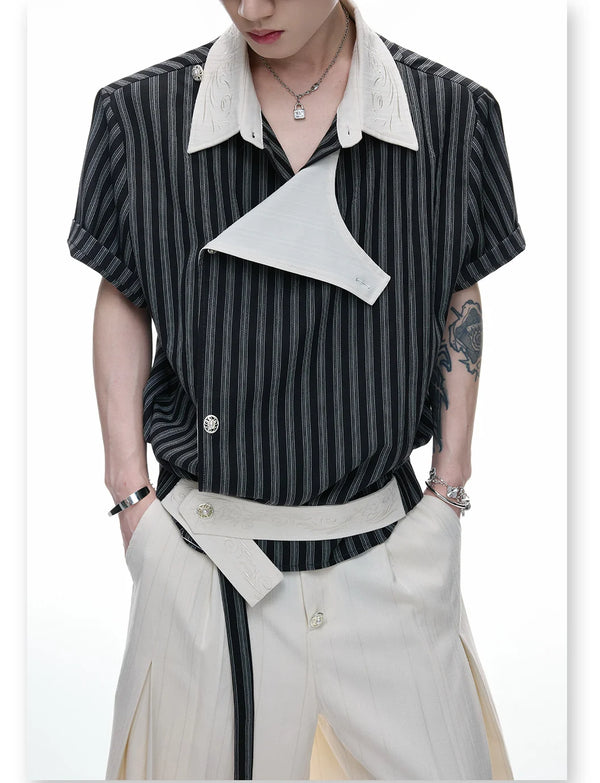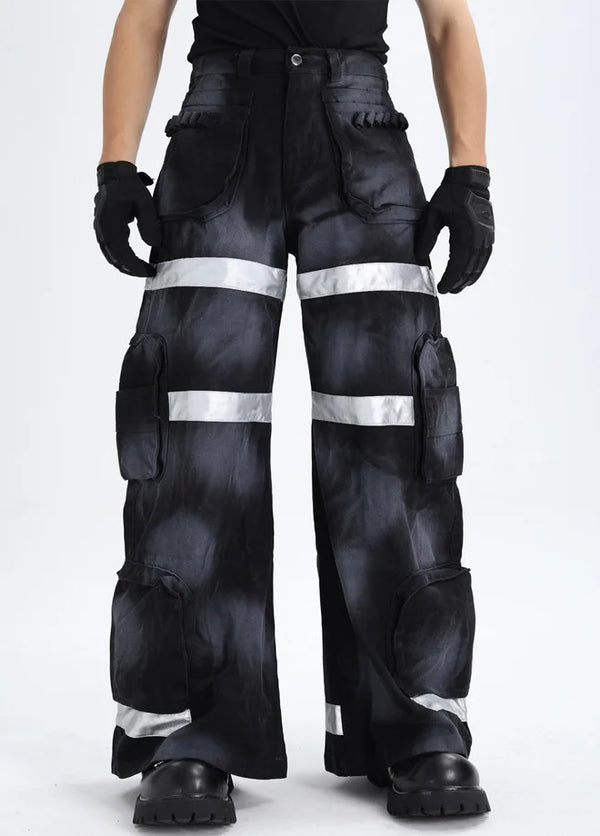
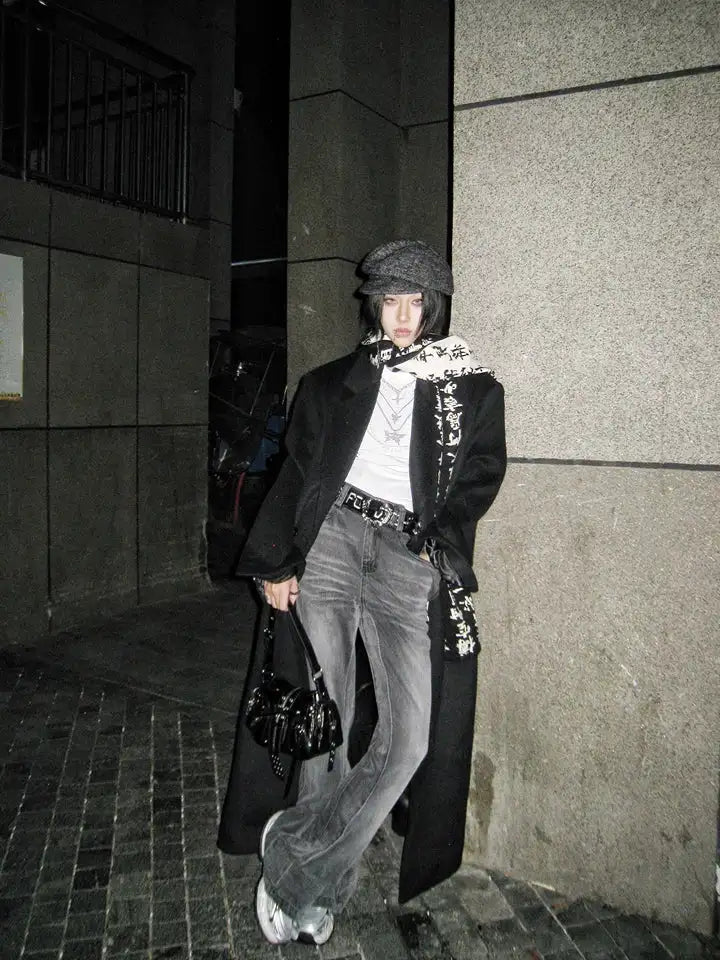

Everyone says Poetcore is “kind of like Dark Academia, just with less black.” They’re wrong. A cream wool sweater over wide trousers guarantees exactly as much Poetcore as a tweed blazer guarantees a doctorate — namely, nothing.
Poetcore landed at the top of Pinterest Predicts in January 2026 — as the look Gen Z and young millennials are pulling into their boards en masse right now. What they save isn’t an outfit, it’s a signal system: five archetypes, an 80-percent earth-tone rule, a clear fabric vocabulary, and a very concrete idea of what Poetcore is not allowed to be.
Anyone selling Poetcore as a “Brontë costume with a notebook” has confused the trend, the lineage, and 2026. This guide sets out what’s really behind it: where it comes from, what belongs to it, how the five types differ, which brands write the vocabulary, how it translates into coats, sweaters and trousers, what you need in your closet — and which six mistakes tip the outfit over.
What this looks like in a real outfit — condensed into twelve seconds:
Origin
Who invented Poetcore — Pinterest Predicts 2026 and the Brontë lineage
Poetcore went viral with Pinterest Predicts in January 2026. Pinterest officially named the term one of the year’s key looks for Gen Z and young millennials. On the platform, searches for “poet outfit”, “poetcore aesthetic” and “literary style” rose by double digits per month between October 2025 and February 2026.
As a visual vocabulary, though, the whole thing has existed far longer. Margaret Howell has been building this line in London since 1970 — brushed wool, falling trousers, soft shirt, no logo. In California in 1968 Joan Didion wore almost word for word what Pinterest labels “Poetcore” in 2026. Sylvia Plath had the Beat-Poet iteration back in the late fifties. Patti Smith demonstrated on the Horses cover in 1975 that Poetcore and androgyny are not opposites.
Pinterest’s contribution, then, isn’t invention but bundling. A certain look — literary, quiet, earth-toned, slightly melancholic — had been scattered across resale stores, Tumblr boards and indie bookshops for decades. In 2026 Pinterest gave it a name, and with it a whole generation the vocabulary to describe it.
Definition
What is Poetcore — and what all counts as part of it?
Poetcore is an outfit system made of four fixed building blocks. When all four are in place, the outfit reads as Poetcore. If one is missing, it tips instantly into something else — Dark Academia, Old Money, Cottagecore, or worse: into costume.
80 %
Earth-tone quota
3
Layers as the target
5
Archetypes
0
visible logos
These four numbers aren’t decoration. They’re the test. An outfit that breaks one quota — 50 percent earth tones instead of 80, a logo on the chest, a single layer instead of three — is no longer Poetcore. It’s “casual with a library filter”. Which, in plain terms, means: sweatshirt with glasses.
Concretely, Poetcore includes:
- Earth-tone palette — parchment, charcoal, oxblood, forest green, fawn, cream, burnt sienna. Black may appear, but never as a whole surface.
- Brushed wool and fine knit — turtleneck, cardigan, V-neck sweater, jumper with a fine knit pattern. Synthetics with no natural content read wrong.
- Wide-cut trousers with drape — wool trousers, corduroy, heavy cotton. Skinny has been out since 2024; Poetcore builds through material and cut, not through a tight line.
- Shirt or blouse with a detail — lace cuff, button placket, soft collar, vintage cut. The detail is small and old — not loud and new.
- Three layers as standard — shirt under sweater under coat. Or blouse under cardigan under trench. One layer fewer and the outfit reads as unfinished.
- Loafers, Mary Janes or Chelsea boots — never sneakers. Shoes have a slim sole, a quiet shape, often smooth leather.
If you’re missing three of these six points, it’s no longer Poetcore — it’s inspiration. And there’s one rule that holds all six together:
5 types
The most iconic Poetcore looks — the 5 types
Poetcore isn’t one look — it’s five that overlap at the edges. Lay the Pinterest boards of 2026, the Margaret Howell lookbooks of the last ten years, and the press photos of Plath, Didion and Smith side by side, and you see these five types cleanly separated. Each with its own colour quota, its own drape density.
Which of the five suits you depends less on taste than on your silhouette, on how much colour variation you want to wear, and on which city it lands in. How this splits between women and men comes next.
Gender split
Poetcore women vs men — where it really runs differently
The rules are the same. Earth tones, three layers, wide and falling, no logos — applies to every body. What differs is the line. Where a woman wears a long knit cardigan open over shirt and skirt, on a man the cardigan often sits fitted and closed, almost like a second shirt. Same pieces, different effect.
Women’s version: more layers visible on the body. Lace cuff, long blouse under knit under trench. Skirts and dresses appear more often — floor-length wool skirt, midi-length knit dress, pleated skirt. Shoes lean towards Mary Janes with a T-strap, sometimes platform loafers.
Men’s version: fitted on top, wide below. Knit jumper closer to the body, trousers with a clear drape. Blazer with a vintage cut instead of slim. Trench or wool coat over everything. Shoes: loafers, Chelsea, sometimes brogues. Jewellery reduced to a watch and maybe a slim ring.
Both need the same 80-percent quota and the same layering discipline. What varies is the distribution — not the vocabulary.
Brands
Poetcore brands — which labels really write Poetcore
There’s no single Poetcore brand. It’s a composition of the quiet designer spectrum and a handful of heritage houses that have been writing the vocabulary for decades. Anyone who understands the vocabulary can put Poetcore looks together entirely without designer prices.
The brands that wrote the Poetcore vocabulary — chronologically:
- Margaret Howell — in London since 1970. The falling wool trousers, the soft brushed-cotton shirt, the quiet earth tone — all of it comes from here. When a Poetcore outfit feels too “grown up”, it’s Howell-adjacent.
- Toast — British heritage label since 1997, Somerset. Brushed wool, garden tweed, lightly roughened textures. The Garden-Poet iteration comes largely from here.
- The Row — the Olsen twins since 2006. Refined minimalism, dense cashmere, clean lines. The Quiet-Scholar iteration quotes The Row almost word for word.
- Toteme — Stockholm since 2014. The Scandinavian knit vocabulary plus a wide trouser line. The Soft-Academic iteration runs through Toteme.
- Studio Nicholson — London since 2010. Wide-leg trousers with a precise pleat, soft knit, quiet layering. A must-have brand for any Beat-Poet look.
- Lemaire — Paris since 2014, Hermès alumni. Drape, earth tones, a light anti-form. When Poetcore dresses grown up, it comes from here.
- COS — H&M subsidiary since 2007. The most accessible translation of the vocabulary — wool trousers under 100 €, cardigans under 80 €.
- Aritzia & Wilfred — Vancouver. The North American Poetcore translation. College-town-ready, good for the Romantic-Writer iteration.
Anyone who wants to wear Poetcore without paying designer prices searches the resale market for these brands, or looks to direct-to-consumer labels that translate this vocabulary competently.
Category · Outerwear
Poetcore coats & blazers — the falling silhouette
The coat carries the Poetcore outfit. It’s the largest surface, the most dominant fabric, the primary bearer of the silhouette. This is where it’s decided whether your three layers become a Poetcore look or a commuter outfit.
Three outerwear types work in Poetcore: the long wool coat or trench (the Garden-Poet iteration), the vintage blazer with a bit of shoulder width and drape (Beat-Poet and Romantic-Writer), and the long knit cardigan worn like a coat (Quiet-Scholar and Soft-Academic). Bomber jackets only come in if they’re matte and carry no visible brand print.
If you don’t own a long wool coat yet, that’s your first move. Everything else in the outfit hangs on it — the layers underneath are secondary, as long as the coat holds the line.
Category · Knits
Poetcore sweaters & knits — the turtleneck move
Pinterest names it as the first concrete search spike: “sweater fashion 2026”. Oversized turtlenecks, wide cardigans, finely knit V-necks. Knit is the middle layer that carries the layering — without it, three layers are cold; with it, three layers are warm and visually dense in the right way.
The rule: knit sits in an earth tone, has material density, and doesn’t pull too tight to the body in cut. Shiny yarns (polyester blends with a shimmer effect) are out. Acrylic sweaters from the discount store are out. Anyone who has once slipped into a wool-blend sweater that doesn’t scratch knows the difference immediately.
Anyone wanting to test the turtleneck look starts with an oversized turtleneck in charcoal or parchment — an open wool blazer over it, a slim wool trouser underneath. That’s the most direct entry into the Beat-Poet, with no risk if it doesn’t work out.
Category · Bottoms
Poetcore trousers, skirts & wide-leg trousers — the drape test
Skinny has been out since 2024. What Howell and Toast and Lemaire have been showing for decades finally reached the mainstream too in 2026: the trouser sits on the hip, falls straight down, and rests lightly over the shoe at the bottom. Wide-leg is no longer an option — it’s the default line.
Functioning Poetcore bottoms are matte, falling, and sit just below the waist. Avoid anything that shines (skinny trousers with stretch content are dead), and anything too short (a cropped pant without drape reads as office, not as Poetcore). If you prefer skirts: a midi-length wool skirt or pleated skirt run all year round.
If you want to build one trouser that suits every one of the five Poetcore types, take a charcoal wool trouser with a wide leg. That’s the common denominator across all iterations.
Styling physics
How to really style Poetcore — the 3-layer rule
A Poetcore outfit works through exactly one detail: how many layers you wear visibly. Three visible layers — it sits. Two — it looks unfinished. Four — it looks overloaded. Pinterest never spelled this rule out, but every Predicts-2026 mood board sticks to it.
Change just one outfit element in Poetcore and you change nothing. Stack three layers on top of each other correctly and you change everything.
— Fūga Studios
In practice that means: shirt under knit sweater under coat. Or blouse under cardigan under trench. Or tank under shirt under blazer. Never just a shirt and a coat — that’s missing the middle layer, and the whole look tips into “full office kit”. We covered the full breakdown with photo examples in a separate article:
Poetcore doesn’t stand alone, though — it overlaps at several edges with other quiet aesthetics. Dark Academia shares the intellectual line, Old Money shares the material density, Cottagecore shares the earth tones, Light Academia shares the Soft-Academic iteration. Anyone who has Poetcore down can read these neighbouring codes and mix them deliberately, without slipping into cosplay.
Here are the most important neighbors — each with its own guide, if you want to go deeper:
Seasonal
Poetcore spring 2026 vs winter — when what works
In winter, Poetcore is easy. Wool coat, thick knit sweater, corduroy trousers, Chelsea boot. Three layers, four if needed, all in earth tones, everything works. The challenge comes in spring, when the outer layer (= the largest visual surface) drops away.
For spring 2026 Pinterest records a massive rise in “dresses spring 2026”. Spring Poetcore works through what was under the coat. The knit dress becomes the main view. Wool trousers get replaced by light cotton or linen trousers — wool at 22 °C is too heavy. The layering rule stays: blouse under thin cardigan under trench-in-the-wind. Never two layers.
The all-year solution also comes in one line: wide-leg trousers that let themselves fall over the shoe and carry through every season. In winter with a wool blazer and boots, in spring with a blouse and loafers. A single line, four iterations.
Here's what that looks like in motion:
What does not work
The 6 most common Poetcore mistakes — what you must NOT do
Poetcore has six spots where it reliably tips over — no matter how expensive the individual pieces are. If you avoid just one thing, make it mistake number one.
Action
How to start in Poetcore — the first 4 pieces
You don’t need thirty earth-toned things to wear Poetcore. You need four that will be in eighty percent of your outfits. Everything else builds around them.
In order: a long wool coat or trench in camel, charcoal or khaki (your biggest investment — lasts ten years if you don’t buy cheap). A wide-leg wool or corduroy trouser in charcoal. An oversized turtleneck sweater or wool cardigan in parchment. Loafers or Chelsea boots in cognac or black. A linen shirt as an optional fifth — but only once the four are in place.
Outfits for real
Poetcore outfits for real — how it looks on the street
Before you build your own, look at how others wear it. The five types from above look different in the feed than in lookbook photos: softer, more worn, less perfect — and that’s exactly why they work.
This is the fastest way to check whether Poetcore sits on your body type at all — before you spend money.
To close
Poetcore is substance, not cosplay
If you remember one thing from this guide, let it be this: Poetcore doesn’t work through pieces, but through rules. Anyone who has the rules down builds a hundred outfits from twenty items. Anyone who only buys pieces has a full closet without a single outfit that sits.
The whole logic of this guide reduces to one sentence:
The rules are stable in 2026 and will stay that way — as long as Pinterest and the young generations keep carrying the vocabulary. But you don’t have to wait until you know them all by heart. Start with the one look that suits you most. What you don’t know, you learn by wearing.
And that’s the point: Poetcore reads in theory like a corset of rules, but in practice it doesn’t feel that way. Once you have the code down, every further outfit is a variation on the same four or five building blocks — not a new invention.
FAQ
Frequently asked questions about Poetcore
The questions we often get by DM and mail — short, clear, no detour.
What is Poetcore, actually?
What’s the difference between Poetcore and Dark Academia?
Which colours define the Poetcore style?
Does Poetcore work for men too?
Where can you buy Poetcore pieces without paying designer prices?
Can I wear sneakers with a Poetcore outfit?
What are the Pinterest-Predicts-2026 key pieces for Poetcore?
What do you think?
Tell us on @fuga_studios
About the author
Philipp Fuge — Founder · Berlin
Founder of Fūga Studios. Writes the journal himself. Berlin · Shanghai · Tokyo · Poznań — four cities, one logic.