
Dark Academia is the only Tumblr aesthetic that survived ten years — and the only TikTok trend that works on Pinterest, on Letterboxd, and in an Oxford library at the same time. That is exactly why most outfits fail at it.
Wear Dark Academia without three building blocks in your head and you build a Halloween professor costume. With three building blocks you build the timeless library silhouette — tweed blazer, wool trousers, a layer of knit underneath, a book in your arm. More is cosplay. Less is office wear.
This guide clears it up: where Dark Academia comes from (Donna Tartt 1992, not TikTok 2019), what the 4 building blocks are, which 3 archetypes carry the aesthetic, how women and men cut it differently, how it sets itself apart from Light Academia, which brands wrote the vocabulary, and which 6 mistakes tip the look over.
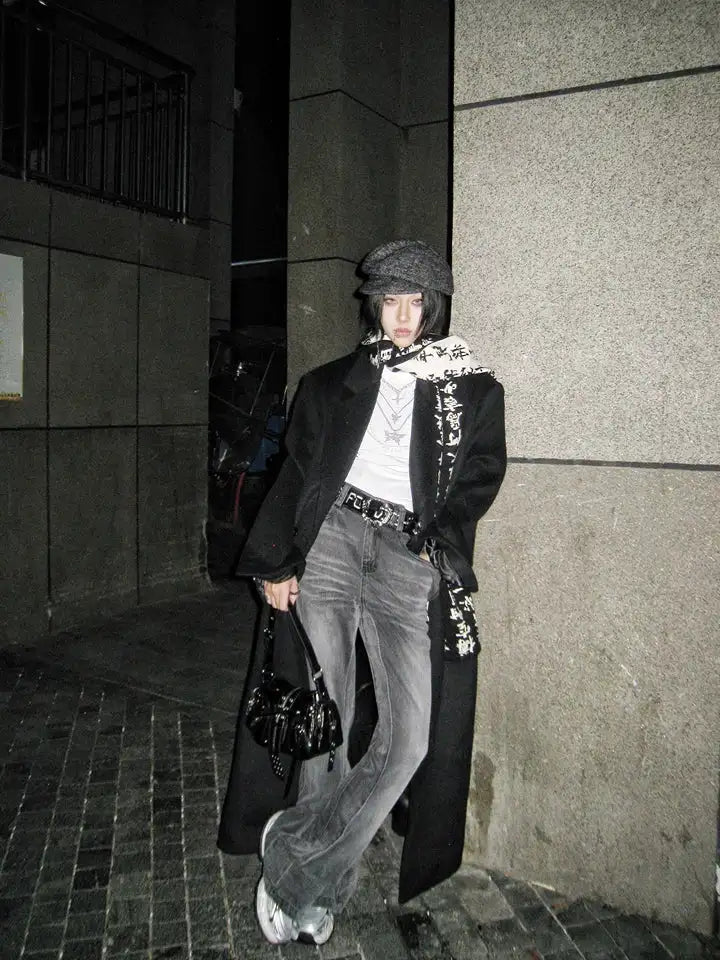
Here is how the library silhouette reads in twelve seconds:
Origin
Where Dark Academia comes from — Donna Tartt, Tumblr, TikTok
Dark Academia did not begin on TikTok. It began in 1992 in a bookshop in Vermont. Donna Tartt's debut novel „The Secret History" came out in September of that year and established the setting the aesthetic still quotes today: a small elite university in New England, six Classics students around an eccentric professor, a murder born of academic self-aggrandizement. The book sold five million copies and gave a whole generation the image bank in which it would recognize itself two decades later.
The second wave came in 2014 on Tumblr. A generation raised on Harry Potter, the third Brideshead Revisited revival and the still-active indie blog culture started reblogging pictures of leather-bound books, tweed blazers and stone buildings. The tag was not called „Dark Academia" yet — it was called „Old Books Aesthetic" or „The Common Press". The fashion component only joined when the Tumblr generation began posting their own outfits around 2018.
The third wave, the one everyone now knows as the only one, was TikTok 2019/2020. The hashtag #darkacademia reached two and a half billion views, creators like @rorygilmoresprivatelibrary and @oldsoulsclub posted get-ready-with-me videos in wool vests and brogues, and suddenly a twenty-year-old literary aesthetic was mainstream again. Unlike Y2K or Cottagecore, it stayed that way: Dark Academia is one of the few fashion micro-movements that keeps growing instead of tipping over after a three-year TikTok cycle. The reason is simple — it quotes no trend, it quotes a literature, and literature does not age.
Definition
What is Dark Academia style — the 4 building blocks
Dark Academia is not a mood board and not a filter. It is a set of four building blocks that build an outfit together — and add up to nothing on their own. Know the building blocks and you can recombine every season. Don't know them and you buy random brown pieces and wonder why it looks like folk costume.
4
Fabric families
6
Colours in the palette
3
Layers in the standard look
0
visible sneakers
The four building blocks build on each other — leave one out and you build something else:
- Fabric family — tweed, wool, corduroy, leather. In this order: tweed gives the texture, wool the drape, corduroy the season, leather the accent. No polyester, no viscose mix, no glossy synthetics.
- Colour palette — oxblood, charcoal, moss green, walnut brown, cream white, ink black. Six tones, all muted, all with earthy depth. Pastels and cold neutrals belong in Light Academia, not here.
- Book symbolism — a hand holding either a bound classic, a bag with the corner of a book showing, or a pen. Sounds theatrical, but it is what lifts the silhouette from „business casual" to „Dark Academia".
- Footwear — brogue, derby, oxford, loafer, Chelsea boot. Four acceptable forms, one unacceptable: the sneaker. Sneakers break the silhouette in a second — even in dark colours.
3 types
The most iconic Dark Academia outfits — the 3 archetypes
Unlike Opium or Y2K, Dark Academia has no five to seven subtypes that work as lookbook categories. The aesthetic splits cleanly into three archetypes, and all three are directly derivable from the literary source: the students, the teachers, the outsiders.
Gender split
Dark Academia outfits female vs male — where the line tips
Same four building blocks, different cut line. On women the silhouette shifts to the waist and the shoulder, on men it shifts to mid-calf and the weight of the shoulder. This is not a rule, it is an observation — do the opposite and you land at „menswear-inspired" or „prep-school uniform", both their own categories next to Dark Academia.
Women cut it sleeveless or with a short sleeve, often a knit vest over a white collared blouse. The wool trousers are waisted, the hem ends just above the ankle, the shoe is a loafer or a low brogue. Accent pieces are a cardigan over the shoulder, a folder instead of a handbag, a thin chain. The effect is clear: the outfit has library history and self-assurance, but nothing loud.
Men work with longer lines. The blazer goes past the hip, the trousers fall onto the brogue, the coat reaches at least the knee. The shirt is usually white or cream white, no tie, but with the top button undone. A wool bag or a leather backpack is mandatory — empty hands look wrong on men in Dark Academia. The effect here: someone coming out of a lecture, not out of the office.
Sub-genre
Dark Academia vs Light Academia — where the split runs
Light Academia is not „Dark Academia in lighter". It is its own aesthetic with a different literary source. Where Dark Academia is written by „The Secret History" and Donna Tartt, Light Academia takes its imagery from „Little Women", „Anne of Green Gables" and Pre-Raphaelite painting. Both movements love books, but they read different books.
In practice the two aesthetics split at three points. First the palette: Light Academia works with beige, light yellow, cream white and pastel pink — tones you find in a tea room. Dark Academia works with oxblood, charcoal and walnut — tones from a library with wood panelling. Second the fabric weight: Light Academia is linen-, cotton- and knit-driven, Dark Academia is tweed-, corduroy- and wool-driven. Third the season: Light Academia is spring and summer, Dark Academia is autumn and winter.
Try to wear both at once and you land in no-man's-land. The two codes neutralise each other the moment they overlap. But pick the right code for the season — Light Academia in May, Dark Academia in October — and you have basically covered a whole year of academic aesthetic without running a double wardrobe.
Brands
Dark Academia brands — which brands write the vocabulary
Dark Academia has no designer guard of its own like Opium or avant-garde streetwear. The brands that write the vocabulary have been the same for decades — British heritage tailoring, American Ivy League classic, Japanese interpreters of the first two. None of them advertise with „Dark Academia". They simply make the pieces that Dark Academia outfits are built from.
- Margaret Howell — British heritage tailor since 1970. Tweed blazers, high-waisted wool trousers, soft shirts in muted colours. Probably the purest form of the Dark Academia vocabulary there is.
- Drake's London — tie and tailoring house since 1977. Famous for their tweed sport jackets and high-waisted corduroy trousers. Drake's gives the aesthetic the old-world accent.
- Ralph Lauren Purple Label / Polo — the American translation of British tailoring. Polo makes the student iteration's roomy cut, Purple Label makes the Oxford Don heavy cut. Both compatible.
- John Smedley — British fine-merino knitters since 1784. Take the knit-vest element of Dark Academia seriously and you end up here. A black Smedley polo under a tweed blazer is standard vocabulary.
- Beams Plus — Japanese interpretation of American Ivy League fashion. Find the original too heavy and you buy the Japanese translation with narrower shoulder lines and shorter hems.
- Brooks Brothers — the American classic since 1818. Especially for oxford shirts, polo coats and loafer classics. Without Brooks Brothers, Dark Academia in the American iteration would not exist.
- Aquascutum / Burberry — the two British coat houses that write the heritage vocabulary for wool coats and trench coats. For both, the rule holds: the discreet models without logo lining, otherwise it tips into the tourist cliché.
- Paul Smith — the British variant with a touch more colour and a touch less severity. Works for the Romantic Poet iteration, where some personality is allowed.
Category · Outerwear
Coats & blazers — the falling shoulders
Outerwear in Dark Academia is not a weather solution, it is a statement piece. The coat or blazer carries half the outfit. Skimp on the fabric here or sloppy on the cut and you can wear whatever underneath — the outfit will not read.
Three coat forms work. First the wool coat knee-length in charcoal or walnut — the strict Oxford Don form. Second the tweed sport coat hip-length with elbow patches — the student Donna Tartt Reader form. Third the long leather blazer in matte black or cognac — the rebellious Romantic Poet form. A trench coat works too, but belongs more to Light Academia and Old Money, which is why we don't recommend it as default here.
Category · Bottoms
Trousers — wide-leg, pleat, tweed
The trousers are the piece most outfits fail at in Dark Academia. Too narrow — and it reads as office wear. Too wide — and it tips into avant-garde. The middle cut with a pleat and a hem just above the brogue is the default; everything else is a variation of it.
Three cuts work. First the pleated wool trousers in charcoal or walnut, high-waisted, with two or three pleats at the front. Second the corduroy trousers in moss or oxblood, narrower in the cut, no pleats but with clearly visible corduroy texture. Third the tweed trousers with a suit match — only for the Oxford Don iteration; if you can't carry it, leave it.
Category · Tops & knit
Shirt, knit vest, polo — the middle layer
Between coat and trousers sits the middle layer, and in this layer it is decided whether the outfit becomes Donna Tartt Reader, Oxford Don or Romantic Poet. The shirt is the default — usually white, cream white or very faintly striped, with a button placket but no tie. Over it comes a knit vest, a cardigan or a fine-merino polo. Three layers is the maximum: shirt, knit, blazer.
The most common break point in this layer is the tie. A tie pushes the outfit straight into „business casual" or „boarding-school uniform". Wear a tie only knowingly — as a Donna Tartt Reader with a knit vest over it, so only the knot stays visible. Otherwise the academic look turns into the bureaucracy look, and the aesthetic tips.
Styling
How to really style Dark Academia — the physics behind it
Dark Academia works on a rule no one on TikTok says out loud: the outfit has to still read in a black-and-white shot. This is not a stylistic device — it is the test. If your silhouette only makes sense in colour, you leaned on earth tones and neglected the form. If it reads in monochrome too, you built the form right.
In practice this means three layers with a clear texture hierarchy. The coat or blazer brings the heaviest texture (tweed, wool). The middle layer brings the second heaviest (knit, corduroy). The shirt brings the lightest (cotton, linen). In this order the outfit builds down from outside to inside — and it is exactly this hierarchy that still works in black and white.
Earth tones are the means, not the goal. The goal is a silhouette that works in any light — without colour too, without a filter too.
The second rule concerns hardware. Dark Academia knows almost no hardware. A leather watch, a thin chain, a wax-seal ring — that is the whole list. Buckle belts, cargo hardware, visible zippers, all of that belongs in other niches. Want to wear hardware, choose brass or brushed silver — never gold and never glossy.
Want to go deeper into the individual cuts and variations, the spoke collection has five more articles that go into single aspects — from the men's iteration to plus-size adjustments.
Seasonal
Dark Academia in summer vs winter
Dark Academia is an autumn-winter aesthetic. That is not a weakness, it is construction — the heavy fabrics and the multi-layered silhouette belong in cold months. In summer the vocabulary shrinks, and not accepting that means sweating your way out of the aesthetic.
The winter iteration is the full form: wool coat over blazer over shirt over polo, tweed trousers or corduroy trousers, brogue or Chelsea boot, scarf in wool or cashmere. Four layers, all with texture. That is Dark Academia in its purest translation.
The summer iteration pulls out two layers. The shirt stays, the knit vest stays (in a thinner fine-merino variant), the blazer becomes the short-sleeve variant in linen or light wool, the coat is dropped. The trousers keep the cut but move to lighter fabrics — a linen-wool mix or pure linen with a pleat. This is not the full aesthetic, but it is the only summer iteration that does not tip into Light Academia.
What does not work
The 6 most common Dark Academia mistakes — what you must NOT do
There are six break points where Dark Academia outfits reliably tip over. Each one of them ruins the outfit completely, even when the rest is right. Avoid all six and you build the silhouette cleanly by default.
Action
How to start in Dark Academia — the first 4 pieces
Starting with Dark Academia, you don't buy the coat first. The coat comes last. First come the four building blocks in the order with the highest effect-per-euro ratio — and if you buy only one of them, buy the blazer.
Outfits for real
Dark Academia outfits for real — how this looks on the street
Lookbooks show the aesthetic in its purest form. On the street it looks different — a little less strict, a few more patches and pleats, a little more hand-and-book symbolism. Here is the vocabulary in everyday life.
To close
Dark Academia is a system — not a costume and not a filter
Most Dark Academia outfits fail because they are thought of as a costume. Tweed blazer plus book plus glasses — done. That is not the aesthetic, that is the caricature. The aesthetic is the four-layered silhouette with texture hierarchy that reads the same in black and white as in colour.
Understand the system once and you can recombine every season. Don't understand it and you buy a new tweed piece every autumn and wonder why it never fits together. The difference is not the budget — the difference is whether you have the four building blocks and the three archetypes in your head.
This aesthetic is not about speed, not about trend-light. It is about a silhouette that has worked unchanged since Donna Tartt's debut in 1992. Understand that and you don't buy ten pieces a season — you buy three a year and wear them for ten years.
FAQ
Frequently asked questions about Dark Academia outfits
The most important questions we get about Dark Academia — answered briefly, with a pointer to the detailed sections above.
How do you dress for Dark Academia?
What exactly is Dark Academia fashion style?
What is the 3-3-3 rule for clothes?
Is Dark Academia LGBTQ?
Where can you buy Dark Academia clothes in Germany?
What is the difference between Dark Academia and Light Academia?
Can I wear Dark Academia in summer?
What do you think?
Tell us on @fuga_studios
About the author
Philipp Fuge — Founder · Berlin
Founder of Fūga Studios. Writes the journal himself. Berlin · Shanghai · Tokyo · Poznań — four cities, one logic.