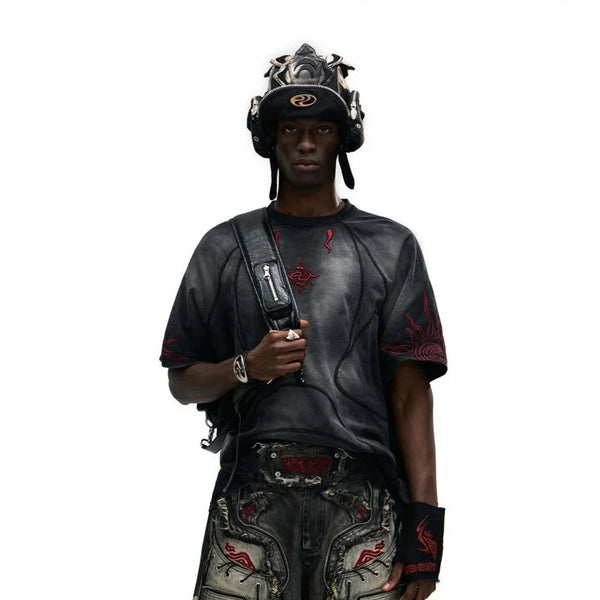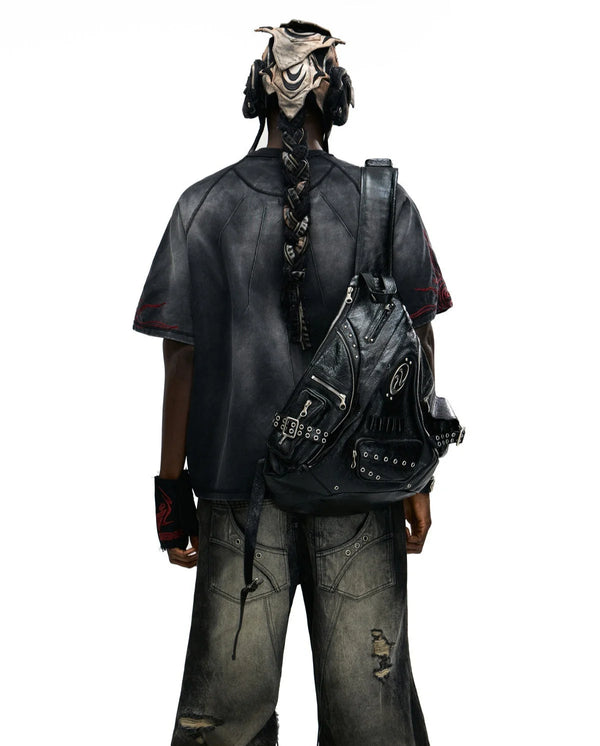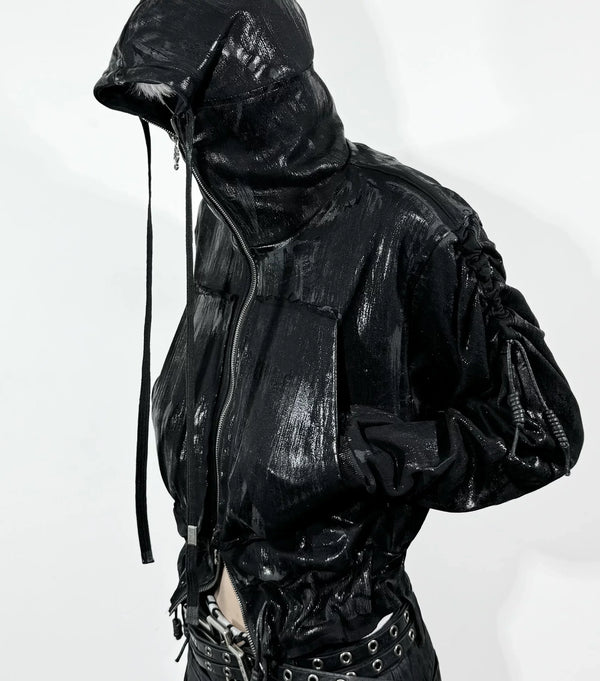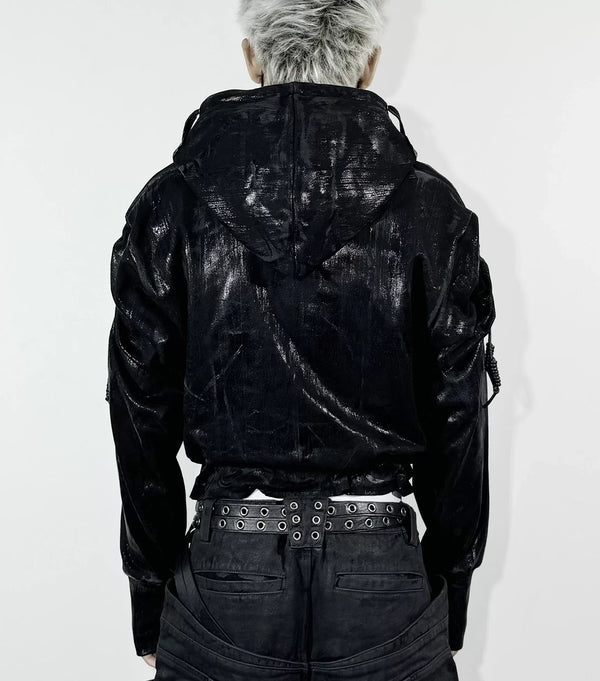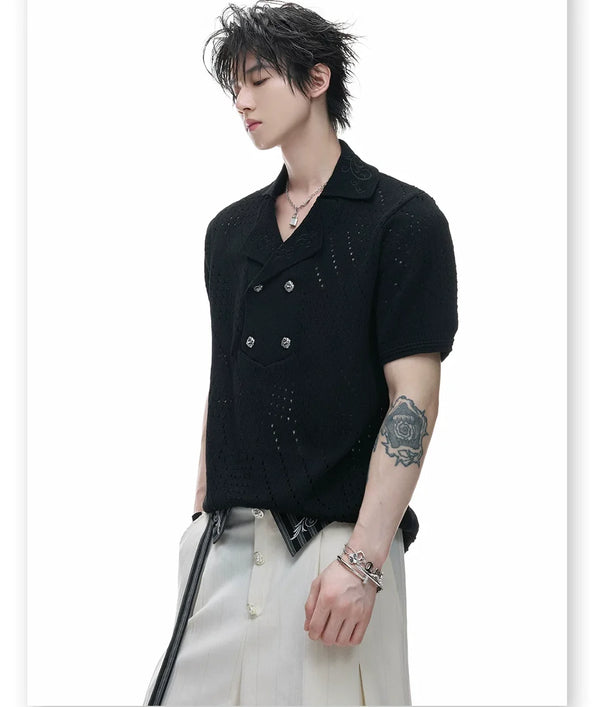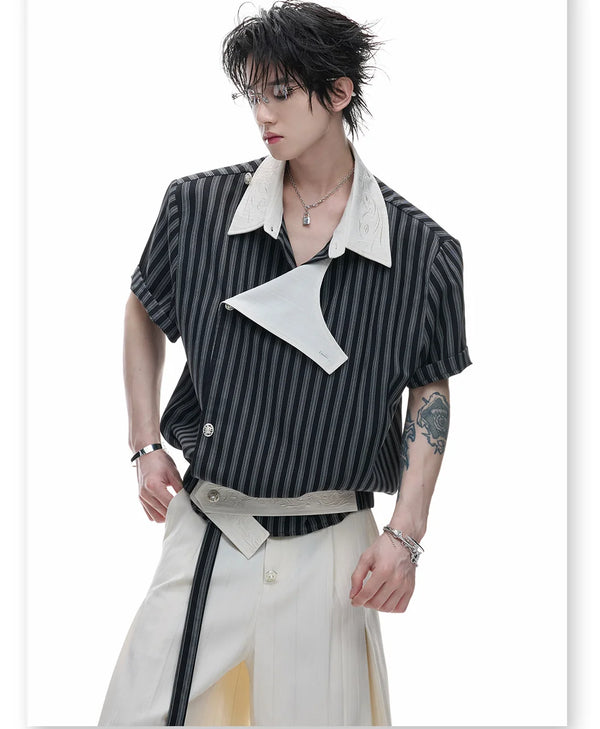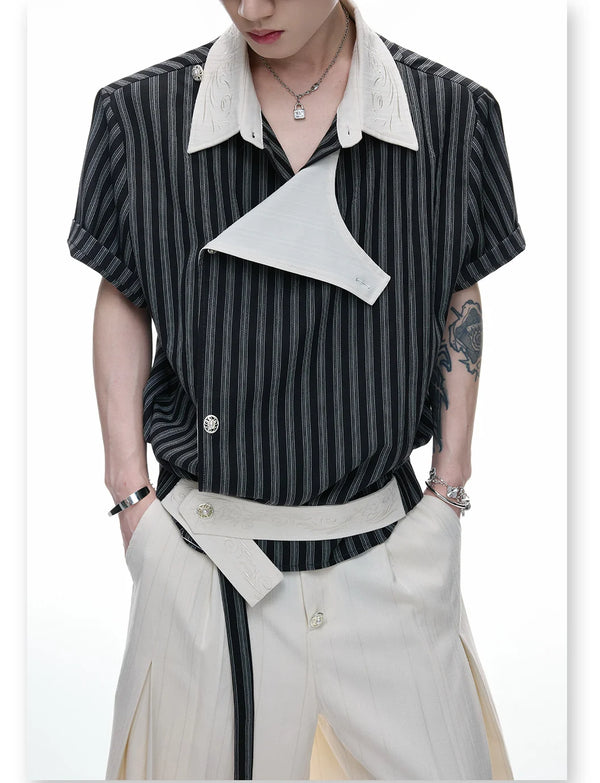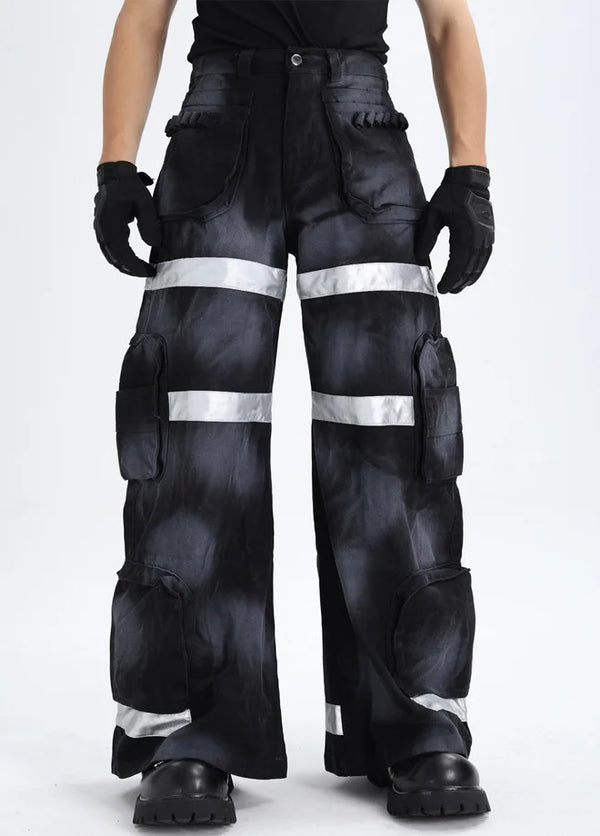
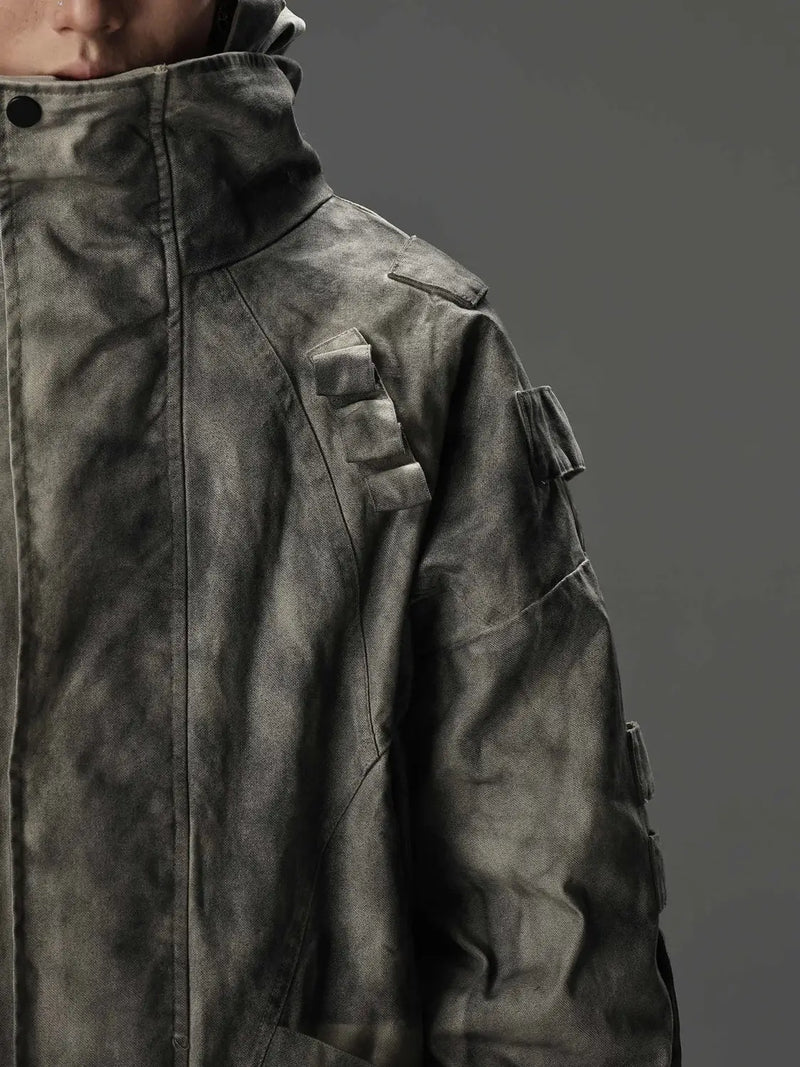
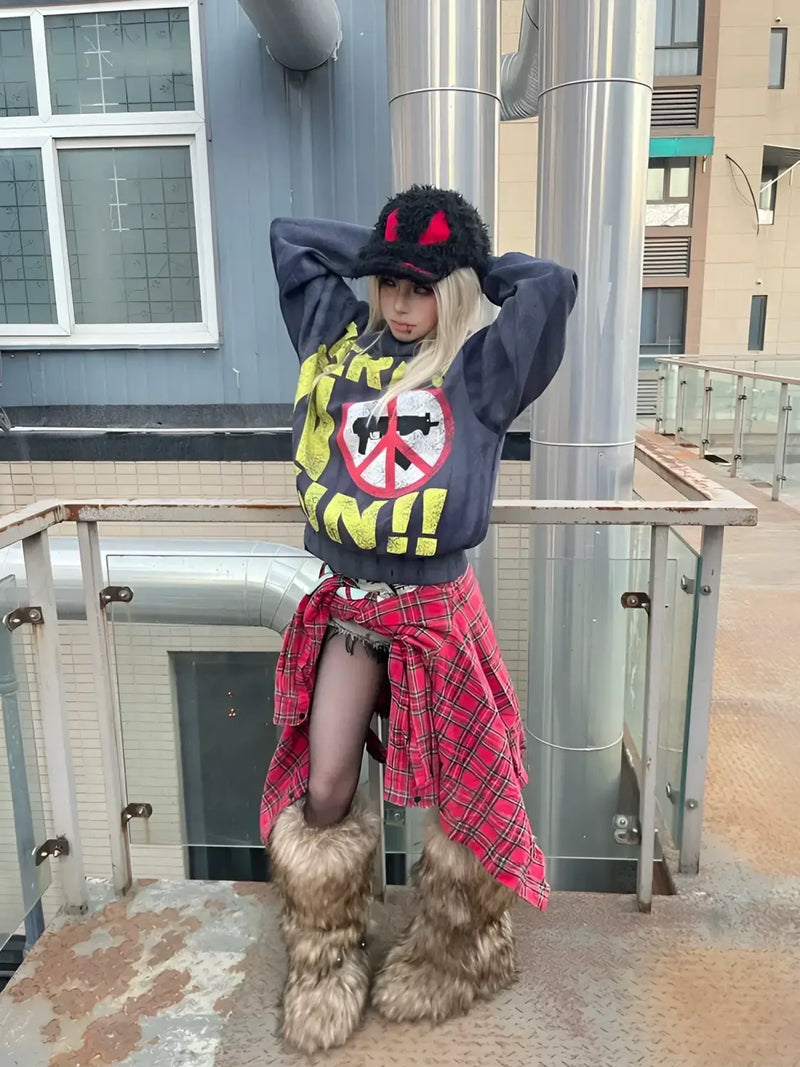
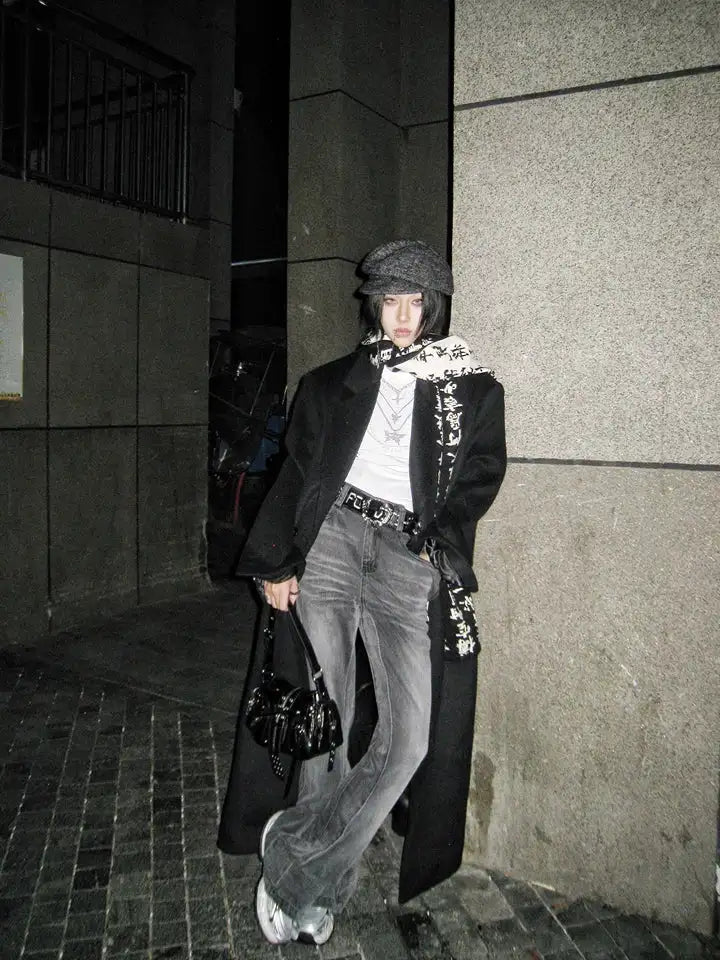
Dark Academia for men is not a filter. It is not a tweed blazer over a T-shirt with round glasses on top. Anyone who wears it that way has confused Donna Tartt, Brideshead and „Dead Poets Society" with Halloween — and looks like a Halloween professor in the photo.
The aesthetic has a fixed core: wool dominates, earth tones replace the black default, layers are not optional, shoes are dress shoes rather than sneakers as a rule. When these four points land, the outfit reads as Dark Academia. If even one is missing, it tips straight into cosplay, into office-casual, or into „dressed-up student".
This guide makes clear what really belongs: where it comes from, which four iterations exist for men, what the 3-colour rule concretely means, which fabric families carry the vocabulary, which brands write the vocabulary, how it translates into coat, trousers, shirt and shoe — and which mistakes reliably tip the outfit.
How it feels on the street — compact, in 12 seconds:
Origin
What is Dark Academia for men — and where does it actually come from?
Dark Academia is the visual aesthetic of an education obsession. It became a term on TikTok and Tumblr in early 2020, but its roots run much deeper. Donna Tartt’s novel „The Secret History" (1992) draws six students at a fictional Vermont college who lock themselves into a closed world of Ancient Greek, wine and a very old crime. These six are the original casting of the aesthetic.
The vocabulary existed before that: Evelyn Waugh’s „Brideshead Revisited" (1945) supplies the Oxbridge line with cricket jumpers and linen blazers in summer. „Dead Poets Society" (1989) shifts it to the American boarding school — cord trousers, knit tie, cardigan over shirt. The British TV series „Skins" (2007–2013) brings in the next generation: Cook, JJ and Effy with wool coat and Doc Martens, less heritage, more pain.
What went viral on TikTok in 2020 as „Dark Academia" was a re-sampling of this library. The pandemic locked students into their desks. Education became performative — anyone reading an old book on TikTok ended up looking like an educated bourgeois from the 1950s. From that grew a whole fashion movement that has solidified since 2024 and is also reaching men in the German-speaking world — Heidelberg, Tübingen, Marburg, Göttingen are the honest settings for it.
Definition
What counts as Dark Academia for men — the fixed building blocks
Dark Academia for men is an outfit system of four building blocks. When all four land together, the outfit reads as Dark Academia. If one is missing, it tips. Into heritage cosplay. Into office-casual. Into „dressed-up student". Rarely into something you actually want to wear.
60 %
Wool in the fabric mix
3
Colours max per outfit
5
Fabric families
0
visible logos
These four numbers are not decoration. They are the test. An outfit that breaks a quota — 30 percent wool instead of 60, four colours instead of three, or a Polo Ralph Lauren logo visible on the chest — is no longer Dark Academia. It is „academia-inspired". Which, in plain terms, means: business-casual with a knit tie.
Concretely, what counts as Dark Academia for men:
- Wool, tweed, cord as main fabrics — polyester is dead, stretch content stays invisible. The fabric has to have weight in the hand.
- Earth tones before black — Camel, Charcoal, Cream, wine, Forest, olive. Black may appear, but it is not the default.
- Layers mandatory — shirt under knit, knit under blazer, blazer under coat. A single layer is never enough.
- Dress shoes instead of sneakers — brogues, derbies, loafers, Chelsea boots. A sneaker breaks the outfit regardless of model or price.
- Patterned before plain — check, herringbone, Glencheck, subtle stripe. Fully smooth fabrics look flat fast in DA.
- Construction before branding — visible stitch, lapel construction, button placket, trouser cuff. No logo, no brand strip.
If you are missing three of these six points, it is no longer Dark Academia — it is inspiration. And there is a single rule that holds all six together:
4 iterations
The four iterations — from the classic don to the skater DA
Dark Academia for men is not one look — it is four that overlap at the edges. Which one fits you depends less on taste than on your city, your age and how much heritage you want to wear before it reads old-fashioned.
Which of the four fits you, read it off the shoes. Brogues = Tweed-Don. Derby in black = Skins-Brooding or Brutalist. Loafer without socks = Skate-Adjacent. Once you know the shoe, you know which iteration you want, and the rest almost builds itself.
Colour palette
The 3-colour rule for men — what it really means in Dark Academia
The classic men’s style rule says: a maximum of three colours per outfit. In Dark Academia for men it gets sharper. The three colours do not come from the whole spectrum — they come from a narrow, autumnal palette. Mix in red and you are in Polo country. Add pastel and you are in the vintage-geek corner.
The DA palette for men consists of six tones. In one outfit you take three of them. The other three you swap in and out seasonally.
The usual combo for beginners: Camel, Charcoal, Cream. Coat in Camel, trousers in Charcoal, shirt in Cream. Three colours, three pieces, done. If you want more character, swap Cream for wine in the knit, or push Forest into the trousers and keep the coat as the only Camel point.
Black-only outfits also work — that is the Skins-Brooding iteration — but then you need a second discipline: everything has to be matte, wool instead of polyester. Glossy black does not read as DA, it reads as a funeral.
Fabrics
Fabric vocabulary — tweed, wool, Oxford, knit, cord
Dark Academia is a fabric aesthetic above all else. Cut and colour come after. Anyone with a wool coat in Camel that feels like a wool coat automatically beats any identical-looking polyester coat. The hand feels before the eye sees.
The five fabric families that carry the DA vocabulary for men:
- Tweed — woven wool with a recognisable pattern (herringbone, Glencheck, Donegal with nubs). The iconic blazer material. Harris Tweed from the Outer Hebrides is the heritage variant; Yorkshire tweed the more rugged everyday one.
- Wool — smooth-woven, worsted or flannel. Most wool trousers and wool blazers live here. Flannel is softer, worsted sharper in the cut.
- Oxford cotton — the slightly heavier, lightly textured cotton weave for shirts. In the hand and in the photo it looks instantly different from a normal poplin shirt. The DA default for the shirt.
- Knit — merino wool for jumpers, lambswool for coarser knit, cashmere for the investment level. Cardigan, crewneck and turtleneck are the three cuts that always work.
- Cord — ribbed cotton with a clear lengthwise structure. Cord trousers are the Tweed-Don alternative to tweed trousers. A cord blazer is the slightly softer choice for men who don’t want to wear a wool blazer.
What doesn’t belong: polyester suits, glossy satin, technical synthetics. Even if the colour is right — the fabric gives the outfit away on the first step. If you buy on a budget, take a tweed blazer from the vintage shop over a polyester new buy from a fast-fashion chain.
Brands
Dark-Academia brands for men — who writes the vocabulary
Dark Academia has no single brand that covers everything. It is a composition from the heritage spectrum, the Italian tailoring school and a few Japanese houses that adopted the Ivy League line in the 80s. Anyone who understands the vocabulary builds DA outfits independent of any single label.
The brands that wrote the DA vocabulary for men — from heritage to modern:
- Polo Ralph Lauren — the canonical brand for tweed blazers, Oxford shirts, knit ties and heritage cord since the late 70s. If you had to know exactly one brand, it would be this one.
- Drake’s London — ties, wool, country tweed in the traditional English cut. Drake’s is the brand for men who take a knit tie seriously.
- J.Press — the Yale heritage brand since 1902. Sport coats, repp ties, khaki pleated trousers. The American Ivy line in its purest form.
- Brooks Brothers — they invented the Oxford shirt in 1896. The non-iron polyester imitation wasn’t it. The classic stays the OCBD cotton.
- Margaret Howell — the English brand for modern, reduced DA. Wool, flannel, clean cut without heritage ornament. Skins-Brooding and Brutalist-Schwarz get their wool coats here.
- Brunello Cucinelli — Italian cashmere authority. The investment level. When a DA outfit reads grown-up, the knit often comes from here.
- Beams Plus — Japan’s translation of the Ivy League wardrobe since the 70s. Tweed blazers with a slightly slimmer cut, madras shirts, cord pants. The most accessible modern-DA brand.
- The Real McCoy’s — Japanese heritage reproduction. Mid-century varsity, military cuts, knit. Skate-Adjacent gets its coarse jumpers here.
- Husbands Paris — French tailoring brand with a sharp shoulder and a long lapel. The Brutalist-Schwarz look finds its coats and wool suits here.
In the German-speaking world there is no native DA brand with its own line. Anyone who wants the vocabulary on a budget therefore mostly combines vintage (tweed from the 80s on resale platforms) with deliberately bought modern wool pieces. DTC brands translate the vocabulary into contemporary cuts without the heritage markup.
Category · Outerwear
Coats & blazers — the largest surface
The coat carries the Dark Academia outfit for men. It is the largest surface, the most dominant fabric, the primary carrier of the silhouette. This is where it is decided whether your wool outfit becomes a DA look or an office colleague in a winter coat.
Three coat types carry DA for men: the wool coat in Camel or Charcoal (knee-length or longer, lapel collar), the trench in olive or beige (Burberry cut, double-breasted) and the tweed blazer as an inner-coat substitute for milder days. Blazers in Charcoal or Forest take over the blazer role for the Brutalist iteration.
If you don’t yet own a wool coat in Camel or Charcoal, that is your first real DA move. A coat lasts ten seasons if you don’t buy cheap, and carries half the outfit on its own.
Category · Bottoms
Trousers — tweed, wool flannel, wide pleat
Skinny is out in Dark Academia for men. What works is a trouser that sits on the hip, falls at the leg and rests on the shoe instep at the ankle. A pleat is more obligation than option — it is the form in which most DA menswear was designed.
Three trouser types work: wool-flannel pleated trousers in Charcoal (the standard for four of five outfits), cord trousers in Forest or brown (the Tweed-Don default), and wool trousers with a check pattern (Glencheck or Prince of Wales — for the days when the blazer is plain).
If you are looking for a trouser that fits all four DA iterations, take a charcoal wool-flannel pleat with a wide leg. That is the common denominator and the fabric that never goes out of fashion.
Category · Tops & layering
Tops — Oxford shirt, knit, turtleneck
In Dark Academia the top is rarely visible on its own — it lives under a knit, a blazer or a coat. Which is exactly why it stands out when it sits wrong. A T-shirt under the wool coat has no place in the DA vocabulary. An Oxford shirt, a crewneck or a turtleneck does.
The three tops that always work: an Oxford shirt in Cream or light blue with a button-down collar (the classic, almost every DA outfit has one in it), a knit jumper in Charcoal or Forest (crewneck or V-neck), and a turtleneck knit in Cream, Charcoal or wine for the cooler months. Print shirts with a logo or graphic don’t work in the vocabulary.
If you want to test layers, start with the simplest combo: Oxford shirt, knit jumper over it, tweed blazer over that. Three layers, all visible, all in one colour family. That is the DA menswear default layer logic in one line.
Category · Footwear & Accessories
Shoes & accessories — brogues, glasses, ties
Shoes and accessories are the two places where the DA outfit tips most visibly. A wrong choice in either of the two and the whole outfit breaks — no matter how expensive the coat and trousers were. Sneakers, for example, are out as a rule, whether Adidas Samba, white Nike or new Allbirds.
What works for men — in this order:
- Brogues in brown or burgundy — the Tweed-Don default. Full brogue with wing tip or half brogue with quarter brogue. Brown leather ages better than black and goes with more trouser colours.
- Derbies in black — the Brutalist and Skins-Brooding default. Plain-toe or cap-toe. Black smooth leather, no patent.
- Penny or bit loafers — the Skate-Adjacent default and the summer swap. With a sock in Forest or Charcoal, not without.
- Chelsea boots with a low shaft — the winter variant. Brown or black, always matte.
- Knit tie or repp tie — knit in Charcoal, wine or Forest for Tweed-Don. Repp (striped) for the slightly more formal iteration. Never wide silk ties with sheen.
- Glasses with a thin metal or heavy acetate frame — tortoise acetate (brown-patterned) is the DA default. Gold filigree frames for the Tweed-Don iteration. Heavy black acetate frames for Brutalist.
- Leather belt with a small metal buckle — brown to brown shoe, black to black shoe. Logo belts are out.
An investment pays off more with shoes than with any other piece. A pair of brogues for 250 to 400 euros lasts five to ten years with normal care. A pair of sneakers for 150 euros rarely lasts two seasons.
Styling logic
How to really style Dark Academia for men — the layering logic
A DA outfit for men works through exactly one detail: the layers read from outside in like a book. Coat over blazer over knit over shirt. Four layers, all visible, all in one colour family. Leave out a layer and you cut the outfit short. Push one in between that doesn’t fit and you break the vocabulary.
In practice that means: not „jumper over T-shirt" but „jumper over Oxford shirt". Not „coat over jumper" but „coat over tweed blazer over jumper over shirt". The layers may be of different thicknesses, but all have to come from the same fabric family — wool, tweed, knit, cotton. A polyester layer in the middle tips the whole outfit.
Layers are not a volume trick. They are the translation of education into fabric — each layer a different piece of information, all in one language.
The full outfit breakdown with examples — how you build a concrete layer combination and which pieces come in which order — we have put in a separate article:
But Dark Academia does not stand alone. It overlaps at several edges with other quiet, material-driven aesthetics — Poetcore shares the layering logic, Light Academia shares the fabric family but reverses the palette, summer DA shifts the vocabulary into linen. Anyone who has DA for men down can read these neighbouring codes and mix them deliberately.
Seasonal
Dark Academia for men in autumn vs summer
In autumn and winter DA for men is easy. Wool coat, wool trousers, knit, shirt, brogues. Four layers, all visible, all warm. The aesthetic is built for these seasons — it reads right in October in Heidelberg because the weather and the material fit together.
The challenge comes in summer, when the outer layer — the wool coat — falls away. Summer DA for men lives off the change of material. Wool is replaced by linen, cord by cotton twill, but the Oxford shirt stays in the outfit. The colour palette shifts slightly lighter: more Cream, more olive, less Charcoal.
The year-round solution also exists through fabric choice: a blazer in a wool-linen blend (about 50/50) works in May as well as in November. Same with knit — merino wool is thinner than lambswool and can still be worn in early autumn without a coat over it.
What does not work
The most common Dark-Academia mistakes for men — what you must NOT do
Dark Academia for men has six places where it reliably tips — no matter how expensive the individual pieces are. If you avoid only one thing, make it mistake number one.
Action
How to start in Dark Academia — the first 4 pieces
You don’t need 30 heritage pieces to wear Dark Academia. You need four that will be in 80 percent of the outfits. Everything else builds around them.
In order: a wool coat in Camel or Charcoal (your biggest investment — lasts 10 seasons if you don’t buy cheap). A wool-flannel pleated trouser in Charcoal with a wide leg. An Oxford shirt in Cream with a button-down collar. Brogues in brown or derbies in black, depending on iteration. A knit jumper or a knit tie as an optional fifth piece — but only once the four are in place.
Outfits for real
Dark-Academia men’s outfits for real — on the street
Before you build your own, look at how others wear it. The four iterations look different in the feed than in lookbook photos: less stiff, more everyday, often with one piece that doesn’t actually belong — and that is exactly why they work.
This is the fastest way to check whether the respective iteration even sits on your body type and in your city — before you spend money.
To close
Dark Academia is a discipline, not a filter
If you remember one thing from this guide, make it this: Dark Academia for men does not work through pieces, but through rules. Anyone who has the rules down builds 100 outfits from 15 pieces. Anyone who only buys individual heritage pieces without understanding the layering logic has a full wardrobe without a single DA outfit that sits.
The whole logic of this guide reduces to one sentence:
The rules have been stable since Tartt’s novel of 1992 — and will stay, as long as education exists as a value. But you don’t have to wait until you know all four iterations by heart. Start with the one that best fits your city and your age. What you don’t know, you learn while wearing it.
And that is also the point: Dark Academia reads in theory like a corset of heritage rules, but in practice it doesn’t feel that way. Once you have the code down, every further outfit is a variation on the same four or five building blocks — not a new costume.
FAQ
Frequently asked questions about Dark Academia for men
The questions we get by DM and email — short, clear, no detour.
What is the typical clothing for men in the Dark-Academia style?
What are popular brands for Dark Academia for men?
What exactly is Dark Academia Style?
Which styles exist for men within Dark Academia?
What does the 3-colour rule for men in Dark Academia say?
Is Dark Academia an LGBTQ aesthetic?
Where can you buy Dark-Academia clothes in Germany?
What do you think?
Tell us on @fuga_studios
About the author
Philipp Fuge — Founder · Berlin
Founder of Fūga Studios. Writes the journal himself. Berlin · Shanghai · Tokyo · Poznań — four cities, one logic.