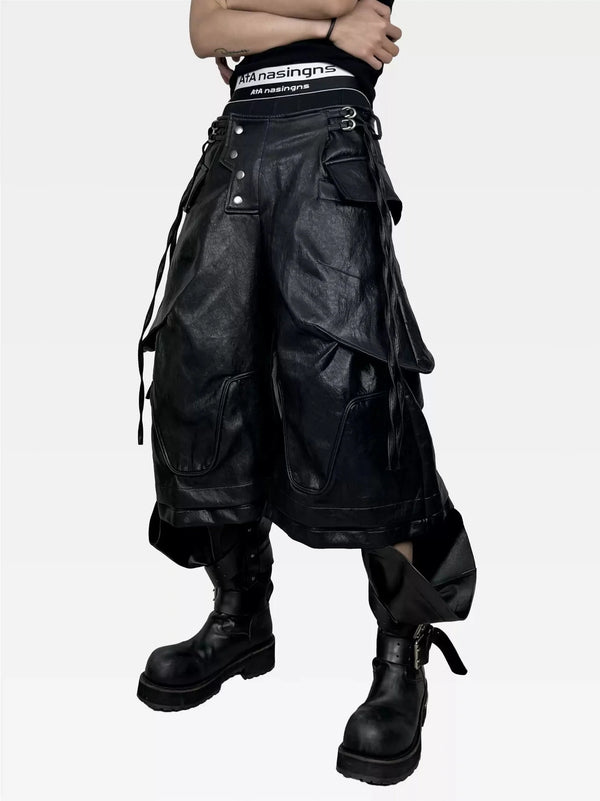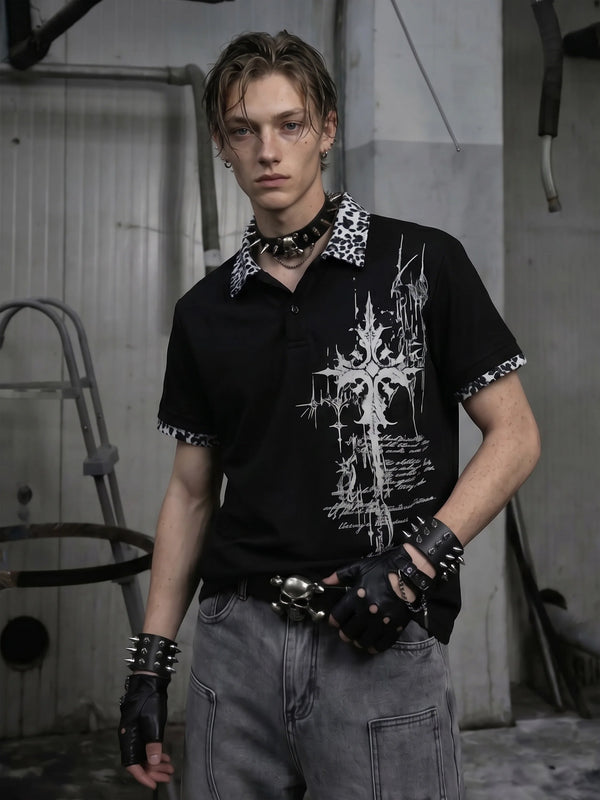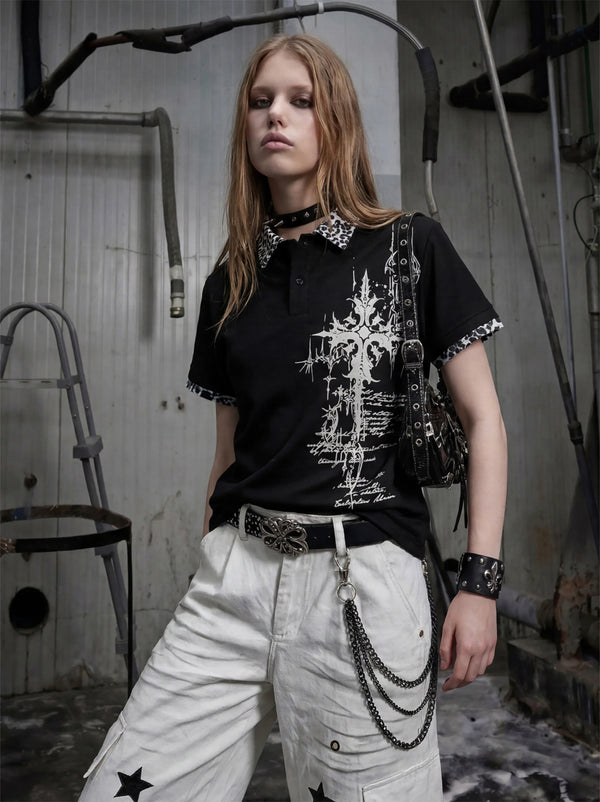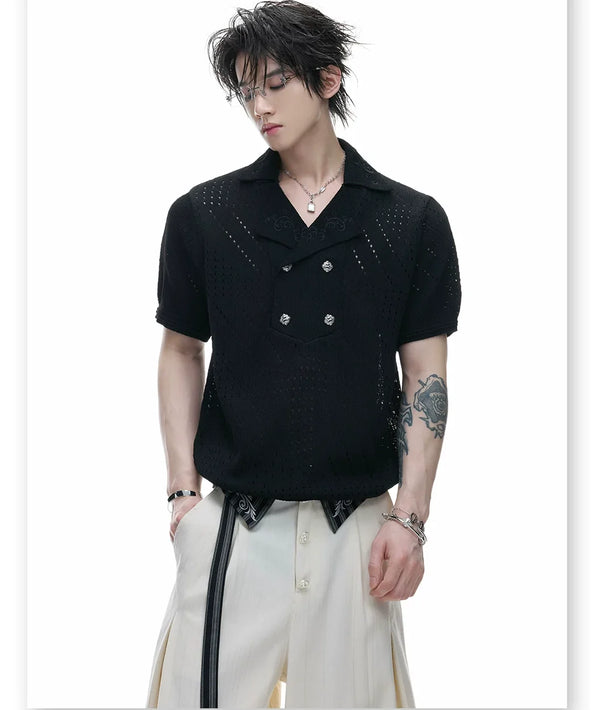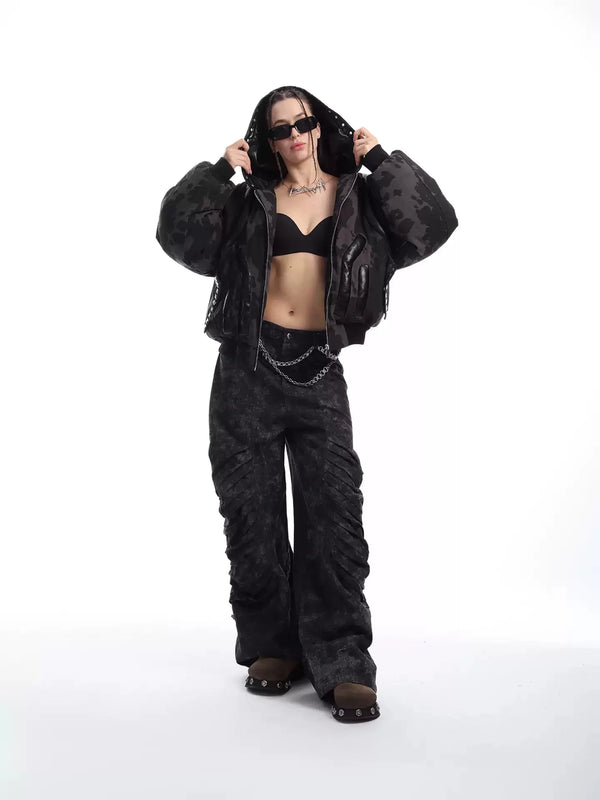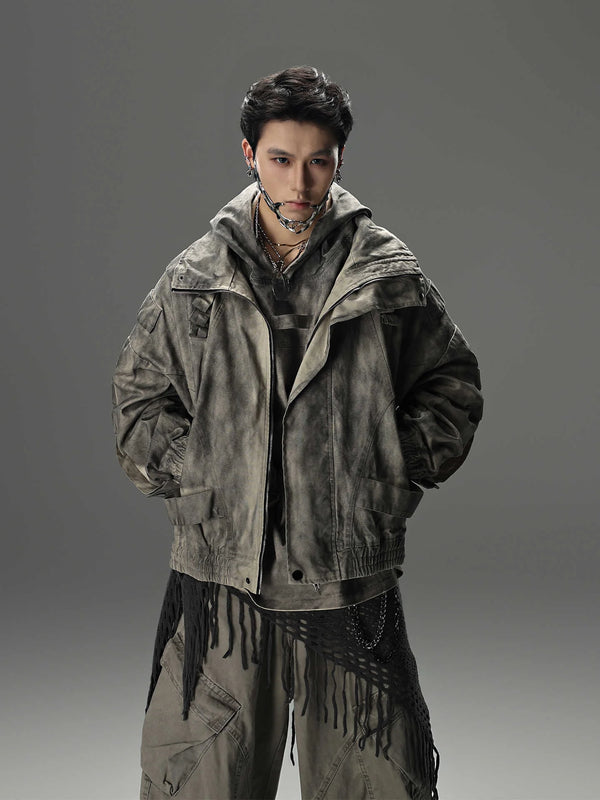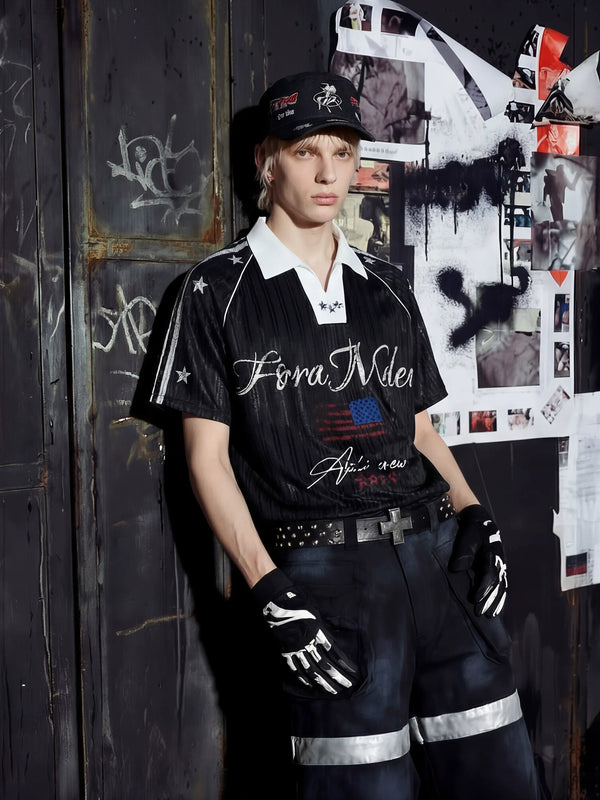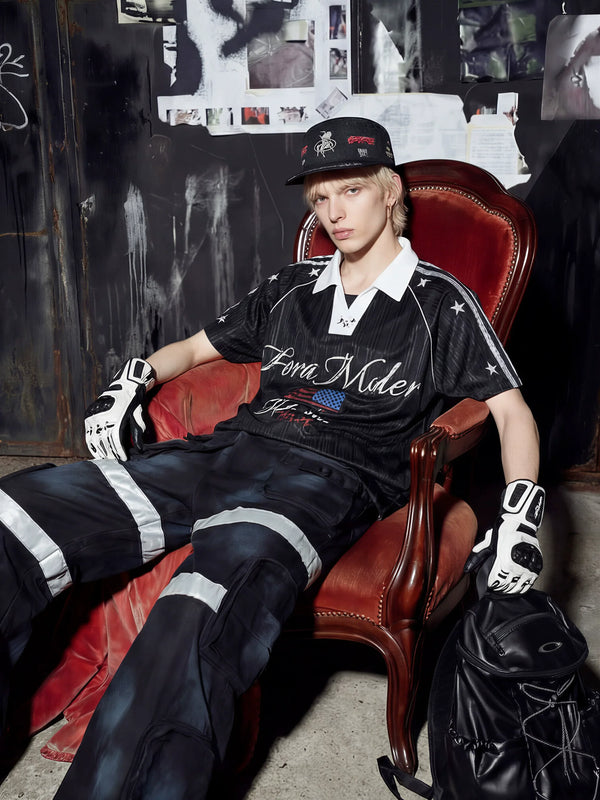
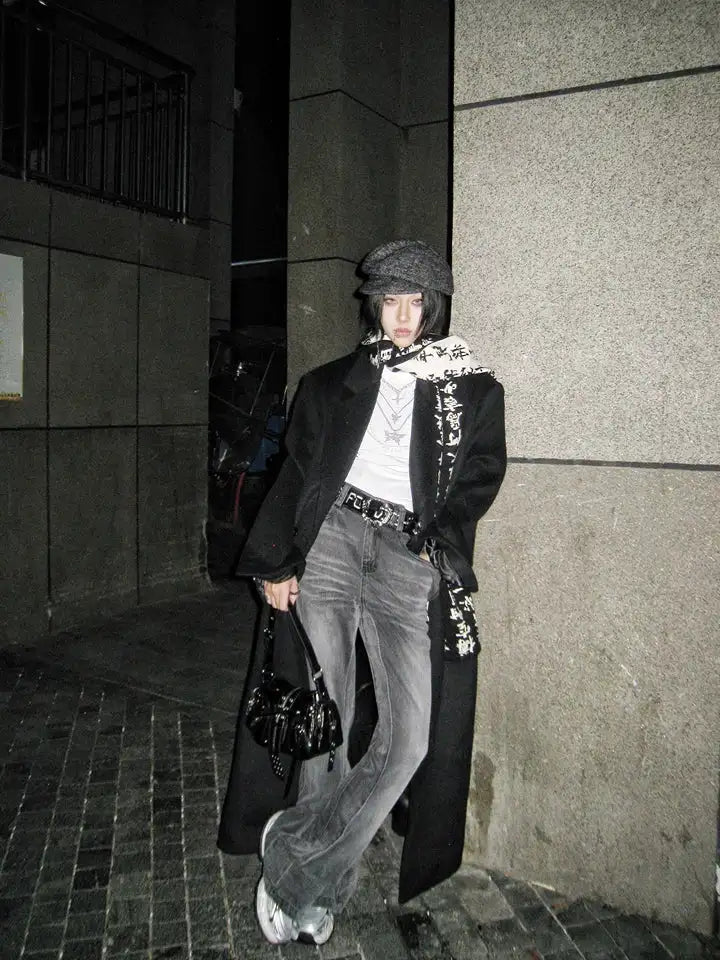

Everyone says Poetcore is “Cottagecore with a book in hand.” They’re wrong. A cream cardigan plus a Sally Rooney novel makes as much Poetcore as a trench coat makes a detective — which is to say, none.
Poetcore is the sub-aesthetic Pinterest named as a fashion trend for 2026 in late 2025. It gathers what used to be scattered between Dark Academia, Old Money, Bookcore and Coquette into one outfit code: soft tailoring, worn textures, word and script as a visible detail, atmosphere over selfie impact. No costume, no Bridgerton spin-off — an attitude translated into fabric.
Anyone selling Poetcore as a “Pinterest filter over an outfit” has missed what the word was coined for: people who want to reconnect with quiet reading, long walks and café hours — without dressing like the 19th century. This guide clears up what Poetcore really means, where the word comes from, which five types run under the term, which pieces carry a Poetcore blazer look, and where the whole thing tips into costume.
What it looks like in motion — the short version in 12 seconds:
Origin
Where Poetcore comes from — Pinterest 2026, Sally Rooney and the café after midnight
Poetcore first shows up as its own buzzword in 2025 — on Pinterest, in trend reports from Fashionunited and InStyle, and in the captions of young readers who have been bringing books back to the café ever since Sally Rooney’s Normal People. Pinterest added the term to its 2026 trend forecast in late 2025, next to opera aesthetics and the brooch renaissance. That makes Poetcore the first literarily motivated sub-aesthetic to go viral not through a TV series or an album, but through reading behaviour.
The vocabulary existed before, of course. Margaret Howell’s British tailoring line since 1972, Sofia Coppola’s film imagery since 2003, the girls from Greta Gerwig’s Little Women in 2019 — all of them supplied building blocks. What 2026 adds: a clear word for it. Poetcore bundles these inspirations into an outfit code that a 22-year-old student in Berlin or Kraków can follow directly. She doesn’t need designer pieces, she needs the code.
Unlike Cottagecore (meadow, basket, floral dress) and unlike Dark Academia (tweed, castle library, wine), Poetcore stays in the city. The café after midnight is the real setting. A library by day, a walk by the water, a long letter at the desk. The outfits hold up through exactly those hours — soft, walkable, worn, without ever turning sporty.
Definition
What does Poetcore mean — and what counts as part of it?
Poetcore is an outfit system built on four fixed building blocks. When all four are in place, the outfit reads as Poetcore. When one is missing, it tips straight into something else — Cottagecore, Dark Academia, Old Money, or worse: Bridgerton costume.
4
fixed building blocks
5
colours (cream, white, charcoal, brown, one accent)
60 %
share of secondhand- or vintage-ready pieces
0
visible logos
These four numbers aren’t decoration. They’re the test. An outfit that breaks a ratio — a neon accent instead of Bordeaux, shiny polyester instead of wool, a visible sneaker swoosh — is no longer Poetcore. It’s a “Pinterest filter over a normal outfit.” Which plainly means: the outfit hasn’t understood the code.
Concretely, Poetcore includes:
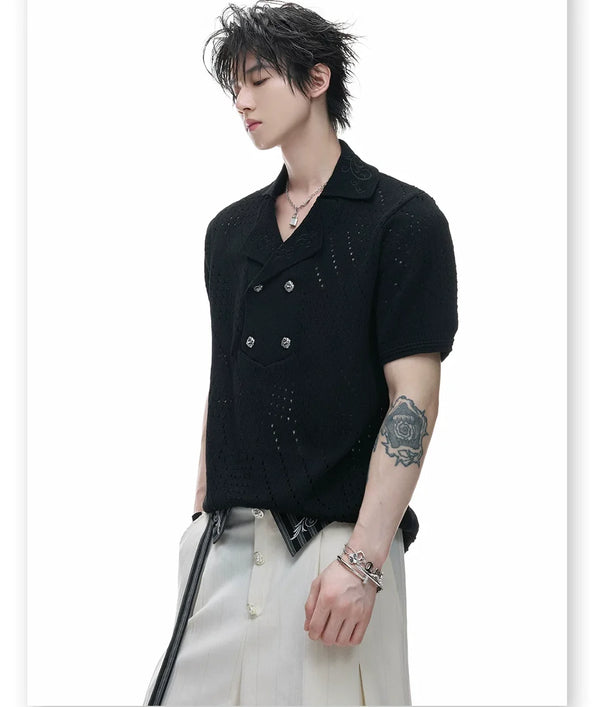
- Soft tailoring — a blazer with an unpadded shoulder, trousers with a pleat, a shirt with a long cuff button. Stiff construction is a suit, not Poetcore.
- Worn textures — wool with a light patina, linen with a crease, cotton that already has a few washes behind it. Crisp and new reads as office wear, not café regular.
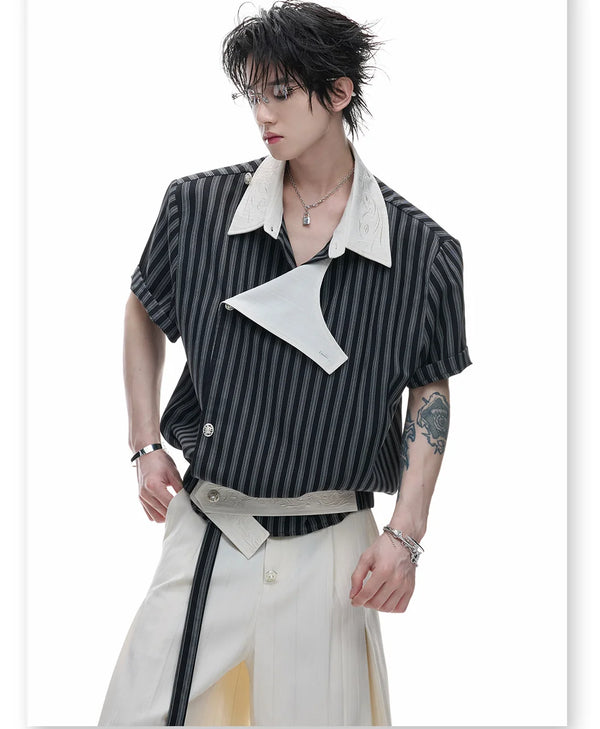
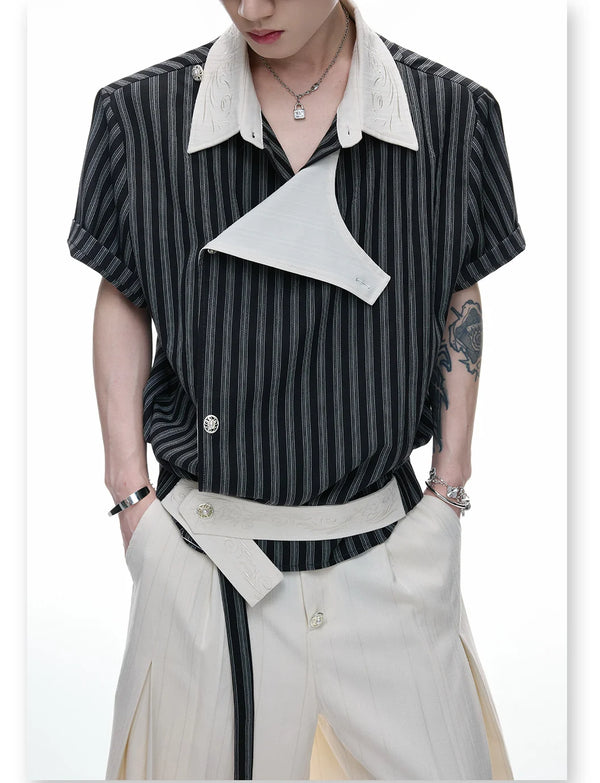
- A script or word detail — a book in hand, a brooch with an initial, embroidery on the collar, a note in the trouser pocket. Script is the signature of Poetcore — but it has to stay subtle, not a print across the chest.
- A muted colour palette — cream, off-white, charcoal, tweed brown, one single accent in Bordeaux, ink blue or moss green. More than one accent tips into loud and loses the code.
- Vintage footwear — brogue, loafer, soft boot, Mary-Jane. Sneakers are out, in any colour. If the shoe looks like someone bought it for a marathon, it doesn’t belong in the Poetcore outfit.
- A single piece of jewellery — a brooch, a slim ring, a delicate chain. Not three at once. Poetcore works with points, not layers.
If you’re missing three of these six points, it’s no longer Poetcore — it’s inspiration. And there’s one rule that holds all six together:
word etymology
Poetcore meaning — what “Poet” + “Core” actually puts together
The word is a composite. Up front “Poet” — from the Greek poiētēs, “the maker, the one who shapes the word.” At the back “Core” — the internet-typical suffix that has marked every sub-aesthetic since Cottagecore in 2018. Together they form a term that is literary and online-native at once. That is exactly what makes Poetcore.
“Core” in Pinterest and TikTok logic has meant roughly this since around 2018: a clearly definable mood that can be gathered in an outfit, a visual language and a sound world. Cottagecore had meadow, basket, floral dress. Dark Academia had tweed, library, Latin. Poetcore has — and this is new — no single visual symbol, but a behaviour. Reading, writing, walking long distances, sitting in the café without a phone.
From that follows a consequence most Pinterest boards miss: Poetcore doesn’t work through images alone. Reduce the look to a selfie and you’ve lost it. The outfit is only the part that stays visible after the behaviour has happened. That is exactly why Poetcore looks different in motion than in a posing shot — and exactly why worn, lightly aged pieces work better than their crisp shop-fresh siblings.
Archetypes
The 5 Poetcore types — from library-quiet to café wanderer
Poetcore isn’t a single look — it’s five that overlap at the edges. Lay Sally Rooney adaptations, Sofia Coppola stills and 2026 Pinterest boards side by side and you see these five types cleanly separated. Each with its own colour spread, its own movement logic, its own setting.
Which of the five suits you depends less on taste than on your daily routine — where you actually read, write, sit, walk. A library-quiet outfit for someone who never reads feels as wrong as a combat boot for someone who never goes to a festival. How that splits between women and men comes next.
Gender split
Poetcore women vs men — where it really runs differently
The rules are the same. Soft tailoring, muted colour, worn texture, a script or jewellery point, no logos — applies to every body. What differs is the line. Where men often work Poetcore with shirt plus vest plus wide-leg, the women’s iteration runs more often through flowing fabrics, lace as a detail and Mary-Janes instead of brogues.
Women’s version: soft fabric stays visible. A lace cuff, a cream collar, a brooch on the lapel. Shoes slide toward Mary-Jane or a soft low-heeled ankle boot. A slim chain with a letter pendant replaces the jewellery layer. The accent lands more often in the lipstick than in the outfit itself — a dark Bordeaux or a faded berry tone.
Men’s version: tailoring becomes more visible. Shirt cuff, a vest with two rows of buttons, wide-leg trousers with a pleat. Shoes are brogue or penny loafer, always in tweed brown or charcoal. Brooch or pin goes on the blazer lapel, a slim chain under the open shirt collar. The accent is usually in the vest — Bordeaux, muted yellow, ink blue.
Both need the same 60-percent vintage-ready base and the same accent discipline. What varies is the distribution — not the vocabulary.
brands & references
Poetcore brands & references — who wrote the code
Poetcore didn’t invent a brand of its own. It’s a composite of literary references, British tailoring and a run of films that have been putting out the same look since the ’90s. Anyone who understands the vocabulary can build Poetcore looks without designer pieces — the vintage market delivers the same quality for a fraction of the price.
The brands and references that wrote the Poetcore vocabulary — mixed chronologically:
- Margaret Howell — in London since 1972. The soft-British-tailoring line. Wool, linen, cotton, neutral colours, durable construction. When a Poetcore outfit feels too grown-up, it’s Howell-adjacent.
- Sally Rooney (books since 2017) — Normal People, Conversations with Friends, Beautiful World, Where Are You. The literary base. The lead characters’ outfits in the TV adaptations are Poetcore default.
- Sofia Coppola’s films — The Virgin Suicides, Marie Antoinette, The Beguiled. Soft pastel palette, vintage tailoring, the stillness between the scenes. Visual anchor for the women’s iteration.
- Greta Gerwig’s Little Women (2019) — wool coats, vest, wide trousers, soft boot. The bridge between historical and wearable, without tipping into costume.
- Margaret Atwood — the author and her staged portraits since the ’80s. Black shirt, high-collared suit, brooch. The older, more serious iteration of Poetcore.
- Frances Ha (Noah Baumbach, 2012) — the New York variant. White shirts, black trousers, Mary-Janes, trench coat. Still works as an outfit blueprint for students.
- The Row — the Olsen brand since 2006. The quiet-luxury interface. When Poetcore wants money, it becomes The Row. When it doesn’t, it looks for The Row lookalikes in the vintage shop.
- A.P.C. and Aspesi — the continental European bridges. A.P.C. for the younger, more urban line, Aspesi for the Mediterranean variant with linen and a sandal-loafer in summer.
Anyone who wants to wear Poetcore without paying designer prices searches the resale market for these brands — Vestiaire Collective, Vinted, Grailed in the vintage categories — or turns to DTC labels that translate the vocabulary competently into streetwear prices.
key pieces
Key pieces for the Poetcore blazer look
If only one look should sum up this guide, it’s the blazer look. It’s the iteration Pinterest ran as its 2026 cover image, and it’s the most beginner-friendly variant — because every single piece in it also translates into other codes (Businesscore, Old Money, light Dark Academia). Six pieces carry the whole look.
- The oversized blazer — wool or a wool blend, an unpadded shoulder, slightly overlong sleeves. Charcoal, tweed brown or off-black. Lifts the whole outfit a level — and turns shirt plus trousers into a complete look statement.
- The wide-leg pinstripe trousers — pleat, high waist, wide cut at the leg. The pinstripe line is the script trick: fine vertical stripes read as a text element without anyone having to see a typewriter.
- The shirt — cotton or light wool, a soft collar, a long cuff. White, cream or a very pale pastel variant. Full button placket, no logo.
- The vest or the cardigan — wool, one or two rows of buttons, no zip. Layer two between shirt and blazer. In summer it replaces the blazer entirely.
- The brogue or penny loafer — leather, slightly worn. Tweed brown, charcoal or dark burgundy. Never black like a suit shoe, always with some patina. Sneakers break the look in a second.
- The one accessory — a brooch on the lapel, a slim ring, a delicate letter chain, or a book under the arm. Exactly one. Not three. Poetcore sets a point, not a stack.
Once you own these six pieces — and have worn them a while so they get their patina — the blazer look works year-round. In summer without the blazer, in autumn with a trench over it, in winter with a heavier knit layer. The base stays the same.
Category · Outerwear
Poetcore outerwear — wool coat, trench, oversized blazer
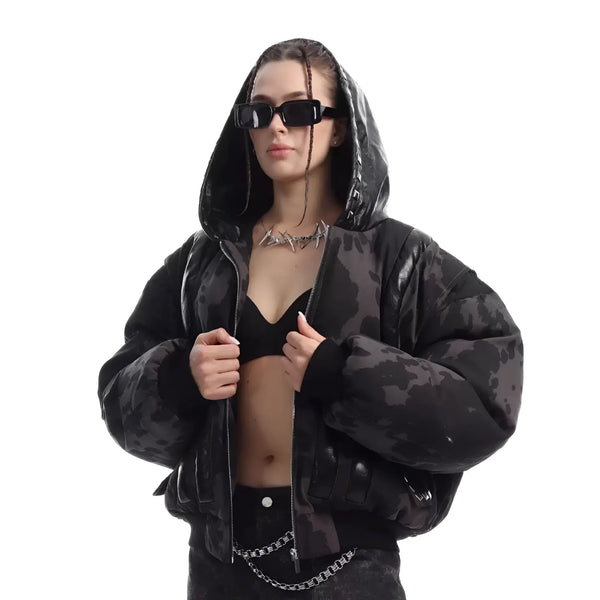
The outer layer carries the Poetcore outfit outside. It’s the first surface anyone sees — the test of whether the outfit really knows the code or only knows the word. Three jacket types carry Poetcore: the oversized wool blazer (the versatile version), the trench coat in tweed brown or cream (the literary-direct version), and the bomber in a wool blend or leather with a soft patina (the younger, more urban iteration).
What doesn’t work: thick down jackets with a visible logo, shiny synthetic material, anything in neon accents. The outer layer has to be matte, the construction visible, the fabric breathable. If your jacket rustles when you sit down, it doesn’t belong to Poetcore.
If you don’t yet own an oversized blazer and a good wool coat, your Poetcore wardrobe starts right here. Everything else in the outfit depends on how the outer layer falls.
Category · Trousers
Poetcore trousers — wide-leg pinstripe, wool, tweed
The trousers decide whether the Poetcore outfit becomes a quiet line or a corset of fabric. Skinny is out — Poetcore is built for movement, for long walks and hours of sitting, and neither works in tight trousers. Wide-leg with a pleat is the default. Pinstripe is the script trick.
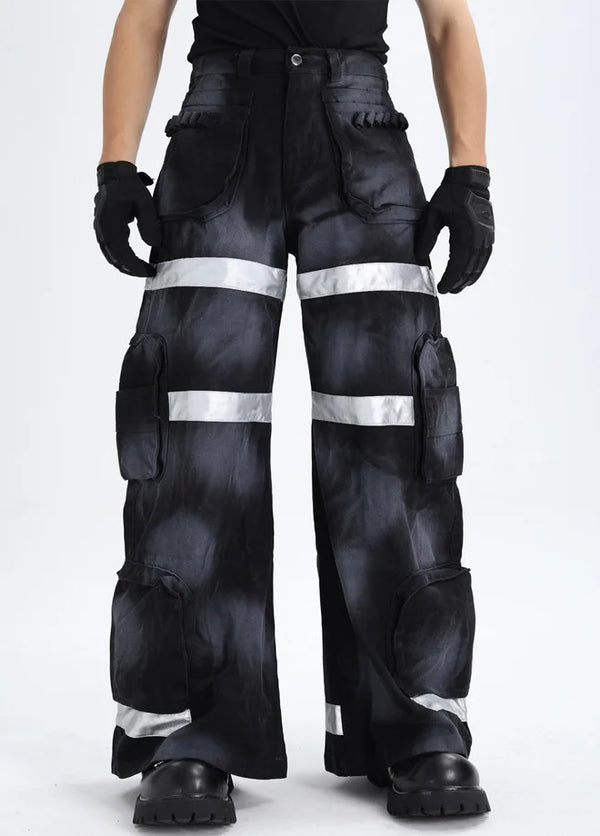
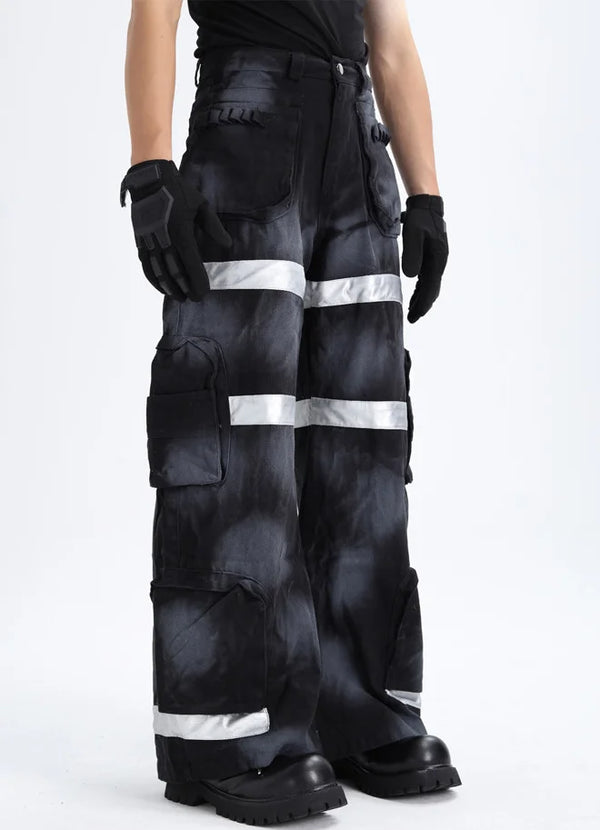
Three trouser types work: wide-leg pinstripe (the literary anchor), wool in charcoal or tweed brown (the quiet version), and soft linen trousers in summer (the Mediterranean variant). Cargo pants are out — they belong to Techwear or Streetwear, not to Poetcore.
For a reference on the right width: the hem should rest on the shoe and throw a small break, but not cover the whole shoe. Too long reads as hip-hop, too short as cropped trousers. The middle is the Poetcore point.
Category · Tops
Poetcore tops — shirt, vest, cardigan
The layer against the body is Poetcore’s personal line. This is where it’s decided whether the look is quiet (cardigan plus T-shirt), deliberate (shirt plus vest) or deliberately staged (shirt plus vest plus brooch). Three top types work: the soft shirt (cotton or light wool, soft collar), the vest or the cardigan (wool, no zip, two rows of buttons optional), and the coarse knit jumper (for the quietest iteration).
What doesn’t work: T-shirts with a big print, sweatshirts with a logo, anything in shiny polyester. If the top looks like it belongs in the gym, it doesn’t belong in the Poetcore outfit. A plain white T-shirt under the cardigan is fine — as a visible main layer, rather rare.
If you don’t yet own a cream shirt and a wool cardigan, those are the first pieces that belong in your wardrobe — before you invest in the blazer. The layer against the body carries the outfit longer than any outer layer.
Distinction
Where Poetcore ends and the neighbouring codes begin
Poetcore doesn’t stand alone — it overlaps at several edges with other literary-romantic aesthetics. Dark Academia shares the book reference and the wool texture, but is darker and more historical. Cottagecore shares the patina and the stillness, but is rural instead of urban. Old Money shares the quiet-luxury line, but is older and more conservative. Anyone who has Poetcore down can read these neighbouring codes and mix deliberately, without losing their own code.
The most direct neighbour is Dark Academia — same wool fabrics, same book reference, but darker, older, more Latin and tweed. Anyone who wants to wear Poetcore and already has Dark Academia pieces in the wardrobe has half the code:
And here are the four most important neighbours — each with its own guide, if you want to go deeper:
Seasonal
Poetcore in spring/summer vs autumn/winter
In autumn and winter, Poetcore is easy. Wool blazer, wool trousers, cardigan, soft boot. A trench over it when it rains, a wool coat when it freezes. Six layers if you need them, all muted, all working. The challenge comes in spring and summer, when the wool layer (= the main carrier of texture) falls away.
Spring and summer Poetcore works through what used to be under the coat. A linen shirt becomes the main view. Wide-leg wool is replaced by linen wide-leg — wool at 28 °C is dead. The brooch stays, the book stays, the one accent stays. What falls away is only the weight.
The year-round solution also comes through fabric choice: invest in a wool-linen blend instead of pure wool and you can wear the same piece from April to October. More money, less wardrobe. Exactly the right ratio for an aesthetic that puts movement and patina above new goods.
What does not work
The 6 most common Poetcore mistakes — what you must NOT do
Poetcore has six spots where it reliably tips over — no matter how expensive the individual pieces are. If you avoid just one thing, make it mistake number one.
Getting started
First 4 pieces for the Poetcore entry
Anyone trying Poetcore for the first time shouldn’t buy ten pieces at once. Four are enough to wear the code cleanly once — and by the third outfit you know which of the four is your favourite and which one you’ll want to duplicate more often.
Wear this combination for a whole week. You’ll notice right away what fits and what’s missing. If the cardigan works, buy a second one in a different colour. If the pinstripe trousers sit too tight at the waist, try the wide-leg without the pinstripe. From the third outfit on, you vary it yourself.
What the outfit actually looks like on the street — not in the studio, but on the way to the library, in the café, at the desk — you’ll see on Instagram, from people who wear Poetcore without using the term for it.
Closing
Poetcore isn’t a costume — it’s an attitude
The whole Poetcore logic reduces to one sentence:
The rules have been stable since 2025 and will stay that way — as long as Pinterest, Sally Rooney and the café-after-midnight are in play. But you don’t have to wait until you know them all by heart. Start with the one look that best fits your daily routine. What you don’t know, you learn by wearing it.
And that’s the point: in theory Poetcore reads like a corset of rules, but in practice it doesn’t feel that way. Once you have the code down, every further outfit is a variation on the same six building blocks — not a new invention.
FAQ
Frequently asked questions about the meaning of Poetcore
The questions we often get by DM and email — short, clear, no detours.
What does Poetcore mean in English?
What is the Poetcore style?
What are the most important pieces for a Poetcore blazer look?
What’s the difference between Poetcore and Dark Academia?
Where can you buy Poetcore clothes without paying designer prices?
Does Poetcore work in summer too?
Is Poetcore the same as Bookcore or Coquette?
What do you think?
Tell us on @fuga_studios
About the author
Philipp Fuge — Founder · Berlin
Founder of Fūga Studios. Writes the journal himself. Berlin · Shanghai · Tokyo · Poznań — four cities, one logic.