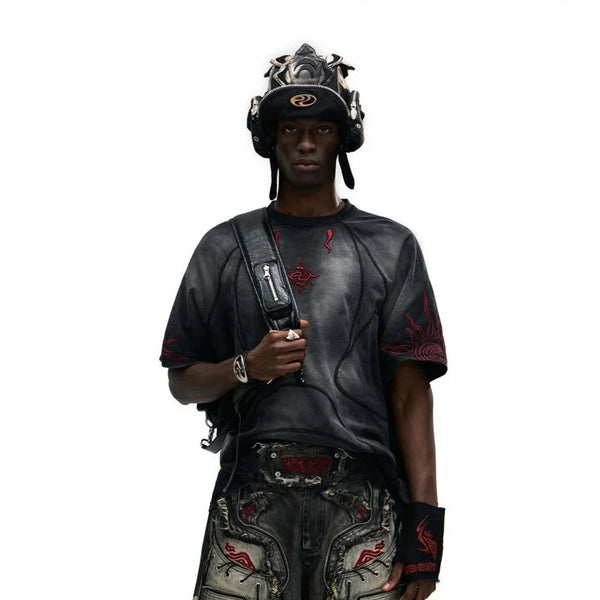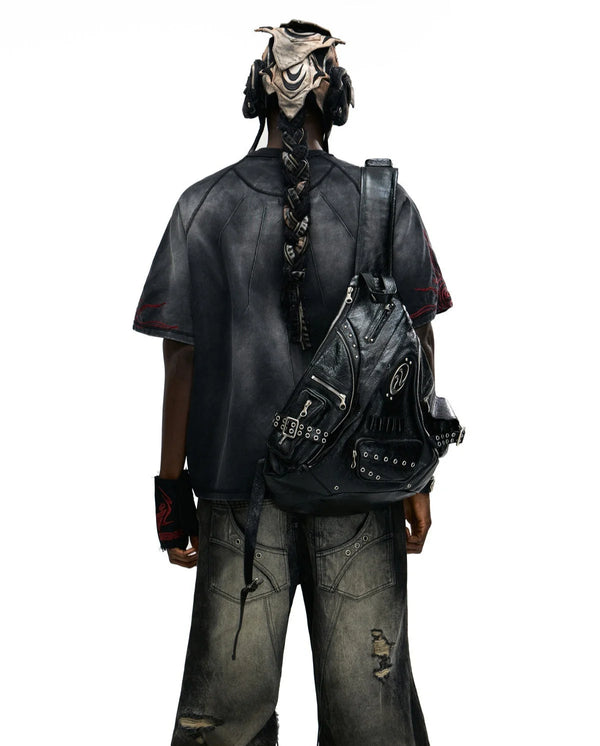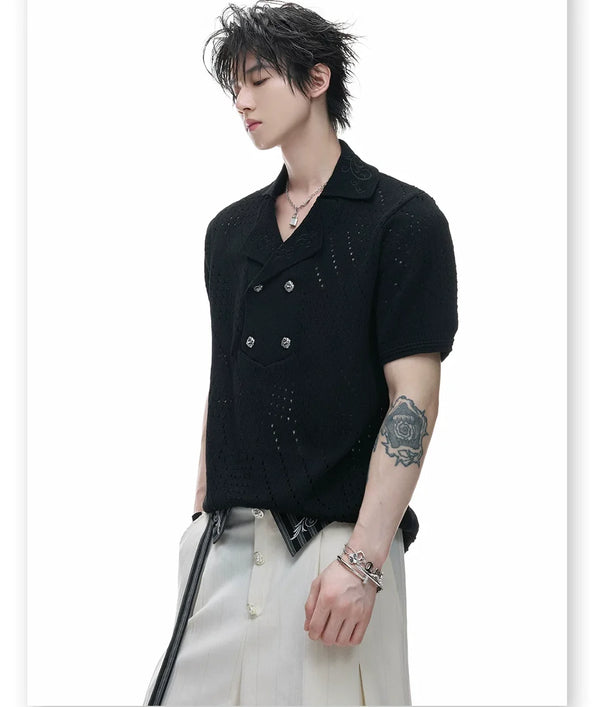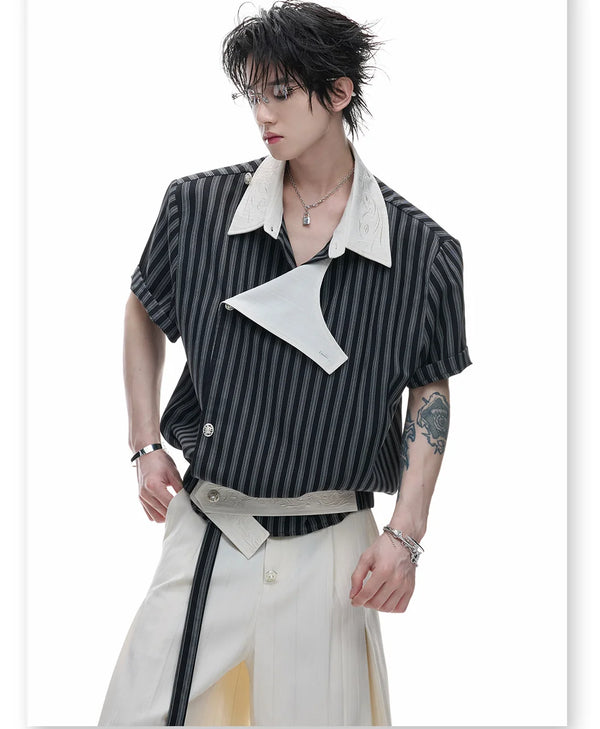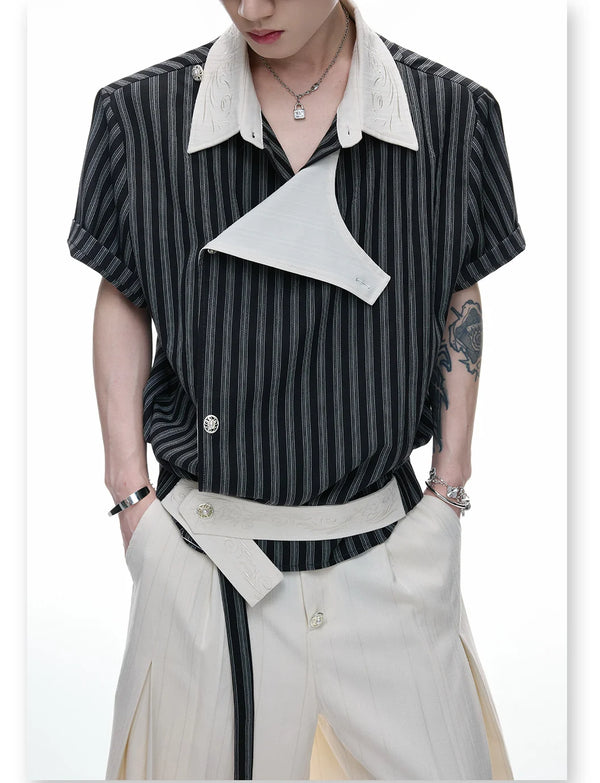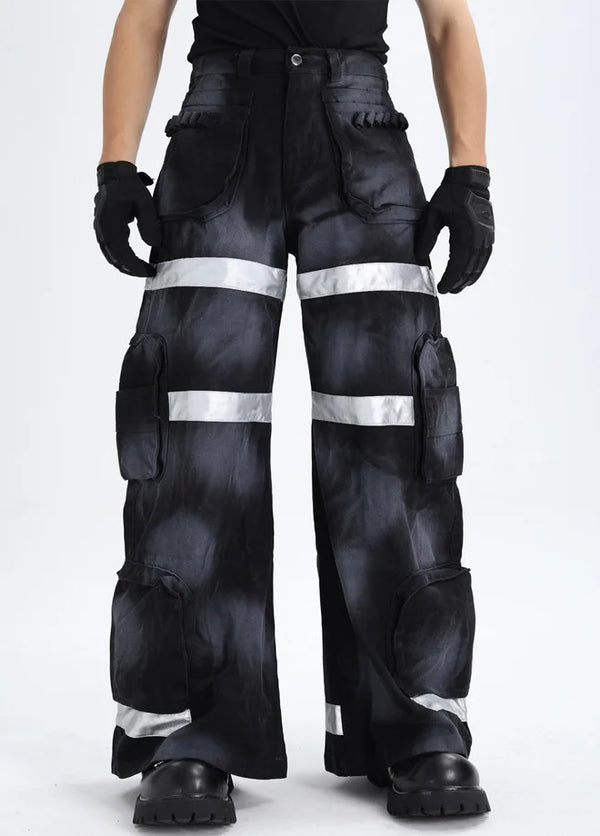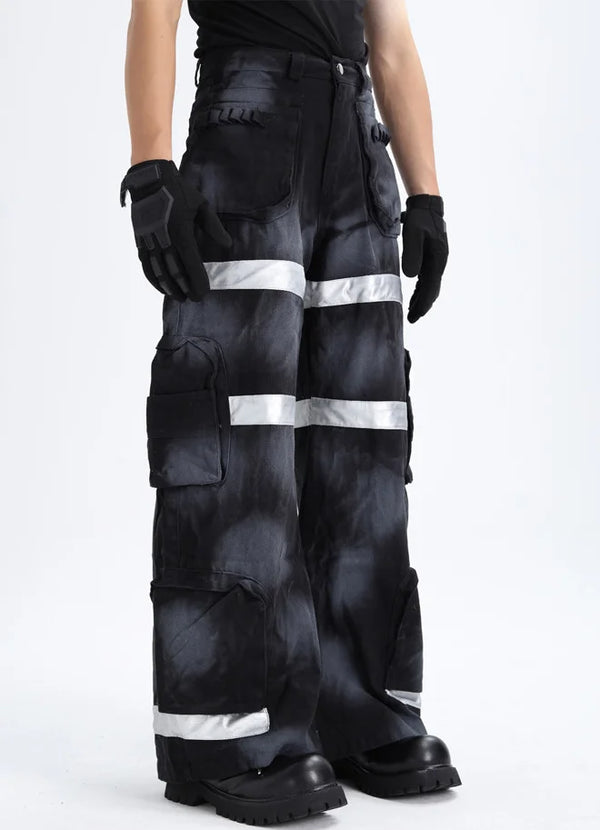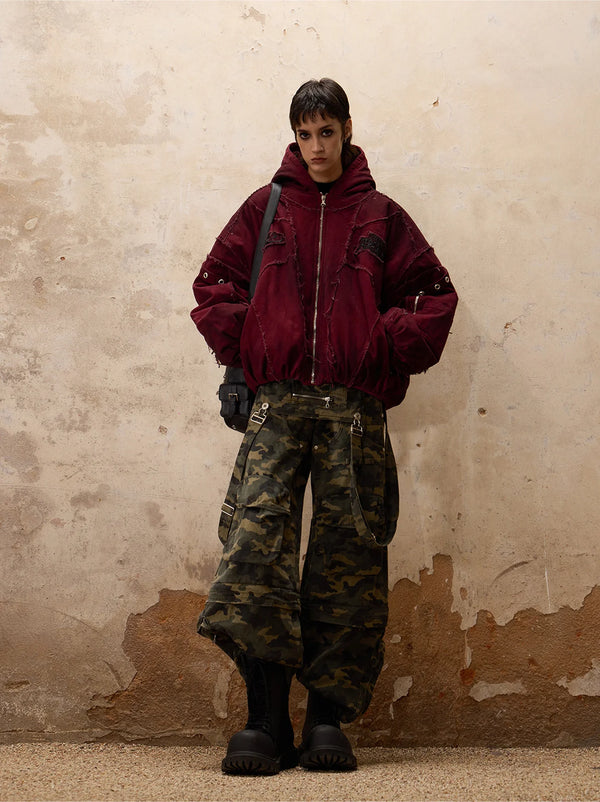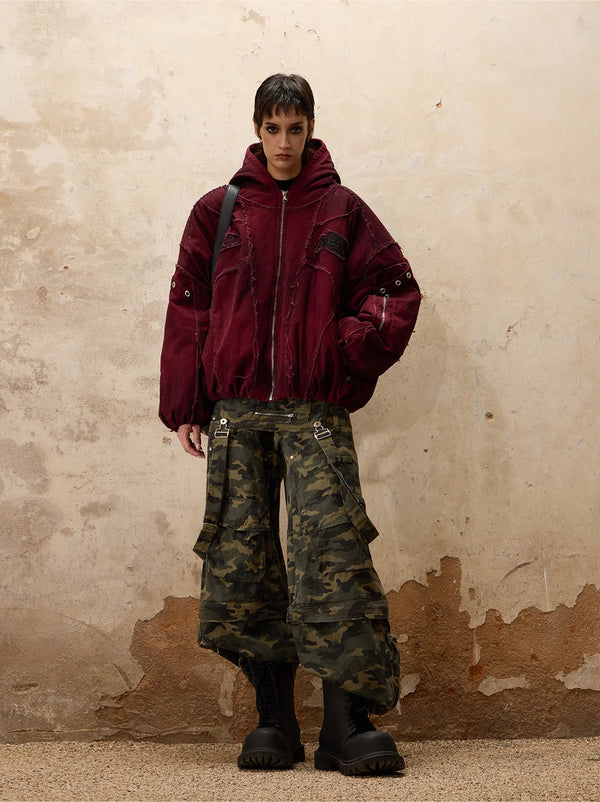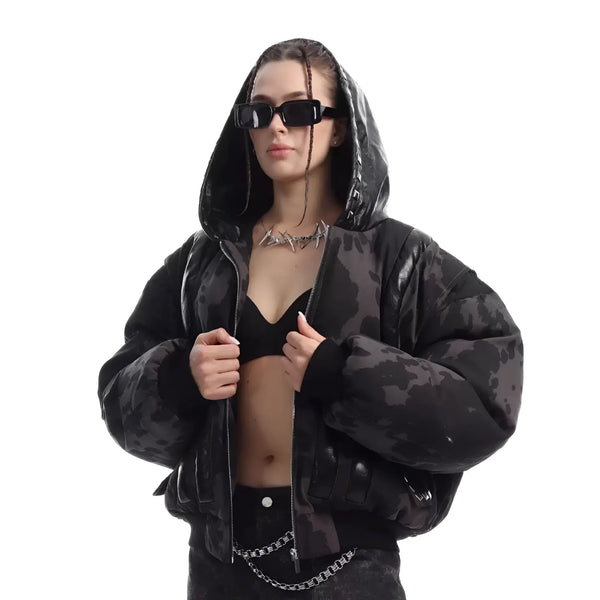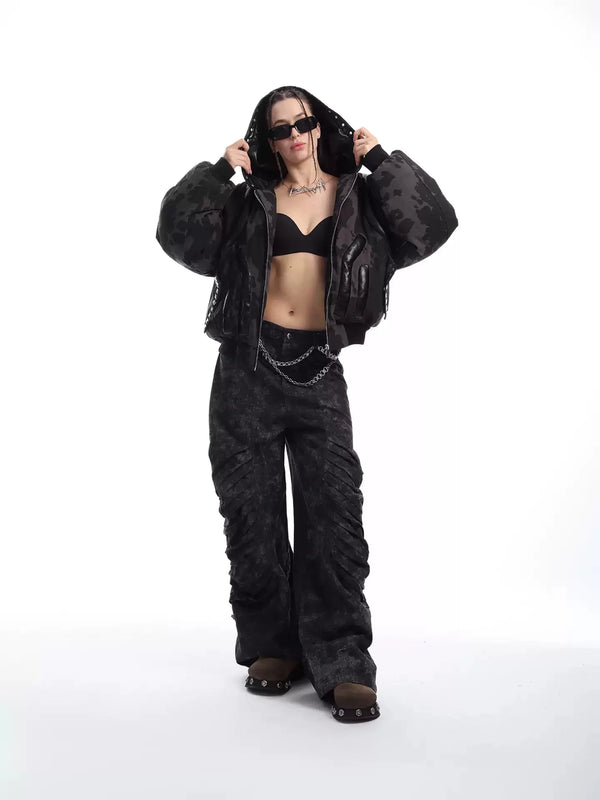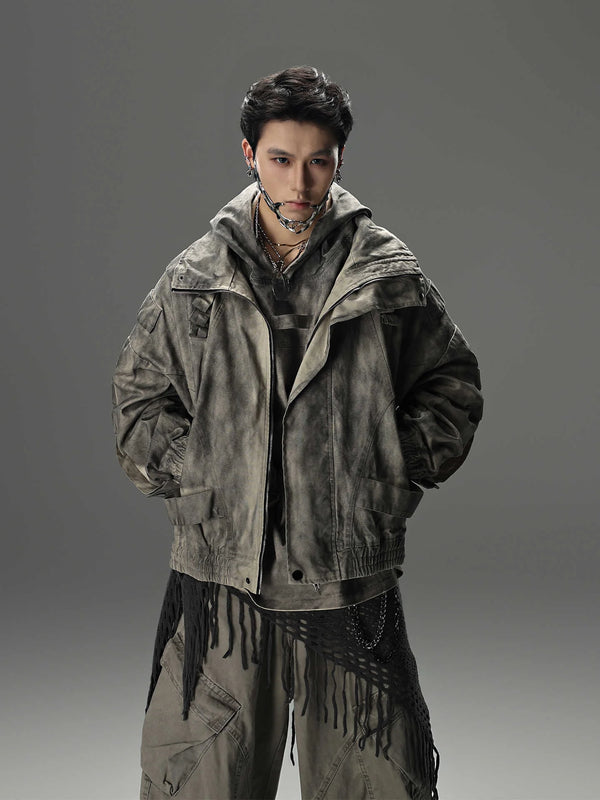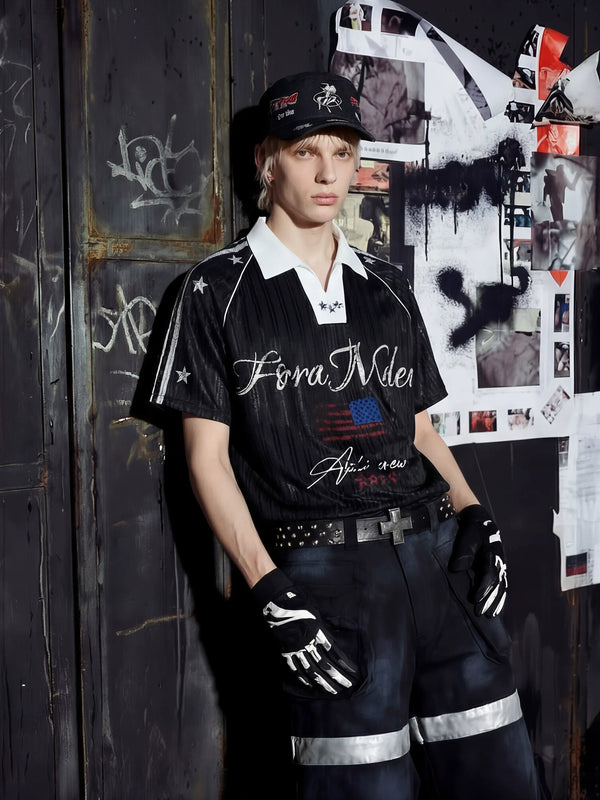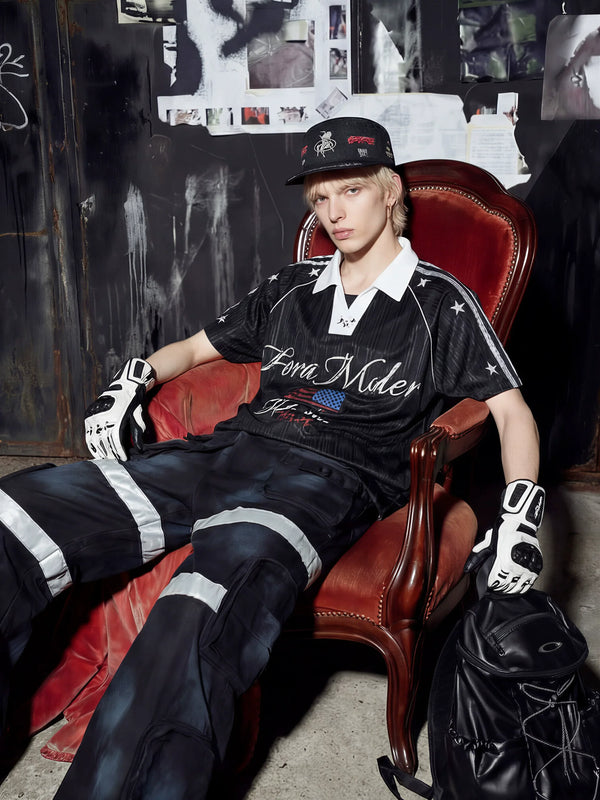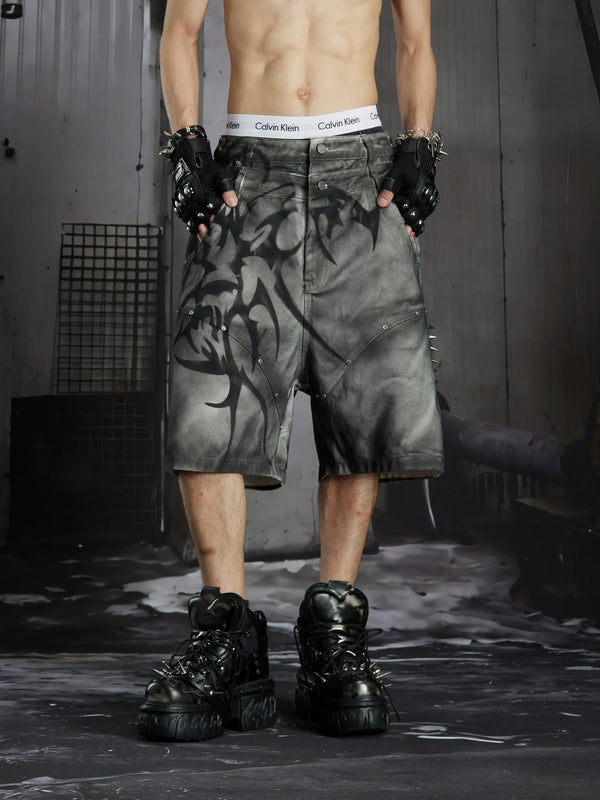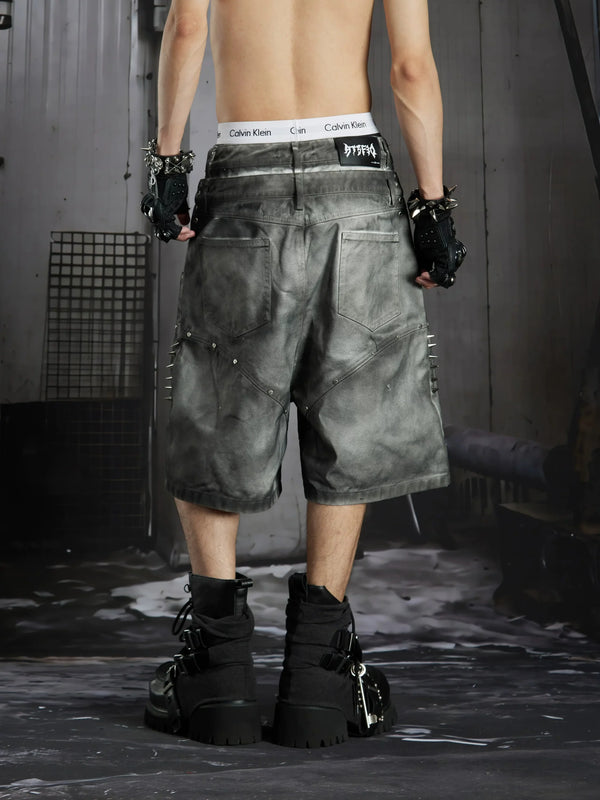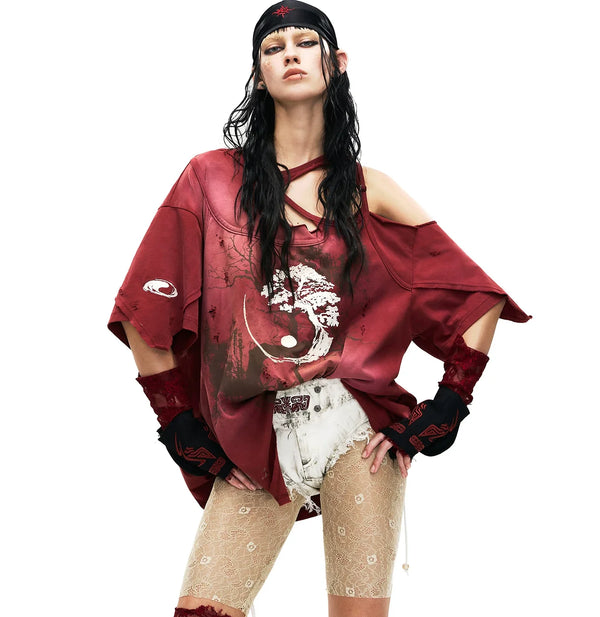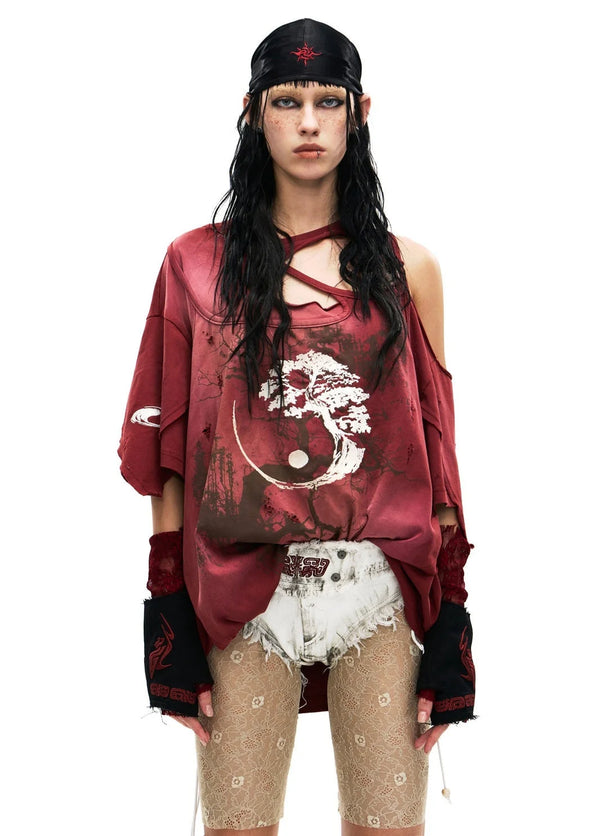
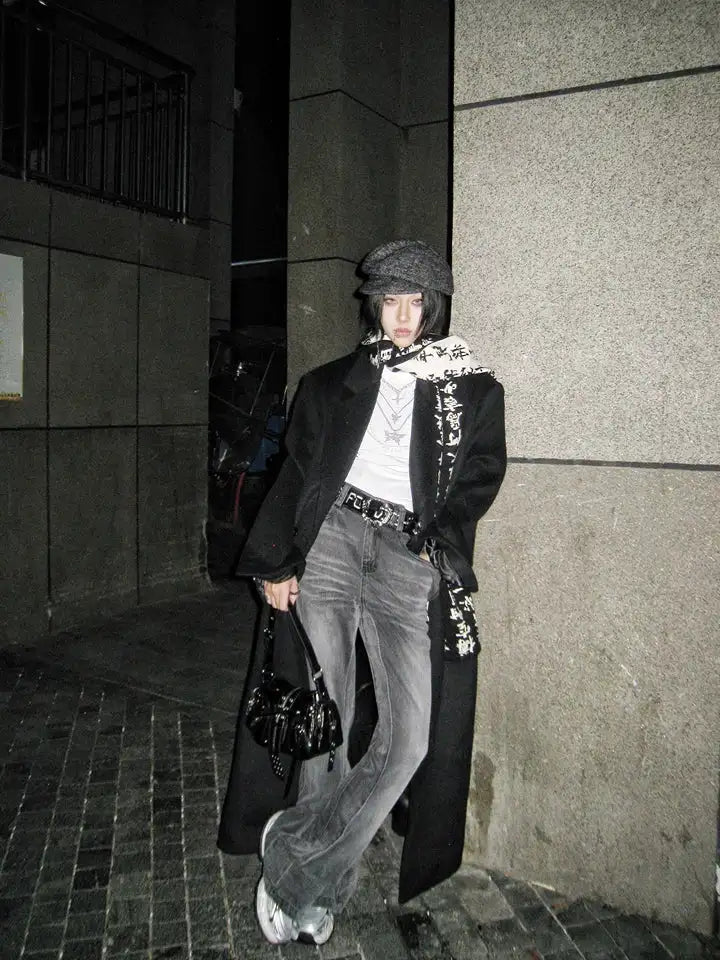

Everyone calls Glamoratti „the new Quiet Luxury”. They're wrong. Glamoratti is the opposite — loud, geometric, broad-shouldered, with gold in the places that got written off as „too much” for ten years. Anyone who reduces it to a beige cashmere sweater in the fitting room hasn't read the Pinterest Predicts report.
Glamoratti is Pinterest Predicts™ 2026 — an 80s power revival with Art Deco edges, sculpted shoulders, baggy suits and chunky gold jewelry. After years of cleaner, paler, smaller, the logic has flipped: fabric that fills the room. A shoulder that owns it. Jewelry that answers before you speak. This isn't Office Siren, isn't Mob Wife, isn't Old Money. It's a code of its own, and since March 2026 it has taken on a life of its own on Pinterest, Vogue and Instagram.
Anyone selling Glamoratti as „80s cosplay with glitter” has mistaken the code for a costume-party outfit. This guide clears up what's really behind it: where the term comes from, what the five pillars are, how women and men split it, which brands wrote the heritage, how it translates into suits / trousers / tops, and which six mistakes make the look collapse instantly.
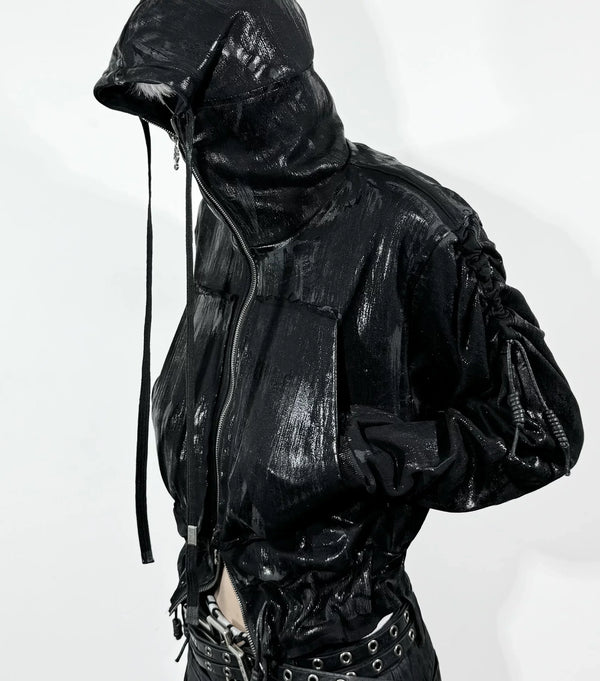
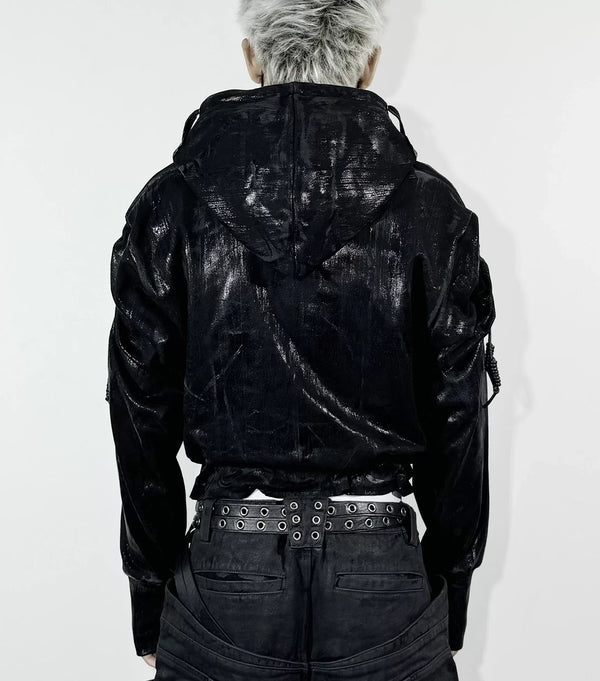
What it looks like on a single line in 15 seconds — metallic fabric, hard silhouette, the gold tone sits right:
Origin
What does Glamoratti mean? Pinterest Predicts 2026, in one word.
Glamoratti is a portmanteau of „glamour” and the Italian letterati — the „glamour-literate”, so to speak. A term Pinterest pushed into the Pinterest Predicts™ 2026 report in April 2026 to describe a mood that had been exploding in searches since late 2025: 80s power revival, Art Deco filter, baggy tailoring, chunky gold, sparkle. Searches for „big shoulder blazer” rose 145% in 2025, „chunky gold jewelry” 90%, „art deco fashion” 60% — Pinterest bundled the cluster and named it Glamoratti.
The vocabulary existed before — at Giorgio Armani since 1980, Thierry Mugler since 1981, Claude Montana since 1979, Donna Karan since 1985, Versace since the first gold-Medusa show in 1992. Pinterest's contribution isn't invention but compression: everything that had been scattered across the 80s power spectrum, the Mob Wife trend and the Art Deco revival for decades, packed into one term a 23-year-old on Instagram instantly gets.
So concretely, Glamoratti means: 80s decade of decadence, reinterpreted for 2026. Not copied back one-to-one — the heavy shoulder pad sits softer today, the baggy suit is tailored rather than boxy, the gold jewelry is chunky but not „nouveau riche”. It's what you wear when minimalism has ruled fashion for ten years and the body wants shape again.
Definition
Glamoratti vs. Quiet Luxury — why 80s power is arriving now
Glamoratti is the direct backlash against ten years of Quiet Luxury. Where Quiet Luxury hides, Glamoratti unpacks. Where Old Money wears beige, Glamoratti wears champagne gold. Where Clean Girl wears 0.5 carats, Glamoratti wears the cocktail ring. The shift isn't subtle — it's tectonic.
+145 %
Searches „big shoulder blazer”
+90 %
Searches „chunky gold jewelry”
+60 %
Searches „art deco fashion”
5
Pillars of the code
These four numbers aren't decoration. They're the foundation. Pinterest didn't invent the trend — the searches were already there. Pinterest only named it. That makes Glamoratti a sub-aesthetic that doesn't come from a designer but from the collective shift in mood: after the pandemic, after Quiet Luxury fatigue, after Clean Girl exhaustion. People want shape, shine, presence again.
What counts as Glamoratti, concretely:
- Sculpted or padded shoulder — the shoulder line sits higher and wider than the natural bone. This is the non-negotiable pillar.
- Tailored-baggy trousers — pleated, wide-leg, just grazing the floor at the ankle. Skinny is out, boyfriend is out, baggy with a crease is the look.
- Chunky gold jewelry — cocktail ring, statement belt with a gold buckle, hoop or ear cuff the size of a small bowl. Subtle is out.
- Sparkle or metallic element — sequin skirt, metallic trousers, lurex knit, satin blouse. No all-over glitter, but one field of shine per outfit.
- Art Deco geometry — chevron, sunburst, stepped edge, symmetry. On a blouse, a belt, a shoe. Not everywhere, but visible somewhere.
- Neckwear comeback — tie with the suit (women AND men), foulard, pussy bow. The neck is no longer bare.
If three of these six points are missing, you've landed in a different trend. Four without the shoulder? That's Mob Wife. Four without gold? That's 90s-style power dressing. Four without sparkle? That's Businesscore. The one rule that holds all six together:
Archetypes
The 5 pillars of the code — shoulder, suit, gold, sparkle, chevron
The five pillars aren't style types — they're the building blocks every Glamoratti look is assembled from. You can have all five in one outfit (spring-2026 Vogue-cover level) or three of them (everyday, Berlin-ready, office-ready). Fewer than three and you're in the neighboring trend.
Gender split
Glamoratti women vs. men — where the code splits
Glamoratti splits between women and men more sharply than most 2020s codes. With Y2K or Techwear the silhouette is largely unisex. Not here. Women get the power suit with sparkle, jewelry as the main clause, a tailored shoulder. Men get the baggy suit with a tie, metal reduced to belt buckle and ring, a shoulder that's padded rather than sculpted. Two splits, one logic.
For women the suit isn't „office” — it's a statement. Power-shoulder blazer with a tight waist, pleated trousers with a crease, sequin top under the jacket, chunky hoops and a cocktail ring. A pencil skirt works too — pencil cut with a slit, satin blouse with a pussy bow or a metallic-shine knit. Gold sits between neck, hand and hip. The look works at a gallery opening just as well as in a tech office.
For men the code runs differently. The suit is a size up from slim fit — shoulder rounded and padded, trousers pleated with a crease, the leg ending exactly on the shoe. The tie is back (wide, lightly shiny, burgundy or deep green). Jewelry is sparing: one thick signet ring, a gold chain under the shirt, a statement watch. Sparkle lands in the fabric itself — a light sheen in the suit cloth, not in the jewelry.
Where the split tips: when women take the men's cut (oversized boyfriend suit with no waist) or men overdo the women's sparkle (sequin blazer as a daytime outfit). Both work in editorial, both break in everyday life.
Brands
Glamoratti brands & heritage — from Armani '80 to Mugler today
Glamoratti has no single inventor brand but a heritage line. Six houses wrote the code between 1979 and 1992 — today three or four designers set the update. Anyone who wants to trace the vocabulary starts here:
- Giorgio Armani (from 1980) — the power suit for the working woman. Soft tailoring with a serious shoulder. The visual foundation for everyone from Diane Keaton to Hillary Clinton.
- Thierry Mugler (from 1981) — the sculpted shoulder as sculpture. Robot silhouette, tailored suit, shiny fabrics. The most direct template for 2026.
- Claude Montana (from 1979) — the sharp shoulder in a military cut. Leather, wool, asymmetric zippers. The harder end of the spectrum.
- Donna Karan (from 1985) — „Seven Easy Pieces” as modular power dressing. Jersey, pleated trousers, bodysuit. The practical middle ground.
- Gianni Versace (from 1982) — the gold. Medusa head, baroque print, sequin mini. The shine pole, without which Glamoratti would tip over.
- Christian Lacroix (from 1987) — couture decadence. Pouf skirt, gold embroidery, theater. The maximal end, quoted more than copied today.
Today the heritage is carried on by three houses: Daniel Roseberry at Schiaparelli with gold surrealism and anatomy jewelry, Brandon Maxwell with power tailoring for the American front row, and Magda Butrym with sculpted shoulders and lurex knit out of Warsaw. Khaite holds the more minimalist wing, Tom Ford the darker one. And Mugler — today under Casey Cadwallader — delivers what it already delivered in 1981, in a 2026 cut.
Jackets
Suits & blazers — the heart of the code
If you buy just one piece, buy the blazer. Glamoratti stands and falls on the shoulder, and the shoulder is built in the blazer. Three cuts carry the code today: the sculpted power blazer with a high shoulder and tight waist (women), the oversized double-breasted with a padded shoulder and creased lapel (men and women), and the sequin blazer as an evening variant (mainly women, but not exclusively).
Material matters more here than with most codes. Wool with some body, tropical wool, light new wool, ideally worsted. A polyester shock is allowed if the shine is part of the look (metallic lurex blazer for evening). Pure synthetic in a wool-suit cut reads as a costume — the most common beginner mistake.
Trousers
Trousers — pleated, wide-leg, crease to the ankle
The trousers are the volume counterweight to the shoulder. When the top is sculpted and narrow, the bottom has to be wide and heavy — otherwise the suit looks torn apart. Three cuts carry the code: pleated wide-leg (the classic, with two or three pleats at the waistband), high-rise trumpet (bell from the knee), and the pencil cut for pleat-avoiders — tight on the leg but with a slit and a sharp ankle line.
A crease isn't mandatory, but very Glamoratti. It pulls the eye from knee to floor and makes the trousers look longer and narrower than they are. Skip the crease and you bring back pleats with fabric body (heavy tropical wool or cady) — otherwise the trousers hang instead of falling. Ankle position: just grazing the floor, not rolled up, not resting on the shoe.
Tops
Tops — pussy-bow blouse, sparkle knit, bodysuit
When the blazer is worn open (which the code often recommends), the top matters. Three categories work: satin or silk blouse with a pussy bow or collar bow (the 80s power element straight from the Armani archive), lurex or sequin knit (the sparkle pole), and the black bodysuit with a high collar (the minimalist pole that leaves room for jewelry).
What doesn't work: the white basic T-shirt under the power blazer. It pulls the look into Quiet Luxury. If you need the T-shirt effect, go for a black, slim rib knit or a deep-gray cashmere knit — both read as intentional, not unfinished. And logo tees are completely out. Glamoratti communicates through shape and material, not through branding.
Jewellery
Gold & sparkle — chunky cocktail ring, statement belt, ear cuff
Gold isn't a detail in Glamoratti — it's a main clause. One piece may hold the whole outfit, provided it's big enough. Five jewelry categories carry the code: the cocktail ring (at least 2 cm wide, ideally with a green or red stone), the thick hoop (4–6 cm across), the ear cuff (anatomy jewelry rather than studs), the statement belt (gold buckle the size of a saucer), and the layered chain (two to three gold chains of different lengths at the neck).
What most people get wrong: delicate, thin, „layered” — that's Quiet Luxury. Glamoratti is visible. If your jewelry doesn't stand out, you haven't chosen it loud enough. The Pinterest Predicts description was literally „chunky gold jewelry” — chunky means thick, heavy, bulky. Gold-toned instead of 18k is fine, as long as the shape sits and the color is warm (champagne, not lemon yellow).
Sparkle runs in parallel — sequins, lurex, metallic. One field of shine per outfit is enough: either on the top (sequin blouse), on the trousers (metallic pant), on the jewelry (cocktail ring with a stone), or on the shoe (glitter pump). Two fields of shine at once tip the look into a New Year's Eve outfit.
Styling
How to really style Glamoratti — the wealth test
The most common PAA on the topic is „How do you dress glamorously?” — followed directly by „What makes a woman look wealthy?”. Both questions mean the same thing: what does money look like in 2026 without it costing money to feel like it. Glamoratti has a concrete answer: shape, material, shoulder, jewelry. In that order.
Wealthy looks like someone who took the time for the shape. Not for the logo, not for the price, not for the trend — for the shape.
Glamoratti-Test, drei Punkte
The wealth test runs through three filters, concretely. First: shape. Does the shoulder sit higher than the bone? Do the trousers fall with body rather than hang? Does the blazer have a waist (women) or a stand (men)? If yes — point one is done. Second: material. Wool with content, silk or satin, leather with patina, cashmere rather than acrylic. Polyester only if the shine is part of the look. Third: jewelry size. If your jewelry can't be seen from a meter away, it's too small for Glamoratti. Chunky means visible.
What breaks the wealth test: visible logos (pulls everything into influencer style), a synthetic suit (pulls everything into costume), no jewelry (pulls everything into office), too much jewelry (pulls everything into Mob Wife). Three pieces of gold are a maximum for day, five for evening. No more.
For anyone who wants to go deeper: the following articles break the code down into its individual axes — meaning, aesthetic history, power dressing, makeup, everyday-ready style:
Seasonal
Seasonal — summer sparkle vs. winter sculpture
Glamoratti has two clearly different seasonal modes. In summer the code gets lighter and shinier: lurex knit instead of a wool blazer, satin blouse instead of cashmere, metallic sandal instead of pump. The shoulder stays — but it sits in a bouclé top or structured linen rather than a heavy wool suit. Gold gets more (warm skin carries it more easily), sparkle gets more (the sun's shine on sequins is part of the look).
In winter the code tips into sculpture. The wool suit comes back, leather comes in, the long coat with shoulder pads becomes the main piece. Gold sits firmer, fewer pieces, heavier material. Sparkle moves from the fabric into the jewelry detail. Knit gets thicker, hoops stay big. The look works at openings and galas, less in the office everyday.
What the winter volume looks like in motion — heavy shoulder, shiny material, gold accent:
Mistakes
The 6 most common Glamoratti mistakes — what makes the look collapse
Glamoratti is more forgiving than Opium or Techwear — you can set a few pillars weaker and the code holds. But there are six mistakes that instantly pull the outfit into a neighboring trend or worse: into costume. Here they are, in order of frequency.
Getting started
How to start in Glamoratti — the first 4 pieces
You don't need a full wardrobe swap. Four pieces are enough to activate the code, and you can buy them across four drops. Order matters — the shoulder comes first, the rest builds on it.
Piece one is the blazer with a stand. Sculpted shoulder for women, padded shoulder for men, tight cut or oversized double-breasted. Piece two is the trousers: pleated wide-leg, crease, ankle just grazing the floor. Piece three is gold: a cocktail ring or a statement belt — decide by jewelry preference, both carry the outfit alone. Piece four is the top: satin blouse with a pussy bow, lurex knit or cashmere bodysuit. Four pieces, one logic.
Real outfits
Glamoratti for real — what it looks like on Instagram
Pinterest coined the term, but Instagram wears the look — mostly in the profiles of fashion editors, smaller couture houses and a growing movement of stylists between Milan, Berlin and Seoul. The real outfits look less editorial than the Pinterest boards: fewer full sequin looks, more of a mix of one strong Glamoratti piece and a quieter rest.
Conclusion
Glamoratti is a code — not a trend, not a costume
Glamoratti isn't a Halloween outfit from the 80s archive. It's not a Mob Wife update and not a Bridgerton cosplay. It's a code — five pillars, one logic, a precise shift in mood after ten years of Quiet Luxury. Anyone who's grasped that can wear the look in 2026 without looking like 1986.
FAQ
Frequently asked questions about Glamoratti
What does Glamoratti mean?
How do I dress glamorously in 2026?
What’s the difference between Glamoratti and Quiet Luxury?
What makes a woman look wealthy?
Can men wear Glamoratti?
Which brands are writing Glamoratti right now?
How do you start with Glamoratti?
What do you think?
Tell us on @fuga_studios
About the author
Philipp Fuge — Founder · Berlin
Founder of Fūga Studios. Writes the journal himself. Berlin · Shanghai · Tokyo · Poznań — four cities, one logic.