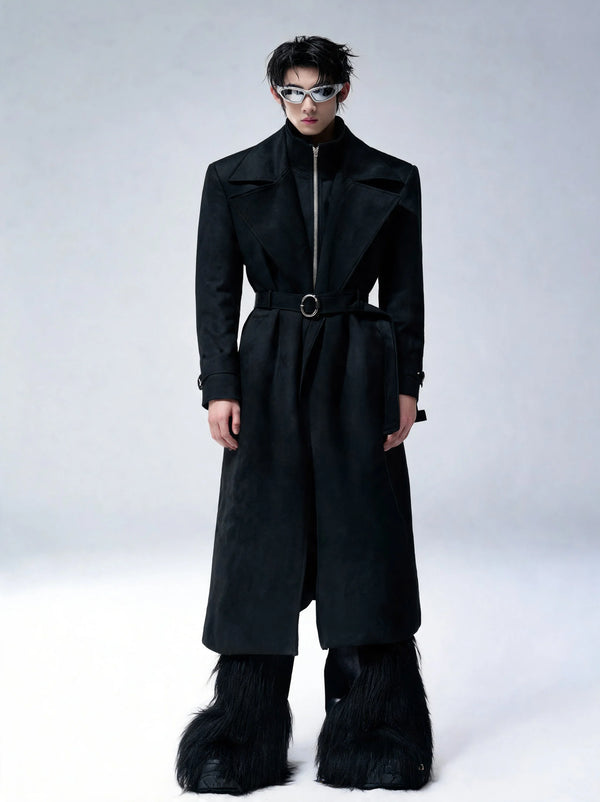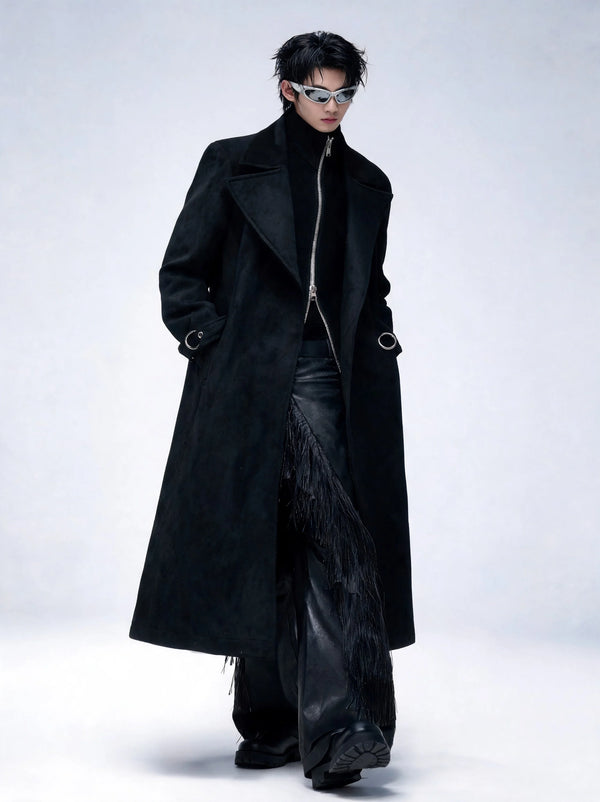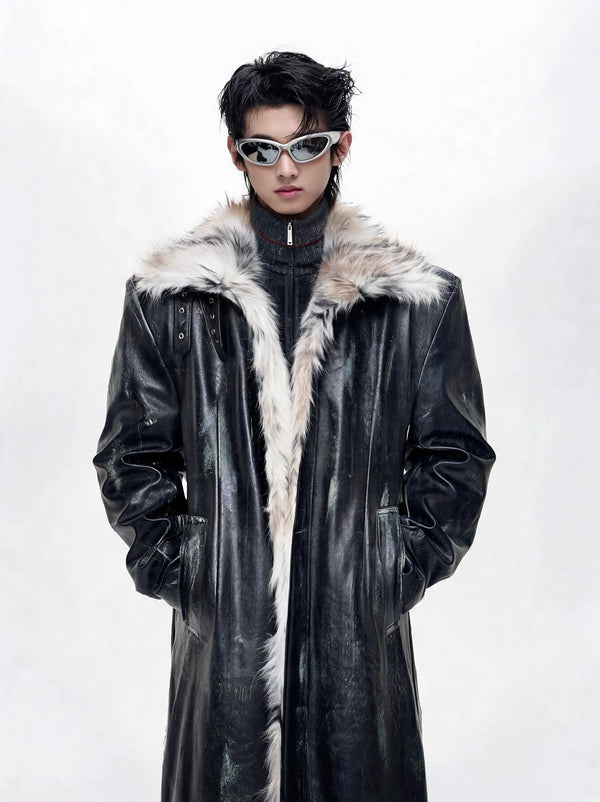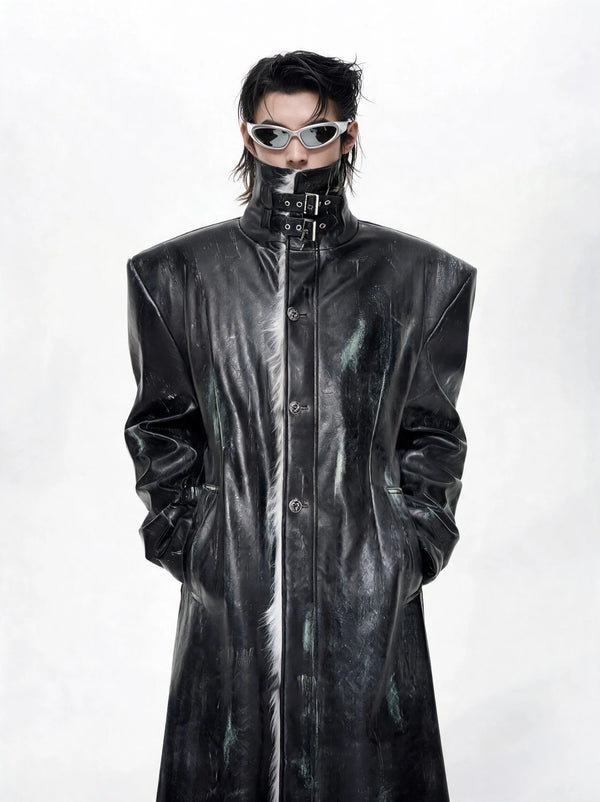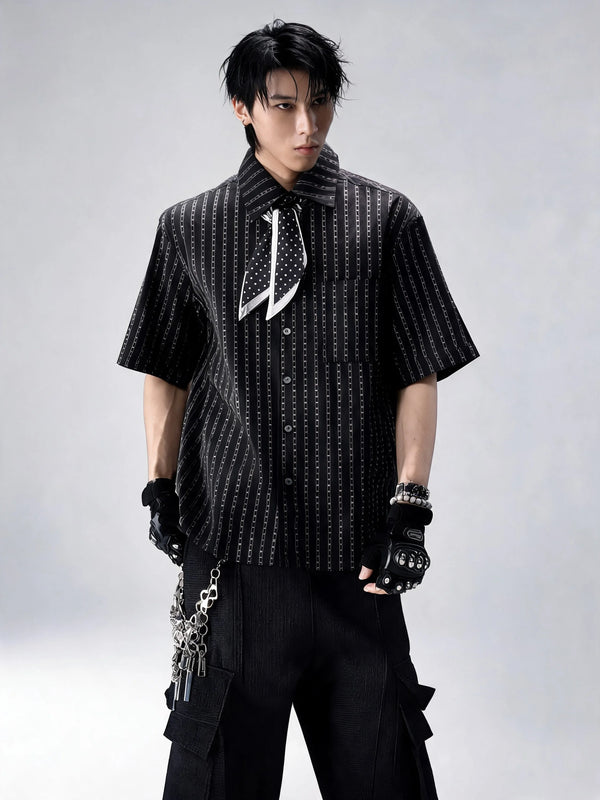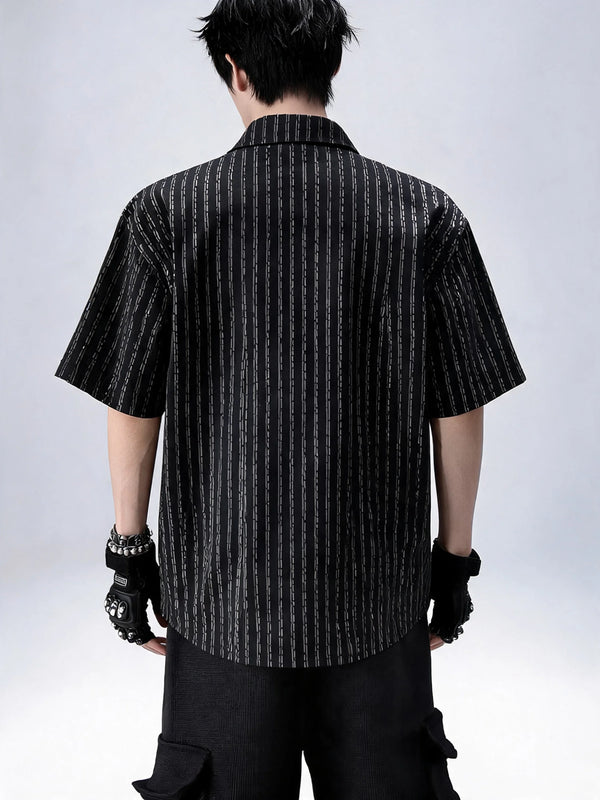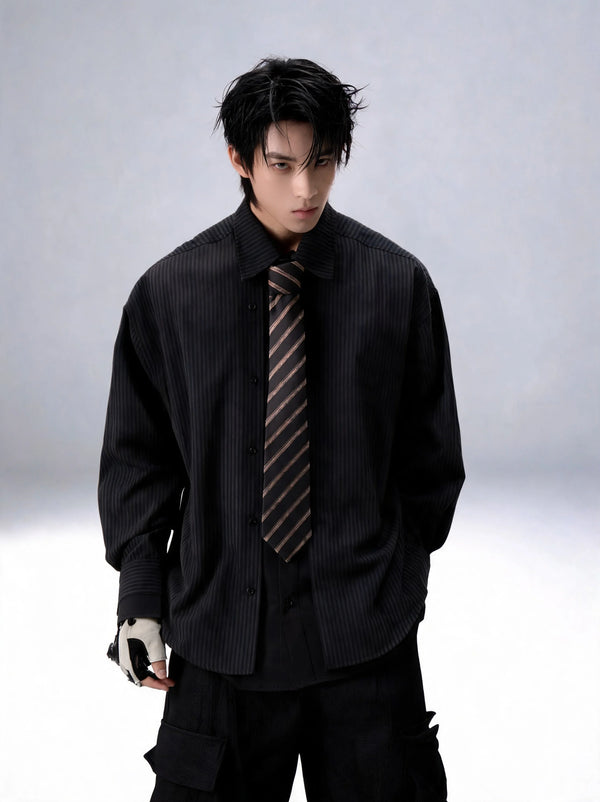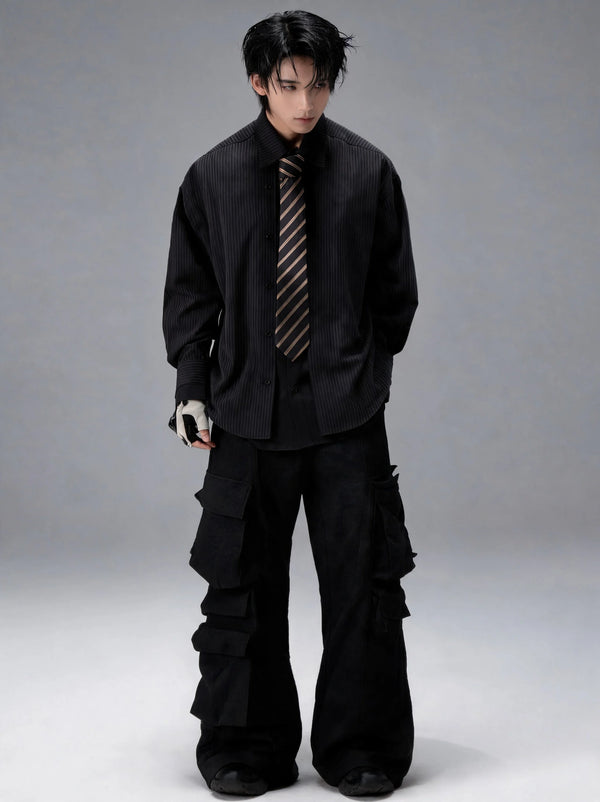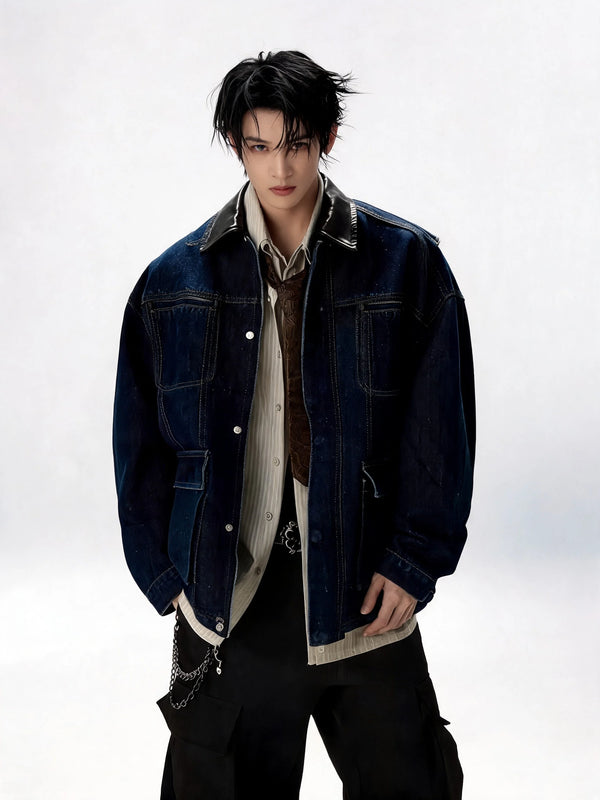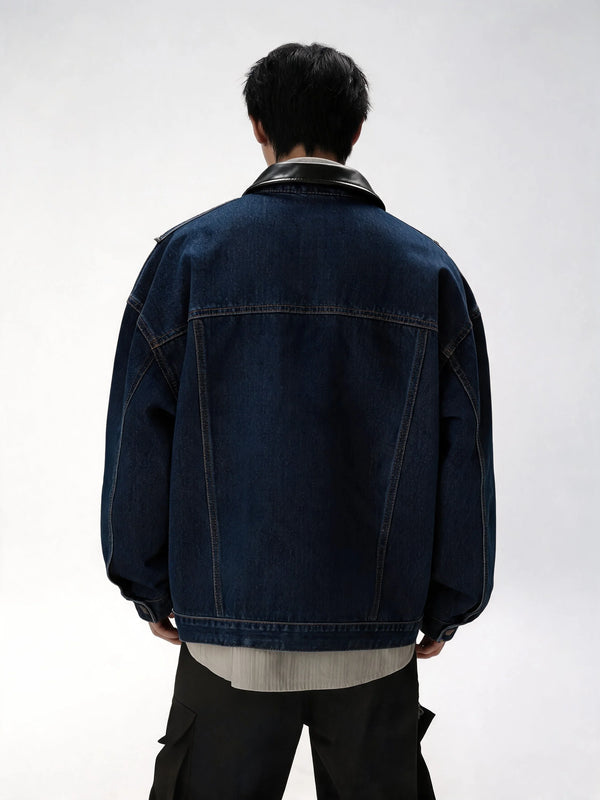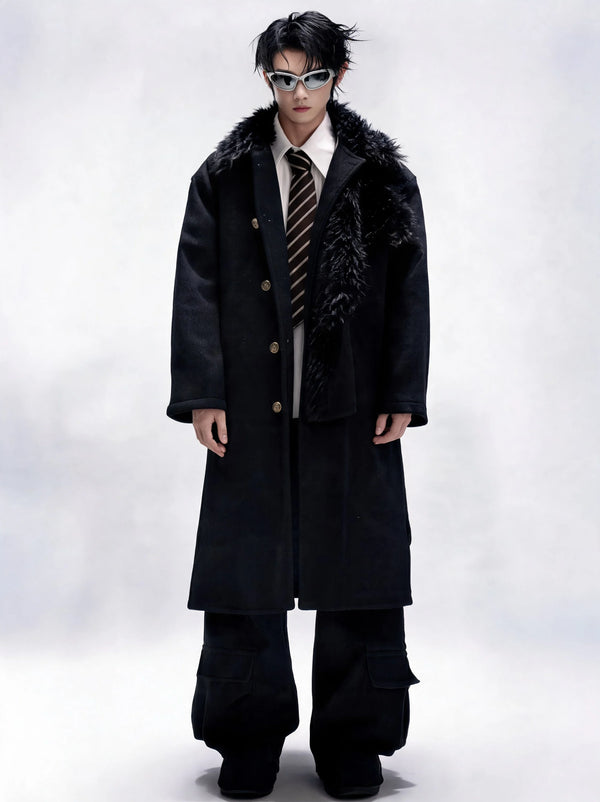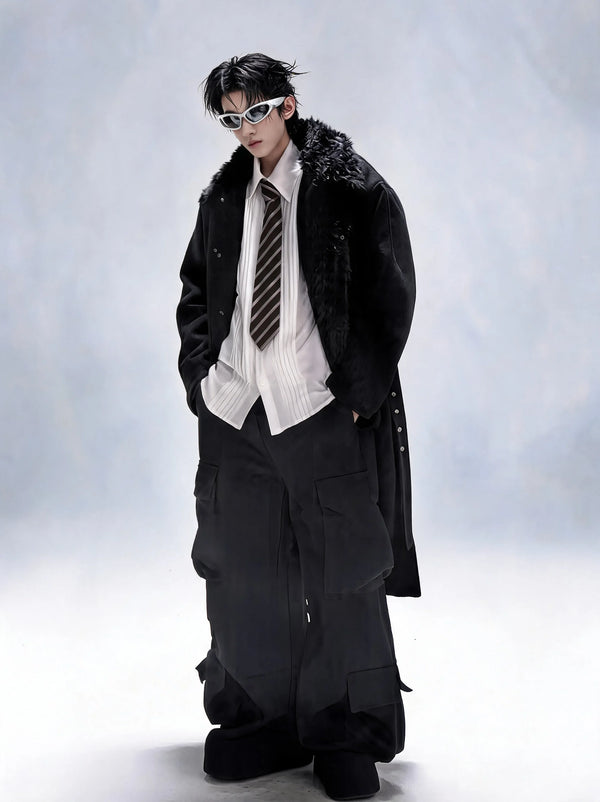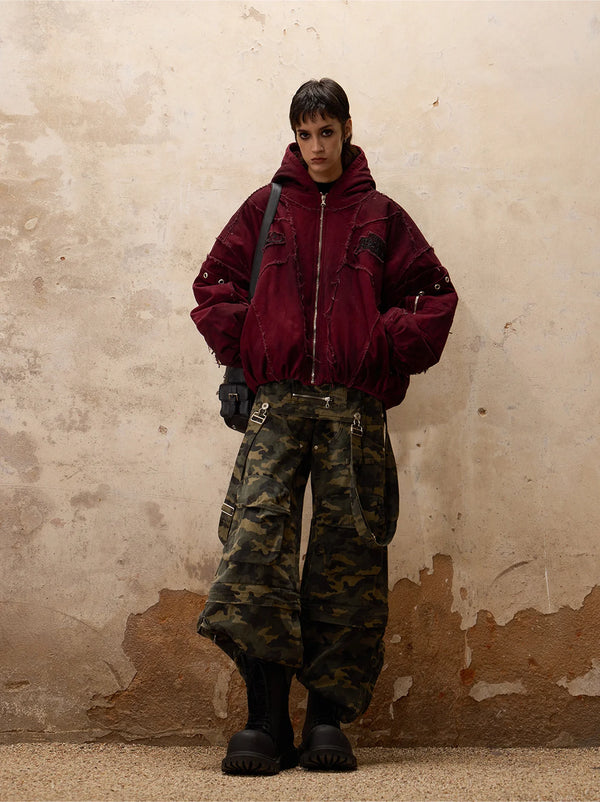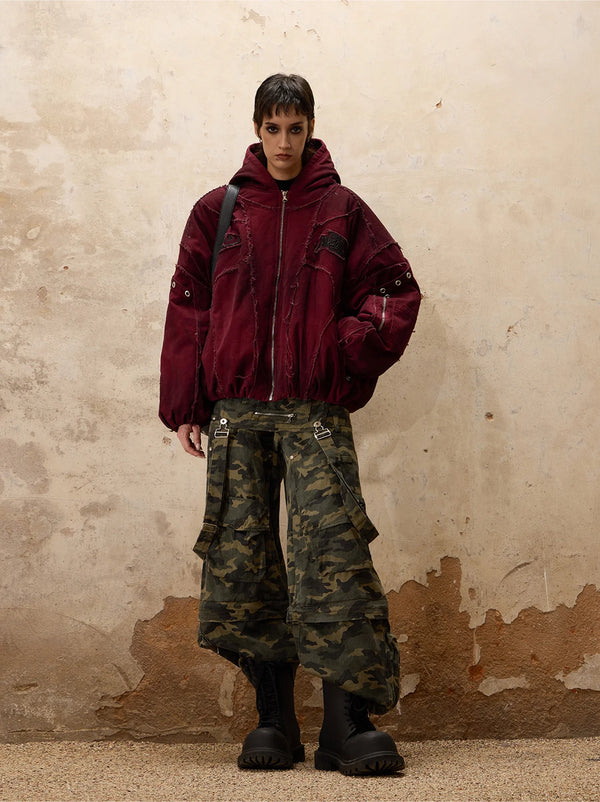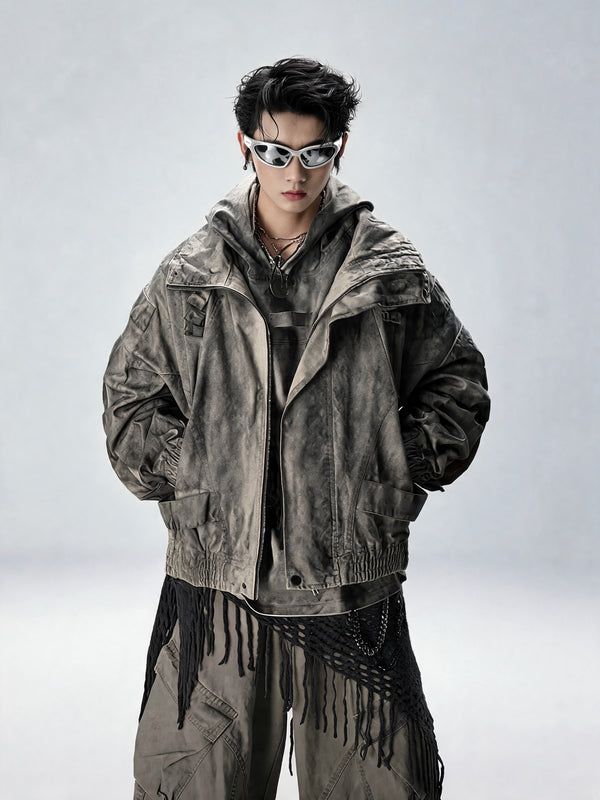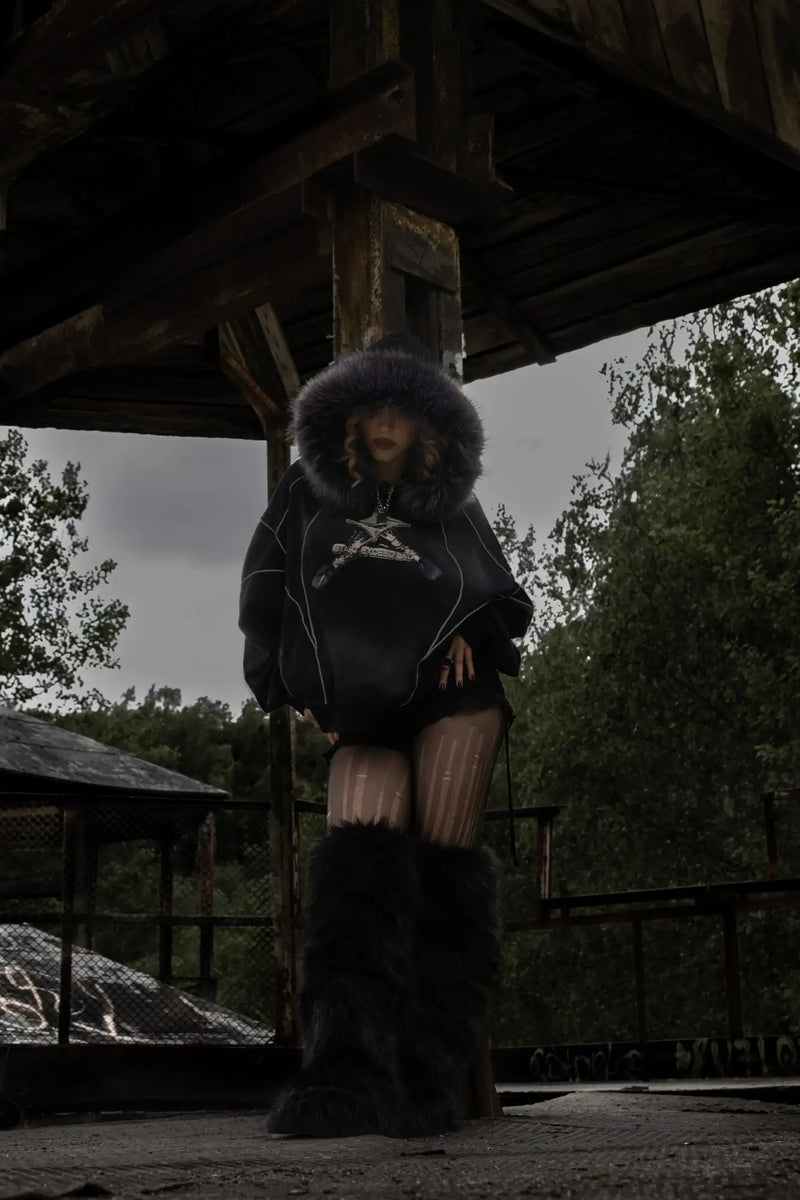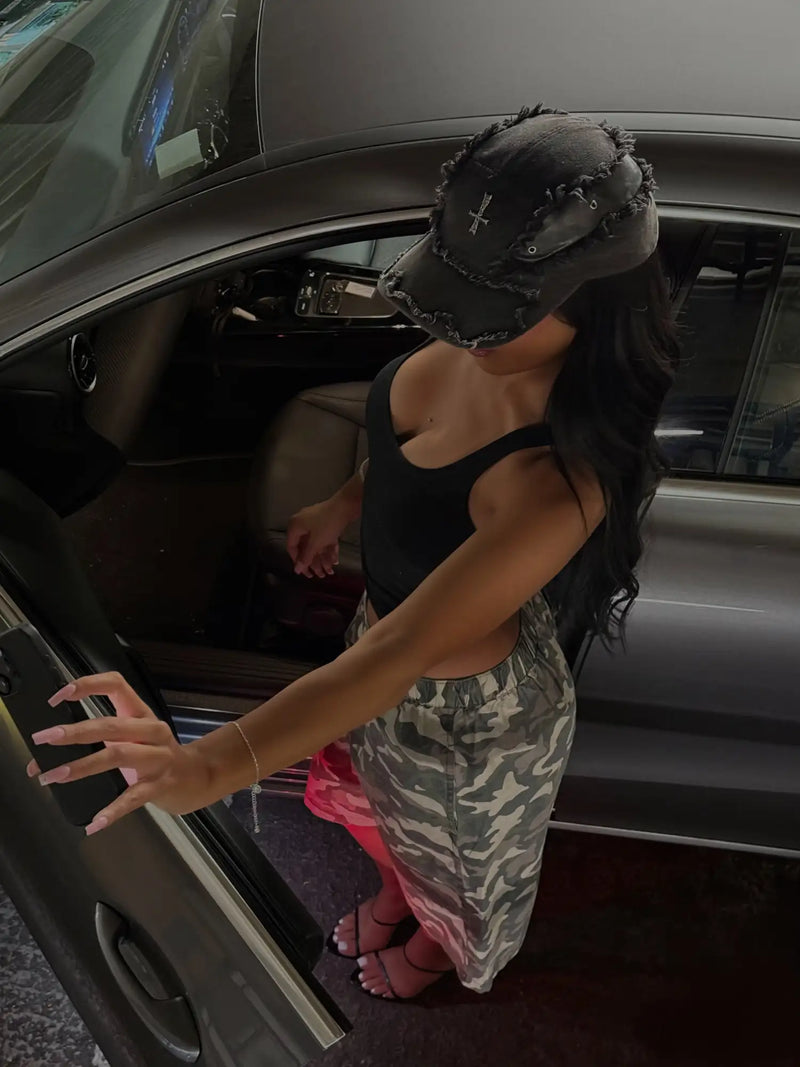
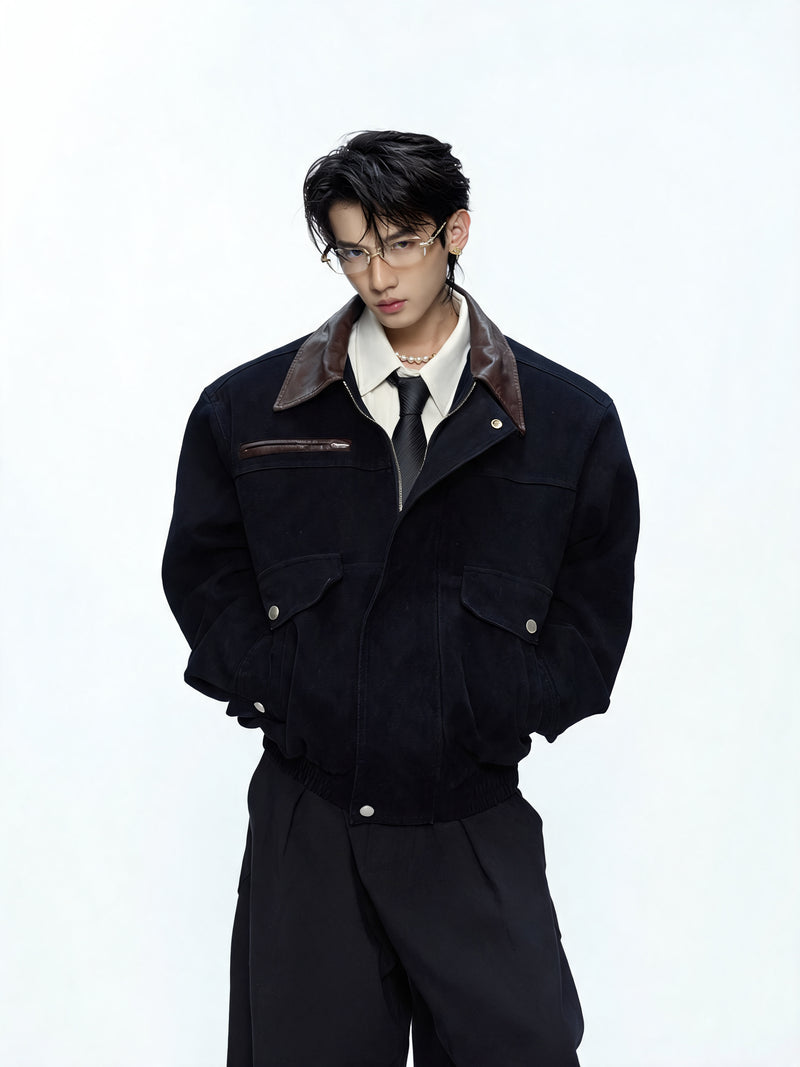
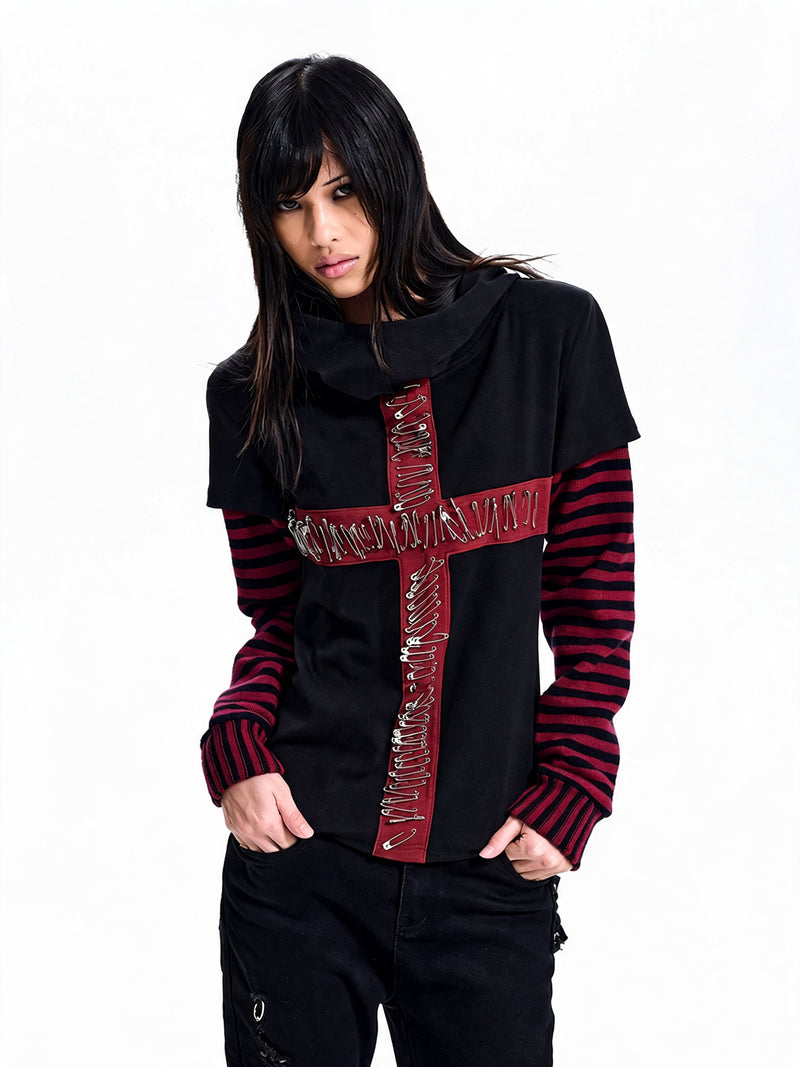
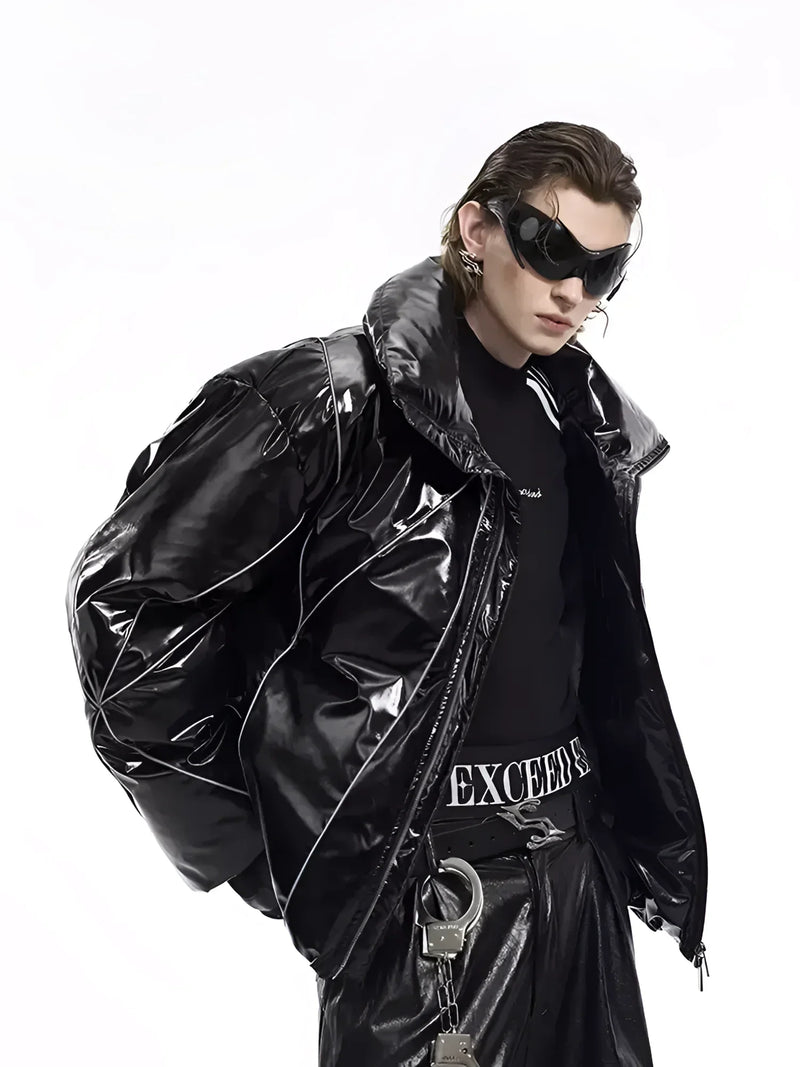
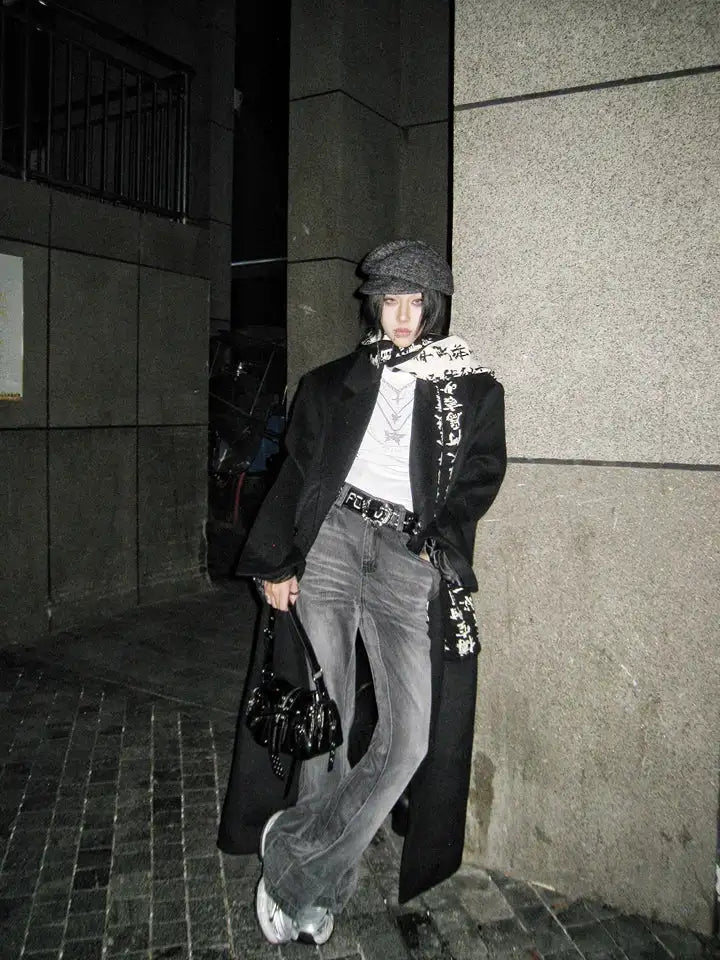

A basement in Olympia, Washington, in the early nineties. Only girls are standing at the front of the stage, because the singer called them forward. The boys with bare chests are standing at the back for the first time. A word is written on the singer's stomach in black marker, lace-up boots sit on her feet, the dress looks borrowed from a child's bedroom. Nobody in the room would have called that fashion. Thirty years later, exactly this look hangs in moodboards.
Riot Grrrl fashion is the look of the feminist punk movement from the north-west of the USA in the early nineties: babydoll dresses and hair clips meet combat boots, band shirts, torn tights and slogans written straight onto the skin. Girl codes and punk codes collide on purpose. The basics of the scene are in the Punk Fashion Guide. This is about the grrrls, their clothes and what still holds up today.
The map
Riot Grrrl Fashion: what the look means
Riot Grrrl did not start as a trend but as a network of bands, fanzines and meetings. The clothes were a by-product of that. They came from secondhand stores, from children's departments and from older siblings' wardrobes, and they had to be cheap, because most grrrls were students or still at school. Still, the look had a clear idea that works to this day.
The idea goes like this: take the pieces that are meant to make girls look small and harmless, and combine them with the pieces that look dangerous. A dress with puff sleeves becomes a statement with heavy boots. Plastic clips in the hair read differently when the face underneath is not smiling. Even the name follows this logic: grrrl with three r's does not sound like a girl, it sounds like a growl.
- Babydoll and slip dress: short dresses with a high waist, Peter Pan collar or lace, often from the secondhand store and happily one size too small.
- Combat boots: heavy lace-up boots with a thick sole, alternatively Mary Janes with white socks or worn-out Chucks.
- Band shirt and baby tee: tight-cut shirts with band names, printed yourself or written on with a marker.
- Tights with runs: black, striped or fishnet, happily torn and worn under shorts or skirts.
- Body writing: words in marker on the stomach, arms or hands, as a slogan and as armour.
These five elements are enough to build almost any Riot Grrrl look. What matters is not how many of them you wear but that soft and hard stand in the same outfit. A babydoll dress on its own is vintage. With boots and a written-on arm it becomes Riot Grrrl.
The origin
Where does Riot Grrrl come from? Olympia, D.C. and the year 1991
Riot Grrrl comes from two cities. One is Olympia in Washington state, a small college town with its own labels like K Records and Kill Rock Stars. Bikini Kill formed there around Kathleen Hanna, Tobi Vail and Kathi Wilcox, as did Bratmobile around Allison Wolfe and Molly Neuman. The other is Washington, D.C., where the hardcore scene had long relied on doing it yourself. In the summer of 1991 musicians from both bands spent time in D.C., wrote zines, organised meetings and gave the thing a name.
The same year, the Riot Grrrl Manifesto appeared in the second issue of the Bikini Kill fanzine. In August 1991 the International Pop Underground Convention opened in Olympia with a night on which only women stood on stage. After that the movement spread through letters, zines and shows. Local groups met in many US cities, and in England bands like Huggy Bear answered with a scene of their own.
1991
The Bikini Kill fanzine prints the Riot Grrrl Manifesto
1994
Sleater-Kinney form in Olympia
2013
The movement's archive appears as The Riot Grrrl Collection
These three dates show how fast a few basement shows became a history that today sits in a university archive in New York. If you want to understand how Riot Grrrl fits into the rest of the nineties, between skate punk, grunge and street punk, you will find the whole decade in a separate article.
The nineties
Riot Grrrl fashion 90s: babydoll, boots, secondhand
The typical Riot Grrrl wardrobe of the nineties came from thrift stores, the big secondhand shops in the USA. Dresses from the seventies hung there, grandmothers' cardigans, checked school skirts and children's clothes that just about fitted adults. What got bought was whatever was cheap and somehow wrong. That wrongness was exactly the point: a dress that is too short and too childlike makes visible how girls are supposed to be dressed.
The same logic applied to hair. Braids, plastic clips and hair grips met bleach, loud dye and self-cut bangs. On the feet were heavy lace-up boots, Mary Janes with ankle socks or Chucks that had several summers behind them. Tights had runs, lipstick was red and was allowed to be smudged.
The most important top was the shirt. Band shirts from bands you knew, self-printed shirts with screen print or marker and tight-cut baby tees with slogans were part of the basic kit. Over it came a cardigan or a denim jacket, underneath sometimes a slip dress. A shirt that already looks worn is still the easiest base for the look.
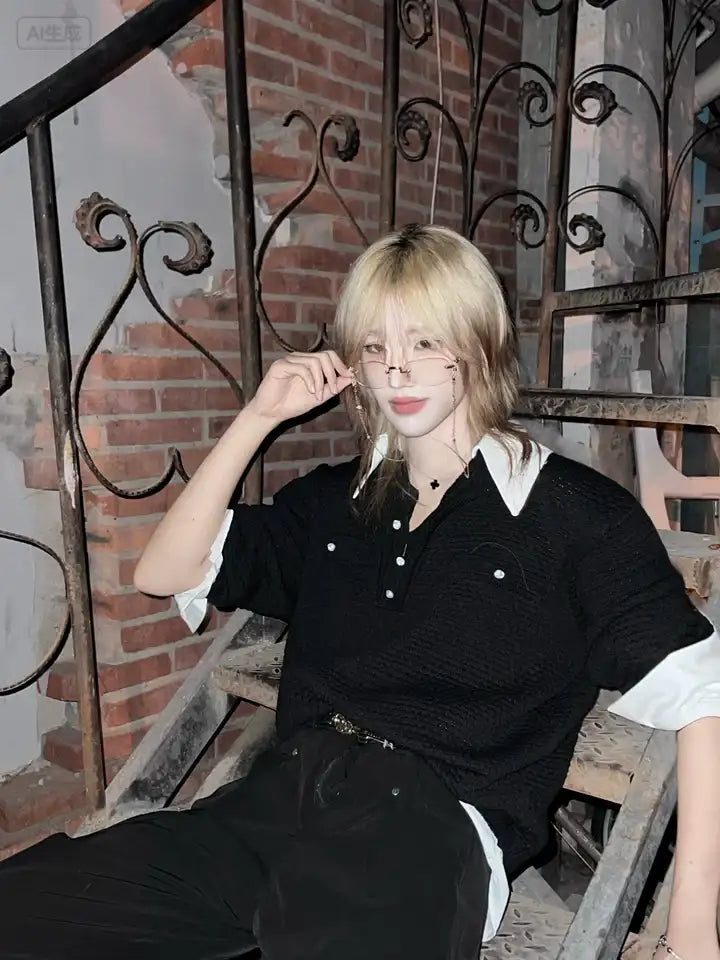
The Layer Tee is double-layered, washed and torn open at the edges, with the second layer showing below. The Yin Yang Tee is stone-washed, the motif is bleached into the fabric in bronze, and the black ages differently on every piece. Both come in S to L. Worn over a slip dress or with a checked skirt, they replace the band shirt from the secondhand store.
The frontwoman
Bikini Kill style: Kathleen Hanna and the written-on skin
Anyone searching for Bikini Kill style is mostly searching for Kathleen Hanna. On stage she wore crop tops, short skirts, sometimes just a bra, and on her stomach stood a word like SLUT in black marker. The logic behind it: the word others want to use to make you small, you write on your own skin. Then it belongs to you. Along with it came the call that became a signature: Girls to the front. Girls forward, boys to the back.
Tobi Vail and Kathi Wilcox dressed more quietly, in shirts, jeans and short hair. How close Riot Grrrl and grunge were back then is shown by a well-known story: Hanna sprayed a sentence about Kurt Cobain on a wall that included the name of a deodorant Tobi Vail used. The sentence became the title Smells Like Teen Spirit. The same town, the same secondhand stores, two very different directions.
The thought behind it is the same as in 1991: a slogan in your own handwriting reads differently from a bought print. It is crooked, it is personal and it cannot be copied. More about Hanna and the other faces that shaped the punk look is in our article about the icons of the scene.
The guitars
Sleater-Kinney fashion: the plain line from Olympia
Sleater-Kinney formed in 1994 in Olympia, when Corin Tucker of Heavens to Betsy and Carrie Brownstein of Excuse 17 made music together. Janet Weiss joined later on drums. The band belongs to the second wave of Riot Grrrl, and their look is a good counter-argument to the cliché. No babydoll, no clips, but shirts, button-downs with a collar, straight jeans, short hair and sneakers.
This plain line shows that Riot Grrrl was never a uniform. What mattered was that the musicians decided for themselves how they looked on stage, and that the look never became more important than the guitar. For everyday wear this line is the most rewarding one, because it works without dressing up and still shows a stance.
The formula for the Sleater-Kinney look is short: a top with a clear shape, a trouser without frills, shoes with weight. The rest comes through a single detail, a collar with a motif, a chain or a worn-out jacket. That is what Riot Grrrl looks like when you carry it into the office, to university or into the rehearsal room.
For women
Riot Grrrl fashion female: what punk women really wore
The question of what punk women wear had two answers before Riot Grrrl. The first: the same as the men, so a leather jacket, tight jeans and boots. The second: the extreme version from London 1977, with fetish pieces, mesh and a lot of skin. Riot Grrrl added a third answer nobody had expected: deliberately girlish, but with rage instead of a smile.
In practice a typical punk wardrobe for women in the nineties looked like this: a mini skirt over torn tights, cut-off denim shorts over fishnets, ringer shirts, a wide cardigan, over it a denim or leather jacket with patches and studs, and combat boots at the bottom. Plus a choker or a studded bracelet, often from the flea market.
Denim was the second big material next to the secondhand dress. Jeans were cut off, ripped open, painted on and patched with safety pins. A wide, washed-out jean with rips is the most direct link to that time today, above all with heavy shoes and a short top.
@fugastudios These pants ate and left no crumbs 🖤 walking chaos in denim form #fugastudios #darkfashion #widelegpants #fyp #distresseddenim ♬ Originalton - Fuga Studios
Wide legs, washed-out fabric, a walk that is not out to please: that is what the denim side of 90s feminist punk looks like today. If you want it closer to the original, reach for jorts, meaning knee-length denim shorts, and wear them over black or torn tights.
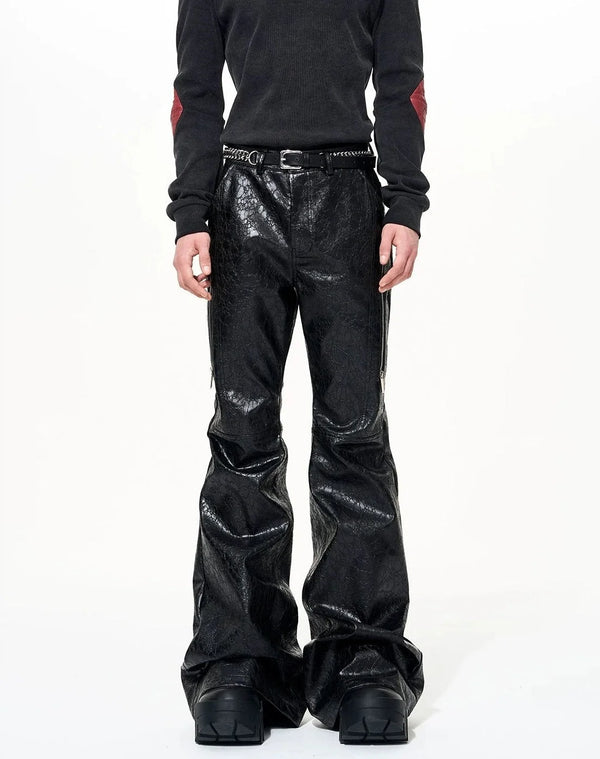
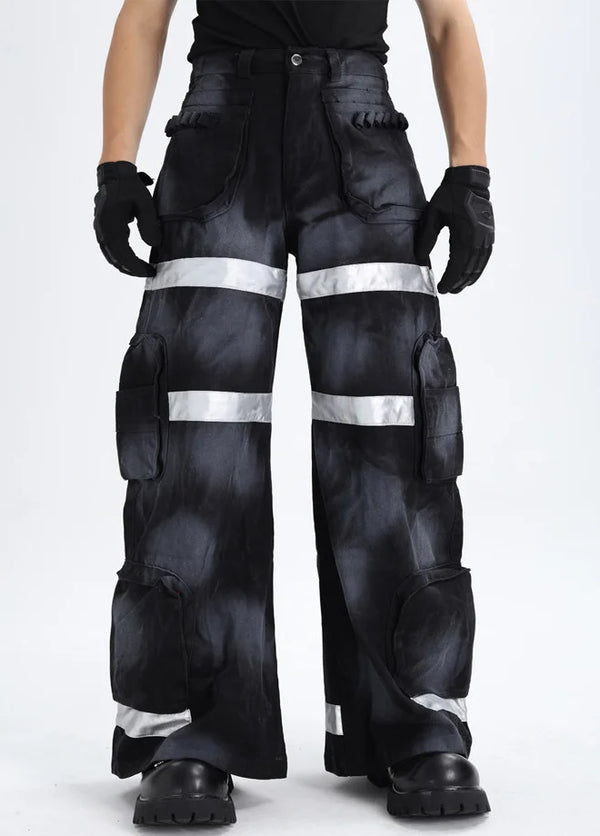
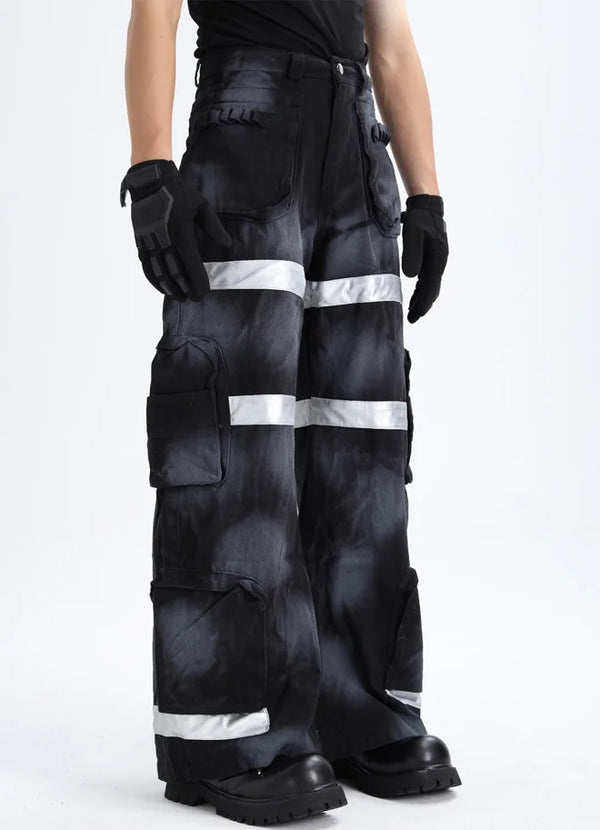
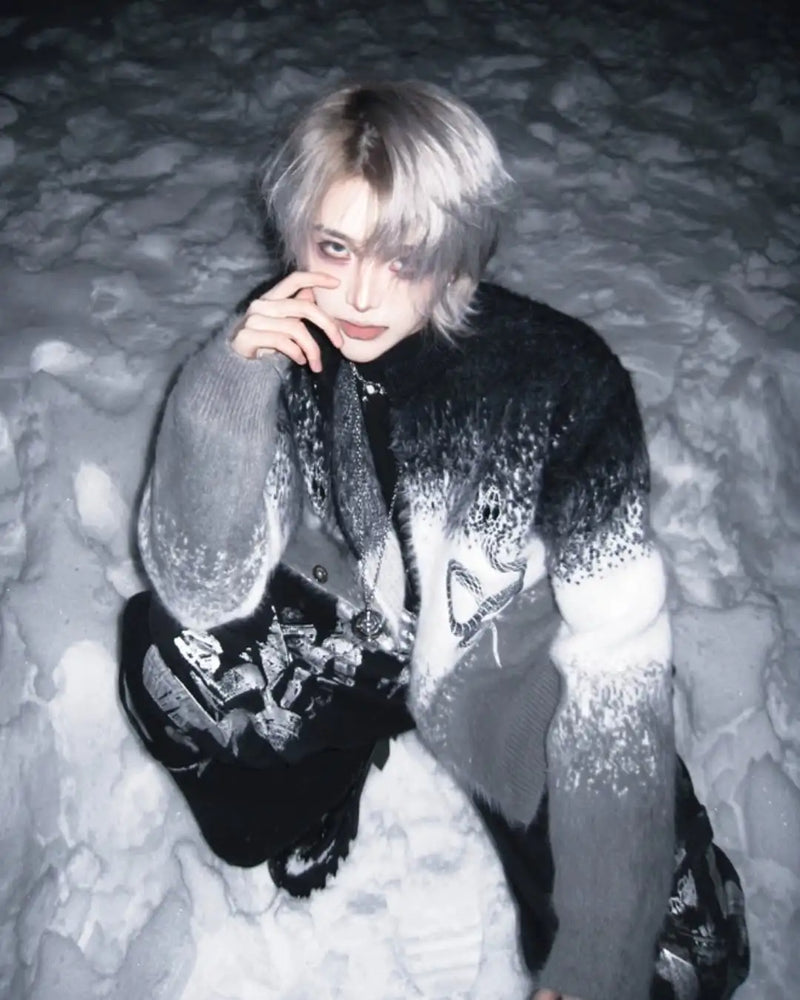
The jorts are knee-length and wide, with a sprayed tribal motif at the front and studs along the side seams, in M to XL. The wide jean carries pink lettering on grey denim that looks acid-washed, and stacks over the shoe. Both work with tights, boots and a shirt that looks one size too small.
Five directions
The five lines of the Riot Grrrl look
Riot Grrrl was spread across many cities, and every scene had its own note. Some looks strictly speaking do not belong to the movement but stood right next to it and today often get thrown into one pot. If you know the differences, you can combine more deliberately and do not have to wear everything at once.
For getting started, Babydoll Punk and Olympia Lo-Fi work best. Babydoll Punk is the strongest statement and works at shows and parties. Olympia Lo-Fi is everyday-ready and needs hardly any new pieces, because much of it already hangs in the wardrobe. Kinderwhore often gets confused with Riot Grrrl but is more the grunge variant, with more glamour and less politics.
Paper and glue
Riot Grrrl zines and manifesto: DIY as a style
Zines were the heart of Riot Grrrl. Booklets like Bikini Kill, Jigsaw by Tobi Vail or Girl Germs by Allison Wolfe and Molly Neuman were made on the copier, with scissors and glue, handwritten, crooked and in small runs. They travelled by post from city to city and turned individual girls into a network. The Riot Grrrl Manifesto is basically a long list of sentences that all begin with the same word and explain why girls need their own records, their own booklets and their own stages.
The aesthetic of the zines and the aesthetic of the clothes are the same. Cut out, glue on, write on, put together. A shirt with your own handwriting, a jacket with self-made patches and a skirt sewn together from two old skirts follow the same method as a photocopied booklet. If you want to understand Riot Grrrl fashion, you should therefore look at a few zines before you go shopping.
That is the reason the look is so hard to sell. A ready-made Riot Grrrl outfit off the rack contradicts the idea. What can be bought are the basic pieces: a shirt, a jean, a jacket, boots, metal. The rest you make yourself, with a marker, a needle and thread.
The end
Why did Riot Grrrl end? Media blackout and girl power
From 1992 on, big US newspapers and youth magazines wrote about Riot Grrrl. The reports mostly reduced the movement to angry girls in babydoll dresses and to words on skin. Many grrrls answered with a media blackout: they refused interviews with mainstream media so as not to be misrepresented further. That protected the scene but also made it less visible. At the same time the first bands broke up. Bratmobile and Heavens to Betsy stopped in 1994, Bikini Kill in 1997.
In the mid-nineties the mainstream took over the surface. The term girl power, which had already shown up in early Riot Grrrl zines, became the advertising slogan of a pop band. Chains sold baby tees with cheeky lines, and the politics stayed behind in the shop. As a network, Riot Grrrl was largely over by the end of the nineties. The ideas lived on, just under other names.
- Le Tigre: Kathleen Hanna's next band from 1998, more electronic and more danceable, with the same stance.
- Ladyfest: a festival format that began in Olympia in 2000 and afterwards took place in many cities worldwide, including Germany.
- Pussy Riot: the Moscow collective from 2011 named Riot Grrrl as one of its models.
- Reunion: Bikini Kill stood on stage together again in 2019.
So Riot Grrrl fell asleep rather than died, and it wakes up again regularly. Every new generation that does not feel addressed by the music scene finds its way back to the old zines and to the dresses from the secondhand store.
The blind spot
Criticism of Riot Grrrl: who was missing from the scene
The question of whether Riot Grrrl was racist comes up often in searches, and it has a real background. The movement was predominantly white, many grrrls came from the middle class and from a college environment. Black, Asian-American and Latin American women in the scene reported that their experiences had hardly any room and that racism was less often a topic than sexism. Some of them made their own zines to say exactly that. The scholar Mimi Thi Nguyen, herself a zine maker in the nineties, later wrote this criticism down in detail.
The fashion has this blind spot too. The deliberately broken secondhand look is a choice you have to be able to afford. Anyone who has to wear worn-out clothes anyway sees no protest in it. For today that means: wearing Riot Grrrl fashion is not a problem as long as you know the history and read the line Girls to the front as meaning everyone who has had no place at the front so far.
Wear it today
Riot Grrrl outfit today: 90s feminist punk recombined
A Riot Grrrl outfit today works by the same rule as back then, only with fewer pieces. One soft code, one hard code, plus a personal detail. A slip dress over a shirt with heavy boots. A wide jean with a too-small shirt and a chain. A checked skirt with fishnets and a short leather jacket. It needs no more than that.
The jacket is the piece that makes the look hard. It should be short and end at the waist so the dress or skirt underneath stays visible. Long coats belong more to the post-punk line and swallow the contrast. A short jacket in leather or faux leather over something soft is the fastest translation of 1991 into the present.
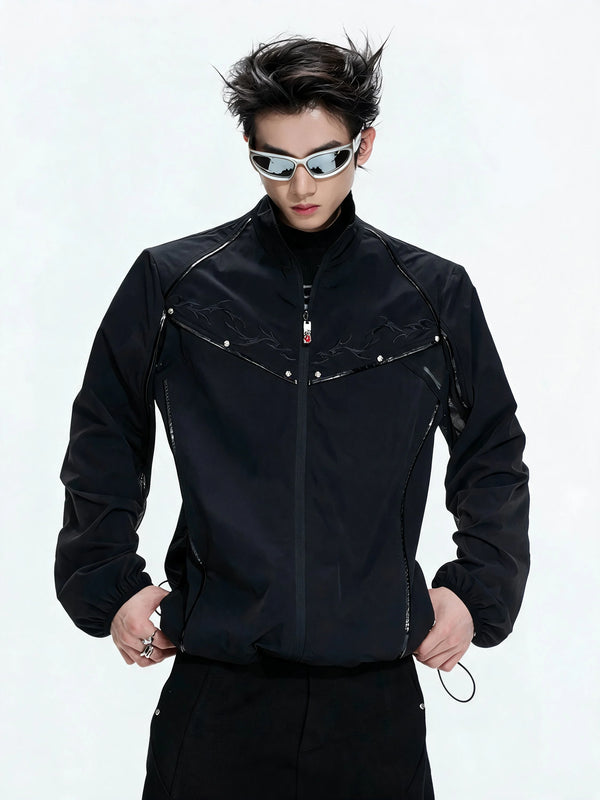
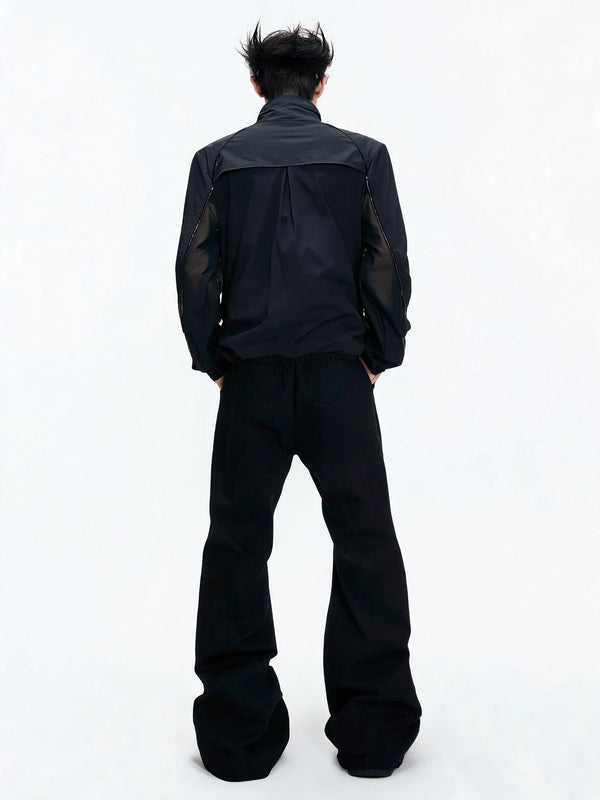
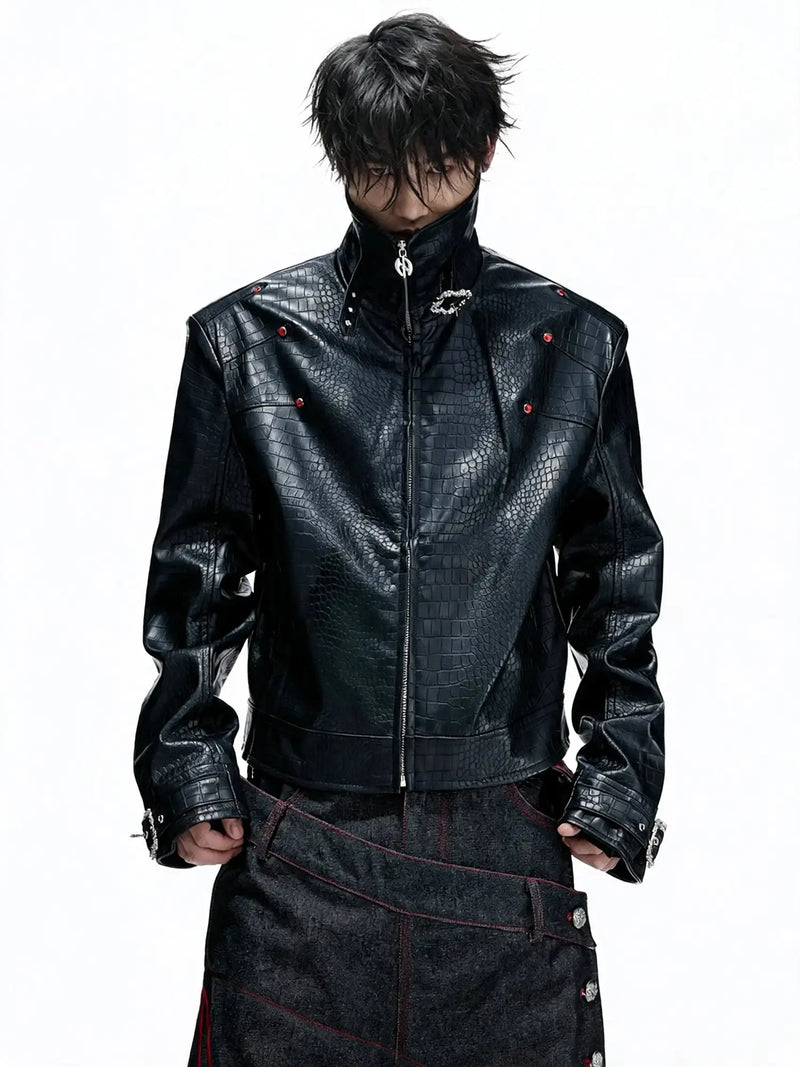
The Buckle Jacket is short and tight-cut, with a stand collar and a row of silver hooks over the zipper that close one by one. The Skull Jacket has a vintage grain, red decorative stitching and an embroidered skull with flames on the back. Both are made of PU faux leather and end at the waist, exactly where a dress or a skirt should start.
@fugastudios POV: You're the final boss and the outfit actually slaps 🔥 Gothic Warrior Denim Set got that main character energy fr#fugastudios #darkfashion #gothicstyle #OOTD #fyp ♬ Originalton - Fuga Studios
Denim set, studs, heavy shoes: this look shows how much stance a single outfit can carry without looking like a costume. For the Riot Grrrl twist it is enough to add one piece from the soft corner, hair clips for instance, a lace dress under the jacket or a shirt you wrote on yourself.
What goes wrong
Common mistakes with the Riot Grrrl look
Most failed Riot Grrrl looks do not fail on individual pieces but on balance. Either everything is soft and the outfit turns vintage, or everything is hard and it turns into ordinary punk. Sometimes everything simply gets worn at once. These five mistakes come up most often.
All five mistakes have one solution in common: before you go out, check whether your outfit has both a soft and a hard side, and whether something of yourself is in there somewhere. If so, the direction is right. If you want to push the look further towards Y2K and grunge, you will find more combinations there.
The formula
Putting a Riot Grrrl outfit together: the formula in four steps
To finish, the order for the next outfit. Step one is the soft piece: a dress, a skirt, a cardigan or clips in the hair. Step two is the hard piece: boots with a heavy sole or a short jacket in leather or denim. Step three is the base that connects the two, usually a shirt with traces or tights with runs.
Step four is the metal. A choker, a chain close to the collarbone or a studded bracelet sets the final point. Keep the metal small when the outfit is already loud, and let it speak when the outfit is plain. A written-on shirt plus a chain is already a complete Riot Grrrl look.
Questions
FAQ about Riot Grrrl fashion
To close, the questions that come up most often with the Riot Grrrl look, from the music through the shoes to the archive of the movement.
What makes a song a Riot Grrrl song?
What is the difference between Riot Grrrl and Kinderwhore?
Which shoes belong to the Riot Grrrl look?
Can men wear Riot Grrrl fashion too?
What is The Riot Grrrl Collection?
More than thirty years after the first basement shows in Olympia, the most important lesson of Riot Grrrl is still the same: clothes are not neutral, and you decide yourself what they say. That goes for a dress just as much as for a leather jacket.
What do you think?
Tell us on @fuga_studios
About the author
Philipp Fuge — Founder · Berlin
Founder of Fūga Studios. Writes the journal himself. Berlin · Shanghai · Tokyo · Poznań — four cities, one logic.