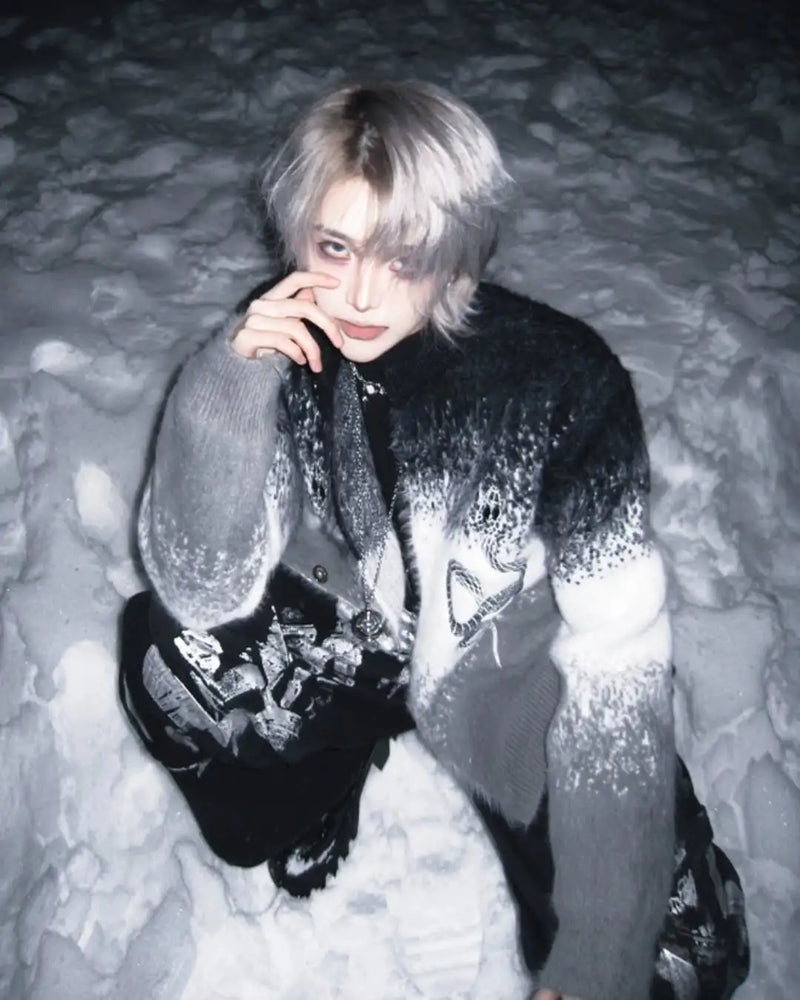
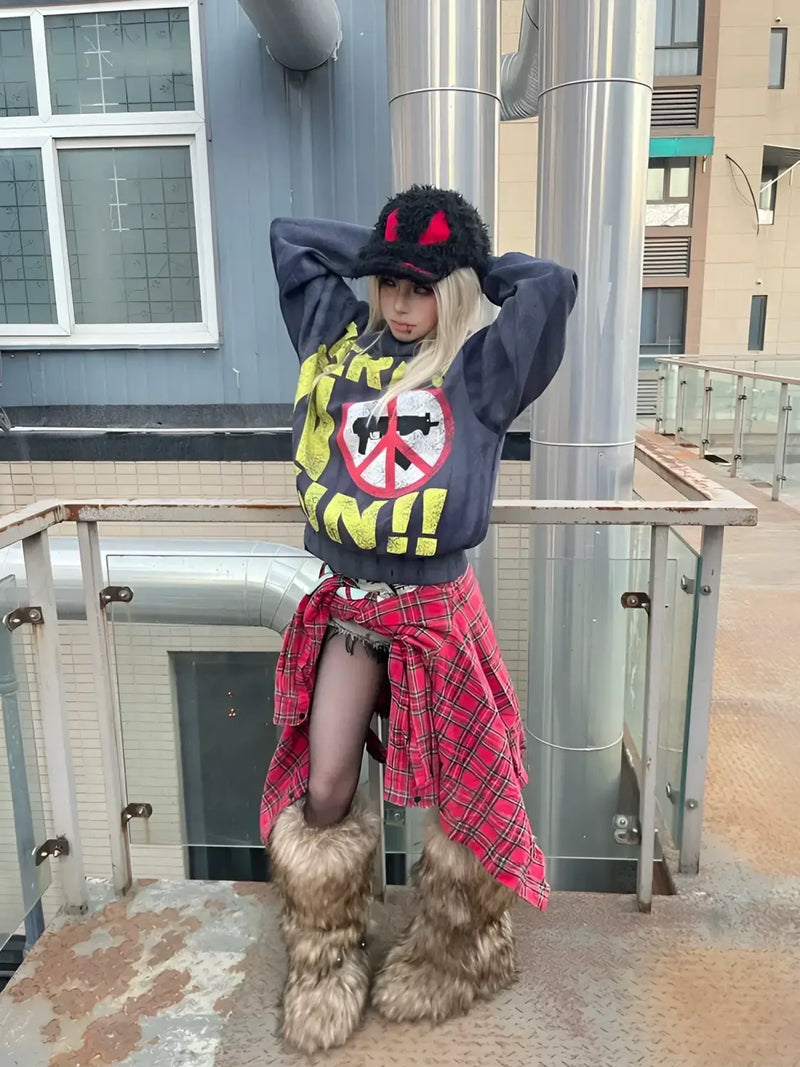

Shibuya, late afternoon, the 109 department store spits a group of girls out onto the crossing: tanned skin in the middle of winter, loose socks crumpling around their calves, platform soles eating up ten centimetres of ground. Each of them looks as if she deliberately decided against everything a Japanese schoolgirl in the 1990s was supposed to do nicely. That was exactly the point.
Gyaru Fashion is a Japanese girls' subculture from the Shibuya district of Tokyo, born in the early 1990s as a loud break with the demure beauty ideal: tan instead of pallor, dyed hair instead of black, mini instead of midi. If you want the bigger picture, you'll find it in our guide to Harajuku Streetwear — Gyaru is one of its most radical variants.
Before we go into the details, it helps to take a quick look at what this energy looks like in real motion — loud, self-assured and without any explanation, the way Gyaru was always meant to be:
In this guide we clarify what Gyaru really means, where it comes from, which substyles exist, what you actually wear, how make-up and clothing play together, whether men can join in, where you find the pieces and which mistakes ruin the start.
One thing up front: Gyaru is not a trend you tick off in a season, but a movement grown over more than thirty years, with its own history, its own icons and its own rules that were made to be broken. That is exactly why it pays to understand the style before you buy it — anyone who only copies the silhouette without the idea behind it quickly notices that something is missing. So we go step by step: first the core, then the history, then the practice for your own wardrobe.
Definition
What is Gyaru style — and why isn't it cosplay?
Gyaru (ギャル) comes from the English “gal” and means a young woman who deliberately presents herself as eye-catching, self-assured and a little cheeky. As a fashion style, Gyaru describes no fixed uniform but an attitude: visibly more effort, more colour, more body, more self. The opposite of restrained.
The most common mistake is to confuse Gyaru with dressing up. Cosplay recreates a character; Gyaru is a real everyday style that real women wore every day — to school, to the club, on the train. It was never about being someone else, but about overdriving your own appearance without compromise.
There's a second point that often gets lost: Gyaru is strongly female-coded and was from the start a thing of young women who simply took their space in a very conformist society. The flashiness was never just aesthetics but a small rebellion — against expectations of appearance, behaviour and conformity. Whoever wears the style carries a piece of that attitude, still today.
In short: if you're wondering whether your outfit is “Gyaru enough”, the right question isn't how many pieces are correct, but whether the attitude is right. Without the self-confidence it stays a costume.
Origin
Where Gyaru comes from: Shibuya, the 1990s and the anti-rule
Gyaru emerged in the early 1990s around the Shibuya 109 department store in Tokyo. The first big wave was schoolgirls who reinterpreted their uniform: skirt shortened, socks rolled down, hair lightened. Out of this Kogal phase grew, over the decade, a whole landscape of subvariants, each louder than the last.
The cultural engine was rejection. The Japanese beauty ideal demanded pale skin, natural colours, modesty. Gyaru turned each of these dials all the way to the opposite. Magazines like egg documented the scene, celebrated the most extreme looks and made Shibuya the epicentre of a style that soon drew international attention.
1990er
Origins in Shibuya
109
The department store as epicentre
10+
Substyles over the years
A second engine was the music and magazine culture of the time. Magazines supplied the templates, friend groups copied and exaggerated them, and the shops in the 109 restocked the matching pieces week by week. That created a self-reinforcing loop: the more extreme a look, the more attention, the more imitation, the more extreme the next stage. A skirt length turned into a whole aesthetic.
Important to understand: Gyaru was never a single look, but a movement with phases. What seemed provocative in 1995 was already mainstream by 2005 and kept mutating. This mutability is the reason the style still resists any single box today.
Substyles
Which Gyaru substyles exist: Kogal, Ganguro, Manba & Co.
The most common search on the topic runs roughly: which genres exist in the Gyaru style? The answer is a small map, because Gyaru breaks down into several clearly distinguishable directions. Some are sweet, some aggressive, some almost performance. Here are the six most important.
Besides these six there are finer branches — Agejo with club glamour, Onee Gyaru as a more grown-up, elegant variant, or Himekaji as an everyday princess mix. For the start you don't need to know them all. It's enough to know that the scale runs from sweet to hard and from tame to extreme, and that you may place yourself somewhere on it instead of chasing a single role model.
For the start you don't have to commit. Most modern Gyaru mix elements: a Rokku jacket over a Hime top, with the Kogal silhouette. What matters is that you know which kit you're reaching into right now.
Wardrobe
What Gyaru really wear: the wardrobe in detail
What do Gyaru wear? Less a list of specific brands than a combination of silhouette, tan and emphasis. The clothing follows a simple principle: anything that shows the figure and stands out is right; anything tame and invisible is wrong.
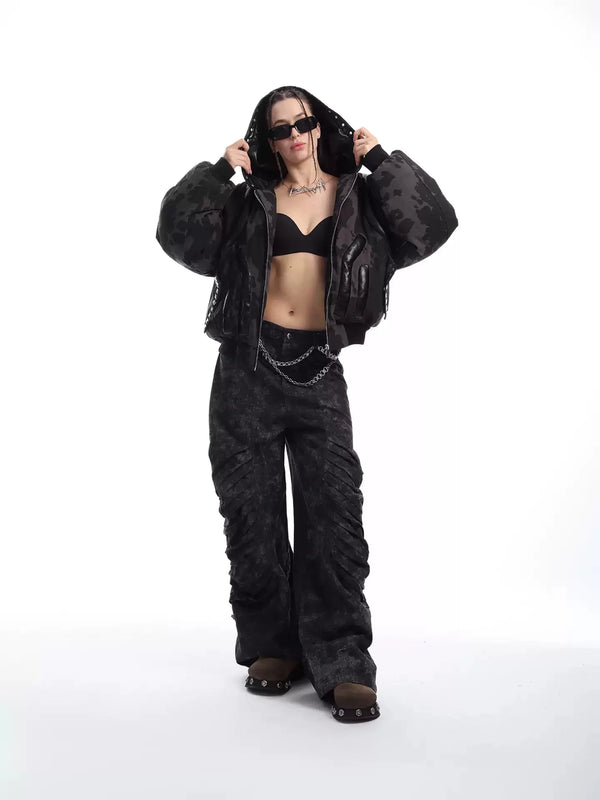
- Tops — tight tops, crop tops, low necklines, plenty of print and glitter.
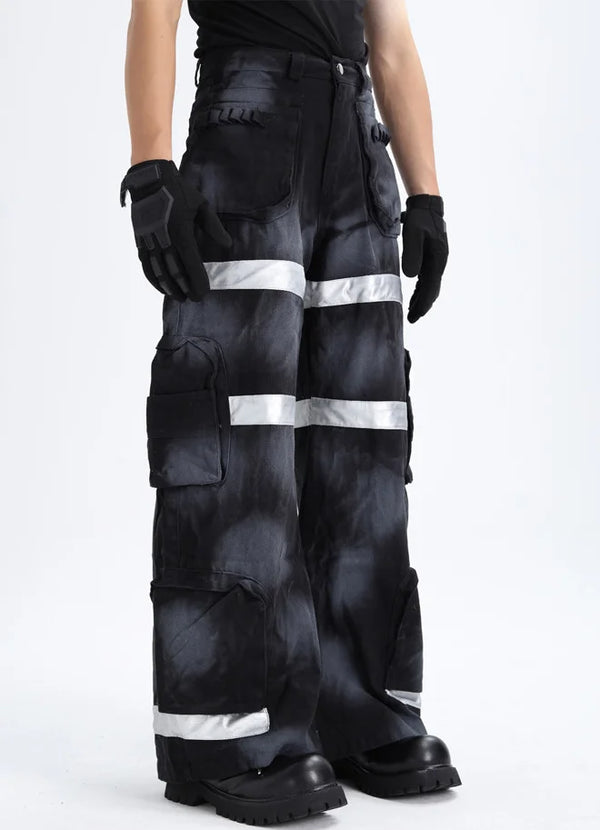
- Bottoms — mini skirts, short shorts, but also wide Y2K jeans for the more relaxed variants.
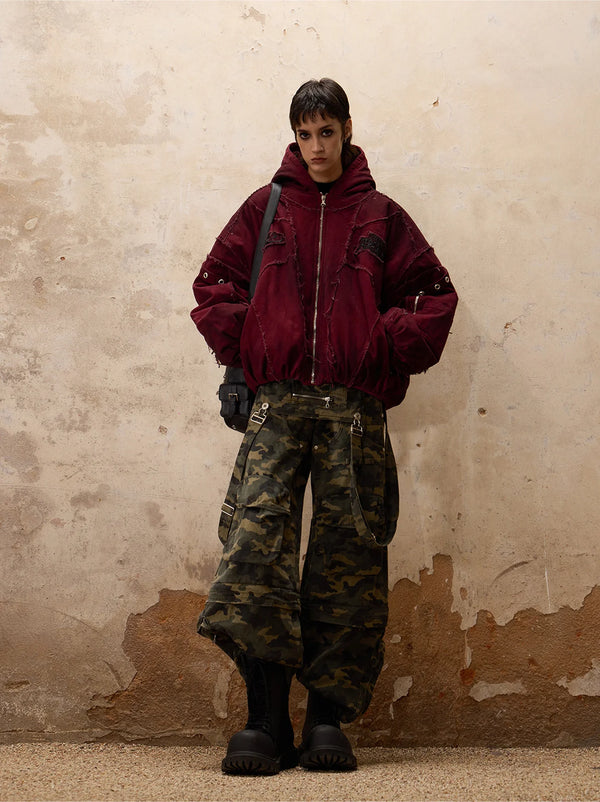
- Shoes — platforms, high boots, boots with height — the legs should look longer.
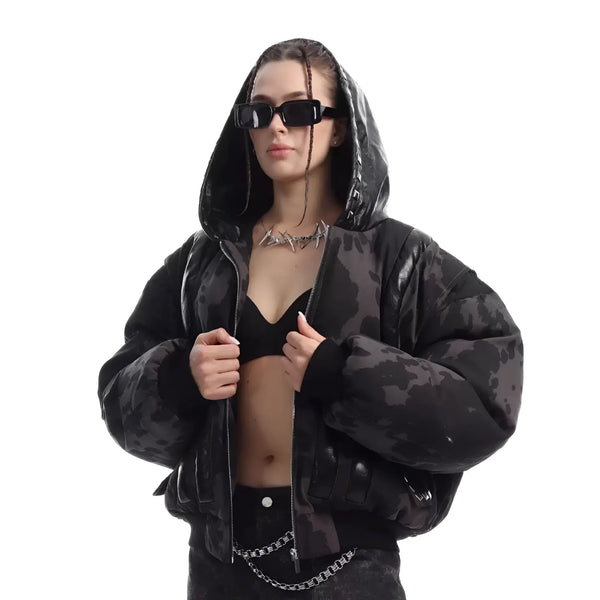
- Accessories — big chains, hair accessories, nail design, sunglasses as a statement.
- Hair & make-up — lightened or brightly dyed, plus emphasised eyes and lips.
The trick lies in the distribution: tight on the upper body, height at the foot, attention on the face. Whoever hits these three points has the look, whether the individual piece comes from a Gyaru shop or from the Y2K shelf.
Because many Gyaru pieces come from the same 2000s visual language as Y2K, the Y2K shelf is your best starting point in Europe — the silhouettes overlap almost completely.
Face
Gyaru make-up: the face does half the work
No other style hangs on the face as much as Gyaru. The make-up is not an add-on but the language itself: big, open eyes through liner and lashes, a contoured nose, often a warm, tanned complexion. Without this signature the same outfit quickly reads as ordinary Y2K.
Historically, nail design and hair belonged just as firmly to it as the face: long, decorated nails, elaborately layered or backcombed hairstyles, often with extensions. You don't have to take on all these elements, but they explain why real Gyaru looks have so much impact — it's the sum of many deliberately placed details, not a single flashy piece. For everyday wear it's enough to set two or three of these signals consistently.
That also explains why Gyaru is so instantly recognisable in photos. The clothing varies a lot between substyles, but the gaze — big, awake, self-assured — stays constant. Whoever takes the look seriously plans face and clothing as one package.
Category · Tops
Gyaru tops: tight, emphasised, with a statement
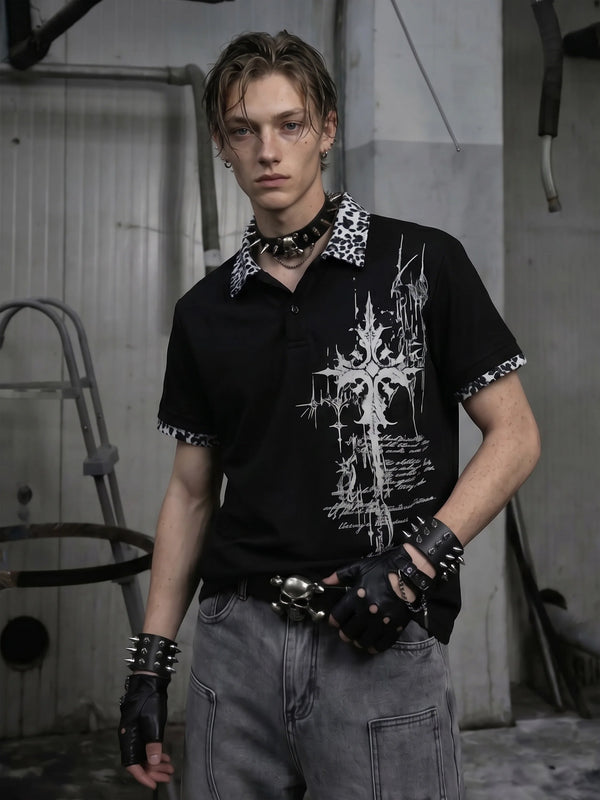
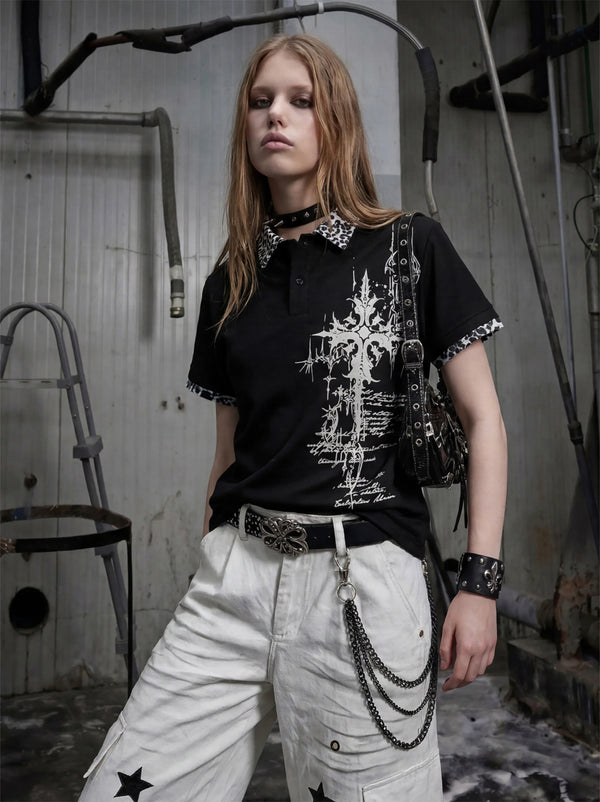
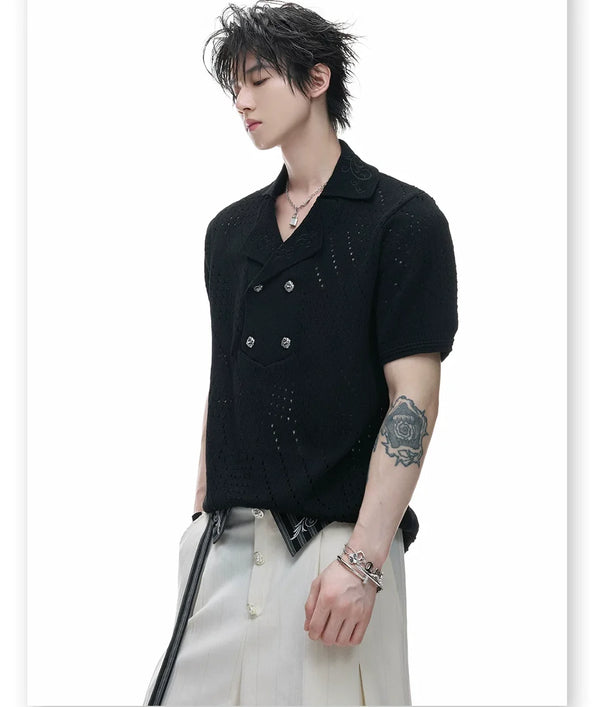
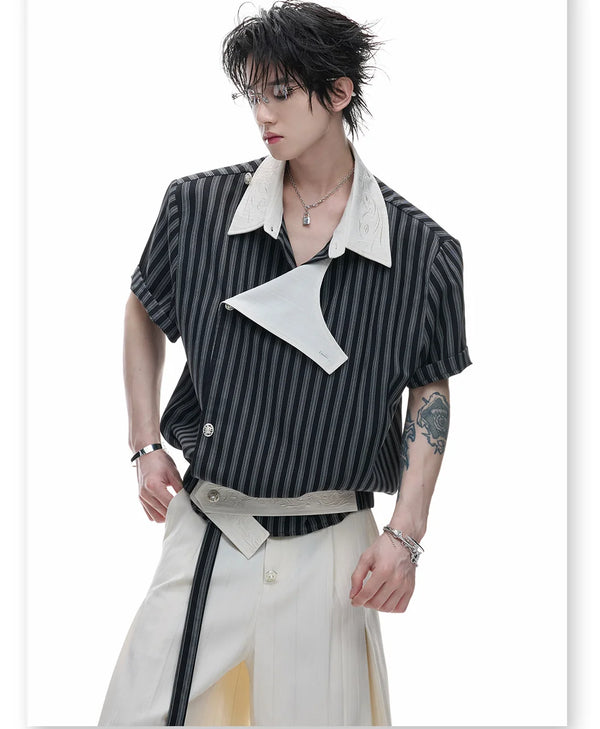
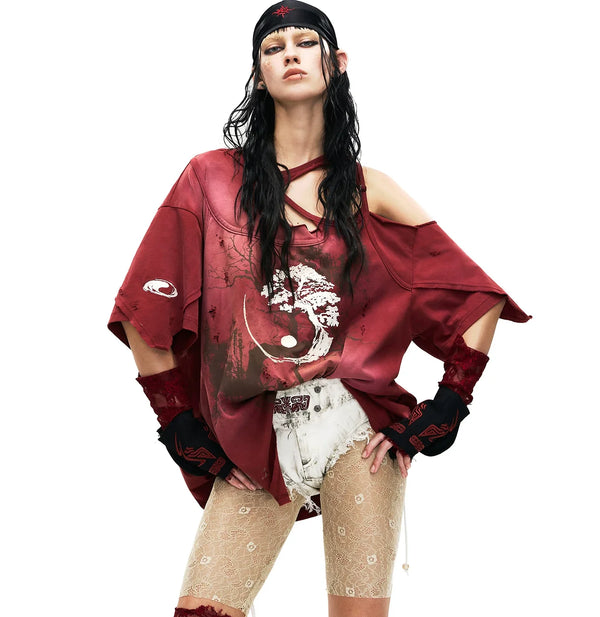
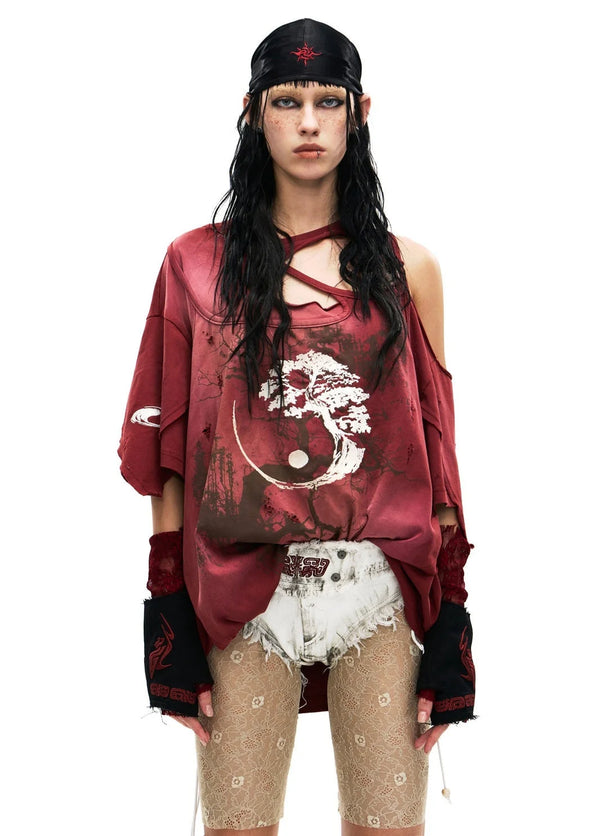
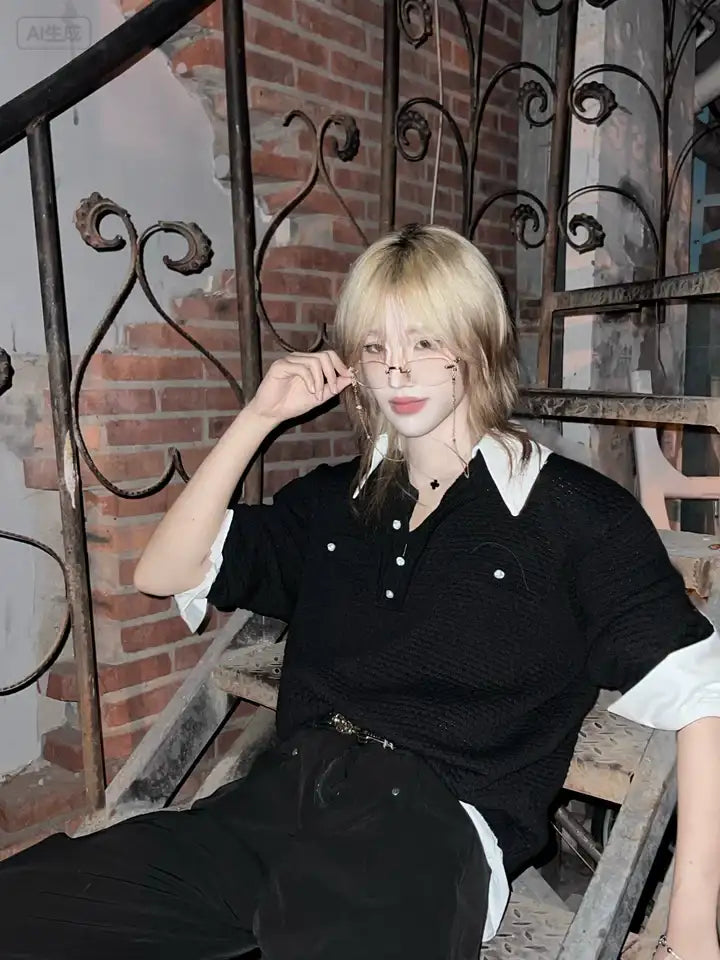
The top sets the tone. In Gyaru it almost always sits close to the body — crop, tank, low neckline or a figure-hugging jersey polo. Print, glitter and star motifs are welcome; plain, wide boxy cuts don't really belong in this world.
Colour-wise you have two ways: either you go loud and bright towards the classic 2000s Gyaru, or you keep the clothing darker and let the face and accessories take the show. Both work. For starting out in Germany the darker variant is often more wearable, because it combines more easily with things you already own.
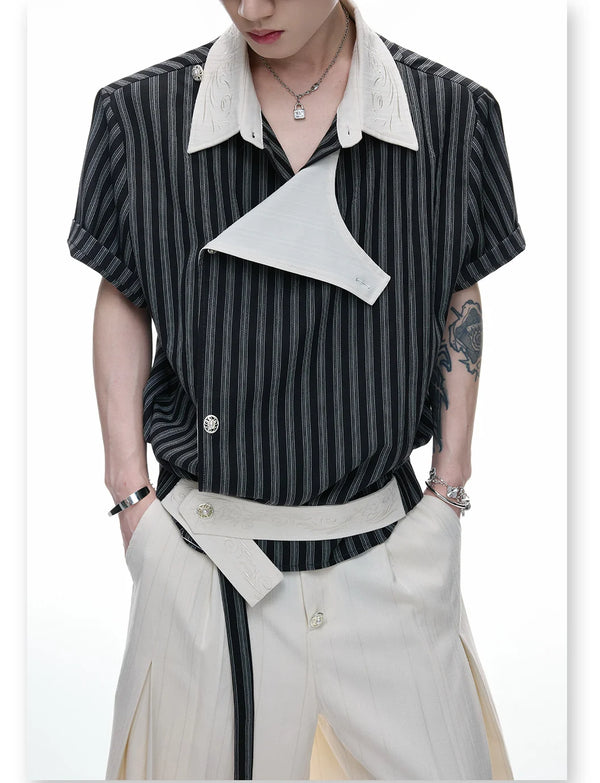
Choose tops that make one thing loud — a print, a shoulder, a neckline. Combined with a high sole and emphasised make-up, a single statement top already carries the whole look.
Category · Bottoms
Gyaru skirts, shorts & wide jeans
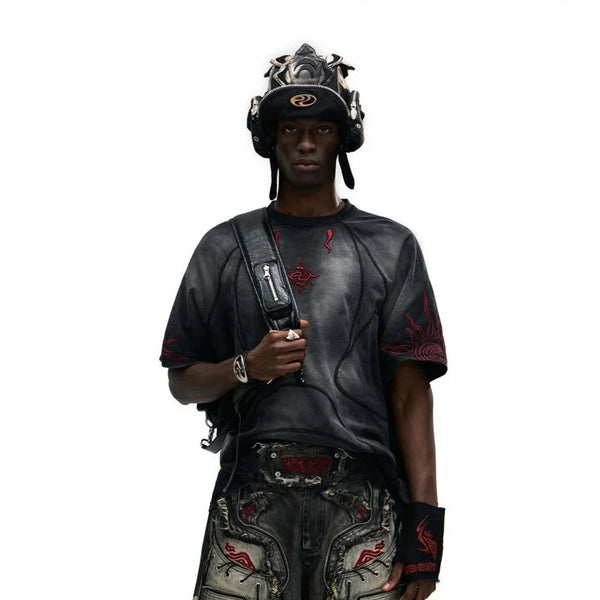
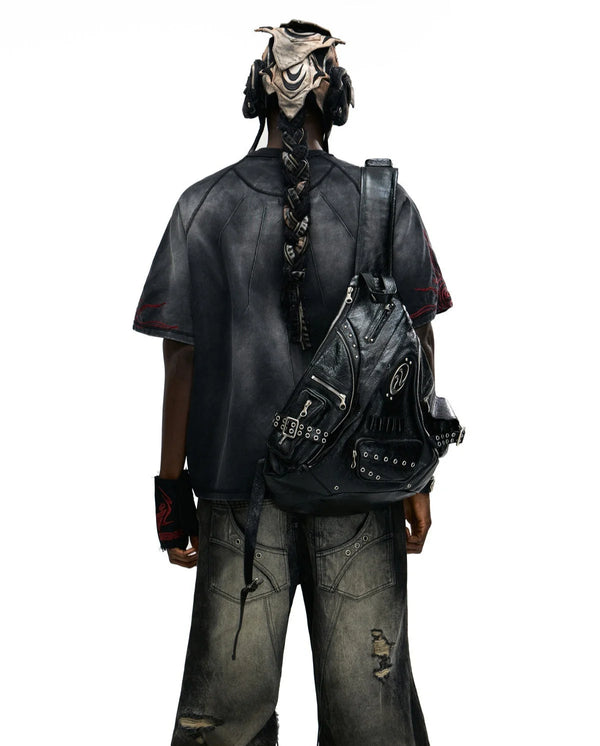
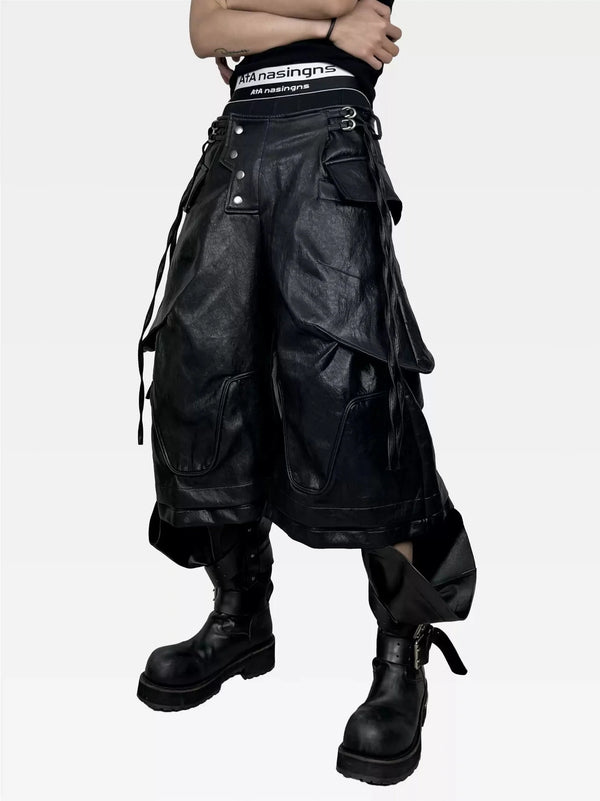
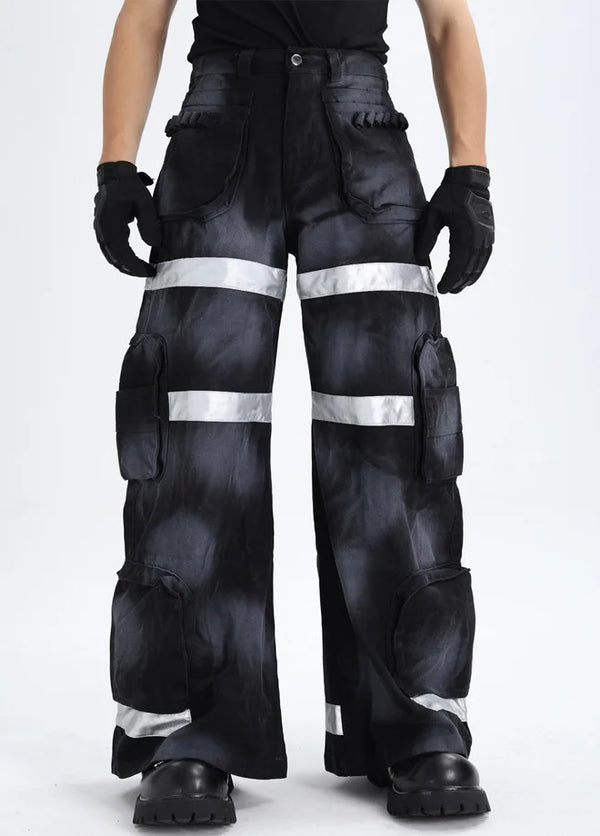
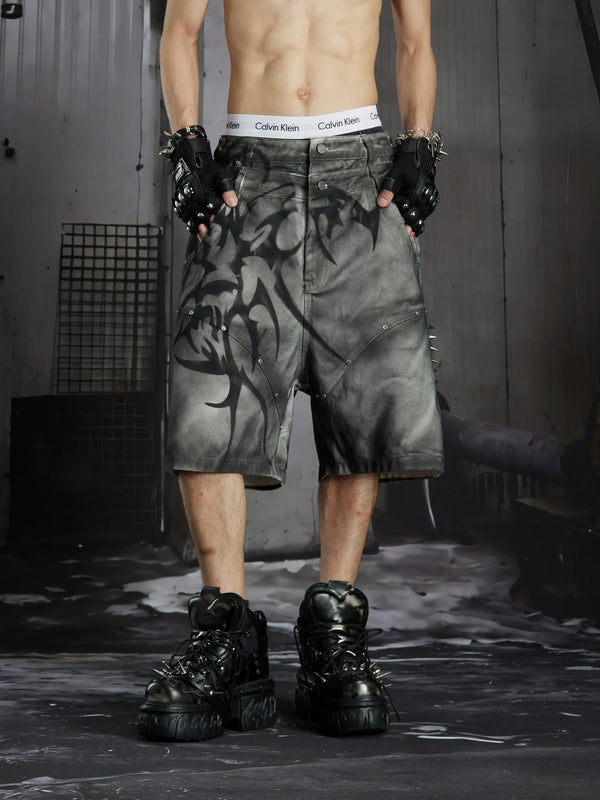
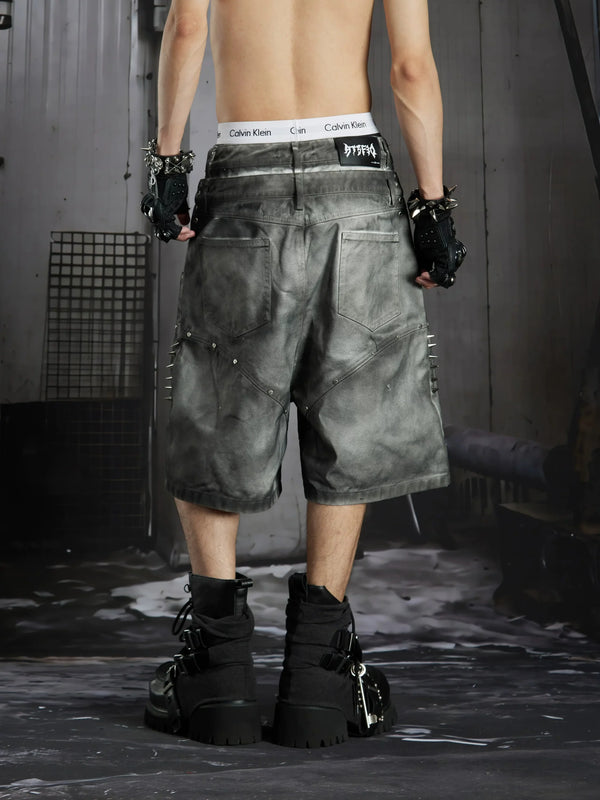
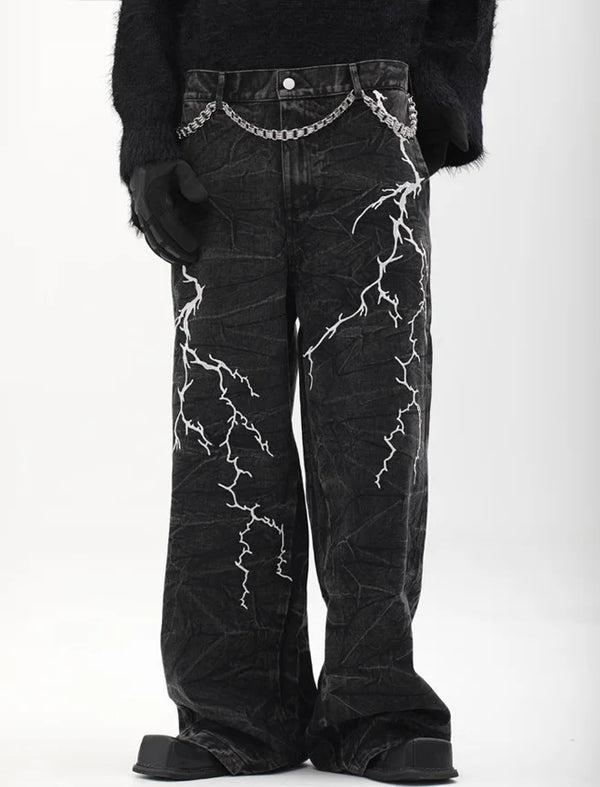
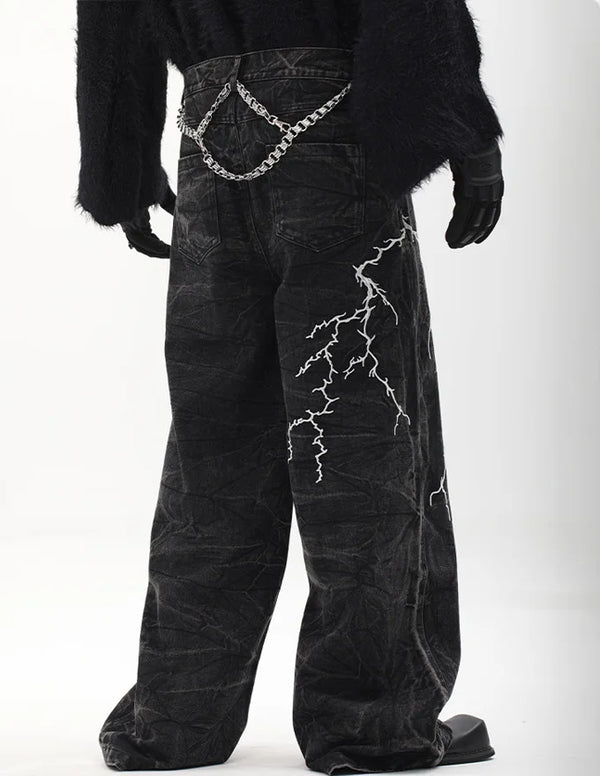
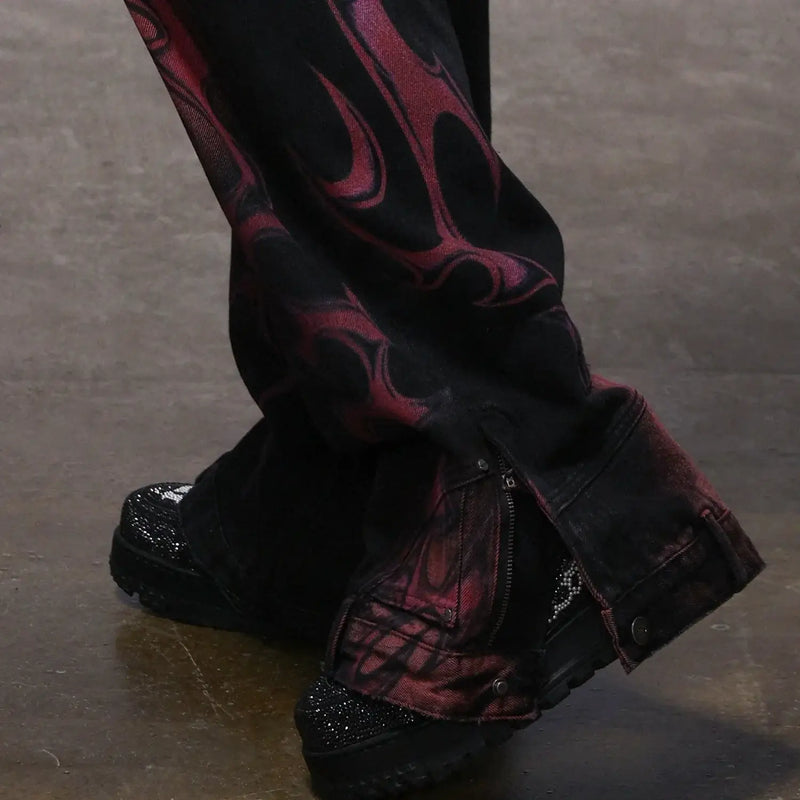
The classic is the mini — short skirt or shorts, often combined with loose socks or high boots. The more relaxed, modern Gyaru instead reaches for wide Y2K jeans with prints or embroidery. Both ways work, as long as the bottom makes a clear statement.
The rule of thumb: if it's tight up top, it can be wide below — and vice versa. If you wear mini and crop at the same time, you need height at the shoe so the proportion doesn't tip. This distribution matters more than any single piece.
In motion you see why the sole makes such a difference: it stretches the leg, lifts the wide trousers and gives the walk exactly the self-assurance that defines Gyaru.
Category · Outerwear
Gyaru jackets & layering: from fuzzy to rock
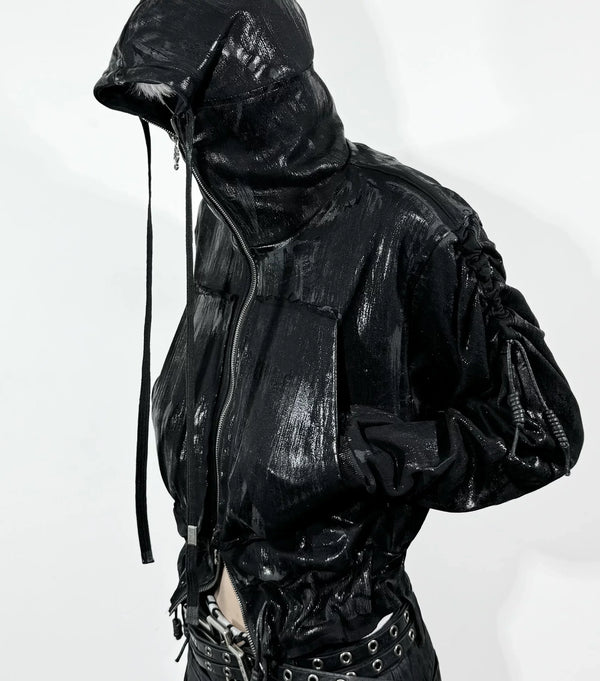
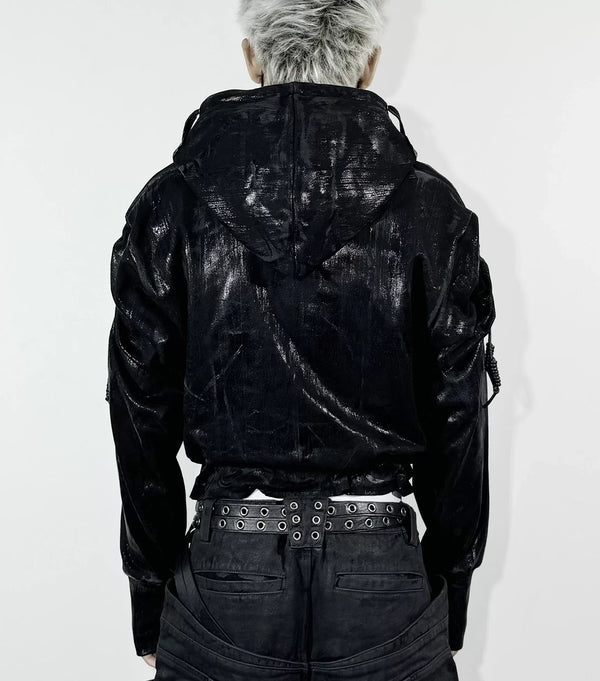
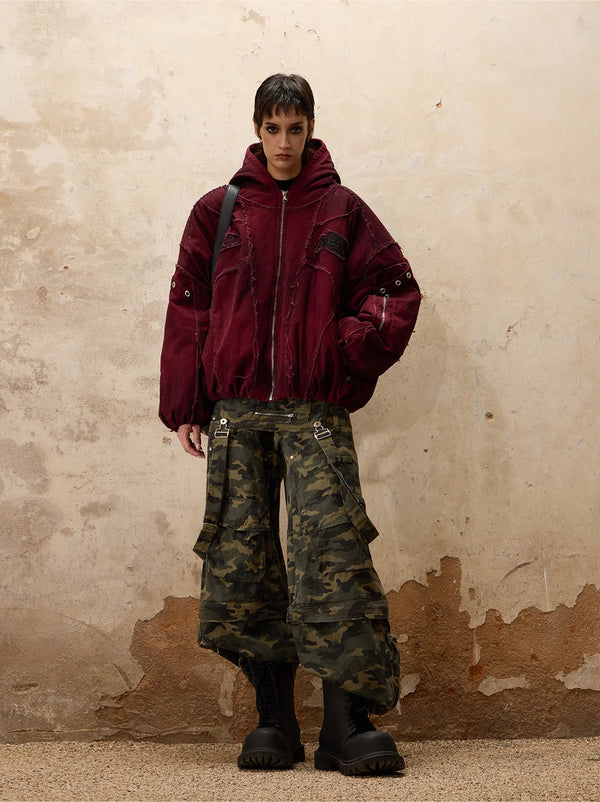
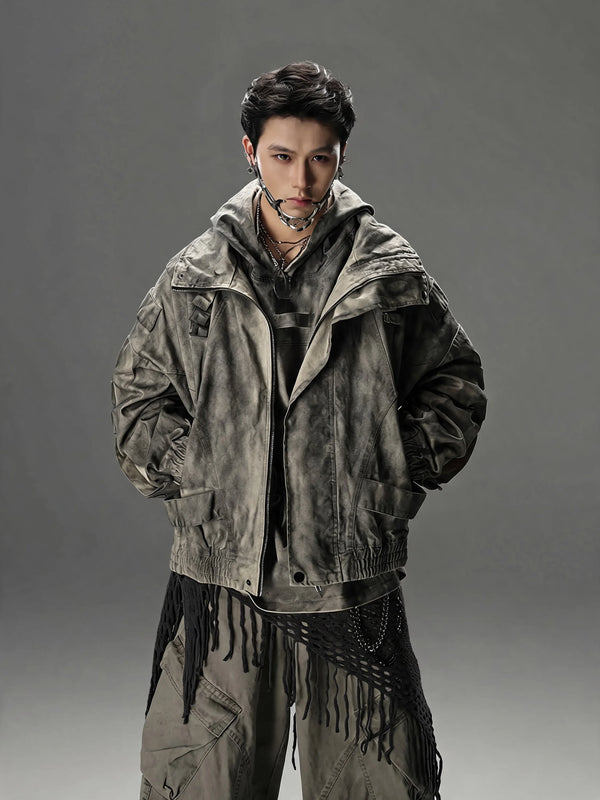
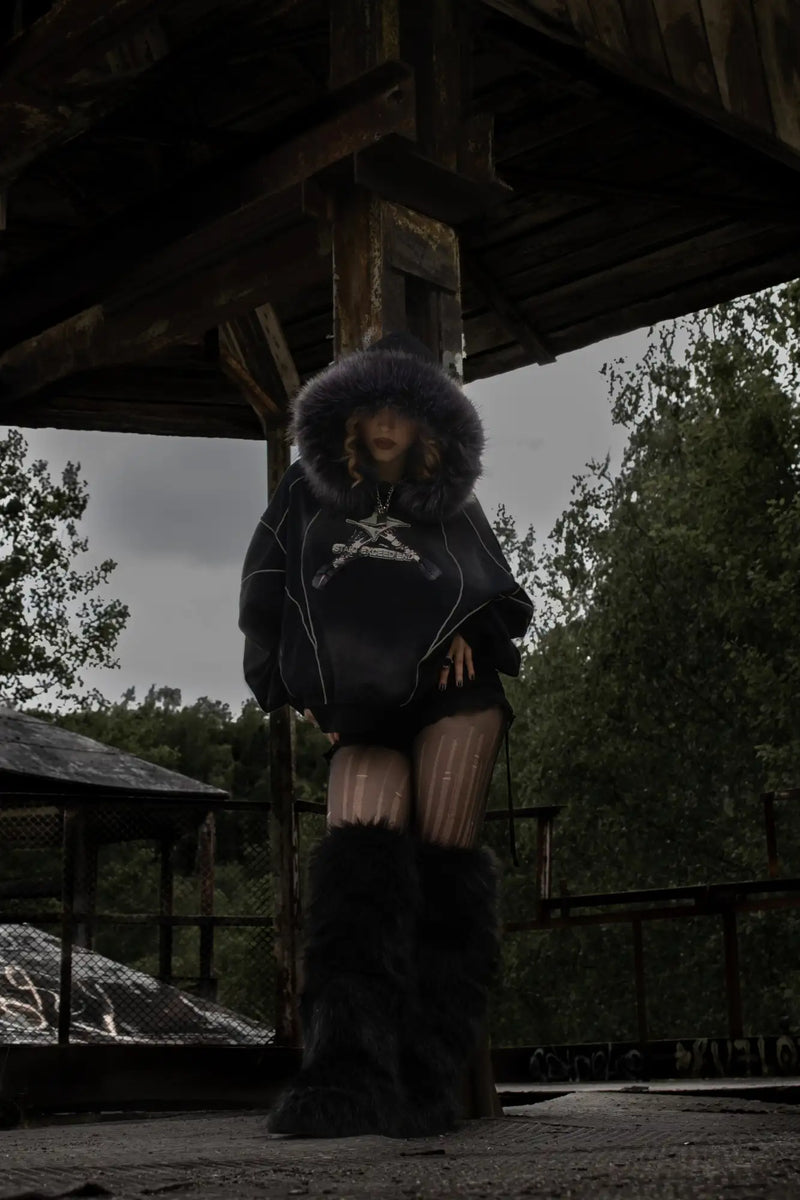
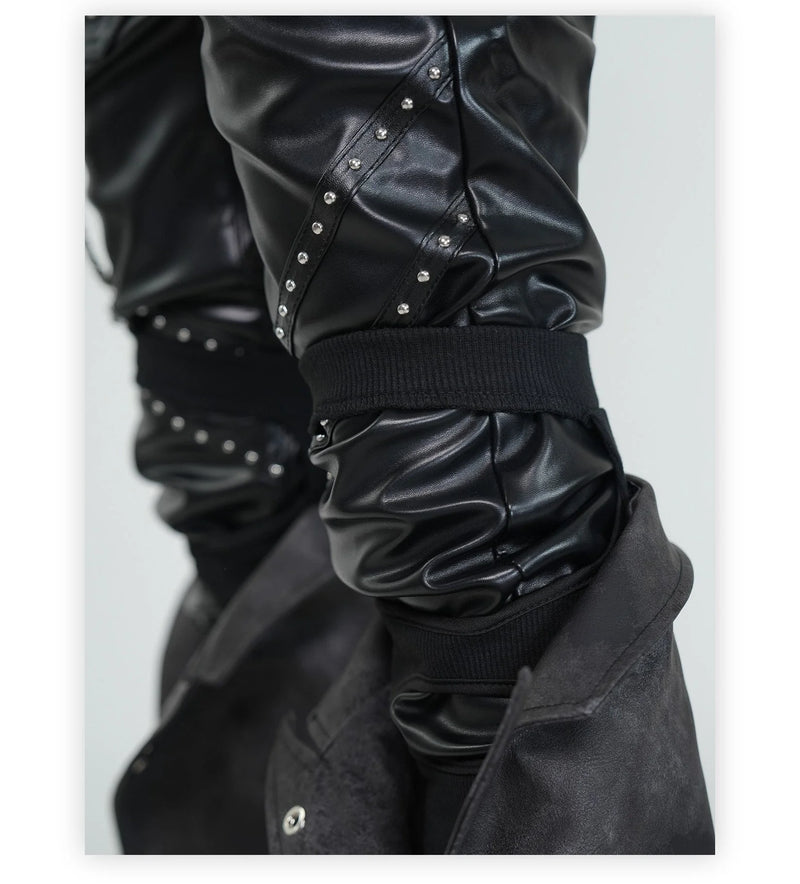
The jacket often decides which substyle your outfit tips into. A fluffy, light jacket pushes the look towards Hime; a leather jacket with studs makes it Rokku. The rest of the outfit can stay the same — the outerwear sets the direction.
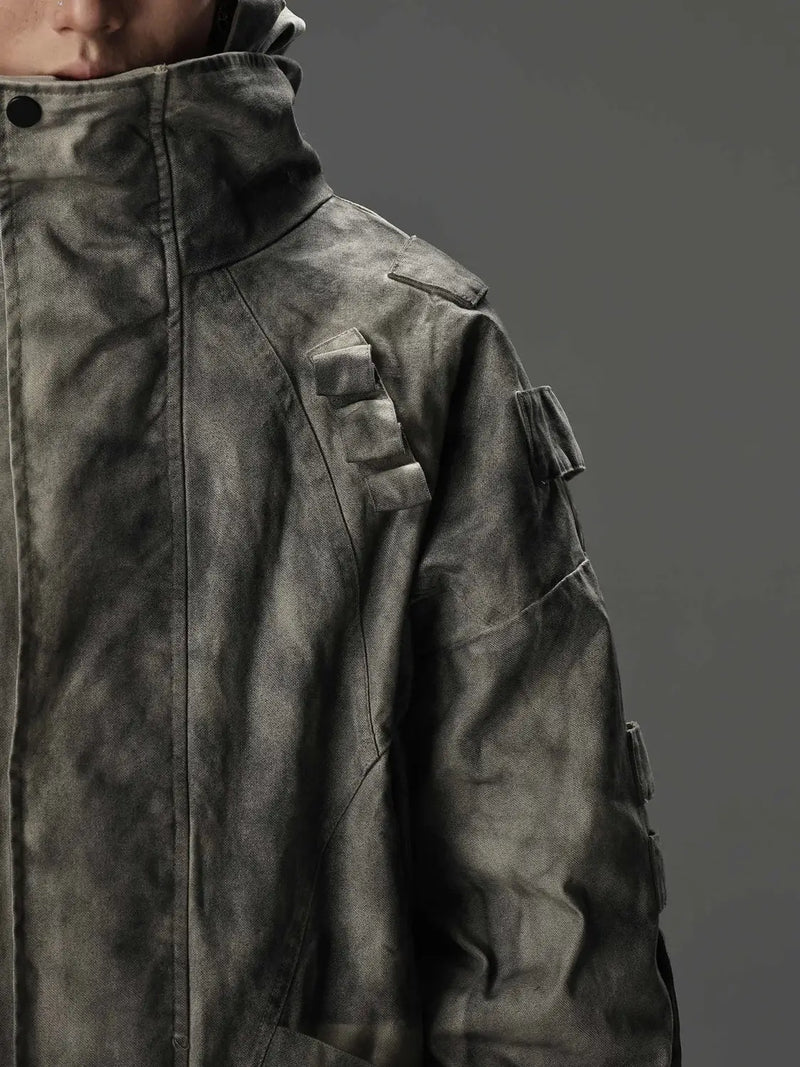
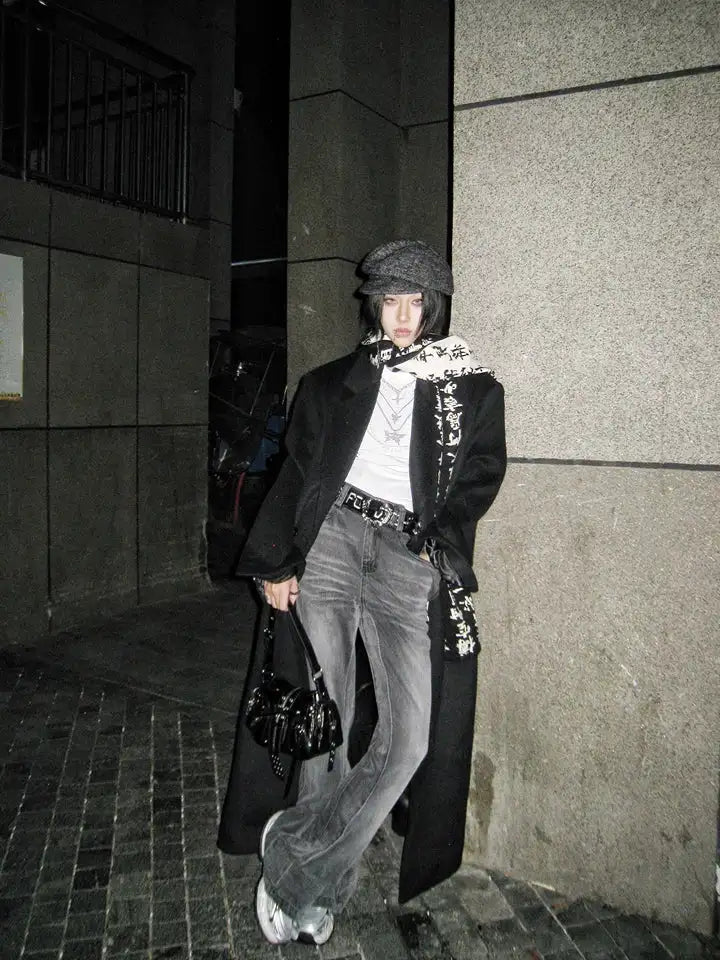
With layering, just make sure the jacket doesn't completely swallow the waist. Gyaru lives on the emphasised silhouette, and a coat that's too boxy can flatten the whole effect. Shorter cuts, waisted shapes or a jacket worn open, revealing the outfit beneath, almost always work better than a piece that simply covers everything.
For everyday wear in Germany, layering is compulsory anyway. A striking jacket over a simple Gyaru top is the easiest way to make the look winter-ready without losing the silhouette.
Gender
Gyaru for men? Gyaru-o and the Shibuya boys
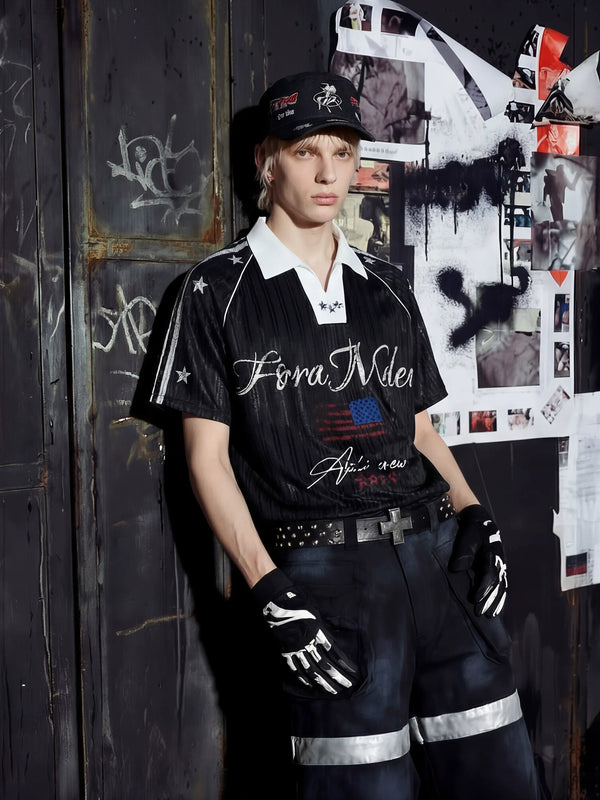
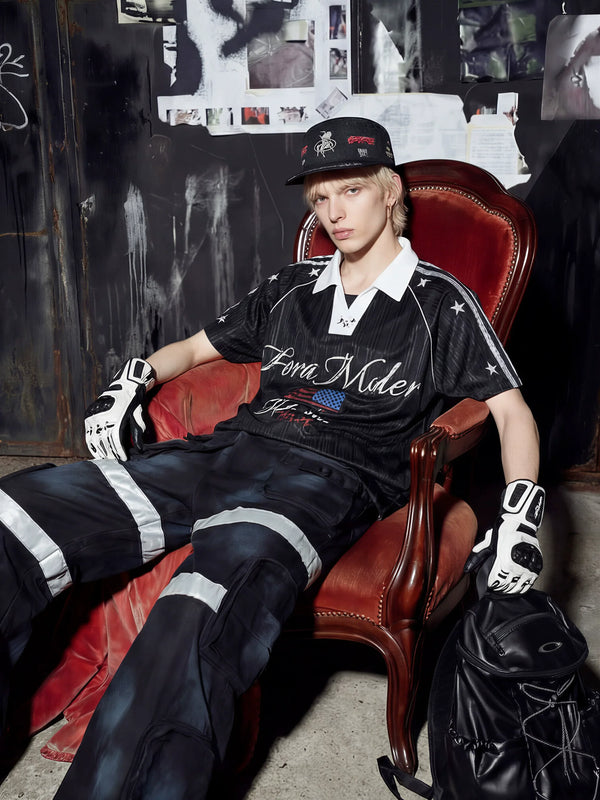
Gyaru is considered a women's subculture, but has a firm male line: Gyaru-o. The codes are related — tanned skin, elaborately styled hair, a body-conscious, often slim silhouette, plenty of attention to detail. Here too: visibly more effort than the average.
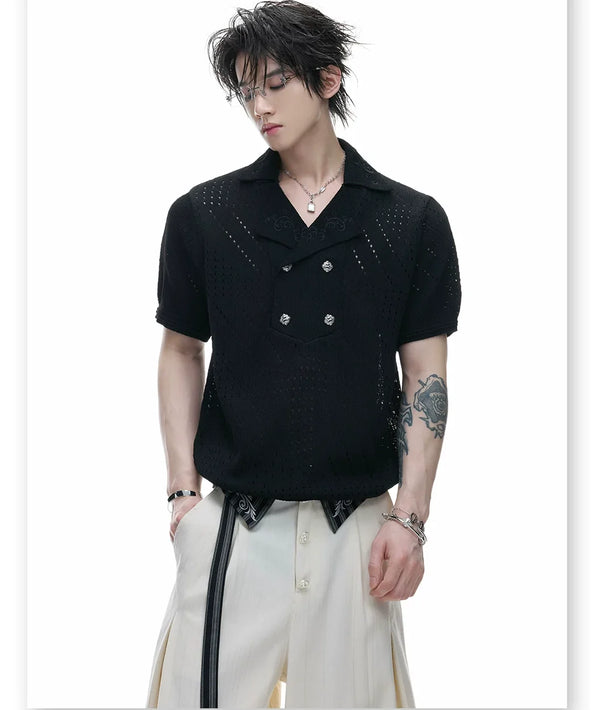
For men who want to test the look, the entry is simpler than expected: a body-close silhouette, well-groomed hair styling and one or two striking pieces are enough to hint at the Gyaru-o language without slipping into costume.
If you like it more relaxed, the casual Harajuku direction offers the softer bridge between Gyaru attitude and wearable everyday — less extreme, same root.
Today
Gyaru today: from Shibuya to the For You page
The great Gyaru era ebbed away at the end of the 2000s, but the style never disappeared. On TikTok and Instagram there's been a noticeable revival for some years — softer, more wearable, often without the extreme tan, but with the same core: visible self-confidence instead of restraint.
What's interesting is that the revival often comes from the West: young people outside Japan discover old magazines and street-style photos, rebuild the look and pass it on to their own scene. In the process a slightly different Gyaru emerges from the original — more international, more individual, less tied to Shibuya. That's not a loss but the logical continuation of a style that always lived on appropriation and exaggeration.
For you that means: you don't have to time-travel to the 1990s. The modern Gyaru interpretation can be built without trouble from current Y2K and Harajuku pieces — what stays decisive is the attitude, not historical accuracy.
Shopping
Where to find Gyaru pieces — without a Japan import
The related search “Gyaru Fashion shop” comes up constantly, and the honest answer is: a pure Gyaru store is rare in Europe. The practical path runs via the overlapping shelves — Y2K, Japanese streetwear and Harajuku cover the silhouettes almost completely.
Accessories are often the cheapest lever: a striking pair of sunglasses, a chain, an eye-catching cap shift a simple outfit noticeably towards Gyaru before you even get to skirt or jeans.
Two or three such statement pieces plus a consistent face are enough for a first, wearable Gyaru look — everything else is fine-tuning.
Mistakes
The 5 most common mistakes when starting Gyaru
Most failed Gyaru attempts don't fail on missing pieces, but on the same recurring thinking errors. Whoever knows them saves the detour.
If you're unsure, go through the list backwards: shoe height first, then silhouette, then substyle focus, then face. Once these four are set, the look forgives smaller mistakes on the individual pieces.
Getting started
Your first Gyaru outfit: the practical start
For the first attempt you don't need a full wardrobe update. A figure-hugging top, a wide or short bottom, a shoe with height and one or two loud accessories — plus the face — already make a recognisable, wearable Gyaru look for everyday.
Dare to be loud. The most common reason a Gyaru start stays inconspicuous is timidity — not budget. One bold piece beats three cautious ones.
FAQ
Frequently asked questions about Gyaru Fashion
The questions that come up most often when starting Gyaru — answered briefly and without detour.
Is Gyaru the same as Kogal?
Do you absolutely need the dark tan for Gyaru?
Can you wear Gyaru as a man too?
Where can you buy Gyaru clothing in Germany?
Is Gyaru still relevant today?
If you take one thing from this guide, take this: Gyaru is not a shopping list but a decision to be visible.
What do you think?
Tell us on @fuga_studios
About the author
Philipp Fuge — Founder · Berlin
Founder of Fūga Studios. Writes the journal himself. Berlin · Shanghai · Tokyo · Poznań — four cities, one logic.