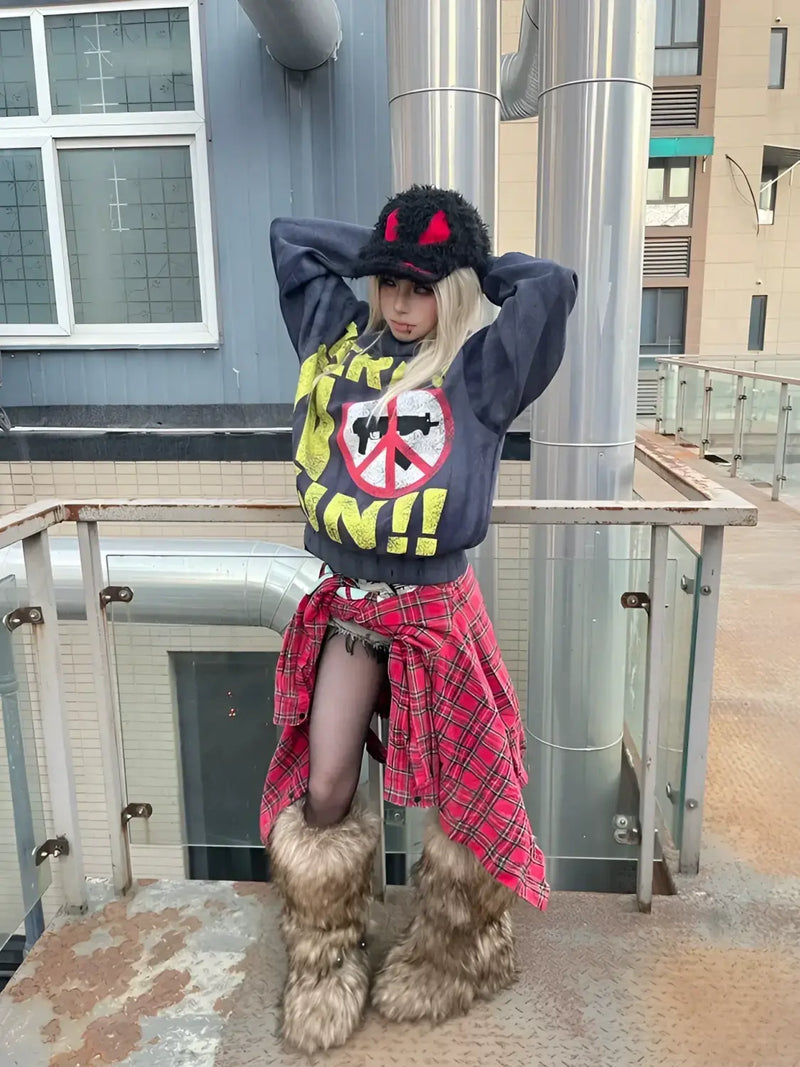
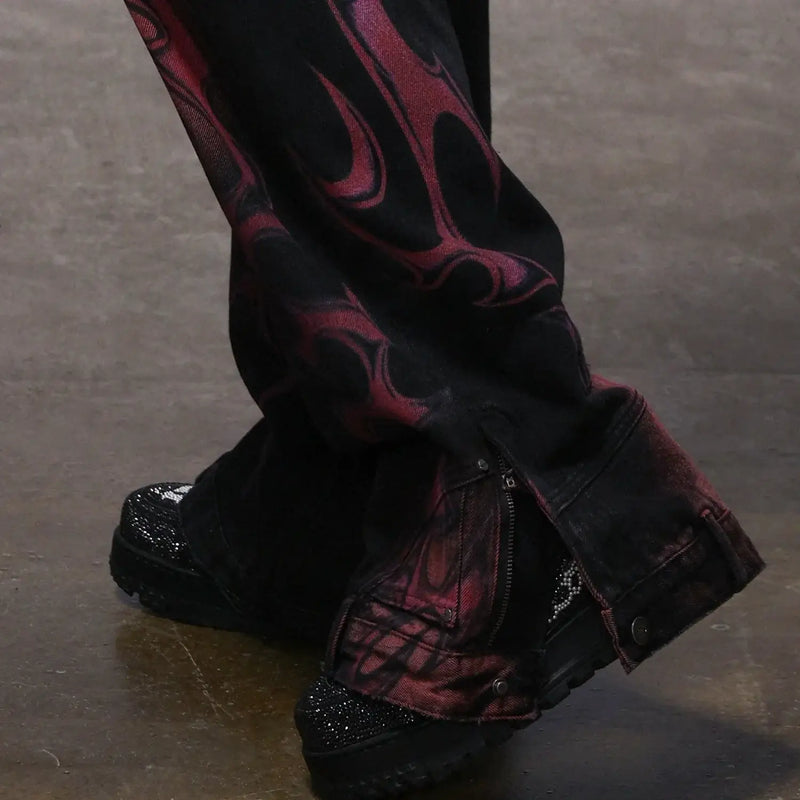
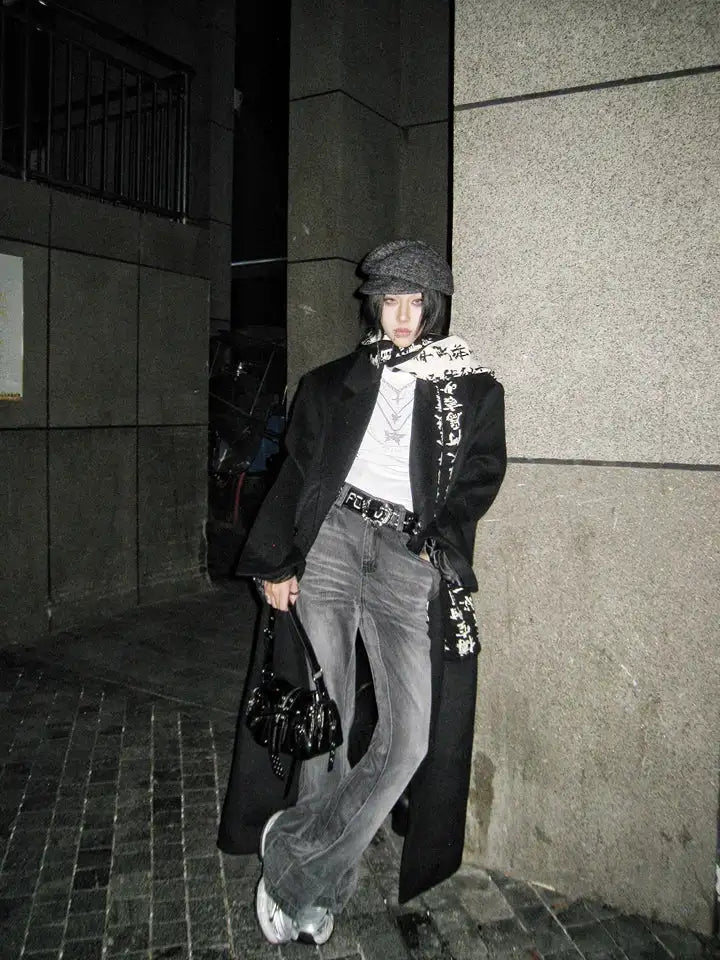

A basement show in Chicago, autumn 1996. No stage, no lighting desk, just an overheated amp and thirty people mouthing every line. On their shoulders: washed-out cardigans, second-hand sweaters, band tees with three previous owners. Nobody here wanted to look like a scene. That is exactly what became the uniform.
Emo fashion in the 90s was deliberately unspectacular: cardigans, washed jeans, thick horn-rimmed glasses and worn-down Converse instead of eyeliner and a black fringe. The nineties look is the first real build stage of Emo, long before the Mall Emo of the 2000s. Where the journey went from there is in our big Emo guide.
Origin
Emo fashion in the 90s: where the first real Emo look comes from
Emo does not begin in the 2000s, and not in a shopping mall either. The term appears in the mid-80s in the hardcore scene of Washington, D.C., short for Emocore: hardcore punk that suddenly screamed about feelings instead of anger. Bands like Rites of Spring and Embrace laid the foundation. What came of it in the 90s is the second wave, and it is the reason anyone searches for 90s Emo fashion today.
This second wave was indie, not industry. Sunny Day Real Estate, The Promise Ring, Mineral, Cap'n Jazz, Texas Is the Reason: Midwest Emo, self-pressed records, shows in living rooms and community halls. The clothing followed the same logic. Nothing was supposed to look expensive, polished or bought. The look was a by-product of the attitude, not a selling point. And that is exactly why it still holds today.
Geographically the sound moved in the 90s from the East Coast to the Midwest, from D.C. to Chicago, Kansas City and the college towns in between. With the change of place came a new tone: more introspective, more tangled, often with a breaking voice. The clothing moved along. It became even more everyday, more dorm room than stage, and stayed a deliberate counter-draft to the high-gloss fashion of the mainstream charts. Whoever knew the records recognised the jacket, not the brand.
The decade
What was typical for 90s fashion?
The 90s were the decade in which fashion deliberately let the air out. After the shoulder-pad pomp of the 80s came the counter-movement: wide cuts, muted colours, second hand as a statement. Grunge brought the flannel shirt, hip hop the baggy silhouette, minimalism the reduced palette. The same thread ran across all currents, namely the rejection of wealth worn on display.
Emo sat in the middle of that mood, but with its own accent. Where Grunge wanted to look raw and unwashed, 90s Emo was more the quiet, well-read neighbour: worn, but tidy, a little nerdy, never aggressive. Cardigan over the band tee, glasses, a beaten-up backpack. 90s fashion set the frame, Emo filled it with a trace of melancholy and self-irony.
The picture of the 90s also included the side stages that carried the style: the mixtape, the zine table at the merch stand, the video store and a TV with clips running constantly. Fashion in that environment was nothing you planned, but something that came out of what was available. Whatever hung in the second-hand shop and fitted the budget ended up in the outfit. That randomness is still the most honest part of the look and the reason it is so hard to fake.
1985
Emocore emerges in D.C.
1994
Sunny Day Real Estate, Diary
2.
wave: Midwest Emo of the 90s
Definition
What is a 90s-style Emo outfit?
A 90s Emo outfit is a layering of comfortable, worn-in basics that together read quieter than their individual parts. The formula: a band tee or ringer tee as the base, a cardigan or sweater-vest over it, straight to slightly wide jeans, flat sneakers and thick glasses. No statement pieces, no brands pushing to the front. The statement comes out of the combination, not out of a hero piece.
In concrete terms: one to two tops layered, trousers with room, flat shoes and exactly one recognisable detail. Colour stays muted, grey, washed blue, olive, faded black, plus maybe a single accent from an old print. Nothing shines, nothing is loud, nothing screams new purchase. The look works because it looks randomly thrown together and is still coherent.
The difference to the later Mall Emo matters: the 90s look knew no asymmetric, black-dyed fringe, no eyeliner and no avalanche of studded belts. Hair was shaggy and overlong, colours earthier. Anyone building the outfit today thinks of Weezer's Blue Album era, not of stage make-up from 2006.
Distinction
90s Emo, Grunge or Goth: what does a 90s Grunge outfit look like?
In the 90s the three looks shared the same thrift-store logic but split on attitude. A 90s Grunge outfit is the open flannel shirt over the band tee, ripped or bleached jeans, Doc Martens or muddy sneakers and deliberately unkempt hair, the Seattle reflex from Nirvana to Pearl Jam. Grunge wanted to look as if the clothing did not matter.
Emo took over the flannel and the second-hand principle but stayed tidier and more introverted: cardigan instead of open lumberjack shirt, glasses instead of stubble, melancholy instead of rebellion. Goth in turn was the exact opposite of both, all black, dramatic, deliberately staged. Rule of thumb: Grunge is loud and sloppy, Goth is dark and theatrical, 90s Emo is quiet and well-read.
Punk ran in parallel through the 90s and shared points of contact: band patches, worn jackets, a leaning towards the self-made. The difference lies in the volume. Punk wore studs, safety pins and slogans on the outside, Emo carried the same energy inwards. Where punk wanted to provoke, the Emo kid wanted to be understood. Same garage, two temperaments, and in the second-hand shop both stood next to each other at the till.
Laying the decades side by side, the development is immediate: the quiet 90s code became a loud, dyed mass phenomenon ten years later. Both are Emo, but they speak a completely different language.
Tops
90s Emo tops: band tees, cardigans and layering
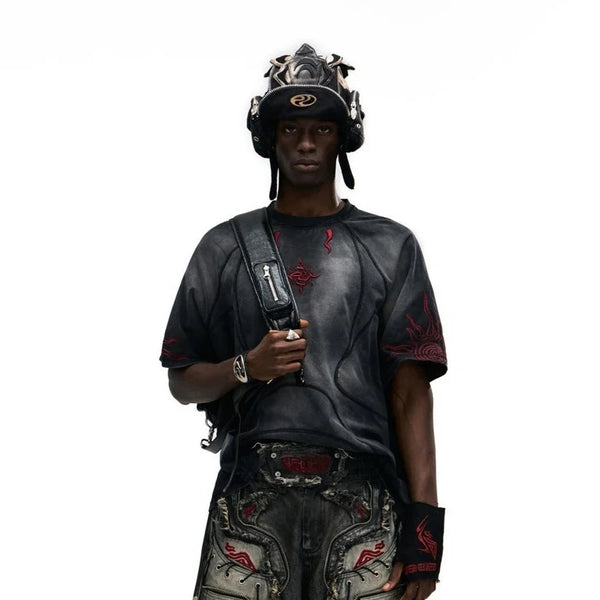
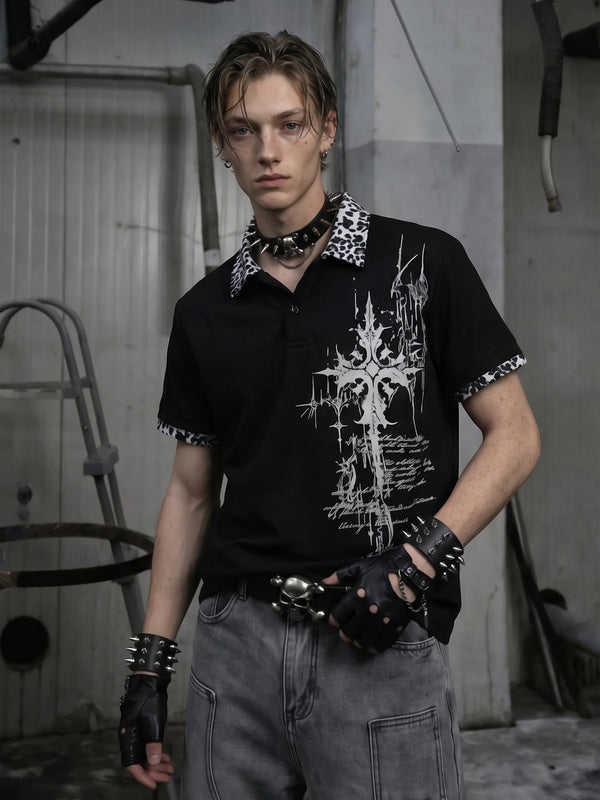
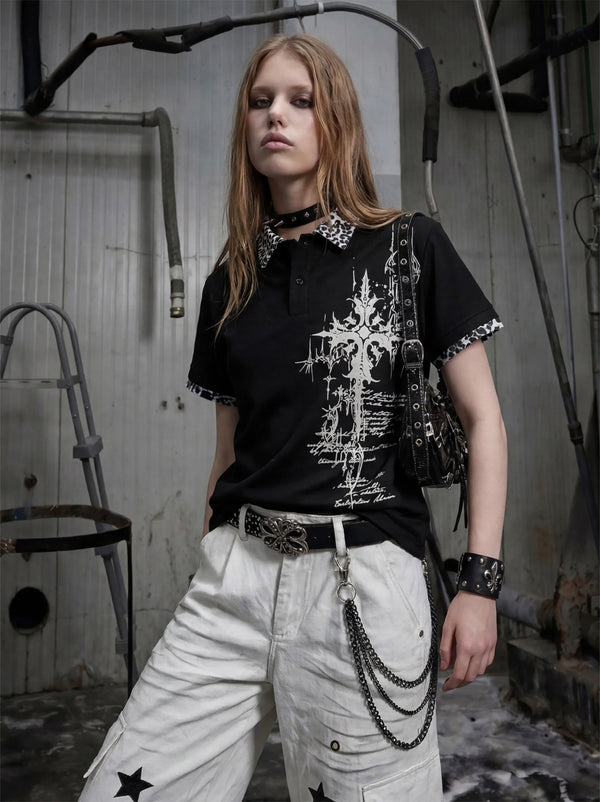
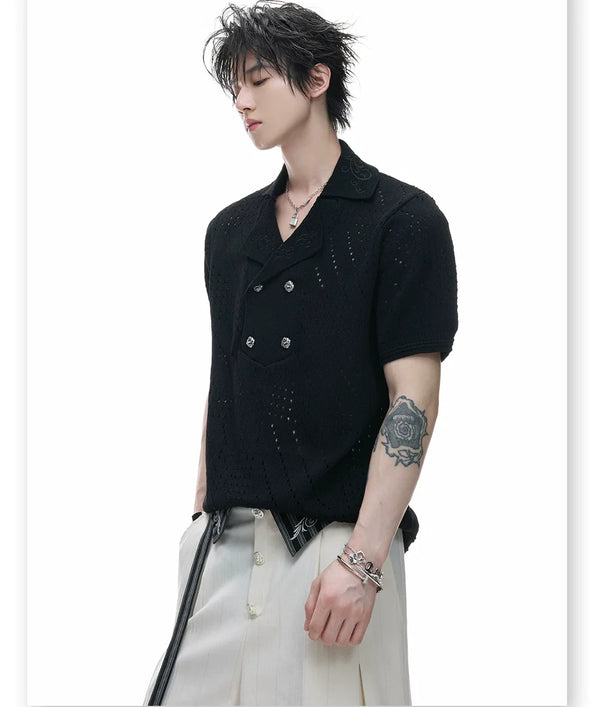
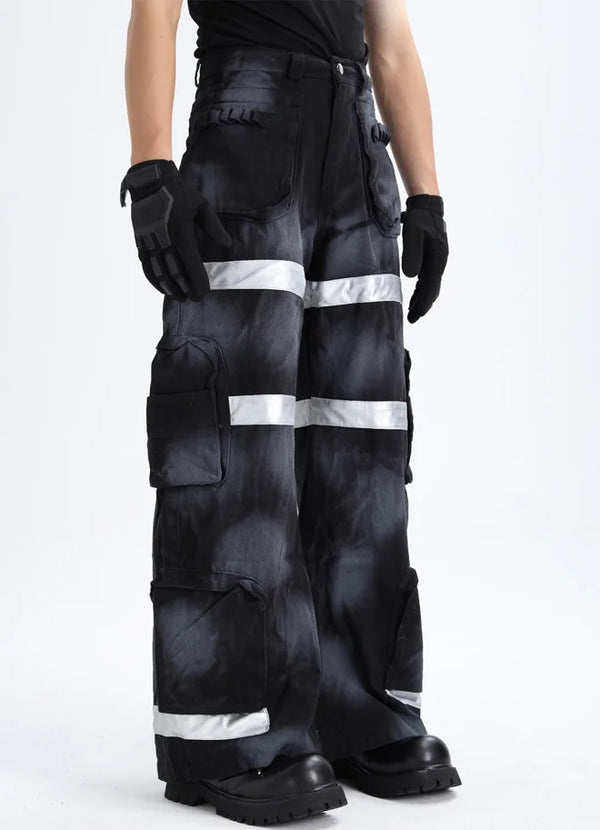
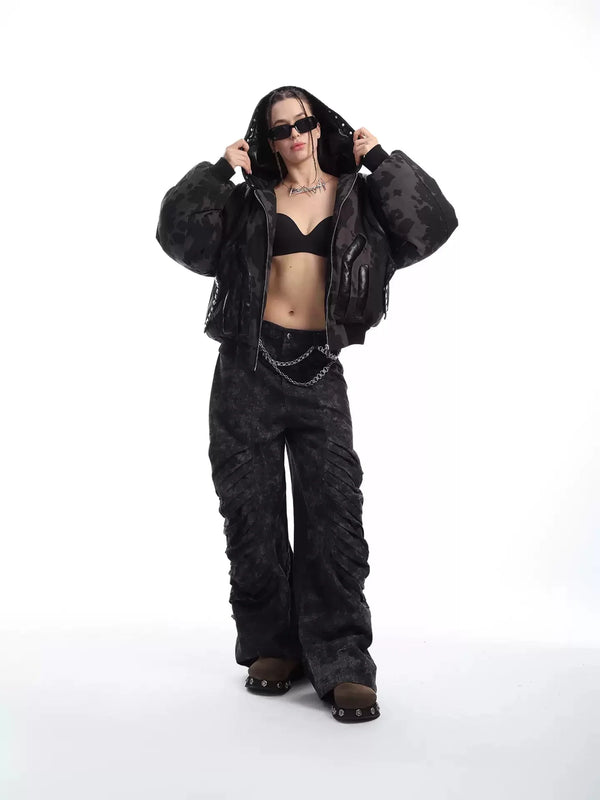
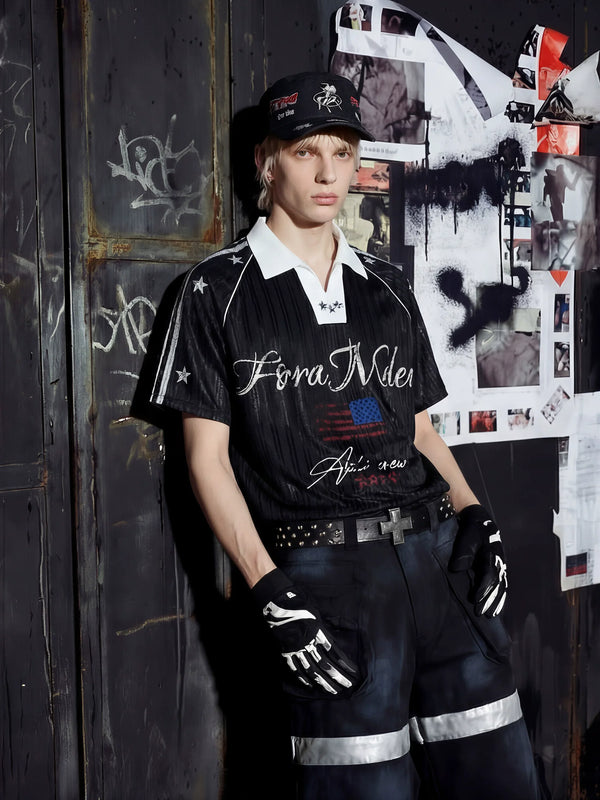
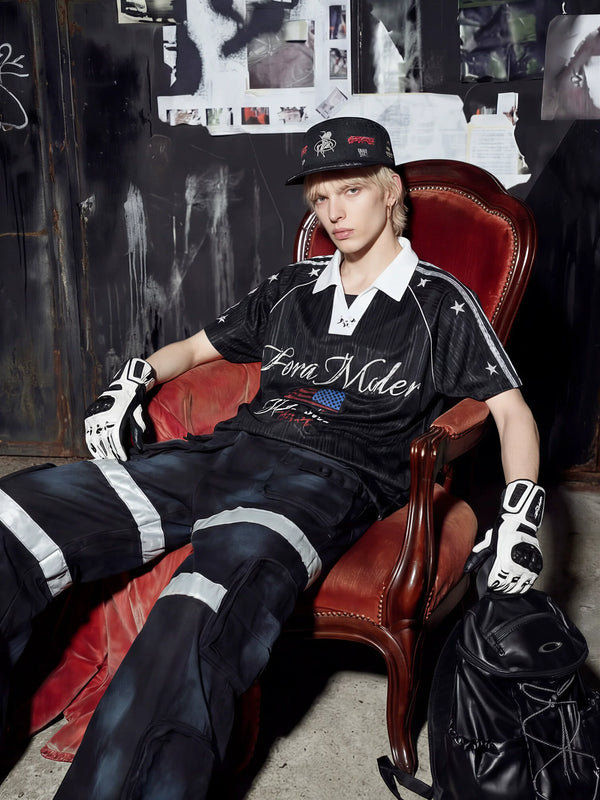
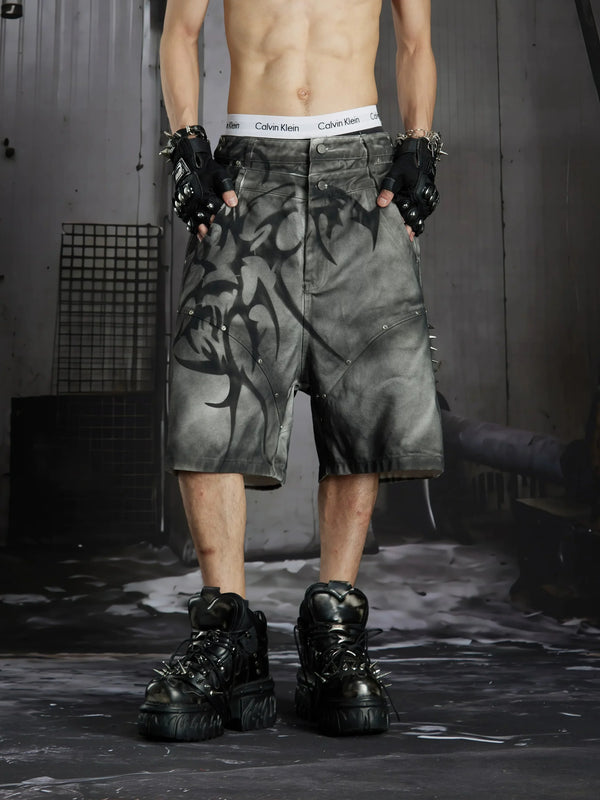
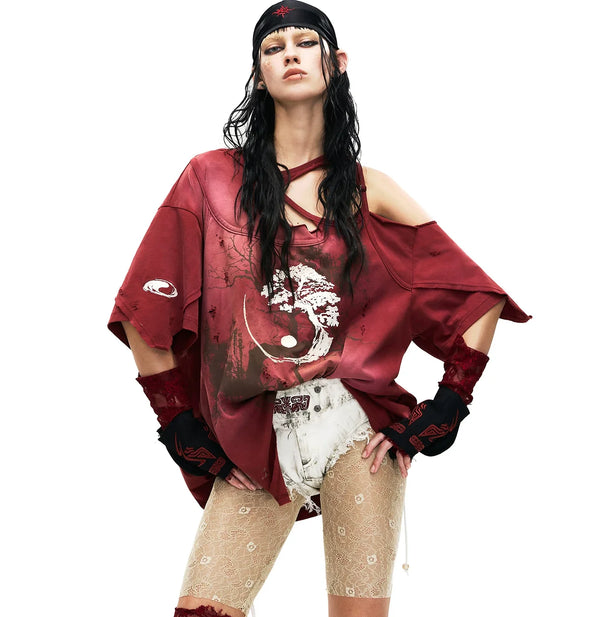
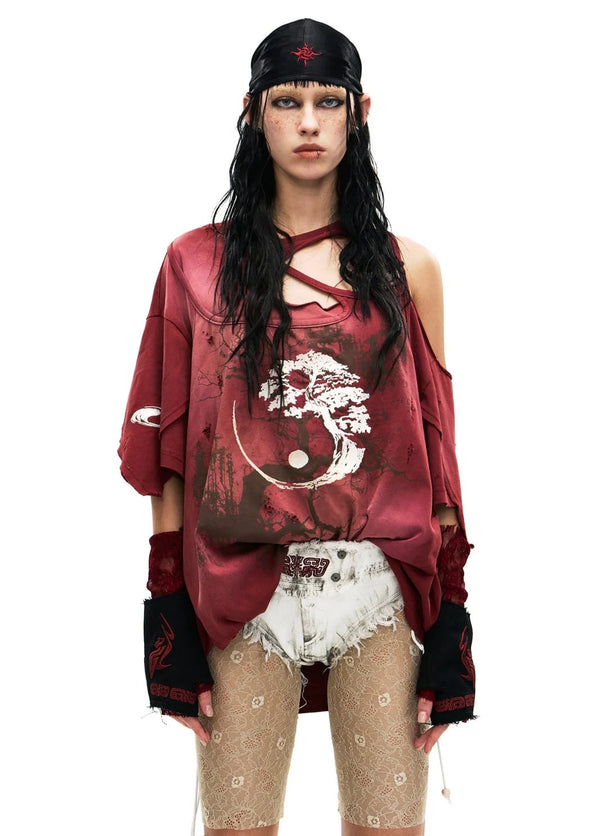
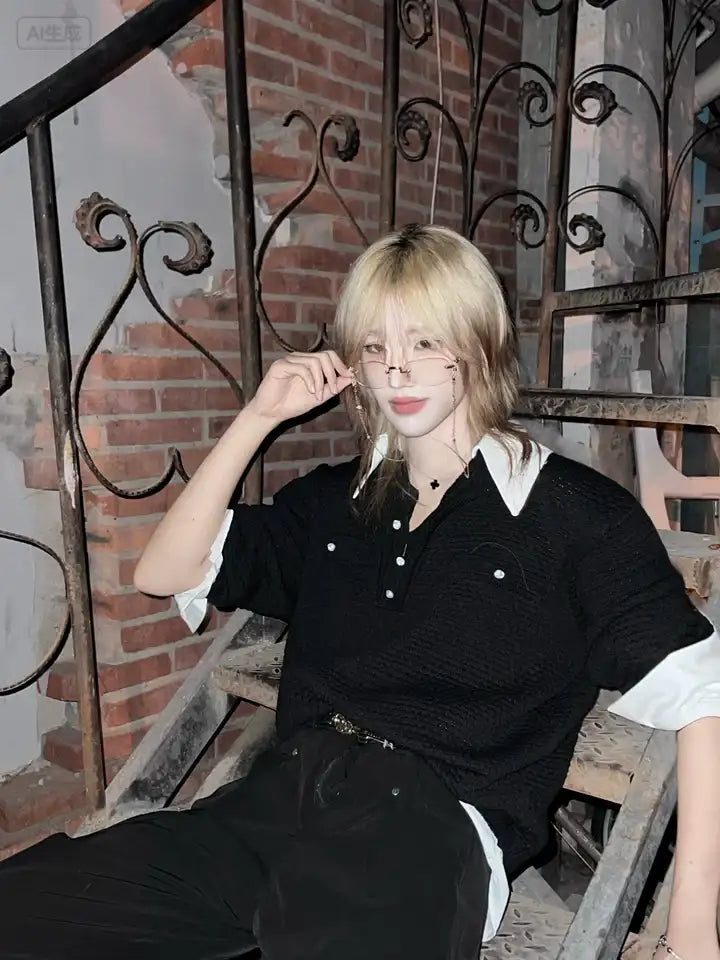
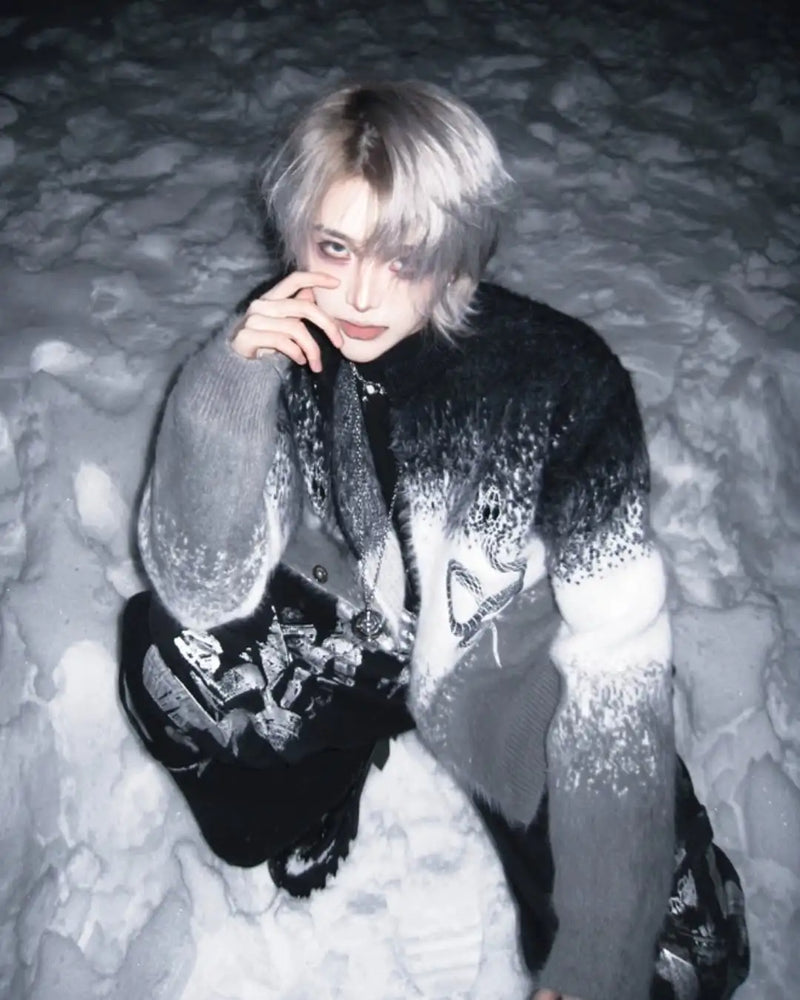
In 90s Emo the top carries the whole story. Underneath sits a band tee or a plain ringer tee with a contrast collar, ideally washed and a shade too small. Over it comes the cardigan, the sweater-vest or a coarse sweater, often thrift with signs of use. This principle, hard underneath and soft outside, is the core of the look and can be rebuilt directly with dark, distressed tops from today.
The band tee was rarely a piece of merch in today's sense, more a piece of evidence: you were at the show, you knew the record. Ringer tees with contrast collars, washed crewnecks and coarsely knitted sweaters completed the base. The sweater-vest over the long-sleeve is perhaps the purest 90s Emo move, half library, half rehearsal room, and still the piece that makes the look readable fastest.
Watch for signs of wear instead of new gloss. A slightly frayed hem, a faded print or an already worn-through knit structure tell the 90s story more convincingly than any fresh logo.
Typology
The five archetypes of 90s Emo style
90s Emo was never one single silhouette but a spectrum of related attitudes. Five types turn up again in every old show photo, and each one translates today into a different corner of our range.
You do not have to decide on one archetype. Most 90s outfits mixed two of them, the student with the crossover for instance, and exactly that blur is what makes the look real.
What connects the five types is the refusal to look expensive. None of them wanted to count as fashion-conscious, and precisely that was the shared fashion. The differences lay in the detail: more knit or more flannel, shorter or longer hair, a touch more hardcore or a touch more indie. They all shared the same wardrobe, only sorted differently.
Trousers
90s Emo trousers: washed jeans, jorts and wide cuts
Below the waist 90s Emo stayed relaxed. The jeans sat straight to slightly wide, never slim, and were almost always washed out or worn through at knee and hem. Corduroy and plain work trousers in a Dickies cut turned up just as well. In summer they became cut-off, frayed shorts. What mattered was the opposite of the later skinny jean: room, drape and visible use.
Corduroy trousers in brown or dark green appeared just as often as plain work trousers that were actually meant for the workbench. The drape was decisive: the fabric should break over the shoe, not cling to the leg. Belts were functional, not jewellery. Staying calm and wide below gave the layering above the room it needed and kept the proportion in balance.
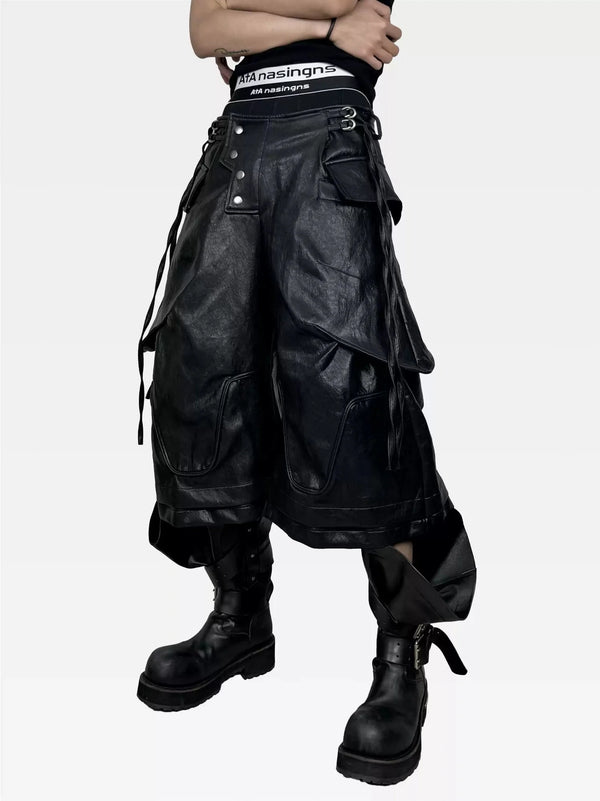
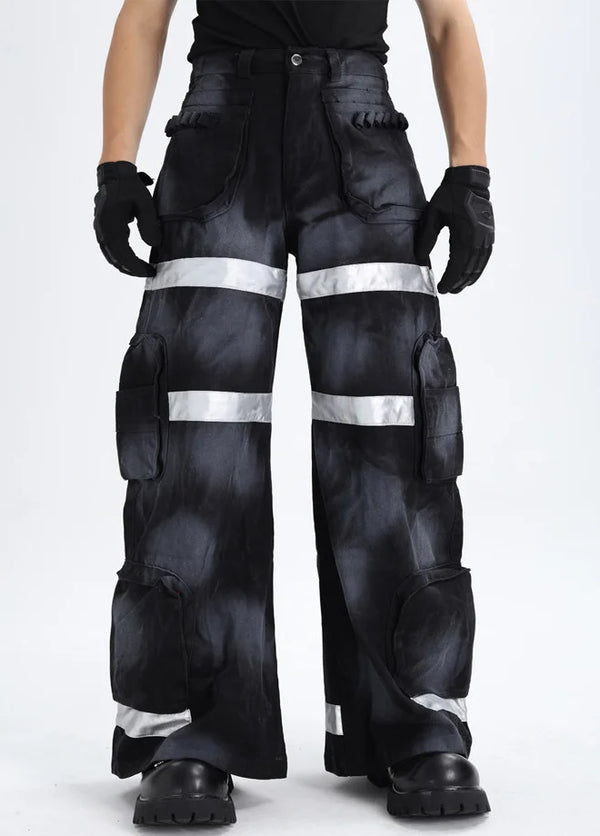
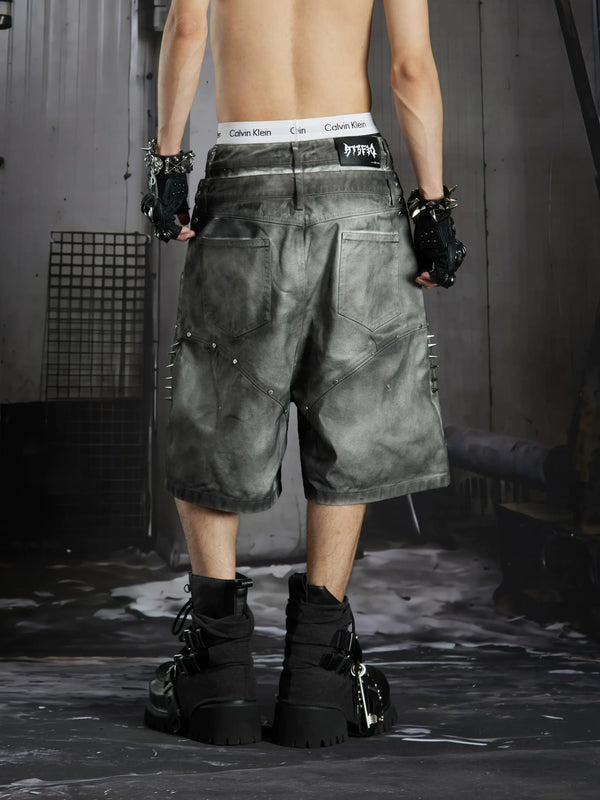
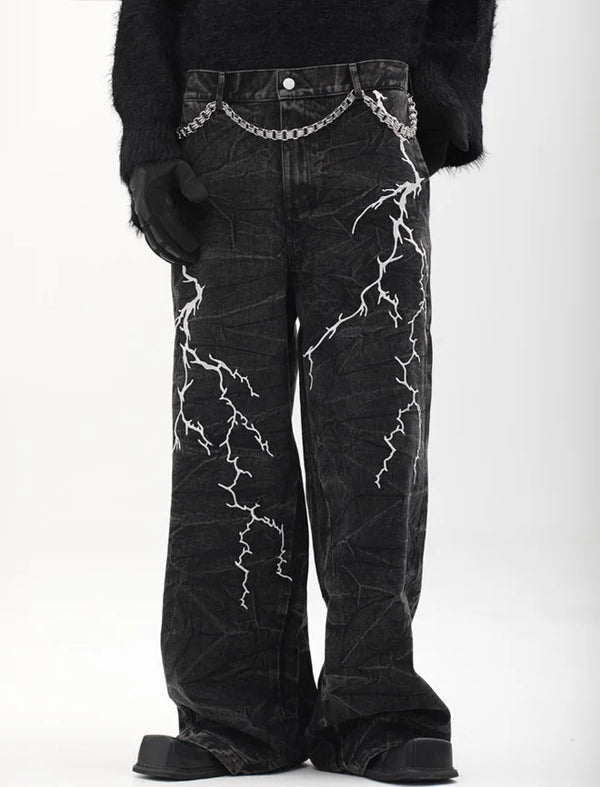
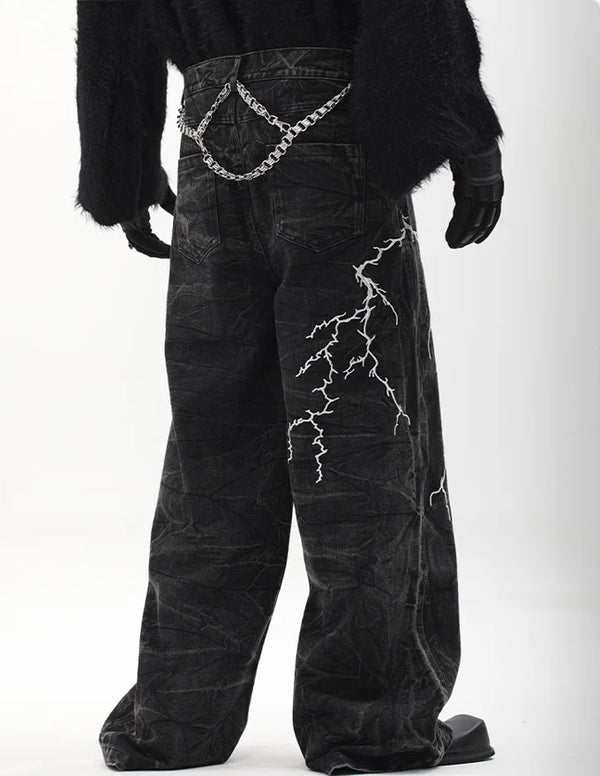
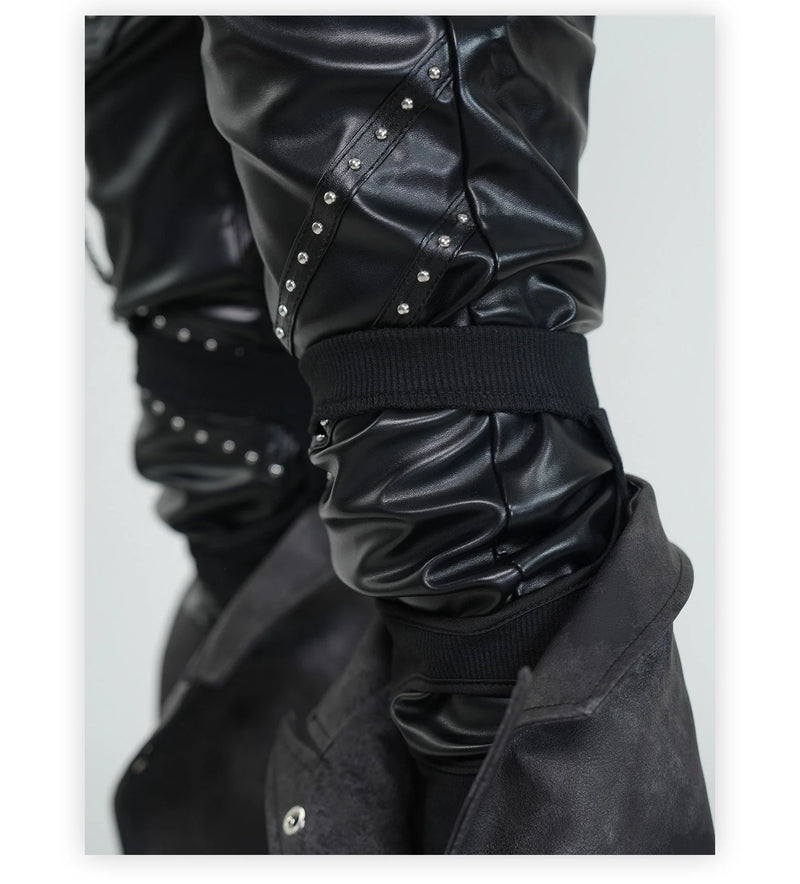
If you want the 90s silhouette today, reach for wide, dark denim with visible texture instead of a smooth skinny. The jorts from the same range take over the summer version without tipping into vintage nostalgia.
Wherever you start: build solid downwards and soft upwards, then the proportion sits by itself.
Her and him
90s Emo fashion girl and men: the look for her and him
The 90s code was less separated by gender than later Emo waves. Still, there were accents. The 90s Emo fashion girl leaned on babydoll elements: cardigan over a plain dress or tee, hair clips, Mary Janes or Chucks as well, plus a cardigan that looks two sizes too big. Understatement with a soft edge.
Historically the 90s Emo look was one of the first in which the same pieces could be worn across gender lines without much reinterpretation. The cardigan, the band tee and the wide jean worked for everyone because they were never meant as a statement. We take that openness seriously: our split into her and him is a starting point, not a boundary.
For 90s Emo fashion men it ran on the same building blocks, only in an edgier execution: band tee, coarse knit or work jacket, straight jeans, sneakers or skate shoes. In both cases what matters is not the piece but the restraint. The less the outfit looks like effort, the more precisely it hits the 90s.
Both versions share the same wardrobe. If you build the look with someone, you are basically shopping from the same rack and only setting different emphases.
Jackets
Jackets and layering in the 90s Emo look
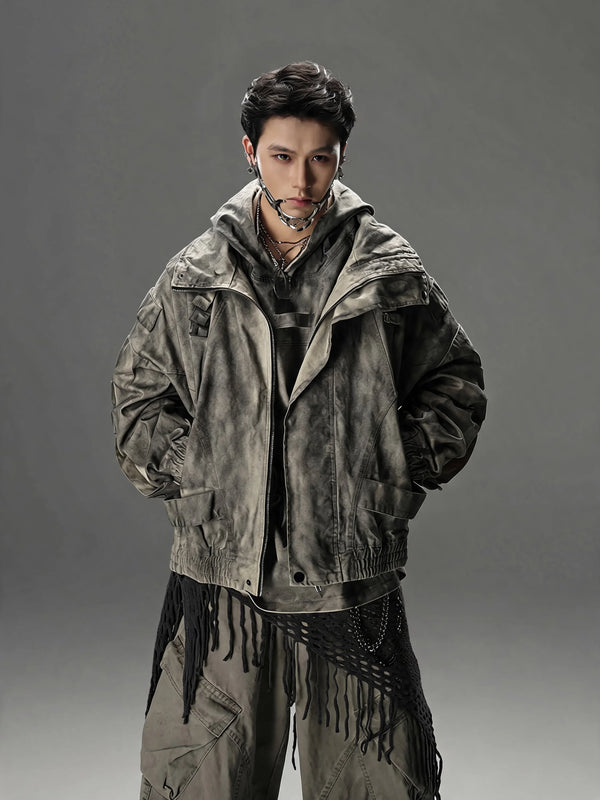
In 90s Emo the jacket was rarely a statement and almost always a functional layer. Work jackets, thin windbreakers, worn denim jackets and in winter the plain parka. It sat loose over the knit, never fitted, and was allowed to be too big. Layering here did not mean styling but warmth and habit.
The denim jacket ran through all the archetypes, usually a size too big and already worn light at the edges. In between seasons came the thin windbreaker, in winter an unobtrusive parka in olive or navy. None of it was meant to be expensive. The jacket should work, not represent, and exactly that indifference to the impression was its actual style.
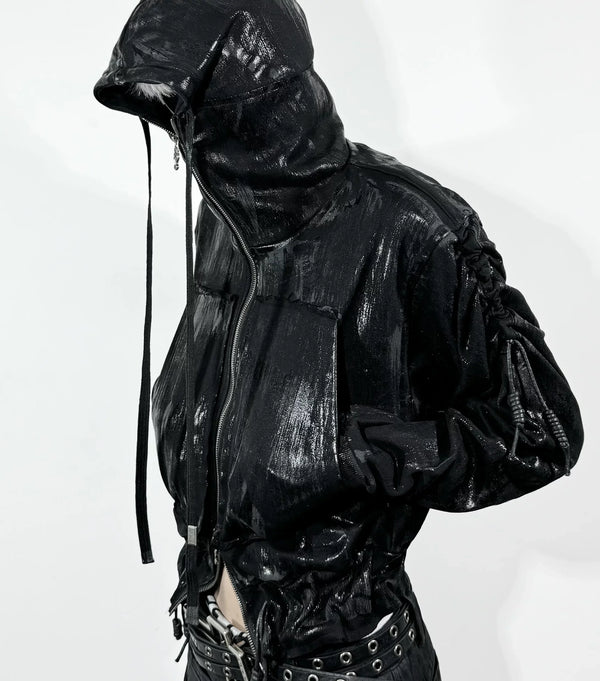
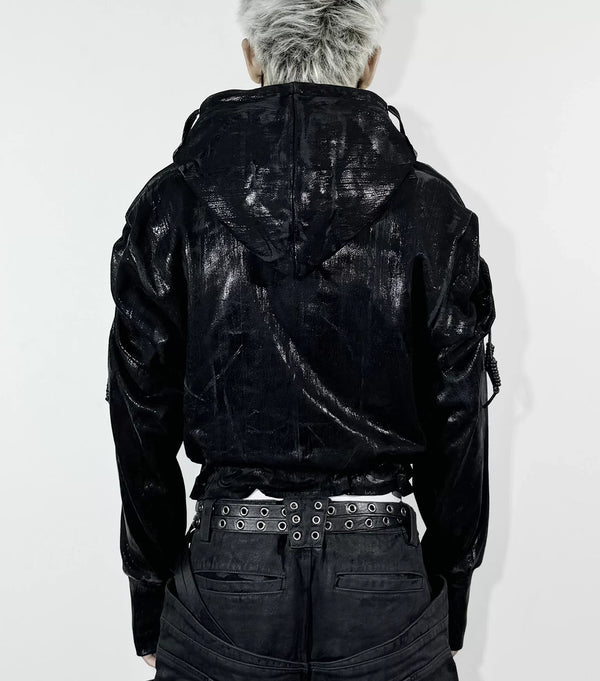
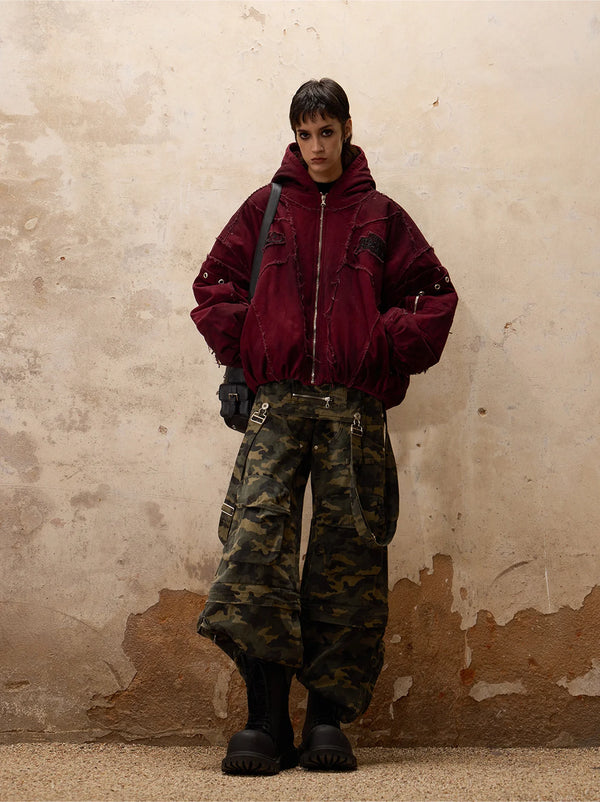
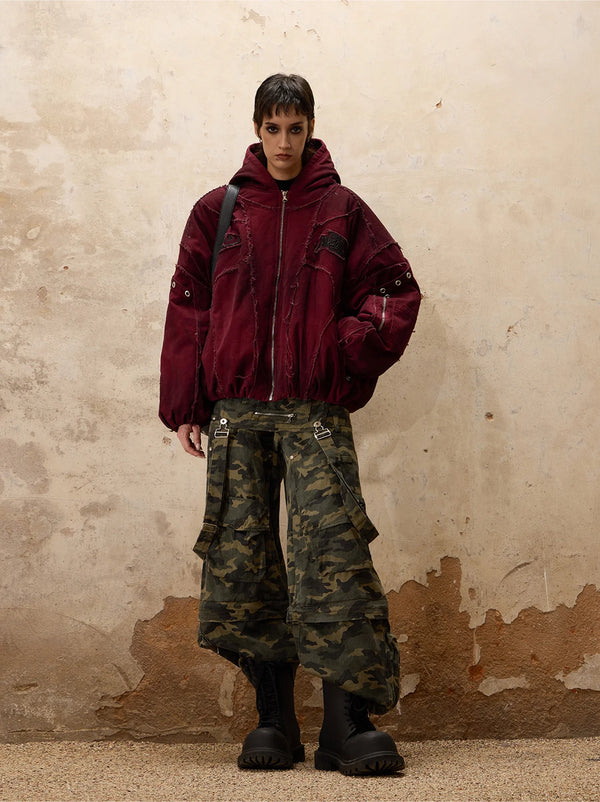
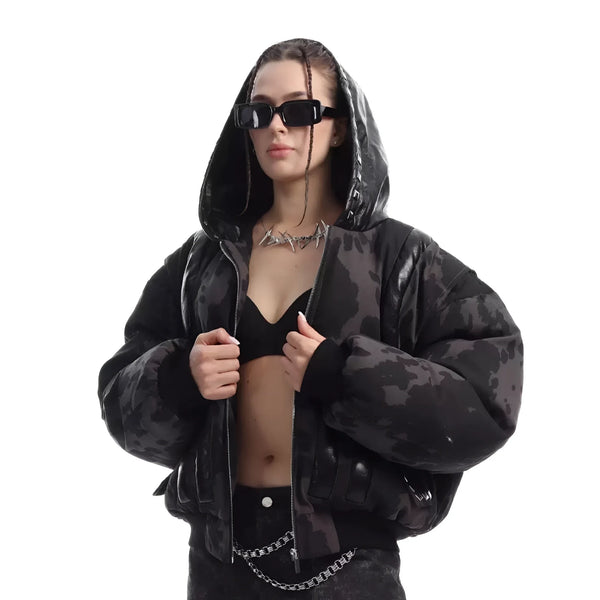
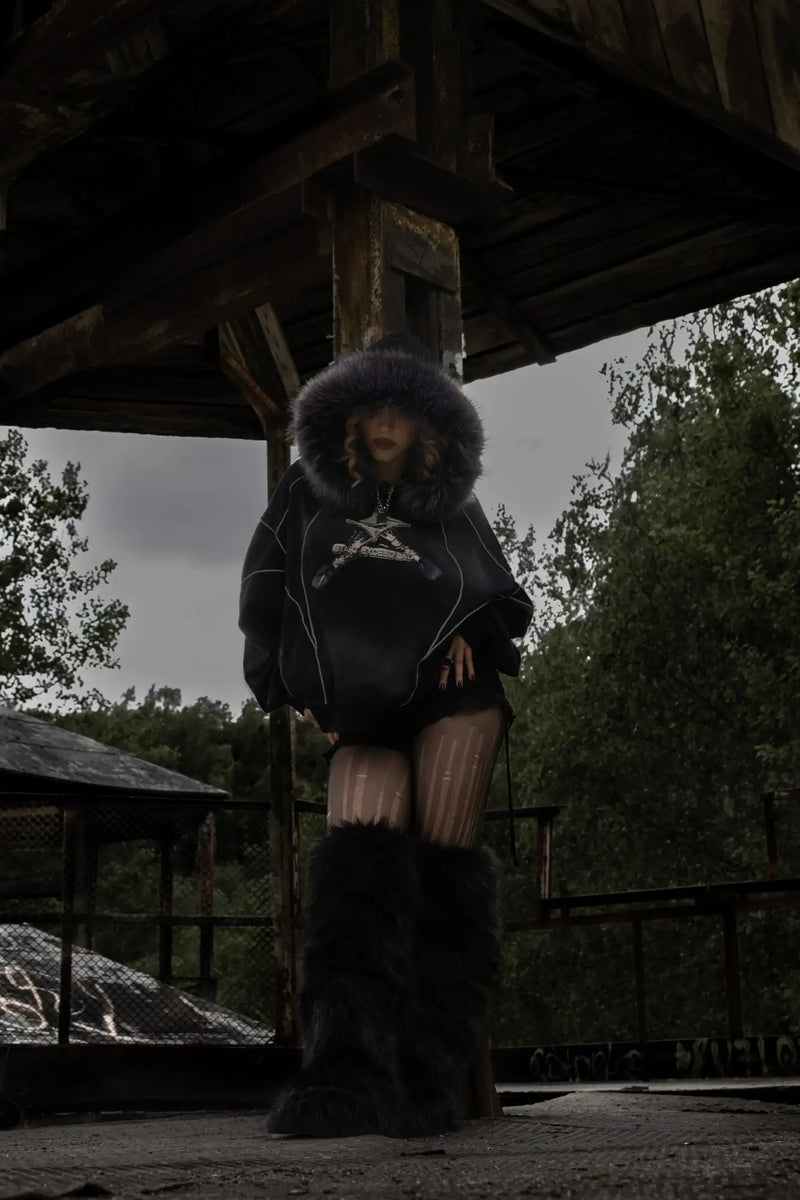
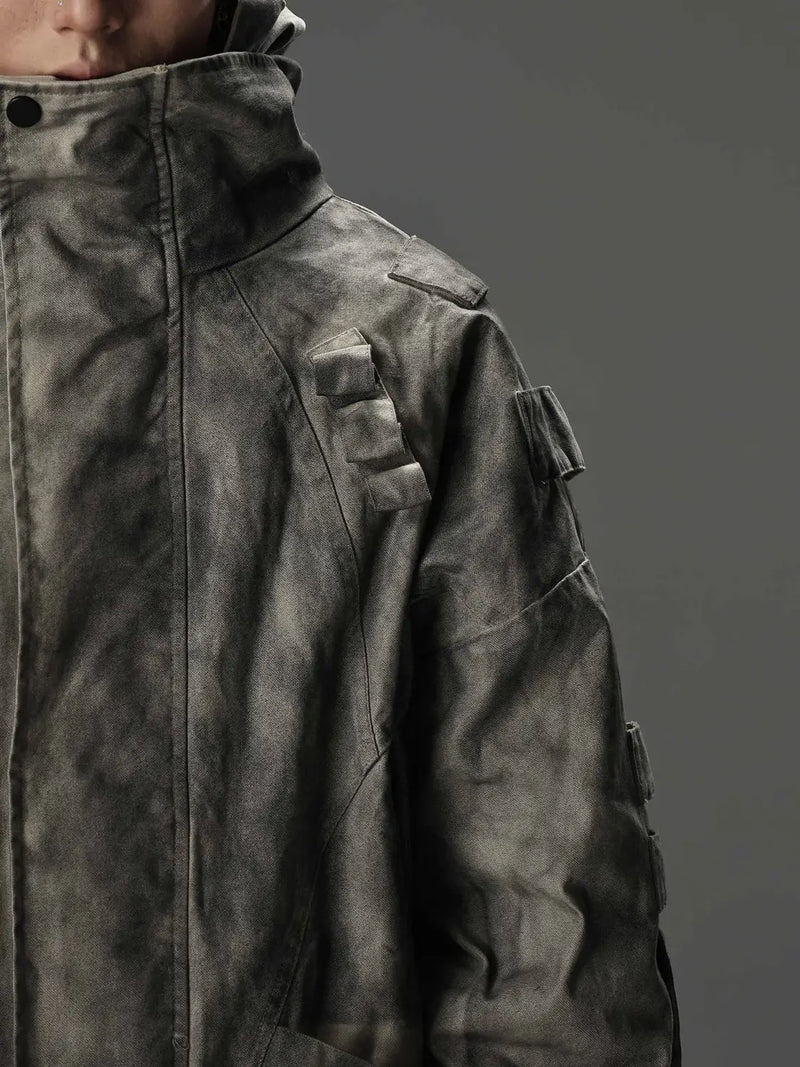
For the modern translation the principle counts, not the exact copy: a sturdy outer layer over soft knit, in muted tones, with visible texture. Dark sets and jackets deliver precisely that thickness without you reaching three decades into the past.
If you want to read the whole development from Emocore to today in one piece, the guide is the right starting point. This article is its 90s chapter.
Details
Accessories, glasses and hair: the details of 90s Emo
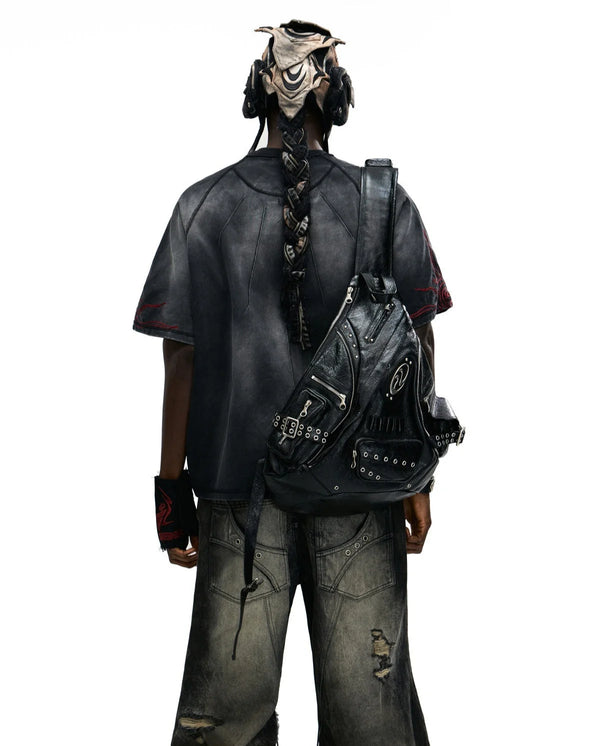
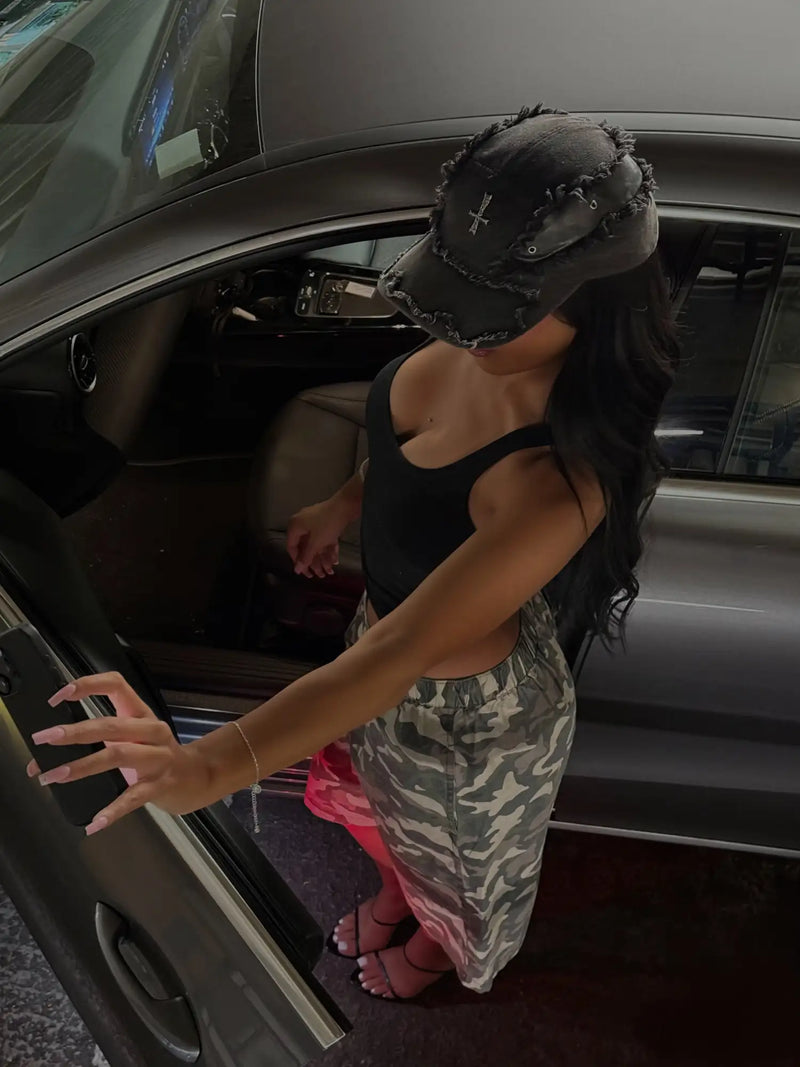
In 90s Emo the small parts decide whether the look reads or not. The thick horn-rimmed glasses are the clearest signal, followed by beanie, shoulder bag in a messenger cut and flat sneakers like Converse or Vans. Caps and plain metal details replace the later studded belt. Hair was overlong, shaggy and unstyled, never the sharply cut, dyed fringe of the 2000s.
The messenger bag across the chest carried records, zines and notebooks and became a functional marker that way. Plus beanies worn low and simple bracelets of fabric or leather. Make-up played practically no role, the 90s Emo look lived on faces without staging. Every detail had a purpose first and became style only afterwards.
Take on the small parts deliberately before you land on the next top. One single right detail, the glasses or the worn cap, pulls an otherwise neutral outfit straight into the 90s.
occasion
What do I wear to a 90s party?
For a 90s party you want to be recognisable without looking like a costume, and 90s Emo is the most grateful template for that. Start with a washed band tee, pull an oversized cardigan over it, take the widest dark jeans you own and finish with flat sneakers. Put on the horn-rimmed glasses and leave the hair deliberately imperfect. That reads as nineties immediately but stays wearable.
If you are unsure whether you have done too much or too little, the simple test applies: if the outfit looks as though you could also go to the record shop in it, you are right. 90s Emo was never a costume for one evening but everyday clothing that happened to define a decade. Exactly that everyday usability makes the look party-ready without it seeming forced.
If the party tips more towards Grunge, swap the cardigan for an open flannel shirt and you are in the neighbouring aesthetic. That is how close the two looks really were in the 90s.
Mistakes
Typical mistakes with the 90s Emo look
Most 90s Emo attempts fail not on missing pieces but on too much intent. These five mistakes turn up most often.
The counter-rule is simple: less effort, more patina. As soon as an outfit looks like work, it leaves the 90s and lands in the costume corner.
How the look slid from the 2000s into the softer 2010s revival is shown by the decades article. Together with this chapter you have the whole arc.
Today
Wearing 90s Emo fashion today: revival without cosplay
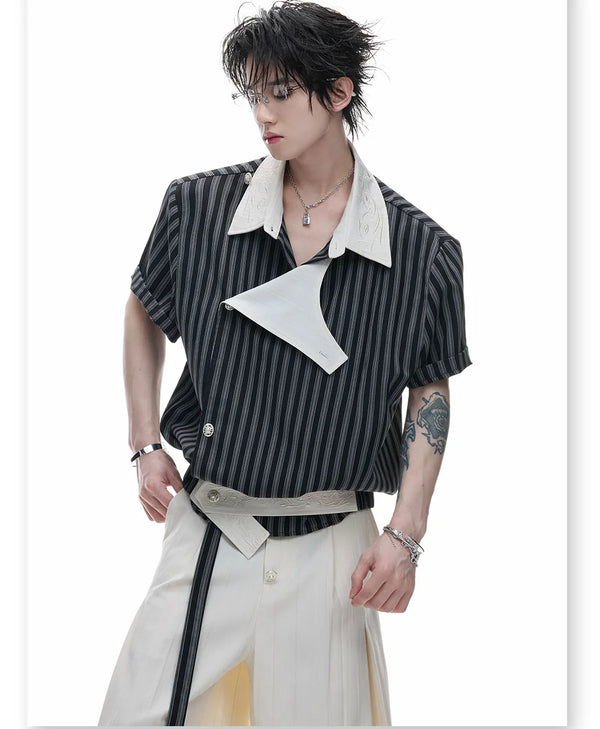
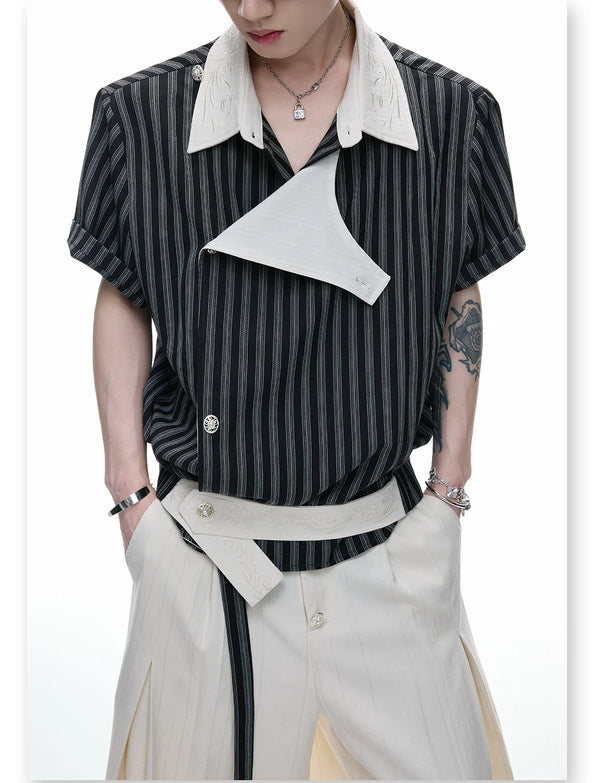
The 90s Emo revival works because the look was never loud and therefore never ages embarrassingly. The trick is to take over the principle instead of the prop. Build the hard-base-soft-layer formula with today's material: a distressed tee as the ground, coarse or textured knit over it, dark wide-leg denim below, flat sneakers. Set one 90s marker, glasses or cap, and keep everything else calm.
That is how you wear the reference without tipping into costume. Dark, washed pieces from our range deliver the texture and the drape the look needs, and you do not have to start a vintage hunt for it.
The advantage today: you do not have to collect the pieces at flea markets if you do not want to. Dark, textured material with the right width delivers the same impression, only available and in your size. Restraint stays decisive. An outfit that quotes the 90s without copying them ages better than any faithful reconstruction and feels less like a stage in real life.
FAQ
Frequently asked questions about Emo fashion in the 90s
The questions that keep coming up around 90s Emo we have collected and answered here, short, direct and without detours, so you can place the look confidently and build it yourself right away.
How does 90s Emo differ from 2000s Emo?
What does Grunge mean?
Which shoes belong to the 90s Emo look?
Do I need glasses for the 90s Emo style?
Does 90s Emo also work with dark, modern pieces?
In the end 90s Emo is less a checklist than an attitude: wear what has already lived, and combine it quietly. Anyone who has understood that needs no costume.
What do you think?
Tell us on @fuga_studios
About the author
Philipp Fuge — Founder · Berlin
Founder of Fūga Studios. Writes the journal himself. Berlin · Shanghai · Tokyo · Poznań — four cities, one logic.