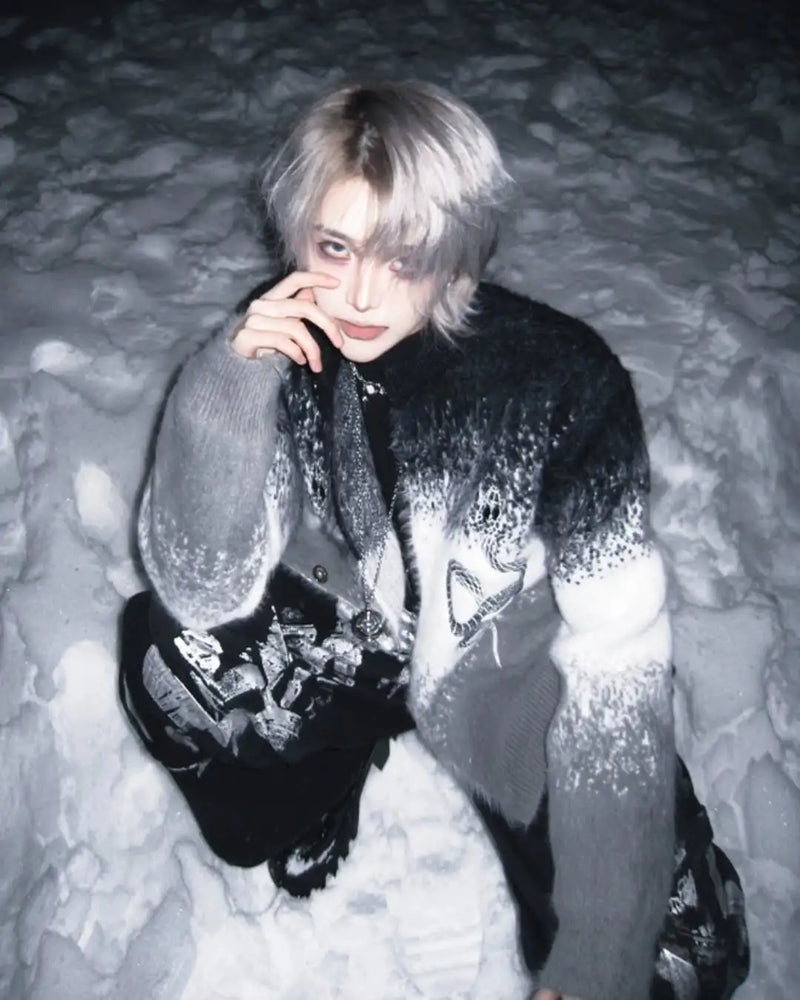

On the bridge by Harajuku station, a row of silhouettes lines up on Sundays that could have been cut out of a doll's house. Bell-shaped skirts over petticoats, high-collared blouses, headbows as big as plates. Not a millimetre of skin too much, every fold in its place. This is not a costume. This is a Sunday afternoon.
Lolita Fashion is a Japanese street style that condenses Victorian and Rococo silhouettes into a deliberately fashion-forward, doll-like look: knee-length bell skirts with a petticoat, blouses, ruffles and elaborate accessories. The style emerged in Harajuku and lives on to this day in the Japanese fashion world. We show you what it is made of, where it comes from and where Fūga plugs into its dark Gothic branch.
Before you lose yourself in ruffles and petticoats, an overview pays off. Lolita is one of the most thought-out styles Japan has produced, with clear rules and a culture of its own. Let us start with the definition.
Definition
What Lolita Fashion really is
Lolita Fashion is a Japanese street fashion modelled on clothing of the Victorian era and the Rococo. At its centre is a bell-shaped silhouette: a knee-length skirt held out by a petticoat, paired with a blouse, fine details and a strong love of symmetry. The ideal is doll-like, elegant and deliberately restrained.
Modesty is decisive. Lolita covers rather than reveals. The skirt length sits at or above the knee, the legs are in knee-high socks or tights, and bloomers are often worn underneath. Anyone who confuses Lolita with skimpy or revealing clothing has fundamentally misunderstood the style. It is exactly this principle that has made it so distinctive for over thirty years.
The attitude behind it matters too. For many, Lolita is less an outfit than a hobby with its own craft: fabrics, cuts and details are taken seriously, and a coordinate is often planned over weeks. This care sets the style apart from fast trends and explains why the scene stays so loyal to it.
1990er
Rise in Harajuku
3
Main directions: Gothic, Sweet, Classic
knielang
Skirt length with petticoat
These three markers, the nineties, the three directions and the knee-length silhouette, appear in almost every description of Lolita. They are the frame. Within it, a remarkable variety unfolds.
The directions
Gothic, Sweet, Classic: the three main directions
Lolita is not a single look but a family of substyles. Three of them form the core and cover the entire colour spectrum, from deep black to sugary pastel. Anyone who understands the three can place almost any coordinate at once.
For Fūga, one direction is above all relevant: Gothic Lolita, with its dark palette and cross motifs. We will get to that in detail shortly. But first, a misunderstanding almost everyone brings along.
Clarification
No, it is not about the novel
The name Lolita misleads many. In fashion, the term has nothing to do with the themes of the novel of the same name. Where exactly the name came from is disputed to this day and has never been clearly settled. All that is certain is what the style means, and that is the opposite of what many assume.
With this clarification in mind, the style can be viewed cleanly: as a thought-out set of rules made of silhouette, layers and details. Let us look at what a complete outfit consists of.
Anatomy
What a Lolita coordinate consists of
A complete Lolita outfit is called a coordinate in the scene. It follows a fixed structure in which every piece has a job. Without the petticoat, the whole silhouette collapses. Here are the building blocks, from bottom to top.
- Main piece A jumperskirt, a one-piece or a skirt plus blouse form the base of the coordinate.
- Petticoat The underskirt gives the look its bell-shaped, held-out form. Without it, everything looks flat.
- Blouse High collar, ruffles at the sleeves and neckline, often with a bow at the neck.
- Legwear Knee-high socks, over-the-knees or opaque tights. Never bare legs.
- Headwear A headbow or headdress as the crowning detail, with matching accessories.
These layers make the style elaborate but also unmistakable. And they explain why real Lolita clothing is so special: it has to hold the shape. This is exactly where the path splits between a complete coordinate and a dark, everyday-ready entry.
The effort has a reason. Each layer helps shape the silhouette, and it is this completeness that makes a real coordinate. That is why good Lolita clothing costs time and money, and why the route via individual pieces is the more realistic one for many beginners.
If the full effort puts you off, that is no problem. You can hint at the mood with individual pieces instead of building a complete coordinate. Let us start at the top, with the blouse.
Silhouette · Top
The top: blouse, collar, ruffles
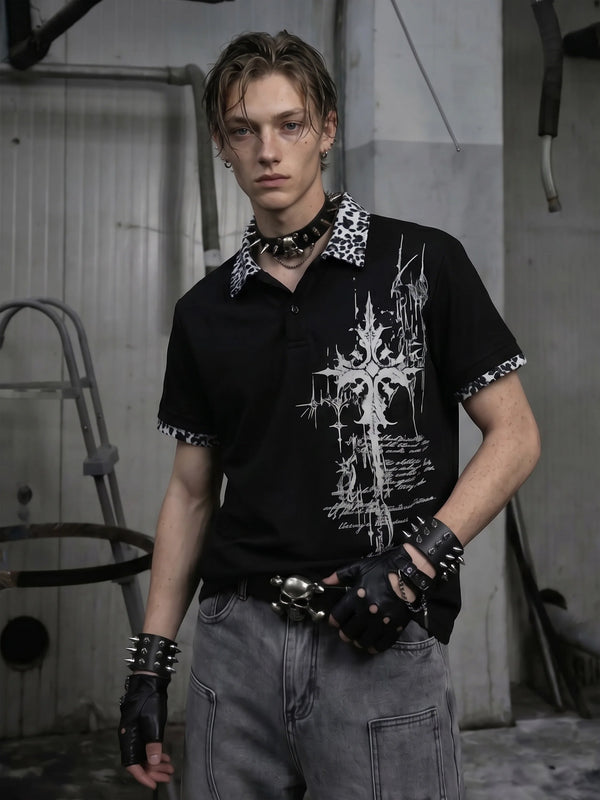
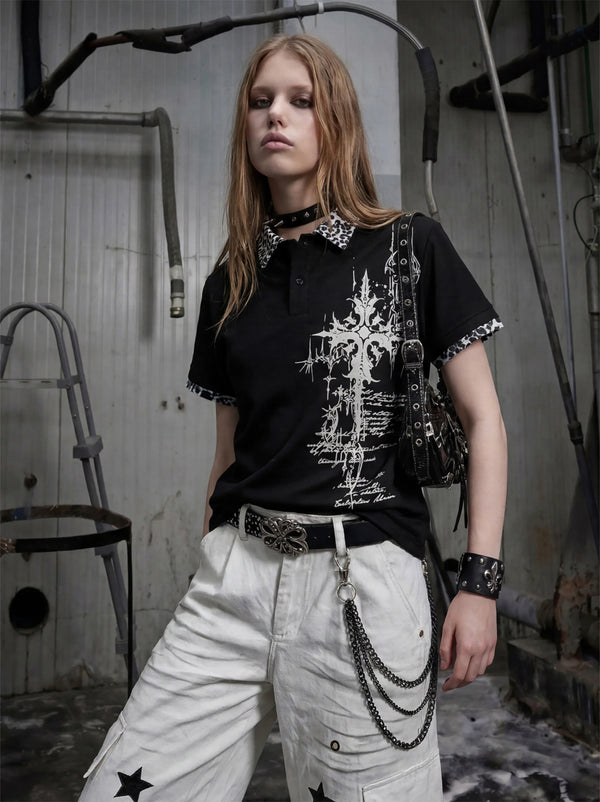
Up top, Lolita lives on collars and details. A high, closed blouse section with ruffles or a striking collar sets the tone. In the Gothic direction it becomes something stricter: dark fabrics, clean lines, often with cross or ornamental elements.
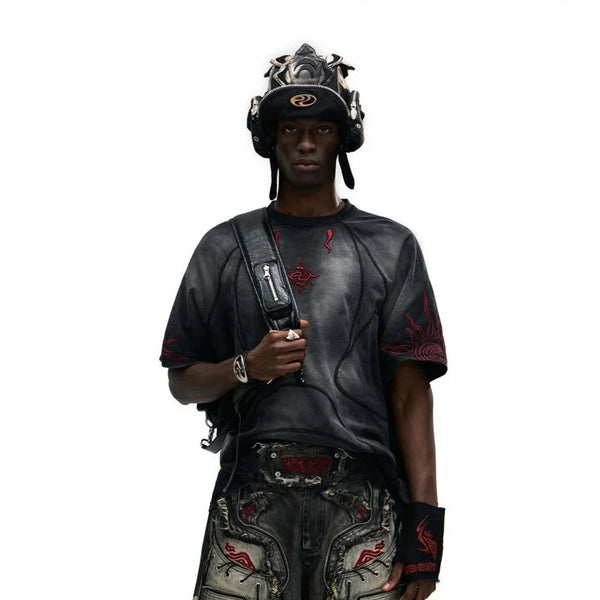
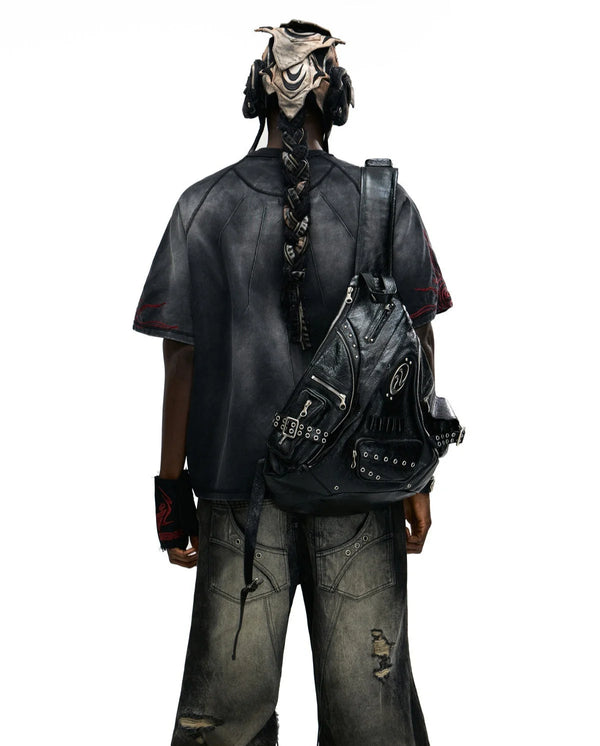
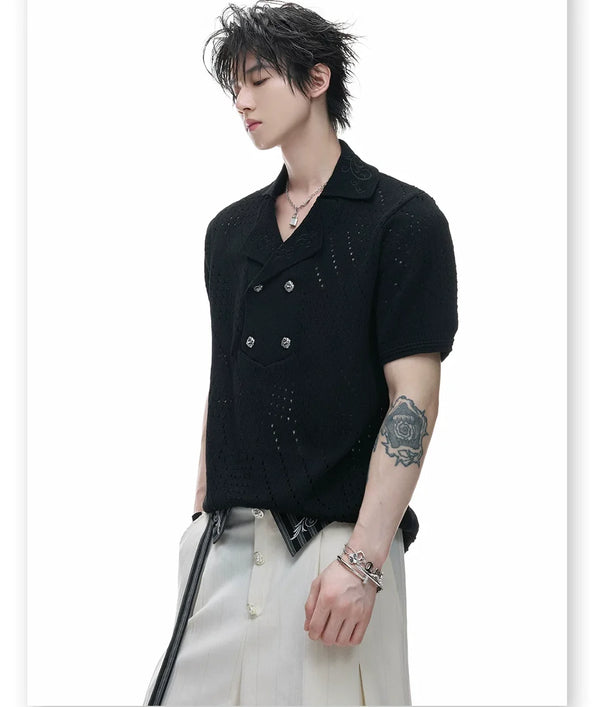
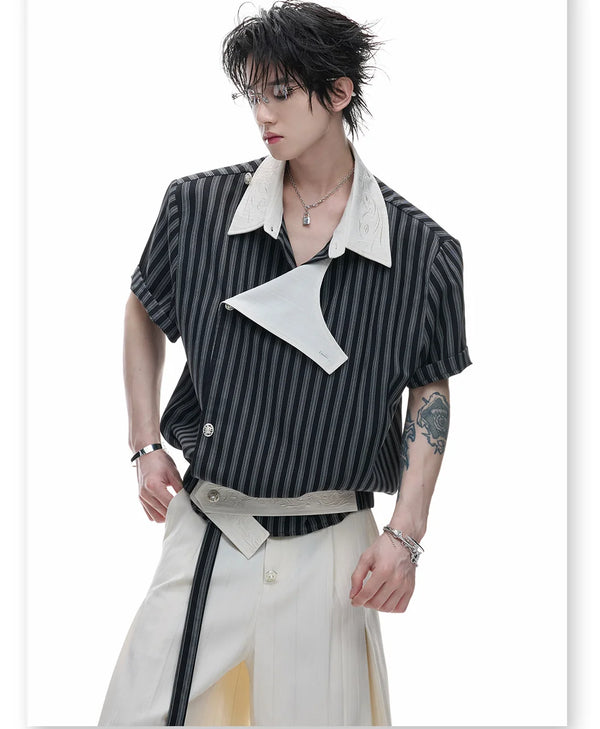
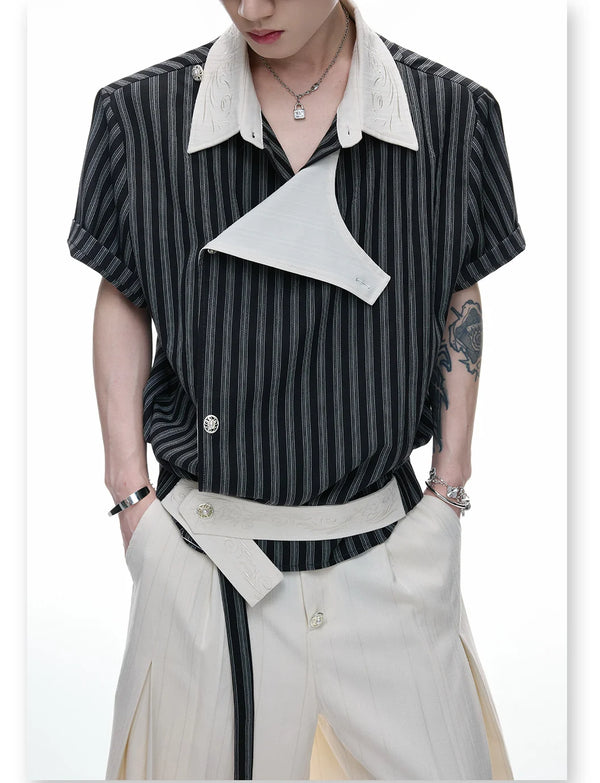
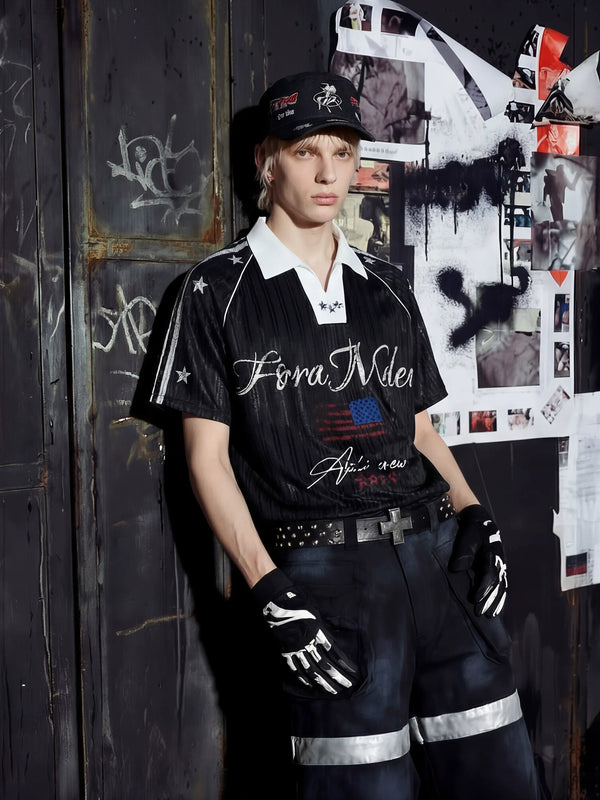
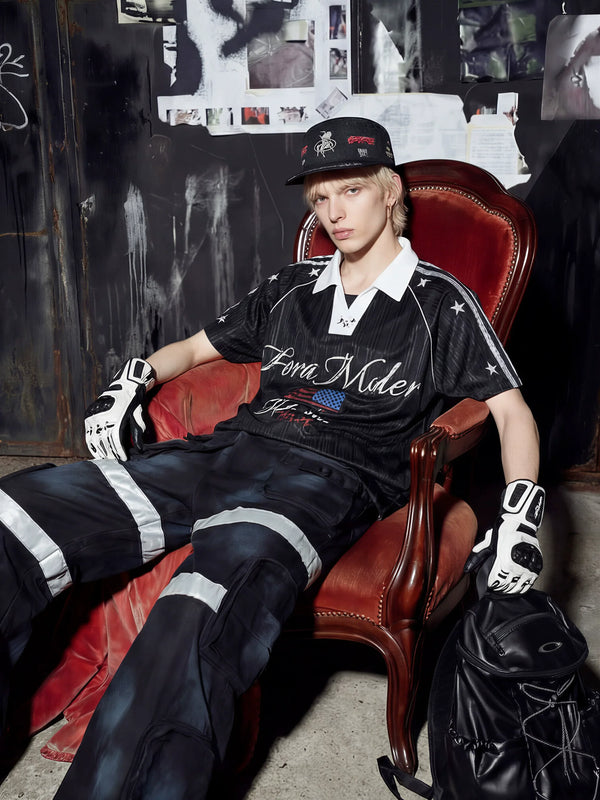
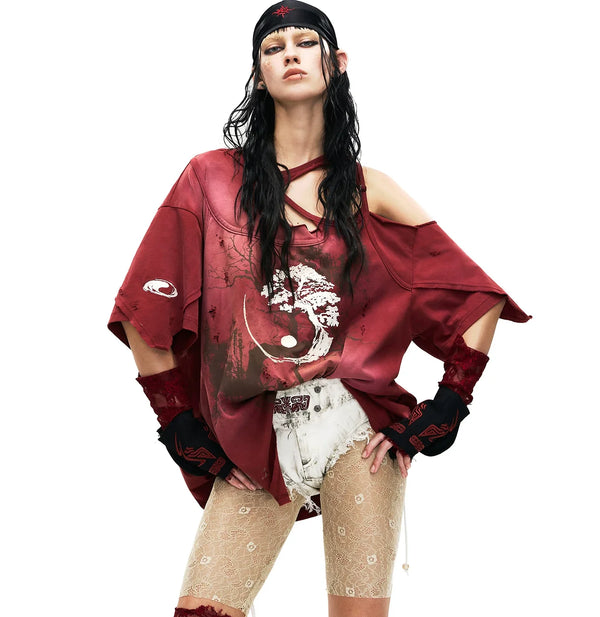
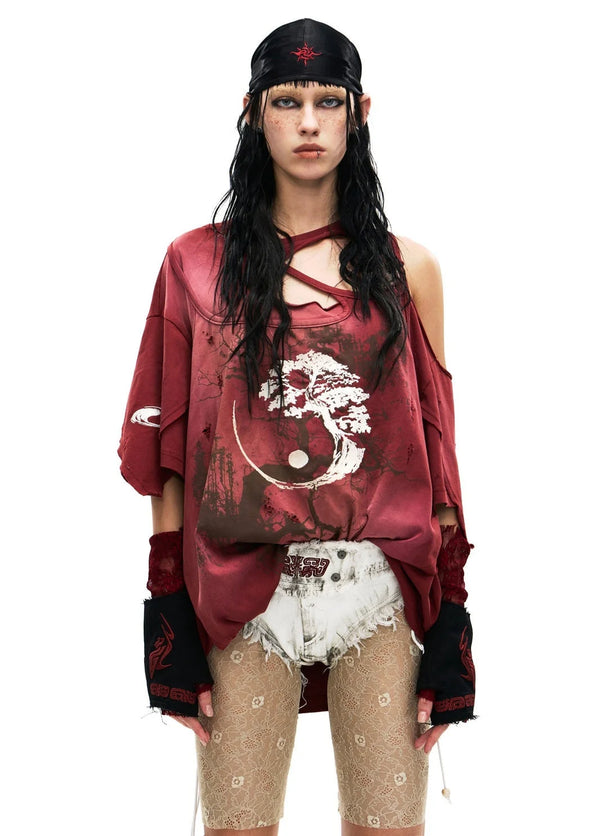
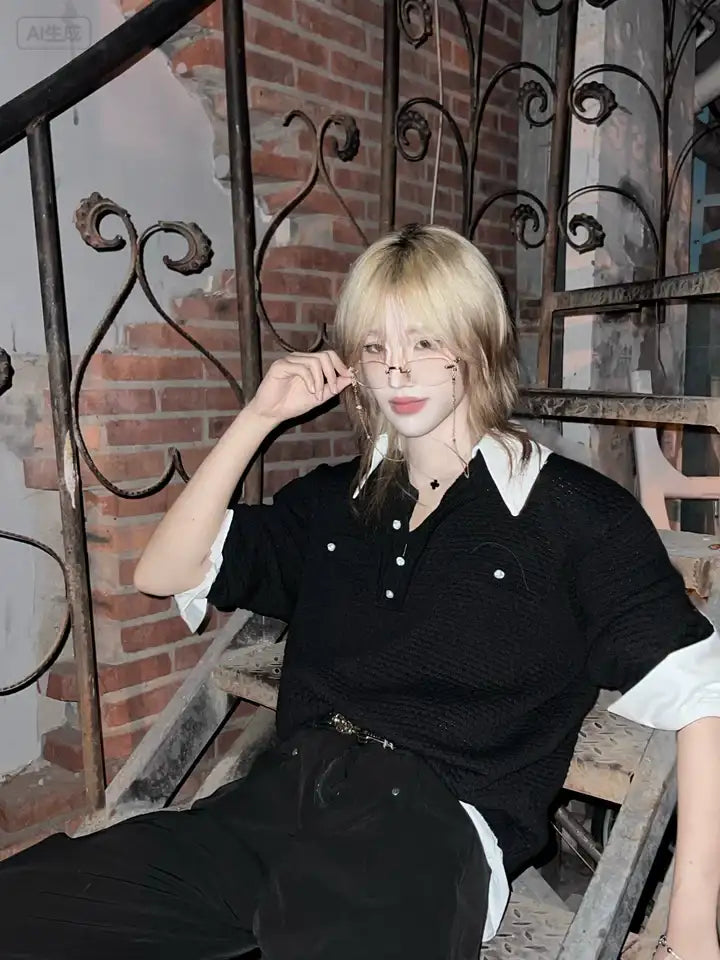
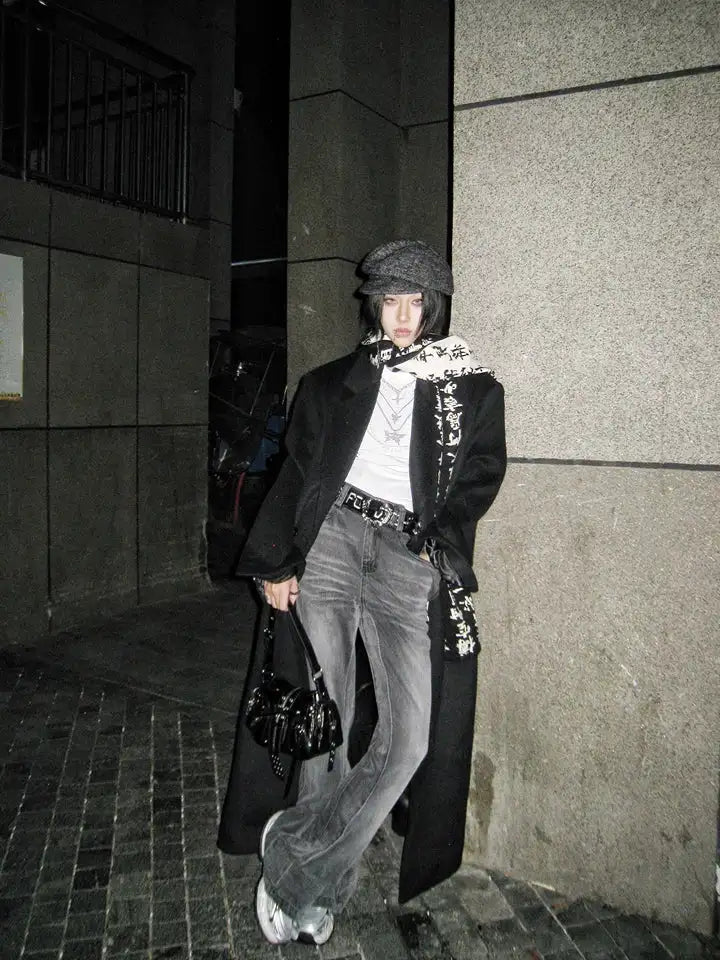
Fūga does not sell ruffle blouses, but in the Gothic register you will find dark tops with collars and graphics that carry the same strict, high-necked mood. These two pieces work as a dark base for a Gothic-inspired look.
A collar and a graphic motif are enough to set the direction. To understand why this dark corner belongs to Lolita at all, a look at the style's history helps.
Origin
Where Lolita comes from: Harajuku and the nineties
Lolita emerged in the late eighties and nineties in Harajuku, the Tokyo district where Japanese street fashions gather. Brands made the silhouette popular, and through the Visual Kei scene Gothic Lolita in particular got a strong push. Musicians in dark, lace-trimmed stage outfits became role models.
From the street the style moved into magazines and finally around the world. What began as a local youth fashion is today an international movement with its own brands, meet-ups and rules. The Harajuku origin remains the shared root.
Brands of the early Harajuku years shaped the visual language, and shops in the district became places of pilgrimage for fans. Anyone seeking the roots of the style almost always ends up at the same Tokyo street corners from which so many Japanese fashions come.
If you want to dive deeper into the district and its styles, our Harajuku overview offers the larger context Lolita belongs to.
Back to the dark branch, because that is exactly where Fūga plugs in. Gothic Lolita deserves a section of its own.
The dark branch
Gothic Lolita: the dark direction
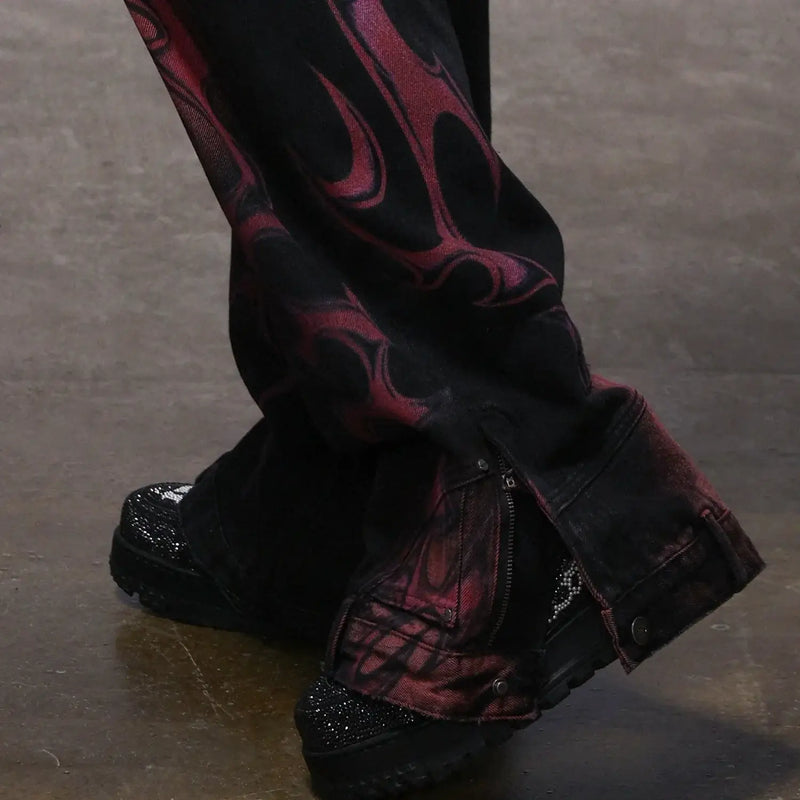
Gothic Lolita combines the bell-shaped silhouette with a dark palette. Black dominates, with deep red, violet or white as contrast. Crosses, church-window motifs and a hint of morbidity set the mood without giving up the style's modesty.
Gothic Lolita deliberately plays with contrasts. The dark stands beside the delicate, the strict beside the playful. A cross on light lace, a deep-red ribbon on black fabric: it is exactly this tension that makes the direction so distinctive and sets it apart from pure Gothic fashion, which does without the doll-like frame.
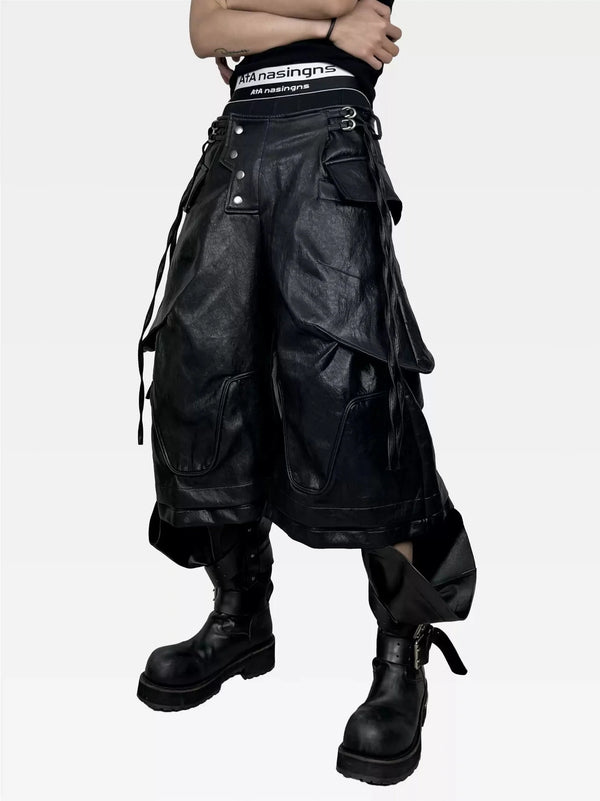
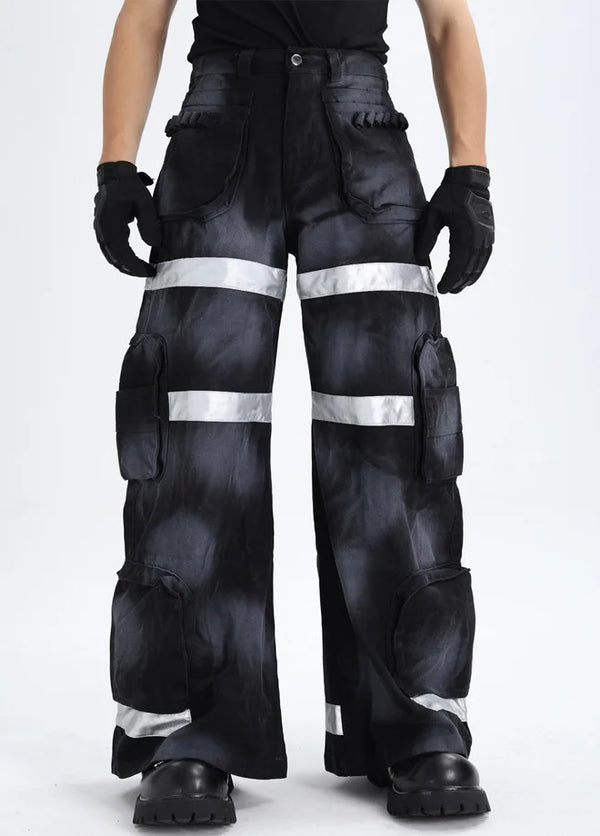
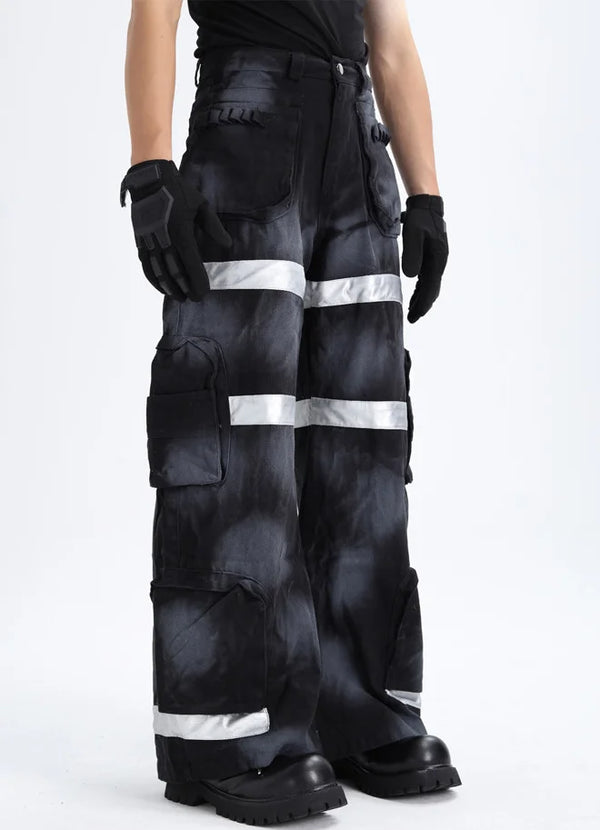
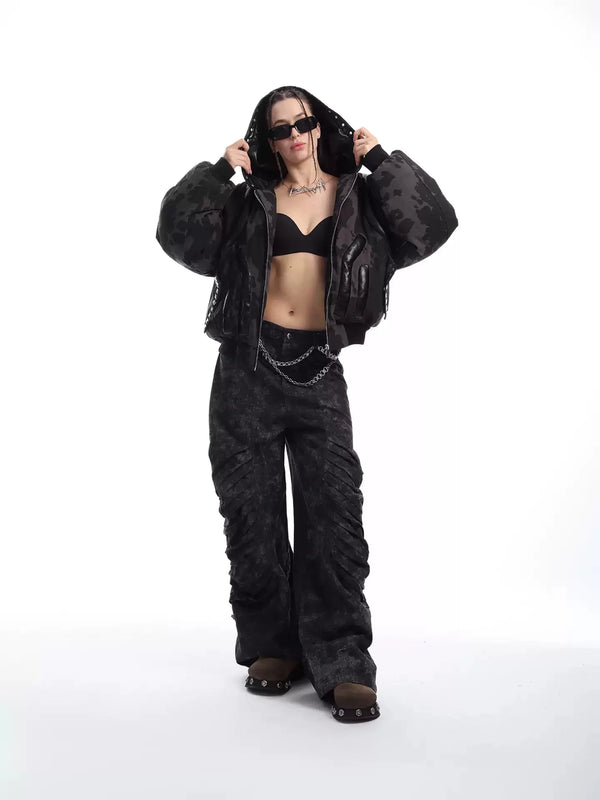
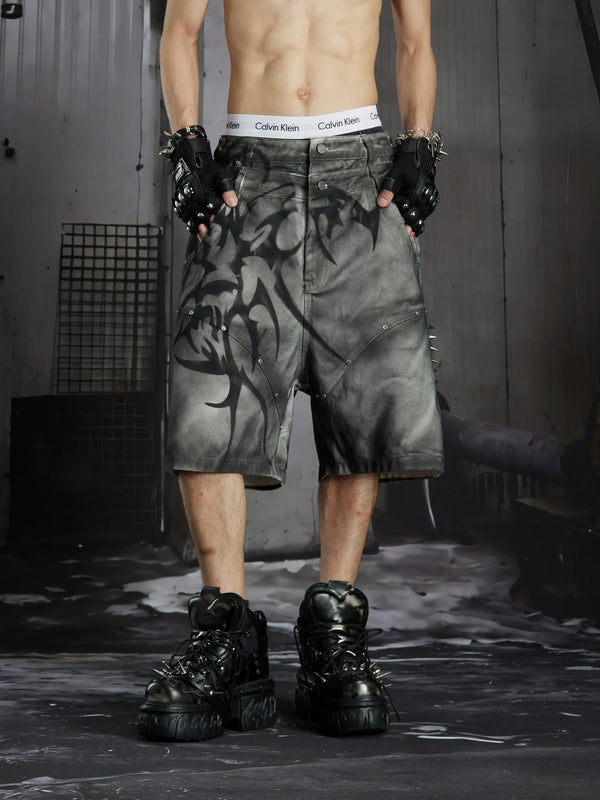
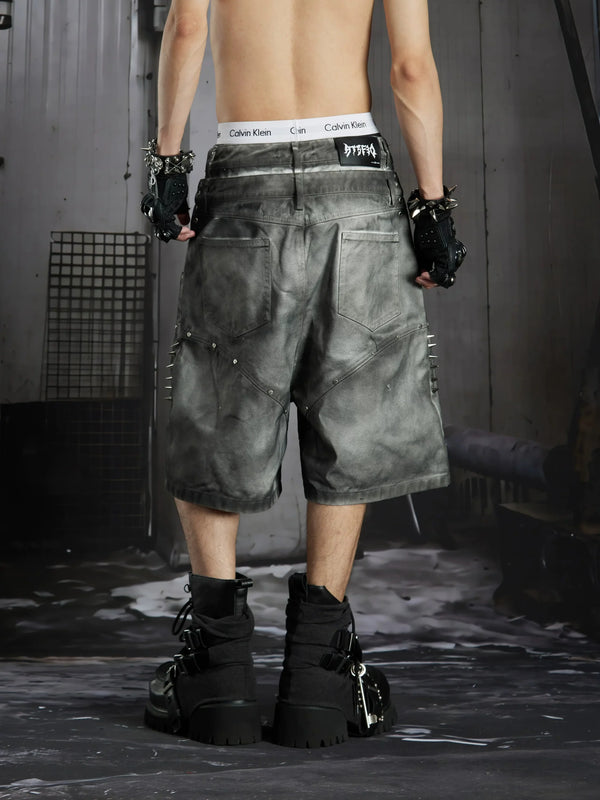
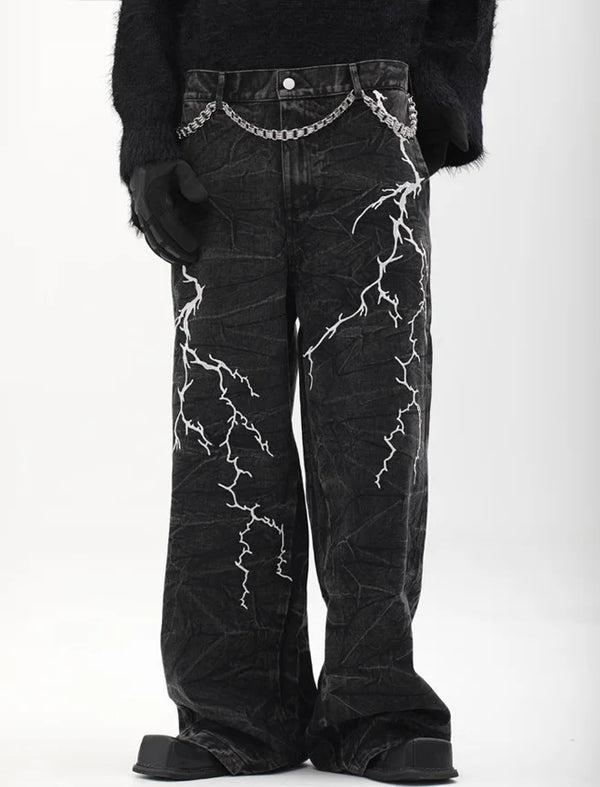
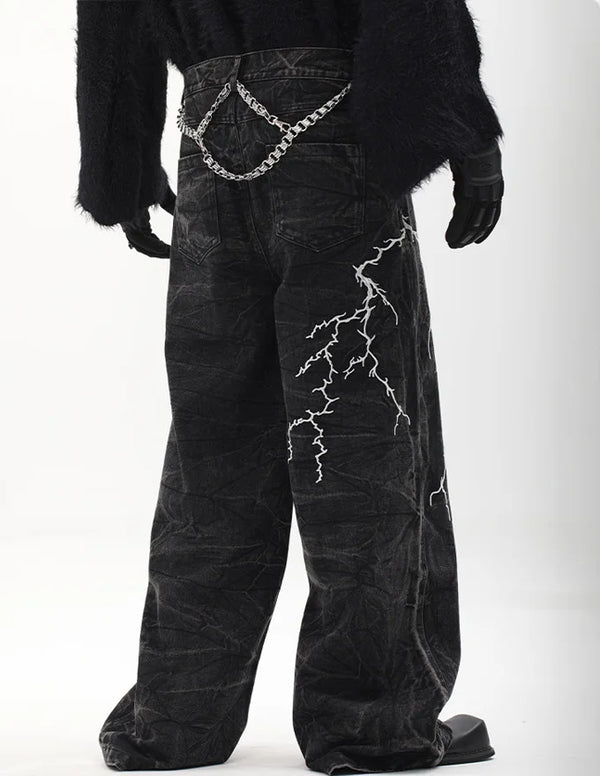
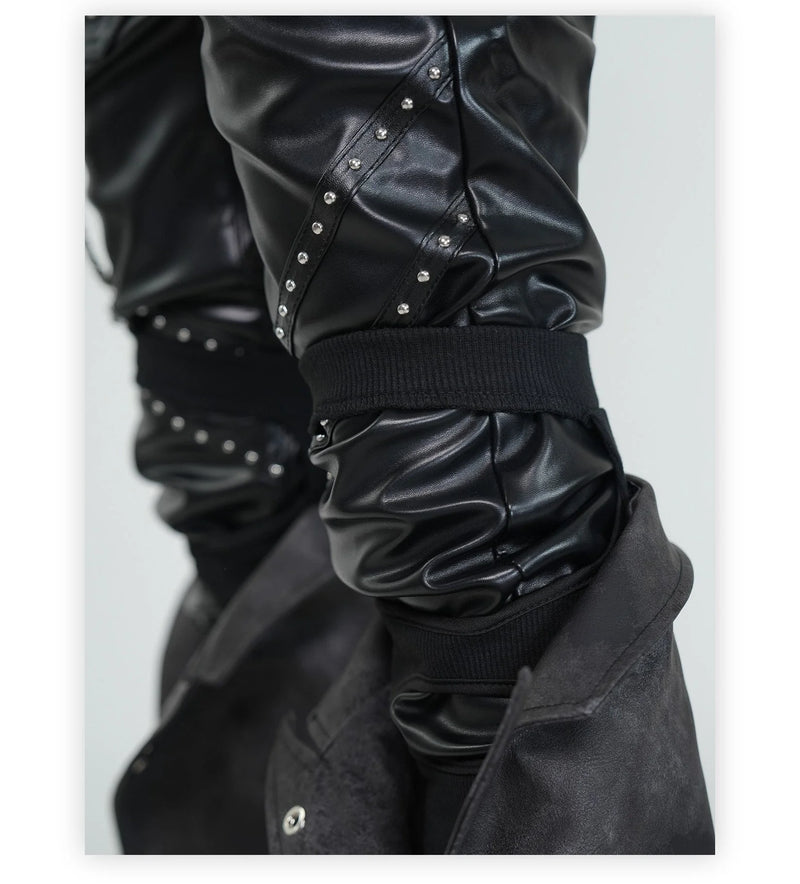
For an everyday-ready, Gothic-inspired look you do not need a complete coordinate. Dark trousers and short layering pieces with cross motifs capture the mood and can be worn normally. These two pieces form a dark base from the hip down.
Above the base comes the layer that holds the look together and gives it weight in the Gothic register.
Silhouette · Layer
Layers in the Gothic register
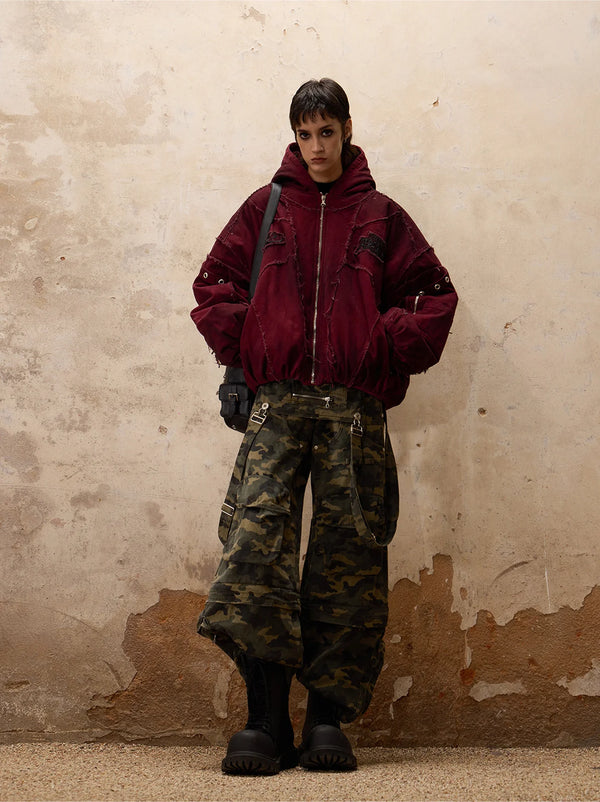
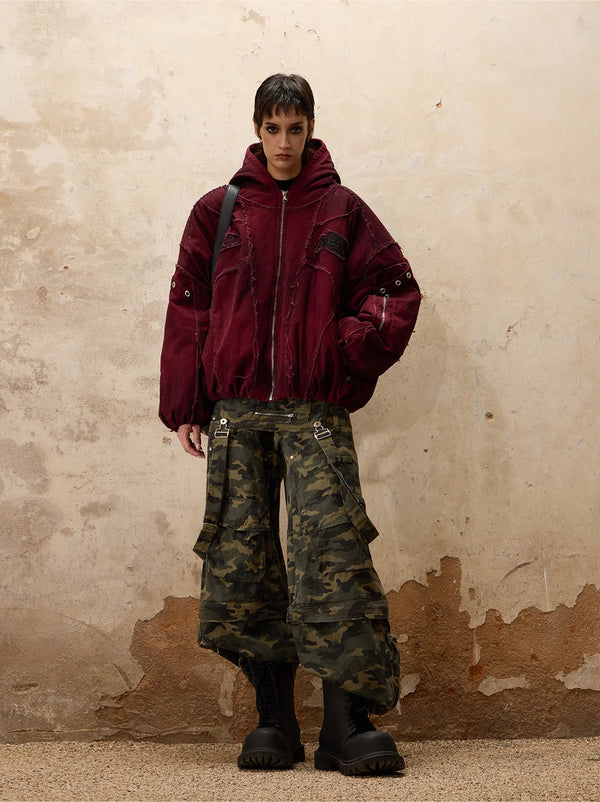
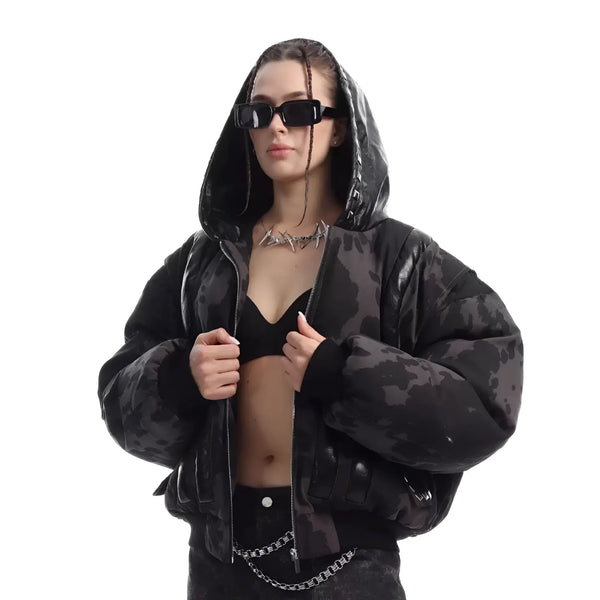
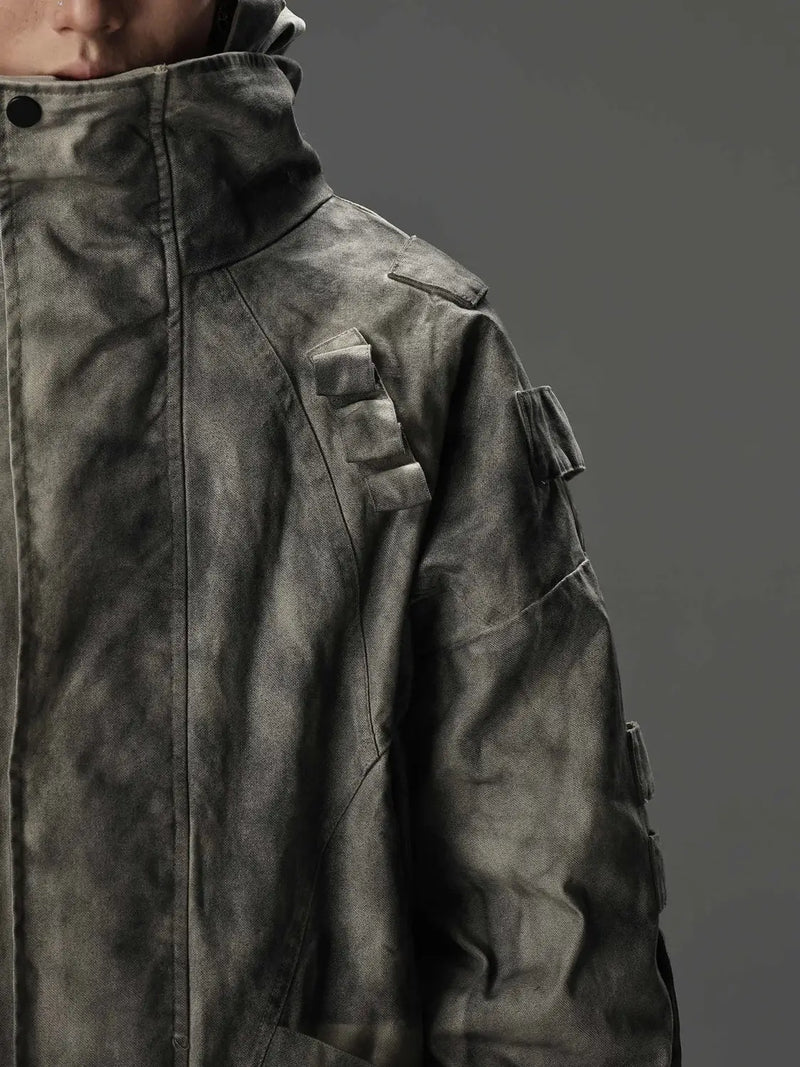
The classic Lolita layer is a bolero, a short jacket or a hood over the blouse. In the Gothic direction this layer may be dark and striking, as long as it does not crush the line. Cut short, the proportion stays clean.
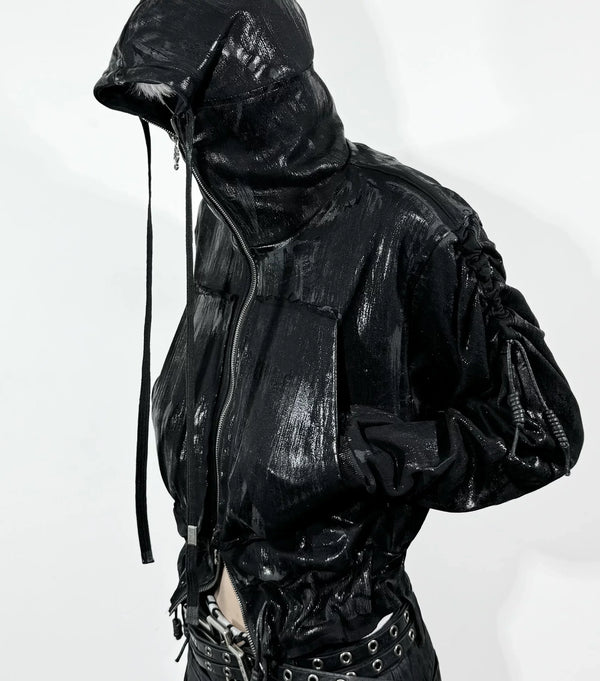
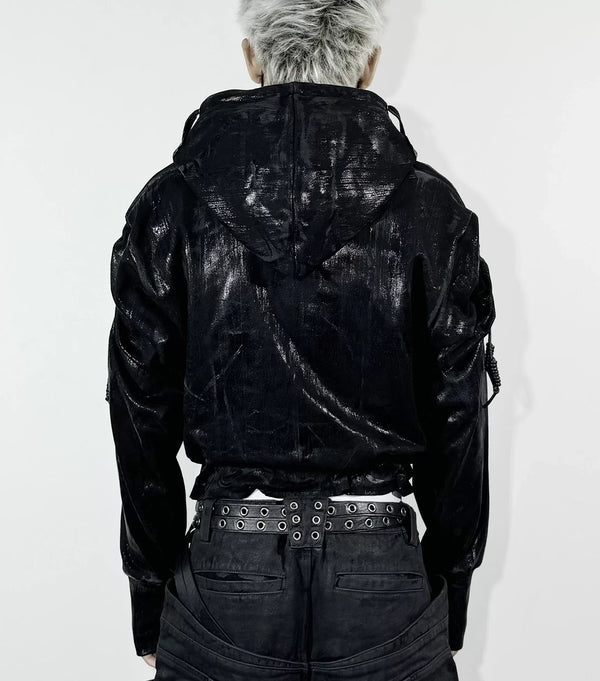
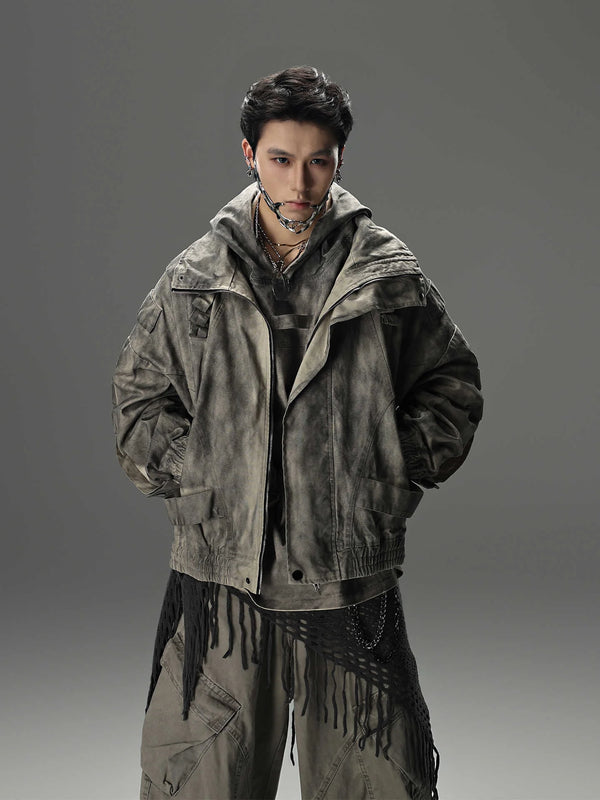
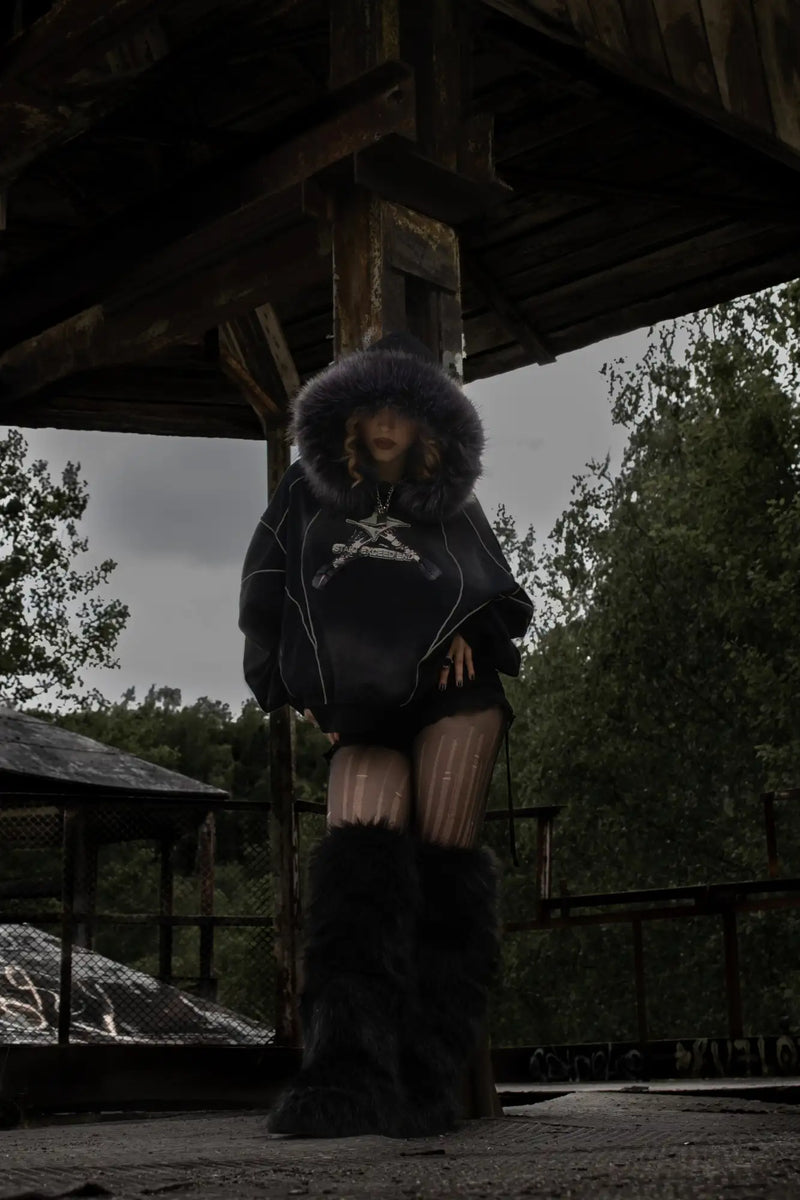
In Fūga's selection, short bombers and dark sets take on this role. They give the look structure and keep you warm without hiding the silhouette. These two pieces set the dark layer.
With top, base and layer, the framework stands. That leaves the question of where this style is actually at home and who wears it.
Reach
Where and by whom Lolita is worn
Lolita comes from Japan but has long been worn worldwide. Europe, North and South America and Asia have active scenes that meet for tea parties and conventions. Germany, too, has a firm community that organises itself through its own groups and events.
Lolita is almost always worn by adults as a conscious hobby and a style choice. There is also a masculine variant, the Ouji or prince style, with short trousers, a waistcoat and a blazer instead of a skirt. The scene is more varied than the cliché suggests.
The community carries the style decisively. Through forums, groups and regular meet-ups, fans exchange tips, sewing instructions and sources. Precisely because complete coordinates are expensive and hard to find, this knowledge is a central part of the culture, in Japan as in Germany.
If the dark branch appeals to you in principle, our own overview of Gothic fashion, which reaches well beyond Lolita, is worth a look.
For the mood to be right, the details are still missing. In Lolita, accessories are not an add-on but half the battle.
Details
Accessories: headbow, jewellery, bag
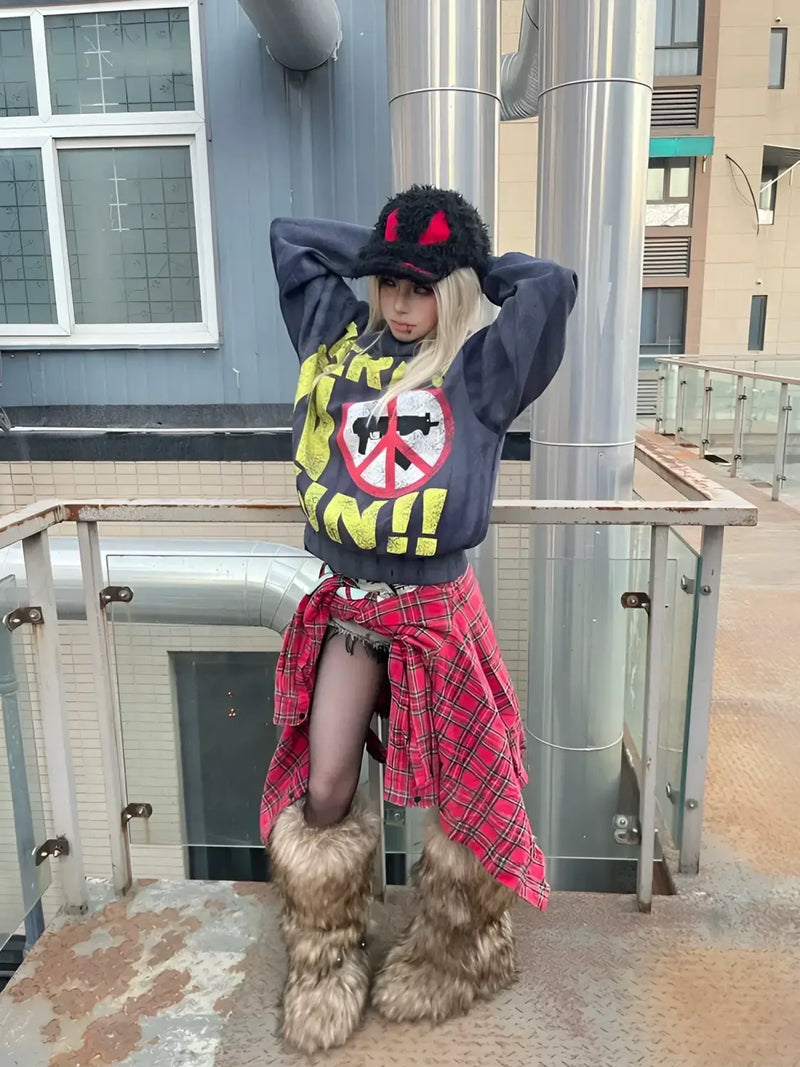
Headwear crowns every coordinate, classically as a headbow or headdress. Add jewellery with cross or rose motifs, small handbags and matching shoes. In the Gothic direction all of this becomes darker and stricter.
The art lies in coordination. A single loud piece can carry a whole coordinate; too many compete with each other. Experienced wearers pick one or two eye-catchers and keep the rest calm. This principle transfers directly to an everyday, Gothic-inspired look.
Before you search for individual pieces, an overview of the fitting corners of the shop helps. These categories cover the dark silhouette and its details.
For the details themselves, it is above all headwear and a striking pendant that set the dark accent. These two pieces give the look its finishing touch.
With that you have all the building blocks. Now let us look at where the style stands right now and why it is suddenly everywhere again.
Today
Lolita today: trend and revival
Lolita never disappeared, but it is experiencing a clear revival through social media. Short videos show complete coordinates, beginner tips and refashions, and pull a new generation into the scene. At the same time, Lolita elements feed into broader trends such as the return of ruffles and doll collars.
The core stays stable through it all: silhouette, modesty and love of detail. What changes is visibility. The style is easier to discover today than ever before.
It is striking how many beginners now come in through short videos instead of shops. What used to be insider knowledge now lies open: how to care for a petticoat, how to combine colours, what a first coordinate can look like. This lowers the barrier and brings fresh faces into an otherwise rather closed scene.
From the trend back to practice. The most common question is: how do you wear this much style without every trip to the bakery becoming a grand entrance?
Practice
Wearing Lolita in an everyday-ready way
For everyday there is Casual Lolita, a reduced variant without the full effort. Instead of petticoat and headdress, a single signal piece and a calm base are enough. In the Gothic register that means: a dark top or a cross detail with normal clothing.
That way you get the mood without dressing up. These two pieces work as a dark starting point you can charge up later.
Anti-patterns
Common mistakes in Lolita styling
Between a coherent look and a failed one lie a few concrete mistakes. Most have to do with silhouette and proportion, not with budget. If you avoid these five points, the style comes across convincingly.
These points are quickly fixed and make the biggest difference. If you want to understand the everyday behind Japanese fashion better, you will find more context in our overview of Japanese clothing style.
Finally, we answer the questions asked most often around Lolita.
FAQ
Frequently asked questions about Lolita Fashion
Answered briefly and directly: the five things most often asked around Lolita Fashion.
What is the difference between Gothic, Sweet and Classic Lolita?
Is Lolita Fashion named after the novel?
What does Lolita mean in fashion?
In which country is Lolita Fashion worn?
Can Lolita be worn in an everyday-ready way?
In the end, Lolita is exactly what the silhouette promises: a thought-out, elegant style with clear rules and plenty of room for a personal signature. You do not have to build the whole coordinate to carry its mood.
What do you think?
Tell us on @fuga_studios
About the author
Philipp Fuge — Founder · Berlin
Founder of Fūga Studios. Writes the journal himself. Berlin · Shanghai · Tokyo · Poznań — four cities, one logic.