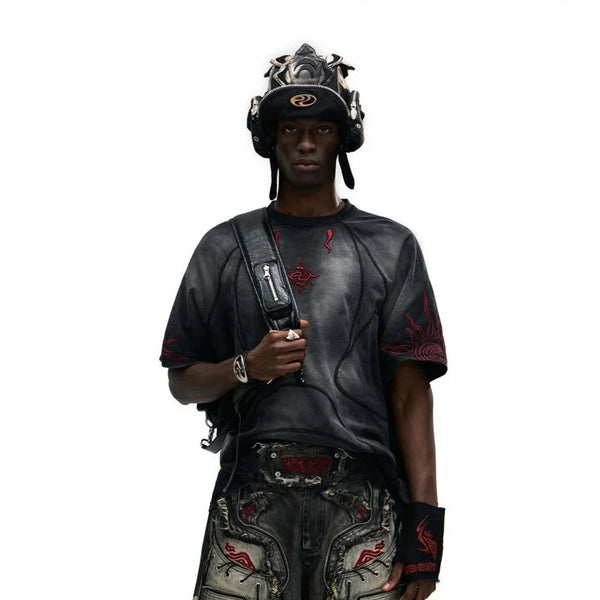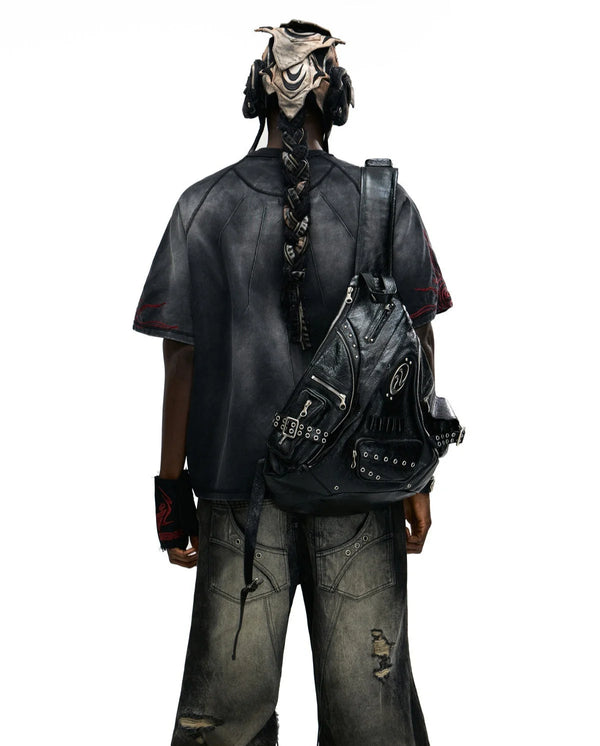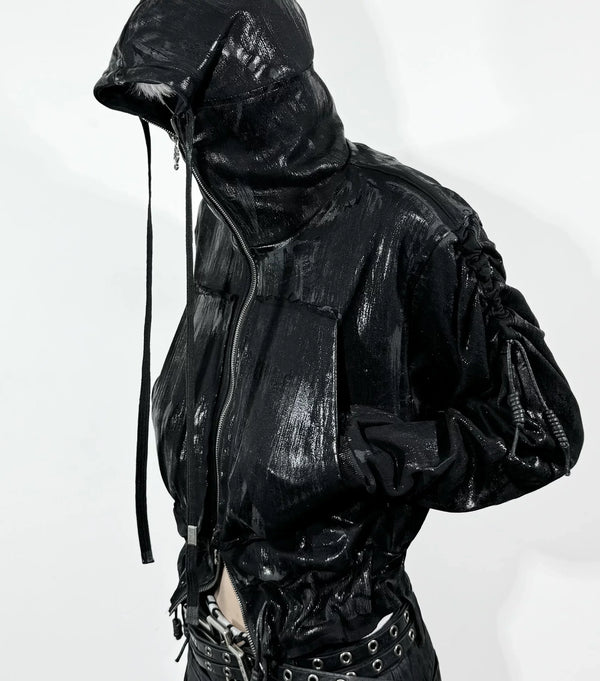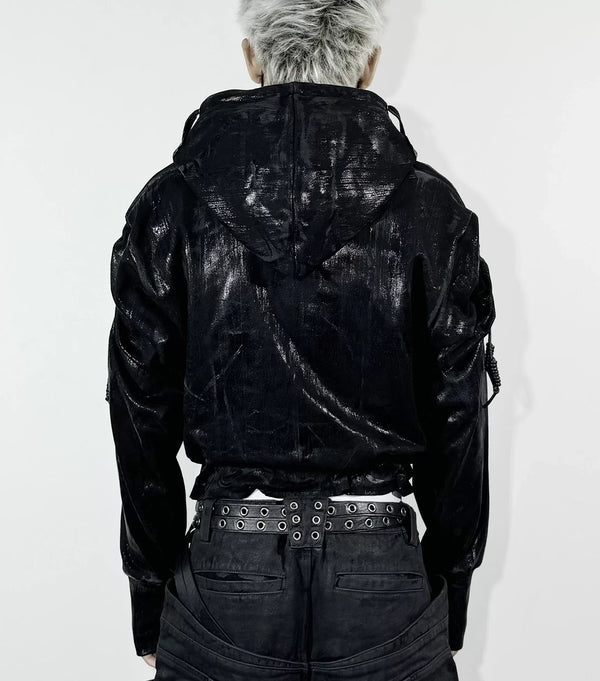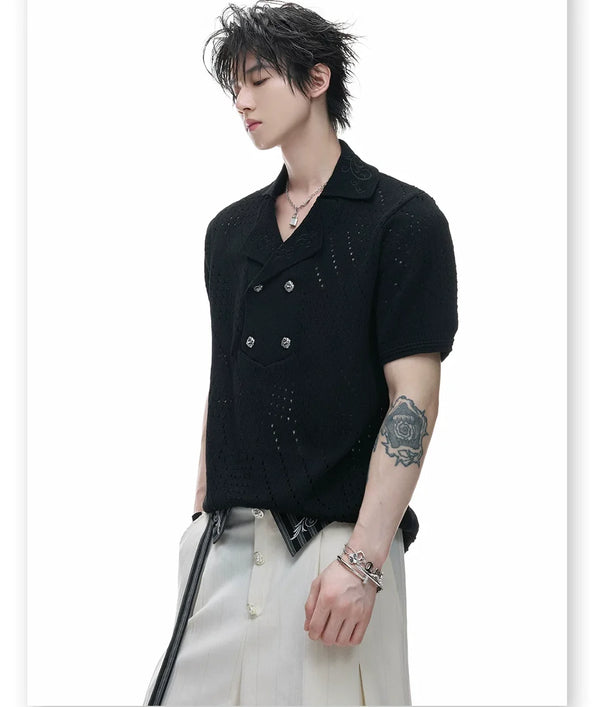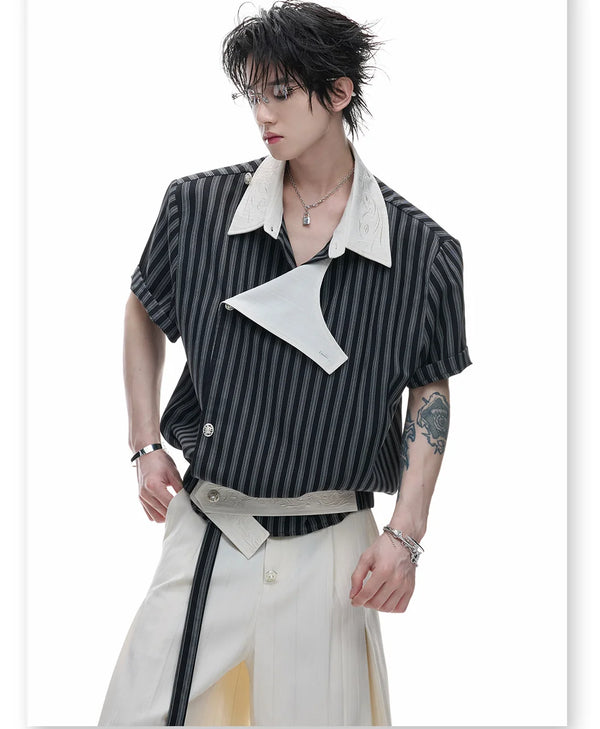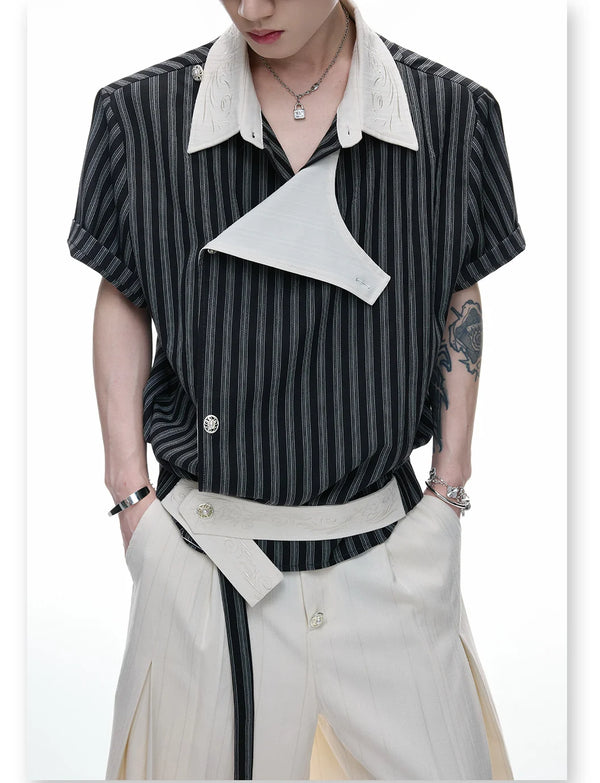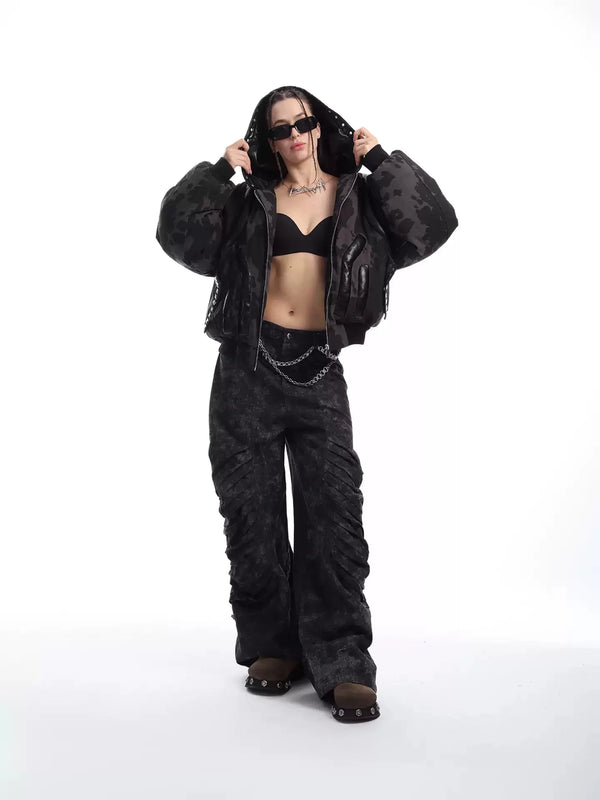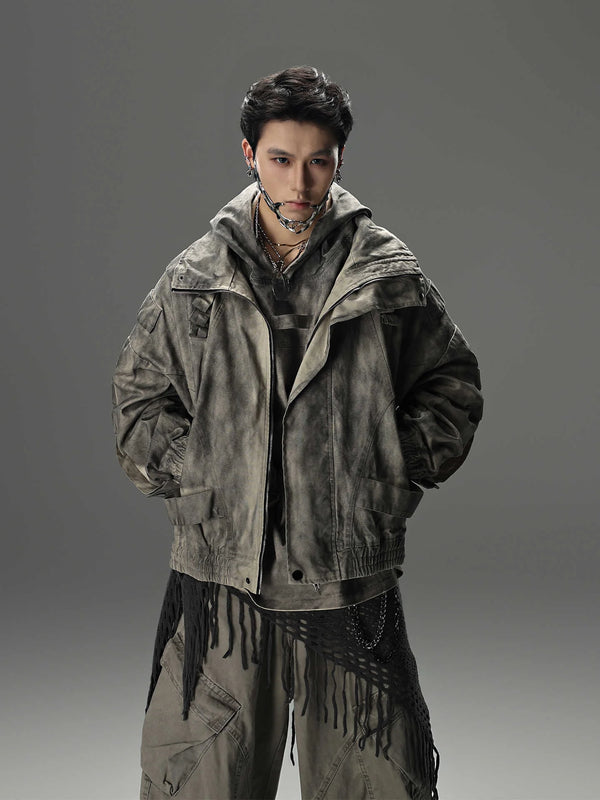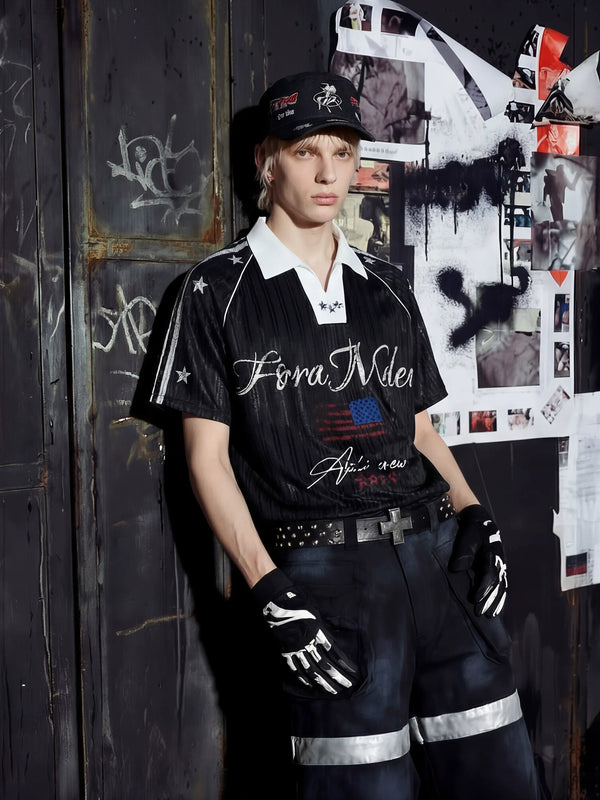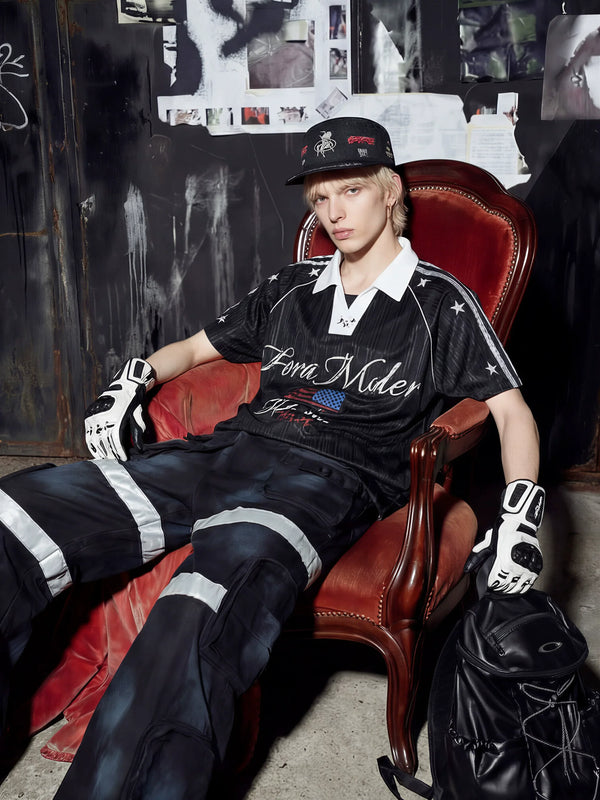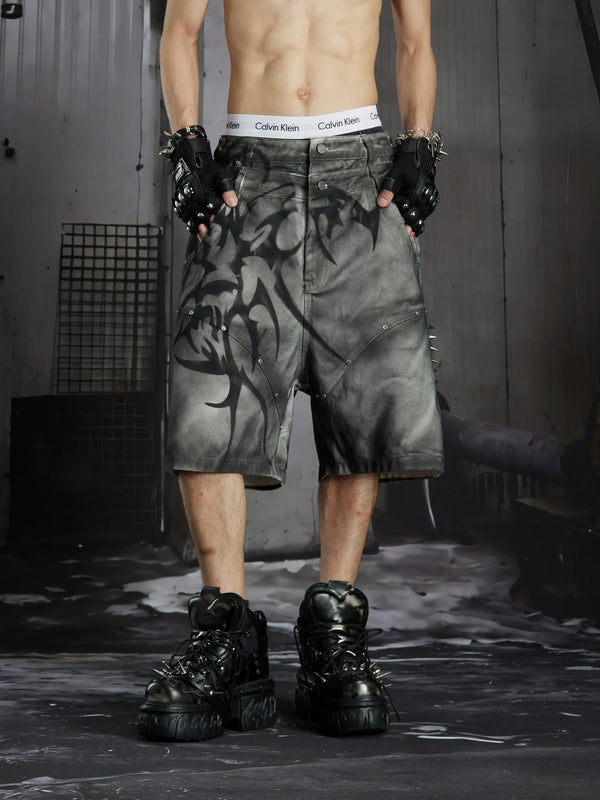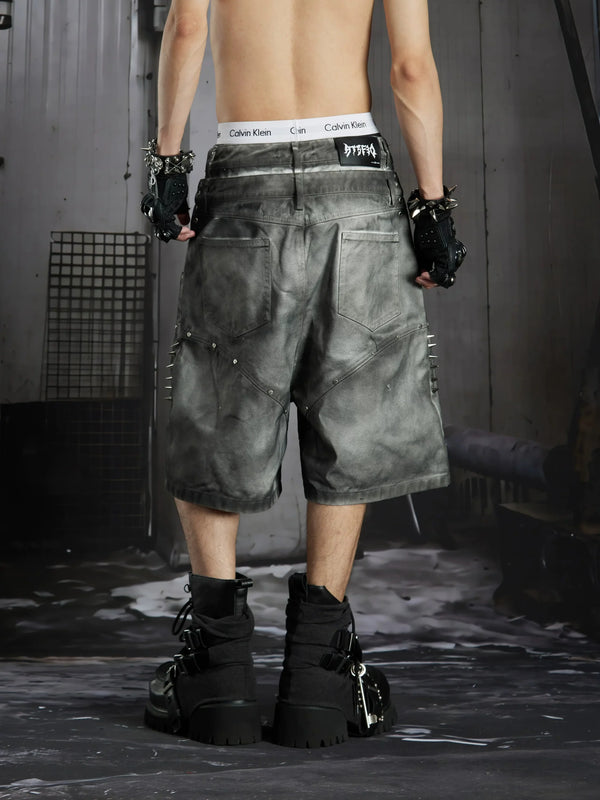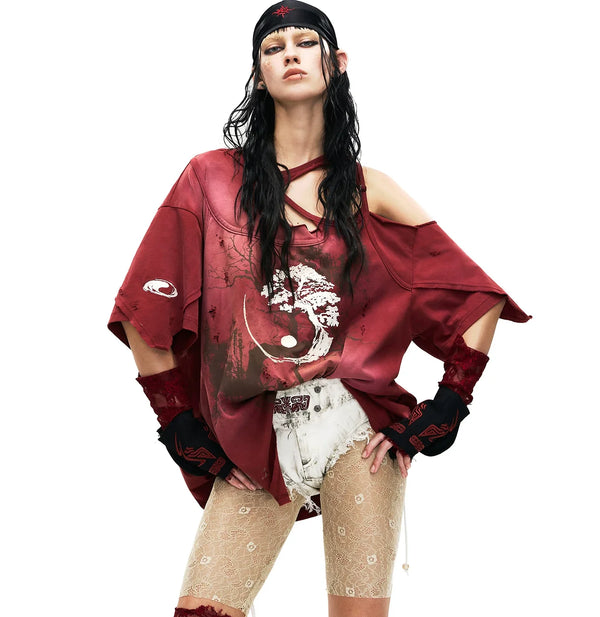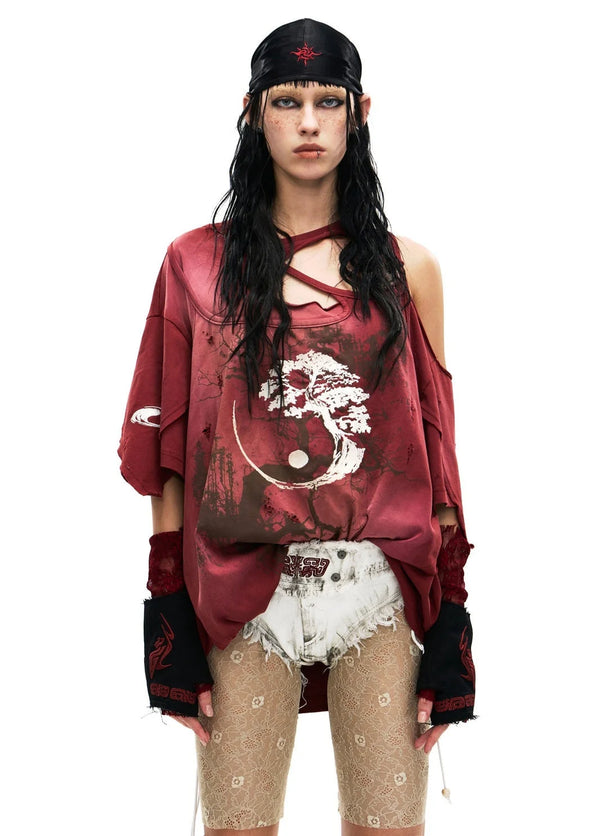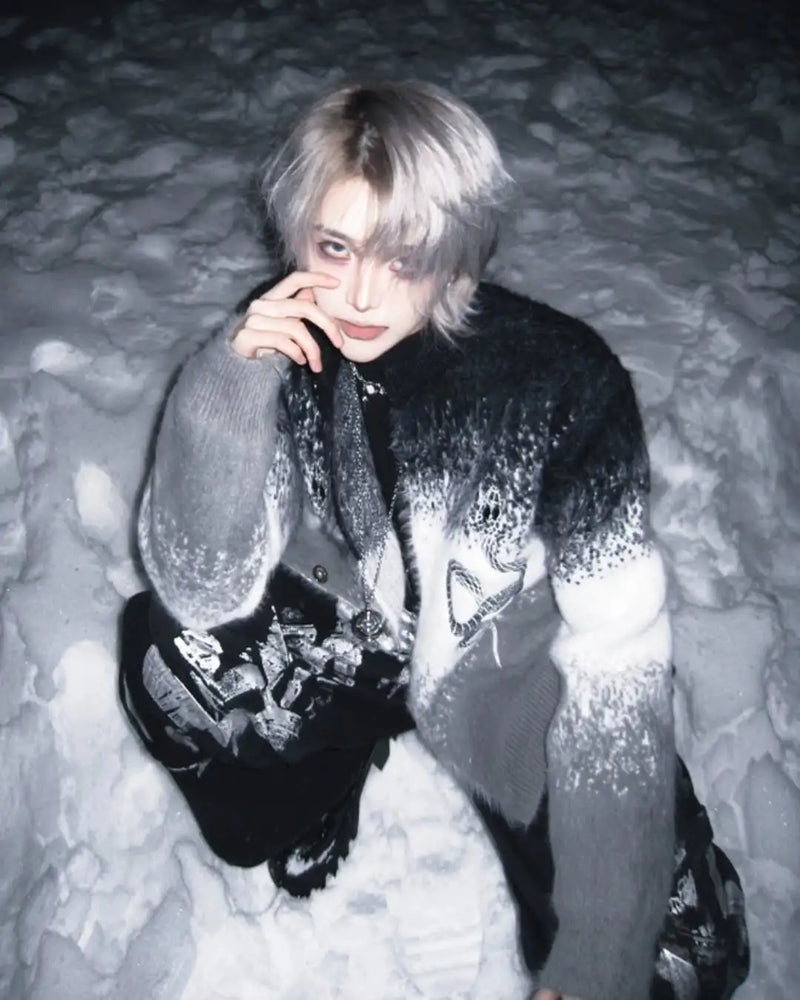

Everyone talks about Harajuku. Most of them mean a photo they saw on Pinterest in 2015 — colourful tulle skirts, platform shoes, a street in Tokyo. What they don't mean is what 99 percent of Japanese people pull out of the wardrobe in the morning.
Japanese clothing style is three tracks running in parallel. A traditional one (Kimono, Yukata, Hakama, Noragi). A modern subculture lane (Harajuku, Lolita, Visual Kei, Mori). And a quiet daily code so unspectacular that most tourists miss it — and that still says more about Japanese fashion than any photo from Shibuya.
This guide sorts the three tracks. Who invented it, what the pieces are really called, what makes up the Japanese everyday uniform, where women combine differently than men, which brands wrote the vocabulary, and which six mistakes tip your outfit straight into cosplay.
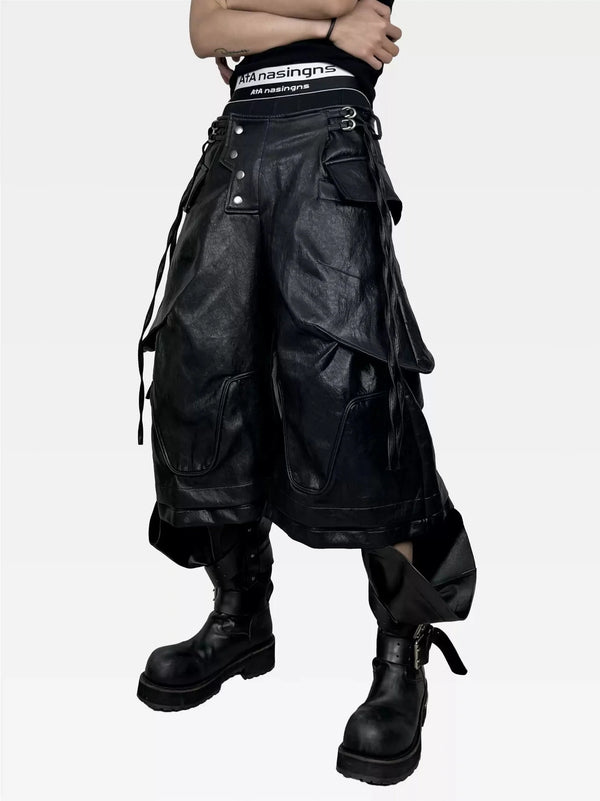
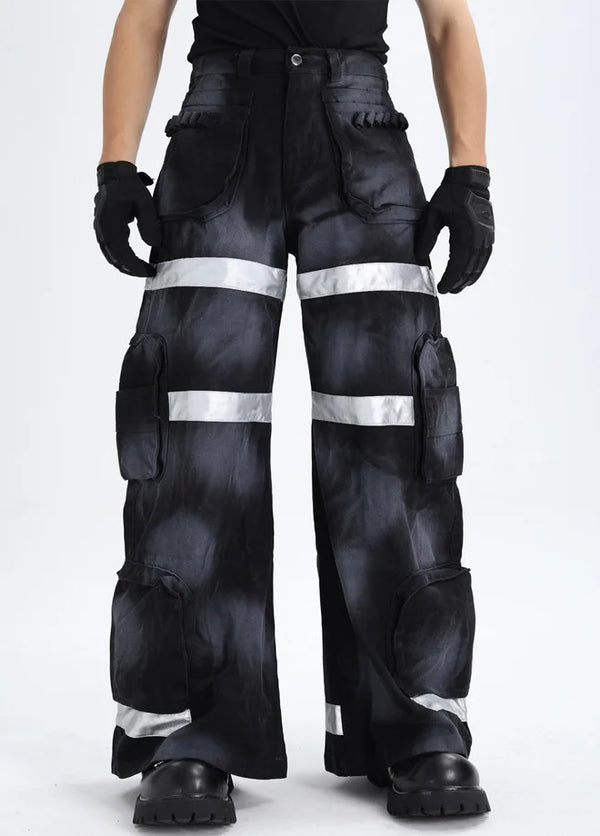
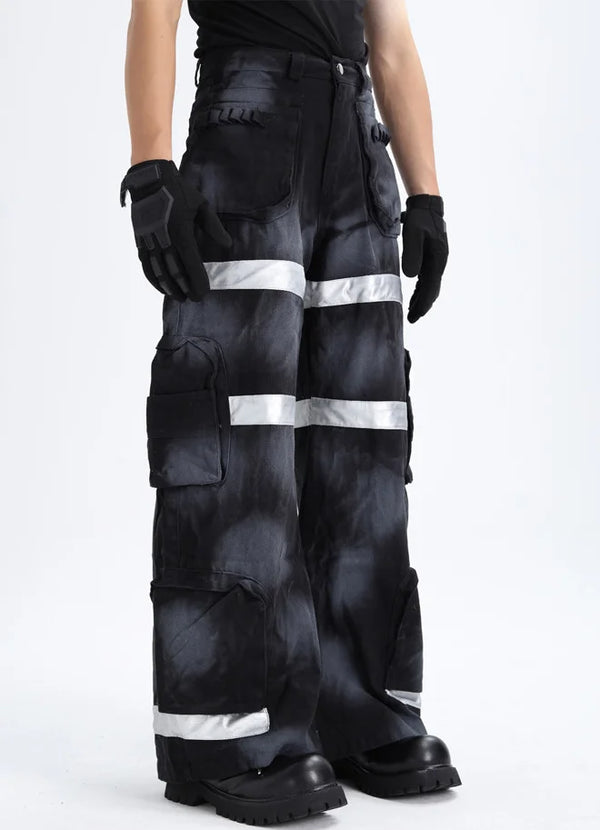
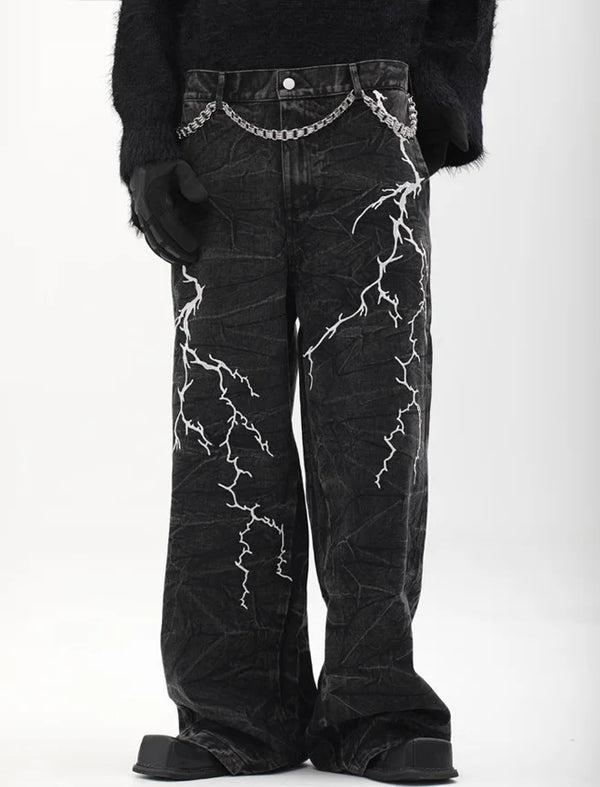
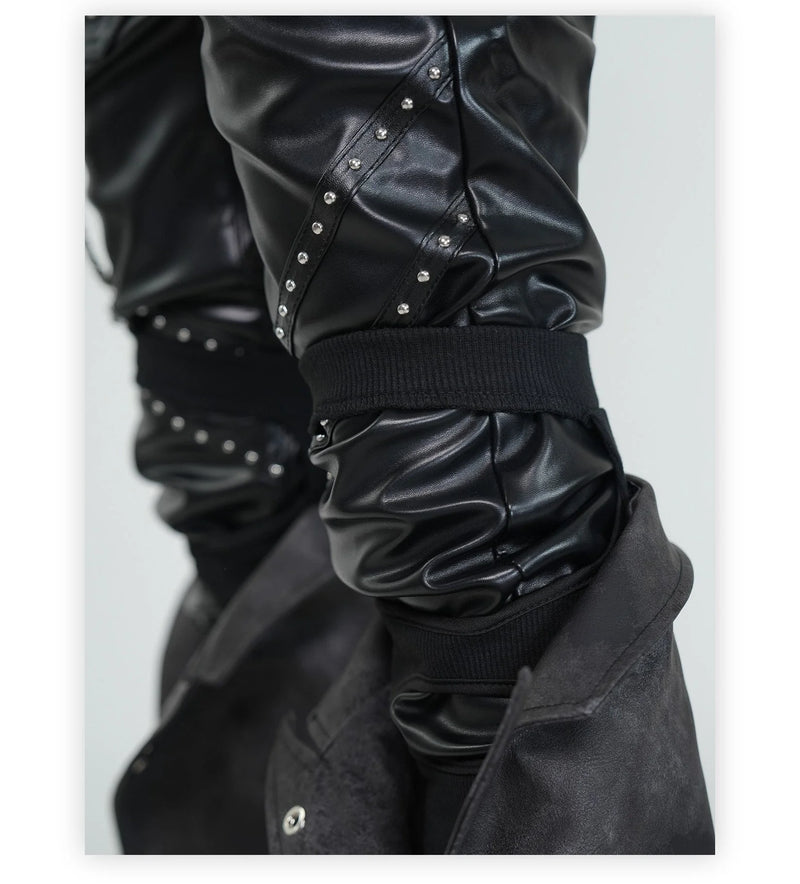
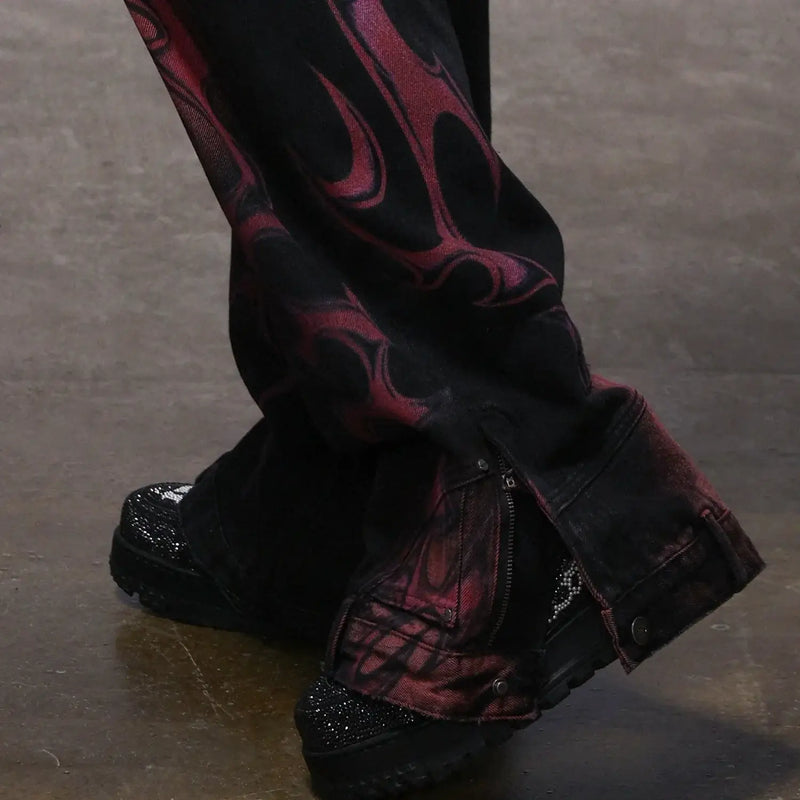
How this looks in motion — the wide-leg silhouette with Hakama DNA, because it's the only trouser that has worked without detour since 1500:
Naming
What is Japanese clothing style called? Three tracks, one country.
There isn't one name. There are three, and they mean different things — most articles in English throw them into one pot.
Wafuku (和服) is traditional clothing. Kimono, Yukata, Hakama, Haori, Noragi, Jinbei — everything worn in Japan before the late 19th century. Literally it means „Japanese clothing“, and today it mostly stands for festival, tea-ceremony and wedding looks. Fewer than two percent of the population wear it day to day.
Yofuku (洋服) is the opposite — Western clothing. The term came up during the Meiji Restoration from 1868, when Japan looked to Europe and introduced suits, trousers, shirts. Today Yofuku is what 98 percent of all Japanese people wear — but filtered through a logic of its own made of fit, layering and colour code.
Japanese Streetwear is the third term, and the youngest. It describes the mix that emerged in Harajuku from the 80s on: Western pieces, Japanese layering, traditional cut references (Kimono drape, Hakama volume), and a leaning towards conceptual design over logo display. Comme des Garçons, Yohji Yamamoto, Issey Miyake made the vocabulary audible in Paris; Undercover, Sacai and Visvim carried it forward in the 2000s.
Anyone googling „Japanese clothing style“ usually wants the third category — Yofuku with a Japanese signature, with traditional cut echoes, with a layering that looks exactly like this nowhere else.
Definition
What is Japanese clothing style — the 6 building blocks that carry everything
Japanese fashion isn't recognised by a single piece. It's recognised by a combination of six building blocks that show up in almost every outfit — whether traditional Wafuku, avant-garde Yamamoto or a Sunday grocery run at the Lawson.
6
Building blocks in the outfit
1603
Edo code stable ever since
3
permitted colours (indigo, charcoal, off-white)
0
visible logos in the daily code
The six building blocks don't all appear at once in every outfit. Three are enough for a look to read as „Japanese“. Four sits clean. Five is editorial level.
- Layering in 3 to 5 layers — visibly stacked, every layer counts. Tee under shirt under Noragi under open coat. Never one layer, always several.
- Fit discipline: straight on top, wide below — the shoulder sits level without a drop, the trouser has Hakama volume from the hip down. Skinny-stretch isn't in the vocabulary.
- Indigo code — Aizome indigo since the 17th century. Charcoal, off-white, black alongside. Loud colours are almost never visible in the daily look — they belong to the subculture zone (Harajuku, Decora).
- Workwear DNA — Noragi (farmer's jacket), Sashiko stitch (repair seam as decoration), straight-cut trousers without taper. The Japanese counterpart to American workwear is older and less sporty.
- Drape over shine — heavy cotton, linen, indigo denim, wool. Fabrics that fall, not reflect. Satin and polyester are excluded from the traditional track.
- Asymmetry as a construction detail — a crooked tab on the collar, a one-sided hem, a front shorter than the back. Yohji Yamamoto exported this logic to Paris; it comes from the Kimono cut book.
If you feel like you're missing the floor after these six, it's not pieces you lack — it's the idea behind them. An outfit that has four of these six reads more Japanese than ten bought Wafuku replicas side by side.
Tradition
Traditional Japanese clothing: Kimono, Yukata, Hakama, Noragi, Jinbei
Anyone who wants to know what the traditional Japanese outfits are called gets far with five terms. Each one has its own social function, its own season, its own cut vocabulary — and the DNA of four of these five keeps showing up in modern streetwear.
Anyone who knows all five at once spots the echoes in modern Japanese streetwear immediately. The wide-leg trouser is Hakama. The jacket worn open over the shirt is Noragi. The crossed chest detail on a hoodie is a Kimono tab. This cut language has run in parallel to everything happening in Tokyo for 400 years.
Subcultures
Modern Japanese fashion styles: Harajuku, Lolita, Visual Kei, Mori
Anyone googling „which clothing style is typical in Japan“ almost always gets a list of subcultures. They're real, but they're not the everyday — they're the loud layer on top. These five are the ones that count internationally:
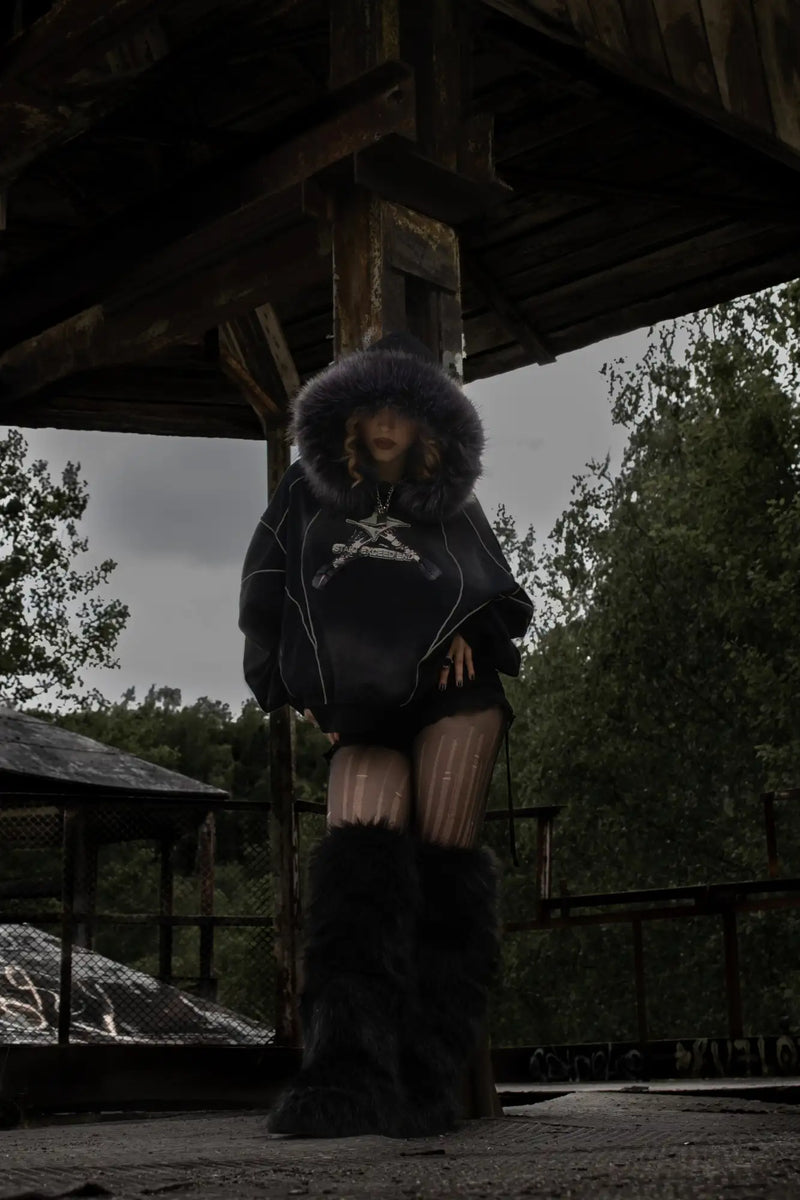
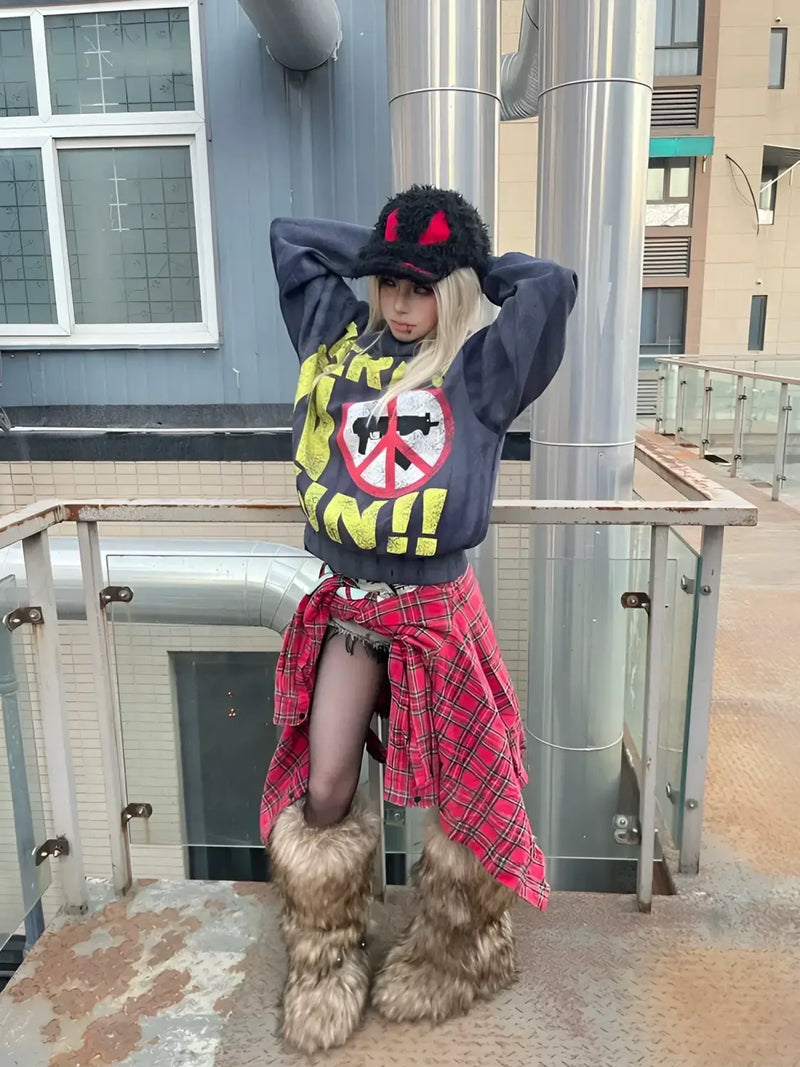
Harajuku — umbrella term for the colourful, layering-heavy looks from the district of the same name around Takeshita-dori. Decora (childishly overloaded), Fairy Kei (pastel), Yami-Kawaii (dark-sweet) are sub-streams. Its peak was the mid-2000s; since Covid the scene is quieter, but not dead.
Lolita — petticoat skirts, lace, bonnet, a Victorian-Japanese hybrid form. Sub-streams Sweet (pink-heavenly), Gothic (black-Edwardian) and Classic (muted tones). It has its own worldwide community with its own brands (Baby the Stars Shine Bright, Angelic Pretty).
Visual Kei — glam-rock band aesthetic from the 90s. Heavy make-up, leather jackets, elaborate hairstyles. Bands like X Japan and Malice Mizer set the vocabulary; today it's a grown-up underground scene with its own clubs in Shinjuku.
Mori — literally „forest girl“. Loose layering of natural fibres, earth tones, linen, knitted stockings. Anti-fast-fashion, anti-loud. The calm antithesis to Harajuku.
Gyaru — tanned skin, blonde streaks, long nails, mini skirt. Peak in the early 2000s, today nostalgic. Y2K brought the style back to Europe.
Daily code
What do Japanese people wear day to day — the invisible uniform
This is where it gets interesting — and for tourists mostly disappointing. What Japanese people wear day to day is deliberately understated, layer-rich, fit-precise and has been moving within a very narrow colour palette for decades.
The daily code lives on three things: a muted top, a straight trouser, layering. What varies is the quality of the cuts and the density of the layers. What doesn't vary is the discipline in fit and colour.
- Uniqlo & Muji as the base — almost every Japanese person has a Uniqlo Heattech layer and a Muji crewneck tee in the wardrobe. That's the plinth everything else sits on.
- Three visible layers as default — tee, shirt, cardigan or coat. Even in summer you layer, just thinner (mesh tee under linen shirt under open indigo overshirt).
- Straight trouser cut, mid-rise — no skinny-stretch, no extreme wide-leg in the daily. Straight or slightly relaxed, sits on the hip, falls straight onto the shoe.
- Shoes muted & simple — New Balance 990s, Onitsuka Tiger, Asics, Birkenstock in summer. Loafers for the office. Sneaker mania with logo drops belongs to hypebeast, not the daily code.
- Accessories as detail, not statement — a pair of glasses, a tote bag, maybe a cap. Never all at once. Visible logos are rarer than in Europe.
- Colour as accent, not surface — if a colour appears at all, then in one spot (socks, beanie, a glimpse of inner lining). The outfit around it stays indigo, charcoal, off-white, black.
It seems boring at first. But anyone who walks Tokyo for a week with open eyes notices: every third person pulls it off with a precision rarely seen in Europe. The difference lies in the fit of the individual pieces and in the fabric choice — not in the outfit concept.
Gender split
Japanese clothing style women vs men — where the line really tips
The six building blocks apply to every body. What differs is the line — where the volume sits, where the asymmetry wanders, how the layering order is stacked.
Women's version: the layering often goes in length — long cardigan over mid-length shirt over short tee. Hakama wide-leg becomes an ankle-high wide pant; a high-water hem with a visible white sock is a classic Tokyo women's detail. Indigo stays, but is supplemented with mustard, rust, muted rosé. Shoes go to loafer, Mary Jane, platform sandal.
Men's version: the layering often goes in width — tee, shirt, Noragi, all straight-lined, all in the same length class. Hakama wide-leg becomes the classic straight workwear trouser, often with a cuff. Colour stays stricter: indigo, charcoal, off-white, black. Shoes go to New Balance, Doc Martens, Visvim FBT, Onitsuka Tiger.
Both play with the same cut echoes, but the women's line tends to be softer, less uniform, with more Mori and Lolita references allowed. The men's line is stricter, closer to the workwear plinth. In mixed friend groups in Daikanyama it looks as if both had dressed to the same code, but in two different volumes.
Brands
Japanese fashion brands: Comme des Garçons to Uniqlo
Anyone searching „Japanese fashion online shop“ or „Japanese fashion men's shop“ doesn't want just anything — they want a brand list that counts in the scene. These are the eight that made the Japanese vocabulary internationally visible — chronologically by founding year:
- Comme des Garçons (Rei Kawakubo, 1969) — the pioneer of deconstructivist fashion. The first looks in Paris in 1981 were called „Hiroshima Chic“; they turned the Western notion of beauty on its head. Black, asymmetric, broken textures — all of it comes from here.
- Issey Miyake (1970) — Pleats Please. The pleating technique that lets a piece flow and hold structure at once. Bao Bao bag as a daily statement. The quiet, technological side of the Japanese avant-garde.
- Yohji Yamamoto (1972) — drape, asymmetry, black as the main colour. Yohji's phrase „black is modest and arrogant at once“ describes the whole vocabulary. The Y-3 collab with Adidas translated the DNA into sneakers.
- Uniqlo (1984) — the daily plinth. Heattech, Ultra Light Down, Airism. What Muji is in lifestyle, Uniqlo is in clothing: quiet, precise, affordable, above average in quality for the price.
- Undercover (Jun Takahashi, 1989) — the bridge between punk and streetwear. Collabs with Nike, Supreme, Comme des Garçons. The conceptual streetwear standard for a whole generation.
- Sacai (Chitose Abe, 1999) — hybrid constructions. A jacket that's trench at the front, sweat at the back. Sacai made Japanese cut hybridisation mainstream; Nike collabs (LDV Waffle, Vaporwaffle) brought it into sneaker culture.
- Visvim (Hiroki Nakamura, 2000) — vintage workwear plus Japanese cut logic. FBT moccasins, indigo pants, Sashiko repair as a selling point. The quiet, connoisseur's peak.
- Muji (1980) — as a brand a cosmos of its own: basic clothing without a logo, natural fibres, muted tones. „No-brand goods“ as a concept. Anyone wanting the daily code in full layer density without designer prices collects at Muji.
For anyone searching for these brands in Germany: online shops like SSENSE, END., MR PORTER, Hbx and Antonioli carry the avant-garde line. Comme des Garçons has its own flagship in Berlin and Munich. Uniqlo is in Berlin, Munich, Hamburg, Düsseldorf, Cologne. Visvim is in the resale market — Grailed and Vestiaire are the easiest route.
Category · Outerwear
Japanese jackets & outerwear — Noragi, hooded denim, bomber
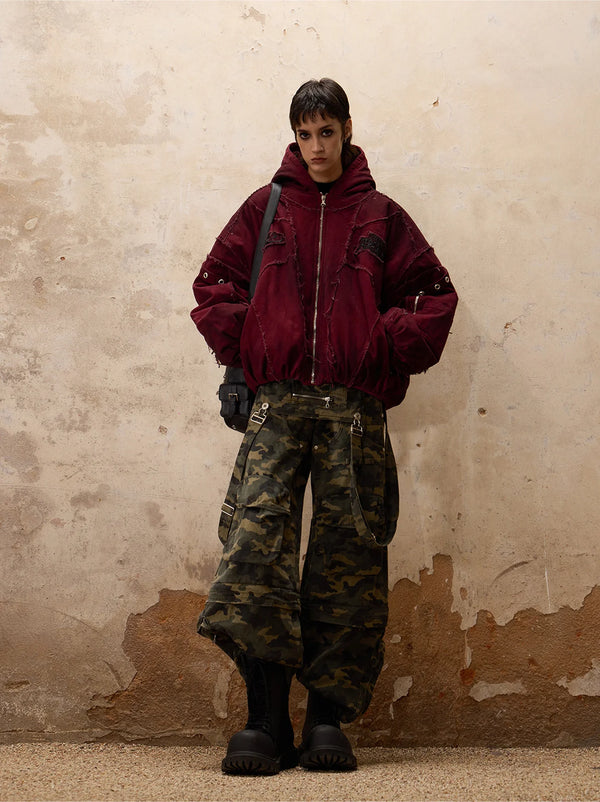
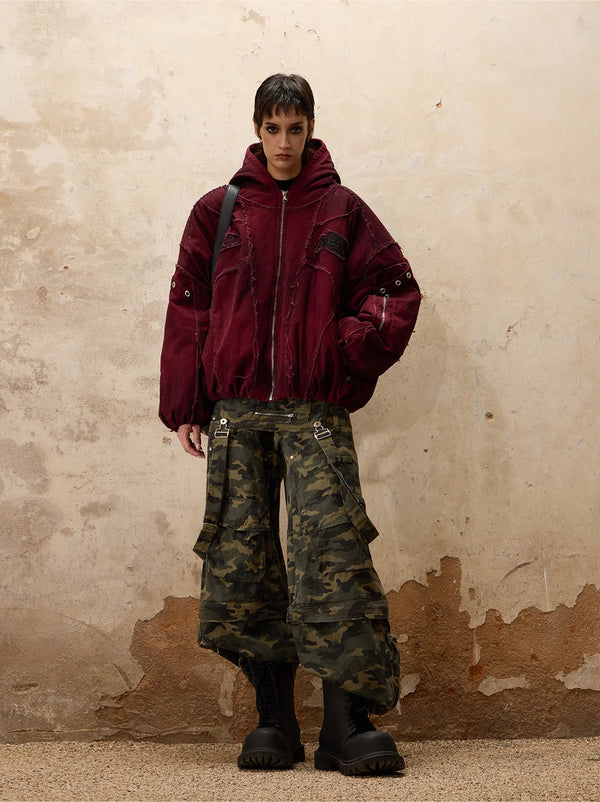
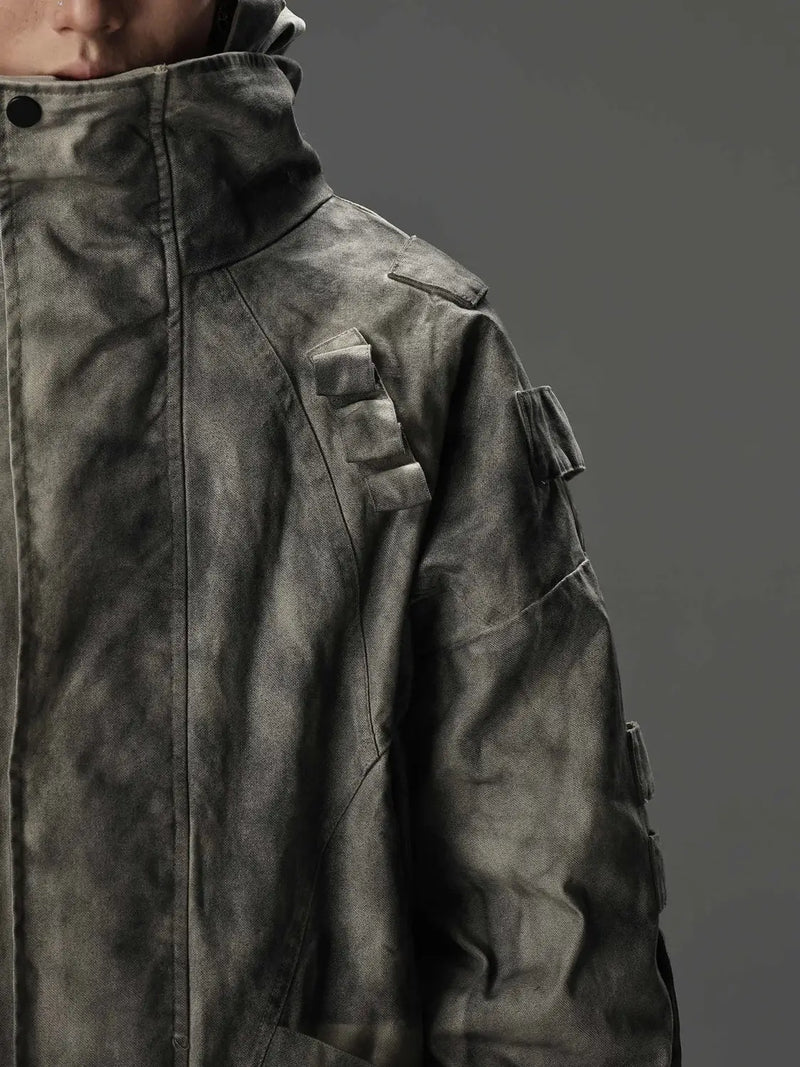
The jacket is the piece where Japanese fashion becomes visible fastest. Anyone wanting to hint at the daily code without changing the whole outfit changes the jacket. Three types carry the logic: the Noragi workwear overshirt (open over a tee), the hooded denim jacket (Yohji echo meets Harajuku streetwear), and the bomber in a workwear cut (Hakama DNA in the shoulder).
What connects all three: straight shoulder cut, no drop shoulder, no skinny fit. The volume sits at the chest, the hem ends at hip height or slightly below. Indigo, black or off-white. Never glossy polyester — the Japanese outerwear logic is matte, heavy, flowing.
Anyone who doesn't yet own an indigo workwear jacket starts with the hand-painted hooded denim. It combines the Noragi cut logic with the hood that makes the piece feel instantly younger — perfect as a first entry.
Category · Bottoms
Japanese trousers — Hakama wide-leg & workwear DNA
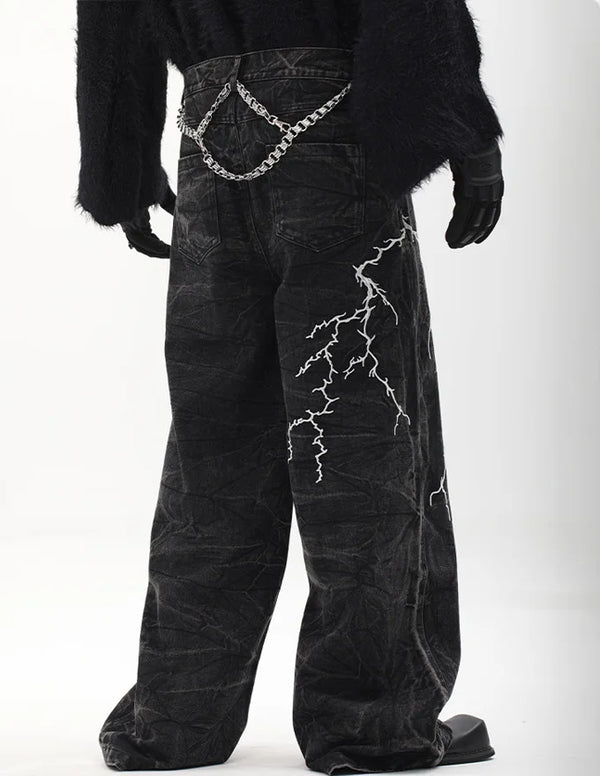
The trouser carries half the outfit. In Japanese fashion it's almost never a skinny, almost never a waisted slim, almost always a variation of two cuts: wide-leg with Hakama DNA (straight front pleat, falls wide from the knee) and workwear straight (mid-rise, straight cut, light cuff at the hem).
Anyone who makes the switch from Western skinny to Japanese wide-leg logic once usually doesn't go back. The silhouette lengthens the leg, balances body proportions and reads as „non-Western“ instantly — without anyone needing to know the Hakama heritage by name.
The Ronin drop-crotch pant is the direct Hakama translation into modern fabric; the Graffiti wide-leg jean is the Harajuku variant with a loud print for the subculture lane. Both work with a workwear top or with layering — an outfit doesn't end at the trouser, it's the foundation.
Category · Tops
Japanese tops — Kimono shirt, Noragi layer, mesh tee
Tops are what make layering possible in the first place. Three piece classes carry the Japanese daily code: the crossed Kimono shirt (wrap detail, one tab closes off the other), the straight-cut Noragi tee (oversize shoulder, mid-length hem), and the mesh or long-sleeve tee as a base layer under everything.
What doesn't work here: print tee with a loud graphic, slim-fit polo, anything carrying a chest logo. The Japanese top logic is muted, layer-capable, and seeks its detail richness in the construction (seam, tab, hem) rather than in the print.
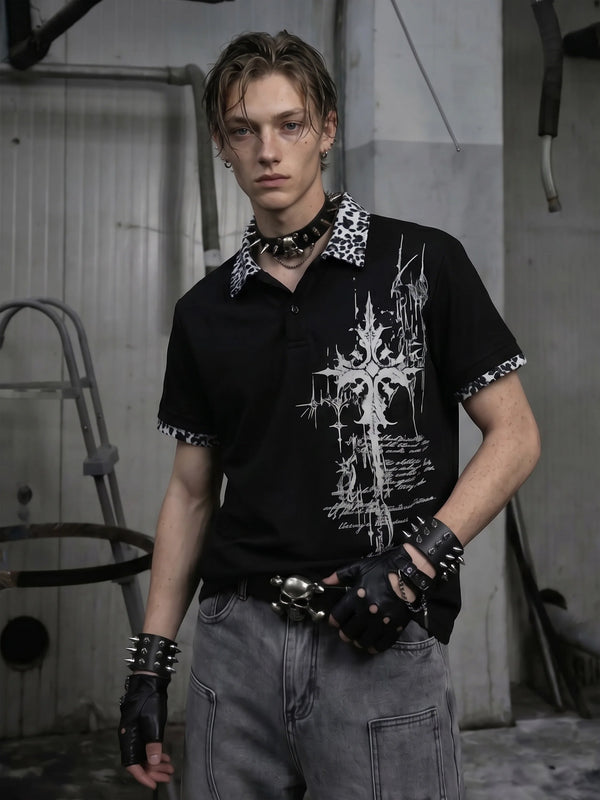
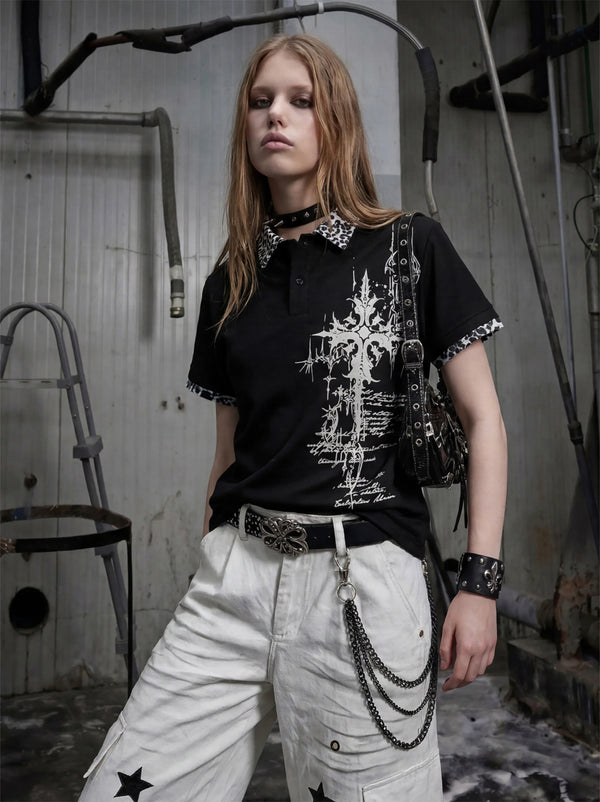
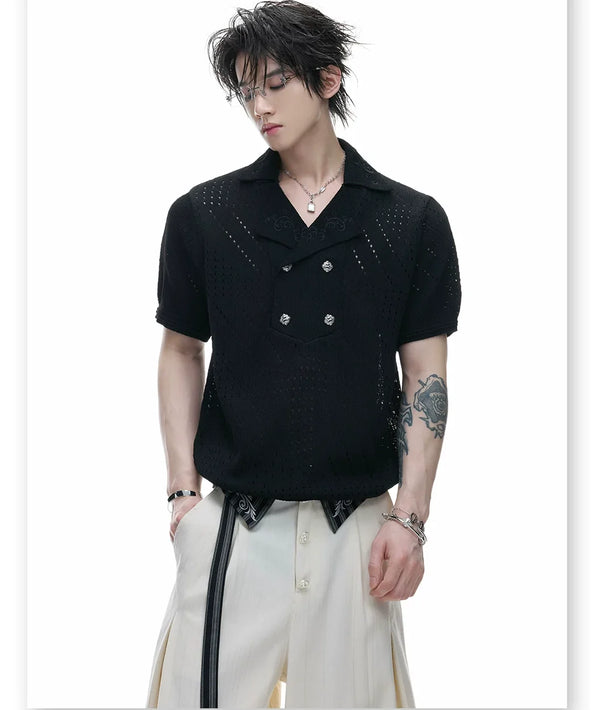
The mesh varsity knit reads as a modern translation of the Aizome mesh layer from Edo; the grunge-print long sleeve is the Harajuku lane. Both are designed as a base layer under a Noragi jacket or an open Kimono shirt.
Styling logic
How to really wear Japanese clothing style — the 4 rules
A Japanese-reading outfit works on four rules. Break one and you have a good look. Follow all four and you have a look that wouldn't stand out in Daikanyama — and that's exactly the goal.
Drei sichtbare Schichten. Eine Wide-Leg. Indigo als Anker. Ein traditionelles Element — maximal eines.
Rule one: three layers visible, always. Even in summer. Mesh tee, thin linen shirt, open indigo overshirt are three. Single-layer is Western logic, never Japanese.
Rule two: one wide-leg trouser. Hakama DNA. Mid-rise. Falls straight onto the shoe or slightly high-water with a visible white sock.
Rule three: indigo (or charcoal, off-white, black) as the anchor. At least two of the three layers in the muted palette. One colour as an accent is OK, two are too many.
Rule four: at most one traditional element. A Kimono-tab shirt is an element. A Noragi is an element. A Hakama pleat is an element. Three of them at once tip the outfit straight into cosplay.
We did the full breakdown with concrete photo examples and a season breakdown in the macro guide:
Japanese style overlaps at the edges with other aesthetics — Techwear shares the function-over-form logic, Korean streetwear shares the layering vocabulary, Y2K shares some of the loud Harajuku codes. Anyone with the Japanese basics down can read these neighbours and mix on purpose without slipping into cosplay.
Here the four most important neighbour guides — each with its own deep dive:
Seasonal
Japanese clothing style in summer vs winter
Tokyo has 35 °C in August and 2 °C in January — for both you layer. What varies isn't the number of layers but their weight. Three visible layers stay the minimum, even when in summer that's a mesh tee plus linen shirt plus open indigo overshirt.
Summer code: thin natural fabrics (linen, cotton, mesh), light indigo tones, a visible white sock with the wide-leg, sandals or light loafers. Yukata-fabric echo: a thin cotton overshirt with a printed indigo pattern instead of a print logo.
Winter code: heavier fabrics (wool, dense indigo denim, Sashiko quilting), darker indigo tones, several layers — tee, shirt, cardigan, coat is not unusual. Down vests are worn over a wool coat, not instead. Shoes go to boots, rugged New Balance, Doc Martens.
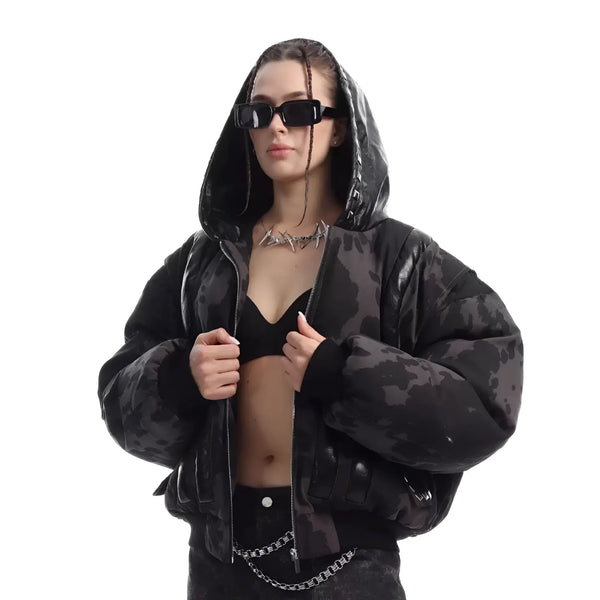
How this layer logic is built on in modern outerwear pieces — as a convertible puffer with removable sleeves that travels from winter coat to spring vest to summer layer:
What does not work
The 6 most common mistakes — when the outfit tips into cosplay
Japanese style has six spots where it reliably tips — mostly in one of two directions: cosplay or tourist. Anyone who avoids only one of them: that's mistake number one.
Getting started
How to start — the first 4 pieces for Japanese clothing style
You don't need 20 pieces to dress Japanese. You need four that together make a clean three-layer look with a wide-leg bottom. Everything else builds around them.
In order: an indigo workwear trouser with a wide-leg cut (the biggest effect per euro, since the silhouette tips immediately). A straight crewneck tee in off-white or charcoal (base layer for every outfit). A Noragi jacket or hooded denim workwear jacket (the piece where the outfit becomes visible as „Japanese“). A pair of New Balance 990 in grey or Doc Martens 1460 in black (shoes that go with each of the four layers).
Outfits for real
Japanese outfits for real — what it looks like on the street
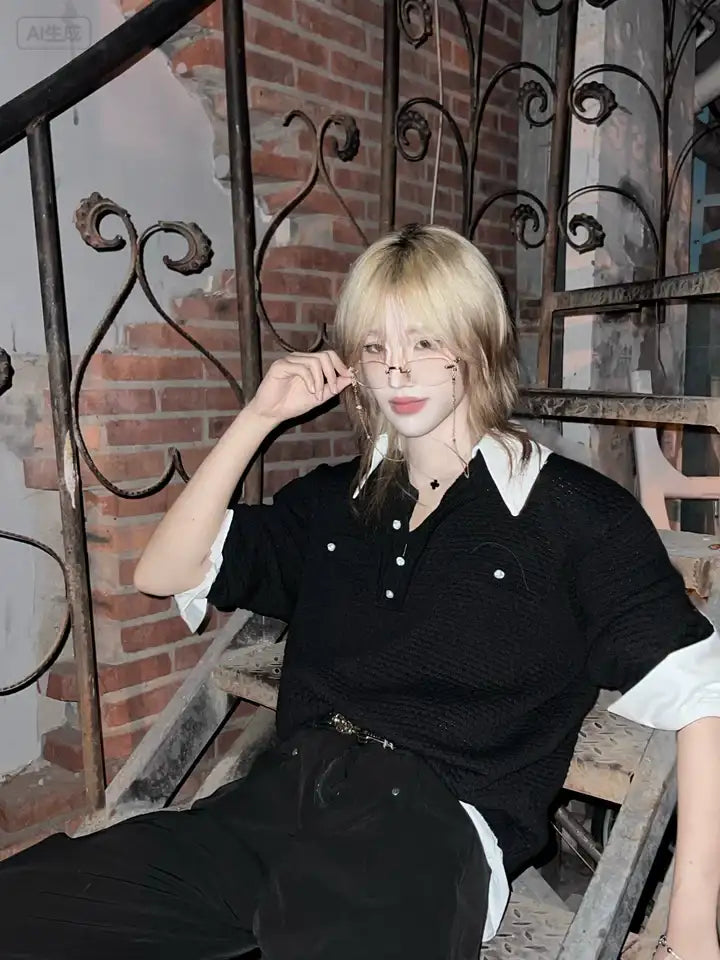
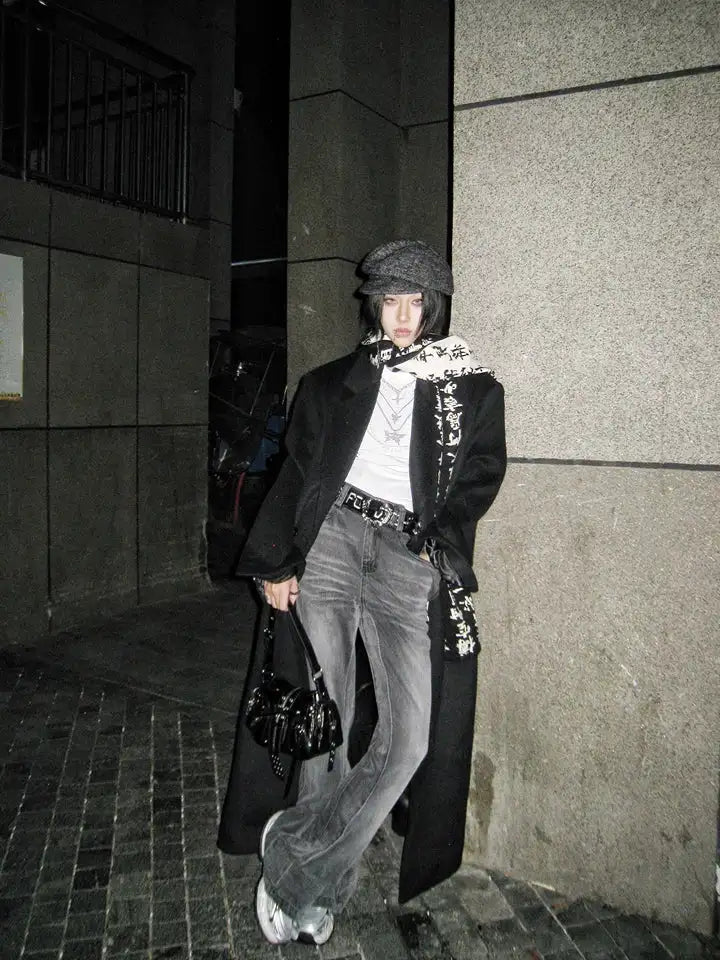
Before you build your own, look at how the three tracks appear in real outfits. The daily code in commuter traffic, the Harajuku subculture at the weekend, the avant-garde brands in the showroom — three worlds, one country.
Anyone scrolling the feed for a week sees a pattern: the layering is everywhere, the wide-leg cut is everywhere, the indigo palette is everywhere. The outlier photo on every account is usually the one outfit that breaks the rule — and that then doesn't read wrong, but deliberate.
To close
Japanese clothing style is a system — not a costume
If you remember one thing from this guide, then this: Japanese style works through building blocks, not through pieces. Anyone who has the six building blocks down (layering, fit discipline, indigo code, workwear DNA, drape over shine, asymmetry) builds outfits with 15 items from their own wardrobe that read Japanese every time. Anyone who only buys pieces has a full wardrobe without a single outfit that sits.
The whole logic of the guide reduces to one sentence:
The rules have been stable in their essentials since the Edo code of 1603 and will stay that way. You don't have to wait until you know all the terms by heart. Start with the four pieces from the last section, wear the look for a week, and you'll notice while wearing it what's missing and what's too much.
That's the point: Japanese style reads in theory like a corset of rules, but in practice doesn't feel like one. Once you have the code down, every further outfit is a variation of the same building blocks — not a reinvention.
FAQ
Frequently asked questions about Japanese clothing style
The questions we get most often by DM and email — short, clear, no detour.
What is Japanese clothing style called?
Which clothing style is typical in Japan?
What is traditional Japanese clothing called?
What kind of clothing do people wear in Japan day to day?
What are the Japanese outfits from Harajuku called?
Where can you buy Japanese fashion online in Germany?
What's the difference between Japanese fashion for women and men?
Can I wear Japanese style without it looking like cosplay?
What do you think?
Tell us on @fuga_studios
About the author
Philipp Fuge — Founder · Berlin
Founder of Fūga Studios. Writes the journal himself. Berlin · Shanghai · Tokyo · Poznań — four cities, one logic.