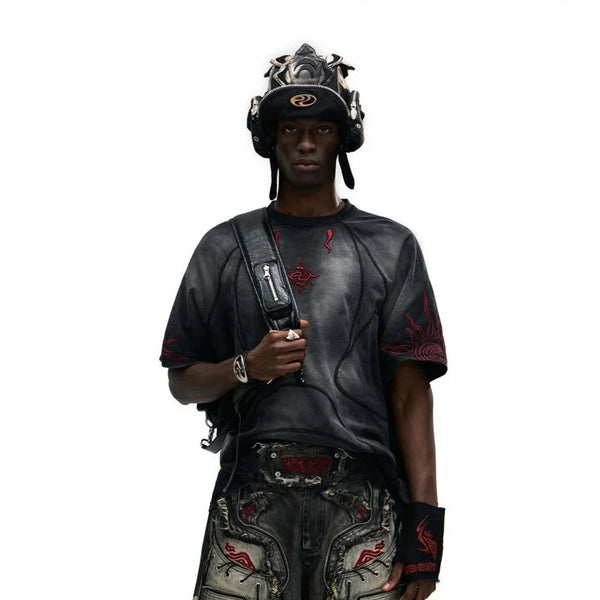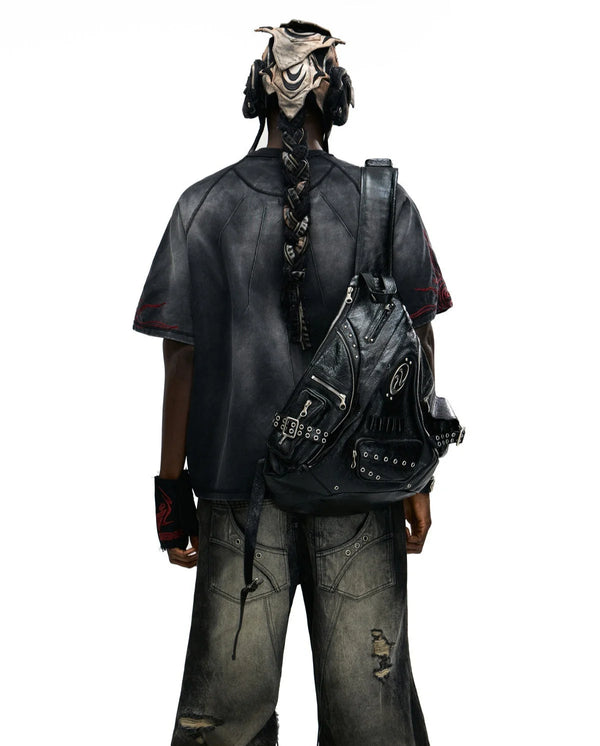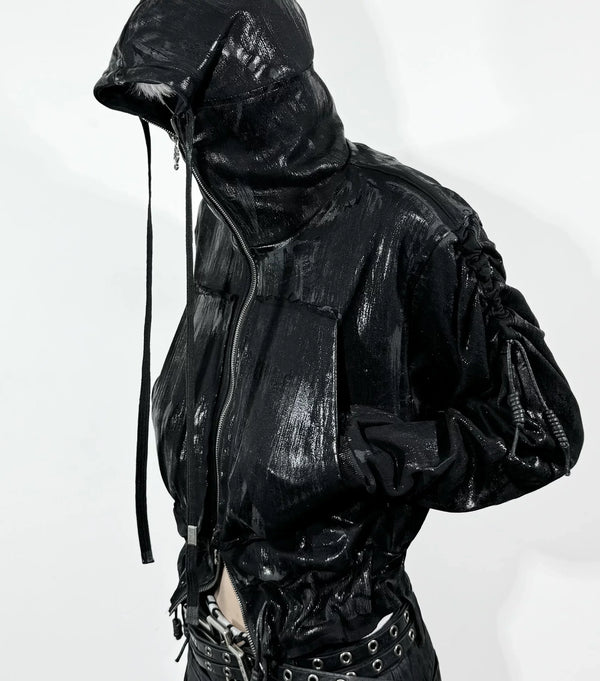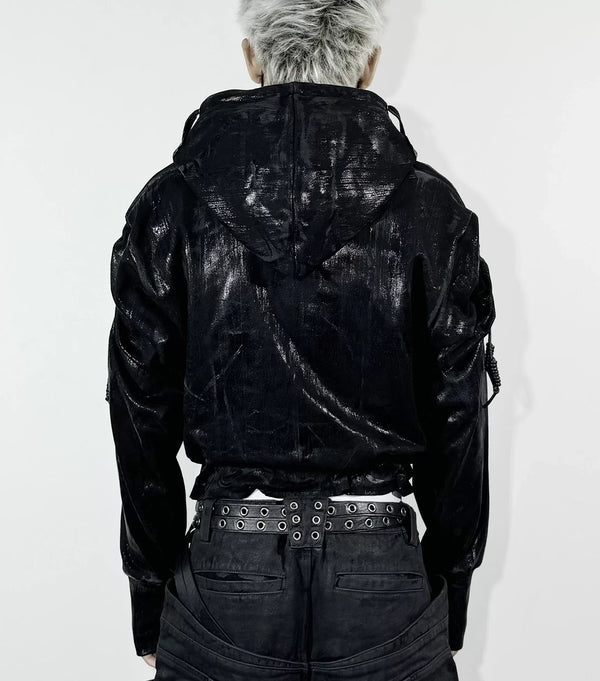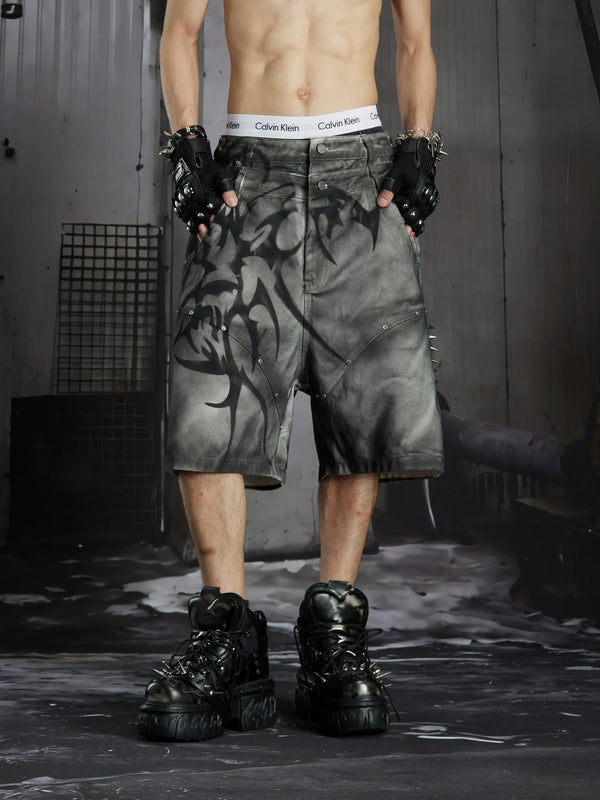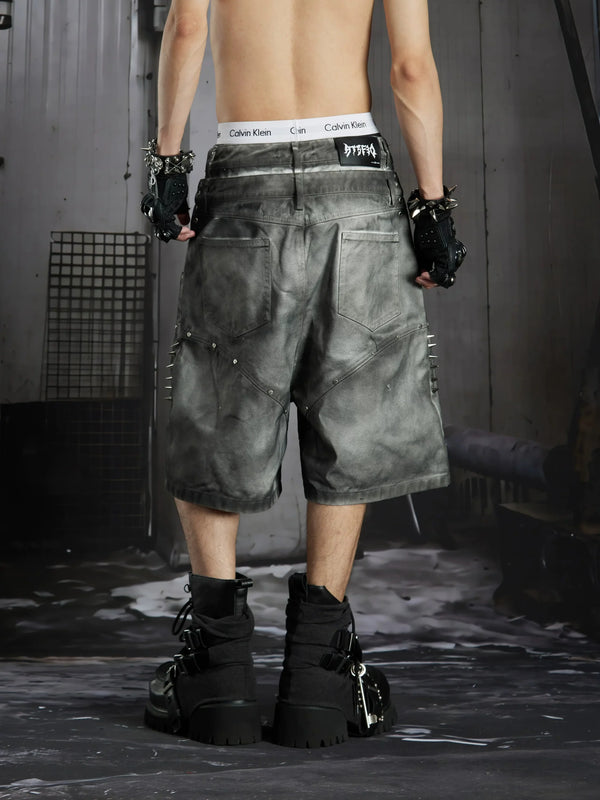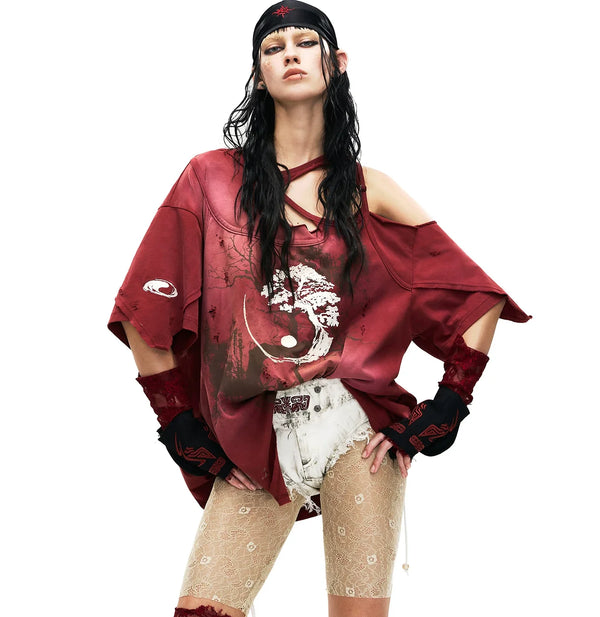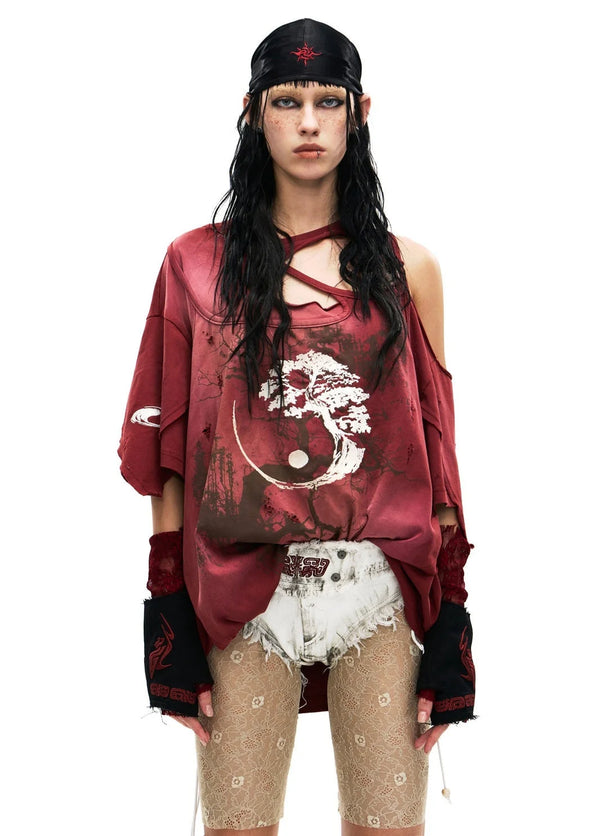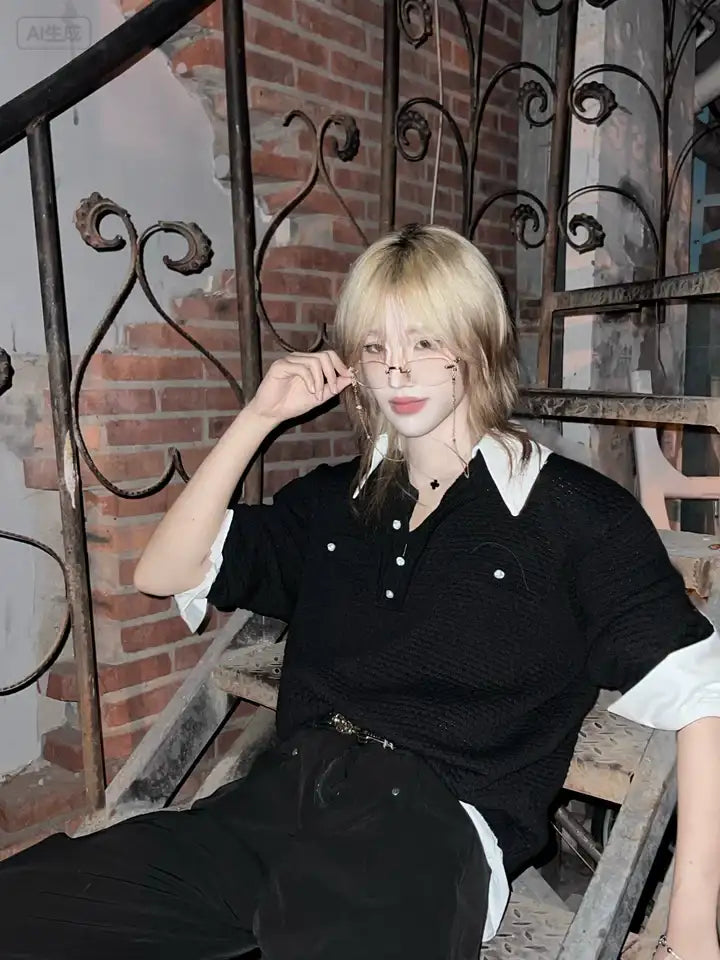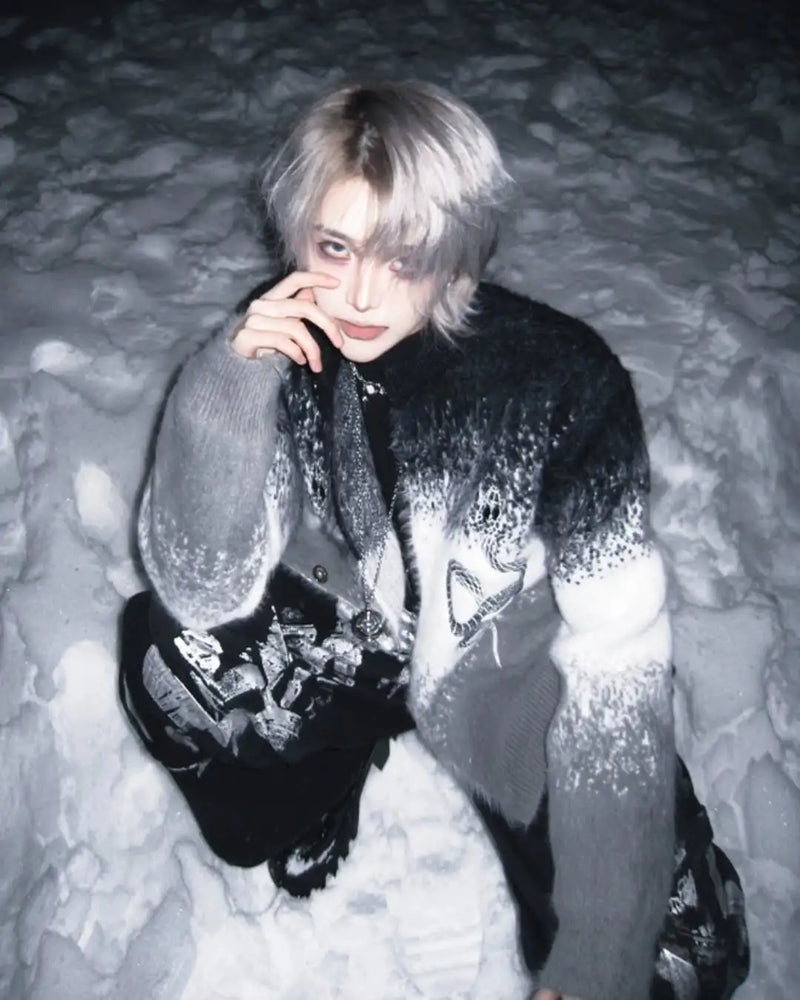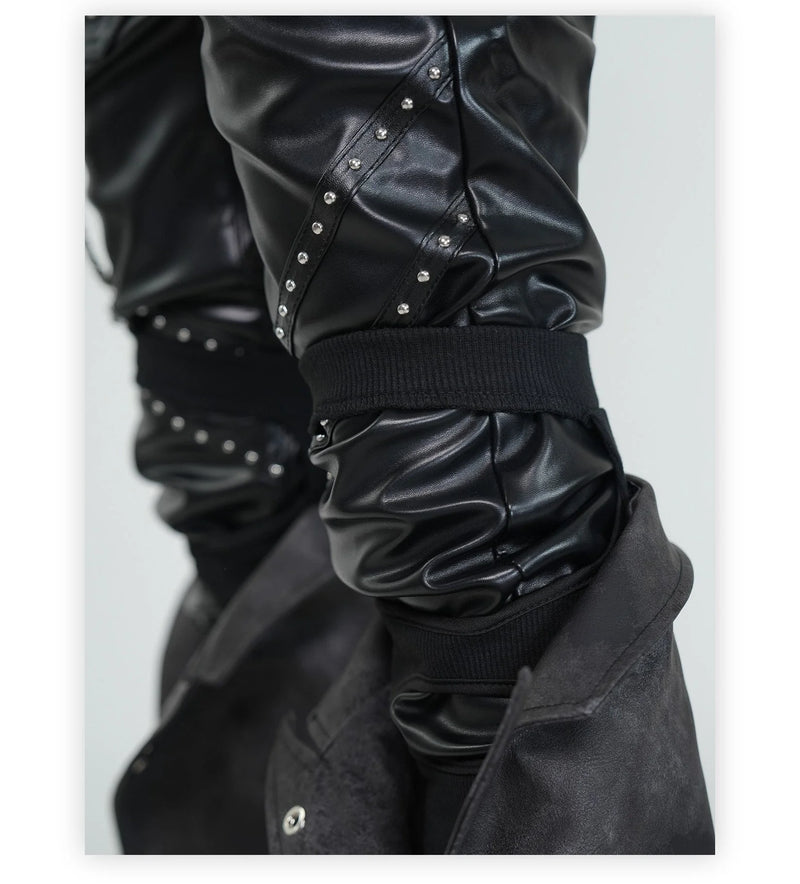
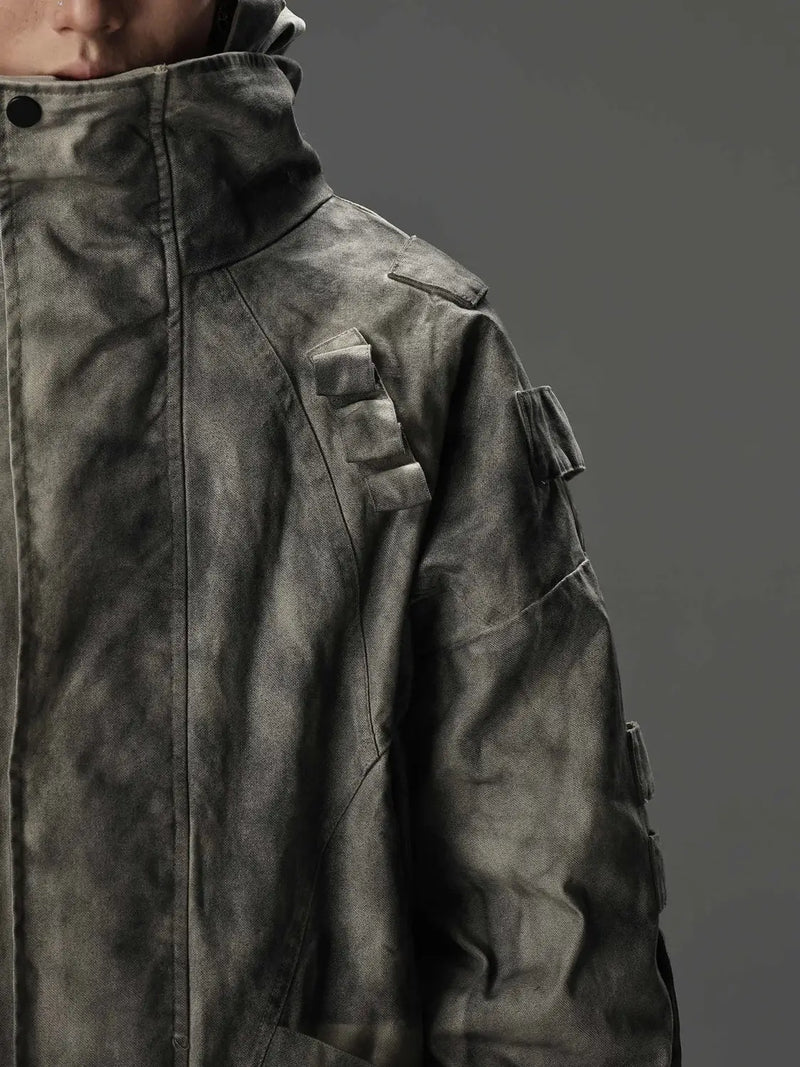
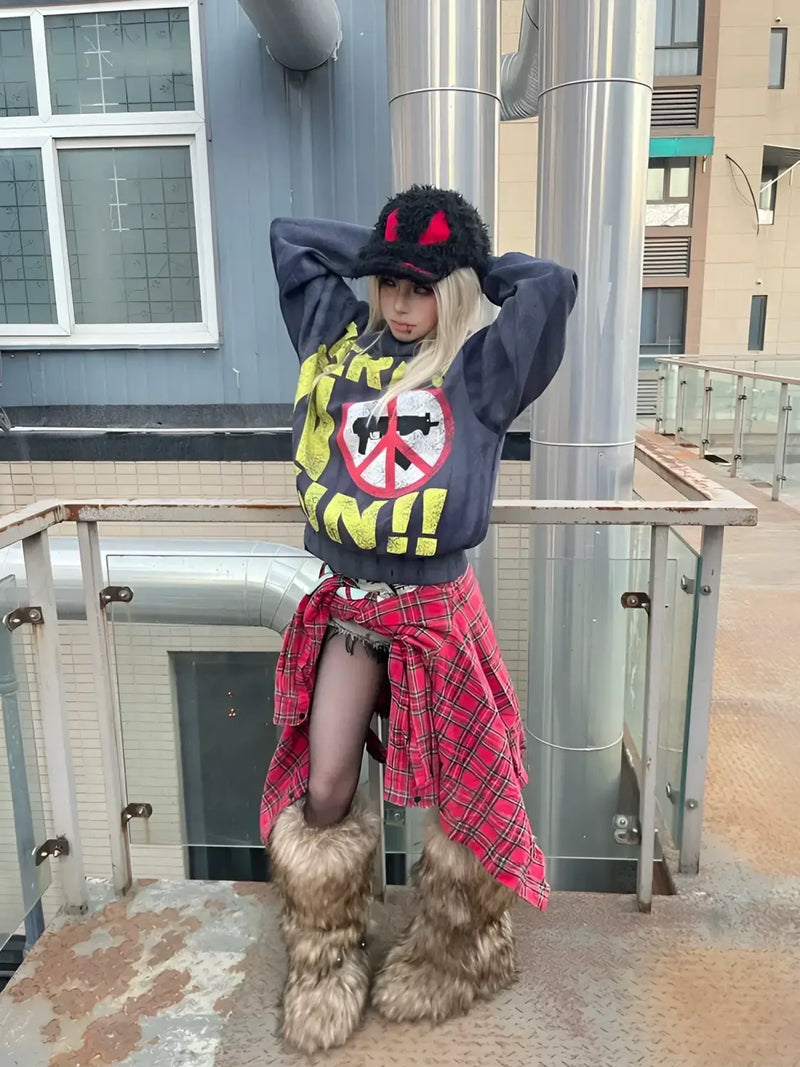

Everyone translates Harajuku winter as “pastels plus thicker tights.” That's wrong. Tokyo runs January at two degrees, Berlin at zero, and not one of the iterations from Takeshita-dōri survives the winter on a second pair of tights.
Harajuku Winter Fashion isn't the cold version of a summer aesthetic — it's a language of its own, with three layers, six sub-codes and one ironic rule: look heavy, stay light. Get that into your head and five pieces carry you through Tokyo, Berlin, Cologne and Warsaw. Stack pastel and plush without layer logic and you'll freeze yourself out within two hours.
This guide spells out what's really behind it: where Harajuku comes from, what counts in winter, how the six sub-styles (Decora, Gyaru, Lolita, Yami-Kawaii, Visual Kei, Mori-Kei) behave in the cold, which brands write the vocabulary, how the 3-layer formula works — and the six mistakes that tip your outfit over before you reach the station.
Here's the code in motion — twelve seconds, one layering logic:
Origin
Who invented Harajuku fashion — and why does it work precisely in winter?
Harajuku has been the name of a Tokyo district between Shibuya and Shinjuku since the 1980s. The fashion movement that carries the name today actually begins on a single street: Takeshita-dōri, 350 metres between Harajuku station and the Meiji shrine. From the mid-80s, teenagers walked here who styled themselves out of the Japanese school-uniform corset — on Sundays, with everything at once.
The movement only gets the name Harajuku Fashion in 1997, through the FRUiTS magazine by Shōichi Aoki. For twenty years Aoki photographed only what walked past between the station and the Meiji bridge: Lolita next to Visual Kei, Decora next to Mori-Kei, Gyaru next to a school-uniform edit. What the FRUiTS magazine made visible was not an aesthetic — it was a layer system.
In winter that system becomes mandatory. Tokyo has January lows around three degrees, plenty of wind off the bay, barely any snow. The whole Harajuku logic — layers, visible material switches, ironic contrast — works exactly in this climate. Plus-two-degree Berlin isn't far off it. Know the code and you walk both cities out of the same wardrobe.
Definition
What counts as Harajuku Winter Fashion — and what tips over instantly?
Harajuku winter is an outfit system built from four fixed components. When all four land, the outfit reads as Harajuku. When one is missing, it tips into something else — Kawaii cosplay, Y2K mall goth, Berlin techno with plush on top, or worse: into “Halloween 24 hours too late.”
3
Layers (Skin · Mid · Outer)
2
Material contrasts visible
6
Sub-styles share the code
3
Accent points maximum
These four numbers aren't decoration. They're the test. An outfit with five accent points (two bows, three pins, a charm necklace, a hair-clip cluster and a choker chain all at once) isn't Harajuku anymore — it's a costume. Three points, clearly placed, read as a statement. Eight read as panic.
Concretely, Harajuku Winter Fashion counts as:
- Visible layer logic — skin layer, statement mid, volume outer. Each layer has a different fabric, a different length, a different function. Never two knit layers stacked.
- At least one sweet break — a bow, charm, plush detail, anime print or hair clip. Even if the outfit is otherwise dark, there's a single point where the Tokyo sweetness sits.
- Platform sole — Mary-Jane, combat, thick-soled sneaker or buckle boot. Flat doesn't run, stiletto neither. The sole lifts the outfit off the pavement, the way Takeshita-dōri has since 1995.
- Visible hosiery or leg warmers — tights with a mesh pattern, knee-high socks over the trousers, leg warmers over combat boots. Between hem and shoe there has to be a layer you can see.
- Headwear or a hair statement — knit beanie, beret, cap with anime print, or several hair clips as a cluster. In winter the head becomes the biggest statement surface.
- Tartan, plaid or school-uniform edit — somewhere in the outfit. Tartan mini over tights, plaid scarf, checked trousers. That's the direct line to the school-uniform edits that set Harajuku off in the 80s.
If you're missing three of these six points, it's not Harajuku anymore — it's inspiration. And there's one rule that holds all six together:
6 sub-styles
The 6 Harajuku winter iterations — sorted by temperature
Harajuku isn't one look. It's six, overlapping at the edges on Takeshita-dōri. In winter they behave differently — some get denser (Mori-Kei), some get harder (Visual Kei), some stay almost unchanged and just compensate for the cold (Decora). Lay the 2000s FRUiTS archives side by side and you see the six cleanly separated.
Which of the six suits you depends less on your favourite anime than on your tolerance for attention. Decora and Visual Kei get stopped on the street. Mori-Kei and Classic Lolita disappear among normal winter coats until someone looks twice.
Gender split
Harajuku winter — women vs men, where the code really runs differently
The layer rule is the same. Skin-mid-outer, visible hosiery, one sweet break, platform. What differs is the distribution. Where Tokyo girls in Decora and Lolita carry the accent density high on the body (hair clips, charms at the collar, brooch), the male iteration shifts the same vocabulary outward.
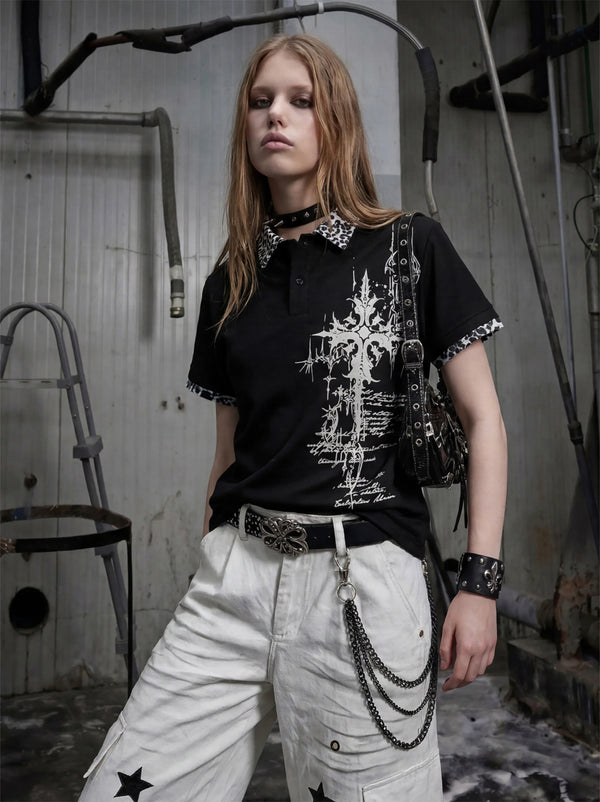
Women's version: the sweet accents sit at head, neck and wrists. Tartan mini over tights, knit cardigan with bonnet, Mary-Janes with socks. The coat can stay quiet — the accents are enough.
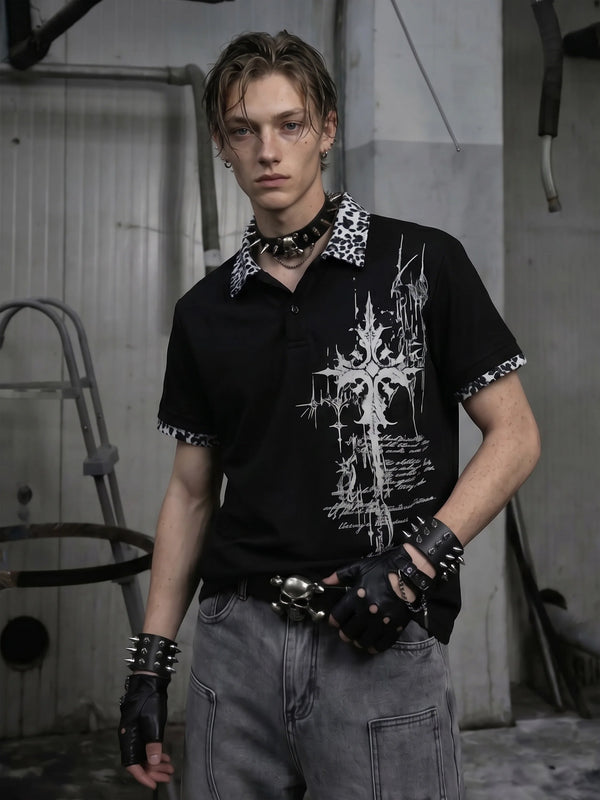
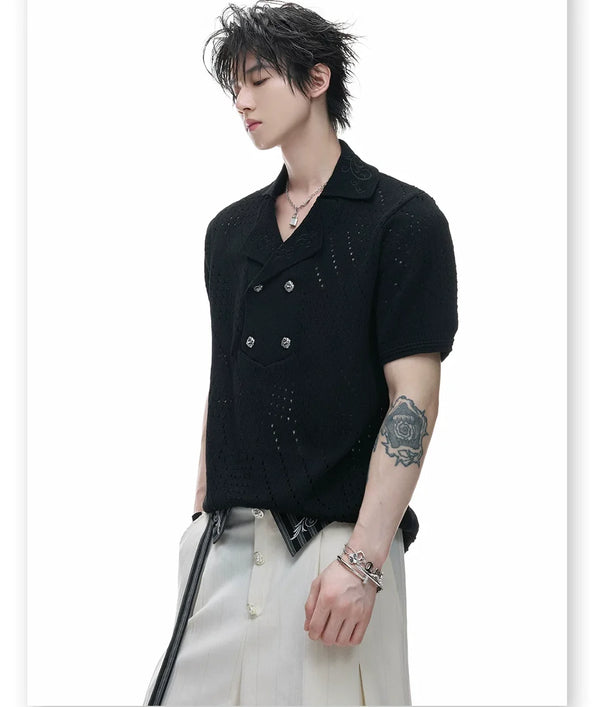
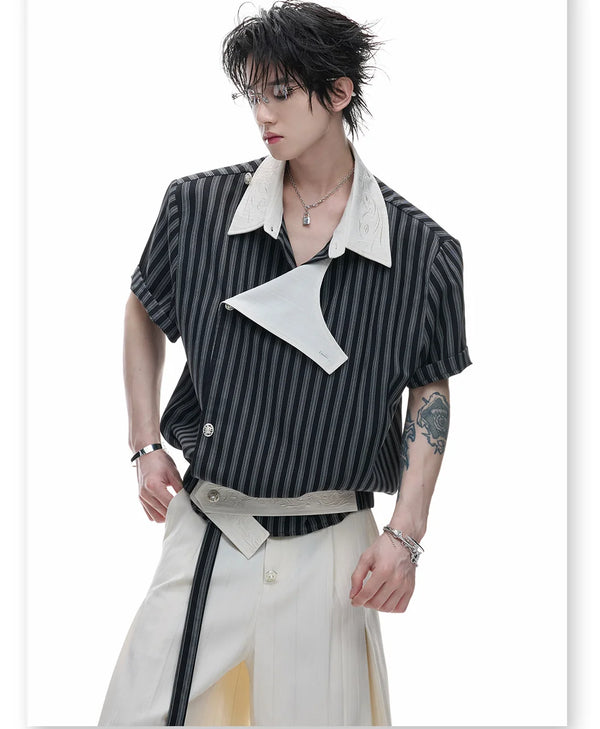
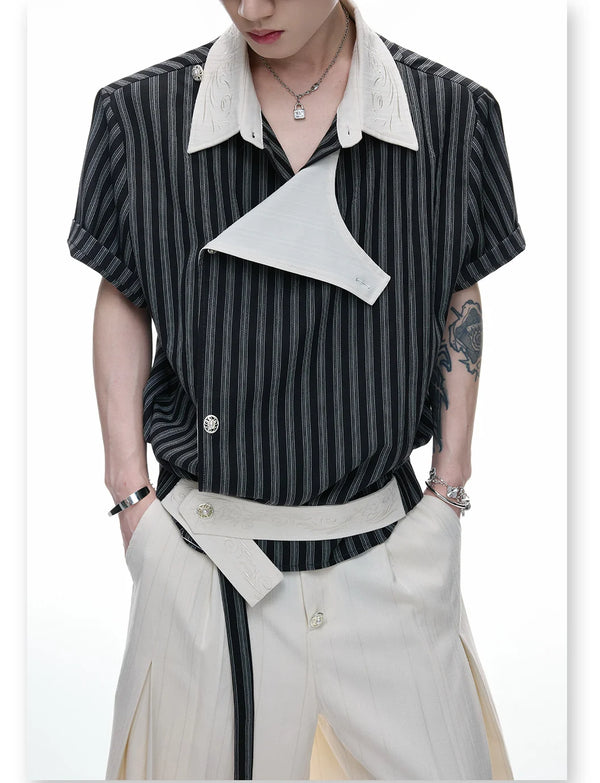
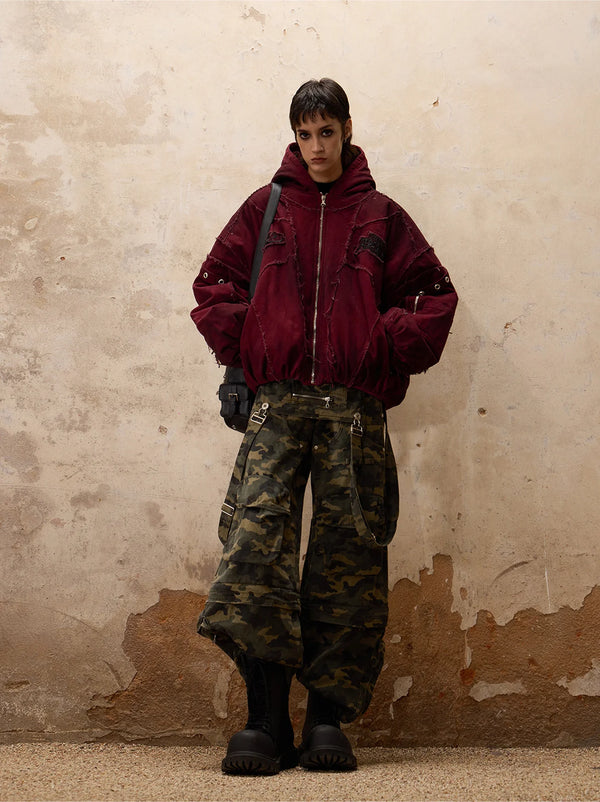
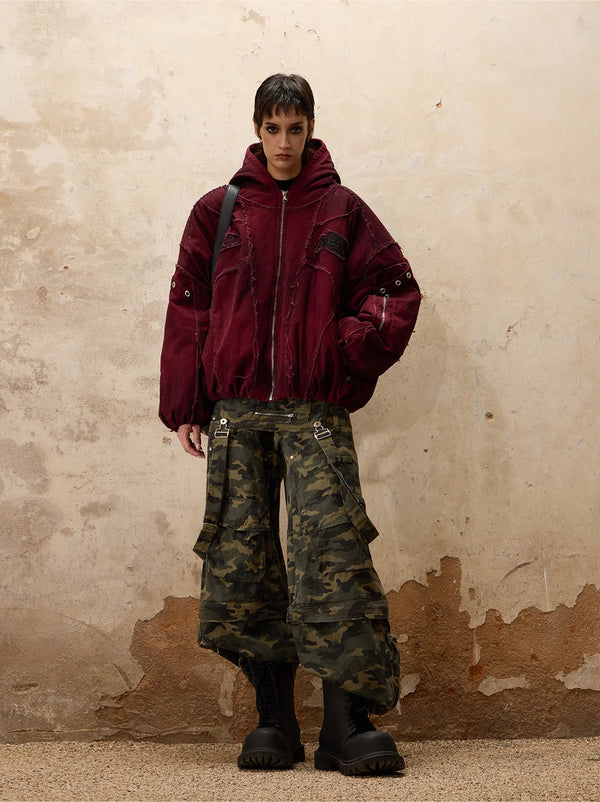
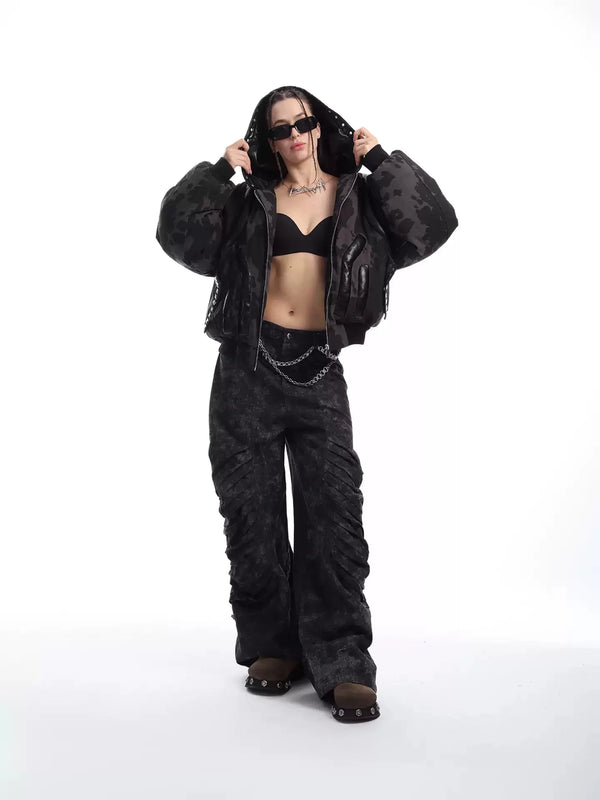
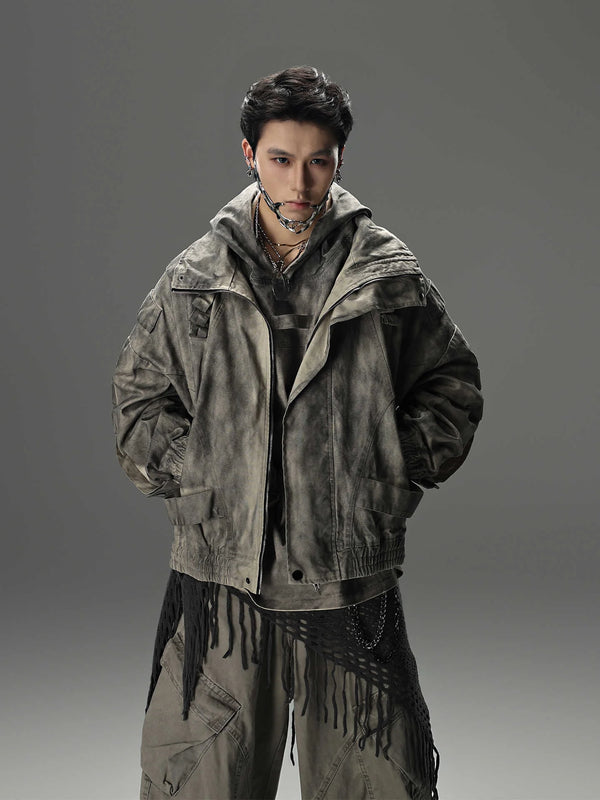
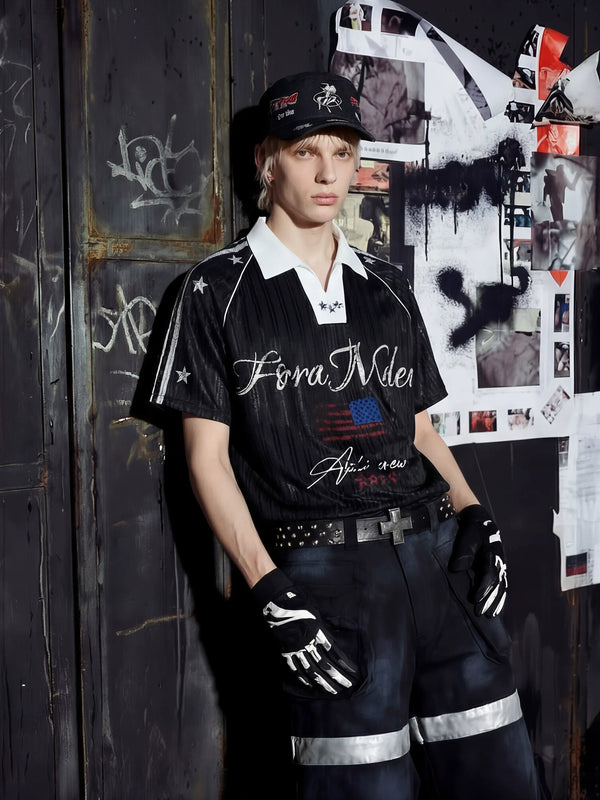
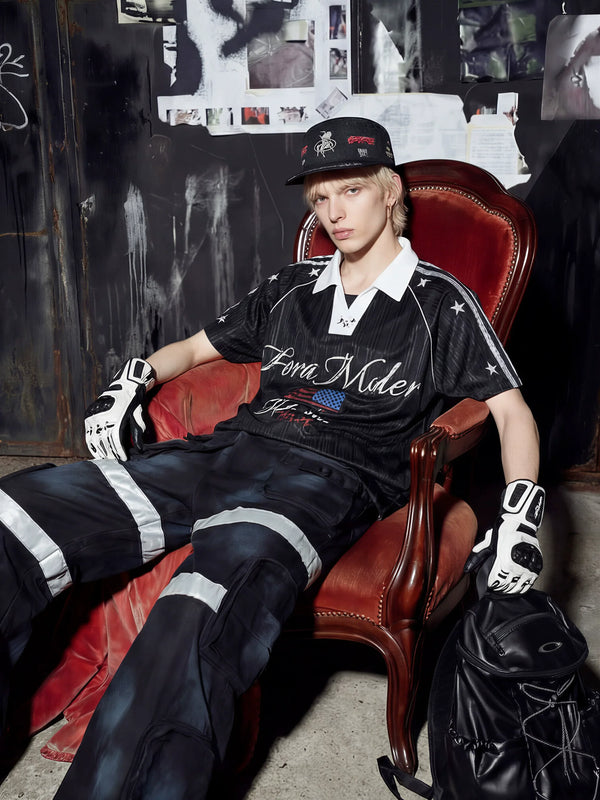
Men's version: the outfit shifts toward Visual Kei and Streetwear. Anime-print hoodie under a bomber puffer, cargo trousers with plaid detail, combat boots with leg warmers. Hair clips stay — but are mostly a cluster in the fringe, not cap-centred. The sweet break often sits in the print (Misa, Pain, Death Note, One Punch Man), not in a charm.
Both need the same three-layer logic and the same three-accent maximum. What varies is the stage — not the vocabulary.
Brands
Harajuku winter brands — the 8 labels that write the vocabulary
Harajuku has no single brand. It's a composition of eight or nine labels that have written the vocabulary on Takeshita-dōri since the 90s. Know the names and you can put together Harajuku outfits with no trip to Tokyo at all.
The brands, chronologically — the first six have stores right on Takeshita-dōri, the last two are the younger wave:
- 6%DOKIDOKI — founded 1995 by Sebastian Masuda. The Decora authority. If an outfit wears three hair clips, two plush charms and a pair of pastel glasses at once, the vocabulary is from here.
- Liz Lisa — the Sweet Lolita and Gyaru bridge. Tartan skirts, petticoat knit, bonnet hats, Mary-Janes with knit socks. In winter Sweet Lolita turns into Classic Lolita here.
- WEGO — the Japanese mall brand. Affordable, broad, mixes all six sub-styles. Start out with Harajuku and you buy your first tartan mini and your first knit cardigan here.
- Spinns — the vintage-and-edit store. School-uniform remixes, modified bombers, patchwork knit. Want FRUiTS-magazine-2003 without hunting for it on Mercari, you go in here.
- Bubbles Harajuku — Y2K crossover since 2010. Platform sneakers, knee-high boots, glitter Mary-Janes. The most direct line to Y2K Harajuku.
- Listen Flavor — the Yami-Kawaii brand. Bandage pins, anime sad-girl hoodies, ironically-sweet hospital prints. The youngest iteration in the line-up.
- Punk Cake — the DIY patchwork brand. Zip cardigans, studs on tartan, Visual Kei tendencies. Want to get harder without costuming Visual Kei, you shop here.
- Comme des Garçons — the avant-garde heritage since 1969. Rei Kawakubo's asymmetric cuts and layer logic are the template Takeshita-dōri compressed in the 90s. When a Harajuku outfit reads “grown-up,” that's CDG-adjacent.
If you want to wear Harajuku without paying designer prices, search the resale market (Mercari, Yahoo Japan, 2nd Street) for these brands, or DTC labels that translate the vocabulary competently — anime-print sweaters, tartan cargo, platform boots, plush caps.
Category · Outerwear
Harajuku winter coats & puffers — the outer-layer question
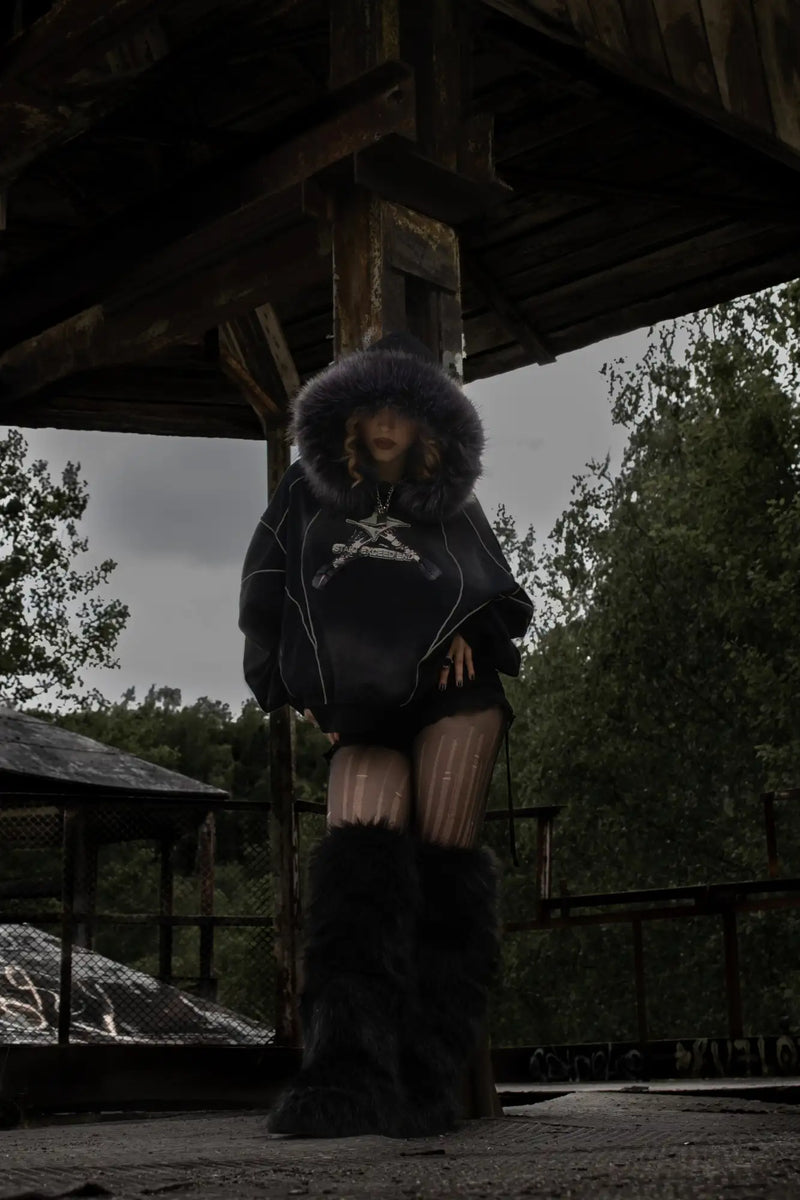
In winter Harajuku the coat is the biggest visible surface and the last iteration decision. This is where it's decided which of the six sub-codes your outfit selects: Decora plush, Gyaru faux-fur, Lolita caped wool, Yami anime puffer, Visual Kei leather, or Mori knit cape.
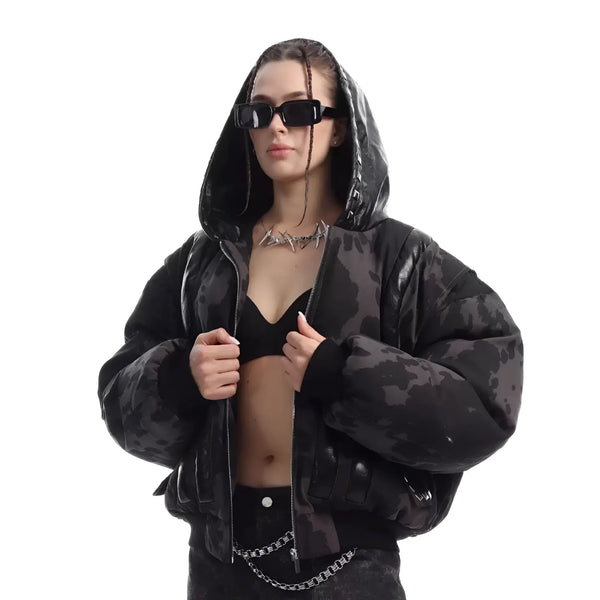
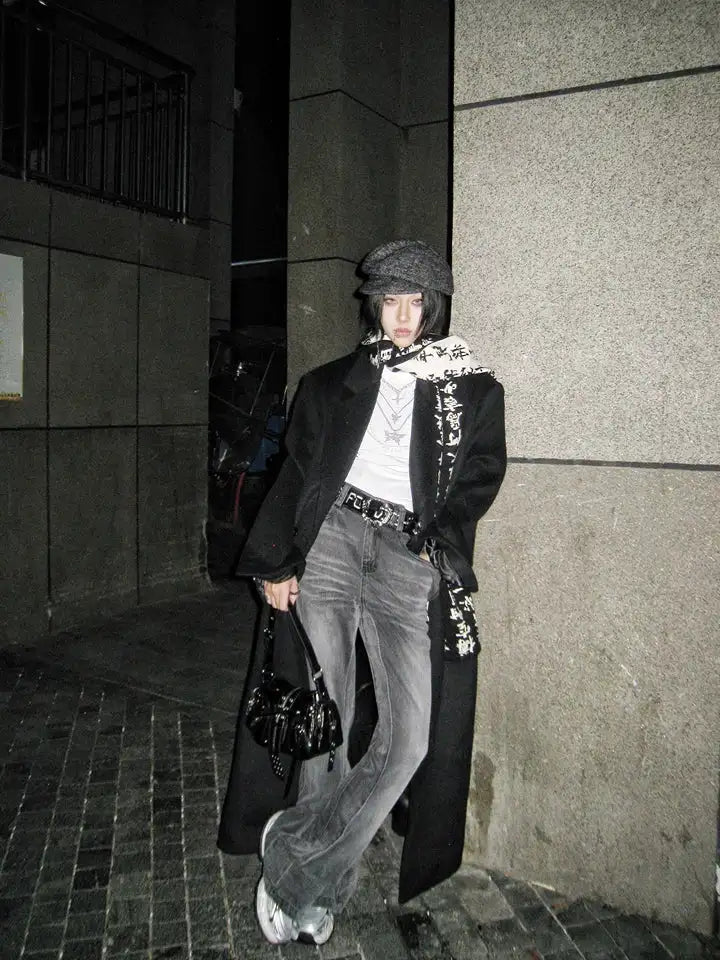
Three outer types work in winter Harajuku: printed puffer (anime print, cartoon print, kawaii patch), faux-fur cape (Decora and Gyaru), and the long wool coat with tartan scarf (Lolita and Mori-Kei). What doesn't work: a minimalist cashmere coat with no break — that reads as “Stockholm” and not as Tokyo.
If you don't have a printed winter puffer yet, that's the first move. Everything else in the outfit can stay quiet — the print does the statement work.
Category · Bottoms
Harajuku trousers in winter — tartan, cargo, pleated
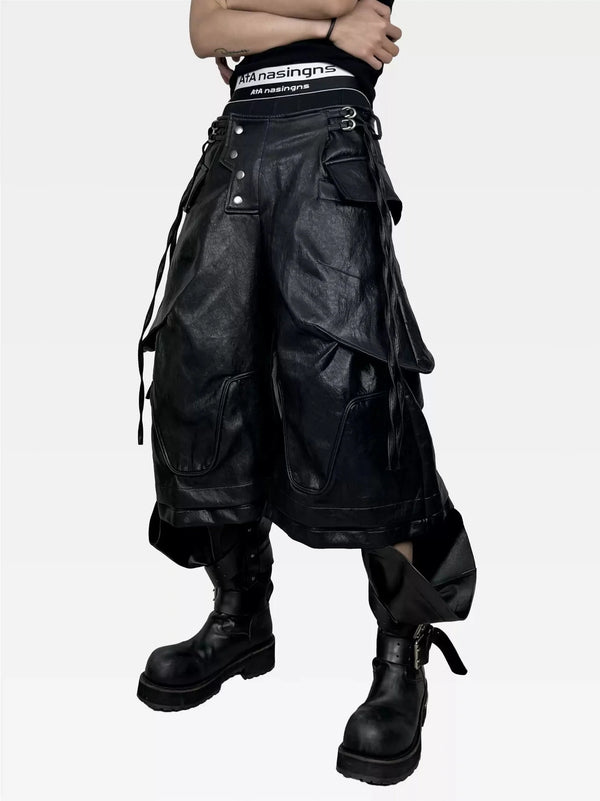
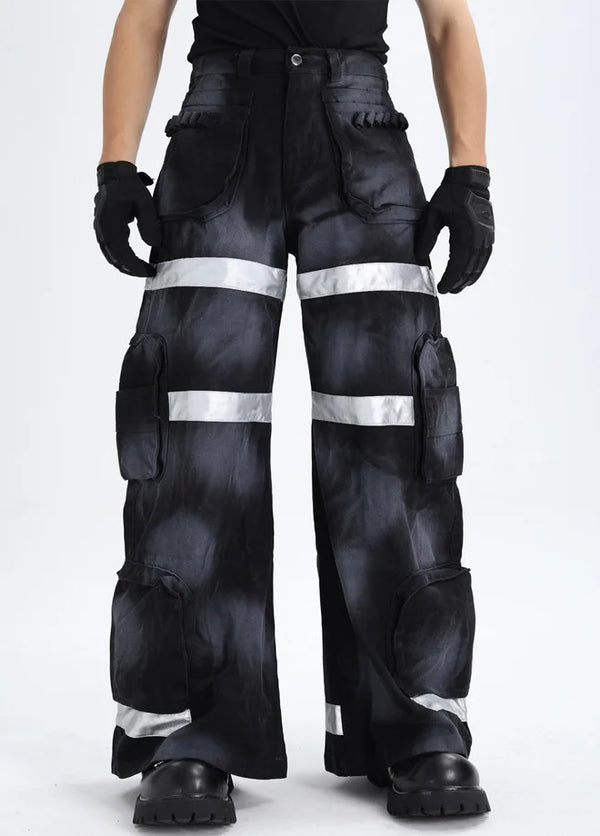
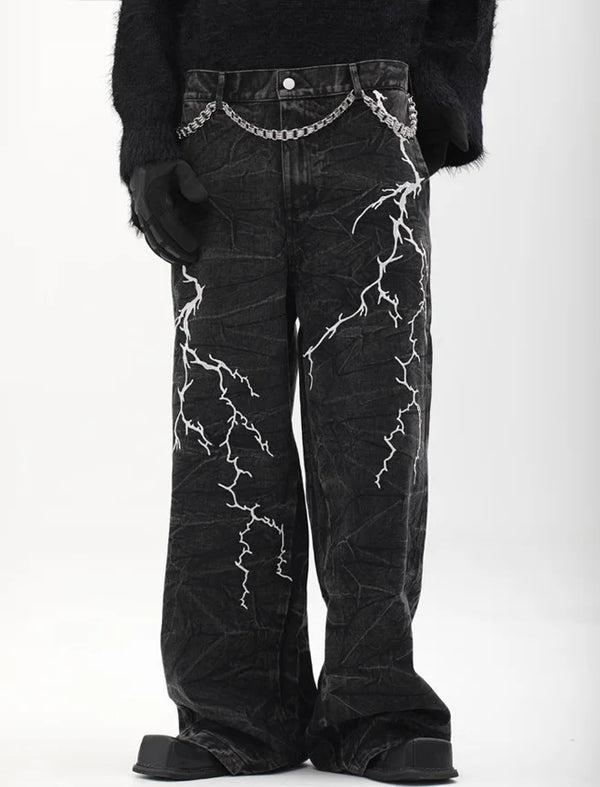
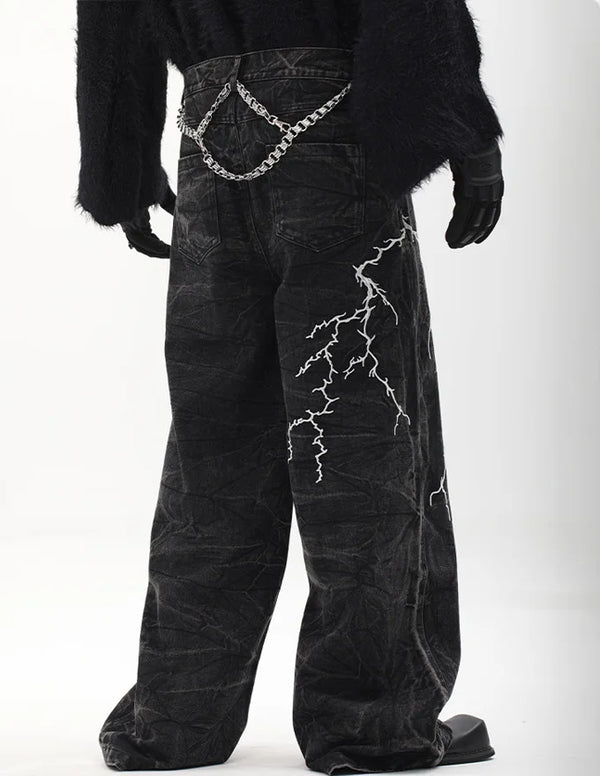
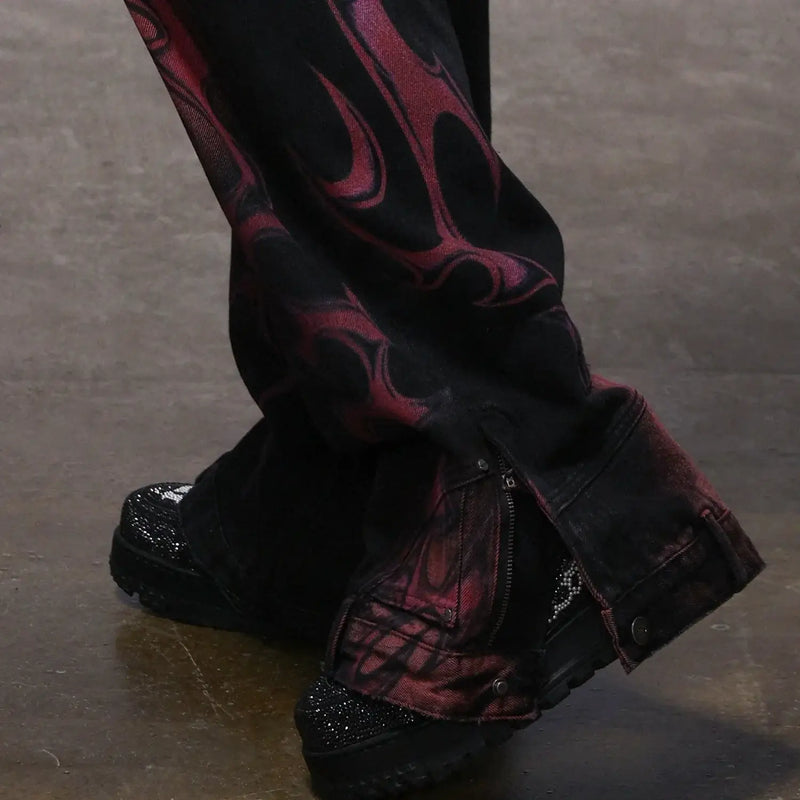
Skinny jeans have been out of Harajuku since the late 2000s. What Takeshita-dōri has worn since 2015 is either wide (wide-leg denim, cargo, pleated skirt over tights) or maximally contrasted (tartan mini plus knee-high socks plus platform boot). The new fit rule: layer volume on top, a clear line or clear pattern below.
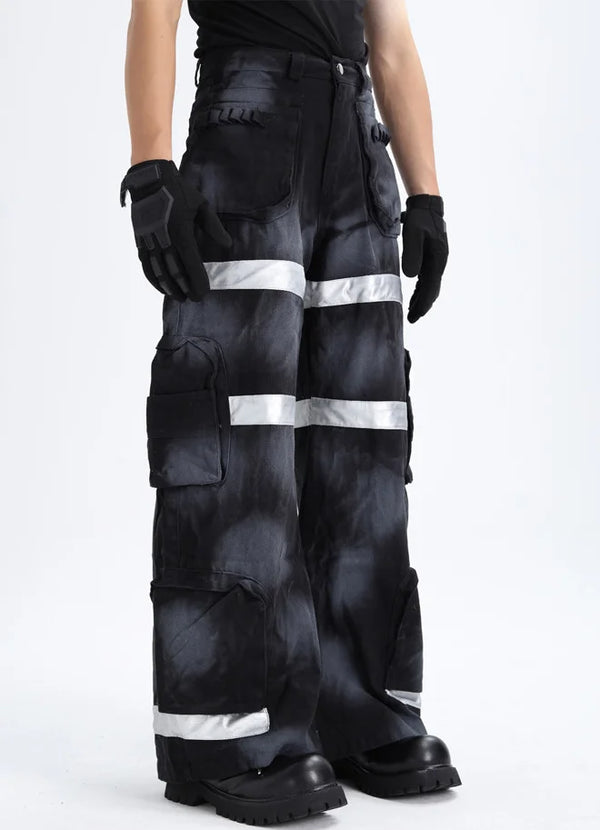
Working Harajuku winter bottoms have visible texture. Anime-print denim, checked school skirt, cargo with patches, pleated skirt with tights underneath. Avoid anything in flat black with no detail — that reads as Berlin techno, not as Harajuku.
If you want to build trousers that fit five of the six sub-styles, take wide-leg anime-print denim. That's the common denominator — Decora through Visual Kei.
Category · Mid-layer
Harajuku tops & sweaters — the statement mid-layer
The mid-layer is the most important layer in winter Harajuku. It's what you take off at the first café stop, what stays visible under the coat, and what carries the frame in the FRUiTS photo. This is where the anime print, the patch cluster, the ironic graphic sits.
The rule: one statement per outfit, not two. If your sweater carries a Death Note print, your coat carries none. If your puffer has a One Punch Man patch, your sweater is plain or gradient. Two loud mid-layer statements on top of each other read as cosplay, not as an outfit.
Want to test the anime-print logic, take a single statement sweater (Death Note, Berserk, Pain, One Punch Man) under a plain puffer or under a leather jacket. That's the easiest way in toward Yami-Kawaii or Visual Kei — no risk if it doesn't fit.
Category · Accessories & layer pieces
Harajuku accessories in winter — the three statement points
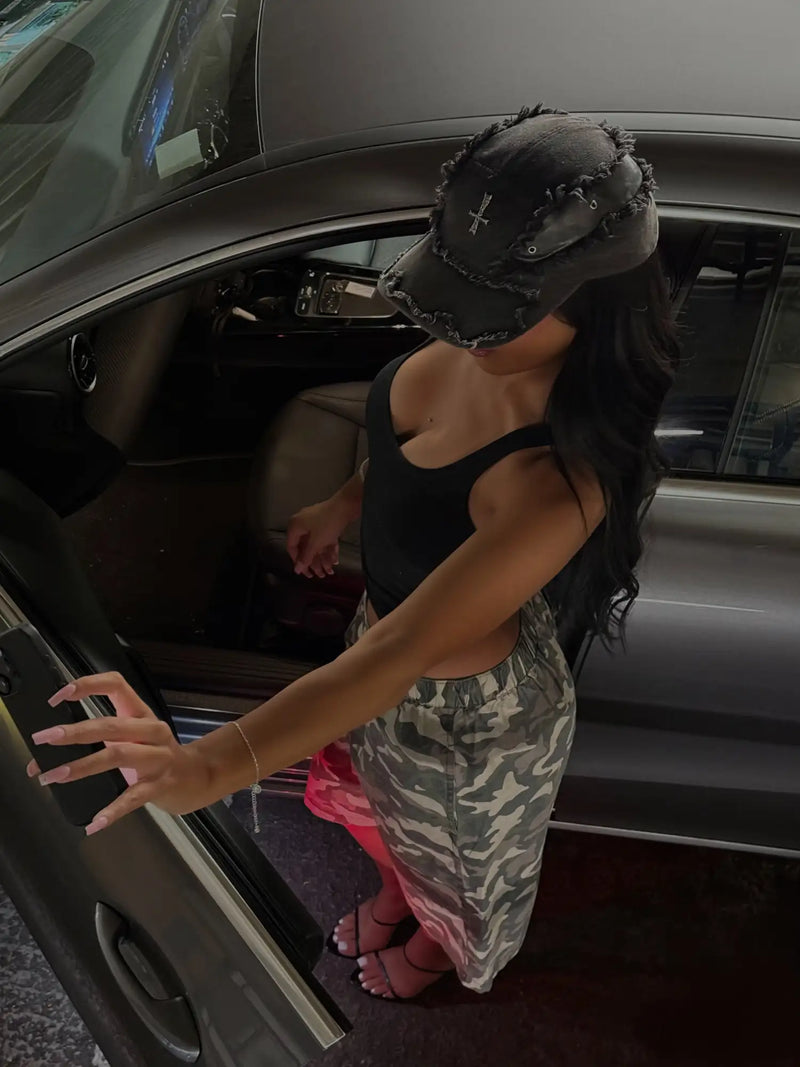
In winter Harajuku, accessories are where the outfit tips most visibly — one way or the other. Cap with anime print, plush beanie, tartan scarf, leg warmers, charm necklace. Three of them at once is the maximum. Four tip it into Halloween tier.
What works: cap or beret with an anime patch (Misa, Devilman, Berserk, Yugioh), a knit-fleece jacket as an inner layer under the puffer, leg warmers over combat boots, knee-high socks over the trousers, a single charm necklace. Never charm necklace plus choker plus hair-clip cluster — that's Decora maximalism in the wrong place.
Wear just a cap and a fleece inner layer and you've already built half the outfit. In winter Harajuku the inner layer does the warmth work and the accessories do the statement share — both at once, without one stealing the stage.
Styling formula
The 3-layer formula — how Tokyo handles 2 °C
A winter Harajuku outfit works on a single logic: three layers, each with its own job, none doing the same job twice. Skin layer makes warmth. Mid-layer makes the statement. Outer layer makes volume and wind protection. Do all three with the same function — three knit pullovers on top of each other — and you freeze, look puffed up, and read as “first winter trip to Berlin.”
“Three layers, three functions, three sub-styles — Harajuku in winter is a language, not a stack.”
In practice that means: thin skin layer (mesh top, thermal tee, long body), statement mid over it (anime sweater, gradient knit, tartan cardigan), volume outer over that (puffer, faux-fur cape, long wool coat). Plus the visible hosiery between hem and shoe. Plus exactly three accessory points. We've put the full layer breakdown with photo examples in its own article:
Harajuku doesn't stand alone — it overlaps at several edges with other Tokyo and Seoul aesthetics. Y2K Harajuku shares the tartan logic, Korean Streetwear shares the layering principle, Japanese Streetwear shares the brand list, Gothic shares the Visual Kei iteration. Get Harajuku and you can read these neighbour codes and mix them deliberately, without slipping into cosplay.
Here are the five most important neighbours — each with its own guide, in case you want to go deeper:
Colours
Harajuku winter colour palette — no “all pastel” myth
The biggest misunderstanding: that Harajuku winter stays pastel-pink-with-lavender-accent. That holds for Sweet Lolita and for one Decora iteration, but not for the other four. In winter Harajuku turns into a broader palette — and that's exactly what makes the outfit serious instead of kitschy.
The winter distribution: Decora stays pastel (pink, mint, lavender, cream). Gyaru tips into black with one bright accent (tartan mini, white socks). Lolita goes burgundy, forest green, muted navy. Yami-Kawaii plays hospital white with anime-print black. Visual Kei goes fully dark with one red hardware accent. Mori-Kei sits in earth tones — camel, olive, cream, a single rust red.
The layering principle in motion — one iteration in twelve seconds:
What does not work
The 6 most common Harajuku winter mistakes — what you must NOT do
Harajuku winter tips over reliably at six points, no matter how much each individual piece cost. If you avoid only one thing, make it mistake number one.
Action
How to start in Harajuku Winter Fashion — the first 4 pieces
You don't need twenty Tokyo pieces to wear Harajuku in winter. You need four that will be in 80 percent of your outfits. Everything else builds around them.
In order: a printed puffer or anime-print coat (your biggest investment — lasts three winters if you don't buy cheap). An anime-print sweater or gradient knit as the mid-layer. An anime-print or tartan trouser with a wide leg. A statement cap with an anime patch. Plus leg warmers or knee-high socks as an optional fifth — but only once the four are sorted.
Outfits for real
Harajuku winter outfits for real — how it looks on the street
Before you build your own, look at how others wear it. The six sub-styles from above look different in the feed than in FRUiTS archive photos: tighter, dirtier, less perfectly put together — and that's exactly why they work in Berlin or Cologne too.
This is the fastest way to check whether Harajuku even sits on your body type and in your city — before you spend money.
To close
Harajuku winter is a language — not a trend, not a costume
If you remember one thing from this guide, make it this: Harajuku winter doesn't work through pieces, but through rules. Get the rules and you build a hundred outfits from fifteen pieces. Buy only pieces and you've got a full wardrobe without a single outfit that lands.
The whole logic of this guide reduces to one sentence:
The rules have been stable since the mid-90s and will stay that way — as long as Takeshita-dōri is full on Sundays. But you don't have to wait until you know them all by heart. Start with the one sub-style that suits you best. What you don't know, you learn by wearing.
And that's the point: Harajuku reads in theory like a corset of rules, but in practice it doesn't feel that way. Once you've got the code, every further winter outfit is a variation on the same four or five components — not a new invention.
FAQ
Frequently asked questions about Harajuku Winter Fashion
The questions we often get by DM and email — short, clear, no detours.
What's the difference between Harajuku winter and Korean Streetwear winter?
Does Harajuku winter work in Berlin at minus 5 °C too?
Where can you buy Harajuku clothes without flying to Tokyo?
What does “Decora” mean — and is it the same as Kawaii?
What does “Harajuku outfit Dress to Impress” have to do with real Harajuku?
Does Harajuku work for men too — or is it a women's style?
Which shoes go with Harajuku Winter Fashion?
What do you think?
Tell us on @fuga_studios
About the author
Philipp Fuge — Founder · Berlin
Founder of Fūga Studios. Writes the journal himself. Berlin · Shanghai · Tokyo · Poznań — four cities, one logic.