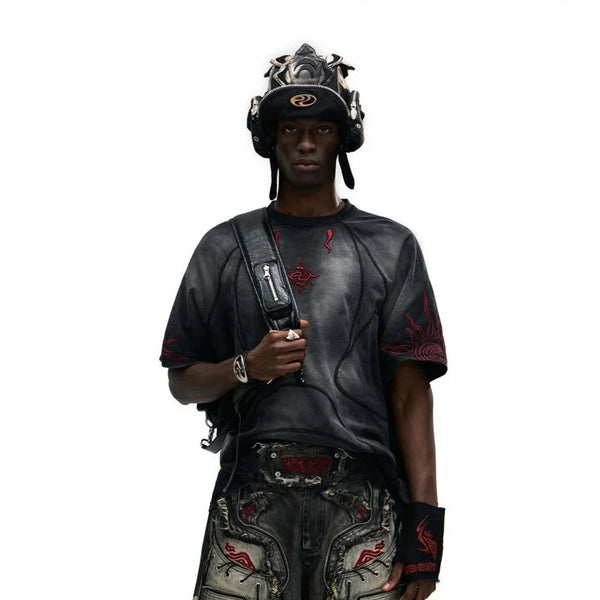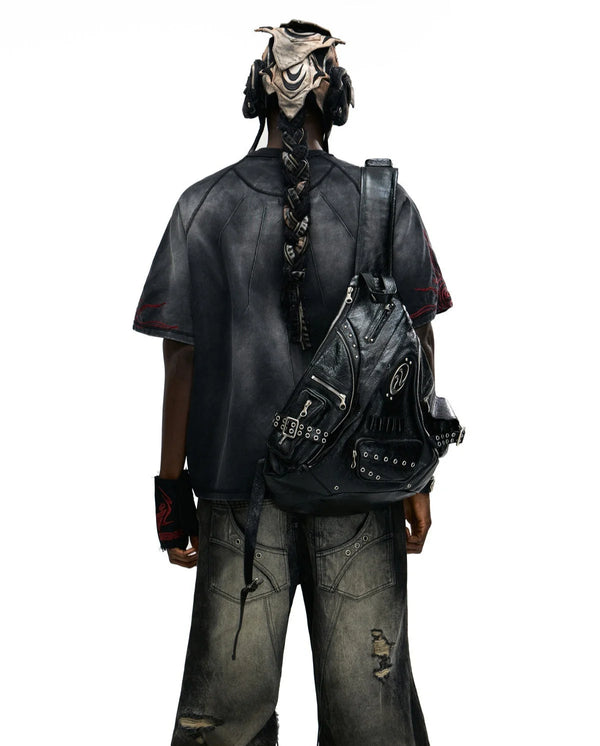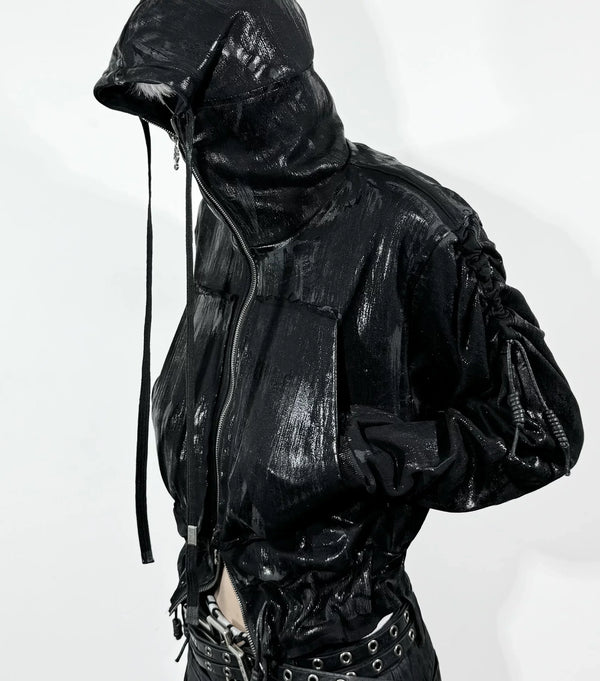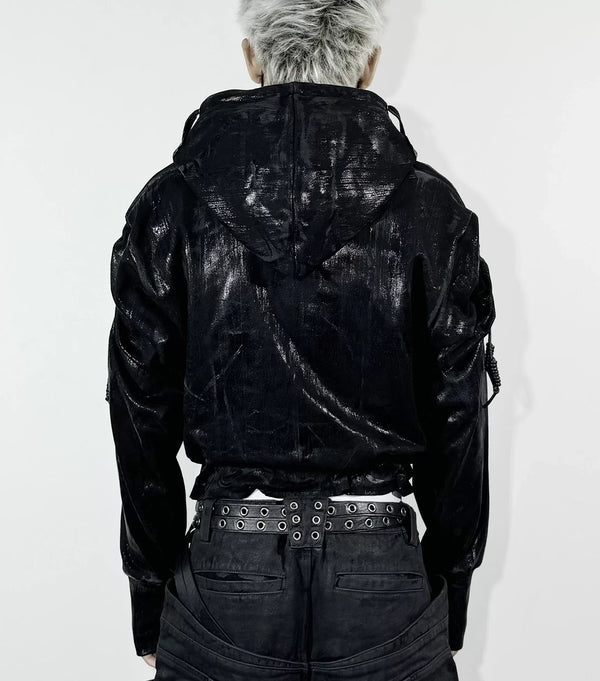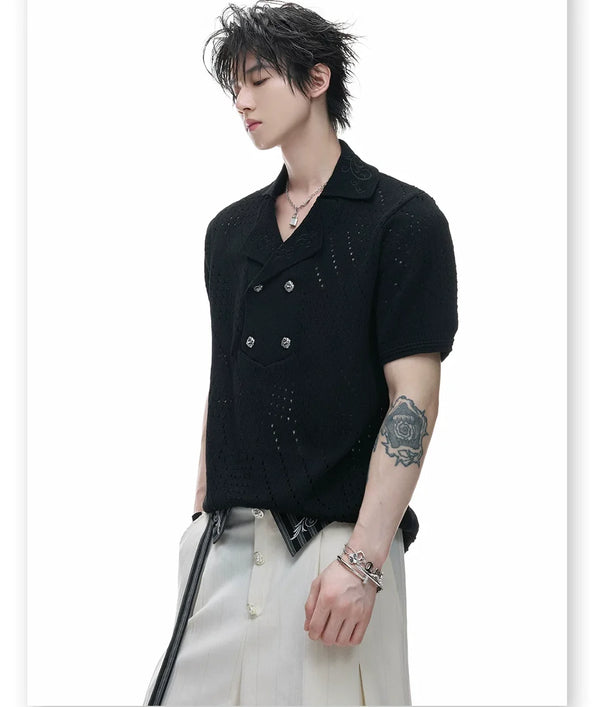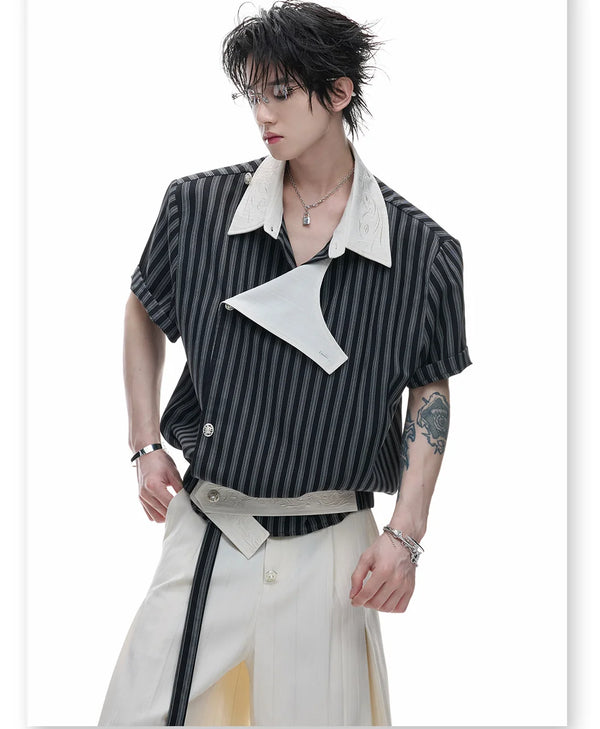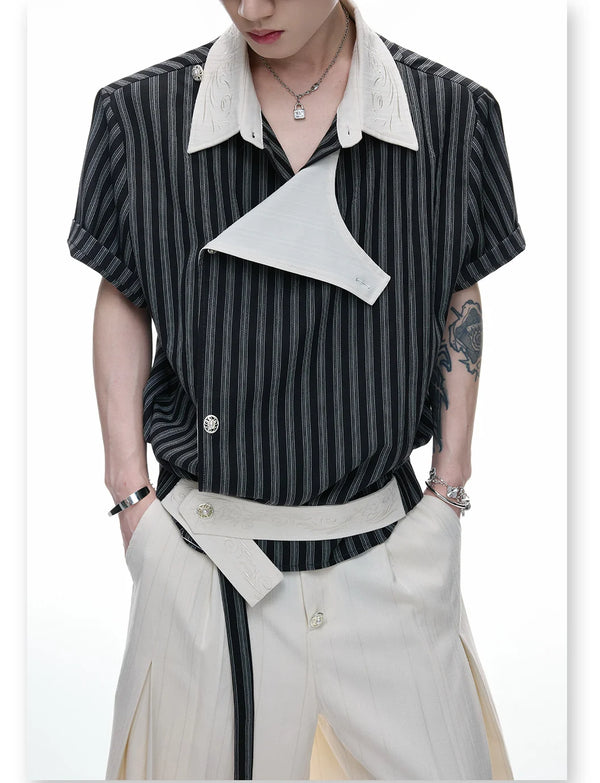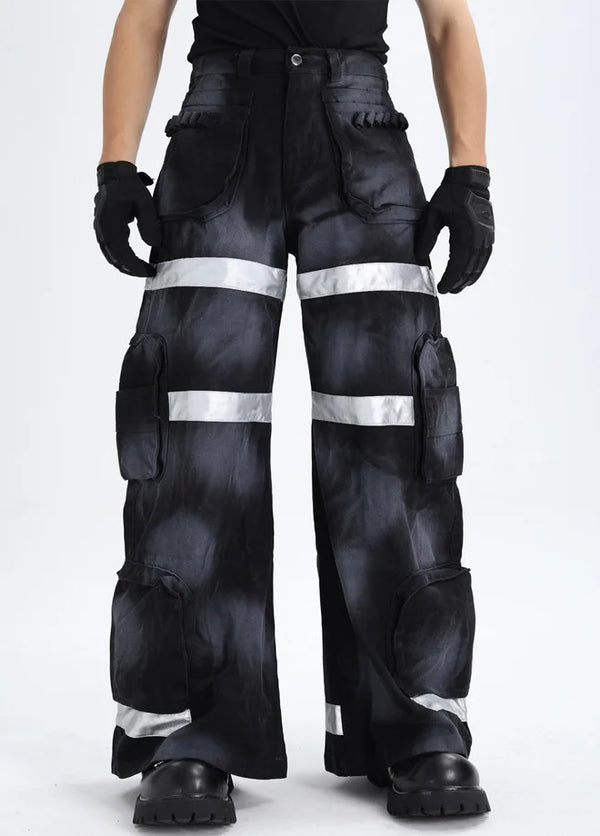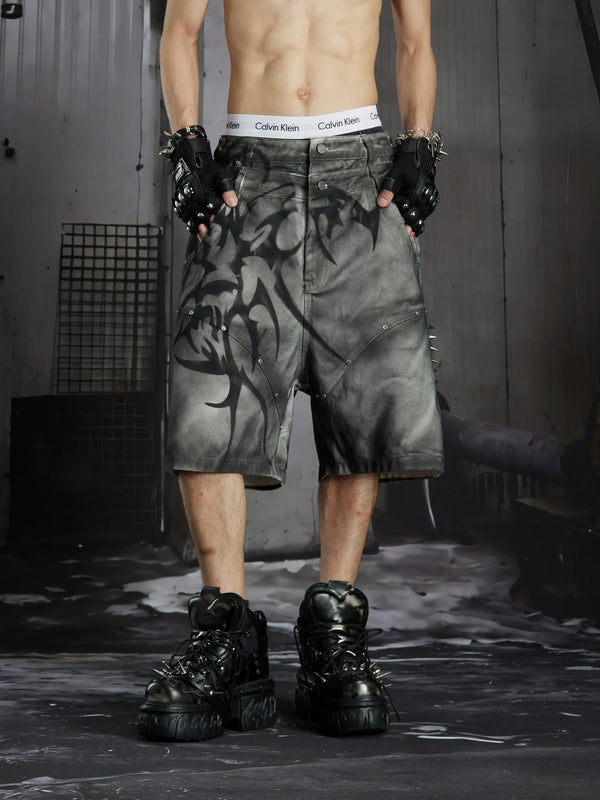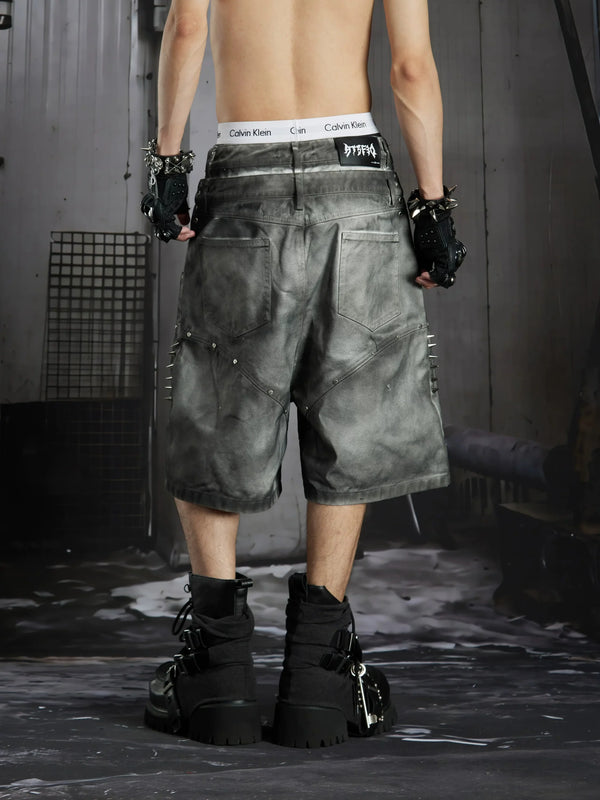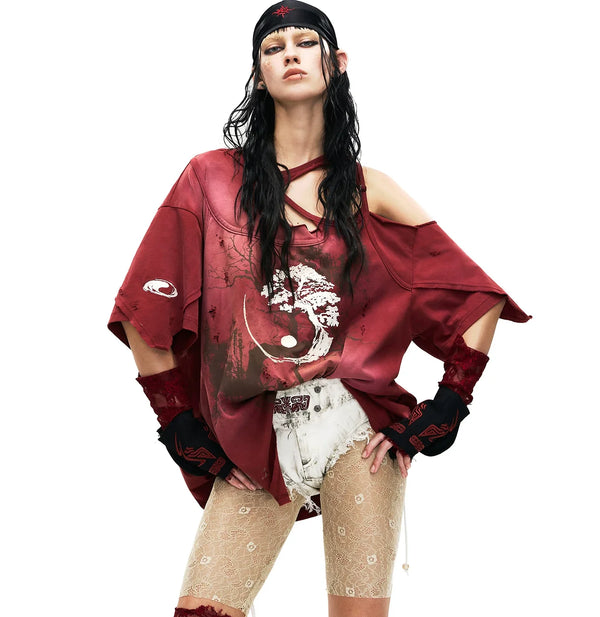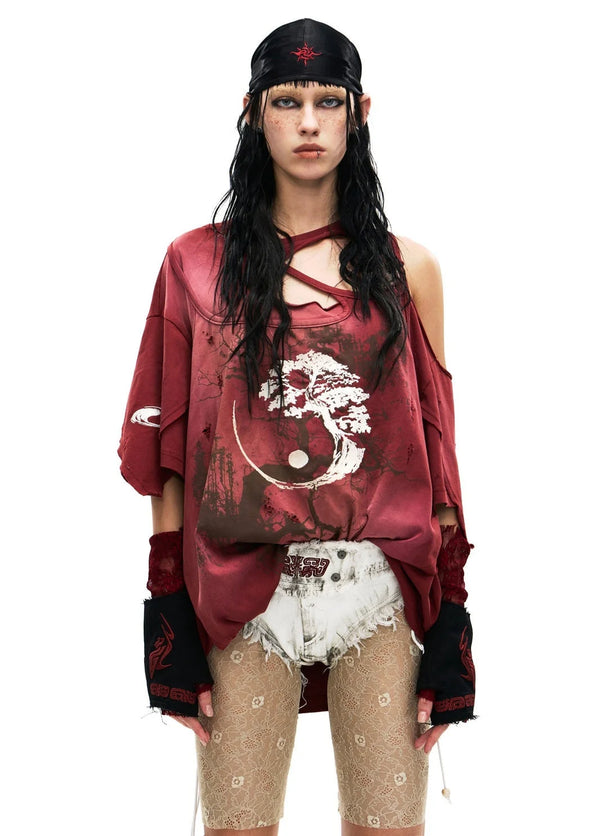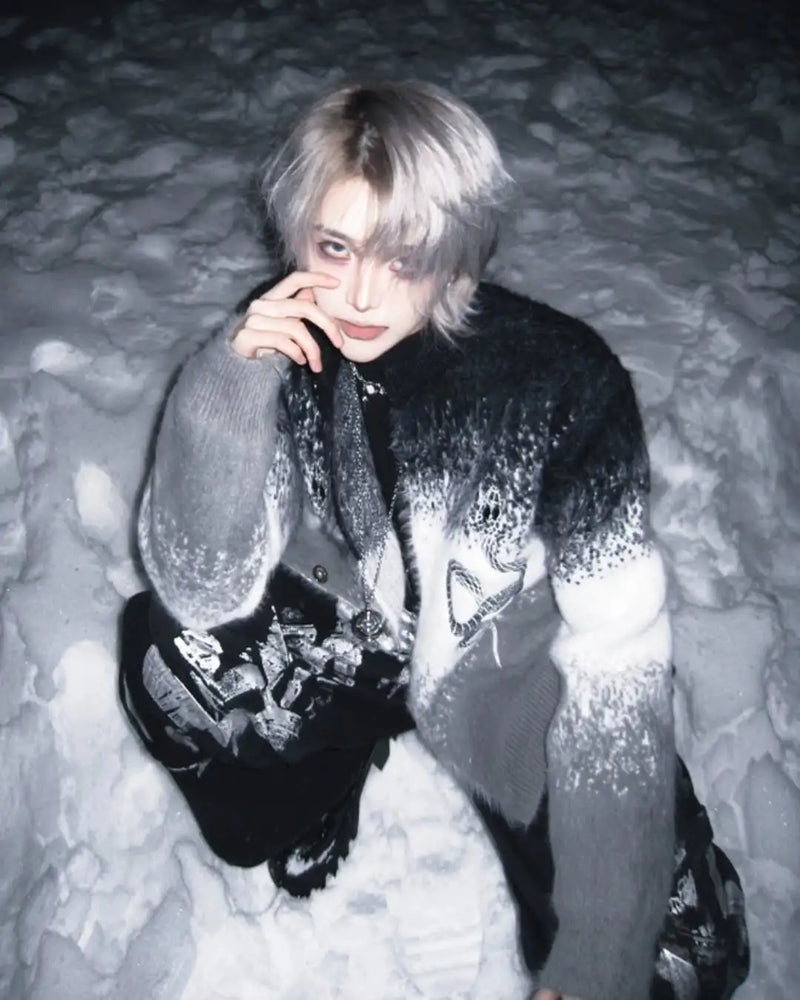
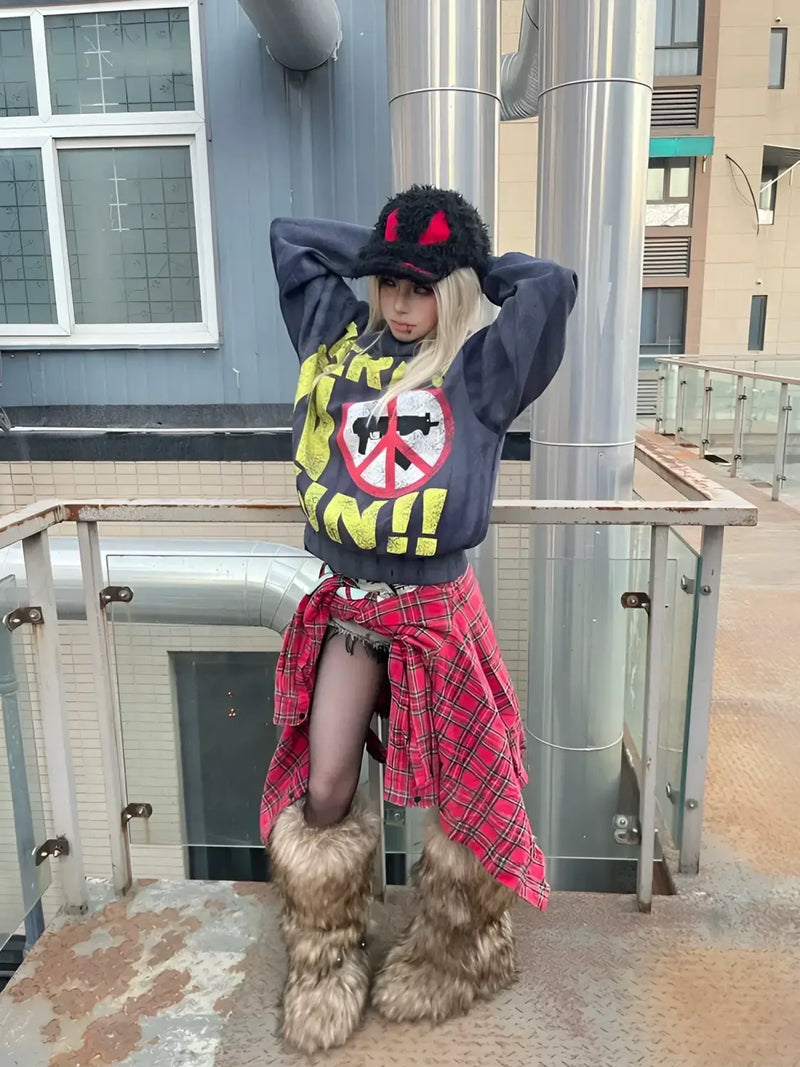

It is Sunday afternoon at the Jingu Bridge in Tokyo. Between the station and the park, teenagers stand in self-sewn dresses, platform shoes and a dozen hair clips at once. None of them asks whether it matches. That is exactly the point. Whoever hears the term Harajuku for the first time thinks of a chaos of colors. Whoever looks longer recognizes a system behind it.
The Harajuku Fashion Meaning is quickly explained: Harajuku is not a single style but an umbrella term for the creative street fashion that emerged in the Tokyo district of the same name. The name stands for self-expression without rules, for mixing kawaii, punk, vintage and future in a single look. A deeper breakdown is offered by our big guide to Japanese Harajuku streetwear.
Word origin
What Harajuku Fashion literally means
Harajuku (原宿) is the name of a district in Tokyo's Shibuya ward. Literally it can be derived from two characters that stand for meadow and lodging, a reference to an old post station on a travel route. For centuries the name had nothing to do with fashion. That changed only after the Second World War.
So the question of why the style is called that has a simple answer: it is named after the place where it became visible. Around Harajuku Station and Takeshita Street, young people who experimented with clothing gathered. The place became the label. When someone says today that an outfit is Harajuku, they mean an attitude born there: clothing as a stage for one's own person.
That is the first mistake many make. They look for the one Harajuku piece, the one cut, the one brand. It does not exist. There is only a street that became an idea.
This geographic root also explains why Harajuku could never be fully commercialized. A place cannot be patented, an attitude cannot be mass-produced. Brands have repeatedly tried to sell the look as a finished package, yet the core stayed with the people who wear it on the street. Whoever looks for the meaning of Harajuku therefore finds it not on the shelf but in the creative handling of what one already owns.
1980er
Rise as a fashion district
6+
distinct substyles
1 km²
Area of origin in Tokyo
Umbrella term
Why Harajuku is not a single style
Whoever wants to understand Harajuku has to think of the term as a roof under which many different rooms lie. A Fairy Kei outfit in pastel and a Visual Kei look in black with studs look completely different. Both are Harajuku. What connects them is not the appearance but the permission to mix everything that normally does not belong together.
This is exactly why search engines and guides often fail to deliver a clean definition. They treat Harajuku like a category with fixed features. In truth it is more of a method. The rule is: there is no rule except that the result has to look like you and not like a catalog.
For everyday life that is good news. You can hardly get Harajuku wrong as long as the combination happens deliberately. There is no exam, no uniform and no gatekeepers who dictate when a look really counts. That deters some people, because clear rules give security. For everyone else, this very freedom is the reason Harajuku still attracts to this day.
Origin
How Harajuku Fashion emerged on the street
The engine behind Harajuku was never the industry but the street. In the 1980s and 1990s the zone around Takeshita Street was closed to cars every Sunday. Teenagers used the free asphalt as a runway and meeting point. They showed looks they had assembled or sewn themselves, often as a counter-design to the strict uniform culture in school and work.
A magazine called FRUiTS documented this scene from the mid-nineties with honest street photos. No studio, no model, only real people in front of the camera. These images carried Harajuku around the world and turned a local phenomenon into a global reference point. To this day Western brands and pop stars quote this aesthetic, mostly without naming the origin.
It is important to understand that this movement began without the internet. There were no feeds, no hashtags, only the physical meeting point and word of mouth. Visibility meant actually going there and being seen. This directness shapes the style to this day, even though it has long since traveled across screens instead of asphalt.
Harajuku Style in motion
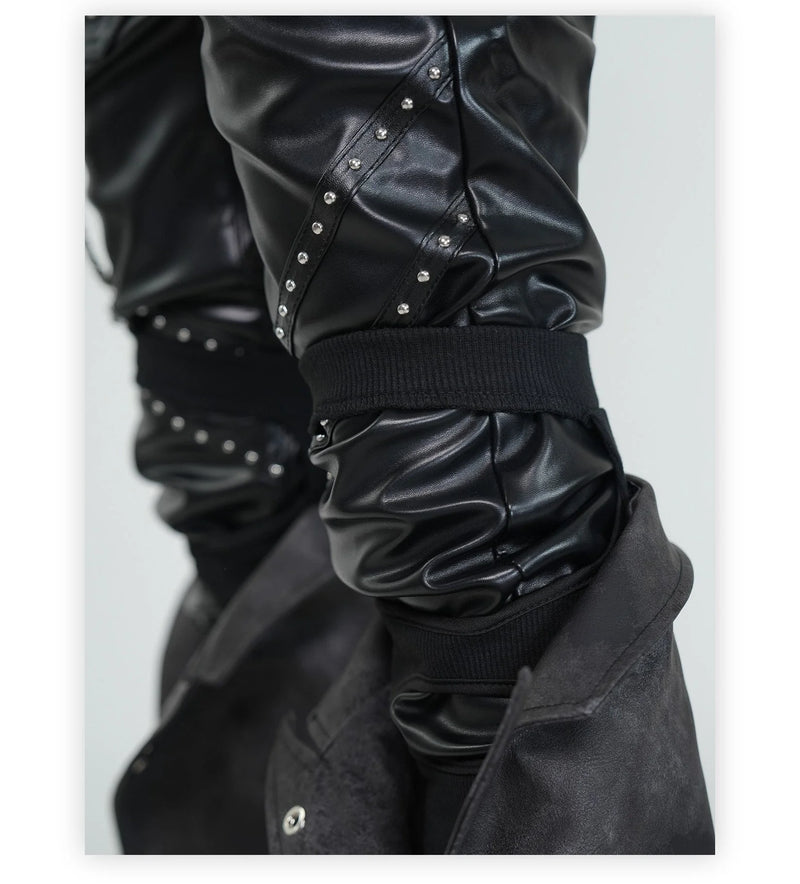
@fugastudios Silver demons walk among us. Metallic pants eating up the competition.
Follow Fūga on TikTok for more style inspiration.
The core of this story matters: Harajuku was made from below, not decreed from above. This origin explains why the look is so hard to force into a drawer and why it still counts as a symbol of individuality today.
Map
The best-known Harajuku substyles at a glance
Instead of a single look, under the Harajuku umbrella you find a series of clearly distinguishable substyles. They have their own color worlds, their own icons and their own rules. Whoever wants to grasp the meaning of Harajuku should know this family, because it shows the whole range between cute and dark.
Principle
Kawaii, contrast and chaos: the aesthetic behind it
If such different substyles are all Harajuku, there has to be a common denominator. It is three principles that carry almost every look, whether it is kept in pastel or in black. They are the actual core of meaning behind the term.
- Kawaii as a language. Cuteness is not a children's topic in Japan but a serious aesthetic ideal that shapes clothing, writing and behavior.
- Contrast as an engine. Sweet meets hard, expensive meets cheap, old meets new. The friction between the pieces creates the tension.
- Layering as a signature. Several layers, pattern over pattern, accessory on accessory. The look grows instead of being reduced.
These three principles explain why a Harajuku outfit rarely looks minimalist. It is not about the one perfect piece but about the sum of many decisions that together form a statement. Reduction is the exception, not the standard.
A common misunderstanding is that kawaii is equated with childish. In Harajuku, cuteness is a deliberate stylistic device that combines just as well with hardness. A plush charm on a studded jacket is not a break but a program. The tension between the two poles is the actual appeal and the reason the look never seems arbitrary.
Base
Harajuku basics: tops that carry the look
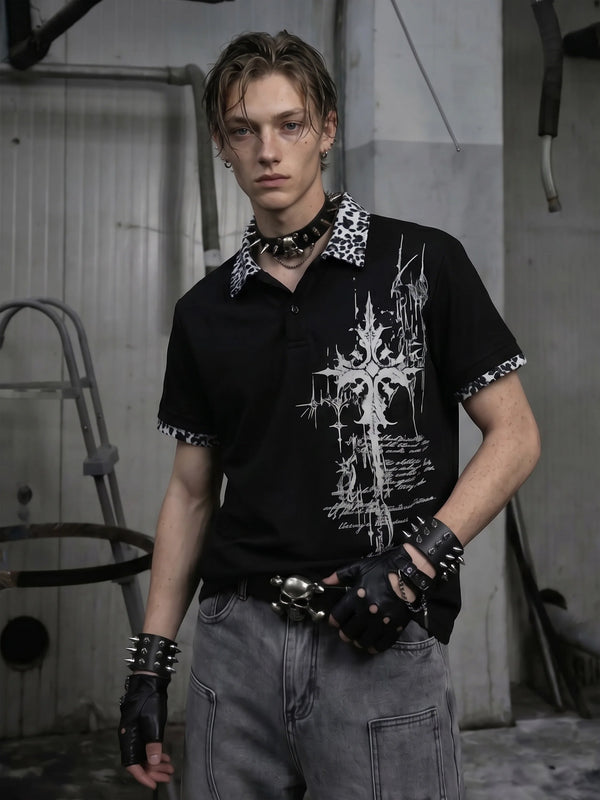
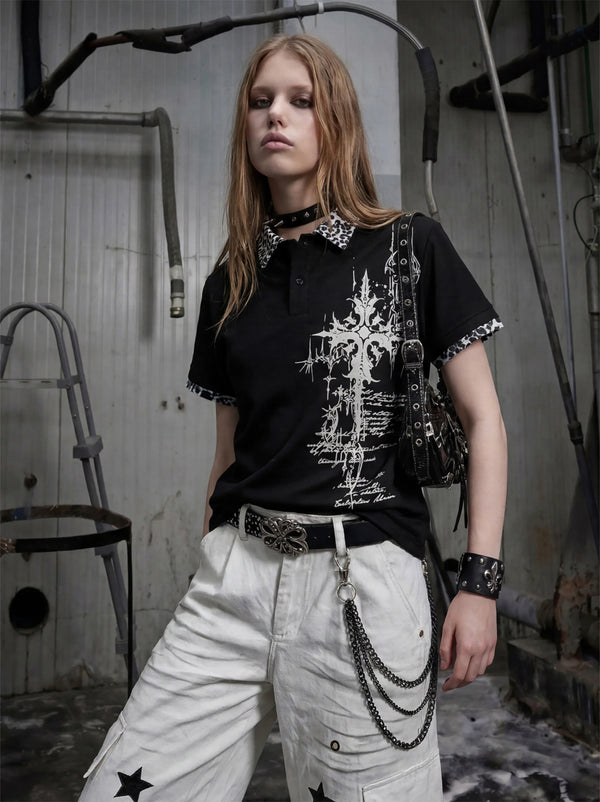
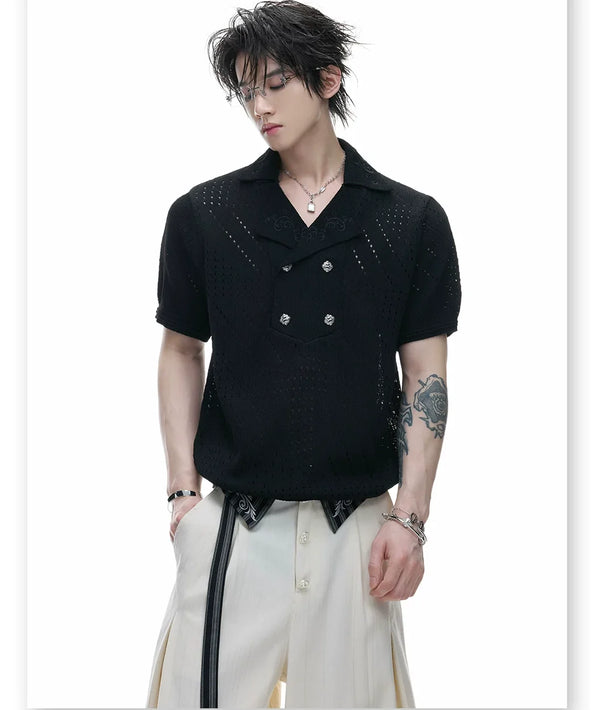
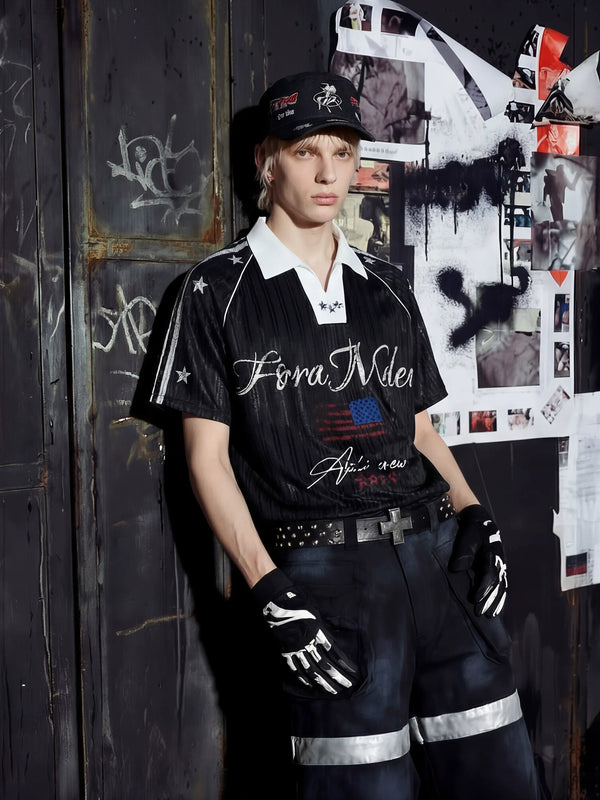
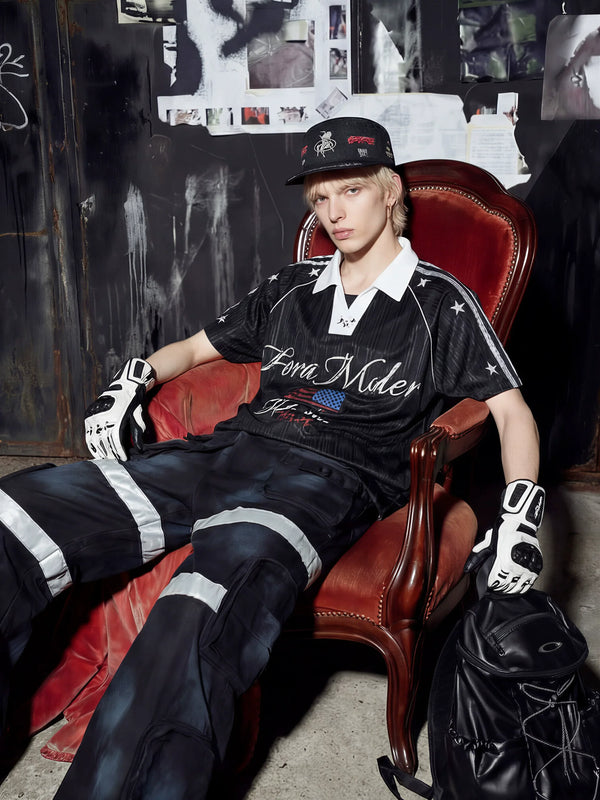
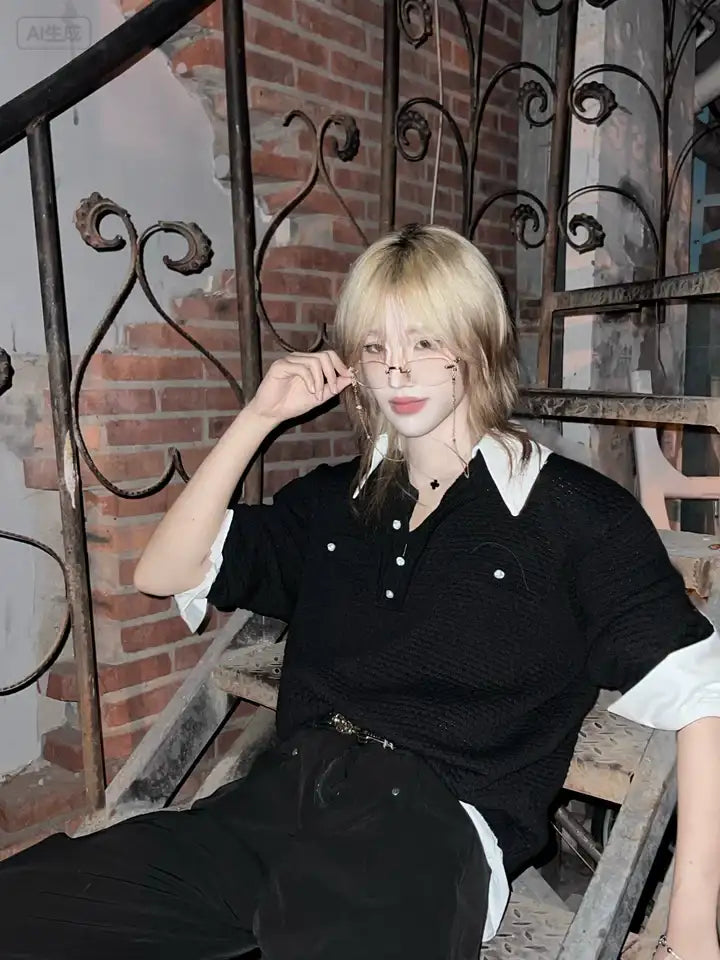
The entry into a Harajuku look almost always succeeds through the top. A shirt with a graphic, a polo with an unusual collar or a layering piece sets the tone before the rest follows. What matters is the character: a basic top in the Harajuku sense is rarely plain but already carries a detail that raises questions.
Combine such tops deliberately against their own character. A playful polo under a hard jacket, a graphic shirt with soft trousers. Exactly this break is the Harajuku move that turns an outfit from mere dressing into a statement.
Meaning
What really defines a Harajuku Girl
The term Harajuku Girl became known in the West mainly through pop culture and was often shortened in the process. Originally it simply means the young women who showed their self-assembled looks in Harajuku. It is not a fixed uniform but a role: the person who uses public space as a stage for their own style.
A Harajuku Girl is defined not by a brand or a price but by the courage to be visible. The clothing is a means, not an end. This meaning matters because it separates the look from pure costume. It is about attitude, not costume.
That is exactly why anyone can take on this role, regardless of gender or age. The term became established this way historically, yet the idea behind it is open. It is not about fulfilling a given image but about taking your own expression seriously and carrying it outward with confidence.
Practice
How to wear Harajuku style without looking costumed
The greatest fear of many beginners is looking like they are in a carnival costume. That worry is justified but easy to solve. The trick lies in the dosage. You do not have to wear every substyle at once. A single loud piece on an otherwise quiet base reads as style, a fully declined outfit as costume.
This restraint is not a betrayal of the principle but the way Harajuku translates into everyday life outside Tokyo. Whoever grows more confident can dare more layer by layer. The look grows with you, not against you.
Silhouette
Trousers and silhouettes for the Harajuku look
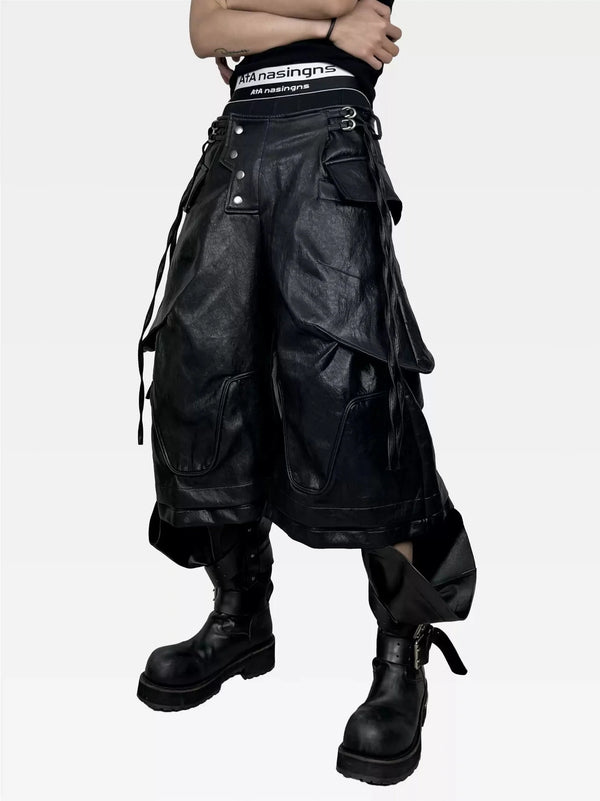
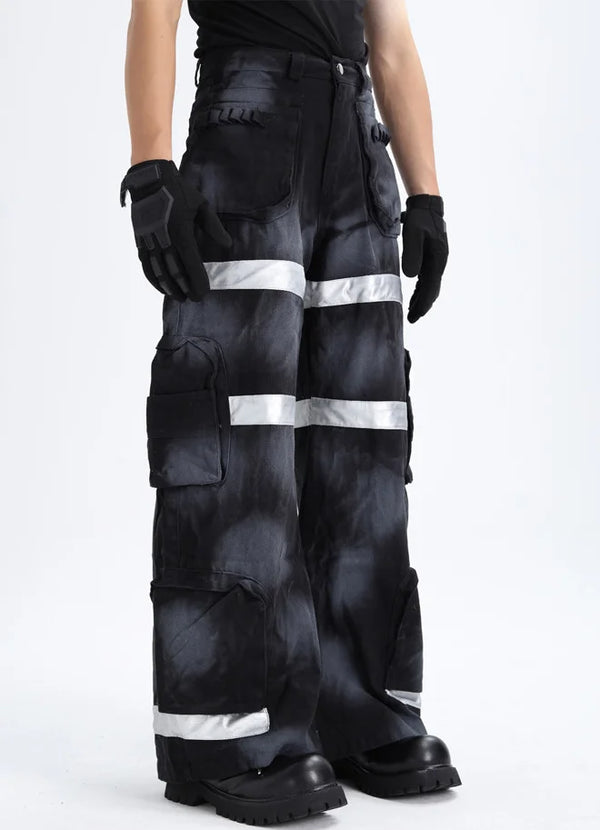
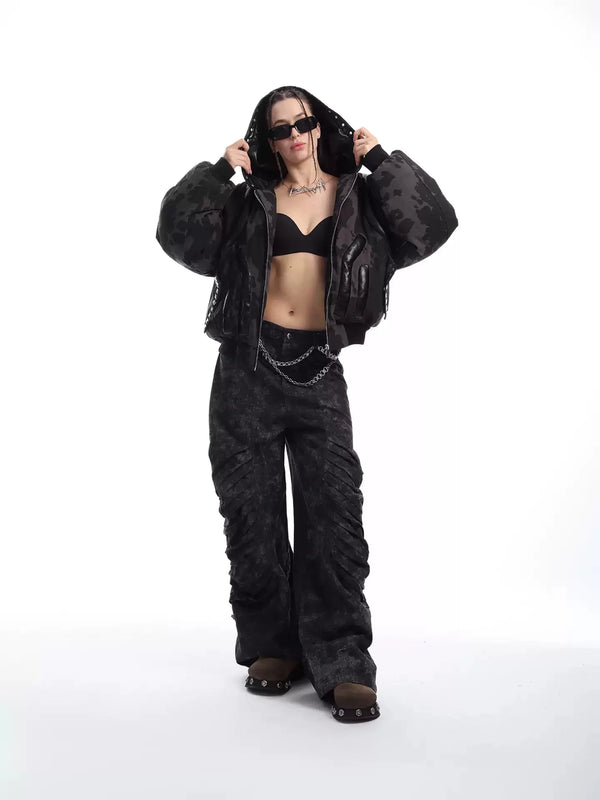
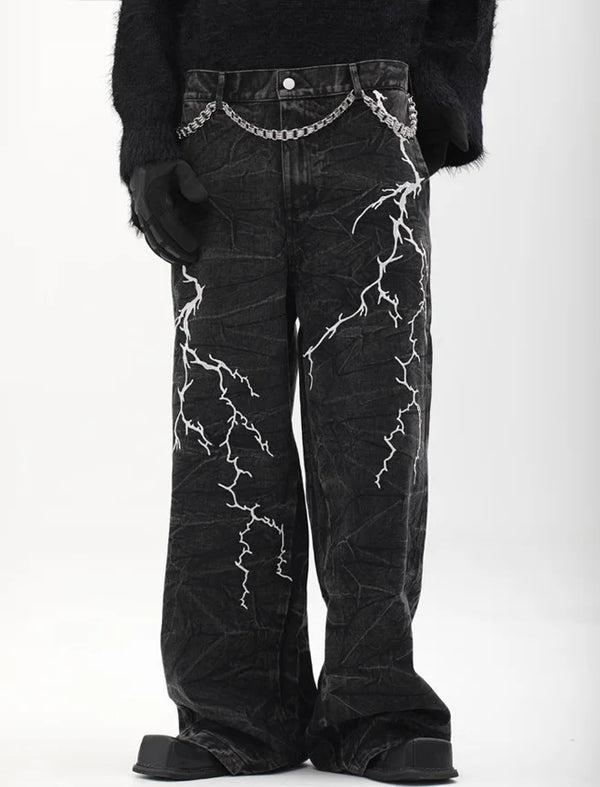
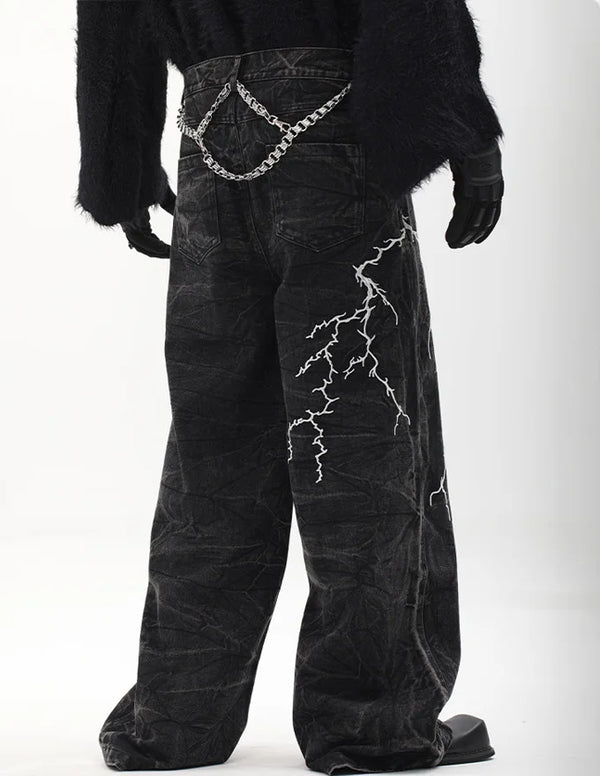
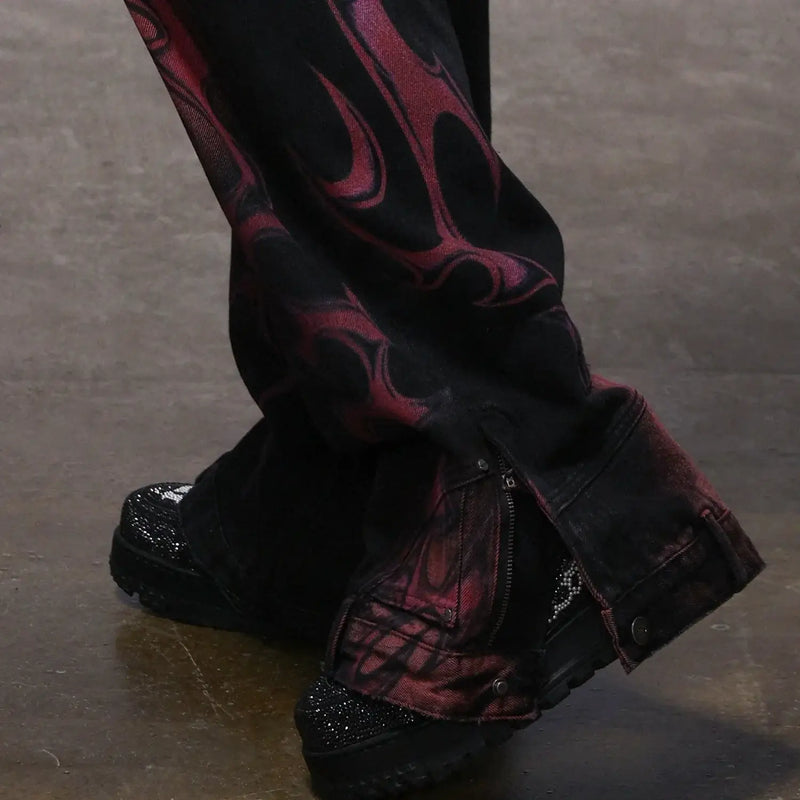
After the top, the trouser decides the line of the outfit. Harajuku likes to play with volume: wide legs, unusual lengths, visible seams or details that make a plain trouser a talking point. The silhouette may break, it does not have to flatter.
Pay attention to the ratio of top and bottom. If you wear a lot of volume on top, a tighter trouser holds the balance, and vice versa. This play with proportions is a quiet but decisive part of the Harajuku language that beginners often overlook.
Tool
Colors, patterns and the principle of layering
Color in Harajuku is not a minor matter but a tool. Some substyles rely on pastel softness, others on hard black contrast, still others on garish neon. What matters is that the color choice happens deliberately and not by chance. The same goes for the pattern: stripe over check over print is allowed, as long as a common thread remains recognizable.
Layering is more than wearing things on top of each other. It is a question of order and length: a long shirt under a short one, a mesh layer over a basic, a jacket left open on purpose. Each layer may show a piece of the one beneath. This creates a depth a single garment could never reach.
Outerwear
Statement jackets and outerwear in Harajuku style
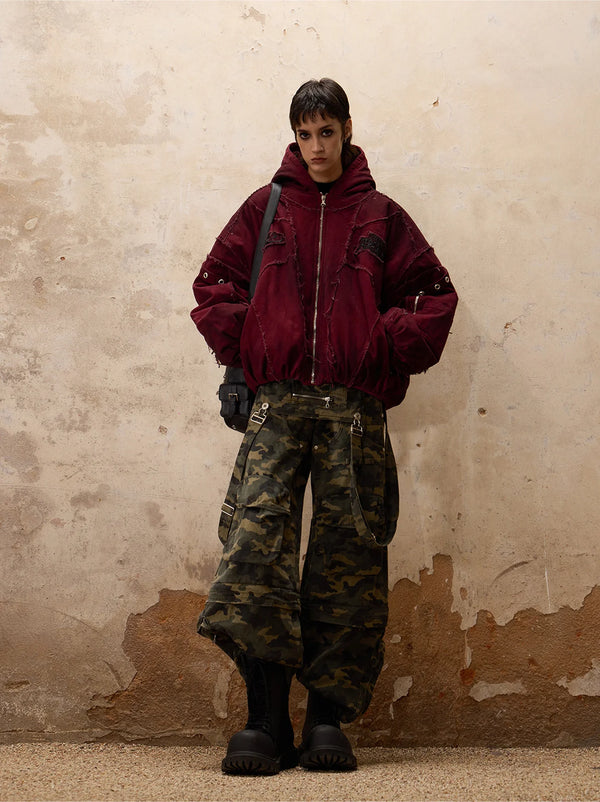
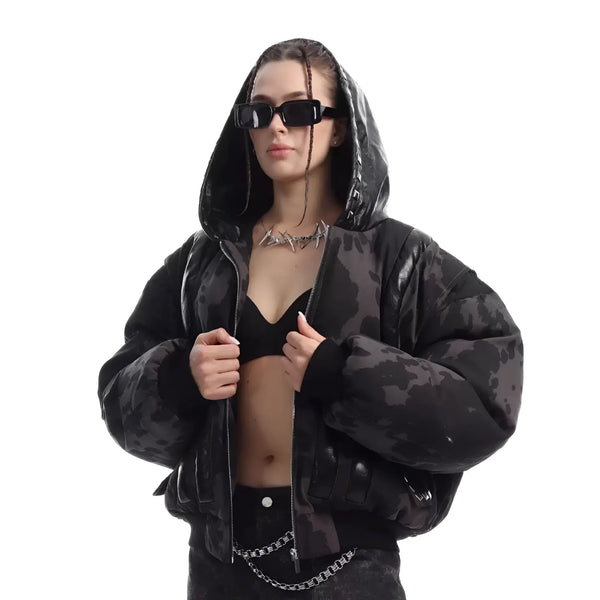
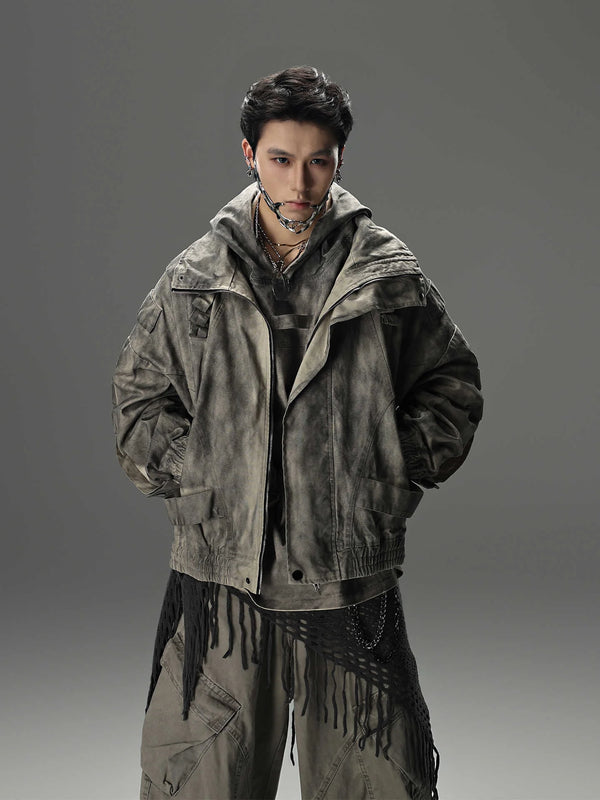
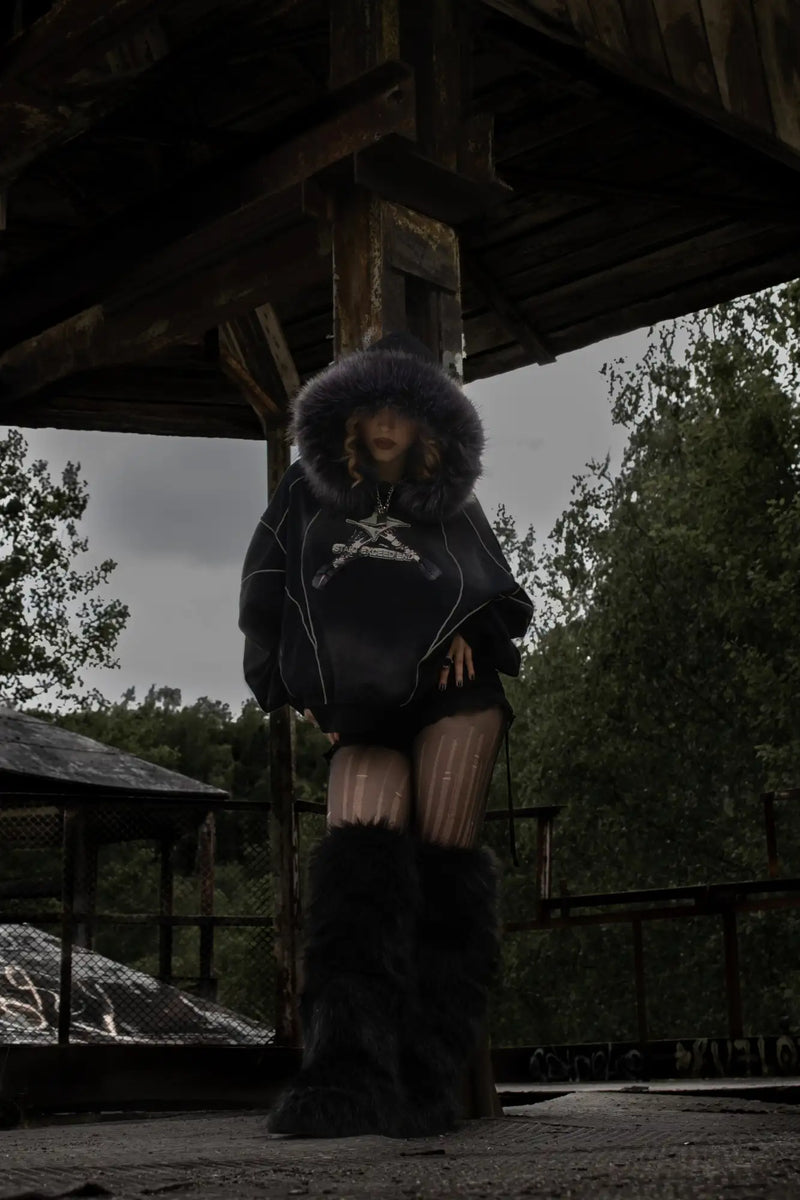
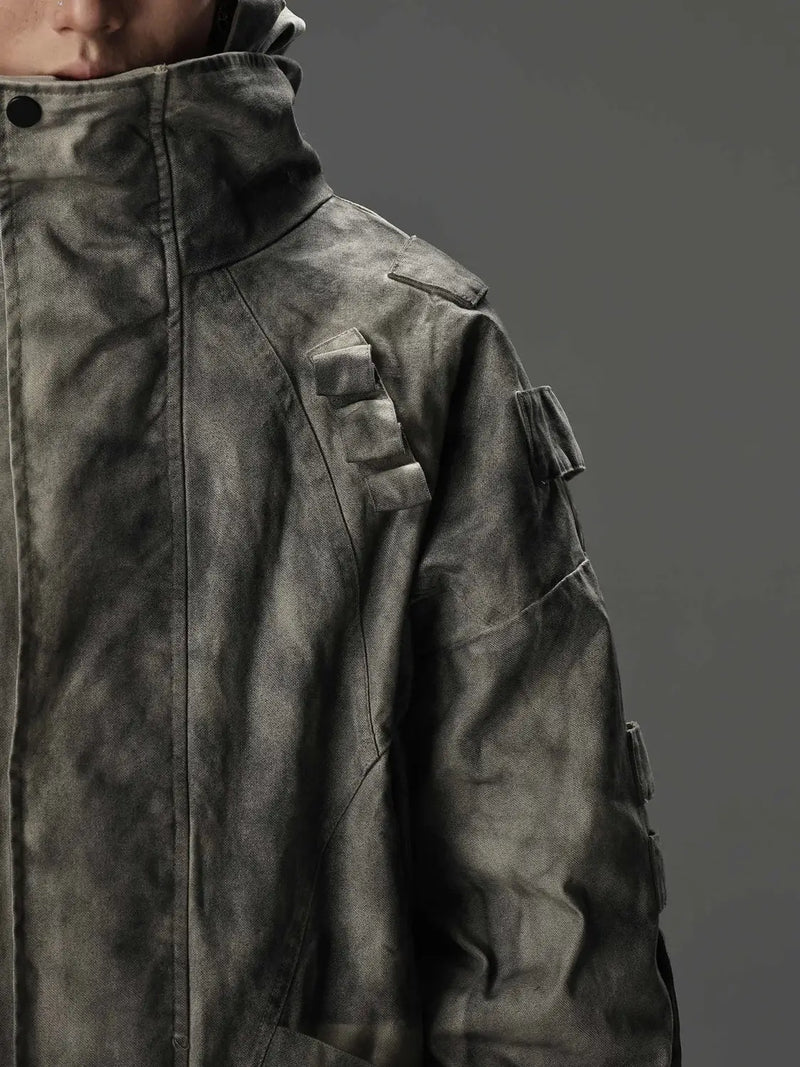
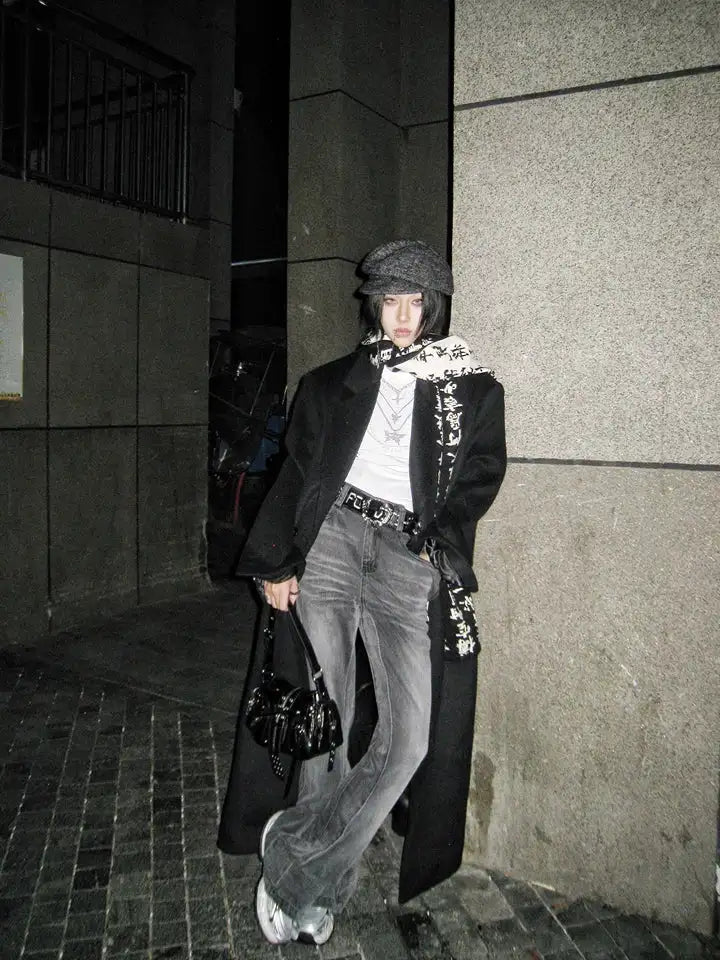
The jacket is the most dramatic piece in many Harajuku looks. It sits on top and is seen first, so it may speak the loudest. Whether fake fur, a puffer with an unusual shape or a leather jacket with a break: the outerwear carries the climax of the statement.
Because the jacket carries so much weight, you can safely reduce underneath. A strong outerwear piece rescues an otherwise plain outfit and still keeps it clearly in the Harajuku register. This is exactly where it shows that the look works strategically, not arbitrarily.
This logic is also practical: a good statement jacket combines with many outfits and makes even a quiet day interesting. If you invest in one spot, invest in the outerwear, because it offers the most visible surface and sets the tone for everything beneath.
Pitfalls
Common mistakes in Harajuku styling
Between inspiration and finished look lie a few typical mistakes that destroy the effect. They are easy to avoid once you know them. The most common pitfalls concern less the pieces than the combination.
Whoever keeps these four points in mind moves from mere imitation to their own style. Harajuku rewards decisions, not coincidences, and that is exactly what makes the difference between a costume and a look.
Detail
Accessories: where Harajuku really happens
If one principle carries Harajuku most clearly, it is the accessories. Hair clips, chains, caps and bags are not an addition here but often the actual core of the look. Substyles like Decora in particular live almost entirely off the quantity and arrangement of the small pieces.
Today
Harajuku today: between nostalgia and reinvention
The street scene at the Jingu Bridge is quieter today than in its heyday, yet the idea lives on, only in other places. On TikTok and Instagram new hybrids emerge that connect Harajuku with Y2K, Cybercore or Korean fashion. The umbrella term stretches instead of disappearing.
For you that means: Harajuku is not a museum piece but an open invitation. The meaning of the term stays the same as in the eighties, only the tools change. Whoever understands the contrast and brings the courage to be visible wears Harajuku, no matter which decade.
Outside Japan too, a scene of its own has formed that interprets the style instead of copying it. In Berlin, London or Seoul, Harajuku looks slightly different in each case, because local influences are added. That is no contradiction to the origin but its logical continuation. A style that emerged from mixing can only develop further by continuing to mix.
Questions & answers
Frequently asked questions about the Harajuku Fashion Meaning
Finally, the questions asked most often around the meaning of Harajuku, answered briefly and clearly.
What makes Harajuku so special?
Does Y2K belong to Harajuku?
Do you need expensive brands for a Harajuku look?
Is Harajuku still relevant today?
How do I start with Harajuku as a beginner?
In the end there is a simple insight: Harajuku is less a question of clothing than a question of attitude. The term names a place that became an idea, and this idea belongs to no one alone.
What do you think?
Tell us on @fuga_studios
About the author
Philipp Fuge — Founder · Berlin
Founder of Fūga Studios. Writes the journal himself. Berlin · Shanghai · Tokyo · Poznań — four cities, one logic.