
Contents 17 sections
- 01 What is Korean Retro Outfit — and where Newtro begins
- 02 From Hanbok to the Newtro wave — how the Korean retro code came about
- 03 The 5 Newtro archetypes — from Hallyu schoolyard to Y2K idol
- 04 Korean 90s Fashion — the decade the code ran in
- 05 Korean Retro Outfit men vs. women — where the codes diverge
- 06 Newtro brands — which Korean labels write the look
- 07 Jackets in the Korean Retro Outfit — varsity, sherpa-collar, vintage bomber
- 08 Trousers & jeans — the wide-leg pinstripe axis
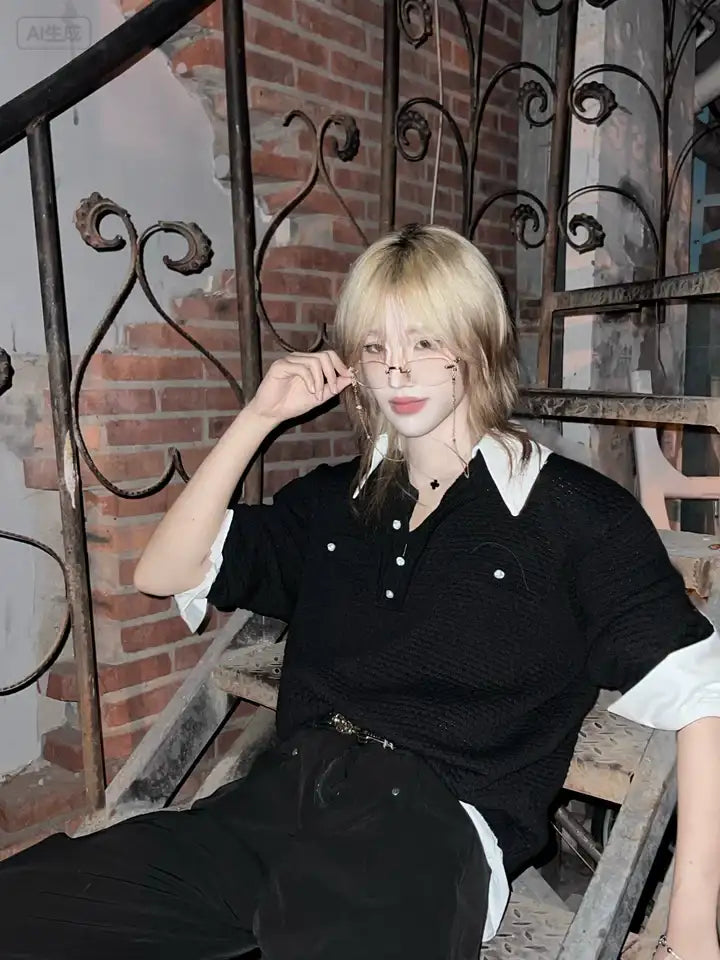
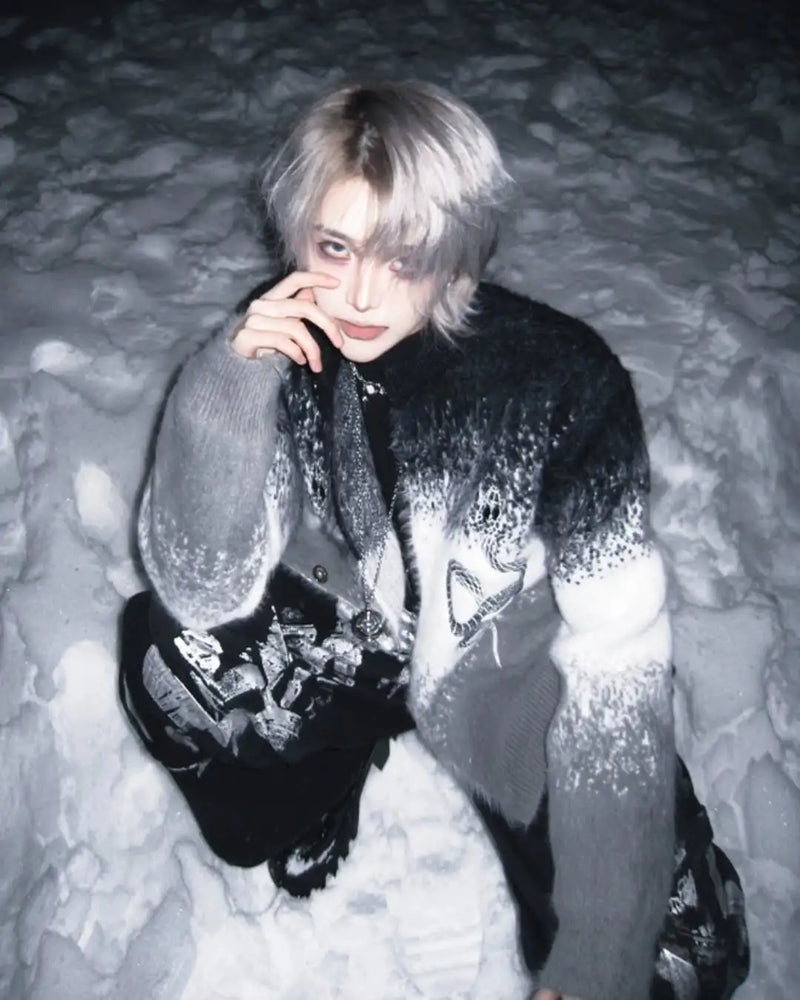
- 09 Tops & knitwear — cardigan, polo, stripes
- 10 Shoes & accessories — white kicks, pearl collar, heart glasses
- 11 How to really style Korean Retro — the layering rule
- 12 Korean Retro in summer vs winter — where the outfit tips over
- 13 The 6 most common Korean Retro mistakes — what you must NOT do
- 14 How to start in Korean Retro Fashion — the first 4 pieces
- 15 Korean Retro outfits for real — how it looks on Seoul streets
- 16 Newtro isn't a costume — it's an archive with a source
- 17 Frequently asked questions about Korean Retro Outfit
Korean Retro Outfit isn't „90s look with an Asian filter“. It's a code of its own: Newtro — the Korean word for „New + Retro“ — with clear geography (Seoul Hongdae, Apgujeong, Itaewon), clear brands (Andersson Bell, Adererror, We11done, Kirsh, Mardi Mercredi) and clear rules. Copy the outfit alone and you land on a Y2K Pinterest board. Read the code and you build looks that don't need to explain themselves.
What is Korean Retro Outfit — and where Newtro begins
In Google translations „Korean Retro“ reads like a generic vintage hashtag. In Seoul the word for it is a different one: Newtro (뉴트로), made of „New“ and „Retro“. It's been the common label in Korean fashion magazines and on the style boards of Musinsa since roughly 2018 — and it means nothing other than reading the 80s, 90s and early-2000s codes, not copying them 1:1, but rebuilding them with current cut logic. So Newtro isn't a vintage look. It's a cut principle with a source archive.
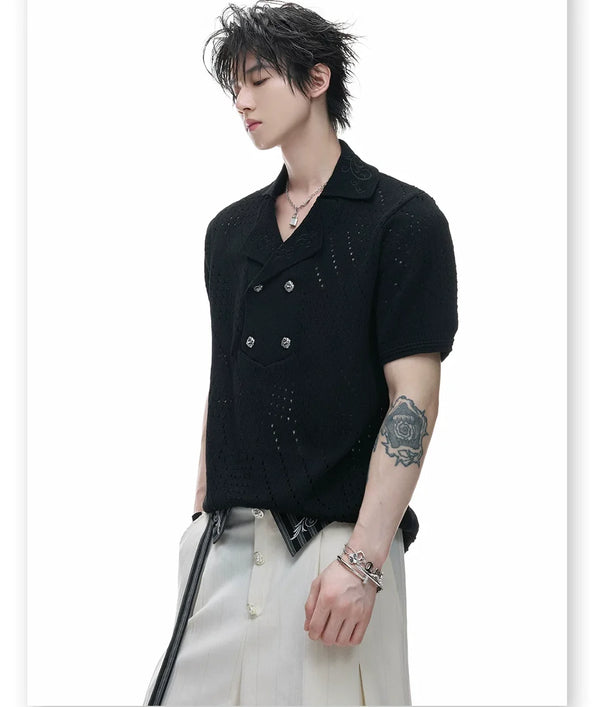
What counts: wide trousers with a high waist, cardigan over polo, striped knits, pinstripe wide-leg, sherpa-collar bomber, white sneaker on the floor, pearl-collar detail at the neck, heart or star glasses as the single loud point. What doesn't count: anything that looks like US Y2K bratzcore (too pink, too glittery, too pop-bright). Newtro is cooler, cleaner, more schoolyard than club. So the short answer to the first question „What is Korean Retro Outfit?“ is: it's the Korean answer to 90s nostalgia — without buying its US translation along with it.
2018
Newtro establishes itself in Korean magazines
3
Decades in the archive: 80s · 90s · early 00s
2
hard anchors: wide trousers · clear layering stack
Four parts make it up, in this order: trouser width first, layering second, hardware third, glasses fourth. Build the look from the pearl collar or the glasses first and you get Y2K cosplay. Start with the trousers — pinstripe wide-leg, raised waist, hem on the sneaker — and you've read 60 percent of the code before you even look for the top.
- Trousers — high waist, wide, hem just above the sneaker; pinstripe or wash denim. Never skinny.
- Layering — polo under cardigan, T-shirt under knit vest, shirt under bomber. Two layers visible, not three.
- Hardware — thin belt, pearl collar or slim chain, no heavy chains.
- Glasses — heart or star frame, slim rim. The only loud element in the outfit.
- Sneaker — white lowtop, clean, but not fresh out of the box. Reebok Classic, Asics, K-Swiss logic — nothing chunky.
From Hanbok to the Newtro wave — how the Korean retro code came about
Whoever googles „Korean Retro Outfit“ eventually trips over the question of the Hanbok — the traditional Korean dress of a two-piece Jeogori blouse and a wide Chima skirt or Baji trousers. The Hanbok isn't what Newtro means — but it's the source the DNA comes from: high waist, wide cuts, clear lines, muted colours with a single accent. Those are exactly the parts that were carried on in Korean fashion logic, through the Hallyu wave, through the 90s, into today's Newtro.
Do Koreans still wear Hanbok today? Yes — but in everyday life no longer as the norm. At weddings, New Year (Seollal), harvest festival (Chuseok) and traditional occasions the Hanbok is standard. In the Seoul cityscape you see it most often in Bukchon Hanok Village or in front of Gyeongbokgung Palace, where tourists rent it for a few hours. The question of whether non-Koreans may wear a Hanbok is taken calmly in Korea itself: in the tourist context it's read as homage, in private the rule of any traditional dress applies — don't turn it into a costume, respect it.
For Newtro itself, though, the Hanbok is source, not outfit. The bridge is built by the Hallyu wave (the global wave of Korean culture from the late 90s): first-generation K-Pop idols — H.O.T., g.o.d., Sechs Kies — deliberately wear oversized cardigans, high-cut wide-leg trousers, striped knits, white sneakers in the early 2000s. Exactly this look comes back as Newtro from 2018 — now with clean cuts, heavier fabrics and a tidied colour palette of cream, black, muted burgundy and the occasional gold.
The 5 Newtro archetypes — from Hallyu schoolyard to Y2K idol
„Korean Retro Outfit“ isn't a single look. It's a corridor with five clearly distinguishable archetypes, each with its own brand logic, its own trouser width, its own hardware. Whoever doesn't know that mixes Hallyu schoolyard with Y2K idol and lands in the middle — that is, nowhere.
The rule between the archetypes: you don't mix them. A polo under cardigan plus Y2K heart glasses plus workwear boots doesn't make „Newtro versatile“, but „Newtro lost“. Each archetype has its own trousers, its own glasses, its own shoe choice. What you may take over is the cut logic — not the codes.
Korean 90s Fashion — the decade the code ran in
Whoever wants to understand Newtro has to start in the 90s. More precisely: in 1996, the year H.O.T. debuted and broke open the first K-Pop wave. Before the look formed into an industry, it ran in Korean schoolyards as a mix of US hip-hop import (oversize, wide-leg, bucket hat), Japanese schoolyard codes (cardigan, pleated skirt) and Korean cut logic (high waist, narrow shoulders). These three lines come together in the idol outfits from 1996 — and it's exactly this mix that comes back as Newtro from 2018.
What separates the Korean 90s from the US 90s is the discipline of the line. Where US hip-hop 90s ran with dropped shoulders, low-sitting trousers and FUBU logos, Korean 90s kept the shoulder line higher and the trousers high-cut — that gives the look its cleaner, almost preppy-looking silhouette. If you build Newtro today and the shoulder seam sits too low, the look tips straight into the US-90s corridor. Keep the seam just next to the collarbone — not 5 cm lower.
The second code from this phase: the striped knit polo under cardigan. In the early 2000s that was the uniform of every K-Pop boy-group member in casual outfits. Today it works almost unchanged — only the fabrics are better and the colours more muted. Burgundy, cream, black, occasionally a muted petrol. What Newtro avoids are the shouting pastel tones of the US 90s.
Korean Retro Outfit men vs. women — where the codes diverge
The most common assumption: Newtro for women means mini cardigan and heart glasses, Newtro for men means oversize and bomber. Wrong — or at least surface-level. The real differences between the men's and women's code run via shoulder line and trouser width, not via the colour or the glasses.
Women's Newtro works with a narrower shoulder line — cardigan and bomber sit slimmer on the upper body, the mini-cardigan variant is a cut family of its own. The trousers follow: with a narrower shoulder the trousers fit closer through the knee, wider only from the hem. The result is an hourglass line that doesn't look aggressively curvy, but tidy. Heart glasses and pearl collar are then the one loud point — never two.
Men's Newtro lets the shoulder seam wander 2-3 cm wider. That gives the cardigan, bomber or knit vest a more relaxed, almost youthful seating line. The trousers follow: wide pinstripe wide-leg or workwear cut with a high waist. Hardware stays minimal — a thin belt, maybe a slim chain, never a stack. If you really want to mix men's and women's codes, you need the belt as a dividing line: it makes clear where the look turns „narrow“ and where it turns „wide“.
Newtro brands — which Korean labels write the look
Newtro isn't a style term from a marketing lookbook, but a brand reality in Seoul. Look on Musinsa or at style snaps in Apgujeong and the same labels come up again and again — because they define the code, not just quote it. Here are the ones you should at least know before you end up at the H&M cardigan and are disappointed.
- Andersson Bell — Seoul-based, Swedish-Korean line, clear wide-leg trousers and oversized knit polos. Probably the cleanest Newtro design Korea is currently exporting.
- Adererror — works with asymmetric constructions and a calmer Newtro line. Strong in knitwear and in hardware reduction.
- We11done — Park Hye-Jin and Jessica Jung. More Y2K K-style than Hallyu schoolyard — heart frames, pearl detail, velvet trousers.
- Kirsh — Kirsch logo, light colour palette, lots of cardigans and knit vests. The women's Newtro standard at Korean universities.
- Mardi Mercredi — minimalist Newtro, lots of floral print on knits, lots of cream and muted petrol. The clean soft-Newtro pole.
- Beyond Closet — schoolyard Newtro with polo, stripe, sherpa-collar bomber. The most honest Hallyu schoolyard design in Korea.
- Stereo-Vinyls — 90s-idol logic with striped knits and vintage bomber. Direct access to H.O.T. codes.
- Pushbutton — Park Seung-Gun, more dramatic line. If you want Y2K K-style with an avant-garde twist.
What you don't need to wear Newtro: the original brand piece with a 280-euro price tag. What you need is the right cut logic. Cardigan in the correct shoulder line, pinstripe trousers with a high waist, polo underneath, white sneaker — you can get all of that under 120 euros too, if you know what to watch for in the cut. The brands above are the briefing, not the shopping list.
Jackets in the Korean Retro Outfit — varsity, sherpa-collar, vintage bomber
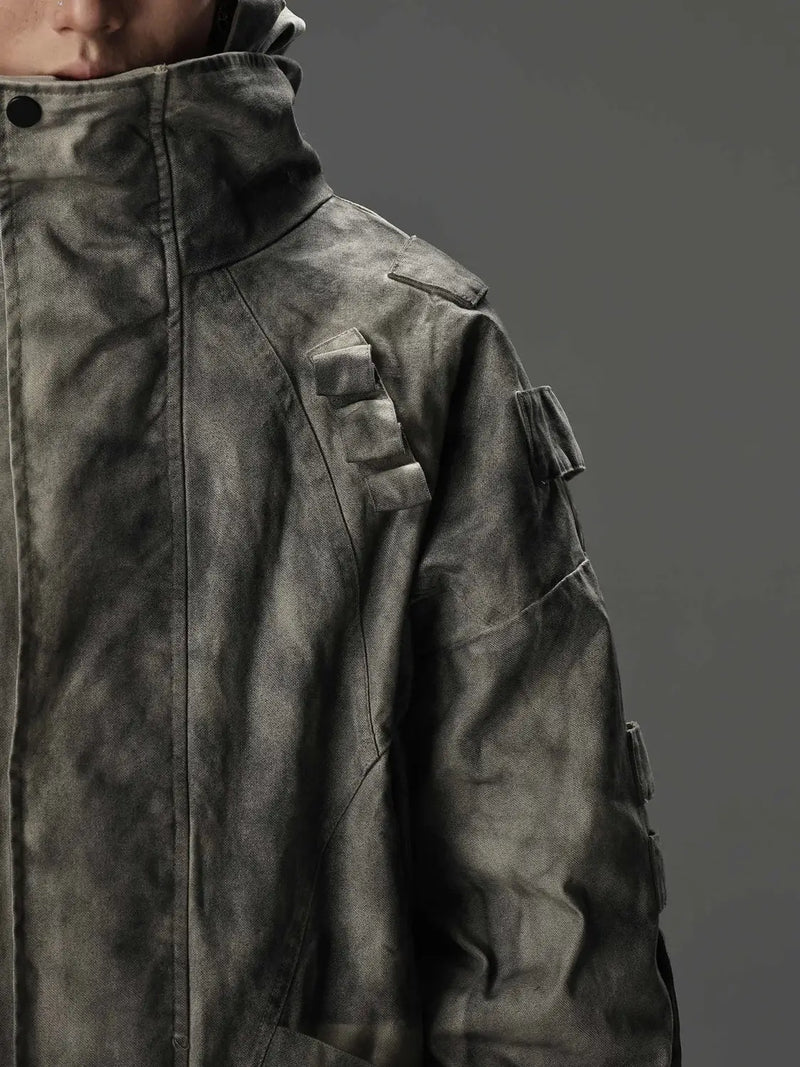
The jacket decides which of the five archetypes you land in within the Newtro outfit. Three families cover 90 percent: sherpa-collar bomber (workwear uncle and Hallyu schoolyard), vintage leather bomber (90s idol with edge), varsity jacket (Hallyu schoolyard in its purest form). What you avoid: thinned tech shells, puffers in a logo stack, anything that looks too much like performance streetwear.
The sherpa-collar bomber family is the most versatile entry. You wear it over the polo-and-cardigan stack, over a shirt, over a knit vest with a T-shirt underneath. If the bomber shoulder line sits clean — just next to the collarbone for men's Newtro, narrower for women's Newtro — it fits three of the five archetypes without adjustment. Vintage leather is the specialised anchor for 90s-idol looks; the varsity jacket the purest Hallyu schoolyard marker. Choose one family and build there first.
Trousers & jeans — the wide-leg pinstripe axis
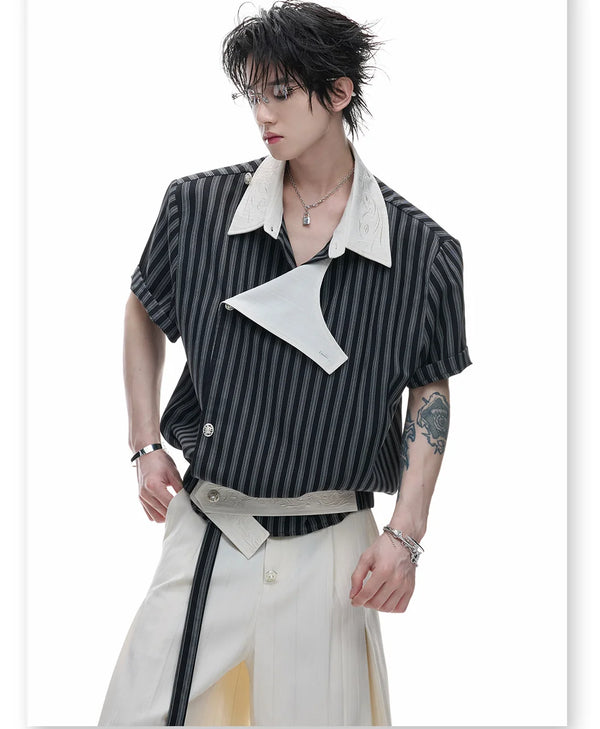
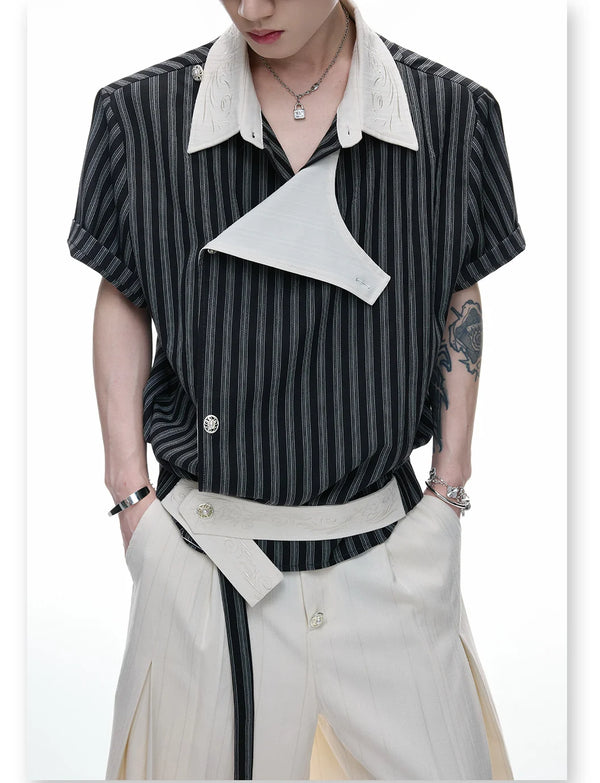
If you take only one part away from this article, then this: the trousers decide everything. Pinstripe wide-leg with a high waist is the Newtro standard, because it solves three codes at once: high waist (Hanbok DNA), wide cut (90s idol), pinstripe (schoolyard preppy). Hem just above the sneaker, never dragging on the floor, never above the ankle.
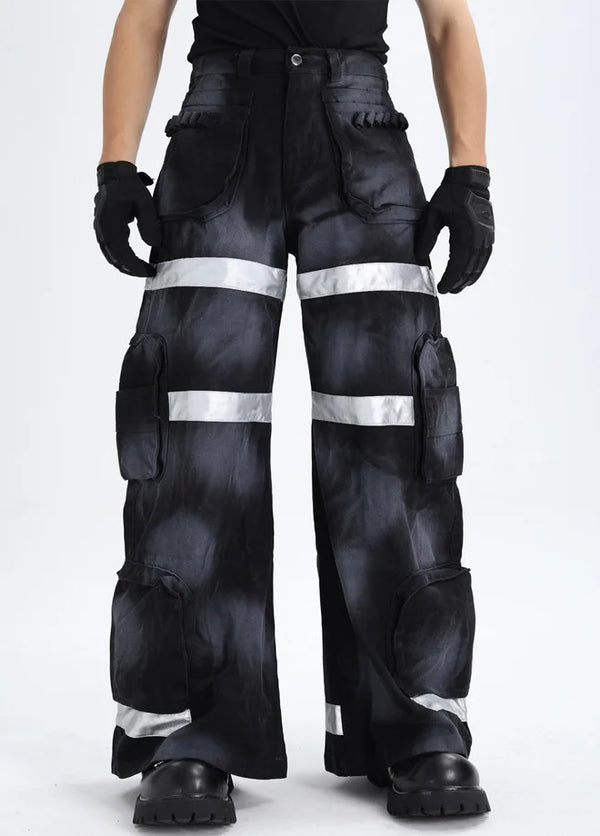
The second admissible trouser family is washed wide-leg denim — not ripped, not distressed, not skinny. Wash medium-light or medium-blue, hem the same as with the pinstripe. For workwear-uncle looks a wide carpenter trouser in corduroy or canvas also works, but then you need the sherpa-collar bomber with it, otherwise the look gets unbalanced. What Newtro doesn't do: skinny, slim, ripped, dyed-bright. These four cuts tip the look straight into the US-Y2K or the punk corridor.
Tops & knitwear — cardigan, polo, stripes
The top layering is the spot where most Newtro outfits tip over. The rule is simple: two layers visible, not three. Polo-under-cardigan is the clean standard solution; T-shirt-under-knit-vest the slightly louder variant; shirt-under-knit-polo the preppiest. What you don't build: three layers plus scarf plus necklace — that's not Newtro, that's cosplay.
The colour palette is more disciplined than with US retro: cream, black, burgundy, muted petrol, occasionally a warm gold or a muted mustard. What Newtro avoids are neon accents, pop pink, US Bratz pastel. If you use stripes, then horizontal across the chest — never vertical, never diagonal, never logo stripes. A striped burgundy-cream knit polo under a brown cardigan is Newtro textbook.
Shoes & accessories — white kicks, pearl collar, heart glasses
The shoe choice separates the Newtro archetypes more cleanly than any other element. White lowtops (Reebok Classic, K-Swiss, Asics, occasionally Adidas Samba) are the Hallyu schoolyard standard. Loafers or penny loafers in burgundy/black is the preppy-Newtro variant. Workwear boots (Red Wing, Solovair, Japanese cousins) is the workwear uncle. Chunky sneakers, platform boots or Mary Janes don't belong in the Newtro corridor.
The accent rule in Newtro is: one loud point, otherwise quiet. That can be the heart glasses, that can be the pearl-collar tee, that can be the single coloured sock. Two loud points (e.g. heart glasses plus pearl collar plus velvet trousers) turn Newtro into Y2K cosplay. If you're unsure which point should be the loud one: take the glasses. They're the easiest to leave off when the look tips.
How to really style Korean Retro — the layering rule
The Newtro layering rule has three stages, and you always build them in this order: trousers first, top stack second, jacket third. Whoever starts with the jacket builds themselves into a dead end, because the jacket defines the shoulder line and the top choice has to come after it. Whoever starts with the trousers immediately has the right floor for everything else.
Newtro is the discipline, not the detail. Whoever has the shoulder line and the trouser width right can be sloppy with the glasses. Whoever misses the shoulder line and the trousers won't be saved even by the most expensive pearl collar.
Fūga — Newtro-Lehrbuch
The three-stage rule sounds simple, but each stage has a hidden test. Stage 1 (trousers): hem just above the sneaker — if the trousers drag, they're 2 cm too long; if the ankle shows, they're 4 cm too short. Stage 2 (top stack): two layers visible, never three. Cardigan over polo counts as two; shirt over T-shirt over tank counts as three and is out. Stage 3 (jacket): shoulder seam just next to the collarbone for men's Newtro, narrower for women's Newtro. If the seam sits 5 cm outside, the look is US-90s, not Newtro.
Korean Retro in summer vs winter — where the outfit tips over
The seasonal question is more important in Newtro than in many other aesthetic corridors, because the layering system fails the moment it gets too warm. In summer you reduce to two parts: polo (or short-sleeved striped knit polo) plus pinstripe wide-leg, white sneaker, heart glasses as the only accent. Cardigan or bomber fall away — the look is then almost preppy-purist.
In winter the third layer comes back, but it goes invisible: thermal long-sleeve under the polo, which again goes under cardigan and bomber. As before, two layers stay visible. What you additionally need in the Seoul winter (-5 to -15°C): wool scarf in cream or burgundy, simply draped, never knotted, never as a statement layer. Hat in wool, slim, muted colour. Boots instead of sneakers, when the snow stays.
The 6 most common Korean Retro mistakes — what you must NOT do
Most Newtro attempts fail not on taste, but on concrete technical mistakes. Whoever avoids these six already has 80 percent of the code right.
If at the mirror you ask yourself which of the six mistakes you're currently making: start from the top. Shoulder seam first, then trouser width, then layer count. The accent rule and the colour palette you correct afterwards — they cost the least effort, you fix them after the mirror look with a single move.
How to start in Korean Retro Fashion — the first 4 pieces
If you don't want to build Newtro completely in one weekend (which is smart — it gets expensive and you end up with things you don't wear), you build in this order: trousers, cardigan, polo, glasses. Four pieces, three outfits, Newtro corridor open.
With these four pieces you have the Hallyu schoolyard archetype complete, can wear it with any white lowtop and don't need a fifth layer. Part five would then be the sherpa-collar bomber or the vintage leather jacket, depending on whether you want to tip into the workwear uncle or the 90s idol. But that's phase two. Phase one is: four pieces, three outfits, Newtro worn, not put on.
Korean Retro outfits for real — how it looks on Seoul streets
The theory is one thing, the lived another. In Seoul, Newtro isn't a fashion statement, but a matter of course — students in Hongdae wear the Hallyu schoolyard look without thinking about it, uncles in Apgujeong set the workwear Newtro in February as if it were natural. On Instagram you find the codes in the clean style-snap format of Musinsa: whole outfit head to toe, no filter, one look per post.
What you learn from style snaps that no article can give you: how the trouser width interacts with the concrete body type, how the shoulder seam falls differently with different cardigan fabrics, how the loud accent works in different lighting. The theory is the cut logic. The practice is the repetition. Whoever wears the same Newtro corridor daily for three weeks learns more than whoever tries out different corridors for three weeks.
Newtro isn't a costume — it's an archive with a source
Frequently asked questions about Korean Retro Outfit
What is traditional Korean clothing called?
What is the 3-3-3 rule for clothing?
Do Koreans still wear Hanbok today?
What is the Korean fashion style called?
May a non-Korean wear a Hanbok?
Why is the number 4 taboo in Korea?
How does Korean Retro differ from Y2K?
What do you think?
Tell us on @fuga_studios
About the author
Philipp Fuge — Founder · Berlin
Founder of Fūga Studios. Writes the journal himself. Berlin · Shanghai · Tokyo · Poznań — four cities, one logic.