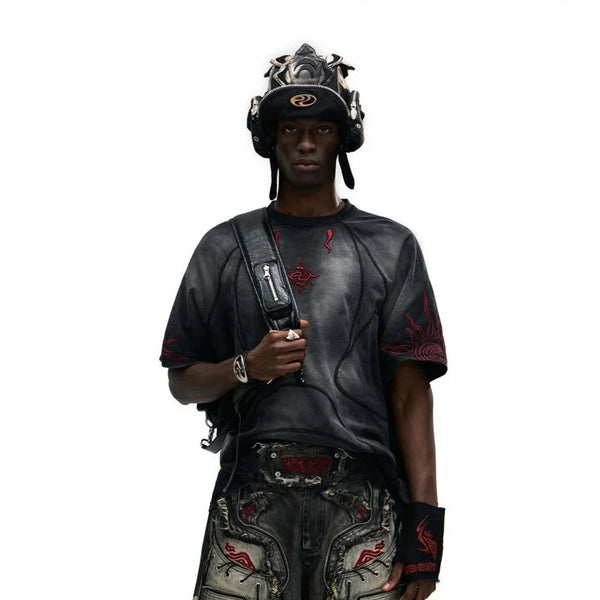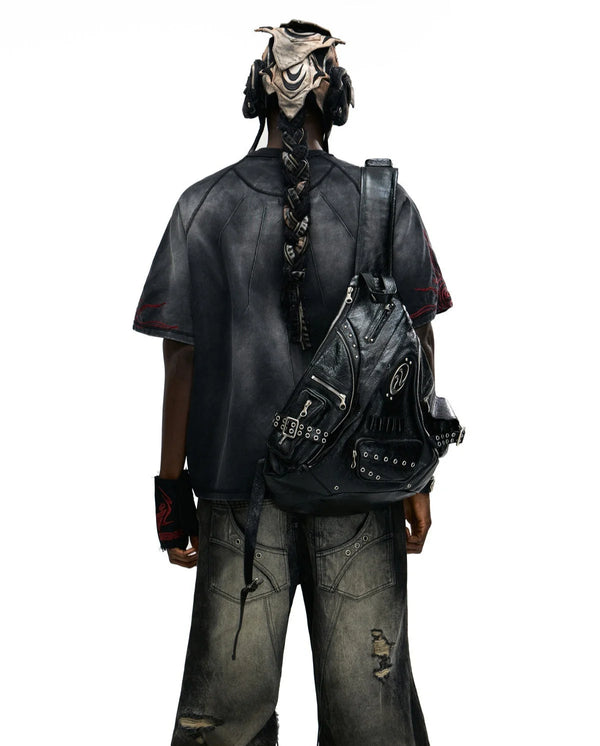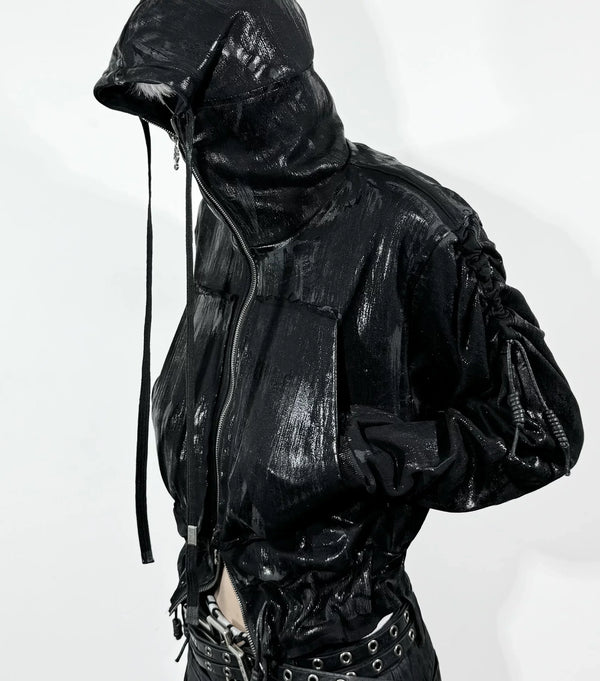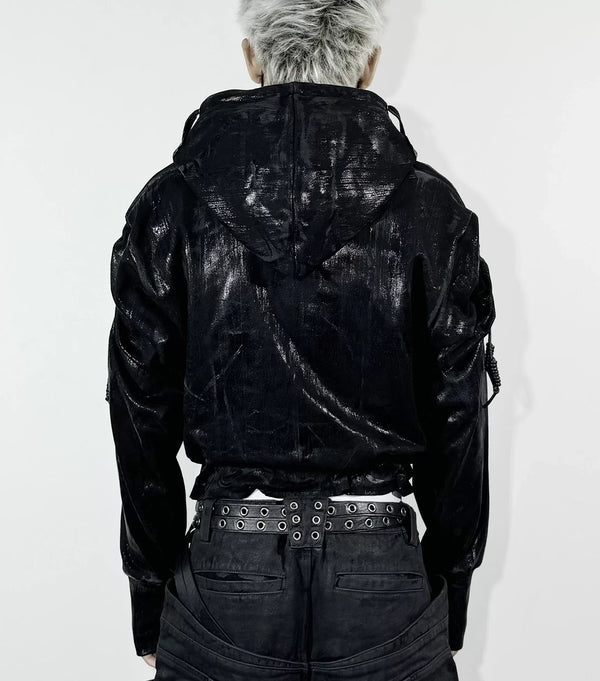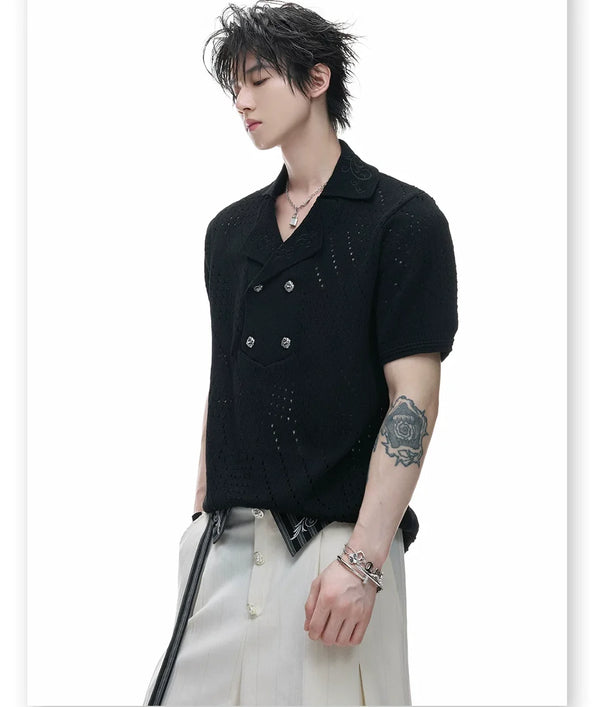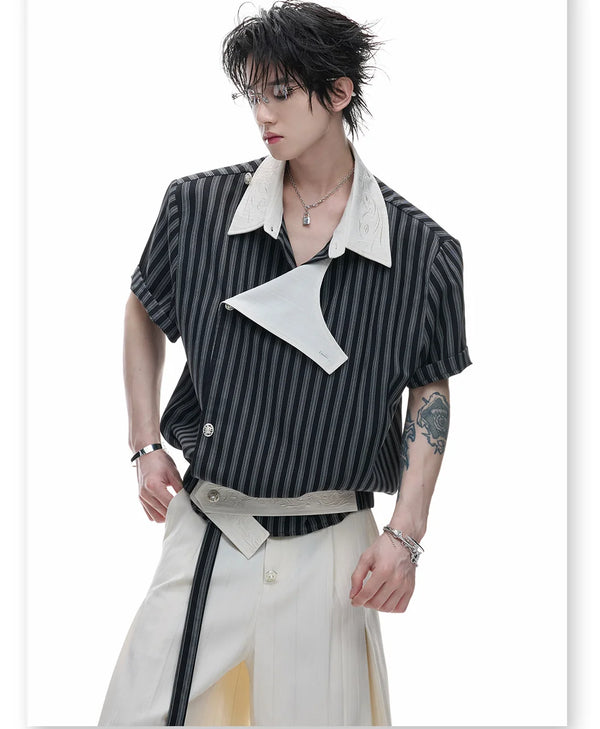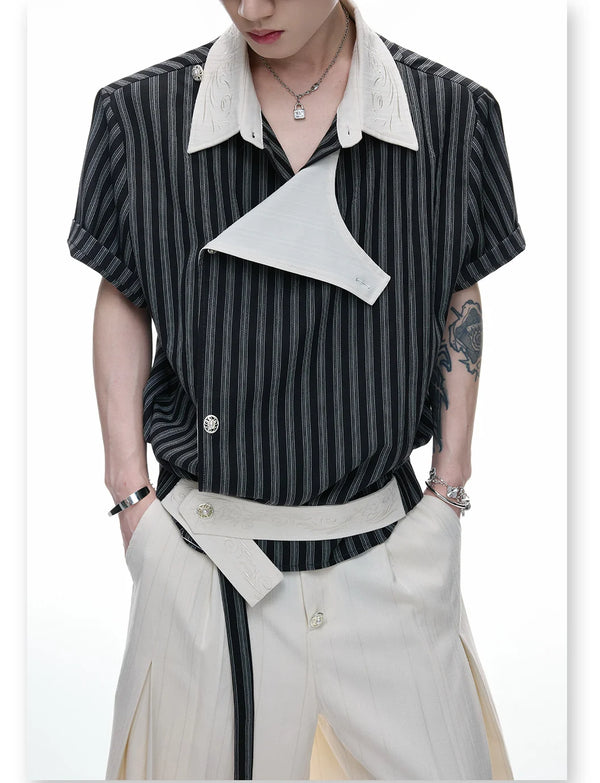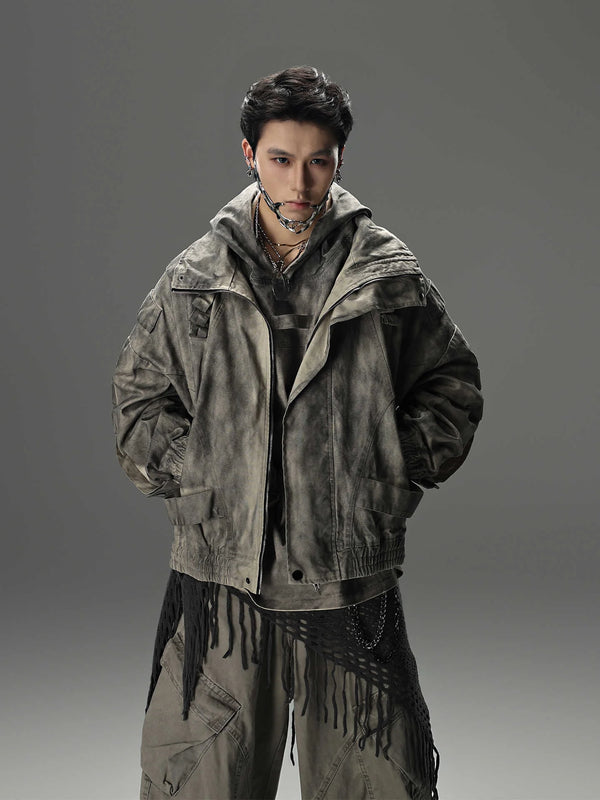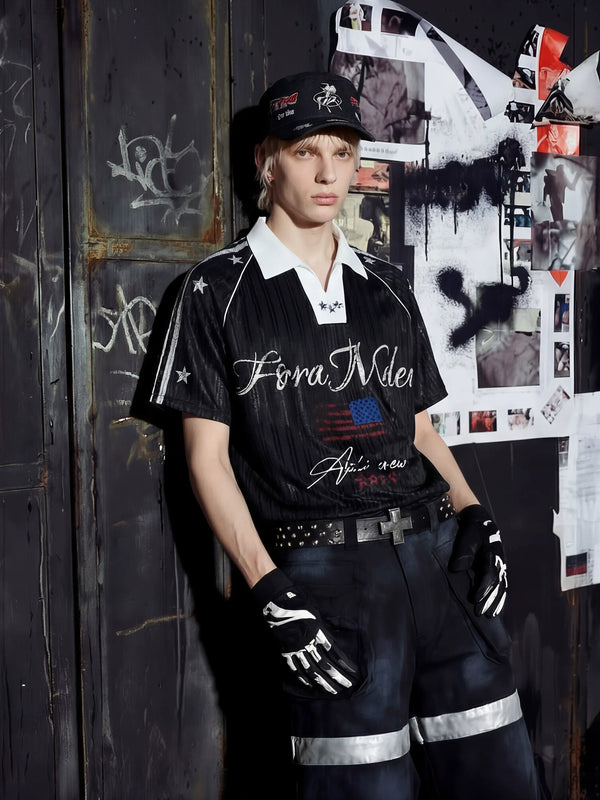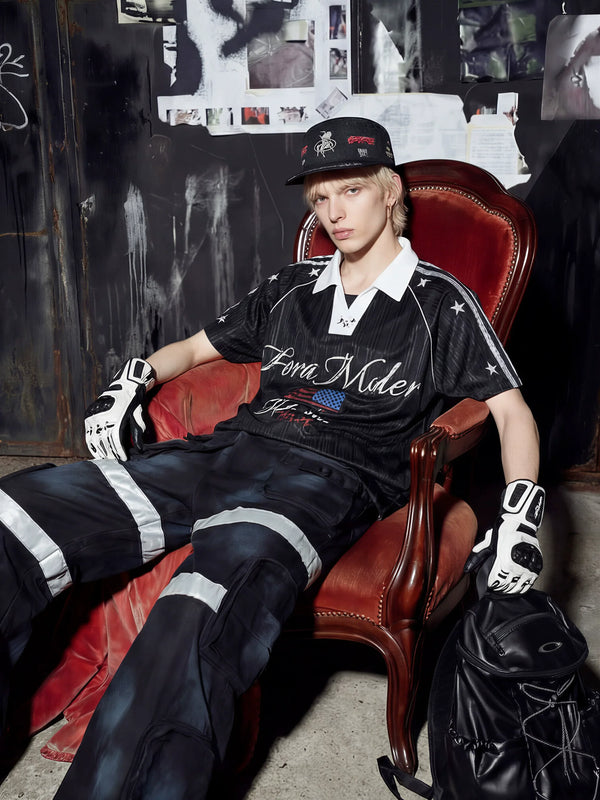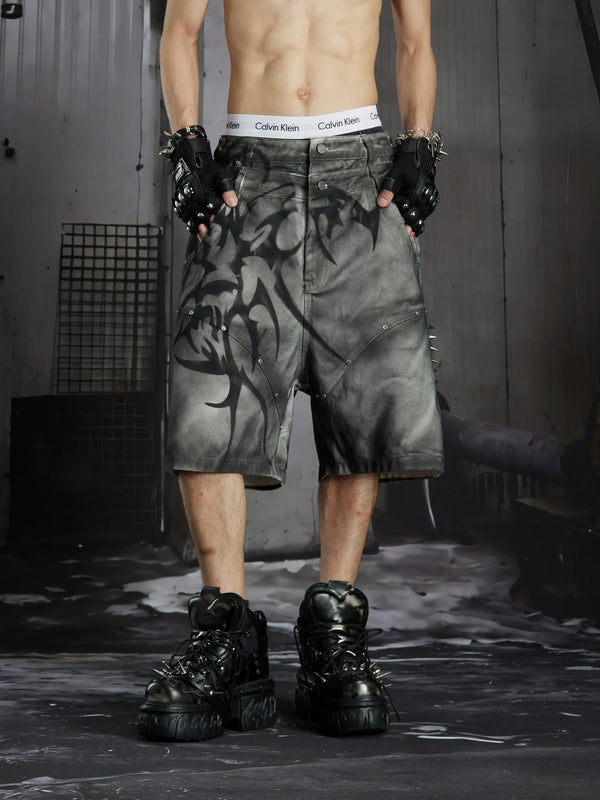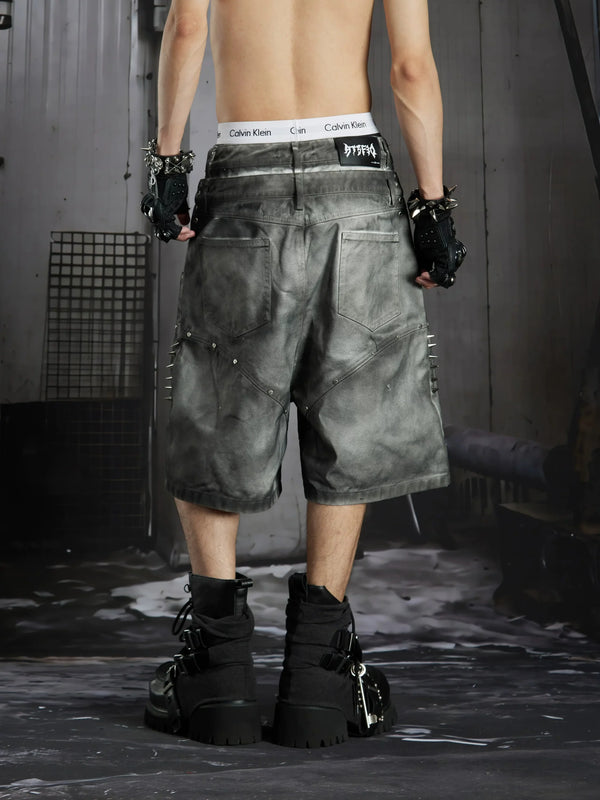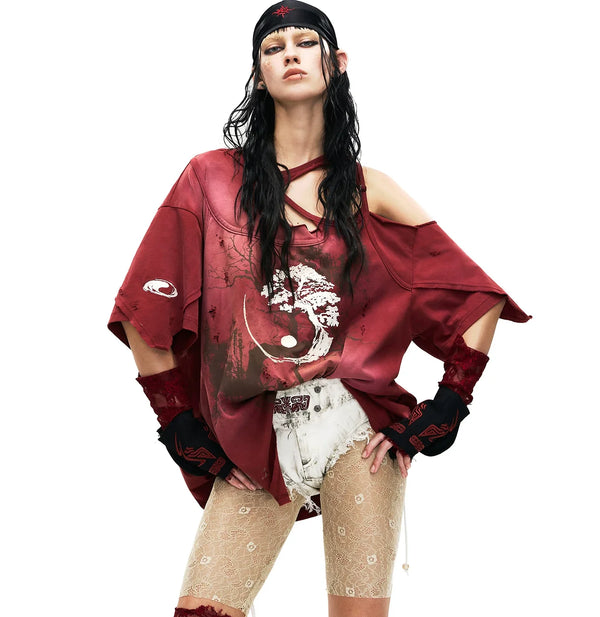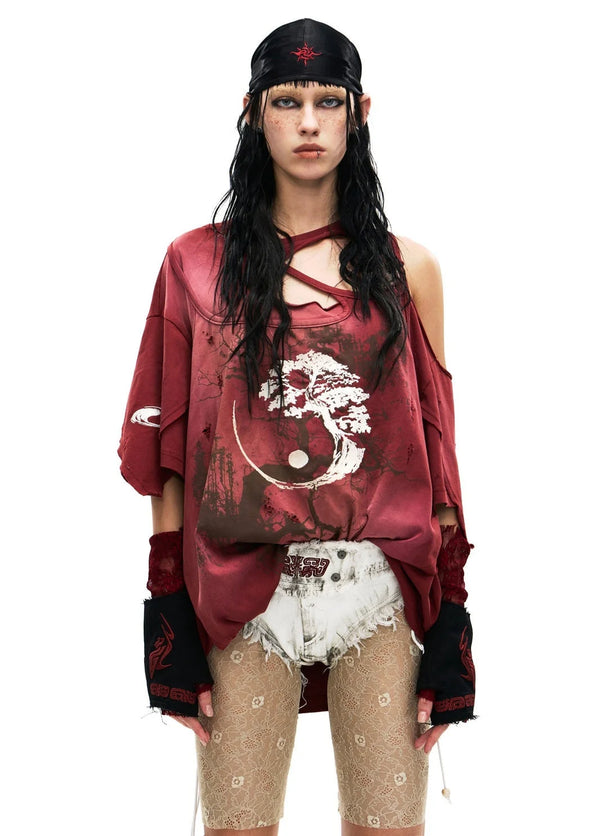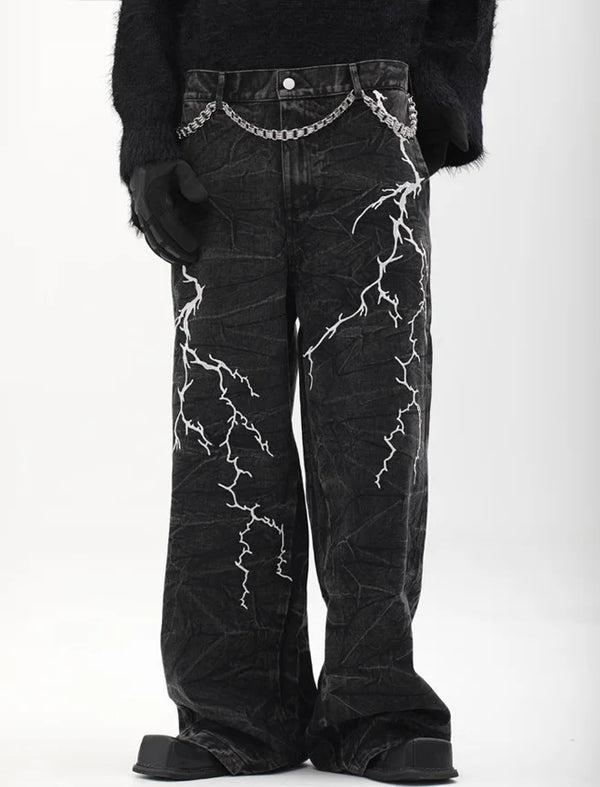
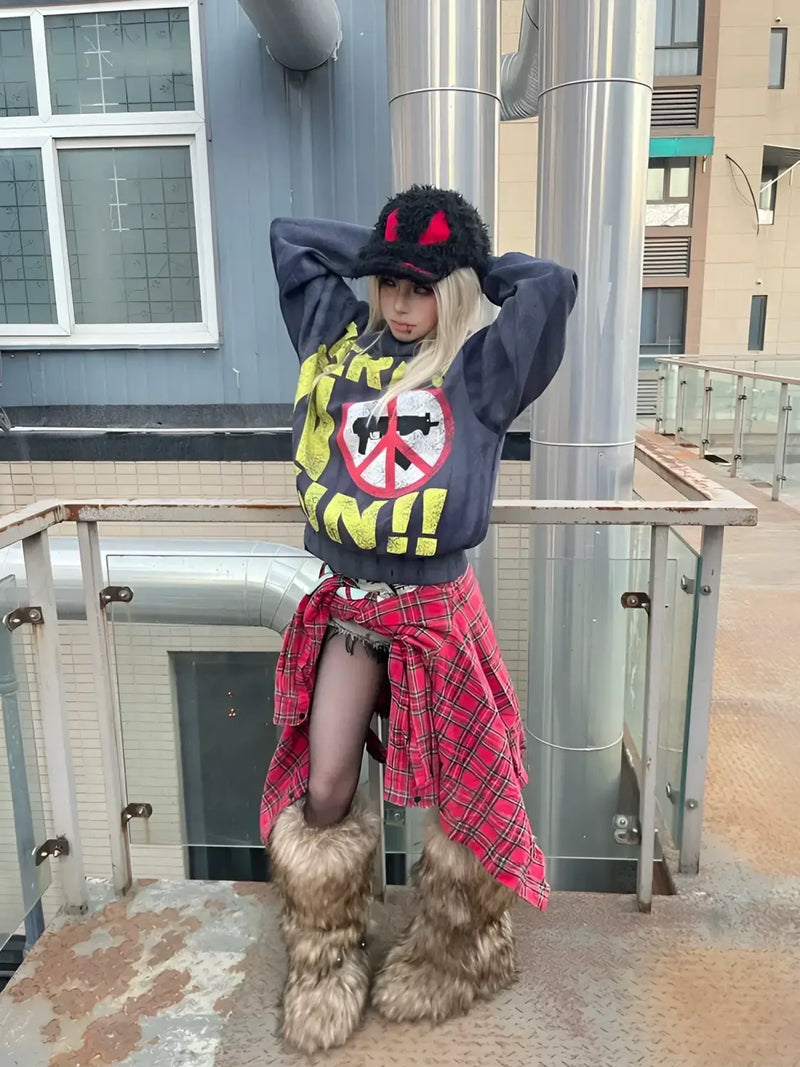
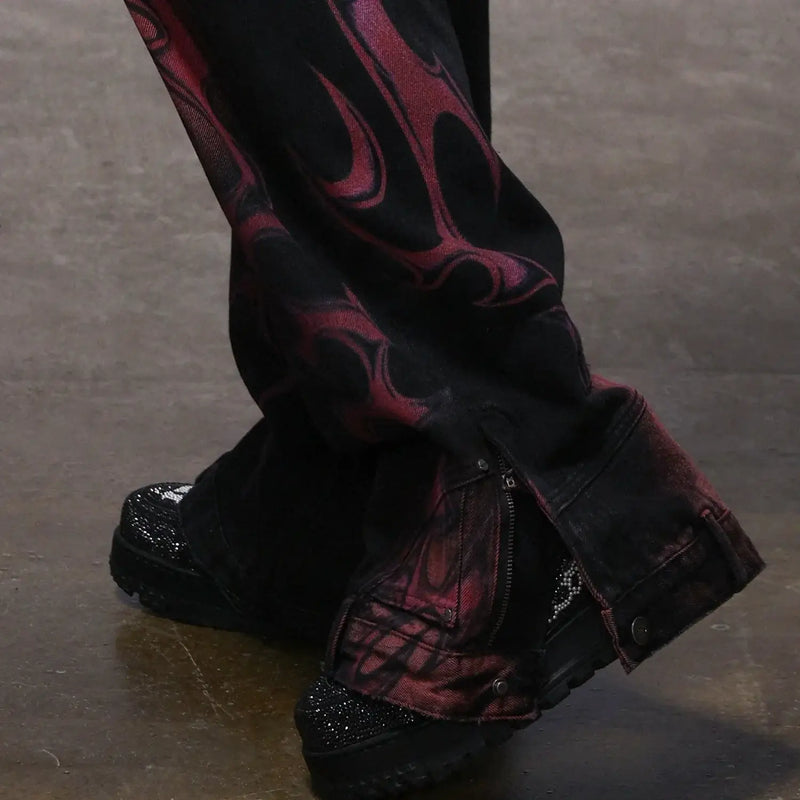
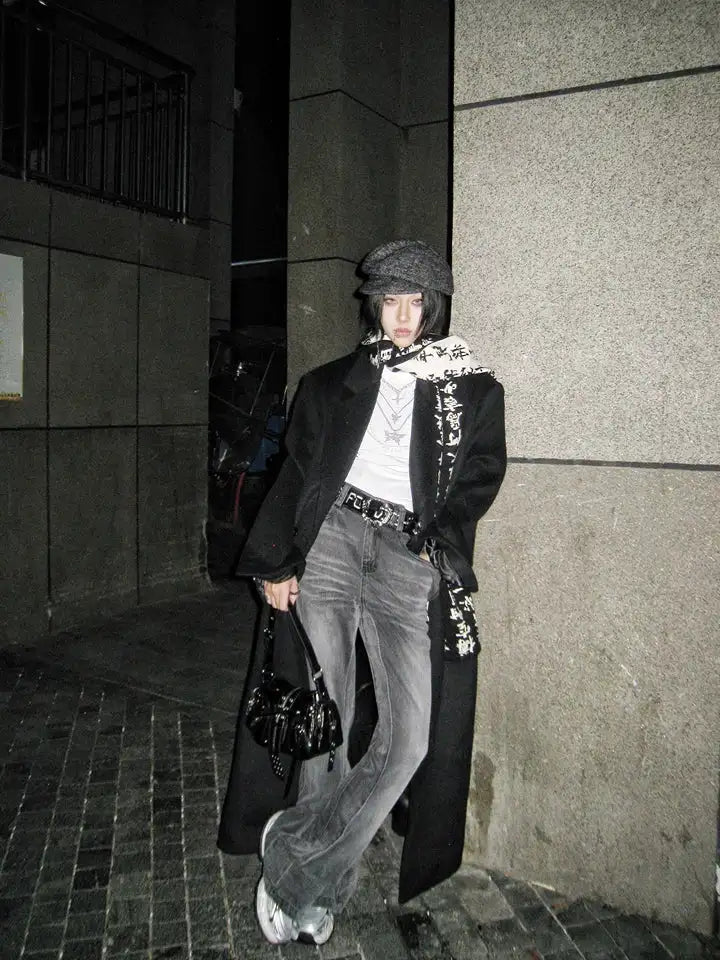
Techno rave fashion is not "dark clothes plus glitter." Anyone who believes that has never stood at a Berghain door, never danced through eight hours of hard techno, and never tried to survive an August open-air camp without heatstroke. The real code runs deeper.
Techno-rave outfits work on three conditions at once: door-approved (matte black, no logo clutter, no costume), dancefloor-approved (breathes at 32°C in the floor fog, holds up through three hours of movement), and after-hour-approved (survives coat check, sunrise in the park, and the subway ride home without looking like a costume).
This guide covers what belongs. Where Berlin ends and the rest begins. How men's and women's outfits differ (spoiler: less than the internet claims). Which brands actually write the vocabulary — and which ones you won't find on Zalando. Plus the six mistakes that sink 80% of attempts.
What that looks like in motion — compact, with real material:
Origin
Where techno rave fashion comes from — Berlin, Berghain, and the hard beat
The uniform now known worldwide as "techno rave fashion" started in Berlin, picked up harder edges in Rotterdam, and spread through open-air festivals in Poland, Czechia, and Italy. The starting point isn't a brand or a designer — it's the Berghain door, which has decided what gets seen on the floor since 2004.
Doormen like Sven Marquardt established a filter that was never spoken but understood by everyone: no tourist outfit, no bachelor-party look, no logo clutter, no costume. What remained was black, technical, mobile. Fabric you can wear without anyone thinking you got dressed up. That's Berlin's definition of style — and it's held the techno rave wardrobe for two decades.
In parallel, Rotterdam built up hard techno in the '90s — faster, harder, less pretty. The outfits there got more functional: cargo, tank, heavy boots, often sportswear-adjacent. What Berlin carries elegantly (trench plus boots), Rotterdam carries raw (pants plus sport top plus boots). Both schools are now part of the same visual vocabulary — Berlin supplies the stillness, Rotterdam supplies the movement.
Definition
What actually counts as techno rave fashion?
Techno rave fashion is an outfit system built from four fixed conditions. If one doesn't hold, the look tips over — into festival cosplay, into Berghain caricature, into "bachelor party in Mitte." The four conditions aren't stylistic, they're functional. Each one solves a problem of the actual night.
90 %
matte black in the club
3 h
non-stop dancefloor-ready
0
visible brand logos
1
hardware statement, max one
These four numbers are the test. An outfit that breaks one — 60% black instead of 90%, or a visible Tommy Hilfiger logo, or boots plus chain plus harness plus beanie — isn't techno rave fashion anymore. It's a costume with a techno soundtrack.
Concretely, the vocabulary includes:
- Matte black fabrics as the base — mesh, heavy cotton, tech nylon, faux leather. Shine and sequins belong to EDM festivals, not techno.
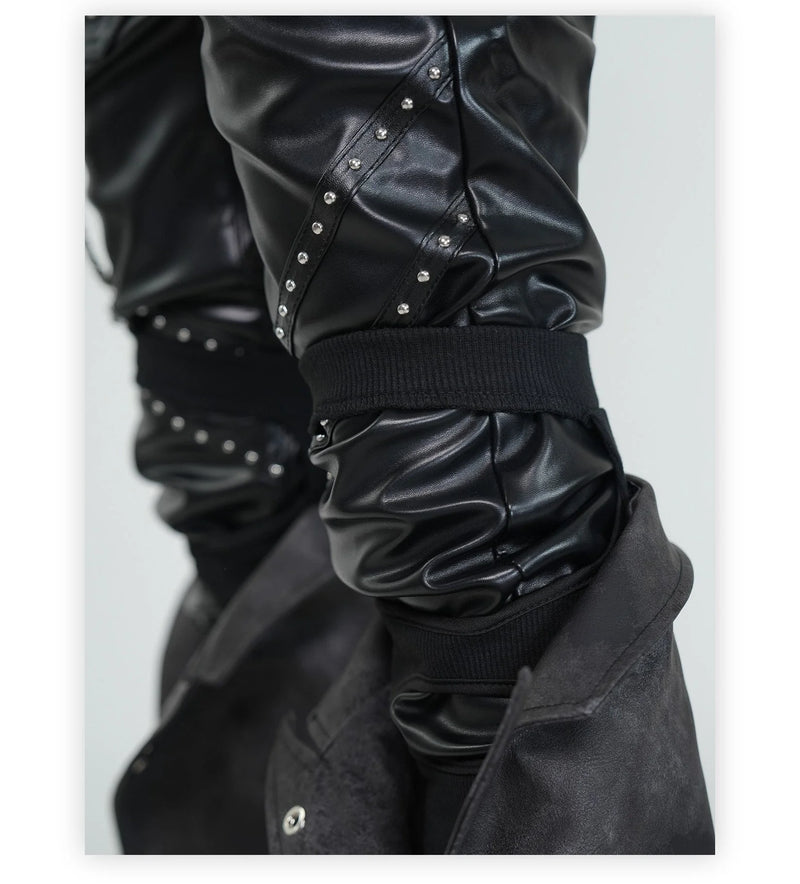
- Functional hardware — zippers, buckles, D-rings, magnetic closures. Never as a jewelry statement, always as a visible construction detail.
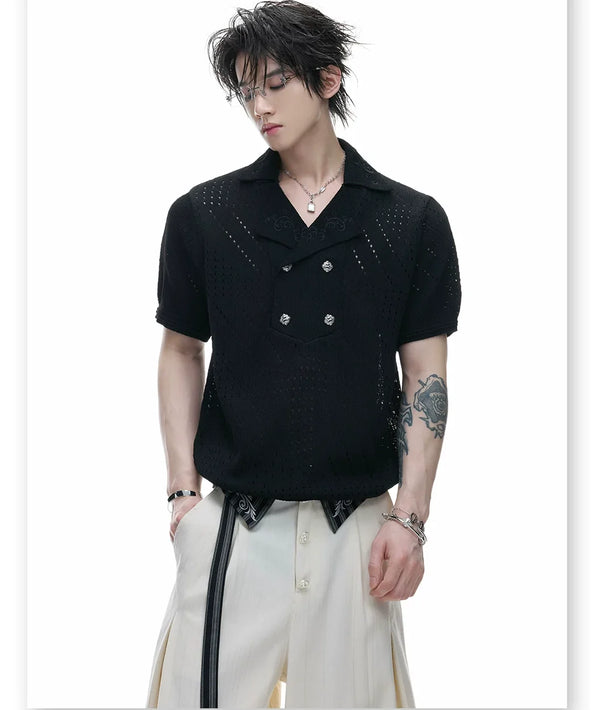
- A mobile skin layer — mesh tank, crop long-sleeve, sports bra, bandage top. Has to breathe at 32°C on the floor and stay warm enough at coat check.
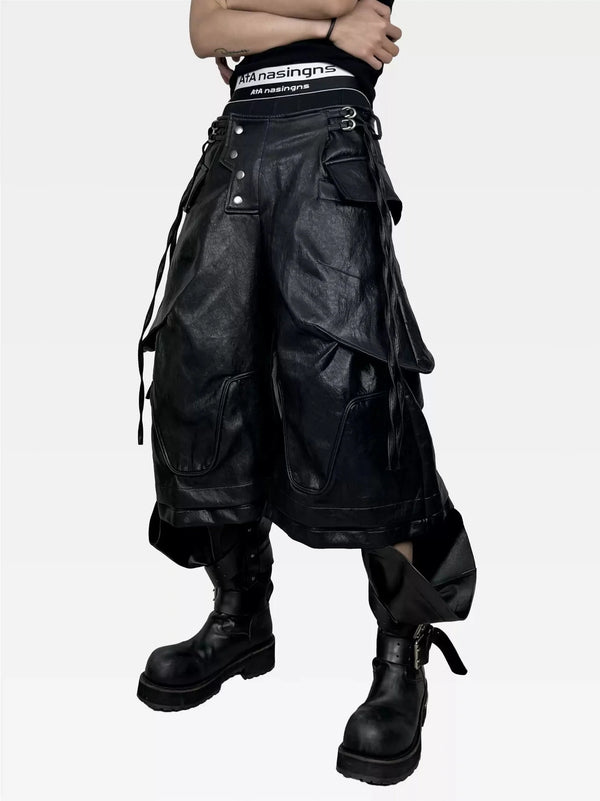
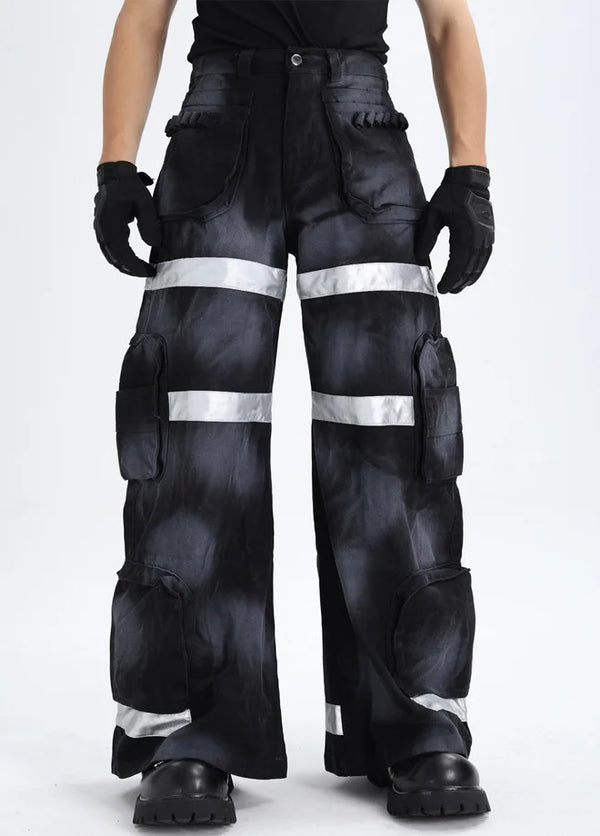
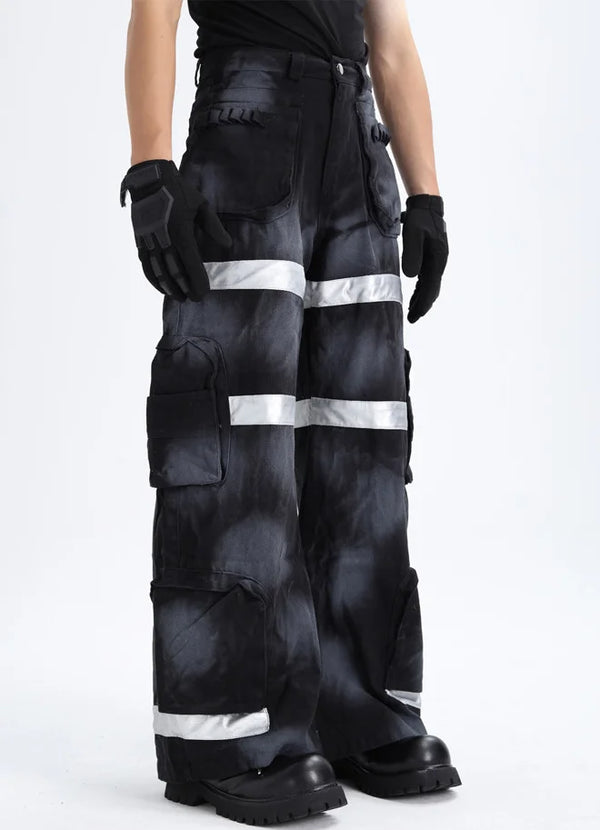
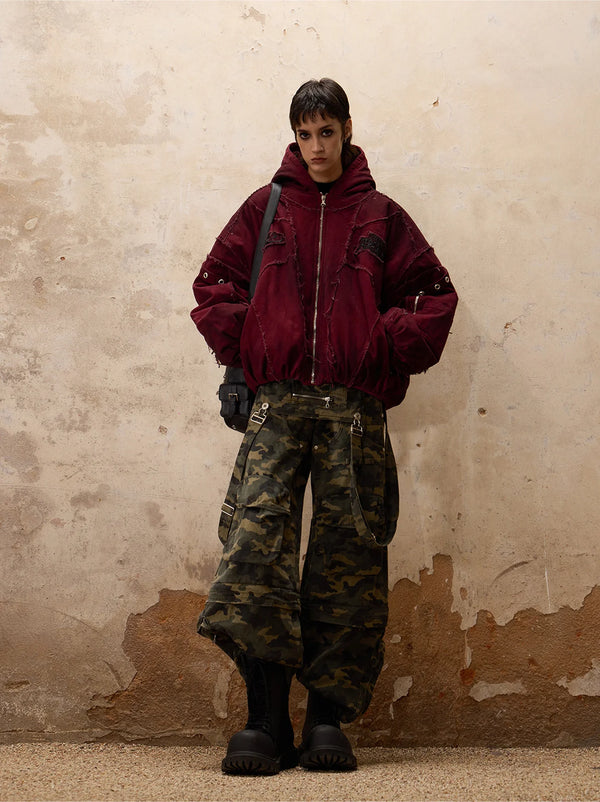
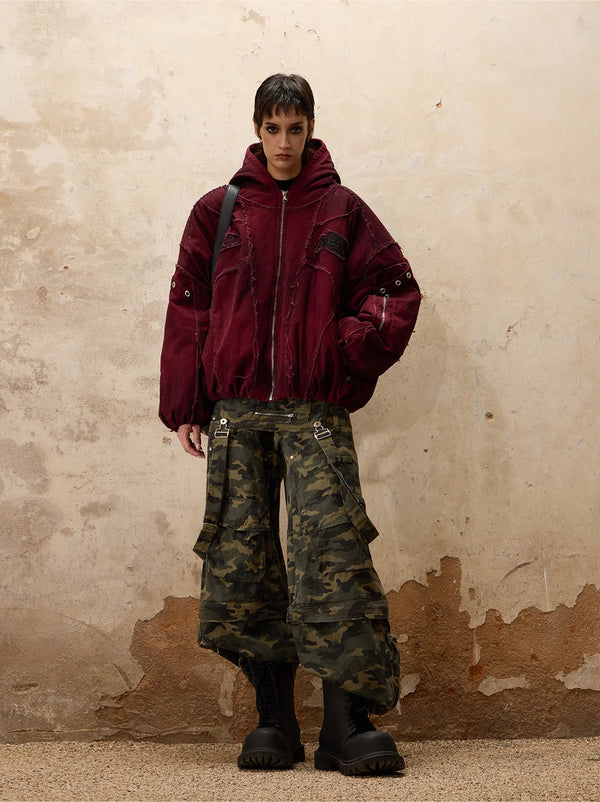
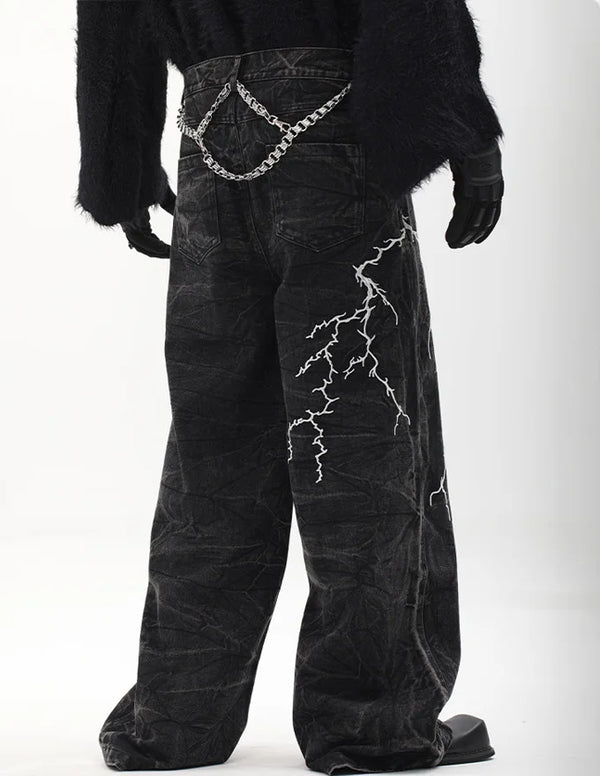
- Volume bottoms or sport tights — cargo, parachute pants, wide-leg, rave skirt over tights. Never skinny jeans on the floor — they cling after 20 minutes.
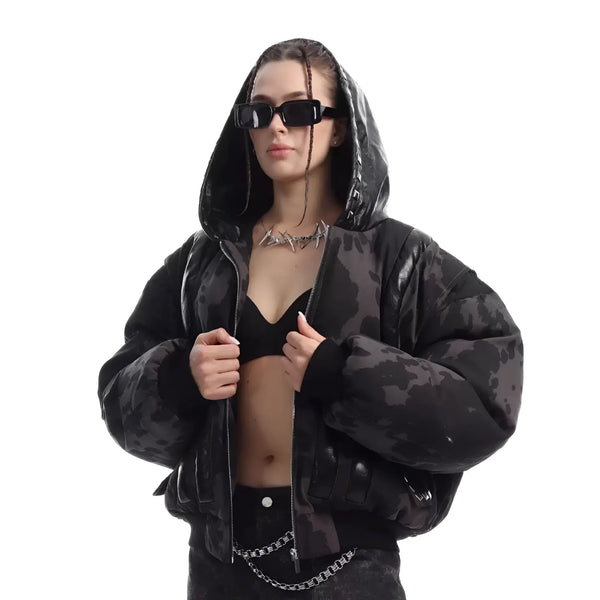
- A layer for the door and the way home — bomber, trench, technical puffer. Gets checked at the club, but has to work outside — even at 7am.
- Boots or platforms — combat, buckle, Demonia platforms, tabi. Sneakers break the silhouette and don't survive six hours on a sweat floor.
If three of these six don't hold, it's not techno rave anymore — it's "dark fashion with festival energy." And that's not the same thing. One rule holds all six together:
5 archetypes
The 5 archetypes — Berghain, Open Air, Hard Techno, Acid, Industrial
"Techno rave fashion" isn't one look. It's five, overlapping at the edges but solving different problems. Line up a Berghain club-night outfit, a Pol'and'Rock camp, and a hard techno warehouse in Rotterdam, and you see the five split cleanly apart. Each with its own black quota, its own layer depth.
Which of the five fits you depends less on taste than on the club you're heading to — and how many hours you're planning to dance. How this splits between men and women comes next.
Gender split
Techno rave outfits, men vs. women — where it actually differs
The rules are the same. Matte black in the club, functional hardware, a mobile skin layer, no logo — applies to every body. What differs is the distribution. Where men's outfits often push all the volume down (cargo plus tank plus boot), women's outfits work more with layering up top (bandage top plus mesh plus bomber plus harness).
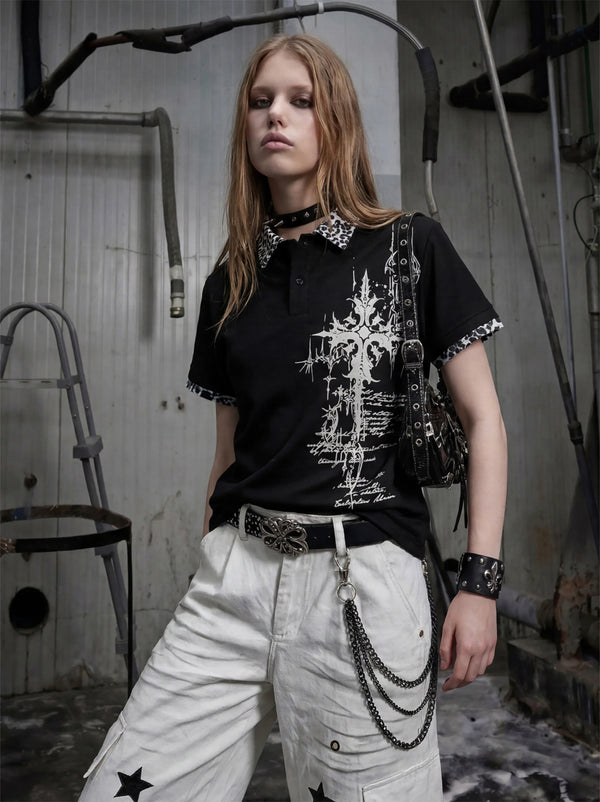
The women's version: more options up top. Bandage top, crop, mesh blouse, corset, bralette. Boots go platform-higher more often (Demonia-style) or knee-high. Hardware slides more into statement jewelry: choker plus body chain plus ring can work — not for men. The skirt works here too: a leather skirt over sport tights is a Berlin women's standard, not an experimental look.
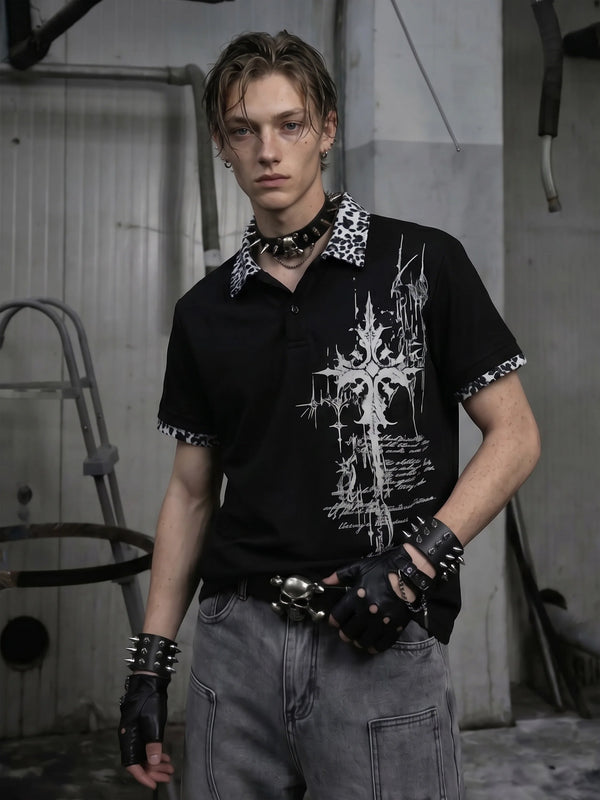
The men's version: tighter on top, more monochrome. Tank, mesh long-sleeve, technical jersey. More layers on the outside (bomber plus vest), less on the body. Hardware stays functional and singular: one chain, or one buckle belt, or one ring. Never two of those. Cargo or parachute pants are the default bottom — slim cargo reads too tidy on the floor.
What both need: the same 90 percent black quota and the same hardware discipline. Curvy bodies follow the exact same rules — the code works completely independent of size. The only adjustment: more drape (trench instead of bomber) reads longer and cleaner on every body. What doesn't work is "less black because I'm not confident" — that weakens the look, not the body.
Brands
Techno rave brands — which labels actually write the code (and why Zalando isn't enough)
Search "techno outfit women Zalando" and you'll find cargo pants with ASOS markup, black tops with no mesh, and lace-up boots from the festival bin. Works for the photo inspo, but fails at the Berghain entrance on first glance — the fabrics read mainstream mall, not floor. Mainstream retail copied techno as an aesthetic, not as a code.
The brands that actually write the techno rave vocabulary — sorted by iteration:
- ACRONYM (Errolson Hugh) — Berlin's techwear authority. When a bomber can do three things at once (waterproof, packable, sling-convertible), that's ACRONYM logic. Expensive, but the vocabulary comes from there.
- 1017 ALYX 9SM (Matthew Williams) — the buckle-hardware language. When pants or a bag close with a functional industrial buckle, that's quoting ALYX. Hardware as construction, not jewelry.
- Heliot Emil (Copenhagen) — tech drape with Berghain aesthetics. Long coats, mesh layers, black architecture. The elegant iteration of techno-wear.
- HYEIN SEO (Seoul/Berlin) — trench and harness pieces that could fall straight out of a Berghain lookbook. Cult brand of serious floor wardrobe.
- Y/Project (Glenn Martens) — the experimental cut language. When one pair of pants has three leg iterations in one, that's Y/Project. For open-air and after-hour drape.
- Vetements — hoodies, cargo, tech-oversize. The brand's irony period (the DHL-tee era) is dead, but the cut stays the reference for every techno hoodie.
- Demonia — platform and buckle-boot authority since the '90s. If you need platform and Doc Martens feel too tame, it's Demonia.
- Berghain club-night merch — limited t-shirts, tank tops, tote bags. Not as a brand, but as a signal — worn without ironic distance.
- Killstar — gothic crossover for the industrial iteration. Corset, latex, chain layering. Not for Berghain Hard, but clean for goth-techno nights.
Anyone who wants to wear the vocabulary without paying designer prices looks for these labels on Vinted and Vestiaire, or at DTC brands like Fūga Studios, which translate the vocabulary without the luxury markup. Zalando, ASOS, and About You aren't bad shops — they just speak a different language.
Category · Bottoms
Rave outfit men's pants & women's bottoms — the fit rule
The pants decide whether your techno outfit is dancefloor-ready or not. Skinny has been out since around 2018 — tight on the leg clings after 30 minutes on a sweat floor, movement feels trapped, and the silhouette reads too tidy for the genre's hardness. The new rule: fitted on top, volume or technical construction on the bottom.
Techno bottoms that work are matte, heavy enough to fall, light enough to breathe. Cargo with real pockets (wallet, earplugs, water need to fit). Parachute pants with a drawstring hem — works the same for men and women. Wide-leg jeans in black or charcoal. Leather pants only in winter, dead in summer. For women, plus: sport tights under a mini skirt — a Berlin standard, not a risky look.
If you want one pair of pants that works across all five archetypes, go with distressed black cargo with a wide leg. That's the common denominator — from Berghain to a Polish open air.
Category · Skin layer
Tops & skin layers — mesh, crop, tank
The skin layer is the hardest-working piece of the whole outfit — it breathes at 32°C on the floor, holds up at 14°C at coat check, and looks different under UV light than under the sun. Graphic print t-shirts fail on all three counts. What works: mesh, crop long-sleeve, sports bra, bandage, a plain tank with no marketing print.
The rule: dark, body-close, no story on the chest. If your top makes a statement (slogan, brand logo, ironic print), it fights against Berghain's silence. A matte black mesh says "I belong here" more than any "Berlin Underground" tee. Original Berghain club-night merch is the only exception — every other statement tee reads as a mall attempt.
If you want to test the mesh look, wear a mesh long-sleeve under an open bomber jacket. Easiest entry — if it doesn't work out, it still looks clean. For women, plus: the same mesh over a sports bra becomes open-air-ready.
Category · Outerwear
Outerwear & the coat-check layer — bomber, trench, tech puffer
The outerwear is what decides your door selection — and what ends up at coat check until you come out at seven in the morning. It has to work in both worlds: filtered enough that the doorman lets you through, worn-in enough that it doesn't look like a festival souvenir in the park afterward.
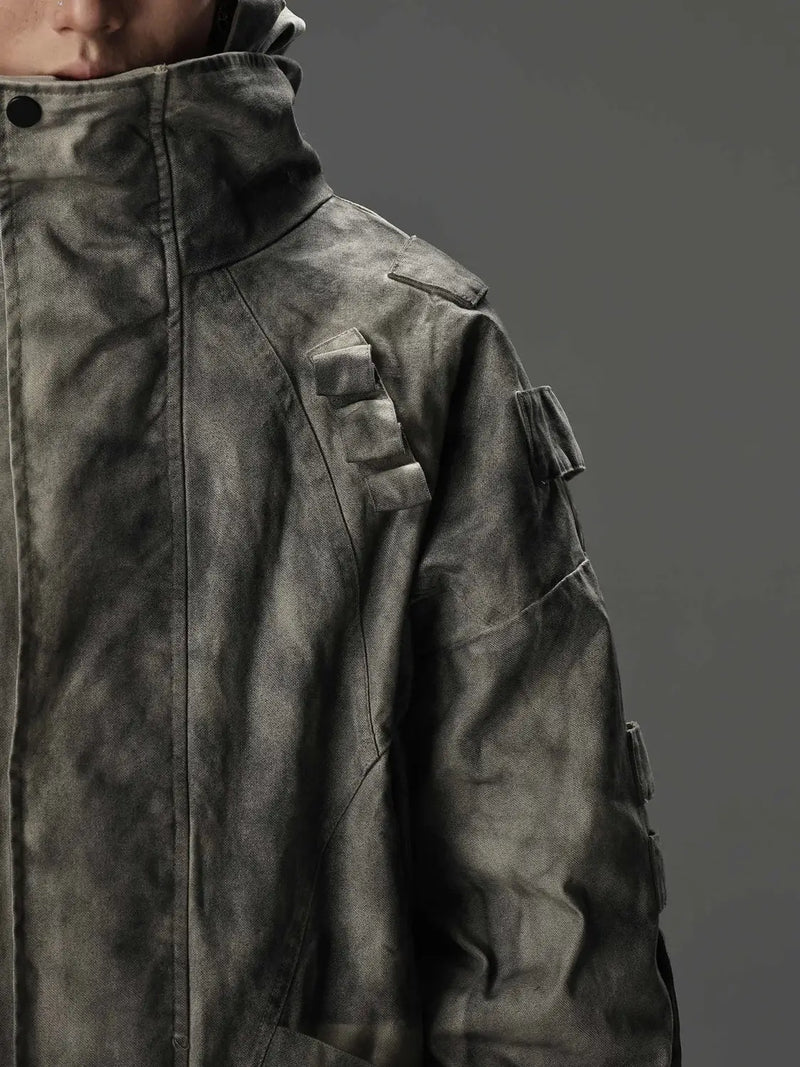
Three jacket types work in techno rave: a matte black bomber (shortest learning curve, works on every body), a tech puffer with functional details (magnetic closure, detachable sleeves, multi-pocket — the ACRONYM logic), and a long trench or coat for the drape iteration (the Heliot Emil school). Leather jackets work too, but only matte — glossy leather fails under UV light.
If you don't own a black bomber yet, that's your first move. Everything else in the outfit hangs off it — and it's the cheapest investment with the biggest impact per euro.
Category · Footwear & Hardware
Boots, platforms & hardware — the floor's grip
Shoes and hardware are the two spots where techno rave outfits tip over most visibly — one way or the other. Sneakers, for instance, are out on principle, whatever the brand. Air Max, Forces, Sambas — the round sneaker toe breaks the silhouette and doesn't survive a sweat floor. A clean sneaker reads office-casual, a dirty one reads like a tourist's attempt at Berghain.
What works: a tall-shaft combat boot (matte, black, long laces), a buckle boot with multiple closures for the industrial iteration, Demonia platforms for the curvy women's and goth-techno iteration, or a technical sport boot (Salomon XT-6 or similar for the hard-techno-NL school). On hardware: one statement — a chain, or a buckle belt, or a harness, or a body chain. Never two of those at once.
If you're just wearing combat boots and exactly one piece of hardware, you've already won half the look. Techno rave fashion is anti-addition — every extra statement weakens the one before it.
Styling physics
How to style techno rave outfits — the physics of the floor
A techno rave outfit runs on three tests at once. First test: the door filter. Look at your outfit in the mirror — if you get the sense someone would call it "a costume," it is one. Real floor wardrobe never looks dressed-up, always everyday-but-dark. Second test: movement. Raise both arms overhead, do 30 seconds of bass-jumping in your bedroom. If anything pinches, sticks, or slips, it stays home. Third test: the 7am subway. Look at your outfit under normal daylight. Does it still look functional, or like leftover Halloween?
Door filter, movement, daylight — three tests, one outfit. Get two right, and the third follows. Nail one, and you have arrived on the floor.
In practice, that means: bomber plus mesh plus cargo plus boot passes all three. Crop top plus glitter mini skirt plus platform heels only passes under UV light. We've got the full breakdown with Berlin-specific door examples in a dedicated guide:
Techno rave doesn't stand alone, though — it overlaps at several edges with other floor codes. Hard techno shares the functionality, Berlin techno shares the black, industrial shares the hardware, acid revival shares the '90s reference. Once you've got techno rave down, you can read the neighboring codes and mix deliberately without sliding into cosplay.
Here are the four most important neighbours — each with its own guide, if you want to go deeper:
Seasonal
Techno rave in summer (open air) vs. winter (club)
In winter, techno rave is easy. Heavy bomber, cargo, long-sleeve, combat boot, maybe a beanie. Six layers if needed, all matte black, all of it works. The challenge comes in summer, when the outer layer — the biggest visual surface — disappears and the heat dictates fabric choice.
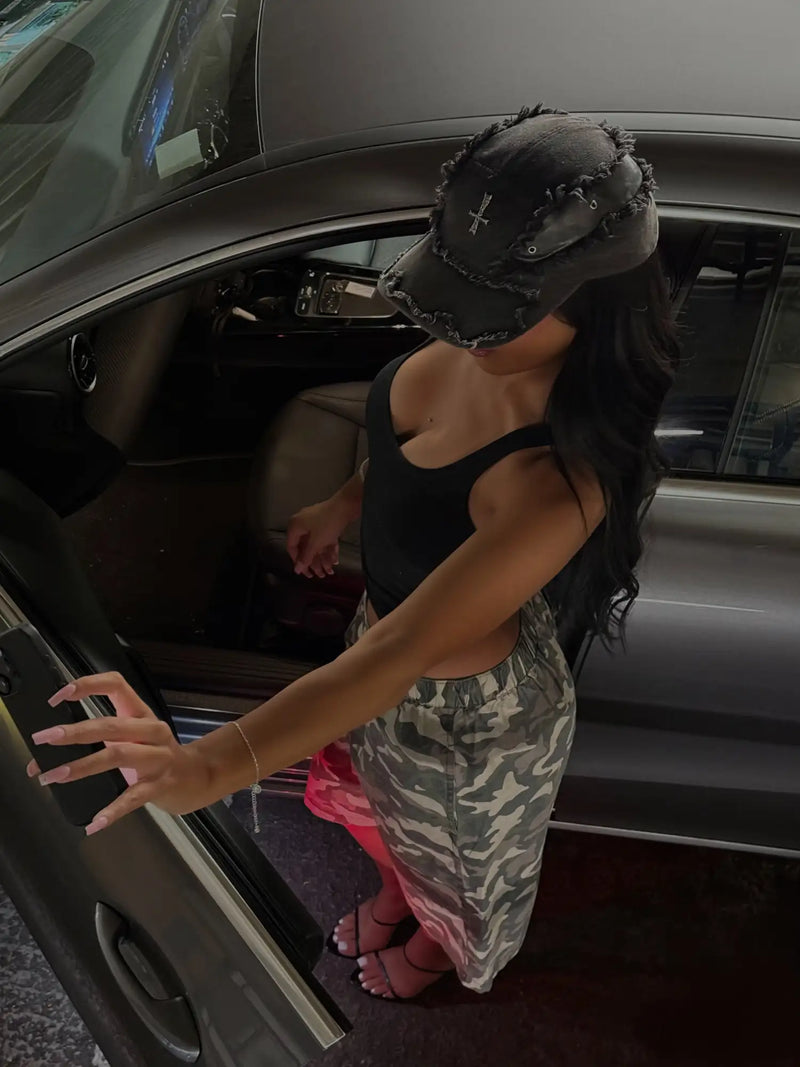
Summer open air runs on what used to be under the jacket. Mesh tank or bandage top becomes the main view. Cargo stays — but in a lighter material (nylon instead of heavy cotton). Leather pants are dead at 30°C — replaced by wide-leg tech pants. For women, plus: sports bra plus mesh plus mini skirt becomes the open-air standard set. Combat boots run year-round — in peak summer, the tabi or buckle sandal works too.
There's a year-round solution built right into the hardware, too: pieces that adjust their own layer thickness. A convertible puffer with detachable sleeves, for example — a full jacket in winter, a vest in spring, a pure statement piece over a tank in summer. Here's what that looks like in motion:
What does not work
The 6 most common techno rave mistakes — what NOT to do
Techno rave outfits have six spots where they reliably tip over — no matter how expensive the individual pieces are. If you avoid just one mistake, make it number one. That's the ultimate door-killer.
Action
How to get started in techno rave — the first 4 pieces
You don't need 30 black pieces to wear techno rave. You need four that'll show up in 80% of the outfits. Everything else builds around those — and you don't buy anything more until the four are locked in.
In order: a matte black tech bomber (your biggest impact per euro — gets through every door, works year-round). Black cargo or parachute pants with a wide leg. A mesh long-sleeve or tank in the same black (identical for men and women). Combat or buckle boots, matte black, tall shaft. Hardware comes as an optional fifth — a chain or a harness — but only once the four are locked in.
Outfits for real
Techno rave outfits in real life — what it looks like on the street
Before you build your own, look at how others wear it. The five archetypes above look different in the feed than in lookbook photos: dirtier, less perfectly arranged, often with one layer too many or too few — and that's exactly why they work. Lookbook is theory, floor is practice.
This is the fastest way to check whether a techno rave outfit even works on your body type — before you spend any money. Real-worn beats any mood board.
To close
Techno rave fashion is a system — not a costume, not a trend
If you take one thing from this guide, take this: techno rave doesn't run on pieces, it runs on tests. Anyone who can pass the tests builds a hundred outfits out of twenty pieces. Anyone who just buys pieces ends up with a full closet and not one outfit that actually holds up on the floor.
The whole logic of this guide reduces to one sentence:
The rules have been stable since the Berghain filter of the early 2000s, and they'll stay that way as long as the door stays black and the beat stays hard. But you don't have to wait until you know all three tests by heart. Start with the one archetype that fits your scene best. Whatever you don't know yet, you'll learn by wearing it.
And that's the point: techno rave reads, in theory, like a tight corset of rules, but feels liberating in practice. Once you've got the code down, every further outfit is a variation on the same four or five building blocks — not a new invention.
FAQ
Frequently asked questions about techno rave fashion
The questions we often get by DM and email — short, clear, no detours.
What's the difference between techno rave fashion and the EDM festival look?
Where can you buy techno rave outfits — does Zalando work?
Does techno rave fashion work for curvy bodies too?
What shoes work with techno rave fashion besides combat boots?
Do I need a different outfit for Berghain than for an open-air festival?
What do I wear in summer when a long trench or bomber is too warm?
Can you get into Berghain without an all-black outfit — does nothing else work?
What do you think?
Tell us on @fuga_studios
About the author
Philipp Fuge — Founder · Berlin
Founder of Fūga Studios. Writes the journal himself. Berlin · Shanghai · Tokyo · Poznań — four cities, one logic.