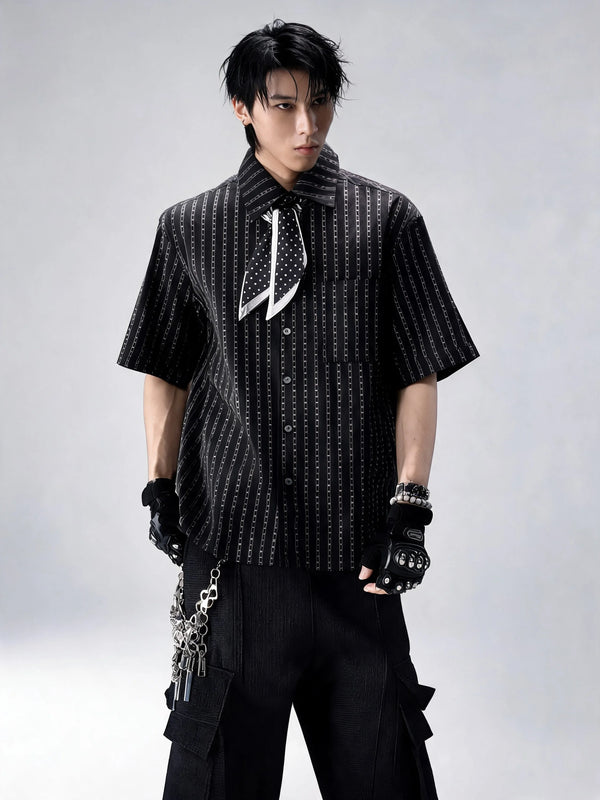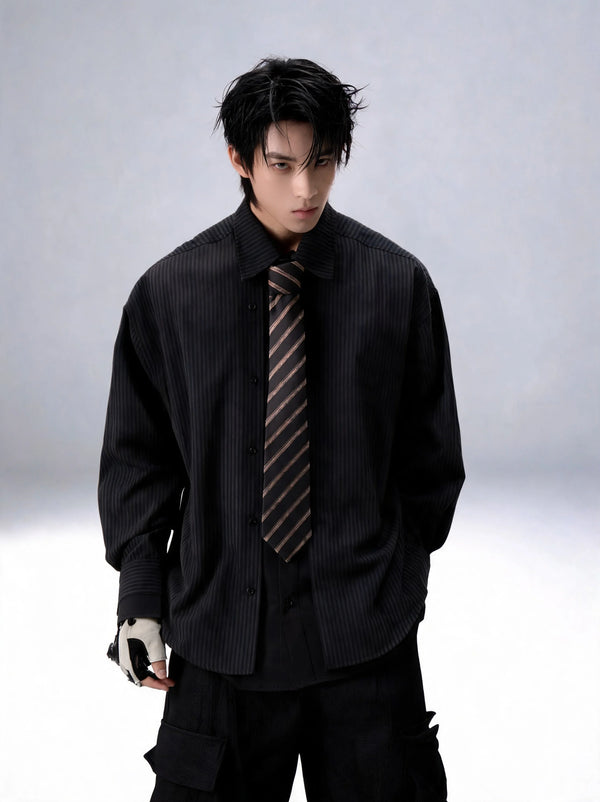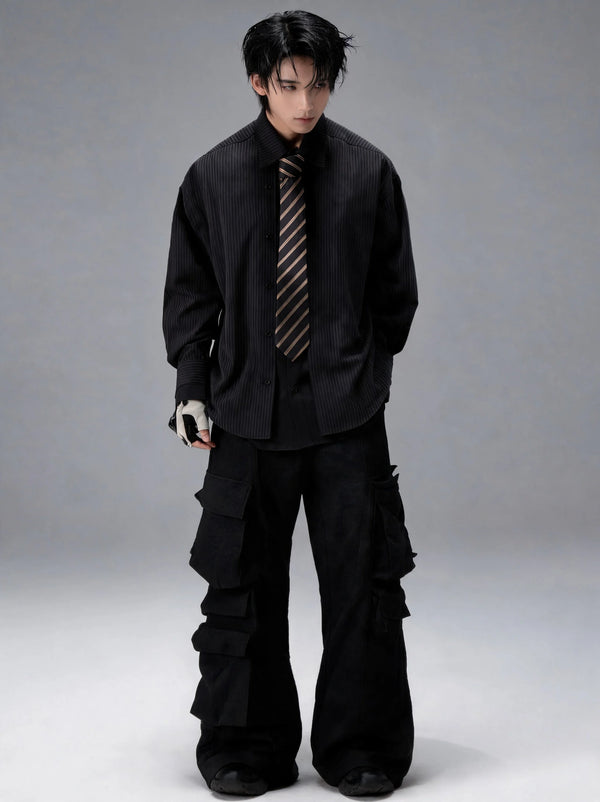
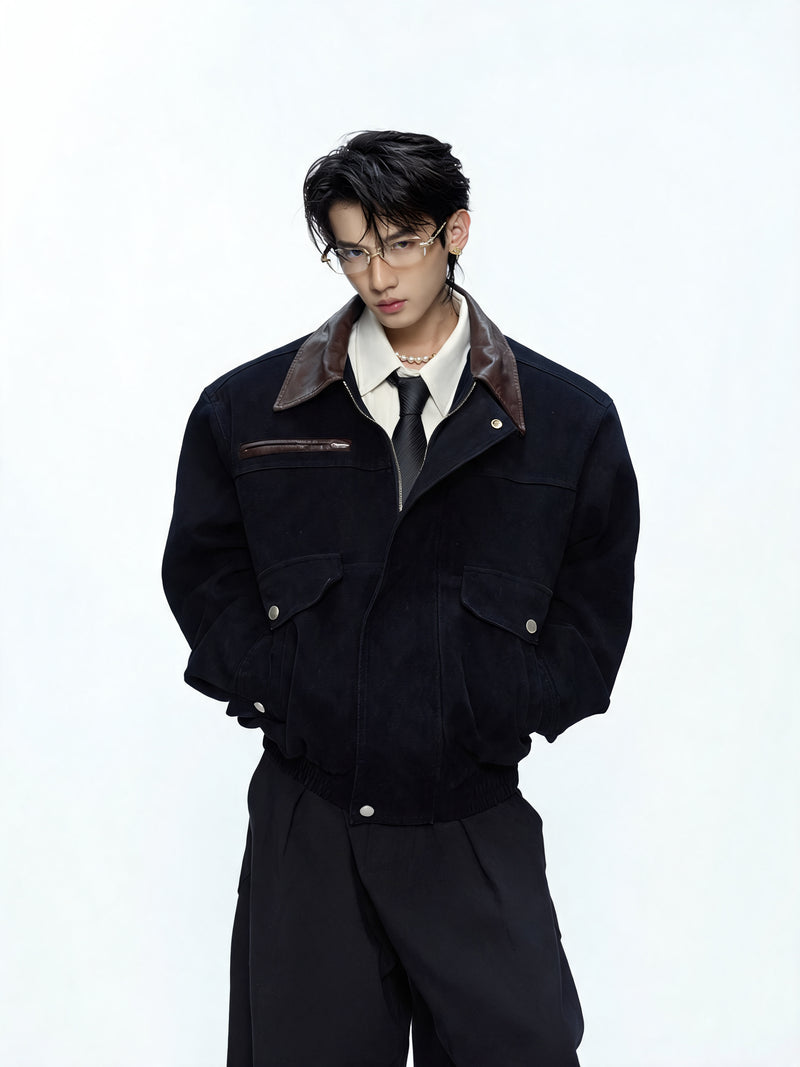
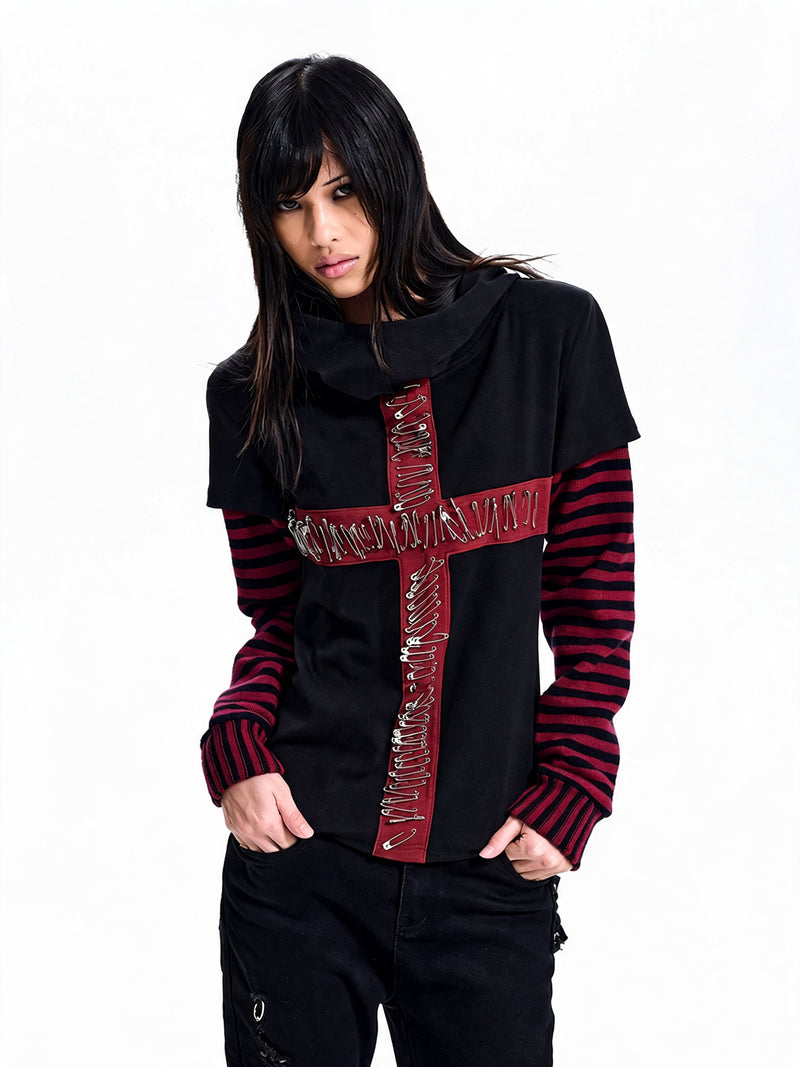
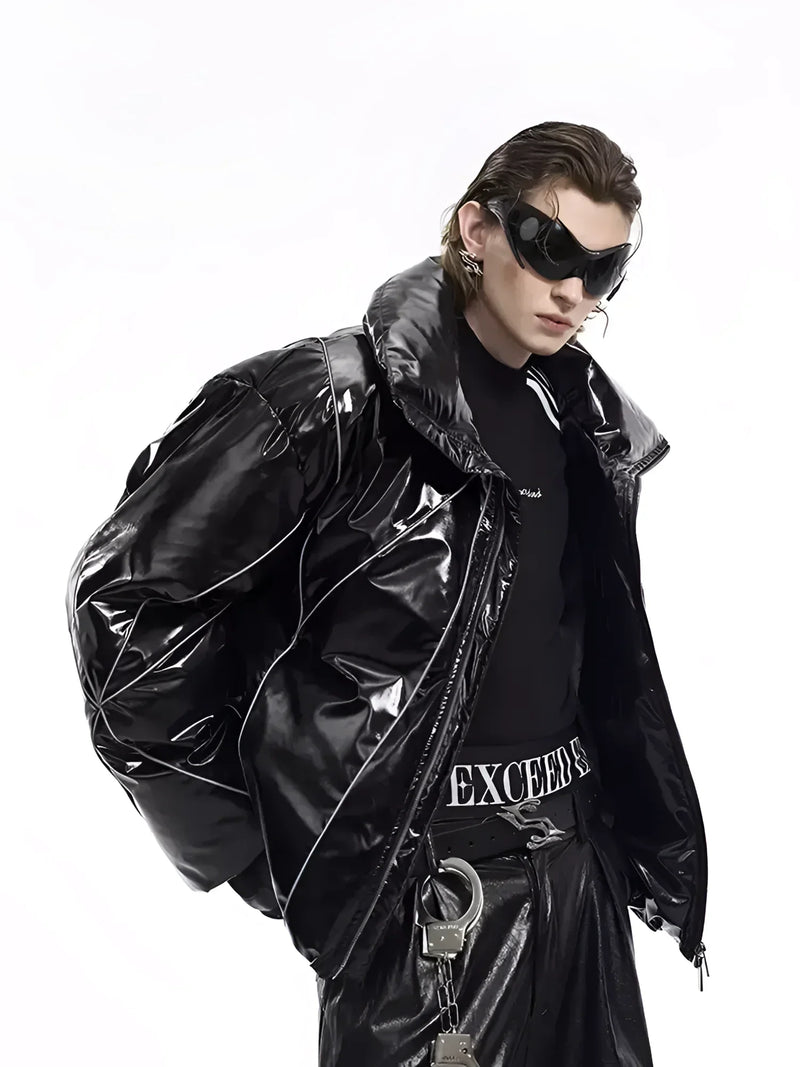
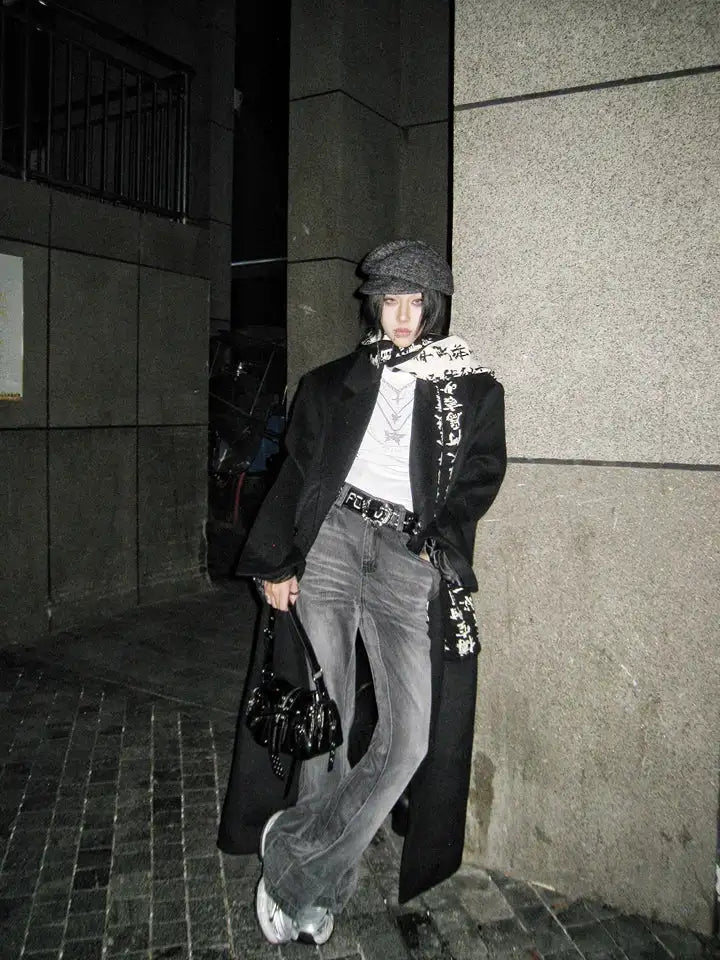

London, winter 1981. Three figures stand outside a squat in Brixton, and they have nothing left in common with the colourful art-school rebels of 1977. Black leather jackets, backs covered completely in studs and band names. Trousers so tight they have to be tucked into the boots. Hair standing vertically, fixed with soap and sugar water. Nobody here wants to shock. This is everyday life, and that is exactly what makes it serious.
Punk Fashion 80s is the second, harder phase of punk style: less art school, more street, less quotation, more uniform made of leather, studs, tartan and boots. The eighties split the look into four directions, from Hardcore to Deathrock, all of them dosing the same basic kit differently. Where that sits in the bigger picture is shown in our Punk Fashion Guide.
Before the pieces, the decade itself is worth a look. The eighties look only makes sense once it is clear what it was aimed against this time: no longer the parents, but its own predecessor generation from 1977.
Fundamentals
What is Punk Fashion 80s? The look of the second wave
Punk Fashion 80s describes the phase in which punk stopped being a London boutique invention and became an international street uniform. The first wave around 1977 was provocation with safety pins and slashed shirts, often curated by designers. The second wave from roughly 1980 was the opposite: anonymous, mass-scale, self-built. The look got darker, heavier and far more uniform.
The core pieces were as fixed as a kit. Black leather jacket, band logos painted and studs hammered across the back panel. Tight jeans or tartan trousers, often torn and sewn back together. Heavy boots on top of that, mostly Dr. Martens or combat boots from army surplus. Band shirts, patches, chains and a belt with pyramid studs completed the whole thing. Wearing that meant belonging, without saying a word.
The difference from the first wave lay less in the pieces than in the attitude behind them. In 1977 punk wanted to stand out. In 1982 punk wanted to survive: against police, recession and a decade running the other way with shoulder pads and neon colours. The numbers show how fast the field sorted itself.
4
directions shaped the eighties: Hardcore, Anarcho, Oi!, Deathrock
1980
Start of the second UK wave, harder and faster than 1977
100%
DIY: studs, patches and logos were set by hand
There was a clear trigger for the look shifting so radically. The first punk generation had run itself into the ground by 1979, gone commercial or turned into New Wave. Anyone still punk after that had to mean it differently, and you could see it instantly.
Origin
80s Punk Fashion History: From shock to uniform
The history of eighties punk style begins with a farewell. When the Sex Pistols fell apart in 1978 and the Kings Road became a tourist attraction, punk moved out of the boutiques and into the squats. The new generation, often labelled UK82 after the song by The Exploited, had no money for designer provocation. It had army stores, flea markets and a hammer for the studs.
That is exactly where the best known silhouette in punk history came from. The studded back of a leather jacket, the so-called backpatch layout with the band logo in the middle, became the scene's badge. Tartan, still a quotation of British class society in 1977, was now simply material, as trousers or a sewn-on piece of cloth. And the hair grew upwards: from the short spiked cut to the full-grown mohawk.
How radical that step was is easiest to understand in contrast to the first wave. The 1970s invented the vocabulary that the eighties then used to build whole sentences, and anyone laying both phases side by side sees two different decades with the same alphabet.
Inside the second wave, though, it did not stay with one single look. The decade broke punk down into clearly distinguishable directions, each with its own sound, its own politics and its own dress code that could be read at first glance.
The directions
Hardcore, Anarcho, Oi!, Deathrock: four dress codes of the eighties
Saying Punk Fashion 80s actually means four wardrobes. The directions shared boots and attitude, but differed in everything layered above. That distinction is still the key to placing eighties references in current fashion correctly.
For styling today this map is more than a history lesson. It explains why an eighties punk outfit works either through reduction, as with Hardcore and Anarcho, or through density, as with Oi! and Deathrock. Both at once tips into costume.
Jackets
Leather and studs: the 80s punk jacket as a statement
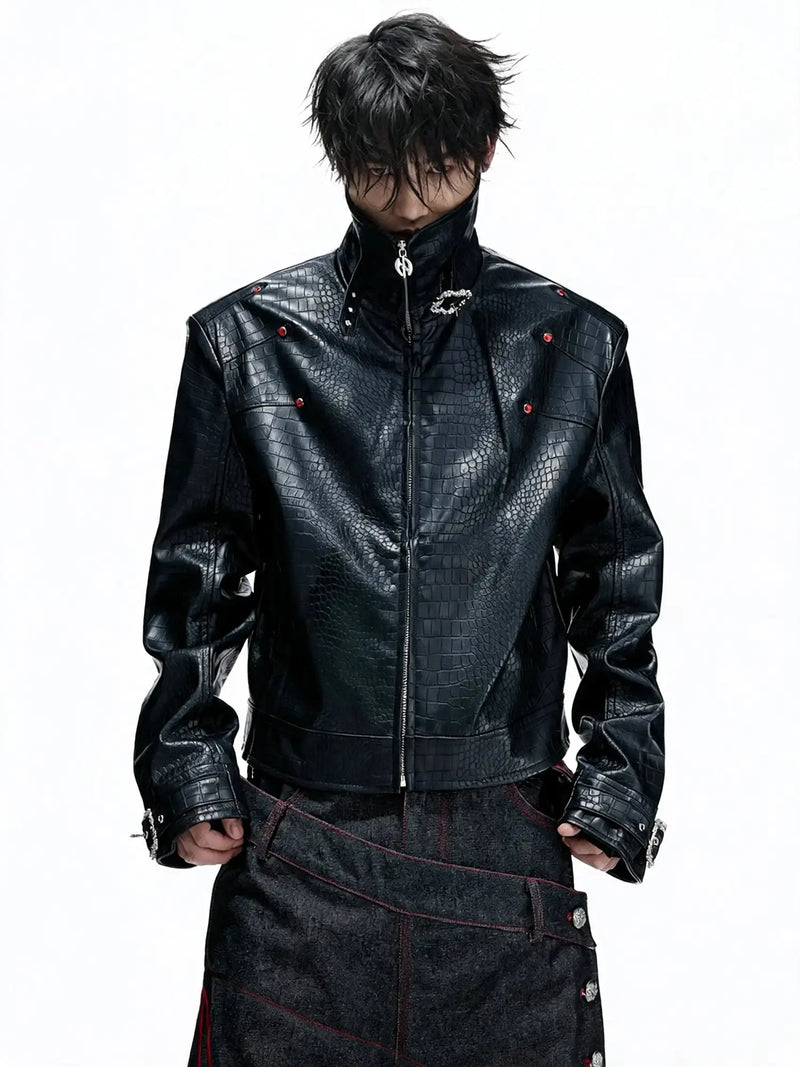
No piece carried the eighties like the jacket. The black leather jacket in biker cut was canvas, armour and CV in one: every stud hammered in individually, every logo hand-painted in white, every patch standing for a gig or a band. A finished jacket told years. Which is why it was never washed, never replaced and only lent out in an emergency.
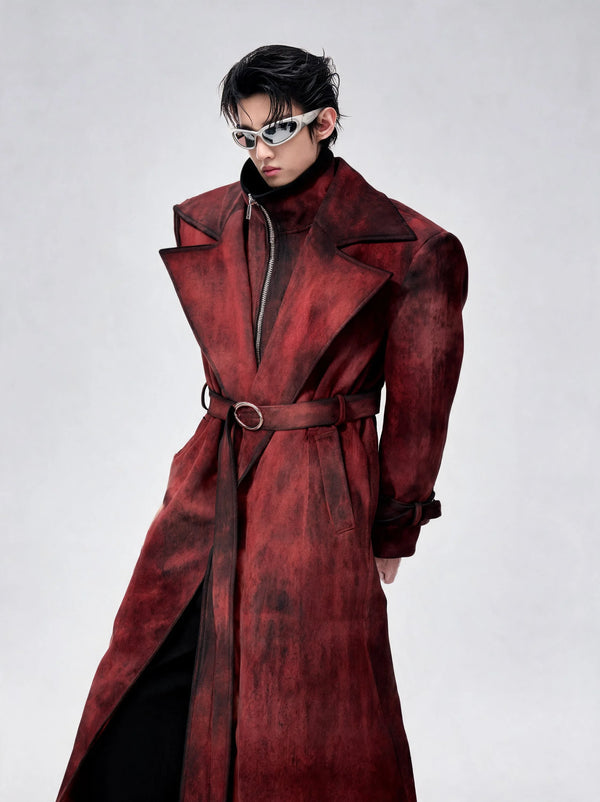
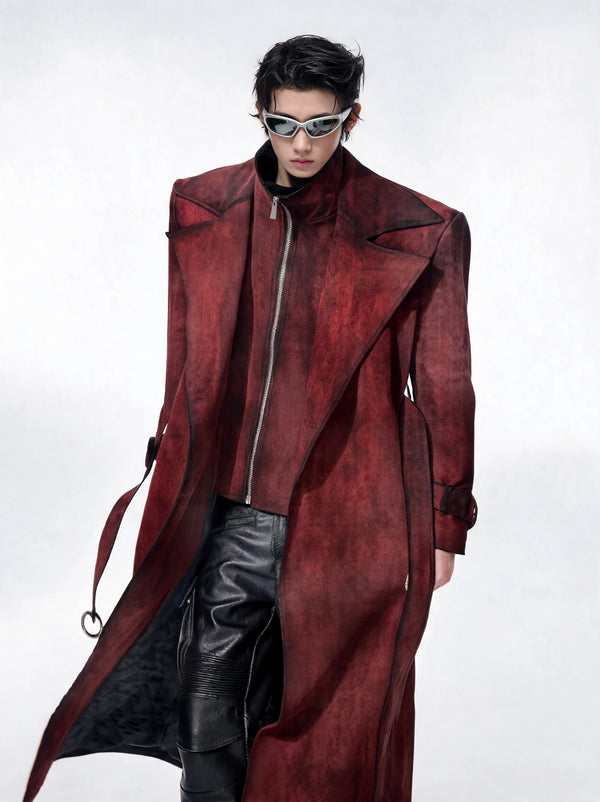
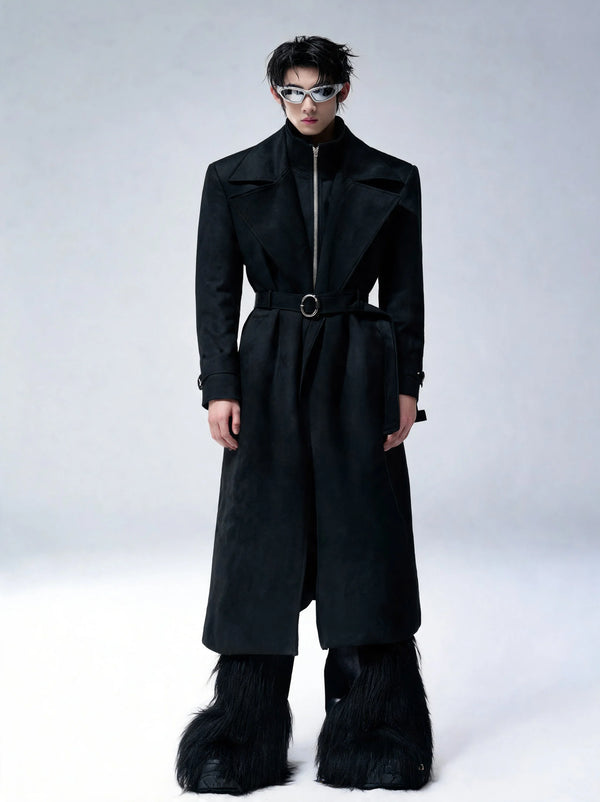
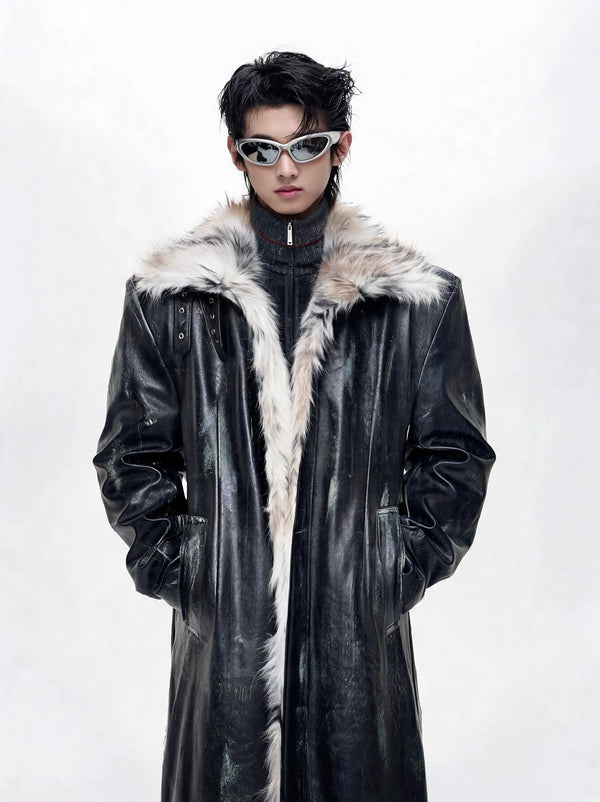
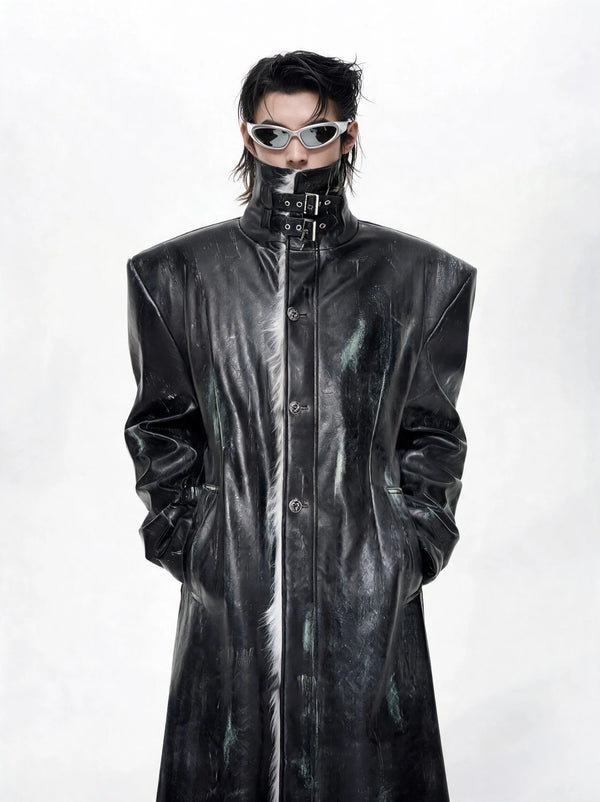
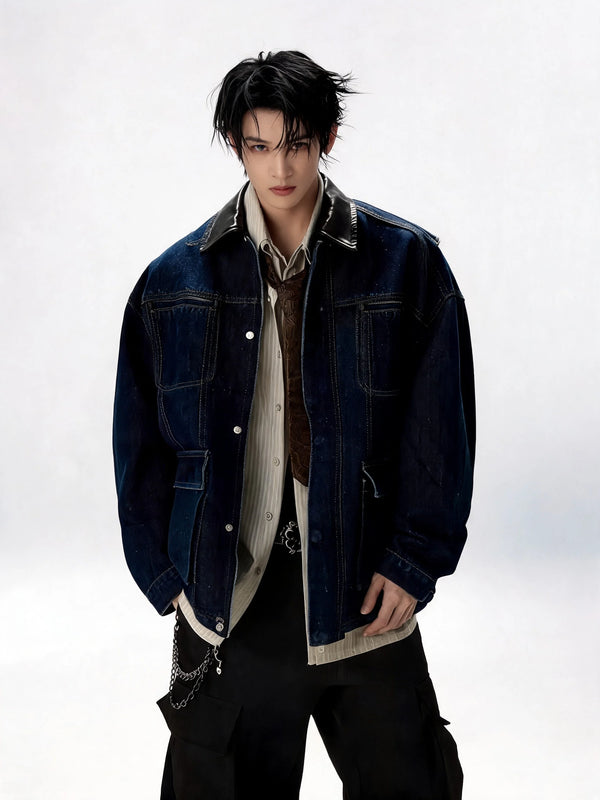
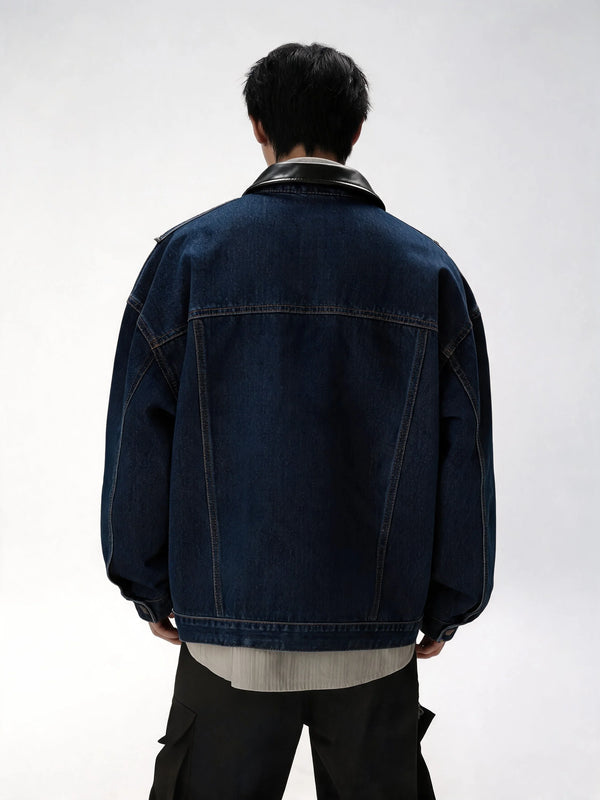
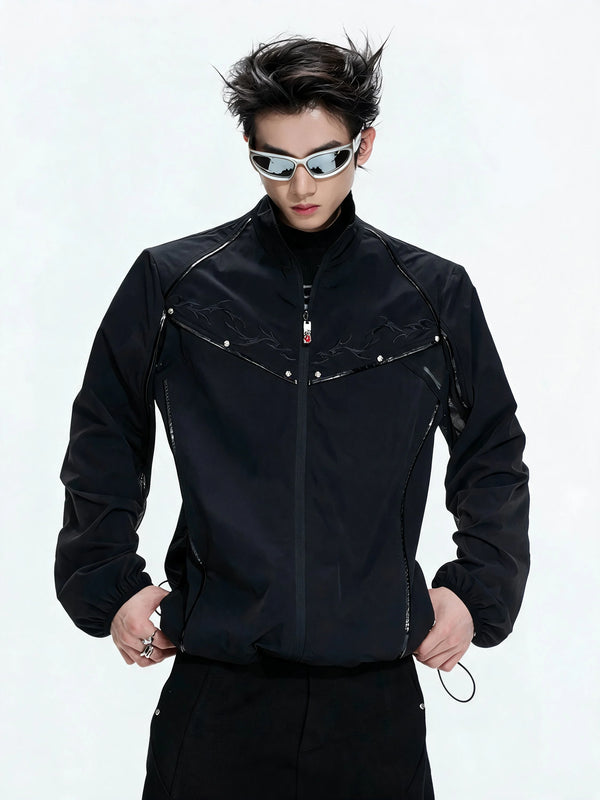
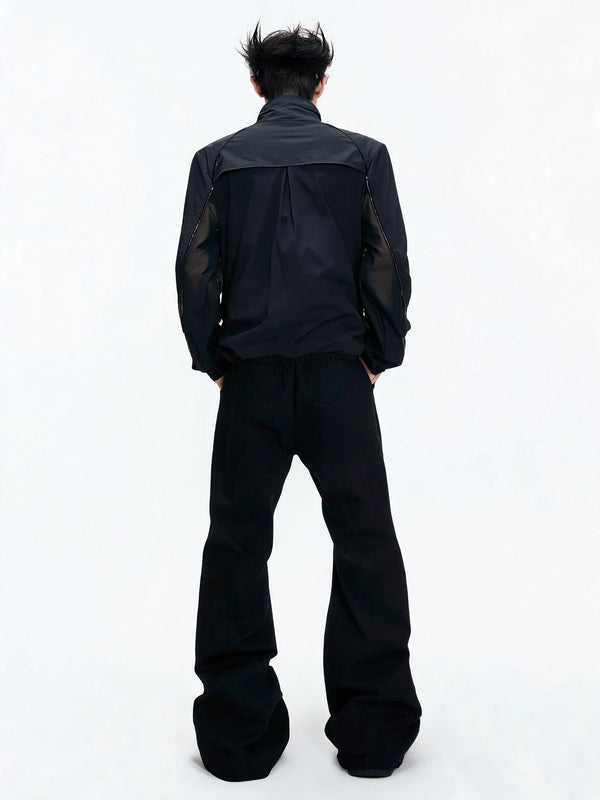
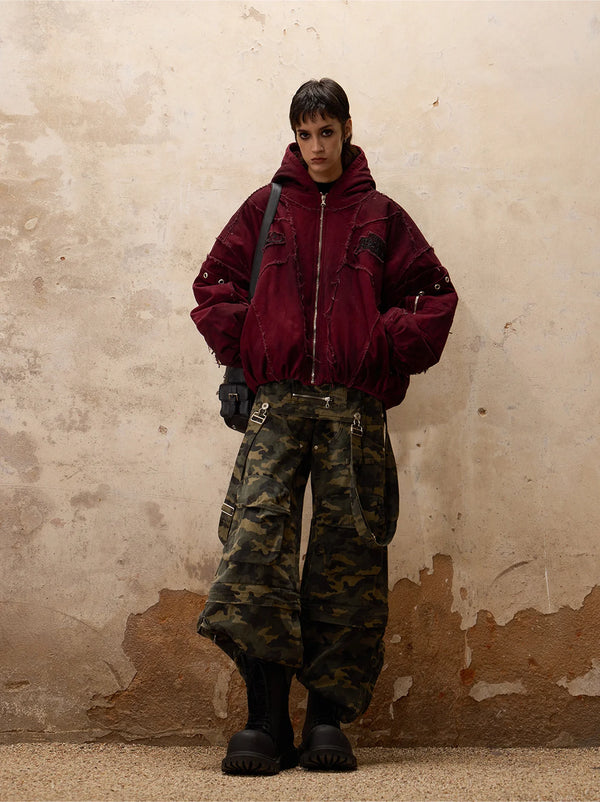
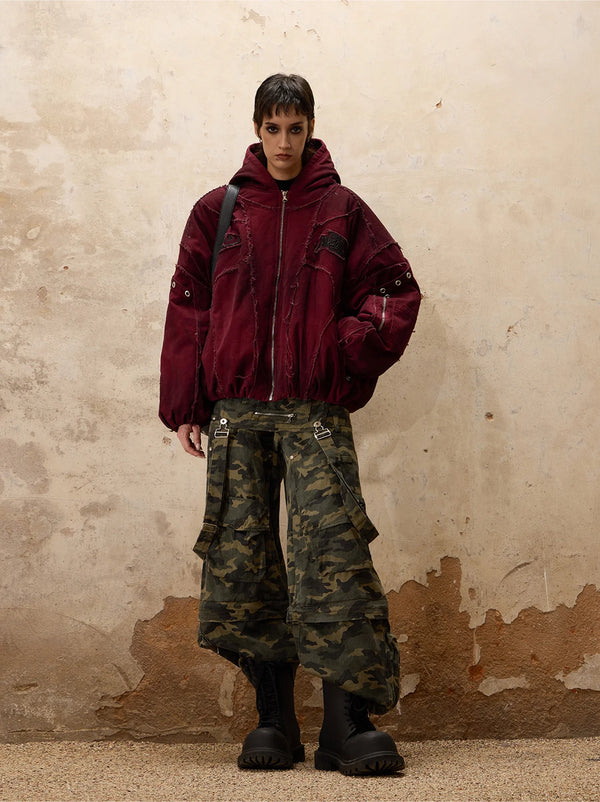
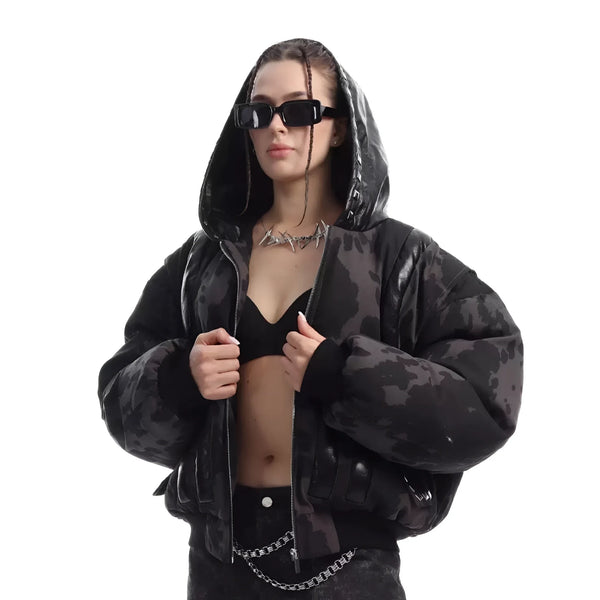
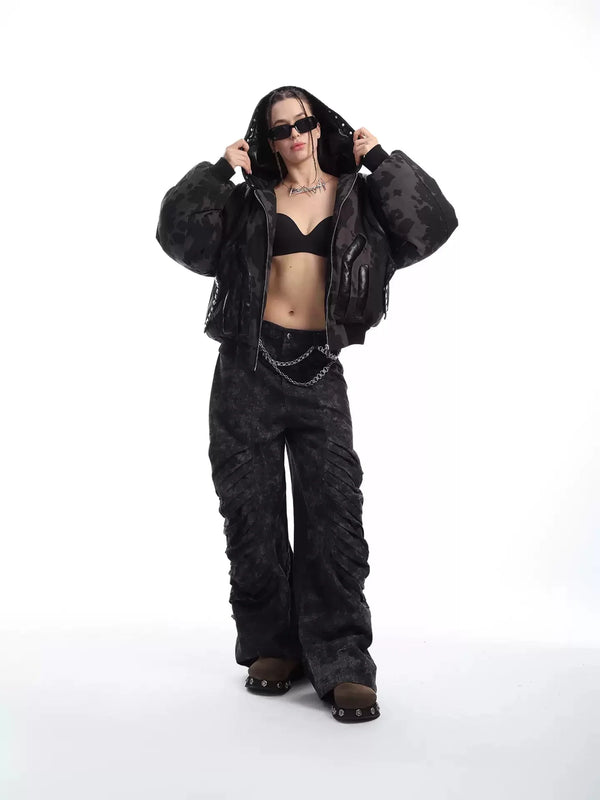
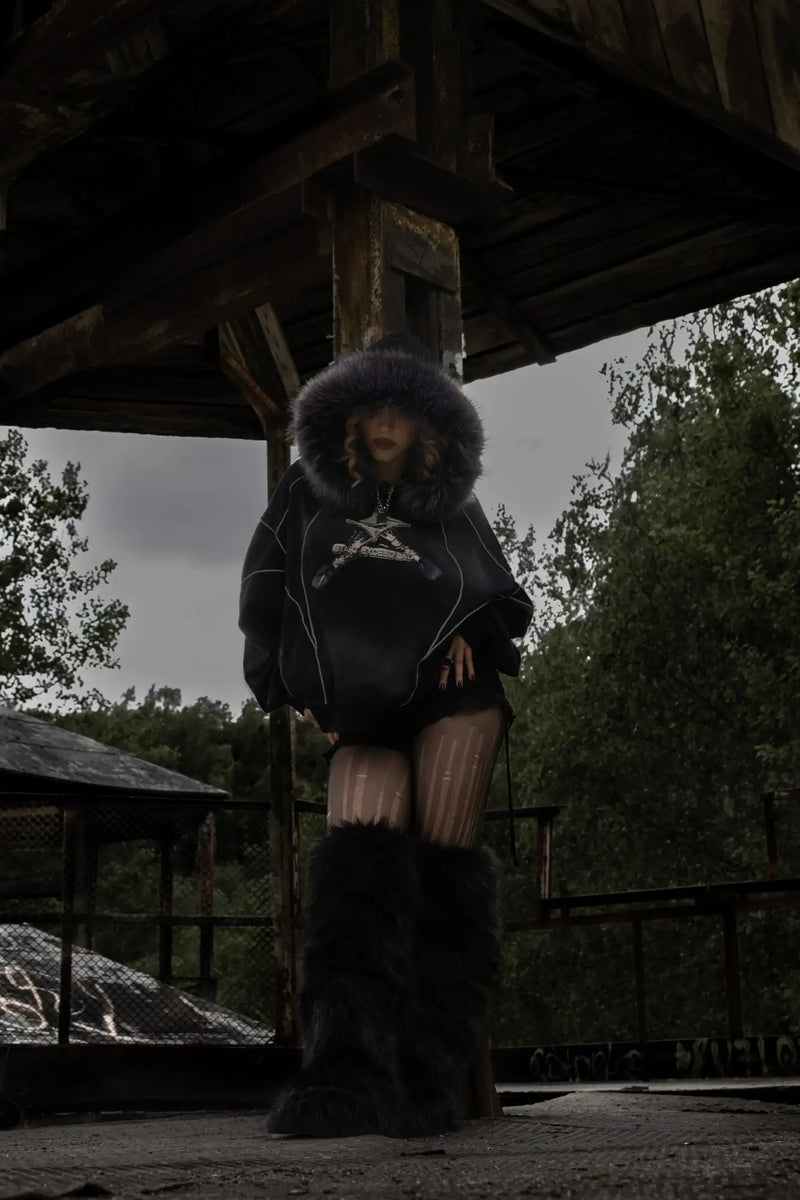
Anyone wanting that effect today does not need 200 studs. What matters is the weight of the silhouette: a jacket with presence that makes the upper body more angular and stands against the rest of the outfit. Waxed surfaces, hardware details and heavy hoods translate the idea without copying the decade.
Under the jacket, by the way, the decade was less dogmatic than the cliché claims. Between men and women in particular, the lines ran differently than you would expect from an early eighties subculture.
Silhouettes
80s punk fashion: male and female compared
The short answer: there was barely any difference, and that was precisely the point. Punk was one of the first youth cultures in which women and men wore the same uniform. Leather jacket, tight trousers, boots and mohawk were not coded as male but as scene. A woman in 14-eye boots and a studded jacket in 1983 was not quoting menswear, she was simply wearing punk.
The female variants added sharpenings of their own: torn fishnets under cut-off trousers, leopard print as fake-fur collar, dramatic eye make-up somewhere between Siouxsie Sioux and Deathrock. Not softer than the men's looks, often more uncompromising. That logic, same armour with its own rules, is still the reason the look works in both directions.
That leaves the question of where the pieces actually came from. Unlike today there was no shop in the eighties selling the finished look, and that gap answers one of the most common search questions on the subject.
Brands
Which brands did punks wear in the eighties?
The honest answer: almost none. Punk in the eighties was explicitly anti-brand. There were still manufacturers whose pieces became the basic kit, because they were cheap, robust and available everywhere. The base was bought, the look was built.
- Dr. Martens went from workers' boot to scene standard: 8 or 14 eyes, black or cherry red, broken in over years.
- Army surplus supplied combat boots, parkas and ammo belts for little money, especially in the Anarcho and Hardcore corner.
- Band merch was the only accepted logo surface: shirts from gigs, plus patches that migrated from the shirt to the jacket.
- Westwood legacy: the bondage trousers and tartan cuts of the seventies were copied en masse in the eighties, mostly at home.
- Homemade stayed the most important brand: studs from the hardware store, screen printing in the kitchen, holes on purpose.
That distrust of finished looks runs in a straight line into the present: anyone wearing eighties punk references today looks credible exactly when at least one piece looks as if it had a history of its own. The principle applied not only in London, by the way, but took on a colour of its own in Germany.
Germany
Punk in Germany: SO36, Ratinger Hof, Hafenstraße
The German scene of the eighties was not a copy of the British one, it had its own centres and its own hardness. West Berlin with SO36 in Kreuzberg, Düsseldorf with Ratinger Hof, Hamburg with Hafenstraße: three cities, three dialects of the same look. Male from Düsseldorf, founded in 1976, counts as the oldest German punk band, still before the big wave. In the eighties bands like Slime from Hamburg, Toxoplasma and the early Toten Hosen and Ärzte, both founded in 1982, then shaped the scene.
Visually German punk was often rawer than the UK model: more army surplus, more black, less tartan. The squatter movement supplied the context in which the look became everyday wear instead of weekend dressing-up. How that energy feels in motion is best seen in current interpretations.
@fugastudios These pants ate and left no crumbs 🖤 walking chaos in denim form #fugastudios #darkfashion #widelegpants #fyp #distresseddenim ♬ Originalton - Fuga Studios
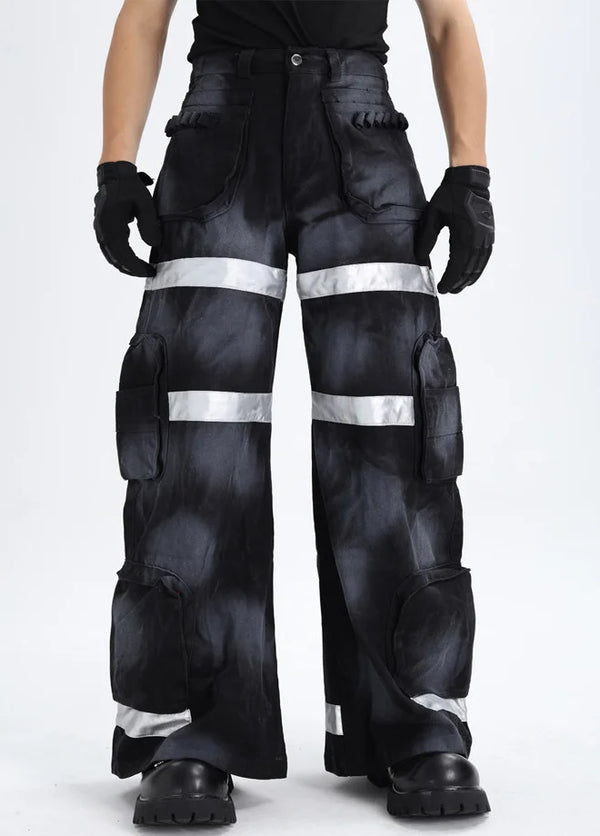
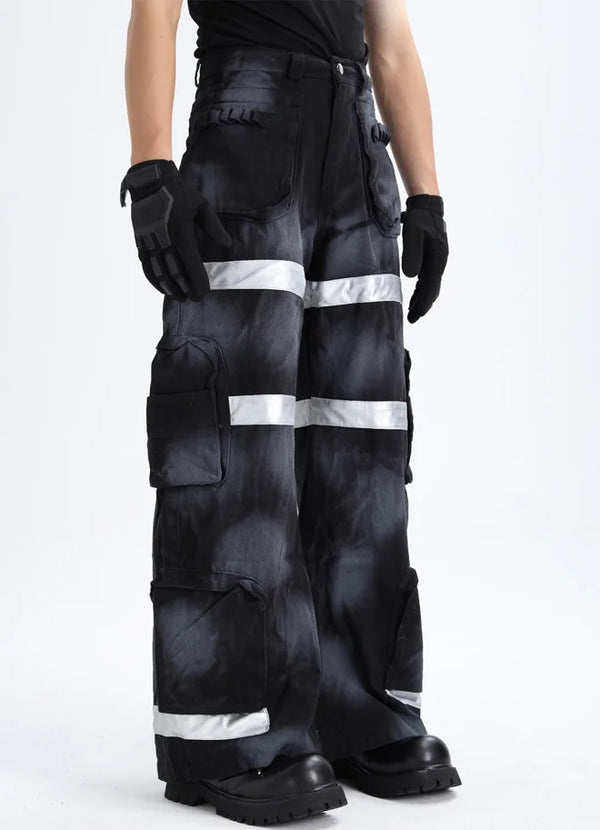
Destroyed denim and heavy silhouettes carrying exactly that energy again today is no coincidence: in the eighties the trouser question was perhaps the most important style decision of the whole look, right after the jacket.
Trousers
Trousers in 80s punk: tight, torn, with hardware
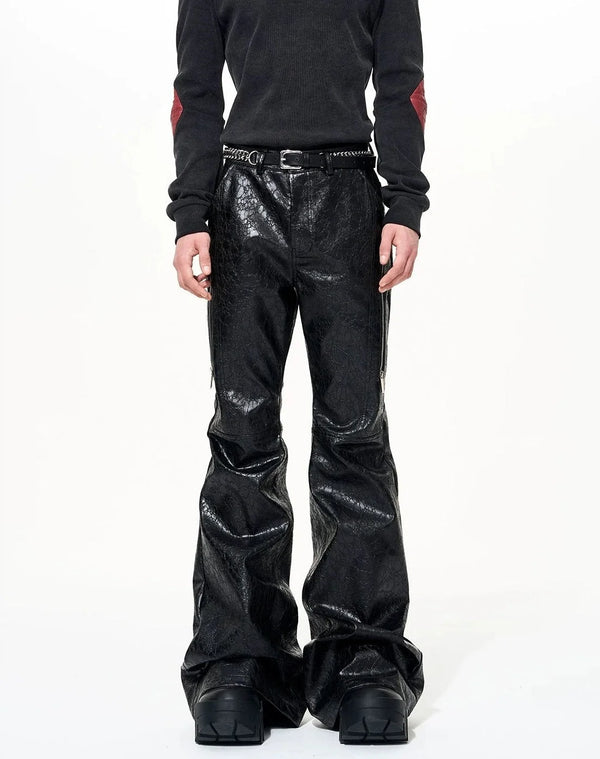
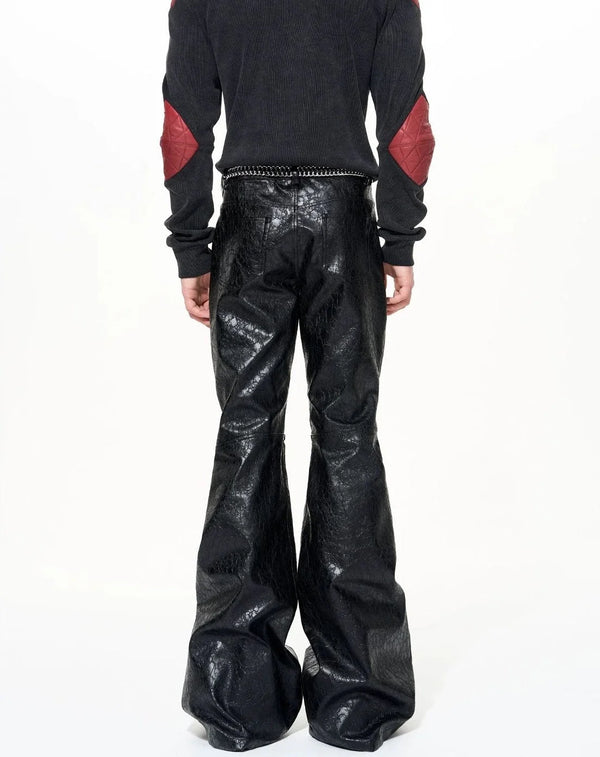
The eighties punk trouser knew two poles. On one side the extremely tight pipe, often an old pair of jeans, dyed black and tapered at the ankles with safety pins, tucked into the boots. On the other side the tartan or bondage trouser with straps between the legs, the legacy of the first wave. Both lived on destruction: rips at the knees, patches in another fabric, hand-painted slogans on the thigh.
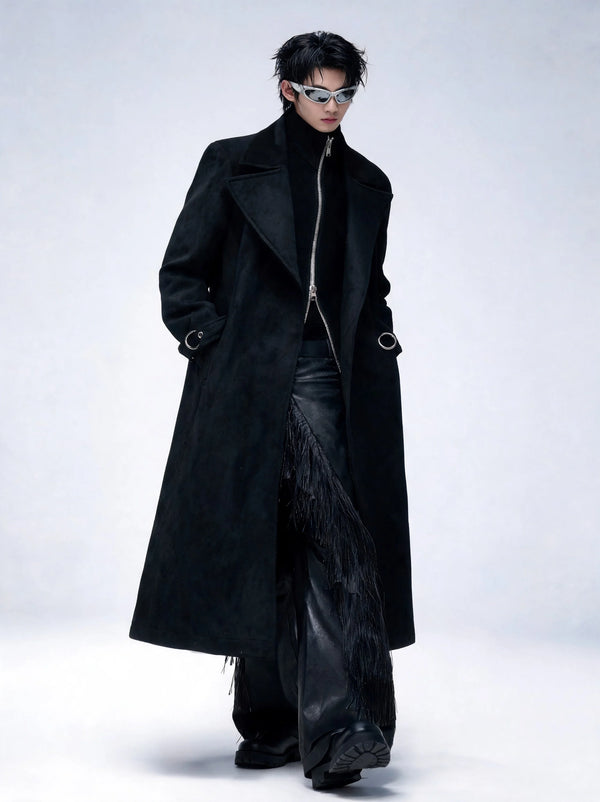
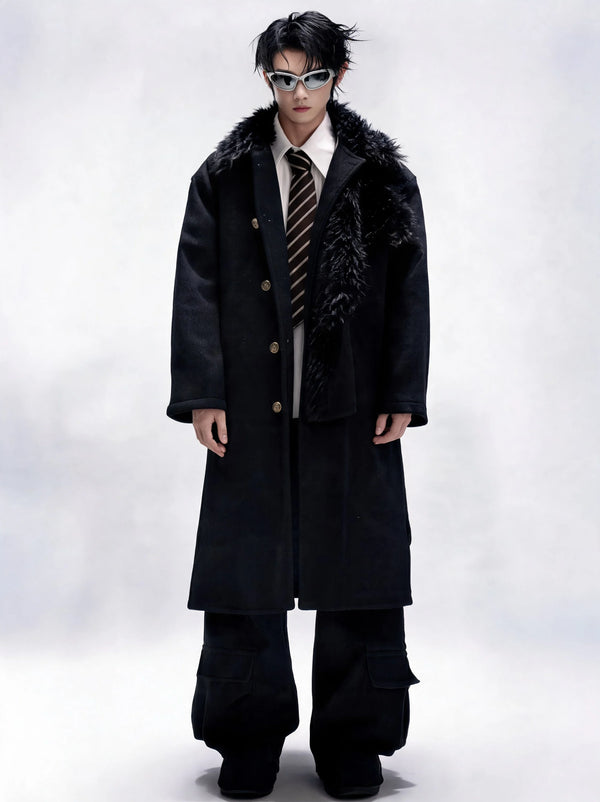
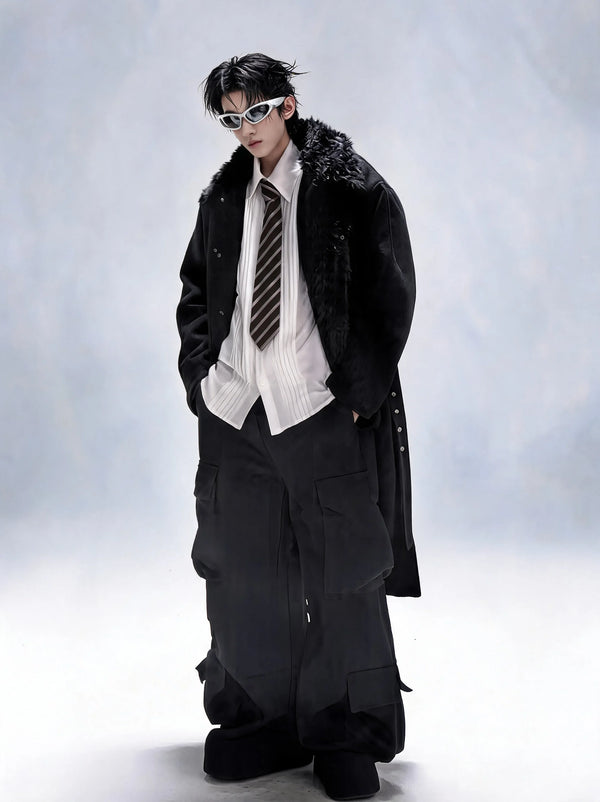
Today's interpretations translate the attitude instead of the fit. Studs and stud details replace the safety pins, leather and weighted fabrics bring the weight, and wide cuts work too, as long as the hardware stays visible. What matters is that the trousers read as a statement of their own and not as an accompaniment.
If the whole decade had to be boiled down to one sentence, it would be the difference from the first wave: punk had been invented in 1977, but only the eighties decided what would stay.
Made serious does not mean museum-ready, though. The real test for every eighties code is whether it can be worn today without looking like a carnival costume, and there is a clear method for that.
Styling today
Styling 80s punk today, without the costume
The rule: one period piece per outfit, never the whole decade. A studded jacket with quiet black trousers and clean boots reads as attitude. The same jacket with tartan trousers, mohawk and ammo belt reads as fancy dress. The difference is not the piece, it is the dose.
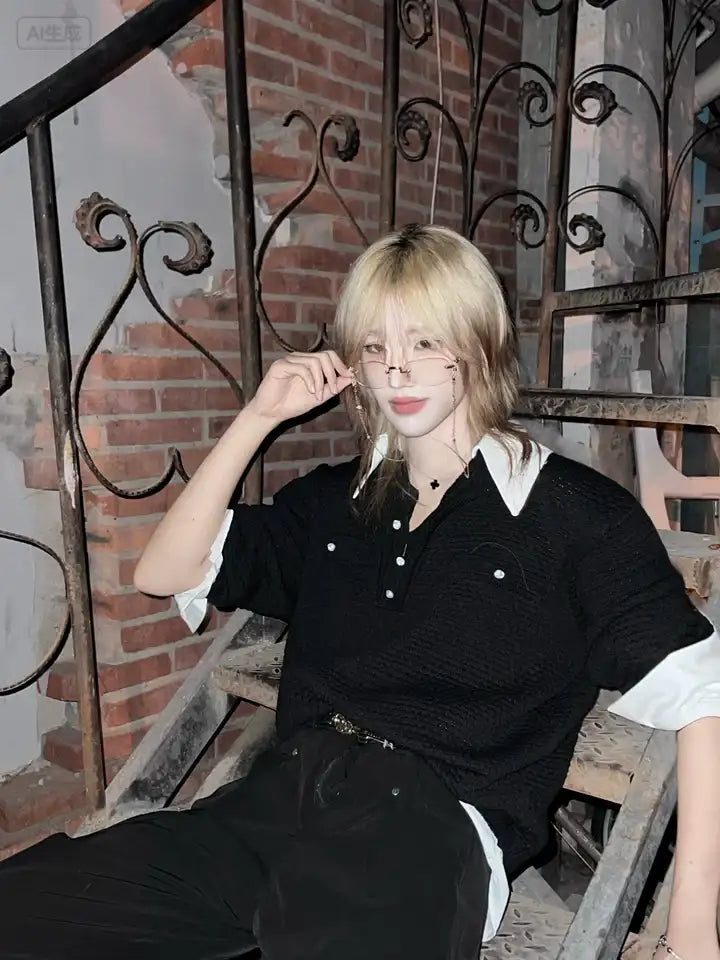
The second lever is material honesty. 80s punk lived on pieces that looked used, because they were used. Washed effects, raw edges and real wear translate that better than any printed rip. A cross-collar polo or a washed tee with graphic carries the reference more subtly than any costume piece, and that restraint is exactly what makes the look wearable every day.
Anyone wanting to go deeper into the black version of the look will find the complete logic in its own styling article, including material rules against the elegance tipping point.
For a quick start into the matching categories, the direct route through the shop structure is worth it, sorted by the building blocks the look actually consists of.
Two elements of the original look cannot be bought, though, and those are exactly the ones that defined the decade visually: the hair and the handwork.
Hair and DIY
Hair, make-up and DIY in 80s punk
The mohawk was the vertical exclamation of the eighties. What were short, dyed spikes in 1977 grew into sculpture: liberty spikes, fanned combs, twenty centimetres high, fixed with soap, sugar water or hairspray in rough quantities. On top came make-up meant not to beautify but to mark: black-rimmed eyes across all genders, and in the Deathrock orbit white-primed skin as well.
The second pillar was handwork. Studs were hammered through the leather one by one, patches sewn on with dental floss because it was more tear-resistant, logos painted freehand with paint marker or white paint. Perfection was suspicious: a crooked piece of lettering proved the jacket was real and not bought.
As closed as the look seemed in the middle of the decade, it clearly began to dissolve at the edges. At the end of the eighties the codes moved in a new direction, and a few years later that became the next big wave.
The transition
Grunge and 80s punk: how the decade tips into the nineties
The search query grunge 80s punk hits a real transition. In Seattle and other US cities, hardcore punk mixed with metal and secondhand aesthetics at the end of the eighties: flannel shirts over band shirts, torn jeans without studs, hair that hung again instead of standing. The punk core stayed, the armour fell. What came out of it dominated the nineties.
For placing it, that means: 80s punk is the most precise and hardest form of the look, grunge its relaxed heir. Anyone mixing the two should know which half dominates, otherwise you get visual noise instead of reference. And that brings us to the mistakes that happen most often at exactly this point.
Avoid mistakes
Common mistakes with the 80s punk look
Most failed eighties outfits do not fail on the pieces but on the dose, and on five recurring patterns that can all be avoided.
That leaves the layer that makes the difference between solid and precise: the small pieces. In the eighties accessories were never decoration but functional carriers with a message, and that is exactly how they should be used today.
Accessories
Accessories: chains, studs, belts in 80s punk
Three accessory families carried the decade. First the belt, mostly with pyramid studs, often worn doubled or hanging. Second chains: on the trousers, as a necklace with padlock, made famous by Sid Vicious back in the seventies and standard in the eighties. Third anything with a function, from the studded cuff to the ammo belt that never saw ammunition.
Today the rule is: one hard accessory per zone. A studded belt with quiet trousers, a heavy chain with a plain top, a striking keyring on a clean silhouette. The pieces should have weight, real metal instead of plastic, otherwise the reference tips into toy territory.
Finally the questions asked most often around Punk Fashion 80s, answered compactly and deliberately beyond the wardrobe alone.
FAQ
FAQ: Punk Fashion 80s
Style, music and scene cannot be separated cleanly in the eighties, which is why all three layers turn up in the most common questions.
What is typical of eighties fashion?
Which punk bands existed in Germany in the eighties?
Which is the oldest German punk band?
What is a typical punk song?
Do you wear tartan in the 80s punk look?
What is left of the decade once nostalgia and cliché are subtracted? A method. The eighties showed how to build an identity from few, hard pieces that needs no logo, and that method is exactly why the look comes back every few years.
What do you think?
Tell us on @fuga_studios
About the author
Philipp Fuge — Founder · Berlin
Founder of Fūga Studios. Writes the journal himself. Berlin · Shanghai · Tokyo · Poznań — four cities, one logic.