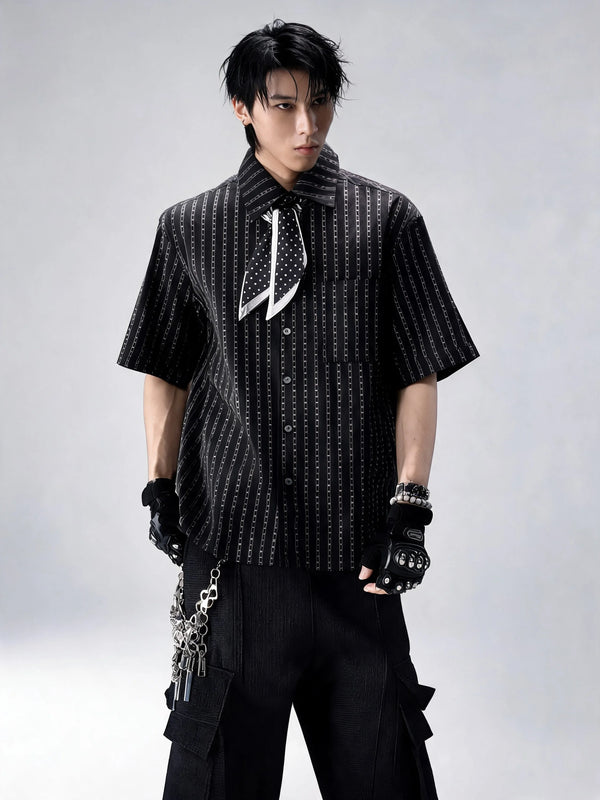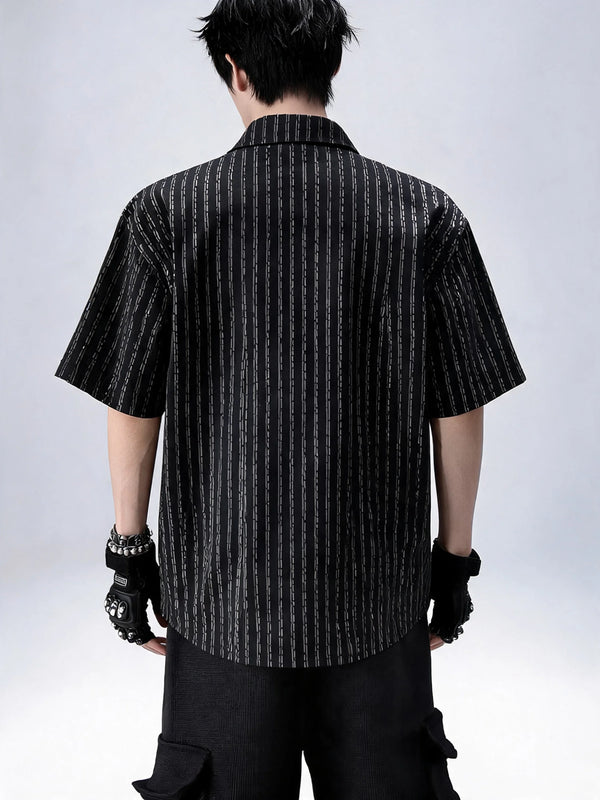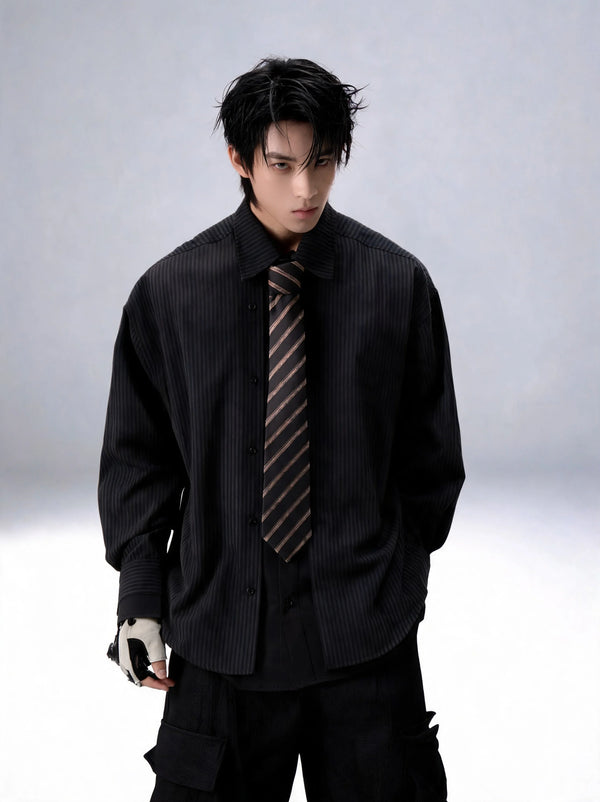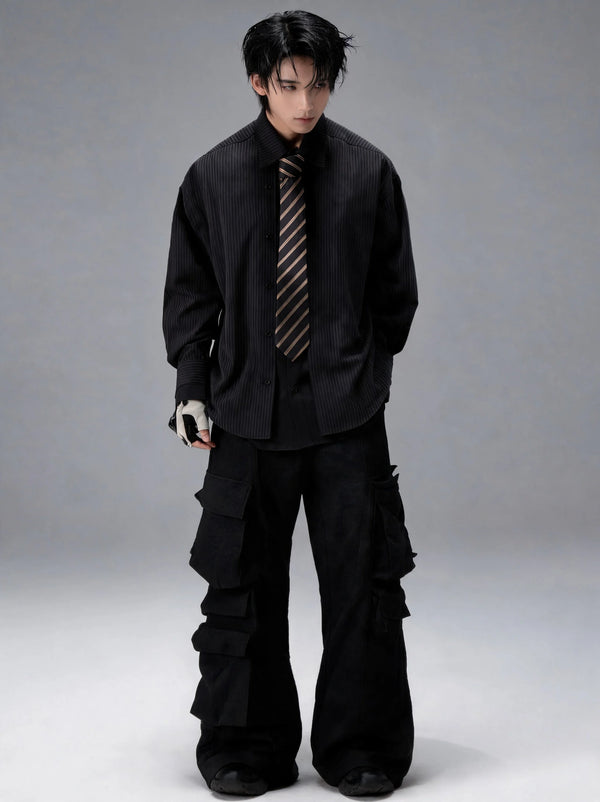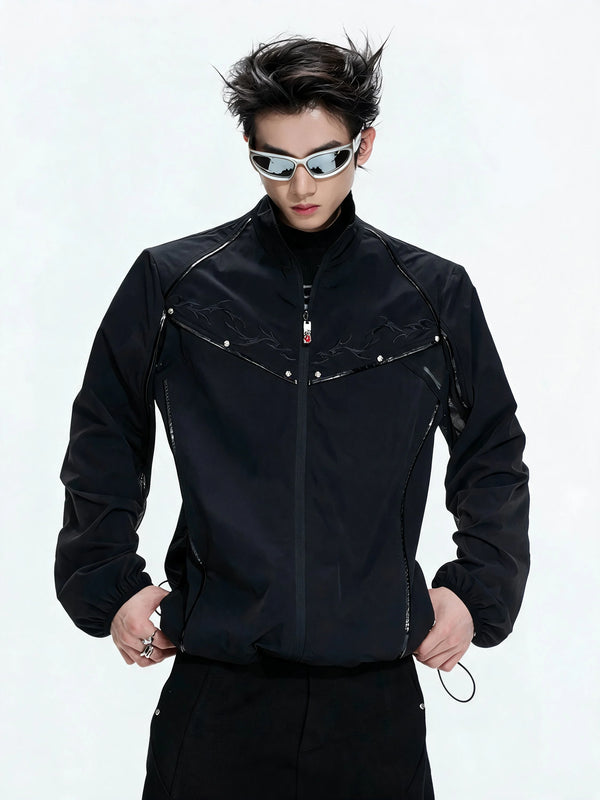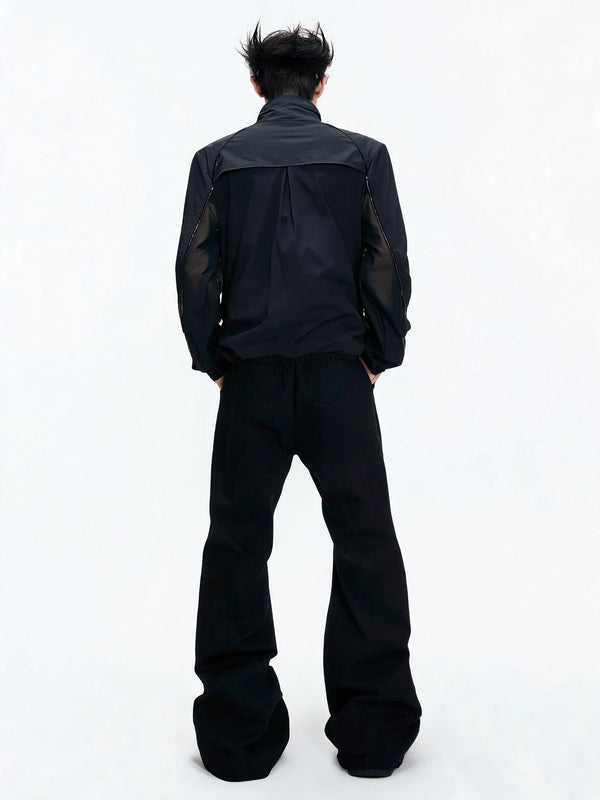
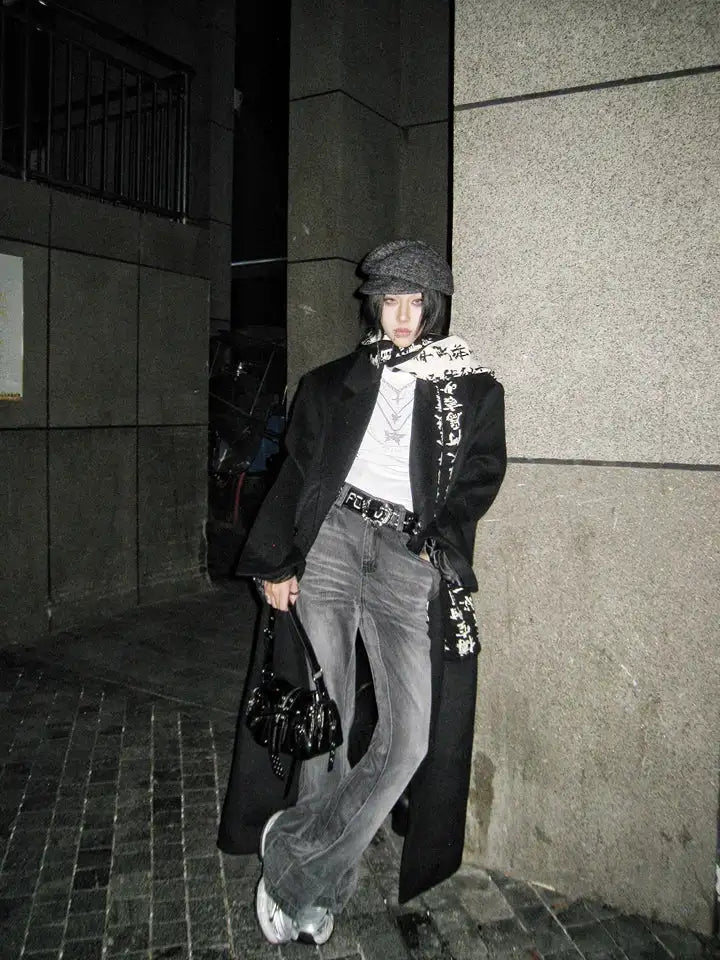

Seattle, autumn 1991. A video with a spray-covered school gym, bored cheerleaders in black dresses and a blond singer in a worn-out cardigan runs in heavy rotation on MTV. Three months later the matching album sits at number one in the charts, and the studded uniform of the 80s looks old overnight. What started in London basement clubs in 1977 gets a second life: louder, wider, angrier and for the first time available in the shopping mall.
Punk Fashion 1990s describes the decade in which punk changed its silhouette: away from the tight leg of the 70s, towards baggy jeans, band shirts, flannel and skate hardware. Four currents shape 90s punk style: Riot Grrrl, skate and pop punk, Street Punk and the grunge crossover. The foundations of the movement are in the big Punk Fashion Guide. This is about the decade in which punk reached the mainstream and stayed uncomfortable anyway.
Decade break
What defines Punk Fashion 1990s and why the decade worked differently
The 70s invented punk, the 80s turned it into a uniform: leather jacket, tight ripped jeans, mohawk, done. The 90s break open exactly that uniform. In this decade punk is not carried by one scene but by four, and each of them dresses differently. In Olympia, Riot Grrrl bands sew slogans onto babydoll dresses. In California, skaters swap the skinny jeans for baggy cuts, because you cannot ollie properly in tight trousers. In Seattle the grunge crossover mixes punk attitude with secondhand flannel. And on the streets from Berlin to Boston, Street Punk keeps the classic studded line alive, only rougher and more worn than ever before.
The second break is commercial. In 1991 punk reaches the charts via the detour of grunge, in 1994 the Californian pop punk albums follow and sell in the millions. For the first time the look hangs not only in the scene store but in every mall. That creates the tension that keeps 90s punk style interesting to this day: every current had to decide how much mainstream it could stand, and that decision was always a question of clothing too.
Anyone who wants to understand the look needs a map, not a parts list. The numbers behind it show how fast the decade tipped.
1991
The year punk reached the charts via grunge
4
Currents between Riot Grrrl and Street Punk
30+
Years later back in the streetwear rotation
Map
The four currents of 90s punk style
The four currents share an attitude, but almost no garment. Mix them up and you combine pieces that were historically never worn together, and that is exactly how rebuilt looks give themselves away. The short version: Riot Grrrl works with the contrast of cute and hard. Skate and pop punk work with volume and function. Street Punk works with patina and hardware. The grunge crossover works with casualness. Each of these logics works on its own as a complete outfit system, and each has its own shoes, its own trousers and its own relationship to colour.
The first current deserves the closer look, because it is misunderstood most often. Riot Grrrl was not an aesthetic that happened to turn political, but politics that built itself an aesthetic, and a precisely calculated one.
Bands like Bikini Kill and Bratmobile wore girls' dresses, hair clips and glitter, combined with combat boots and lyrics nobody expected inside a girls' dress. The look worked as a trap: anyone who underestimated the wearer got the message twice. For the wardrobe that means the contrast principle. One soft piece, one hard piece, never both from the same world. Babydoll over a long-sleeved band shirt, tartan skirt with scratched boots, laddered tights as a deliberate decision instead of an accident. Wearing the Riot Grrrl influence today takes no dresses: a graphic layer under a short shirt, a hard shoe with it, and the logic stands.
Wardrobe 01
Tops in 90s punk: band shirt, flannel and layers
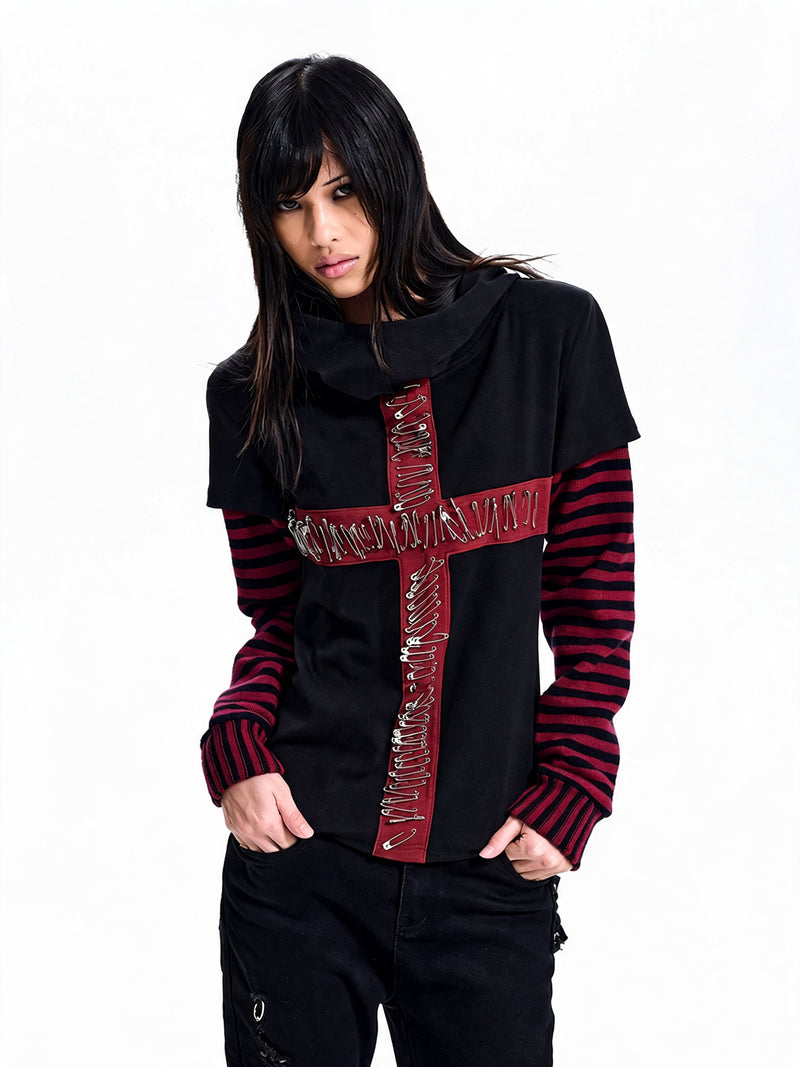
The band shirt is the centre of every 90s punk wardrobe, but the decade wears it differently than the 80s. Not close to the body and tucked into the jeans, but at least one size too big, over the trousers, often over a longsleeve. This double layer of short-sleeved shirt over long-sleeved shirt is perhaps the clearest visual marker of the decade, from skate videos to concert photos. Then there is flannel, worn open and creased, as a third layer or knotted around the hips. Mesh moves out of the club corner into everyday wear, mostly as an under layer beneath cut-up shirts. The colour logic stays narrow: black, white, washed-out grey, with tartan red as an accent. Graphics are coarse, high in contrast and look worn even when new.
Both pieces follow the 90s logic: coarse graphic, plenty of volume, patina straight from the factory. Add a longsleeve underneath and the double layer stands.
Crossover
Grunge Punk 90s: what a 90s grunge outfit looks like
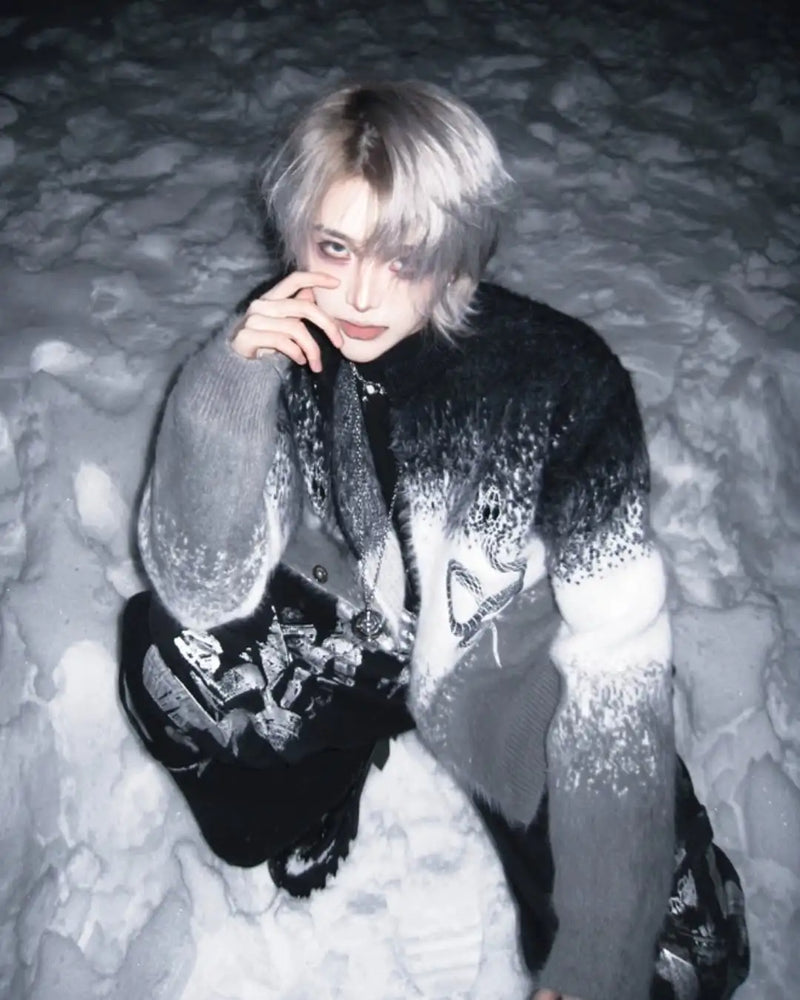
Grunge is the point where punk became most visible in the 90s and at the same time moved furthest away from the old uniform. A 90s grunge outfit consists of pieces that are completely unremarkable on their own: washed-out jeans with real rips, a stretched-out band shirt, a flannel shirt, a cardigan that looks like a grandfather sorted it out. The punk DNA sits not in the pieces but in the principle behind them: show zero effort, refuse perfection, prefer secondhand to new. Kurt Cobain wore dresses and pyjama trousers on stage, not as statement fashion but as a refusal of the rockstar uniform. Exactly this casualness separates Grunge Punk 90s from the Street Punk of the same years: where one builds his jacket over years, the other puts on whatever lies on top of the pile, and means it just as seriously.
The video shows why the look still works today: the pieces are comfortable, the silhouette is relaxed, and nothing about it looks like effort. For more on the connection between grunge and festival wardrobe, the continuation is in the matching article.
In parallel to the grunge wave, a current emerges on the West Coast that runs the complete opposite programme visually: more colour, more volume, more speed. It will dominate the punk look of the late 90s and therefore needs a stage of its own.
Skate punk and pop punk are the currents that go wide in 1994 with the big Californian albums. The look comes straight out of function: baggy jeans and wide shorts, because tight trousers get in the way on the board. Skate shoes with thick soles, because they survive falls. Oversized hoodies and graphic tees, because they allow freedom of movement and look good on the ramp. Then there is the wallet chain, perhaps the most copied accessory of the decade, born out of the practical problem that wallets fall out of your pocket while skating. Pop punk takes this base and turns up the colours: checked shorts, dyed hair, Dickies work pants. It is the most accessible 90s punk look and at the same time the one the scene itself argued over hardest, because it sold best.
Wardrobe 02
Trousers in 90s punk: baggy jeans, jorts and tartan
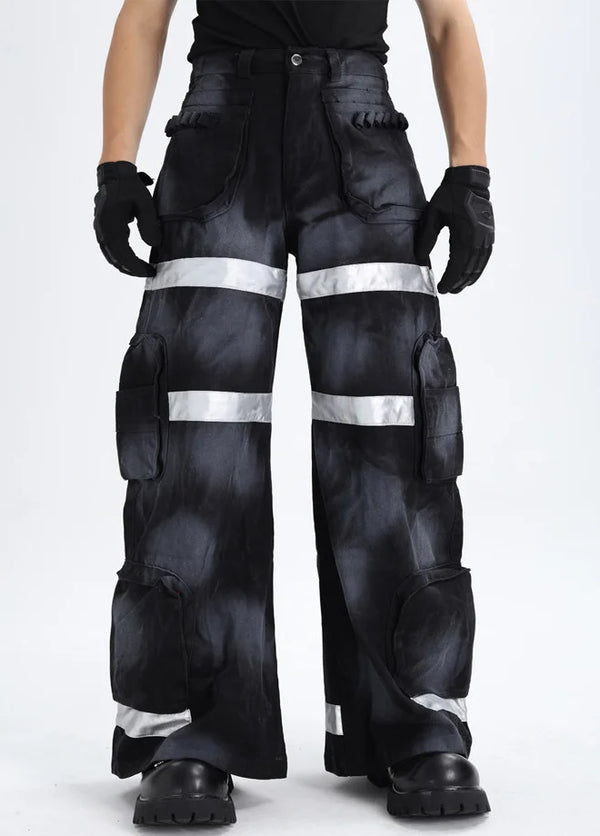
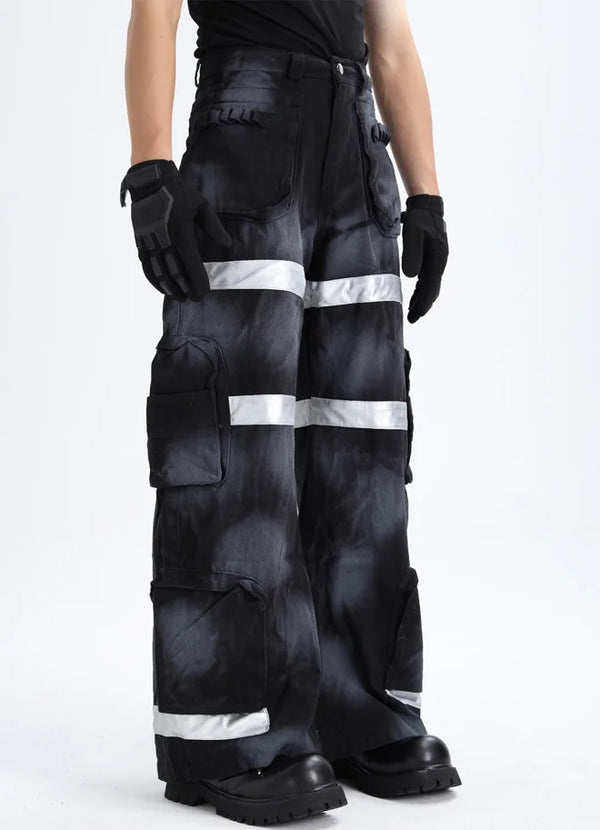
No product category shows the decade break more clearly than the trouser. The 70s and 80s wore the tight leg, often ripped, often with straps. The 90s turn up the volume: baggy jeans with a straight, wide leg, work pants with a deep rise, cut-off denim shorts that fall well below the knee. The rips stay, but move from the tight knee into the wide surface, where they gape open as you walk. Tartan survives as a bridge to the old school: as trousers on Street Punks, as a skirt on Riot Grrrl, as flannel around the hips on everyone else. Anyone looking for a 90s punk trouser today watches three things: a straight to wide leg, visible patina in the form of washing or destroyed details, and hardware like studs or decorative zips that separates the piece from normal baggy streetwear.
The wide leg jeans carry the skate volume, the studded jorts translate the stud tradition into the 90s cut. Both work with each of the four current looks.
Current 03
Street Punk and Oi: the hard line of the 90s
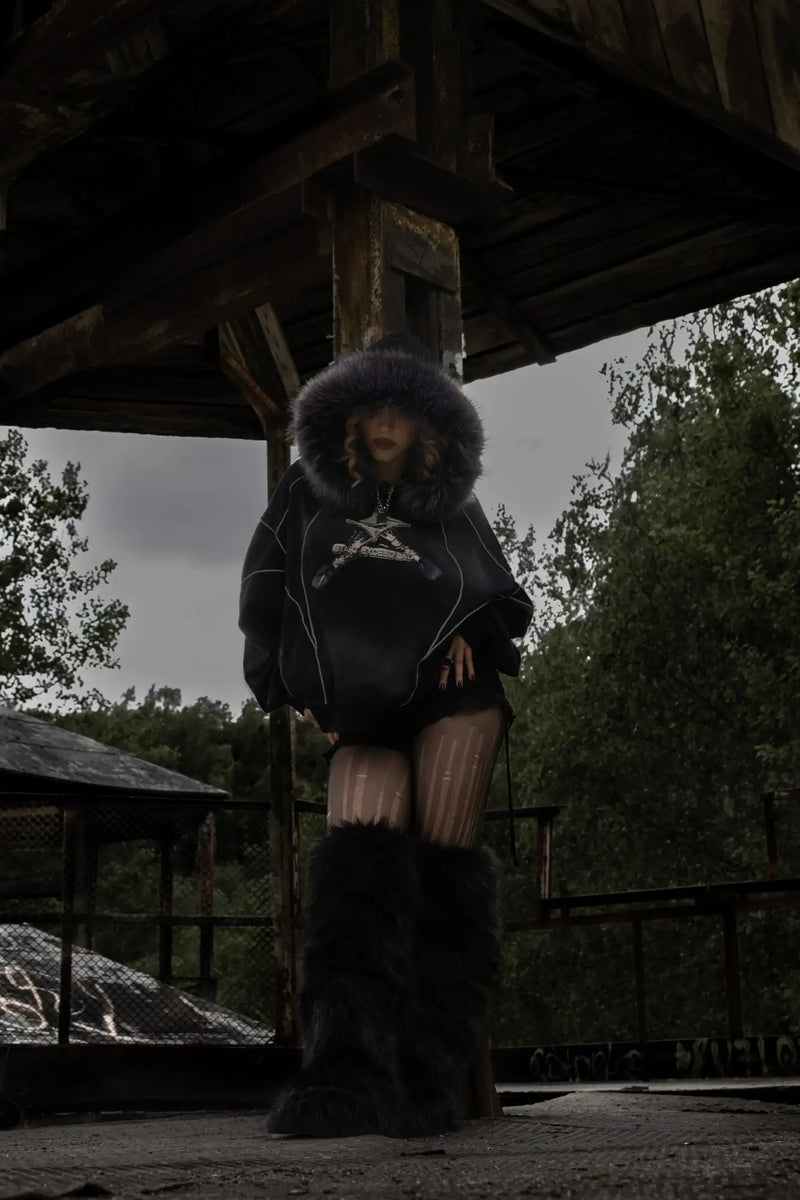
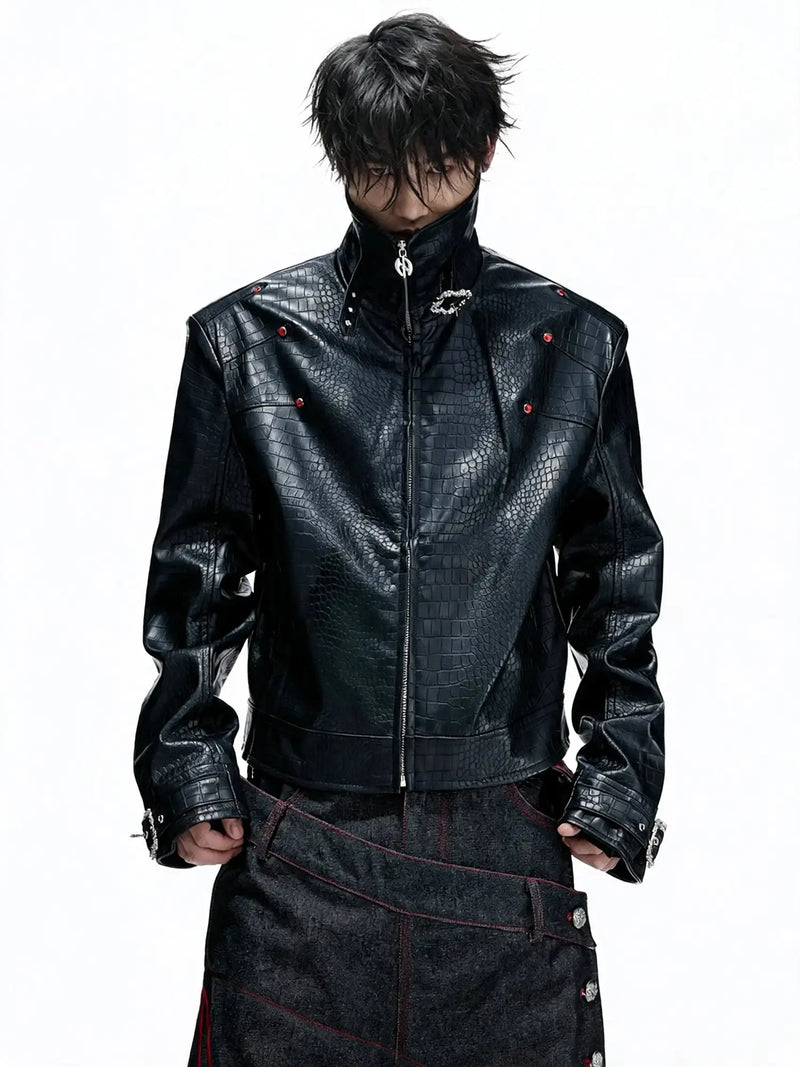
While grunge and pop punk reach the charts, Street Punk holds the classic line, and does so on principle. In the 90s the scene around bands like Rancid or The Casualties wears what worked in 1982, only more consistently: leather jackets built up over years with studs, patches and slogans. Tight, destroyed jeans as a deliberate refusal of the baggy trend. Heavy boots, braces, band patches on every free surface. In this decade the mohawk gets higher, more colourful and more elaborate than ever before, as a visible commitment at a time when punk suddenly hangs in the mall too. Street Punk is the current with the clearest rules, and for exactly that reason the hardest to copy: you can buy the jacket, not the ten years of patina on it.
- The jacket as an archive: studs, patches and slogans get added over years. Buying a finished jacket counts as a betrayal of your own history.
- The tight leg as a statement: tight, destroyed jeans visibly set the scene apart from the baggy mainstream of the decade.
- Boots with a function: heavy work boots, laced to the top, built for pogo and paving stones.
- Hardware instead of jewellery: chains, safety pins and studded belts are tools, not decoration.
- Hair as a flag: mohawk or shaved head, in the 90s more colourful and higher than in any decade before.
The hard line still delivers the picture most people have in mind when they hear punk. In the 90s it was in fact the smallest of the four currents in numbers, only the loudest in the streets.
Wardrobe 03
Accessories: chains, pins and patches
The 90s shift the punk accessory from the pin to the chain. The wallet chain hangs on every second pair of trousers of the decade, across all currents. Then there are necklaces made of ball chain or with industrial pendants, studded belts flashing out from under the oversized shirt, and keyrings dangling from the trouser pocket. Patches and pins remain the currency of the scene: band logos, political slogans, homemade patches. What is new is the handling. Where the 80s put the accessory on display, the 90s generation wears it more casually, half hidden under layers, as a detail for the second glance. This casualness is the reason why 90s accessories work so well in everyday outfits today: they were never meant as a costume, but as objects of use with an attitude.
Keychain on the trousers, chain around the neck: two pieces that give any basic outfit the 90s hardware, without a single further statement being necessary. To build on from there, the matching categories are sorted here.
The brand question
Which brands did punks wear in the 90s?
The honest answer: as few as possible, and if any, then for functional reasons. Dr. Martens was the great constant across all currents, because the boots last decades and look better with every scratch. Converse and Vans split the sneaker question: Chucks for grunge and Riot Grrrl, Vans and other skate brands for everything that stood on a board. Dickies and Ben Davis supplied work pants that were actually meant for tradespeople and worked for exactly that reason: cheap, sturdy, wide cut. Add to that Levi's from the secondhand store, usually older than the people wearing them.
The rest of the wardrobe was deliberately brandless in the 90s: band shirts from the concert, flannel from the flea market, jackets from the previous owner. Vivienne Westwood, who had helped dress 70s punk, was both a runway subject and a scene reference in the 90s, but hardly anyone from the scene actually wore her. The brand logic of the decade was: buy the function, write the meaning on it yourself. Internalise that and you also understand why a flawless new piece is always one step behind in a 90s punk context.
That leaves the question of how to apply this brand and parts logic today without looking like a walking decade poster. There is a simple rule for that.
Styling Today
How do you dress in 90s punk style without looking like a costume?
The rule: one decade statement per outfit, the rest stays timeless. Wear baggy jeans with a double layer, wallet chain, flannel and dyed hair all at once and you build a costume. Make a single one of these decisions and keep the rest of the wardrobe modern, and you wear a look. In concrete terms: the wide jeans with destroyed details work with a plain black shirt and clean sneakers. The band shirt in a double layer works with normal black trousers. The chain on the trousers works with a completely reduced all-black outfit. Modern dark streetwear and the 90s punk kit share the same base colour, which is why the worlds can be mixed almost without loss. The only thing that matters is the direction: the 90s piece is the guest in the outfit, not the host. Then the look reads as a quote instead of a replica.
Once you have understood the principle, you can apply it backwards through the decades. The 70s version of the same exercise is in the neighbouring article, including the question of why safety pins ever became fashion.
Wardrobe 04
Jackets: denim, leather and the layering trick
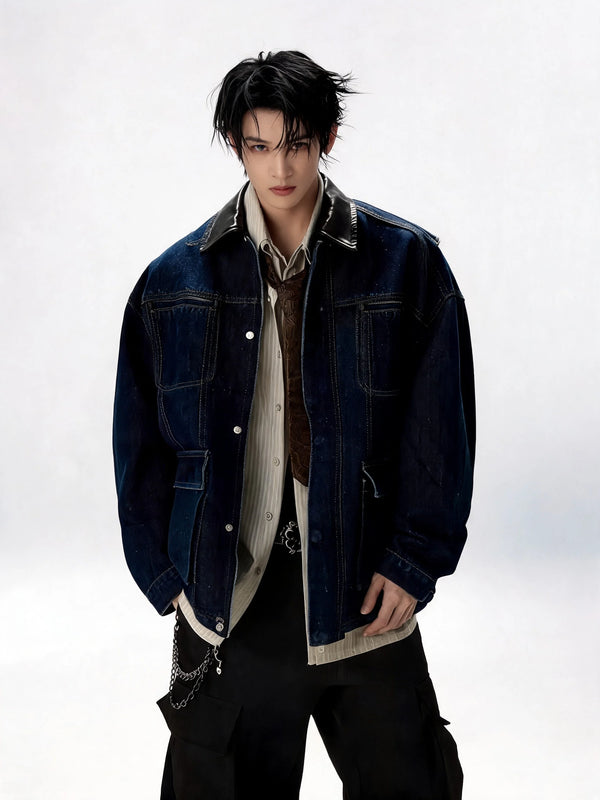
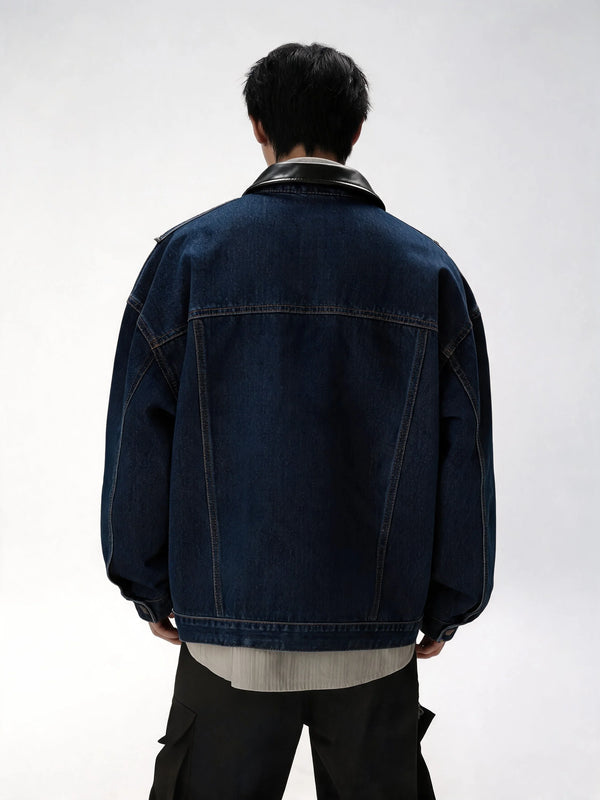
In the 90s the leather jacket remains the heirloom of the scene, but it gets competition. The denim jacket takes over, often cropped or oversized, frequently with an acid wash that looks like ten summers at a festival. Track jackets with side stripes move from the sports shop into the scene, an early version of everything that will later be called streetwear. The real 90s trick, though, lies in the layering: jacket over hoodie over double-layer shirt, everything one size too big, so that each layer peeks out from under the next. This layering principle creates the massive silhouette that separates 90s punk style from the slim 70s line, and it is at the same time the most practical part of the look: every layer also works on its own.
Error check
Common mistakes in the 90s punk look
Most failed 90s looks fail not on the pieces but on the mix. Know the currents and you spot the mistakes immediately. These are the five most common ones, sorted by damage.
If you are unsure which direction your own wardrobe is heading, start with the difference between the soft and the hard grunge line. The comparison settles the basic question faster than any parts list.
Questions
FAQ: Punk Fashion 1990s
The questions asked most often about the 90s decade, answered compactly. For the basic questions about the movement as a whole, the big guide remains the better address.
What did punks wear in the 90s?
What is the difference between punk and grunge?
Was Riot Grrrl a fashion or a political movement?
Which bands shaped the 90s punk look?
That measures out the decade: four currents, one new silhouette and a brand logic that still echoes today. What remains of it fits into three sentences.
What do you think?
Tell us on @fuga_studios
About the author
Philipp Fuge — Founder · Berlin
Founder of Fūga Studios. Writes the journal himself. Berlin · Shanghai · Tokyo · Poznań — four cities, one logic.