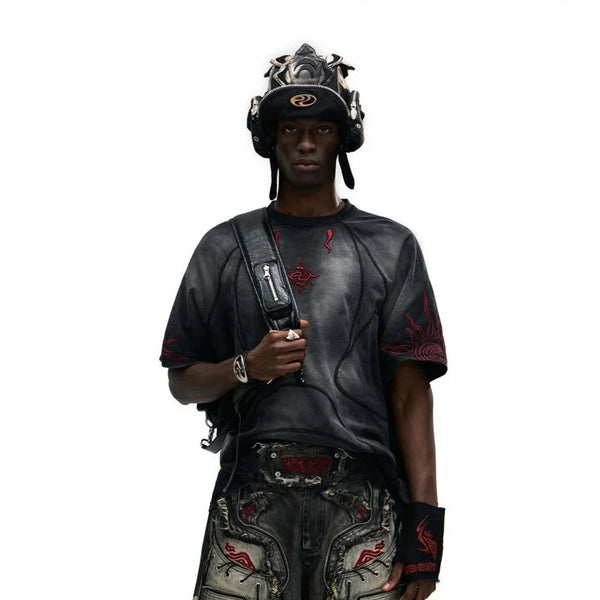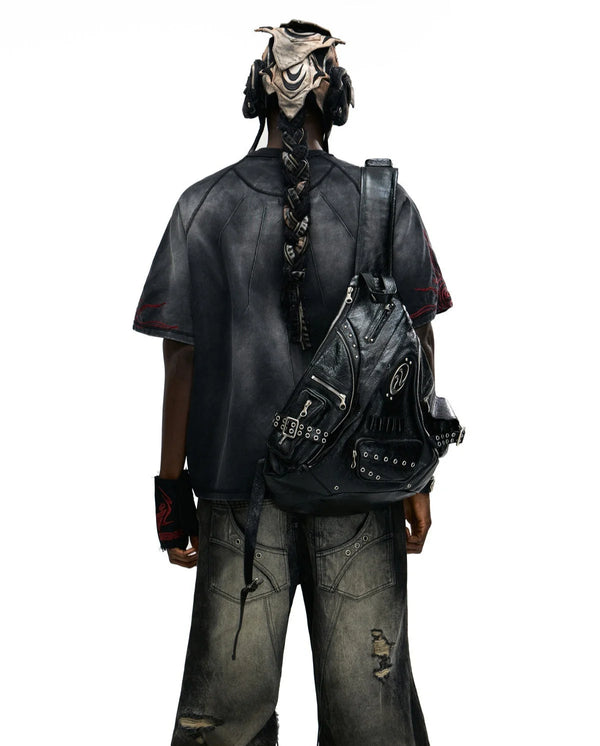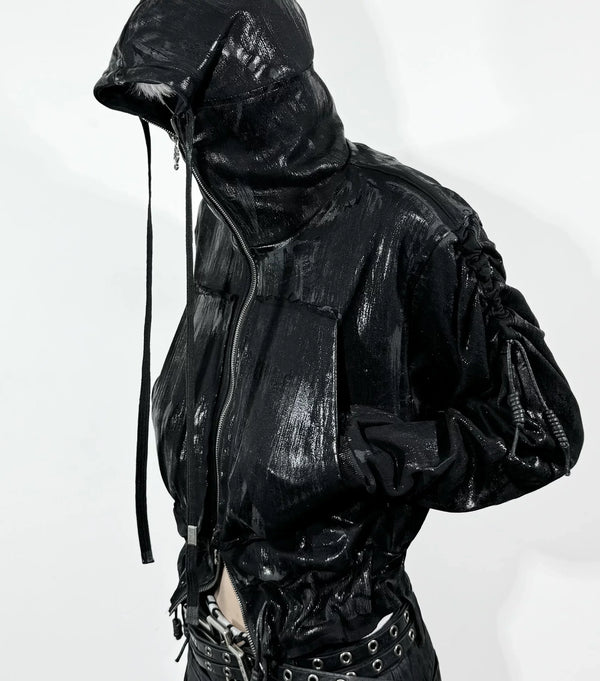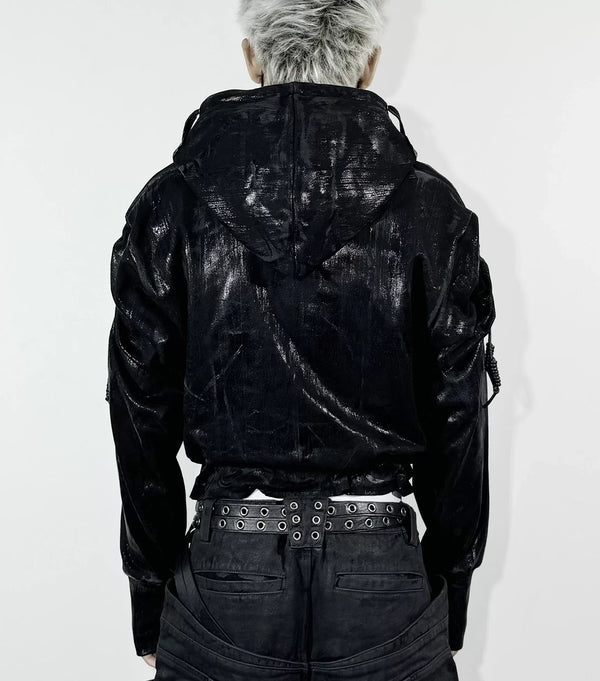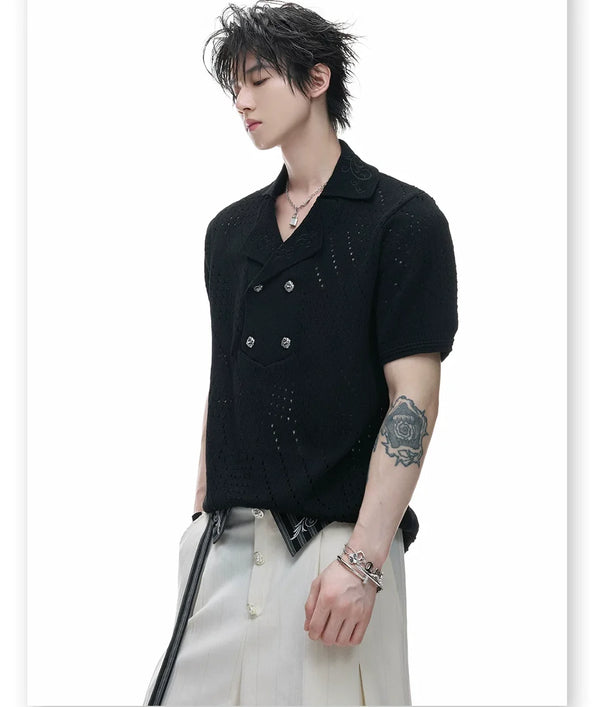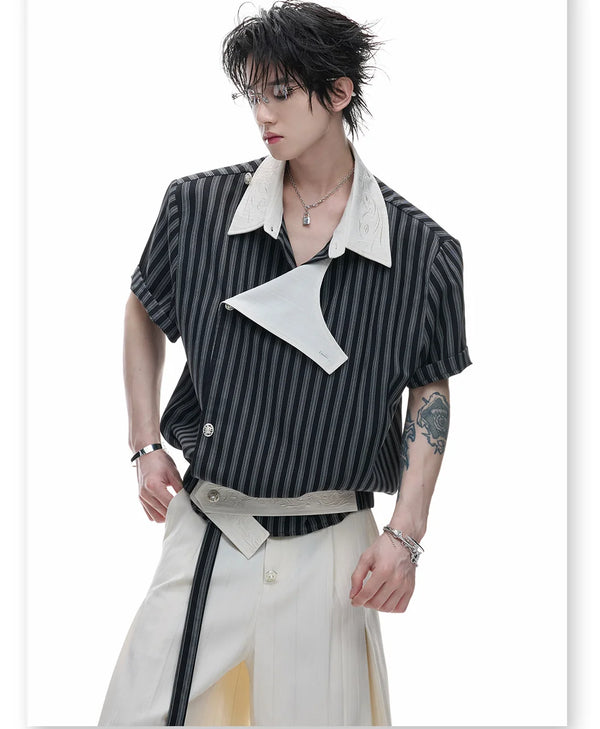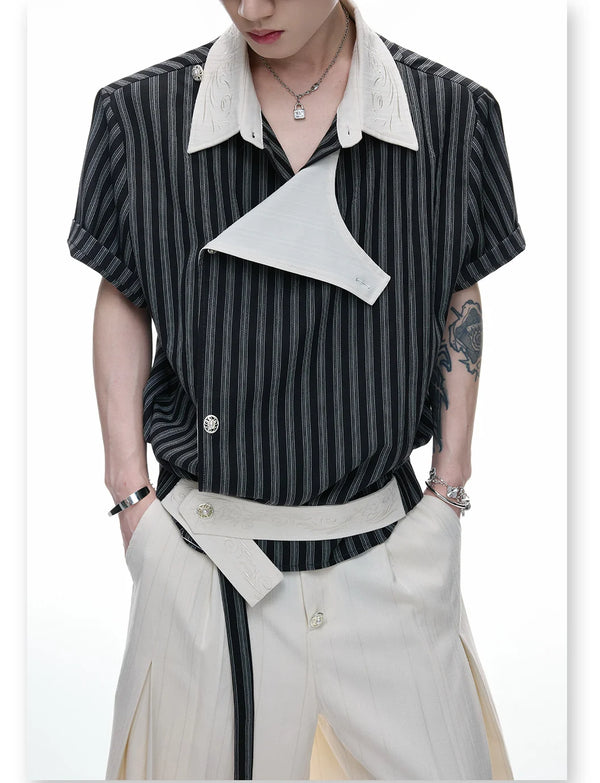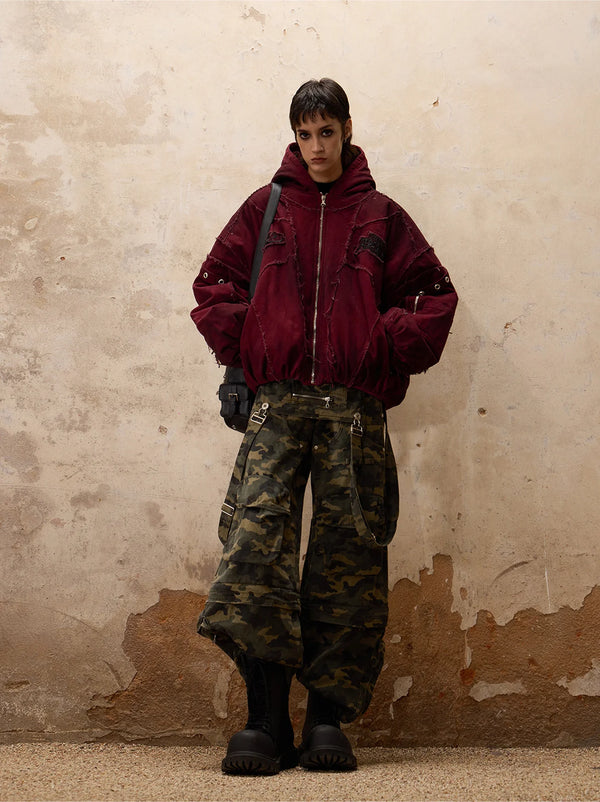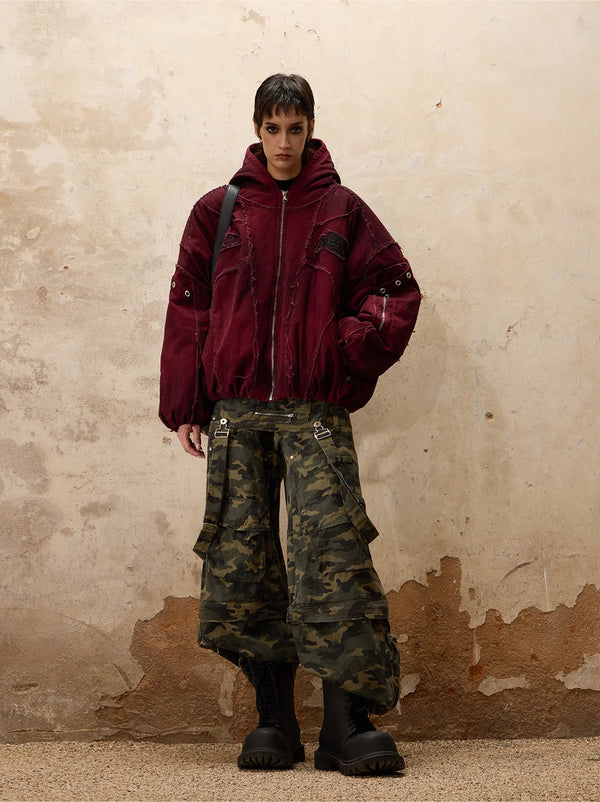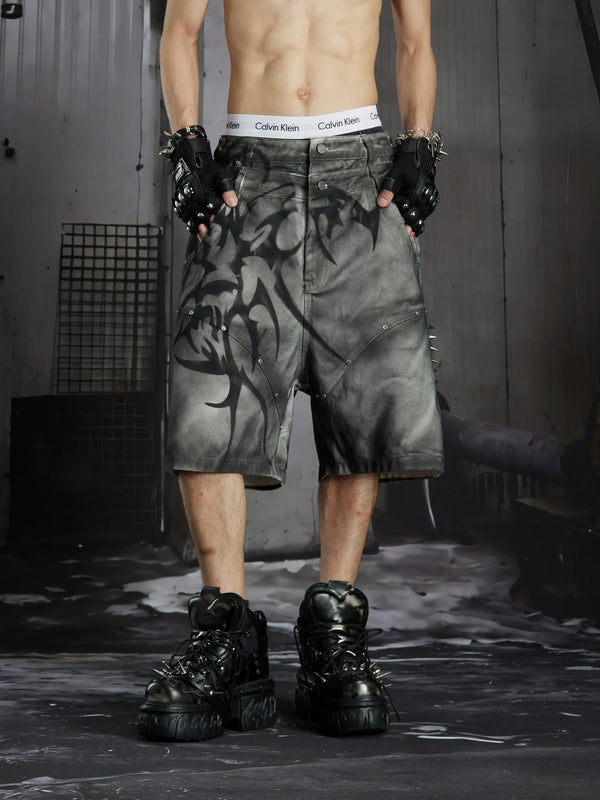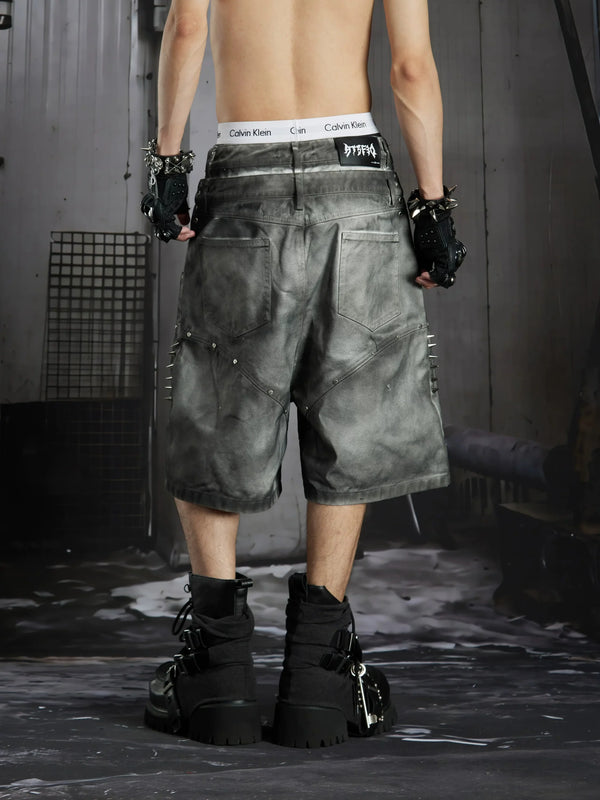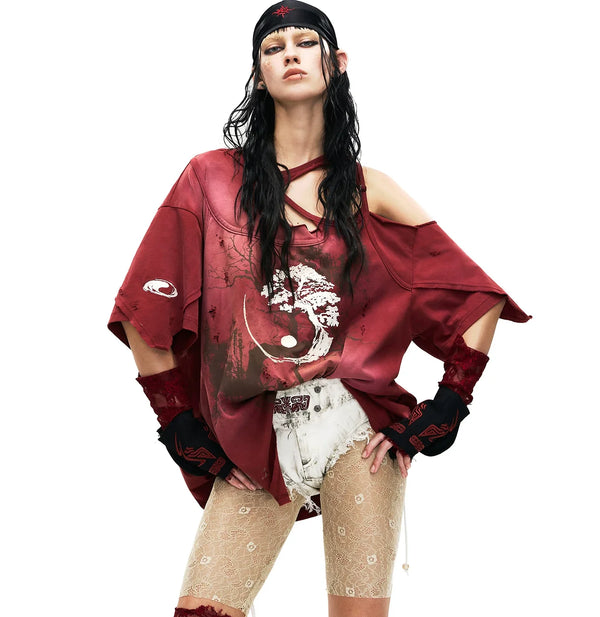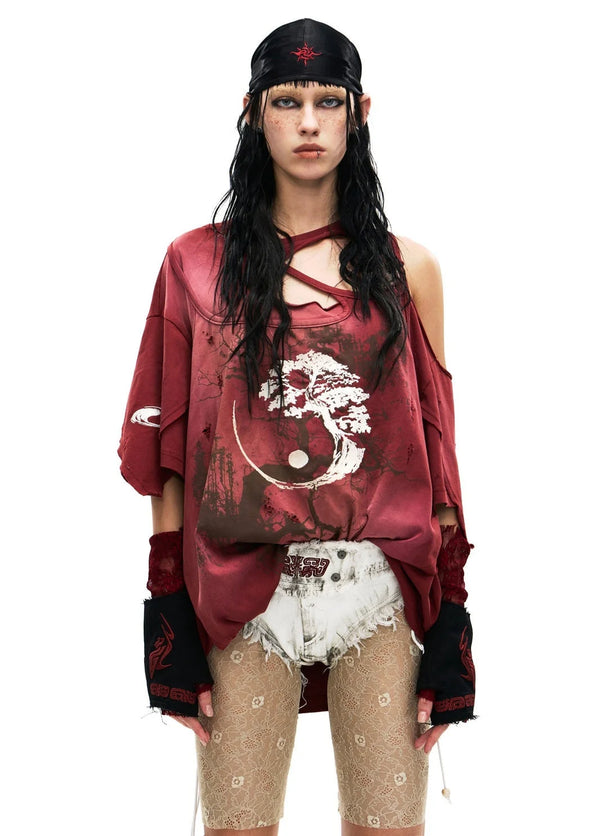
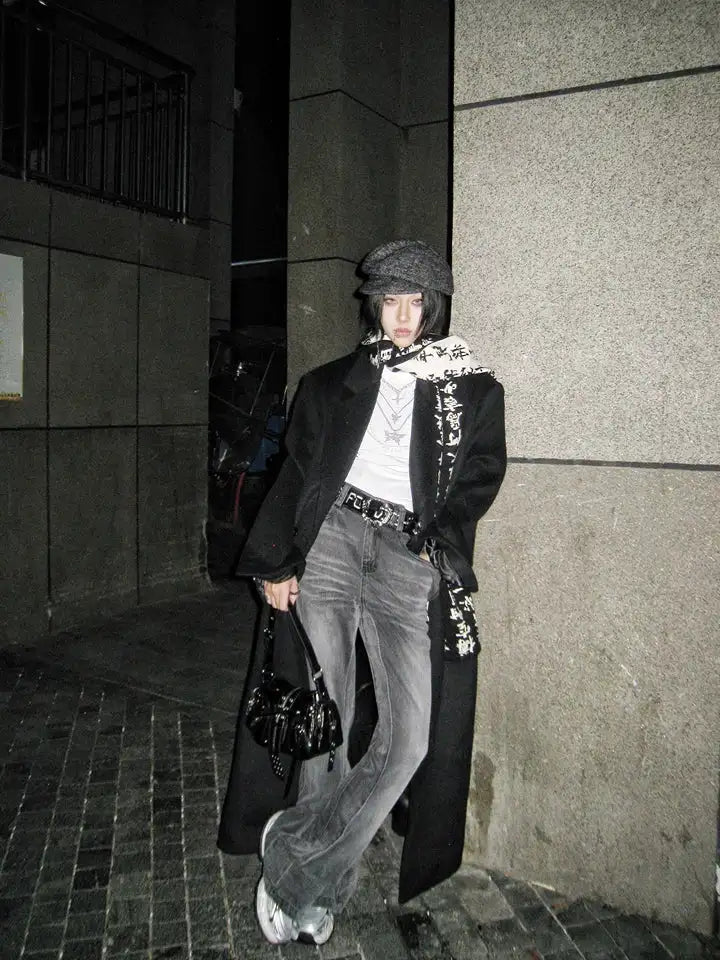

Everyone tries to slap grunge onto rave like a sticker. Glitter on flannel, mesh over a band tee, combat boots on top — and the whole thing looks like someone stapled two Halloween costumes together. The logic is missing.
Grunge rave outfits work off one rule of thumb: one grunge element per look — flannel, band tee, or distressed jeans — the rest stays rave-functional. Cargo, wide-leg, combat boots, wallet chain. When two grunge pieces fight at once, the outfit tips into Seattle cosplay. When none is in it, it's just a techno fit. The middle is the whole point.
This guide shows where grunge and rave actually meet, which five archetypes came out of it, which pants / tops / layers / boots carry it, what works in summer and what in winter, and six mistakes that tip anyone's outfit.
What this looks like on the floor in 14 seconds — wide-leg, distressed, with weight:
Origin
Where do grunge and rave meet — and why now?
Grunge comes from Seattle, 1991. Nirvana, Pearl Jam, Soundgarden. The clothing wasn't a statement but an inheritance — whatever hung in the charity shops: broken jeans, oversized flannel shirts, worn-out band tees, Doc Martens because they lasted. Marc Jacobs rebuilt it in 1992 for Perry Ellis and got fired for it. That was it. That's the substance.
Rave happened in parallel and elsewhere. Acid house in Manchester, Berghain in Berlin, tribal in NYC. The clothing was function: wide, breathing, tough, sweat-resistant, with pockets for stuff. Cargo, mesh, cyber goggles, combat boots. Both scenes were anti-fashion, from two directions.
They've only met systematically since around 2020. TikTok's #grungeaesthetic and #raveoutfit share the same 22-year-old algorithm neighbors, and the kids going to Berghain arrive with Spotify lists that play hyperpop, Nirvana and trance in the same hour. The link doesn't run through history — it runs through the same attitude: broken can stay broken, because the outfit is supposed to survive the floor.
Definition
What is grunge actually — and what still counts at a rave?
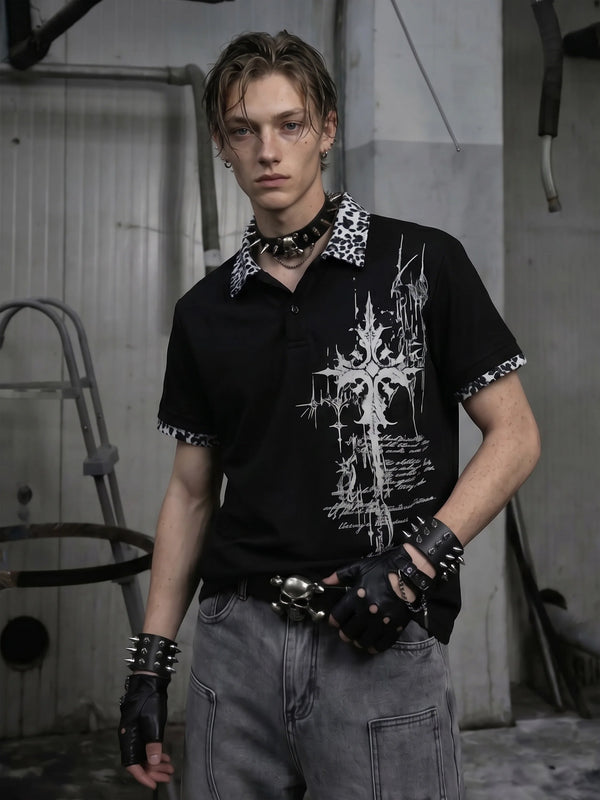
A pure grunge outfit is three things at once: an open flannel shirt over a band tee, a faded or distressed pair of jeans, and a sturdy boot — Doc Martens, Converse Highs with a hole, or combat. Add smudged eyeliner, unwashed hair, minimal jewelry. Marc Jacobs' 1992 show shows the skeleton: layers, wash, no shine.
For the rave, the middle drops out of the grunge setup. The flannel stays, the jeans stay — but boots get more functional (platform, tactical, combat with tread), the bag becomes a cargo pocket or a belt bag, and the band tee often gets swapped for a tank or a mesh layer so sweat can escape. The four markers grunge rave outfits are measured against are these:
1
Grunge element per outfit
90 %
functional, wide, breathing
5
Archetypes
0
Skinny jeans
The numbers aren't a slogan but the test. An outfit with two grunge elements (flannel and band tee and Doc Martens) reads as a 90s reenactment, not as rave. An outfit with no grunge element is a normal techno fit. Skinny jeans breaks both — grunge wants wide, rave wants breathing.
Concretely, grunge rave includes:
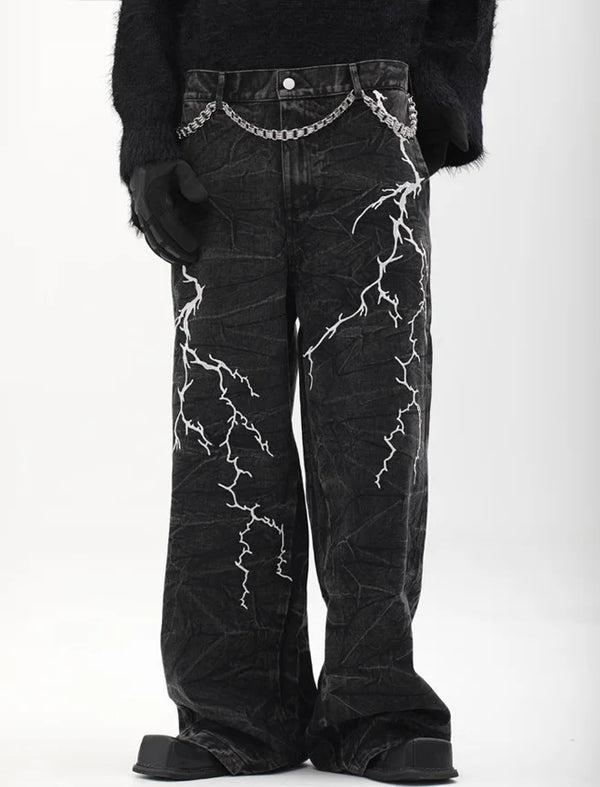
- Distressed denim — wide-leg or bootcut, blue wash or faded, shredded knees, sometimes patches. This is the most common grunge anchor at a rave.
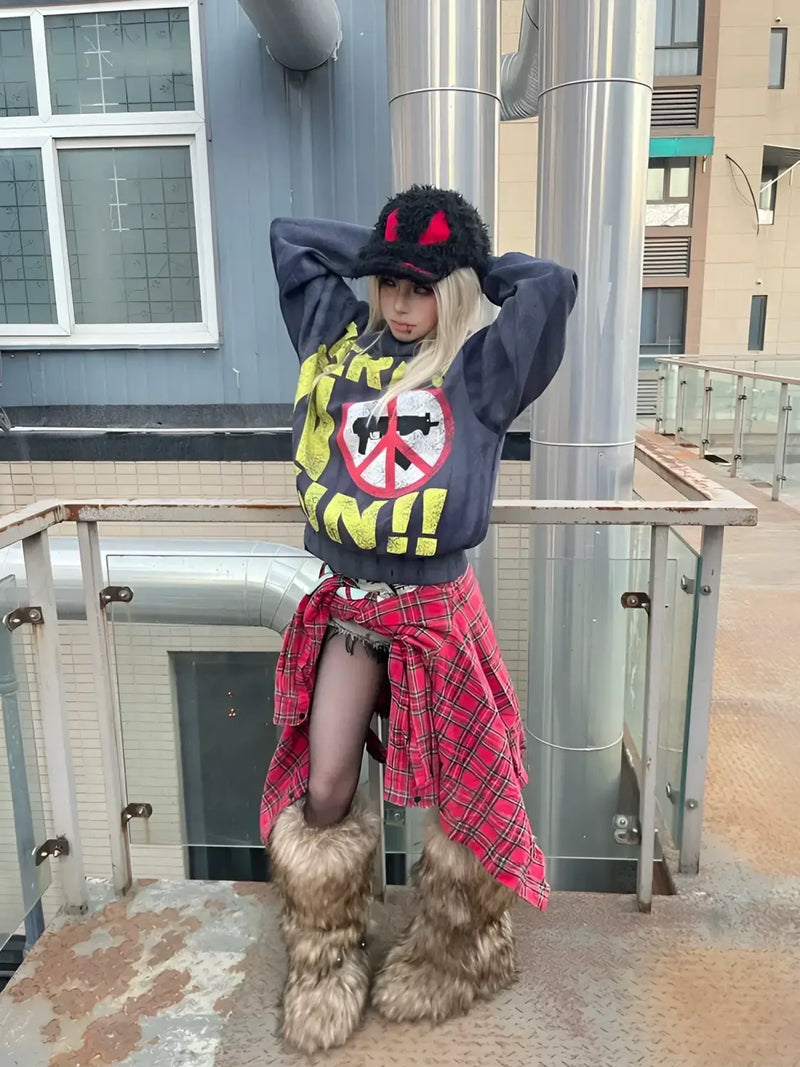
- Flannel overshirt — worn open, plaid (red-black, blue-black, or green-black), oversized. In summer tied around the hips instead of worn.
- Band tee or graphic longsleeve — broken, washed out, with a real or faux-vintage print. Nirvana, Soundgarden, Slipknot, or generic grunge print tees.
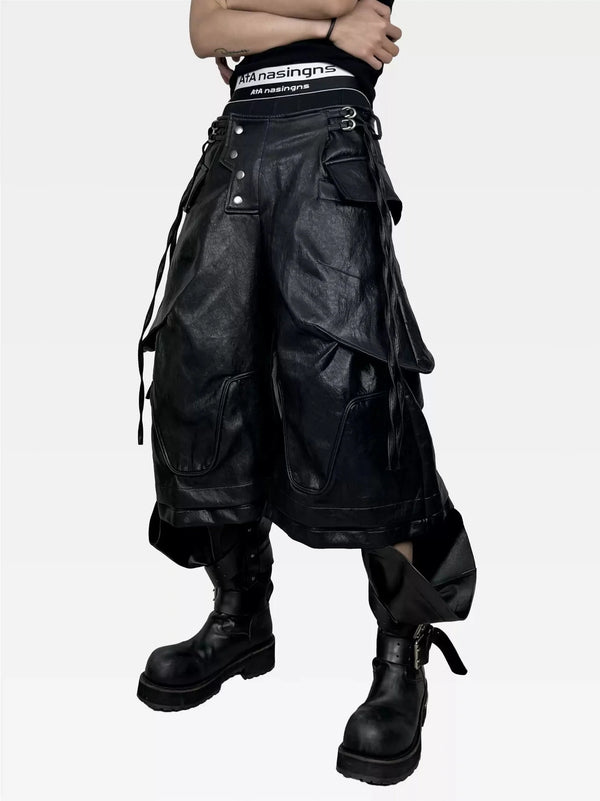
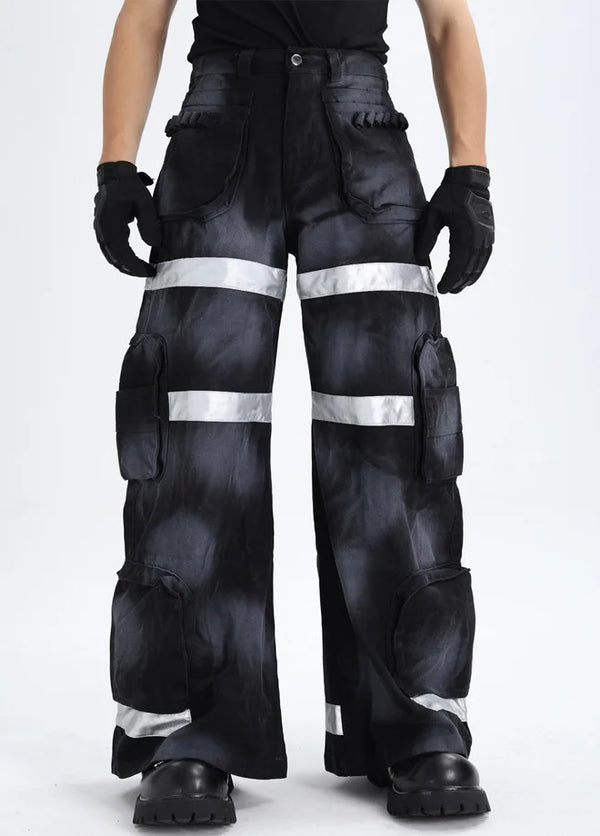
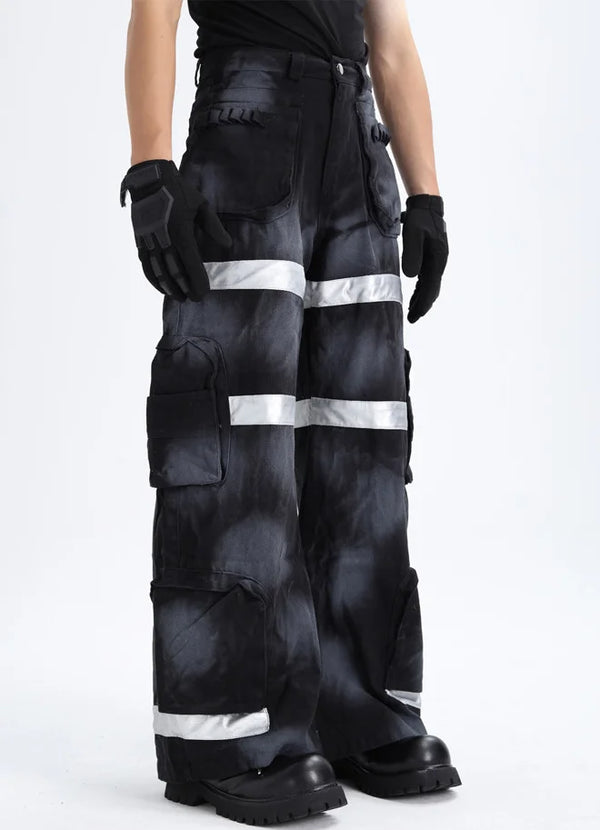
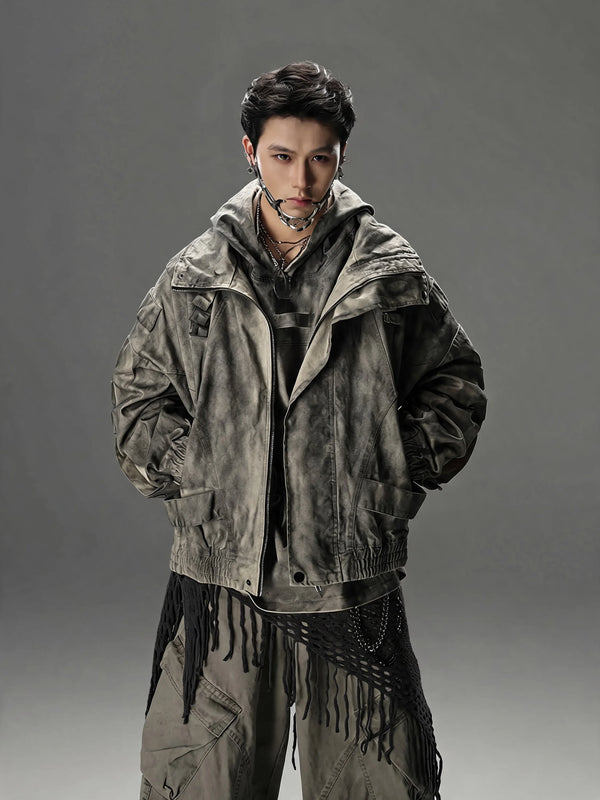
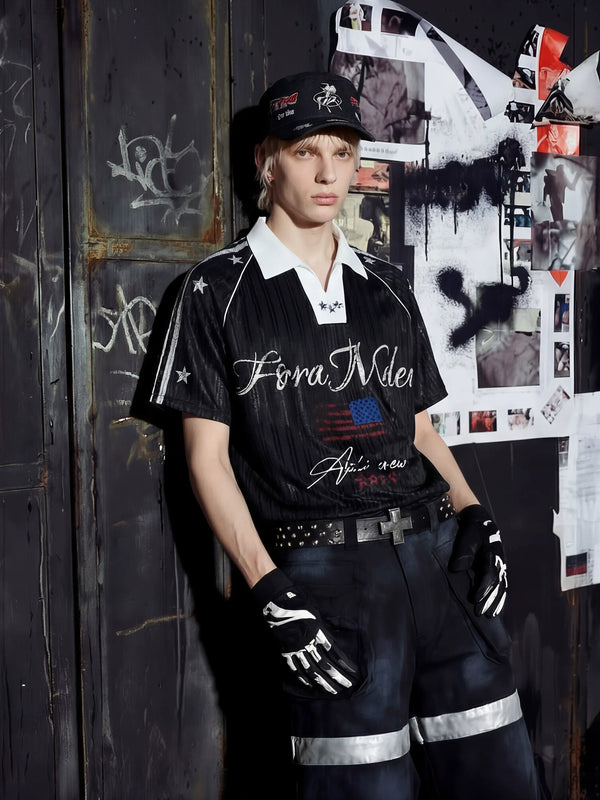
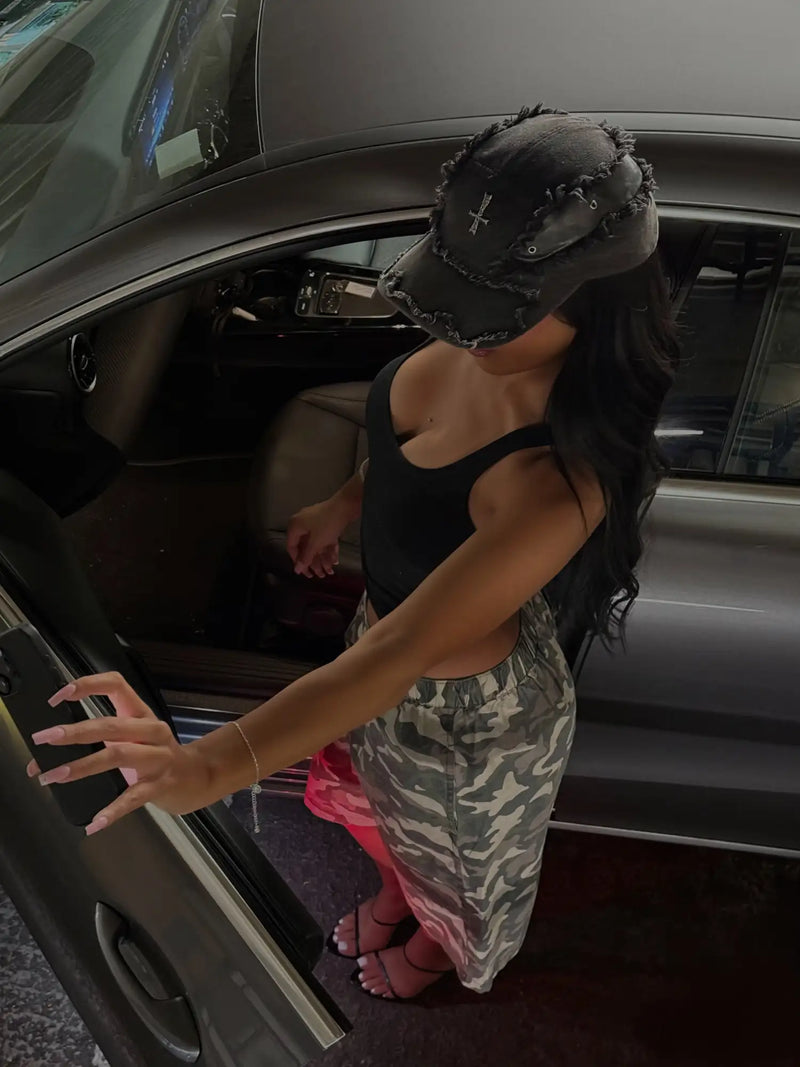
- Cargo or wide-leg — the rave share of the pants. With pockets, wide at the leg, ideally in black, khaki, or camo.
- Combat or platform boot — sturdy, with tread, not a fashion boot. Survives 8 hours on the floor.
- Wallet chain, carabiner, or buckle belt — hardware from the rave camp, not goth jewelry. Functional, visible, rattles a little.
The most common misuse: all six points at once. Six markers in the same outfit no one reads as grunge rave anymore — that becomes a Halloween set. Three to four of them are enough for any floor. What drops out depends on the weather and the club.
Formula
The formula: one grunge element, the rest rave function
The rule of thumb is mathematical enough to ask yourself while dressing in front of the mirror: which piece carries the grunge? If the answer is 'several', take one back. If the answer is 'none', add one — usually easiest as an open flannel shirt, because that makes almost any rave fit grunge-capable without tipping it.
Which element you pick depends on the floor. In the Berghain main room: the distressed jeans, because flannel gets too warm. In a cooler club or open-air: the flannel shirt, because then the jeans can happily be cargo. At a forest rave: the band tee, because layer-on-layer can become authentic in daylight.
The formula works in reverse too. If you wear cargo pants and a tank every day, at some point it goes generic at the rave. A flannel over it, a band tee under it, and the same fit suddenly reads as grunge rave instead of standard techno uniform. A small change, a clearly different signal.
Archetypes
5 archetypes of grunge rave outfits
The scene breaks down into five clean subtypes. You'll spot them on any floor in 30 seconds — by the ratio of grunge to rave and the hardness of the boot. Which one you are depends on where you dance and how much pain your outfit has to take.
Denim grunge
Distressed denim: the core of denim grunge at a rave
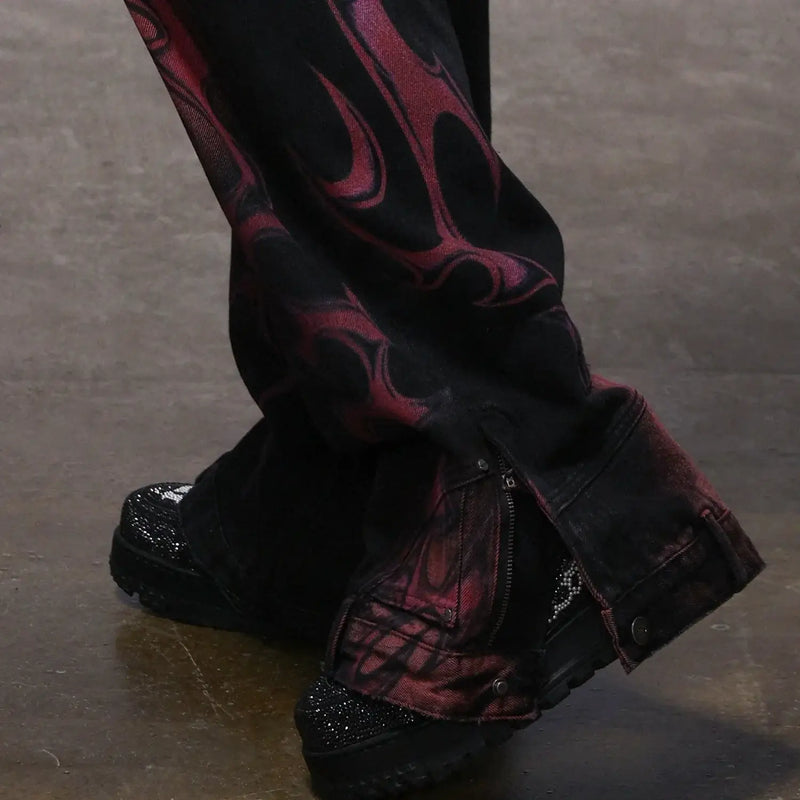
Denim grunge means, strictly: jeans that already look, before you wear them, like they survived three summers. Wash faded or blue-mottled, knees torn open, waistband slightly frayed, legs wide-leg or bootcut. Skinny is not grunge — skinny is 2012. Wide-leg is the only silhouette that translates Marc Jacobs' 1992 logic into 2026.
For the rave, denim grunge has two extra properties: it moves (wide, light, not pinching), and it survives the floor (real denim, not a stretch blend with 18% elastane that sticks after three hours). A shredded wide-leg jean in black or blue wash is the only pants that works in all five archetypes.
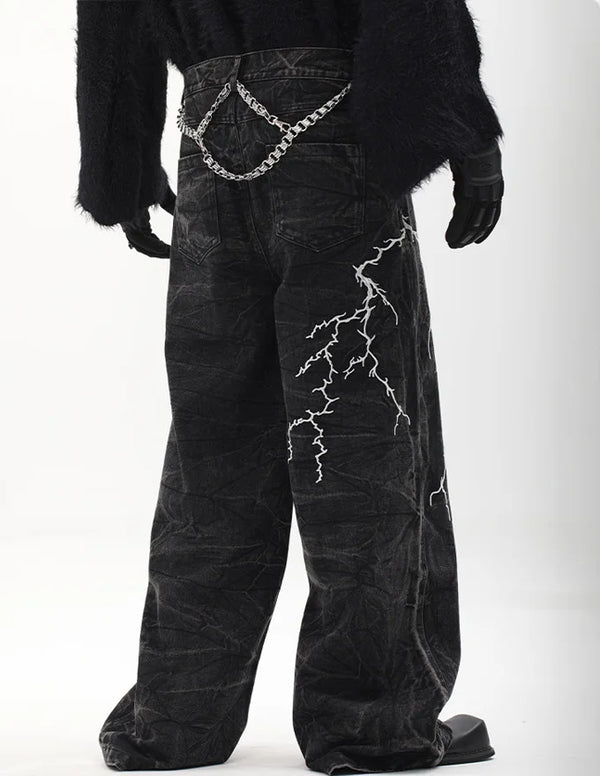
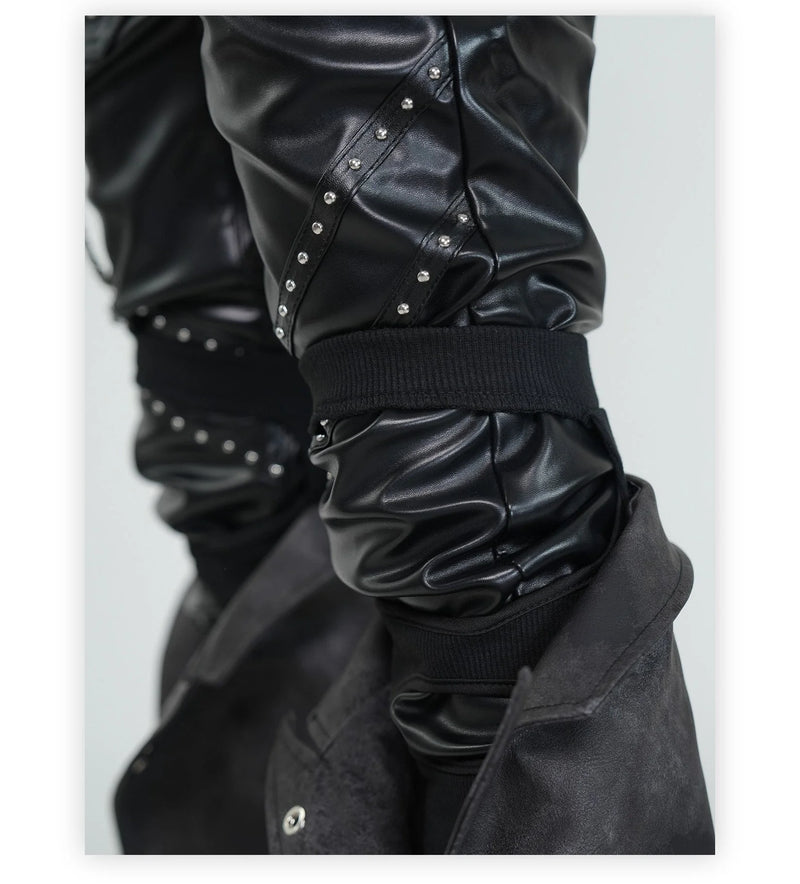
Two cuts sit especially reliably: the shredded wide-leg in blue wash for lighter floors and the black-washed studded wide-leg for Berghain and industrial. Both have the weight grunge needs and the movement rave demands.
Tops
Tops: band tees, broken longsleeves, mesh layers
The top decides whether your outfit reads grunge-heavy or rave-heavy. A band tee pulls it toward grunge, a mesh tank toward rave, a grunge-print longsleeve hits the middle. What you pull over the top (open flannel, short crop layer, bomber) can tip the signal — so decide the top first, the layer as the second step.
Three top types carry most grunge rave outfits through the night: the grunge-print longsleeve (anchor plus warmth, good for mixed floors), the underground tank (rave function, sweat out, grunge-capable with a flannel over it), and the mesh top (for the Industrial-Mesh variant, ideally under an open layer). Skinny tees are out — cut too tight, reads as 2014.
Trousers
Pants for grunge rave: cargo, wide-leg, shredded jeans
What do you wear to a rave party? The pants decide most of it. Three cuts work on any floor: the distressed wide-leg jean (grunge anchor, covered above), the cargo pant (rave function, pockets for stuff, ideally black or camo), and the wide-leg cargo variant that connects both — a pant that has pockets like cargo and hangs like jeans.
Black is safer than any other color — works in all five archetypes, survives any floor visually, combines with any top. Khaki and camo work for 90s-Denim-Rave and Industrial-Mesh-Grunge. White or light pants you can wear, but expect stain damage — the floor doesn't forgive.
Layer
Layers and jackets: flannel, denim, leather harness
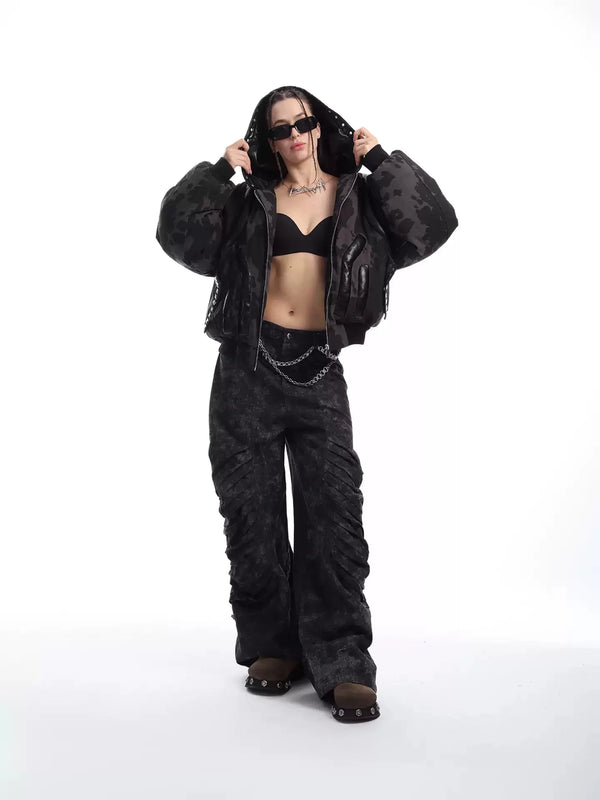
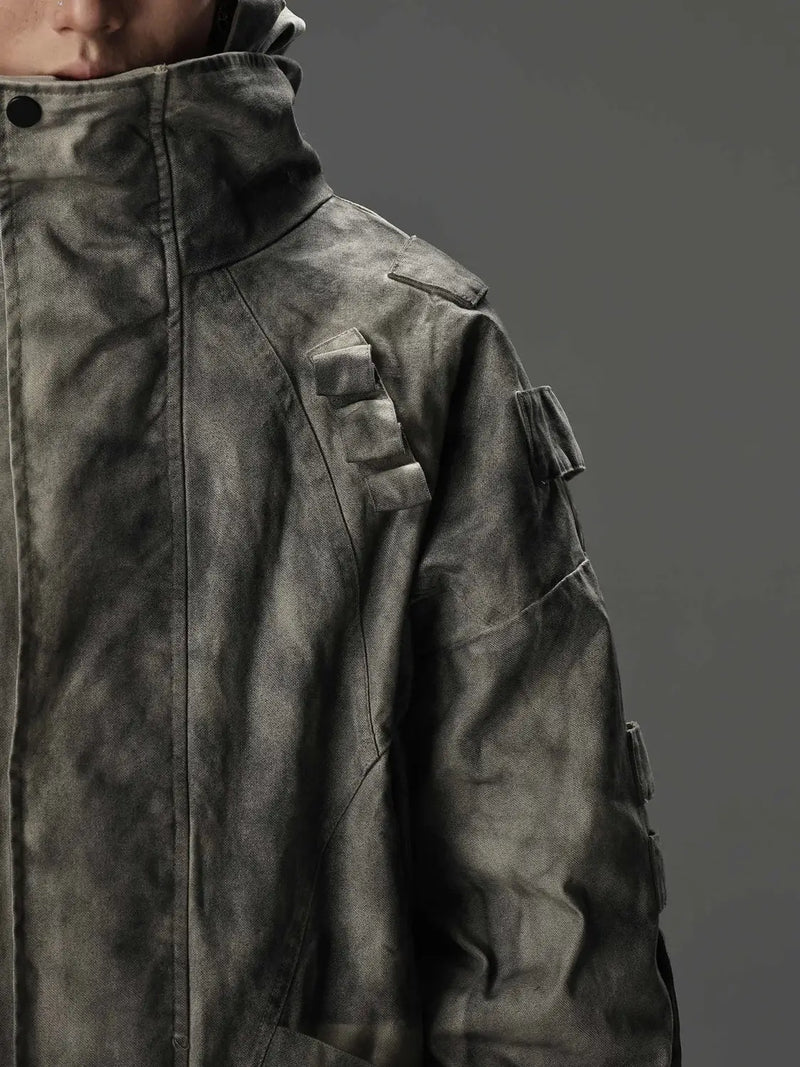
The layer decides the season and the hardness. Three layer types carry most grunge rave outfits: the open flannel shirt (most classic grunge anchor, around the hips in summer, over the tank in autumn), the denim jacket (90s-Denim-Rave must, ideally studded or slightly oversized), and the bomber or cropped carabiner jacket (rave function with grunge hardness).
What you should not wear, because it always tips the outfit: smooth leather bombers in a fashion cut (pulls toward streetwear, not grunge or rave), a suit blazer worn ironically (reads as brunch, not floor), and trench coats under 50 cm (too fashion-boy, not enough material). With trench coats the rule is: ankle-length or not at all.
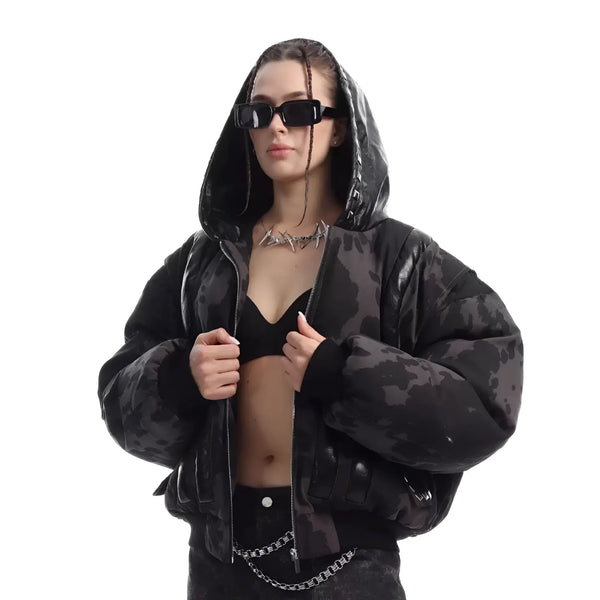
In winter it gets tougher. There the studded denim goes out and the leather harness or the puffer jacket takes over. Wallet chain stays visible. The layers get more, but the logic stays: one grunge piece, the rest functional.
Hardware
Boots, sneakers, wallet chain: the hardware set
The hardware carries more weight in the look than most think. Four points make the difference between grunge rave and a random black outfit: the boot (or sneaker, if deliberately set), the wallet chain, the buckle belt, and — optional — a belt bag or carabiner holster.
- Combat boot or platform — heavy sole, tread, ankle-high. Doc Martens 1460 is the classic; a platform combat like the Opium variant sets the statement even louder. Sneakers only with Soft-Grunge-Rave and Fairy-Forest.
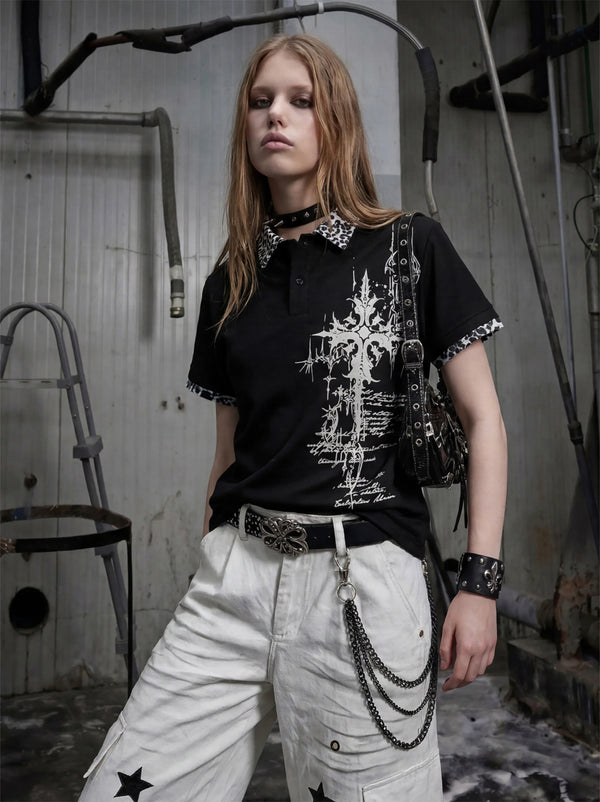
- Wallet chain — visible, lightly rattling, on the cargo pant or jeans. From the rave camp, not the goth camp — functional, no cross on it.
- Oversized buckle belt — Ethika, western buckle, or a heavy industrial buckle. Sits visibly on the hip, no hidden fashion belt.
- Belt bag, carabiner, or key reel — make function visible. Keys, cloakroom, cash — all on the body, nothing in the hand.
- Rings and cross pendant — sparingly, one or two pieces. A cross works when hardware jewelry dominates; with a lot of wallet chain, leave it off.
What hardware must not be: too many metals next to each other (silver and gold clash), jewelry that beeps (magnetic clasps at the door check), or fashion belts with a logo buckle. A logo buckle instantly turns any grunge rave outfit into a streetwear fit. Visible brand logos are out.
Gender split
Men vs women vs unisex: what shifts
Grunge itself was historically gender-neutral — Cobain wore dresses, Courtney Love wore torn jeans. At the rave a lot stays unisex (cargo, combat boot, wallet chain), but three places shift systematically by cut or size: the top, the jeans cut, and the choice between boot and platform.
With men, the oversized print longsleeve or tank dominates, ideally in dark colors, with cargo in black or khaki. Boots rather heavy (Combat 1460, side-zip, platform combat). Wallet chain longer, more visible. With women the jeans more often move to the mid-wide-leg (a little less wide than the men's cut), the tops go cropped or worn as mesh over a tank, and the platform boot line is more popular than pure combat. For both cuts: skinny is out.
Season
Seasonal: summer open, winter layered
Summer dissolves most layers. Flannel moves from 'worn' to 'tied around the hips'. The print longsleeve becomes a tank or crop. The pants stay — wide-leg denim or cargo handle summer heat better than skinny or shorts, because air circulates underneath. Boots yes, but with thinner socks; platform gets more popular than Combat 1460.
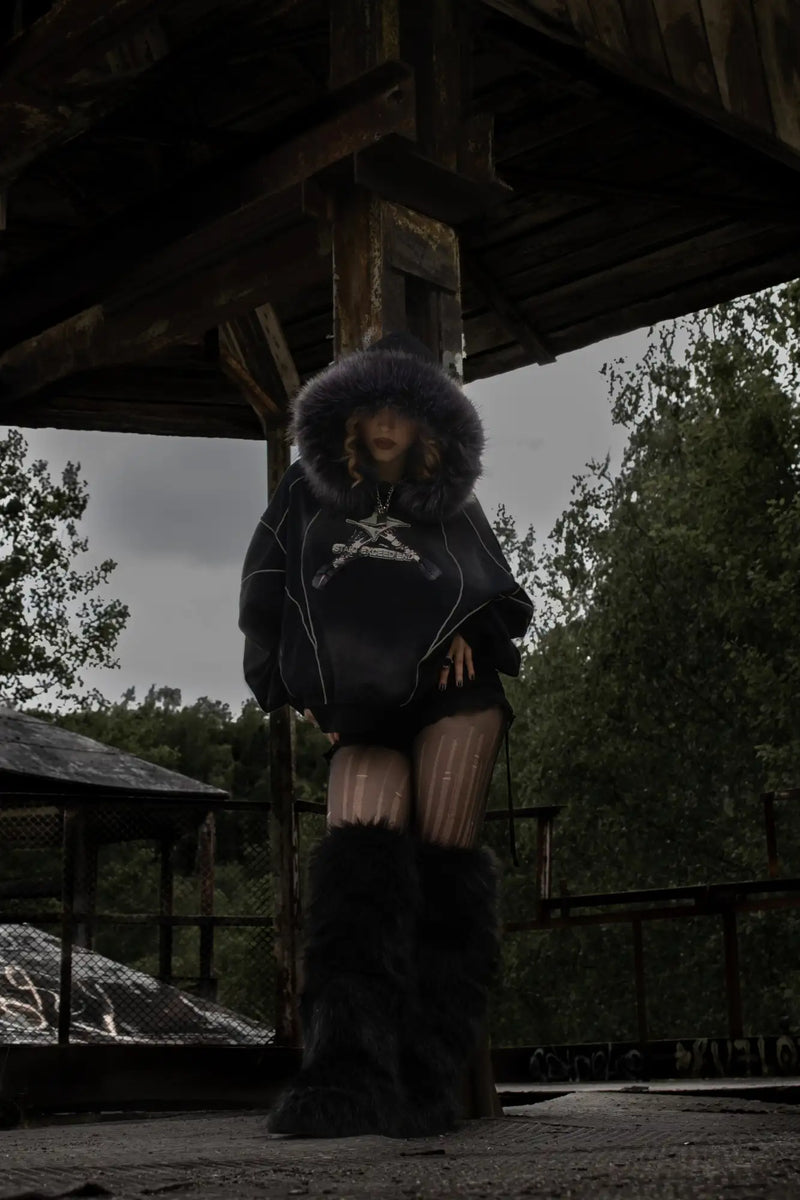
In winter it goes the other way. Three to four layers become standard: tank or tee, grunge-print longsleeve over it, then denim jacket or studded layer, and on top a puffer or bomber. The rule of thumb stays: one grunge piece. If puffer and flannel and band tee are visible at once, it's one layer too many — take one out.
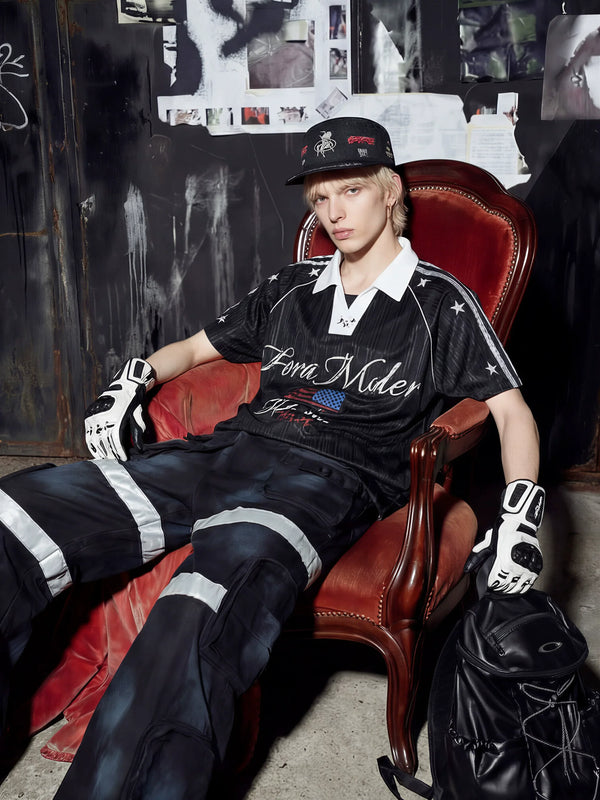
What layer logic looks like on the floor — cargo, longsleeve, hardware on top of each other, not a single piece too many:
Common mistakes
6 mistakes that tip your grunge rave outfit
Most grunge rave attempts fail at the same six spots. None of them is exotic — all are clearly visible the moment someone names them. The list of the most common tippers, in the order they stand out on the floor:
Getting started
First 4 pieces: your grunge rave entry
If you start from zero and don't want to buy everything at once: four pieces cover 80% of grunge rave outfits. A wide-leg jean (distressed, blue or black), a cargo pant (black, with real pockets), a combat or platform boot (sole with tread, ankle-high), and a top — print longsleeve or tank, depending on where you dance.
With that you build five looks: jeans plus tank plus boot (Hard-Berghain), cargo plus print longsleeve plus boot (Industrial-Mesh), jeans plus tank plus boot plus flannel over it (Soft-Grunge-Rave), cargo plus tank plus boot with wallet chain (standard rave with a grunge touch), and the variant with both pants swapped for the second night.
Deeper in
Related guides — where grunge and rave pull more depending on side
If the grunge share interests you more, go to the soft-grunge route. If the rave share carries you more, go to Berghain and techno. Y2K grunge is the bridge to earlier denim layering, and 90s rave explains where the wide-leg logic comes from historically.
The logic is concrete enough that you can check it while dressing in front of the mirror — and stable enough that you don't have to relearn it every two seasons. What changes are the pieces; what stays is the rule.
FAQ
Frequently asked questions about grunge rave outfits
What does the 3-3-3 rule for clothing say?
What is the 3-color rule?
Does grunge rave also work without a combat boot?
Am I allowed to wear glitter in a grunge rave outfit?
What is the difference from Soft Grunge?
Which colors work in summer for grunge rave?
What do you think?
Tell us on @fuga_studios
About the author
Philipp Fuge — Founder · Berlin
Founder of Fūga Studios. Writes the journal himself. Berlin · Shanghai · Tokyo · Poznań — four cities, one logic.