



Inhalt 16 Abschnitte
- 01 Who invented Gothic fashion — and why 1979 in London?
- 02 What is Gothic clothing — and what all counts as part of it?
- 03 The 7 Gothic Archetypes — from Trad to Corp
- 04 Gothic clothing women vs Gothic outfit men — where the code varies
- 05 Which Gothic clothing brands are there — and where to buy in Germany?
- 06 Gothic Jackets & Coats — Leather, Velvet, Brocade
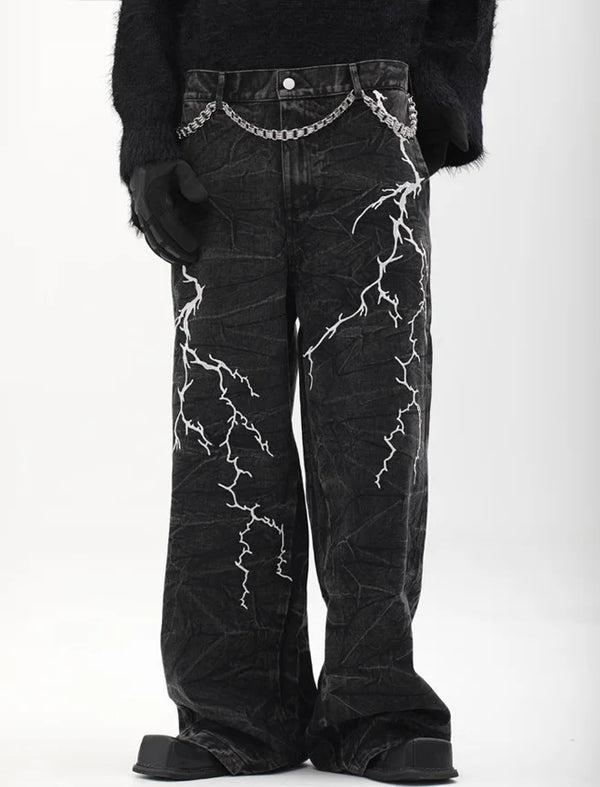
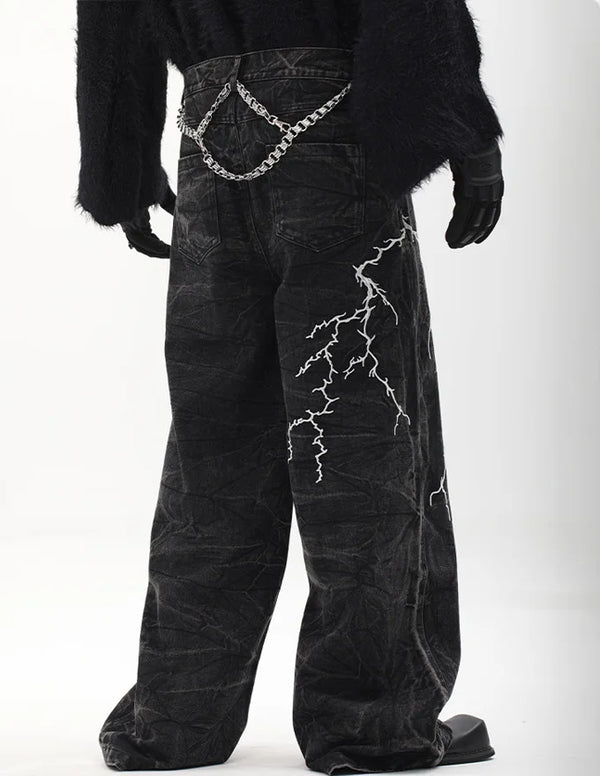
- 07 Gothic Trousers & Jeans — Bondage, Leather, Tripp
- 08 Gothic Tops, Shirts & Hoodies — Mesh, Lace, Band Shirt
- 09 Shoes & Symbol Hardware — Demonia, Combat, Crosses
- 10 Makeup & Symbol Language — how the code speaks from the face
- 11 Modern Gothic vs Traditional Gothic — where the lines run
- 12 The 6 Most Common Gothic Mistakes — what tips the outfit over
- 13 How to start in Gothic Fashion — the first 4 pieces
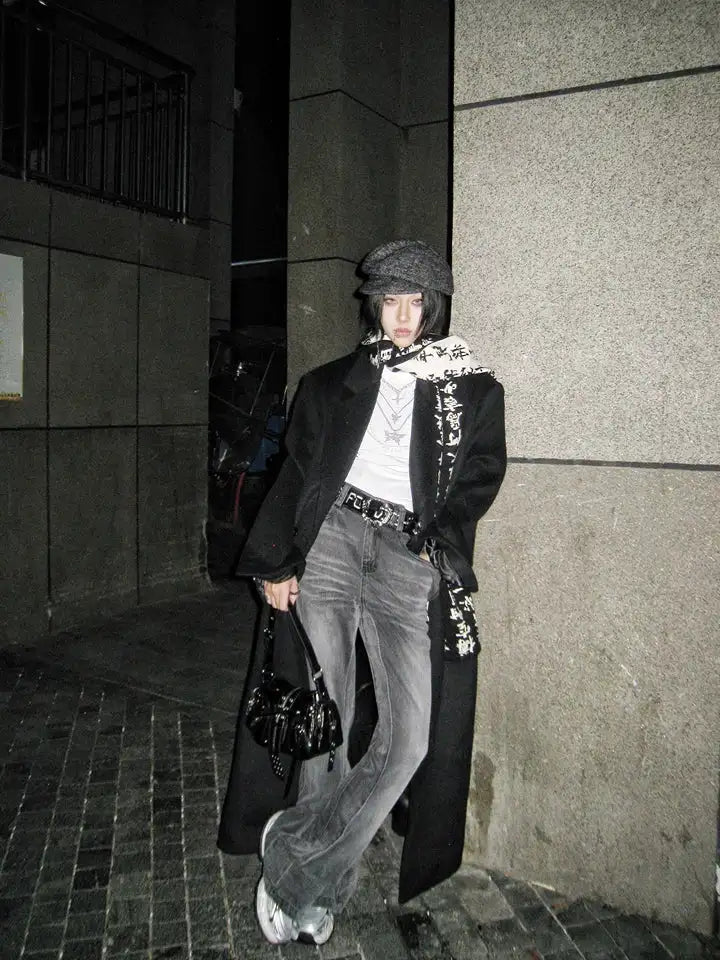
- 14 Gothic Outfits for Real — how it looks on the street
- 15 Gothic is a vocabulary — not a trend, not a costume
- 16 Frequently Asked Questions about Gothic Fashion
Everyone calls it „Gothic". Nobody means the same thing. A Siouxsie-Sioux iteration from 1981, a Cyber-Goth with neon Cyberlocks from 2003, and an Office Siren in a black blazer in 2025 are three different outfits — and all three are right. Gothic Fashion isn't one look but a vocabulary that has unfolded into different sub-codes over more than forty years.
The movement comes out of post-punk Britain in the late 70s. Bauhaus' Bela Lugosi's Dead (1979) counts as the birth moment, the London Batcave club from 1982 as the first scene address. Siouxsie Sioux, Robert Smith and Andrew Eldritch delivered the visual language: black fabrics, white foundation, backcombed hair, silver crosses. What started as a music subculture became a fashion system.
This guide clears up what Gothic clothing really is, which nine archetypes the scene wears today, how women's and men's versions differ, which brands write the vocabulary (Killstar, Disturbia, Demonia, Punk Rave — plus the German go-to shops EMP, Boudoir Noir, Dark Ages), and how you spot when your outfit tips over — into Halloween, into cosplay, into generic black.
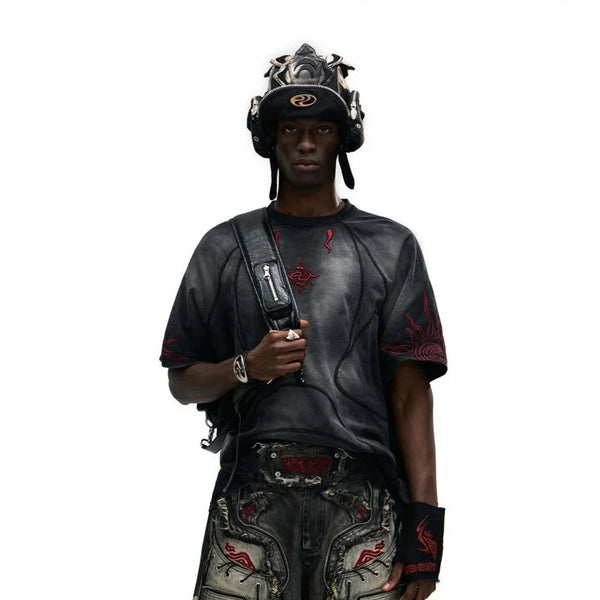
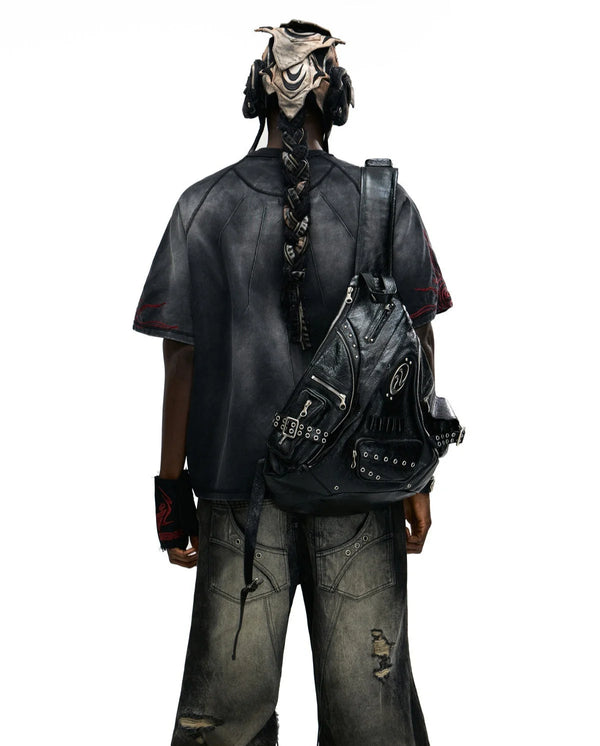
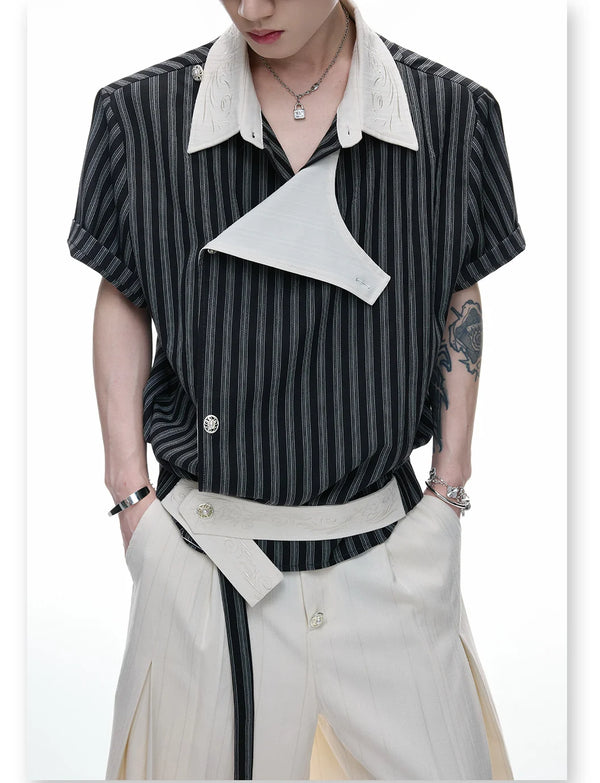
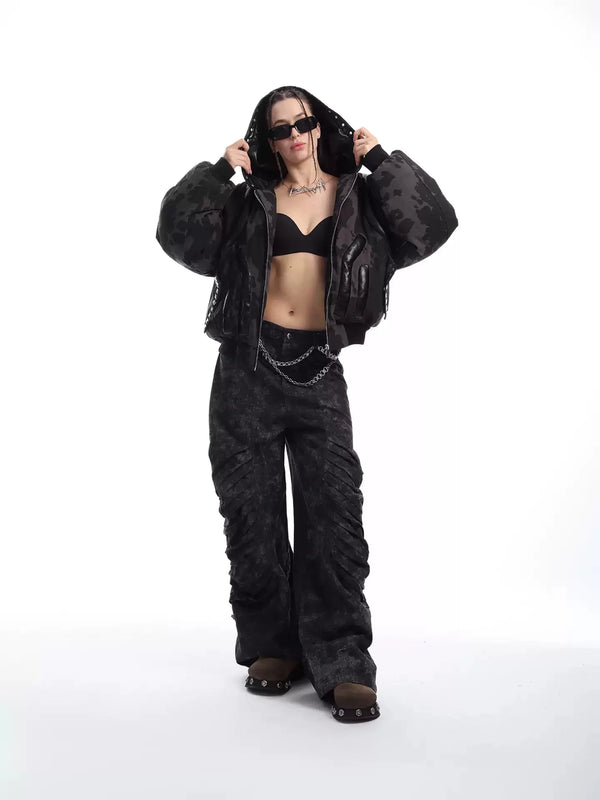
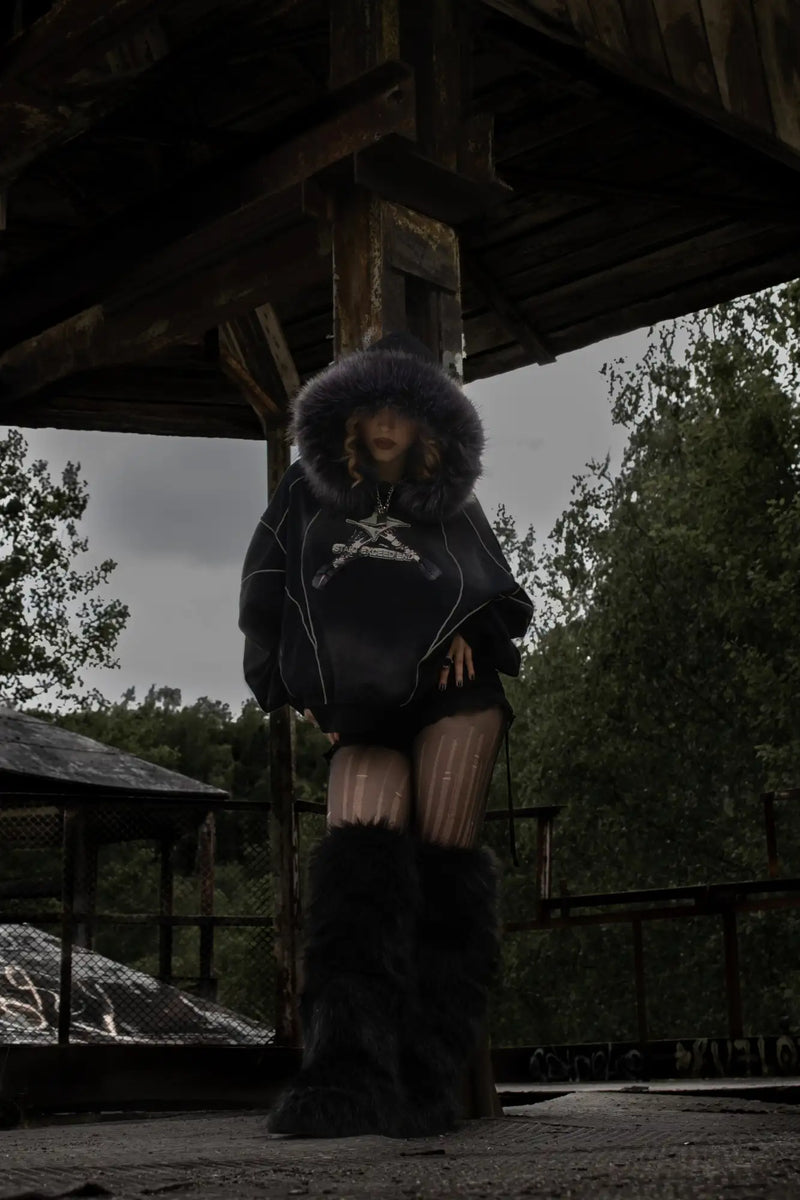
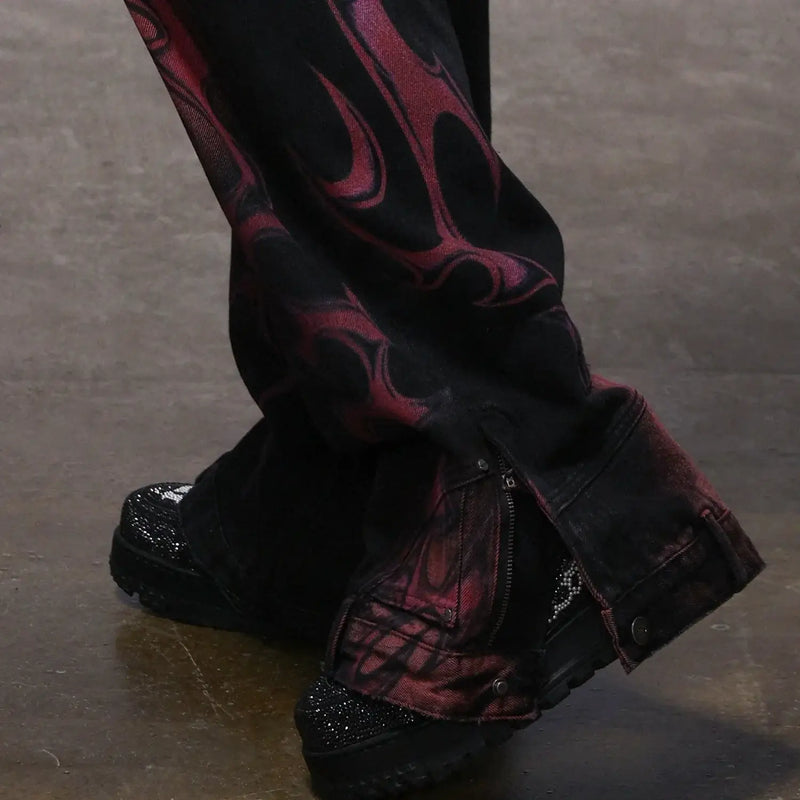
Here's what that looks like in motion — an iteration from our feed, denim-set variant:
What is a Korean two piece outfit — and where the code starts
Who invented Gothic fashion — and why 1979 in London?
The label „Gothic" for fashion is born not in a design studio but in a music magazine. Sounds describes the Bauhaus single Bela Lugosi's Dead as „gothic" in 1979 — the term sticks to the band, the band becomes the template, the template becomes a scene. A few years later, from July 1982, this scene meets three times a week at the Batcave in Soho. The club is small, papered in black, and delivers the first stage for a fashion that previously existed only on LP covers.
Three people co-write the visual lexicon. Siouxsie Sioux delivers the eyes — five centimetres of black eyeliner in a spider shape, backcombed hair, mesh on the upper body. Robert Smith of The Cure delivers the line — knee-length coat, dishevelled look, black shirt under an open jacket. Andrew Eldritch of Sisters of Mercy delivers the silhouette — black sunglasses indoors, long coat, slim cut, no logo anywhere.
Parallel to London, the same thing happens in Los Angeles in a harder variant. Christian Death (1981, Rozz Williams) founds Death Rock — DIY, bandage, more punk, less drape. The two codes — Batcave and Death Rock — form the origin of every Gothic look to this day. Everything that comes later (Victorian, Cyber, Mall, Corp) is iteration on this first layer.
In 1994 the Whitby Gothic Weekend institutionalises the scene in northern England. Twice a year, six days, a small harbour town full of black coats. Bram Stoker's Dracula (1897) is set in Whitby — the place becomes a pilgrimage site. Today the scene comes there from thirty countries. What was a few hundred people in Soho in 1982 is, in 2025, a grown-up subculture with its own festival calendar.
Clean line — the set sits at shoulder and hip and falls straight. No layer stack breaking it up.
What is Gothic clothing — and what all counts as part of it?
Gothic clothing isn't a colour scheme but a material system. Anyone who thinks black fabric alone is enough hasn't understood the code. What separates Gothic from „just dark streetwear" is the combination of four fixed building blocks — material mix, symbol vocabulary, silhouette and hardware. Miss one and the outfit tips into another subculture (Streetwear, Techwear, Dark Academia) or worse: into Halloween.
80 %
Black share at least
4
Materials mixed
7
active archetypes
1979
Start in London
Eighty percent black is the lower limit — the rest may be oxblood, deep violet, bordeaux or dark fir green. Pure 100-percent black tips quickly into streetwear black; an accent on the saturation scale below black brings the outfit back into the Gothic code. Anyone running Pastel Goth flips the ratio — black foundation, pastel-pink or mint-green accents — but the black anchor stays.
Concretely, Gothic Fashion includes:
- Material mix as a marker — velvet, leather, lace, mesh, brocade, fishnet. A single material won't carry the outfit. A velvet coat over a lace top over leather trousers is a typical Gothic triple.
- Symbol vocabulary in the detail — cross, pentagram, ankh, rose, spider, skull, bat. As a pendant, as an embroidered accent, as a small print element. Not as a print wall across the whole shirt.
- Structured or falling silhouette — corset, pencil skirt, high-cut coat (structured) OR maxi dress, cape, wide skirt (falling). Both work. Loose-baggy, on the other hand, doesn't read as Gothic.
- Silver and antique metal hardware — pewter, antique silver, gun metal. Pure gold is out in classic Gothic; only Victorian Goth tolerates old brass as an accent.
- Makeup as part of the outfit — black eyeliner (often in a spider shape for Trad Goth), white or cool foundation, dark lip red or black. Makeup belongs to the code, not as an add-on.
- Shoes with weight — combat boot, Demonia platform, laced boots, Mary Jane, creeper. Sneakers are wrong in almost every iteration — exception Mall Goth in the 90s.
When four of these six points sit, the outfit reads as Gothic. Three or fewer — it stays „dark fashion with Gothic influences". There's a test that holds the vocabulary together:
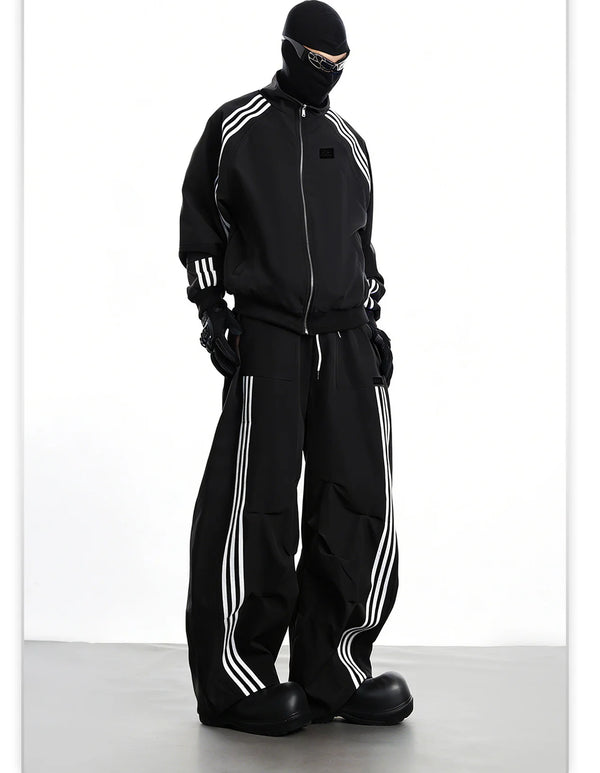
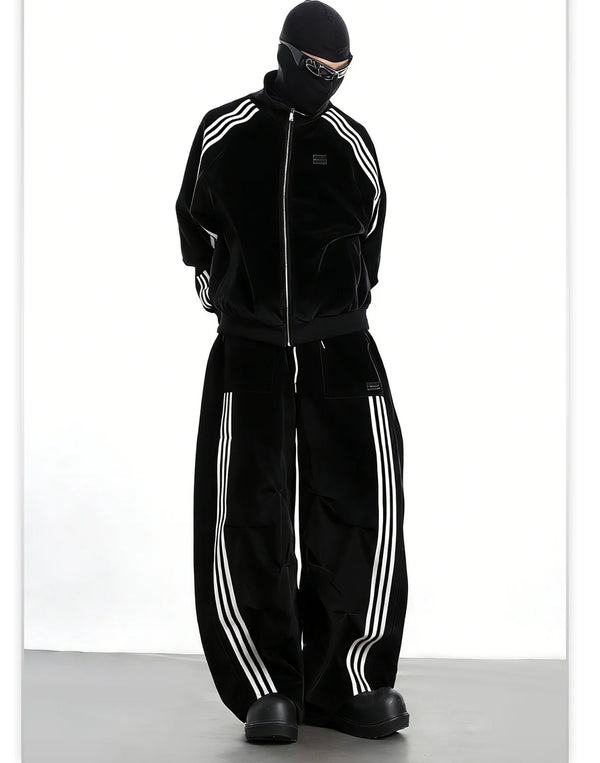
Track top plus track pants in matching nylon or terry. K-pop home-content vibe. Sneakers allowed — matte, low-profile, in the set colour. Worn out, not for sport.
The 7 Gothic Archetypes — from Trad to Corp
Gothic has unfolded into seven active sub-codes since the 80s. Each has its own silhouette, its own material ratio, its own shoe choice. Anyone who wants to understand Gothic first learns to tell the seven types apart — after that, most fashion questions become answerable.
Which of the seven suits you depends less on taste than on the line you want to wear — structured (Victorian, Corp) or falling (Romantic, Witch-adjacent) or hard (Trad, Mall, Cyber). How that splits into women's and men's variants comes next.
Gender split
Gothic clothing women vs Gothic outfit men — where the code varies
The seven archetypes apply gender-neutrally. What varies is the distribution — which code is worn more often in which iteration, and where the cuts sit. The material rules (mix of three textures, silver hardware, 80-percent-black quota) stay the same everywhere.
For women, Romantic Goth, Victorian Goth, Pastel Goth and Corp Goth dominate everyday wear. The structured silhouette runs through corset, pencil skirt or bustier; the falling silhouette through maxi dress and lace layers. Shoes go more often into high laced boots, Mary Janes or Demonia platforms. Symbol jewellery slips more often into the statement — three rings, a skull chain, drop earrings with a cross.
For men, Trad Goth, Death-Rock-adjacent, Mall Goth and Corp Goth dominate. The silhouette runs tighter on top (black shirt, mesh, long sleeve) and heavier below (Tripp pants, leather trousers, cargo). More layers outside (coat over open shirt) than on the body. Symbols stay a detail — one ring, one chain, no assortment.
Both iterations need the same four building blocks — material mix, symbol detail, clear silhouette, dark hardware. Only the distribution of these four building blocks shifts.
Brands
Which Gothic clothing brands are there — and where to buy in Germany?
Since the 90s the scene has had a fixed brand set that barely changes. Anyone who wears Gothic seriously knows these seven or eight labels. Anyone with three of them in the wardrobe can build any of the seven archetypes.
The brands that carry the Gothic vocabulary — ordered by iteration:
- Killstar — British label since 2010. Witch-Goth and Trad-Goth standard. Maxi dresses, pentagram jewellery, platform boots. The most common first stop.
- Disturbia — Manchester, since 2003. Streetwear-Goth crossover. Graphic shirts, hoodies, print Pieces for the Mall-Goth line and everything below.
- Punk Rave — Chinese brand, broad range. Delivers Steampunk, Victorian and Industrial Gothic — lots of corsets, brocade coats, asymmetric cuts.
- Demonia — shoes. Platform stompers, Cyber boots, Mary Janes with spike. If your shoe is five centimetres high and has buckles, it's Demonia.
- Tripp NYC — the pants. Bondage trousers with straps, strap-zipper cuts, the 90s Mall-Goth template. Hot-Topic era and to this day.
- Heartless — punk-Goth edge with a DIY feel. Distressed mesh, studs, cut cuts. Death-Rock-adjacent.
- Lip Service — LA, since 1985. Bondage, vinyl, PVC. The sex-shop touch in the Gothic iteration — fits Cyber Goth and Industrial.
- Banned Apparel — cheaper entry line. Lace tops, pinstripe trousers, petticoat skirts. The drugstore of the Gothic world.
For German buyers, four go-to shops are relevant: EMP as a broad multi-brand shop with a warehouse in Lingen, Boudoir Noir for a Steampunk-and-Punk-Rave focus, Abaddon Mystic Store for classic Trad-Goth pieces, Dark Ages for cheap scene clothes with DHL shipping from forty euros. Anyone who buys DTC (i.e. directly from a brand like Fūga Studios) bypasses the multi-brand markup — the vocabulary stays the same, the markup falls away.
Category · Outerwear
Gothic Jackets & Coats — Leather, Velvet, Brocade
The jacket carries the Gothic outfit. It's the largest surface, the most dominant fabric, the primary carrier of the silhouette. This is where it's decided whether your black outfit becomes Gothic or a winter coat.
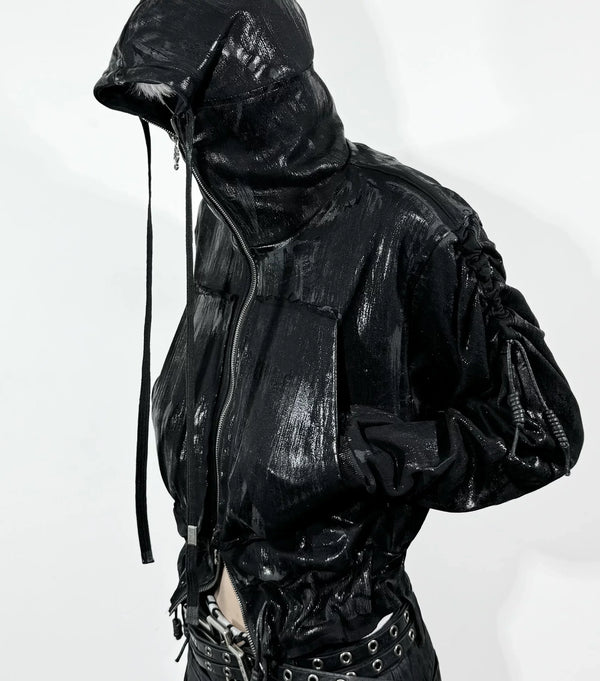
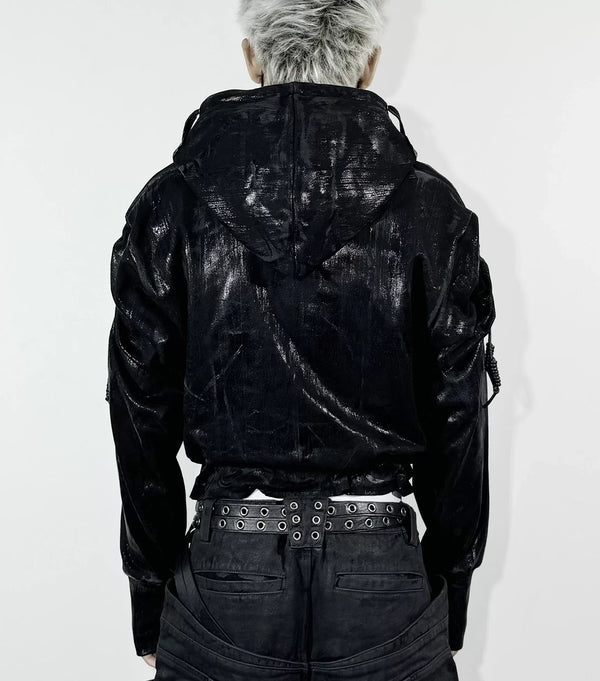
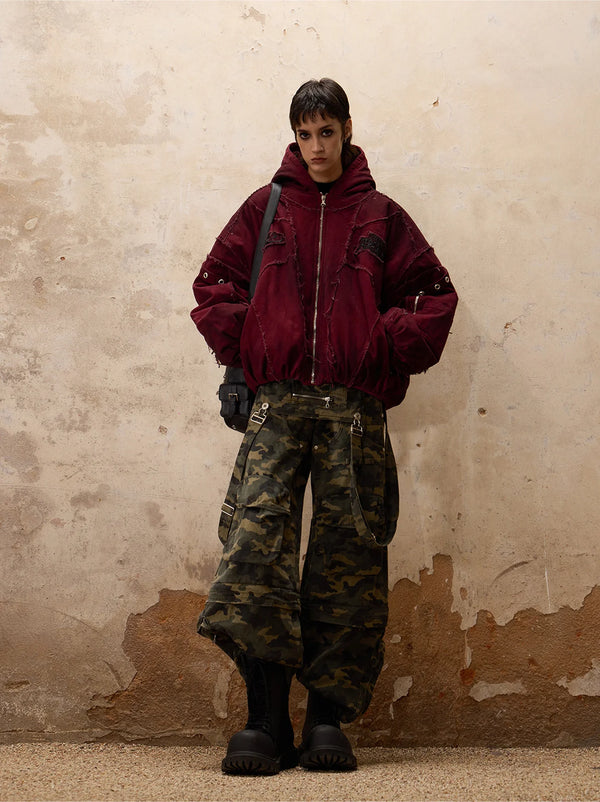
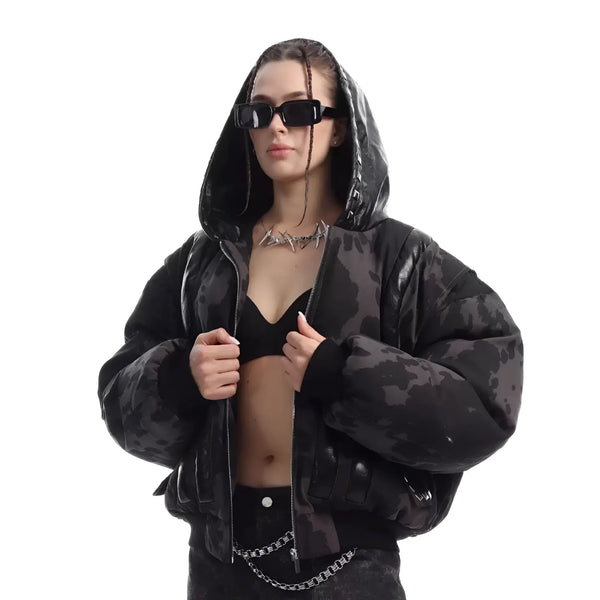
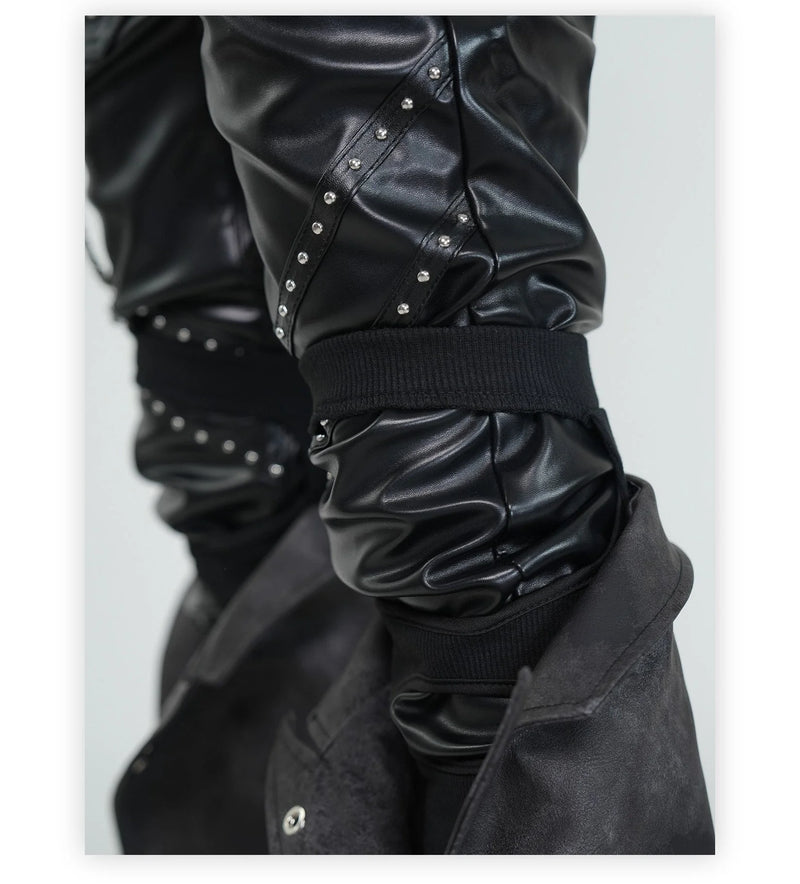
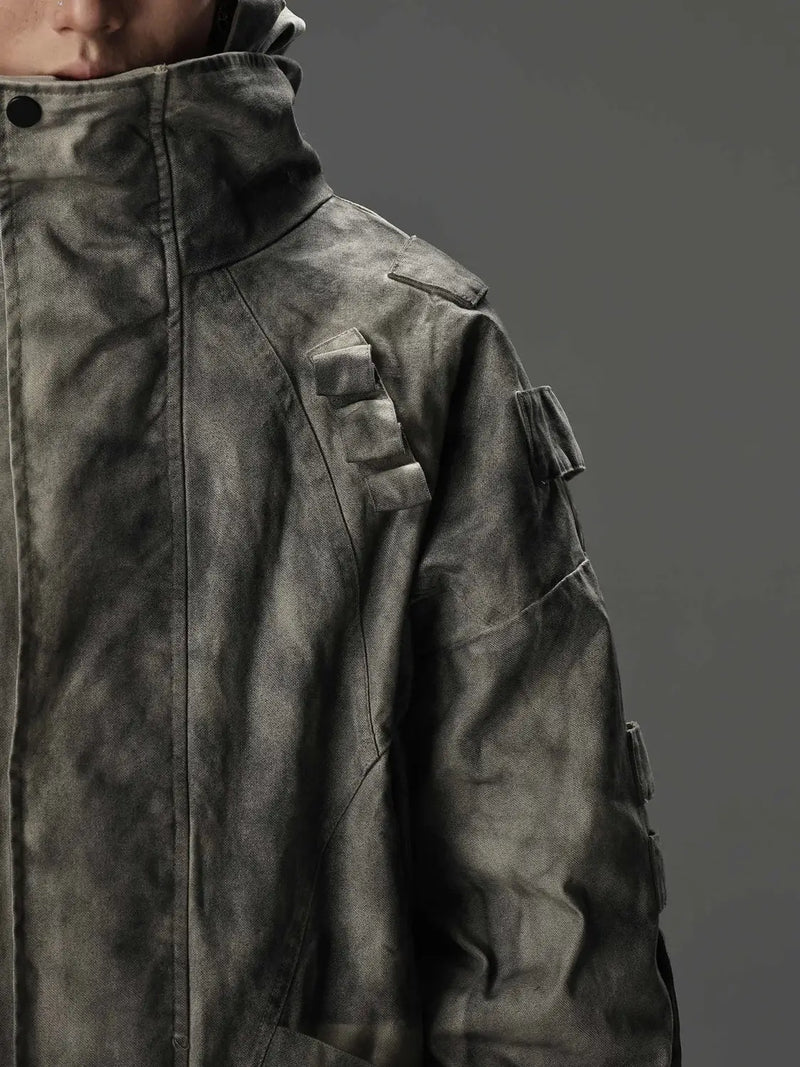
Four jacket types work in Gothic: leather jacket with studs or spikes (Trad, Death Rock), velvet coat or frock coat at knee length (Romantic, Victorian), brocade coat with an asymmetric cut (Victorian, Steampunk-adjacent), and bomber with patches and studs (Mall Goth, 90s iteration). PVC and vinyl trench coat belong here if you're heading toward Cyber Goth.
If you don't own a black leather jacket yet, that's your first move. No matter which of the seven archetypes — the jacket is the anchor. Everything else builds around it.
Category · Bottoms
Gothic Trousers & Jeans — Bondage, Leather, Tripp
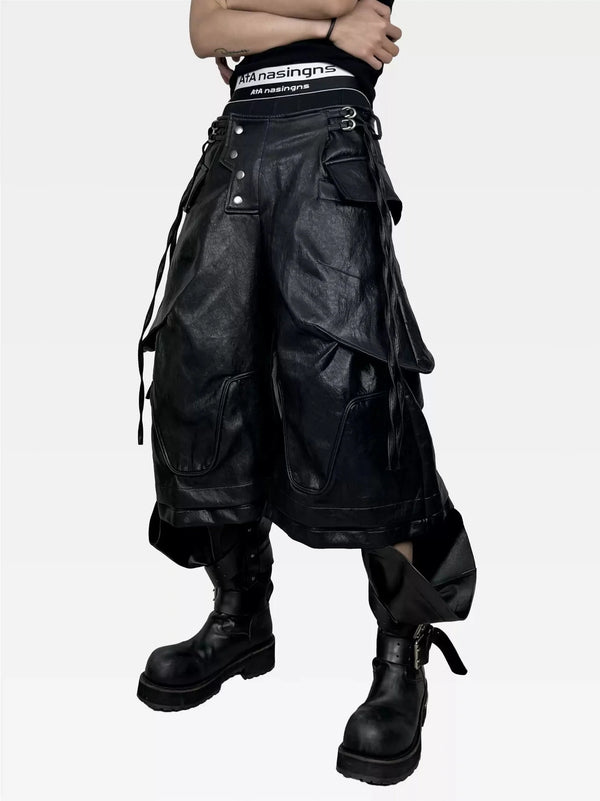
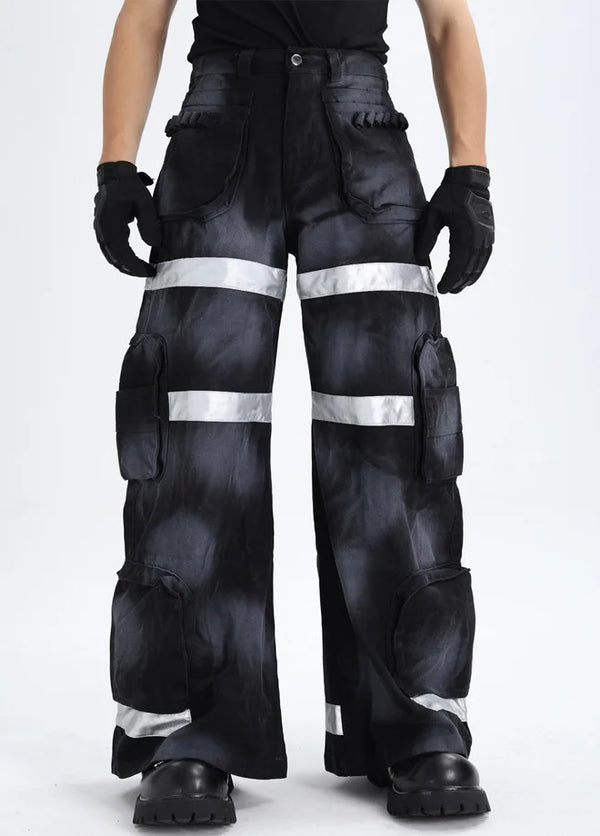
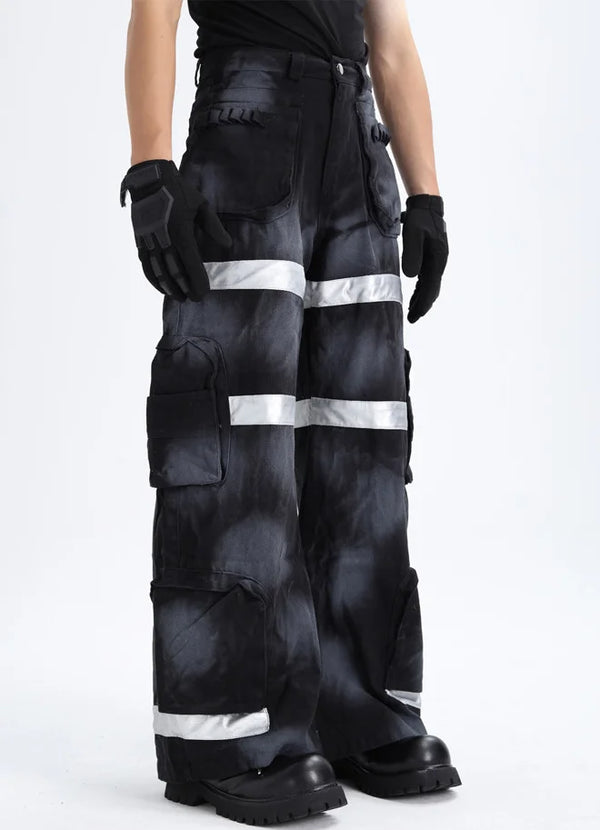
With the trousers it's decided which of the seven archetypes the outfit falls into. Tripp pants with straps and zippers mark Mall Goth. Leather trousers with lacing mark Trad or Romantic. Black skinny jeans mark Death Rock and Cyber-adjacent. A structured pencil skirt marks Corp Goth. Wide-leg cargo in matte black marks the Witch-Goth iteration.
What they all share: matte or lightly textured, black base colour, high-quality fabric at the waistband. Glossy trousers with wash-stretch don't read as Gothic — they read as Y2K trash. Real leather or vegan leather with a matte surface is standard, glossy PVC only as a deliberate Cyber code.
If you're looking for trousers that fit four of the seven archetypes, take matte-black leather trousers with a straight cut. They work for Trad, Romantic, Death Rock and Corp equally.
Category · Tops
Gothic Tops, Shirts & Hoodies — Mesh, Lace, Band Shirt
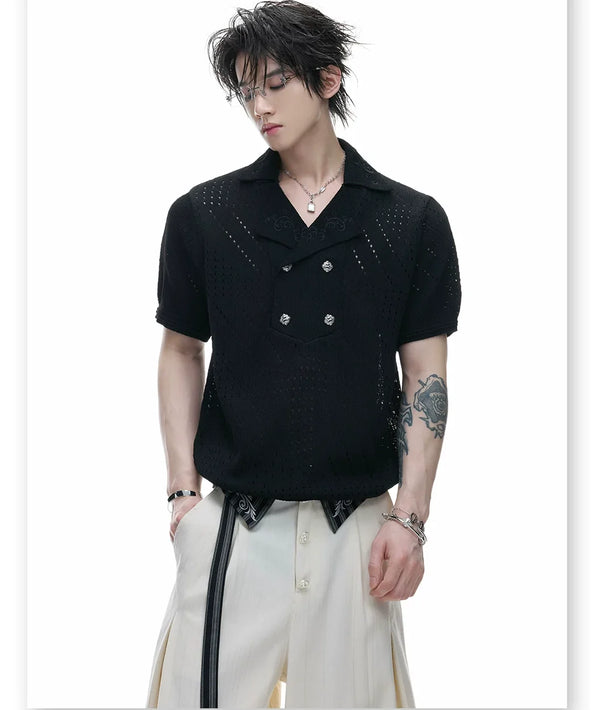
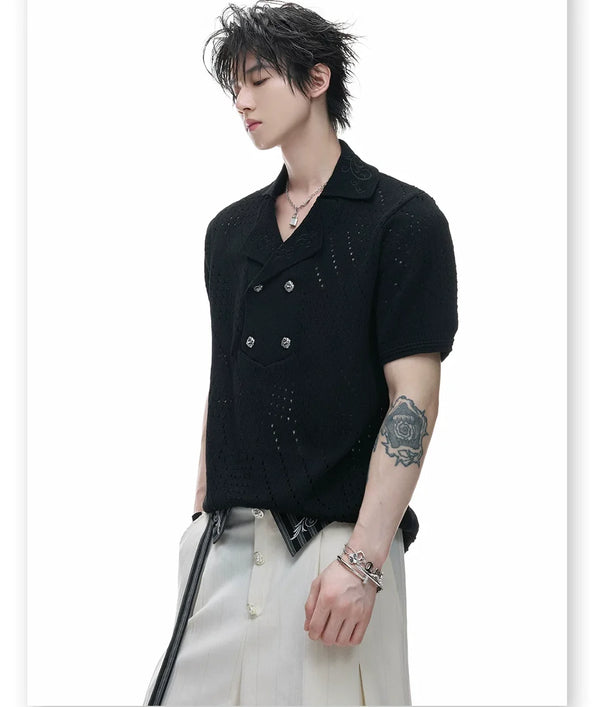
With the tops the archetype sorts itself fastest. A mesh long sleeve marks Trad Goth. A lace blouse or velvet top marks Romantic. A corset top or brocade bustier marks Victorian. A band shirt by Cradle of Filth or Type O Negative marks Mall Goth. A structured black blouse marks Corp Goth.
The rule across all seven: body-close on top, symbol vocabulary in the detail, no logo print. Printed band shirts are the exception for Mall Goth — otherwise the print stays small and symbol-based (pentagram embroidery, cross-stitch, spider detail). A plain-black long sleeve beats any skull print in the vocabulary.
Anyone who wants to test the mesh look takes a black mesh long sleeve under an open leather jacket. That's the easiest entry toward Trad Goth — cheap, low-risk, instantly legible.
Category · Footwear & Symbol Hardware
Shoes & Symbol Hardware — Demonia, Combat, Crosses
Shoes and symbol jewellery are the two places where Gothic tips most visibly. Wrong choice in one of the two and the whole outfit breaks. Generic sneakers are wrong in almost every iteration — exception Mall Goth in the 90s, where Chucks or skate sneakers were permitted.
What works on the feet:
- Combat boots — Dr. Martens 1460, Doc style with steel toe. Universal weapon. Works for Trad, Romantic, Death Rock, Mall.
- Demonia platforms — five to fifteen centimetre sole, buckles, spikes. Marks Cyber Goth, Pastel Goth, Mall Goth and the Whitby-festival variant.
- Laced boots — Victorian style, long shaft, many eyelets. Marks Victorian and Romantic Goth.
- Mary Janes with platform or block heel — marks Pastel Goth, sweet Goth and the younger Witch iteration.
- Creepers — flat, thick crepe sole, often with a D-ring detail. Originally from rockabilly, migrated into Gothic since the 80s.
With symbol jewellery the rule is: one statement piece plus subtle accompaniment. One large cross chain plus two silver rings is clean. Three statement chains at once is Halloween. Pentagram, ankh, rose ring, spider brooch — all allowed, all as a single detail.
Makeup & Symbolism
Makeup & Symbol Language — how the code speaks from the face
Unlike many other fashion codes, makeup in Gothic isn't an add-on but part of the outfit. Anyone who wears black lace without eyeliner reads as costume Halloween. Anyone who wears black eyeliner under the eye plus subtle lipstick reads as Gothic — even in an otherwise neutral outfit.
„Makeup makes the outfit legible. Without the eyeliner, lace is just fashion. With eyeliner, lace is a code."
Three iterations work stably. Trad-Goth makeup works with black eyeliner in a spider or drop shape, plus pale foundation and dark-red or black lips. Romantic-Goth makeup goes for a smoky eye in plum or bordeaux, less geometric, softer in the line. Mall-Goth makeup takes black eyeliner as a thick stroke top AND bottom, plus lip gloss or black lipstick with a mouth point.
The symbol language runs parallel. Cross and pentagram are the two most important anchors. The ankh (Egyptian cross, introduced by Siouxsie) marks Trad-Goth authenticity. Spider, bat, skull are detail accents — as a pendant, embroidered, printed, never as a print wall. Rose (vamp and Romantic iteration) and snake (Witch iteration) clearly expand the vocabulary after 2010.
Sub-Genre Map
Modern Gothic vs Traditional Gothic — where the lines run
Since the mid-2010s the scene has split into two broad currents. Traditional Gothic holds onto the 80s code — Trad, Romantic, Victorian are the leading iterations. Modern Gothic takes over the vocabulary but integrates Techwear, Streetwear and office-suitability — Corp Goth, Pastel Goth, Cyber Goth are the younger carriers.
The two currents aren't opponents. They overlap at the edges — most experienced Gothic wearers move between both, depending on the occasion. Whitby Gothic Weekend tends Traditional, a Berghain outfit more Modern, an ordinary office day falls into Corp Goth (i.e. Modern). More on the Berghain-Goth iteration in its own article:
Gothic rarely stands alone — it overlaps with several neighbouring codes. Dark Academia shares the drape silhouette and the symbol vocabulary. Cyber Goth shares the neon platforms with Rave. Mall Goth shares the 90s streetwear cuts with Y2K. Anyone who has Gothic down can read these neighbouring codes and mix deliberately without slipping into cosplay.
Here are four important neighbours — each with its own guide, if you want to go deeper:
Colour drift — "almost the same" colour
The 6 Most Common Gothic Mistakes — what tips the outfit over
Gothic has six places where it reliably tips — no matter how expensive the individual Pieces are. If you avoid only one thing, make it mistake number one.
Tracksuit
How to start in Gothic Fashion — the first 4 pieces
You don't need thirty black things to wear Gothic. You need four that will be in eighty percent of the outfits. Everything else builds around them.
In order: a matte-black leather jacket with studs or spikes (your biggest investment — ten years of durability if you don't buy right at the bottom). Black trousers in your archetype (Tripp for Mall, leather for Trad, pencil skirt for Corp). A mesh long sleeve or lace top as a skin layer. Combat boots or Demonia platform boots in matte black. A silver chain with a cross, pentagram or ankh as an optional fifth — but only once the four sit.
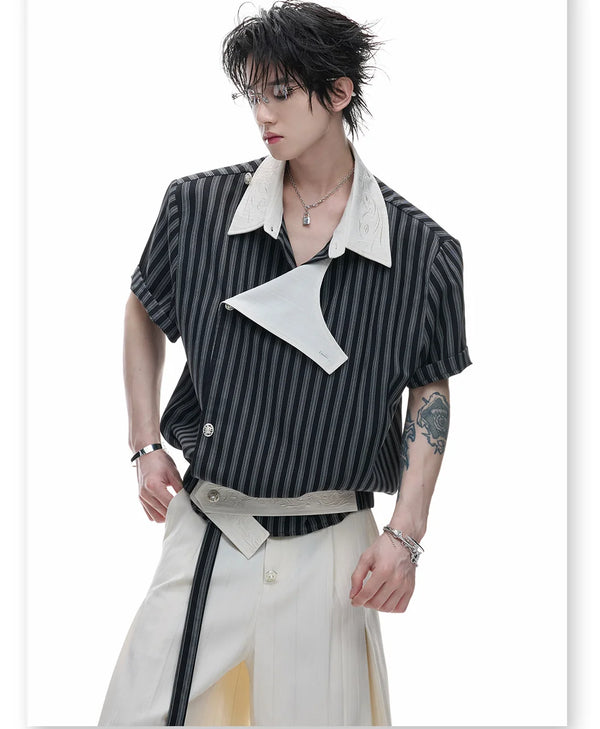
Korean Two Piece is a fabric discipline, not a set costume. 70 percent cohesion, 30 percent deliberate break — everything else is a matching set off the bargain table.
Gothic Outfits for Real — how it looks on the street
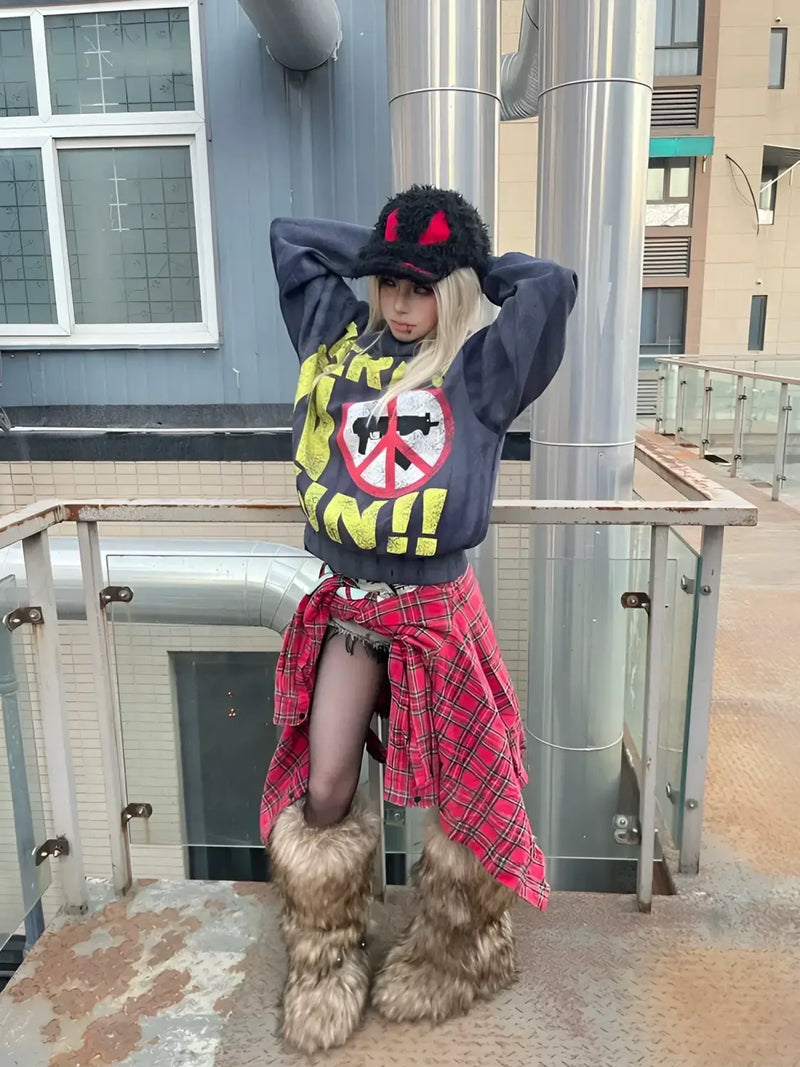
Before you build your own, look at how others wear it. The seven archetypes look different in the feed than in lookbook photos — tighter, dirtier, less perfect — and that's exactly why they work. Whitby Gothic Weekend, Wave-Gotik-Treffen Leipzig (annually at Pentecost, the largest goth festival worldwide), M'era Luna Hildesheim, Mera Luna Festival — Berlin and Leipzig are the German anchor locations of the scene.
This is the fastest way to check whether an archetype sits on your body type — before you spend money.
The 3-3-3 rule says: 3 tops, 3 bottoms, 3 layers in the active wardrobe = 27 outfit combinations. Translated for Korean Two Piece: 3 sets (blazer, knit, linen) plus 3 alternative bottoms plus 3 alternative tops = around 21 clean set outfits plus extra mix options when the set doesn't fit once. The rule is a capacity logic, not a Korean-specific vocabulary — but it works well when you count sets as the base unit instead of single pieces.
Gothic is a vocabulary — not a trend, not a costume
If you remember one thing from this guide, make it this: Gothic doesn't work through pieces but through material mix, symbol detail and silhouette. Anyone who has the vocabulary down builds a hundred outfits with twenty pieces — and in every one of the seven archetypes, with the same building blocks.
The whole logic of this guide reduces to one sentence:
The movement is over forty years old and won't disappear — Whitby Gothic Weekend celebrates its thirtieth anniversary in 2024, Wave-Gotik-Treffen Leipzig its thirty-second. You don't have to wait until you master all seven codes. Start with the one archetype that most likely suits you.
And that's the point too: Gothic reads in theory like a corset of rules, but in practice doesn't feel that way. Once you have the code down, every further outfit is a variation from the same four or five building blocks — not a new invention.
Three signals read clothing as "wealthy" — fabric quality (matte not glossy, heavy not thin), fit precision (sits at shoulder and hip, falls clean), and cohesion (one single fabric vocabulary, not three). Korean Two Piece hits all three signals: identical fabric between top and bottom (highest cohesion level), precise fit as set standard, often in matte natural fibres (linen, wool, twill). That's why the Korean set look often reads as "quiet luxury" or "expensive-looking" in Western media — it hits the perceived wealth signals without visible brand logos.
Frequently Asked Questions about Gothic Fashion
The questions we often get by DM and email — short, clear, no detours.
What does „Gothic outfit" actually mean?
Which Gothic clothing brands are there, and where do you buy in Germany?
What is typically Gothic — the fastest test?
Where do you find Gothic clothing for women cheap or on sale?
What's the difference between Gothic and Emo, Punk or Metal?
Does Gothic work for plus-size bodies too?
What are the most important Gothic festivals and meeting points in Germany?
What do you think?
Tell us on @fuga_studios
About the author
Philipp Fuge — Founder · Berlin
Founder of Fūga Studios. Writes the journal himself. Berlin · Shanghai · Tokyo · Poznań — four cities, one logic.