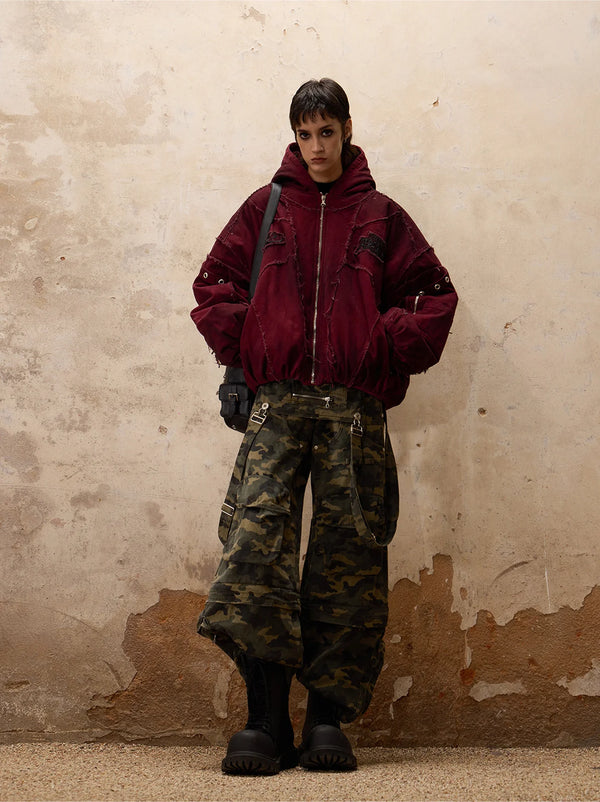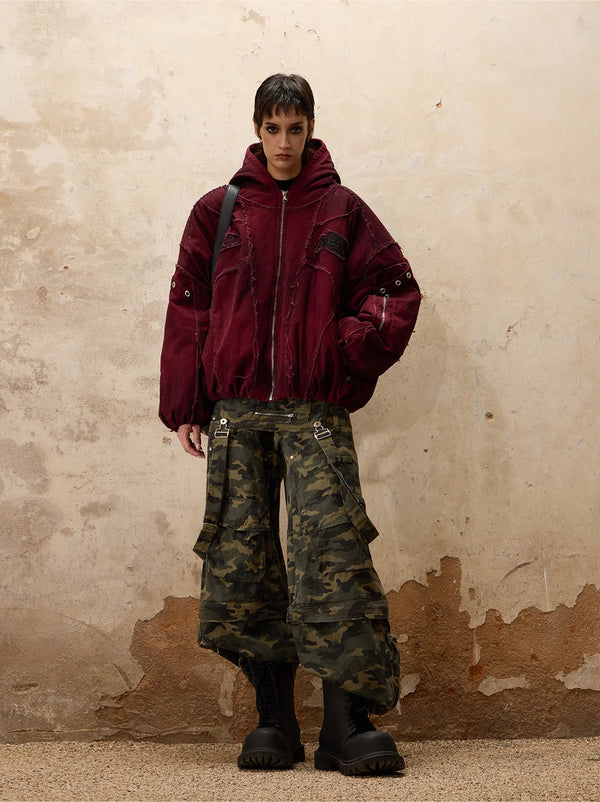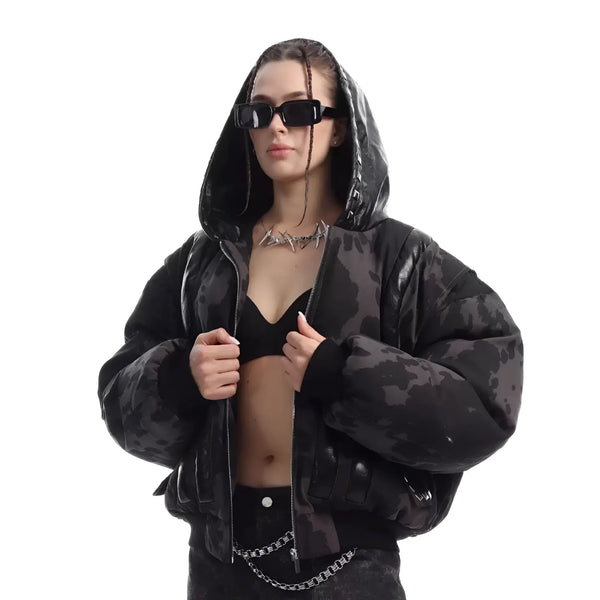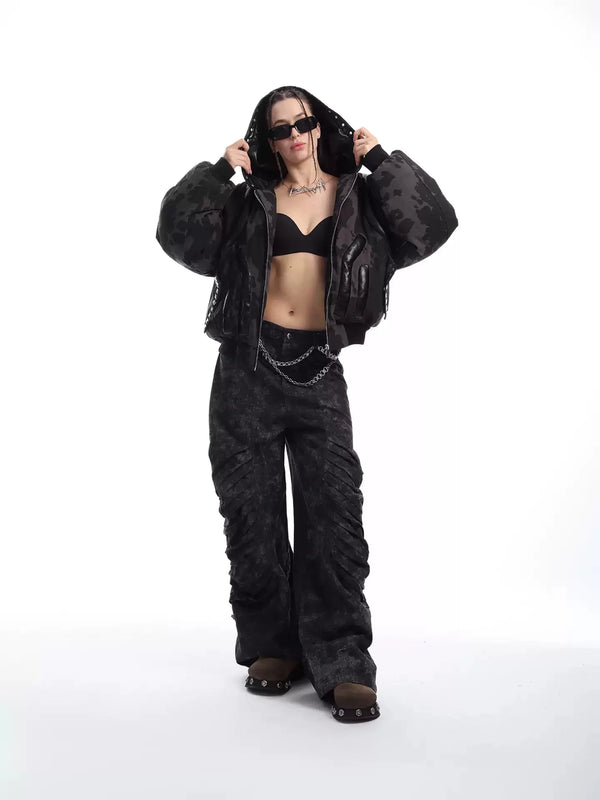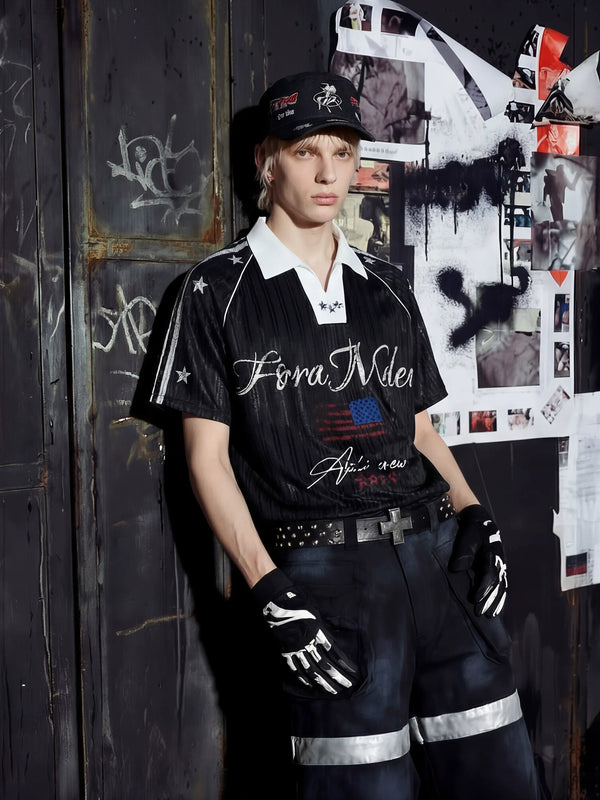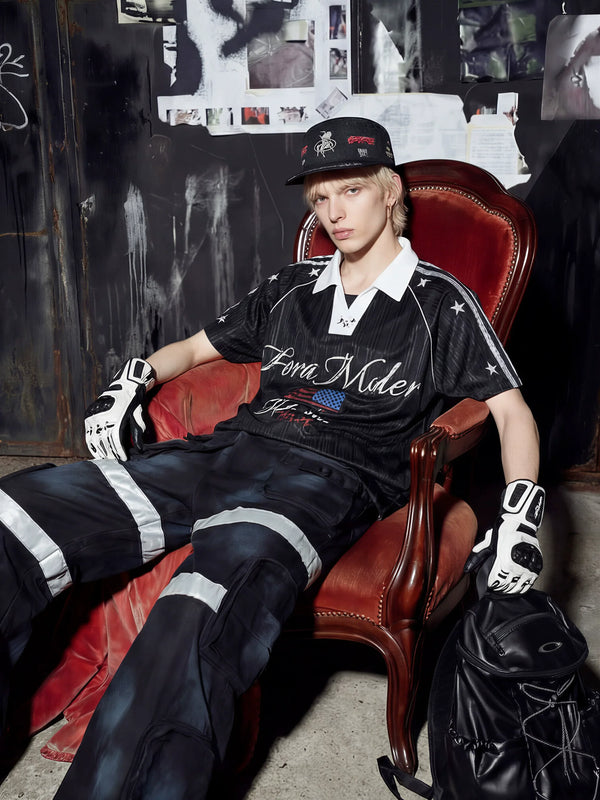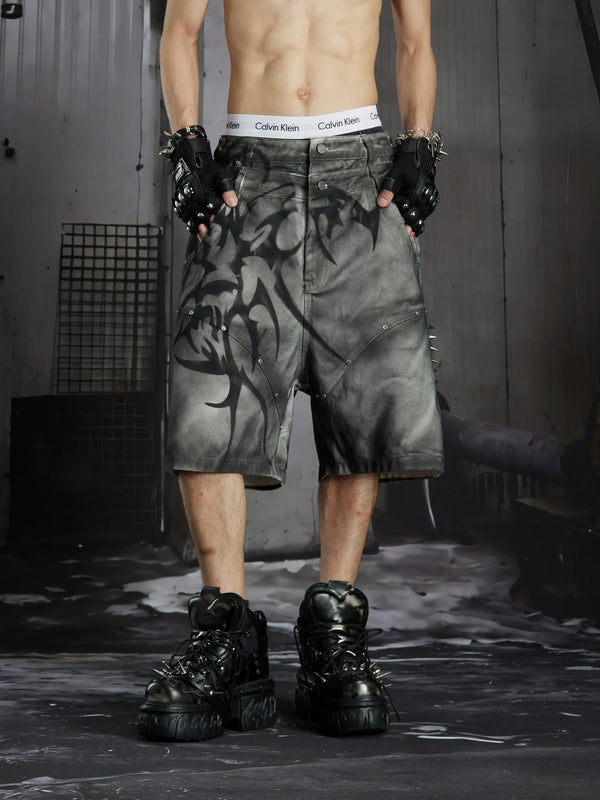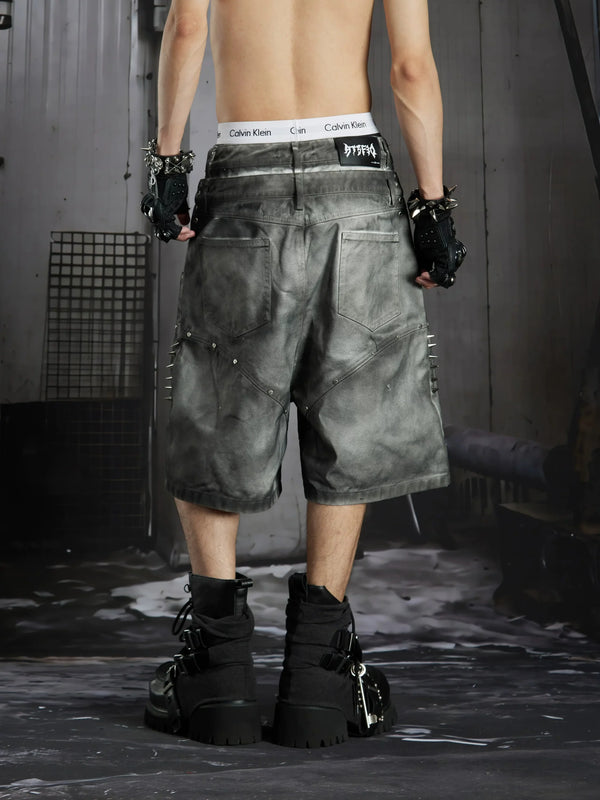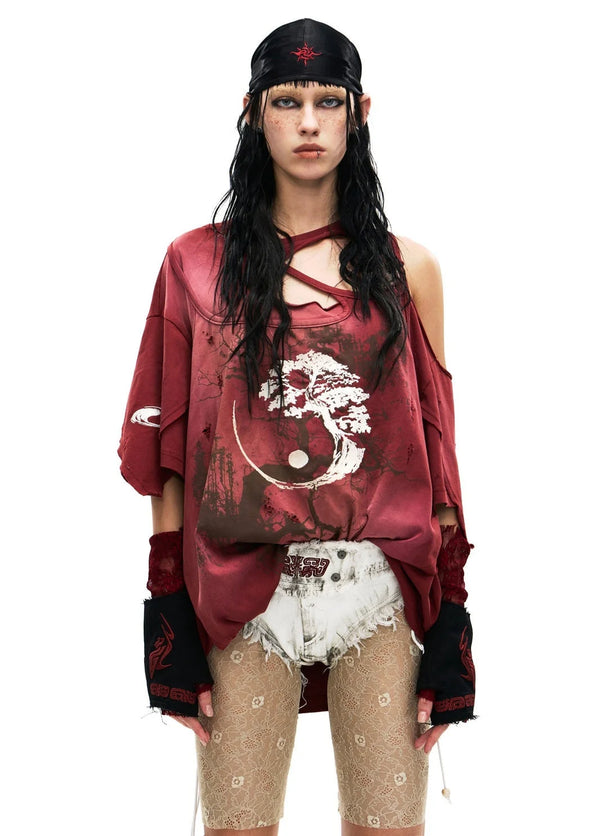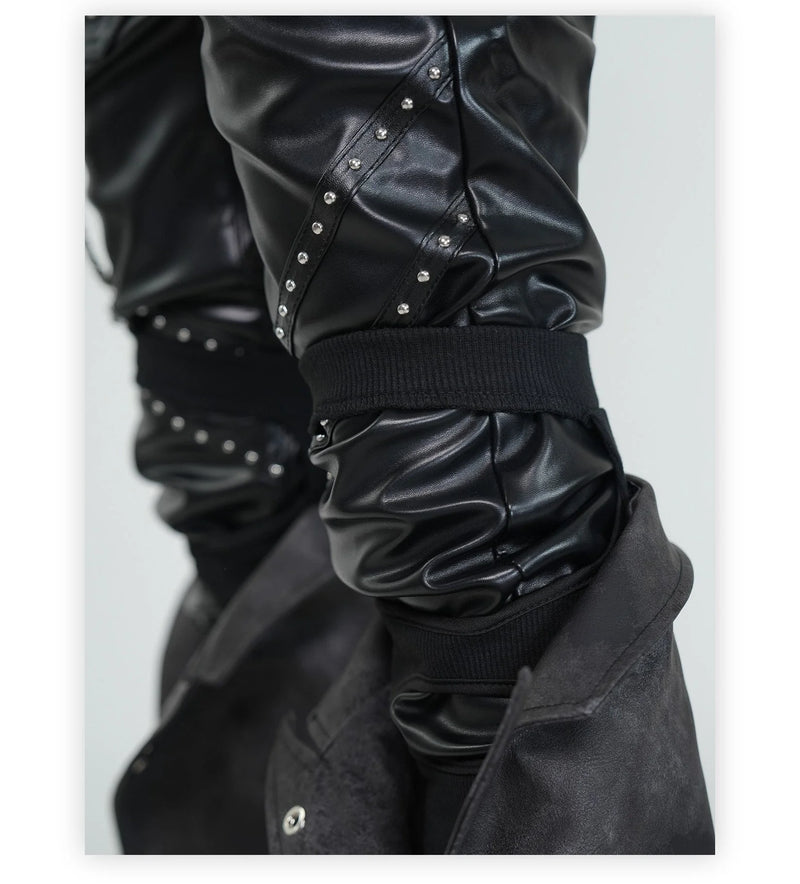
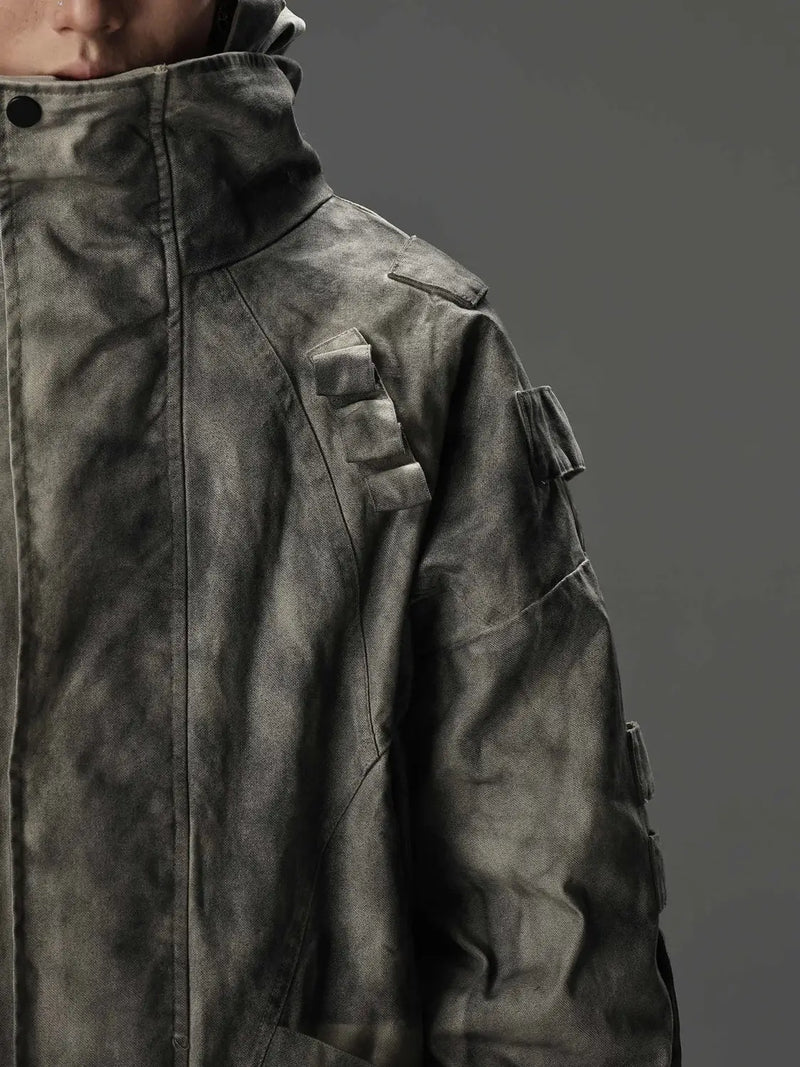


Everyone says Corporate Goth is "just black in the office." Not true. A fully black outfit in the office reads as a funeral just as often as a statement — the question isn't whether you wear black, but how much cut-discipline sits in the outfit.
Corporate Goth outfits are a cut system for people who don't want to stop being themselves in the 9-to-5. Tailoring instead of tunic, wool instead of mesh, loafer instead of combat boot. The color palette stays dark — the construction gets stricter. Whoever knows the code gets past reception, past the site manager, and still gets the message across that someone is sitting here who knows what they're wearing.
This guide clarifies what Corporate Goth really is: the four dress-code tiers (tech office, creative agency, consulting, bank boardroom), the cut rules, the difference between the female and male line, what passes the HR filter, which brands write the vocabulary, what the capsule build looks like, and which five mistakes earn you a Monday-morning email from "People Operations."
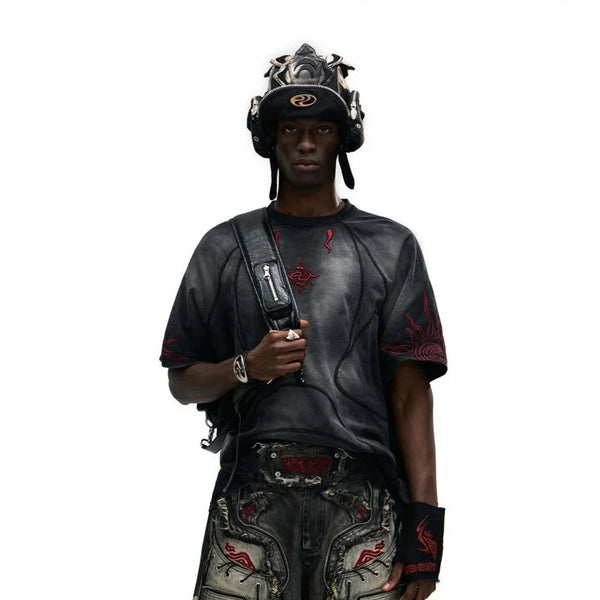
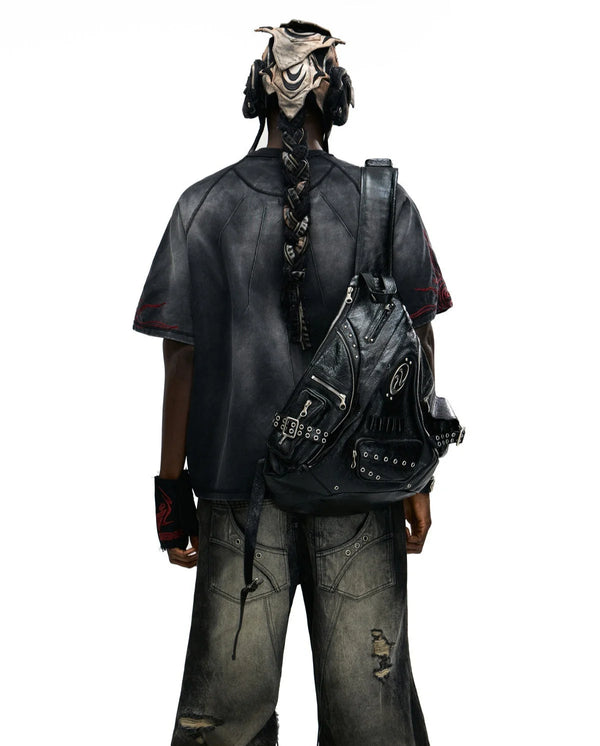
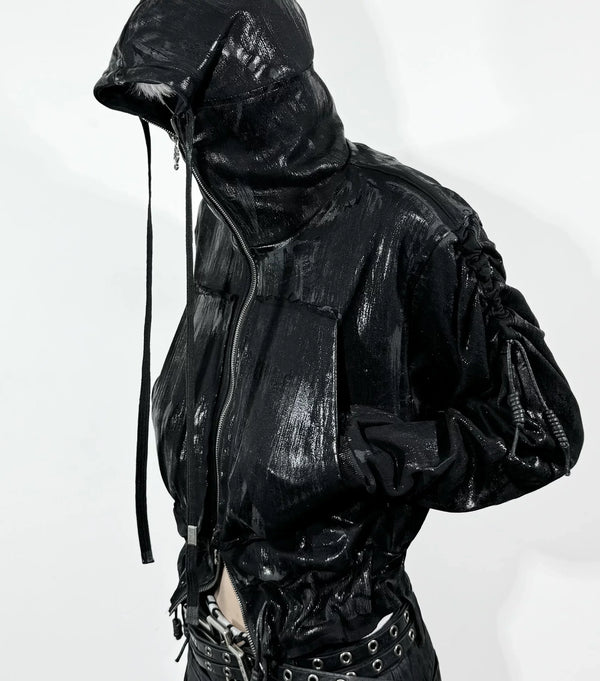
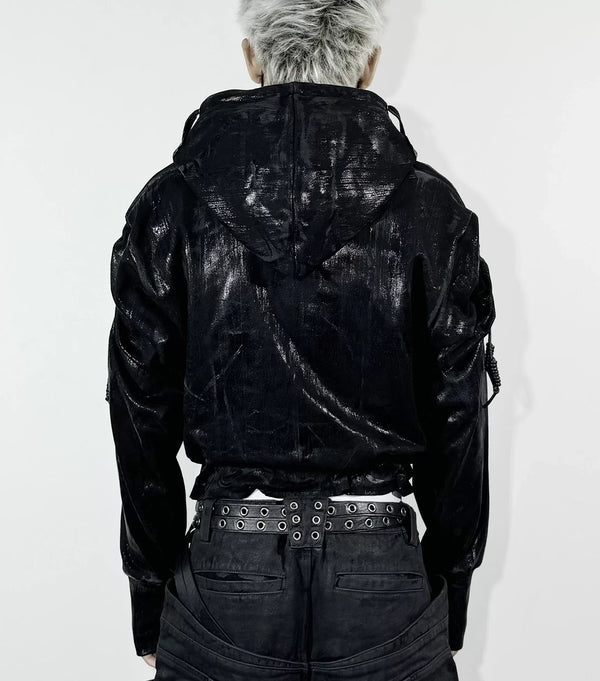
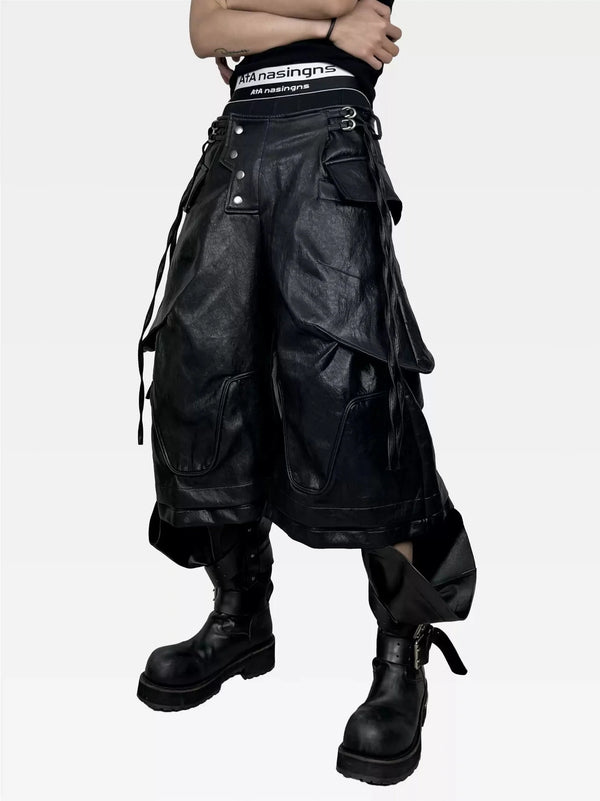
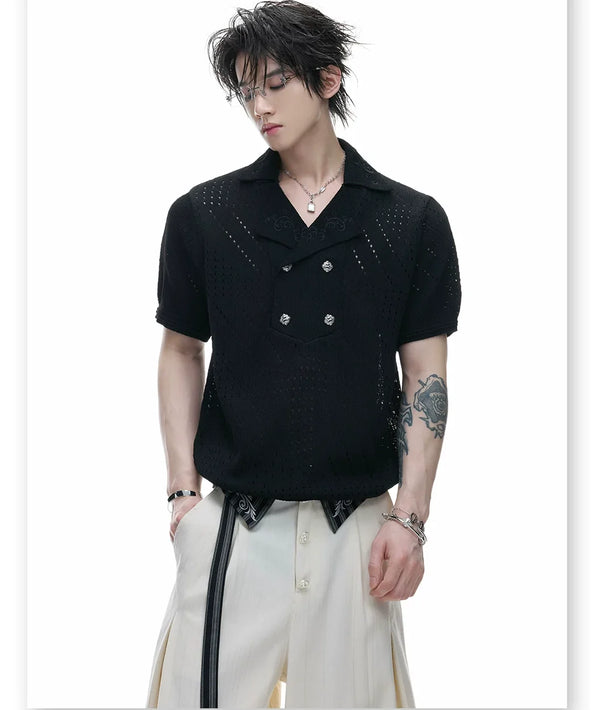
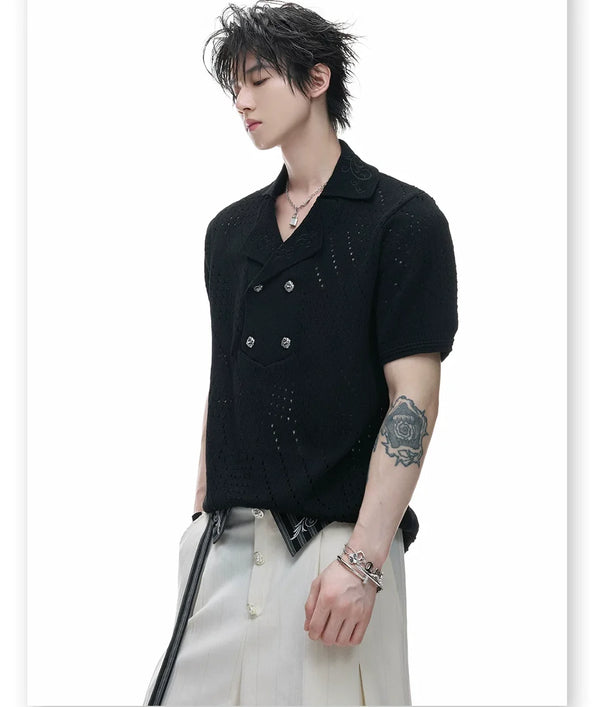
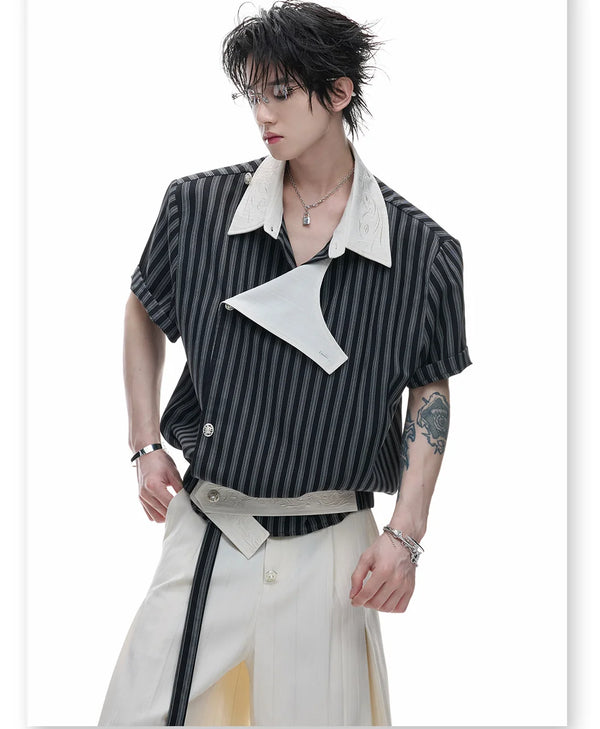
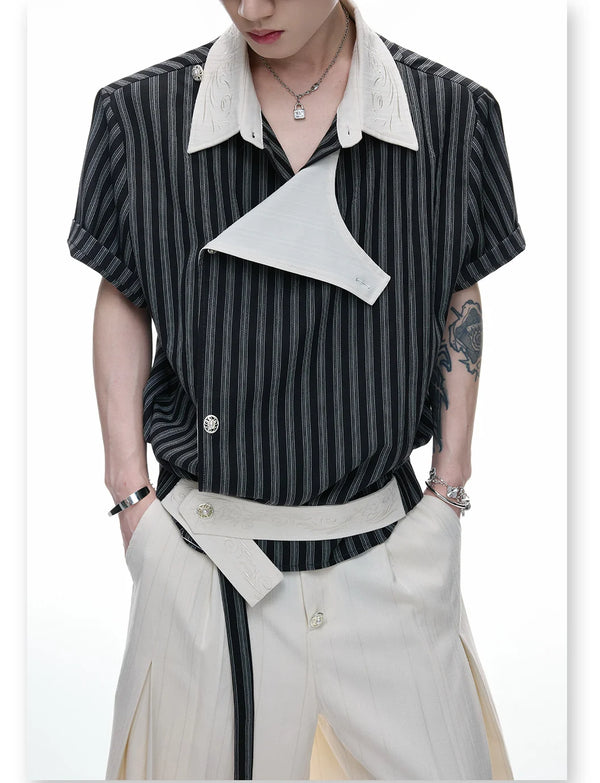
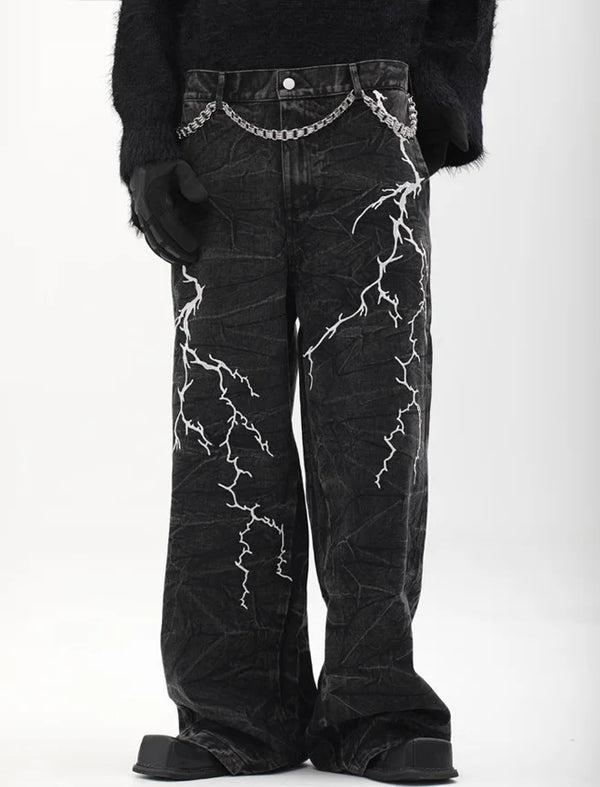
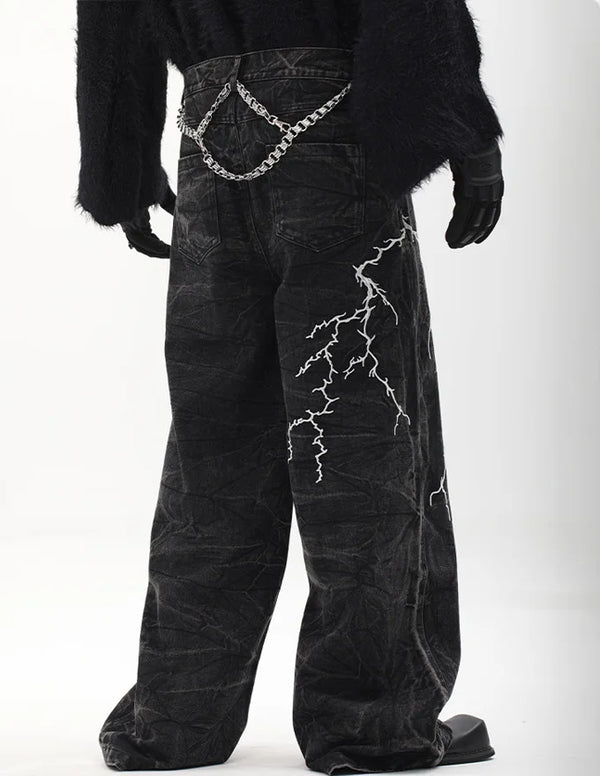
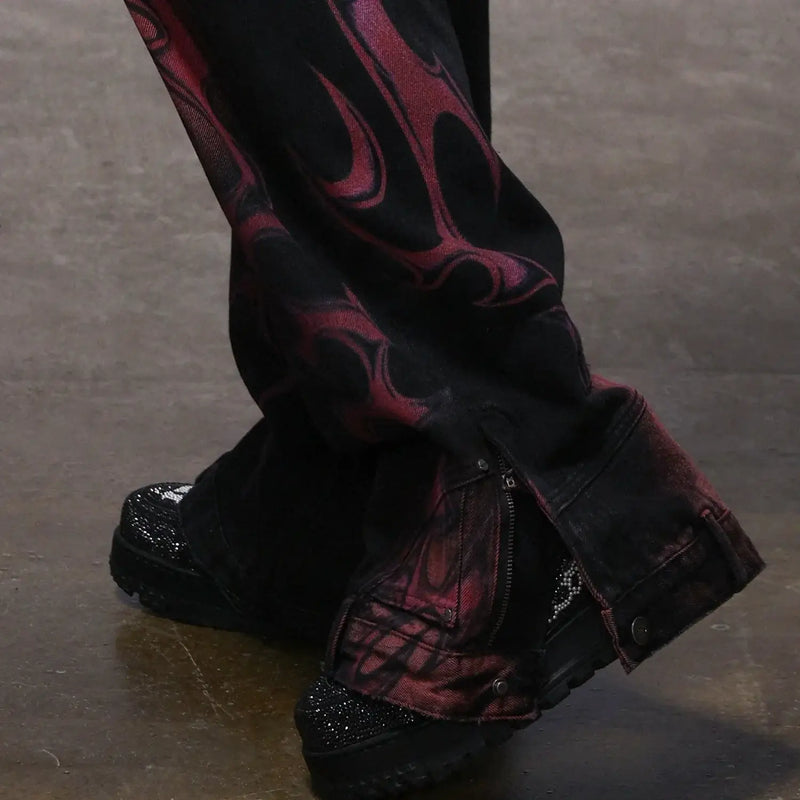
This is what a clean-fitting look in motion looks like — wide-leg trousers, dark knit, sharp shoulder:
Definition
What is Corporate Goth — and what sets it apart from weekend goth?
Corporate Goth is the office iteration of a goth line: same dark palette, same severity, but completely different construction. Where the classic goth look works with symbols, mesh, bondage hardware and visible subculture, Corporate Goth runs on cut, material quality and muted signals. You don't wear less goth — you shift it into the fabric choice and the shoulder seam.
The four constants that Corporate Goth is measured against:
85 %
muted tones
1
metal accent (matte silver)
4
dress-code tiers
0
visible symbols
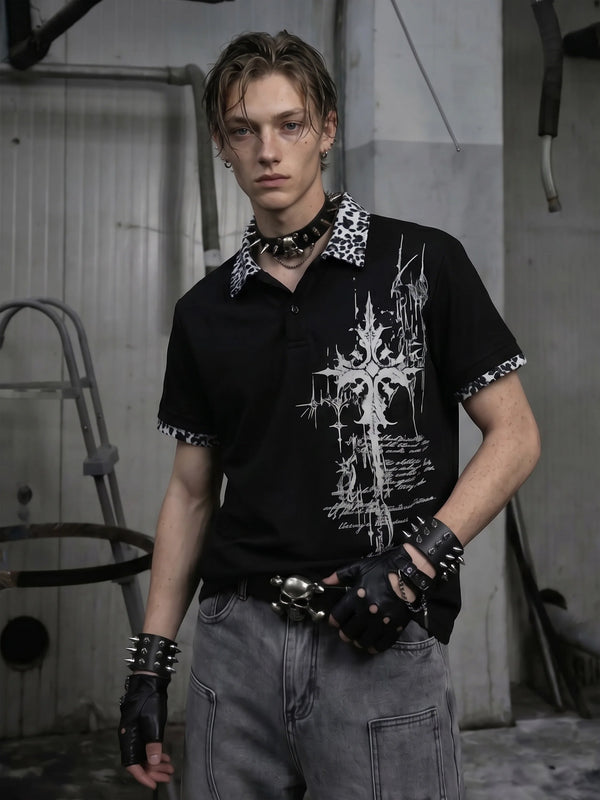
These four values aren't a template, they're the test. The moment an outfit breaks a quota — print tee with lettering, gold buckle, collar with spikes — it tips away from Corporate Goth toward goth cosplay or Halloween. And the colleague from recruiting notices it before you do.
Concretely, Corporate Goth includes:
- Tailored blazer in matte fabric — wool, wool blend, dense twill. Shiny polyester is funeral tier, not office.
- Pinstripe or tonal wide-leg trousers — mid-rise, heavy drape, straight break. Skinny is dead in the office.
- Ribbed knit, polo sweater or button-up as the top — never a tank, never a mesh layer visible on the skin.
- Loafer, Derby, Chelsea boot with low shaft — combat boots are out, sporty sneakers too.
- Matte silver at construction points — cufflink, buckle, belt buckle, a thin chain under the shirt.
- Tonal layering — black on anthracite on graphite, instead of black-on-black with contrast. The depth comes from the material, not from the switch.
If three of these six points are missing, it isn't Corporate Goth, it's a "dark office outfit." Both are legitimate, but only one tells a story. And there's one rule that holds all six together:
Origin
Who wears Corporate Goth — and why now?
Corporate Goth isn't a new phenomenon, but 2024/25 is its moment. Three currents have run into each other: the office-siren revival on TikTok, the quiet-luxury wave from the old-money corner, and the fact that a whole Gen-Z generation has now grown into its first full-time jobs — and isn't willing to trade goth identity for a polo shirt.
Before 2020, goth in the office was a niche thing — artist studios, tattoo parlors, record labels. The HR world tolerated it but never invited it. Today you wear Corporate Goth at consultancies, in tech companies, in media houses and in creative agencies without anyone raising an eyebrow. What changed isn't the tolerance — it's the fact that the outfits got quieter. You no longer see goth from ten meters away. You have to look more closely.
The platforms carrying this shift: TikTok hashtags like #corporategoth and #officesiren have collectively racked up billions of views. Reddit's r/goth subreddit has a recurring "Goth at Work" thread. Pinterest boards with keywords like "Goth Business Casual" grow monthly. And brands like Killstar, Disturbia and Mid Night Hour have built dedicated Corporate Goth ranges that position themselves against classic office brands.
4 dress-code tiers
The 4 Corporate Goth tiers — from tech office to bank boardroom
Corporate Goth isn't one look but four — depending on how strict your office is. What counts as restrained in the tech startup is a confrontation with reception at the law firm. And what passes at the bank bores any creative agency. The following four tiers help you pick the right outfit before Monday morning.
Which tier suits you is decided first by your office — not your taste. A good test: what do the senior profiles two steps above you wear? If they show up in sneakers, tier 1 is your playing field. If they wear wool suits, think tier 4. Tier switches within a week are normal — a Thursday pitch isn't a Friday standup.
Gender split
Corporate Goth male vs female — same code, different line
The rules are the same. Matte fabrics, muted palette, one metal language, no visible symbol — applies to every body, every office, every position. What differs is the line: where the blazer ends, how low the shoulder sits, where the silver finds its place.
Women's version: the office-siren lean shows up most strongly. Tailored blazer with a clearly drawn waist, sometimes with a corset seam or a gathered back panel. Wide-leg trousers or a narrow pencil skirt in dense wool. Pumps, loafers or Mary-Janes instead of boots. Jewelry is finer — thin rings, a flat chain, small earrings instead of a statement piece. The goth signal sits in the discipline of the silhouette, not in the volume of the jewelry.
Men's version: the cut severity runs through. Blazer with a sharp shoulder, no drape. Pinstripe trousers at mid-rise, a straight break at the ankle. Ribbed knit or a narrow button-up, always with a collar or stand collar. Loafer or Derby in matte black, never patent. One ring, one chain under the shirt — and the cufflinks as a third silver detail, if at all.
Both need the same quota: 85 percent muted tones, one metal language, zero symbols. What varies is the line — not the vocabulary.
Office test
The HR filter — what passes the office test, what doesn't
The HR filter is where Corporate Goth is really different from weekend goth. No matter how clean your cut sits — if one detail signals the wrong thing, you have a conversation with the People-Operations team instead of with your client. The rule: your outfit has to read as unremarkable from two meters. What you see from ten centimeters is your business.
What passes the filter, almost everywhere:
- Black or anthracite blazer with a sharp shoulder — the cornerstone. With wide-leg trousers or a pencil skirt.
- Ribbed knit or polo sweater in black, graphite or anthracite — the most discreet top layer, and at the same time the warmest.
- One thin silver chain under the shirt, one ring, small earrings — the discreet jewelry set.
- Dark nail polish (burgundy, anthracite, matte black) — on men and women, as long as it isn't the food industry.
- Loafer, Derby, Chelsea boot with low shaft — all in matte black, no visible brand logos.
What triggers the filter — and where you risk trouble:
- Print tees with bands or lettering under the blazer — even if you only half-see it. Tier 1 (tech) sometimes has room, tier 3 and 4 never.
- Collar with spikes, buckle choker, bondage hardware visible — all of it reads as provocation before nine in the morning.
- Combat boots with a high shaft, platform soles over 4 cm, buckle sandals — the noise profile alone is enough for trouble in the open-plan.
- Mesh shirts, visible bra, midriff cuts — no matter how artful the cut, office code stays office code.
- Facial jewelry beyond discreet nose rings — septum, bridge piercings are borderline in tier 1 and 2, out in tier 3 and 4.
Brands
Corporate Goth brands — who writes the vocabulary
Three worlds mix in the Corporate Goth market: traditional goth brands that have built an office range; classic tailoring houses going darker; and newer DTC brands building directly for this intersection. If you can write the vocabulary, you can put together clean outfits without designer labels too.
The brands currently defining the Corporate Goth range:
- Killstar — UK brand with an office line. Pencil skirt, pinstripe trousers, black blouse with a stand collar. Goth heritage, but translated cut-consciously.
- Disturbia — a Berlin-meets-Manchester brand. Dedicated "work" collection, often with blazer-pinstripe-pant sets. Mid-range price, solid fabrics.
- Mid Night Hour — US brand with a Corporate Goth collection. Blouses, vests, wool trousers — cut more classically than its other goth range.
- BOUDOIR NOIR — German manufacturer, business gothic as the main category. Pencil skirts, tailored blazers, ruffle blouses. Priced above the main goth brands.
- COS, Arket, Filippa K — three Scandinavians on the quiet-luxury track whose range delivers the Corporate Goth cut almost involuntarily: wool blends, muted tones, clean lines.
- Fūga Studios — the own contribution: Businesscore trousers, Office-Siren blazers, tailored sets with goth fabric choice. Cut logic from Berlin, fabrics from the Japanese tailoring vocabulary.
- Vintage and resale (Vestiaire, Vinted, Vestiaire Pro) — wool blazers from the 80s and 90s age better than anything new. A Yohji Yamamoto jacket from resale is cheaper than a mid-range new buy — and fits every tier.
Category · Tailoring
Corporate Goth blazer — the key piece
In the Corporate Goth outfit, the blazer is what the leather jacket is in weekend goth: the largest continuous surface, the dominant fabric, the primary carrier of the silhouette. This is where it's decided whether your outfit becomes Corporate Goth or just a thrown-together dark set.
Three blazer types work in the Corporate Goth range: the classic tailored blazer in matte wool (tier 3 and 4), the studded-collar blazer with subtle construction details (tier 2 creative), and the oversize-drape blazer with a soft fall (tier 1 tech). What unites all three: the fabric must not shine. The moment the shoulder mirrors, the outfit tips into cheap.
If you don't have a fitting blazer in the closet yet, this is your first purchase. Everything else in the outfit hangs on the shoulder line this blazer gives you.
Category · Bottoms
Corporate Goth trousers — pinstripe, wide-leg, wool
Skinny is dead in the office — and doubly so in Corporate Goth. The trousers carry half the silhouette, and the moment they sit too tight, the outfit reads as "going-out mode with a blazer over it" instead of tailoring. The fit rule: mid-rise or high, straight fall, break exactly at the ankle or a finger below.
Working Corporate Goth trousers are matte, heavy, and sit clean on the hip. Pinstripe wool in tier 3 and 4. Tonal wide-leg in dense twill weave for tier 2 creative. Wool blend with a stretch share at the waistband only if the fall underneath is preserved. Avoid anything shiny, anything with a wash effect, anything with visible stretch.
If you're looking for trousers that fit all four tiers, take matte wide-leg wool in black or dark anthracite. That's the common denominator — from tech standup to boardroom.
Category · Tops
Corporate Goth tops & knits — the layers under the blazer
The top layer is where most Corporate Goth outfits quietly fail. The blazer sits, the trousers sit — and underneath a T-shirt that cost five euros and lost its shape after three washes. The moment the blazer opens, the top layer gives the whole look away.
Three top types work reliably in the office: ribbed knit in dense knitwear (warm layer, falls narrow), polo sweater with buttons at the neck (between shirt and knit, the most diplomatic top), and tonal button-up blouse in matte cotton or wool blend. What doesn't work: tank tops, visible bras under thin fabrics, mesh layers visible on the skin, T-shirts with band print or lettering.
If you only buy one top layer, take a ribbed-knit sweater in black with a high crew neck. It fits under each of the three blazer types, holds up in the overheated conference room, and always reads from the outside as a tailoring detail instead of a stopgap.
Shoes & hardware
Corporate Goth shoes & accessories — the bottom 30 cm decide
In the office, people look at your shoes before they look at your face. That isn't personal — it's reception socialization. The moment the bottom half of the outfit sits wrong, the whole look tips. And in the Corporate Goth range there are only three shoe families that work.
What works in the office — and in which tier:
- Loafer in matte black — tier 1 to 4. No visible metal trim, narrow last, thin sole. With a thick sole it quickly looks like a school reunion.
- Derby or Oxford in black — tier 3 and 4. Closed cut, laced, never patent. Patent leather belongs in the evening, not the daytime office.
- Chelsea boot with low shaft — tier 1 and 2. Narrow line, no quilting, no high cuff. The moment the shaft reaches over the ankle, it reads as a fashion statement instead of an office shoe.
- Narrow pumps or Mary-Janes — women, tier 1 to 4. Block heel under 6 cm, matte leather, no visible brand hardware.
- No sneakers, no combat boots, no platform sole over 4 cm — no matter how black they are, the silhouette signals "not working."
With accessories the same discipline applies as with the outfit: one metal language, no visible symbols. Bag in matte leather, belt with a narrow buckle, watch with a dark dial. Jewelry as described above: one thin chain under the shirt, one ring, small earrings. More is overshooting.
Styling logic
How to really style Corporate Goth — the layering logic
A Corporate Goth outfit works through exactly one detail: how the layers move over each other. Three layers minimum, four maximum, each with its own function. If you sort each layer by volume, the loudest should be on the inside — never on the outside.
In practice: shirt or knit (layer 1) carries the goth detail only you see. Blazer or cardigan (layer 2) carries the shoulder line and the fabric quality. Coat or trench (layer 3) — if needed — carries the weather. Jewelry (layer 4) stays visible under the top or not at all. If you reverse the ratio and wear the loudest piece on the outside, the office-readability level tips immediately.
Goth inside, tailoring outside. Whoever reverses the ratio gets a conversation at reception instead of a coffee.
Fūga Studios · Office-Code-Regel #1
Corporate Goth doesn't stand alone — it overlaps with several neighboring aesthetics you can mix in the right tier without losing office readability. Office Siren shares the tailoring logic. Dark Academia shares the wool fabrics and the academic severity. Quiet Luxury shares the monochrome discipline. Mall Goth is the historical counterpoint — it only helps you understand what Corporate Goth precisely is not.
Here are the four most important neighbours — each with its own guide, if you want to go deeper:
If you want to go deeper into the cut mechanics of a related office look, the next guide is the best entry — it takes the male variant apart, from shoulder seam to shoe finish:
Plus Size
Corporate Goth plus size — tailoring instead of drape trick
Corporate Goth in plus size isn't "the same outfit, just bigger." The tailoring rules shift: what works through drape and fall on narrower bodies runs here through cut, seam and material density. Whoever wears plus size has the advantage in Corporate Goth that the cut system is built on severity — not on cropped-layer gimmicks.
The most important adjustments for plus-size Corporate Goth: first, the shoulder seam has to sit — a sewn-in shoulder is better in the office than a sloping drape cut. Second, fabric density counts more than on narrower bodies — light summer wool hangs differently under gravity than dense twill. Third, the trouser break is critical: too short looks Bermuda-ish, too long eats the shoe shape. Fourth, layering runs through knit under blazer, not blazer under coat — the inner layer carries the warmth, the outer one the line.
What you want to avoid in plus-size Corporate Goth: slim cuts framed as "fitted" that disturb the silhouette; very long coats that hang at the folds under gravity instead of falling; very tight wide-leg waistbands that slip into the material instead of sitting. The solution almost always lies in the next size up plus a quick appointment at a tailor.
What does not work
The 5 Corporate Goth mistakes — where HR emails come from
Corporate Goth has five spots where it reliably tips — no matter how expensive the individual pieces are. If you avoid only one thing, make it mistake number one.
Getting started
How to start in Corporate Goth — the first 4 pieces
You don't need twenty black things to wear Corporate Goth. You need four pieces that will be in eighty percent of the outfits. Everything else builds around them — rotation comes only once the core set sits.
In order of investment: a matte wool blazer with a clearly drawn shoulder (your biggest investment — buy one that lasts ten years instead of three that look like nothing after two seasons). A pinstripe or wide-leg wool trouser in black or anthracite. A ribbed-knit sweater with a high crew neck in black. Loafers or Derbys in matte black. Jewelry as the optional fifth — a thin silver chain under the shirt, but only once the four sit.
Outfits for real
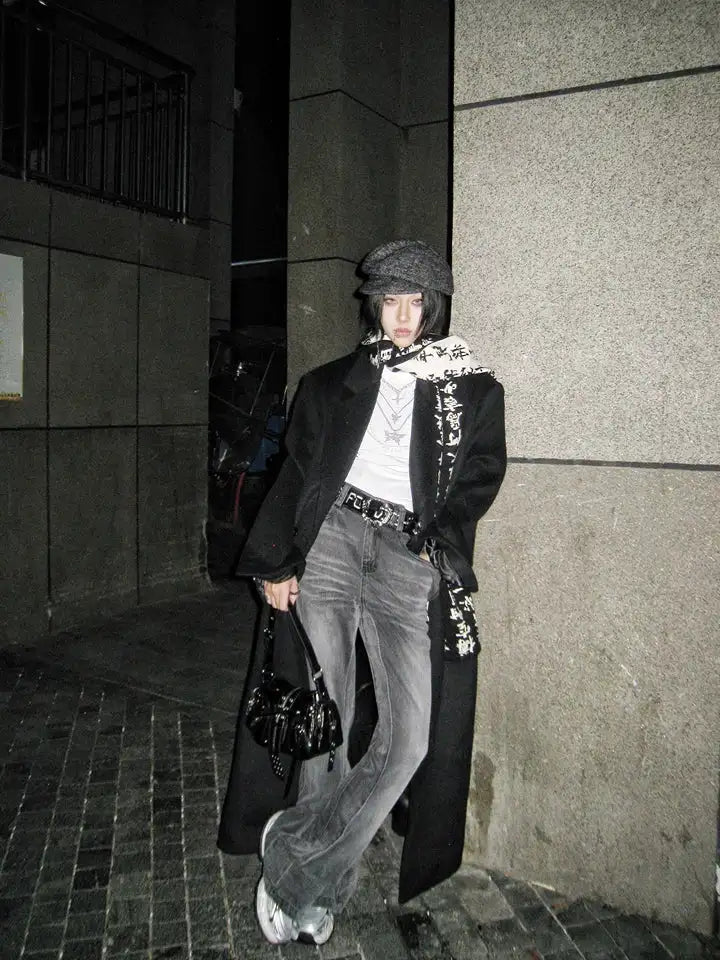
Corporate Goth for real — how it looks on the street on a Monday morning
Before you build your own office outfit, look at how others wear it. The four tiers from above look different in the feed than in lookbook photos: less perfect, more lived-in, with coffee stains on the cuff and train-ride creases in the blazer — and that's exactly why they work in everyday life.
This is the fastest way to check whether Corporate Goth even sits on your body type and in your office — before you spend money.
To close
Corporate Goth is code, not costume
If you take one thing from this guide, it's this: Corporate Goth doesn't work through pieces but through rules. Whoever has the rules down builds a hundred outfits with twenty parts. Whoever only buys pieces has a full closet without a single outfit that survives Monday morning.
The whole logic of this guide reduces to one sentence:
The tiers don't shift, the vocabulary stays stable. What changes from office to office is the volume of the goth signal — not the signal itself. You don't have to wait until you know all four tiers by heart. Start with the one that fits your job. You learn the next one when you switch.
And that's the point too: Corporate Goth reads in theory like a corset of rules, but in practice it doesn't feel like one. Once you have the code down, every further outfit is a variation on the same four or five building blocks — not a new invention. Office-ready doesn't mean you give up your identity. It means you phrase it so that it comes through every door.
FAQ
Frequently asked questions about Corporate Goth outfits
The questions we often get by DM and email — short, clear, no detours.
What does Corporate Goth actually mean?
Which industries even allow Corporate Goth?
What's the difference between Corporate Goth and Office Siren?
Which shoes may I wear with Corporate Goth?
How much black is "too much" for the office?
Where do I find Corporate Goth outfits without designer prices?
Does Corporate Goth also work at a bank or in a law office?
What do you think?
Tell us on @fuga_studios
About the author
Philipp Fuge — Founder · Berlin
Founder of Fūga Studios. Writes the journal himself. Berlin · Shanghai · Tokyo · Poznań — four cities, one logic.