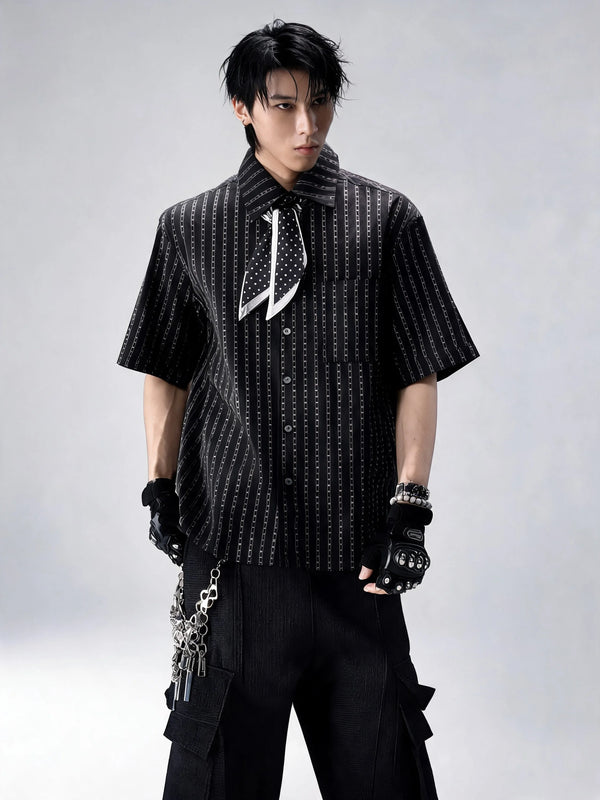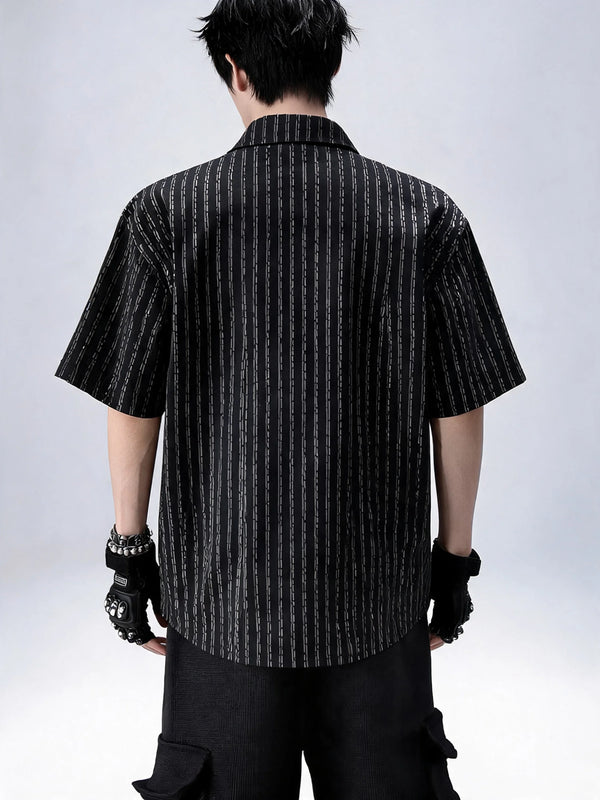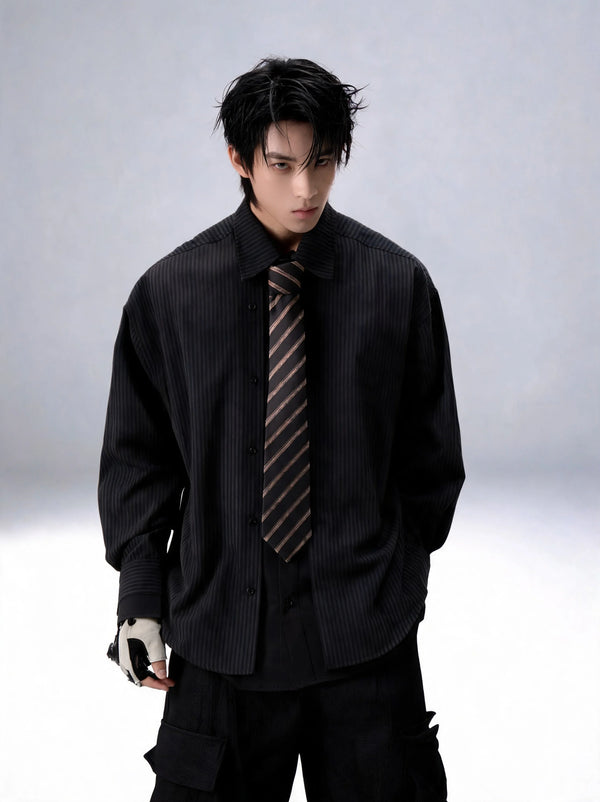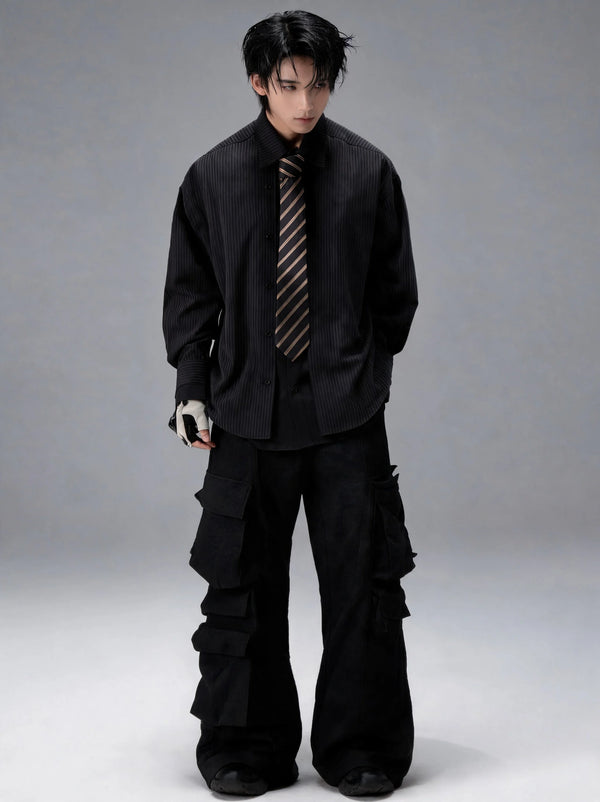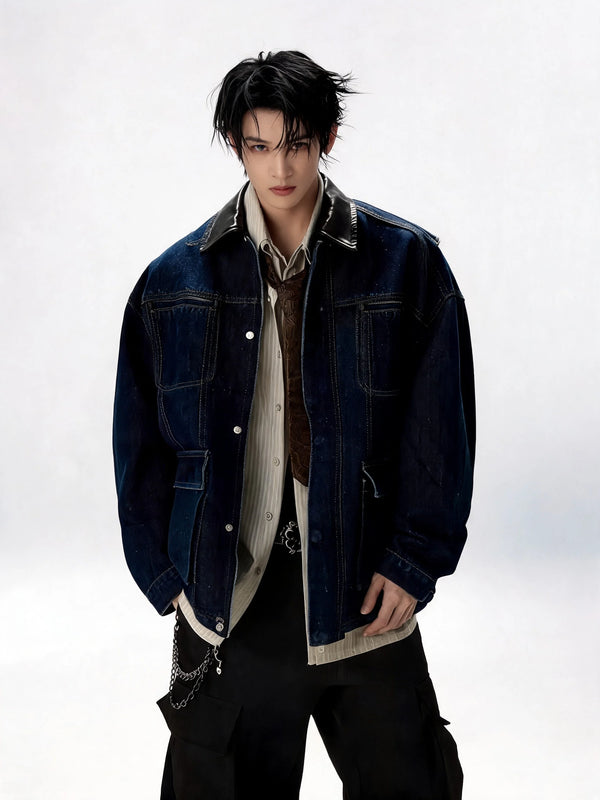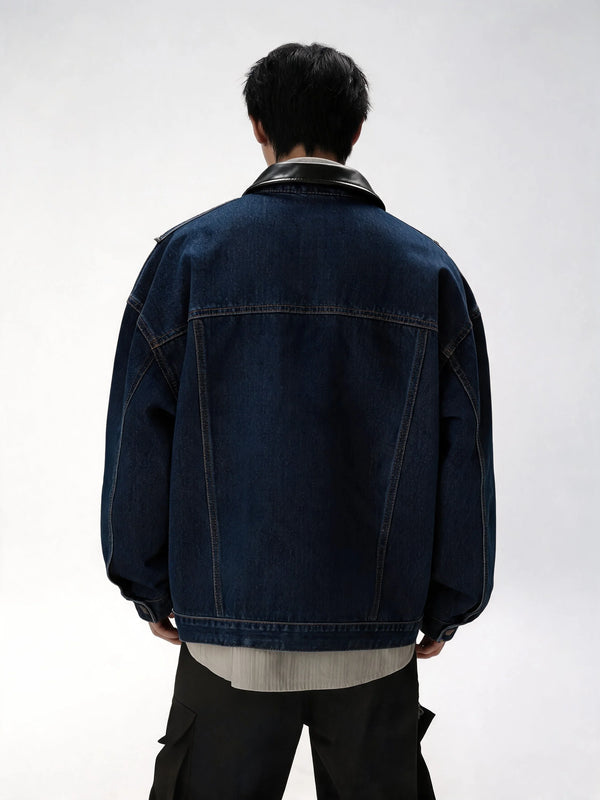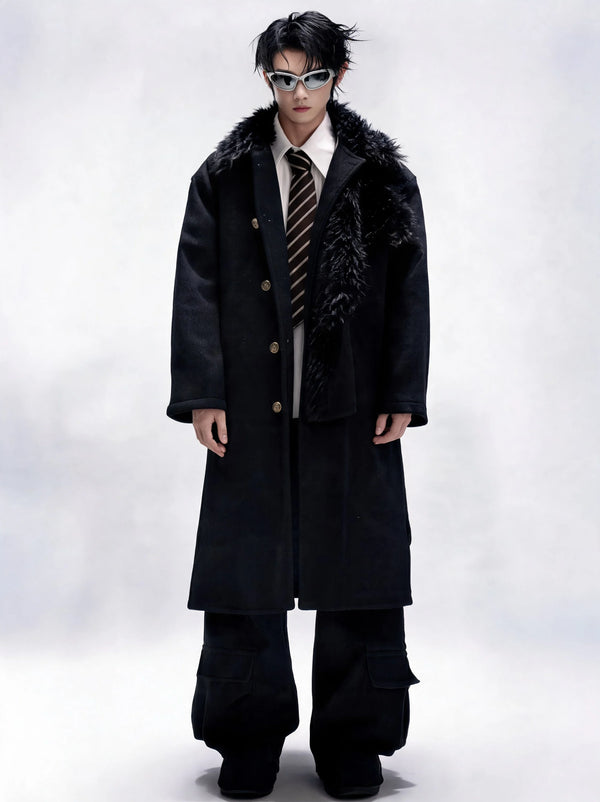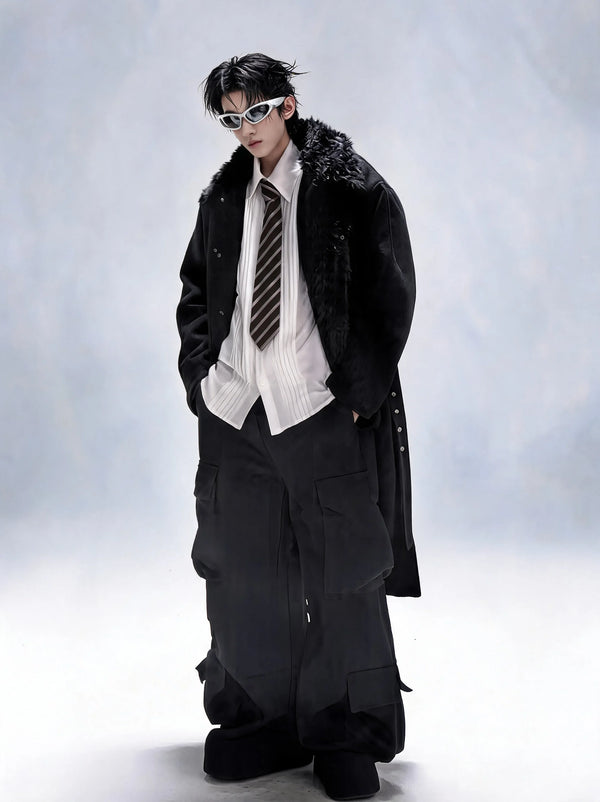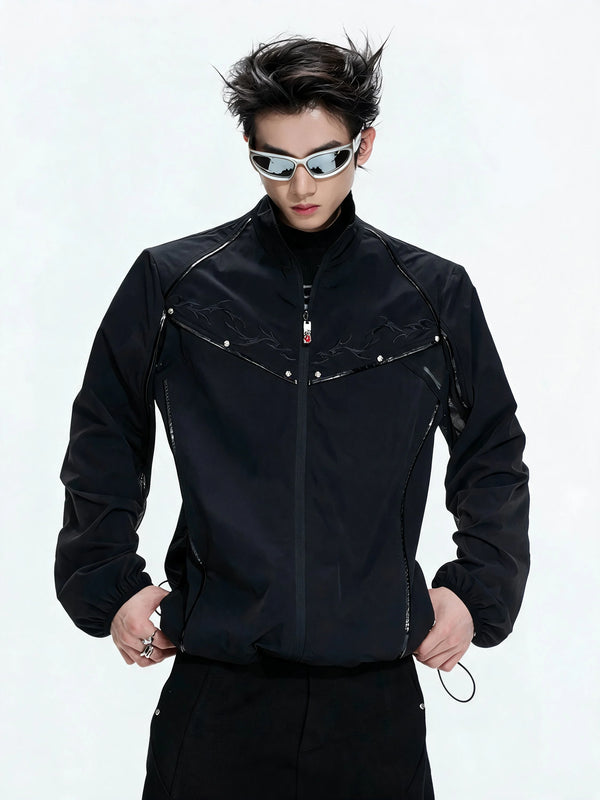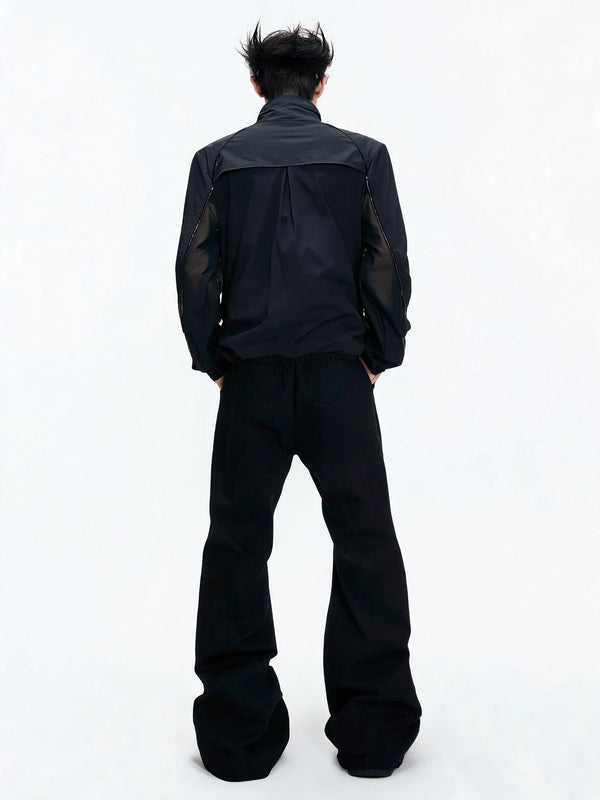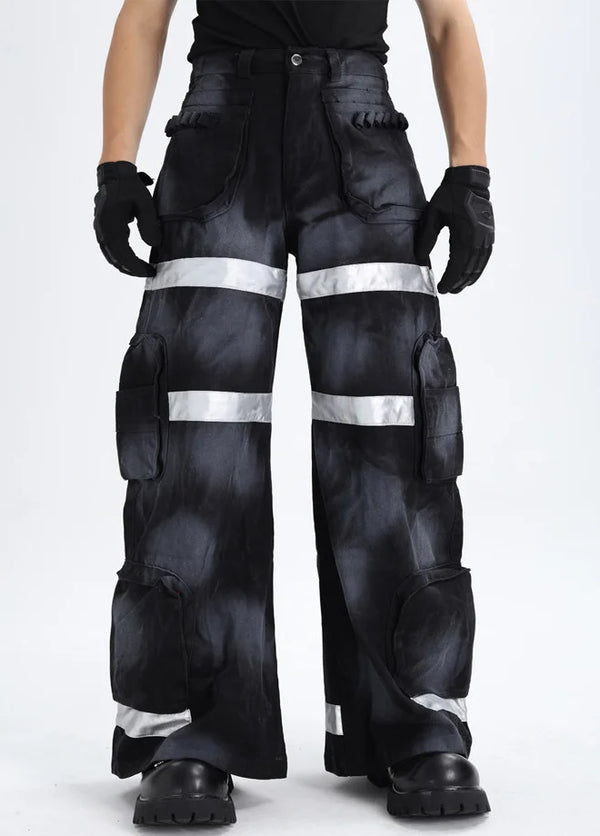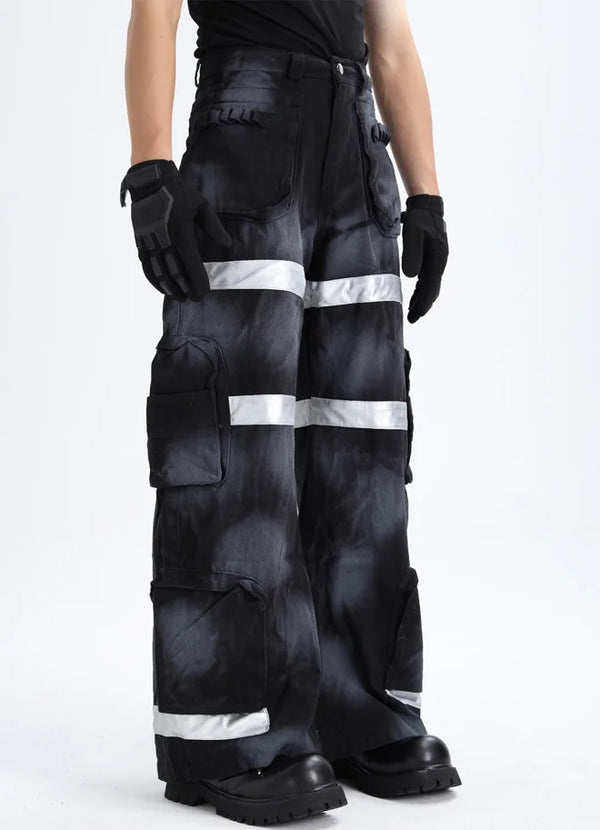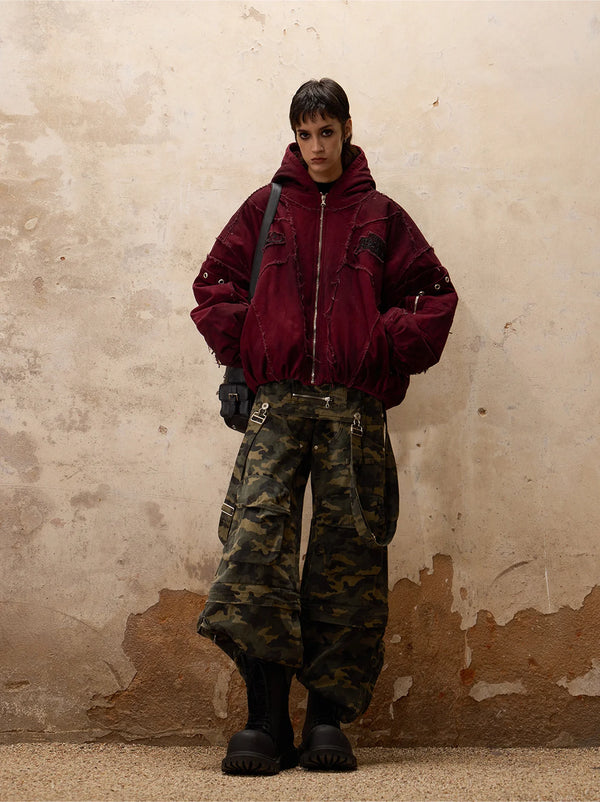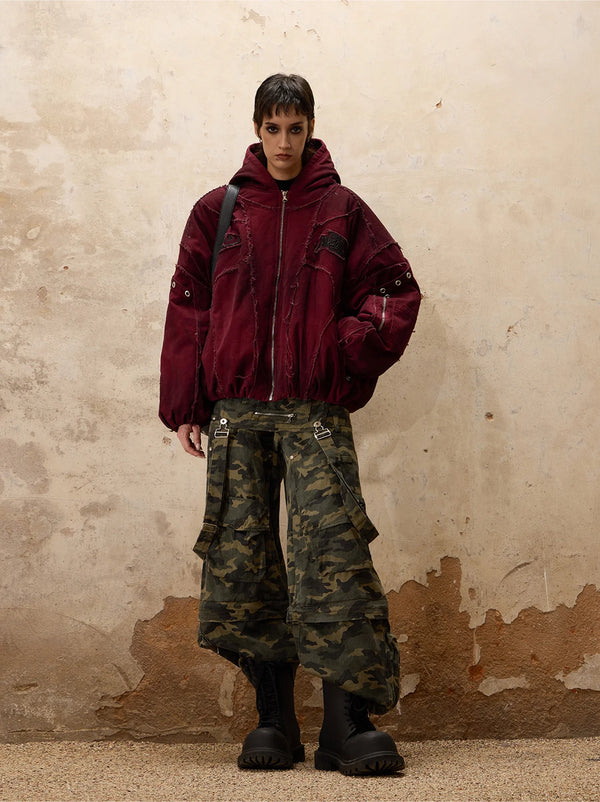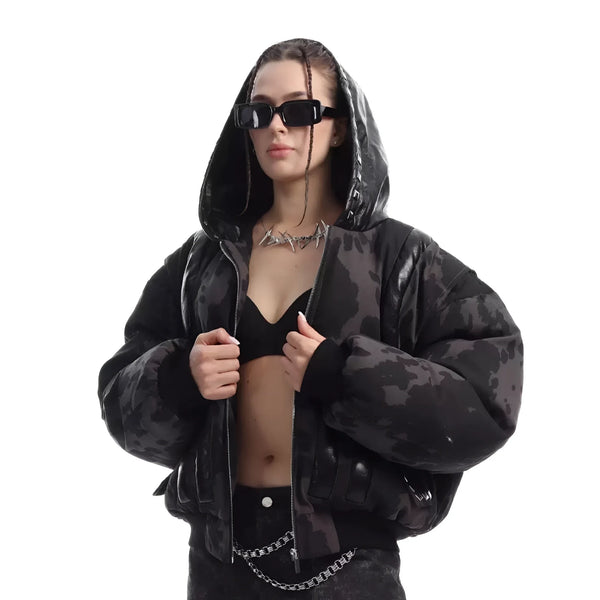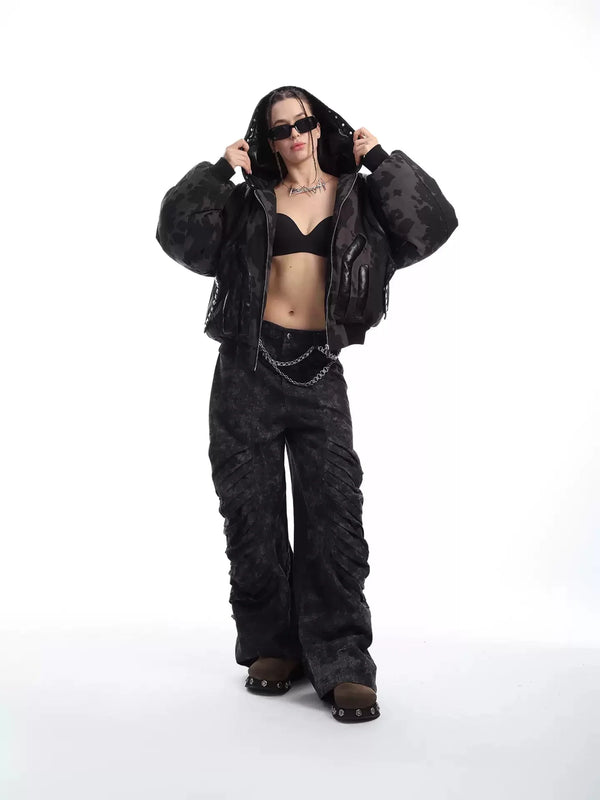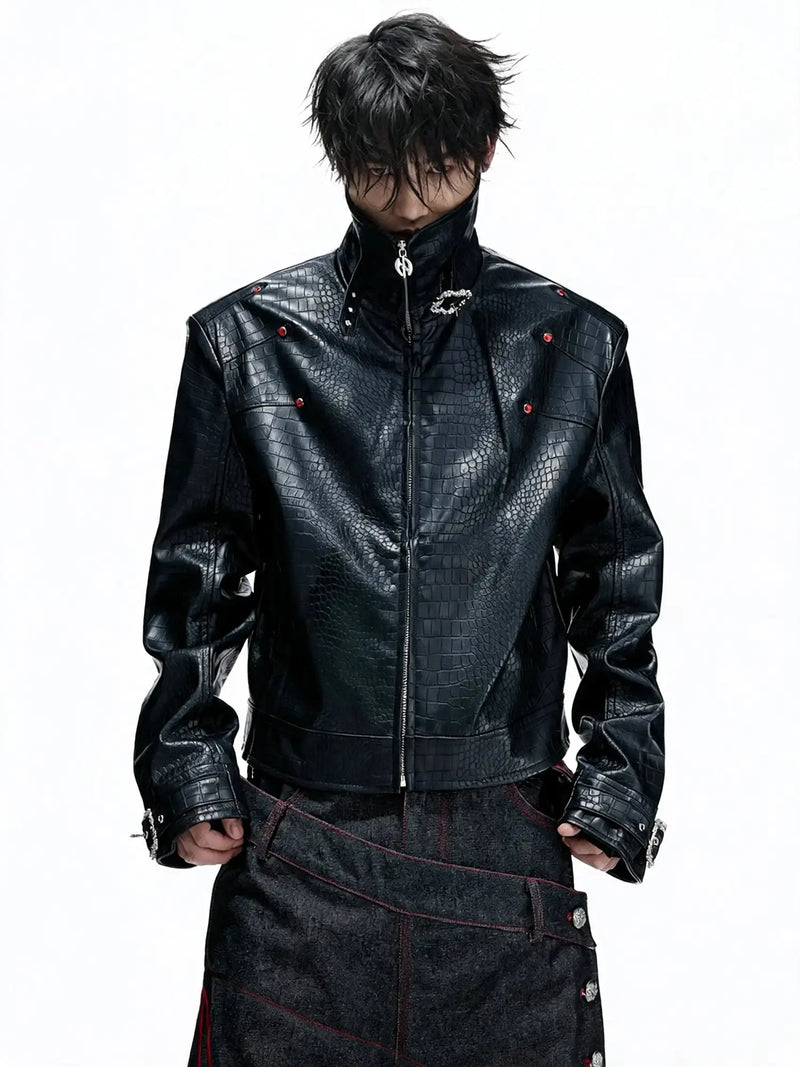
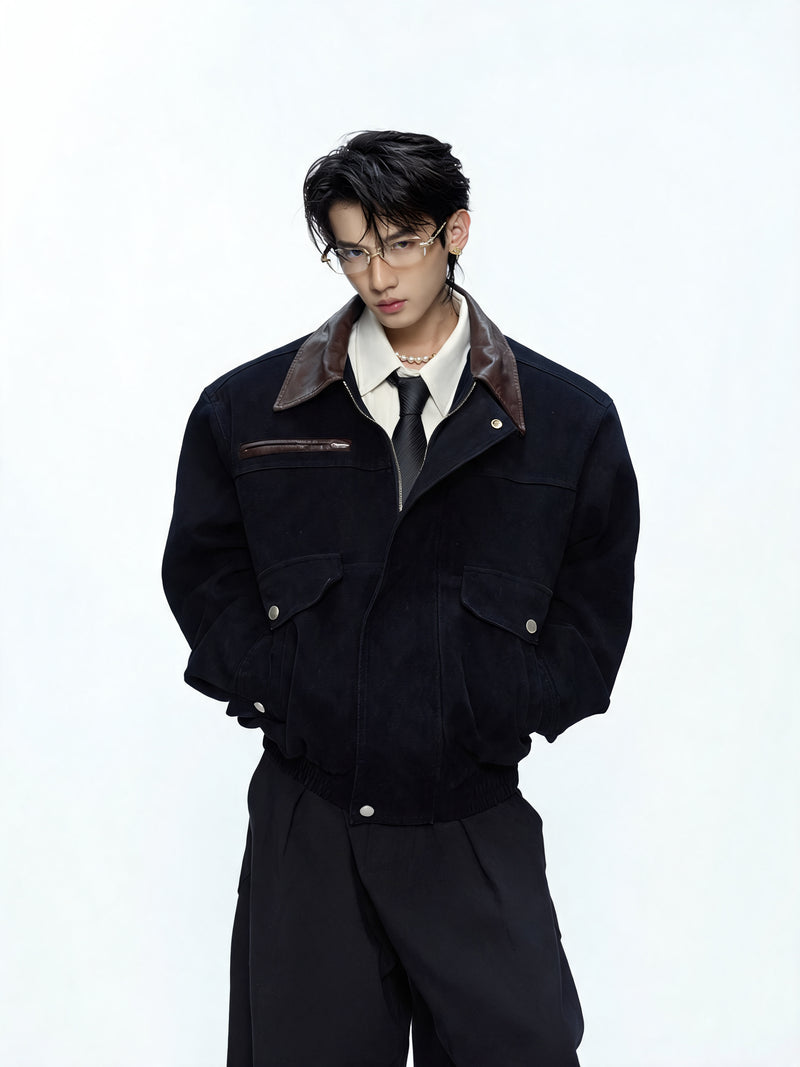
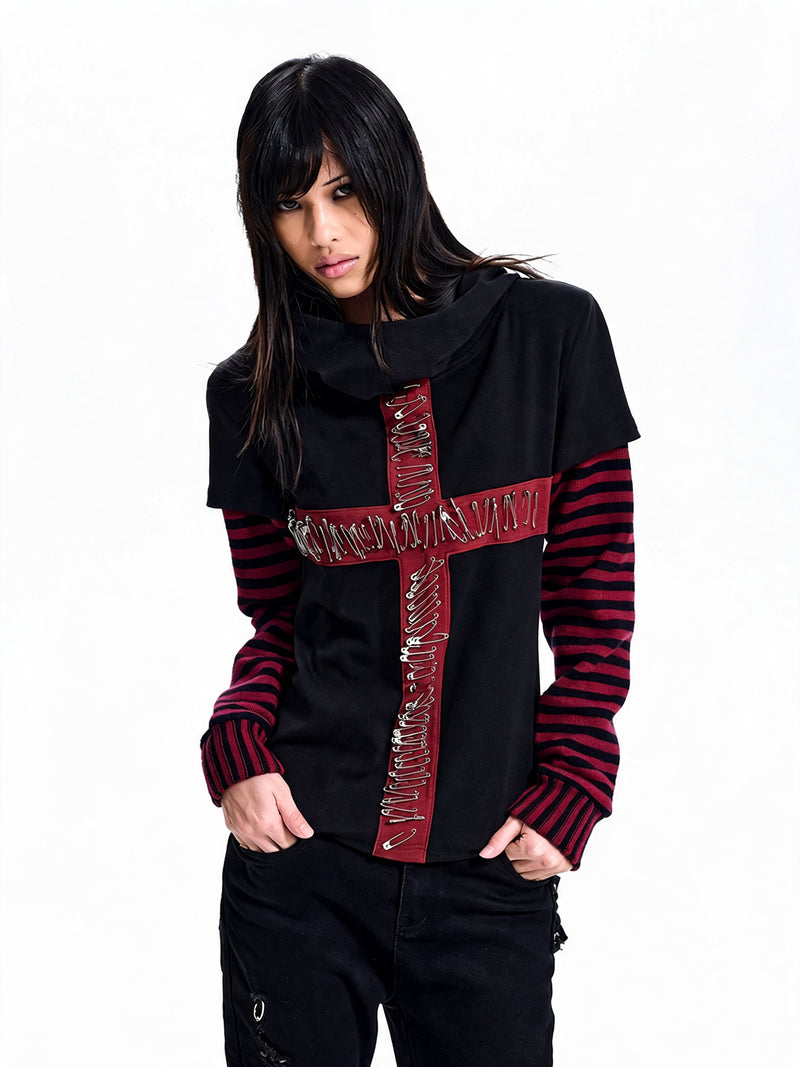
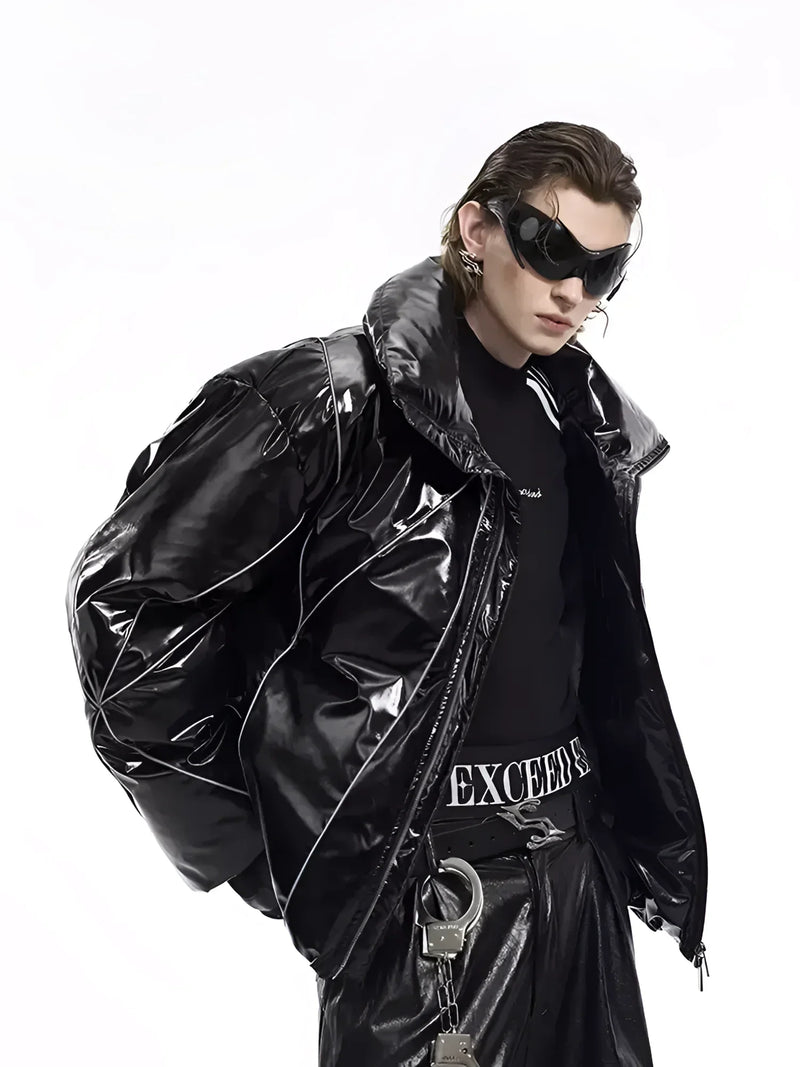
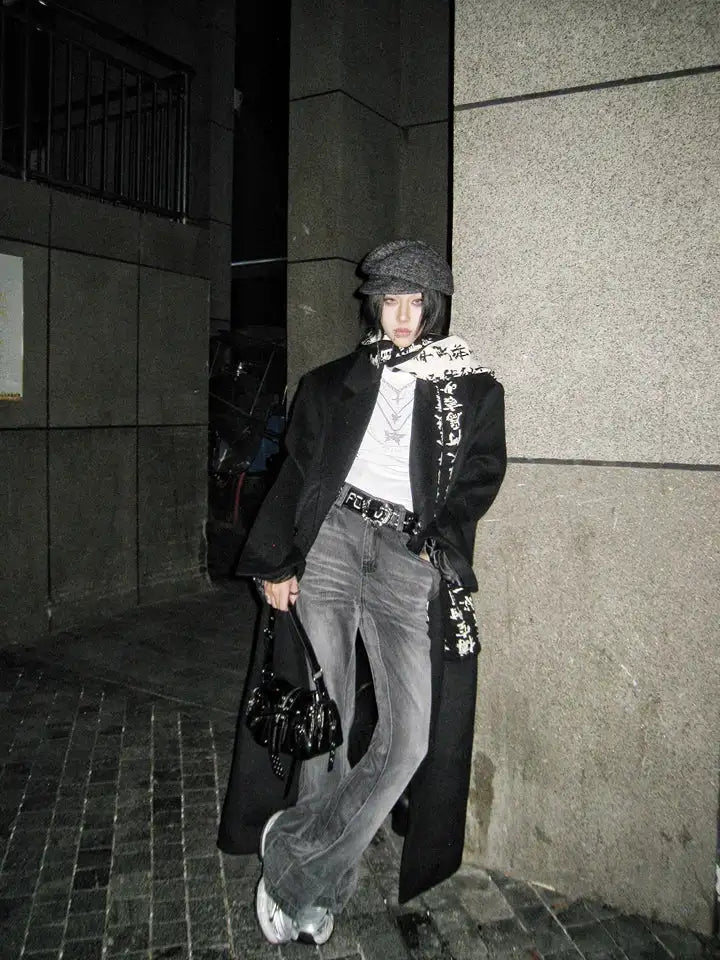

A safety-pin shirt from London, a strap trouser from New York, a skull scarf from a Paris runway. Plus a bass player from Chicago designing hoodies at night. Anyone standing in line outside an emo show in the 2000s was wearing decisions made by people whose names almost nobody knew. The look seemed to come out of nowhere, out of your own bedroom. But it had authors, and they sat in very different places.
Emo Fashion Designers are the people who shaped the forms of the emo look: punk designers like Vivienne Westwood, scene labels like Tripp NYC, musicians with their own brands like Pete Wentz and Oli Sykes, plus runway names like Raf Simons and Alexander McQueen. How the look works as a whole is covered in our emo guide. This is about the heads behind it.
Before we go through the names, a distinction that carries the rest of this article: a brand sells clothing, a designer decides on form, cut and detail. In emo the two roles often collapse into one, sometimes they sit continents apart.
Origin
Emo Fashion Designers: who really built the look
Emo was never a designer trend handed down from above. The scene started in the mid-80s in Washington, D.C., in small hardcore clubs, and the first outfits were plain: band shirt, jeans, worn-out sneakers. Nobody presented a collection there. The look grew out of what hung in the secondhand shop and what could be changed with a marker and a needle.
Still, there are designers without whom the later emo look would look different. The punk designers of the 70s had set the language: safety pins, straps, plaid, deliberately broken edges. Scene labels in New York and Los Angeles cast that language into wearable pieces in the 90s and 2000s. And from the early 2000s, runway designers in Paris and Antwerp were looking at exactly this youth culture.
The result is a look with many fathers and mothers. The rule: anyone looking for emo designers is not looking for a face but for a chain of decisions. The tight silhouette came from one side, the hardware from another, the graphic from the merch table. We go through that chain link by link.
1985
Emo emerges in Washington, D.C.
2003
McQueen's skull scarf hits the market
3
Sources: punk, musician labels, runway
Three sources, one look. For the names to make sense later, it pays to look clearly first at what emo style actually is and how you recognise it.
The foundation
What is emo style?
Emo style is a dark, tight, personal look out of the punk and hardcore scene. Typical are slim trousers or wide trousers with hardware, tight band shirts, hoodies, studded belts, flat sneakers, black-dyed hair with a long fringe and dark eyeliner. The pieces are rarely expensive. They look worn, often altered by hand.
What separates emo from Gothic is the attitude. Gothic is dramatic and romantic, emo is direct and vulnerable. What separates emo from punk is closeness: punk turns against the world, emo talks about what happens inside. That attitude translates into clothing that sits close to the body and explains little.
For designers that is exactly the difficulty. A look that lives on being real is hard to design. The designers who shaped emo therefore rarely invented anything. They picked up what was already there on the street and made it more precise, more durable or more visible.
Before we get to individual designers, one more question many ask first: what does the word emo actually mean, and where does it come from?
The term
What does emo mean?
Emo is short for emotional, more precisely for Emotional Hardcore or Emocore. So it simply means emotional. The term originally described no fashion but music: hardcore punk where the lyrics got personal and the voice was allowed to break. Bands like Rites of Spring are considered the starting point.
Only in the late 90s and above all in the 2000s did emo become a fashion label. With bands playing large halls came a recognisable look, and with the look came shops, labels and finally designers who served it. Many musicians in the scene never liked the word. They felt it turned a feeling into a category.
For fashion this history matters. Emo clothing was first stage clothing worn by people without a budget. What they wore was copied, and only after that did someone design pieces meant to look exactly like it. The order was: stage, audience, label.
The 90s show the look before any designer. The next step leads back into the 70s, to the person who made punk thinkable as fashion in the first place.
The root
Vivienne Westwood: the punk grammar behind emo
Vivienne Westwood did not design emo. But without her the language emo speaks would not exist. In the 70s she ran a shop on King's Road in London with Malcolm McLaren that became the meeting point of the punk scene. Hanging there were bondage trousers with straps between the legs, shirts with safety pins, torn jumpers and plaid fabrics.
Thirty years later these details show up in the emo look almost one to one. The straps on the trouser, the pin in the shirt, the plaid on the skirt, the deliberately open seam. Emo made Westwood's punk softer, cut it tighter and dyed it darker. The grammar stayed the same.
Her attitude matters just as much: clothing as a statement, not as decoration. A piece has to say something, even when it looks broken. That is the core emo took over. A torn shirt there is no accident but a decision.
Wearing that line today takes no archive pieces. Safety pin, visible seam, washed-out fabric: those are the signals that reach from London through the mall into fits of today.
Westwood set the language. But the people who actually dressed emo in the 2000s often stood on stage themselves.
From the stage
Musicians as emo fashion designers: Pete Wentz, Oli Sykes, Travis Barker
The most formative emo designers of the 2000s were not fashion school graduates but musicians. They knew what their audience wanted to wear because they wore it themselves. Their labels grew out of the merch business and grew because fans wanted not only the band but the whole look.
Pete Wentz, bass player of Fall Out Boy, founded Clandestine Industries in the mid-2000s. The hoodies with bat motifs and the tight cuts hit exactly what the scene was wearing anyway. Oli Sykes, singer of Bring Me the Horizon, started Drop Dead in Sheffield with loud, comic-like prints and dark humour. Travis Barker founded Famous Stars and Straps in 1999, Mark Hoppus and Tom DeLonge founded Atticus in 2001.
The rule with musician labels: credibility before cut. These pieces were not always well made, but they came from the inside. A hoodie from the band you saw live carried a story no mall brand could deliver.
What these musicians had in common: they designed for people they saw in front of the stage every night. The second big source of the look, by contrast, was a label that had rethought the trouser in New York long before emo.
The trouser
Tripp NYC and Daang Goodman: the trouser as a statement
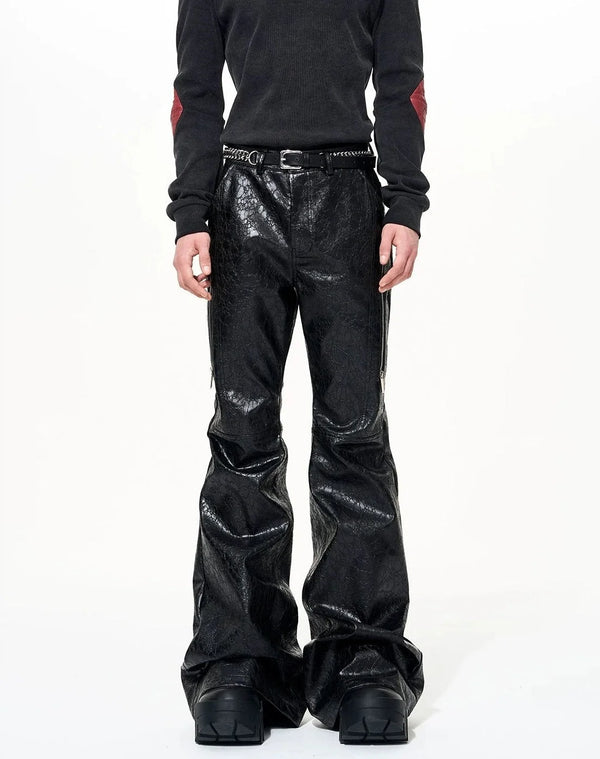
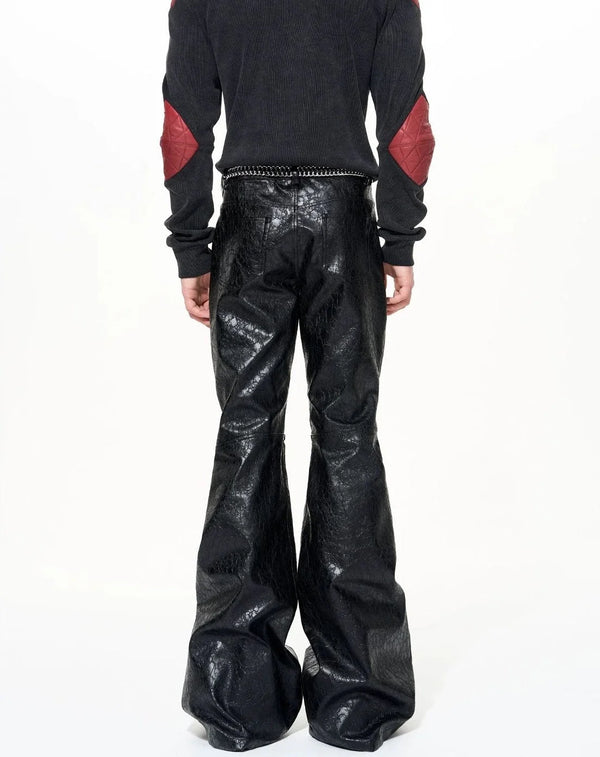
Tripp NYC was founded in New York in the 80s by Daang Goodman and first supplied the punk and club scene. From the late 90s the label hung in every mall store that carried alternative clothing. The trousers with straps, D-rings, chains and zippers on the legs became the symbol of a whole generation.
Goodman's approach was simple: the trouser carries the outfit. A black shirt up top is enough when hardware hangs below. Emo took over that weighting. Many emo looks of the 2000s consisted of a plain top and a trouser that did all the rest.
At the same time Tripp shows how emo handled punk. The bondage straps come from Westwood's shop, but Tripp made them affordable, everyday-ready and available in many widths. The strap trouser went from the statement of a small scene to the standard in the mall.
Today the principle works just the same with wider cuts. Studs at the waistband, chains at the side, washed denim with attitude: the trouser stays the place where an emo fit gets its hardness.
New York and London supplied the trouser and the grammar. A third, often overlooked source of dark youth fashion sat at the same time on the other side of the world, in Tokyo.
From Japan
Japanese designers: Jun Takahashi, Takahiro Miyashita and Hysteric Glamour
In Tokyo a generation of designers emerged in the 90s that took punk and rock more seriously than most Western labels. Jun Takahashi founded Undercover and worked under the motto of making noise, not clothes. His collections mixed punk quotes, patchwork and bleak graphics into pieces that were art rather than merch.
Takahiro Miyashita shaped a grunge look with Number (N)ine that openly referenced Kurt Cobain: washed flannels, slim jeans, broken knitwear. Nobuhiko Kitamura brought rock and pin-up graphics to shirts and jackets with Hysteric Glamour from the 80s onwards, loud and deliberately trashy.
For the emo look in Germany these names were rarely visible directly, their pieces were expensive and hard to get. Their influence ran by detour: through magazines, through musicians who wore them, through labels that rebuilt their ideas more cheaply. The tight, dark, slightly destroyed silhouette of the 2000s has one of its origins here.
What we take from the Japanese designers: broken does not mean cheap. A washed-out, deliberately damaged piece can be made more precisely than a new one. Exactly that precision in the seemingly accidental is what makes a good emo fit today.
The Japanese labels showed that punk works at a high level. In the early 2000s the European runway followed and picked up youth culture openly.
Runway meets scene
Raf Simons, Alexander McQueen and the skull scarf
Raf Simons built his career on youth cultures. The Belgian designer was already showing slim silhouettes, school-uniform quotes and band references in the 90s. His collection Riot Riot Riot from 2001 with layering, patches and hoods is considered the moment when subculture and runway finally came together.
Alexander McQueen supplied the accessory that shaped the scene and emo years like almost no other: the skull scarf. From 2003 it showed up everywhere, at concerts, in music videos, in the photo spreads of the early social media years. It came in countless colours, and in even more copies.
These two names show how influence flowed in both directions. The designers looked at the scene, the scene took its details back. Hardly any emo kid wore real runway pieces, but the cut of the hoodie, the pattern at the neck and the length of the trouser often came from there in the end.
An accessory like the scarf shows how small the lever can be. Often a single piece at the neck, at the belt or on the bag is enough to anchor a plain outfit clearly in the emo corner.
That holds today more than ever. Cross on the belt, pendant on the trouser, a detail with attitude: the small pieces carry the handwriting the scarf used to carry.
So far mostly men's names have come up. Yet women designers shaped the dark, rebellious look at least as much, and many people ask about them specifically.
Women designers
Which famous women designers are there?
Among the most famous women designers in fashion history are Coco Chanel, Vivienne Westwood, Rei Kawakubo, Miuccia Prada and Ann Demeulemeester. For dark, subcultural fashion three of them matter especially: Westwood for punk, Kawakubo for deconstruction and Demeulemeester for a bleak, poetic severity.
With Comme des Garçons, Rei Kawakubo brought black, holes and asymmetric cuts to the runway in Paris in the early 80s. Critics called it poverty at the time. For every later dark subculture it became permission to understand broken and black as a style. Ann Demeulemeester from Antwerp combined long, black layers with rock and poetry references.
In the emo look these designers appear not as a label but as a principle. The black without apology, the thinking in layers, the deliberately unfinished edge. Added to that are the many women of the scene itself, who assembled their outfits out of secondhand pieces, fishnet tights and band shirts and in doing so defined the female emo look in the first place.
If you want to build the look by category instead of by name, the best start is the four building blocks that recur with every designer: top, trouser, jacket and small pieces.
The big names are settled. What is interesting is who continues the emo handwriting today, because the generation that was young in the 2000s is now designing itself.
Today
Emo designers today: Trashy Clothing and the new generation
A good example is Trashy Clothing from Amman, founded by Shukri Lawrence and Omar Braika. The label works with irony, politics and internet culture. In 2019 it dedicated a collection to the emo kids of the 2000s: people who found their music, their photos and their scene online, far away from the malls in California.
That shows how emo design has shifted. Back then the look came out of a few cities and was distributed through shops. Today it emerges anywhere someone has internet. Designers no longer pick up a local scene but a shared memory of MySpace, webcam photos and washed-out band shirts.
Alongside that there are many small labels serving emo, Gothic and Grunge together. They sell almost only online, work with small runs and react quickly to what shows up on TikTok or in music videos. The designer is often photographer, model and shop owner at the same time.
Brands and designers are two sides of the same story. For the top layer of the outfit the same rule applies with the new ones as with the old: a jacket with a clear form beats any logo.
That is why emo designers today often think in sets. Jacket and trouser from one piece, dark colours, straps and pockets that are not just decoration. That is Tripp logic, only extended upwards.
With the new designers came a new language for the scene too. Many who look like this today would no longer call themselves emo.
The terms
What are Emos called today?
Today emos are mostly just called emo, often with an addition: emo revival, Gen Z emo or alt. Anyone wearing the look online is often called an e-girl or e-boy. The term scene stands for the more colourful variant of the late 2000s. Many simply say alt fashion when they mean emo, Gothic and Grunge together.
The labels have changed, the code barely. Dark hair, slim or wide trousers with hardware, band shirts, eyeliner, chain on the belt. What is new above all is how openly things get mixed. An emo outfit today may contain Techwear bags, Y2K denim or Gothic jewellery without losing its origin.
Party series like Emo Nite, running in many cities since the mid-2010s, have shown that the old generation never fully put its look away. And the new generation wears it without having lived through the mall years themselves. For designers that means: they design for memory and for curiosity at the same time.
Whatever you call it: the look still follows the rules the designers from Westwood to Wentz set. You can apply those rules directly.
Practice
Putting emo designer style to work: what you learn from the designers
A few clear rules can be drawn from the whole designer history. First: one place carries the outfit. With Tripp it was the trouser, with McQueen the scarf, with Wentz the hoodie. Second: broken is allowed when it looks intended. Third: black is the base, colour comes in small doses.
Fourth: mix levels. One piece with designer ambition, the rest simple. That is how the emo kids always did it, with a good belt and a shirt from the merch table. A complete look from a single source reads like a catalogue, not like a person.
The most common mistake when rebuilding is too much at once. Wearing all the references at the same time does not look like designer, it looks like a costume shop. The following mistakes are the ones we see most often.
Avoiding those mistakes takes no designer budget. The handwriting sits in the cut, in the weighting and in one clear detail.
Designing yourself
Becoming an emo fashion designer: the way from DIY to your own label
Almost all emo designers started small. Westwood with a shop, Wentz and Sykes with merch, Trashy Clothing with Instagram. Getting into scene fashion still rarely runs through the big fashion school but through your own pieces that other people want.
The classic way: alter secondhand pieces, print shirts, sew patches, show the results online. Anyone wanting to learn cut and material will find courses at fashion schools and adult education centres. More important than the certificate, though, is closeness to the scene: concerts, forums, the people who actually wear the look.
Anyone getting seriously into emo design should know the history we have gone through here. Not to copy it, but to know which details carry a meaning. A strap on the trouser is never just a strap.
For your own look the same applies as for your own label: start with one piece that sets the direction and build the rest around it. A washed tee and a hard vest are enough as a base.
FAQ
Frequently asked questions about Emo Fashion Designers
To close, the questions that come up most often about emo designers, answered short and direct, without the detour through the whole history.
Who invented emo fashion?
Is Vivienne Westwood an emo designer?
What is the difference between an emo brand and an emo designer?
Are there German emo designers?
Do luxury designers pick up emo elements today?
The names change, the forms stay. Anyone who knows where a detail comes from wears it with more calm and can place it deliberately.
What do you think?
Tell us on @fuga_studios
About the author
Philipp Fuge — Founder · Berlin
Founder of Fūga Studios. Writes the journal himself. Berlin · Shanghai · Tokyo · Poznań — four cities, one logic.