
London, King's Road, summer 1976. A T-shirt hangs in the shop window, cut apart and put back together with safety pins. It costs more than an entire off-the-rack suit, and that is exactly the joke. Whoever buys it is not buying a garment. They are buying a statement to everyone who treats fashion as a question of decency. Fifty years later the same idea hangs in different cuts in our warehouse in Berlin.
Punk Fashion History is the story of a look that emerged between 1974 in New York and 1976 in London and has developed through five clear eras since: from the DIY big bang through Hardcore and Pop-Punk to today's quotation style. The constants stay the same: leather jacket, studs, tartan, torn fabric and the principle of deciding on clothing yourself instead of having it handed to you. Whoever knows the history wears the look more precisely. The basics are in the Punk Fashion Guide, here comes the complete timeline.
Timeline
Punk Fashion History in fast forward: five eras, one system
The history of punk fashion can be cut cleanly into five eras. That is not an academic game but practical orientation: whoever knows which era a piece comes from also knows how it is meant. A leather jacket with hand-painted band names tells 1977. A jacket with symmetrically set pyramid studs tells 1982. A hoodie with skate graphics tells 1996. Three jackets, three decades, three completely different statements.
Before we go into the single stations, three numbers that set the frame. They come up in every serious engagement with Punk Fashion History and are the fastest fact check whenever half-knowledge gets told somewhere.
1976
Year zero in London
430
King's Road, address of SEX
5
Eras up to today
The five eras build on each other, but they do not replace each other. Each has left behind pieces that are still worn today, and each has its own articles with us in the Journal if you want to go deeper. Here is the map at a glance.
Origin
New York or London? Where Punk Fashion History really begins
The honest answer: both, but with different roles. New York was there first. From 1974 the Ramones, Television and Patti Smith played at CBGB on the Bowery, and their look was radically unspectacular: broken jeans, white T-shirts, worn-out leather jackets from the flea market. Richard Hell wore cut-up shirts that he held together with safety pins and counts for many as the first to use the look deliberately. That was anti-fashion in the literal sense: it was supposed to look as if no designer had ever met it.
London imported that attitude and built a product out of it. Malcolm McLaren had managed the New York Dolls, knew the scene on the Bowery and brought the idea back to Chelsea. Together with Vivienne Westwood he translated the raw New York attitude into buyable pieces: bondage trousers with straps between the legs, mohair jumpers, shirts with slogans. When the Sex Pistols exploded at the end of 1976, they were wearing exactly these things, and overnight the look had a face.
For the classification that means: the attitude of punk fashion is American, its form is British. New York delivered the principle that broken is better than perfect. London delivered cuts, fabrics and graphics that are copied to this day. Both lines run together in everything that has been sold as Punk since.
The boutique
SEX, Seditionaries and Vivienne Westwood: the shop that built the look
No single place has shaped Punk Fashion History more strongly than the shop floor at 430 King's Road in Chelsea. Westwood and McLaren ran changing concepts there from the early seventies, first rock'n'roll nostalgia, then rocker leather. In 1974 they renamed the shop SEX, sold rubber and fetish clothing as street fashion and provoked a city that was still stuck in post-war grey. In 1976 came the conversion to Seditionaries, and provocation turned into collection: bondage trousers, parachute shirts, mohair, shirts with torn royals motifs.
What was decisive was not only what hung there but who stood there. Jordan, by her civil name Pamela Rooke, worked in the shop and commuted in daily from Brighton in full gear, beehive hairdo, geometric make-up, latex. She was not a model and not a musician but the first person to live the look as an everyday identity. The Sex Pistols were the shop's band, managed by McLaren, dressed by Westwood. Band, boutique and look were a single system.
That a designer from this corner later received the British knighthood and counted among the most influential fashion designers in the world until her death in 2022 is perhaps the biggest punchline of the whole story. Whoever wants to follow the designer line of punk fashion further finds the complete treatment in its own article.
The principle
DIY: the system behind the whole Punk Fashion History
Whoever has to boil the history of punk fashion down to a single word lands on DIY. Do it yourself was not a decorative decision but economic reality: the kids standing outside the Roxy in London in 1976 could not afford Seditionaries prices. So they built the look themselves. The school trousers were sewn tighter, the shirt cut apart and written on, the jacket studded with hardware from the DIY store. The result never looked bought, and exactly that became the quality.
Out of that necessity came a toolbox that still works today. The most important techniques at a glance:
- Cutting apart and reconnecting: shirts and jeans were split open and put back together with safety pins, zips or coarse seams. The break stays visible.
- Writing on it: slogans, band names and symbols went straight onto the fabric with felt pen, bleach or stencil. Every piece became unique.
- Retrofitting hardware: studs, chains, padlocks and razor blades as pendants turned standard pieces into statements.
- Patches and backpatches: fabric scraps with band logos, sewn onto jackets and waistcoats, told your own record collection to the outside.
- Repurposing: bin bags as dresses, dog leads as jewellery, school uniform ties with the torn shirt. Breaking context as a method.
The graphics side belongs in the same story. Jamie Reid developed the ransom-note typography of cut-out newspaper letters for the Sex Pistols, which still works as a visual shorthand for Punk today. This aesthetic migrated from record covers onto shirts and flyers and made graphic design a fixed part of Punk Fashion History. A shirt was never just fabric, it was printing surface for an opinion.
The constants
Leather jacket, tartan, boots: the pieces that survive every era
Three material groups run through all five eras and carry the look. First, black leather, above all the biker jacket that Punk took over from the rockers and recoded with studs, patches and slogans. Second, tartan, the Scottish check fabric that Westwood tore out of its establishment context and sewed into bondage trousers and skirts. Third, heavy footwear: first army boots from surplus, later Doc Martens, which migrated from working-class culture into the scene.
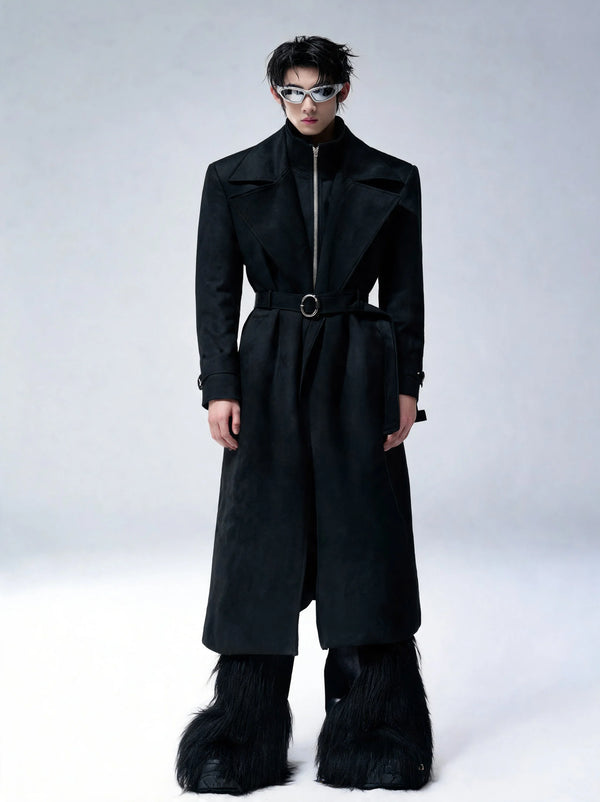
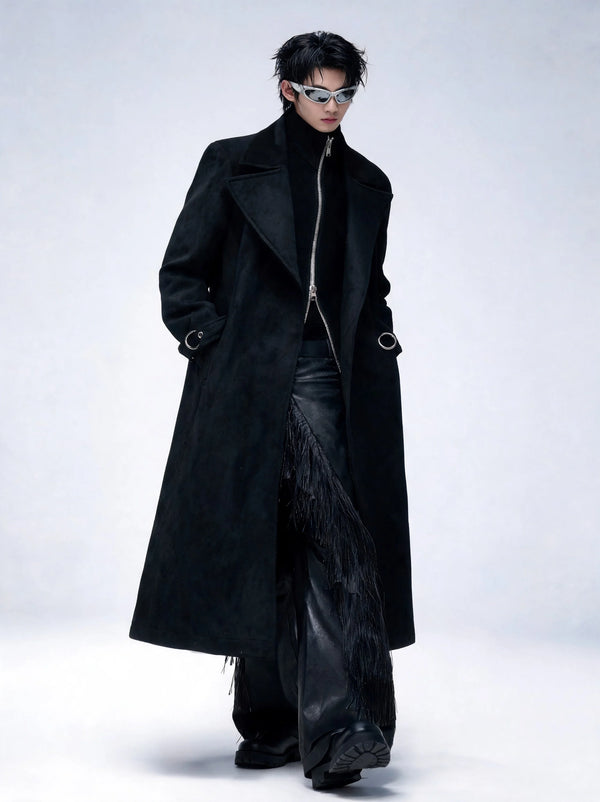
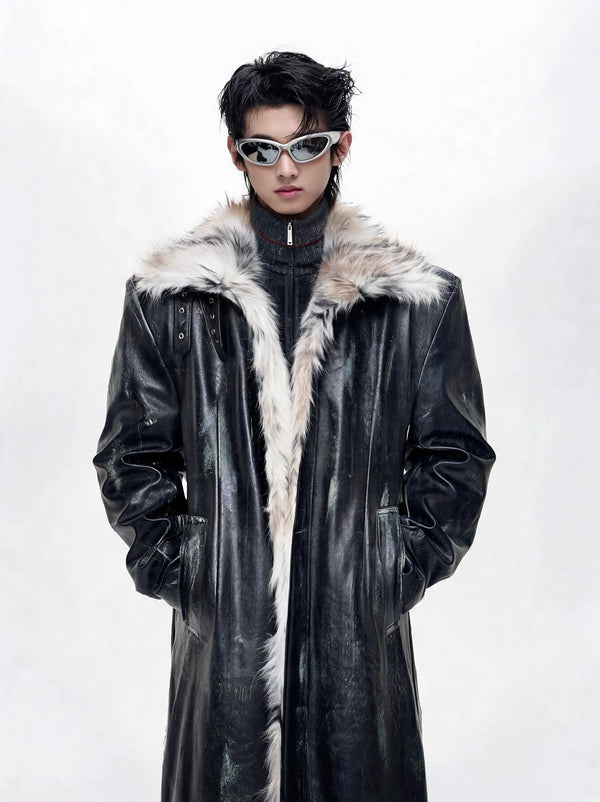
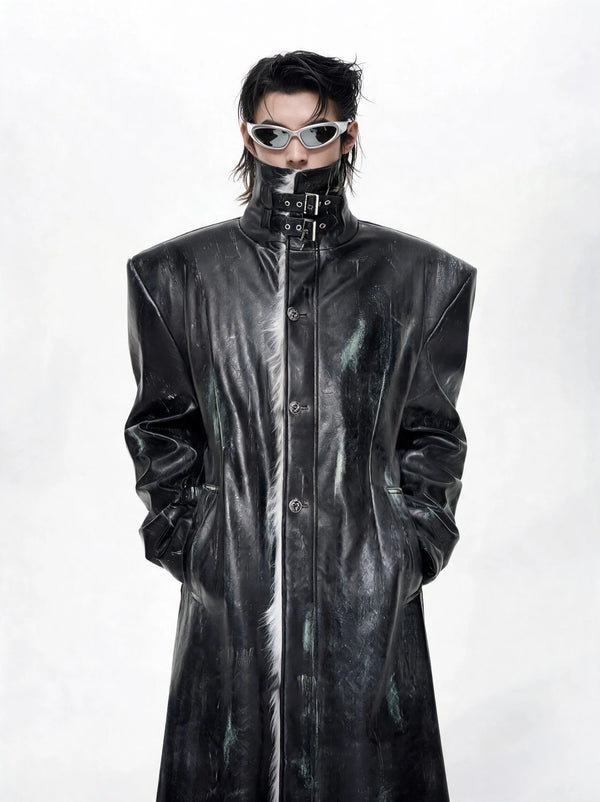
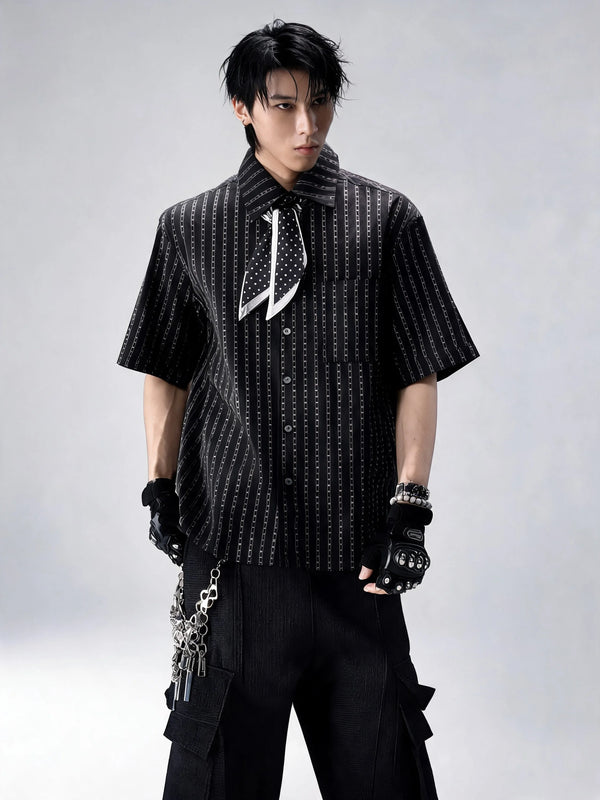
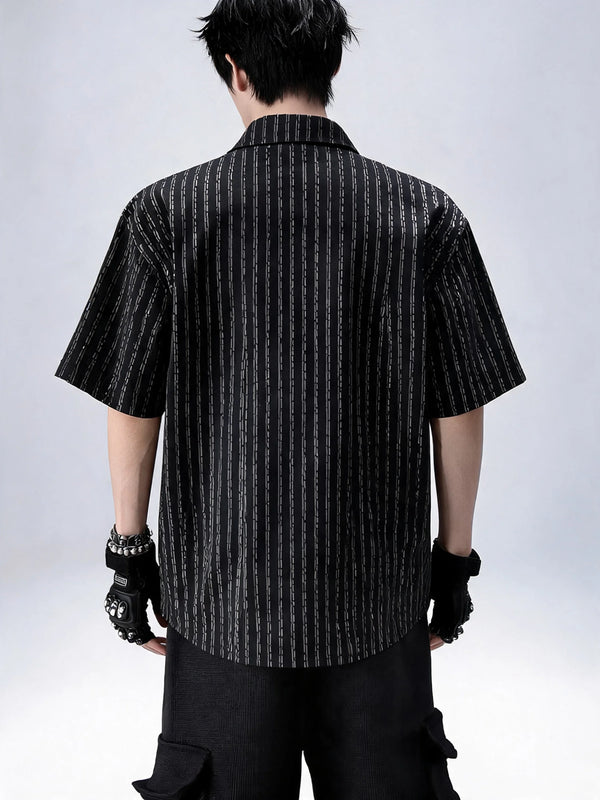
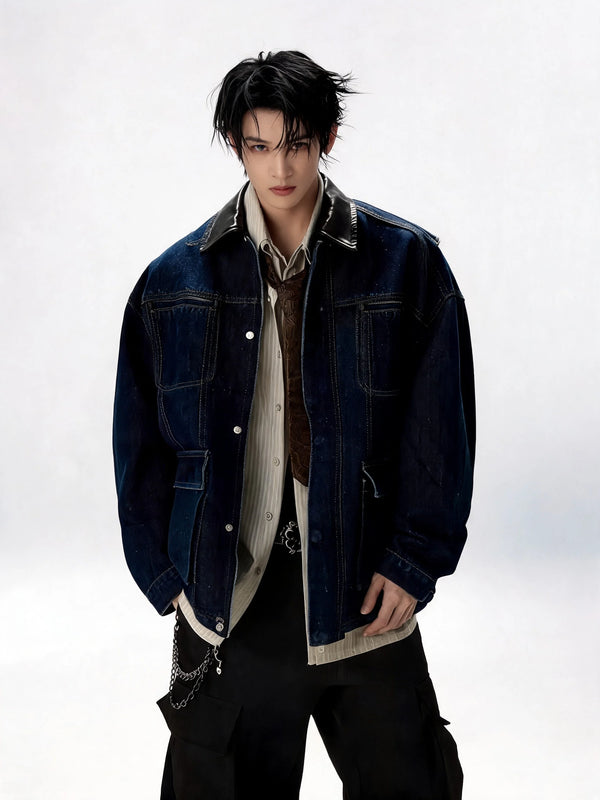
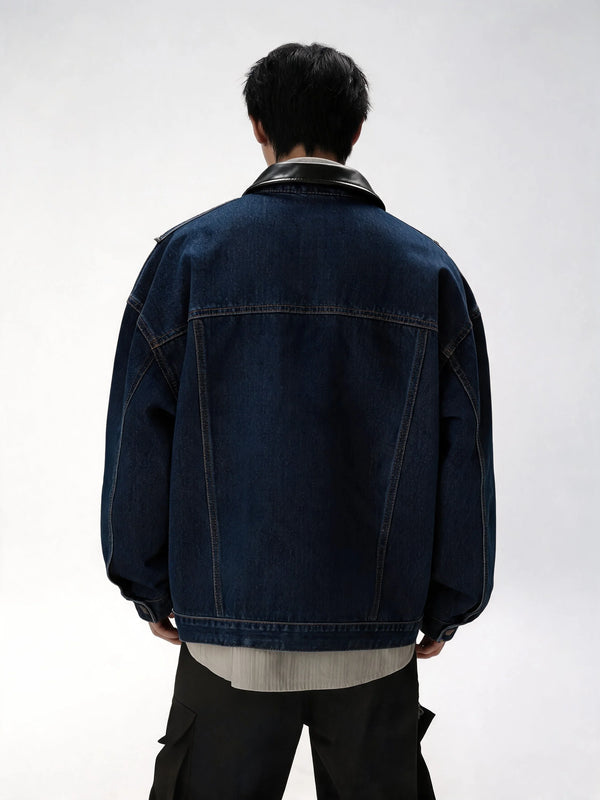
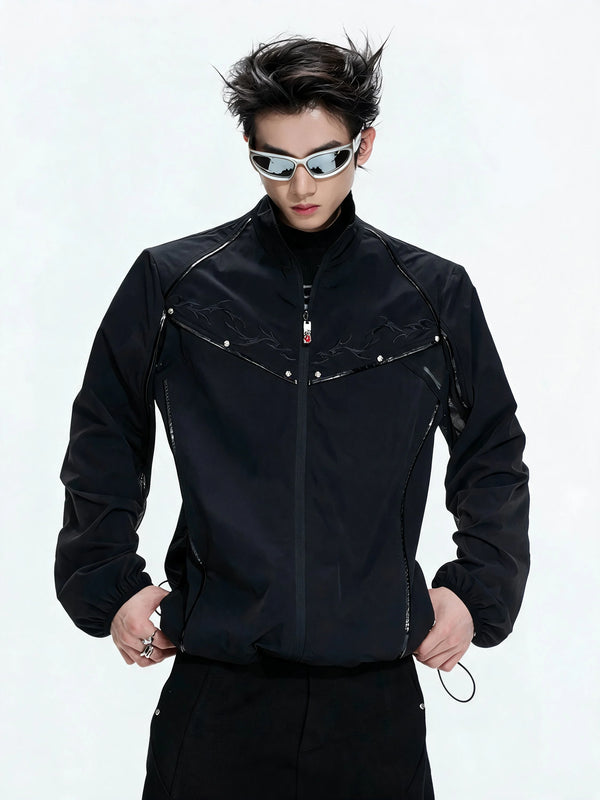
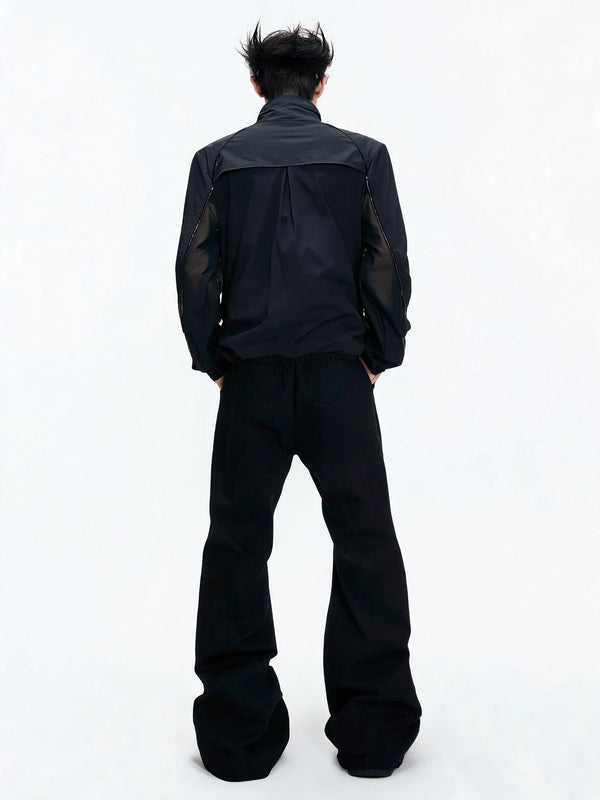
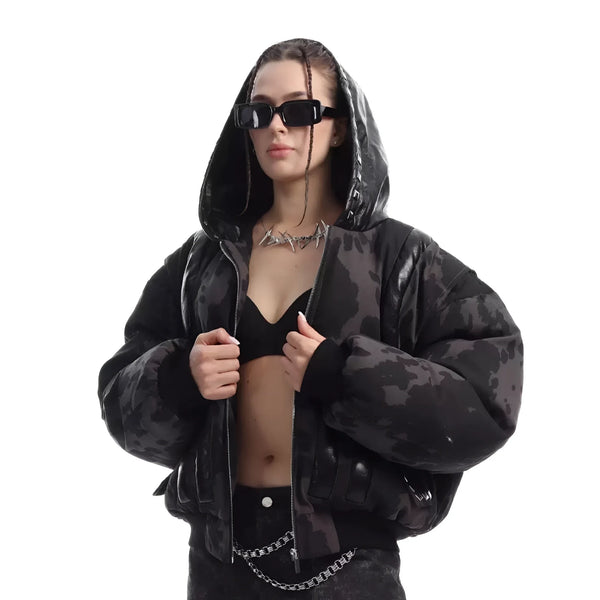
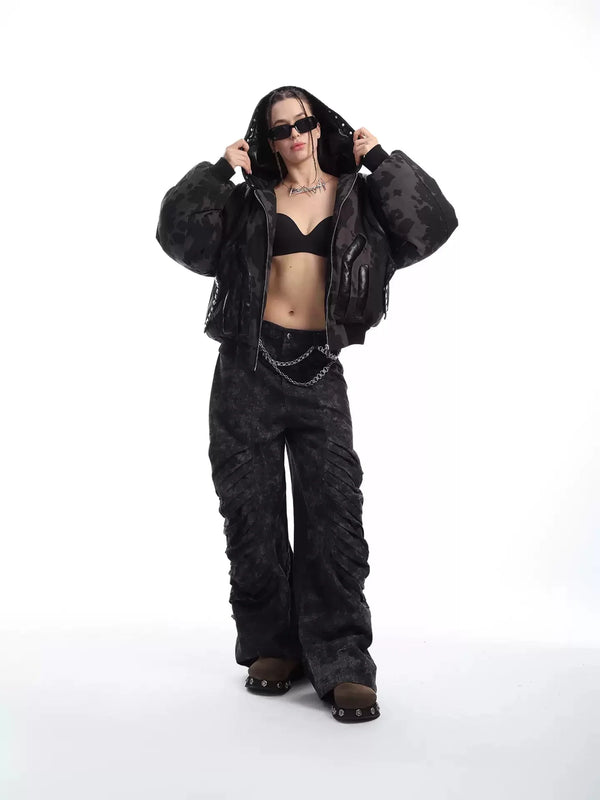
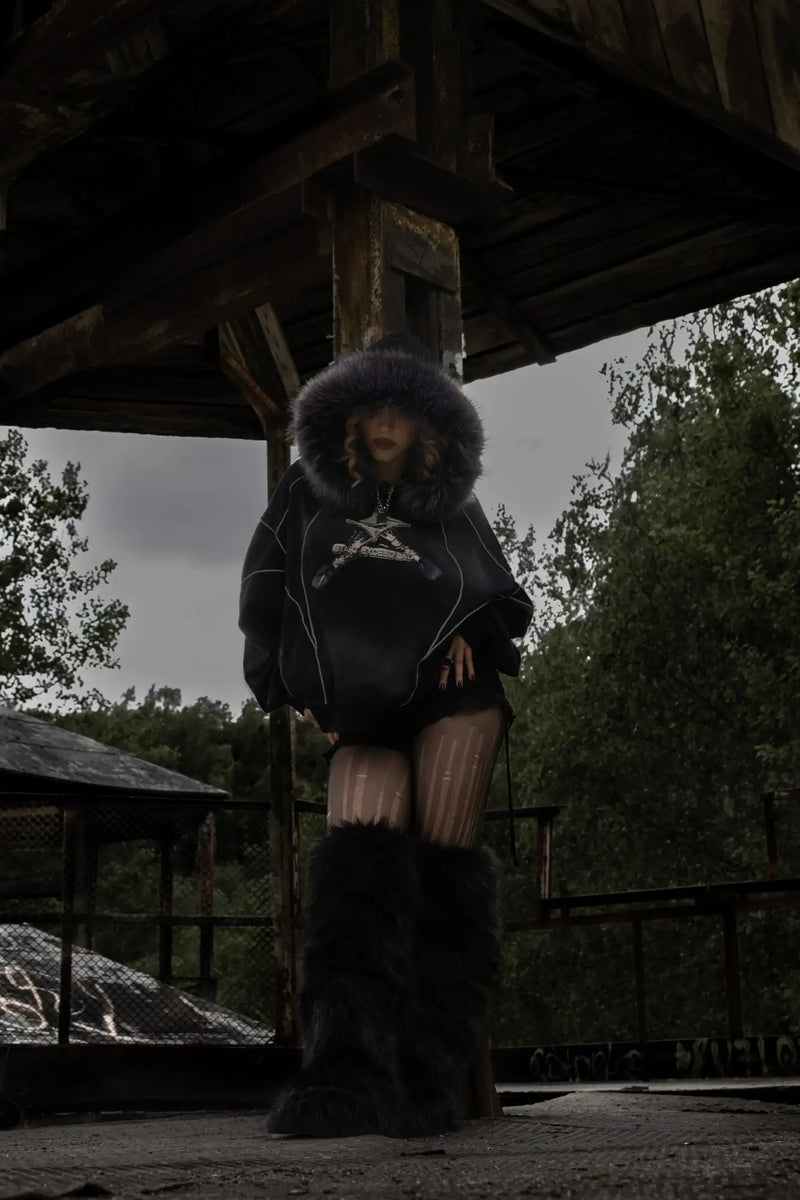
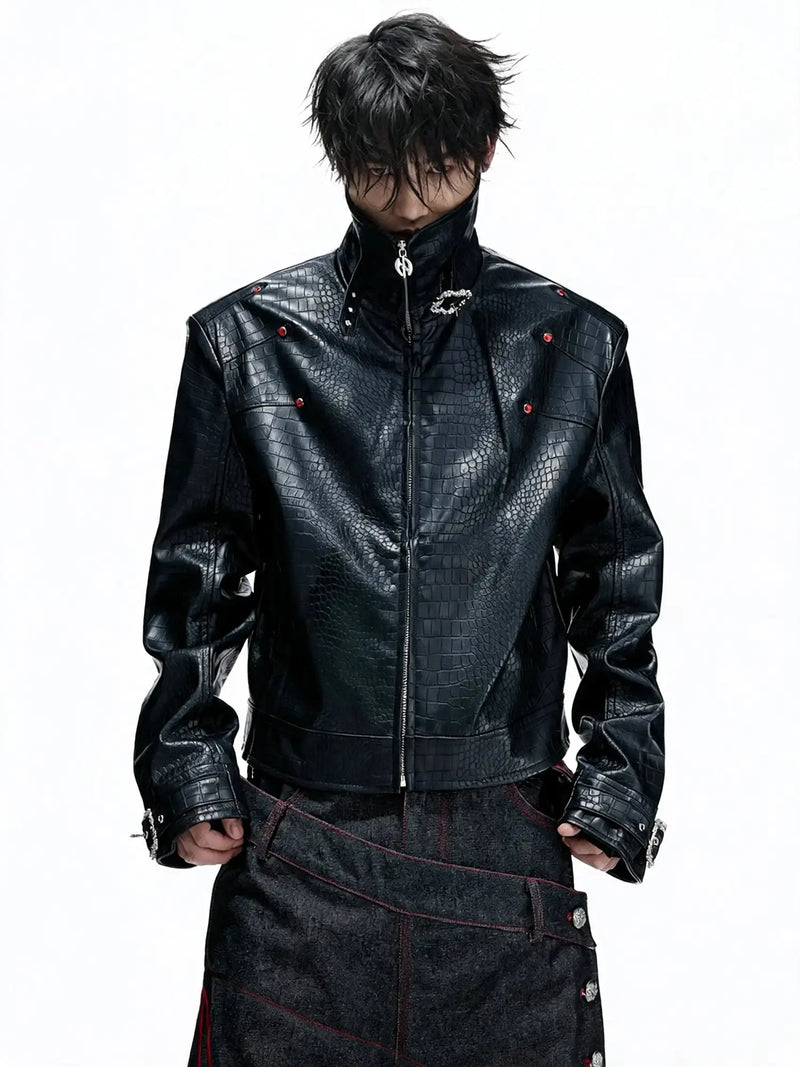
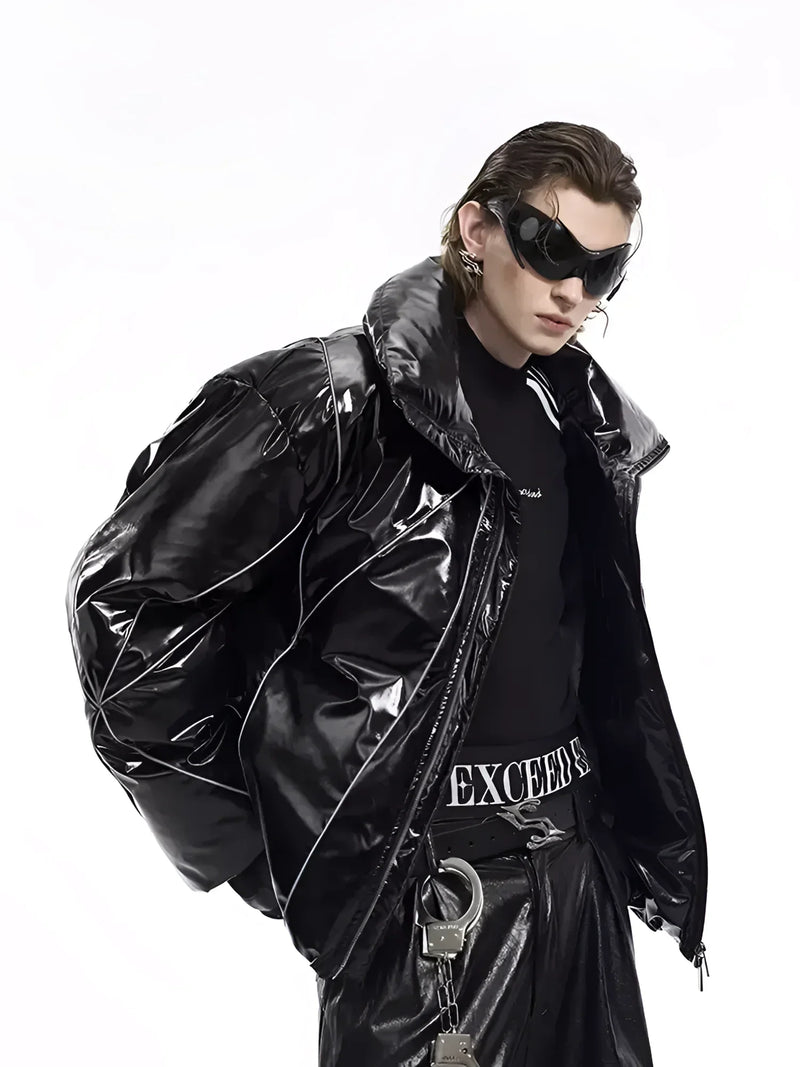
These constants are the reason the look can be built so well today. A leather jacket with hard hardware is the historically most correct entry into the punk style, entirely without a costume feeling. Two directions from our current range that run exactly this line:
How a jacket like that looks in everyday movement shows better in video than in any product photo. The look lives on how the leather falls, how the hardware takes the light and how much blackness an outfit carries without looking flat. An impression from our feed:
@fugastudios POV: You're the final boss and the outfit actually slaps 🔥 Gothic Warrior Denim Set got that main character energy fr#fugastudios #darkfashion #gothicstyle #OOTD #fyp ♬ Originalton - Fuga Studios
That the clip formally runs towards Gothic is not a contradiction but part of the history: Gothic came directly out of Punk at the end of the seventies, via bands like Siouxsie and the Banshees, whose audience kept the black and traded the anger for melancholy. The material language of both scenes stays related to this day.
1978 to 1999
From the Hardcore of the eighties to the Pop-Punk of the nineties
From 1978 the first wave fell apart, and the look got harder. In the USA Hardcore emerged: faster, more physical, and the clothing followed the function. Whoever wanted to hold up in the pit wore robust boots, short hair or else the mohawk as the maximum opposite, plus jeans and hoodies without any decoration. In Great Britain Street Punk ran in parallel with the opposite strategy: more studs, more patches, higher hair, the look as visible belonging. Both lines together still define the picture most people have in mind when they hear Punk.
The nineties turned the direction completely. With Green Day and The Offspring, Punk became mainstream radio in 1994, and California's skate culture supplied the wardrobe: wide trousers, hoodies, caps, Vans. The look lost the armour logic of the eighties and became a youth culture standard. At the same time the first big revival began, in which the codes of 1977 came back as vintage. Both decades have their own articles that unpick every phase in detail.
Important for understanding the overall history: none of these phases deleted the previous one. The eighties uniform went on existing next to the nineties skate look, at the same concerts, often in the same circle of friends. Punk Fashion History is not a relay race but a growing wardrobe that every generation draws from anew.
Sign language
Studs, patches, lettering: the symbols of Punk Fashion History
Punk has developed its own vocabulary of signs that has stayed stable over the decades. The safety pin stands for the hour of birth: repair as jewellery, makeshift as statement. Studs and spikes translate hardness into material. The torn and reconnected shirt shows the break with the well-groomed. The ransom-note lettering carries the graphics line of Jamie Reid onwards. And tartan remains the attack on the British establishment turned fabric.
These signs are the reason a single accessory is enough to anchor an outfit historically. A spike bracelet with a plain black silhouette tells more punk history than a complete costume. Two pieces from the range that run exactly this sign language:
For all the sign theory, the basic rule of the scene has stayed unchanged since 1976, and it is the best filter for every buying decision in this style field to this day:
Whoever takes that permission seriously combines freely: historical pieces with modern cuts, hard hardware with a clean base. The history delivers the vocabulary, but everyone builds the sentence themselves. That is exactly why this style does not age.
The other half
Women write Punk Fashion History: Jordan, Siouxsie, Riot Grrrl
The historiography of punk fashion often runs via men in leather jackets, while the most radical style decisions came from women. Jordan turned the shop SEX into a total work of art long before the Pistols were famous. Siouxsie Sioux built a stage identity out of fetish elements, geometric make-up and black volume that laid the foundation for the complete Gothic aesthetic. Poly Styrene of X-Ray Spex refused every sexualisation with neon colours and a dental brace and was thus decades ahead of her time.
At the start of the nineties the Riot Grrrl movement around bands like Bikini Kill drew the line further and turned it political: babydoll dresses with combat boots, slogans written straight onto the skin, girl codes as a weapon instead of a weakness. That was punk DIY in its purest form, applied to the question of who a scene belongs to. For today's view of the style that means: the female line of Punk Fashion History is not a footnote, it is half of the system.
Runway
Punk on the catwalk: how the history came into luxury fashion
Since the eighties at the latest, high fashion has quoted Punk in regular waves. Westwood herself carried the codes onto the catwalk, Jean Paul Gaultier built studs and mesh into couture, and in 2013 the Metropolitan Museum in New York dedicated its own Met Gala to the movement with the exhibition Punk: Chaos to Couture. That is the maximum irony of the whole story: a style invented against institutions hangs today in the most important fashion museum in the world.
For everyday life this catwalk line is useful nonetheless, because it changed the product quality. Studs sit in clean grids today, leather falls softer, tartan comes in wearable cuts. Whoever buys punk codes today gets construction instead of handicraft, and can dose the DIY hardness instead of inheriting it. Which brands manage this translation best is in the brands article in detail.
Present
Wearing Punk Fashion History today: quotation instead of costume
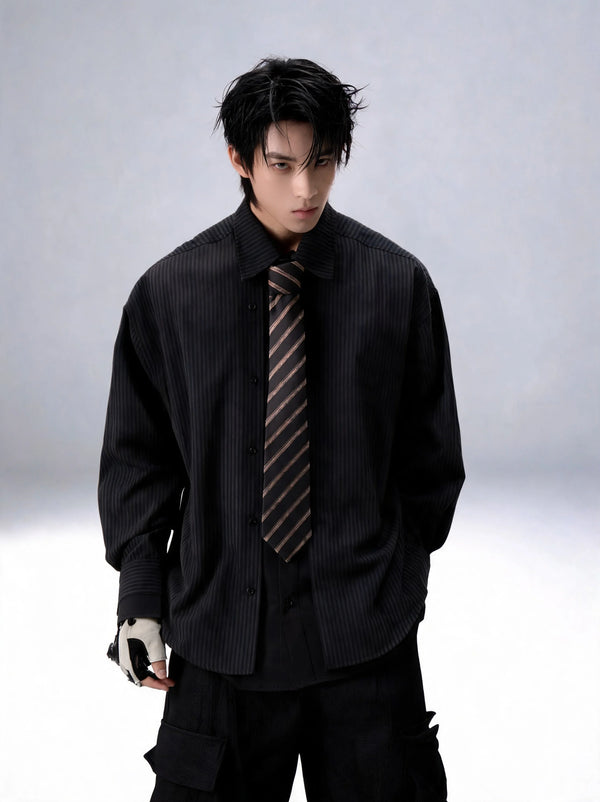
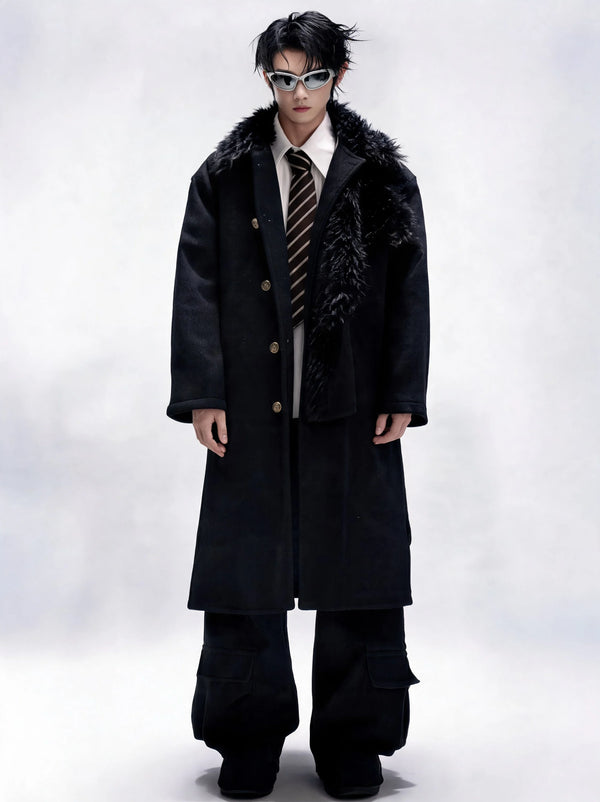
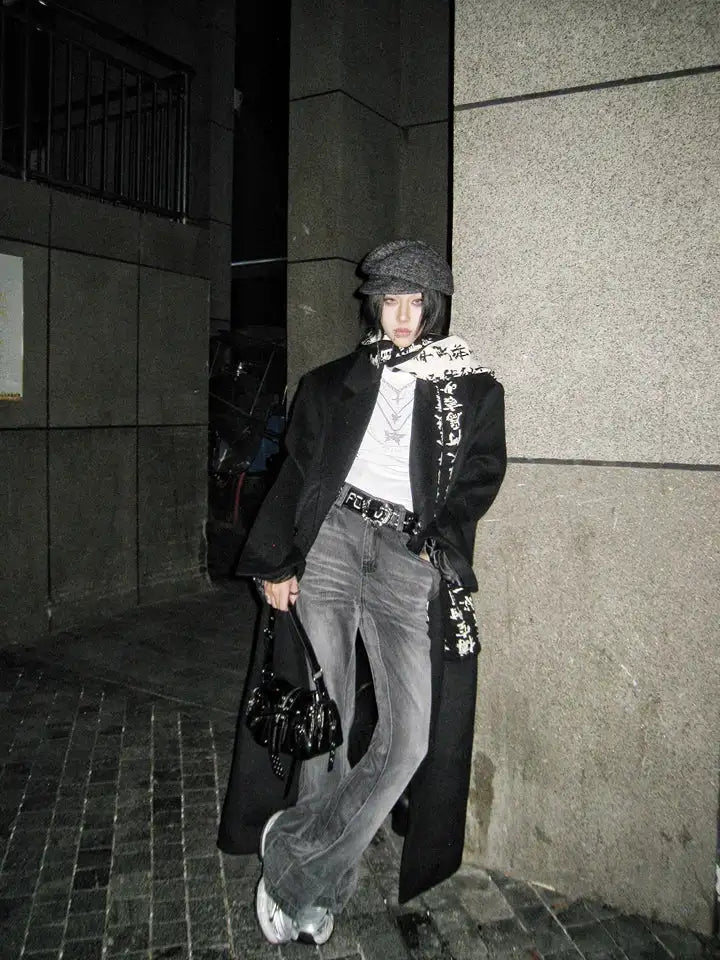
The current era works differently from all the ones before. Nobody wears the complete 1977 or 1982 look through everyday life today, and nobody has to. The modern handling of Punk Fashion History is the quotation: a historically charged piece, built into a contemporary, mostly dark silhouette. Studded pants with the clean black jacket. A tartan element with the monochrome rest. The history gives the outfit depth without dating it.
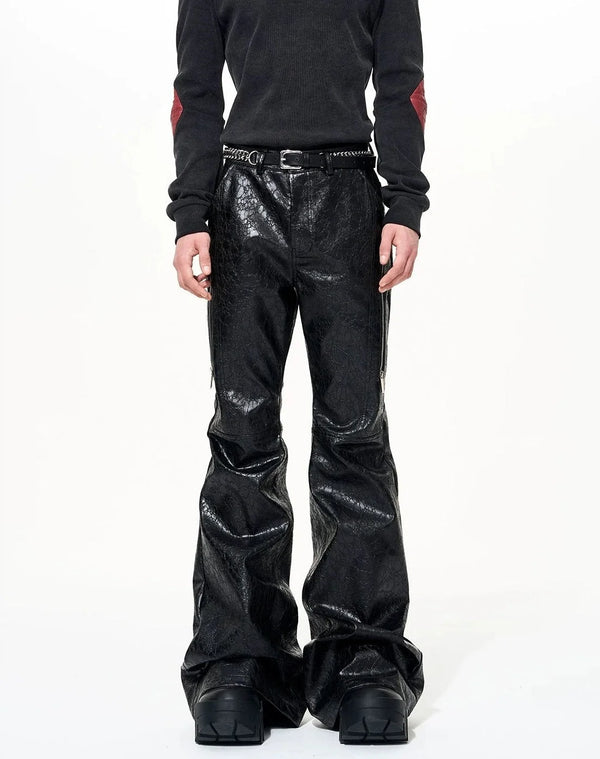
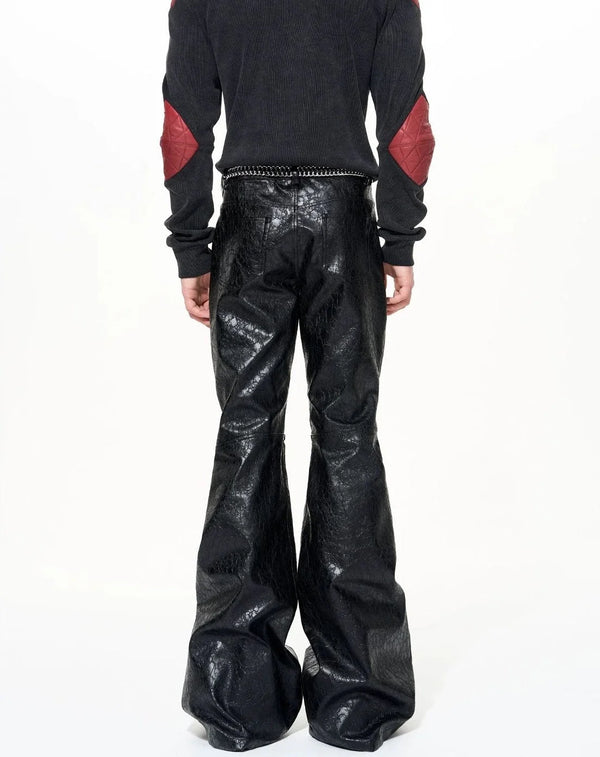
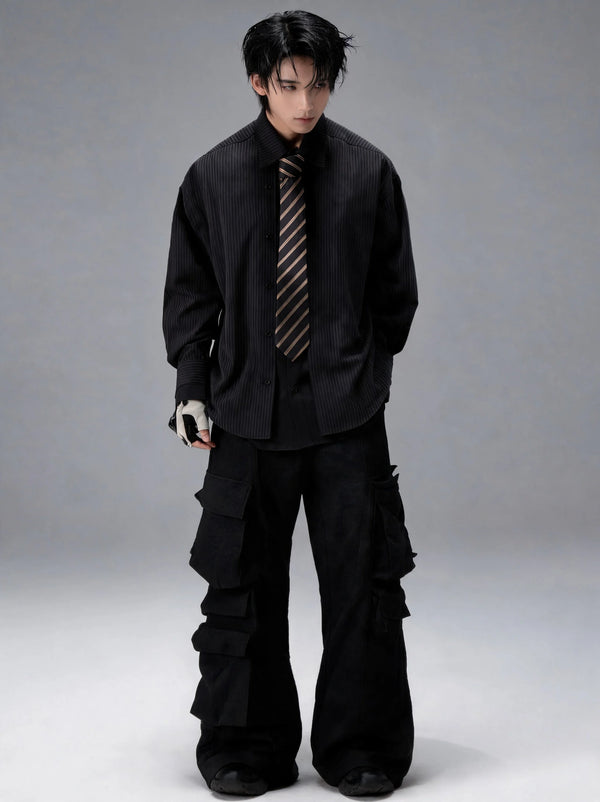
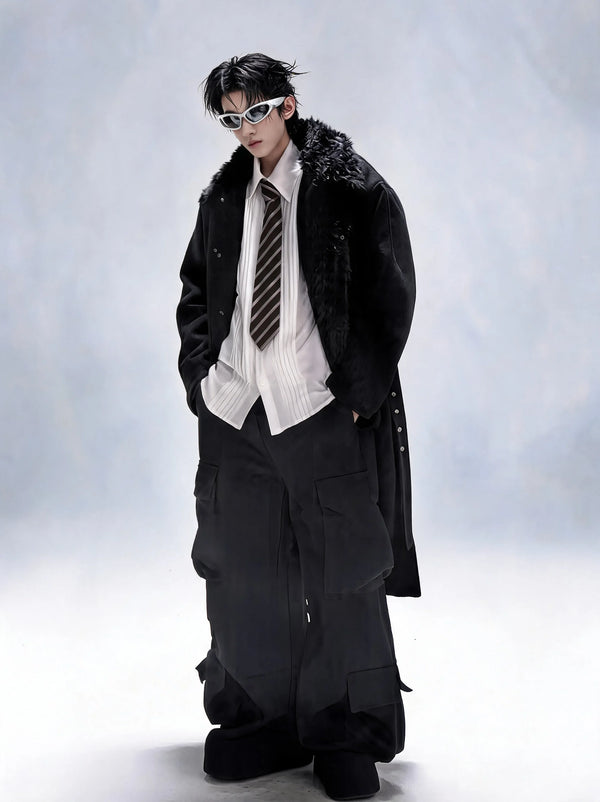
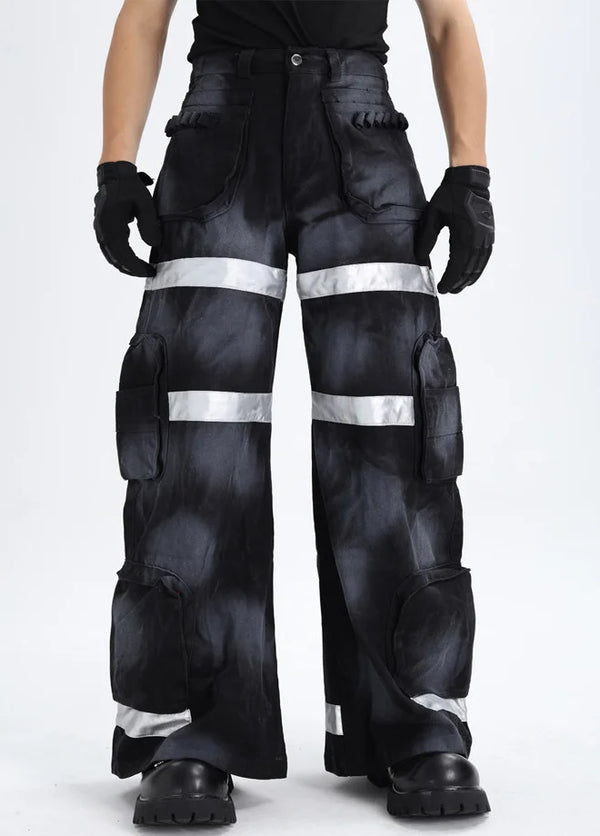
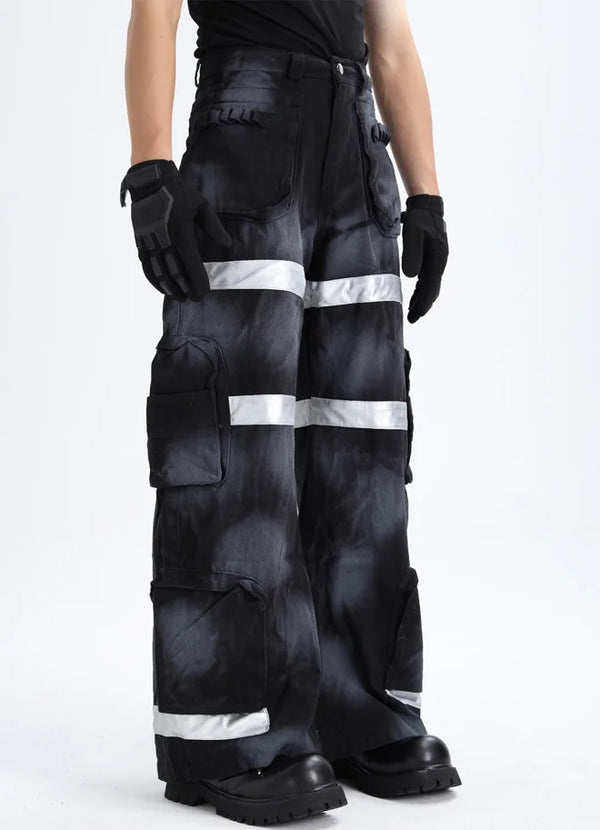
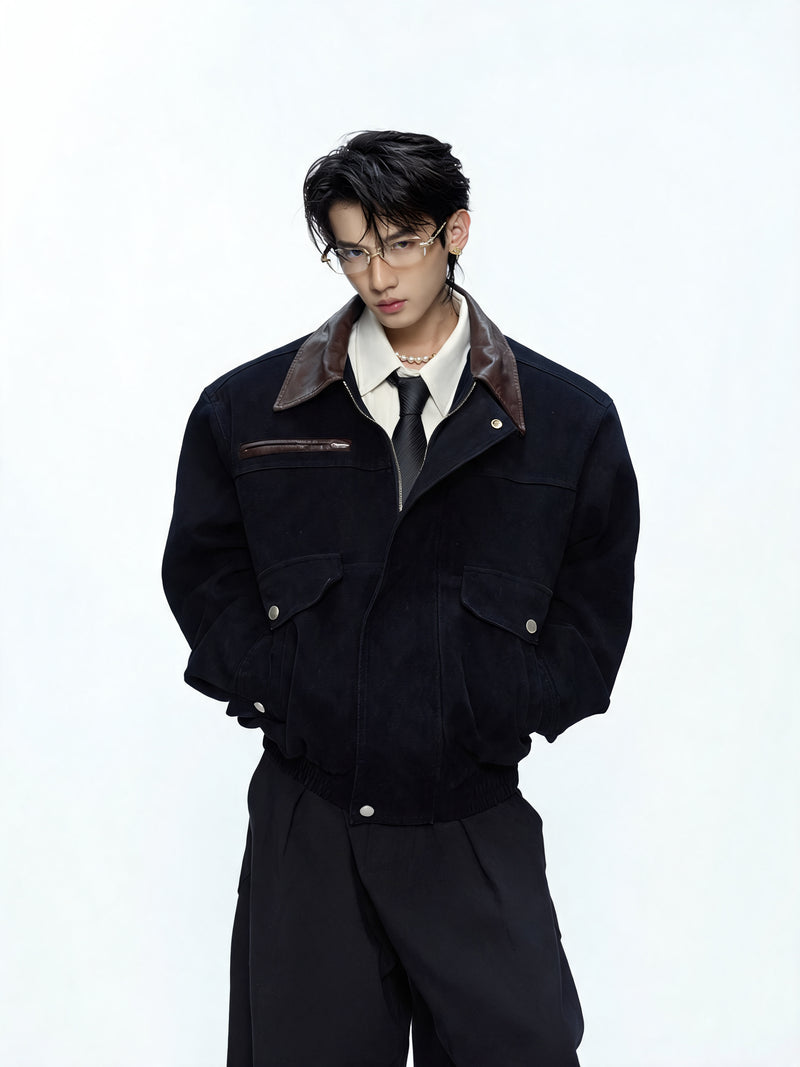
With the trousers this translation is clearest: the bondage and studded lines of 1976 live on, but in cuts that work with today's proportions, wider, sitting lower, with flare instead of a skinny leg. Two examples from the range that put the historical code into modern silhouettes:
If you are looking for the entry via categories instead of single pieces, these are the five directions in which our range carries the punk line onwards. Every category mixes historical codes with current cuts:
What the quotation principle looks like in movement shows in the second clip: layered cargo silhouette, dark base, single hard accents. No element screams 1977, but the whole logic of the outfit comes from exactly this line.
@fugastudios When your pants have more layers than your personality 🤎☀️ Opium Grunge Longsleeve + multi-pocket cargo pants = apocalyptic chic achieved#fugastudios #grungeaesthetic #cargopants #darkfashion #opiumcollection ♬ Originalton - Fuga Studios
The principle holds in both directions: whoever wears dark Streetwear, Techwear or Dark Fashion today carries punk heritage along, consciously or not. The silhouettes have developed further, the attitude behind them has stayed the same.
German track
SO36 instead of King's Road: the German Punk Fashion History
The German line of the history is often overlooked, although it had its own centres and its own look. In West Berlin the SO36 in Kreuzberg became the counterpoint to the London scene from 1978, rawer, more political, closer to the Wall. In Düsseldorf the Ratinger Hof brought art school and Punk together; bands like Die Toten Hosen later came out of this environment. Nina Hagen exported the Berlin variant internationally and mixed punk codes with opera theatricality long before that was a trend anywhere.
The German look was more pragmatic than the British one: less boutique, more army surplus, black jeans instead of bondage trousers, parka over everything. This sober, functional reading of Punk shapes the Berlin scene to this day and fits precisely the way we build silhouettes at Fūga: dark, reduced, thought through for function, with hardness in the detail instead of in the spectacle.
What goes wrong
Common mistakes with the punk history look
Precisely because the history is so well documented, it is easy to wear it wrongly. Most missteps follow the same pattern: an era gets copied as a complete package instead of being built out of the system. These are the five classics we see again and again:
The good news: all five mistakes have the same solution. Build the base first, dark and reduced, then set a historical quotation deliberately. In exactly that order, never the other way round. Plus a practical hint that saves the most time at the start:
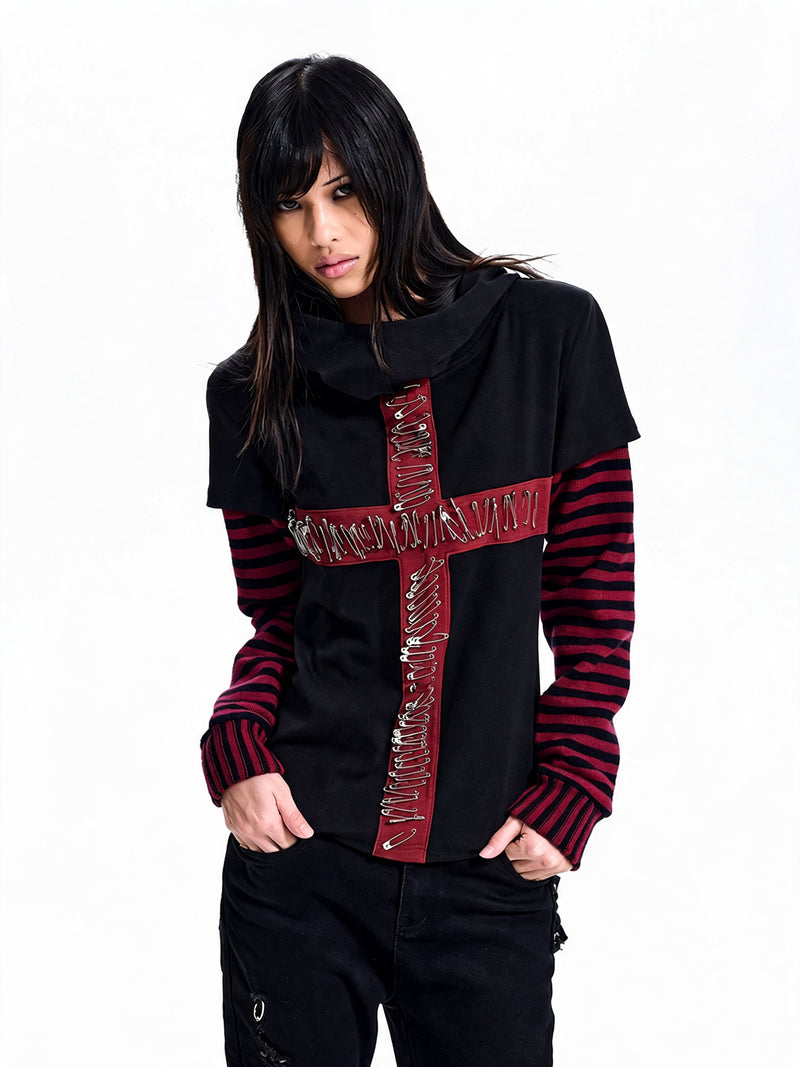
For the base level it is worth looking at tops that bring punk graphics into wearable form: washed prints, hard symbols, but cuts that fit under every jacket and also work solo. Two candidates from the current stock:
Questions
FAQ on Punk Fashion History
Finally the questions that come up most often around the history of punk fashion, answered briefly and without detours. Whoever wants to go deeper into single eras finds the matching articles linked above in the timeline.
When did Punk Fashion emerge?
Which subcultures came out of punk fashion?
How did Punk Fashion influence luxury fashion?
Is the mohawk a punk invention?
Fifty years after the first cut-up shirt the question is no longer whether Punk survived. It won, only differently than expected: not as a uniform but as a grammar that half the fashion world writes in today. What remains of it can be held in three points.
What do you think?
Tell us on @fuga_studios
About the author
Philipp Fuge — Founder · Berlin
Founder of Fūga Studios. Writes the journal himself. Berlin · Shanghai · Tokyo · Poznań — four cities, one logic.