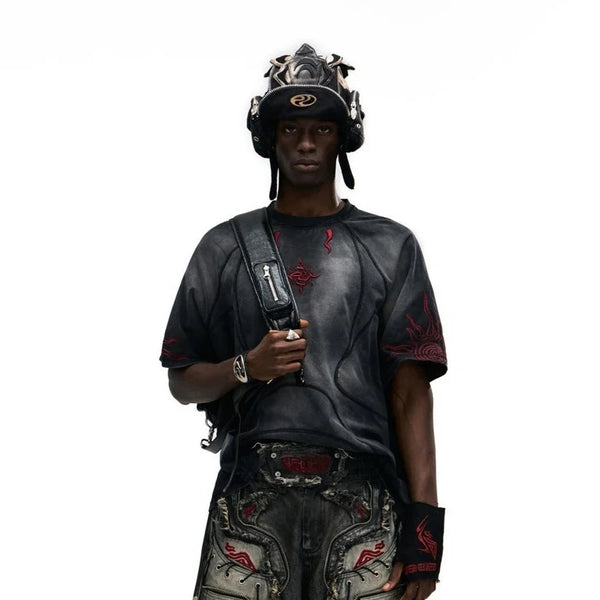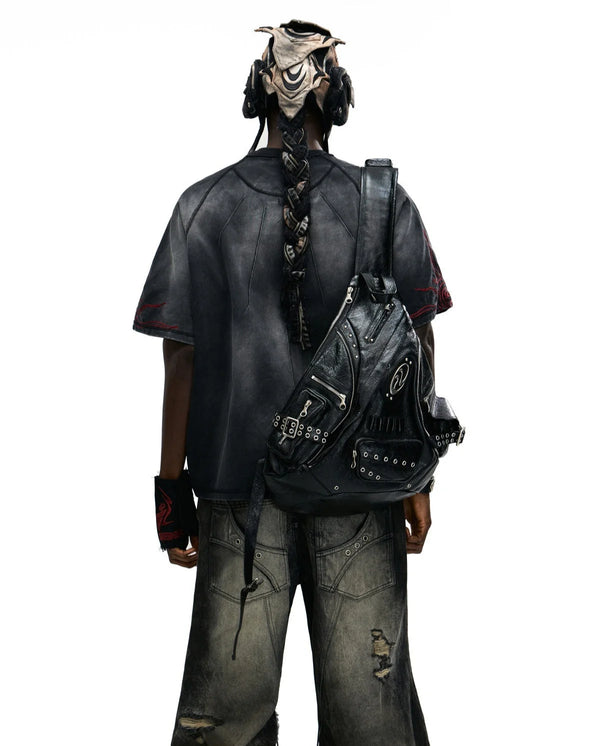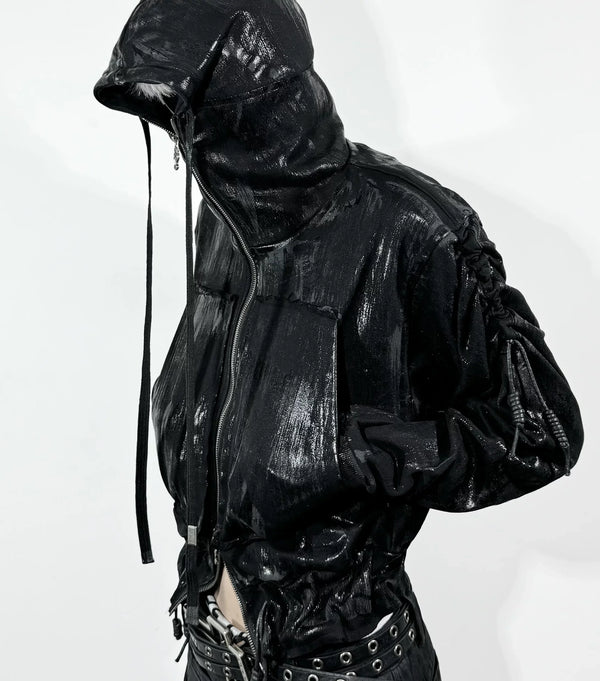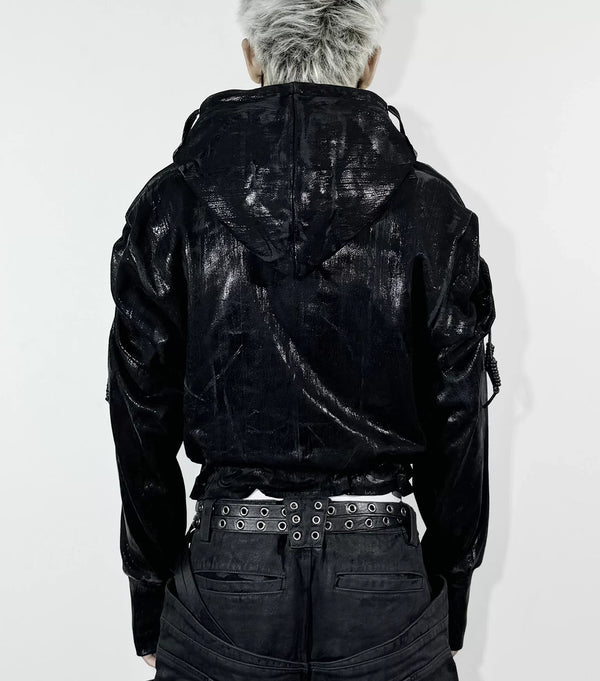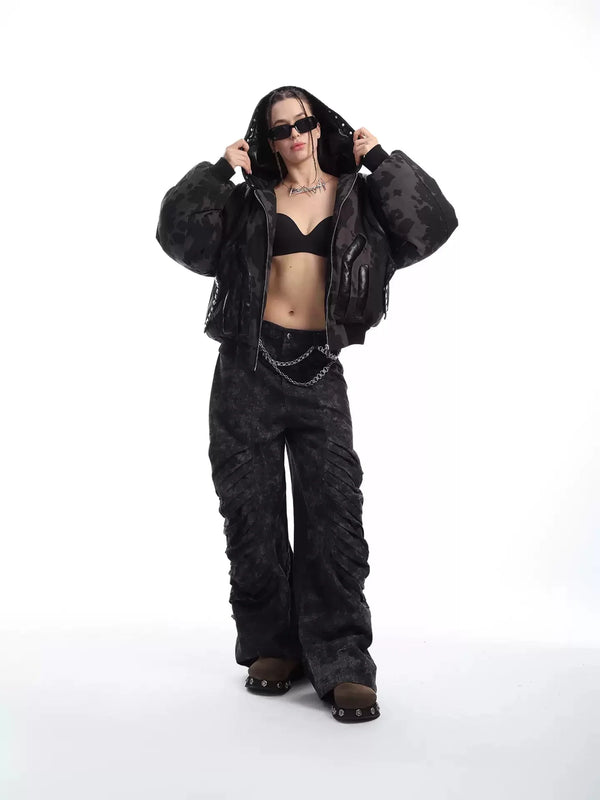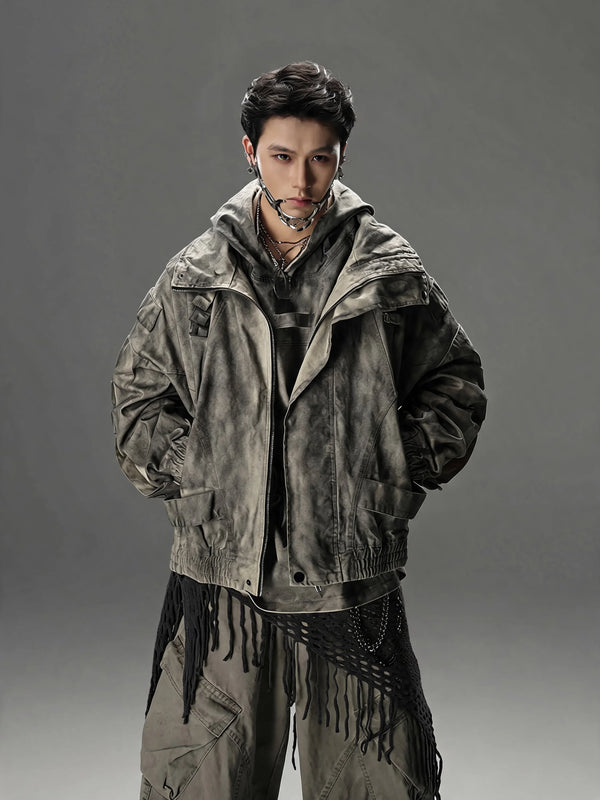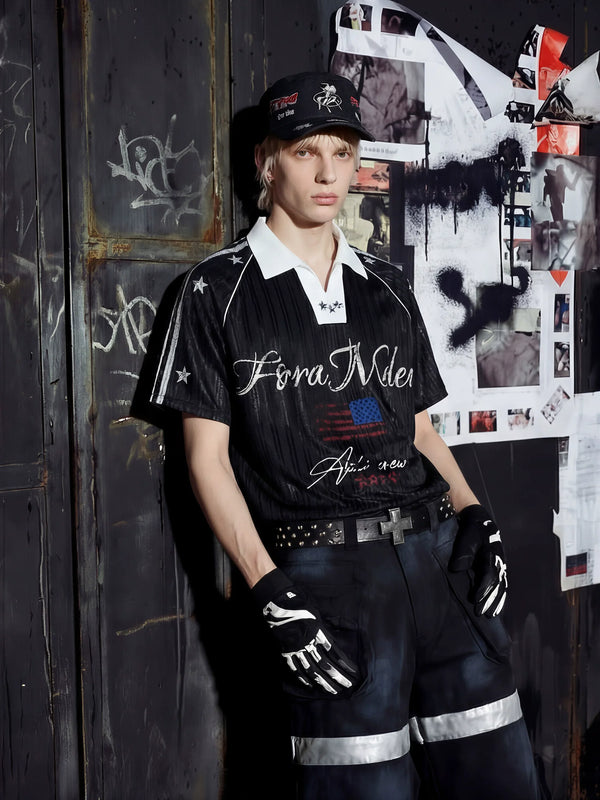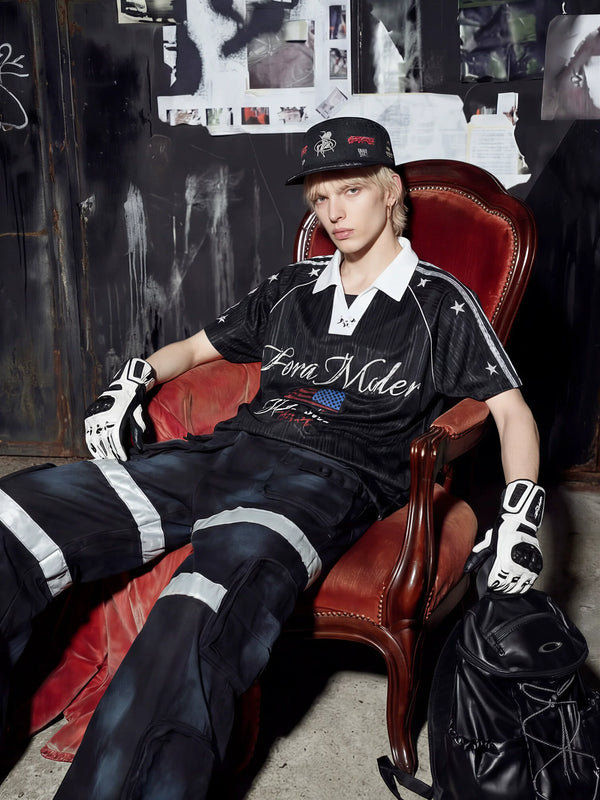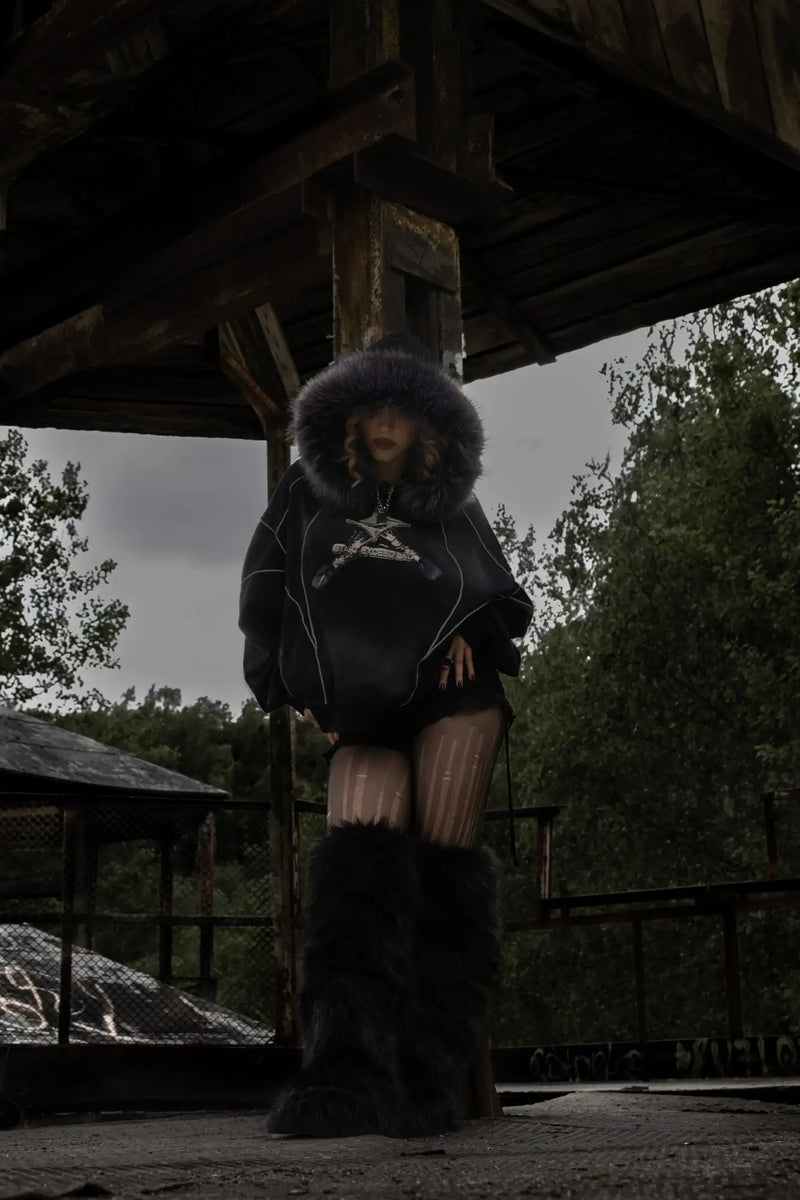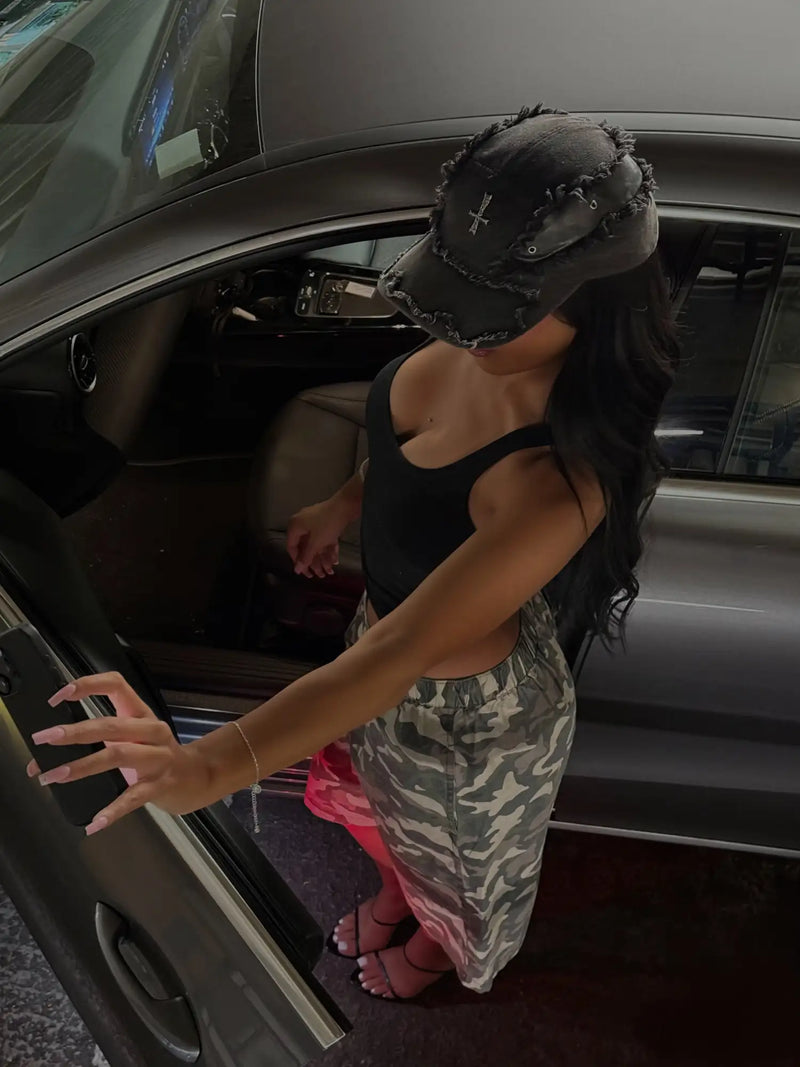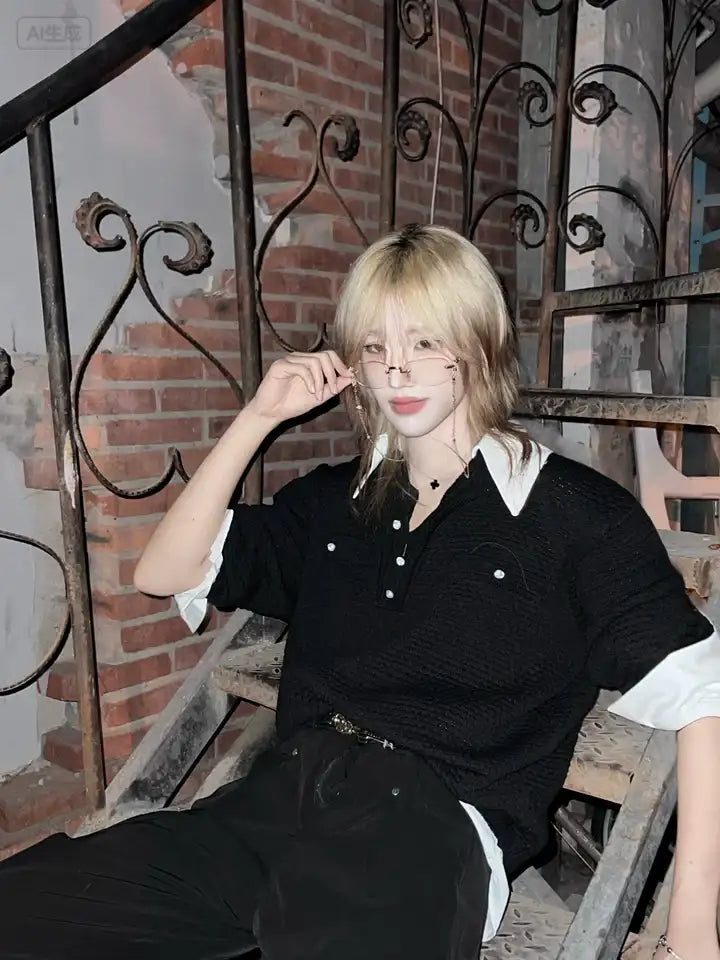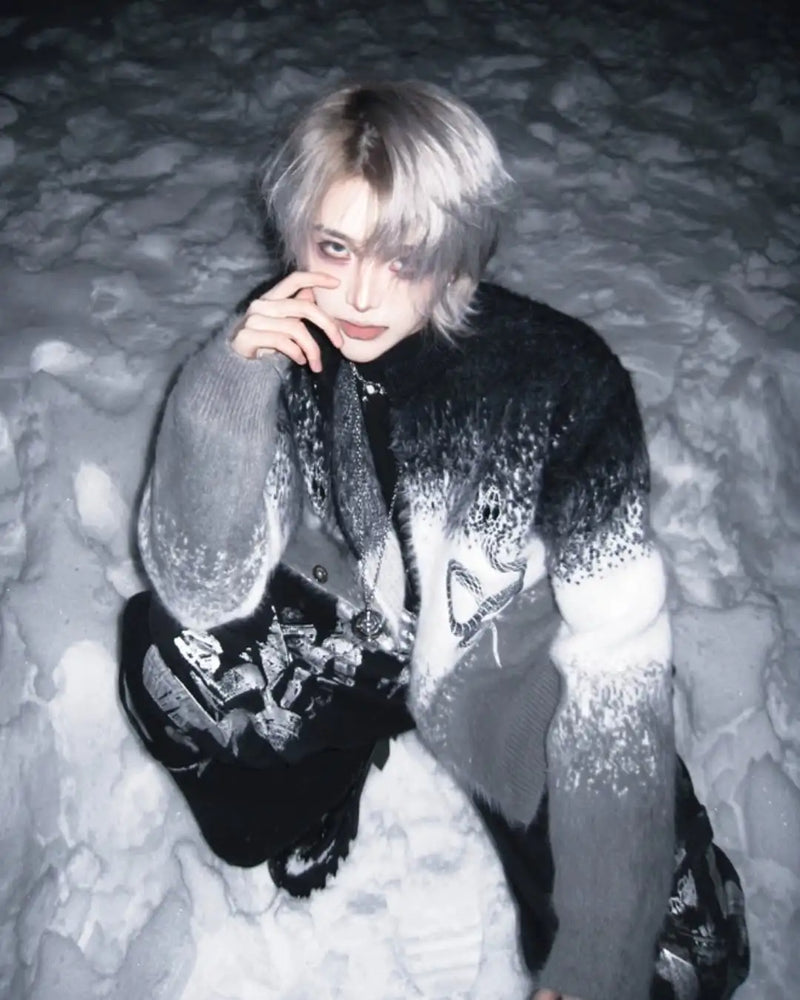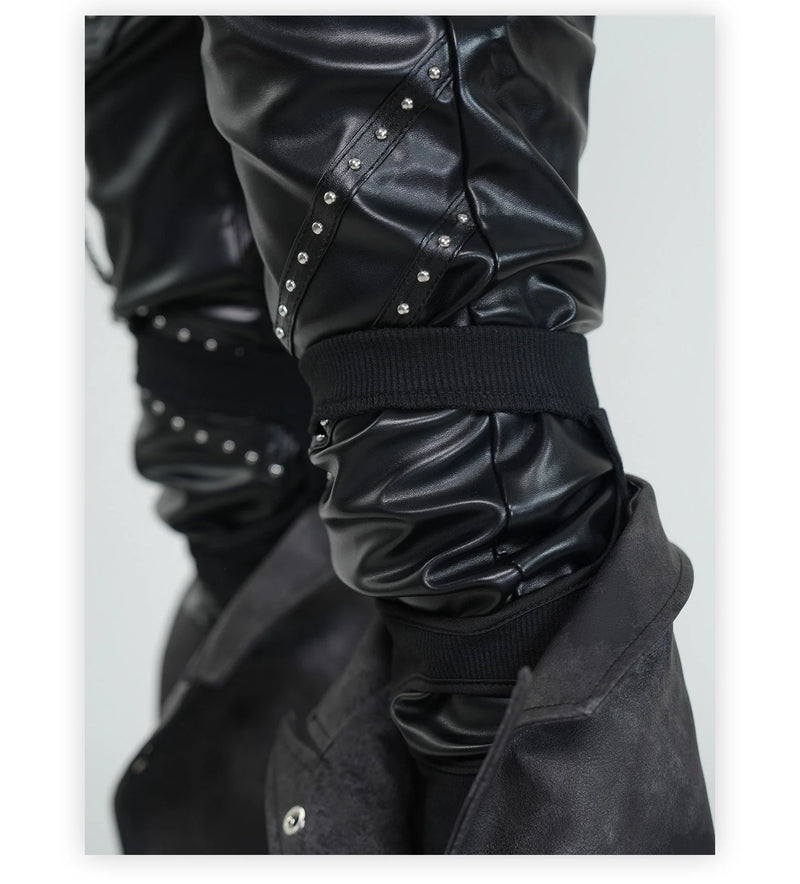
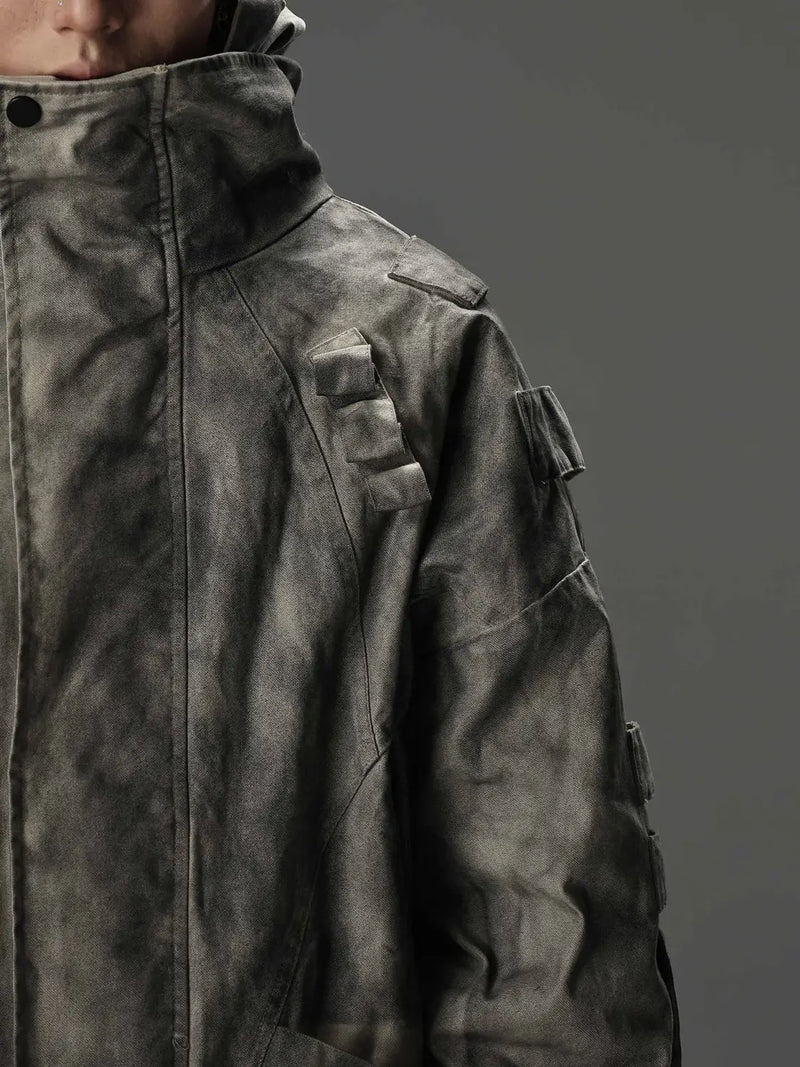
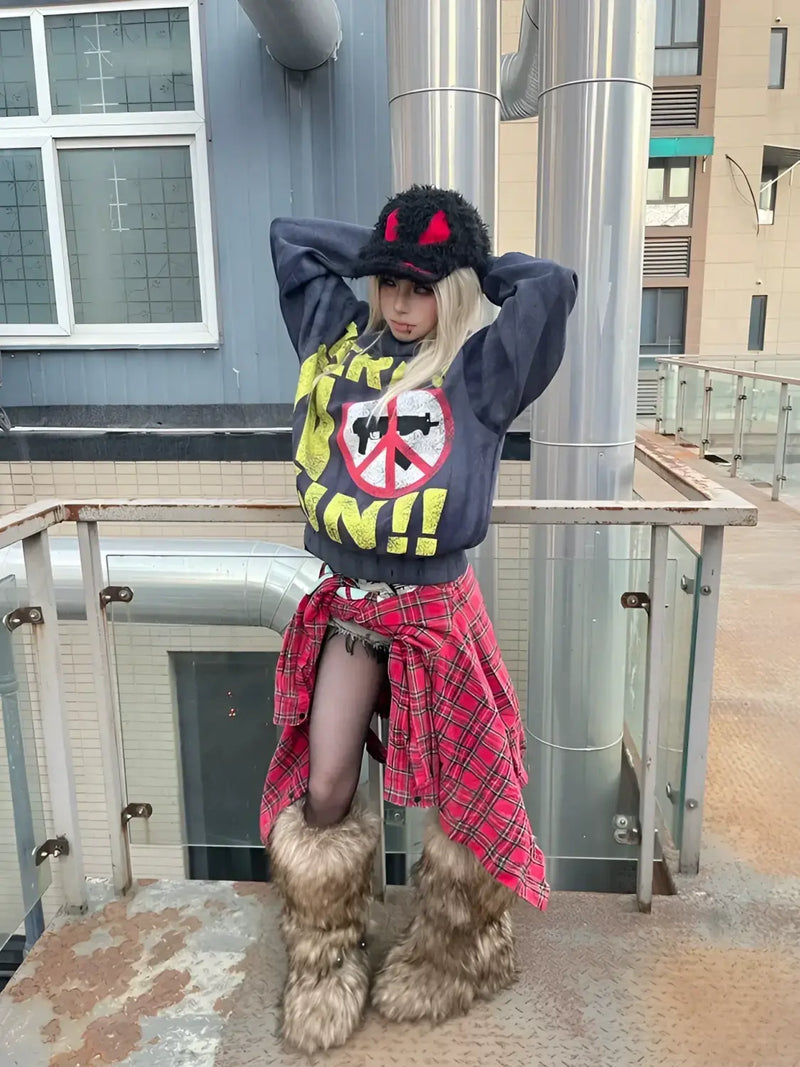

Two shops in the same mall, one floor apart. In the first, velour tracksuits hang in baby pink, low-rise jeans with rhinestones on the back pockets, trucker caps with slogans. In the second there is no daylight, only black walls, band shirts up to the ceiling and a spinning rack full of studded belts. Whoever came out of the first shop wanted to be seen. Whoever came out of the second wanted to be understood. The second group outlived its decade by longer than anyone back then would have believed.
Emo Fashion 2000s means the look the Emo and pop-punk scene wore between 2001 and 2009: tight jeans, band shirt, studded belt, Chucks or Vans, plus a black side fringe and kohl. It started as an indie uniform with horn-rimmed glasses and ended as a mass phenomenon on MySpace. What defines Emo in general is in our Emo Style Guide. This is about the decade itself.
Overview
Emo Fashion 2000s: One decade, three phases
Emo was not a fixed look in the 2000s, but one that shifted a little every year. Put a photo from 2002 next to one from 2008 and you see two different people. One wears horn-rimmed glasses and a cardigan, the other teased hair and a studded belt with two rows of pyramids. Between them lie three clearly separable phases.
The first phase runs to about 2003. Emo comes out of the hardcore and indie world of the nineties and still looks like it: horn-rimmed glasses, V-neck sweaters in strong colours, cardigan, narrow jeans, a messenger bag full of buttons. Bands like Jimmy Eat World and Dashboard Confessional bring the sound to radio. The look stays unobtrusive for now.
The second phase starts with MySpace and ends around 2006. Now Emo becomes visible: black side fringe, pulled flat over one eye, kohl on everyone, band shirts a size too small, skinny jeans, studded belt. Profile pictures are taken from above at an angle, in the bathroom, with a flip phone or a digital camera. The third phase from 2006 brings theatricality and division. My Chemical Romance put on uniforms for The Black Parade, and at the same time a colourful side branch breaks away and calls itself Scene.
2003
MySpace goes online
2005
Tokio Hotel at number 1
2006
The Black Parade is released
The three years mark the moments when the look shifted. MySpace gave Emo a face, Tokio Hotel brought it to German schoolyards, The Black Parade made it darker and more theatrical. Anyone rebuilding a 2000s Emo look today should know which of those years they are quoting.
Context
Velour and trucker caps: What Emo set itself against in the 2000s
Which fashion trends existed in the 2000s? In the mainstream, mostly shiny ones. Velour tracksuits, low-rise jeans, crop tops, trucker caps, rhinestones on everything, later Ed Hardy shirts with tattoo motifs and Uggs with a miniskirt. It was the decade of the visible logo and tanned skin. Clothing was meant to show that you belonged.
Emo stood in the same mall and did the opposite. Black instead of baby pink, tight instead of low-slung, pale instead of tanned. The logo on the chest belonged to no fashion label, but to a band. And a lot of it was homemade: buttons on the bag, Chucks written on with a marker, cut-out collars. Walking around like that said you were not joining in with the shine.
The worlds were still not entirely separate. Skate pop and pop-punk built a bridge early: tie over the tank top, cargo trousers, sweatbands up to the elbow. Many who started with pop-punk in 2002 were standing in the second shop with black-dyed hair by 2005. The switch was not a break, more a slow darkening.
The formula
What is an Emo outfit? The 7 mandatory pieces of the 2000s
A 2000s Emo outfit was a formula, not a collection. The pieces were cheap, easy to get and almost always the same. The difference lay in the combination and in how consistently someone wore them. From top to bottom the basic kit looked like this:
- Band shirt. Tight, often bought in kids sizes, with the logo of a band you actually listened to.
- Longsleeve or zip hoodie. Striped or black, under the shirt or open over it, in summer too.
- Skinny jeans. Black or dark blue, as tight as possible, not rarely from the women section.
- Studded belt. Pyramid studs in one or two rows, often white or black-and-white checked.
- Chucks or Vans. Worn down and written on, Vans preferably as a checkerboard slip-on.
- Sweatbands and arm warmers. On both wrists, striped, often with a band logo.
- Messenger bag with buttons. Across the chest, full of pins from bands and gigs.
Then came the face: side fringe, black kohl, often a lip piercing. The rule behind it was simple. Every piece had to look as if it had a history, a gig, a trade, a long summer. Bought new and untouched counted as suspicious. So anyone rebuilding today starts at the top, with the shirt and the layer underneath.
Archetypes
The 5 Emo types of the 2000s, from horn-rimmed glasses to neon
Anyone talking about 2000s Emo usually means only one type, the one with the black fringe. In fact at least five variants ran in parallel or in sequence, each with its own music and its own wardrobe. Knowing them helps with rebuilding, because their core pieces barely overlap.
For a look today, MySpace Emo and Black Parade Emo work best, because both build on black and combine well with current cuts. Horn-rimmed-glasses Emo is the quietest variant and works almost unnoticed day to day. Scene is the riskiest, because neon quickly looks like a themed party today.
Distinction
Emo, Scene or Gothic? Who stood where in 2006
In 2006 Emo was so big that almost every dark look was called that. For the people in the scene the line was still clear. Emo came out of punk and hardcore, so out of guitars, feeling and small clubs. The clothes were tight, black and full of band logos. The face was serious, but not staged.
Scene looked similar from a distance and was the opposite at its core. Neon colours instead of black, hair teased and dyed in stripes, kids motifs on the shirts, the camera always on. The music was more electronic and louder, the attitude playful instead of melancholic. Anyone who was Emo did not want to be called Scene. The same applied the other way round.
Are Emo and Gothic the same? No. Gothic is older, comes out of the post-punk of the late seventies and works with velvet, lace, silver and romantic darkness. Emo took only black and kohl from it. The one real overlap was the Black Parade phase, in which uniform jackets and pale skin briefly placed both scenes side by side.
For you that means: black alone does not make an Emo look, and neon breaks it. What matters is the combination of a tight line, a real band connection and a face that matches the rest. Nothing has changed about that since 2006.
Soundtrack
The bands behind the look: From Jimmy Eat World to My Chemical Romance
Emo fashion had no designers. It had bands. What stood on stage hung in bedrooms a few weeks later. At the start of the decade that was Jimmy Eat World and Dashboard Confessional, whose musicians looked more like students than rock stars: tight shirts, tidy haircuts, tattoos on the forearms.
Mid-decade it got louder and darker. With The Used, Taking Back Sunday and Fall Out Boy, eyeliner on boys reached the mainstream, and Fall Out Boy bassist Pete Wentz made the word guyliner known. Paramore set a colour marker in the black scene with the orange-dyed hair of singer Hayley Williams. And in 2006 My Chemical Romance delivered the most theatrical version with The Black Parade: black marching uniforms, black and white, drama.
The most important point in this: a band shirt was not a decorative motif. It was a statement about where you were at the weekend and what was playing on your MP3 player. Anyone wearing the shirt of a band they did not know was found out in the first conversation. That rule still holds in the scene today.
Germany
Emo in Germany: Tokio Hotel, the schoolyard and the EMP catalogue
In Germany the wave arrived late and by a detour. In 2005 Tokio Hotel from Magdeburg were at number one with Durch den Monsun, and singer Bill Kaulitz wore exactly what the media understood as Emo at the time: black-dyed hair, kohl, painted nails. Musically it was pop rock. For schoolyards and youth magazines that made no difference.
From 2006 Emo became a word everyone knew and hardly anyone liked. It was an insult and a self-description at the same time. Anyone with a side fringe got the label, whether they listened to the music or not. People bought anyway: band shirts and hoodies from the EMP catalogue, skinny jeans from the women section, studded belts from the flea market or the rock shop in town.
This German detour explains why the look still carries two memories here. For some it is teenage embarrassment, for others the first clothing in which they felt right. Anyone wearing Emo in 2026 carries both. That is exactly what makes the look more interesting than any smooth trend wave.
The uniform
Zip hoodie and skinny jeans: The uniform under the fringe
The skinny jeans were the piece that decided the 2000s Emo look. They made the legs narrow, let the Chucks look bigger and pulled the whole silhouette long. Boys often bought them in the women section, because tight men jeans barely existed until mid-decade. Black was standard, dark blue worked, light washes belonged to the mainstream.
Over that came the zip hoodie, mostly black, sometimes with a band logo on the back, almost always half open. In summer the jeans became shorts: Dickies, cargo or cut-off jeans past the knee, with Vans and high socks. That was the look for festivals and the car parks in front of the stage.
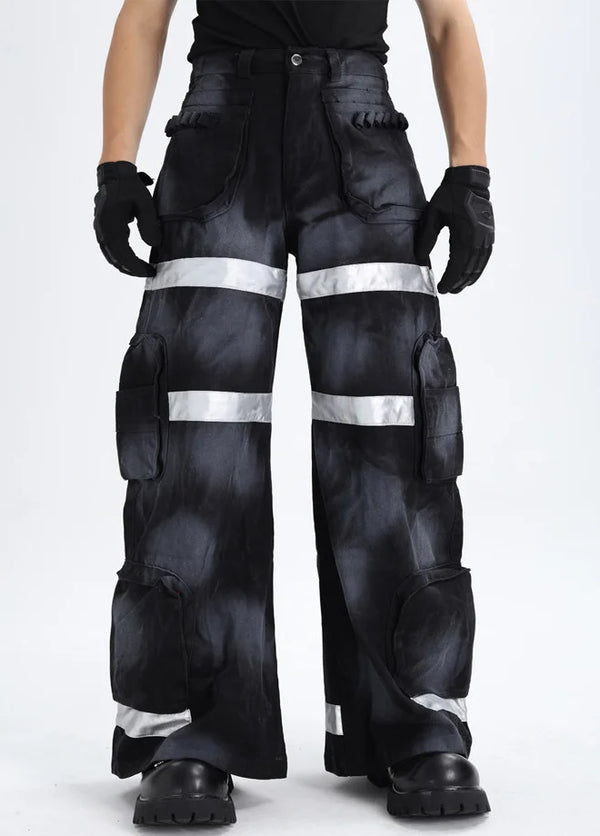
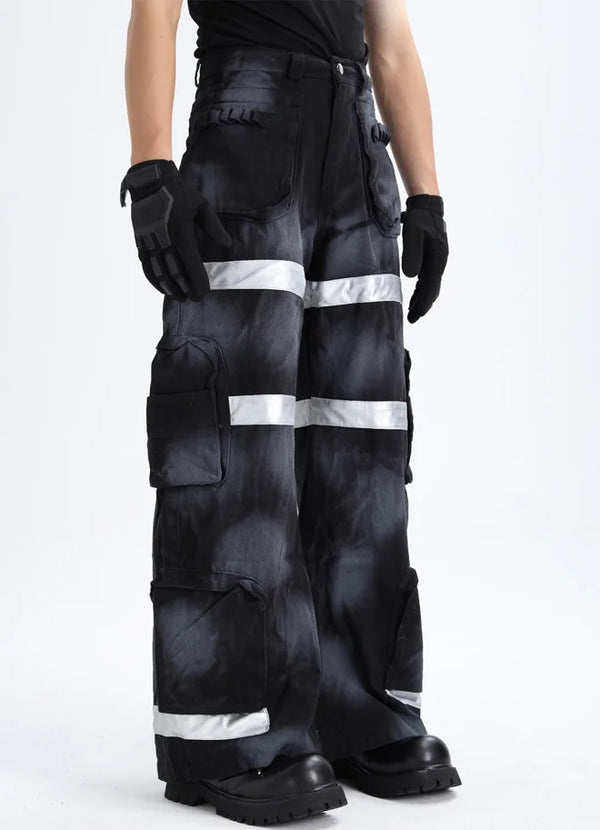
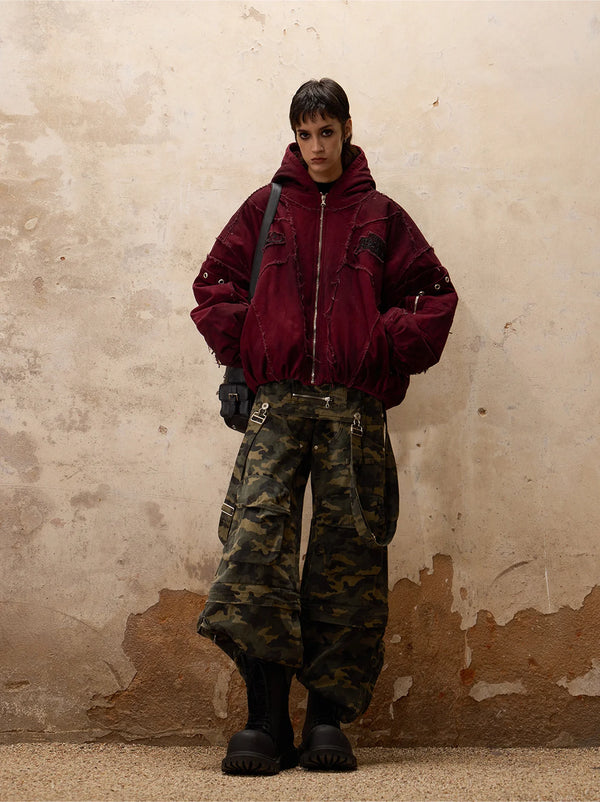
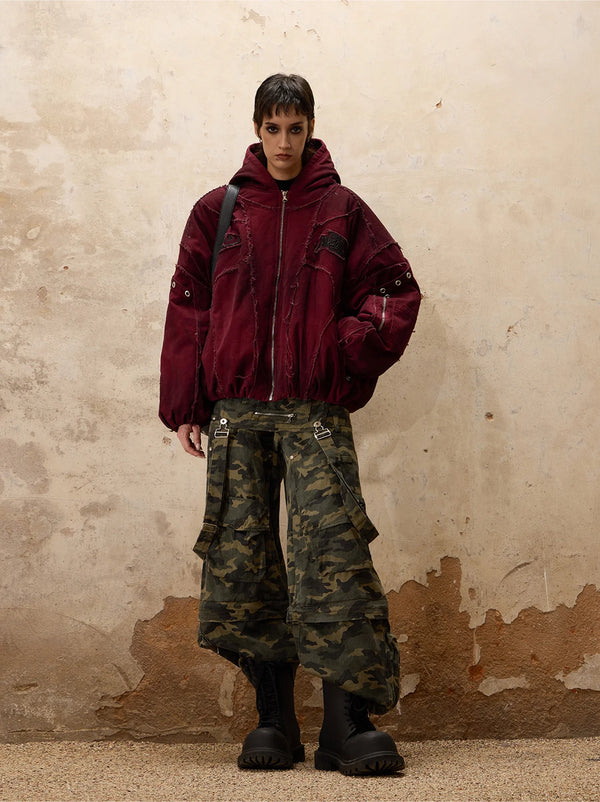
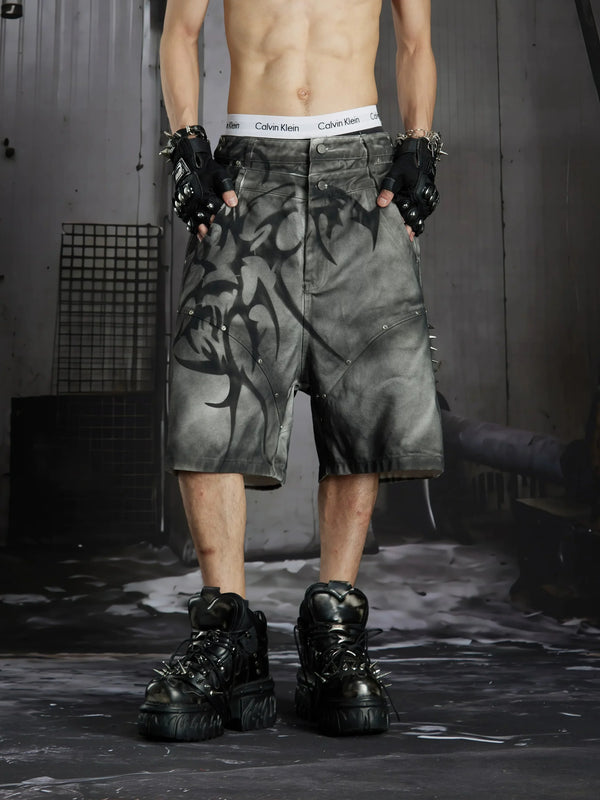
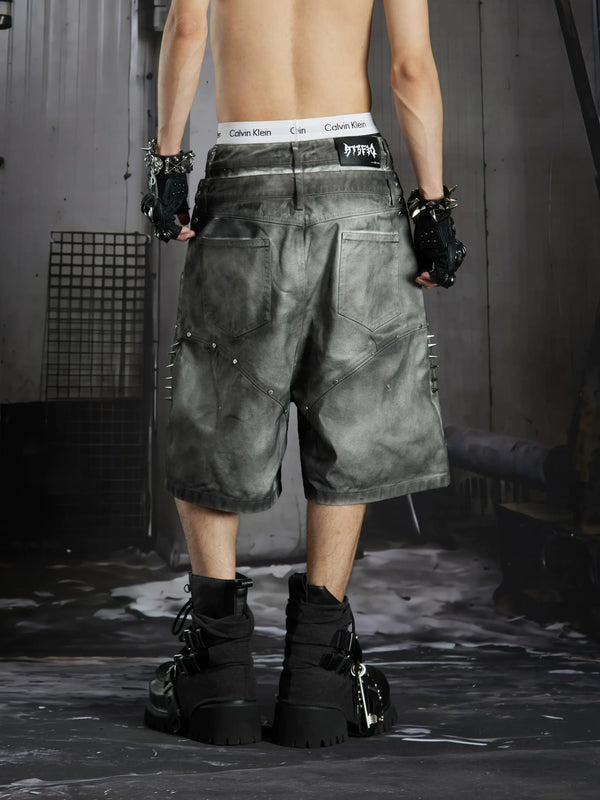
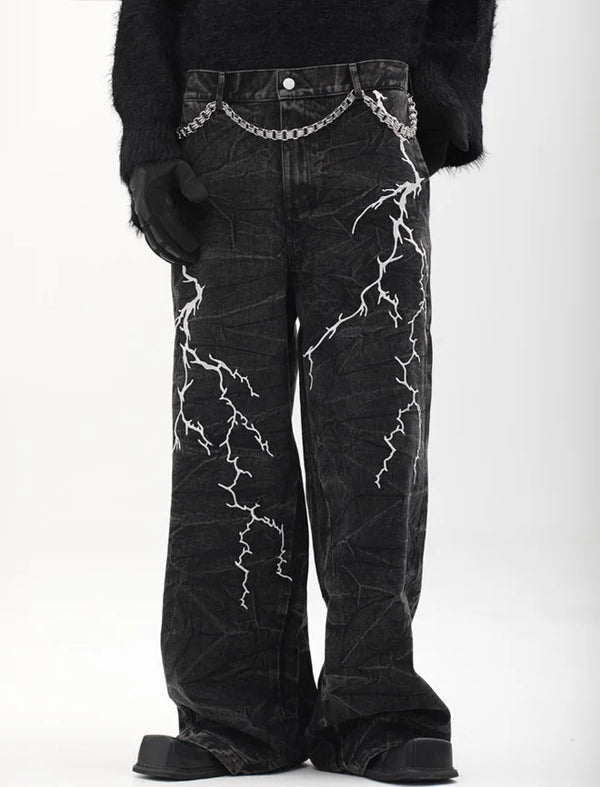
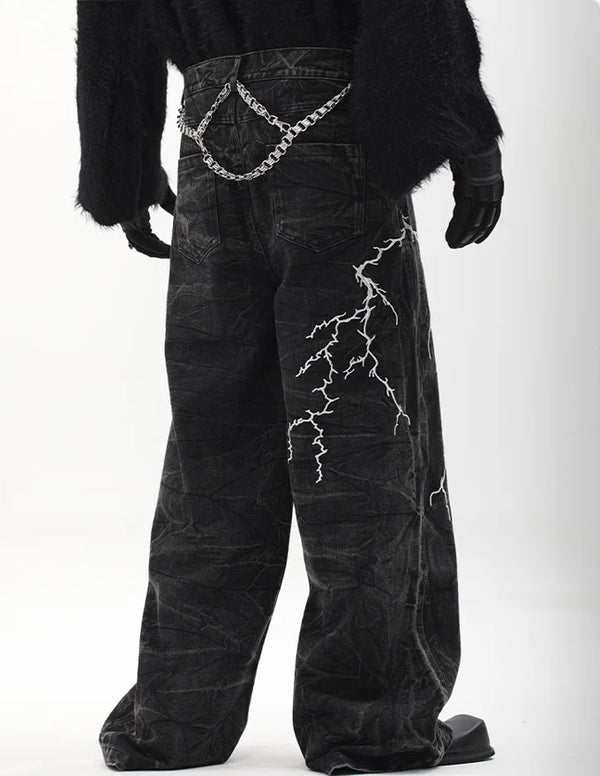
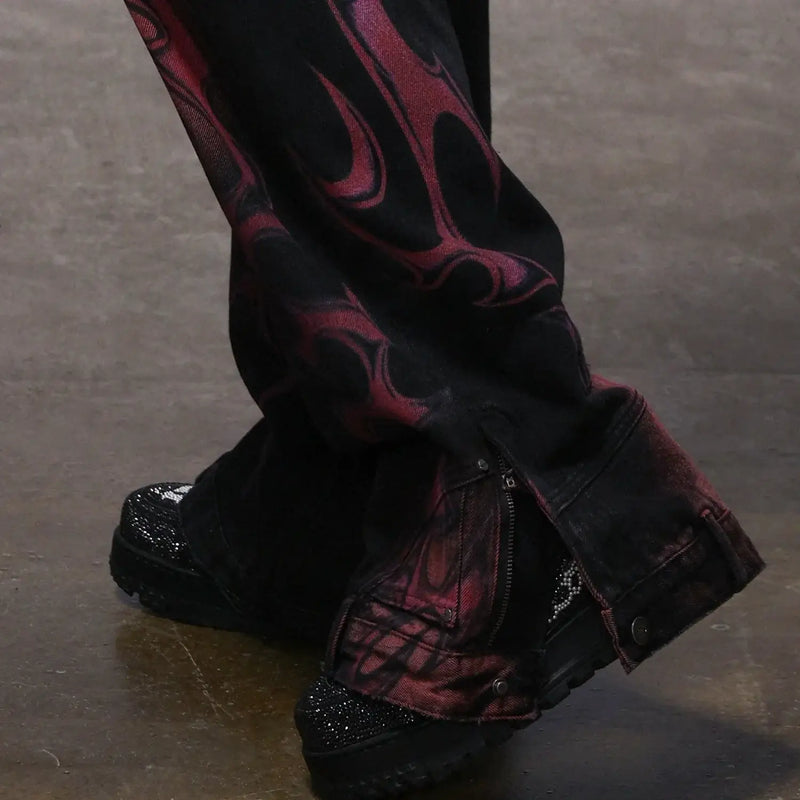
In 2026 this uniform sits differently. The trousers have got wider, the studs move to hoodie and shorts, the cut is allowed to breathe. The attitude has stayed the same: tight or boxy on top, a clear line below, and none of it should look expensive.
In the clip you can see what has shifted. Where the skinny jeans used to draw the line, today a wide leg with signs of wear does it. The jeans no longer have to be tight to read as Emo. They just have to look as if they have already seen a few gigs.
Hardware
The studded belt and the rest: 2000s Emo accessories
No piece stands for 2000s Emo as much as the studded belt. Pyramid studs in one or two rows, black or white leather, sometimes checked, often so long that the end hung down. It sat low on the hip and, in case of doubt, held nothing together except the look. Alongside it there was a small, very fixed selection.
Sweatbands on both wrists, striped fingerless arm warmers, a chain from the belt loop to the trouser pocket, buttons on every free surface. Plus trucker caps or beanies in the pop-punk world, lip and eyebrow piercings among the committed. People distinguished themselves through the accessories, because the rest was the same for everyone.
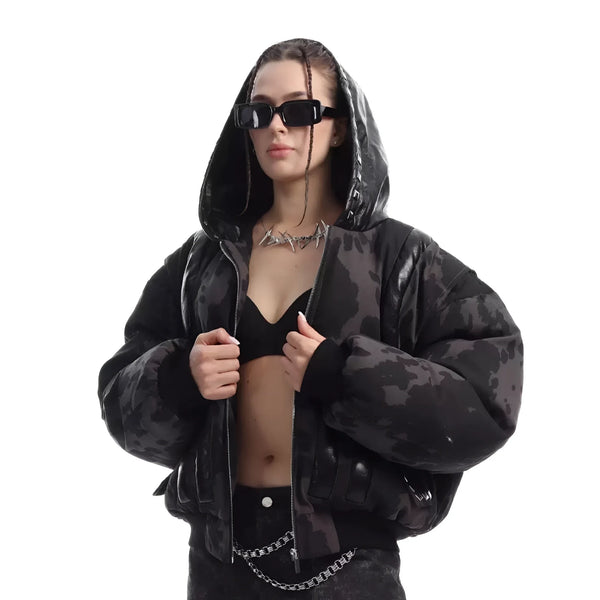
For today the rule is: one strong hardware piece is enough. A belt with character or a chain, not both plus studded bracelet plus choker. The rest of the outfit can stay quiet, then the hardware reads as a quote and not as a complete set from 2006.
Anyone building up step by step is best off starting with trousers and belt. Those two determine the silhouette. Shirt, layer and accessories come afterwards and can change without the look falling apart.
Face and hair
2000s Emo makeup and hair: Why everything hung on the fringe
The fringe was the real marker. Long, combed sideways over one eye, pulled flat with a straightener, dyed black, sometimes with single blonde, red or pink streaks. At the back the hair got shorter and layered. For many boys the straightener belonged in the bathroom just as much as for their sisters.
With makeup there was a single requirement: black kohl, all around the eye, preferably smudged. Then pale skin, black nail polish and for some a lip piercing, usually set to the side. The look was not meant to seem pretty, but tired and honest, as if after too long a night. For boys and girls almost exactly the same applied.
Emo girls in the 2000s often wore plaid skirts or short skirts over leggings, fishnet tights, Chucks or ballet flats, with the same band shirts as the boys. Emo boys stayed with jeans and a hoodie, but were just as consistent with makeup. Hardly any scene before had boys wearing eyeliner so matter-of-factly.
That way the fringe stays wearable for weeks, and the kohl looks deliberate instead of accidental. The 2000s look needs nothing more on the face.
Labels
2000s Emo brands: What hung in the wardrobe back then
The most important brand in the 2000s Emo wardrobe was not a fashion label. It was the band on the shirt. Alongside that there was a handful of labels, almost all of which came out of skate, punk or the immediate circle of the bands. Hardly any of it was expensive, and that was exactly the point.
- Converse Chuck Taylor. The standard shoe, black or white, written on and worn down.
- Vans. Checkerboard slip-on, namesake of the Warped Tour.
- Dickies. Work trousers and shorts, the summer uniform at festivals.
- Hot Topic. The US mall chain for band merch, studded belts and arm warmers.
- EMP. In Germany the catalogue for band shirts, hoodies and belts.
- Atticus and Famous Stars and Straps. Labels from the blink-182 circle, mandatory in pop-punk.
Many of these names are turning up again in vintage shops today, often at prices people would have laughed at in 2006. How mall chains built the business with dark fashion is shown in our overview of Mall Goth Brands. We do not carry labels from back then. We build the line with pieces from today.
Today
What are Emos called today? The 2000s look in 2026
What are Emos called today? Often not Emo any more. The pieces of the 2000s look have moved into other names: into the E-Boy and the E-Girl of the TikTok years, into Soft Grunge, into alt fashion in general. Anyone still calling themselves Emo today usually means the music and not just the clothes. The term has grown up, and so have the people.
At the same time the look is back. Bands from back then are playing big reunion shows again, and the studded belt is hanging in shop windows again. The 2026 version is not a copy of 2006 though. It is cut wider, less colourful and quieter in the face. The Tumblr years in between have left their traces too, more on that in our Soft Grunge Guide.
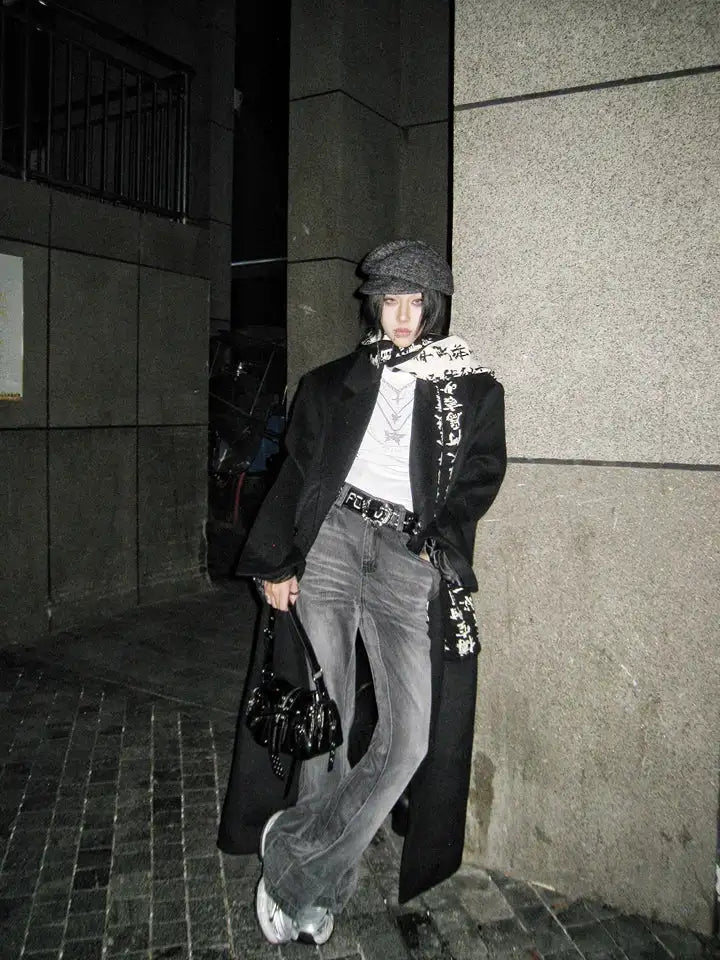
The principle in the clip is old: a longsleeve under the shirt, trousers with character, nothing else loud. Only the proportion is new. If you want to wear the 2000s look in 2026, take the attitude from back then and the cuts from today, and let the nostalgia happen in the details.
Mistakes
5 mistakes that tip a 2000s Emo look straight over
The ridge between quote and themed party is narrow with the 2000s look. Most mistakes do not come from wrong pieces, but from too many right ones at once. These five are the ones we see most often.
All five mistakes have the same core: the look from back then gets copied instead of translated. Anyone who picks one or two clear quotes and keeps the rest quiet does not look like a retrospective in 2026, but like someone who knows the history.
FAQ
Frequently asked questions about Emo in the 2000s
To close, the questions that keep coming up on the subject of Emo in the 2000s, each answered briefly and without detours.
Was Tokio Hotel an Emo band?
When was Emo at its biggest?
Does 2000s Emo belong to Y2K?
Why did Emos wear band shirts in kids sizes?
The answers show a pattern. Almost everything that made up the 2000s Emo look was a reaction to something else: to the shine of the mall, to the music, to the feeling of not quite fitting in anywhere. That is exactly why it still works today.
What do you think?
Tell us on @fuga_studios
About the author
Philipp Fuge — Founder · Berlin
Founder of Fūga Studios. Writes the journal himself. Berlin · Shanghai · Tokyo · Poznań — four cities, one logic.