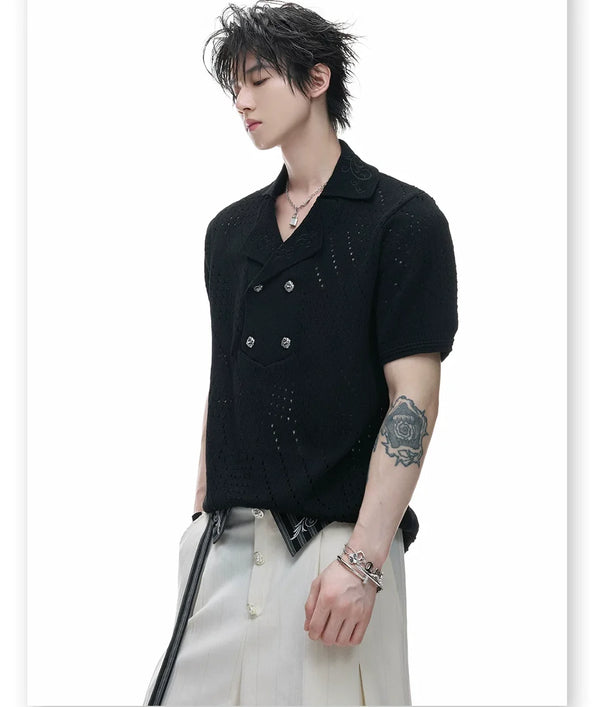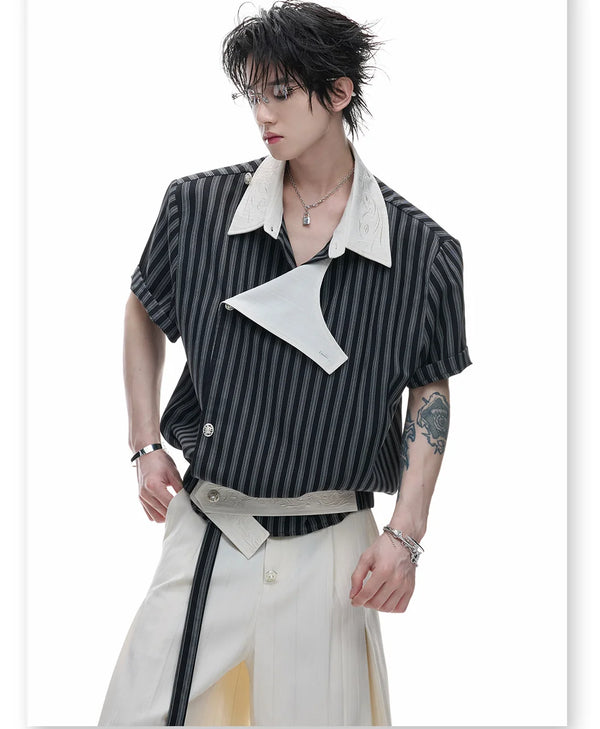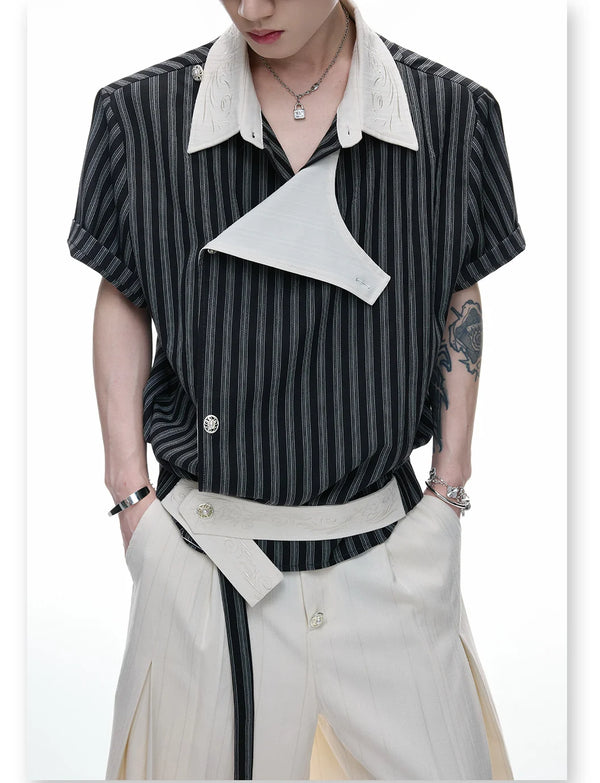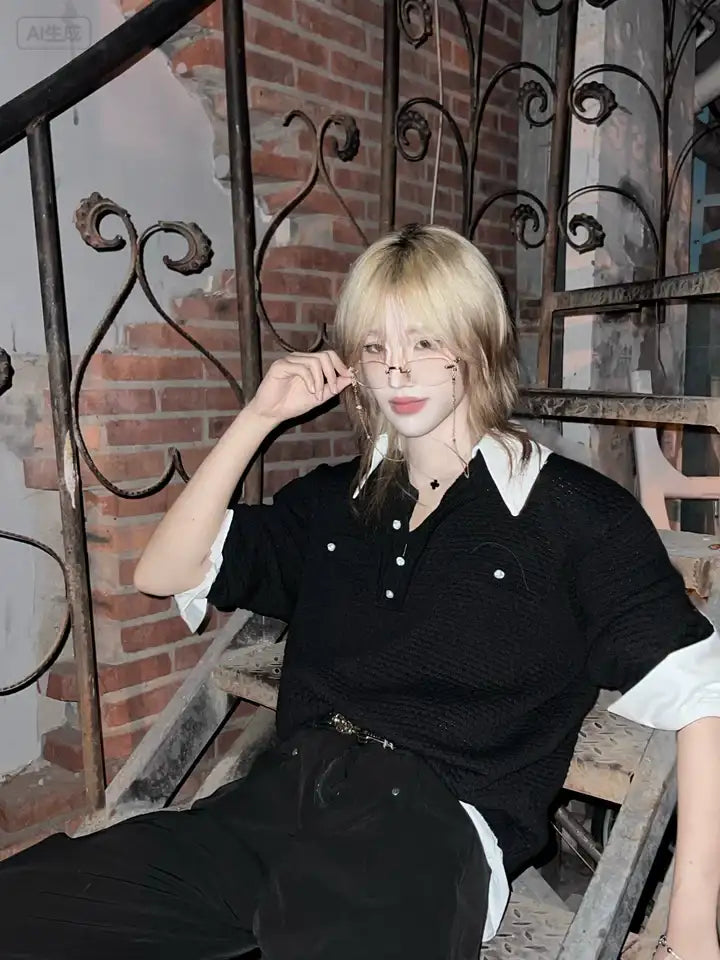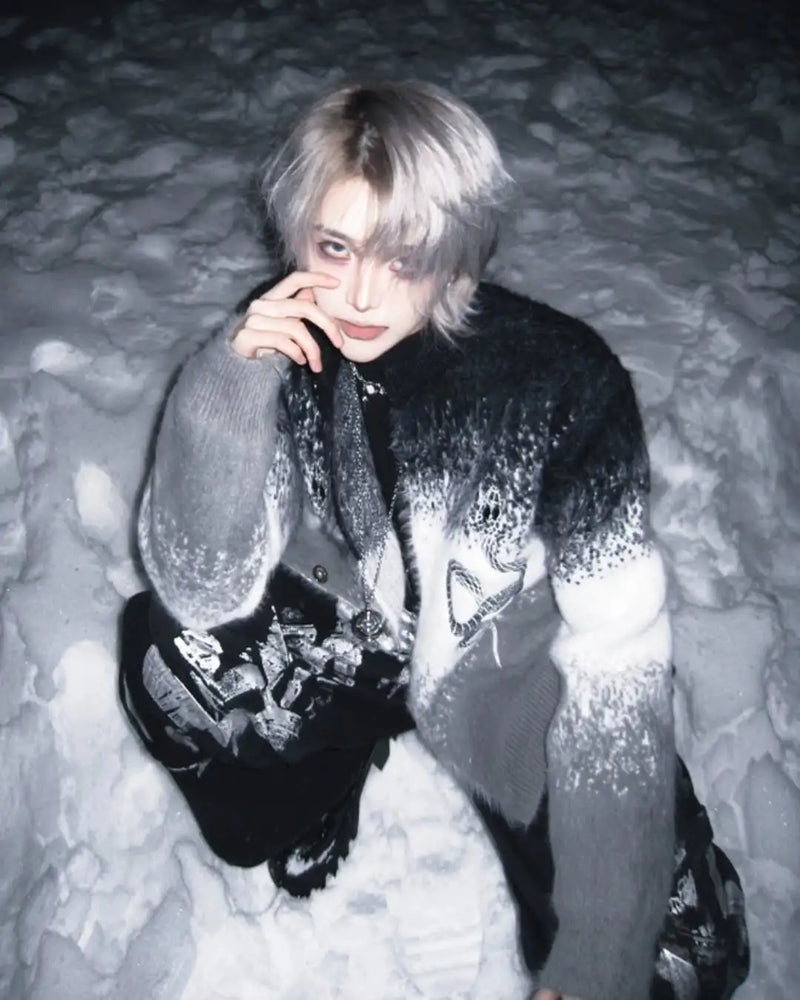
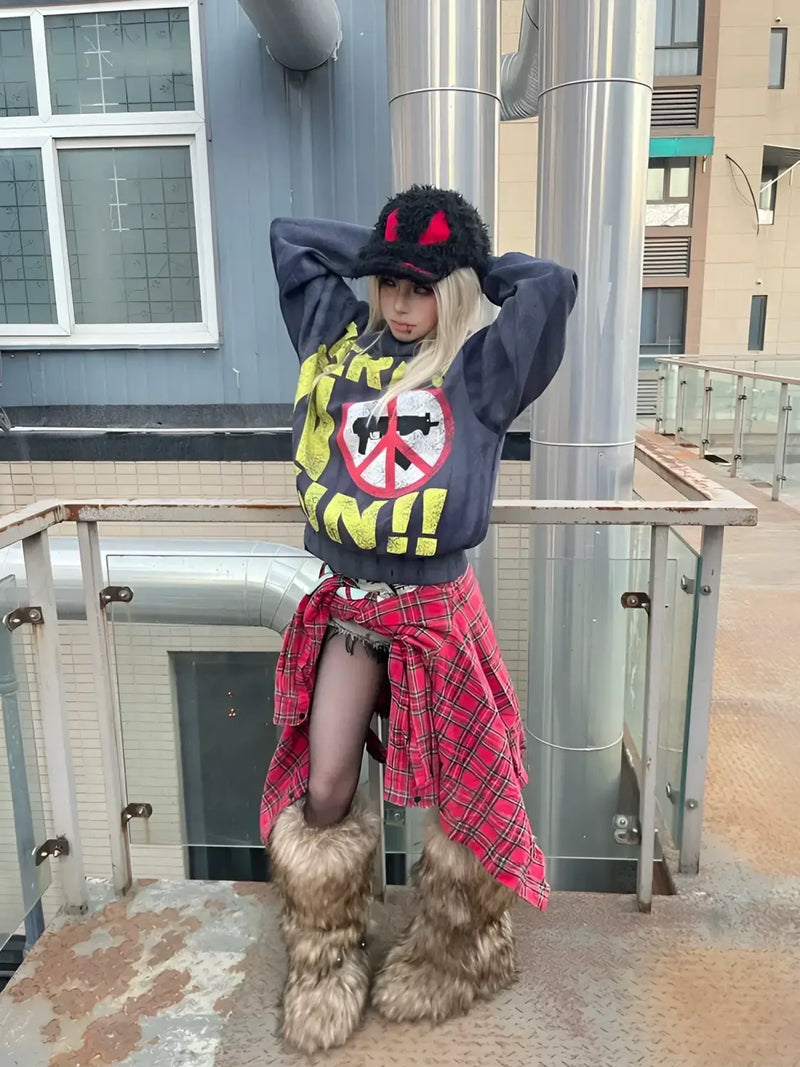
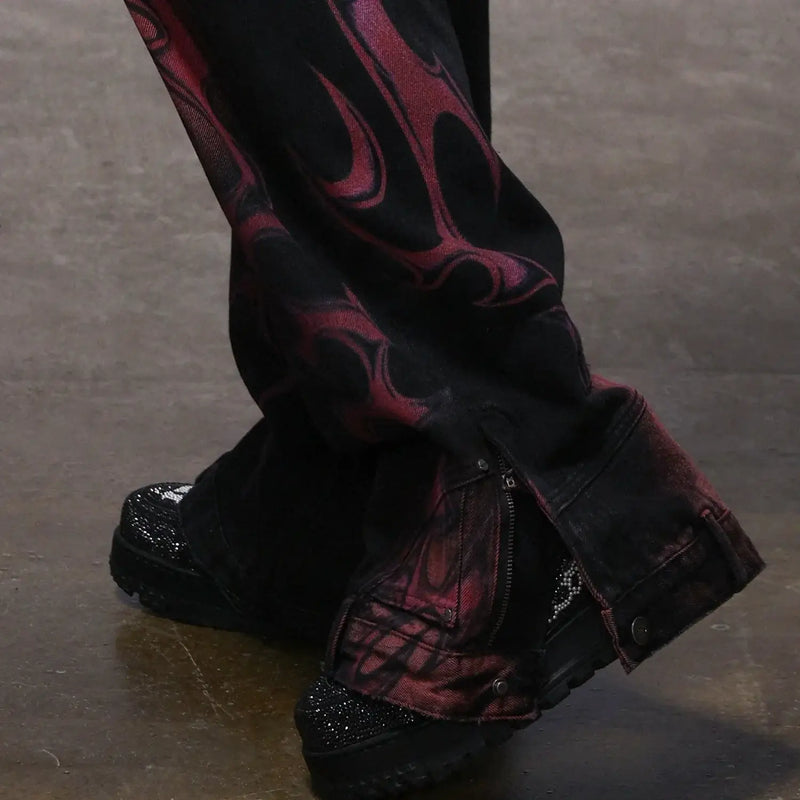
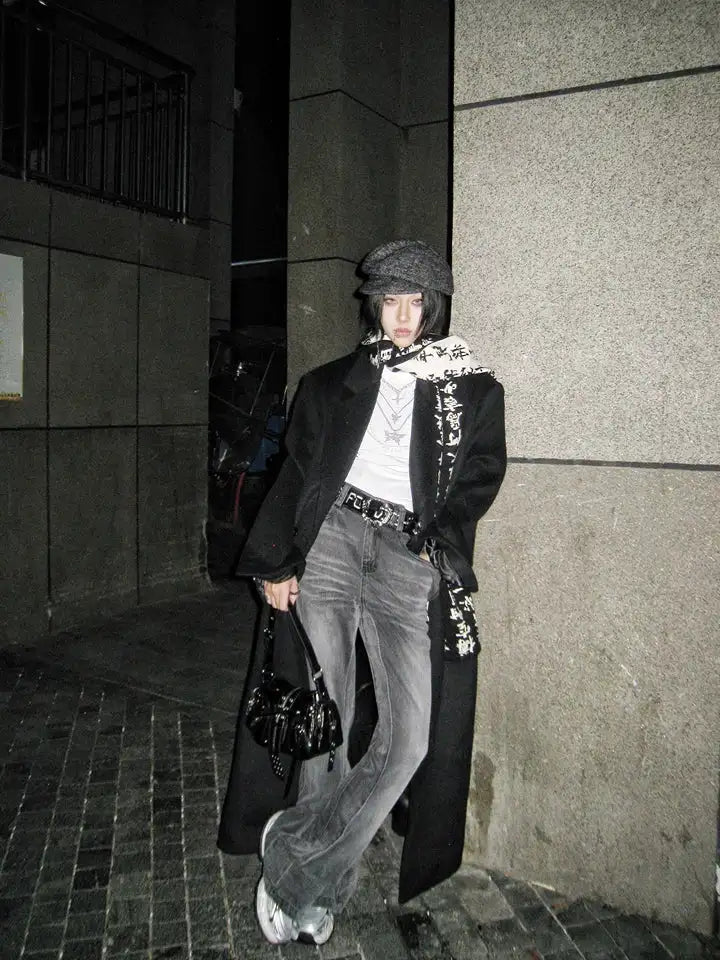

Poznań, tram line 16, an afternoon in October. Across from me sits a boy with a middle part, the fringe falling over both eyebrows. A striped longsleeve shows under the washed-out shirt, a chain hangs at his hip, a small cross in his left ear. He looks like 2019. He also looks like 2006 and a little like 1993. That is exactly what this is about.
E-Boy history does not begin on TikTok, but twenty years earlier: with the Emo and Scene kids of the 2000s, with skaters and the Grunge layering of the nineties, with anime and K-Pop. TikTok bundled these parts in 2019 and gave the look a name. What E-Boy means today and which types exist is covered in our E-Boy Fashion Guide. This is about the origin, station by station.
Fundamentals
E-Boy history: where the look comes from
The short version: the E-Boy is an online look assembled from older subcultures. No band invented him, no designer put him on the runway. He came into being in front of a phone camera, in bedrooms, in the light of a ring lamp, with whatever was in the wardrobe and looked good online. That is why his history is a history of platforms as much as of clothing.
Take the look apart and you find five stations. First Emo and Scene from the MySpace era, which supplied the fringe, the dark eyes and the band shirts. Then Skate and Grunge, which the longsleeve under the T-shirt and the wide trousers come from. Then anime and K-Pop, which shaped the soft middle part. Then Musical.ly and TikTok, which turned all of it into a format. And finally the year 2020, when millions of people sat at home and tried out the look at the same time.
5
Stations up to the name
2018
Musical.ly becomes TikTok
2019
The E-Boy gets his name
The dates show how late the name arrived compared to the content. Most of the pieces that count as typically E-Boy today were already ten or twenty years old in 2019. The clothing was not new. What was new was that it became a readable code in fifteen seconds, filmed from below.
Term
What the E in E-Boy means
The E stands for electronic, meaning online. The term is older than the look. In gaming forums and chats of the 2000s the word E-Girl appeared, usually dismissively: it meant girls who were accused of mainly looking for attention online. The male counterpart E-Boy existed on the margins, but played hardly any role for a long time.
Only around 2019 did the meaning turn. A word of mockery became a self-description, then a style. Anyone calling himself an E-Boy no longer meant a role in a chat, but a way of dressing and standing in front of the camera. A residue of the old jab has remained. That is why the term is still used sometimes ironically, sometimes seriously and sometimes as a tease, depending on who says it.
Anyone searching for the history in German lands somewhere else first. eBoy is also the name of a pixel art collective founded in Berlin at the end of the nineties, which shaped the early web with its colourful cityscapes. That has nothing to do with the clothing style, only the name is the same. The fashion history begins somewhere else, in the wardrobe of the Emo kids.
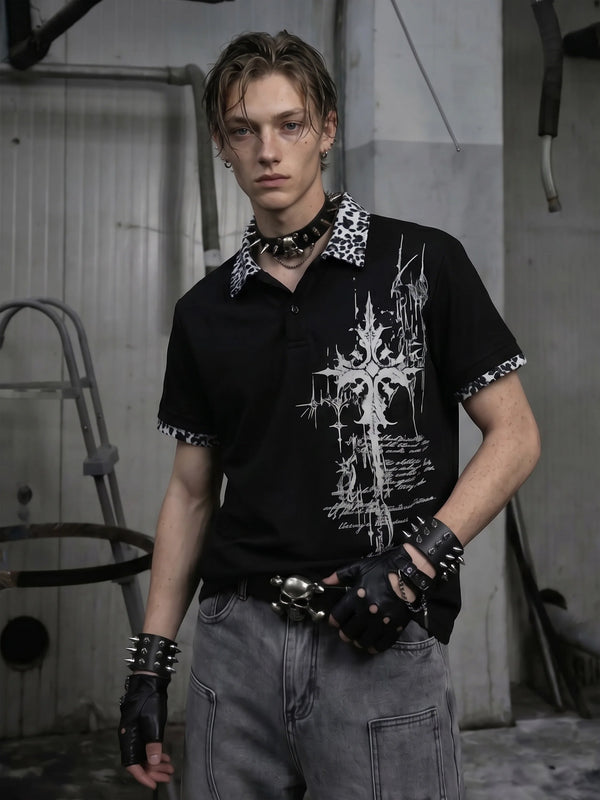
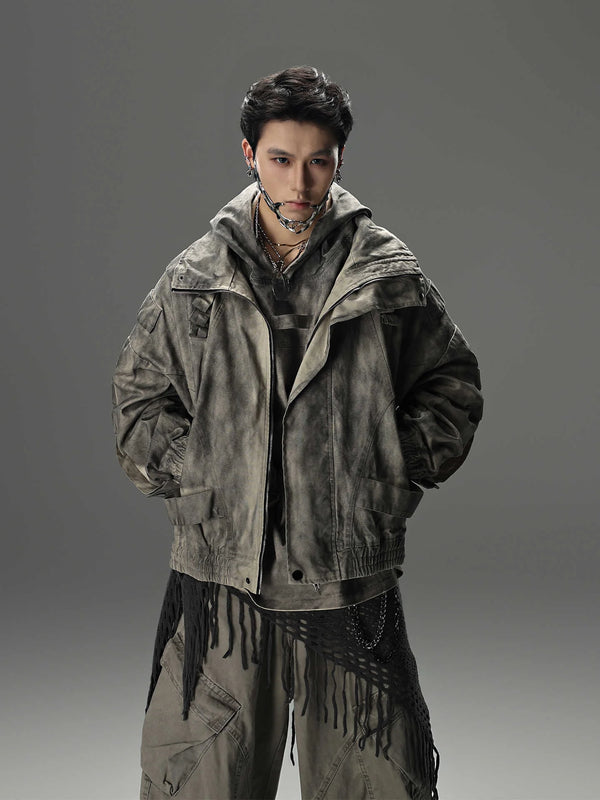
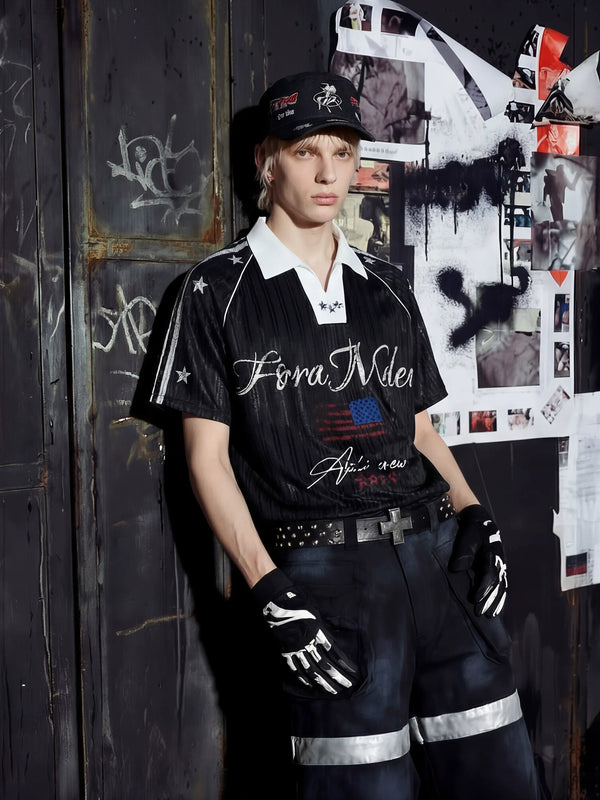
The washed-out shirt with a print is the piece that comes most directly from the past. It used to be the band shirt from the concert, today it is a print that looks like a concert. The function has stayed the same: it shows what you belong to without saying a word.
Station 1
The predecessors: Emo and Scene in the 2000s
In the mid 2000s MySpace was the network of teenagers. Profile pictures were shot from above, the fringe fell slanted over one eye, the eyes were rimmed dark. Emo came out of the music, out of bands with heavy guitar sound and very personal lyrics. The clothing that went with it was tight, black and full of band logos: skinny jeans, studded belts, Chucks, wristbands up to the elbow.
Scene was the louder sister. More colour in the hair, teased up, neon accents, leopard and check. Both styles had one thing in common that later became the E-Boy: the face was the stage. Hair and eyes carried the look, the clothing only framed it. Exactly this weighting returns fifteen years later, only softer and with different proportions.
What has changed is the silhouette. Emo was narrow, tight, almost fragile. The E-Boy is loose on top and wide at the bottom. The skinny jeans have gone, the studded belt has stayed, often as a chain at the hip. The slanted Emo fringe became the straight curtain that frames both sides of the face.
Station 2
Skate, Grunge and the striped longsleeve
The best known E-Boy piece is a striped longsleeve under a short-sleeved shirt. This combination is considerably older than TikTok. It belongs to the Grunge of the early nineties, when musicians went on stage in secondhand clothes and wore layers because it was cheap and warm. The skate scene took over the look and kept it alive for decades.
The skaters also brought the wide trousers, the flat shoes with a thick sole and the habit of wearing a chain on the belt. None of it was meant as style. The chain held the wallet, the wide trousers allowed movement, the shoes held on the griptape. The E-Boy took over these practical pieces and turned them into signs.
- Longsleeve under a shirt: from the Grunge of the nineties, born back then out of secondhand boxes and cold.
- Wide trousers: from the skate scene, where they allowed movement and fell over the shoes.
- Chain at the hip: originally a wallet safeguard, today a silver accent.
- Flat shoes: skate sneakers and canvas shoes, later joined by heavy boots.
- Beanie: from Skate and Grunge, on the E-Boy sitting loosely on the back of the head instead of low on the forehead.
The list shows a pattern that runs through the whole E-Boy history. Almost no piece was newly invented. Everything was taken from a scene where it had a purpose and placed in a context where it was mainly meant to be seen. The purpose disappeared, the form stayed.
Station 3
Anime, K-Pop and the middle part
The third source lies further away. The soft middle part with curtain bangs that defines the E-Boy face was standard in K-Pop boy groups years earlier. Straight dark hair, a fringe in curtain form, a light even complexion. Through YouTube and fan accounts this image became everyday in Western bedrooms, long before anyone called it E-Boy.
Anime supplied the second layer. Characters with hair falling into the face, with a gaze that is tired and awake at once, with a single earring or a plaster on the cheek. Many early E-Boys were anime fans and quoted these details deliberately. Added to that came gaming culture, where the headset, a dark room and screen light had long belonged to the visual language.
With this third building block the look was complete. The face came from Emo and K-Pop, the clothing from Skate and Grunge, the details from anime and gaming. What was still missing was a platform on which all of it could become visible at the same time, in the same format and for the same audience.
Station 4
Musical.ly, TikTok and the year 2018
Musical.ly launched in 2014 as an app for short lip sync videos. The audience was young, the clips lasted seconds, the camera was the front-facing phone. In August 2018 Musical.ly was merged into TikTok. With that, millions of young users landed in an app whose algorithm distributed videos not by friend lists but by effect.
This mechanic shaped the E-Boy. A look that is understood in two seconds wins. That is why the style condensed into a few immediately readable signs: fringe, chain, longsleeve, a gaze from below into the camera. Added to that came a movement pattern that quickly became a cliche, the head turning to the beat into the camera, the hair falling as it does.
The clip shows why the wide trousers were so important for the format. In motion they fall, swing and turn a few steps into an image. Tight Emo jeans would never have had that effect. The algorithm shaped the silhouette too, not only the hairstyle.
Station 5
2019: the year the E-Boy got a name
In the summer of 2019 the look got a name. Music magazines, youth portals and fashion sites picked up the word and explained the E-Boy as the successor to the Emo. Within a few weeks a hashtag became a category. Anyone who simply looked alternative before was suddenly an E-Boy, whether he wanted to be or not.
Naming had two effects. The look became copyable, because now everyone knew what to look for. And it became vulnerable, because a name also invites mockery. Parallel to the hype ran a wave of ironic videos in which people turned themselves into an E-Boy in thirty seconds. Both sides made the style better known.
That is exactly the reason the look could get so big so fast. It was unfamiliar to no one. Parents recognised Grunge, older siblings recognised Emo, friends recognised anime. The E-Boy was new enough to stand out and known enough to be understood immediately.
Peak
2020: lockdown, ring light, peak
In 2020 schools, clubs and skate parks closed. The room became the stage, the phone the only audience. TikTok grew in leaps in this period, and with the app the E-Boy grew. Anyone sitting at home had time to cut hair, paint nails black and test outfits in front of the mirror.
In that year the look reached its widest spread. It was no longer the business of a small online scene, but a standard image on the For You page. At the same time it became visible enough for shops and chains to offer the typical pieces: striped longsleeves, chains, beanies, wide jeans. A do-it-yourself project became a shopping basket.
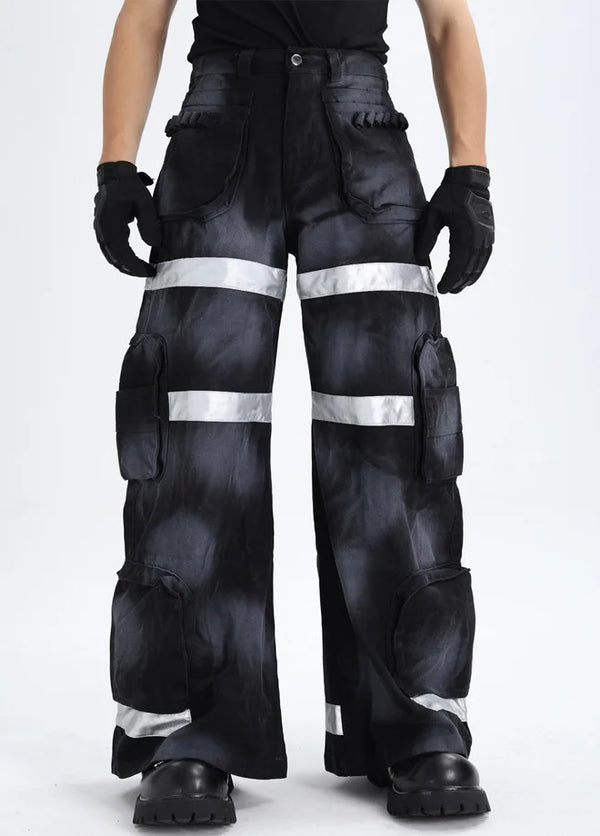
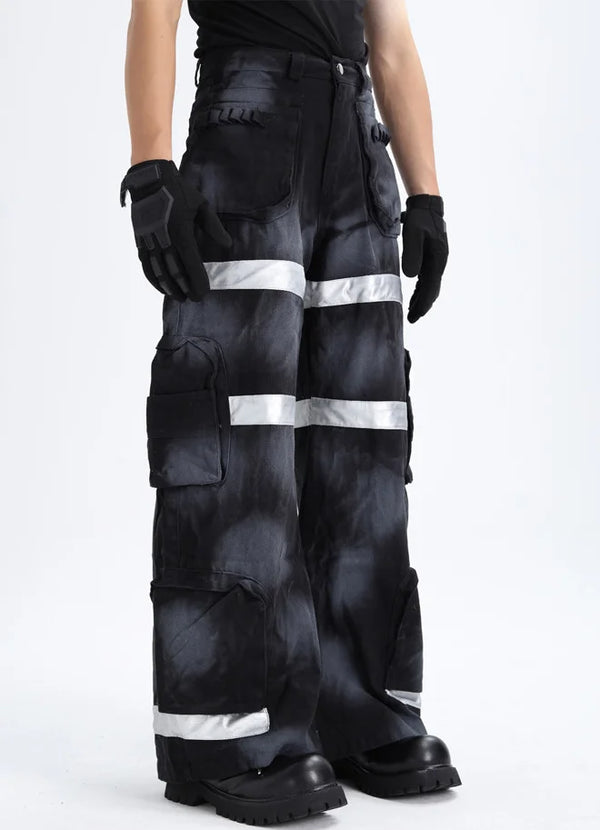
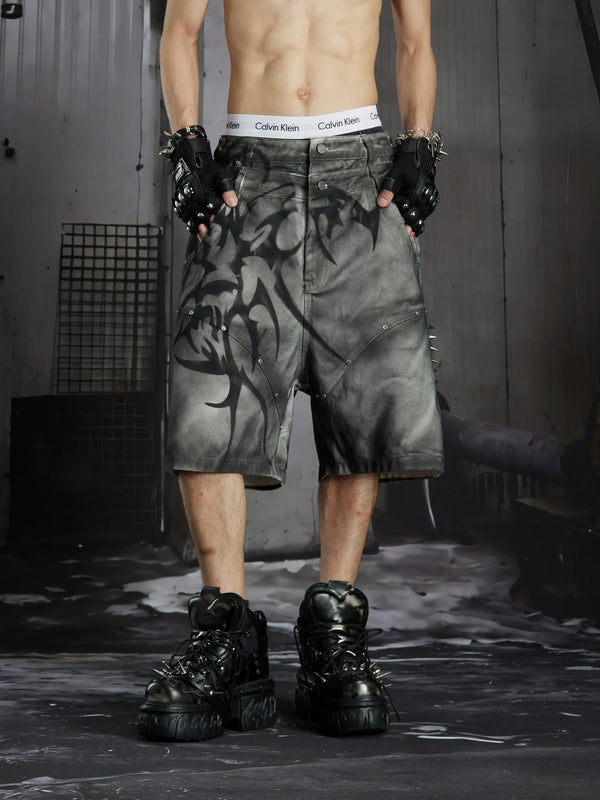
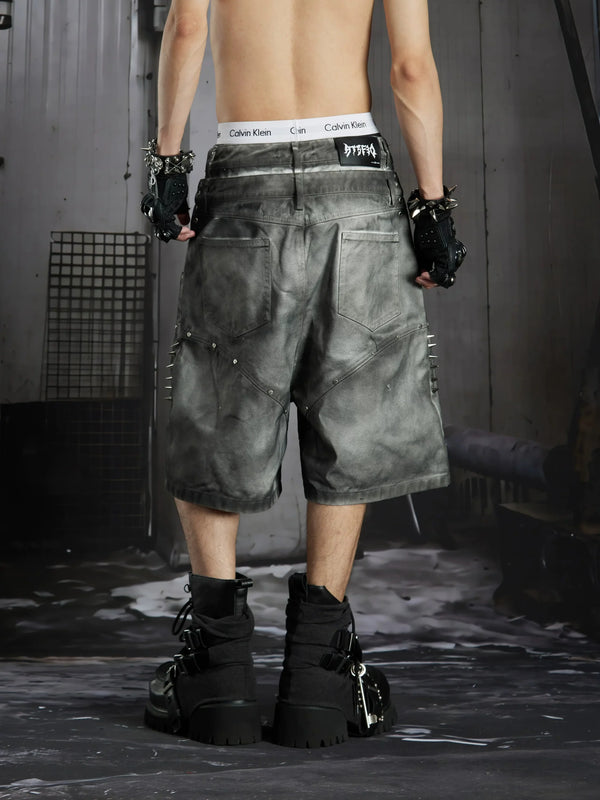
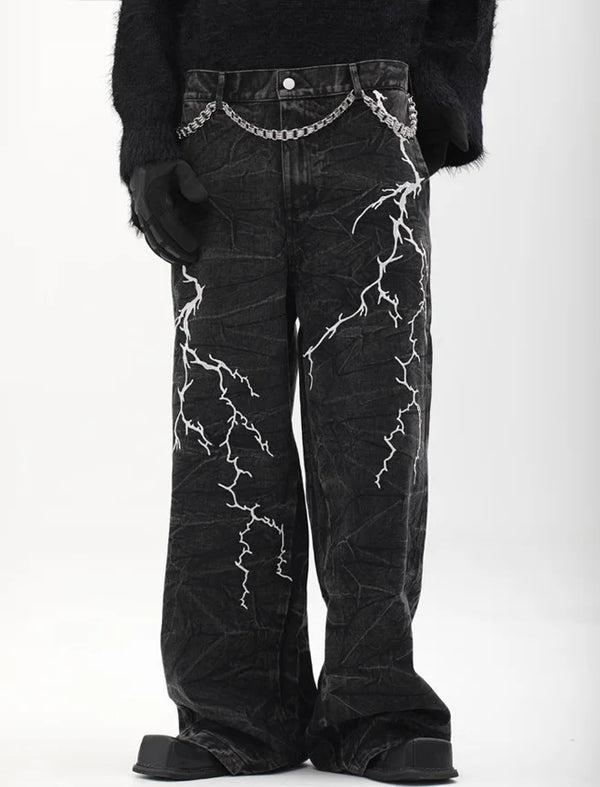
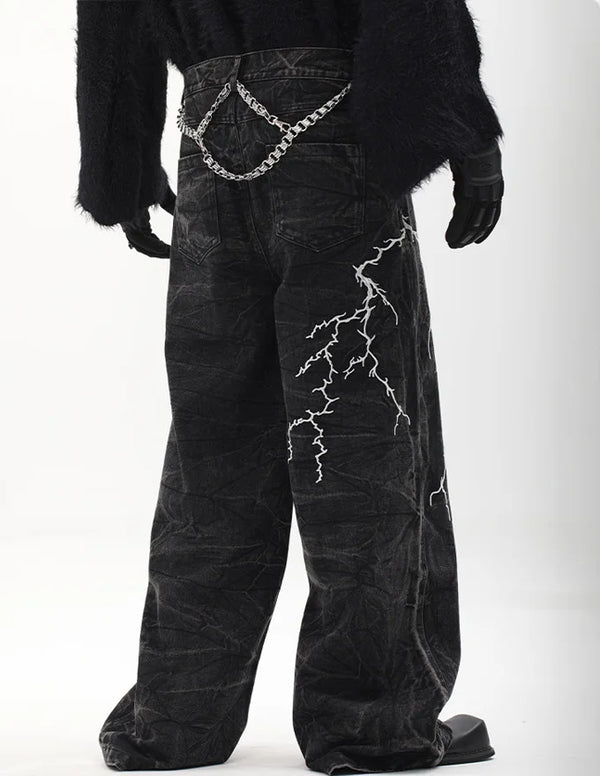
The wide jeans with embroidery or print are the trousers that remained from the lockdown look. They carry the skate proportion into the present and give the top room. Anyone wanting something shorter in summer reaches for jorts with studs, which take the Emo belt along as a detail.
Uniform
The E-Boy uniform: what the look carries from its history
Lay the stations side by side and every piece of the E-Boy uniform can be assigned an origin. That makes the look readable and explains why it still works years after the hype. Every piece carries a small story that needs no explaining.
The sentence at the end of the overview is the real lesson of E-Boy history. Because every piece has a function, it can be swapped as long as the function stays. A different longsleeve, different wide trousers, a different chain: the code stays readable. That is exactly why the style produced so many variants.
For your own wardrobe that means: do not buy from a finished list, but by job. A layer for the top, a wide form for the bottom, an accent in silver, a frame for the face. The order in which a look comes together is the same as the order of the history.
Soft Grunge stands in this row deliberately. It is the closest relative of the E-Boy, grown from the same sources, only with more vintage and less camera. Anyone wanting to wear the E-Boy look more quietly finds the muted version of the same story there.
Counterpart
E-Boy and E-Girl: two sides of the same story
The E-Girl came first, at least as a word. As a look both developed in parallel. The E-Girl wore blush across the nose and cheeks, hearts drawn under the eye, two coloured strands at the front of the hair, a pleated skirt with fishnet tights and a longsleeve underneath. The E-Boy took the same basic pieces and reduced them: less colour, more black, the same layer of longsleeve and shirt.
Many details travelled back and forth between the two. Painted nails, chains and earrings came to the E-Boy through his closeness to the E-Girl. In return the E-Girl took over the wide trousers and skate shoes. The two looks are less two styles than one shared style at two volumes.
This permeability is a part of the story that is often overlooked. The E-Boy was from the start a look that played with gender codes: painted nails, makeup, soft hair. That does not come from TikTok, but likewise from Emo, where boys were already wearing eyeliner in 2005.
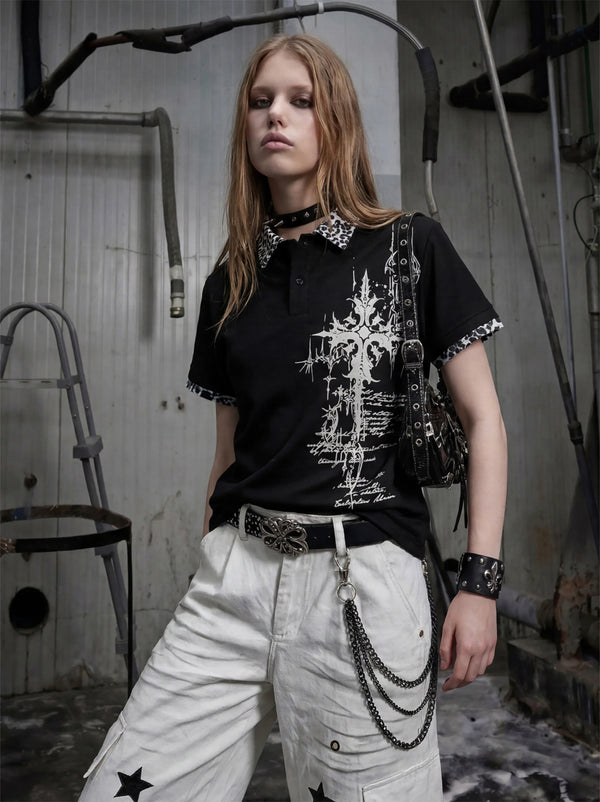
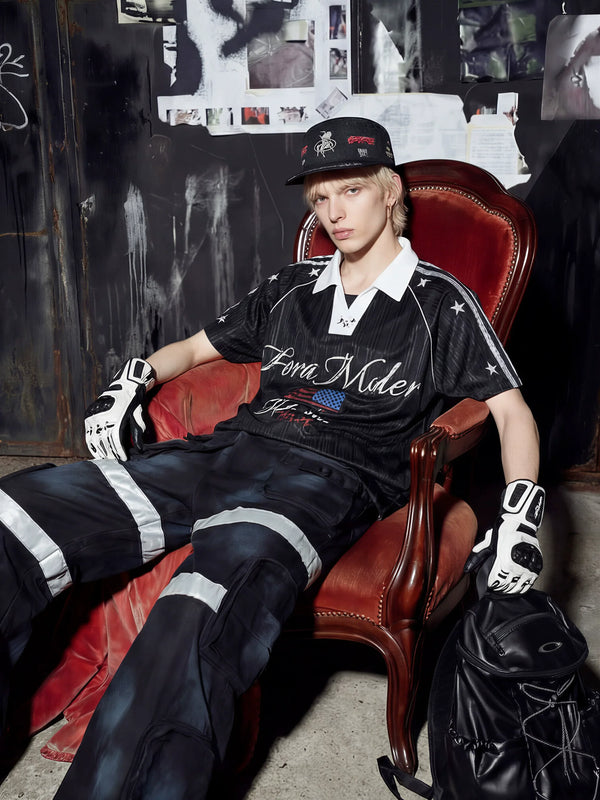
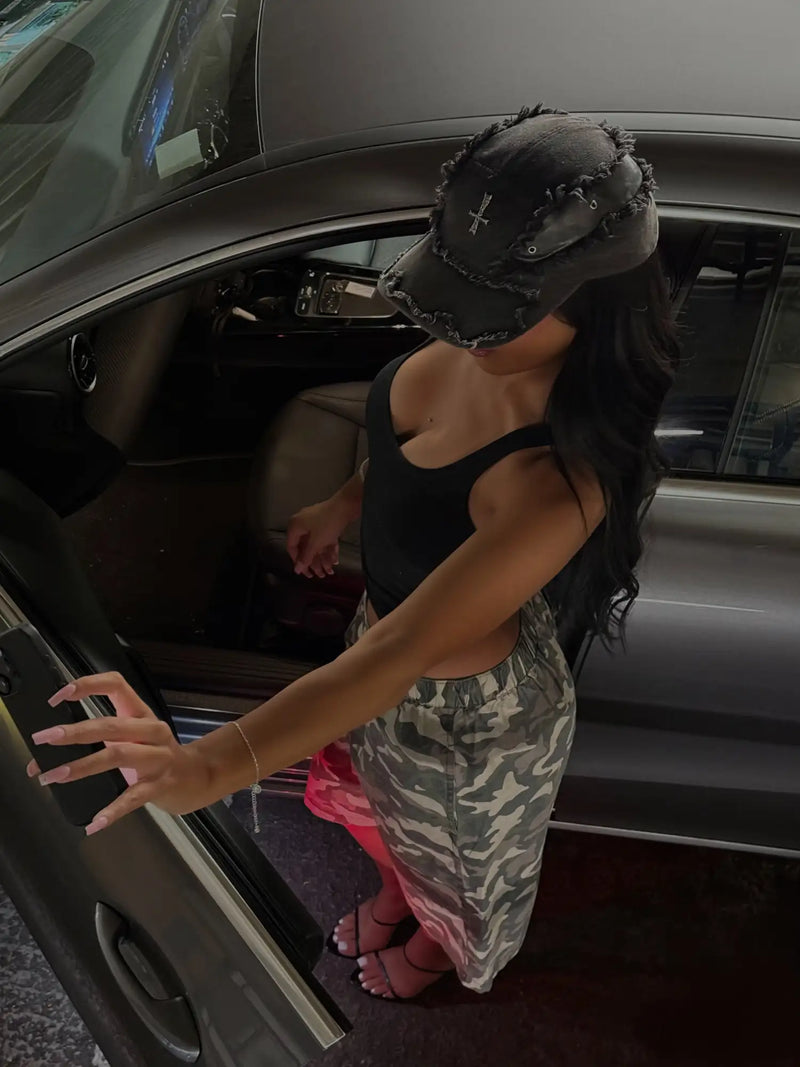
The belt with a cross picks up the old Emo studded belt, the cap with a used effect comes from the skate corner. Together they show how close the two sources of the look lie. One accessory is enough to make the origin visible.
After the hype
After 2021: where the E-Boy went
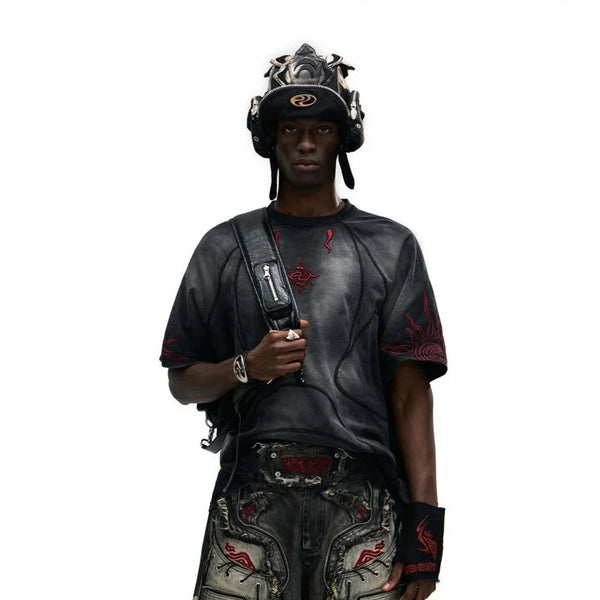
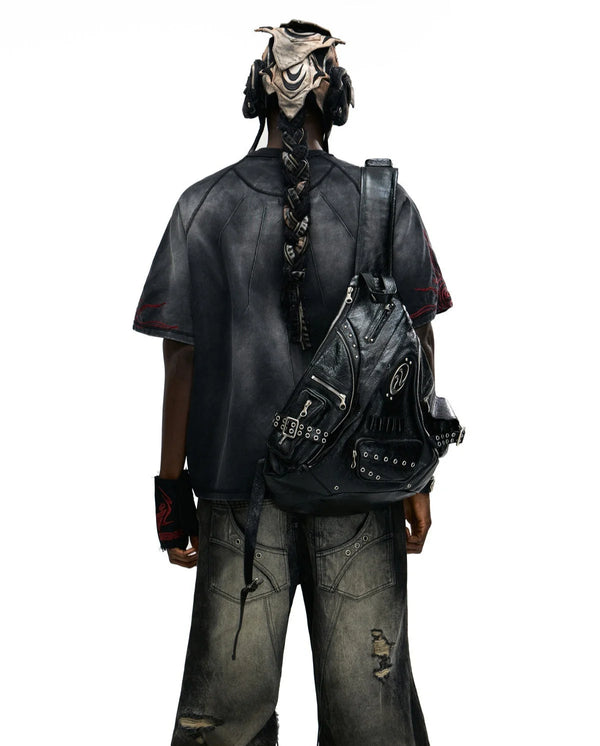
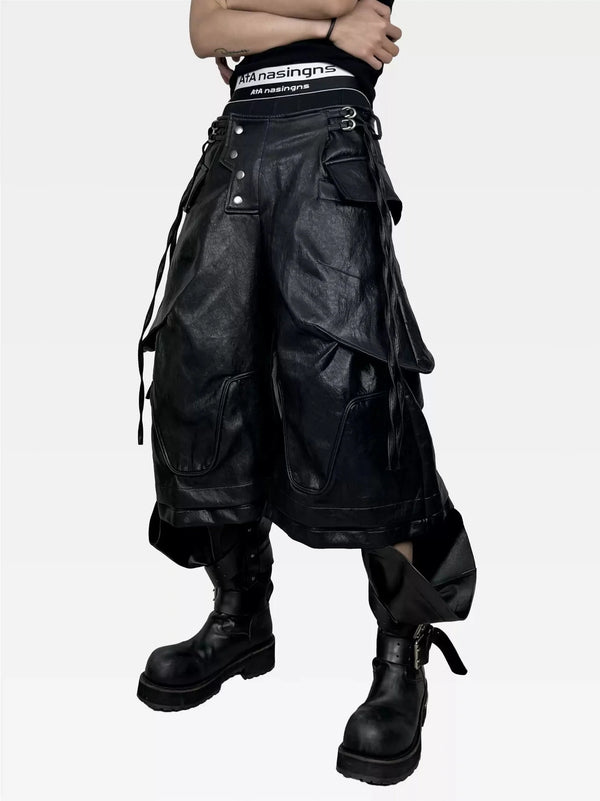
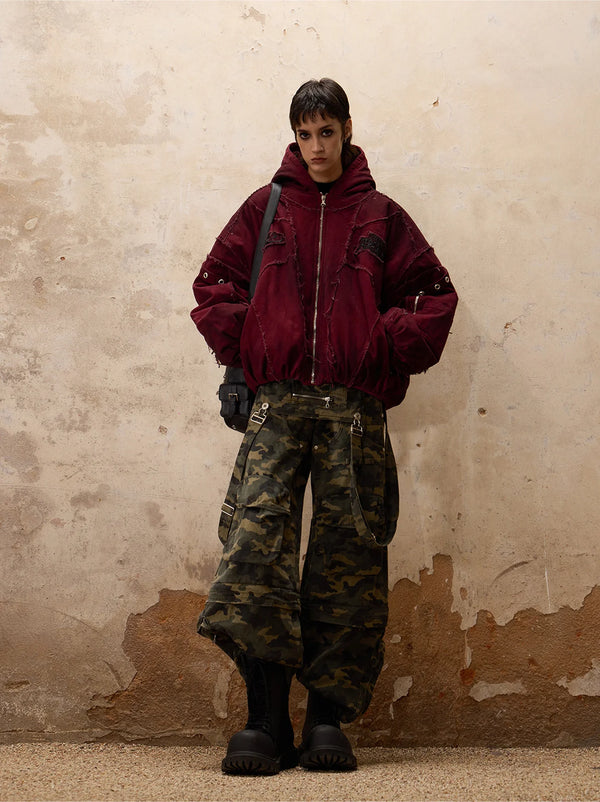
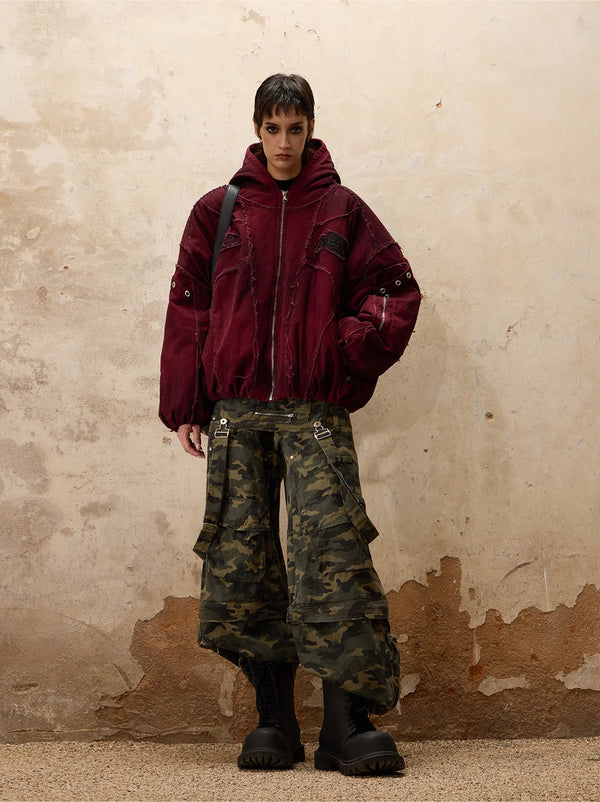
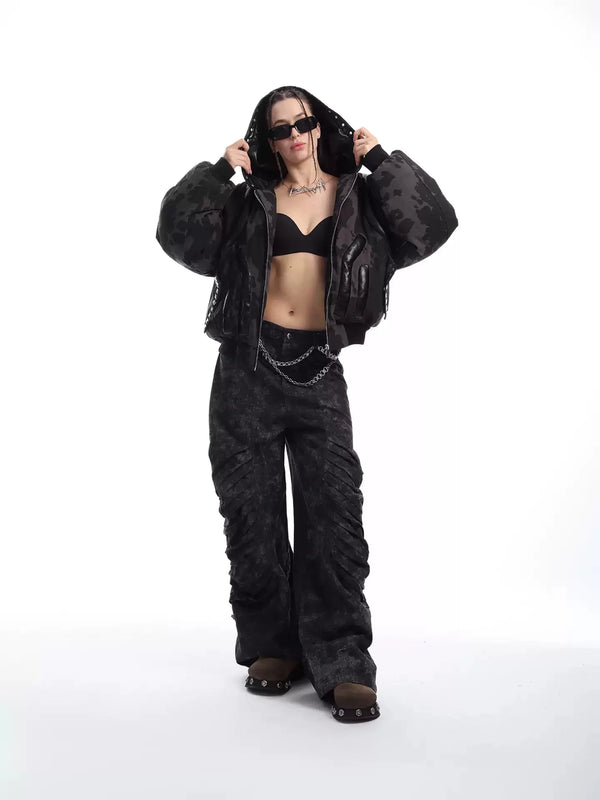
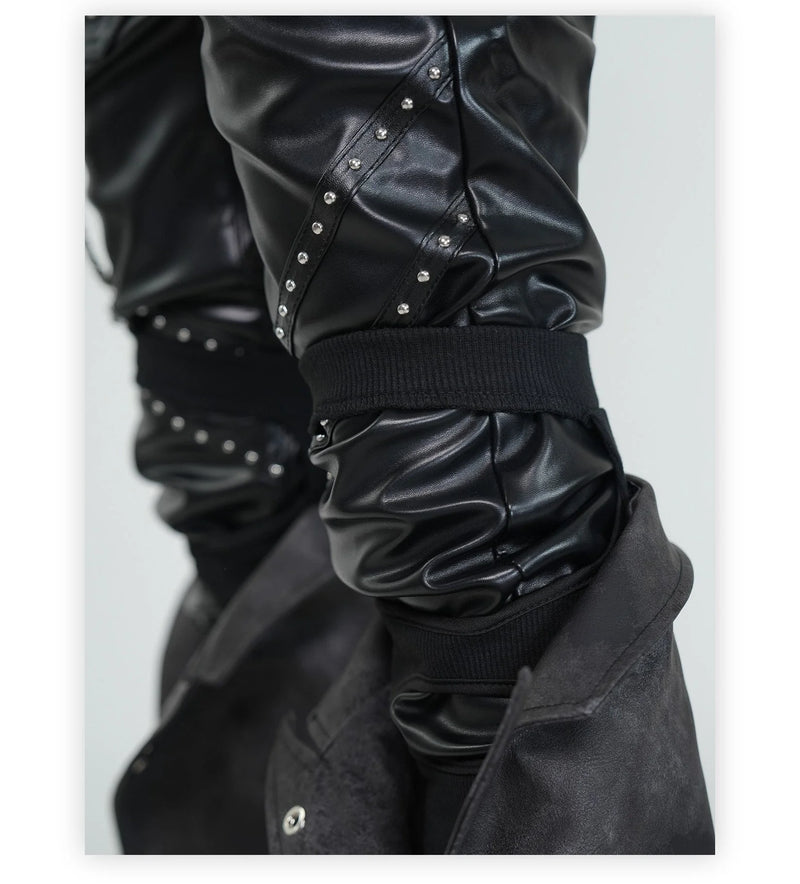
From 2021 the word became rarer. The look did not. It split into several directions that carry their own names today. Soft Grunge took over the quiet, vintage-heavy side. Alt and the Emo revival kept the dark eyes and the band shirts. And a darker Streetwear direction turned the wide trousers, the silver and the layers into something harder, with leather, studs and used effects.
That is typical of online styles. They have a short moment in which a name holds everything together, after which they fall apart into their components, which live on elsewhere. With the E-Boy this decay is especially easy to see, because the components already had stories of their own beforehand.
The clip shows how much of the E-Boy sits in this harder direction. The layer under the top has stayed, the wide trousers too, the silver as well. Only the mood has become darker. Anyone who was an E-Boy in 2019 often wears exactly this today, without using the old word.
For us at Fūga this is a familiar movement. Our own niches went the same way, from Streetwear through Anime and Harajuku to Gothic and darker directions. The E-Boy lies exactly on this line, between Emo, Skate and Anime, and he explains why these worlds merge into each other so easily.
Misconceptions
Common misconceptions about E-Boy history
Because the look grew so fast, several misunderstandings circulate about its origin. Most arise because the name gets confused with the beginning. Five of them come up again and again, in comments as much as in articles.
All five misconceptions have the same root: they take the moment of visibility for the moment of origin. Anyone thinking of the history in stations sees that TikTok was not the beginning, but the point at which everything converged.
Today
Becoming an E-Boy today: the history in the wardrobe
Anyone wanting to build an E-Boy look today needs no costume and no list of twenty pieces. It is enough to translate the stations of the history into clothing. A layer for the top from Grunge, a wide form for the bottom from the skate park, a silver accent from Emo, a face that looks soft and awake.
The short denim jacket with acid wash is the skate jacket in today's form. It ends at the hip and lets the wide trousers work. The track set with side stripes picks up the sporty side of the nineties and works as a quieter variant.
Anyone looking for concrete combinations finds ten looks there built from exactly these building blocks. The history supplies the why, the outfits supply the how. Both together make a look that does not come across as fancy dress.
This rule also explains why the look turns out different on everyone. The history sets the building blocks, the weighting is decided by each person. That makes the E-Boy more open than many other online styles that are tied to a fixed image.
In the end one small thing connects all stations: the look lives off the contrast between soft and hard. Soft hair, hard chain. Loose layer, heavy shoes. Anyone holding that contrast wears the whole history, even without knowing the word E-Boy.
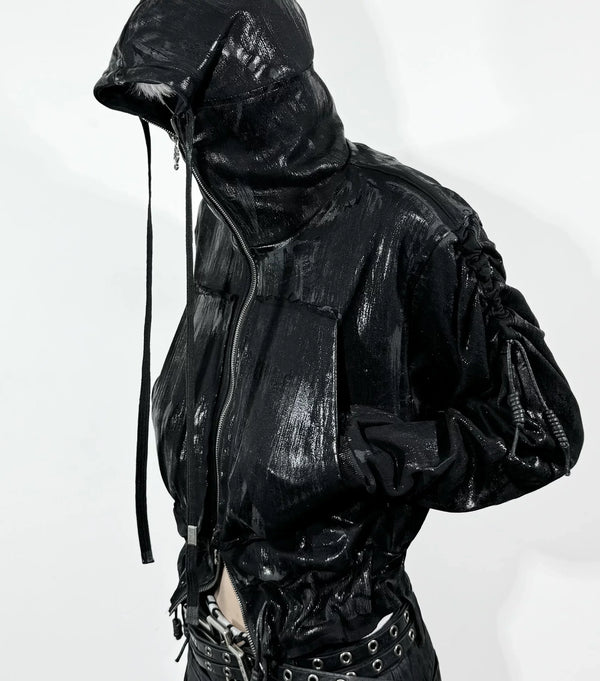
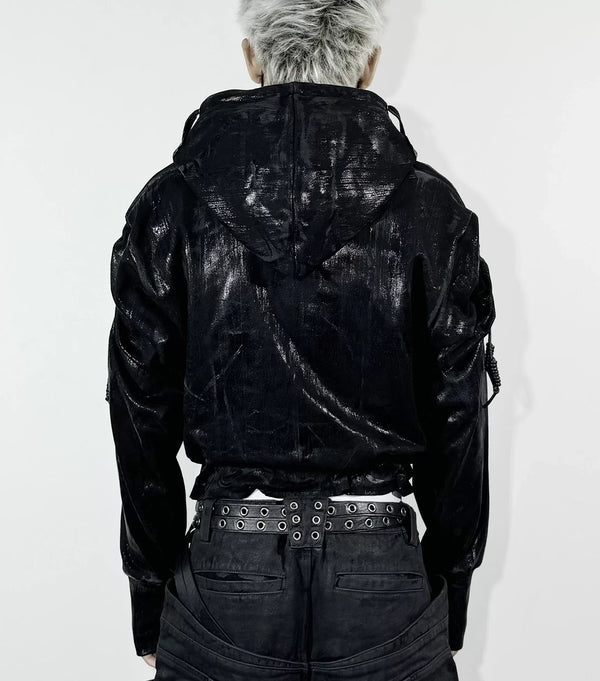
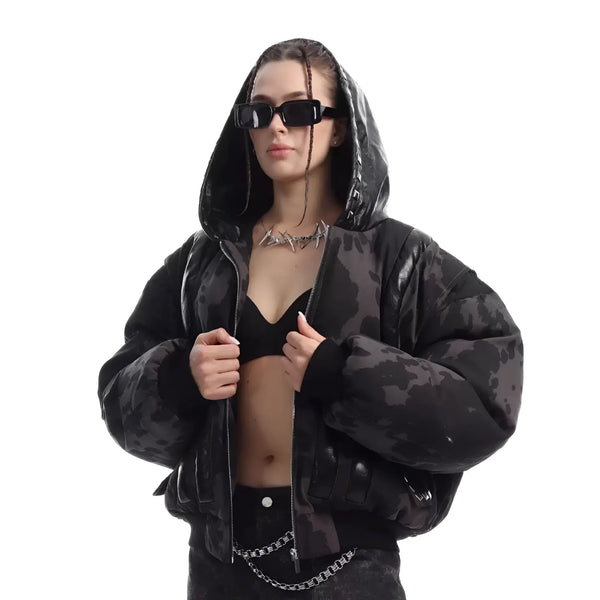
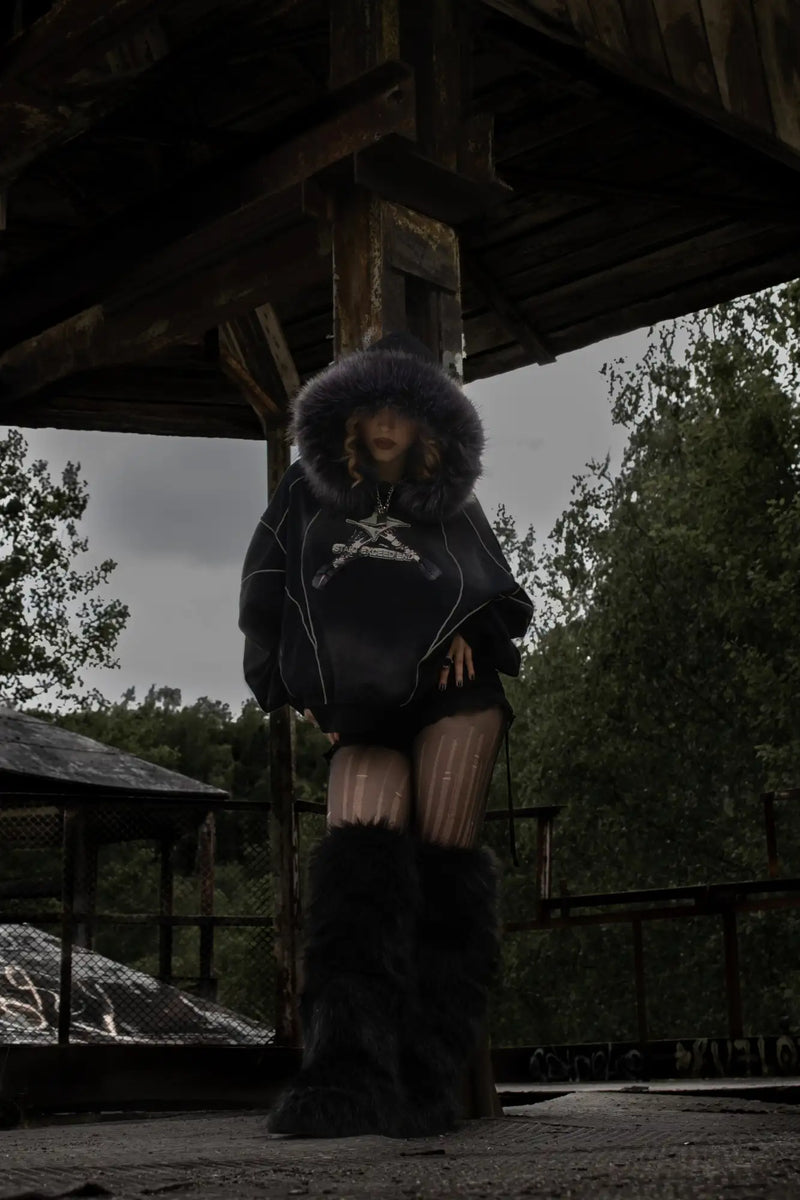
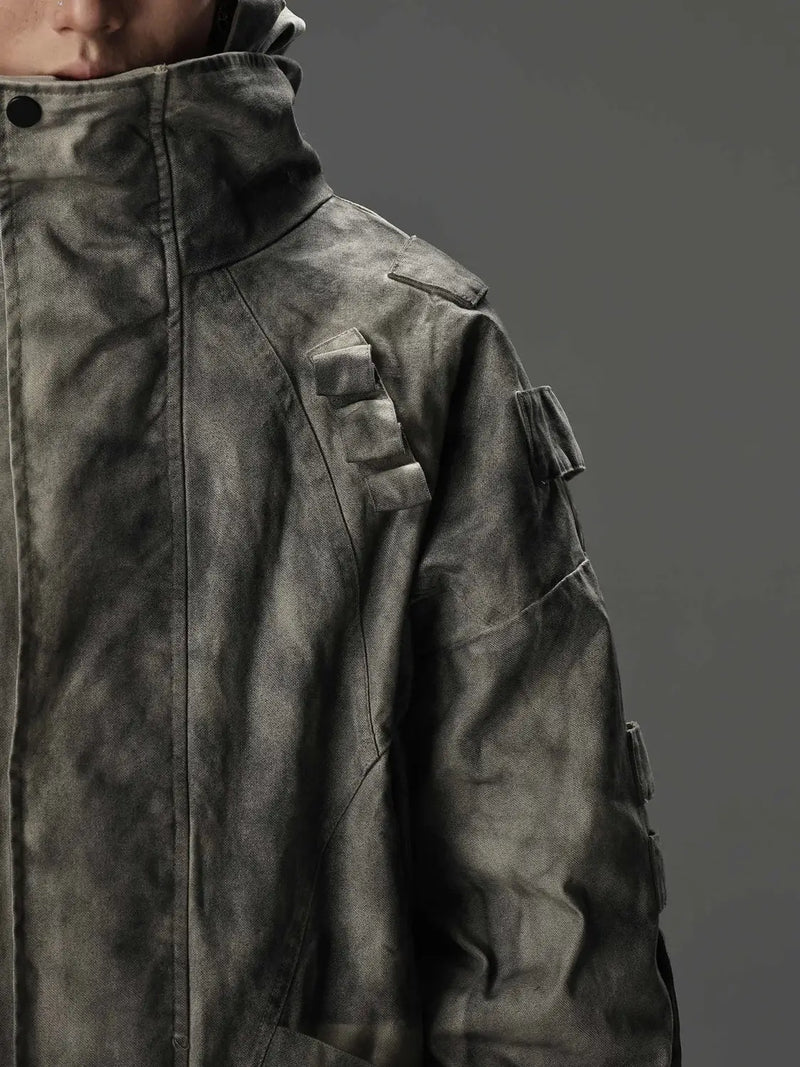
The hooded vest with a used effect is the hard side, the small pendant on the trousers the playful one. Together they show what the E-Boy looks like today: less camera, more street, the same roots.
FAQ
Common questions about E-Boy history
The answers are kept short. Anyone looking for the meaning of the term and today's types finds them in detail in the E-Boy Fashion Guide.
When did the E-Boy trend emerge?
Where does the term E-Girl come from?
Are there still E-Boys today?
Does the Berlin collective eBoy have anything to do with the look?
How do you become an E-Boy today?
With that the circle closes from the tram in Poznań back to MySpace, to the skate park and to the first clips on Musical.ly. A look that looks like 2019 in truth carries three decades with it.
What do you think?
Tell us on @fuga_studios
About the author
Philipp Fuge — Founder · Berlin
Founder of Fūga Studios. Writes the journal himself. Berlin · Shanghai · Tokyo · Poznań — four cities, one logic.