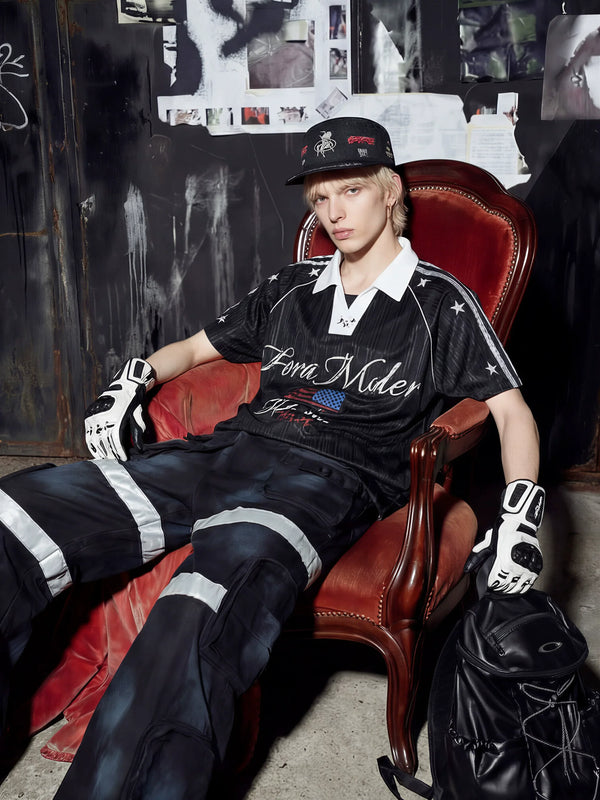
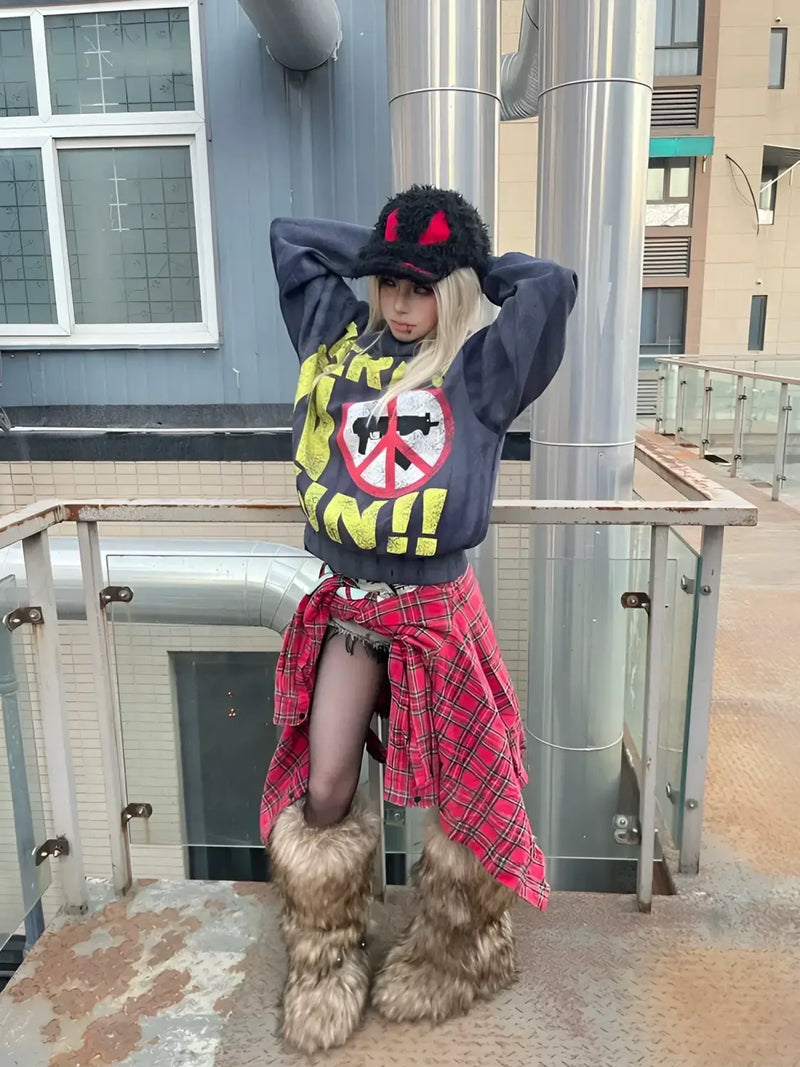
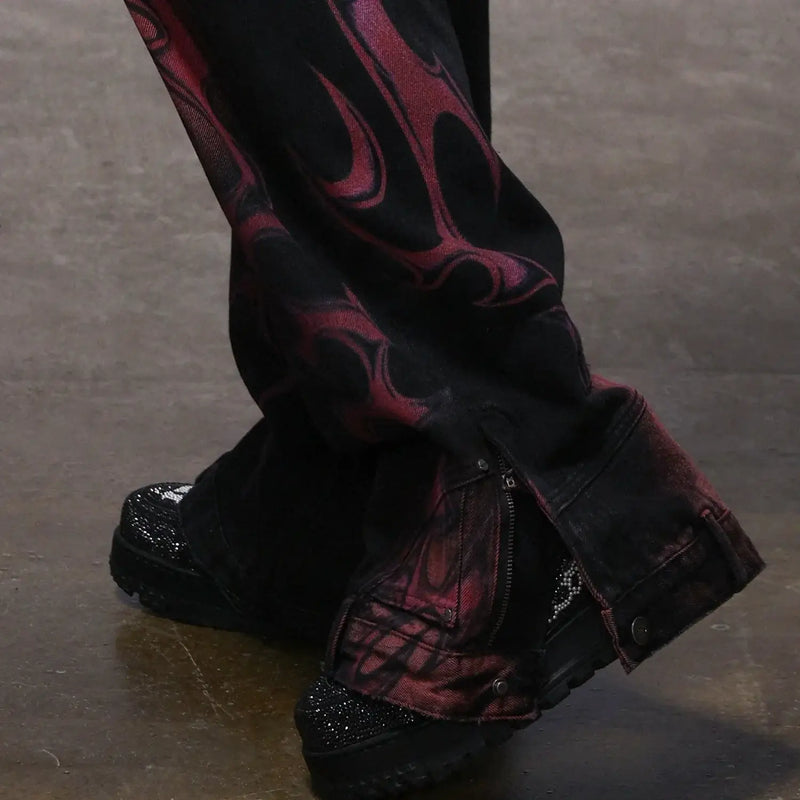
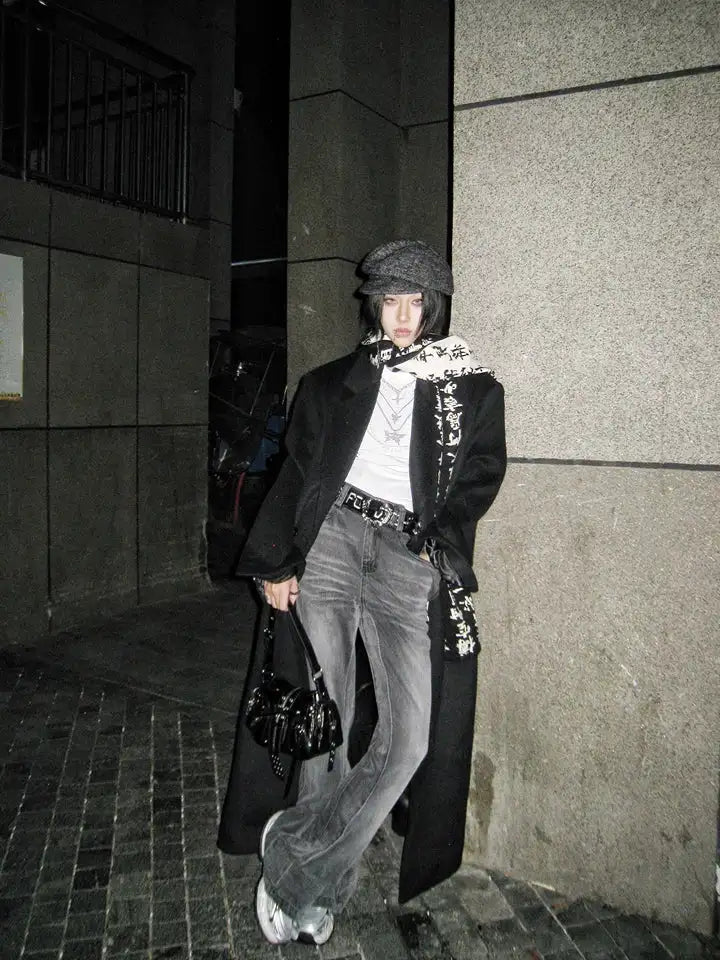

The blazer sits tight at the shoulders, the tie is black instead of burgundy, and the signet ring carries no crest but a skull. Between two library shelves it looks like a uniform, until you look closer. No tweed nostalgic here, but someone reading Melville and Manson at the same time.
Dark Academia Goth combines the intellectual uniform of the Dark Academia aesthetic (blazers, wool coats, shirt collars) with the dark colour palette and metal details of the Gothic scene. The look stays with black instead of beige, swaps leather belts for chokers and keeps the academic silhouette. It works as a style of its own, not as a costume mash-up.
Anyone searching online for dark academia goth fashion usually runs into two separate worlds: Pinterest boards with library aesthetics in beige and brown, and Gothic forums that know black as the only rule. The overlap rarely gets a name of its own, even though it has long been a distinct look you see in Berlin, Poznań or on TikTok alike. It takes the structure of Dark Academia (blazer, wool coat, shirt collar) and replaces the warm colour palette with the cold one of Gothic. The result is neither costume nor trend mash-up, but a silhouette that works at university just as well as at a concert. This guide shows where the two aesthetics meet, where they contradict each other, and how to build the look piece by piece, from the jacket to the ring.
Definition
What is Dark Academia Goth?
Dark Academia Goth is the overlap of two aesthetics that both rely on thought instead of brands. Dark Academia stems from novels like “The Secret History” by Donna Tartt and describes a uniform of tweed, corduroy trousers, shirt collars and wool coats: the clothing of a student who spends too much time in old libraries. Gothic brings the second axis: all-black, metal hardware, mesh, a preference for silhouettes that sit close to the body instead of falling loose. Together they make a look that keeps the academic structure but turns the colour temperature completely. No beige, no cognac brown, instead black, anthracite, occasionally dark bordeaux. The silhouette stays formal: blazer instead of hoodie, shirt instead of band shirt. What changes is fabric and detail: leather instead of tweed, choker instead of tie pin, a signet ring with a skull instead of a crest.
Schwarz
single base colour
4
Core pieces: blazer, coat, shirt, corduroy trousers
0
studs or band shirts
It is exactly this shift that causes confusion. Anyone who only knows Dark Academia finds Dark Academia Goth too dark. Anyone who only knows Gothic finds it too tame. Both are wrong for the same reason: they measure the look against the wrong reference. To understand what actually separates Dark Academia Goth from its two models, a direct comparison is worth it, not as competition but as a build manual.
Comparison
Gothic vs. Dark Academia: The difference
The main difference lies not in colour, both aesthetics know black, but in silhouette and reference. Dark Academia quotes the British boarding-school system of the 1920s to 1960s: tweed blazers, corduroy trousers, round glasses, leather briefcases. Gothic quotes the post-punk scene of the late 1970s: mesh, studs, dramatic make-up, a deliberate rejection of conformity. Dark Academia wants to look serious. Gothic wants to stand out. The crossover works because both styles share one thing: a romantic relationship with transience and melancholy. Byron instead of bling, cemetery instead of celebration. That is exactly where the uniform meets.
- Silhouette: Dark Academia wears loosely cut blazers and wide coats, Gothic prefers pieces that sit close to the body with a visible waist.
- Material: tweed and wool for Dark Academia, leather and mesh for Gothic. Dark Academia Goth mixes both in one outfit.
- Colour temperature: beige and cognac brown for Dark Academia, all-black for Gothic. The crossover stays with black.
- Reference decade: 1920s boarding school for Dark Academia, late 1970s post-punk for Gothic.
- Accessories: leather briefcase and round glasses for Dark Academia, choker and silver ring for Gothic. In the crossover both coexist.
This comparison explains why the crossover is not an arbitrary invention. Both aesthetics independently developed the same core: a fascination with the morbid, packaged in discipline instead of chaos. Where and when this first condensed into a look of its own can be dated fairly precisely.
Origin
Where does the look come from?
Dark Academia as an online aesthetic emerged in 2015 on Tumblr, long before TikTok popularised the term. The movement drew its imagery from Yale and Oxford photographs, from “Dead Poets Society” and from Donna Tartt's debut novel. Gothic had already existed for almost four decades, as a music scene around Bauhaus, Siouxsie and the Banshees and The Cure, which gave itself its own look in the early 1980s. The two scenes did not meet at once. Only when Dark Academia boards on Pinterest started posting black instead of beige clothing, mostly unconsciously, because black simply photographs more elegantly, did the bridge form. TikTok creators picked it up in 2021 and gave the hybrid a name. Today Dark Academia Goth is no longer a niche tag but a search term of its own with its own audience: people who want the discipline of Dark Academia but the colour palette of Gothic.
The anatomy embroidery is a good example of how the look works: academic motif (textbook illustration), morbid execution (skeleton instead of flowers), black base. It is exactly this principle, academic form, gothic substance, that runs through every garment in this guide. Before it comes to individual pieces, a look at the colour palette is worth it, because it sets the ground rule for everything else.
Colour rule
The colour palette: black meets tweed
The palette of Dark Academia Goth has exactly one base colour: black. That sets the look apart at once from classic Dark Academia, which works with beige, cognac brown, olive green and muted bordeaux. Still, these colours do not disappear entirely, they show up as a texture accent, not as a surface colour. A black wool coat can have a tweed structure. A black shirt can carry a subtle check print. The rule: patterns and texture may recall Dark Academia, the colour has to stay with Gothic. Metal comes in silver instead of gold, Gothic prefers cold metal, Dark Academia often warm. A signet ring in gold looks out of place in this look, the same ring in silver or antique brass works at once. White appears only in small amounts: shirt collars, the odd seam, never as a surface colour. Anyone unsure whether a piece fits can run a simple test: would it work in black-and-white photography from the 1970s? If yes, it probably fits the palette.
With this colour rule in mind, every garment can be placed, starting with the base layer that makes the biggest visual difference: jackets and coats. They carry the academic silhouette most clearly and are the easiest to shift towards Gothic without losing the structure.
Base layer
Jackets & coats in the Dark Academia Goth look
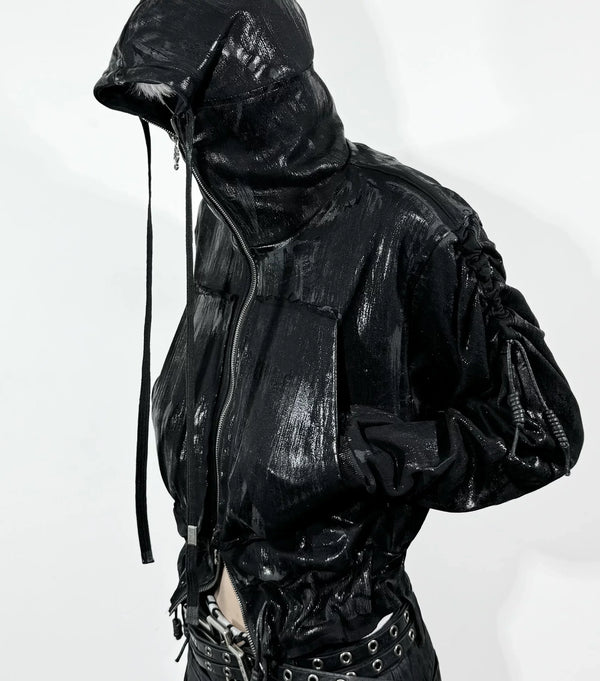
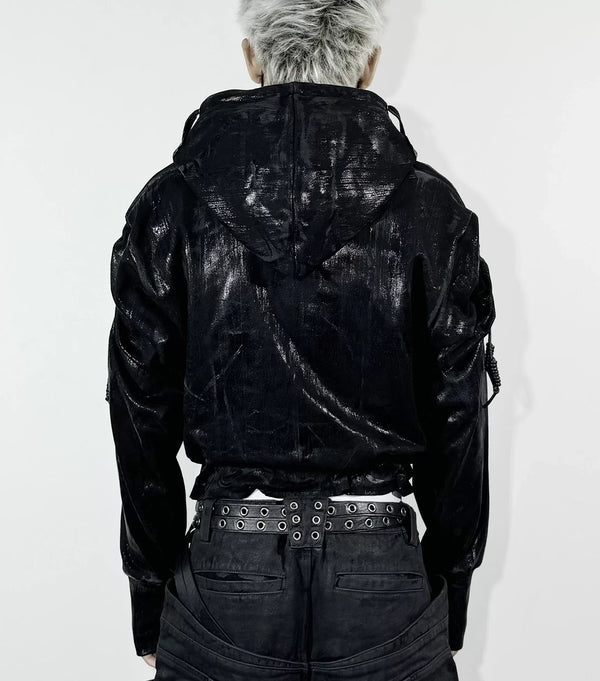
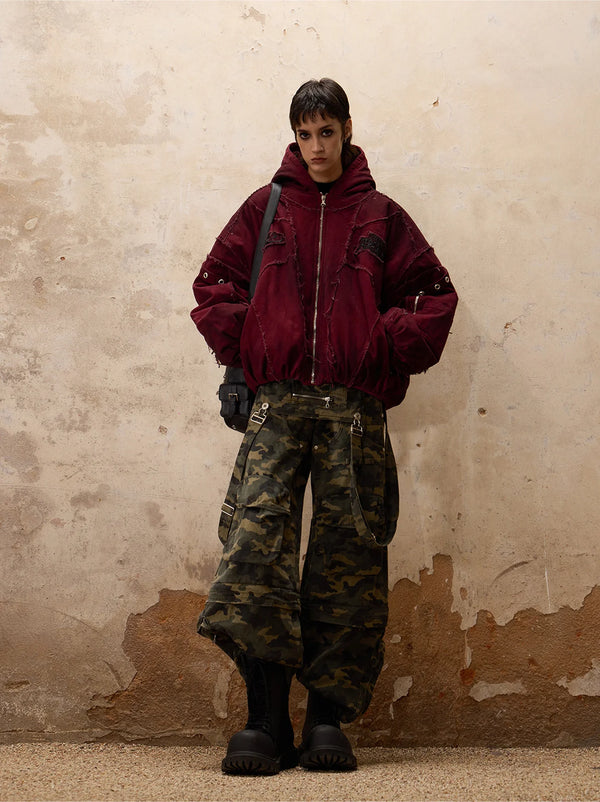
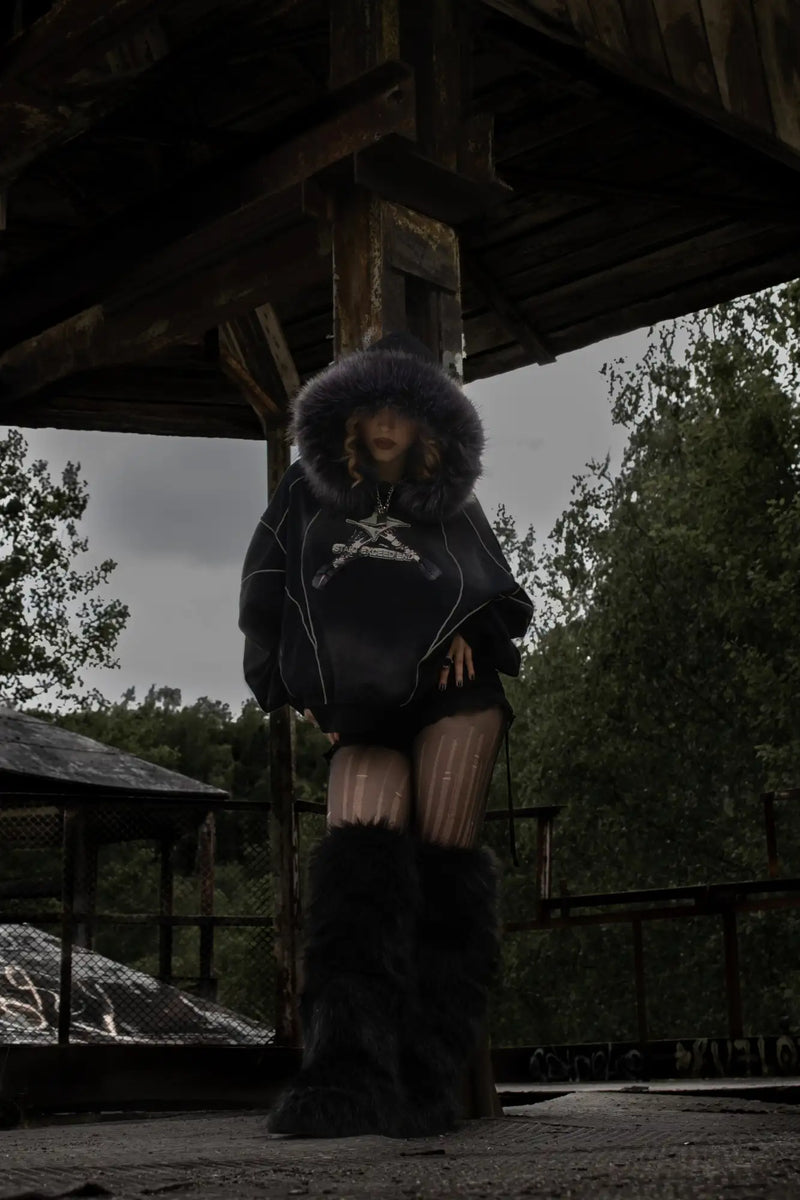
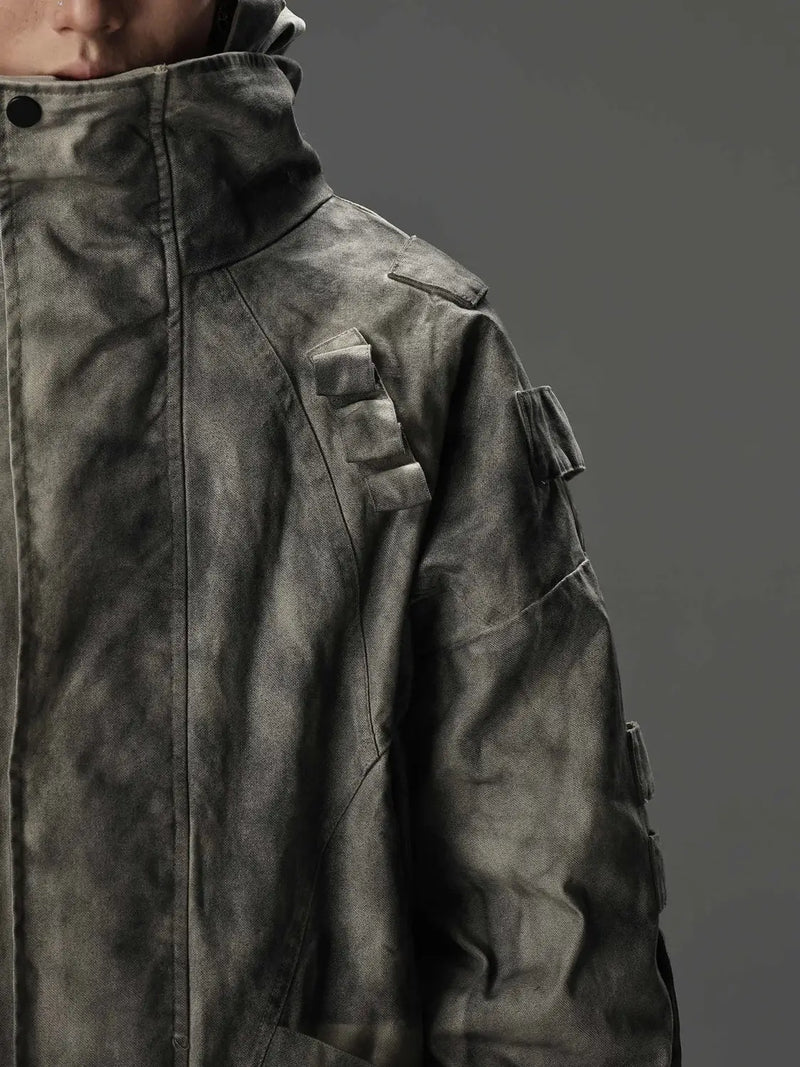
The wool coat is the heart of Dark Academia: long, waist-emphasising, mostly in camel or anthracite. In the Gothic version the cut stays the same, but material and colour change, black wool blend instead of camel hair, a collar of faux fur or leather instead of pure wool. More important than the coat length is the waist emphasis: a loosely falling coat looks more like streetwear, a fitted cut looks academic. Bomber jackets and blousons only work if they have a structured collar, a pure streetwear bomber breaks the silhouette. Cross embroidery, stud details or an asymmetric zip give the academic base cut the gothic edge without tipping it over completely. Anyone who wants to play it safe starts with a structured bomber in black with a subtle detail instead of jumping straight to a fully equipped leather jacket, the latter tips towards pure Gothic faster than towards crossover.
Both pieces work as an entry point because they keep the blazer effect (narrow shoulders, defined waist) without switching completely to a streetwear silhouette. For colder months, a look at coats with fur collars is also worth it, they quote the academic winter coat but work in black and with a metal fastening. How it feels in motion shows best on real outfits instead of product photos.
The principle from the video transfers one to one to the choice of trousers: structure stays visible, colour stays dark, layering replaces statement pieces. That is exactly where the second big building block of the look lies: the silhouette below the waist, which is often overlooked in Dark Academia because the focus usually sits on blazer and coat.
Bottoms
Trousers & skirts: the silhouette
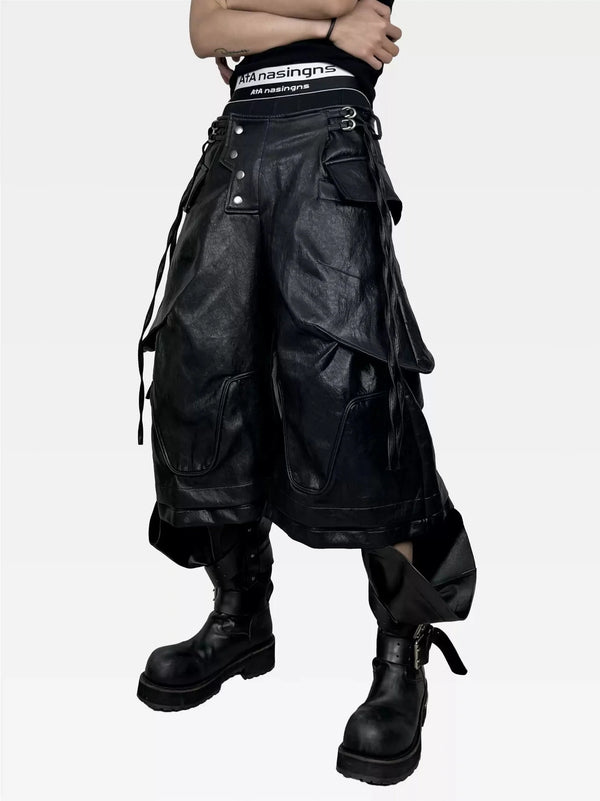
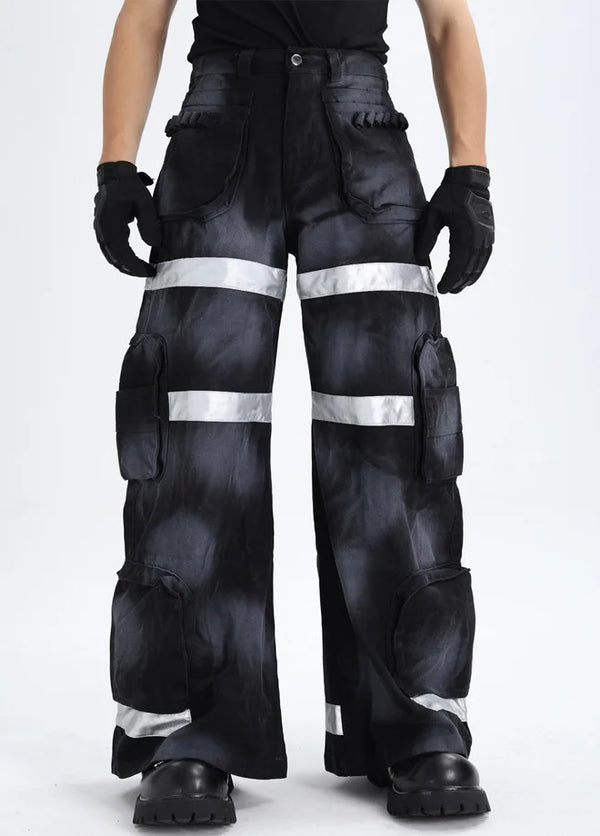
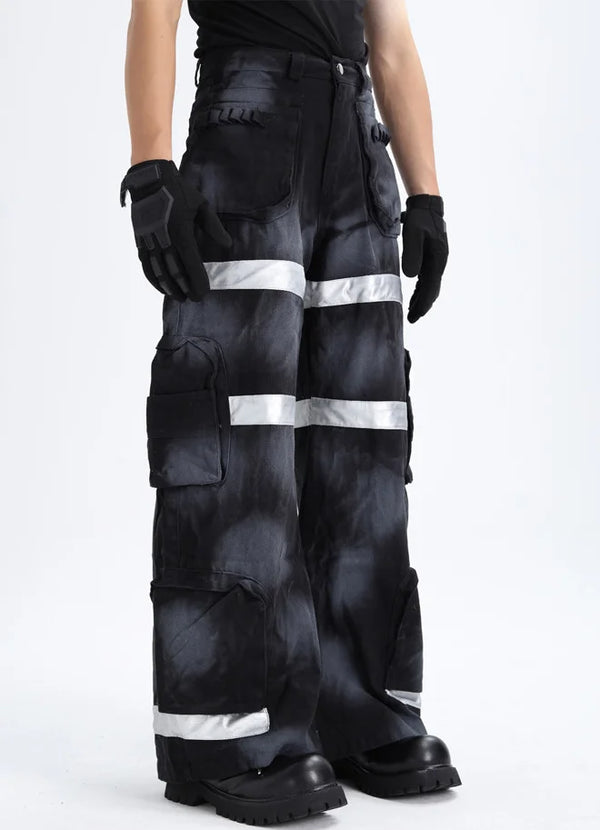
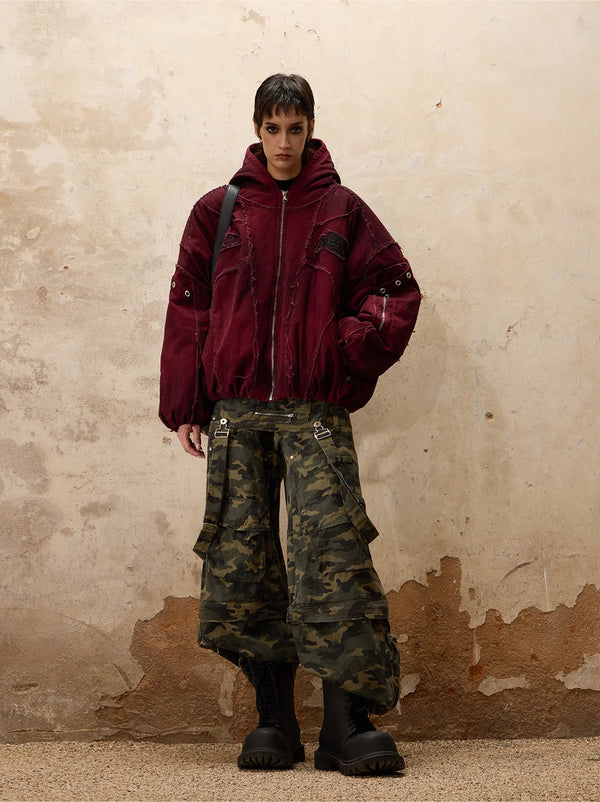
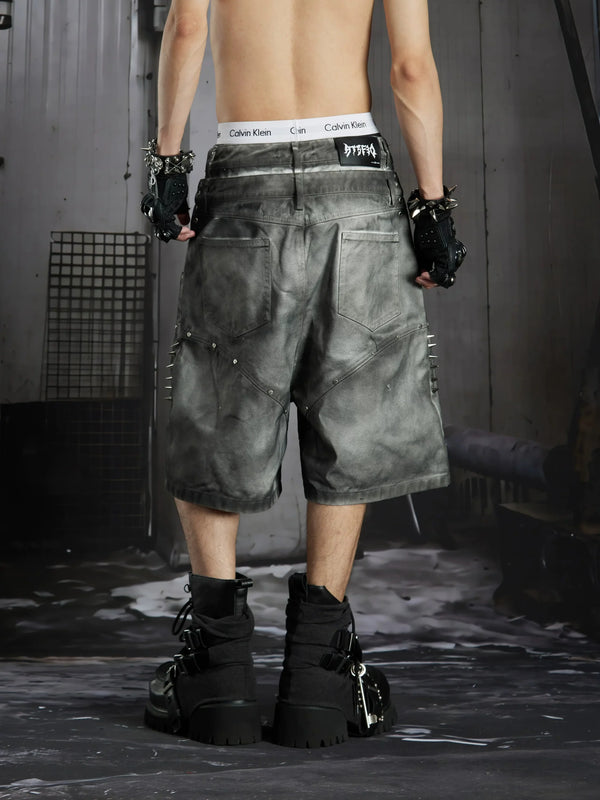
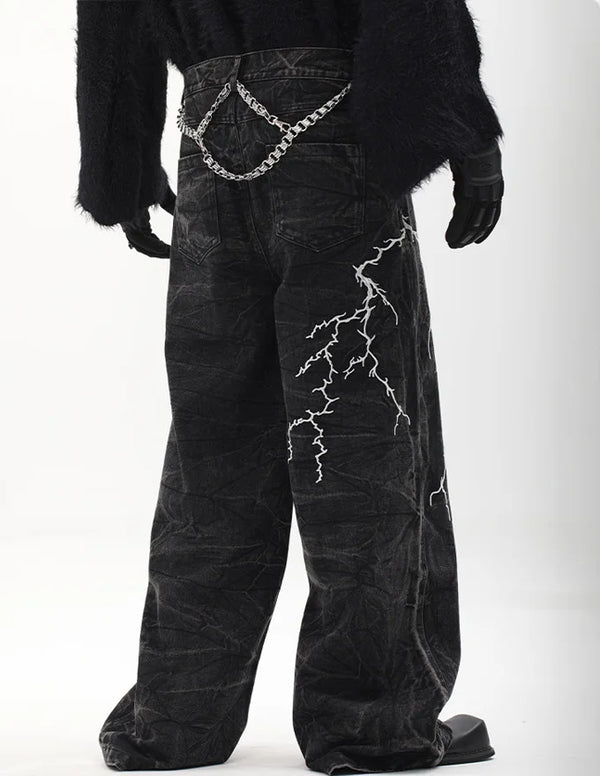
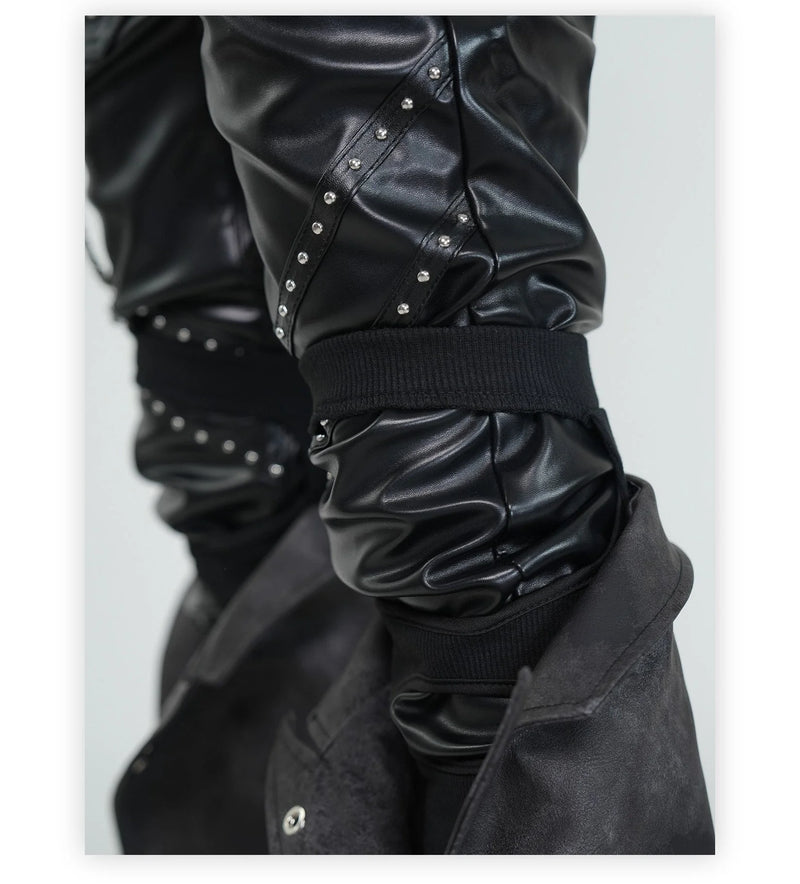
Corduroy trousers are the signature of classic Dark Academia, mostly in brown, mustard yellow or olive green, with a visible ribbed structure. In the Gothic crossover the ribbed structure stays, the colour changes to black or deep anthracite. Wide-leg cuts work better than tight skinny trousers because they keep the academic silhouette (wide leg cut, high waistband). Cargo elements are allowed but should stay subtle: a single side-pocket accent reads as “practical academic”, four visible cargo pockets tip towards techwear. Skirts follow the same logic: pleated or pencil cut instead of mini skirt, wool or faux leather instead of denim, length at least knee-long. A check pattern works if it is kept in black-on-black or black-on-anthracite, colourful tartan breaks the colour rule at once. Anyone unsure between trousers and skirt: the skirt quotes the British school-uniform heritage more directly, the trousers are easier to combine with boots.
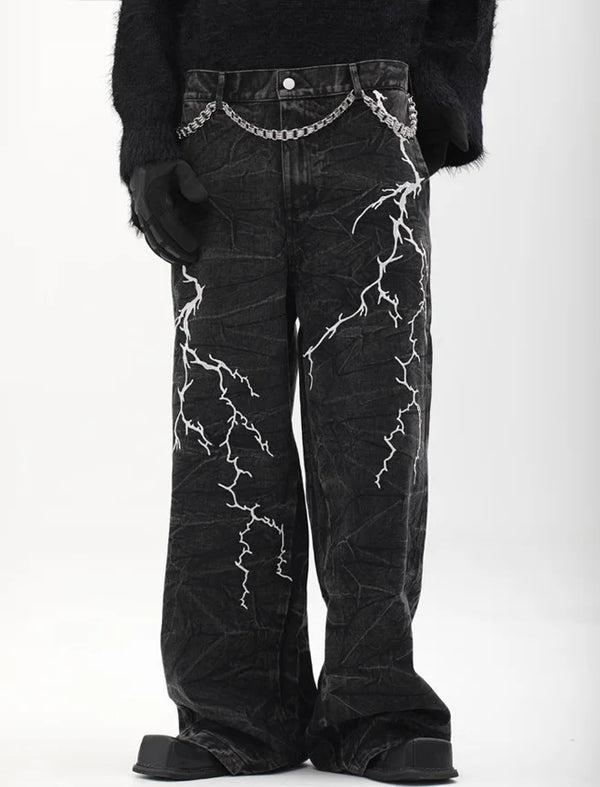
The multi-layer trousers show well how cargo elements can subordinate themselves without blowing up the base silhouette: several fabric layers, but a consistently slim waistband. The cross-denim variant brings the gothic metal detail via the belt instead of visible studs, which matters for the academic base tone. A point often underestimated is the waistband height. A high waistband automatically reads more formal and thus closer to Dark Academia, a low waistband slides faster towards pure streetwear Gothic. Anyone assembling the look for the first time should start with the trousers, they decide the whole proportion of the outfit.
It is exactly this repetition that makes the difference between a single outfit post and a look that carries into everyday life. Tops are the area where the most can be experimented with, because under a blazer or coat they are often only visible in sections: collar, cuff, a piece of print at the hem.
Layering
Tops & blouses: the layering principle
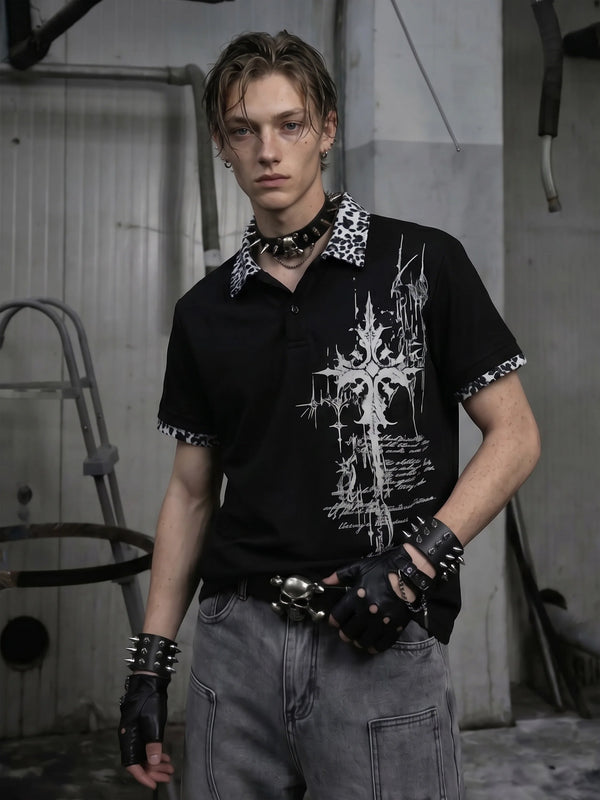
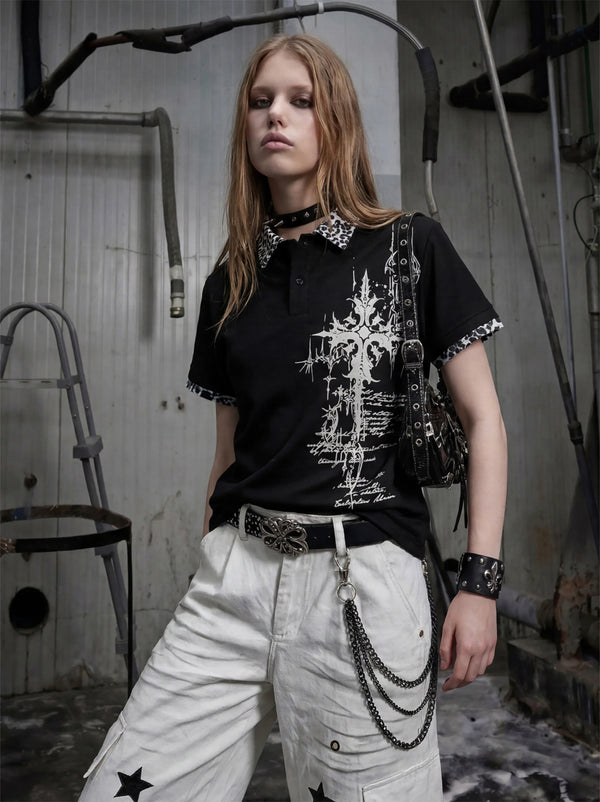
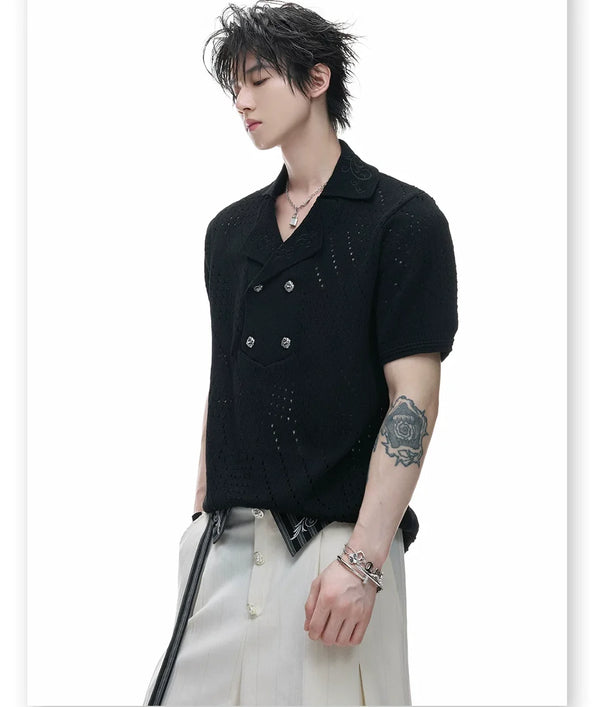
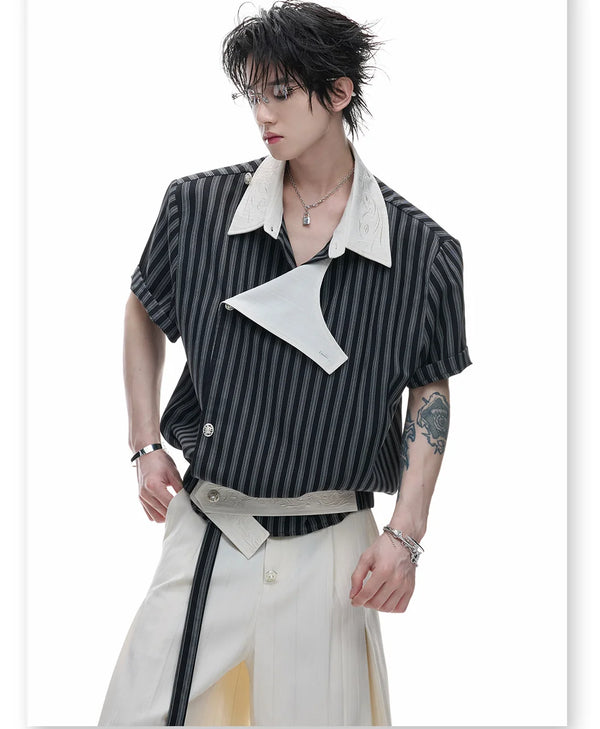
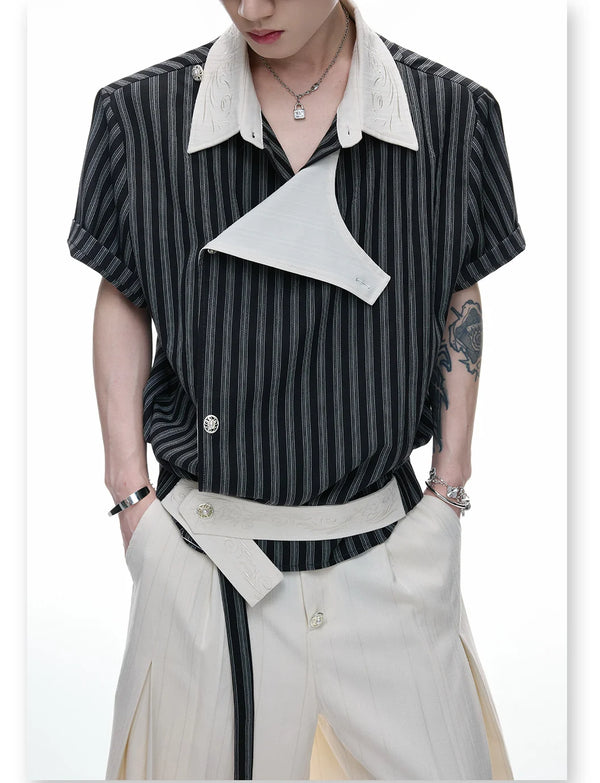
The shirt is the constant in both aesthetics, in Dark Academia mostly in white or striped, in Gothic often with a high collar or ruffle detail. In the crossover a black or anthracite shirt with a classic collar works most reliably, because it can be worn both under the blazer and open. Knitted jumpers take over the academic texture, turtleneck or V-neck, in black instead of beige. Layering here is not a question of style but the basic logic of the look: shirt, over it waistcoat or jumper, over it blazer. Every layer may stay visible, collar over jumper neckline, jumper sleeve under blazer sleeve. Prints only work sparingly: a single anatomical or floral embroidery on the chest reads as a detail, a full-coverage band-shirt print breaks the academic base completely.
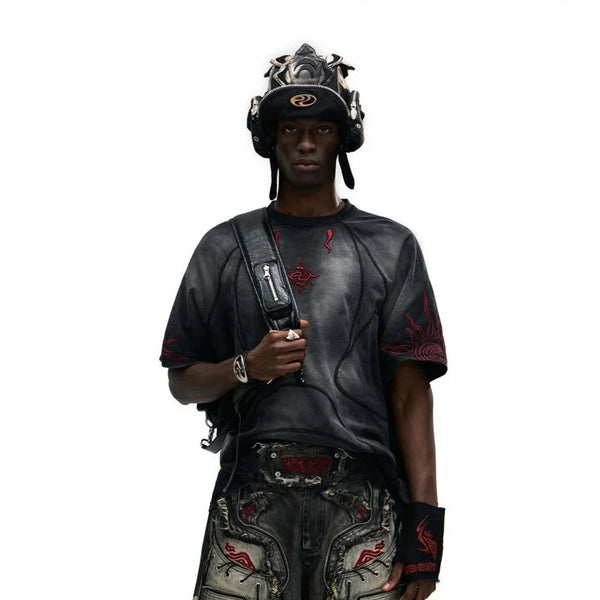
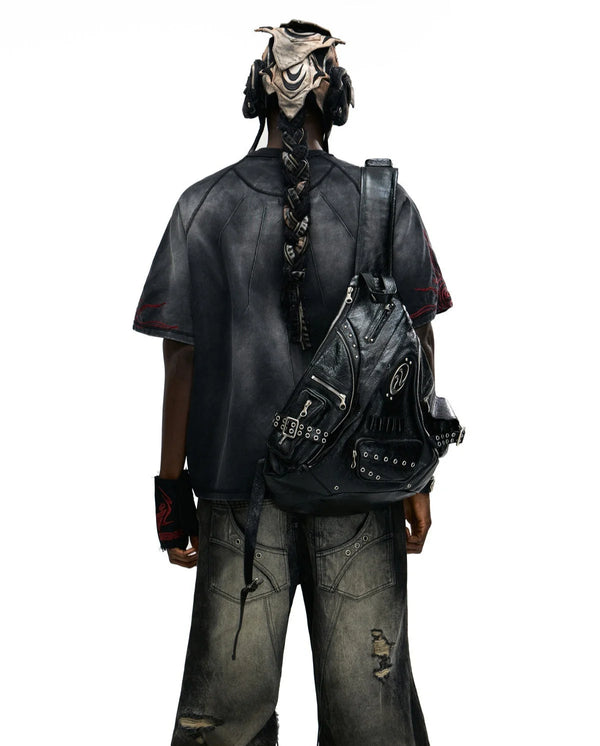
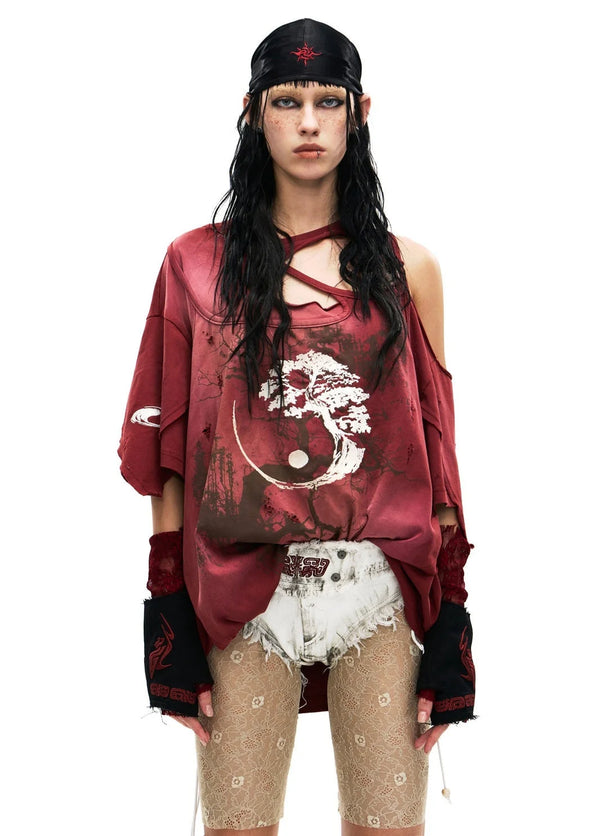
The layer tee works as a middle layer under an open shirt or blazer, exactly the role a plain turtleneck often takes in the Dark Academia original. The washed look takes the brand-new appearance off the cotton and thus fits the slightly worn, “read” aesthetic of Dark Academia better than a flawless new fabric. Once shirt, jumper and coat are set, the part that actually makes the look recognisable as Gothic remains: accessories. They are the cheapest and fastest way to shift an existing Dark Academia outfit towards crossover without buying new clothes.
Details
Accessories: from the signet ring to the choker
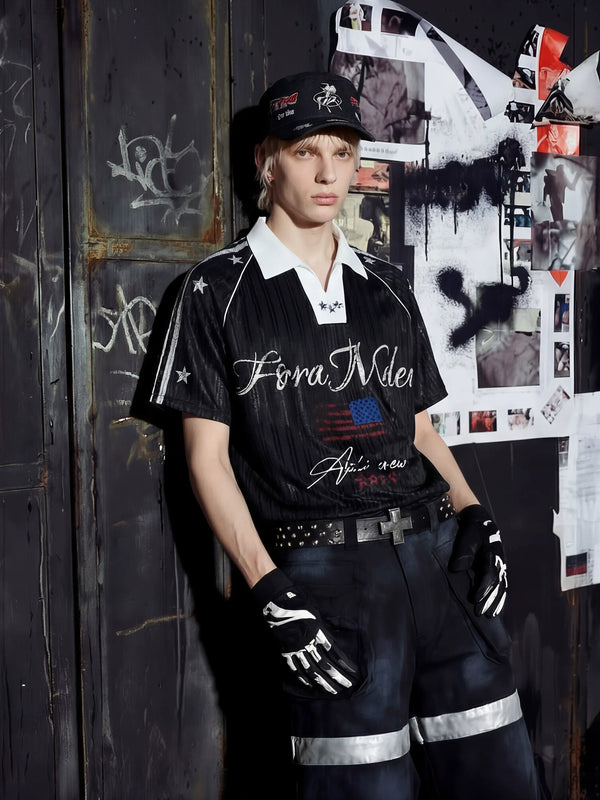
Accessories decide in the end whether an outfit is recognisable as Dark Academia Goth or simply as a dark version of Dark Academia. The signet ring stays from the original but changes from gold to silver or antique brass, often with a skull instead of a crest engraving. A choker, the classic Gothic signature piece, works surprisingly well with a shirt collar, as long as it stays narrow, a wide statement choker competes visually with the collar. The leather belt takes over the function of the tie as a “formal detail”, only with a visible buckle instead of silk. Round glasses, perhaps the most iconic Dark Academia accessory, stay unchanged, they are already neutral enough to work in both directions. For headwear the rule is: a beret quotes Dark Academia more directly, a cap with a gothic print shifts towards streetwear. In the end the single decision counts less than the sum: three to four consistently gothic accessories are enough to turn an academic base outfit completely around.
The leather belt with a cross buckle is a good example of an accessory that takes over the function of the original (formal finish of the waist) but executes the detail completely gothic. The cap suits the more casual everyday version of the look rather than the formal library variant, a useful hint that Dark Academia Goth is not a single outfit but a modular kit with several levels of formality. Anyone who wants to see all categories at a glance finds the matching starting points collected here.
How these four building blocks come together in everyday life differs noticeably between the genders, not because the look has a rule for it, but because the available starting pieces are different. Anyone who wants to dig deeper into the academic side of the aesthetic finds the base this crossover builds on in the guide to classic Dark Academia.
The base guide shows the pure academic side without the Gothic shift, helpful to understand which pieces are really new in the crossover and which are simply carried over unchanged. For everyday life, a look at how the look differs by wearer is also worth it. Men reaching for the crossover mostly go first to the blazer and the corduroy trousers, because both pieces are already part of classic menswear. Women more often reach first for the skirt or dress, because the academic silhouette can be quoted more directly there. Both routes work equally well, they just lead to different starting points and different questions when it comes to fit and combination. The male take on the look therefore deserves its own section.
For men
Goth Academia for men
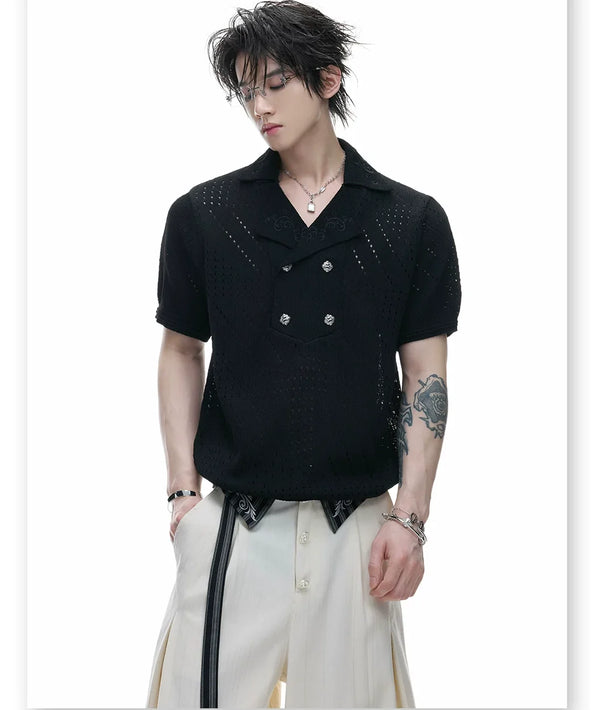
Men who wear Dark Academia Goth almost always start at the blazer. It is the piece that already exists in classic menswear anyway and is the easiest to shift towards black. The second step is usually the shirt: a white shirt stays academically neutral, a black shirt with a stand collar tips towards Gothic at once. Many men underestimate how strongly accessories work on a rather reduced base outfit, a single signet ring or a chain under the shirt collar is often enough, where a woman would work with several layers. Beard grooming and haircut also play a role: a classic side parting reads academic, longer, unstructured hair shifts towards Gothic. Anyone who wants to wear the look professionally, for example in a law firm or university administration, should stay with a single gothic detail (ring or collar shape) instead of combining several at once.
Anyone unsure how far this can be pushed in professional everyday life finds a more detailed guide in the guide to Goth Business Casual on where the line between interesting and too much lies. For private everyday life the line applies less strictly, here it counts more how the look photographs and wears as a whole. Three example outfits show how the individual building blocks from this guide translate into real, wearable combinations.
Examples
Modern Dark Academia Outfits: 3 examples
The following three combinations show different levels of formality, from the library to the concert. Each uses the same base logic: academic silhouette, gothic colour and texture, a maximum of three to four accessories. None of the three needs a single piece that would not also work on its own in a normal streetwear outfit, the effect comes from the combination, not from extreme individual pieces.
The difference between the three variants rarely lies in new pieces, but in the amount of gothic details actively used. Anyone who wants the library variant reduces to one accessory. Anyone who wants the concert variant combines three or four at once.
Anyone who wants to see even more ready-made combinations finds further outfit examples there without the Gothic share, useful as a comparison to see how strongly colour and texture actually shift through the crossover. How it feels in motion and in real light shows most readily in short clips instead of static product photos.
The striped shirt in the video shows how close Businesscore and Dark Academia lie to each other, both work with structured tops and a formal base stance. For the Gothic crossover usually a single change is enough: turn the colour to black, add a detail like a ring or a chain. How this translates concretely into everyday life, from the morning routine to laundry care, is shown in the next section.
Practice
How to style Dark Academia Goth in everyday life
The easiest entry is to take an existing Dark Academia outfit and swap exactly one piece, usually the coat or the trousers for the black variant. Only once this one swap sits do accessories come in. Anyone who changes everything at once quickly loses the connection to the academic base and ends up at pure Gothic. For the working week a fixed rotation is worth it: two to three base pieces (blazer, shirt, trousers) that can be recombined with changing accessories, instead of assembling a completely new outfit every day. Shoes often remain the underestimated factor: a classic Oxford shoe in black pulls the look towards the library, a platform boot pulls it towards the concert. Anyone wearing the look publicly for the first time should start with the library variant, it is closest to familiar clothing and least likely to be read as a costume.
This step-by-step approach also prevents the most common mistake with this look: too many gothic signals at once. An outfit with mesh, studs, choker and band-shirt print all at the same time loses the academic base completely and becomes pure Gothic, which is perfectly fine in itself, but no longer the crossover this is about. The following mistakes show up most often when people try the look for the first time.
Avoid mistakes
Common styling mistakes
These six mistakes show up most often, sorted by how strongly they destroy the academic base tone.
Most of these mistakes can be avoided by stepping back briefly with each new piece and checking whether the academic base is still visible. A second factor often overlooked is the season: Dark Academia Goth is mostly perceived as an autumn and winter look, but with a few adjustments it works all year round.
Season
Dark Academia Goth in summer vs. winter
In winter the look is easiest to pull off: wool coat, knitted jumper, sturdy boots, all core pieces are winter wardrobe anyway. In summer the coat disappears, and that is exactly where most attempts tip, because without the outer layer the academic structure is missing. The solution lies not in more layers but in fabric choice: a light, structured blouse with a stand collar replaces the wool jumper, a short, fitted waistcoat replaces the coat. Corduroy trousers give way to lighter cotton or linen blends in the same colour. Accessories stay more important in summer than in winter, because they are often the only visible gothic details when the heavy outerwear is missing, a ring, a choker, a chain then carry the entire colour statement. Black in direct sun is also warmer than lighter colours, anyone wearing the look in high summer should go for light fabrics instead of fewer clothes.
Whether winter or summer variant, in the end every combination carries the same two to three signature pieces, only in different weighting. Anyone who wants to assemble the complete look at once finds a final selection here that combines formal tops with the decisive Gothic statement piece.
With this overview the complete look can be assembled. What remains are the questions most often asked about Dark Academia Goth.
FAQ
Frequently asked questions about Dark Academia Goth
The following questions come up most often when people try the crossover for the first time, from the distinction from pure Gothic to the question of whether the look even wears in summer.
Is Dark Academia the same as Gothic?
How does Gothic differ from Dark Academia?
What belongs to a Dark Academia Goth outfit?
How do I combine Dark Academia Goth for everyday life?
Is Dark Academia Goth just a TikTok trend?
In the end Dark Academia Goth remains a modular kit, not a fixed recipe. The four categories from this guide can be remixed freely, depending on whether the day calls more for the library or the concert. Anyone who starts with a single piece usually finds their own degree of shift faster than with a complete outfit change.
What do you think?
Tell us on @fuga_studios
About the author
Philipp Fuge — Founder · Berlin
Founder of Fūga Studios. Writes the journal himself. Berlin · Shanghai · Tokyo · Poznań — four cities, one logic.