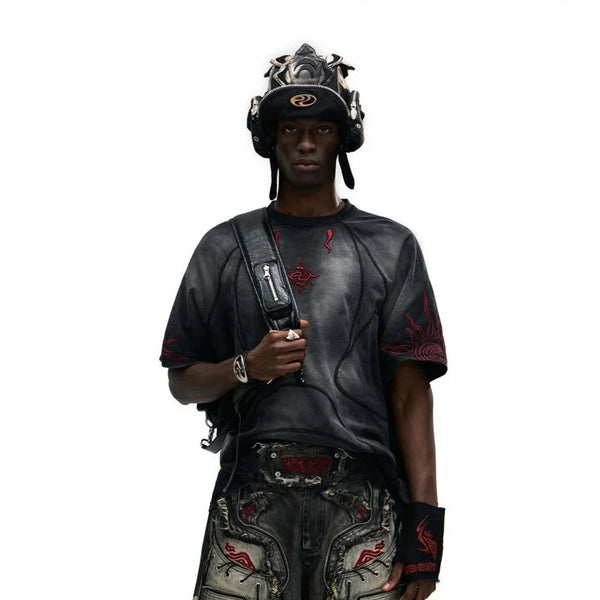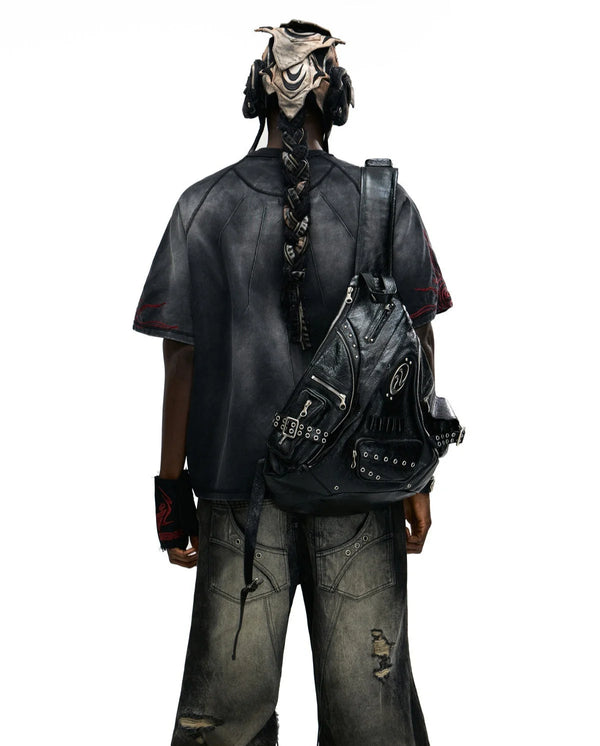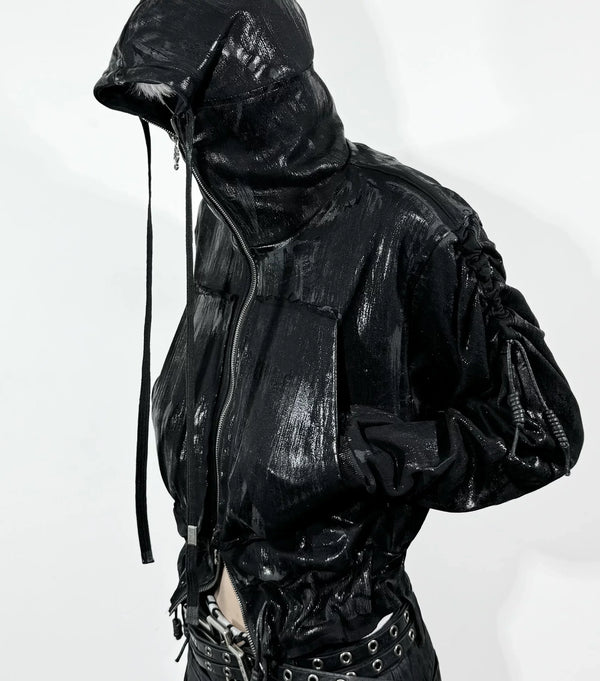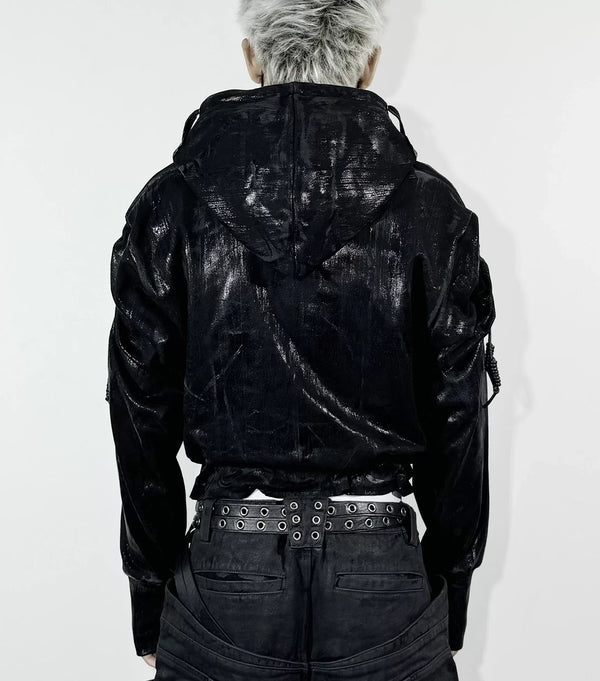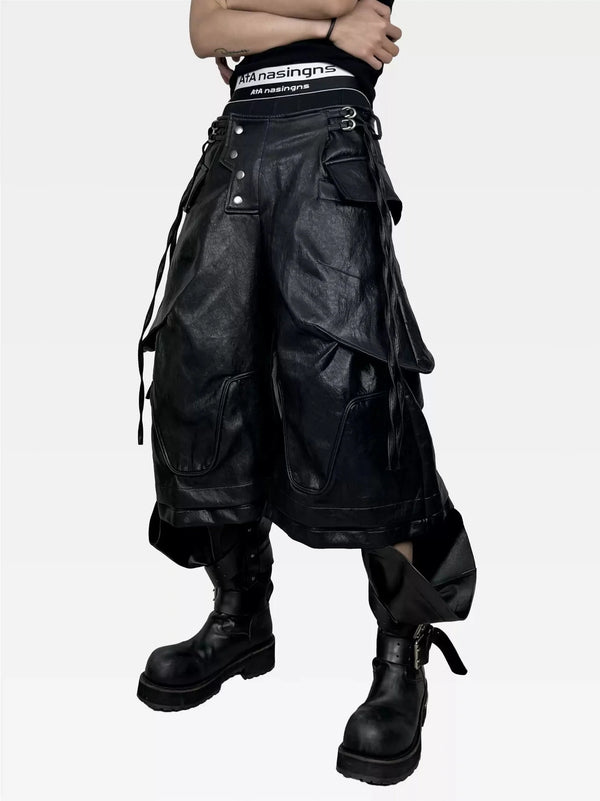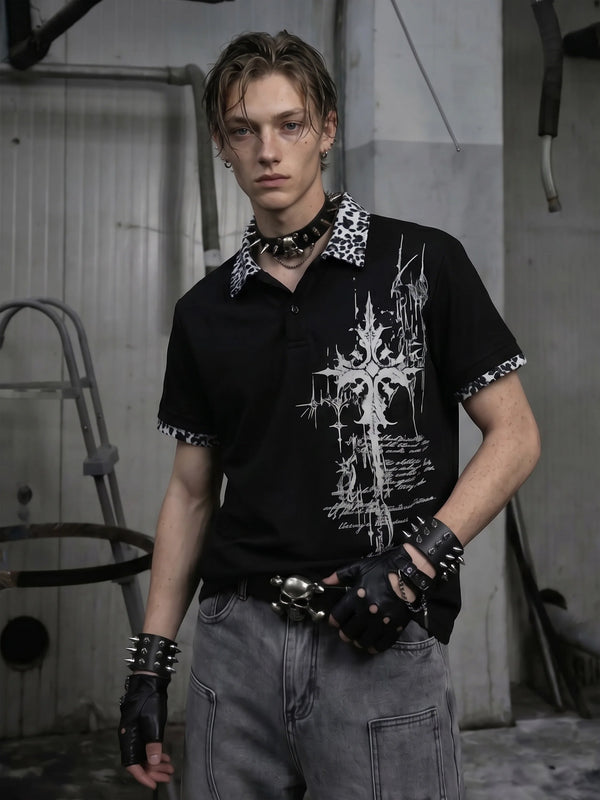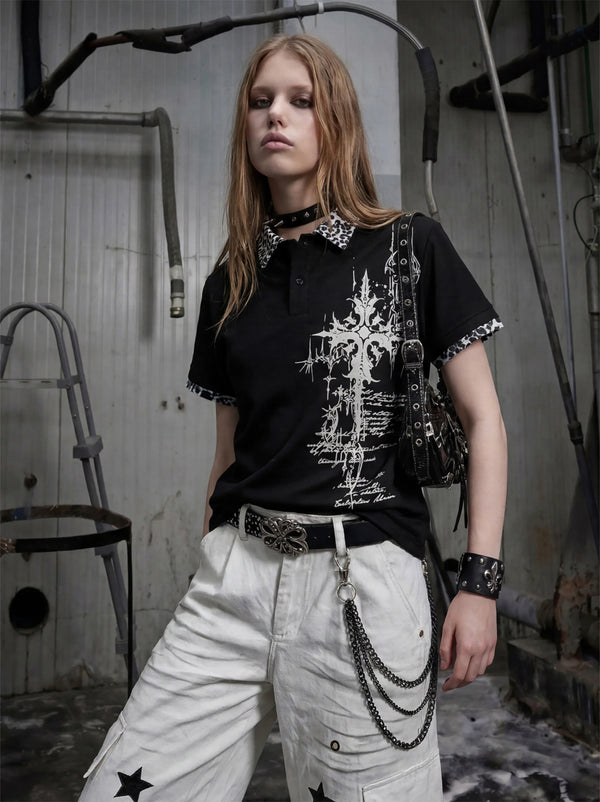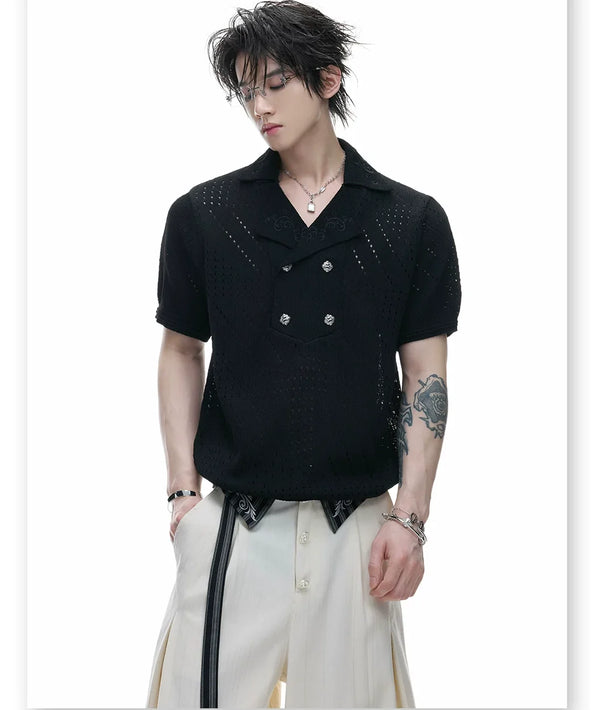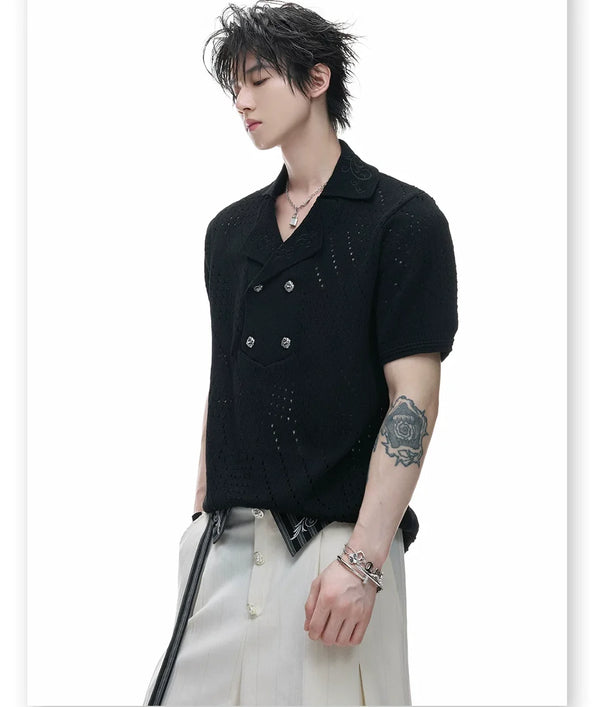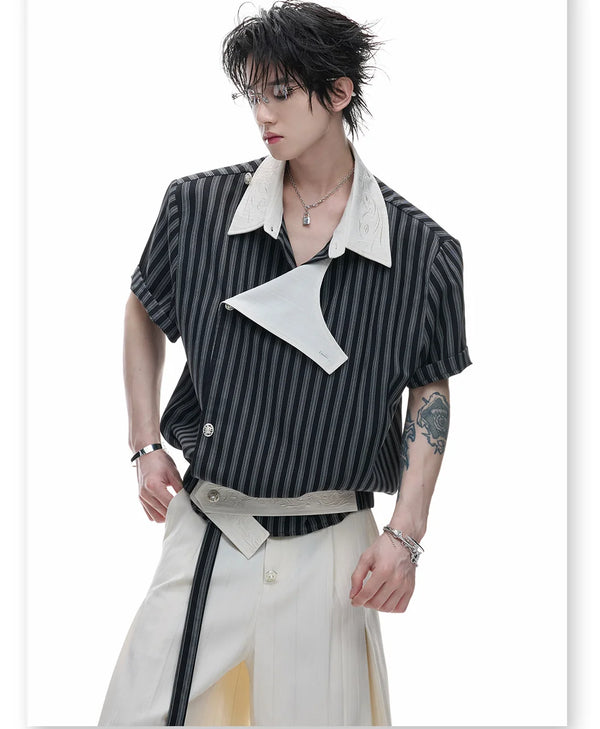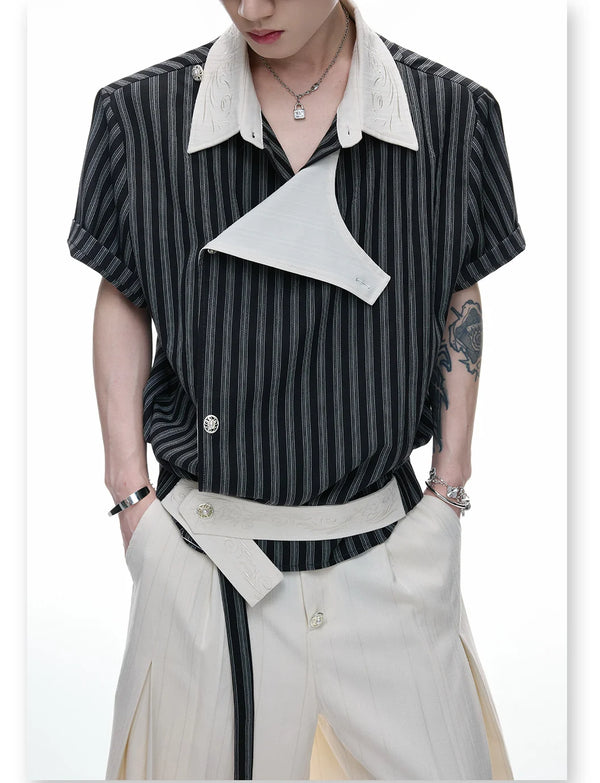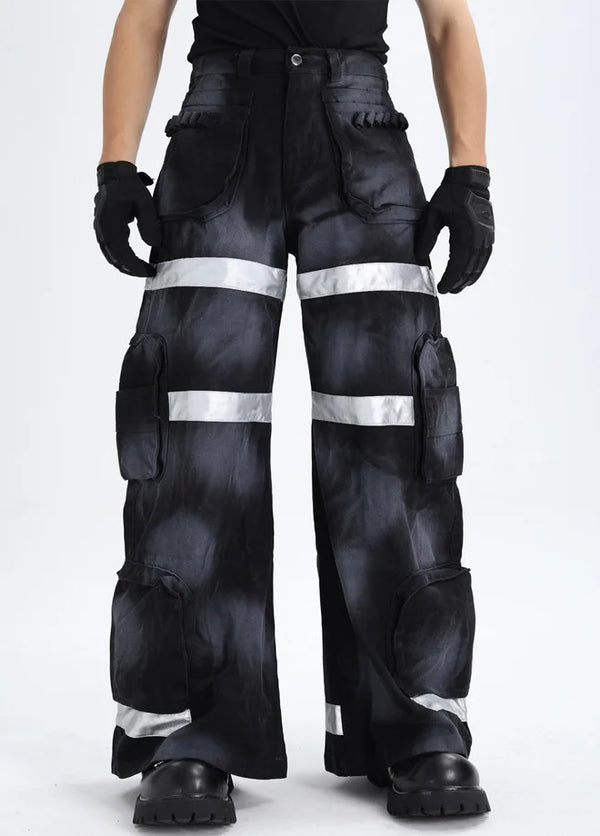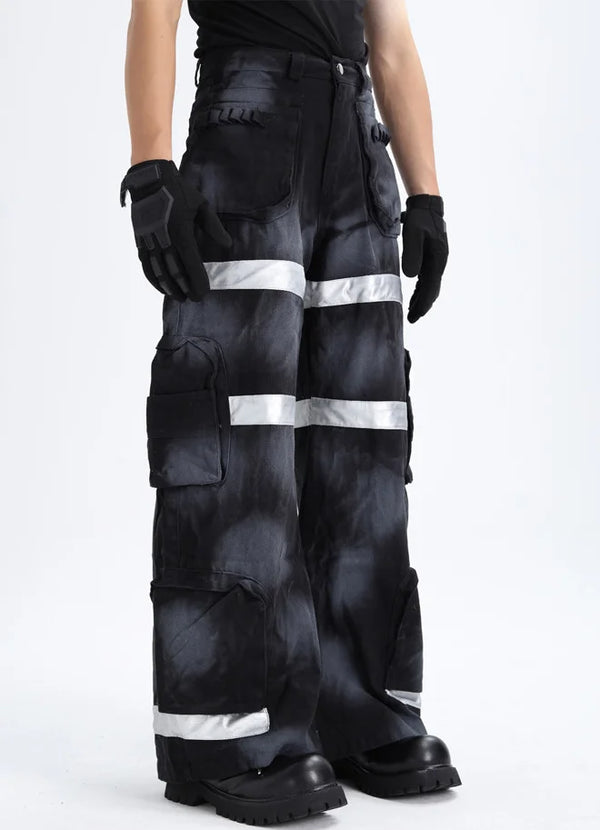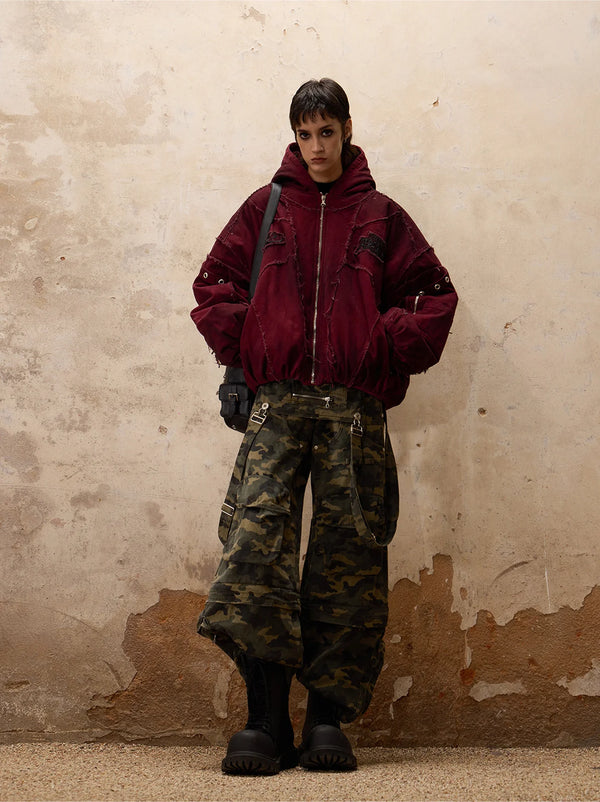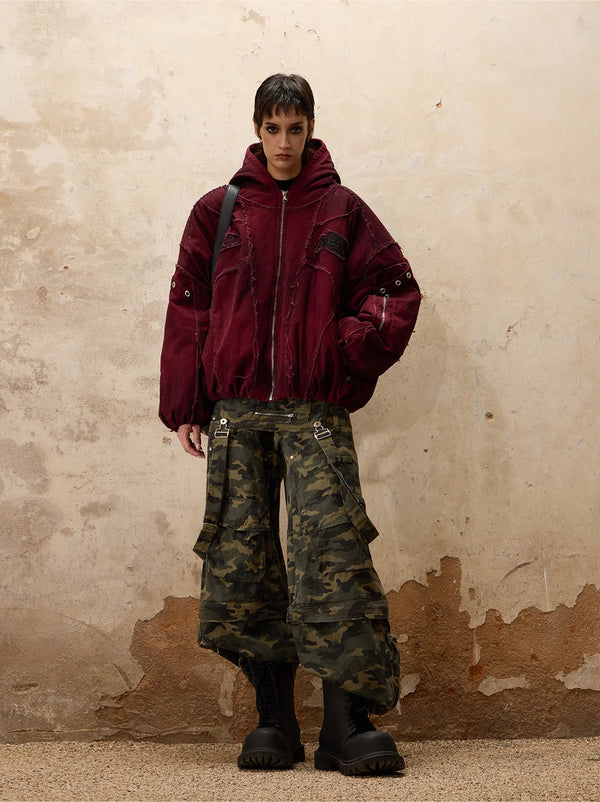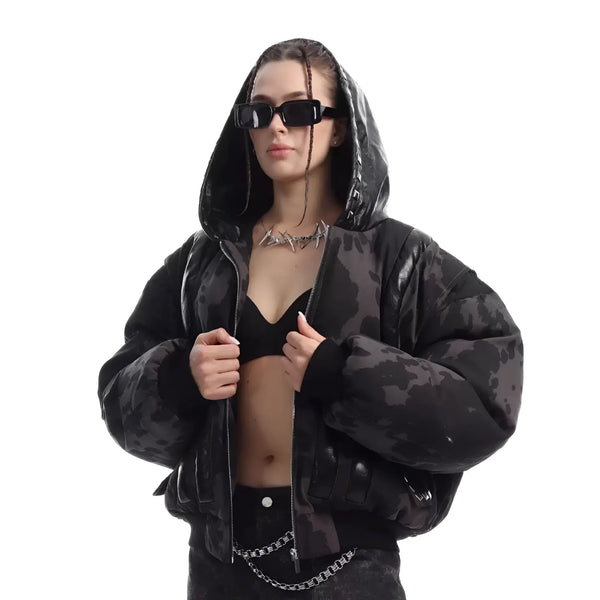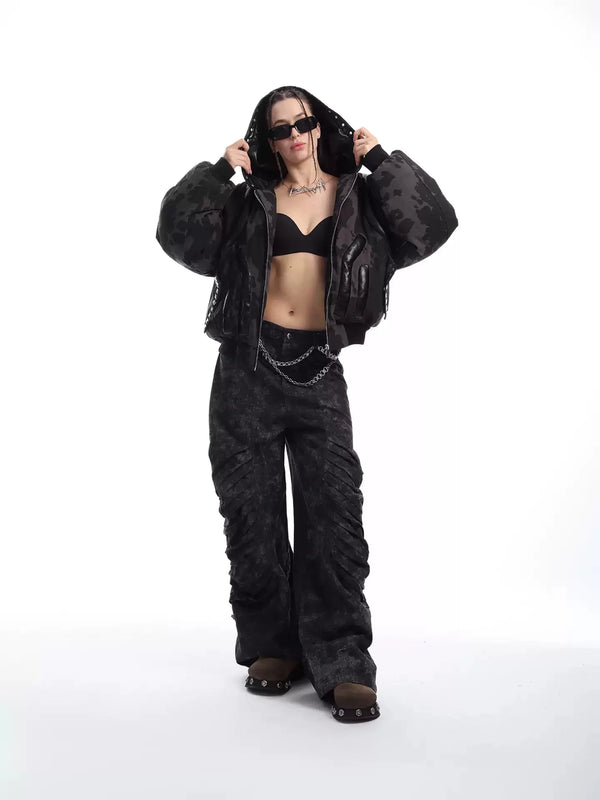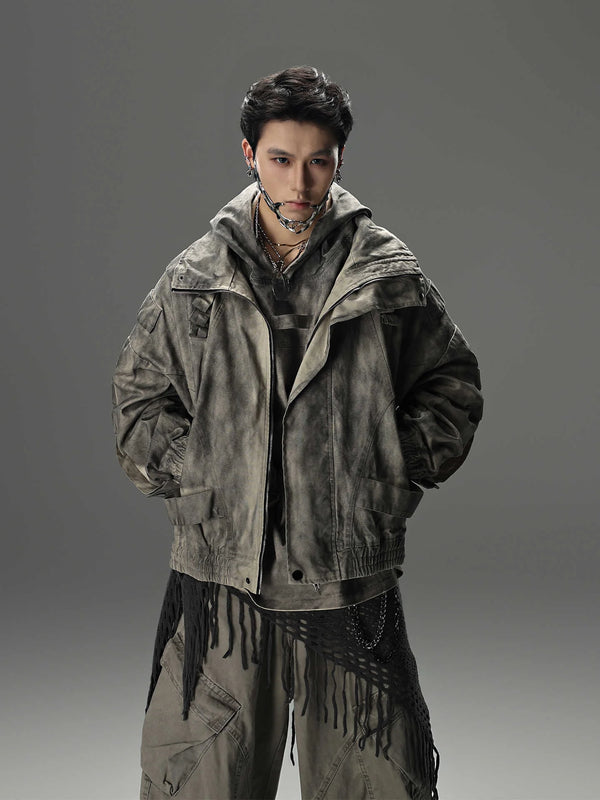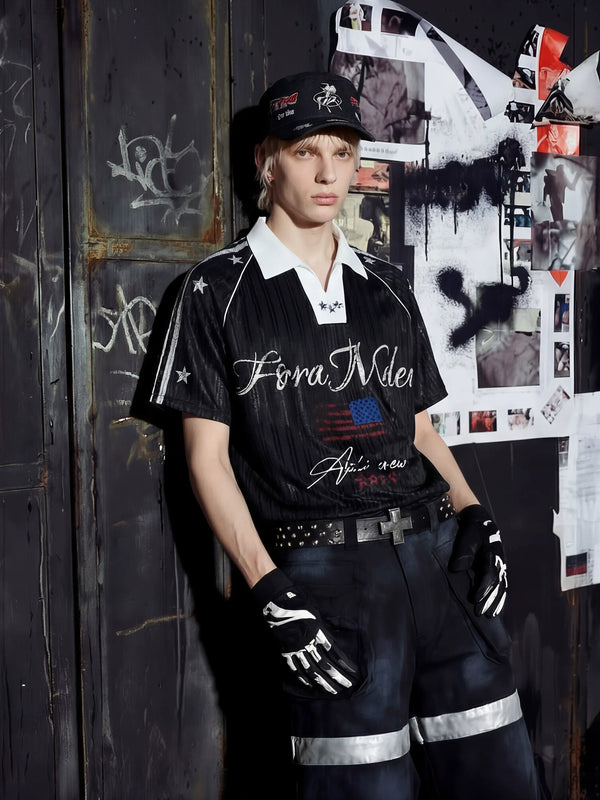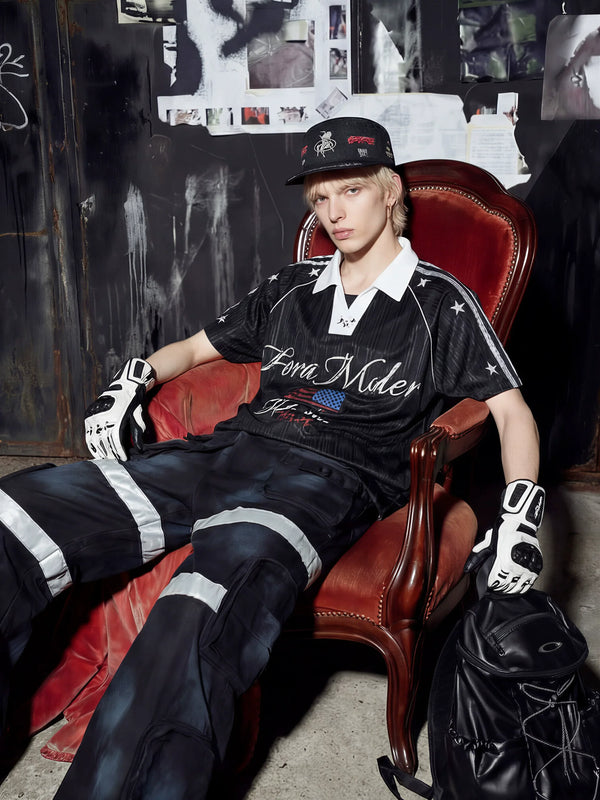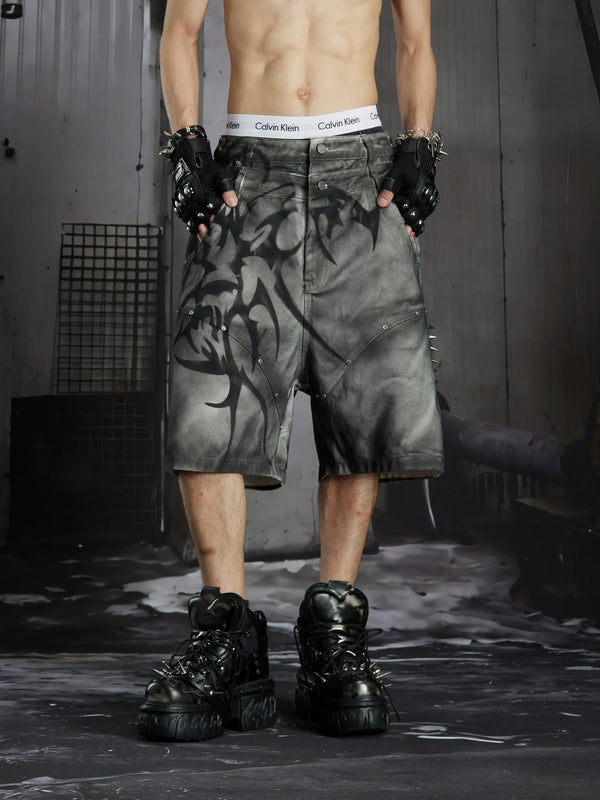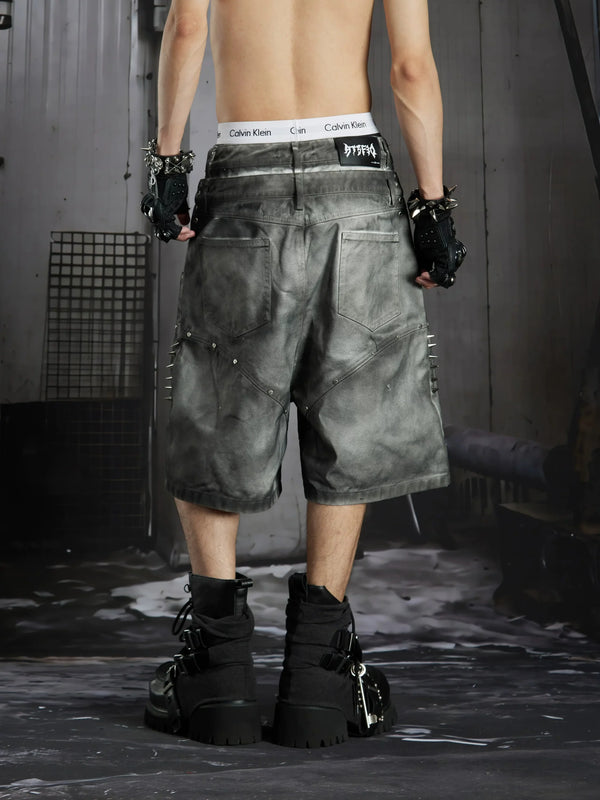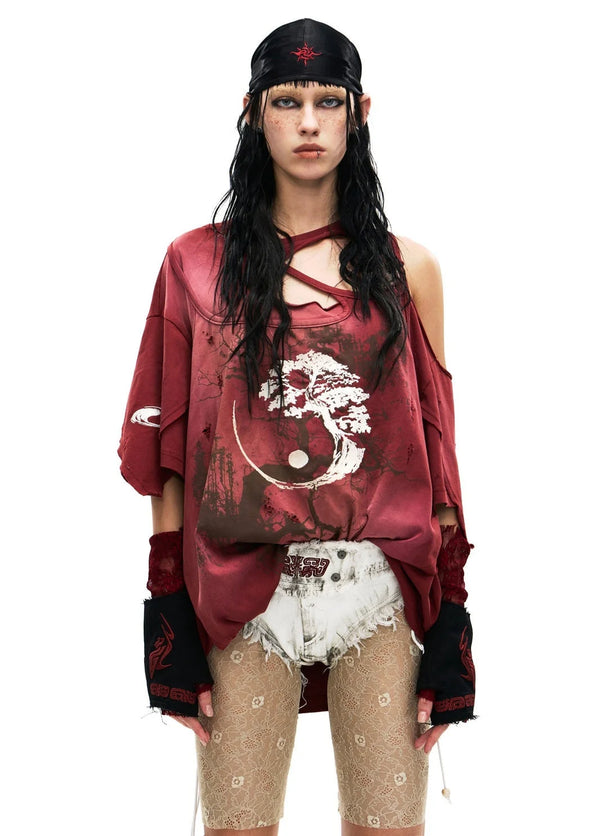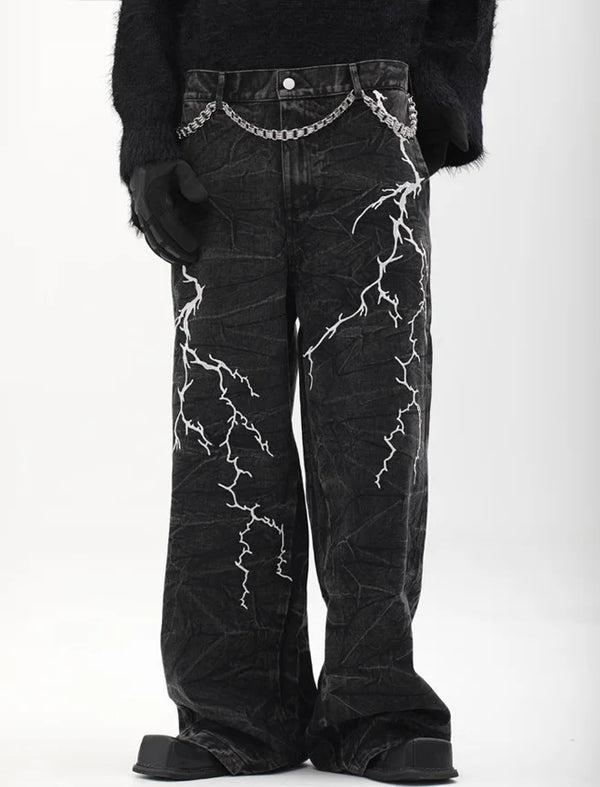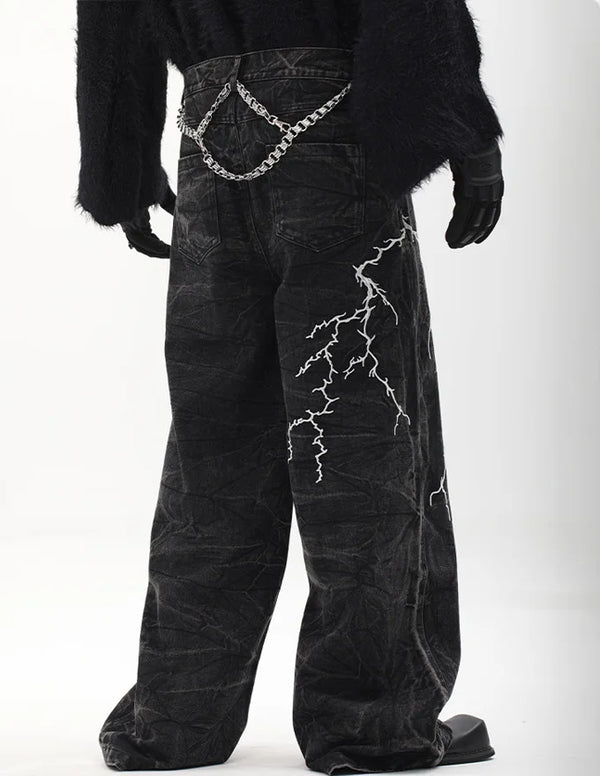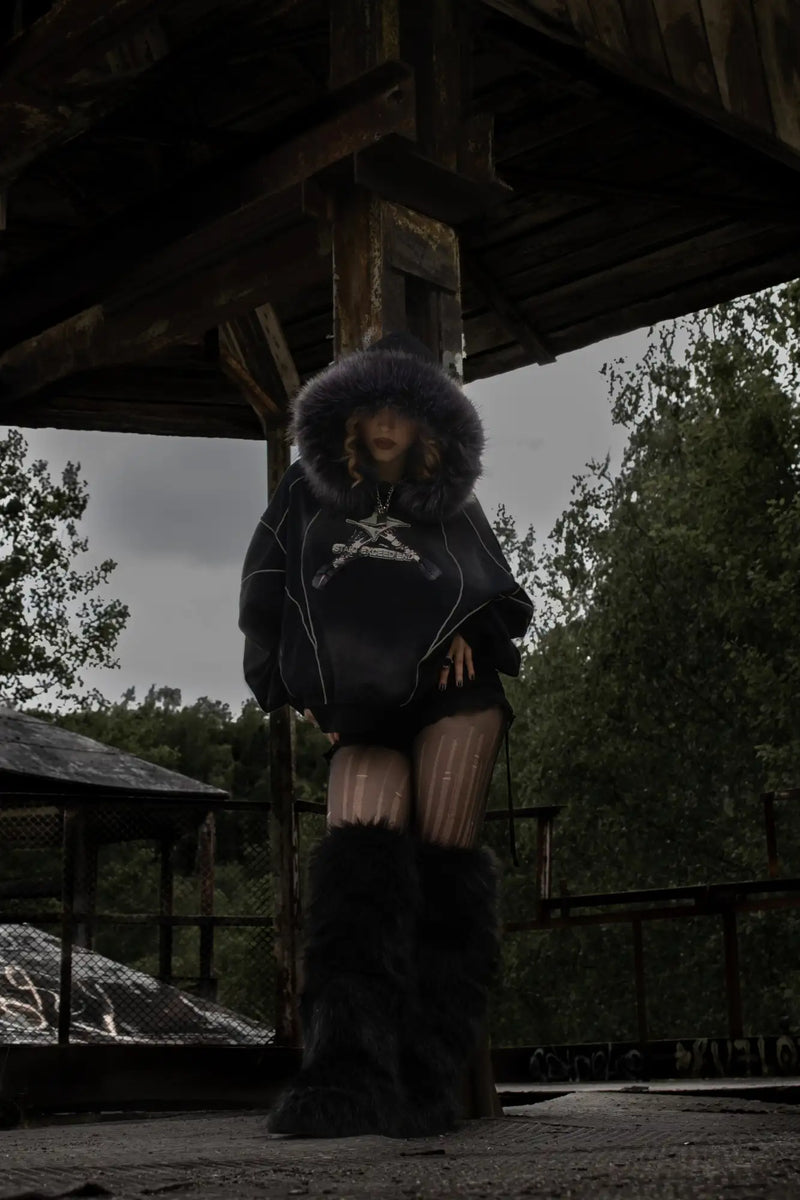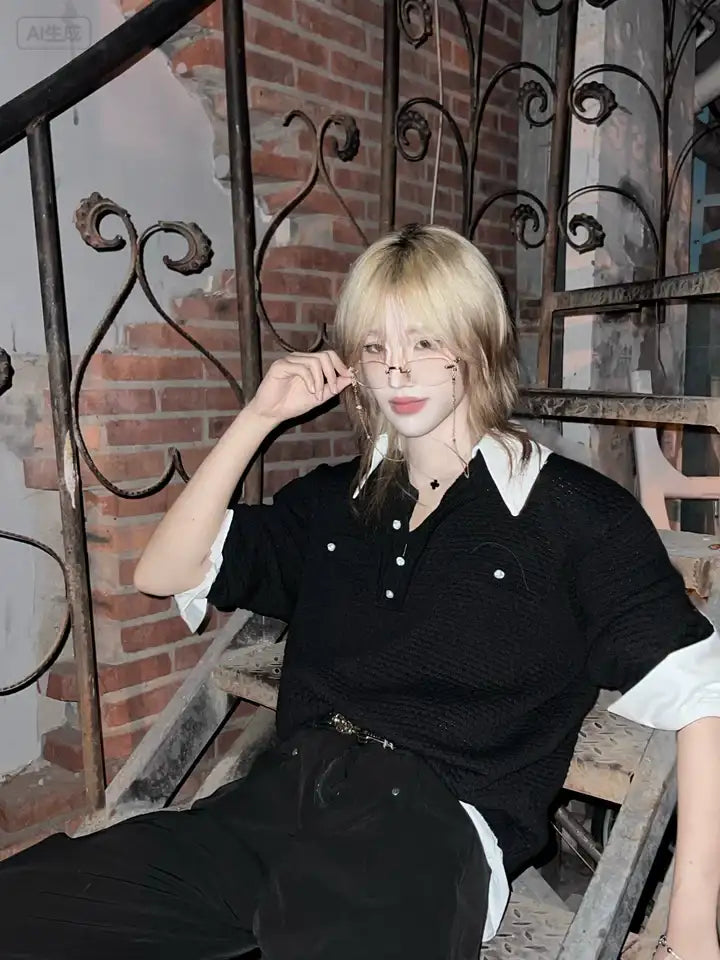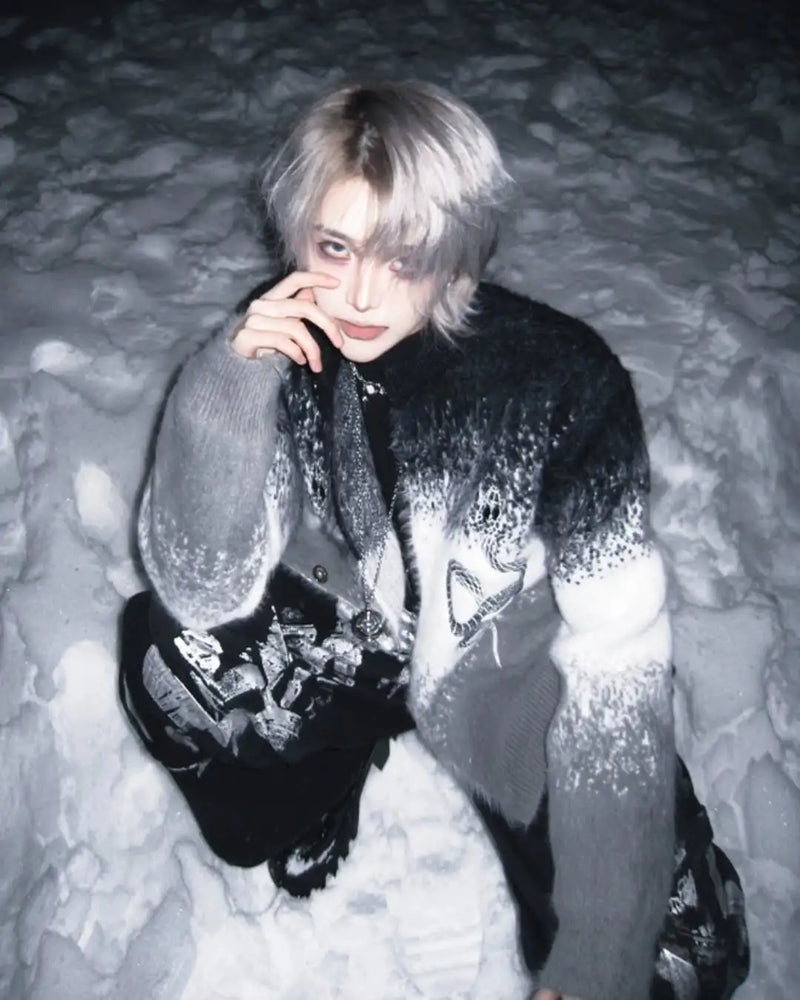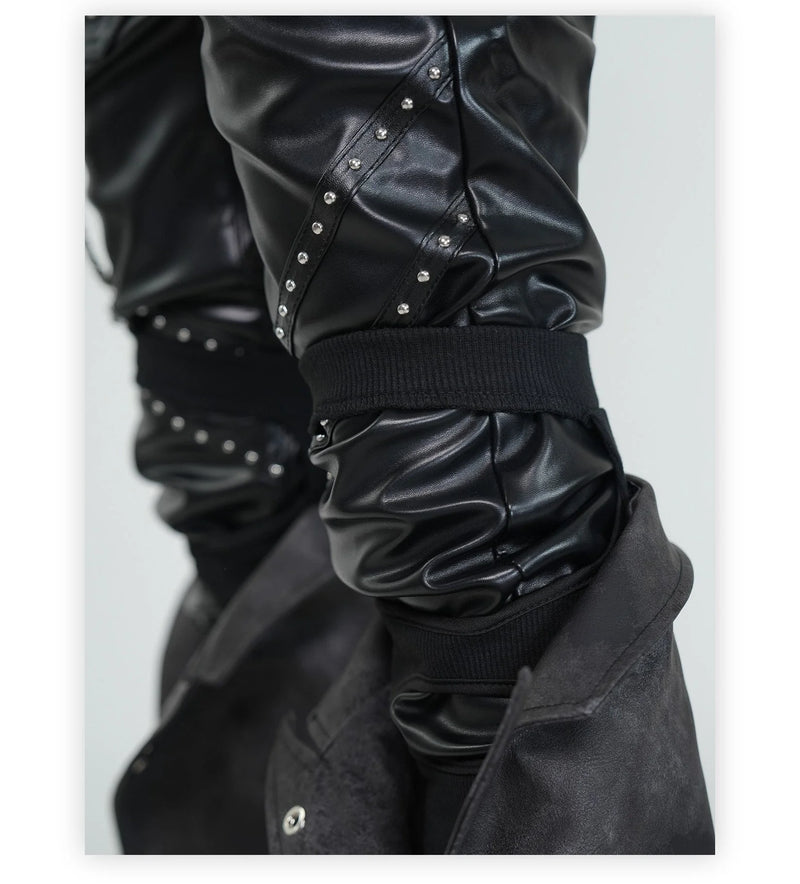
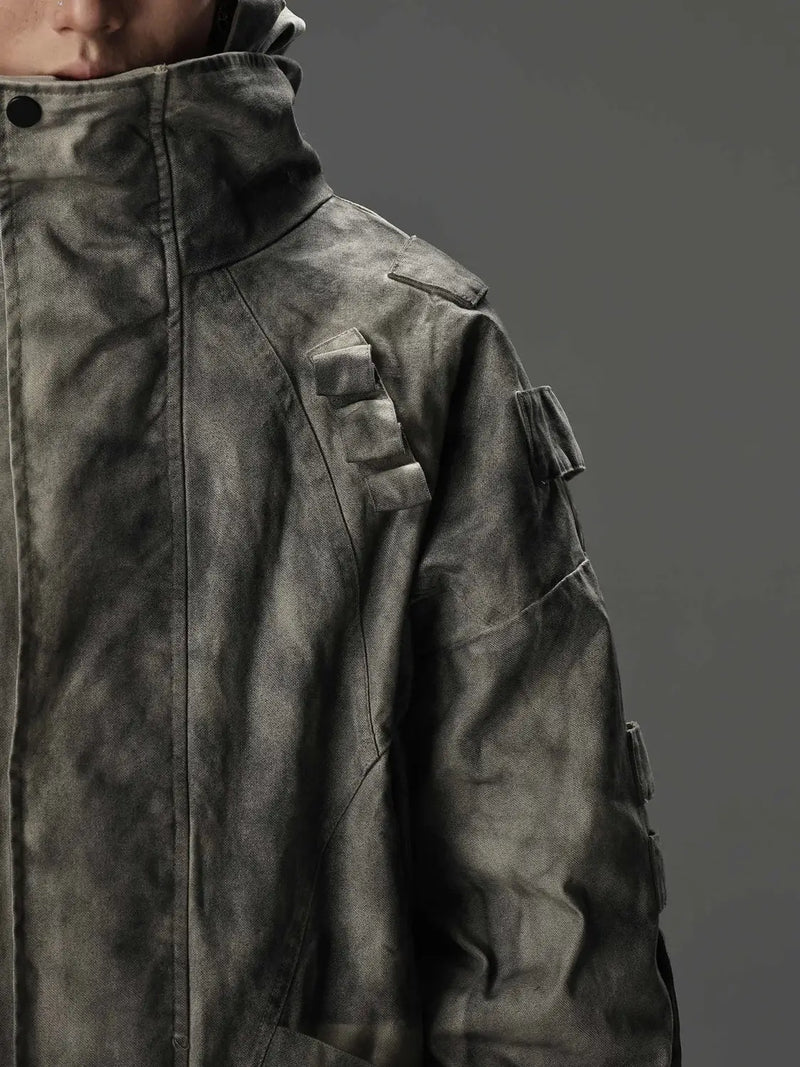
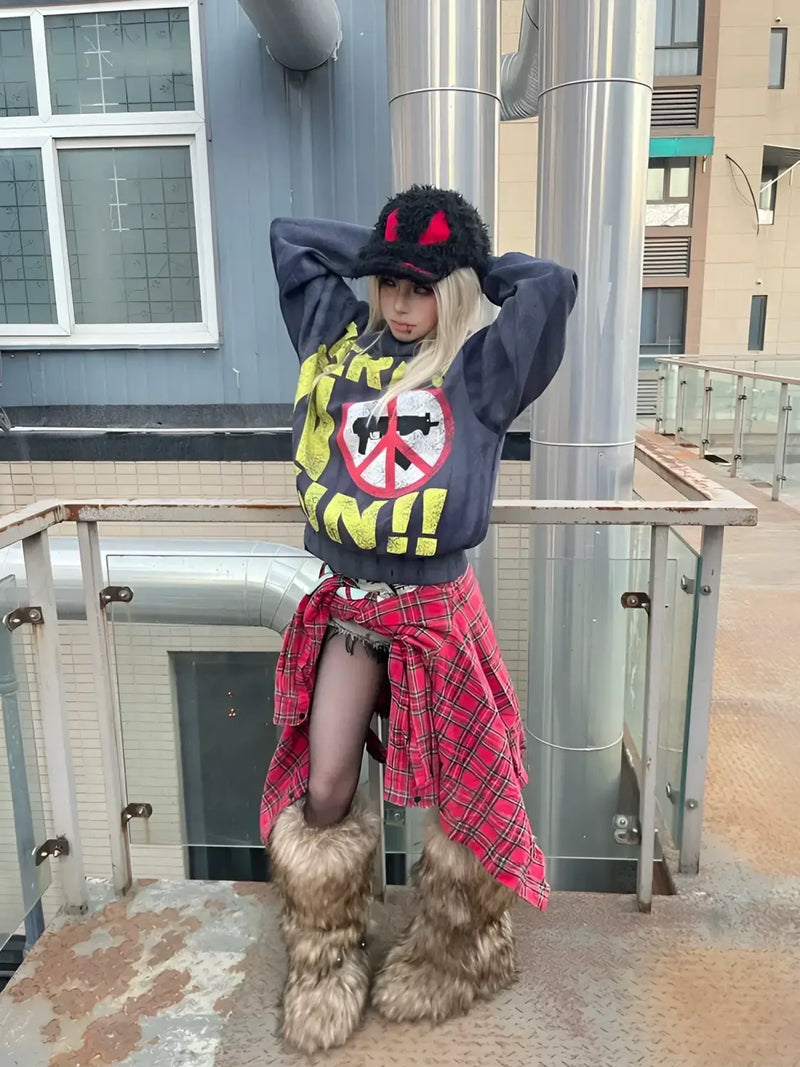
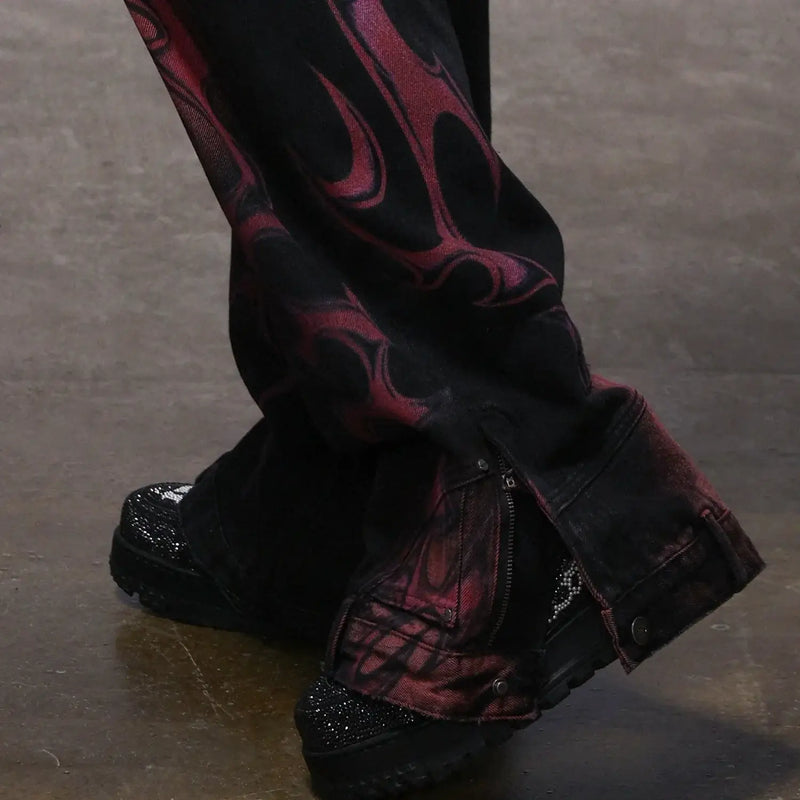
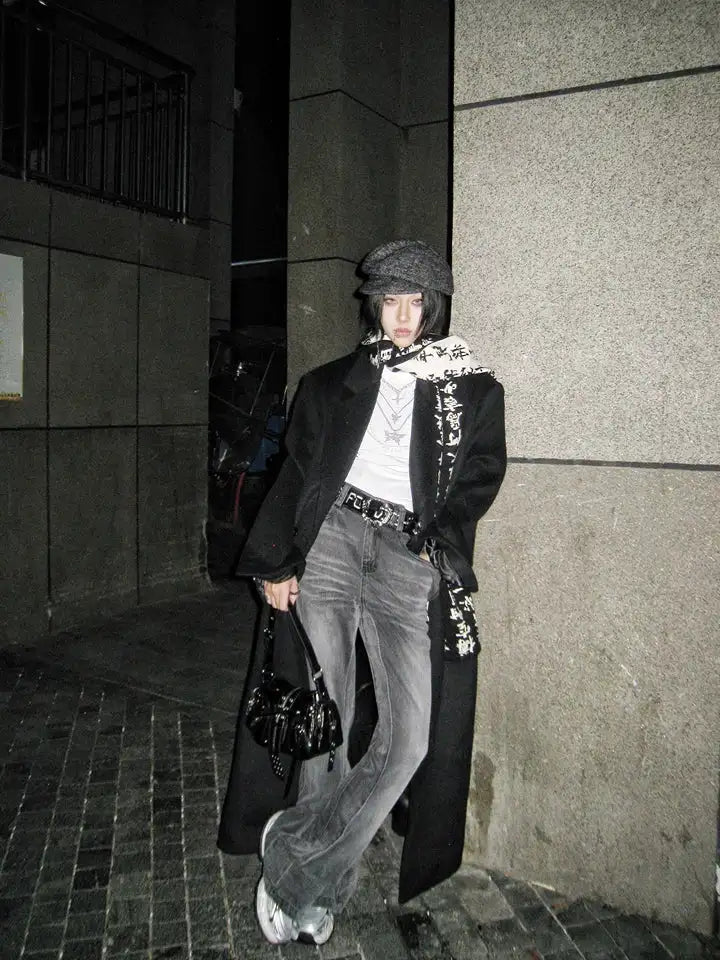

A floor-length coat, buttoned all the way up to the throat. A necklace that looks like an heirloom from someone else's family. Lace at the wrist, thick-soled boots underneath. On TikTok this has been running for months under tags nobody has standardised: dark romantic, vampire aesthetic, mourning core. They almost always mean the same thing. A look that borrows from the 19th century and still works when you get on the train with it on a Tuesday morning.
Victorian Gothic Fashion is the translation of Victorian mourning and evening dress into a wearable dark style: high collar, long line, velvet, lace and silver instead of gold. It is a branch of Gothic fashion and works through silhouette rather than print. Build it right and you look historically informed. Build it wrong and you look like the 31st of October.
The rest of this article sorts that out: what Victorian Gothic Fashion actually is, why the Victorians themselves were so obsessed with gothic, which five variants are in circulation today, how the look is built differently on men and women, which fabrics hold up, and which six mistakes reliably destroy it.
Definition
What is Victorian Gothic Fashion, and what defines it?
Victorian Gothic Fashion describes dark clothing that formally takes its cue from the fashion between 1837 and 1901. The template is rarely the everyday dress of the era, almost always the mourning wardrobe: matte black without shine, high closed necklines, long sleeves, heavy fabrics, and a jewellery vocabulary of onyx, jet and hair jewellery. Exactly that combination still looks serious today without being loud.
The decisive thing is the line. Victorian clothing builds an unbroken vertical that starts at the chin and ends at the floor. A stand collar, a closed button placket, a coat that goes past the knee, a skirt that covers the calf. Modern streetwear works against this vertical by breaking it in the middle: cropped tops, deep necklines, short jackets. Victorian Gothic turns that back.
The second building block is texture instead of colour. Because almost everything is black, the material does the work colour normally does. Velvet swallows light, lace lets it through, leather reflects hard, wool stays dull. A good Victorian Gothic outfit has at least two of these surfaces in the frame and lets them run against each other. A bad one has five and looks restless.
1837
Start of the Victorian era
2 Jahre
Usual mourning period of a widow
1901
Victoria's death, end of the era
These numbers explain why black of all colours became the signature of an entire era. After the death of Prince Albert in 1861, Queen Victoria wore mourning for forty years until her own death. What the court wore, the middle class copied. A whole generation grew up with the idea that black is not gloomy but correct.
Distinction
Is Victorian clothing automatically gothic?
No. The Victorian era was a span of 64 years with crinolines, bustles, reform dresses, sportswear and uniforms. Most of it was colourful, patterned and anything but gloomy. Victorian clothing only becomes gothic when it narrows itself to one particular section of that time and darkens it.
The dividing line runs along three questions. Is the colour palette reduced to black plus one or two muted secondary tones? Is the reference point mourning, night or death instead of tea, garden or ballroom? And is the whole thing worn deliberately as a counter-position rather than as historical reconstruction? Three times yes means Victorian Gothic. Twice yes usually means historical costuming.
- Victorian, not gothic: pastel tea dress, floral parasol, cream lace blouse, straw hat with ribbons.
- Gothic, not Victorian: mesh shirt, platform boots, studded belt, band shirt with print, everything invented after 1980.
- Both at once: black stand collar with lace jabot, long wool coat with a double-breasted front, onyx brooch, lace-up boots.
- The borderline case: Steampunk. Same era, different intention. Brass, cogs and brown pull the look away from mourning and towards adventure.
In practice that means: you can put a single Victorian piece into a modern outfit and get Victorian Gothic. You cannot put on a complete historical outfit and hope it reads as contemporary. The style lives off the quote, not the copy.
Origin
Why did the Victorians love gothic so much?
The answer lies not in fashion but in architecture. From the 1830s onward the Gothic Revival was running in Britain: a movement that picked up medieval pointed arches, tracery and towers again and built them into churches, railway stations and parliament buildings. The Palace of Westminster was erected in exactly that style from 1840. Anyone walking through London back then walked through an artificial gothic.
The reason was ideological. Industrialisation was producing factory halls, soot and mass-produced goods, and gothic stood for the opposite: craft, faith, seriousness, permanence. Critics like John Ruskin and architects like Augustus Pugin argued openly that gothic forms were morally superior. So gothic was never just decoration. It was a stance against its own present.
The literary track ran in parallel. The gothic novel was already older, but the 19th century brought the texts that still supply the image bank today: Frankenstein, Wuthering Heights, Jane Eyre, Dracula. Add a mourning culture that did not clear death away but staged it, including mourning jewellery made from the hair of the dead. This mixture of architecture, literature and ritual is the sediment today's look draws from.
For you that mainly means one thing: the style has content. It did not emerge as a Halloween aesthetic but as an expression of resistance against a time that wanted to make everything faster and cheaper. That is also why it works well again today.
Iterations
The five variants of Victorian Gothic Fashion
The term gets used for very different looks. These five variants cover practically everything running under the keyword on Pinterest and TikTok. They differ less in cut than in material and in the hardness of their edges.
The order is not a ranking. It describes a transition from historical to modern. The further down you get in, the less the result needs explaining and the more often you can wear it.
What holds for all five variants: there is exactly one focal point. One collar, one brooch, one sleeve. As soon as two pieces fight for attention at the same time, the picture tips into the theatrical.
Practice
What do Victorian goths actually wear today?
In everyday life considerably less than search results suggest. The typical look consists of two or three Victorian signals on a modern base. The base is usually banal: black trousers, black top, boots. On top of that comes what makes the style readable.
The most common signals are a high or ruffled collar, a long coat with a waist seam, cuffs with lace, a brooch or a velvet ribbon at the neck, and lace-up boots instead of smooth sneakers. Three of them are enough. Wear all five at once and you no longer have an outfit, you have a stage set.
Both pieces work with washed black instead of deep black. That matters more than it sounds: a slightly washed-out top looks worn and takes the costume weight off the rest of the outfit. Freshly dyed black next to velvet quickly reads as fancy dress.
What the video shows well: the effect comes from length and drape, not from details. From two metres away nobody sees your lace cuff. What gets recognised is the contour. That is why every Victorian Gothic outfit is built through the silhouette first and decorated only afterwards.
Women
Victorian Gothic Clothing Female: silhouette, fabrics, layers
On women the look almost always runs through the lower half. A length below the knee reads as historical immediately, a length above the knee almost never. If you only want to change one piece, change the skirt or trouser length, not the top.
The second lever is the sleeve. Victorian sleeves sit low on the shoulder and narrow towards the wrist, or they puff at the top and run into a cuff at the bottom. Both are rare today and therefore land immediately. A modern raglan sleeve, by contrast, erases the quote completely, no matter how much lace you wear with it.
For everyday wear a long, wide-falling trouser works just as well as a skirt, as long as it almost covers the shoe. That is the real trick of the era: the foot disappears, the line runs through. A flared cut or a very wide trouser does that without any historical detail.
Layering follows a simple order: tight on the body, wide over it, long at the end. Tight top, wide waistcoat or blouse, long coat. Turn the order around and wear the widest piece directly on the body and you lose the waist, and with it half the Victorian effect.
Men
Victorian Goth Male: how the look works on men
Men have it formally easier, because the Victorian menswear wardrobe still lives on in classic tailoring today. Waistcoat, shirt with collar, long coat and slim trousers are not historical costume pieces but normal garments. You only have to choose them dark and exaggerate the length.
The three core pieces are: a coat that goes at least to mid-thigh, a waistcoat or a second layer over the shirt, and a collar worn closed. A tie is optional, a narrow band or a jabot replaces it. Everything else is accessory.
The most common mistake on men is the shoulder. Victorian coats sit close on the shoulder and widen downwards. Modern oversize jackets do the opposite: wide shoulder, straight drop. If you wear an oversize silhouette, get the contour back with a waistcoat underneath, otherwise the look reads as streetwear with a coat.
Shoes decide the rest. A lace-up boot with a visible row of eyelets or a Chelsea boot with a narrow toe works. A visibly modern sneaker with a thick sole pulls the whole outfit back into 2026 and turns the coat into a costume piece. If you want to wear sneakers, cover them with the trouser length.
Skirts
Victorian Goth Skirt: length, volume and modern alternatives
The Victorian skirt works with volume in a clearly defined place. First round over the crinoline, later shifted to the back over the bustle. Both are useless in everyday life, but the basic idea carries over: narrow waist, fullness below, low hem.
In practice that means a maxi skirt with pleats, a circle skirt just above the ankle or a tiered skirt with two or three layers. The transition to the top matters. A skirt with volume needs a visible waist above it, otherwise the silhouette looks like a sack. A belt, a corset top or a tightly buttoned waistcoat does the job.
If a skirt is not an option, a very wide trouser takes over the same function. A palazzo cut, a flare or a tiered trouser with volume at the hem builds the same vertical and is considerably easier to wear in winter. The look loses nothing.
The order is deliberate. The coat changes the most and costs the most, the accessory changes the least and costs the least. If you are unsure, buy from the bottom up and watch how often you actually put the pieces on.
Material
Velvet, lace, brocade: which fabrics carry the look
Because colour drops out, the fabric decides. Velvet is the backbone of the look because it swallows light and creates depth. Cotton velvet falls heavier and creases more, viscose velvet falls more fluidly and shines more. For Victorian Gothic the matte, heavy velvet is the better choice, because shine destroys the mourning reference.
Lace only works in a few places: collar, cuff, hem. Large-area lace across the whole upper body reads as lingerie or as carnival. Watch the pattern. Floral, dense patterns look historical, geometric or very coarse mesh structures look modern and pull the look towards punk.
Brocade and jacquard are the third level. A single piece with a woven pattern in tone-on-tone black gives the outfit depth without introducing colour. Two patterned pieces at once are too much. Wool and heavy twill take over the role for coats and waistcoats, because they hold the contour instead of clinging to the body.
What you should avoid is cheap polyester satin. It shines hard, throws hard creases and reads as costume fabric in photos immediately. If your budget is limited, invest in one good velvet piece and keep the rest in plain black cotton. The result is better than three shiny pieces.
Timeline
Victorian Gothic Fashion History: from 1837 to today
The style has no straight line but three surges. The first is the era itself, in which mourning dress, Gothic Revival and gothic novel coincided. The second is the rediscovery from 1979, when the British post-punk scene helped itself to exactly this stock. The third is running right now, driven by series, games and a generation that finds vintage silhouettes more interesting than new ones.
- 1837 to 1861: early Victorian fashion, tight waist, wide skirts, black still mostly mourning dress.
- 1861 to 1901: after Albert's death mourning wardrobe becomes mass-produced, jet and onyx become standard jewellery.
- 1979 to 1989: post-punk and the early goth scene pick up lace, stand collars and silver jewellery again.
- 1992 to 2005: film and television supply the image bank anew, from Coppola's Dracula to Interview with the Vampire.
- From 2022: the silhouette comes back via streaming and social, this time without scene membership as a precondition.
The difference from the eighties wave matters. Back then the look was tied to a music scene, to clubs and to a particular record collection. Today it gets used as pure formal language. That makes it more accessible and at the same time more arbitrary. Anyone who means it seriously gets the content back through the details, not through the quantity.
Dark Academia is the closest relative and often gets confused with it. The difference is the colour palette and the reference point: Dark Academia works with brown, tweed and library, Victorian Gothic with black, velvet and mourning. Mix both and you land on a third thing that usually looks good but serves neither code completely.
Build
How to build a Victorian Gothic outfit in four steps
The order is always the same, whether you wear a skirt or trousers. First the line, then the texture, then the neck, then a single detail. Shop in reverse order and you end up with a box full of brooches and no working outfit.
Step one is the length: something on you has to end below the knee. Step two is the texture: one piece in the frame has to treat light differently from the rest, usually velvet or leather. Step three is the neck: closed collar, velvet ribbon or lace jabot. Step four is a detail that holds the eye, and exactly one.
For everyday wear you can drop step four and still get a clean outfit. For evenings, concerts or photos the detail comes in. The advantage of this order: you can switch the same base outfit between discreet and conspicuous without changing clothes.
The cardigan takes the role of the waistcoat if a real waistcoat feels too formal to you. It gives you the middle layer without widening the shoulder, and can be worn open so that the vertical is in the frame twice. That is the easiest way to build a Victorian contour out of two modern pieces.
Mistakes
Six mistakes that tip the Victorian Gothic look
Almost all failed attempts founder on the same six points. None of them has anything to do with budget. They are decisions you make in the moment you put the outfit together.
The seventh mistake is not on the list because it does not concern a garment: posture. A look built out of seriousness and length does not work with apologetic body language. If you want to explain yourself in the outfit, you have put on one piece too many.
Buying
Where to buy Victorian Gothic Fashion without ending up in a costume shop
Most search results on the topic lead to cosplay suppliers or to reenactment shops. Both produce correct history but not wearable clothing. What you are looking for instead are dark basics with an unusual length, one or two pieces with real material quality and accessories that do not look like props.
A practical filter: would you wear the piece even if nobody recognises the reference? If yes, it is a garment. If no, it is a costume piece. That question sorts out most bad buys before they happen.
If you buy second hand, search for wool, velvet and cotton satin instead of keywords like gothic or Victorian. The interesting pieces usually sit under neutral labels like frock coat, blouse with stand collar or maxi skirt. The search term itself almost always leads to carnival goods.
FAQ
Frequently asked questions about Victorian Gothic Fashion
The following questions come up most often on this topic. They mainly clarify the chronological placement and the demarcation from neighbouring styles.
Were there goths already in the Victorian age?
Are Victorian and gothic the same thing?
When exactly was the Victorian gothic era?
Do I need a corset for Victorian Gothic?
What separates Victorian Gothic from Steampunk?
That leaves the question of how much of this you really need. The honest answer is: less than this article suggests. A coat with length, a top that closes at the neck, and shoes that do not scream this decade are enough for ninety percent of situations.
What do you think?
Tell us on @fuga_studios
About the author
Philipp Fuge — Founder · Berlin
Founder of Fūga Studios. Writes the journal himself. Berlin · Shanghai · Tokyo · Poznań — four cities, one logic.