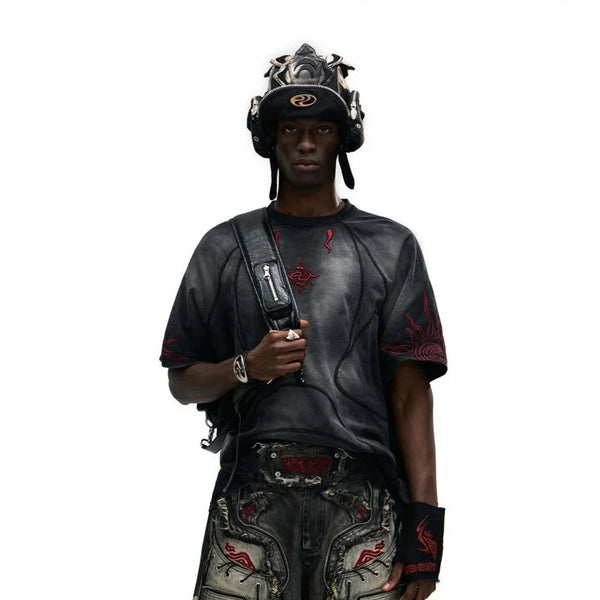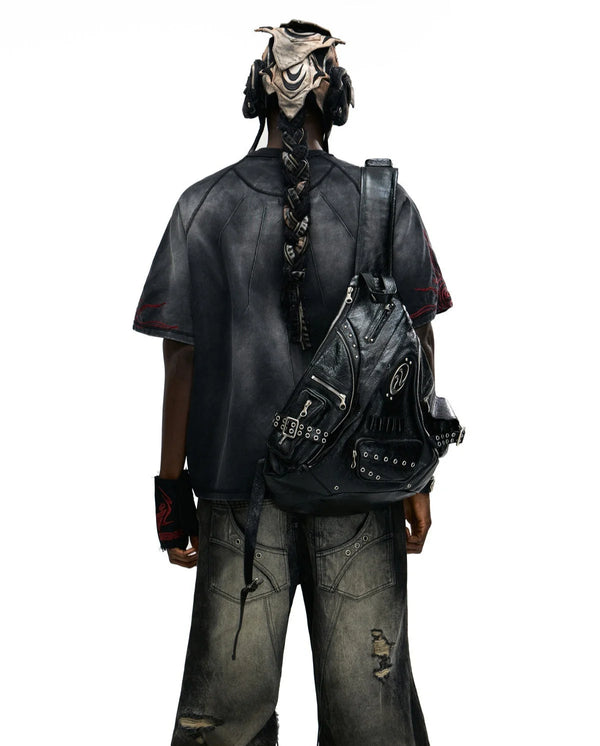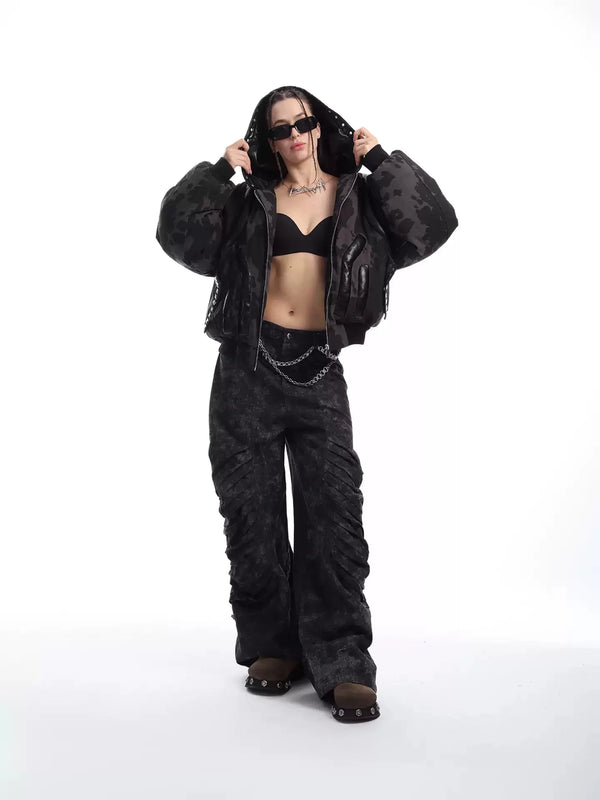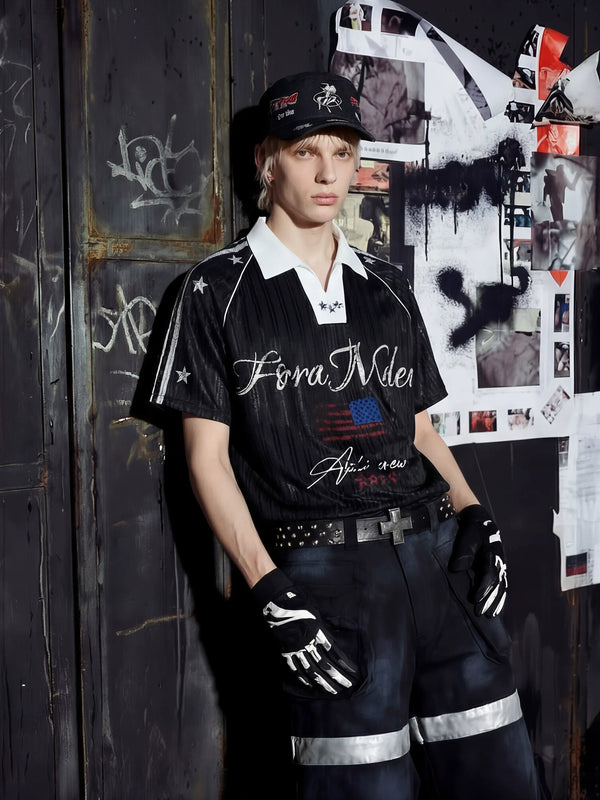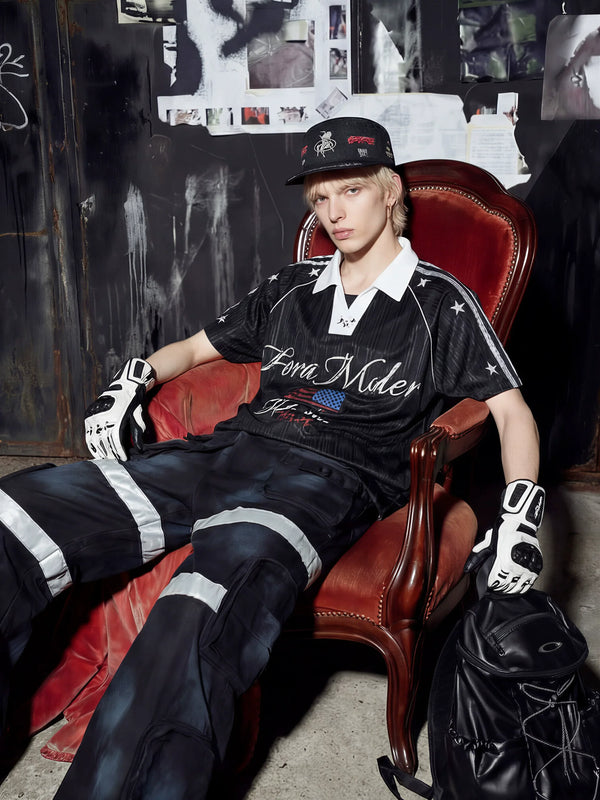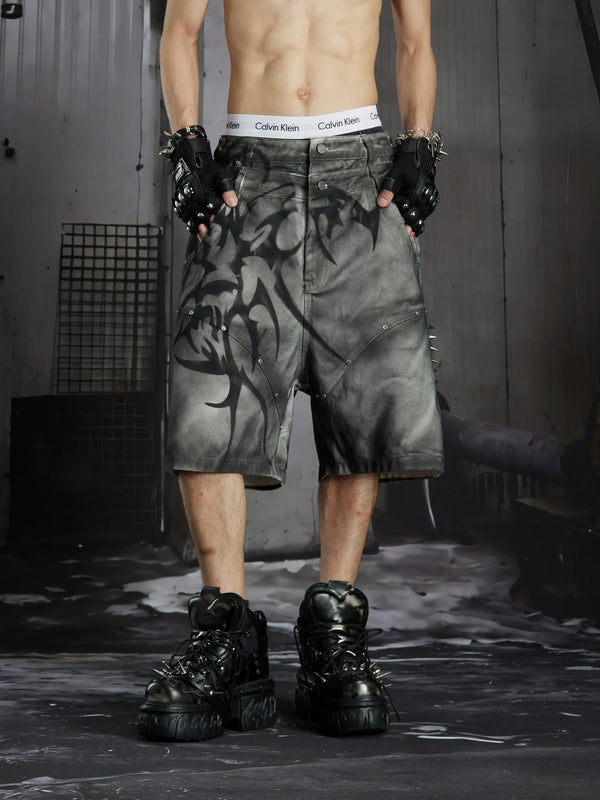

Tuesday morning, half past eight, commuter train heading into the city. Two rows ahead someone is sitting in a grey knit cardigan over a washed-out black shirt, a silver ring on the index finger, boots with a flat sole. Nobody turns around. Still, it is immediately clear that this person is not dressed in dark colours by accident. The look has a direction. It just has no volume.
Soft Goth Fashion is the toned-down, everyday-ready version of the Gothic aesthetic. It keeps the dark palette, the silver details and the melancholic mood, but drops the corset, the fishnet glove and the 12-centimetre platform. What remains is a style you can put on in the morning without a plan and that still reads clearly.
If you are looking for the full stage version, you will find it in the Gothic Fashion Guide. This article goes the other way: which pieces carry the look, where the line to Pastel Goth runs, how Soft Goth outfits work differently for women and men, and which six mistakes tip the look straight into costume territory.
A lot of this sounds simpler than it is. The reason: Soft Goth lives on restraint, and restraint forgives no mistakes in fit and material. So let us start with the definition before moving on to individual pieces.
Definition
What is Soft Goth Fashion — and what actually makes the look soft?
Gothic Fashion in the classic sense is a style that comes out of the post-punk scene of the early eighties: a lot of black, Victorian references, lace, velvet, silver jewellery, plus make-up that maximises contrast. The Gothic look was and is meant as a demarcation. It is supposed to stand out.
Soft Goth takes this vocabulary and turns the volume down. The colours stay, the materials get softer, the cuts more fluid. Instead of a rigid corset comes a wide knit cardigan. Instead of patent leather comes washed cotton. Instead of platform boots come boots with a flat heel or even sneakers.
The decisive difference is not the colour but the intent. Classic Gothic wants to be seen. Soft Goth just wants to be worn. That is why the best-known test applies: if you could put the outfit on for an ordinary Wednesday without explaining yourself, you are in Soft Goth territory.
3
colours per outfit are enough
1
metal language, consistently
0
platform soles needed
These three numbers are not a rule but a shortcut. Anyone who sticks to them lands almost automatically in the soft variant. Anyone who breaks them ends up either at classic Gothic or at an outfit that looks like nothing at all.
Distinction
What is the difference between Goth and Gothic — and where does Soft Goth sit?
The two terms are used almost interchangeably, but they do not mean the same thing. Goth describes the subculture: music, clubs, an attitude, a community that has existed for over forty years. Gothic describes the aesthetic, so everything you can wear, decorate or photograph.
In practice that means: you can wear Gothic without being Goth. Millions do. And you can be Goth and still walk around in jeans and a hoodie five days a week. The style is the surface, the subculture is the foundation.
Soft Goth clearly sits on the aesthetic side. It is a way of dressing, not a membership card. That is exactly why the entry is so low-threshold, and exactly why older parts of the scene sometimes smile at it. Both are fine. A style does not have to ask for permission.
The order matters: silhouette first, then the details. Anyone starting with jewellery and print builds a costume. Anyone starting with cut and fabric builds a style that works without accessories too.
Map
What Goth styles are there — the neighbours of Soft Goth
Goth is not a single look but a whole family. If you want to understand Soft Goth, you need to know what it sets itself apart from. The following variants share the dark base but differ clearly in silhouette, material and occasion.
What stands out is that almost all variants can be separated by a single feature: how much effort the outfit makes visible. Trad Goth shows the effort, Soft Goth hides it. Everything else follows from that.
Neighboring style
What does Pastel Goth mean — and where does Soft Goth end?
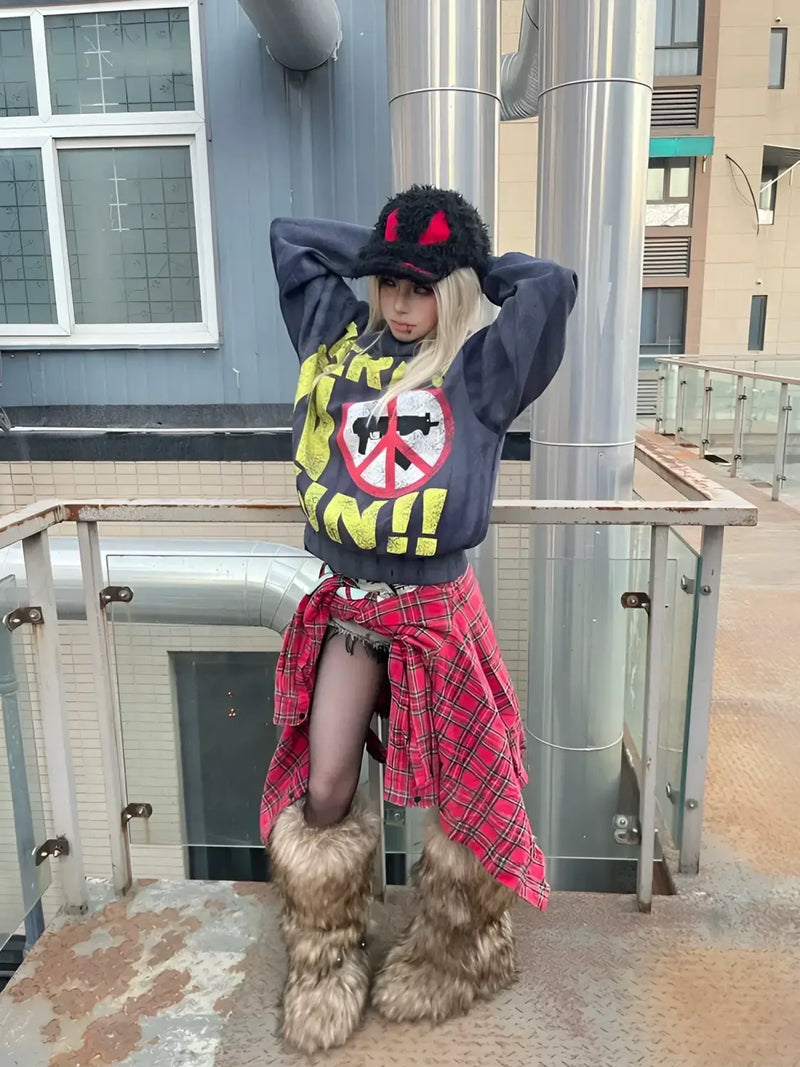
Pastel Goth combines the dark Gothic base with pastel tones: pink, lilac, mint, baby blue. Usually kawaii elements from Japanese streetwear come with it, so plush, hearts, cartoon prints. The look emerged around 2012 on Tumblr and has gone through several waves since.
Separating it from Soft Goth is easier than many think. Soft Goth stays in the muted palette and gets soft through material and cut. Pastel Goth often stays in hard cuts and gets soft through colour. Two completely different routes to the same word.
- Colour: Soft Goth stays with black, grey, burgundy. Pastel Goth brings in pink and lilac.
- Material: Soft Goth relies on knit, jersey, washed cotton. Pastel Goth often uses synthetics and plush.
- Motifs: Soft Goth works almost without print. Pastel Goth leans heavily on graphics.
- Occasion: Soft Goth is everyday. Pastel Goth is more weekend, convention, photo.
If you want to mix both, pick a side. A pastel top over a soft dark base works. Pastel plus plush plus print plus platform gets messy fast.
Palette
The Soft Goth palette: black is the base, not the whole outfit
The most common beginner mistake is also the most obvious one. All black, done. The result is rarely Soft Goth, usually just dark. Without contrast the silhouette disappears, and the silhouette is what carries the look.
The palette that works has four fields: deep black as an anchor, a washed-out grey or charcoal as a break, a muted burgundy or aubergine as an accent, and a fog white for layers meant to show through. Three of them in one outfit are plenty.
Washed-out shirts are the fastest way in, because they break the hard edge of freshly dyed black. A tee that looks like it has been washed twenty times reads as worn rather than bought. That effect is exactly what separates Soft Goth from dressing up.
Gender split
Soft Goth outfits for women — what a Goth girl actually wears day to day
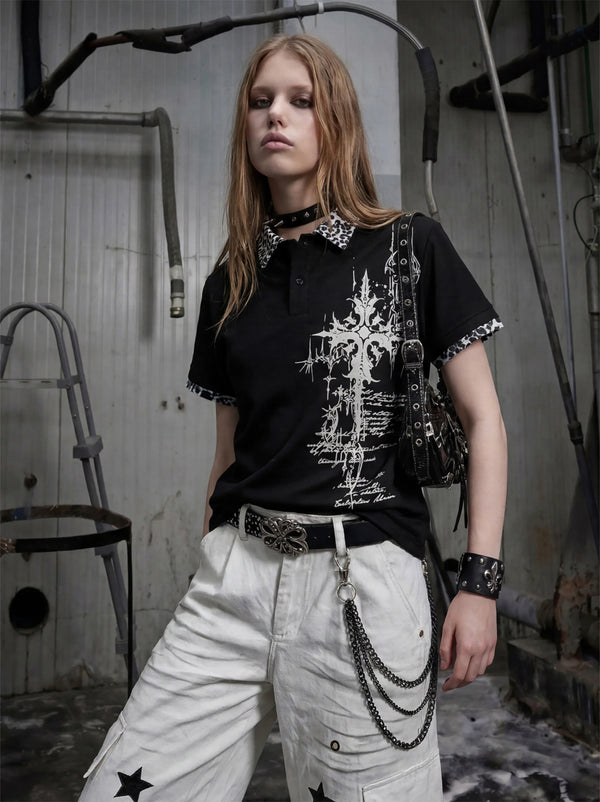
The cliché says: corset, lace dress, fishnet tights, black lipstick. Reality on an ordinary Tuesday looks different. What is actually worn is usually a dark base with a single striking element and otherwise a lot of calm.
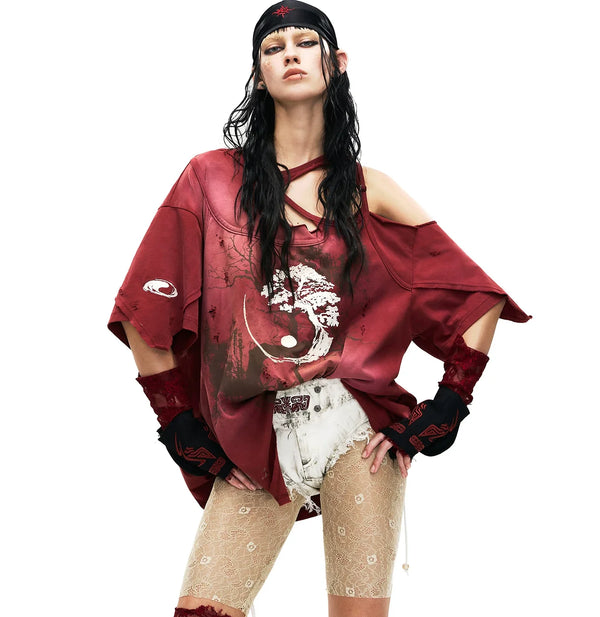
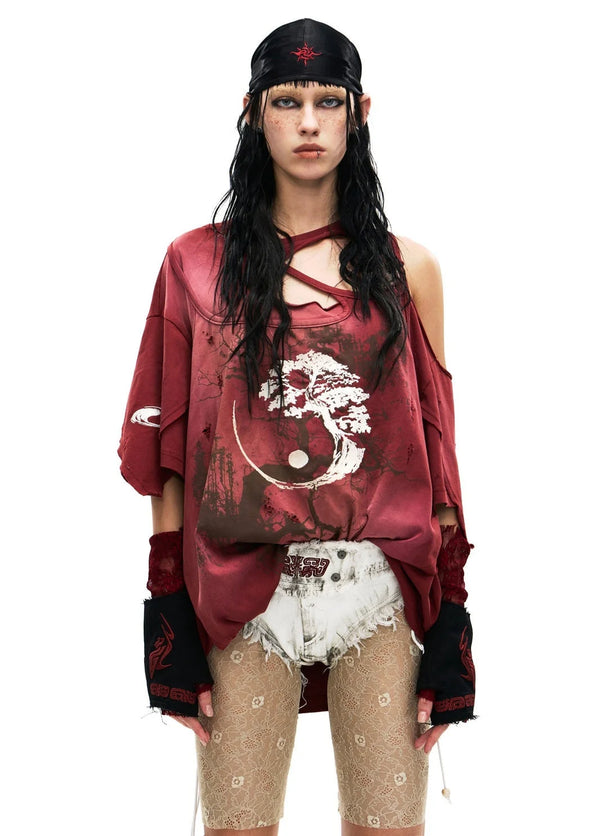
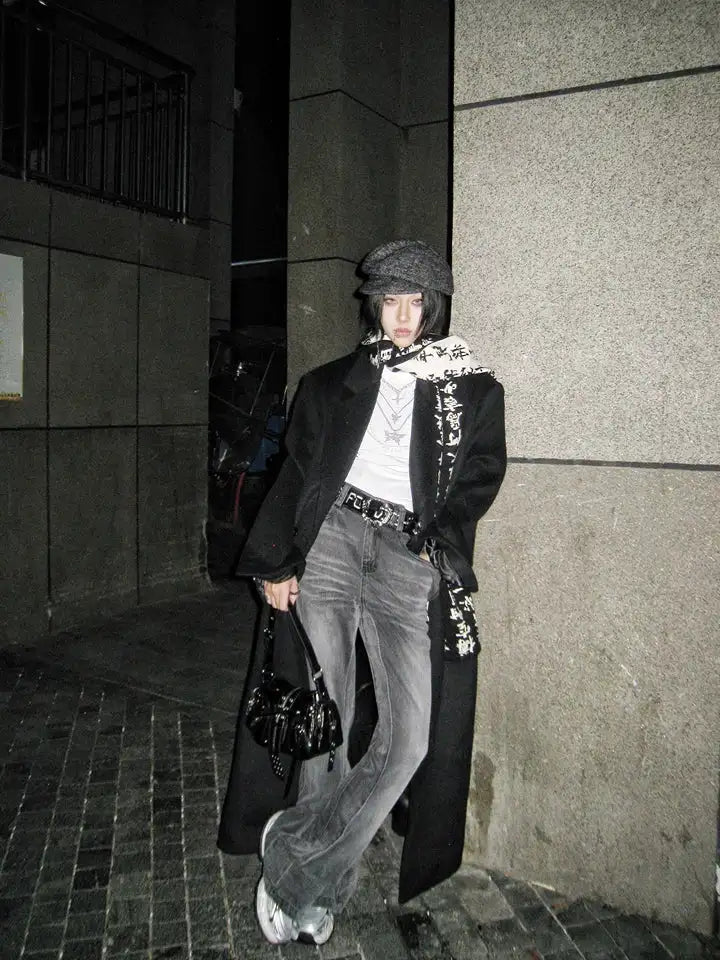
A typical setup: a wide longsleeve or mesh top, a chunky cardigan over it, plus straight-cut trousers or a midi skirt, flat boots, a silver ring and a thin chain. The make-up stays with dark eyeshadow and a muted lip tone, not with full contrast.
The reason for this restraint is practical. Anyone wearing the look daily cannot invest forty minutes every morning. Soft Goth is therefore less a statement than a modular kit in which almost everything works with almost everything.
What you can see clearly in the video: the fabric does the work. As soon as something moves, contour appears. A stiff outfit stands still and therefore quickly looks like a set from a costume rental.
Gender split
Soft Goth outfits male — the look for men without the costume effect
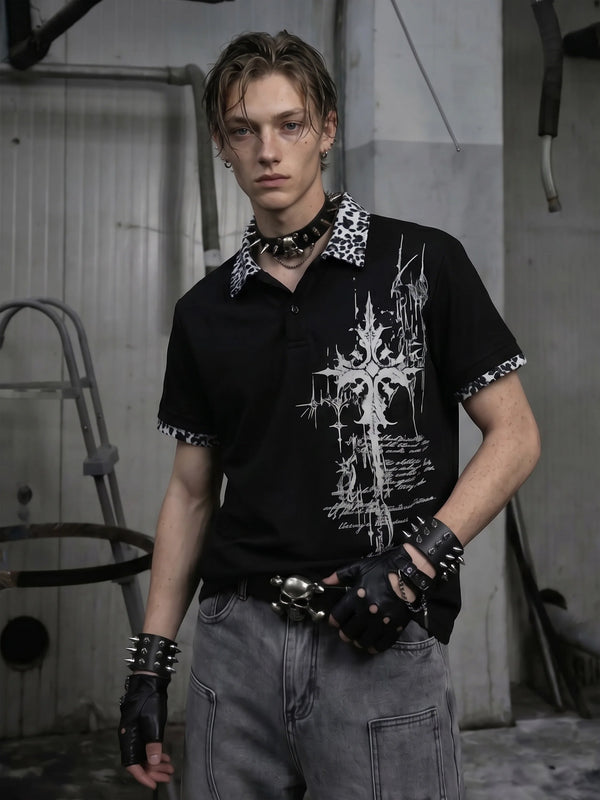
With men the look tips faster, because the classic Gothic vocabulary for men is historically louder: coat, boots, studs, long hair. Anyone taking these references one to one does not land at Soft Goth but at a stage version.
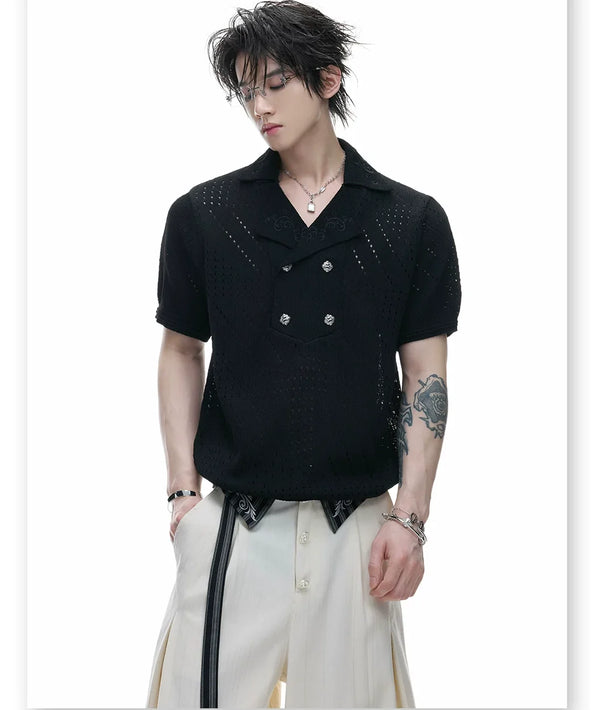
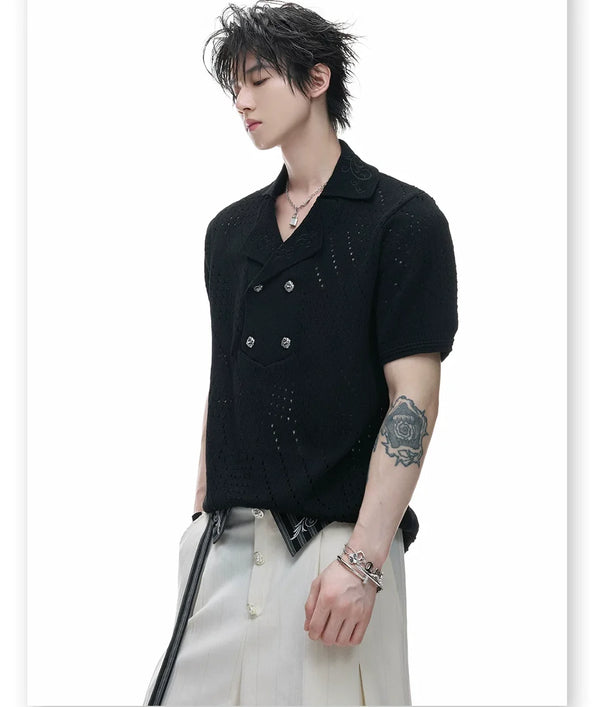
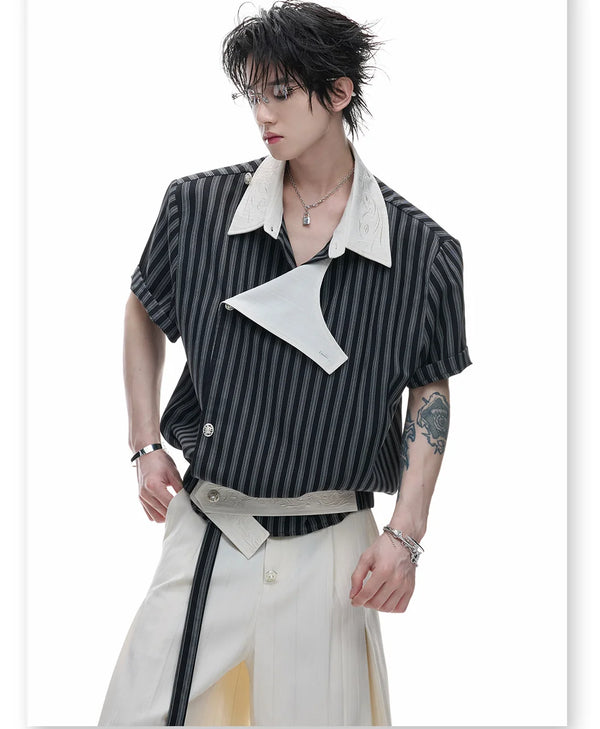
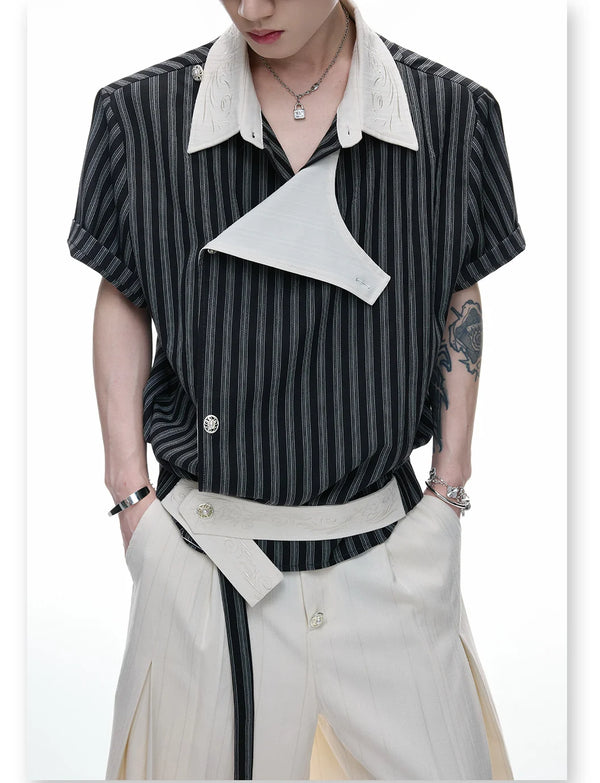
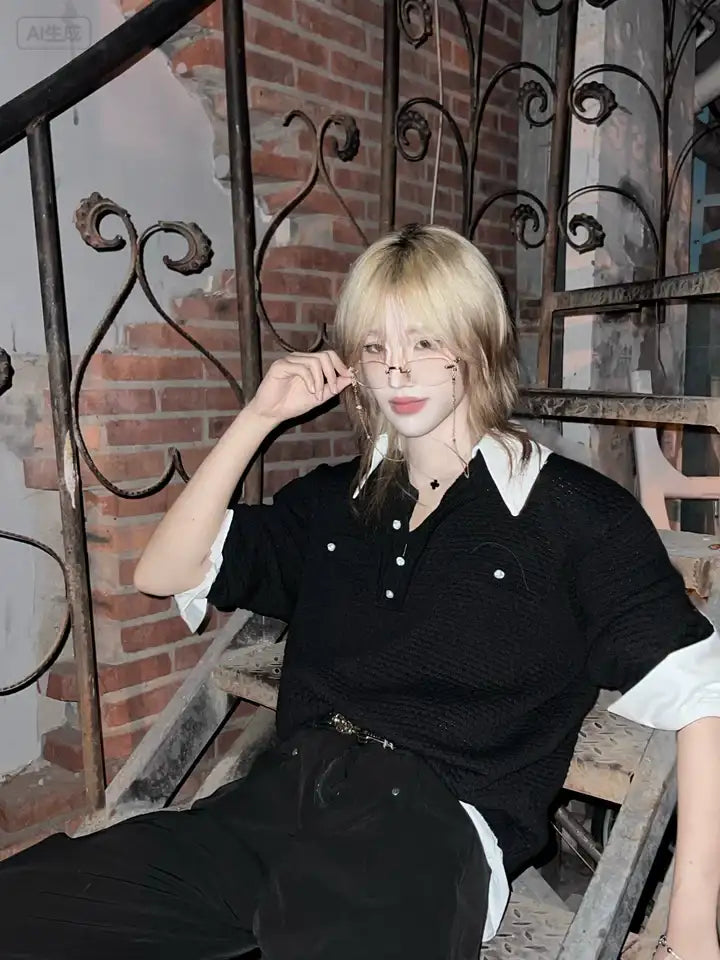
The wearable variant runs through layers instead of symbols. A slim longsleeve under a wide, short-sleeved shirt. Straight trousers with a slight break over flat boots. A single silver ring or a short chain. No print that needs explaining.
The second adjustment is length. A top that goes past the hip changes the proportion and immediately makes the look calmer. Short, tight-fitting tops pull attention to the body and away from the style.
Anyone with tighter professional constraints will find the more formal sister of Soft Goth in the Corp Goth variant. The rules are almost identical, only the cuts get stricter and the shoes more closed.
Category · Tops
Knit, mesh and layers — the fabrics that carry Soft Goth
When a Soft Goth outfit does not work, it is almost never the cut and almost always the material. Stiff polyester does not drape, it stands. A top that stands looks like a costume piece, no matter how right the colour is.
Three material groups carry the look. Chunky knit for volume and shadow, washed cotton for the soft edge, and mesh or fine jersey as a see-through layer underneath. Only the interplay creates depth. A single layer stays flat.
The cardigan is the single most important piece in Soft Goth. It gives volume without demanding attention, it pulls over almost any top, and it is the piece that makes the difference between dressed in dark and deliberately styled visible.
That sounds banal but decides the whole look. Anyone shopping online who only looks at colour and print regularly ends up with pieces that work in the photo and not on the body. Reading the material label is not a detail in this style.
Category · Bottoms
Soft Goth trousers and skirts — the cut decides everything
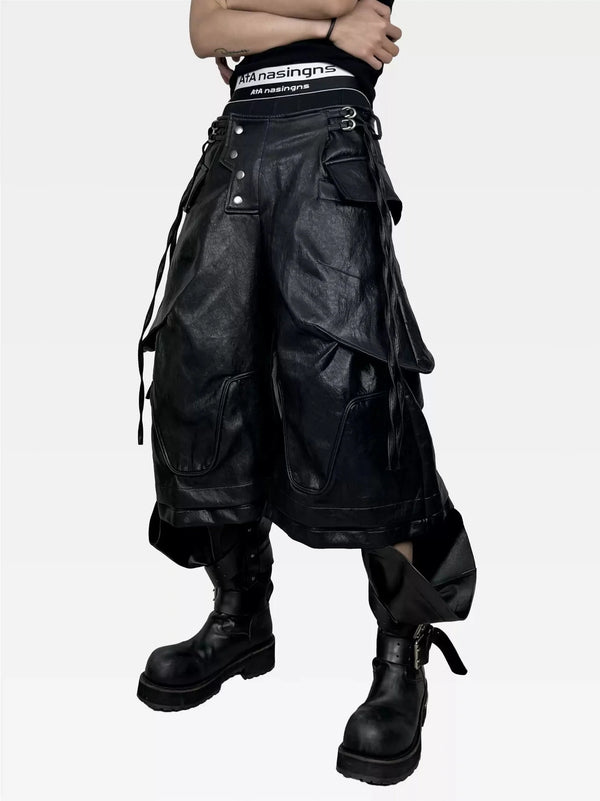
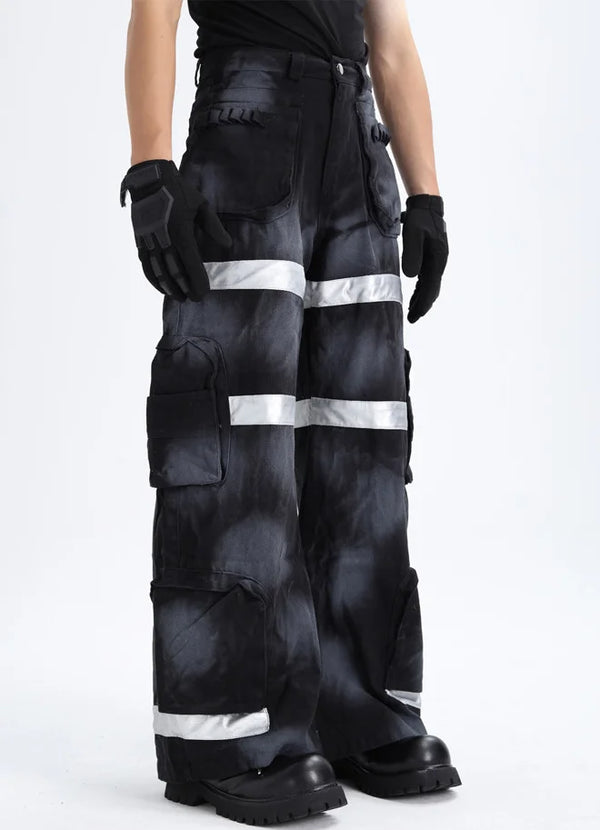
The second big mistake happens below the waist. Tight trousers plus a wide top produce a silhouette that comes out of the two-thousands emo corner and has little to do with Soft Goth. The soft look needs either width or length below, ideally both.
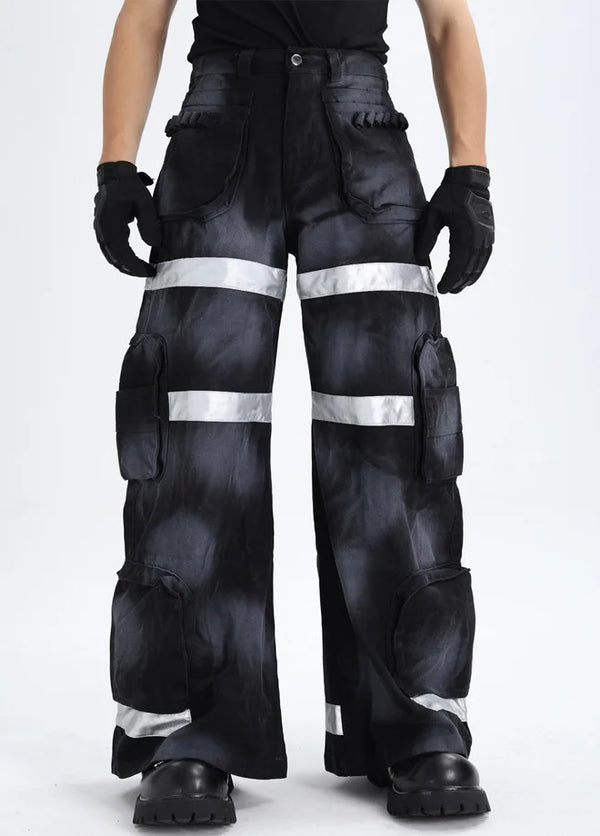
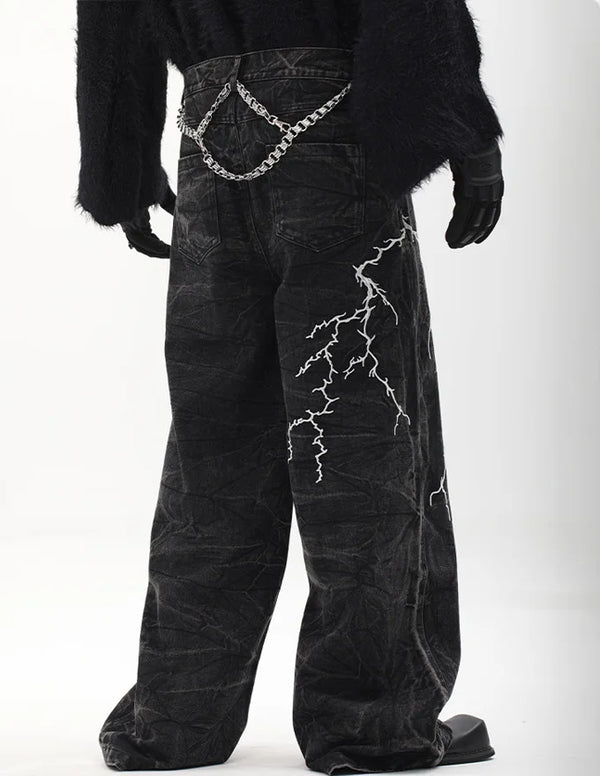
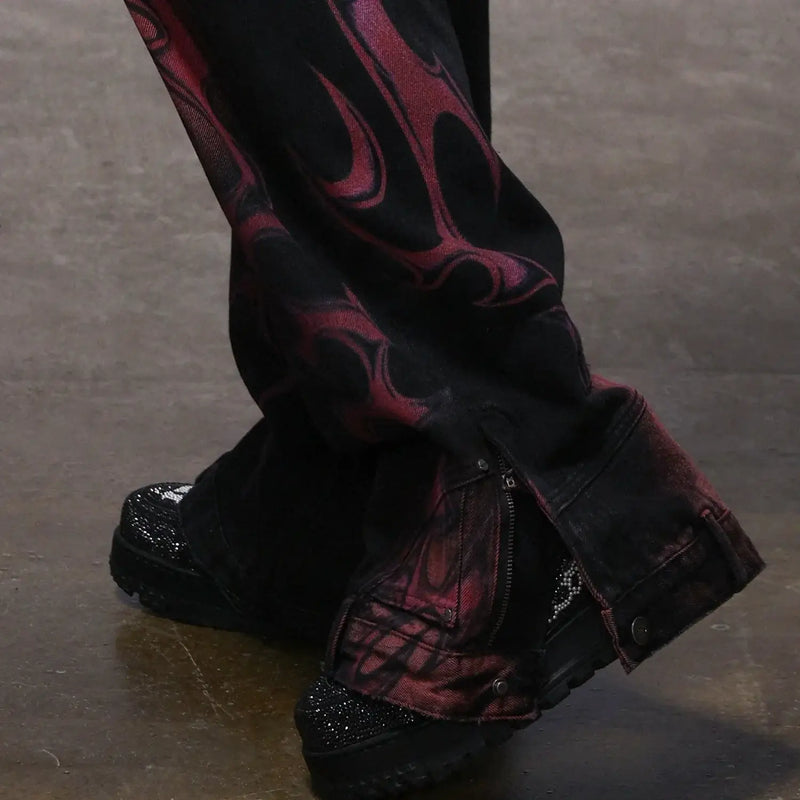
Three cuts work reliably: straight trousers with a slight break over the shoe, wide jeans with a low waistband, and a midi skirt that covers half the calf. All three bring movement into the outfit without overloading it.
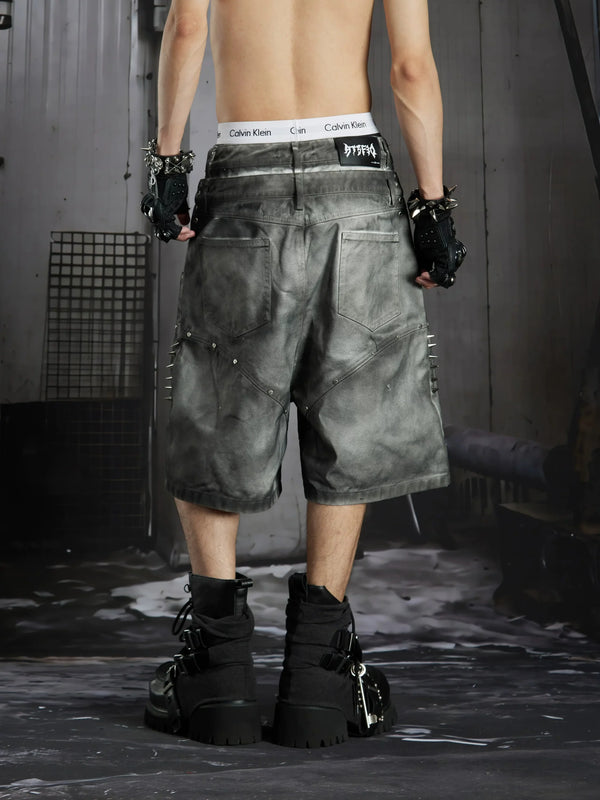
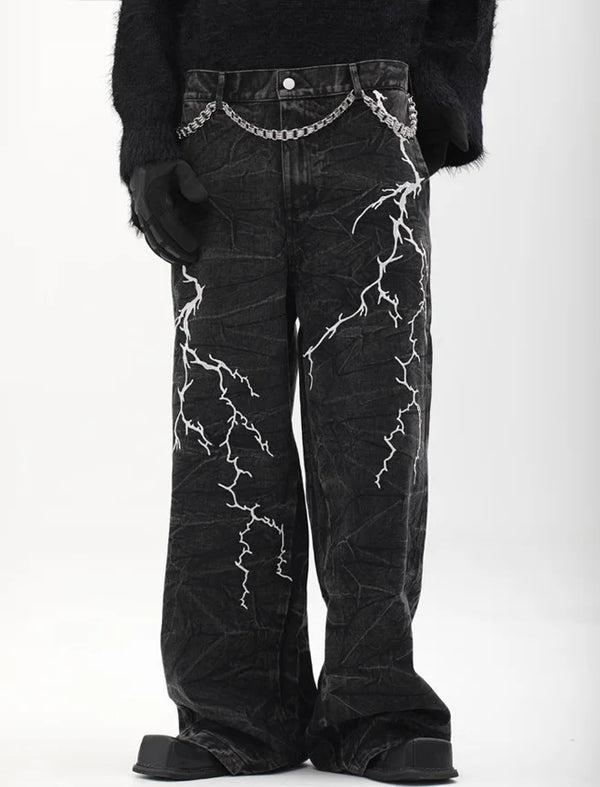
With denim there is one extra rule: the stronger the wash, the less print the top needs. A faded pair of jeans with visible texture is already a motif. Two motifs in the same outfit fight each other.
The Soft Grunge corner is interesting because both styles overlap almost completely. The difference lies mainly in the reference: Soft Grunge quotes the nineties, Soft Goth quotes the eighties. The pieces themselves work in both directions.
Category · Outerwear
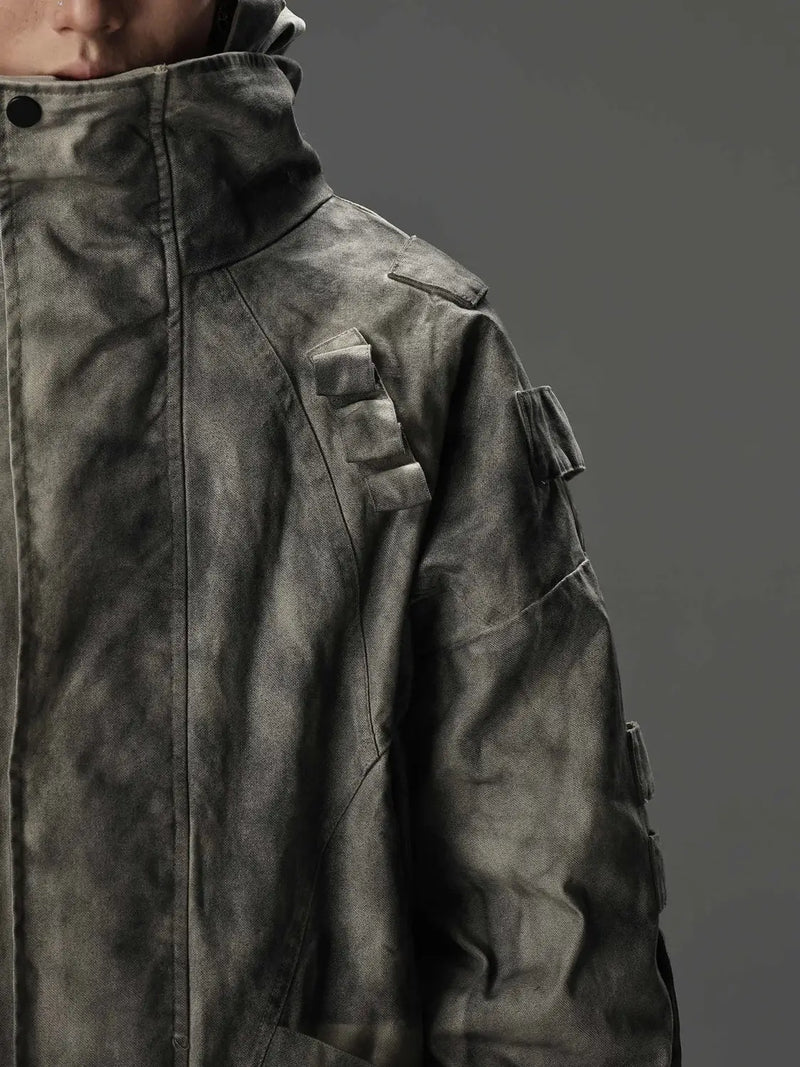
Soft Goth jackets and coats — where the look gets contour
In a northern European climate the jacket is the most visible piece for eight months of the year. It therefore decides disproportionately how the look is read. The wrong jacket makes every good outfit underneath invisible.
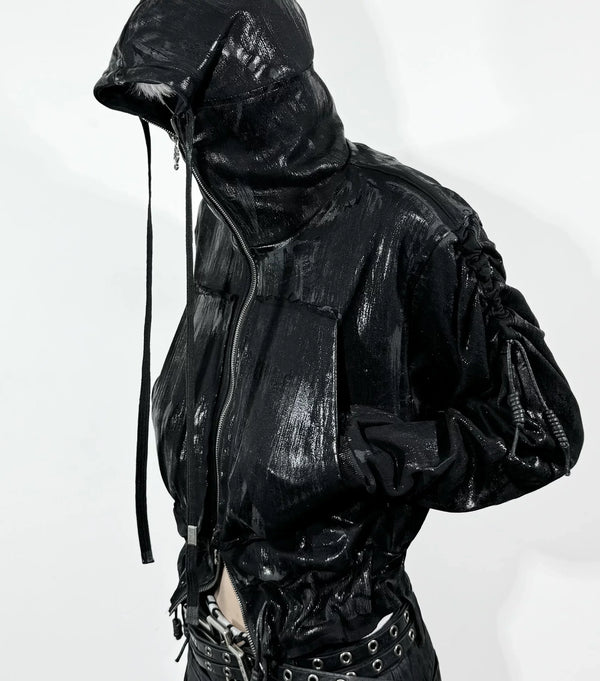
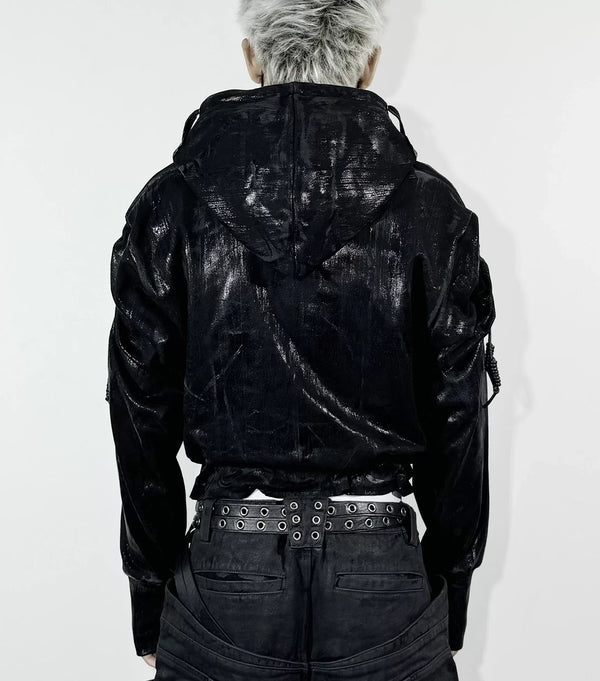
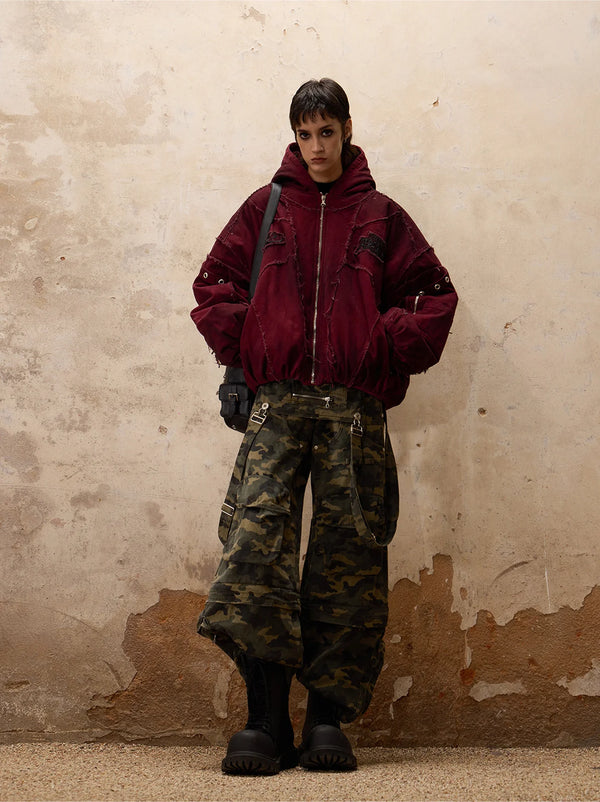
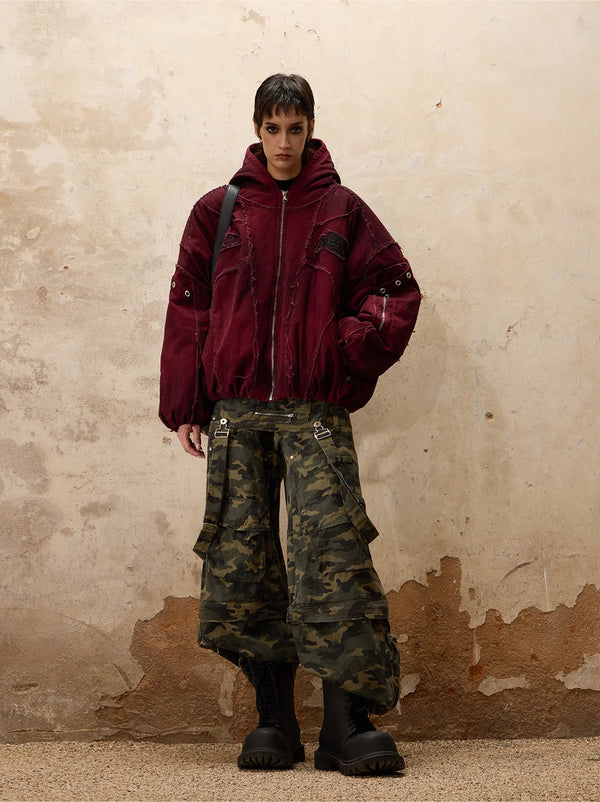
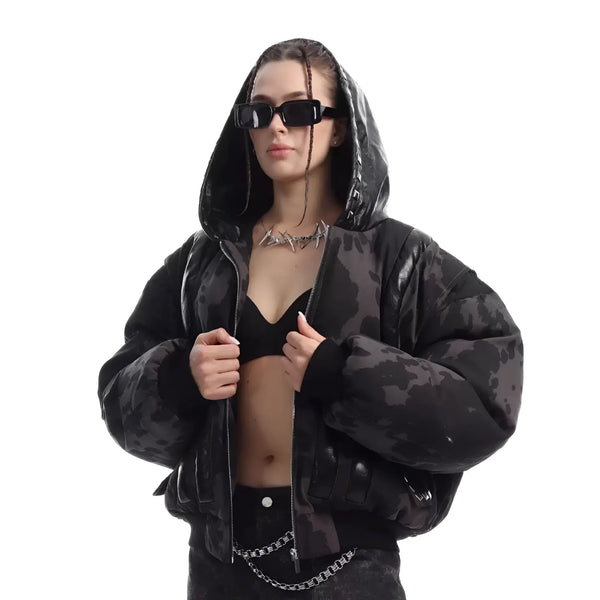
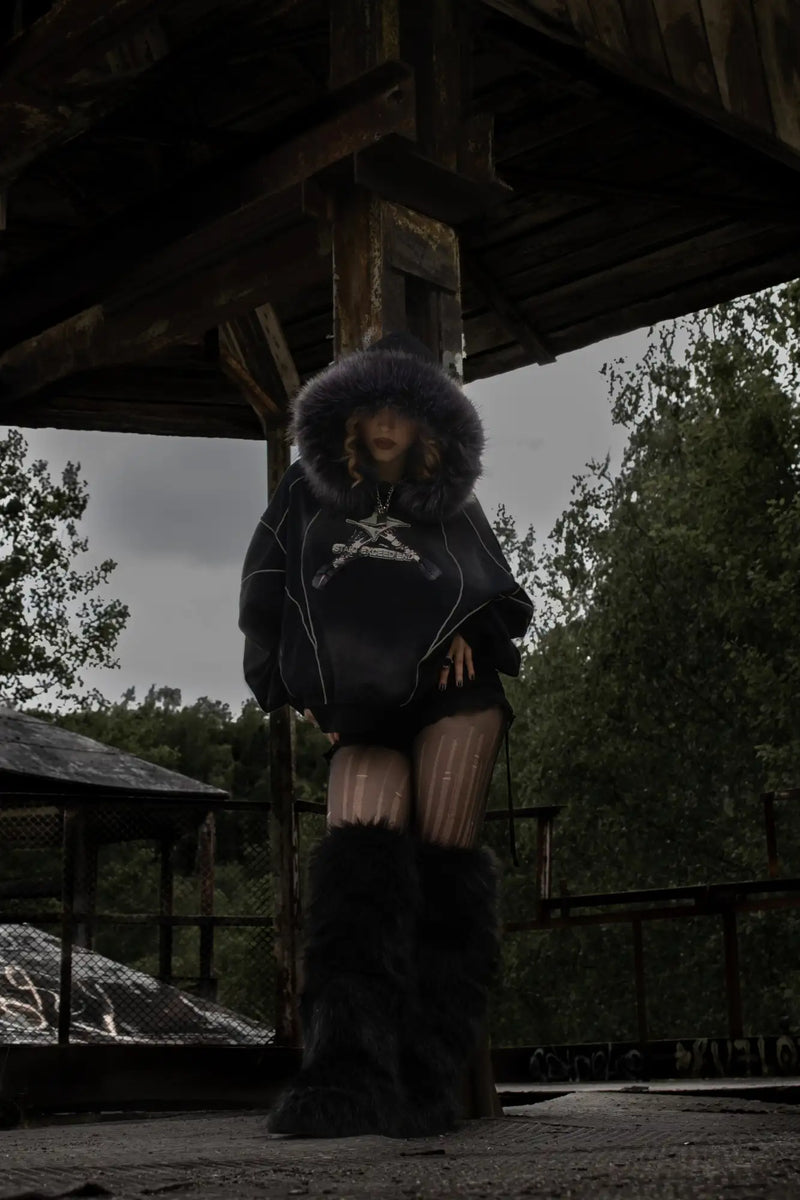
Three directions work for Soft Goth: a long, straight coat that stretches the silhouette, a soft leather jacket without aggressive hardware, and a lined version with fur or plush for winter. What does not work are jackets with a lot of buckles and straps.
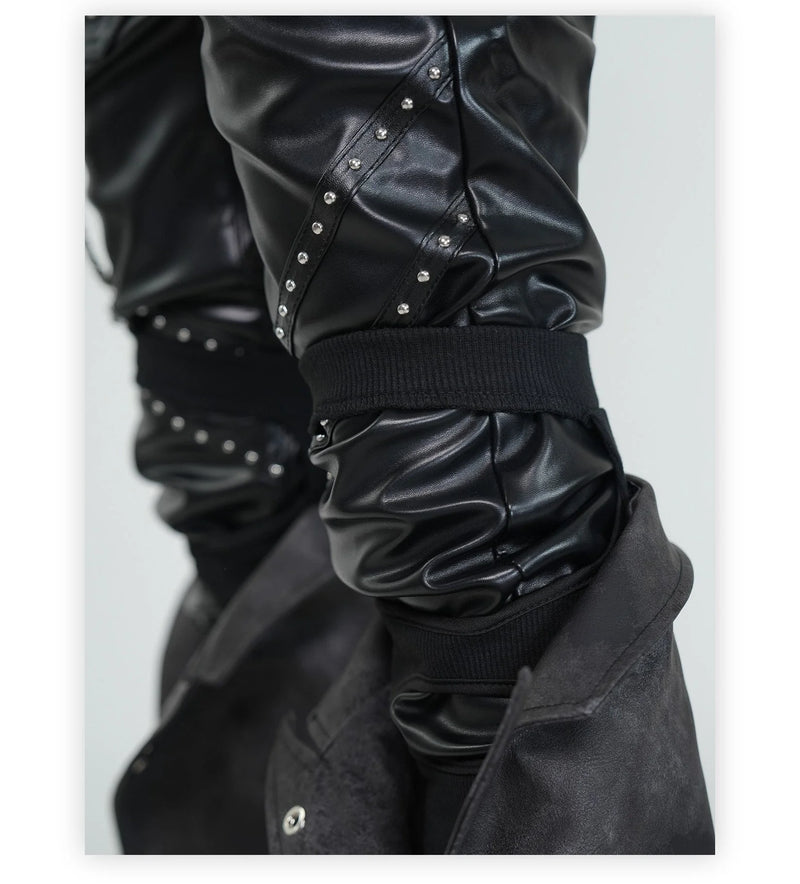
With leather it is worth looking at the surface. High-gloss patent pulls the look straight towards club and stage. Matte or lightly waxed stays calm and can be worn during the day without the jacket taking the lead role.
The test also works the other way round. Anyone out in summer without a jacket needs the depth in the top itself, so either a visible second layer or a material with recognisable texture.
Category · Details
Soft Goth make-up and accessories — the last ten per cent
Soft Goth make-up follows the same logic as the clothing: same elements, less contrast. Instead of sharp eyeliner and black lipstick comes smudged eyeshadow in grey or aubergine, a muted lip tone and skin that is not powdered artificially pale.
For jewellery the one-metal rule applies. Silver and silver. As soon as gold joins in, a second tone appears that the muted palette cannot resolve, and the look reads thrown together rather than deliberately chosen.
Accessories in Soft Goth are punctuation rather than equipment. One chain, one or two rings, maybe a piece of headwear. Anyone wearing more automatically shifts the look towards Trad Goth, and that is a different decision.
Patience pays off when building this up. Two good pieces beat five mediocre ones, because in Soft Goth every item gets combined several times over. Buy the base right and after that you only need additions.
Everyday
Casual Goth aesthetic — Soft Goth at the office, at university, at family dinners
The reason Soft Goth exists is practical. At some point comes the moment when the style has to be compatible with the rest of life. Job interview, lecture, your in-laws birthday. The look must no longer be the first piece of information about a person.
The adjustment runs through three dials. First the shoes: flat and closed instead of platform. Second the hardware: one chain instead of four. Third the contrast on the face: muted instead of maximal. Everything else can stay as it is.
What often gets underestimated: this exact version is worn most often by people around thirty and above. Sophisticated Goth clothing is not a marketing term but simply describes what happens when a style grows up without disappearing.
If you waver between the two styles, you do not have to decide. The wardrobes overlap to a large degree, and nobody but you is asking about the label anyway.
Mistakes
The six most common Soft Goth mistakes
Almost all problems with this style come down to a handful of recurring decisions. Knowing them saves you several bad purchases and gets you faster to a look that holds up day to day.
The last point is the most uncomfortable because it costs time. But it also explains why worn pieces look better in this style than new ones. A bit of wear is not a weakness here, it is part of the aesthetic.
FAQ
Frequently asked questions about Soft Goth Fashion
The following questions come up most often in messages and comments. They cover the points where most people get stuck when starting out.
Is Soft Goth its own subculture or just a way of dressing?
Is a black wardrobe already enough for Soft Goth?
What separates Soft Goth from Soft Grunge?
Which shoes go with Soft Goth when platform boots are too much?
How much does a solid Soft Goth base setup cost?
What runs through almost all the answers: Soft Goth is less a question of the pieces than a question of the dosage. The same wardrobe can read loud or quiet depending on how many signals are active at once. Once you have understood that, you no longer need a checklist.
What do you think?
Tell us on @fuga_studios
About the author
Philipp Fuge — Founder · Berlin
Founder of Fūga Studios. Writes the journal himself. Berlin · Shanghai · Tokyo · Poznań — four cities, one logic.