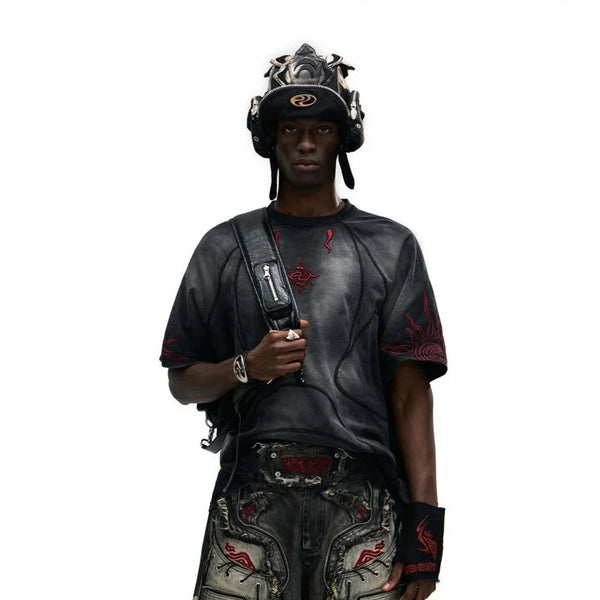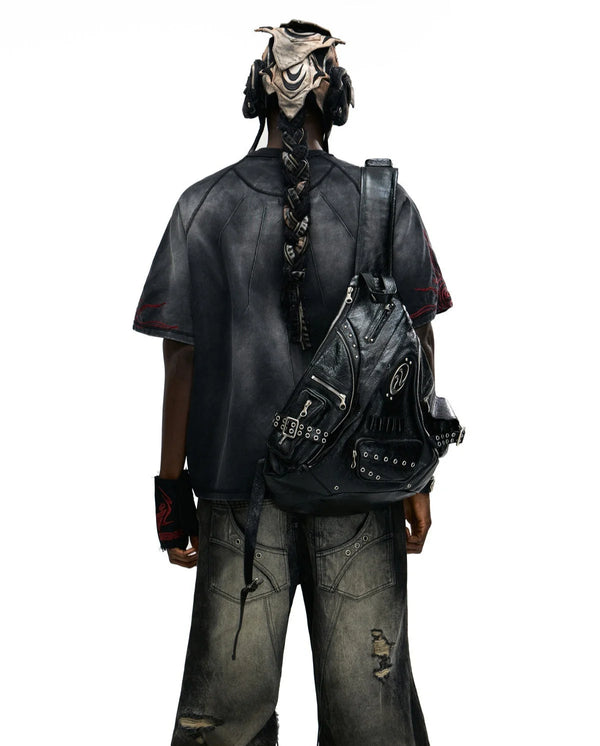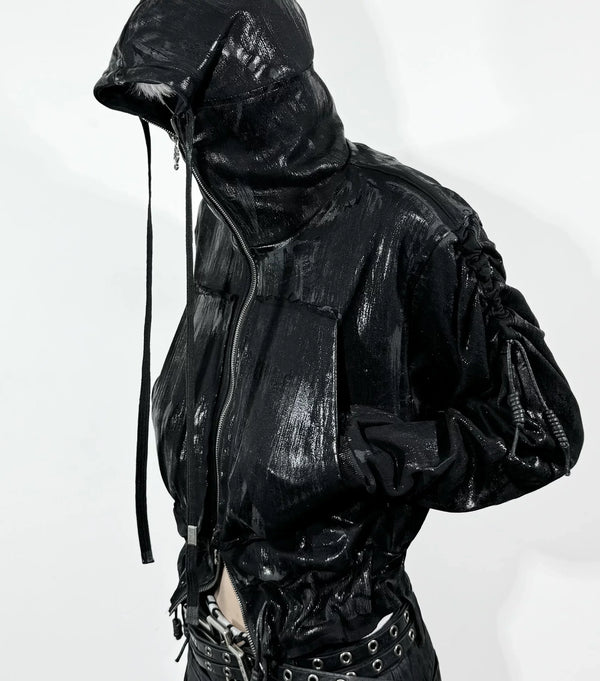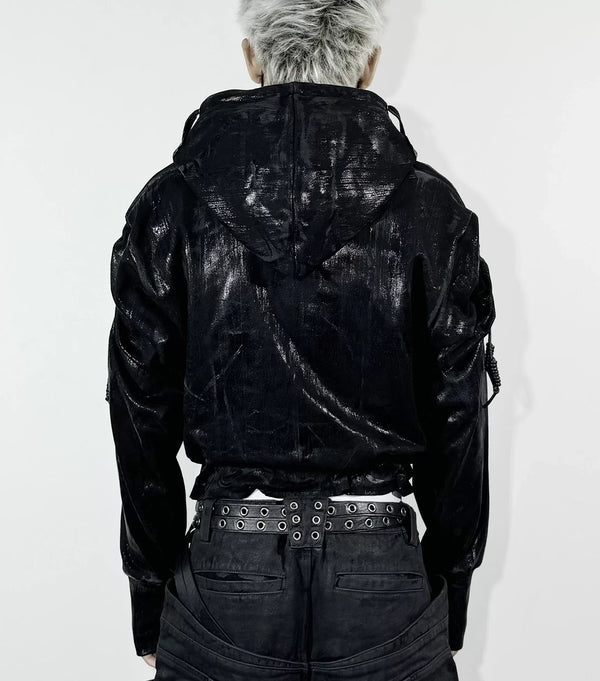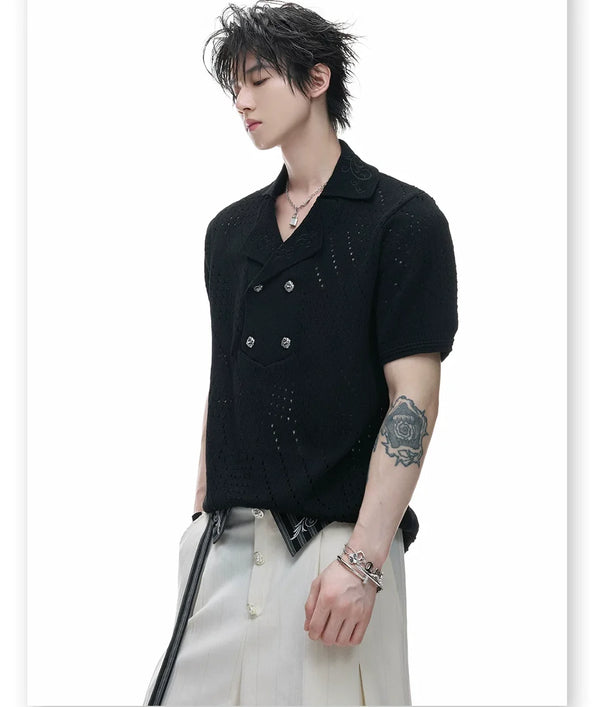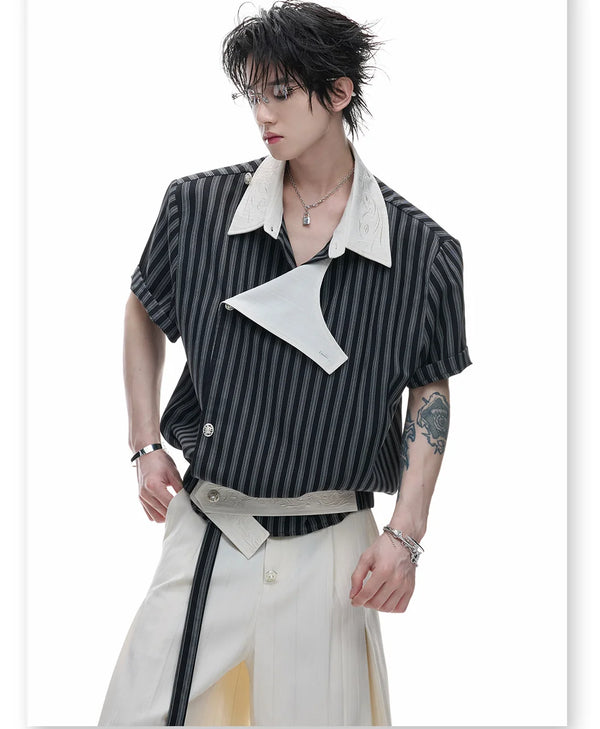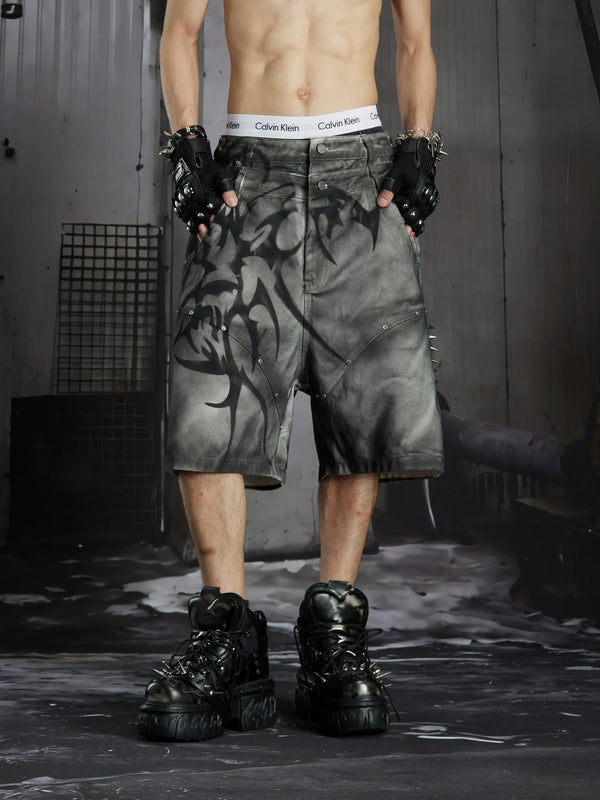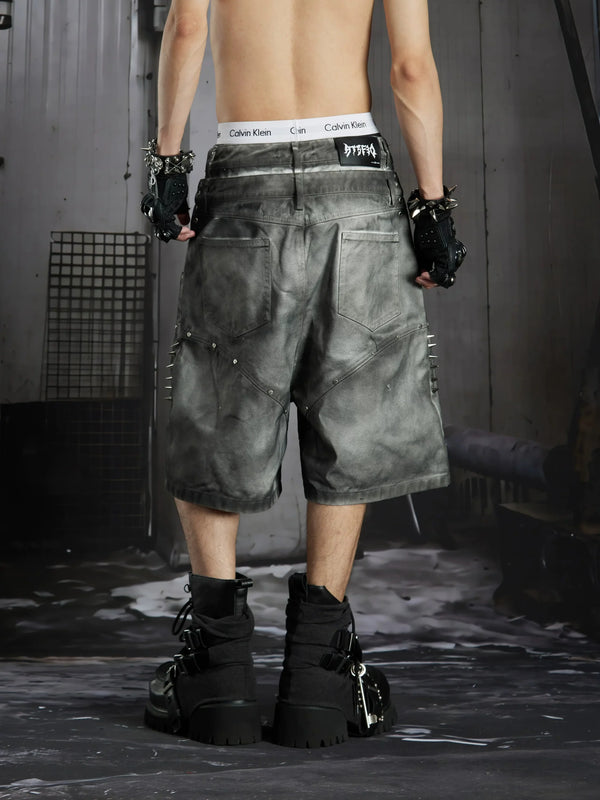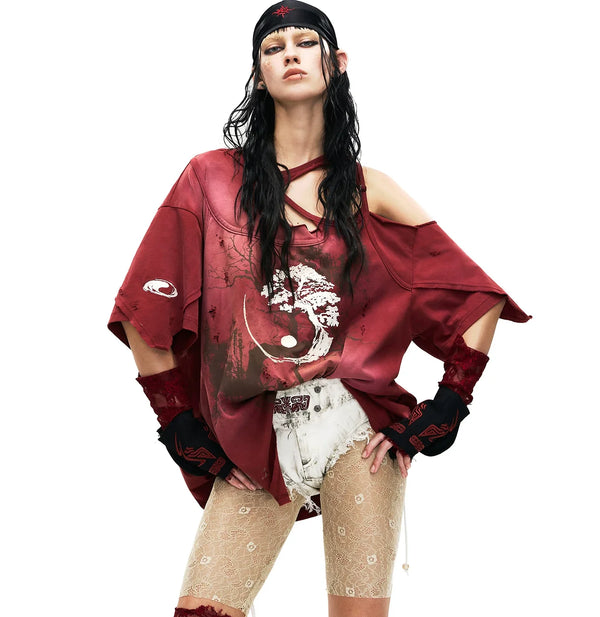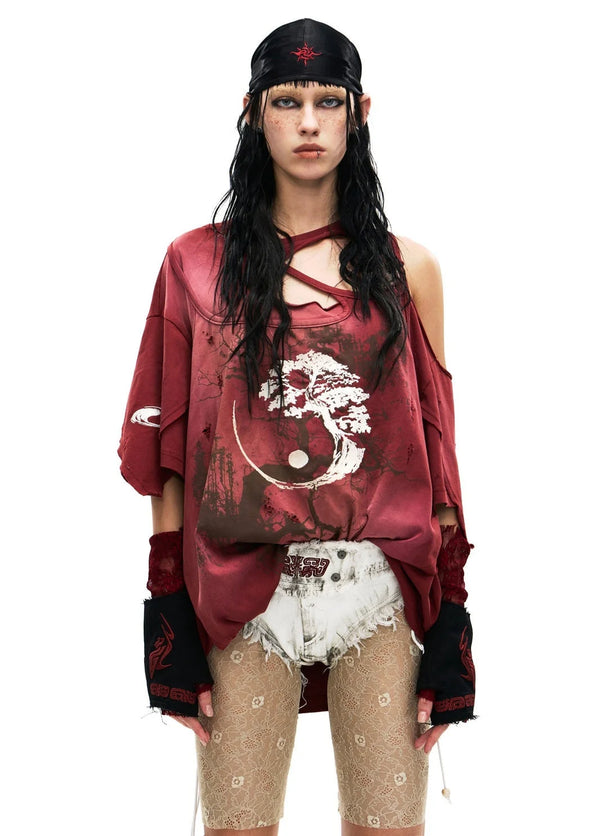
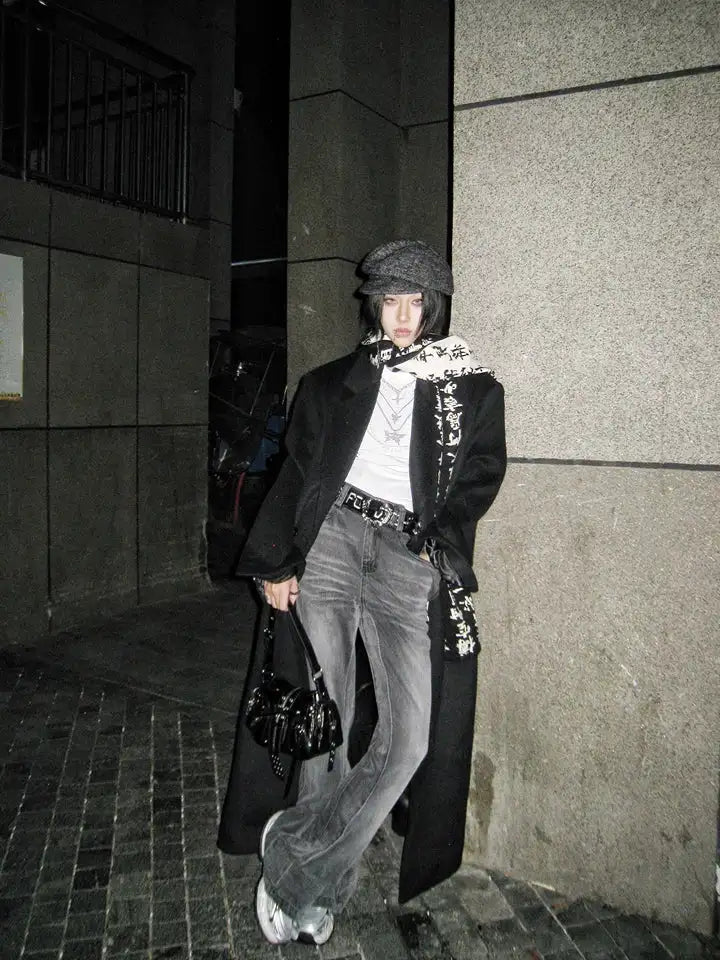

Monday morning, conference room on the third floor. Eleven people in grey and navy, one person in black: wide-leg wool trousers, a structured shirt, a single silver ring. Nobody says anything. Nobody has to. The look doesn't stand out because it's loud – it stands out because it fits. This is exactly the kind of presence this piece is about: dark enough to recognise yourself in the mirror, clean enough that HR has nothing to note down.
Business Goth Style is the office-ready translation of Gothic Fashion: a wardrobe of black, structured pieces in classic cuts that meets dress codes and still reads as dark. The system behind it is simple – silhouette and fabric carry the attitude, hardware and details stay measured. How deep the aesthetic behind it runs is shown by our Gothic Fashion Guide; here it's about the version that fits through every office door.
Before we get into dress codes, fabrics and pieces, a short look at the terms is worth it. Because between Business Goth, Corp Goth and Goth Business Casual lie nuances that genuinely make a difference day to day – and that explain why this look works so well in meetings.
Definition
What Business Goth Style is – and what it isn't
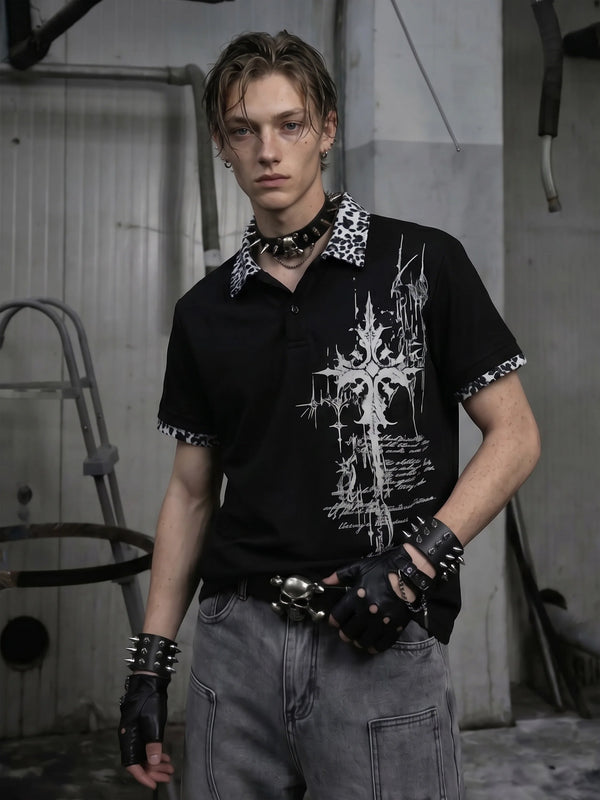
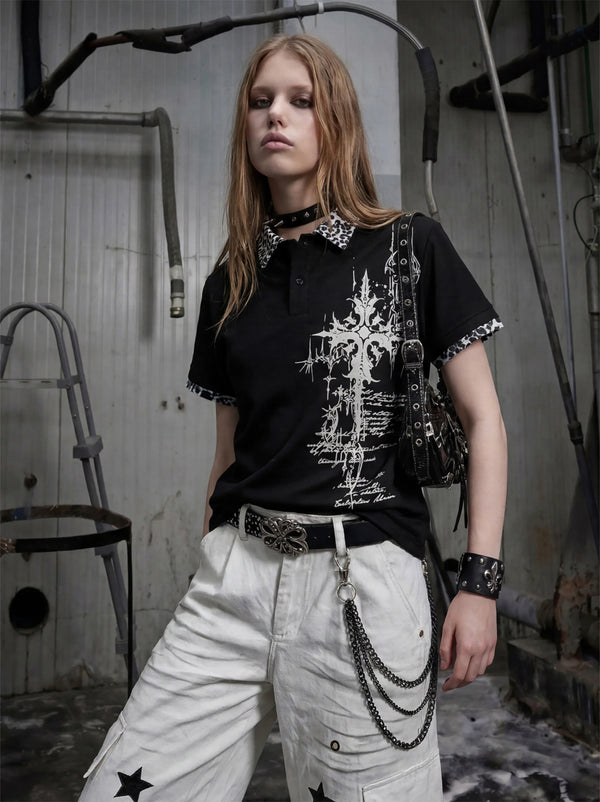
Gothic clothing at its core means: black as the base colour, romantic or severe silhouettes, materials with character. The Gothic look on the street is allowed anything – mesh, studs, platforms, layers over layers. Business Goth Style takes the same attitude and filters it through the demands of a workplace: no visible skin where the code forbids it, no hardware that jangles in a meeting, no prints that need to tell a story.
What's left is more concentrated: a black shirt with an unusual seam instead of a band tee. A wide-leg wool trouser instead of ripped jeans. A blazer with a slightly shifted collar instead of a cloak. The difference from a normal all-black office look lies in the intent – Business Goth chooses pieces that are meant to be dark, not just dyed dark.
For the record: Corp Goth is the TikTok-shaped, more feminine variant with a pencil skirt and pointed shoes. Goth Business Casual describes the specific dress-code level. Business Goth Style is the umbrella term – the system that contains both and has an answer for every level.
The system
The dress-code ladder: how much goth fits through which code
Every office has a code, spoken or not. The art lies in reading it and setting your own dose accordingly. Business Formal – law firm, bank, board – allows black completely, but only in classic forms: suit, shirt, closed shoes. Your room to move lies in the fabric and in a single quiet detail, such as a structured lapel or a dark signet ring.
Business Casual opens the door: shirt without a tie, knit over shirt, Chelsea boots instead of Derbies. Here even an asymmetric button placket or a trouser with an emphasised drape already works. Smart Casual and creative settings – agency, tech, studio – tolerate visible statements: silver hardware, deconstructed cuts, a cardigan with character. The ladder looks like this:
4
Dress-code levels from Formal to Casual Friday
80 %
of the look are basics – texture instead of graphics
1
One statement piece per outfit, never more
The rule behind it: you fill eighty percent of the outfit with quiet, perfectly fitting basics and place exactly one piece on top that shows your direction. Anyone who keeps to this maths survives every rung of the ladder – and still never gets mistaken for the grey rest. What such a ladder looks like in female-read codes is shown, by the way, by the Office Siren approach, which works with the same means.
That leaves the question of which variants of Gothic are even suited to the office – because not every substyle translates equally well into meetings, client appointments and video calls.
Map
Which goth styles are there – and which survive the office?
The question of goth styles fills whole forums: Trad Goth, Romantic Goth, Cyber, Mall Goth, Pastel – the list grows every year. For the office, though, only one axis counts: how much of the look is left when mesh, platform and make-up fall away? Some substyles then lose almost everything. Others – built on cut and fabric – lose almost nothing.
These six directions are the ones you'll meet most often, sorted by office suitability:
Notable in this: the most office-ready variants are exactly the ones that work least like a costume. They don't quote a scene, they rebuild an attitude in clothing – and that leads straight to the question of what actually makes someone a goth when the uniform falls away.
Attitude
What makes someone a goth – attitude instead of uniform
Everyone thinks they know how goth people look: dressed in black, pale, silver jewellery. The truth is less spectacular and more interesting at the same time. A goth doesn't wear a uniform but a preference – for the dark, the melancholy, the precise. This preference survives every dress code because it doesn't hang on individual pieces.
In the office it shows like this: you're not the person with the wildest outfit, but the one with the most consistent. Always black, always cleanly cut, always a shade more severe than the room. After three weeks it's your signature. After three months nobody asks anymore – it just suits you.
Attitude does need substance in the wardrobe, though. The next sections build the wardrobe piece by piece – from the base that carries every day to the accents used only in measured doses. We start with the pieces with the highest hit rate: shirts and layers.
Wardrobe · Base
Shirts, blouses and layers: the base of the Business Goth wardrobe
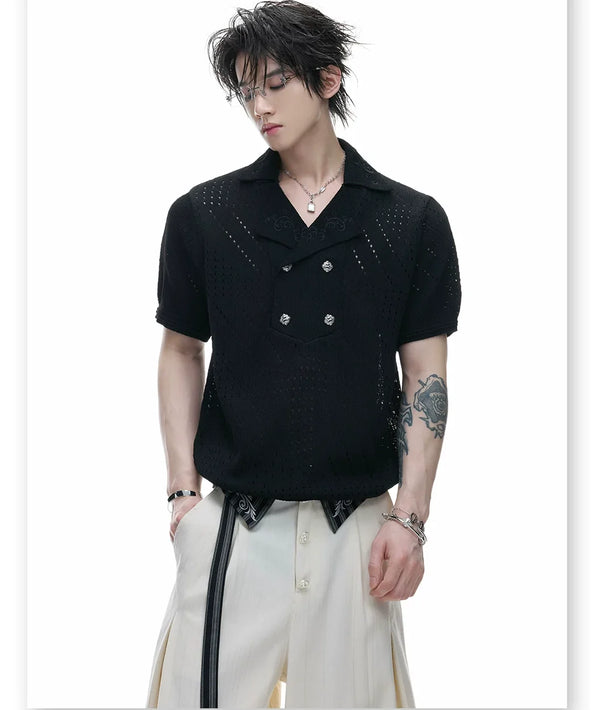
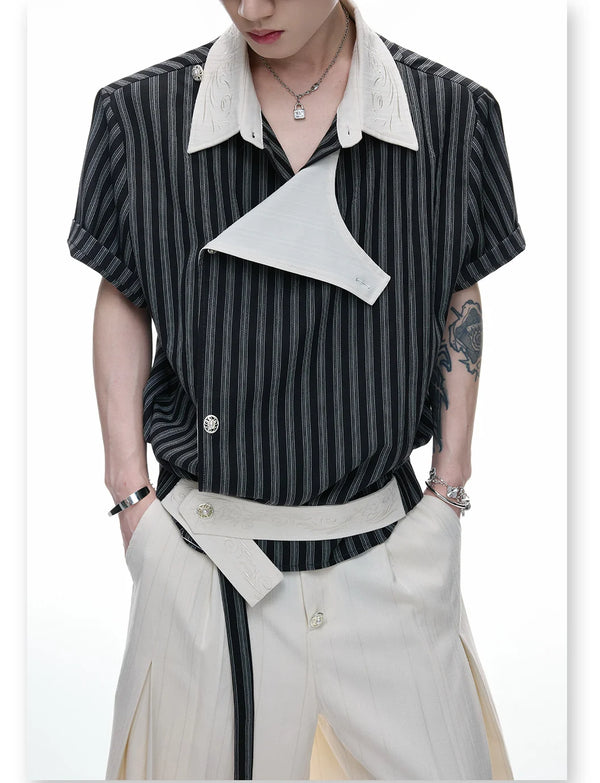
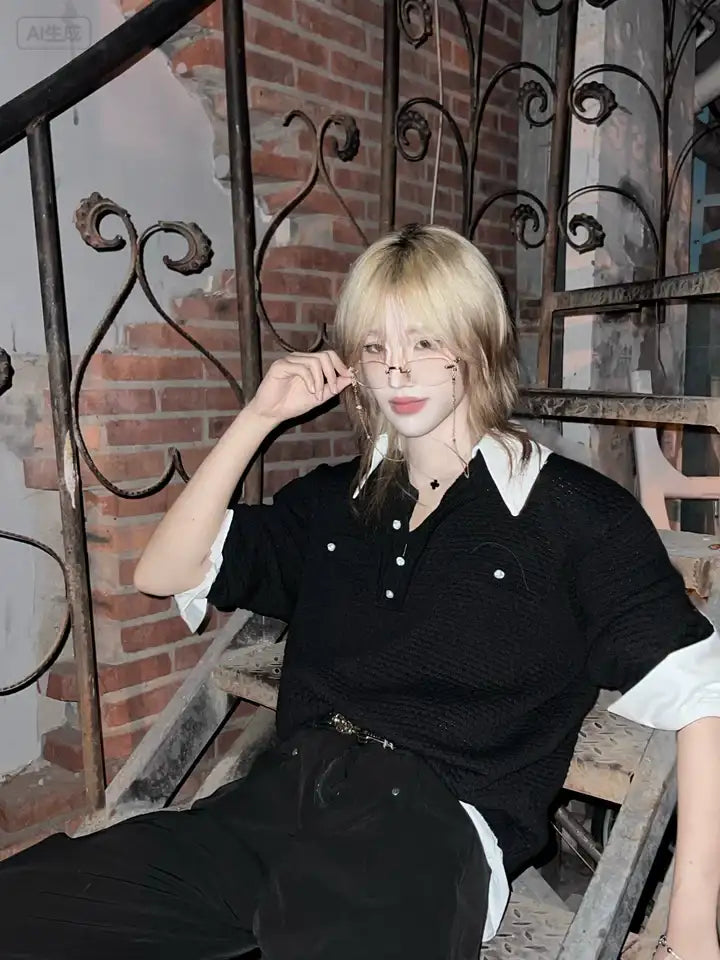
Work appropriate goth clothes begin with the shirt. It's the piece that works in every code and defines most of the look's surface. What you want are black or anthracite shirts with a twist that only catches the eye on second glance: shifted seams, tone-on-tone stripes, a deconstructed collar. Pieces like this read formal enough for client meetings and still carry your direction.
On top comes the layer question. A wool-mix cardigan replaces the blazer in the Business Casual setting without losing seriousness – and knit in black has something melancholy about it from the start. The fit matters: better slightly oversized and deliberately draping than tight and tame. Two pieces from our range show the span:
With three shirts and two knit layers you already cover a complete working week without repeating yourself. The real effect, though, comes further down – with the silhouette that decides whether a look reads as admin or as intent.
Wardrobe · Silhouette
Trousers and silhouettes: wide-leg instead of skinny
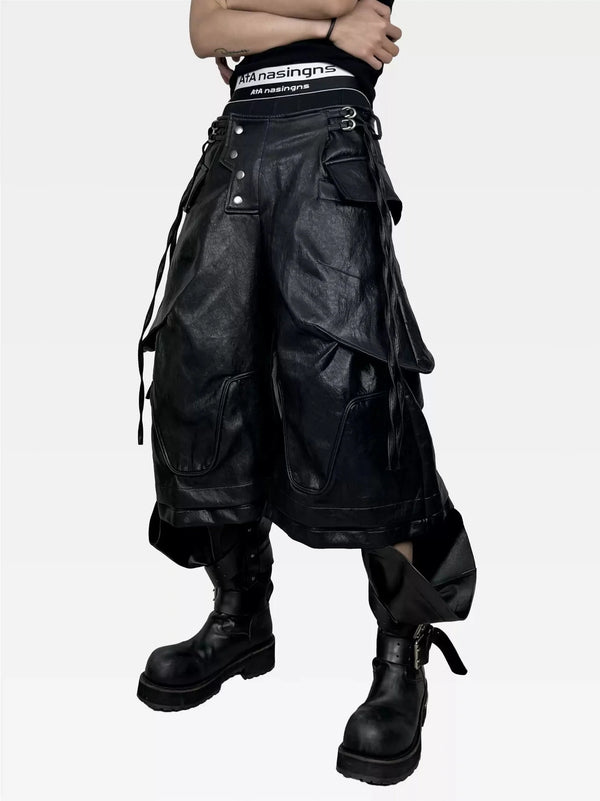
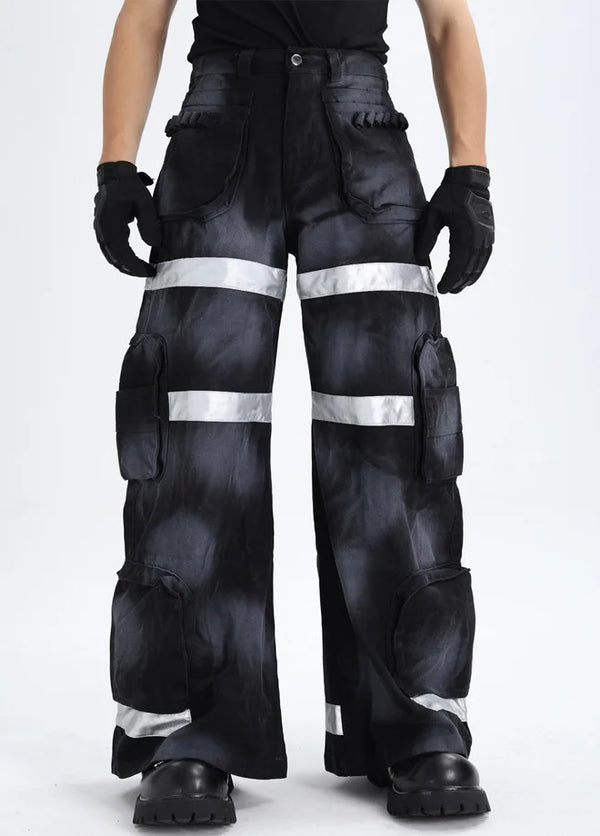
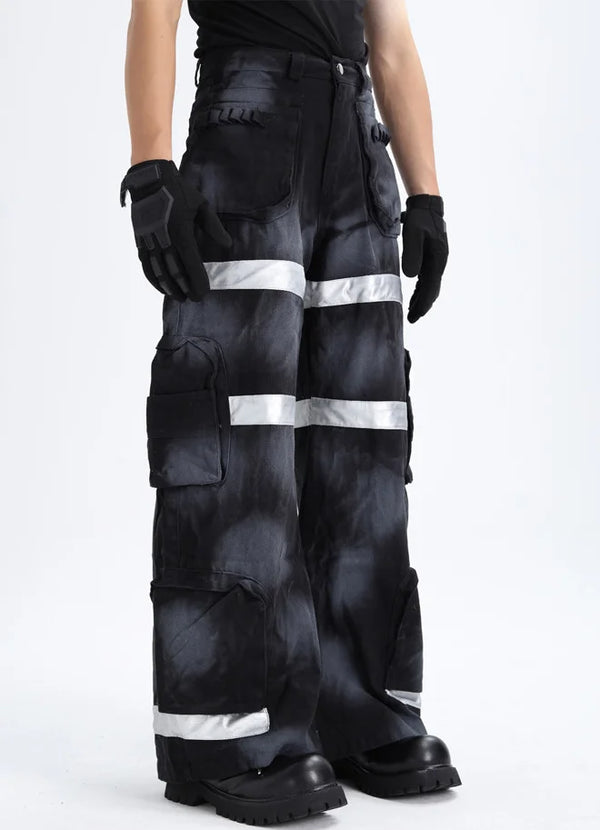
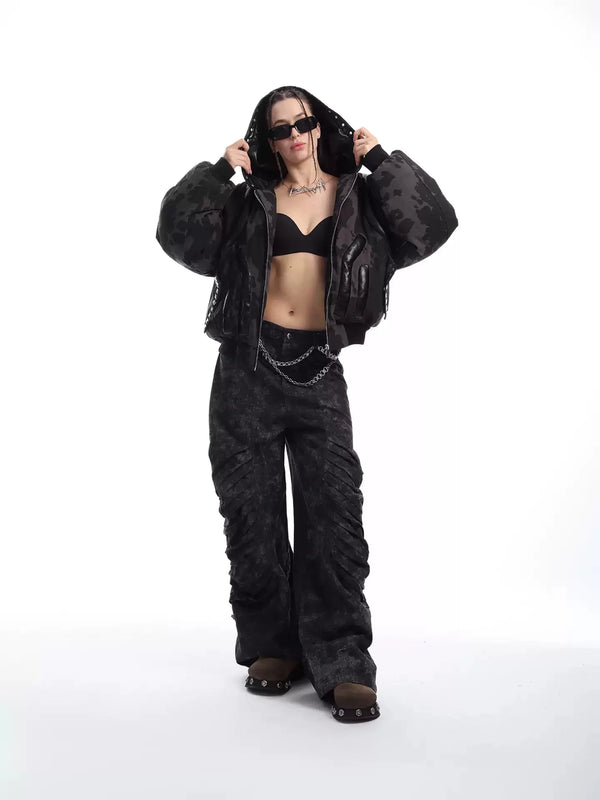
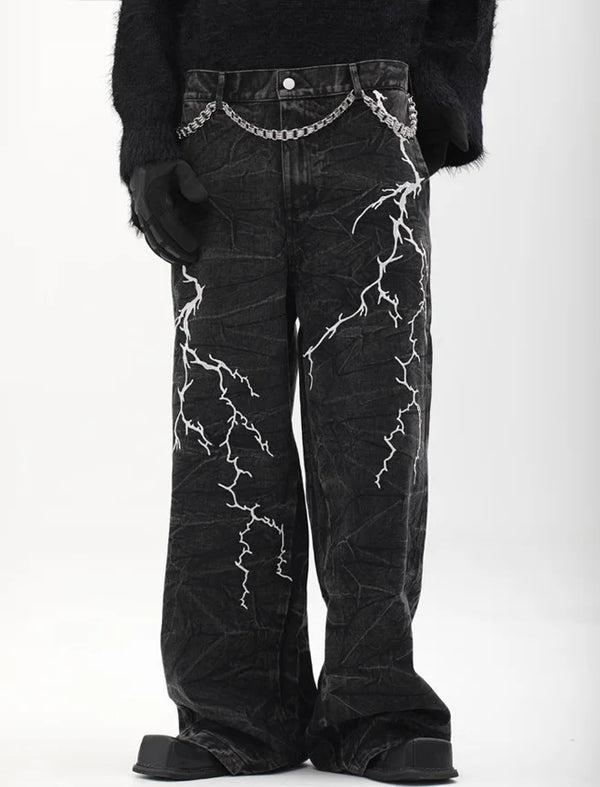
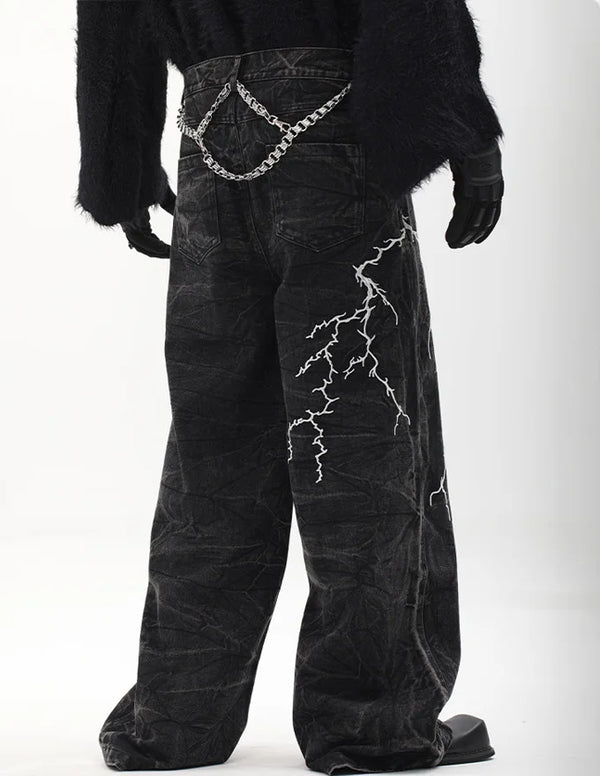
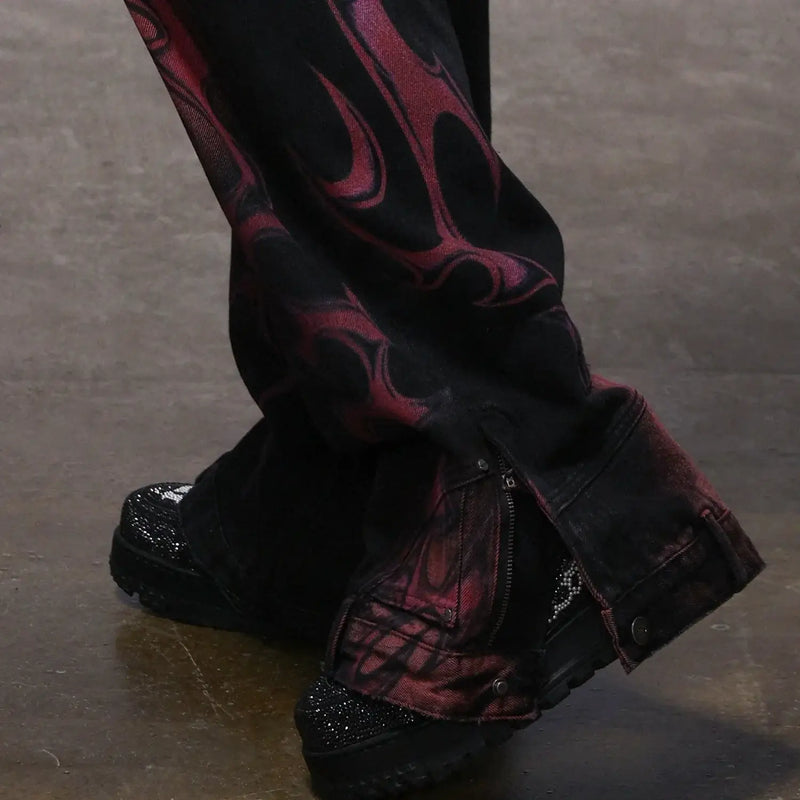
The skinny trouser was once the badge of alternative fashion. In today's office it mostly says: I haven't bought anything new since 2015. Business Goth Style works with the opposite – wide, flowing legs that show volume with every step. A wide-leg trouser in black looks both more severe and more dramatic than any tight variant, and along the way it meets every dress code, because its base cut comes from classic menswear tailoring.
At the waist: high or mid-high, so the shirt can be tucked in cleanly. At the hem: long enough to break on the shoe. Wrap details or asymmetric closures give the trouser its dark note without a single symbol being necessary.
How much movement sits in a leg like this shows best in motion – on fabric, the difference between a static photo and a walking person looks like two different trousers. Our team documents exactly that regularly on TikTok:
@fugastudios These pants ate and left no crumbs 🖤 walking chaos in denim form #fugastudios #darkfashion #widelegpants #fyp #distresseddenim ♬ Originalton - Fuga Studios
For strict codes you pick the version in smooth suiting fabric, for looser settings it can be the version with visible wrap layers. In both cases the silhouette stays the same – and it's exactly this constancy that makes the look recognisable.
Wardrobe · Outer
Blazers, bombers and outerwear: the top layer decides
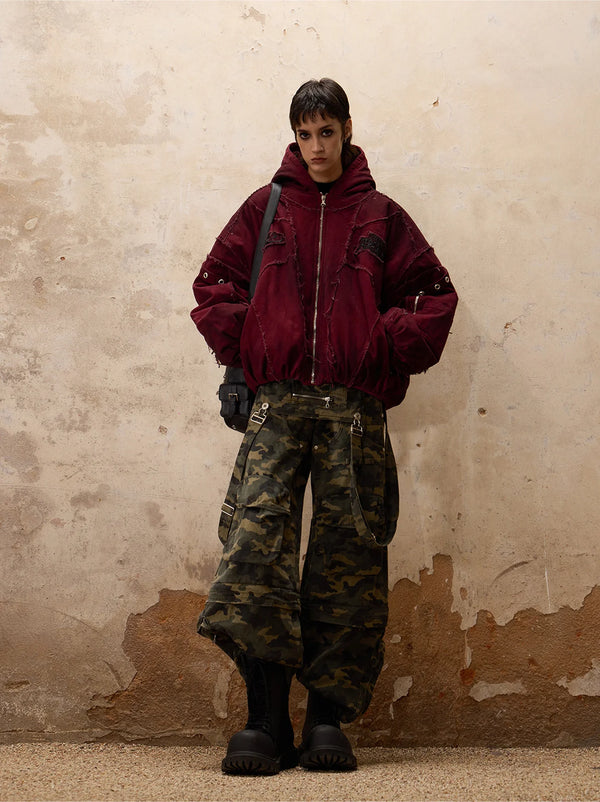
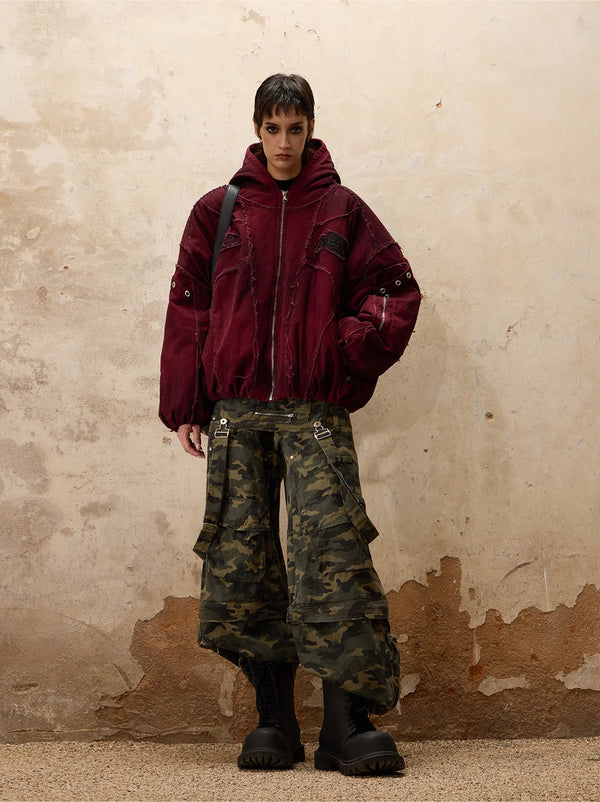
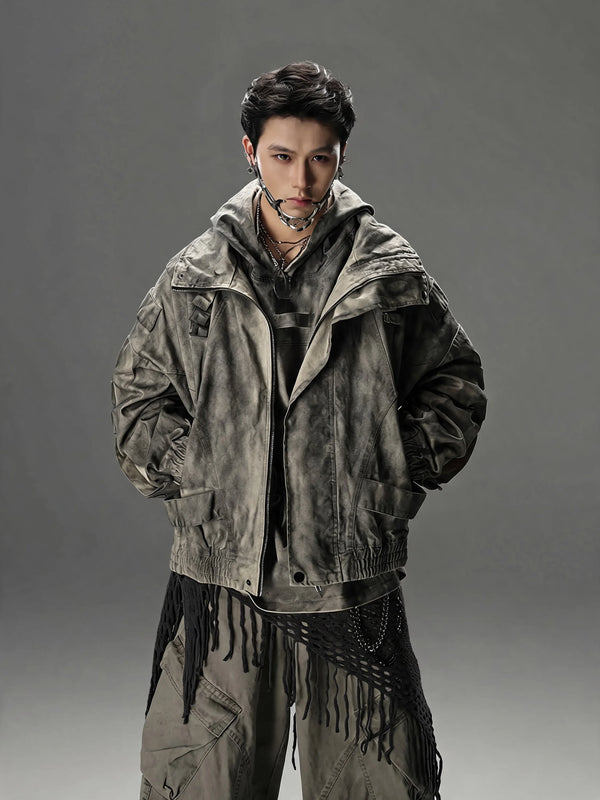
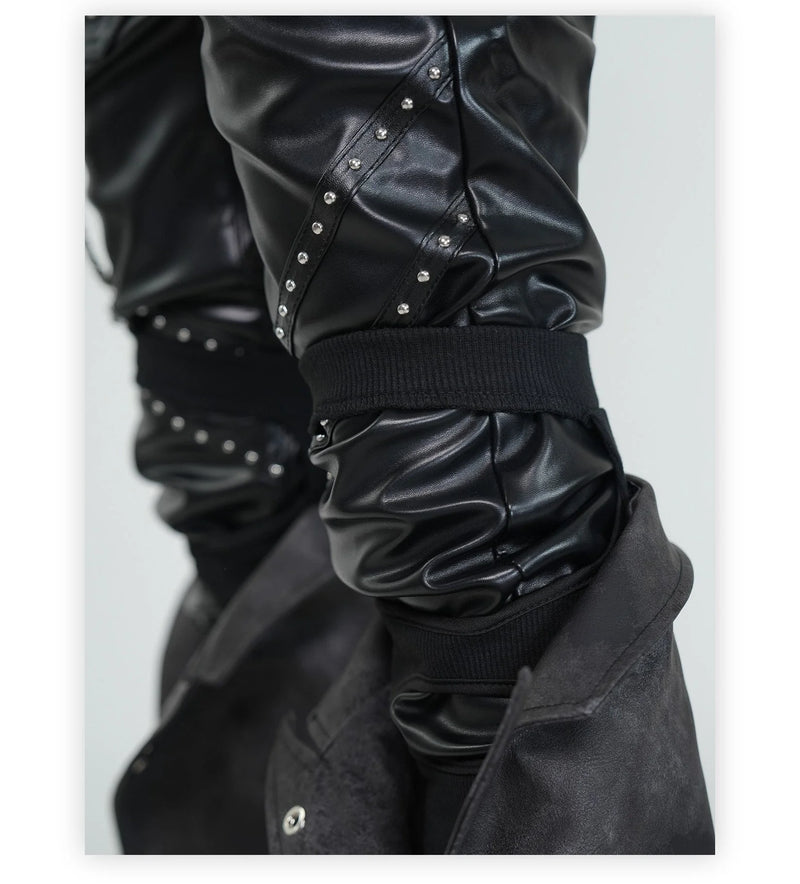
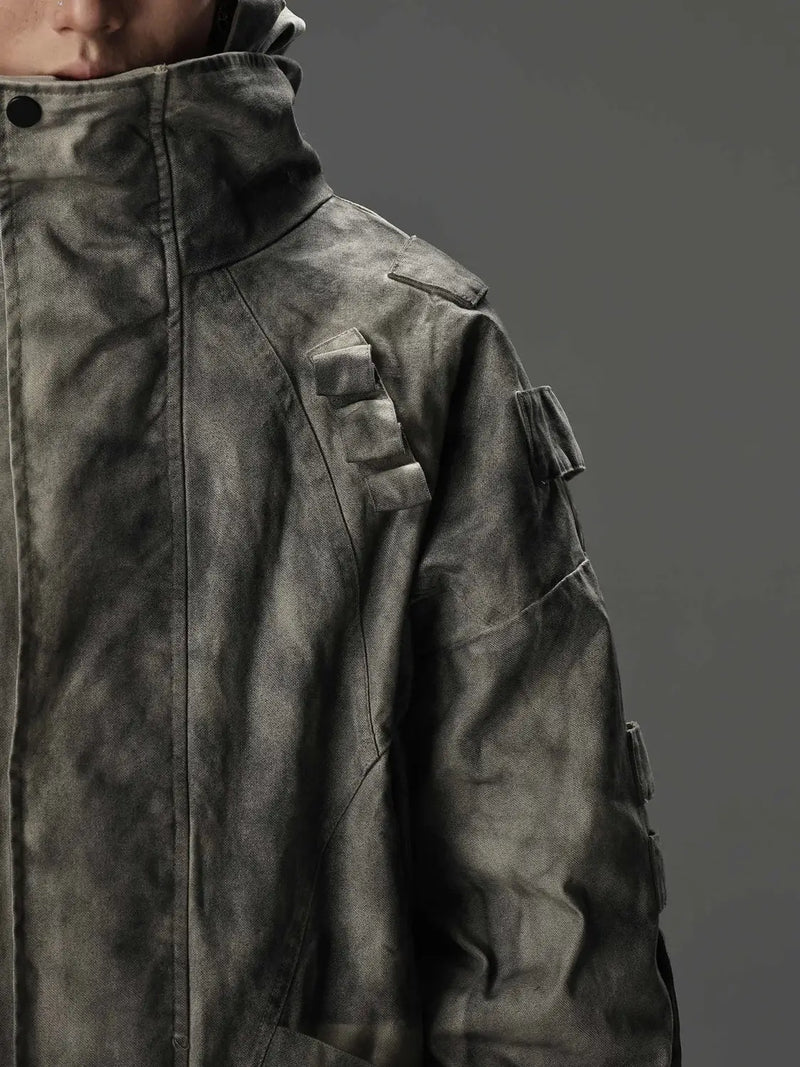
The top layer is what colleagues see first – in the corridor, in the lift, on the way to lunch. A blazer with studs on the collar or a cleanly cut leather bomber carries more direction than any accessory beneath it. For Business Casual a single strong blazer is enough: black, slightly oversized, with a detail that sets it apart from the rack.
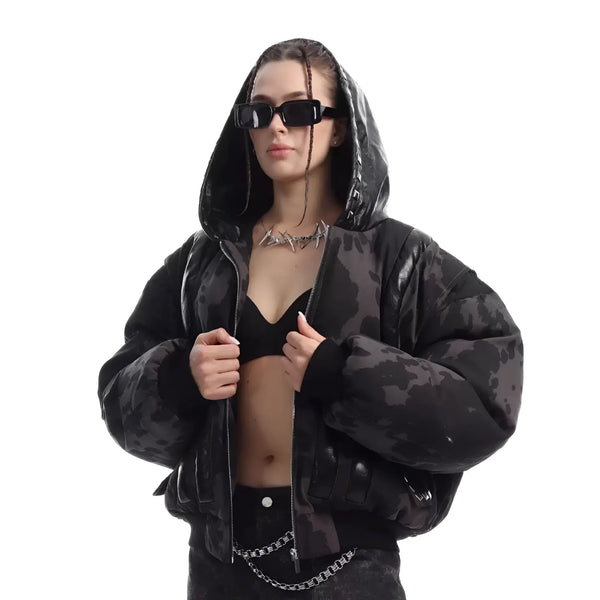
The leather bomber takes on the commute and the after-work. It doesn't replace a suit jacket, but it holds the look together when the day runs long – and leather ages in the same direction the whole style points: darker, softer, more personal.
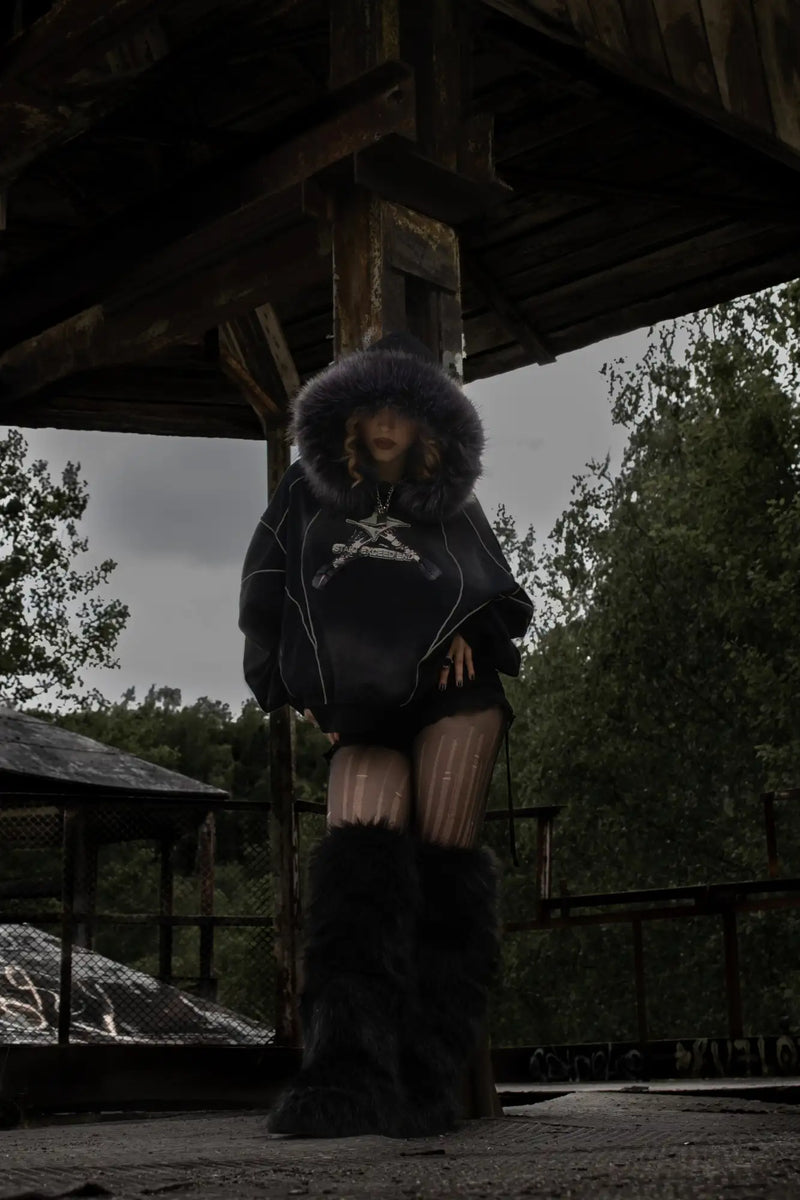
In winter a third layer joins: the way through the cold. A black puffer with a high collar gets you through the stretch between train and office door without breaking the look – and then disappears at the cloakroom until the day is over. What that looks like in motion:
@fugastudios 🖤 The Opium Winter Puffer: your convertible winter armorFortress collar + detachable sleeves = infinite styling options. Watch the transformation from puffer to vest. Limited drop.#fashiontiktok #darkstyle #luxuryfashion #winterfashion #FugaStudios #techwear #blackfashion🎵 ♬ Originalton - Fuga Studios
That sets the framework: shirt, trouser, top layer. What makes the difference between cheap-dark and expensive-dark, though, lies deeper – in the material itself.
Material
Fabrics and details: what makes Business Goth look expensive at the office
Black is not just black. A thin, shiny polyester black looks grey after two washes and cheap after one meeting. Wool, twill, dense cotton canvas and heavy knit, on the other hand, swallow light – they create that deep, matte black the whole style means. Anyone who saves on fabric loses the look at the very point where it's made.
The second level is details: silver hardware instead of gold, matte buttons instead of shiny, seams that are visibly set. In the office a simple dosage rule applies to all of it, one that can be summed up in a single sentence:
Concretely that means: limit hardware to one zone – either the hands (rings), or the belt, or the collar. Never all three at once. And with shiny fabrics like satin, the time-of-day rule applies:
With fabric and dosage rules in hand, the two most common starting situations can now be played through – because the search queries show it clearly: men and women face different starting points on the office-goth question.
For men
Business Casual Goth for men
Corporate Goth male is one of the most-searched variants of the topic – for good reason: men's dress codes are more tightly framed, and that's exactly what makes it easier. The route runs via the suit. A black suit with a wide leg, a structured shirt without a tie underneath, and Chelsea boots with a clean sole – there's a silhouette that passes in the boardroom and wouldn't stand out at a concert.
Anyone working one level looser swaps the jacket for the cardigan or the leather bomber, and the suit trouser for the wrap variant. What stays decisive is the constancy: same colour world, same hardness, every day.
The complete derivation of this dress-code level – including the shoe question and summer variants – we've worked out in a separate article:
For all the focus on men's tailoring: the female-read side of the look has its own codes, its own pitfalls and considerably more room in the silhouettes – a glance at it is worth it for mixed teams too.
For women
Gothic clothing for women at the office
Gothic clothing for women is a universe of its own as a search term – from the velvet dress to fishnet tights. In the work context the universe condenses to a handful of building blocks that combine freely. Anyone searching for alternative clothing online in Germany finds a lot of costume and little substance – the following rules filter reliably:
- Silhouette first: A pencil skirt or a wide-leg trouser carries the look – symbols and prints aren't needed.
- Opaque as standard: Tights at least 60 DEN, blouses lined or with a top underneath. Transparency is an evening decision.
- One romantic element at most: Jabot collar or balloon sleeves or lace hem – the singular makes the difference between severe and costumed.
- Shoes with substance: Loafers, pointed flats or Chelsea boots. Platform only works from Smart Casual up.
- Make-up follows the code: dark lip or emphasised eyes – here too the singular applies.
So the women's variant is not a different system, but the same eighty-twenty maths with more options. How that turns into complete weekly looks is shown in detail by our outfit article:
That leaves the moment when the rules soften – the end of the week, when many offices loosen the code and suddenly more is possible than from Monday to Thursday.
The looser edge
Casual Friday and Smart Casual: when the code softens
Friday is the testing ground of Business Goth Style. Here denim may appear – as a dark, cleanly cut set instead of ripped separates. A denim blazer over the matching wide-leg trouser reads as a suit quote and still stays relaxed enough for the loosest day of the week. Structured short-sleeve shirts take on the same role in summer.
The line stays visible: even on Friday the look carries intent. No band tee, no printed hoodie – instead pieces that look as though someone thought the suit further rather than left it off.
Anyone wanting to shop specifically at this point finds the relevant categories bundled – from severe office wear to the Office Siren line, every dress-code level is covered:
What's still missing are the small pieces with the big leverage – accessories in Business Goth Style aren't decoration but a dosing instrument.
Wardrobe · Accents
Accessories and shoes: measured signals
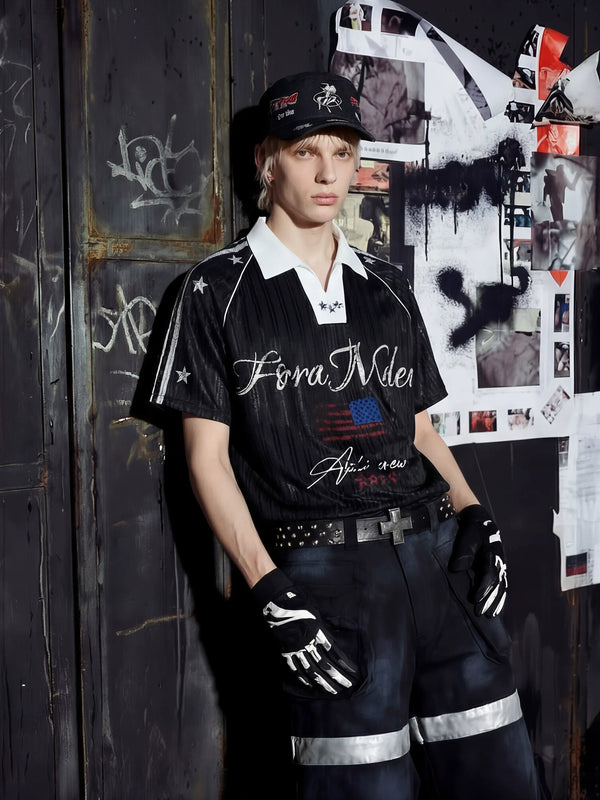
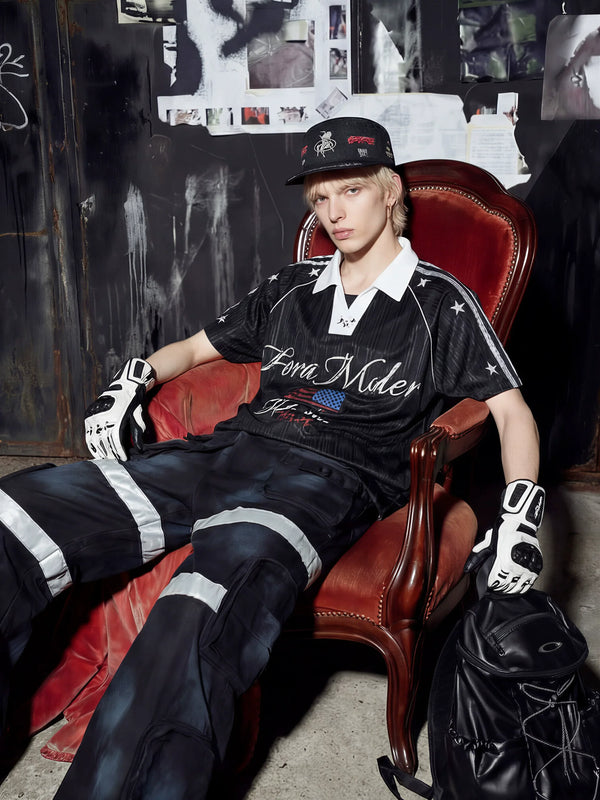
A belt with a cross buckle under the blazer, a single silver ring, a dark cap for Friday – accessories are the adjusting screws with which you move the same base look between the dress-code levels. The rule from above still applies: one hardware zone per outfit. The belt counts as a zone, the hands count as a zone, the neck counts as a zone.
With shoes the sole decides: clean and closed for Formal, profiled for Casual. Chelsea boots in matte leather are the universal answer – they carry suit trouser and denim alike and age with dignity.
Before we get to the most common questions, an honest look at the other side: the mistakes on which Business Goth attempts actually fail at the office. It's almost always the same five.
What goes wrong
Common mistakes: where Business Goth fails at the office
None of these mistakes is the end of the world – but each one shifts the perception from consistent to costumed. The good news: all five are fixed with a single decision.
Anyone with these five points under control is practically no longer mistakable – neither for the grey standard nor for a costume. For everything still open after that, the answers to the most common questions follow.
FAQ
Common questions about Business Goth Style
A few questions keep coming up around office-ready Gothic wardrobes – from the job interview to the video-call reality. Here are the answers in short form.
Can I wear Business Goth Style to a job interview?
Yes – at the Formal level. Black suit or its equivalent, structured shirt, closed matte shoes, no visible hardware. That way you're dressed more formally than most other applicants and still yourself. You save the statement pieces for the time after the probation period, once you know the actual code of the house.
What is the difference between Goth and Gothic?
Goth denotes the subculture and its members – emerged at the end of the seventies from post-punk. Gothic is the adjective for the aesthetic behind it: Gothic Fashion, Gothic Look, Gothic clothing. In everyday use both terms get mixed, and in the office the distinction is secondary anyway – there what counts is how precisely the look is executed.
Does Business Goth work in the home office and in video calls?
Better than most looks. The camera mainly shows shoulders, collar and face – exactly the zones where Business Goth works. A structured black shirt or a cardigan with a clean collar reads as finished right away in a call. You should just avoid very fine stripes, they flicker in the webcam.
Do piercings and tattoos go with Business Goth in client contact?
The industry regulates that, not the style. In creative and tech settings visible tattoos have long been normal; in law firms and banks it still holds: covered in the client meeting. Business Goth makes it easier rather than harder, because long sleeves, high collars and opaque layers are part of the repertoire anyway.
How many pieces does a Business Goth wardrobe need for a working week?
Twelve are enough: three shirts, two wide-leg trousers, a blazer, a cardigan, a pair of Chelsea boots, a belt, a knit layer and two accent pieces of your choice. Because everything sits in one colour world, that yields over twenty different combinations – more rotation than most colleagues manage with three times the wardrobe.
In the end, Business Goth Style is less a test of courage than a sorting task. The code gives the frame, the wardrobe fills it – and the attitude stays the same, whether the calendar says board meeting or Casual Friday. What should stick from it, in three paragraphs:
What do you think?
Tell us on @fuga_studios
About the author
Philipp Fuge — Founder · Berlin
Founder of Fūga Studios. Writes the journal himself. Berlin · Shanghai · Tokyo · Poznań — four cities, one logic.