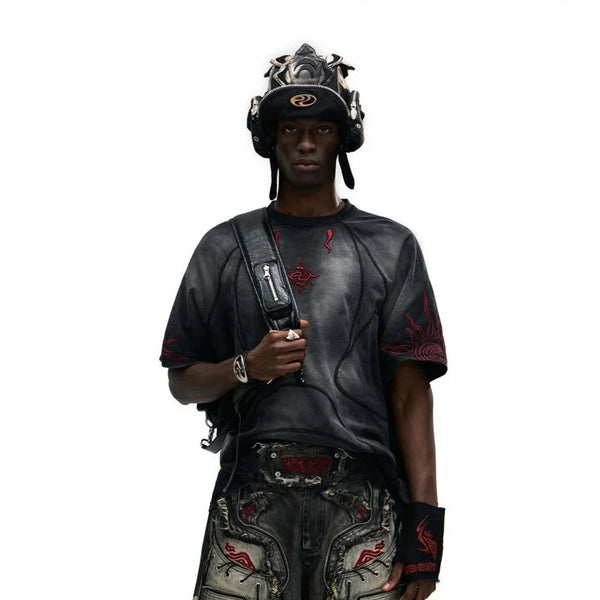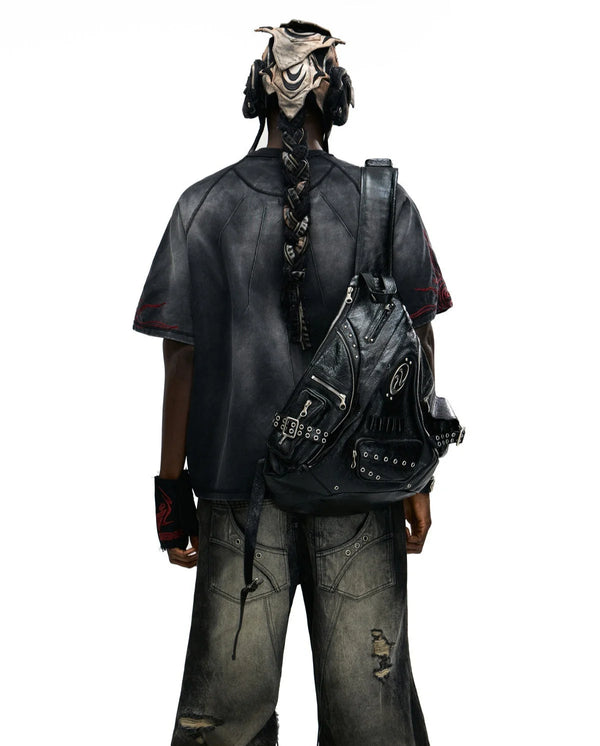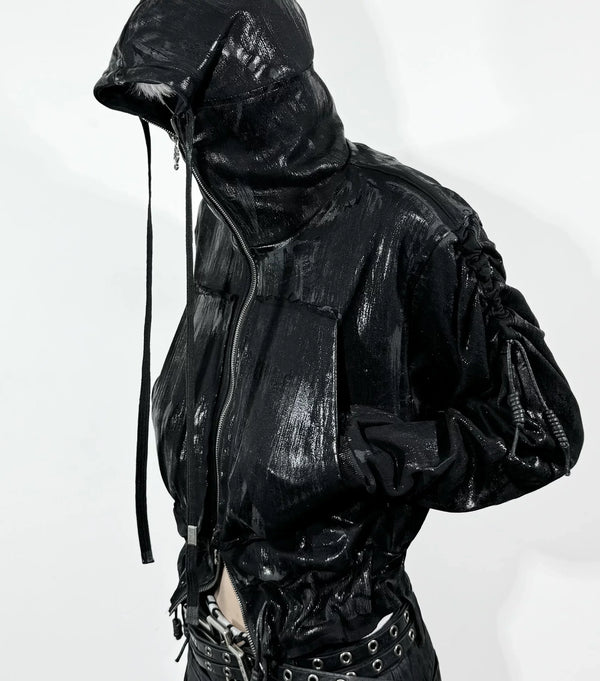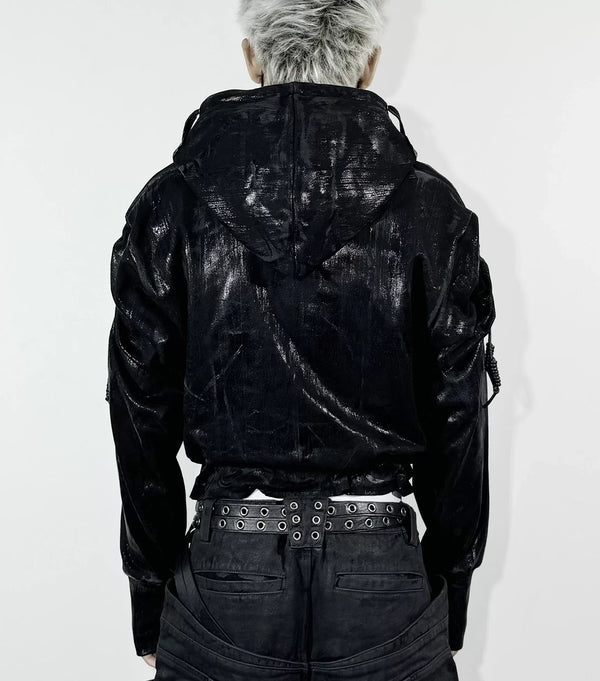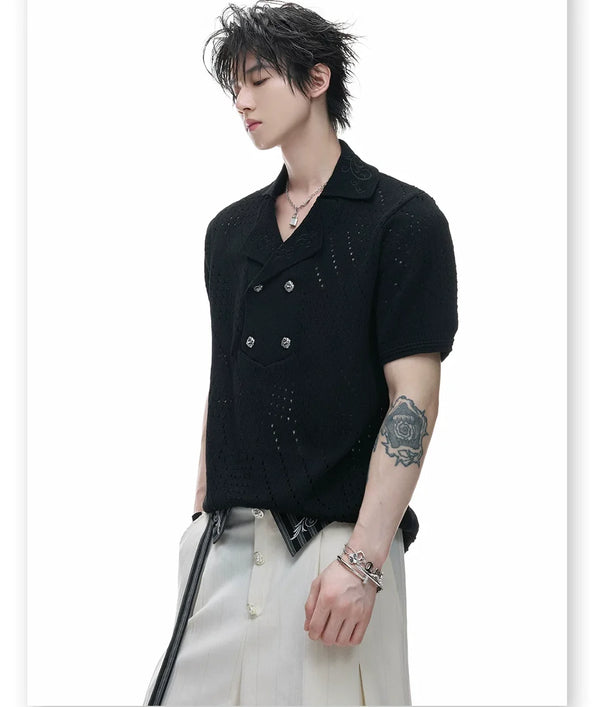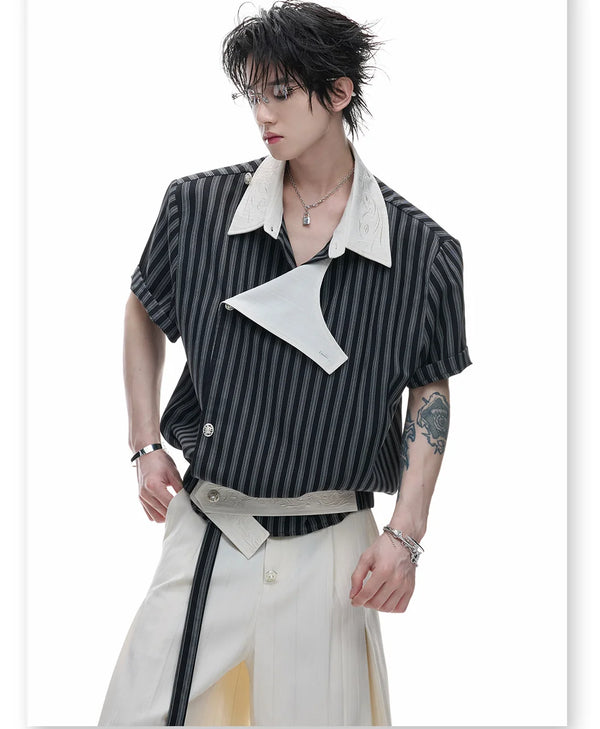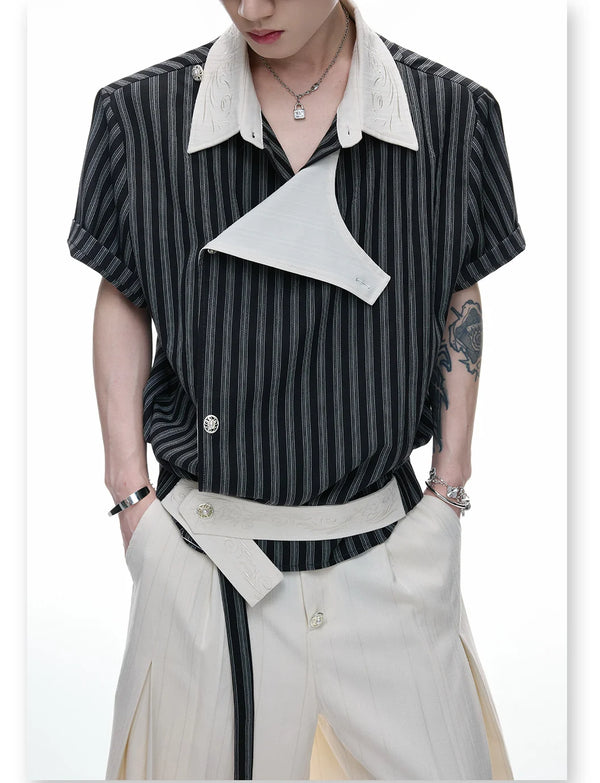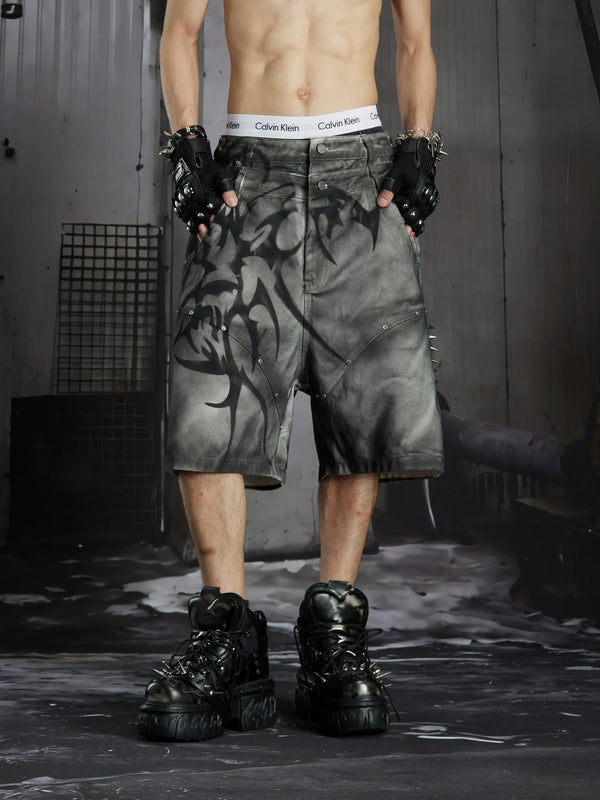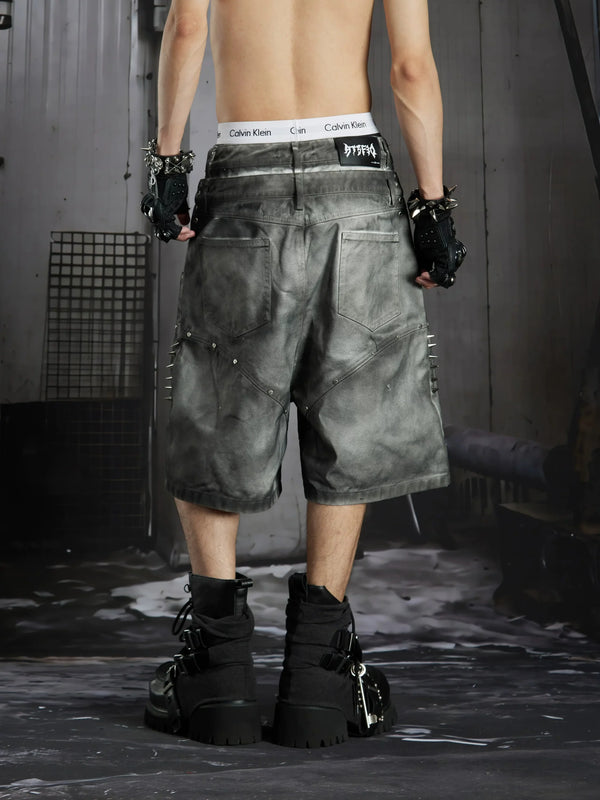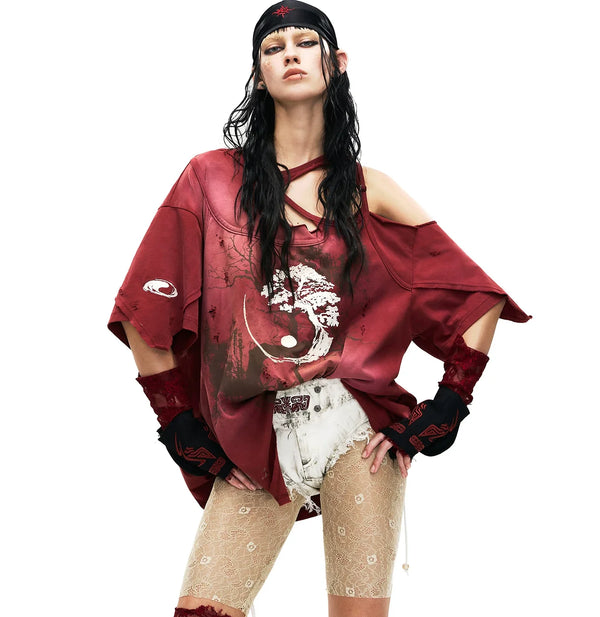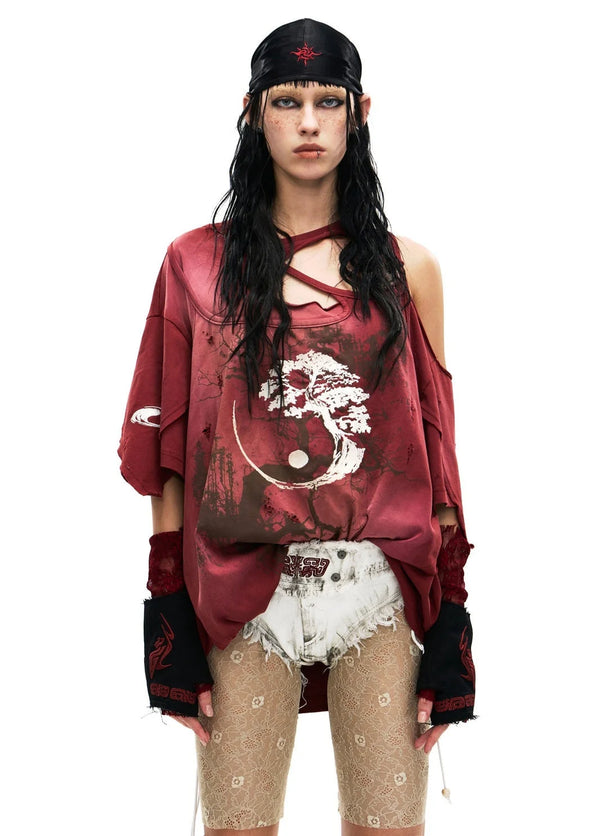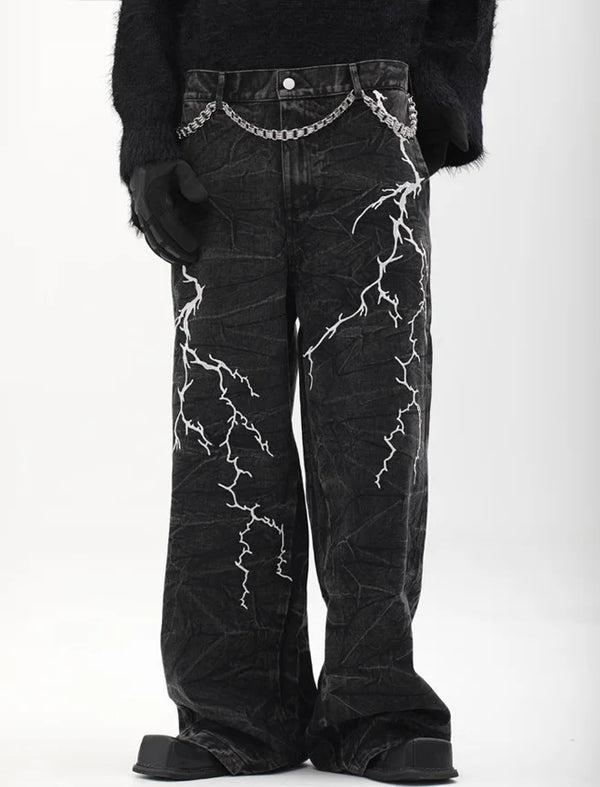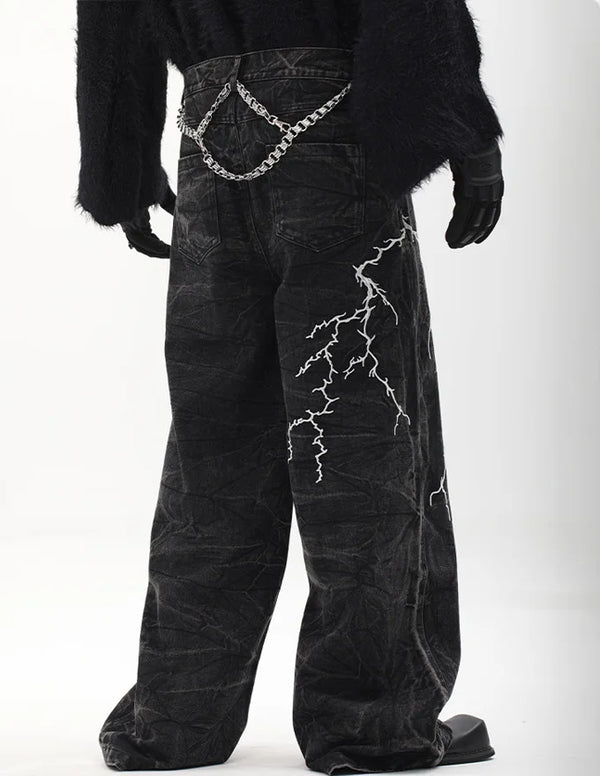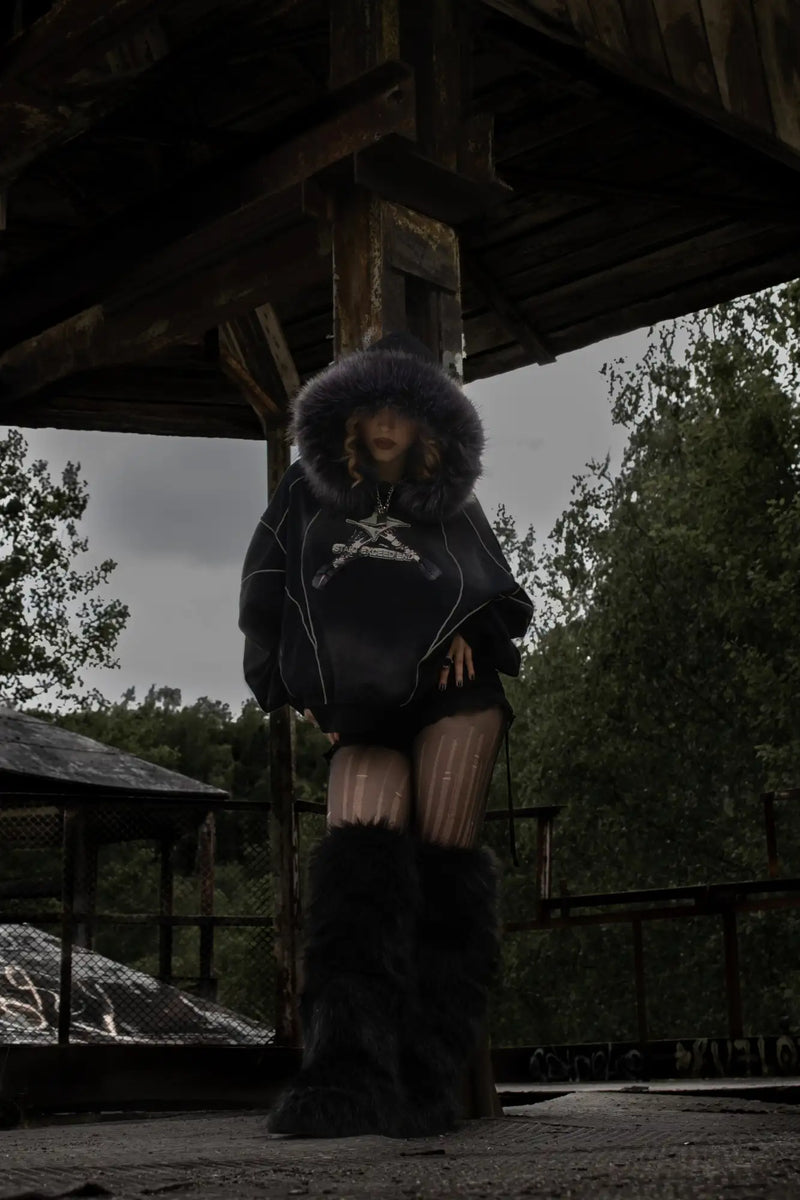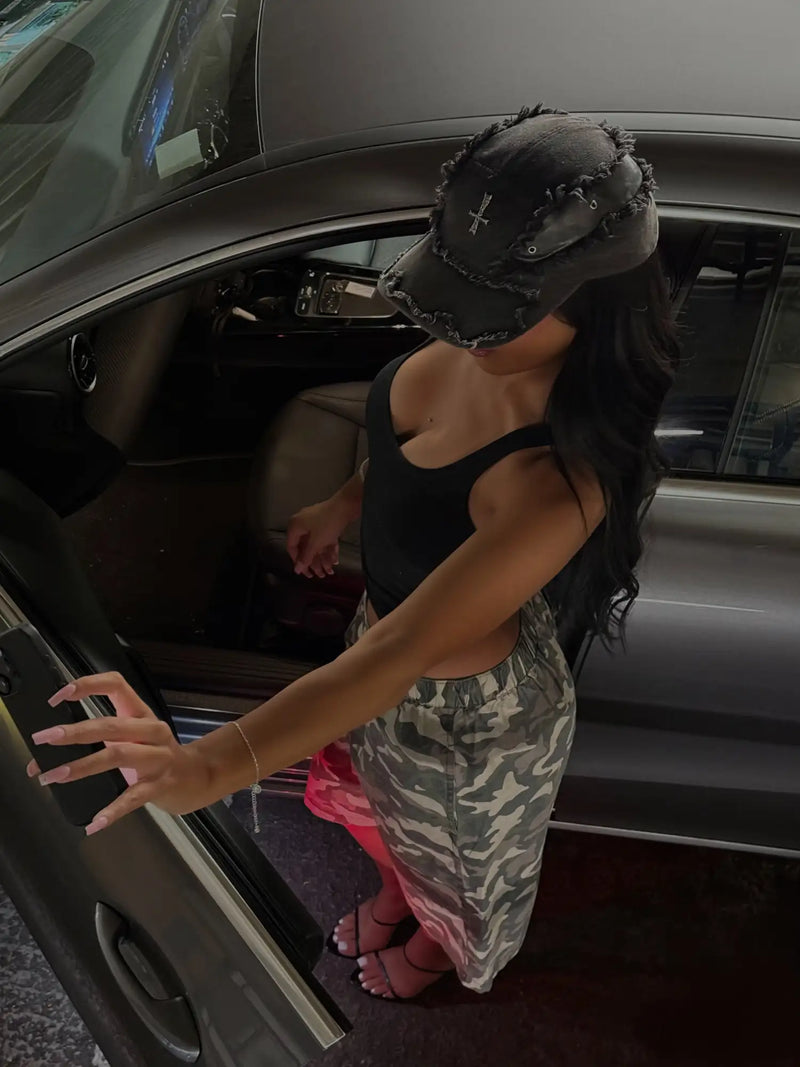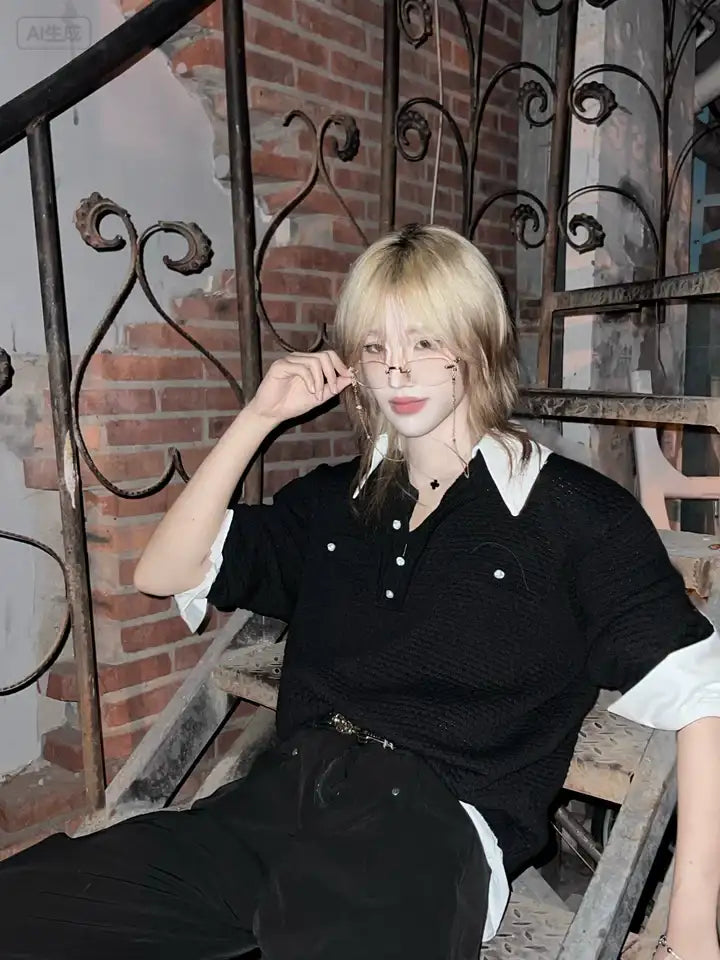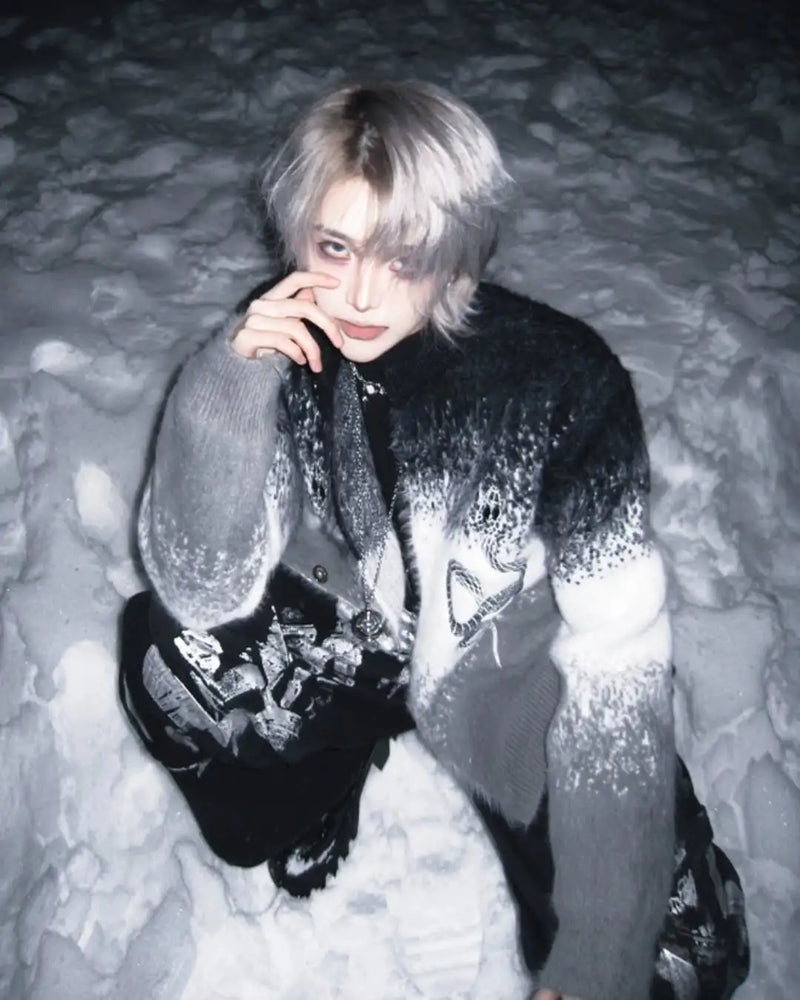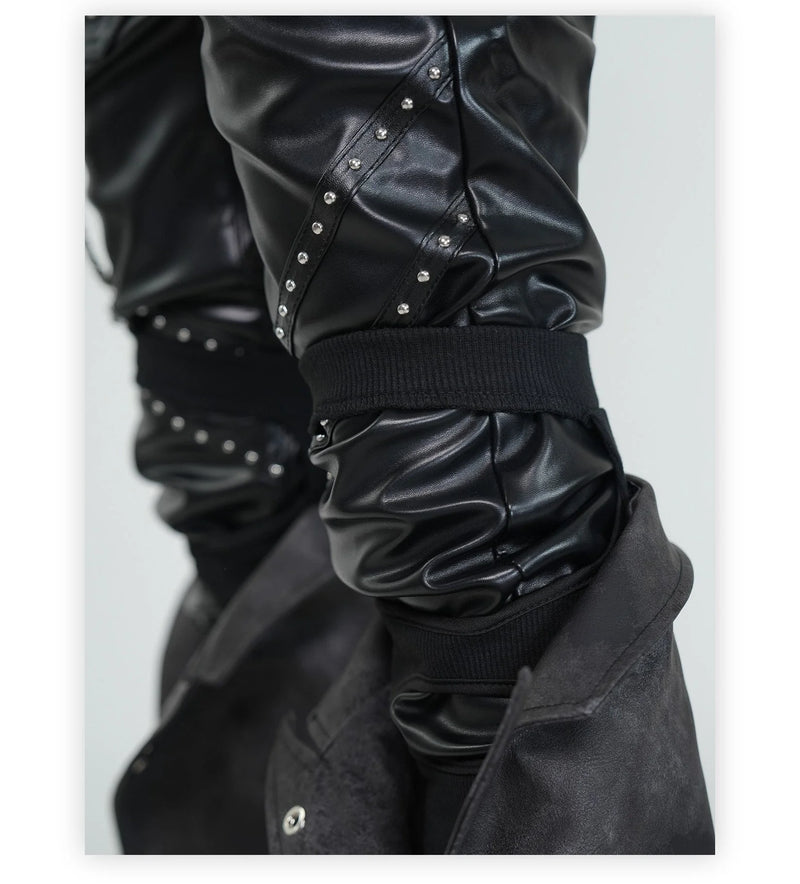
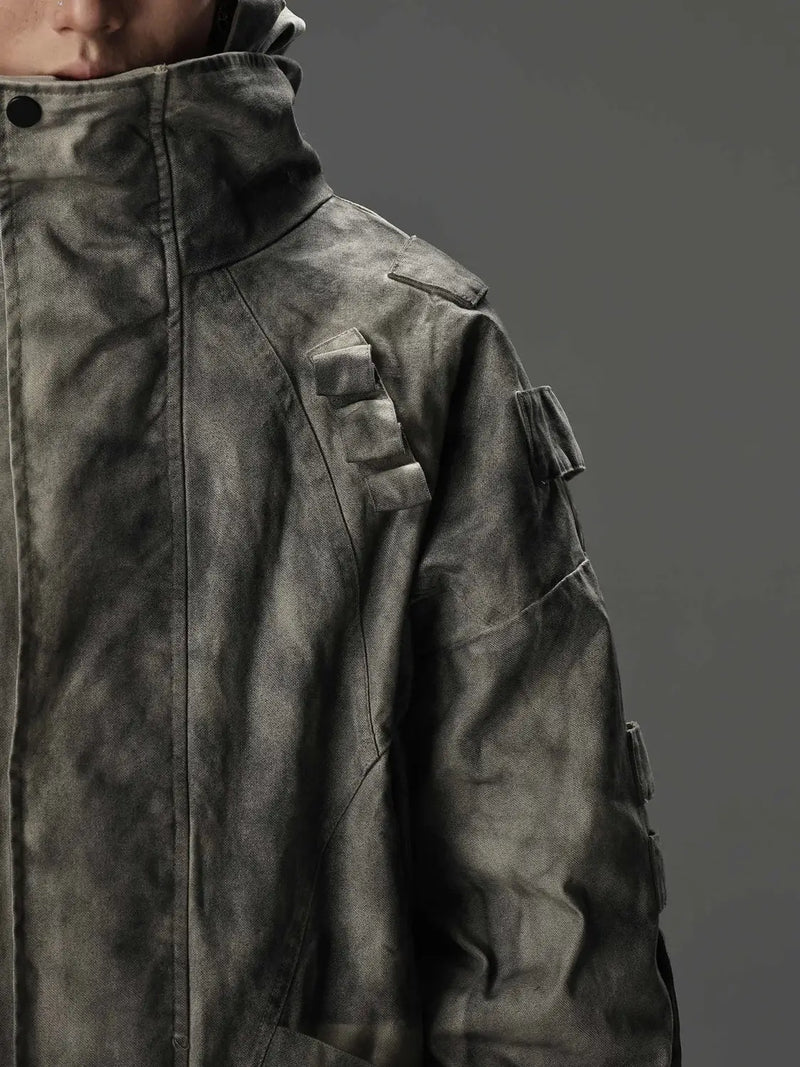
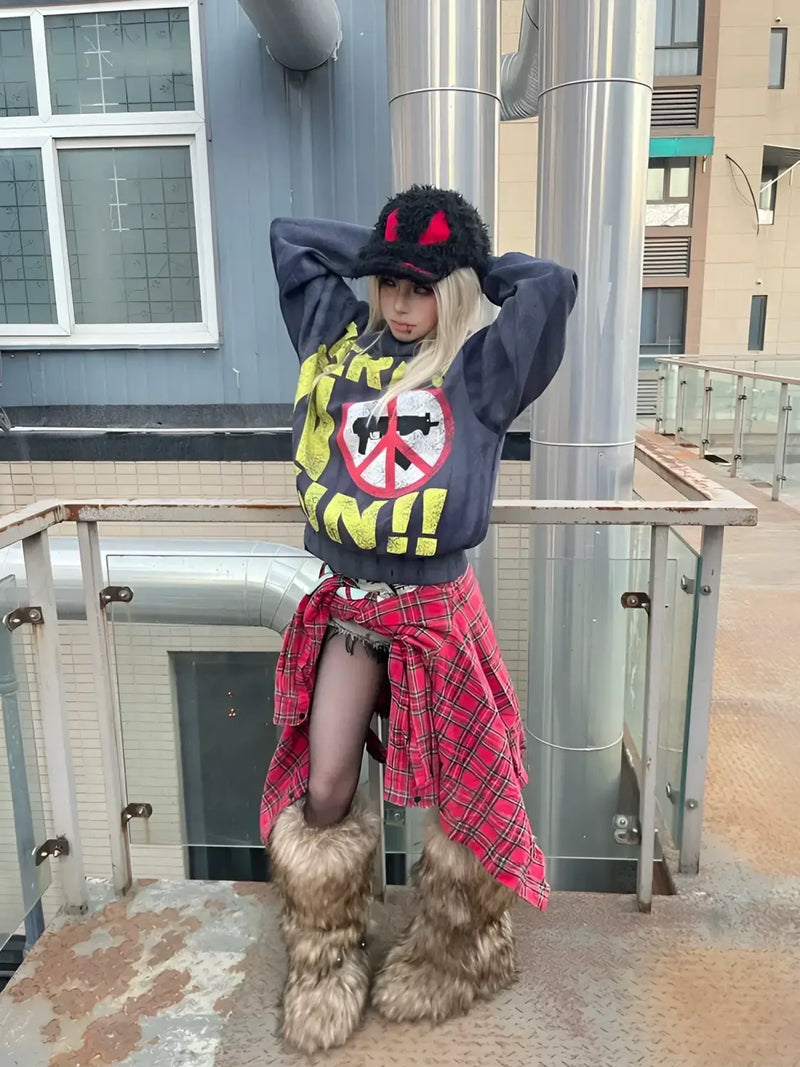
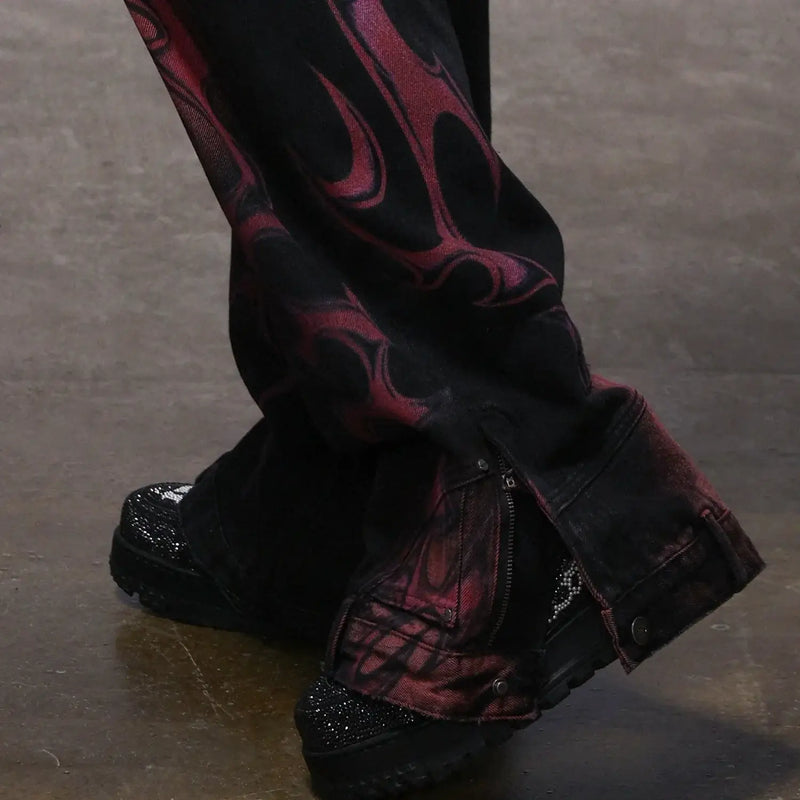
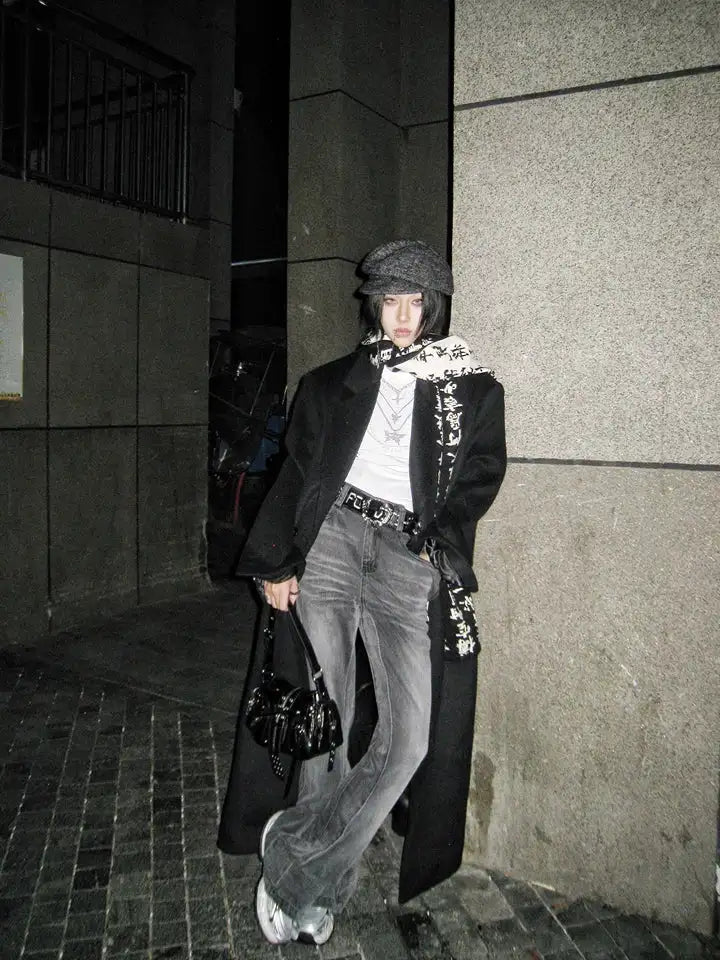

A blazer that sits like armour. Trousers with more fabric than silhouette. A shirt with no print that still says more than any logo. That is the moment avant garde dark fashion begins: where Gothic sheds its symbols and only the cut is left. Anyone searching for avant garde dark fashion is rarely after more black. They are after a fit that looks like a decision.
Avant Garde Dark Fashion is the overlap of two movements: the deconstruction of avant-garde fashion and the dark palette of Gothic fashion. The result is asymmetric cuts, exaggerated proportions and an almost fully monochrome palette that treats structure as more important than decoration. This guide shows where the look comes from, which construction principles carry it and which pieces from jackets, trousers, tops and accessories you use to build it yourself. What you get at the end is not a finished outfit to buy, but a toolkit – the decision about which principles you combine stays with you.
At a glance
- 01Avant Garde Dark Fashion separates itself from the classic Gothic look through construction instead of symbolism – no crosses, no band shirts, only cut.
- 02The palette stays almost monochrome: black, charcoal, off-white – colour becomes the exception, not the rule.
- 03Volume replaces print as the statement – a wide trouser leg says more than any graphic.
- 04The 3-3-3 rule keeps the look wearable: at most three layers, three shades, three textures per fit.
Definition
What is Avant Garde Dark Fashion?
Avant Garde Dark Fashion describes clothing that pairs dark palettes with experimental cutting: asymmetric hems, overlapping layers, silhouettes that distort the body instead of emphasising it. The term comes from the French and literally means vanguard – in fashion, the positions that deliberately set themselves apart from the mainstream before the rest follows. Dark fashion supplies the palette: black as the base, off-white and charcoal as the only deviations. Together this makes a look that is harder to photograph than classic streetwear – because the statement runs through surface and shadow, not through a motif the camera catches at once.
The difference from classic Gothic lies in the symbolism. Classic Gothic works with recognisable signs: crosses, lace, velvet, band names across the chest. Avant Garde Dark Fashion drops almost all of it. The statement lies in the cut itself – in a seam that stays visible, in a sleeve two centimetres too long, in trousers that do not sit but hang. Mix the two and you dilute both codes. Keep them apart and you understand why stylists in Berlin and Antwerp still hold on to this look today.
Origin
Origin: where avant-garde fashion and dark fashion meet
The roots lie in two separate movements of the 80s. On one side the Japanese deconstruction that showed clothing in Paris which looked deliberately unfinished: open seams, asymmetric edges, fabric that falls over the body instead of shaping it. On the other side the early Gothic subculture in Britain, which made black a uniform long before fashion houses picked up the theme. Both movements met in the 2000s, when designers from Antwerp began to show deconstructed cuts consistently in black. What used to be two separate languages – construction on one side, colour on the other – became a shared vocabulary that is still being developed today.
Since then the look has run on two levels at once: as runway aesthetics at fashion weeks and as street uniform in cities with a strong club and art scene. Berlin belongs to that, so does Antwerp itself, and Tokyo. What connects these cities is not a brand but an attitude: clothing that claims space without being loud.
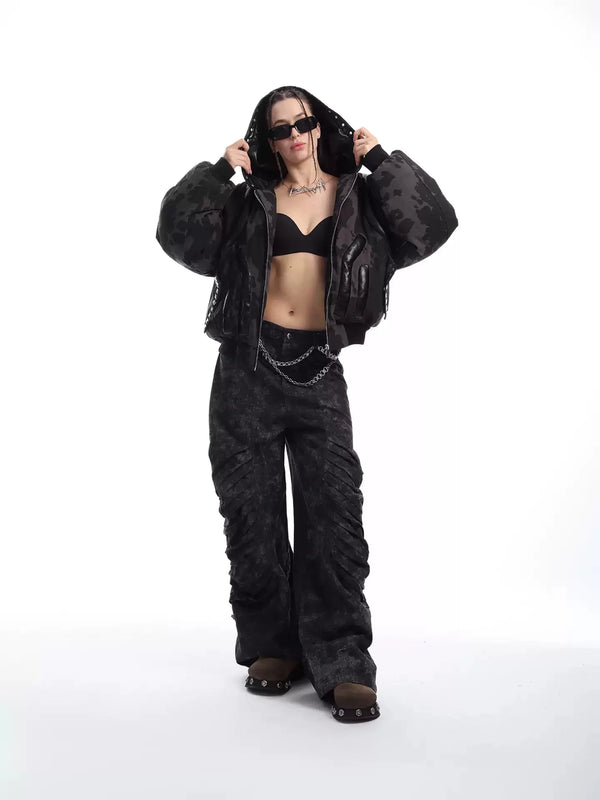
The image shows what it is about: a silhouette created through layers, not through colour. A puffer over slim trousers, both kept in the same tone. Exactly this principle – setting volume against slimness, staying within one palette – turns up again in almost every avant-garde fit that works.
Pioneers
The architects: designers who shaped the look
Three names turn up in almost every history of the look, even though none of them ever appeared as a Gothic designer. They supplied the tools the look is still built with today.
- Ann Demeulemeester – Belgian designer whose asymmetric, often single-sided silhouettes made the deconstructed look acceptable in the salon.
- Yohji Yamamoto – Japanese designer whose work with oversized proportions and almost exclusively black has been a reference since the 80s.
- Comme des Garçons – the label that turned unfinished seams and deliberately asymmetric cuts into its own signature.
None of these three names ever stood for Gothic in the narrow sense – their work still supplied the vocabulary the look draws on to this day. Once you understand the principles behind the names, you no longer need to know the names themselves.
What these three signatures have in common is a principle that transfers straight to everyday clothing: one piece carries the movement, the other stays still. Never both at once. This is exactly where most first attempts fail – too much volume top and bottom at the same time tips the look into costume rather than construction.
Distinction
What is the Gothic look – and where does Avant Garde stop?
The classic Gothic look is symbol-driven: velvet, lace, crosses, band names, often paired with visible piercings and dark make-up. It grew out of the post-punk scene of the late 70s and early 80s and still works through recognisability – anyone wearing Gothic wants to be readable as part of that scene. Avant Garde Dark Fashion takes the palette but drops the symbolism entirely. Both codes historically come from the same corner but have since developed in different directions – one through signs, the other through form.
In practice this means: an avant-garde fit works even without any Gothic marker. No cross, no velvet, no lace – and still clearly dark, because cut and palette do the work symbols would otherwise do. Anyone who wants to mix both languages should do it deliberately: a single Gothic detail, say a cross pendant, works harder in an otherwise purely constructed fit than ten of them in an overloaded look.
For anyone who wants to take the symbol-driven Gothic look as a starting point, the detour via the pillar guide pays off – that is where the basics this article builds on are laid out. Anyone who wants to jump straight into construction is best staying here.
Construction principles
Silhouette & construction: the 5 building principles
Five principles turn up in practically every avant-garde dark fit that works. They are not rules in the strict sense but building blocks a look is assembled from – usually two or three at once, rarely all five at the same time.
The easiest way to show this is with an example: an oversized coat over slim trousers already combines two principles – oversize on top, layer contrast in the silhouette. Add visible zips on the coat and it is three. A single fit rarely needs more.
The video makes visible what stays abstract on paper: the movement of the fabric carries as much statement as the cut itself. A stiff fabric in the same silhouette would look completely different – which is why material choice belongs inseparably to construction, not as an afterthought.
Jackets & coats
Jackets & coats: the statement layer
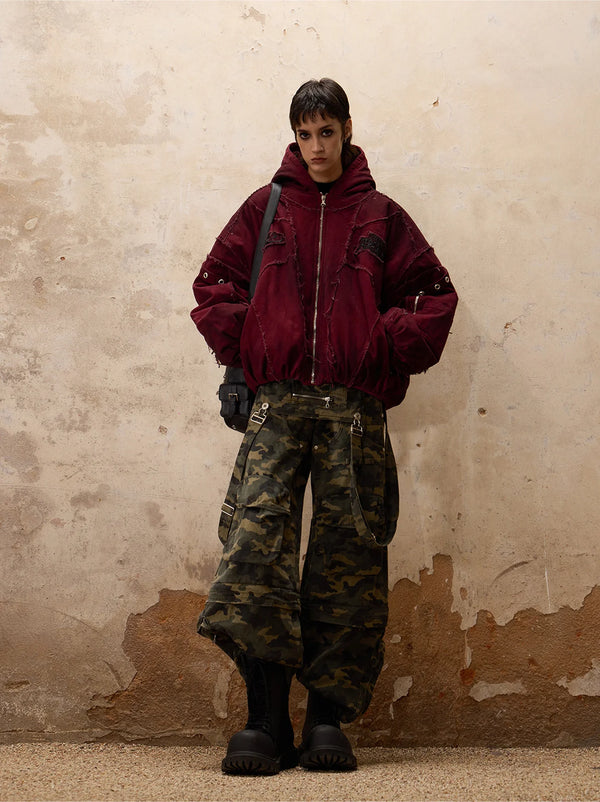
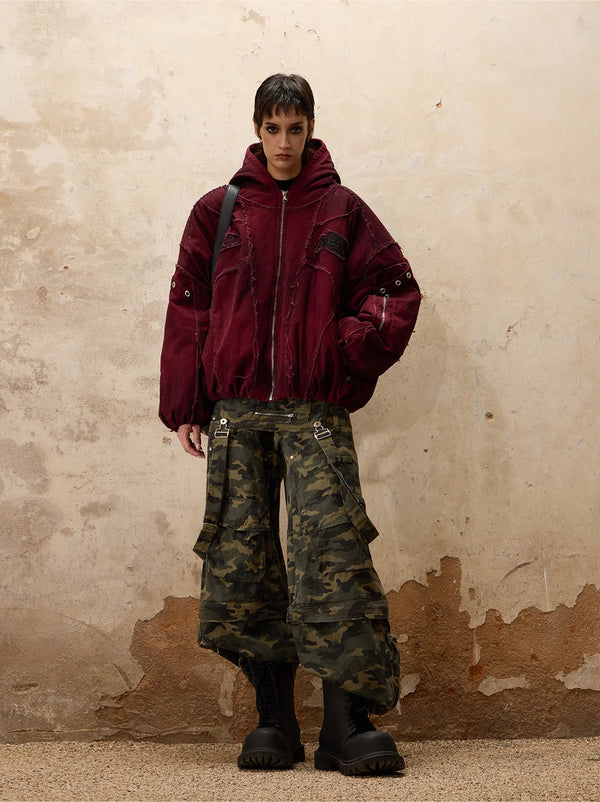
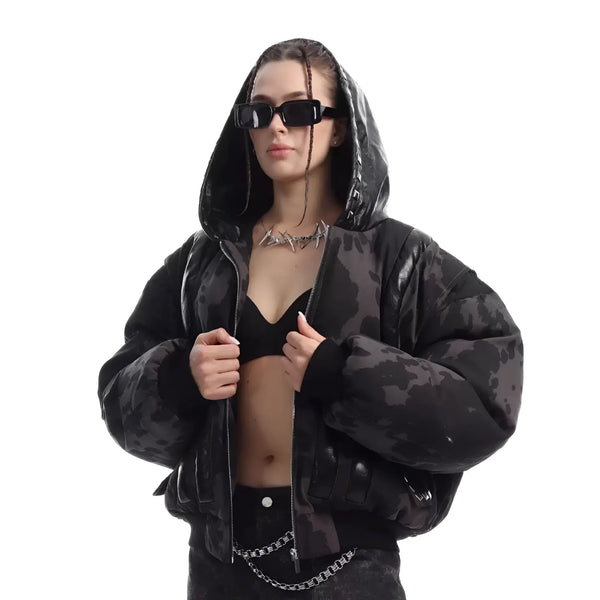
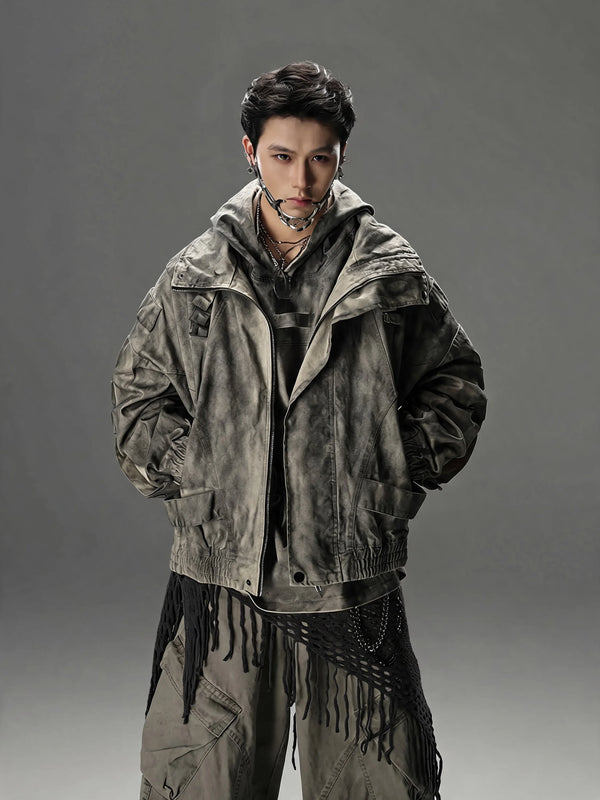
The outer layer carries the most responsibility in this look. It is usually the piece that defines the silhouette – everything underneath reacts to it. Two routes work reliably: a bomber with a clear, almost military structure that carries hardness through cut rather than print, or a tactical-looking set that pulls several layers together in one piece.
When choosing the outer layer, the silhouette underneath has a say. A voluminous bomber calls for slim trousers, otherwise the balance tips. A tactical set with its own structure, on the other hand, also works over wider trousers – because the set already supplies the contrasts the combination would otherwise have to create.
Trousers
Trousers: volume as a statement
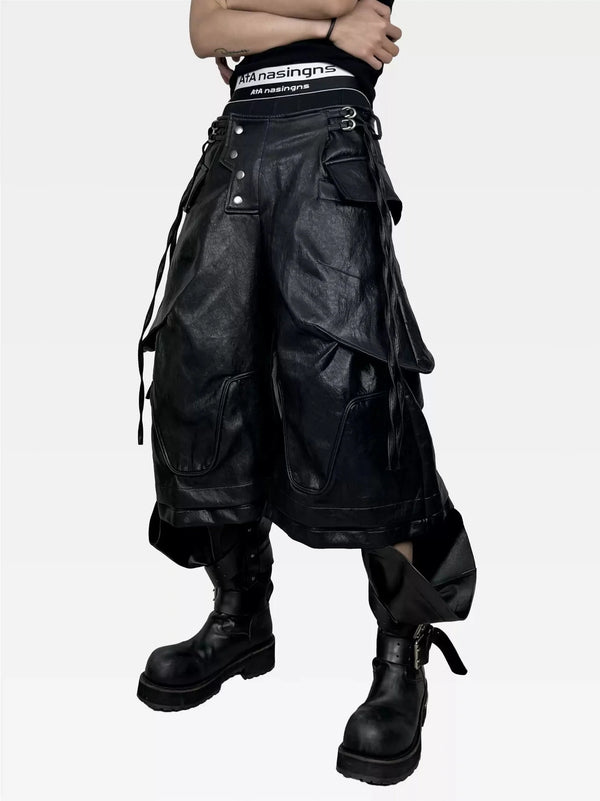
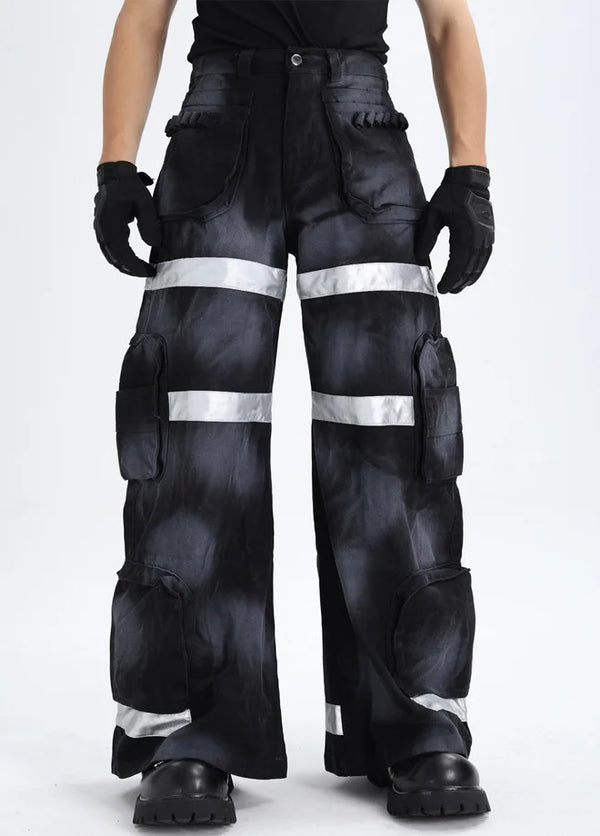
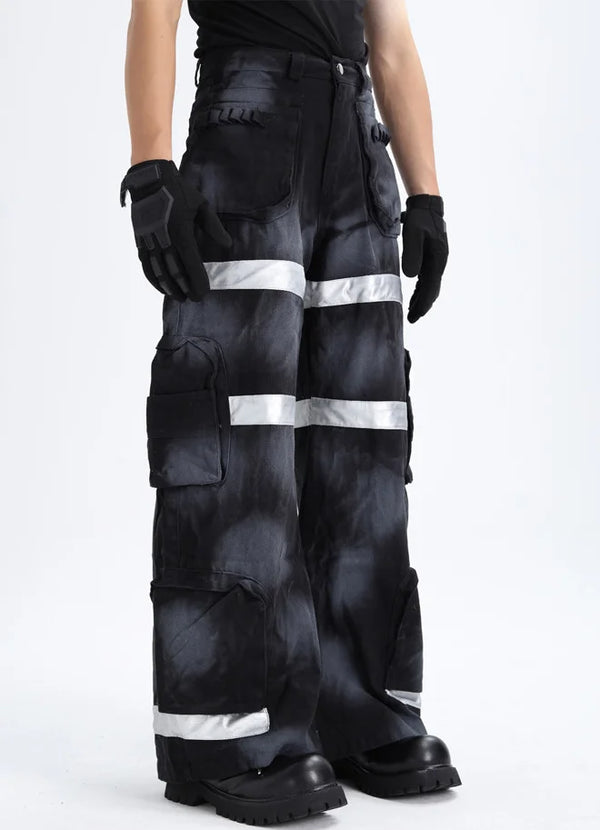
Where classic streetwear often keeps the trousers neutral, here they become the second statement piece. Wide-leg cuts, multi-layer constructions or cargo silhouettes with visible seams take on the job a print would otherwise handle. What matters is the balance with the upper layer: if the jacket is already voluminous, the trousers stay slimmer. If the jacket is slim, the trousers may take over the movement.
Both cuts can be combined with the same tops but read differently: the multi-layer wide-leg trousers stress surface and movement, the cargo version with visible chains leans more on details that swing along as you walk. If in doubt, start with the calmer wide-leg option – it forgives more when combining.
Anyone who wants to trace the historical roots finds there the starting point of many silhouettes that still count as avant-garde reference today. Back to construction: one sentence sums up the principle.
This sentence also explains why the look is hard to copy: a print is reproduced in seconds, a working silhouette is not. That is exactly what separates a fit that looks like a costume from one that looks like an attitude.
Tops
Tops & shirts: reduction instead of print
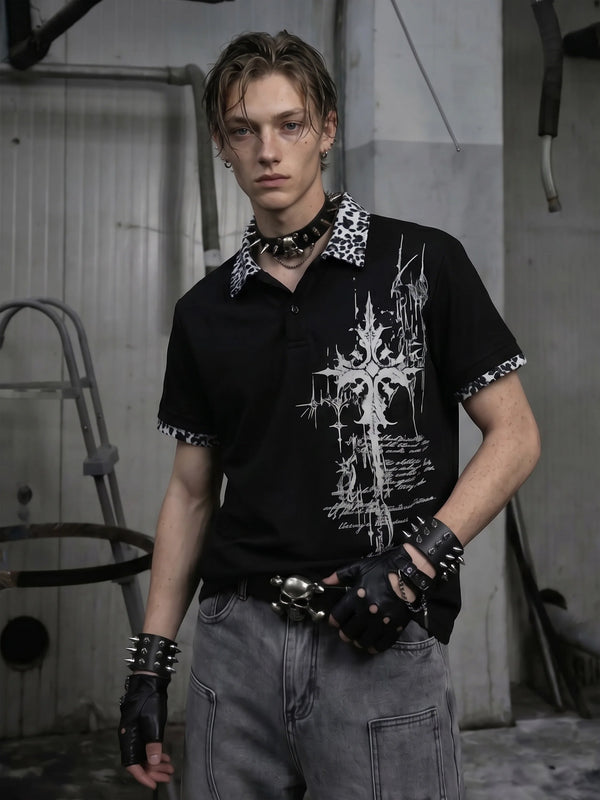
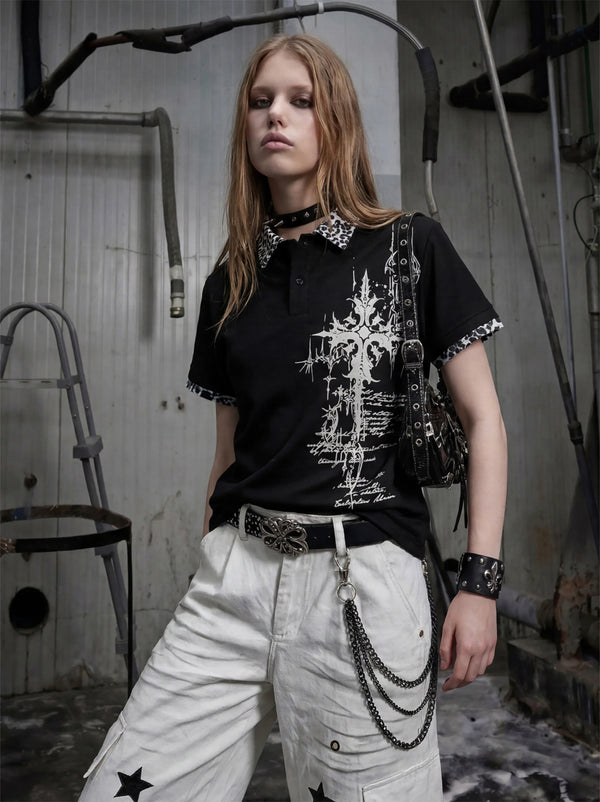
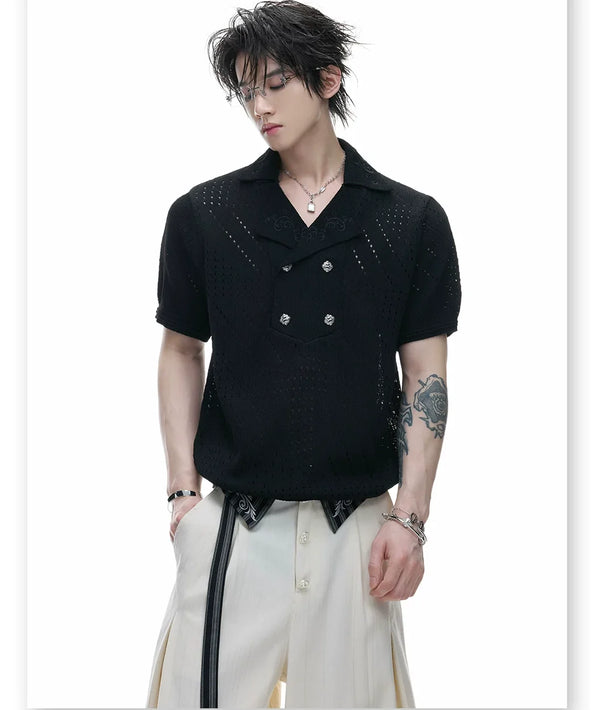
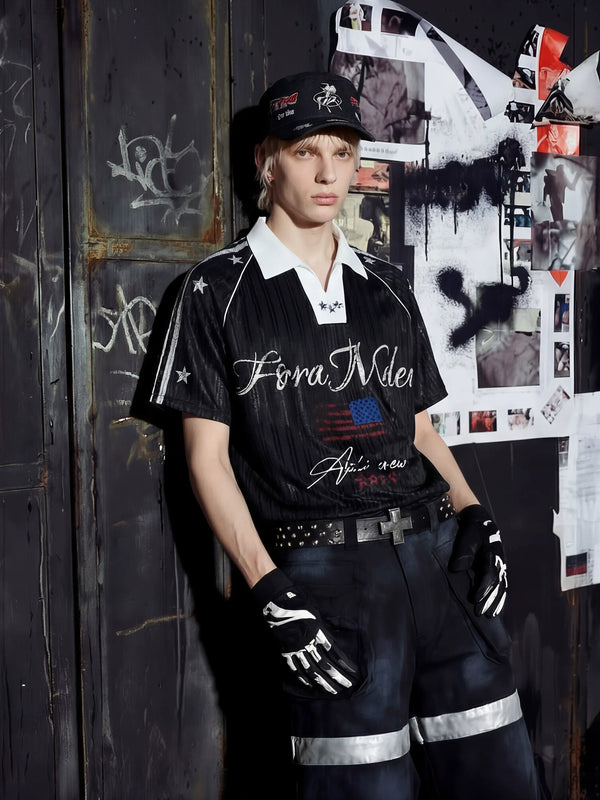
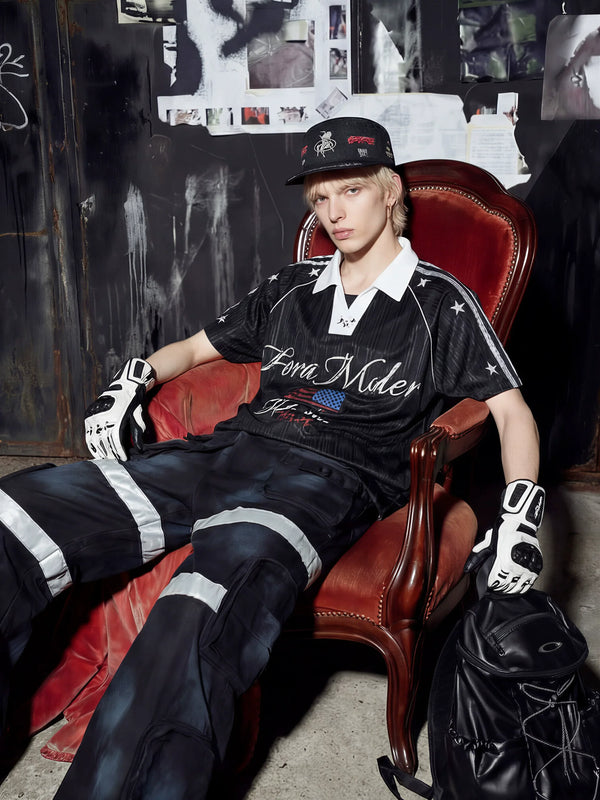
While jacket and trousers build the silhouette, the top usually stays the calm surface in between. A polo with a subtle cross collar or a washed shirt in off-black work better than a loud graphic shirt – precisely because they bring calm to an otherwise busy fit. The top is the place where the look takes a pause.
Both pieces work as a base for layering just as well as solo under an open coat. The distressed layer tee also brings texture, without a print being necessary – exactly the texture-instead-of-print logic from the five building principles above.
Rule of thumb
The 3-3-3 rule: how many pieces an avant-garde fit really needs
Anyone new to the look almost always overloads the first attempt. The 3-3-3 rule is a simple counter-measure: at most three layers, at most three shades, at most three textures per outfit. It does not come from any official rulebook but has established itself as practical guidance in styling circles – because it prevents exactly the mistakes that tip the look into costume.
3
Layers max
3
Shades in the fit
3
Textures per look
In practice this means: coat, top, trousers count as three layers – an extra scarf or a second jacket already breaks the rule. For the shades, black stays the base, extended by at most two further tones like charcoal or off-white. Textures may change – leather, denim, jersey – but here too three is enough; a fourth fabric dilutes the look rather than enriching it.
Accessories
Accessories: hardware that carries the look
Accessories take on a different role in this look than usual: they are not an add-on but often the place where the only colour deviation happens – silver against black, metal against fabric. A leather belt with a visible buckle or a distressed-look cap is usually enough to round off the look without overloading it.
The belt works twice over: as a functional piece and as a visible break in the otherwise calm silhouette. The cap, by contrast, works more through texture than contrast – distressed denim fits into the texture logic from the building principles without demanding attention itself.
Anyone who wants to deepen the monochrome base finds there the finer points of the all-black palette – here it continues with movement rather than standstill, because a video often shows more than any product photo.
Here too the same pattern shows as with the first video: movement makes visible what a still cannot show. A puffer that shifts volume as you walk looks completely different from the same puffer standing still – one more reason to factor material weight into the purchase, not just the silhouette in the photo.
Pitfalls
Mistakes that tip the avant-garde look
Most mistakes come not from the wrong pieces but from the wrong combinations. Anyone who owns individual strong pieces but layers them without a plan lands in costume faster than in construction. Four patterns turn up especially often.
Anyone who keeps these four points in mind avoids the most common beginner mistake: wanting too much at once. The look thrives on restraint in the right places – exactly where classic streetwear relies on volume.
Seasonal
Seasonal: Avant Garde Dark Fashion in summer and winter
In winter the look almost wears itself – coats, puffers and multiple layers belong to the cold season anyway and translate straight into the building principles. In summer it gets harder: volume and layers clash with heat. The solution lies in lighter fabrics that still keep structure – cotton twill instead of leather, wider-cut but light trousers instead of heavy cargo fabrics.
Anyone who wants to wear the look year-round should think in two base sets: a winter-heavy one with puffer and coat, a summer-heavy one with light but wide-cut fabrics. The building principles stay identical in both cases – only the material changes.
Getting started
Your first Avant Garde Dark Fashion statement pieces
Anyone building the look for the first time needs no complete range – two or three strong pieces are enough to start. A set that already brings structure takes on most of the decision work, because top and bottom are matched to each other.
FAQ
Frequently asked questions about Avant Garde Dark Fashion
The most common questions on the term, the distinction and the practice – answered briefly, with a pointer to the matching sections above.
What is avant-garde fashion?
What is dark fashion?
What is the Gothic look, and is it the same as Avant Garde Dark Fashion?
What does avant garde mean in English?
What does the 3-3-3 rule in fashion say?
Anyone who internalises these five answers has the most important part for getting started – the rest is practice in combining, not more knowledge.
What do you think?
Tell us on @fuga_studios
About the author
Philipp Fuge — Founder · Berlin
Founder of Fūga Studios. Writes the journal himself. Berlin · Shanghai · Tokyo · Poznań — four cities, one logic.