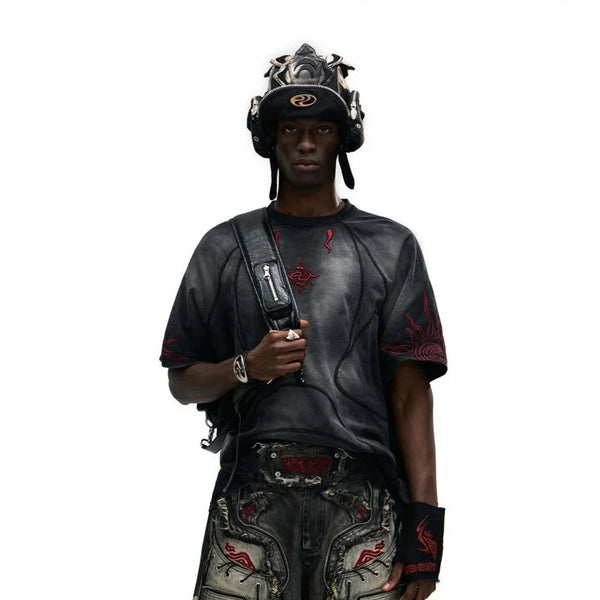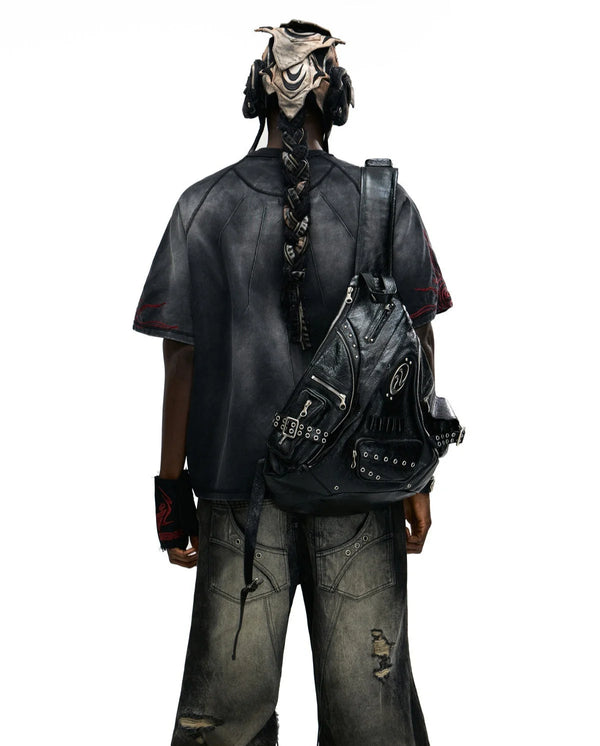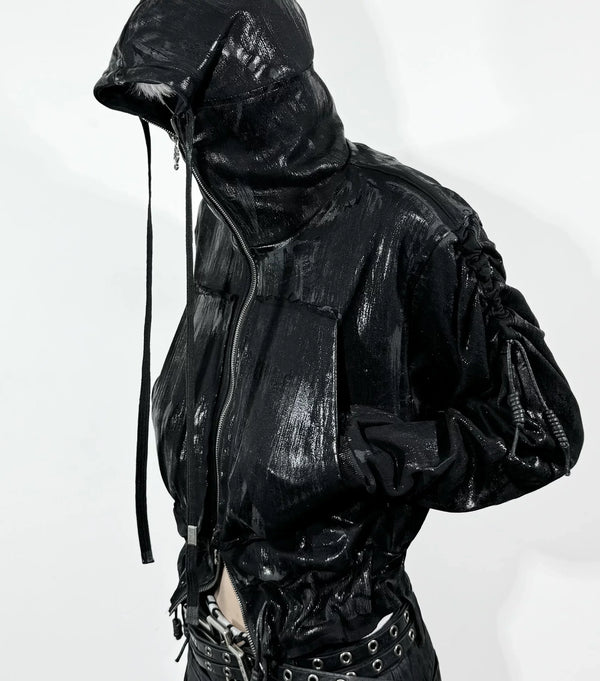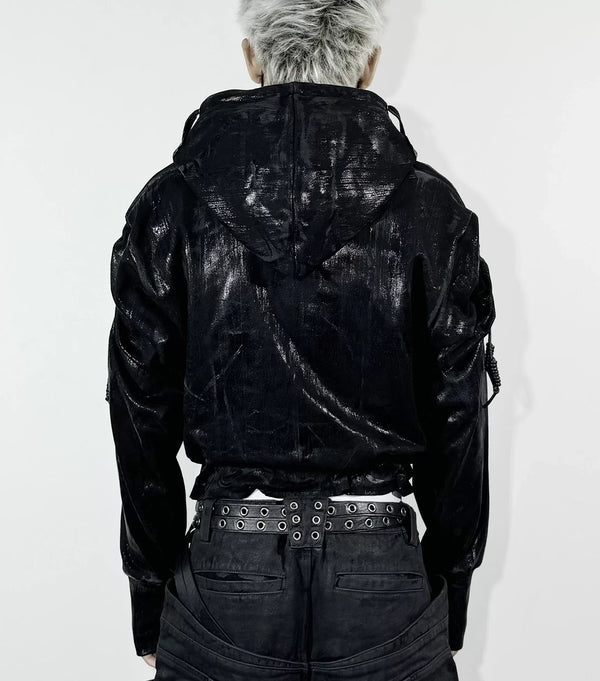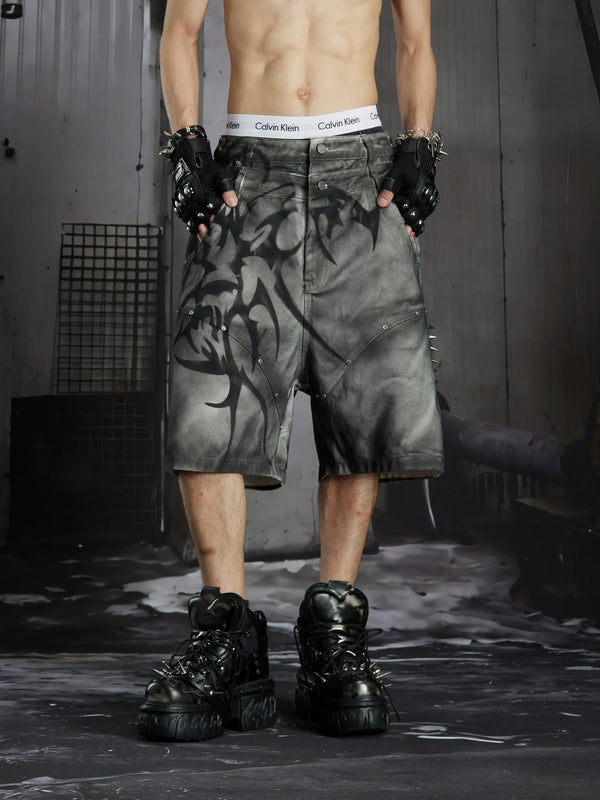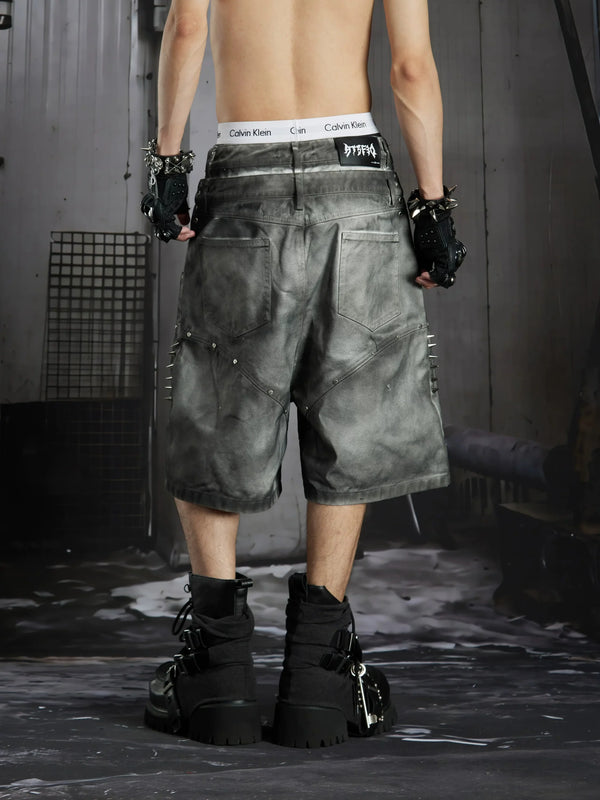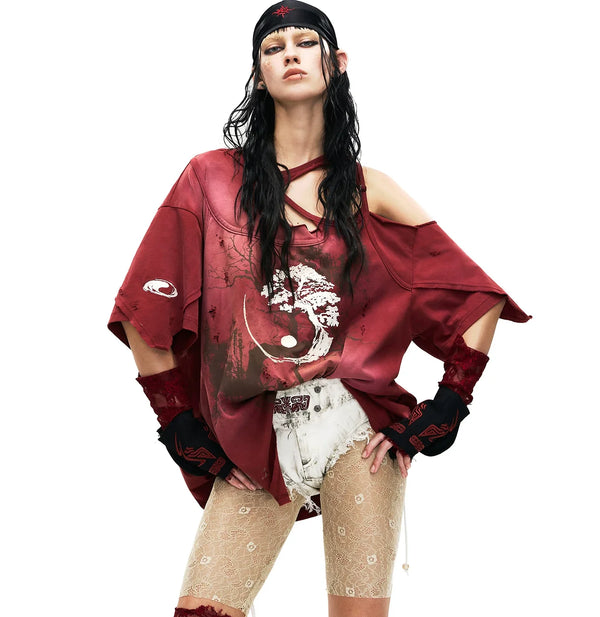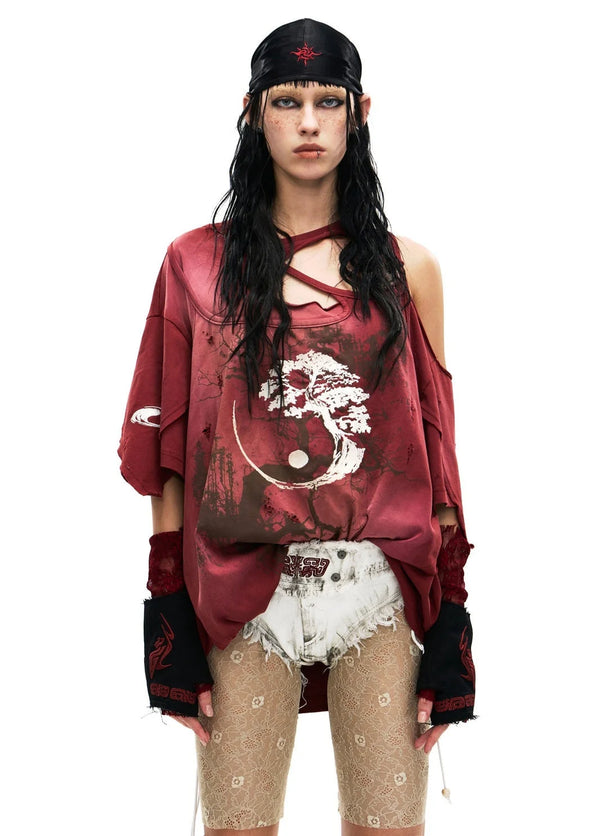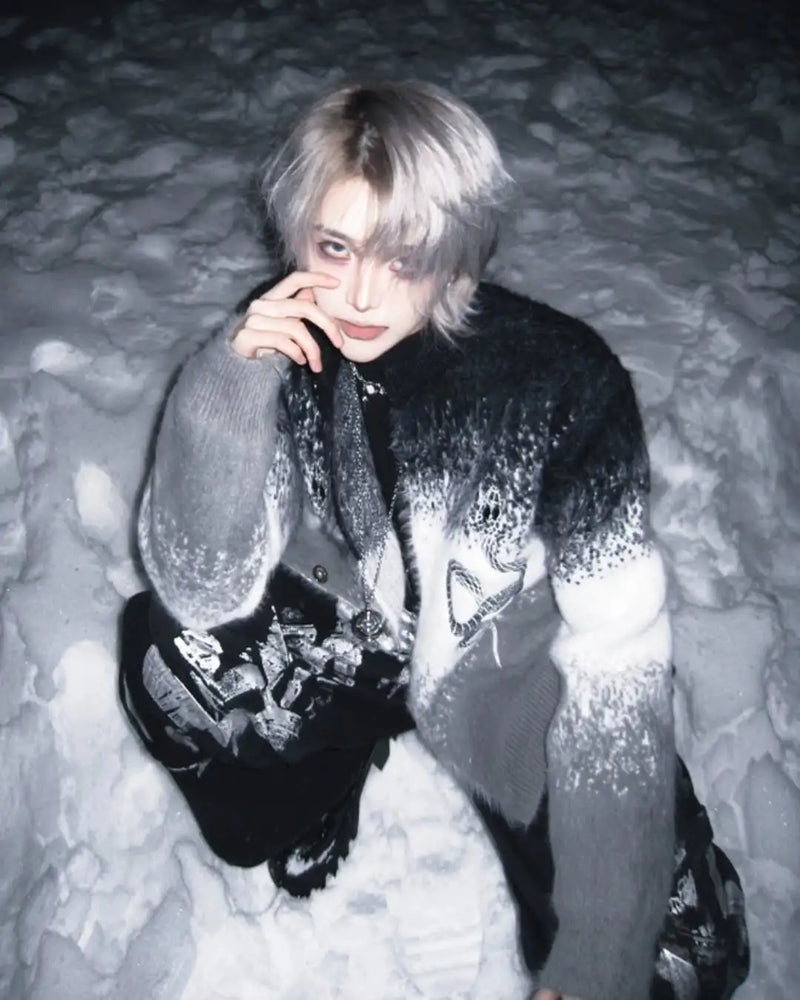
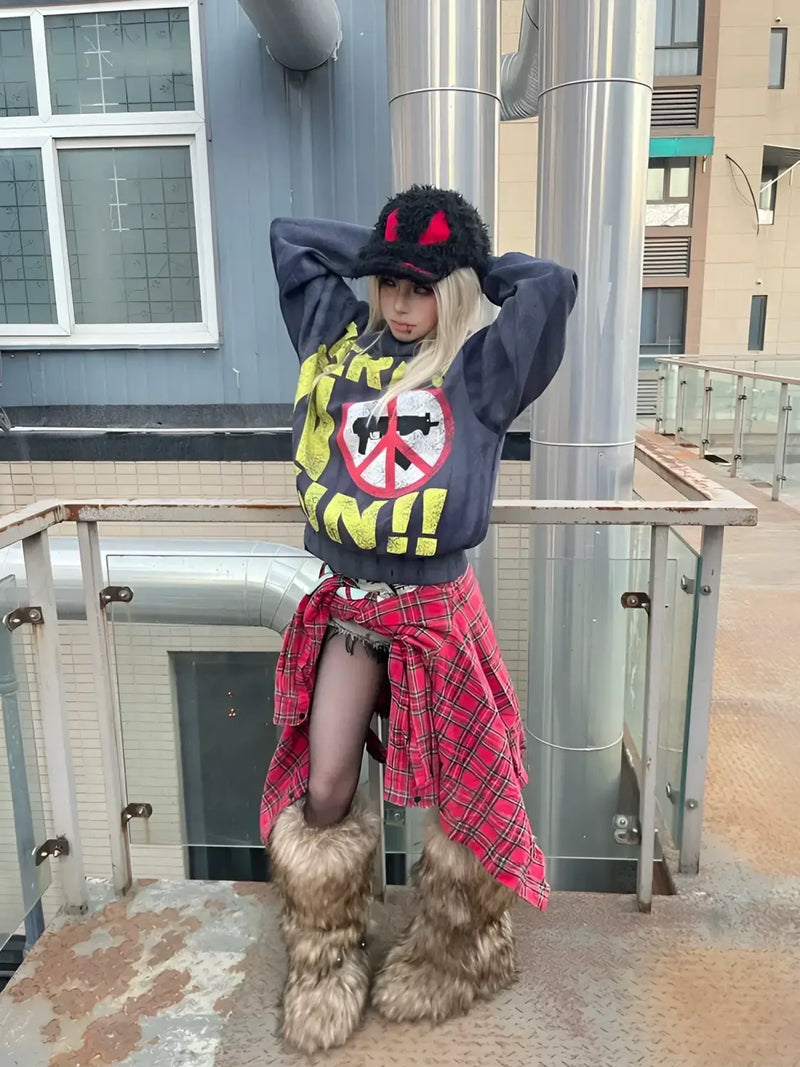

Friday night, Bahnhof Zoo, the U-Bahn stairs. In front of you stands someone in a black fur cap with devil horns, a tartan mini skirt over ripped tights, a silver choker, plus a graphic hoodie with a motif that looks more like an anime poster than a band shirt. Nobody turns around. In Berlin, that is just Friday.
Anime Goth is the style that crosses Japanese pop-culture graphics with a classic Gothic silhouette — black as the base, plus Kawaii elements, horror motifs and Harajuku streetwear cuts. If you know the ground rules, our big Gothic fashion guide explains how the parent aesthetic works before you step into the anime variant here.
Before we get to the five types, a look back is worth it — because Anime Goth is not a TikTok invention but has a stage history over thirty years old.
Definition
What actually is Anime Goth — and what does it have to do with Visual Kei?
The Japanese term for what the West calls „Japanese Goth“ is Visual Kei — literally „visual style“. The movement emerged at the end of the 1980s in the Japanese rock scene: bands like X Japan or later Malice Mizer built a completely new stage look out of Kabuki theatre, glam rock and a Victorian silhouette. Black, white stage make-up, extreme hairstyles, ruffles next to studs. Over the years dozens of substyles developed from this stage aesthetic, and some of them moved from the concert stage straight onto the streets of Harajuku — exactly where Anime Goth holds its firm place today.
Important: Anime Goth is not dressing up as a specific character. It is a fashion vocabulary oriented on anime and manga aesthetics — dark colour palette, exaggerated silhouettes, graphic elements — without you playing a concrete role. That is exactly what separates the look from cosplay, which aims at a 1:1 recreation of a character.
1980er
Origin as Visual Kei
5
Recognised substyles
80 %
Black as the colour base
These three numbers are the corner points every Anime Goth look orients itself by — and they also explain why the style is so much more robust than a pure trend.
Origin
Where does the Anime Goth look come from — from Visual Kei stages to Harajuku streets?
In the 1990s the Visual Kei aesthetic spilled from the concert halls into everyday life. Fans copied the hairstyles and make-up of their idols, and out of this fan practice a street-fashion scene of its own grew around the Harajuku district in Tokyo. In parallel the Lolita movement grew, mixing Victorian children's clothing with Gothic elements. From this crossover — Visual Kei plus Lolita plus the graphic language of manga and anime — what is understood today as Anime Goth developed over two decades: less stage costume, more wearable everyday style with a dark base and pop-culture graphics on top.
The look reached Europe and the US via forums, conventions and later TikTok — where it additionally merged with Western goth and E-Girl/E-Boy aesthetics. The result is a hybrid style that can no longer be cleanly assigned to a single scene, but has clear recurring elements: black base, graphic layer, chains, and at least one Kawaii break in the overall picture.
If you want to go deeper into the Harajuku side of this history, our separate guide has the complete map of the substyles.
With this background, the difference from the classic, Western goth look can also be drawn much more precisely.
Distinction
Anime Goth vs. classic goth — where the difference really sits
Classic goth, as it has come from post-punk clubs since the late 1970s, works with Victorian elegance, velvet, lace and a strict, almost ascetic colour discipline. Anime Goth, by contrast, deliberately allows breaks: a pastel tone next to deep black, a Kawaii graphic next to a studded choker, a plush accessory next to fishnet tights. Where classic goth seeks control through reduction, Anime Goth seeks control through deliberate contradictions.
If you just want to become „kinda goth“ without switching over completely at once, Anime Goth is often the easier entry: you don't have to swap your whole wardrobe, you can start with a single graphic hoodie in black and one accessory. The four points below show exactly where the difference lies.
- Colour palette — classic goth stays at 95 % black, Anime Goth allows targeted pastel or red accents.
- Graphics — classic goth avoids large prints, Anime Goth uses them deliberately as a statement.
- Silhouette — classic goth is often body-hugging and long, Anime Goth mixes oversized layers with short skirts.
- Reference — classic goth cites post-punk and Victoriana, Anime Goth cites manga, anime and J-rock stages.
In practice that means: anyone coming from classic goth and looking for more room starts most easily with a single Kawaii element instead of turning the whole wardrobe inside out. A plush pendant on the existing leather jacket or a pastel detail on an otherwise all-black outfit is already enough to make the shift noticeable, without devaluing the previous wardrobe. The other way around works just the same: anyone coming from a pure Kawaii or Harajuku style and looking for more depth first adds the colour base towards black before thinking about silhouette and graphics.
With this distinction in mind, it is worth looking at the five types the whole style can be split into.
The 5 types
The 5 base types: Kawaii Goth, Pastel Goth, Gothic Lolita, Cyber Goth, Battle Goth
Anime Goth is not a single look but a roof over five clearly distinguishable directions. Each has its own colour logic, its own signature pieces and its own origin within Visual Kei and Harajuku history. The map below shows all five with what they concretely mean in the wardrobe.
Cyber Goth pulls hardest towards the rave aesthetic — anyone wanting to go deeper into this branch will find a whole system of neon and industrial details there.
How two of these types feel in motion shows fastest in the video — compact in 20 seconds.
After the theory now comes the practice — starting with the category most people build their first Anime Goth look with: tops.
Category
Tops: hoodies, graphic shirts and layering tops
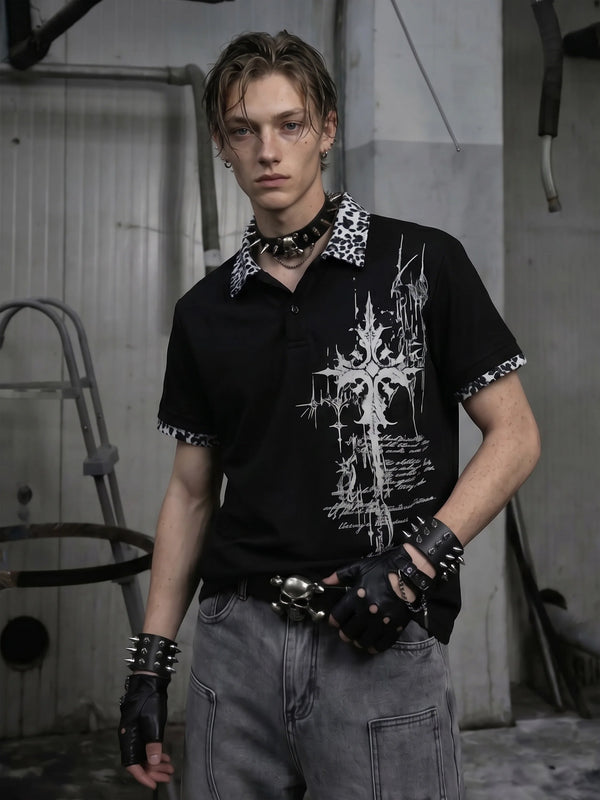
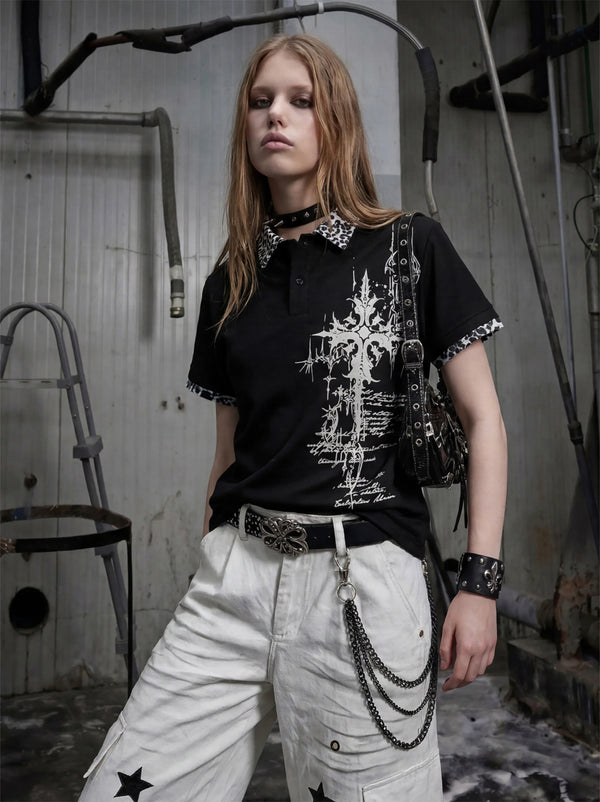
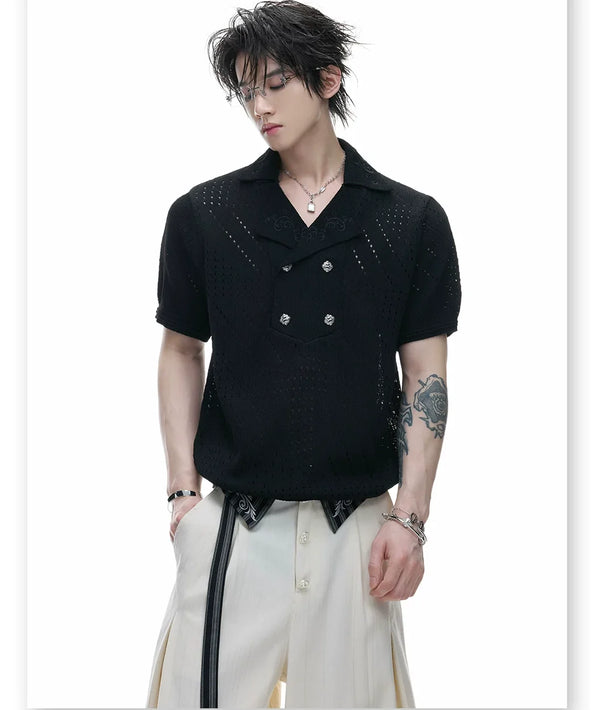
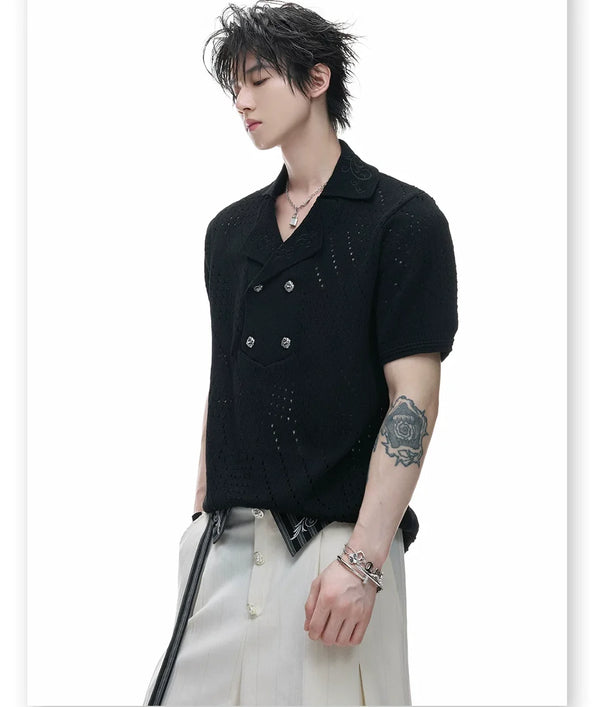
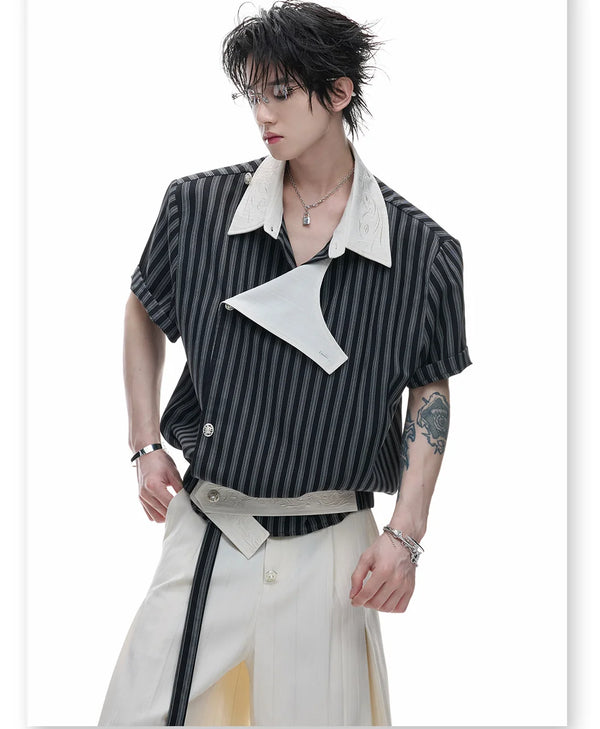
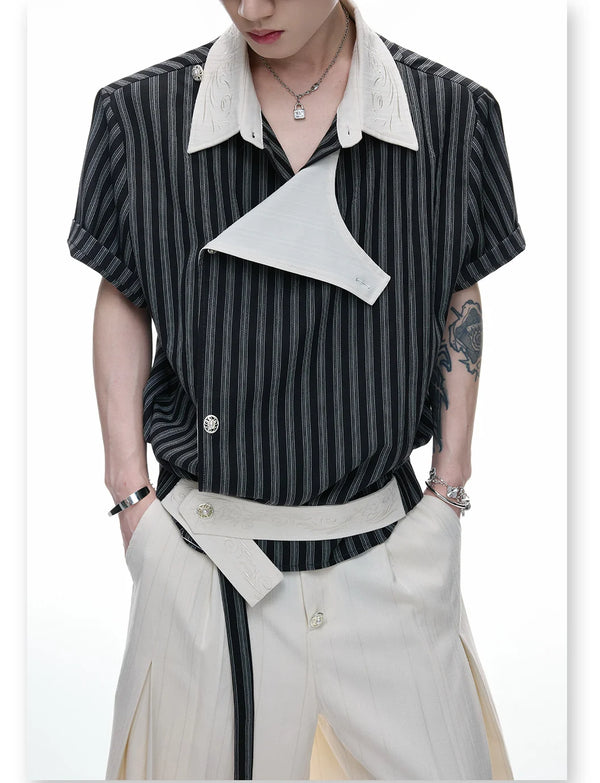
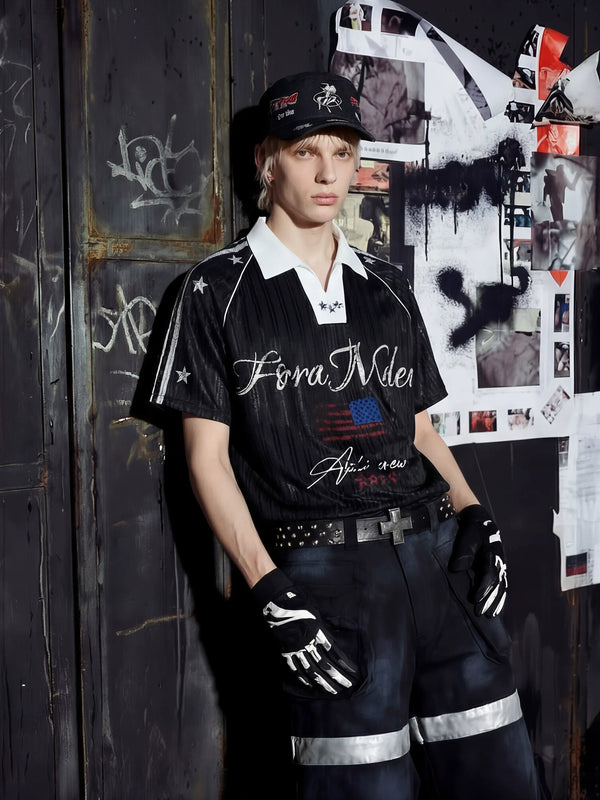
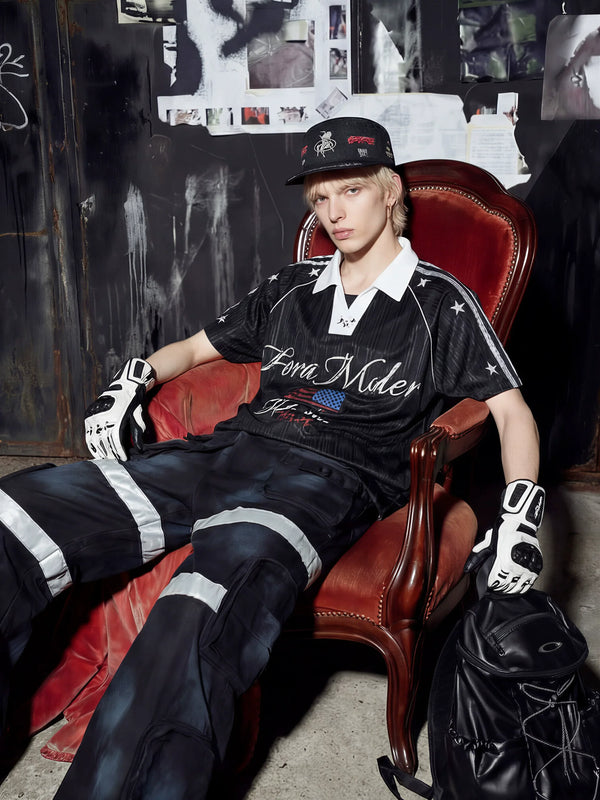
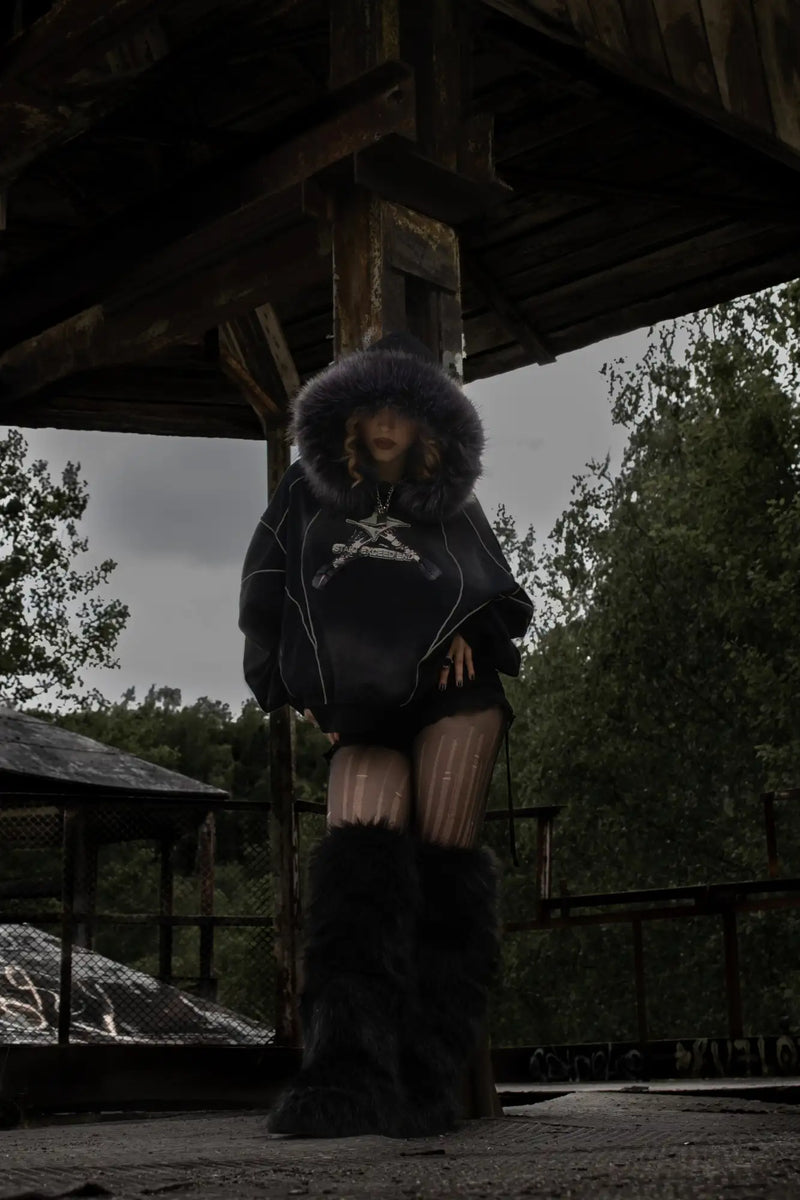
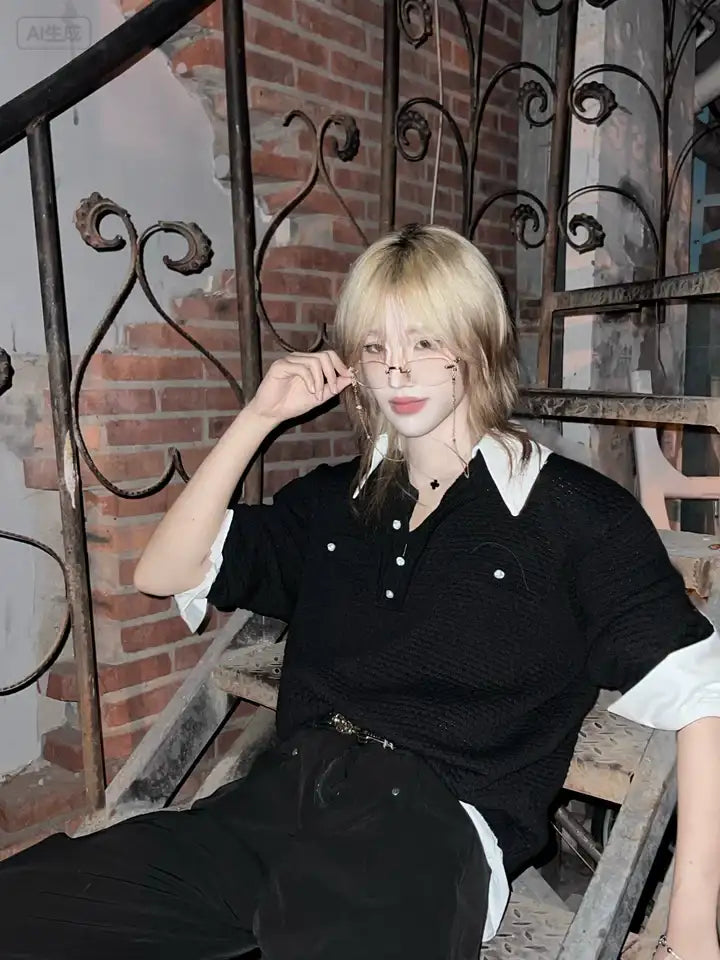
The top carries most of the visual work in Anime Goth — this is usually where the statement piece sits that defines the whole look. A graphic hoodie with a yin-yang or cross motif, a polo with a collar detail, a washed tee with a distressed look: all three work as long as the base stays black and at most one graphic element is in focus. Two equally loud prints at the same time tip the look straight into chaos.
Layering is allowed here and even wanted — a tight longsleeve under an oversized hoodie, or a fishnet top under a cropped layer, reinforces the silhouette without you playing two statement graphics against each other.
Once the top sits, the trousers or the skirt decide whether the look reads more combative or more playful.
Category
Trousers & skirts: tartan, cargo and chain details
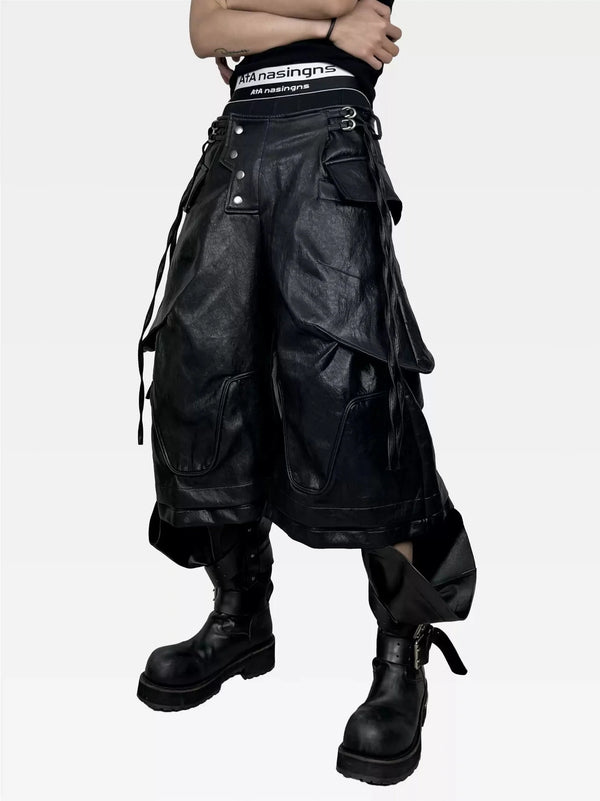
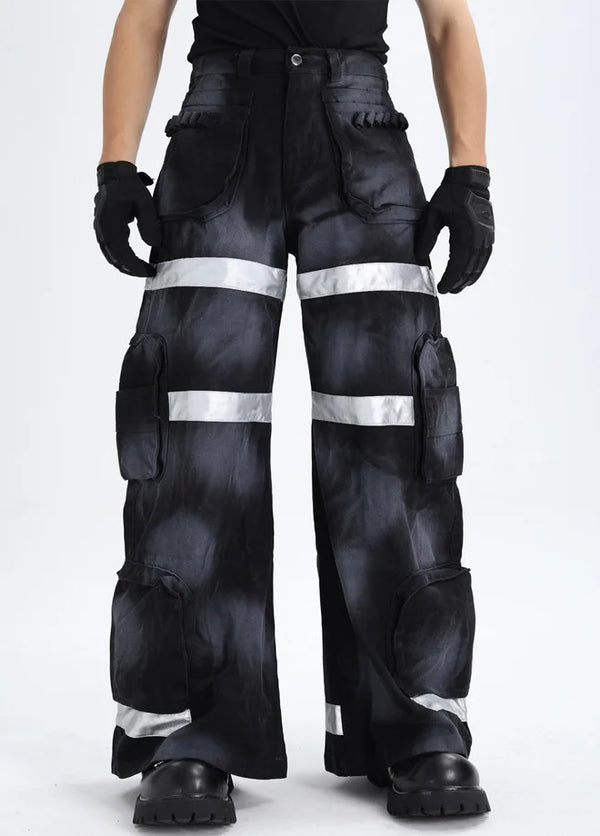
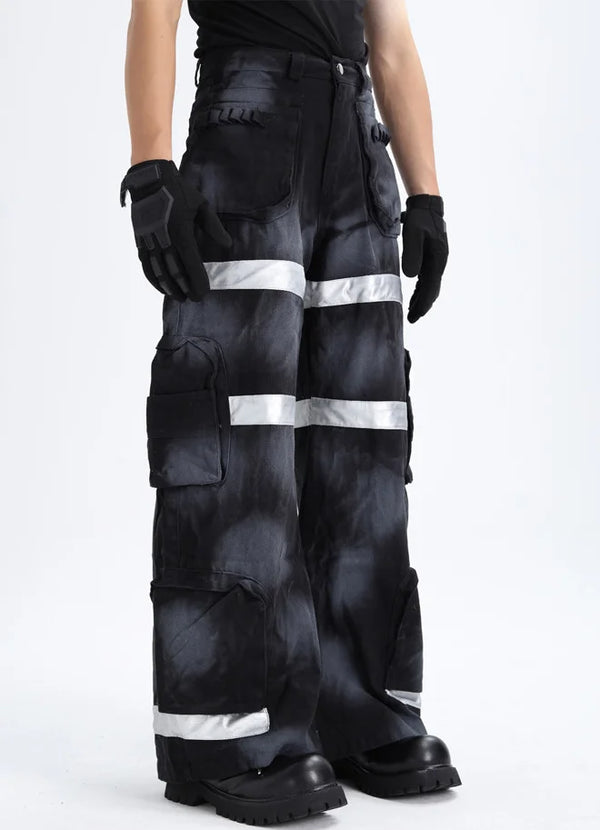
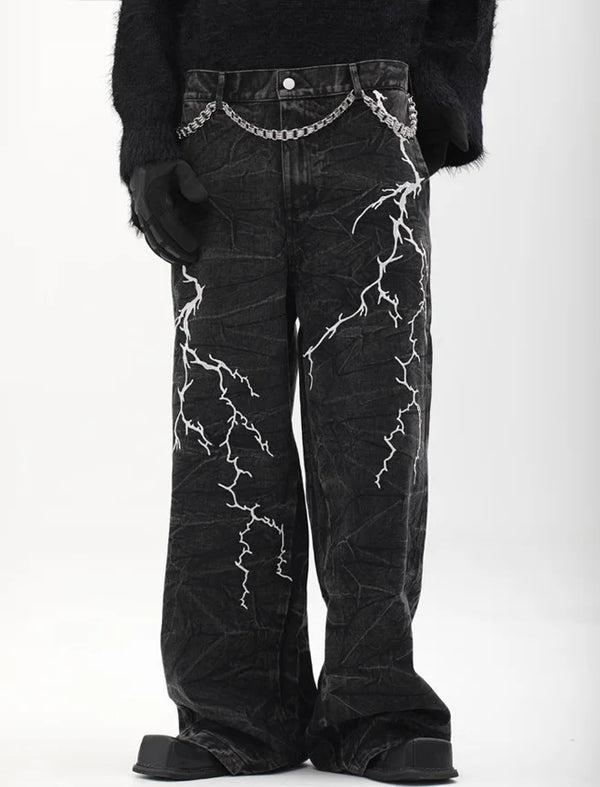
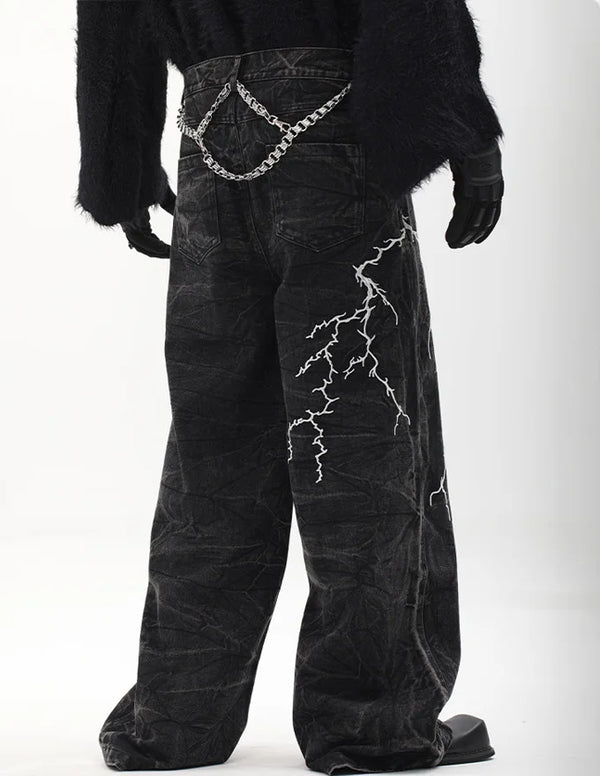
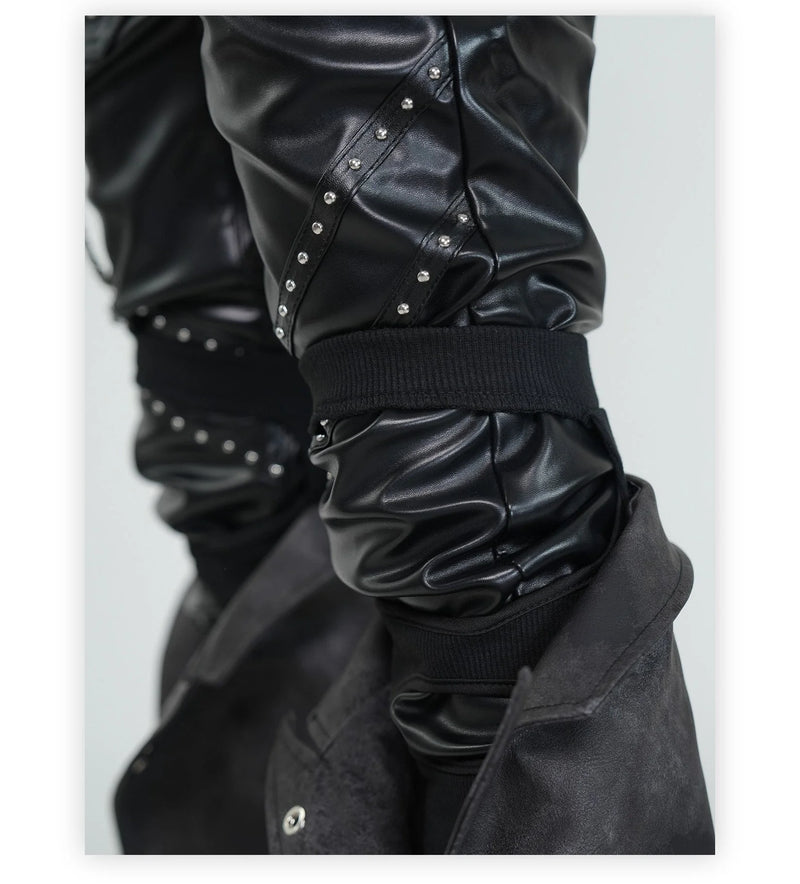
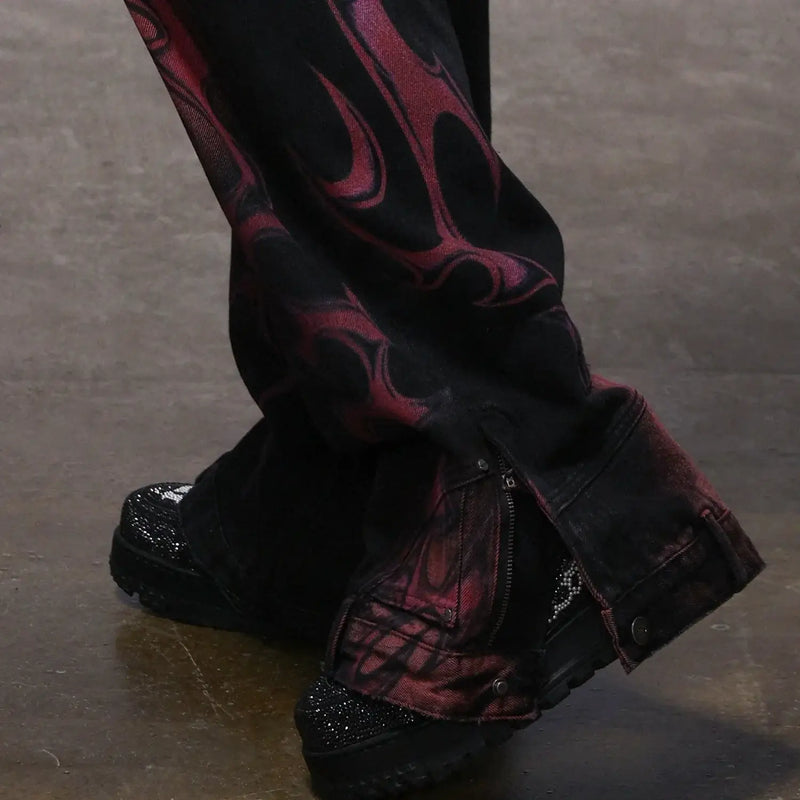
At the legs, Anime Goth splits clearly into two camps. One goes for tartan mini skirts or plaid shorts with a chain detail — the direct link to the Harajuku and punk history of the look. The other goes for wide cargo trousers with a kanji print or cross motif, closer to the streetwear side of Y2K and Gothic. Both work with the same top system from above, but change the overall impression strongly: skirt plus chain reads more playful, cargo plus kanji print reads harder.
A small but important detail rule: if the trousers already carry a kanji or graphic element, the top is better left completely unprinted. Two printed surfaces at once destroy the statement-piece logic from above.
Once the base of top and trousers is set, the question comes of how the look differs between genders — and where it aligns completely.
Gender split
Male vs. female Anime Goth style — where the looks part
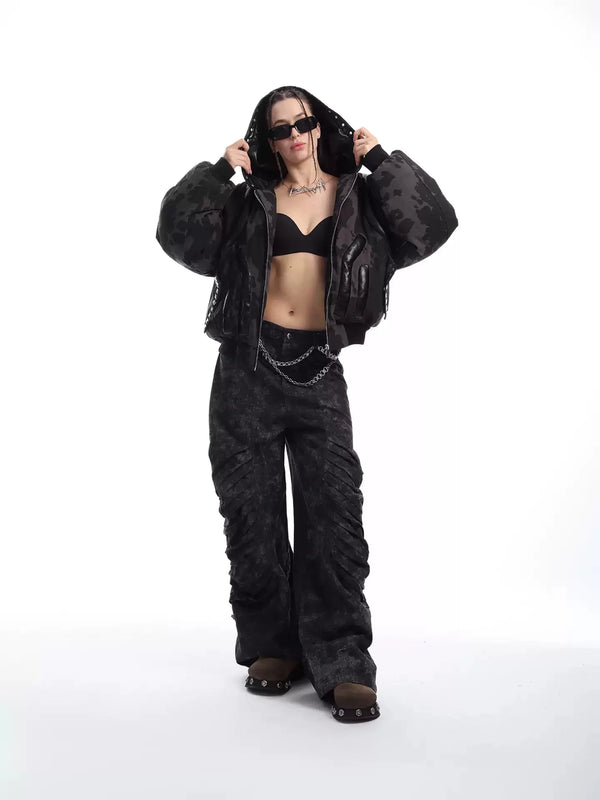
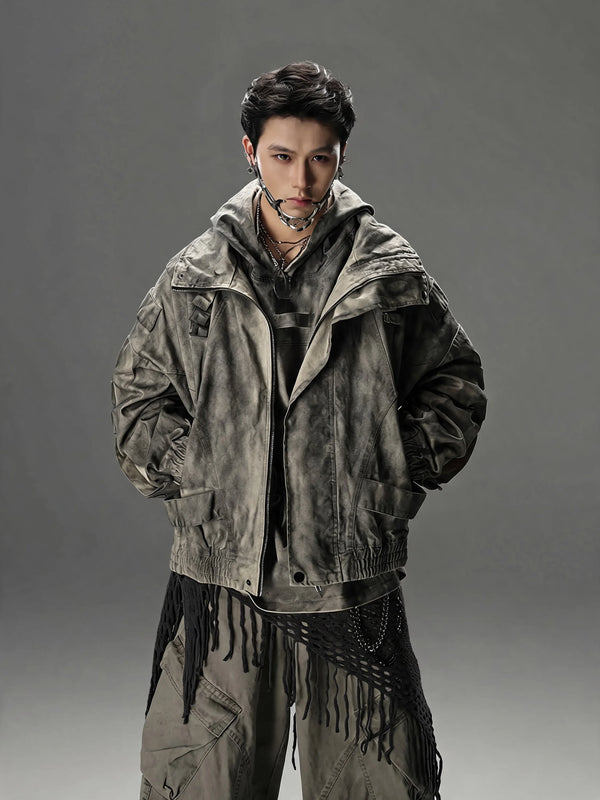
The base formula of a black base, a graphic statement and a Kawaii break applies to all genders equally. The difference lies more in the silhouette than in the vocabulary: looks read as female more often work with skirts, chokers and fitted layers, looks read as male more often with oversized hoodies, wide cargo trousers and more minimal jewellery. Both share the same colour rules and the same graphic principles — only the proportions shift.
In the end both sides carry the same core conviction, even if the silhouettes diverge. It can be summed up in a single sentence:
This vocabulary needs structure so it doesn't fall apart — and that comes above all through a third layer: the jacket.
Category
Layering jackets for the complete look
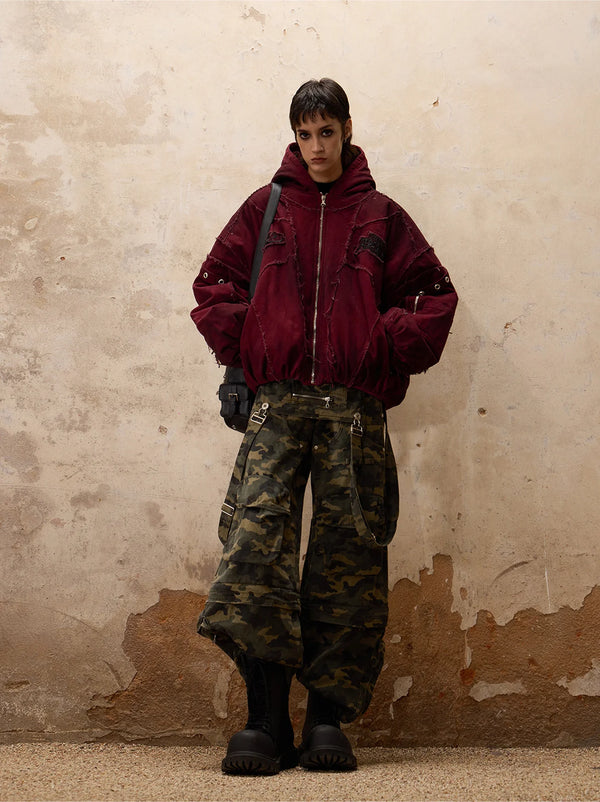
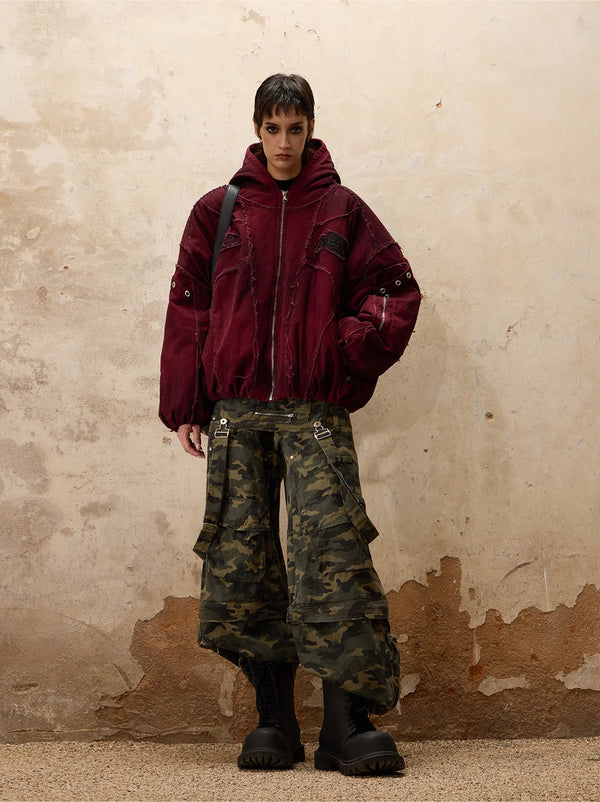
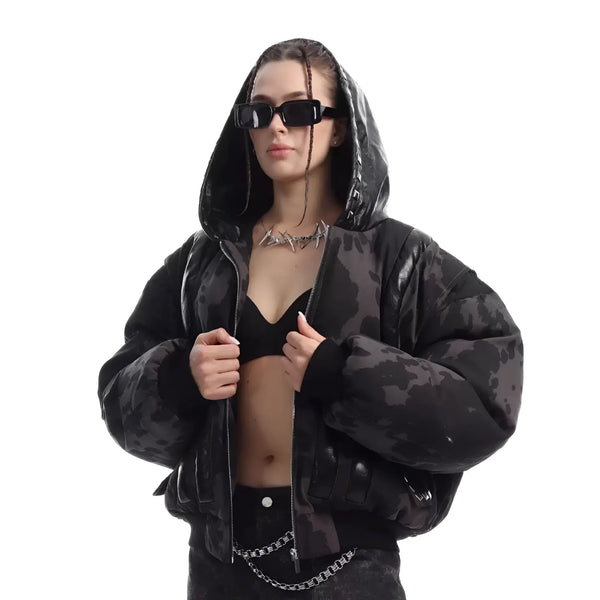
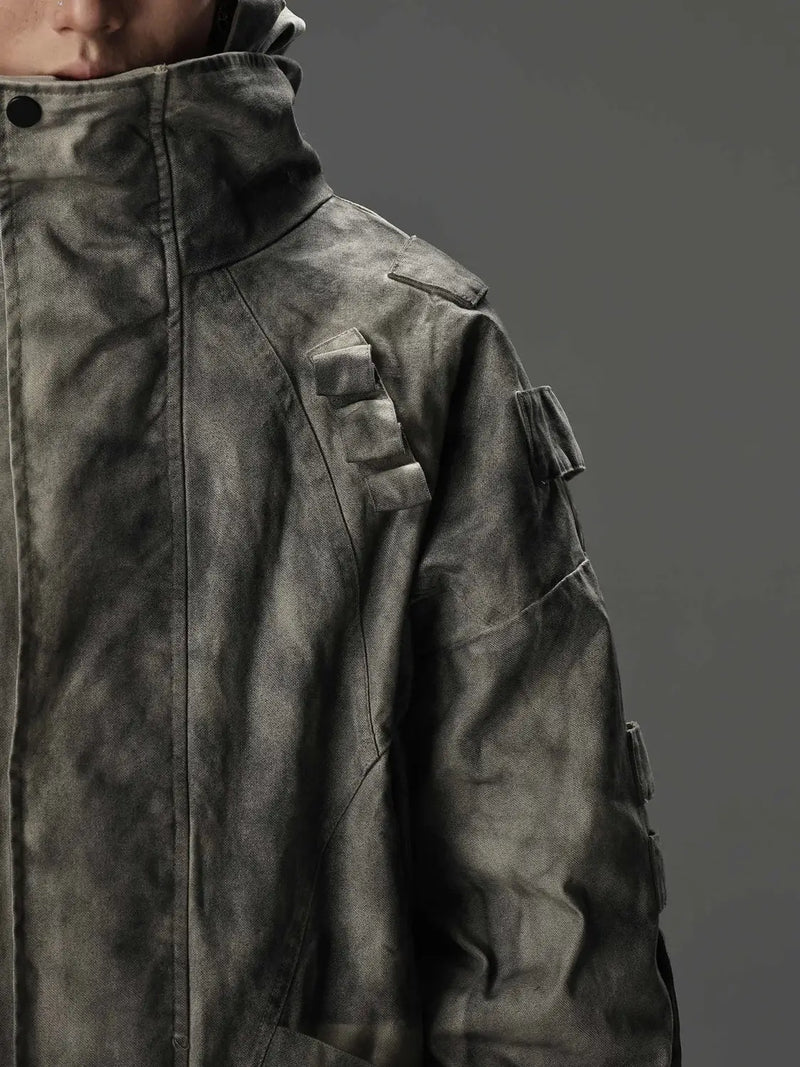
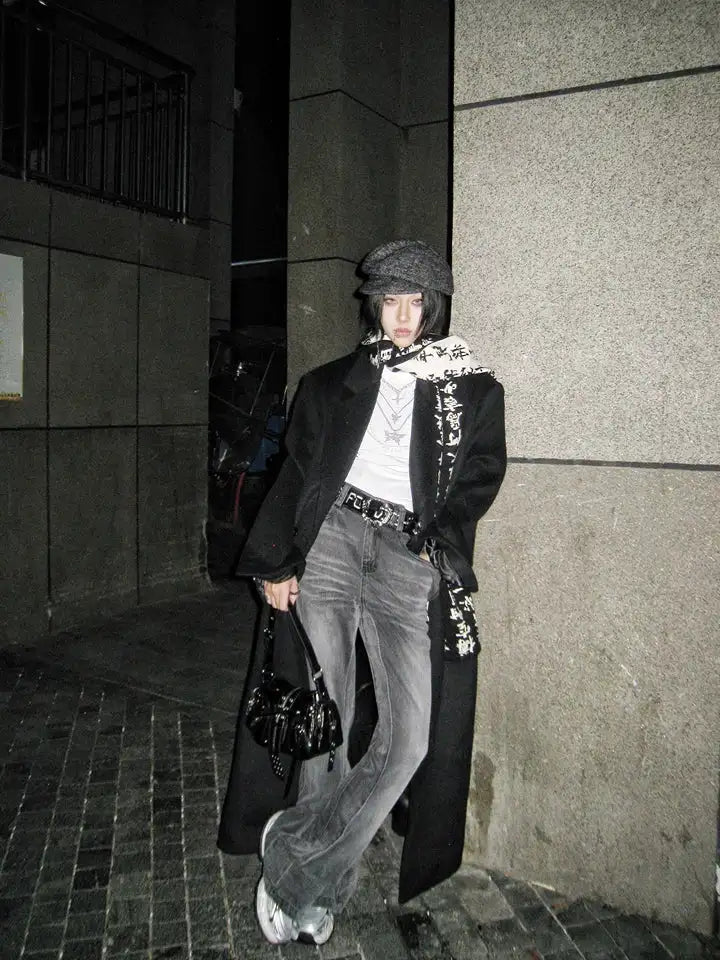
A jacket in Anime Goth is rarely pure function — it is the third narrative layer over top and trousers. A bomber with cross embroidery or a tactical set with visible zippers sets a second, quieter accent that frames the louder graphic top underneath instead of overlaying it. Important: the jacket takes on the structure role, not the graphic role. If it stays in muted black or grey, the top can keep being the statement.
After top, trousers and jacket, only the layer is missing that makes the look truly recognisable as Anime Goth: the accessories.
Category
Accessories: chokers, chains and the „Goth Waifu“ look
In internet slang, the term „Goth Waifu“ has established itself for the softer, romanticised side of Anime Goth — it means no real person but an aesthetic archetype: dressed in dark, but with a recognisably soft, almost tender note. Accessories are the most important lever there, because they set this note without you changing the base silhouette at all. A choker with a cross pendant, a denim cap with a distressed edge, a leather belt with a cross buckle: each single piece shifts the overall impression noticeably.
With top, trousers, jacket and accessories, the complete component list is in place — now it is about how you actually build your own look from it.
Practice
Colours, fabrics, silhouette — how you build the look yourself
The easiest entry works through a fixed order: first set the colour base (at least 80 % black), then choose a single statement piece (graphic hoodie, skirt with chain or cargo with print), then add the structure layer (jacket or layering top), and only at the end the accessories. Anyone starting in reverse order, collecting accessories first, almost always ends up with a look that looks like a costume party instead of an everyday style.
With this order in mind, the most common mistakes are also much easier to avoid — here are the three that happen most often.
What doesn't work
Common styling mistakes in the Anime Goth look
Most Anime Goth looks don't tip because individual pieces are bad, but because too many good pieces are fighting for attention at once. The following three mistakes come up most frequently.
How a cleanly balanced look feels in motion shows best again in the video.
With the mistakes in view, it's worth asking how wearable the look actually is in real everyday life — university, office, festival.
Everyday
Wearing Anime Goth day to day — from university to festival
For university or a job the look can be dimmed down strongly without losing its identity: a black graphic longsleeve under a neutral overshirt, subtle studs instead of a big choker, closed boots instead of platforms. The base formula stays the same, only the volume drops. For a concert or festival, on the other hand, everything can come out at once: statement hoodie, chain, cap, platform boots — here the full look is wanted, because the surroundings carry it.
A middle way works best for most everyday situations: one fixed statement piece that always stays (the choker, for example), combined with changing, quieter basics around it. That way the style stays recognisable without every day feeling like a costume decision.
The season also changes how much of the look stays visible. In summer, short graphic shirts and shorts take on the statement role while heavy layering pieces pause: the colour rule still stays the same, only the amount of fabric drops. In winter it reverses: a dark bomber jacket or a tactical layering set then carries the visual weight, while accessories like the choker briefly step into the background under scarves. Anyone who factors in this seasonal shift never has to reinvent the look completely, but only shifts which layer is visibly leading right now.
Shopping
Where to find Anime Goth clothing
Pure fast-fashion chains rarely carry Anime Goth graphics in the necessary depth — usually there is a single hoodie motif instead of a complete system of top, trousers, jacket and accessories. Anyone wanting all four layers from one source can hardly avoid specialised streetwear shops. A detailed overview of specific brands can be found here:
As a direct entry, we show you two combinations here that already carry the complete formula from this guide within them.
And for everyone who doesn't want to build up piece by piece but is looking directly for the complete Battle Goth appearance, there is the faster variant:
Before you start, it's worth a look at the questions that come up most often about Anime Goth: from the origin of the term to the distinction from cosplay.
FAQ
Frequently asked questions about Anime Goth
The most important questions about origin, terms and styling answered again in compact form.
What is Japanese Goth actually called, and what does it have to do with Anime Goth?
How do I dress „kinda goth“ without switching over completely at once?
What does „Goth Waifu“ actually mean?
What do you call the style when someone takes cues from an anime character without recreating them?
What is Kawaii Goth, and how does it differ from normal goth?
In the end Anime Goth can be traced back to a simple formula: a black base, one statement piece, a structure layer, one Kawaii break. Anyone who keeps this order builds a look from few parts that reads differently every day without ever falling apart.
What do you think?
Tell us on @fuga_studios
About the author
Philipp Fuge — Founder · Berlin
Founder of Fūga Studios. Writes the journal himself. Berlin · Shanghai · Tokyo · Poznań — four cities, one logic.