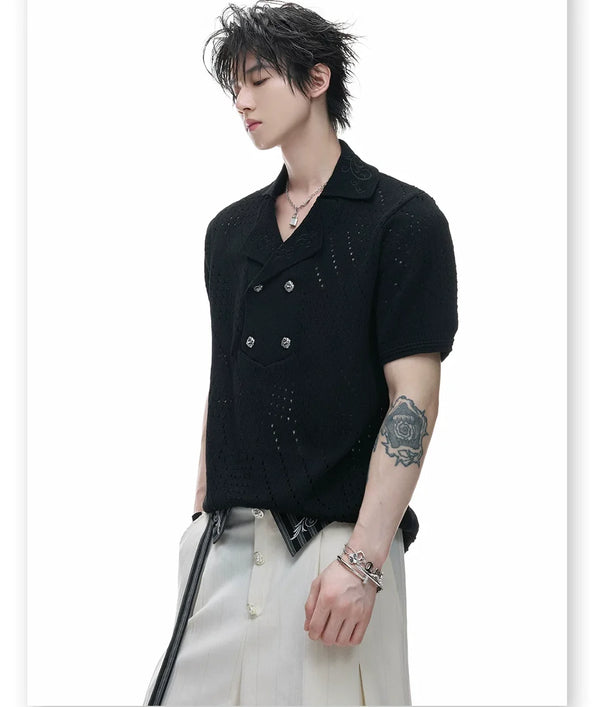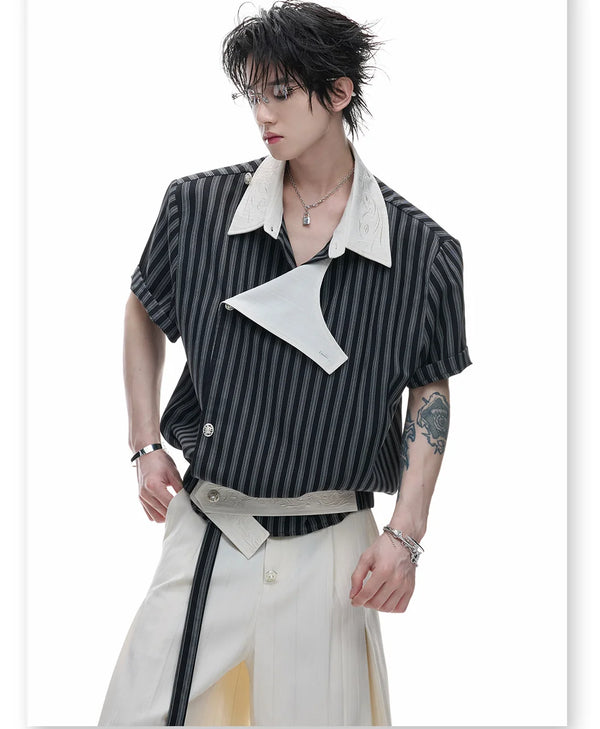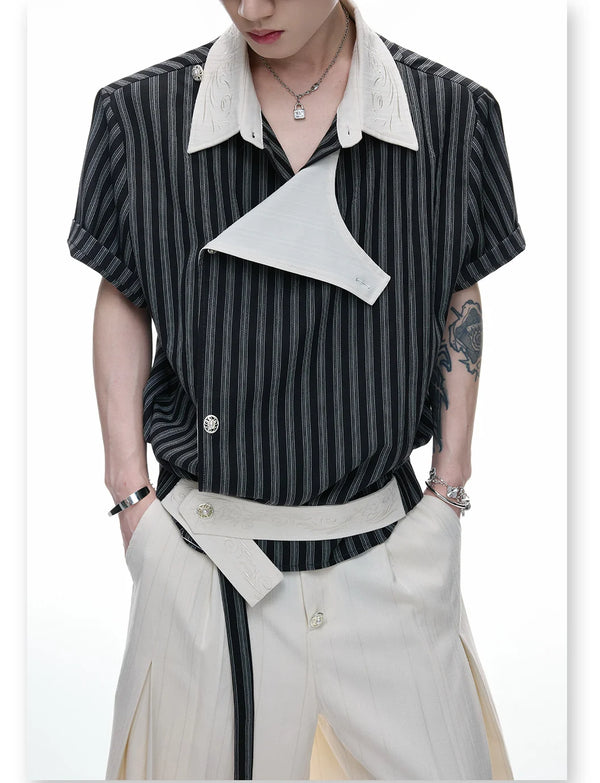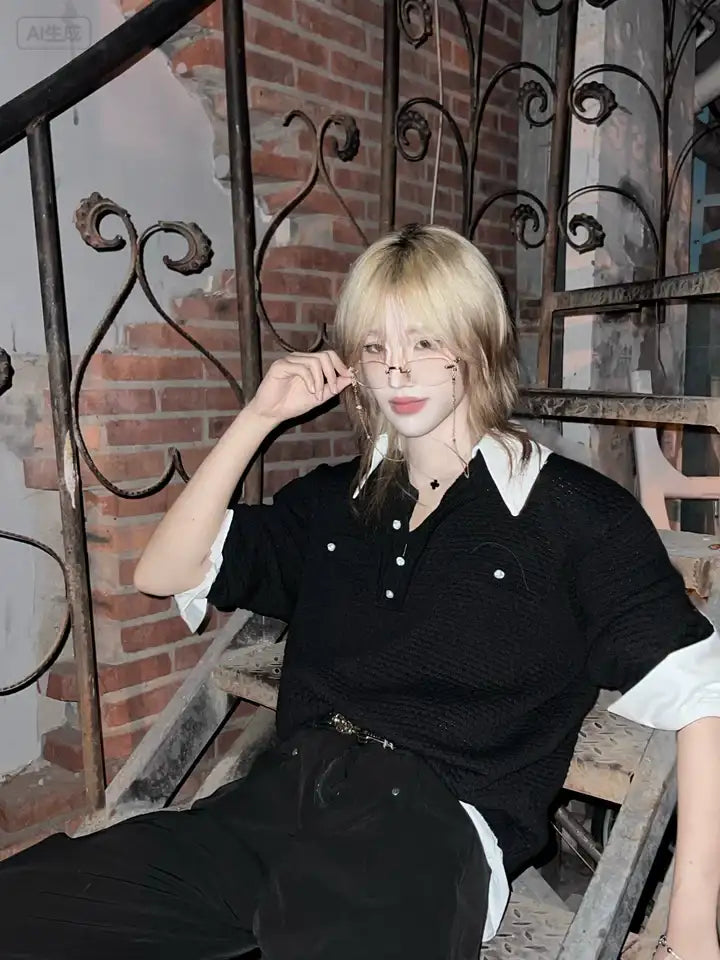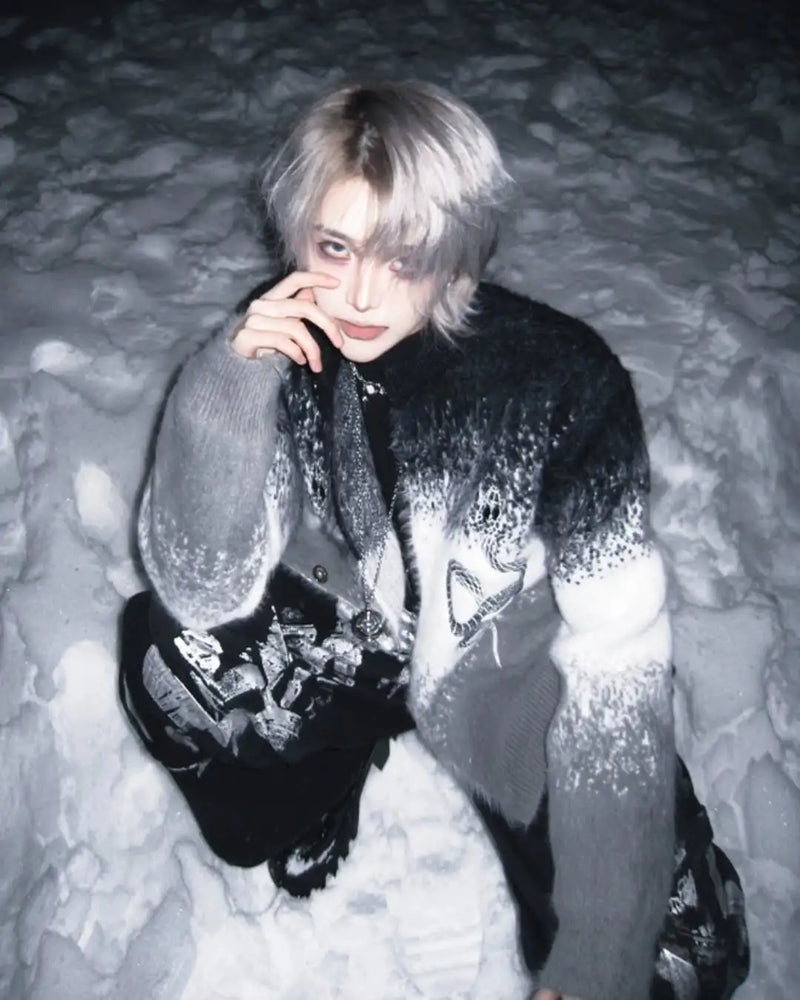
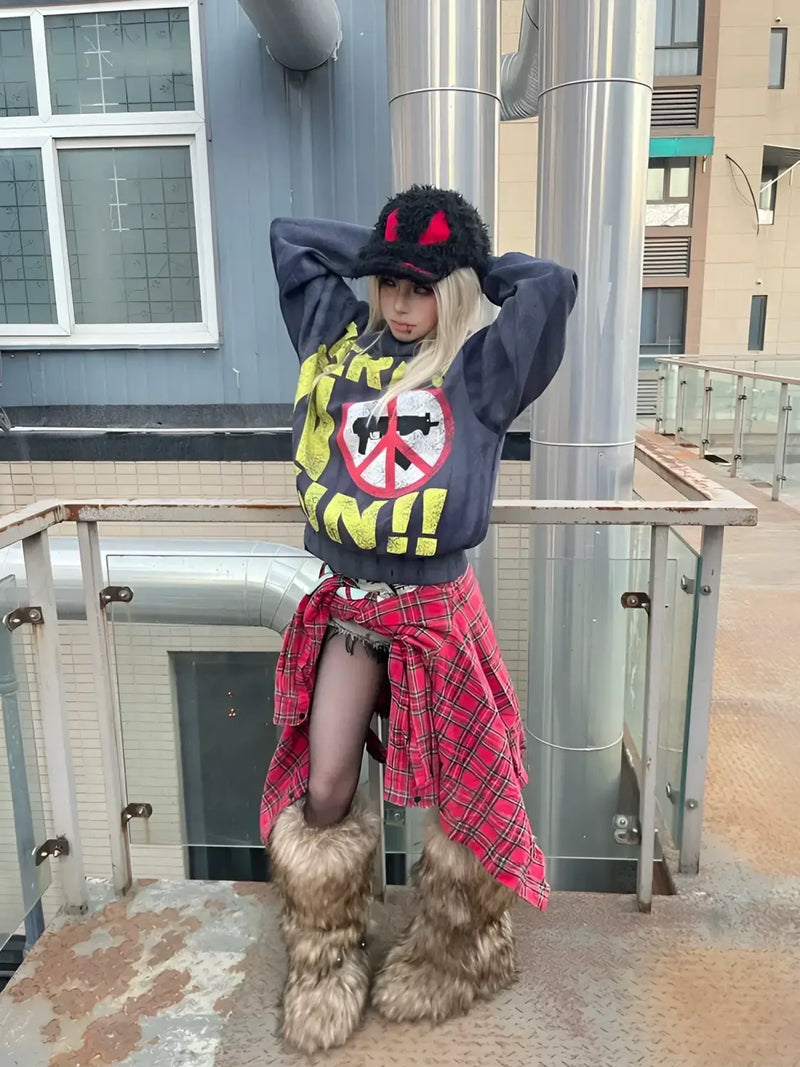
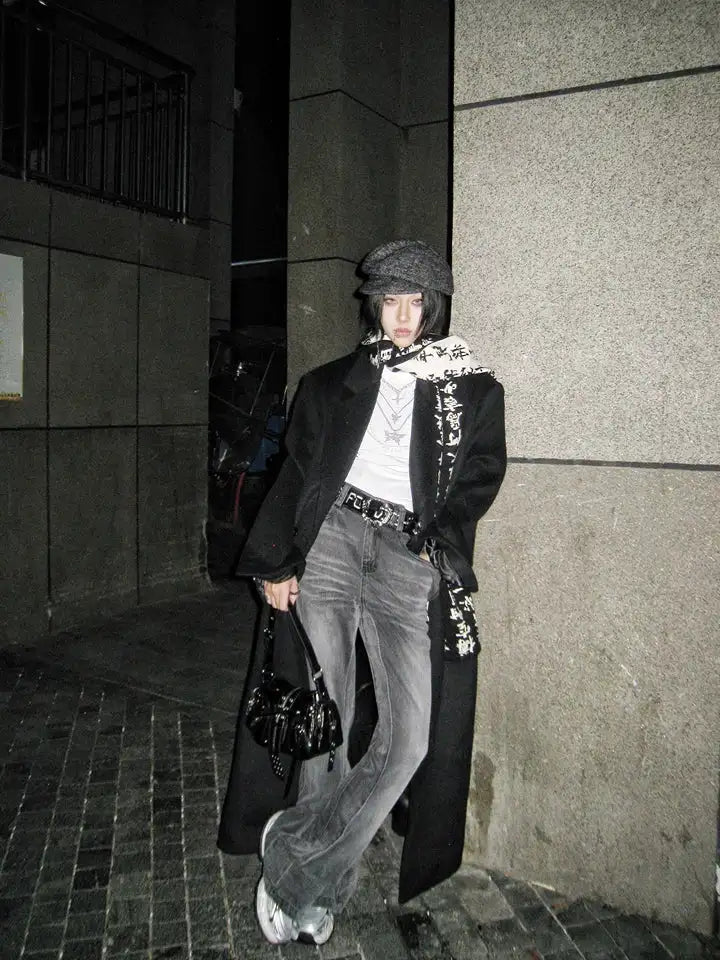

Early December, bus stop, seven in the morning. Breath hangs in the air, and of the outfit that still worked in October, one coat is left, under which everything else disappears. Next to you stands someone where exactly that doesn't happen: flannel under an open jacket, straight trousers, heavy shoe. Same temperature, different result.
Soft Grunge Winter means: the same muted palette and the same five core pieces as the rest of the year, but in three planned layers instead of one random one. The basics of the style are in the Soft Grunge Fashion Guide, here it's about the months in which the look has to hold up against the cold.
The cold months are the hardest test for any aesthetic. A look that only exists at fifteen degrees is a summer project. The following sections show how the winter version is built: layer by layer, category by category, with the mistakes at the end that most often tip the look over.
Definition
What Soft Grunge means in winter
Soft Grunge is a system of five pieces: wash-tone top, flannel or denim as the third layer, straight trousers, choker, heavy shoe. In summer that works as a complete outfit. In winter it becomes the interior, and on top comes a weather layer that either carries the style or buries it.
The difference to other winter looks lies in the order of the decisions. Whoever buys the warm coat first and then works out what fits underneath ends up with a coat with contents. Whoever leaves the five core pieces standing and plans the warmth around them ends up with a Soft Grunge outfit that happens to be warm as well. That sounds like splitting hairs, but every morning it decides what stands in the mirror.
3
Layers in the winter build
5
Core pieces stay the same
1
One layer always stays visible
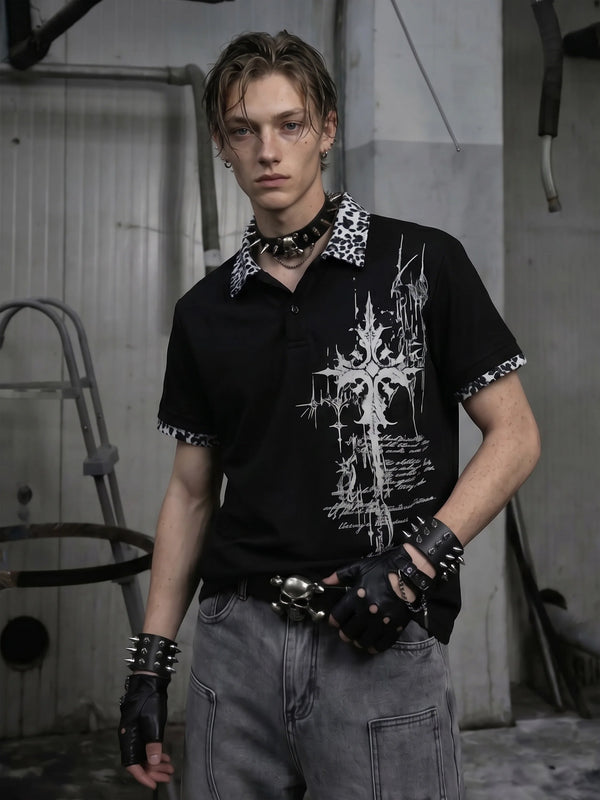
The third number is the most important one. One layer with a clear Grunge signal has to stay visible, otherwise the outfit isn't readable from the outside. That can be the flannel collar under the jacket, the hem of the wash-tone shirt or the trousers themselves. Which layer takes that on is free. That one of them takes it on is not negotiable.
Build
How to build a Soft Grunge look for cold days
The build follows a fixed order, and it doesn't start with the jacket. First comes the base directly on the skin, then the style layer that defines the look, and only at the end the weather layer. Whoever sticks to this order can take off the outermost layer at any time without half an outfit being left underneath.
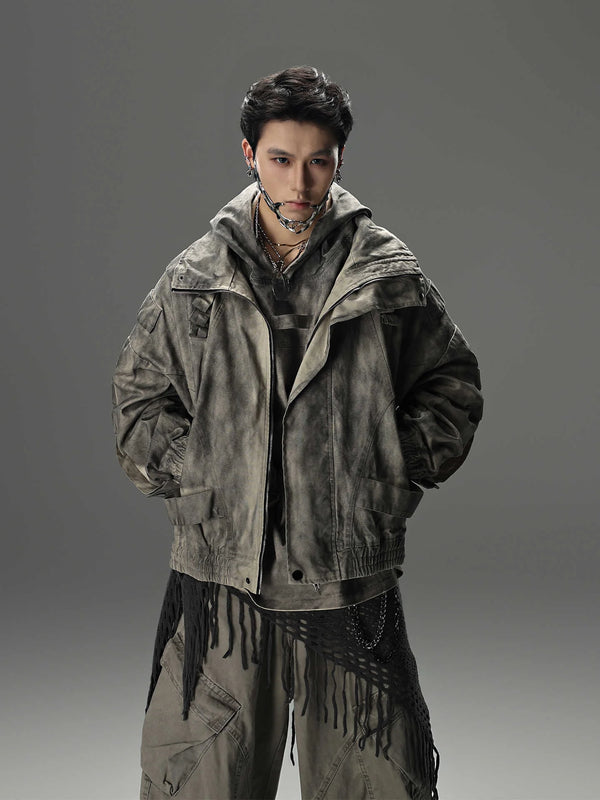
For cold days that means, concretely: a tight longsleeve or a thermal layer at the bottom, over it the wash-tone tee or flannel, over that denim, vest or puffer. The trousers stay single-layered, but cut straight and made of dense fabric. The shoe has a profile and handles wet. That's the complete blueprint, and it fits on a receipt.
- Layer one – tight longsleeve, plain, dark. Warms and disappears under everything.
- Layer two – wash-tone tee or flannel. This is the layer that marks the style.
- Layer three – denim jacket, vest or puffer, open or closed depending on temperature.
- Bottom – straight jeans or wide trousers in firm fabric, hem rests on the shoe.
- Finish – heavy shoe with a profile, choker or belt as the metal point.
More important than any single piece is the contrast between the layers. Two wide layers on top of each other give volume without shape. A tight layer under a wide one creates the silhouette the look needs. Whoever is cold reinforces the bottom layer and leaves the outer ones untouched.
Principle
Layering in winter: three layers that don't bury the look
Layering isn't a stylistic device in winter, it's mandatory. The only question is whether the layers build the look up or cover it. The Tumblr version of the style never solved this problem, because it was built for photos: flannel open, jacket a prop, temperature irrelevant. Outside below freezing you need a more robust logic.
The rule: from the inside out, every layer gets wider and darker. The tight light longsleeve inside, the mid grey of the flannel in the middle, the heaviest and darkest layer outside. That way every layer stays individually recognisable, and the outfit works open as well as closed. Whoever reverses the order and wears light on the outside makes the weather layer the lead role.
A side effect of this order: indoor spaces stop being a problem. Whoever constantly swings between warm and too warm on the train, in the lecture hall and in the café simply takes off the outermost layer and still stands there in a complete outfit. That's the difference between a look with a jacket and a look that depends on its jacket.
Formulas
Soft Grunge Winter Outfits: five formulas that work
Whoever doesn't want to think in the morning needs formulas instead of inspiration. The following five combinations cover the usual winter days and all use the same core. None of them demands a piece that isn't already in a Soft Grunge wardrobe or doesn't show up in the next sections.
The formulas are deliberately unspectacular. A winter look that wants to be a statement every day won't survive a February. The style becomes wearable because four of the five combinations consist of a maximum of six pieces and lend each other their building blocks.
Whoever hasn't got the basic combinations down yet will find the version without weather pressure in the outfit post. The winter formulas here build on that and change only what the temperature forces: more layers, firmer fabrics, closed shoes.
Outer layer
Jackets and coats: the most visible decision of winter
From November to March most people see one thing above all: the jacket. It decides whether the look stays readable from the outside as Soft Grunge or passes as any winter. Two routes work reliably, and they couldn't be more different.
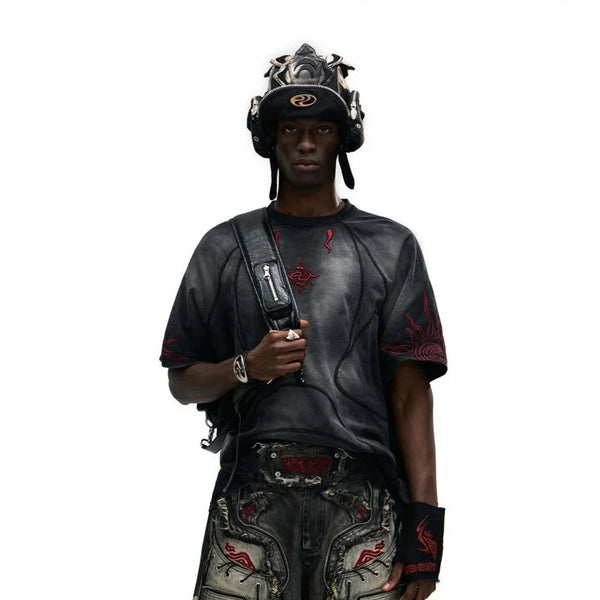
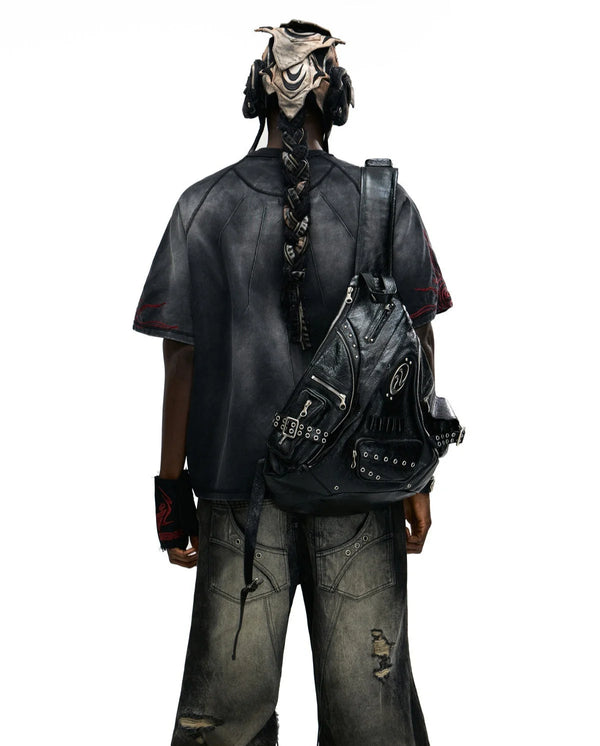
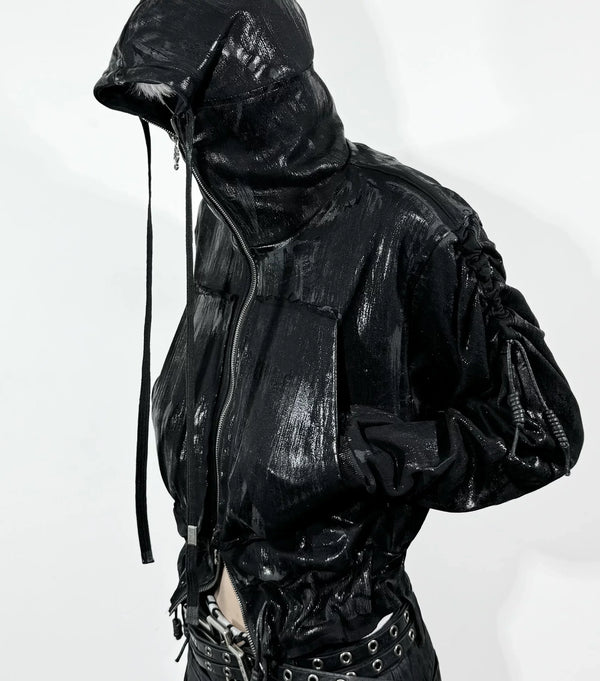
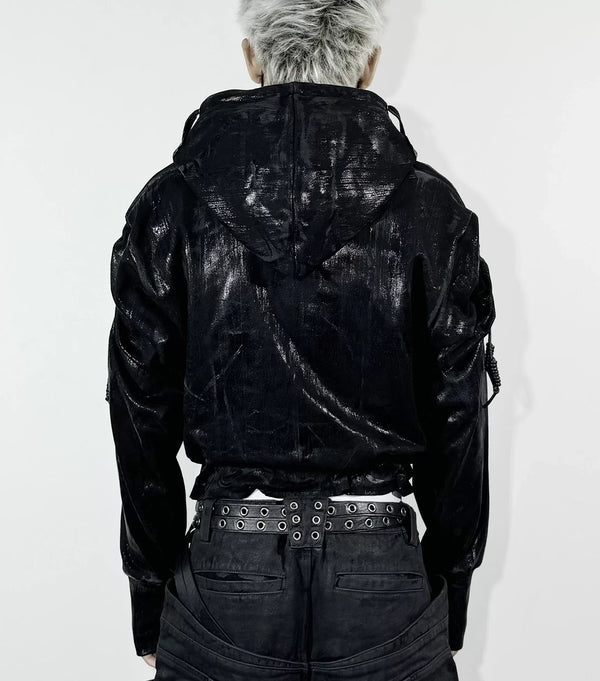
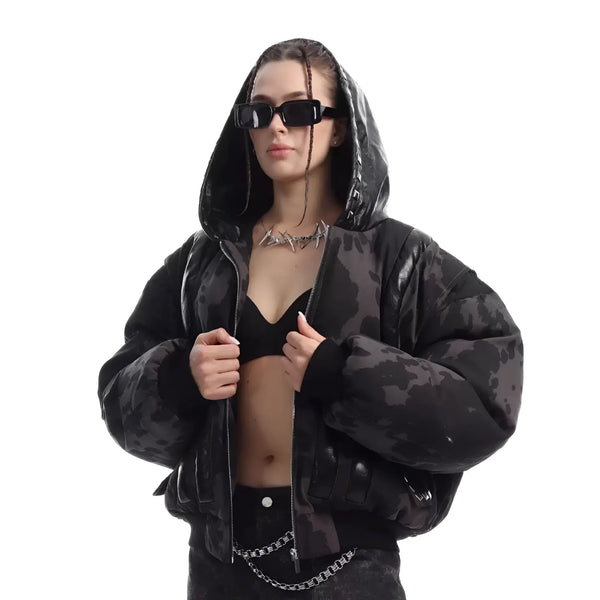
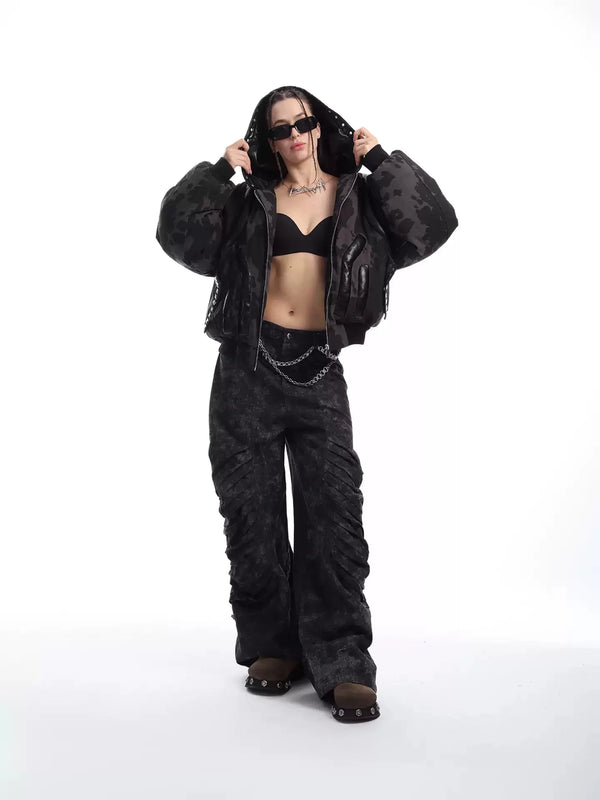
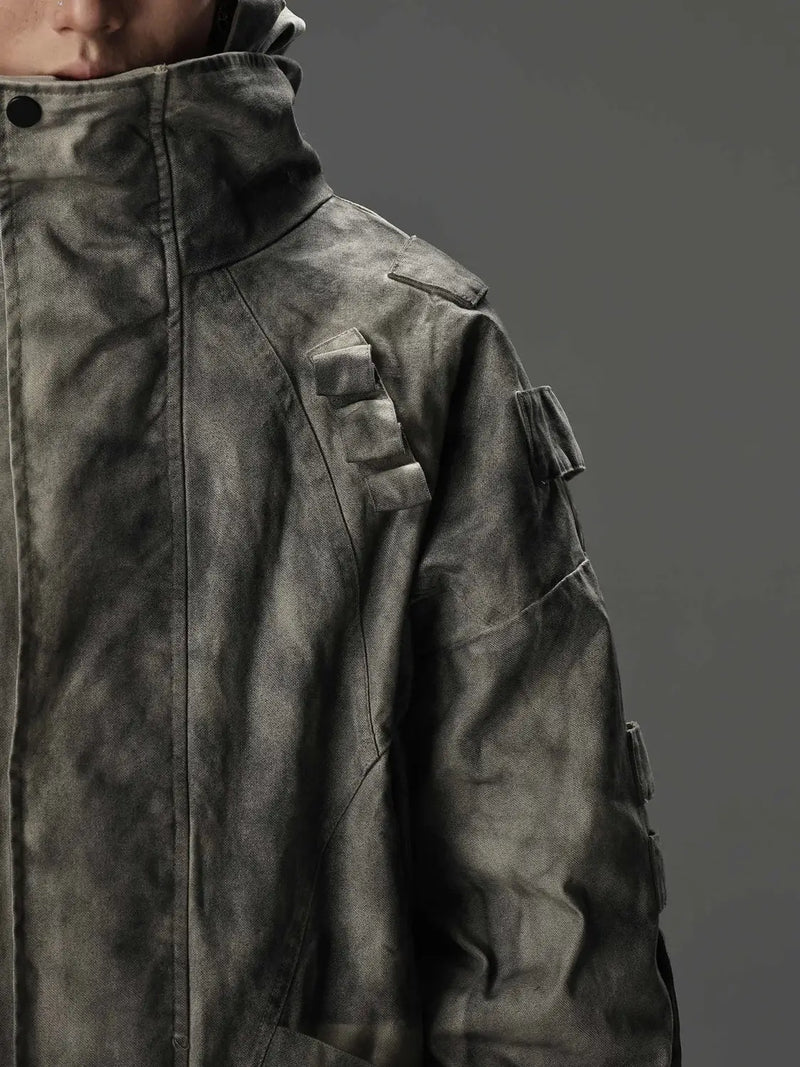
The first route is the puffer in black or a dark tone, ideally with a leather or camo element that brings the necessary hardness. Underneath the style runs on unchanged, and the collar of the flannel stays visible. The second route is the denim jacket in a light wash over a thick intermediate layer: more vulnerable to cold, but closer to the original form of the look. Whoever commutes takes the puffer. Whoever has short distances can afford the denim.
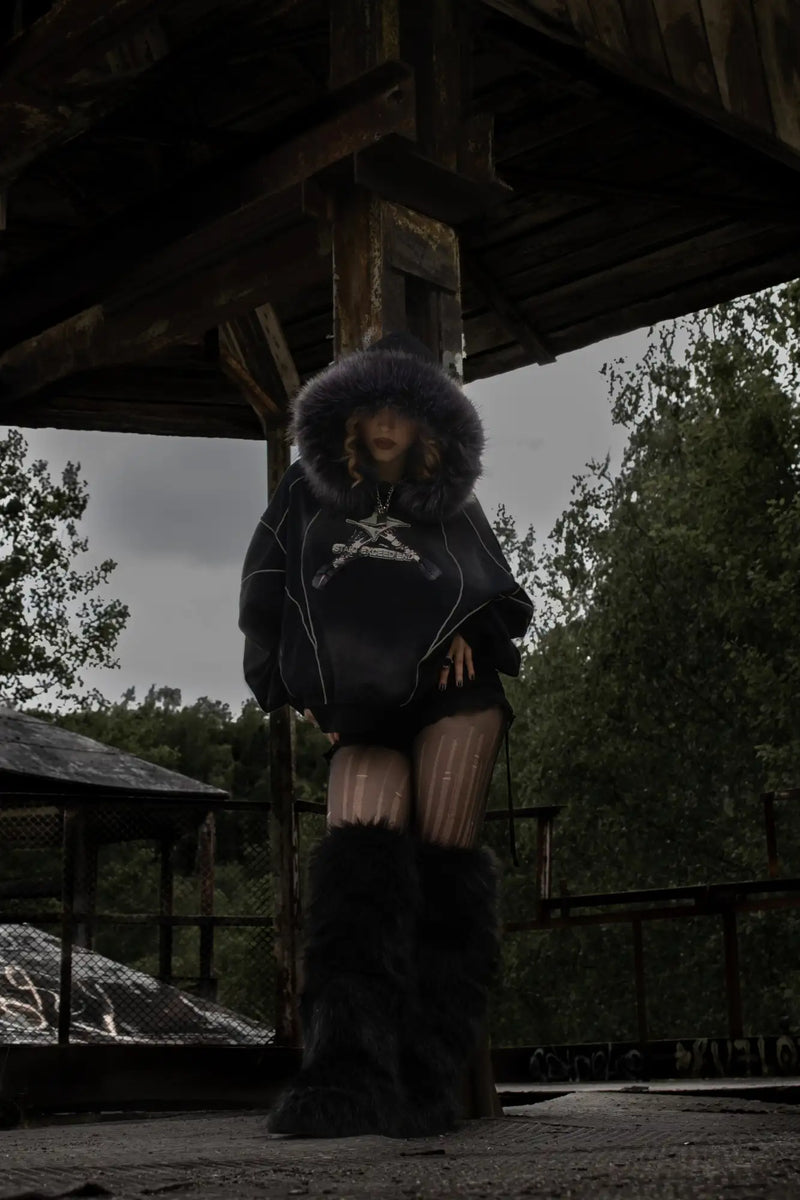
With the puffer one detail counts more than all the others: the hood. A hood with a fur or plush trim replaces half the styling effort in winter, because it frames the face where the choker usually works. Without a hood a dark beanie takes on the same job, as long as it stays plain.
In the clip you can see why the volume of the jacket isn't a problem, as long as the trousers fall straight. The contrast between a broad shoulder and a clear leg line holds the silhouette together. Balloon shape top and bottom at the same time is the only build the look doesn't forgive.
Dresses
Soft Grunge Winter Dresses: dresses and skirts in the cold
Dresses don't disappear from the look in winter, they just change their base. A short dark dress or a tartan skirt works at five degrees just as it does in October, if three things are right: opaque tights in black, heavy shoe with a profile and a third layer that delivers warmth without swallowing the waist.
The tights aren't a compromise here, historically they're the norm. The style never treated the combination of a short hem and dense black underneath as a stopgap, but as an image of its own. Whoever wants to can double up in real frost: thermal tights under the opaque ones, invisible and effective.
For everyone who avoids dresses in winter on principle: the look doesn't demand them. The wide trousers serve the same purpose and are the more common choice. But whoever likes the dress version doesn't have to store it away until April, and that sets this style apart from most summer aesthetics.
Tops
Winter Soft Grunge Clothing: tops, knit and the middle layer
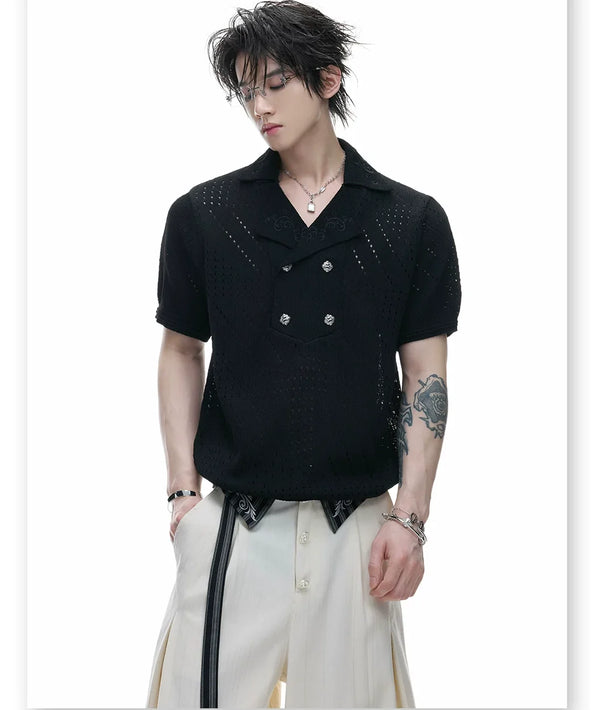
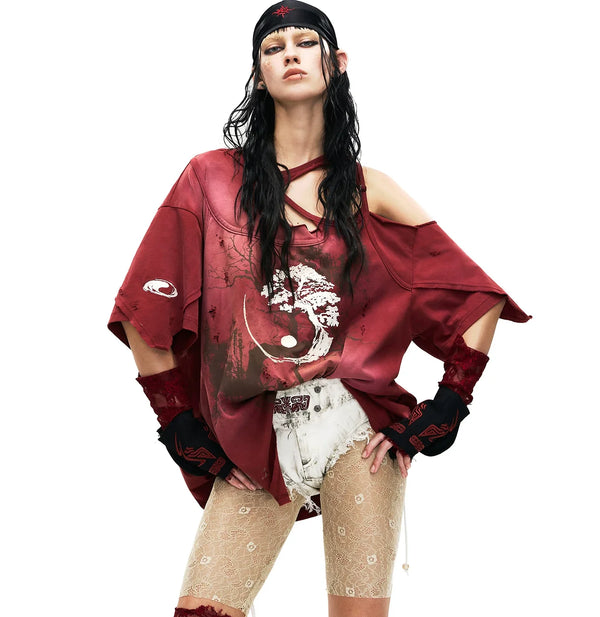
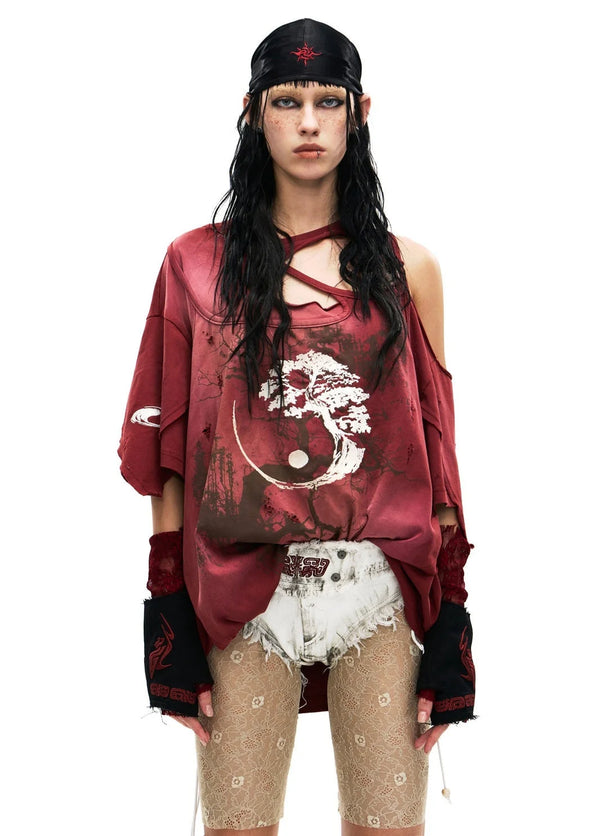
The middle layer does the actual work in winter. It warms, it marks the style, and it's what's left once the jacket is on the hook. Three categories carry this layer: the wash-tone tee over a longsleeve, the flannel shirt and the knit pulled underneath or laid over.
With knit the same test applies as with everything in this style: it may be soft, but not well-behaved. A coarse, slightly irregular knit in grey or anthracite fits, a fine cable jumper in cream tips towards country house. Whoever is unsure sticks to the wash-tone rule: the piece should look as if it already has two winters behind it, not as if it came out of a gift box.
The vest is the underrated piece of this category. Over a longsleeve with a wash-tone print it delivers warmth at the torso, leaves the arms free and keeps the number of layers visible. Indoors it replaces the jacket completely, and that's exactly where a winter day spends most of its hours.
Material
Cozy Soft Grunge: warm without looking soft
Cozy Soft Grunge is the search query behind which a real problem sits: how much cosiness can a style take that lives off its edge? The answer lies in the material instead of the silhouette. Teddy, sherpa, coarse knit and plush trims are allowed and wanted, as long as cut and palette stay hard.
The recipe is a ratio: one soft material per outfit, plus two hard signals. The teddy coat runs over straight dark trousers and a heavy shoe. The plush trim on the hood meets metal at the belt. As soon as two large soft surfaces come together, teddy over knit for instance, the outfit loses its tension and becomes a blanket with sleeves.
In practice that means: whoever wants to raise the cozy share swaps material, not shape. Straight jeans don't turn into joggers, but into straight trousers in thicker fabric. The wash-tone tee doesn't turn into a cuddly jumper, but into the same cut in knit. The shape stays, only the handle changes.
Bottoms
Trousers in winter: straight cuts against the cold
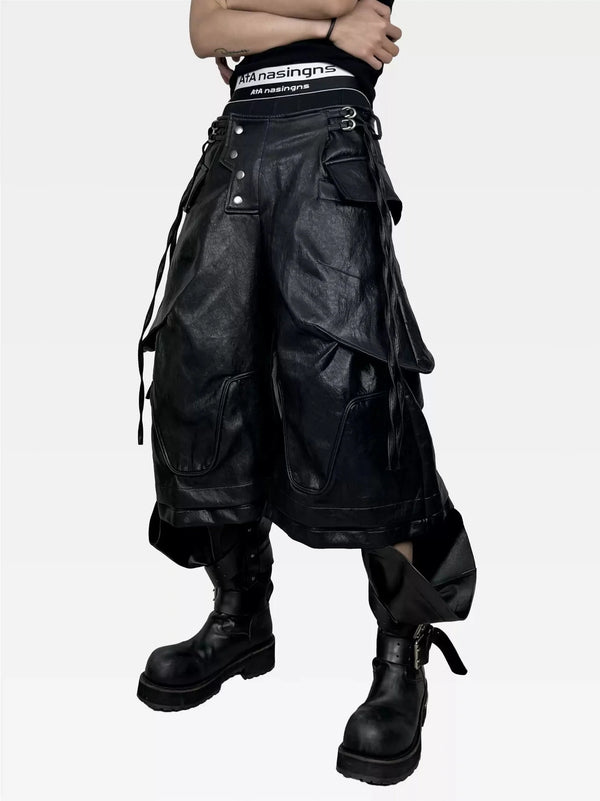
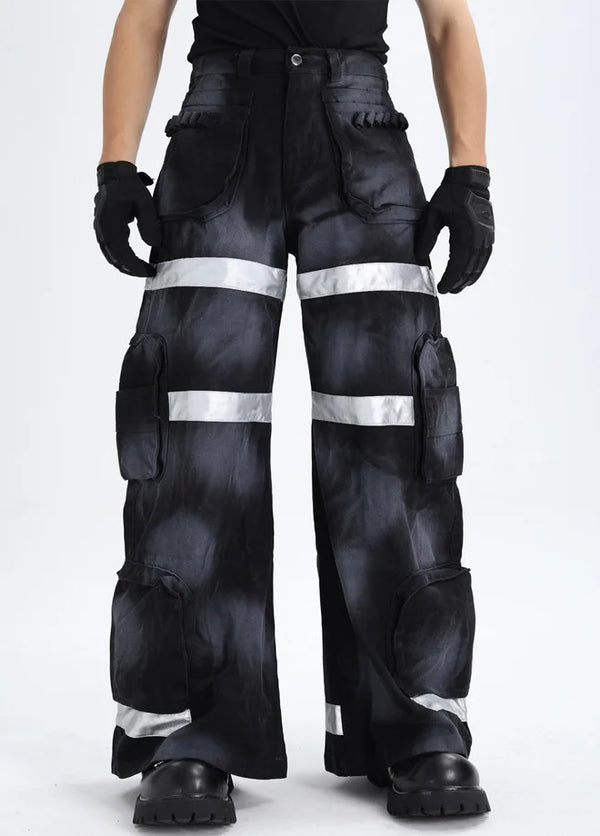
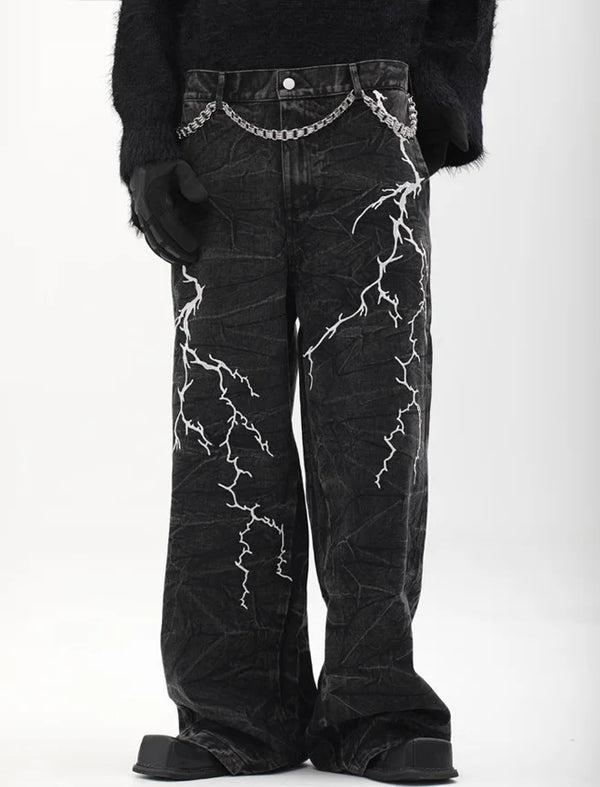
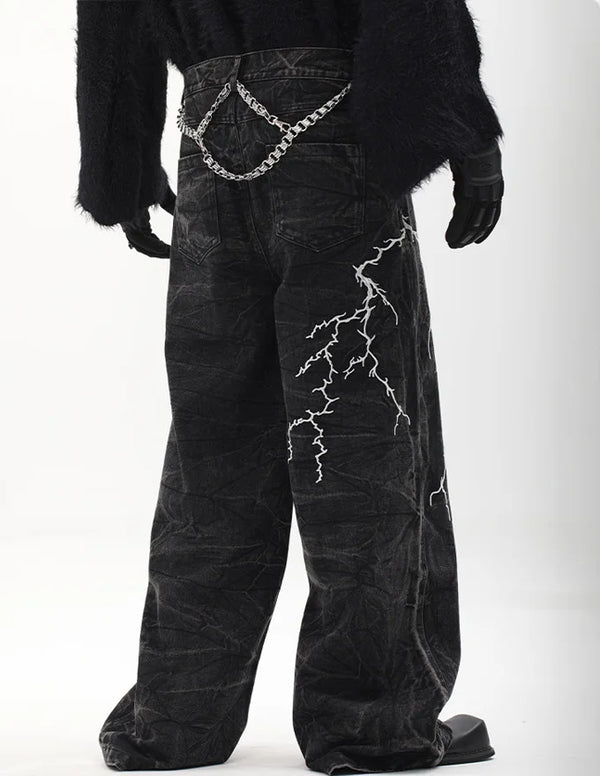
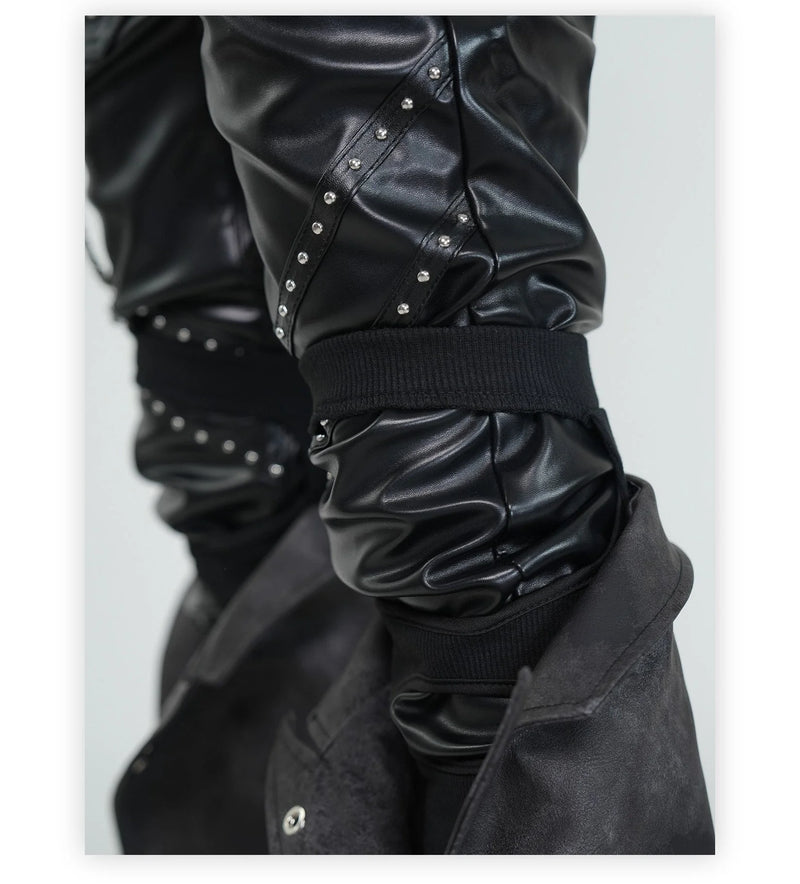
The bottom decides whether the outfit survives the day. The skinny jeans of the Tumblr years are doubly wrong in winter: they date the look and they don't insulate. Straight or wide trousers in firm denim or dense woven fabric solve both problems at once and allow a thin layer underneath if needed.
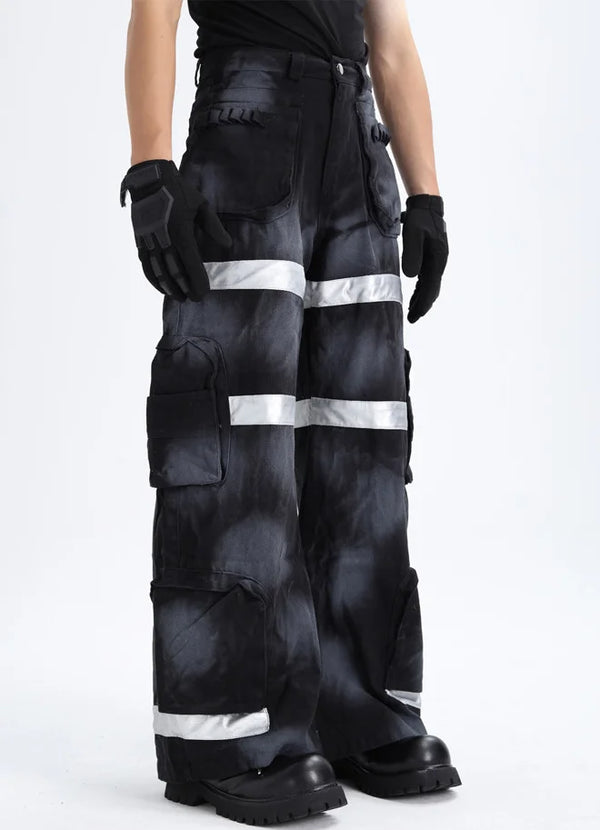
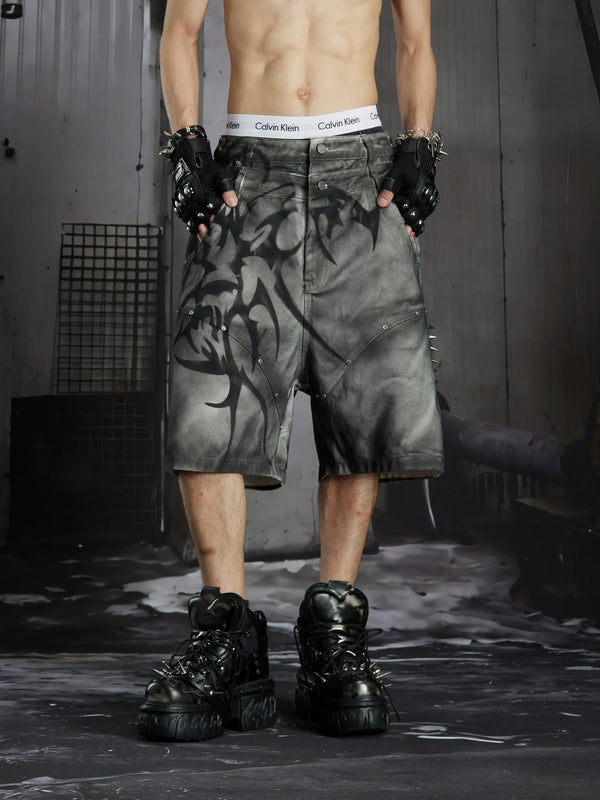
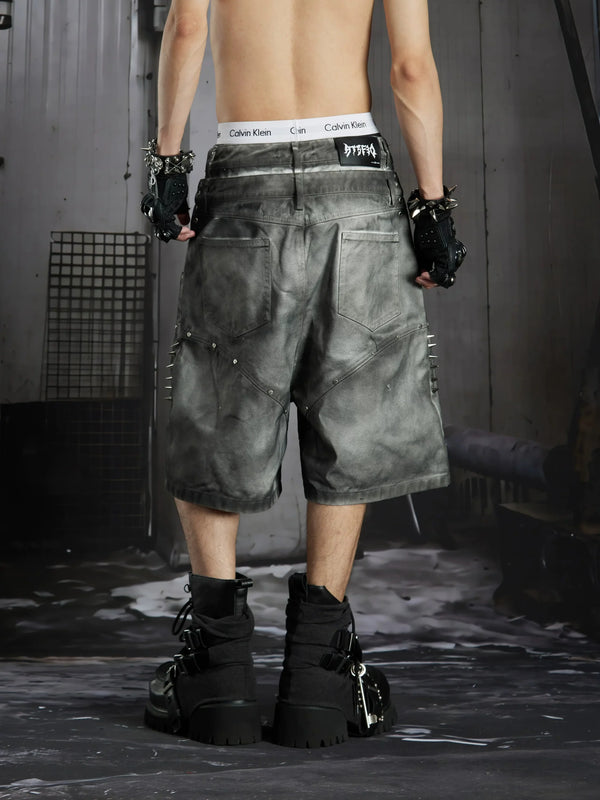
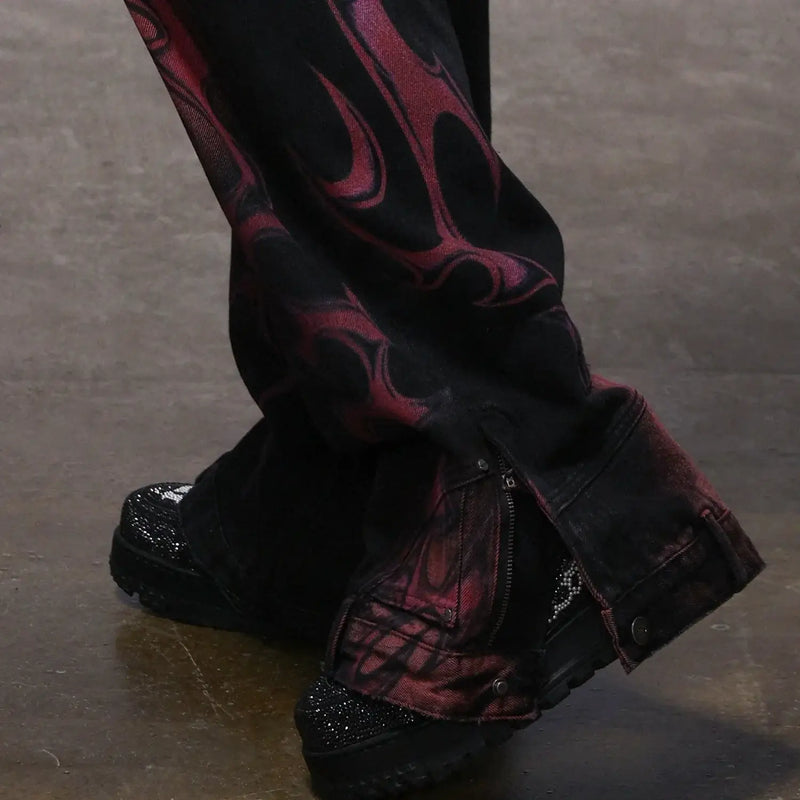
Two cuts carry the season. The wide jeans with a subtle wash are the standard for everyday and frost, because a thermal layer finds invisible room underneath. The deconstructed wide fabric trousers are the tidier variant for days when the look should appear a little quieter. Both end on the shoe, not above it.
A word on the wash: in winter the light, heavily bleached tones can take a break. Darker washes suit the season better, forgive slush and hold the palette together. The rips at the knee are a question of pain threshold below freezing anyway, not of style.
Outlook
Grunge Fashion Trends 2026: what winter changes
The trend situation for 2026 is unusually favourable for this style. Three movements are running towards it: silhouettes stay wide, palettes get darker, and surfaces with visible wear have gone from flaw to selling point. None of it means a Soft Grunge wardrobe has to buy anything new, it's already there.
Winter-specific, a fourth movement joins in: the puffer as a style object instead of a necessity. Convertible models with detachable elements, a high collar and a hard material mix have pulled the down jacket out of the functional corner. For the look that means: the warmest layer is no longer the price you pay, but a statement of its own.
What's getting quieter in 2026 is the pure nostalgia grab. The one-to-one reconstruction of a 2014 feed has had its moment. The workable version quotes the era in one piece and builds the rest from the present, and winter with its mandatory layers almost does this mix on its own.
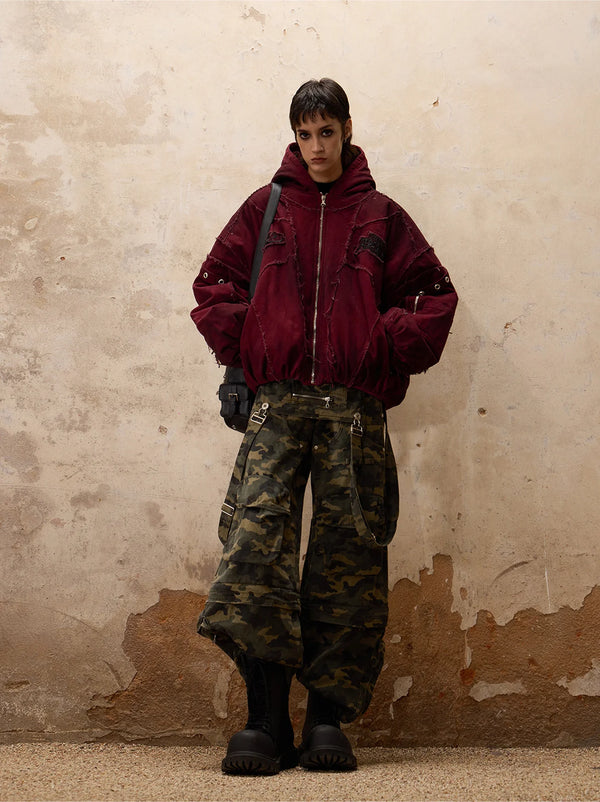
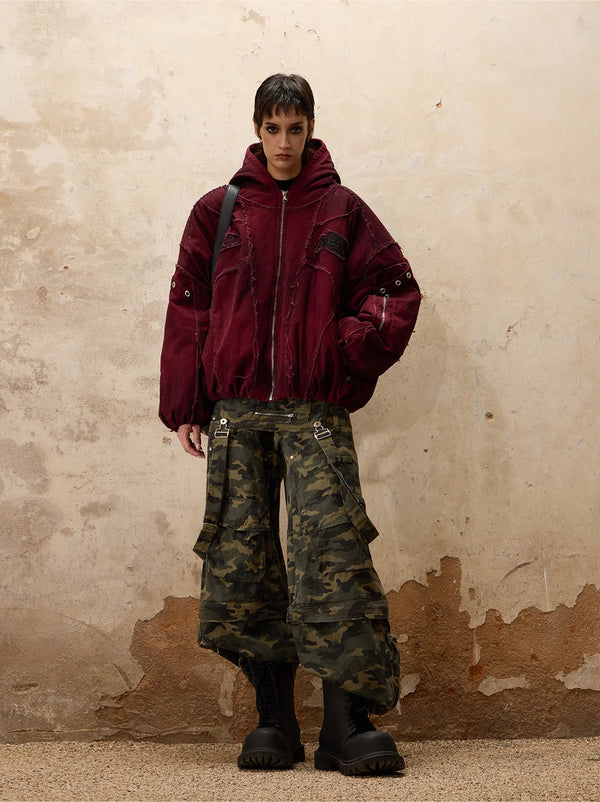
The modular idea from the clip can be generalised. Every winter piece that can be opened, shortened or rebuilt doubles its use between December and March. That's not a gadget argument but plain arithmetic: fewer pieces, more combinations, and the wardrobe stays manageable.
Colours
The winter palette: dark, but not only black
Winter tempts you into total darkness, and that's exactly what makes the look flat. Three tones remain the upper limit, black is one of them, but the other two deserve more attention in winter than usual. Grey in several steps and a deep burgundy are the tones that still read as colours in low daylight.
The full palette including the combination logic is in the colour post. For winter the short version is enough: black as the base, grey as the surface, burgundy or a very dark green as the accent. White appears at most at the collar of the bottom layer, where it closes off the dark build at the top.
The order mirrors visibility in winter: everyone sees the jacket, the accessories only those standing close enough. Budget follows visibility, which is why the best investment pays off on the outside, while the inner layers may well consist of cheap basics.
Details
Accessories in winter: choker, belt, cap under the hood
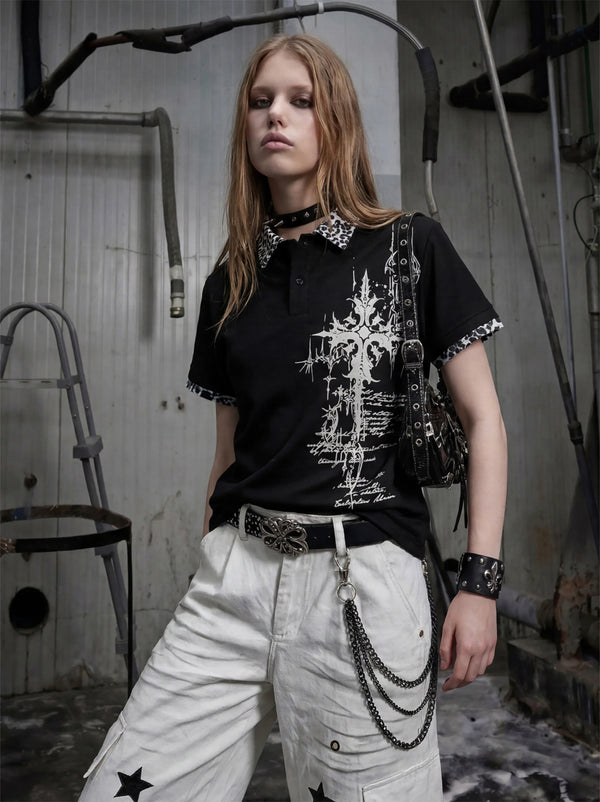
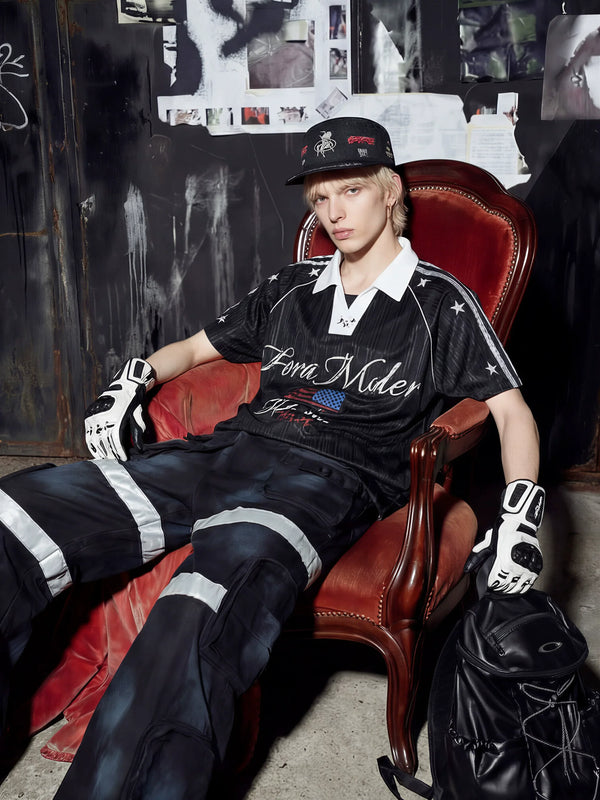
Accessories have a space problem in winter. The choker disappears under the scarf, the rings under gloves, and what's left has to take over the signal work. Three pieces do that reliably: the belt with metal, the dark cap and the chain that sits over the middle layer instead of against the skin.
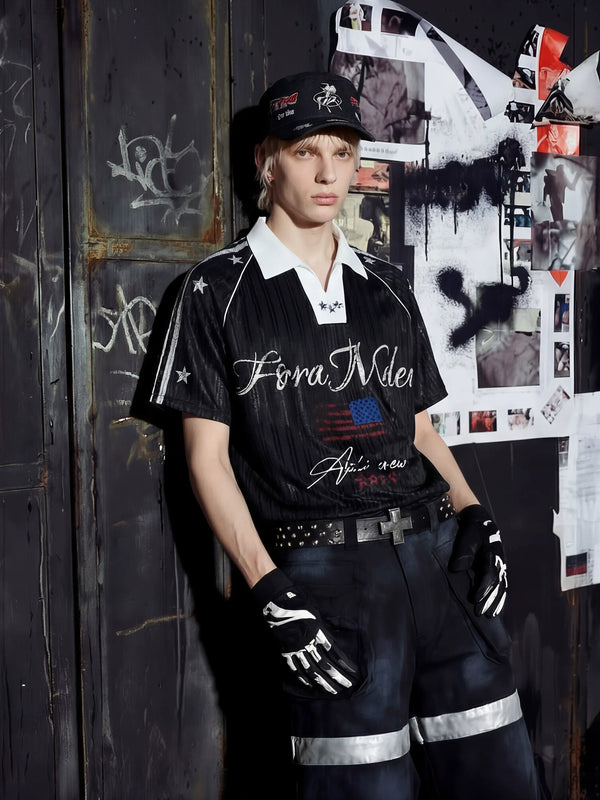
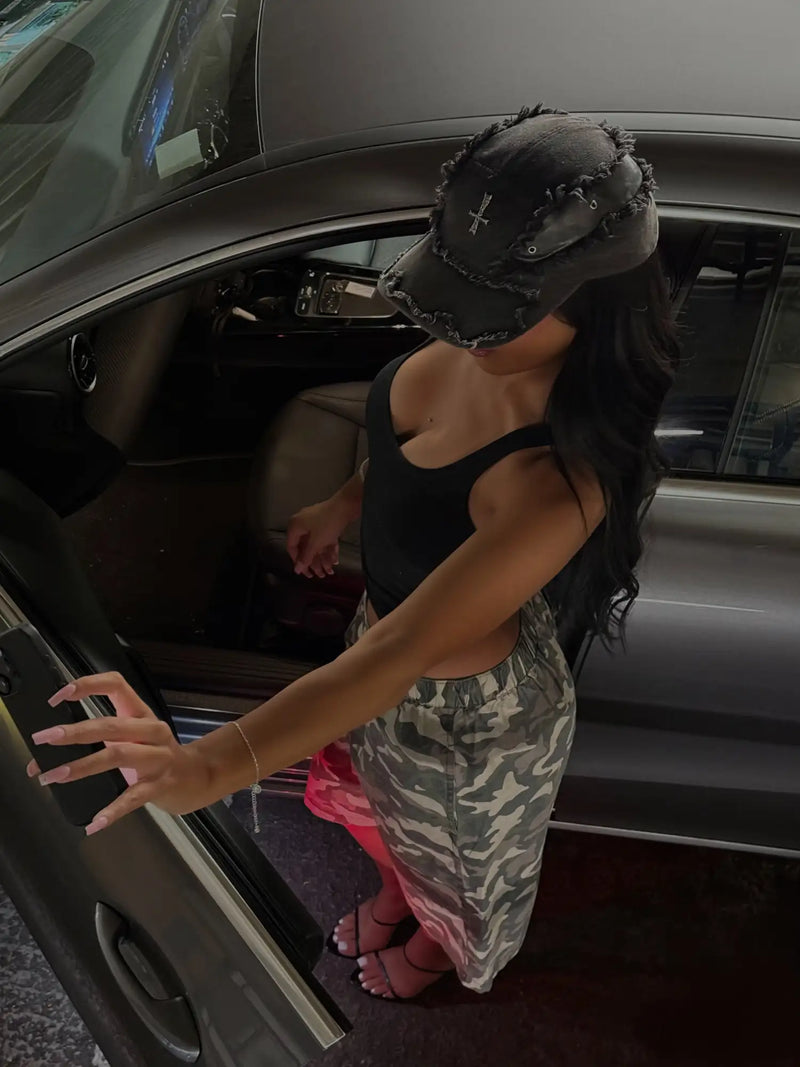
The belt is the quiet winner of the season. It sits in the one place that stays visible even with an open jacket, and brings the metal point the look needs as an edge. The cap works under the hood and replaces the beanie on dry days, without pushing the outfit towards sport.
With the scarf, restraint applies to width, not to length. A narrow, long scarf in black or anthracite lays itself into the build, a voluminous snood swallows collar, choker and jawline all at once. Whoever is cold chooses material instead of mass: dense knit warms even when narrow.
What goes wrong
Common mistakes with the Soft Grunge winter outfit
The winter version of the look rarely fails on missing pieces and almost always on wrong distribution. We see the following five mistakes every winter, and each one can be fixed with a single change, without having to buy anything new.
The common thread behind all five points is the same: winter adds layers to the look, and every layer is a new opportunity to forget the rules. Whoever pulls the basic order of palette, silhouette and one visible signal through can hardly go wrong.
Where to buy
Where to buy Soft Grunge winter pieces
A different shopping logic applies for winter than for the rest of the year. Secondhand stays strong for flannel, knit and band shirts, so for the layers that are allowed to look worn. With the outer layer and the shoes the ratio flips: here fit, construction and weather resistance decide, and those are found more reliably new.
That's why we sort our pieces by category instead of by season: jackets, tops, trousers and accessories in a muted palette, from which the three layers of the winter build can be put together directly. Two entry points that make the most difference in winter stand side by side below.
A practical note on the order of filling up: the outer layer first, then the shoe, then the rest. Both are the pieces winter tests daily, and neither can be replaced by combining. Everything else in the build is flexible.
FAQ
Frequently asked questions about Soft Grunge in winter
A few questions keep coming up around the winter version of the look, in searches as much as in messages. Here are the short answers, so the research doesn't end in twelve open tabs.
Which bands count as Soft Grunge?
What is Kurt Cobain's style called?
Does Pastel Grunge work in winter too?
Does the choker stay under the scarf in winter?
Does a winter dress in the Soft Grunge look always need tights?
What remains is the opening question from the bus stop: why does one build look like style and the other like winter? Because one of them was planned before it got cold. That's exactly what can be caught up on, and with what's mostly already in the wardrobe.
What do you think?
Tell us on @fuga_studios
About the author
Philipp Fuge — Founder · Berlin
Founder of Fūga Studios. Writes the journal himself. Berlin · Shanghai · Tokyo · Poznań — four cities, one logic.