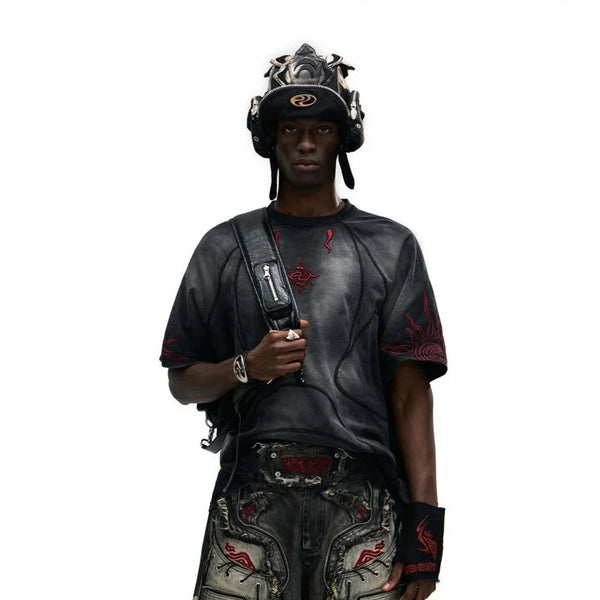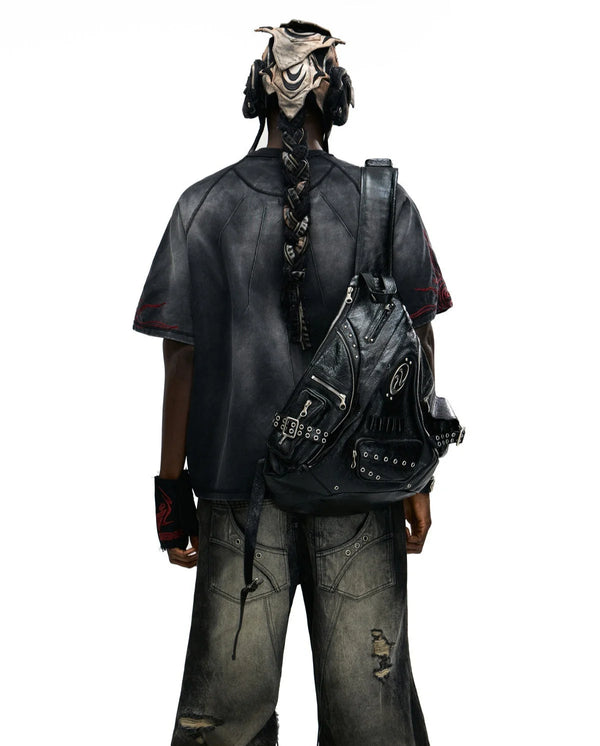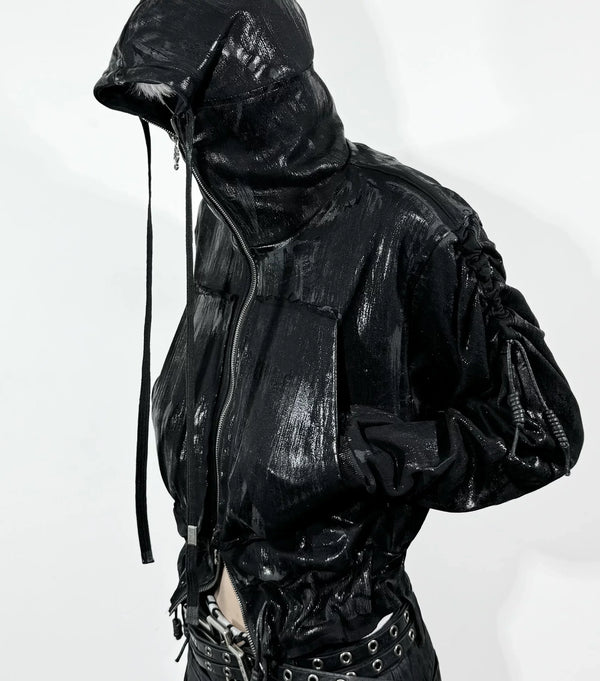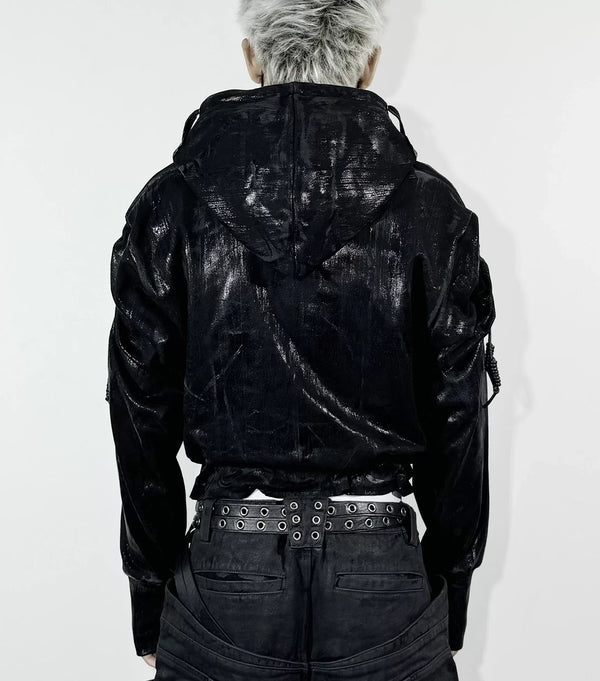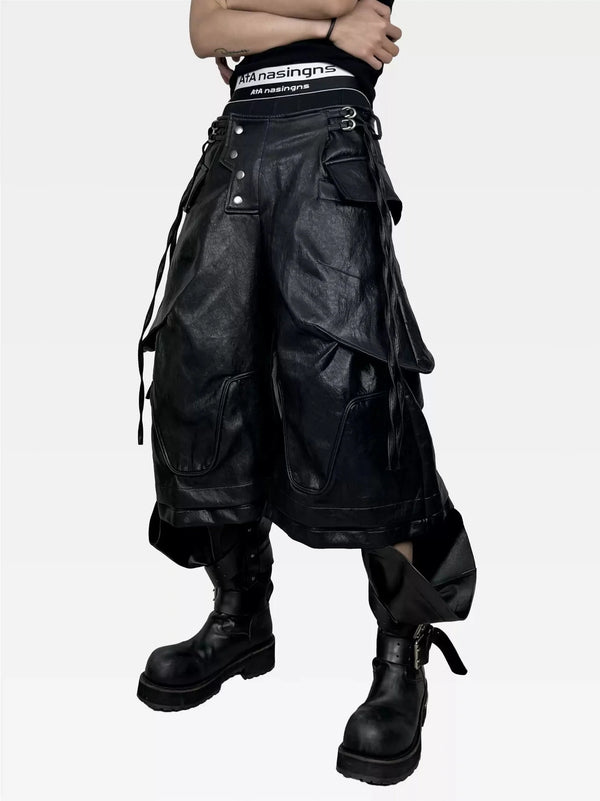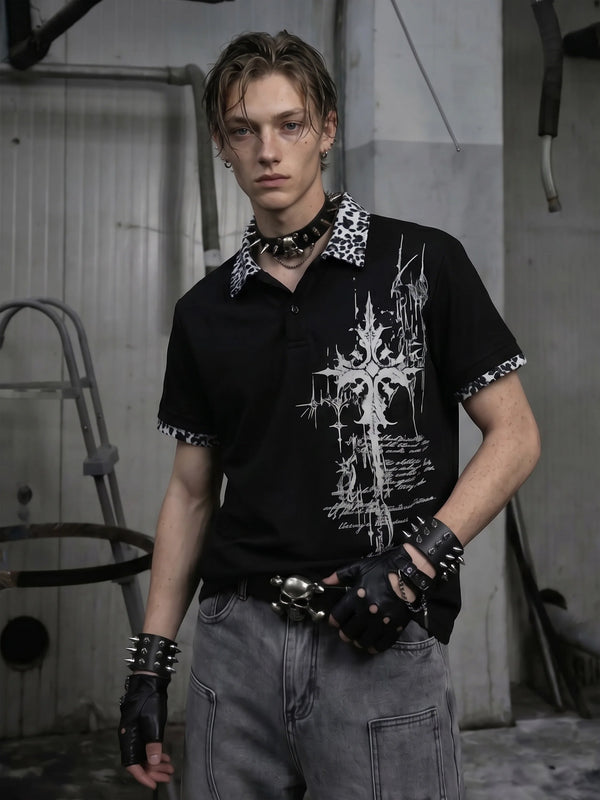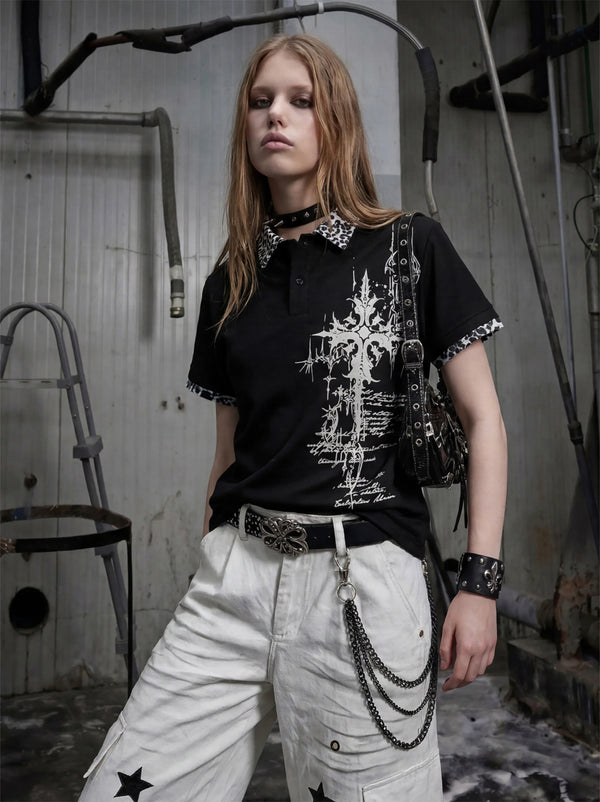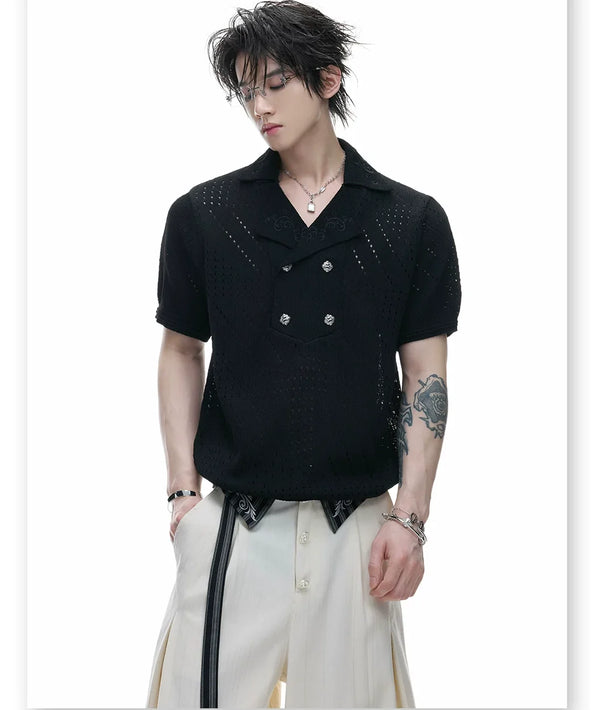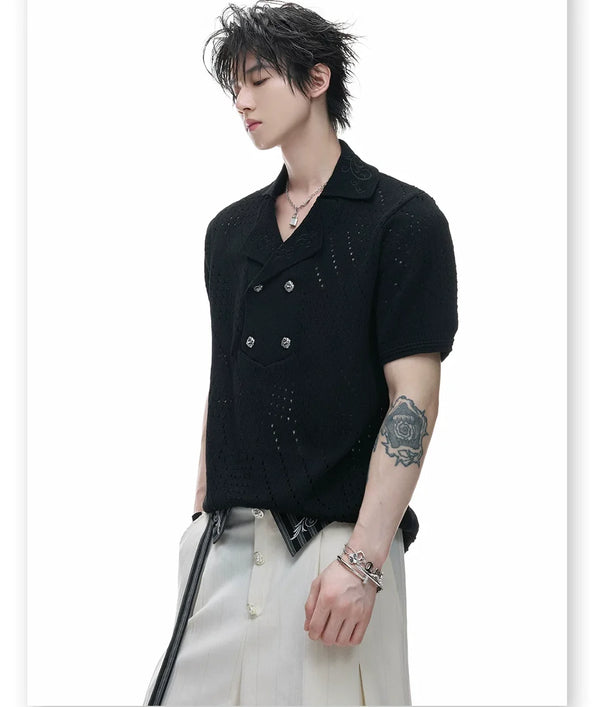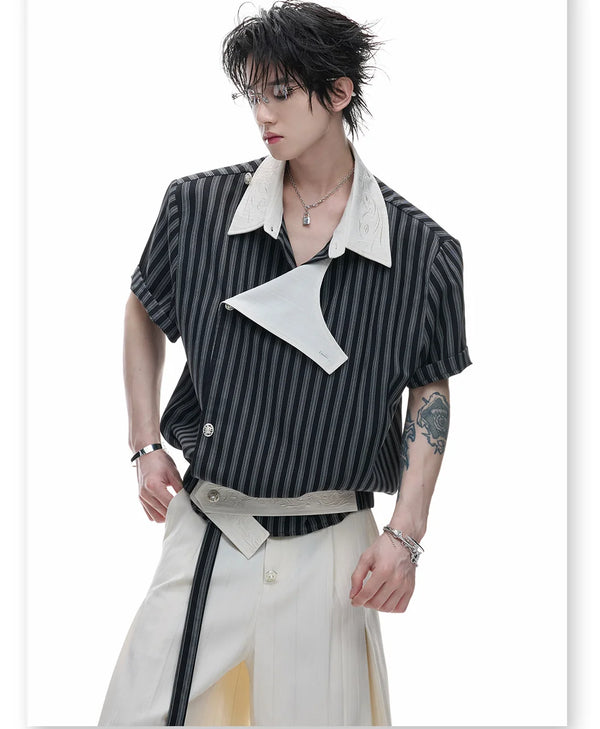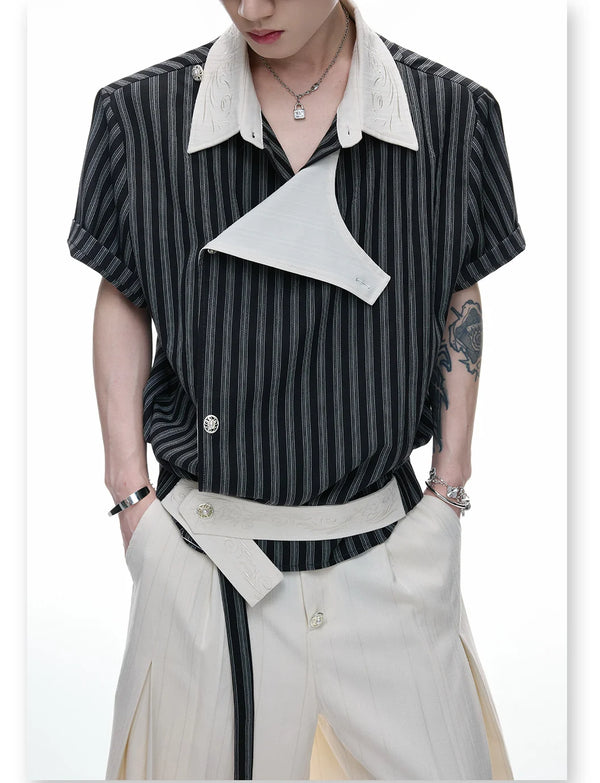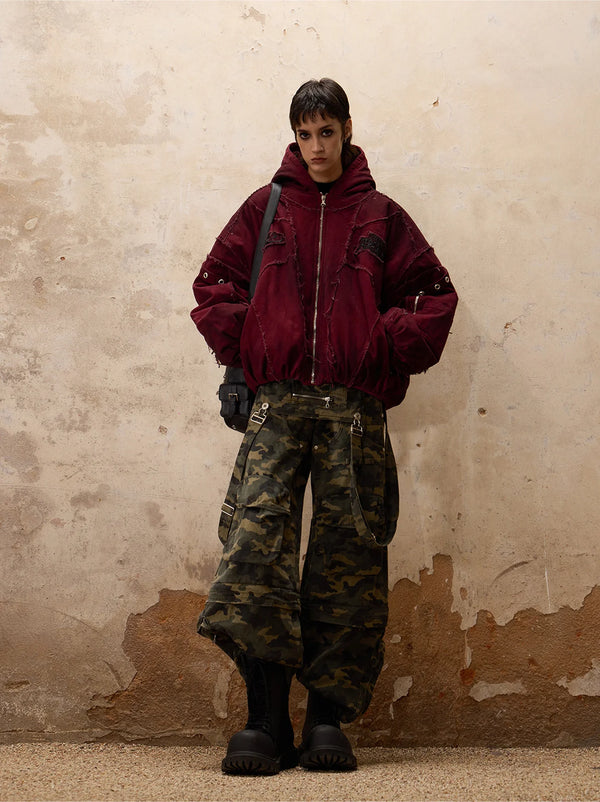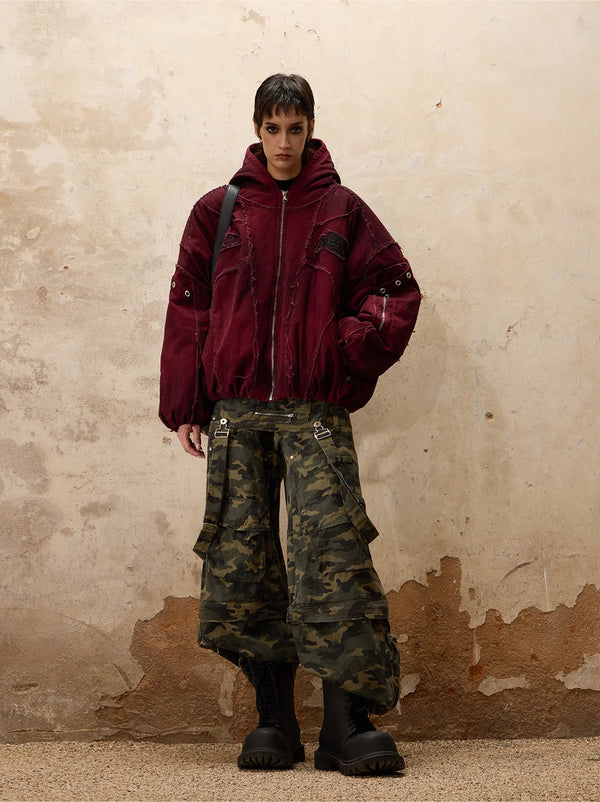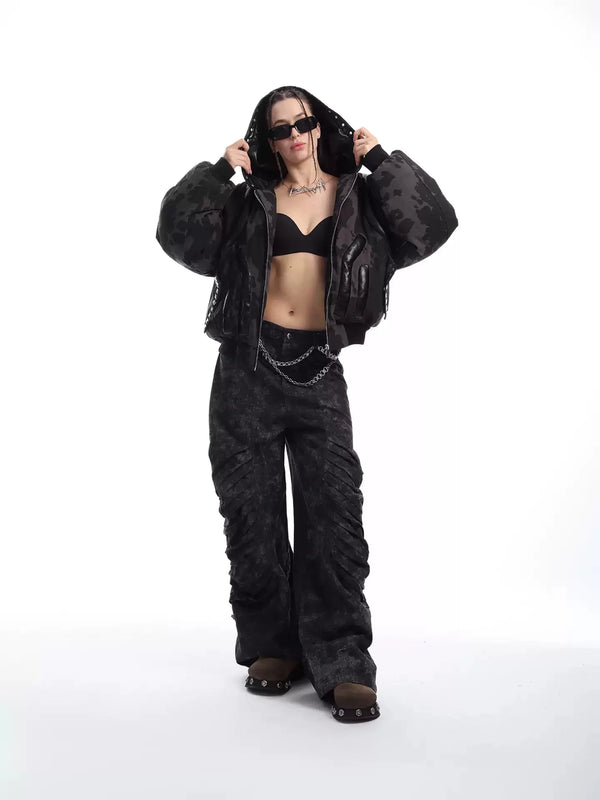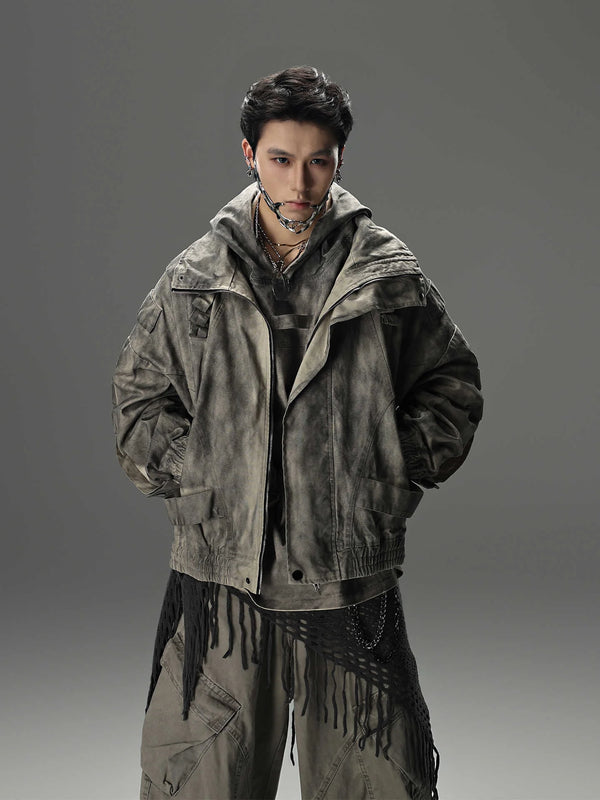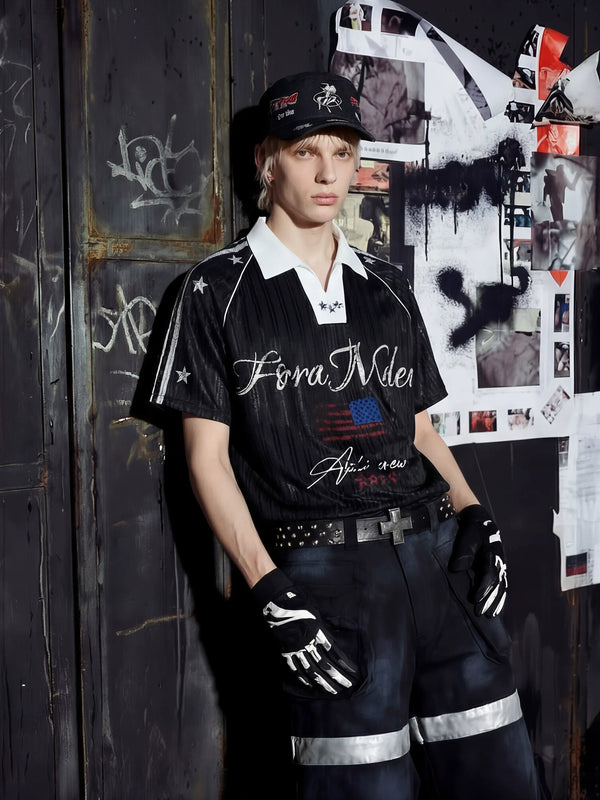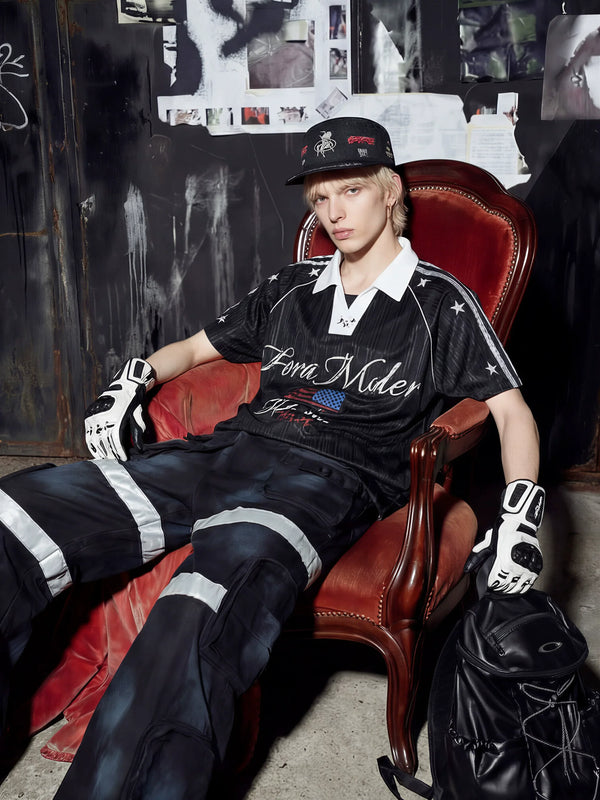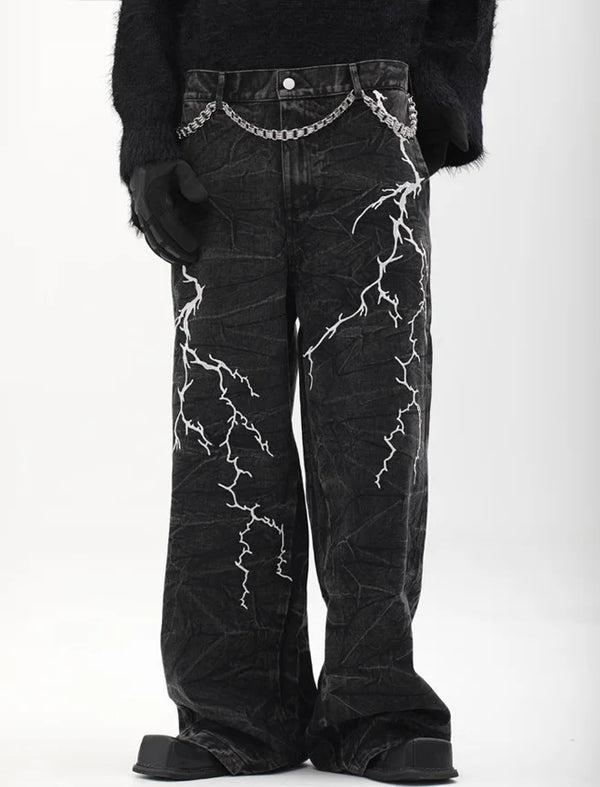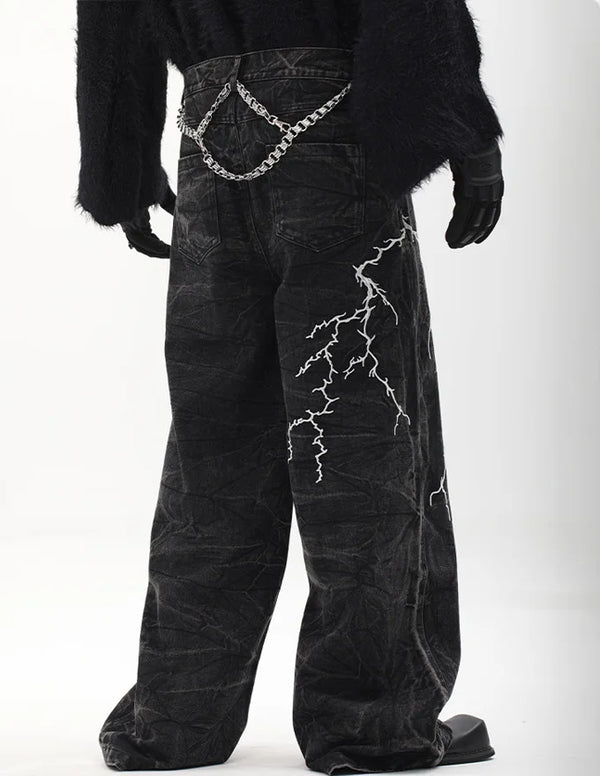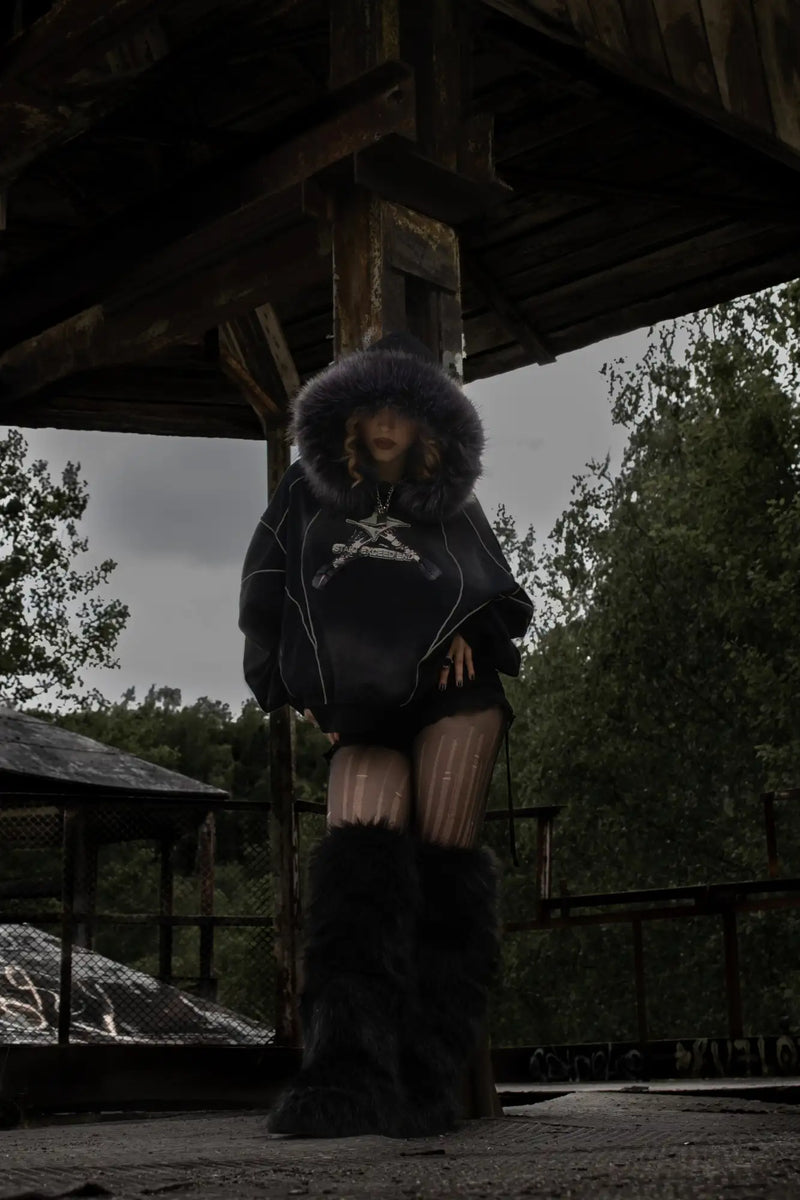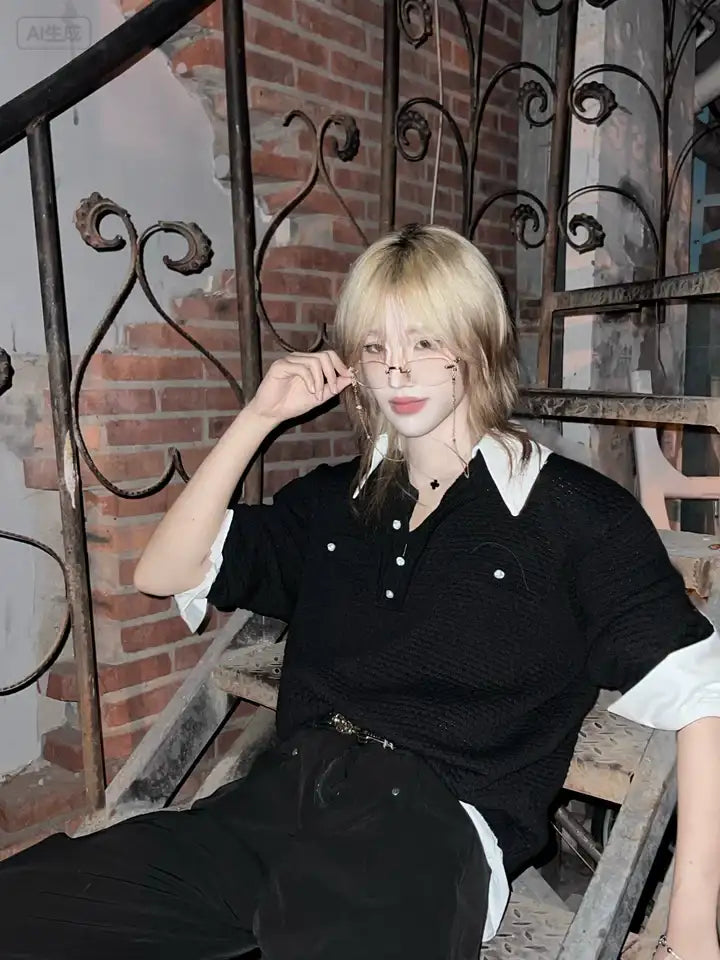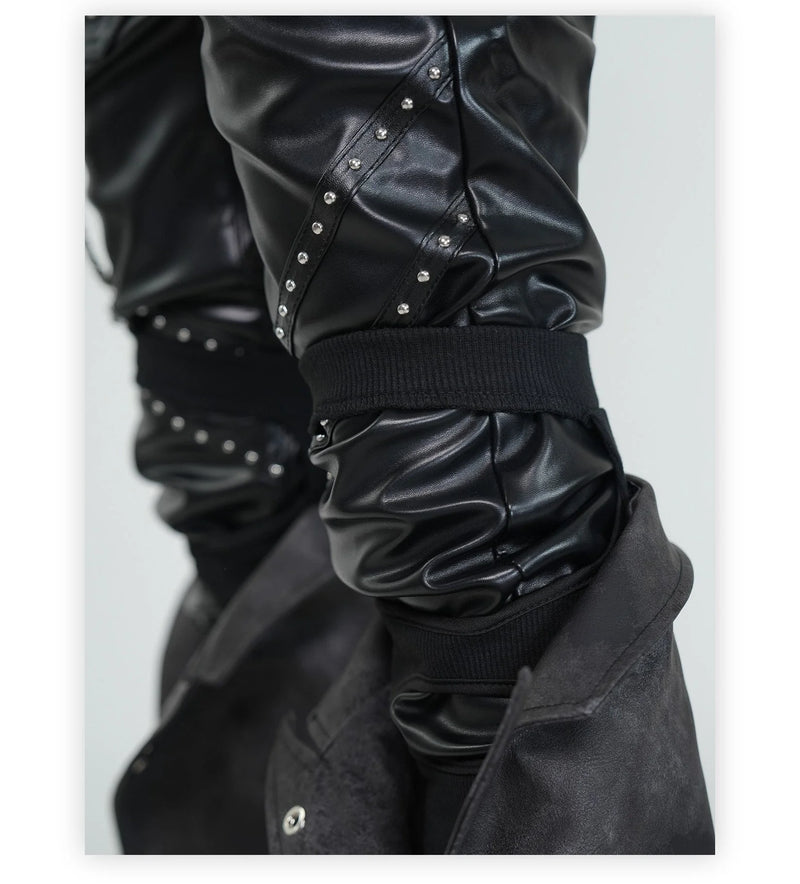
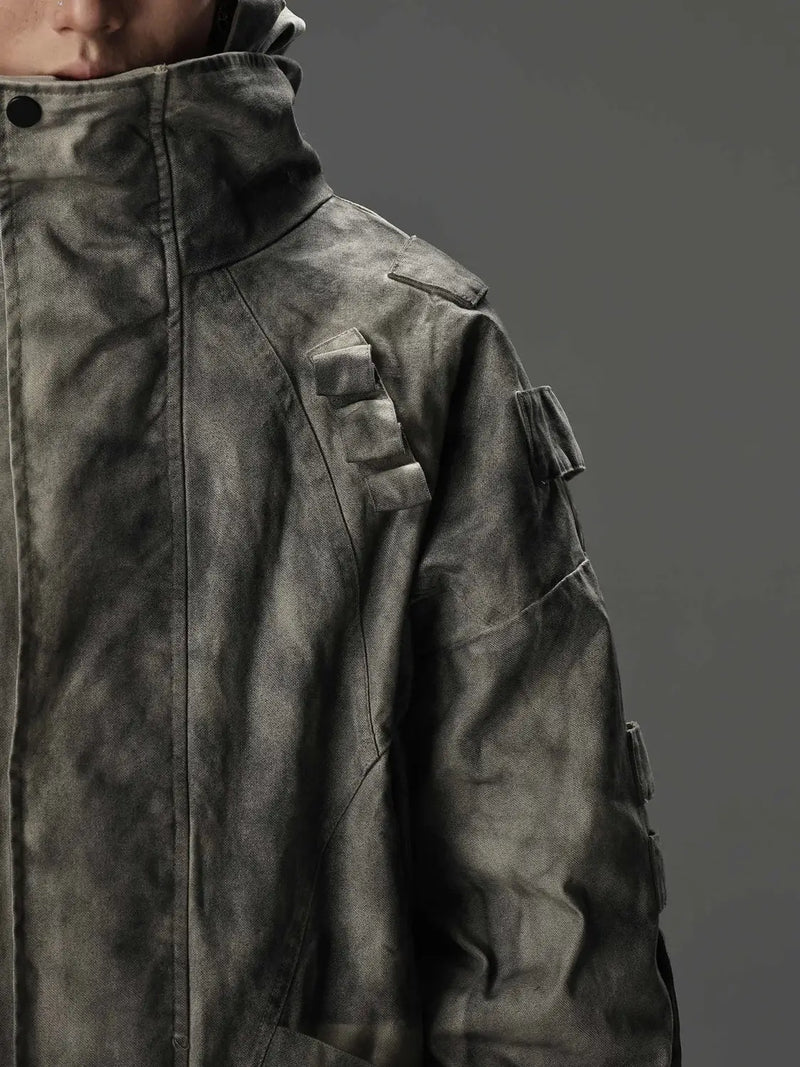
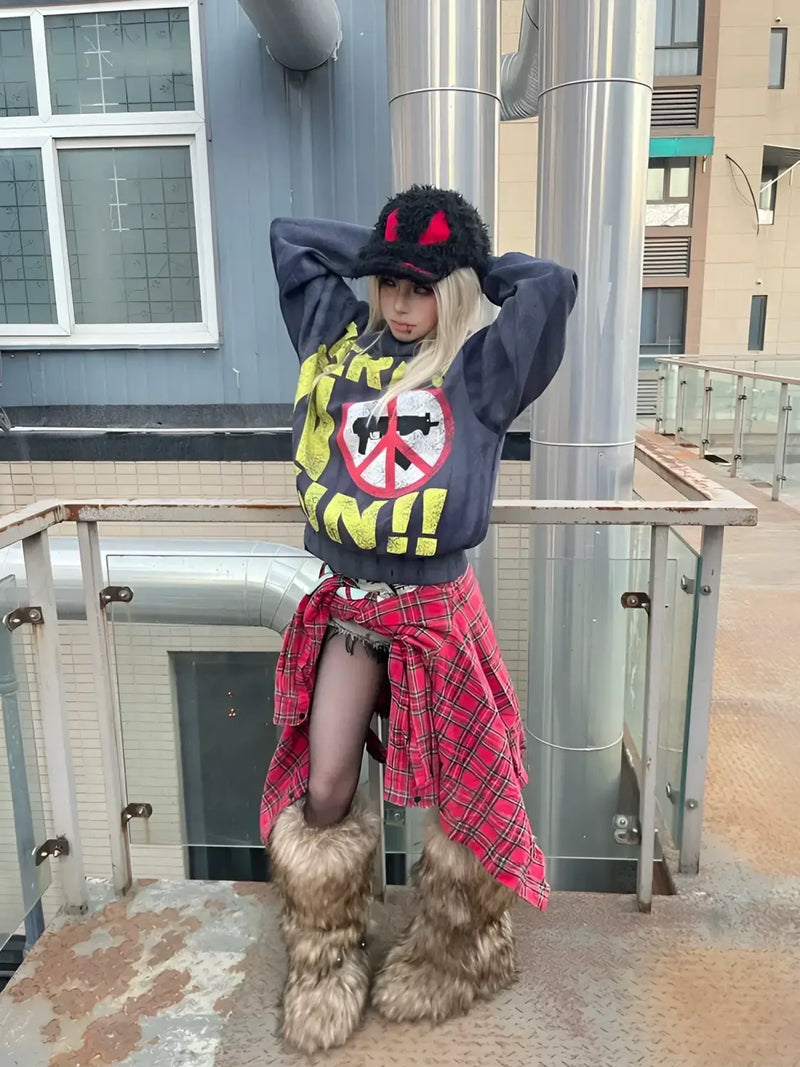
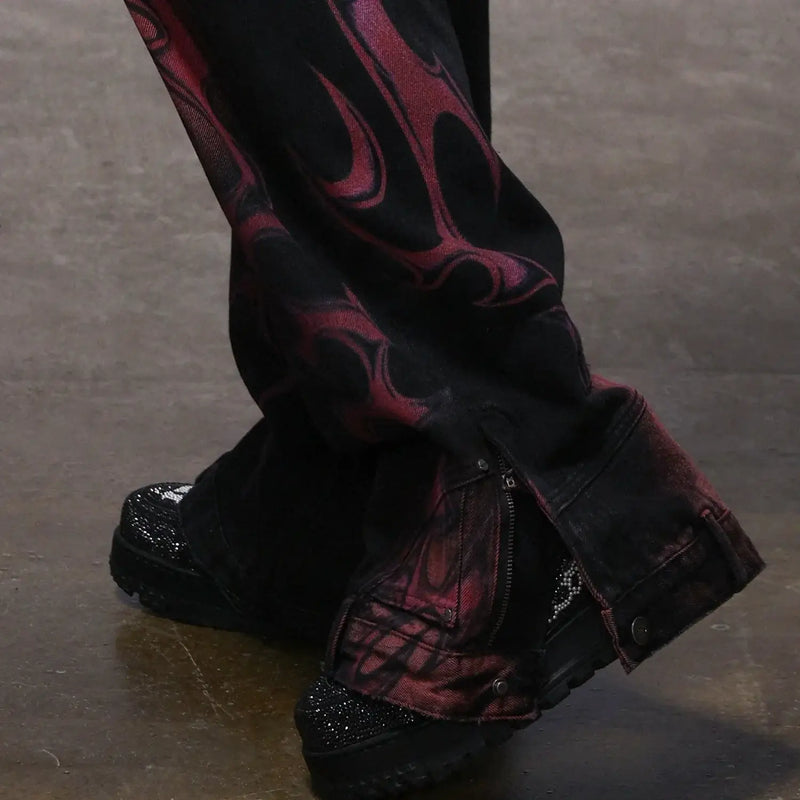
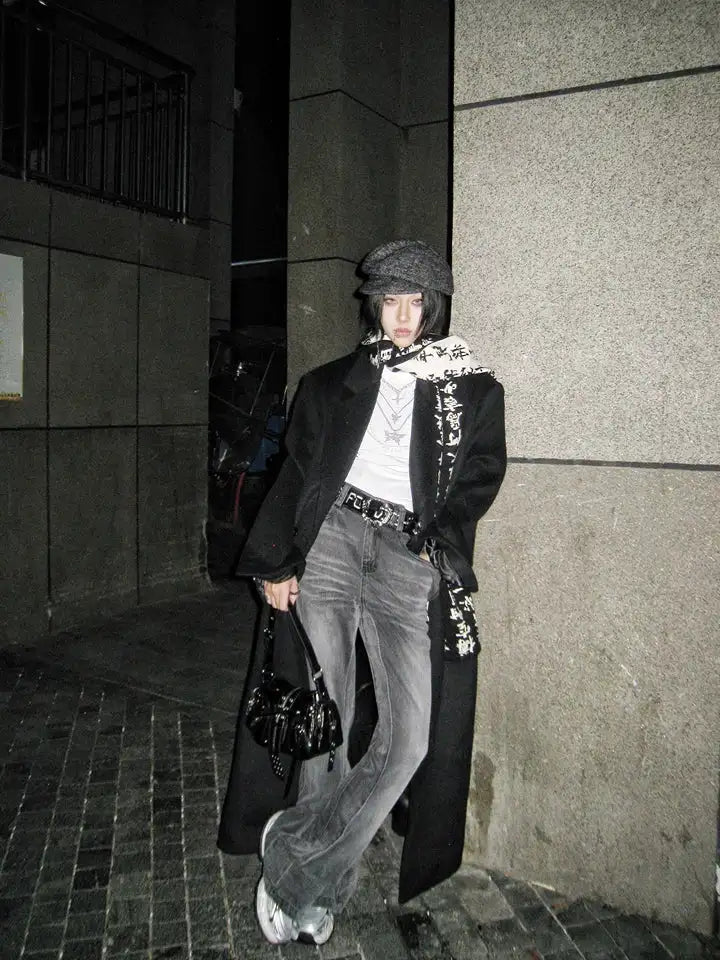

A velvet blazer over frayed denim, a cross on a chain, a stained-glass print across the back of a bomber jacket. At first glance it looks like a costume misfire caught between two centuries. At second glance it is one of the fastest-growing branches of the dark streetwear scene: an aesthetic that short-circuits cathedral ornament with Renaissance opulence and wears both so that nobody asks about the next Ren Faire.
Gothic Renaissance Fashion combines Gothic symbolism such as crosses and pointed arches with Renaissance elements such as velvet, brocade print and baroque ornament into a streetwear-ready look. The style runs on dark colours, heavy fabrics and historical motifs, but skips the corset, the hoop skirt and any real costuming. Anyone wearing the look combines archive references with current cuts, not with fancy dress.
The term sounds like a university seminar, but it means something very concrete: a handful of recurring signals that together form a recognisable code. Before we get to the individual pieces, the distinction is worth making. Gothic and Renaissance are historically two different eras with their own architecture, their own fashion and their own audience, and the modern look draws its tension from exactly that friction. You will find more on the classic Gothic base in our big Gothic fashion guide.
Definition
What is Gothic Renaissance Fashion really?
Gothic Renaissance Fashion is not a period-film costume and not LARP gear. The style takes two reference points, Gothic cathedral architecture with its pointed arches and cross motifs and Renaissance dress with velvet, brocade and heavy fabrics, and translates both into wearable streetwear. If you are asking whether Gothic is even Renaissance: historically, no. The Gothic period runs roughly from the 12th to the 16th century, the Renaissance begins in the 14th century in Italy and overlaps at the end with the late Gothic in northern Europe. That overlap is exactly the starting point for the modern fashion term: two eras, one shared denominator of darkness, ornament and opulence.
12.–16. Jh.
Gothic period
14.–17. Jh.
Renaissance period
0
Corset required at Fūga
Fashion historians talk about two separate style systems here. Streetwear brands see it more pragmatically: both eras deliver a vocabulary of crosses, ornament, heavy fabrics and muted colours that translates beautifully into hoodies, bomber jackets and prints. The modern Gothic Renaissance look is therefore not a reenactment but a sample: it pulls the symbolism and leaves the rest of the historical wardrobe in the museum. That is exactly what separates it from real Ren Faire costumes, more on that in a moment.
Origin
Where does the look between cathedral and runway come from?
Gothic architecture emerged in 12th-century France: pointed arches, church windows, gargoyles, a way of building that reaches upward and breaks light through coloured glass. That formal language still shapes how we picture "dark and elevated" today, far beyond churches. The Renaissance arrived a good two centuries later out of Florence and brought the exact opposite attitude: symmetry, proportion, but also enormous material expense, velvet, brocade, gold and silver thread, visible wealth as a status symbol. Fashion designers of the 2000s and 2010s, from Alexander McQueen to independent Dark Academia labels on TikTok, began pulling both vocabularies together: the symbolism of the Gothic, the opulence of the Renaissance, cast in streetwear cuts instead of costumes. Anyone googling "Is Notre-Dame Gothic or Baroque?" lands right in the middle of that confusion, more on it in the FAQ.
This fusion is now firmly anchored in Dark Academia, Vamp Romantic and classic Gothic collections, even if the three scenes do not always agree on where the borders run. What counts is the result: a look that reads heavy, dark and ornamented without smelling of a costume rental. That balance is exactly what makes the difference between a successful Gothic Renaissance fit and a dressed-up Halloween outfit.
Gothic Renaissance Style in Action
@fugastudios POV: You're the final boss and the outfit actually slaps 🔥 Gothic Warrior Denim Set got that main character energy fr#fugastudios #darkfashion #gothicstyle #OOTD #fyp ♬ Originalton - Fuga Studios
The clip shows how quickly the ornament vocabulary translates into an everyday outfit: a bomber jacket with a cross print, tight black tones and a single silver accessory. No cloak, no chainmail, no breeches. That reduction to a few strong signals is the core of the look, and it runs through every one of the categories below.
Building blocks
The building blocks: what makes a Gothic Renaissance look
Before we go through individual garments, it is worth looking at the building blocks that make the look recognisable in the first place. If one of them is missing entirely, the outfit tips back into generic streetwear without the Renaissance note. If too many are maxed out at once, it tips the other way, towards costume. The list below is deliberately not a must-have-everything catalogue but a kit: pick two or three elements per outfit, not all of them at once.
- Velvet finish or velvet-like fabrics on blazers, shirts or overshirts
- Brocade and ornament prints, often with cross, rosette or church-window motifs
- Heavy cotton and washed denim instead of smooth synthetics
- Dark earth tones and burgundy as a second colour to black
- Chains, signet rings and cross pendants instead of delicate costume jewellery
- Flowing or extra-long silhouettes on coats and overshirts
These six elements do not all come from the same product category, and that is exactly what makes them practical. You do not need a complete Renaissance costume from a rental shop, just one or two signal pieces combined with your existing dark wardrobe. A cross pendant on a plain black bomber jacket is often enough to set the code. If you want more reference on classic Dark Academia silhouettes, you will find it in the linked guide.
Archetypes
The 4 archetypes: Cathedral Goth to Dark Troubadour
As with every grown streetwear trend, there is not one version of Gothic Renaissance Fashion but several variants with different intensity. The four types below are not an official taxonomy but a practical sorting, from most wearable every day to most heavily stylised. Best pick one as a starting point and build from there.
This sorting helps above all with shopping: instead of randomly collecting individual "gothic-y" pieces, you now know which archetype fits your everyday life and which collection to search first. Cathedral Goth works in the office just as well as in the club, Bone Baroque rather not. For men and women the same logic does not play out identically, more on that now.
Men vs women
Gothic Renaissance Fashion for men and women
The code behind Gothic Renaissance Fashion is gender-neutral, the execution still looks different in practice. On men the Renaissance share usually shifts towards the tops: ornament shirts, velvet overshirts, heavy chains over plain basics. The silhouette tends to stay straight to slightly oversized. On women the Renaissance note shows up more often in cut and fabric: flowing sleeves, fitted overshirts, more visible texture on tops. Both lines share the same core colours and the same symbolism, only the silhouette shifts. If you want to mix both ends, you can do that without trouble, the code does not break.
Where these silhouettes become most visible is on coats and jackets, the largest surface area in any outfit and therefore the piece with the biggest effect. This is exactly where the first investment pays off if you want to build the look at all.
Coats & jackets
Coats and jackets: the frame of the look
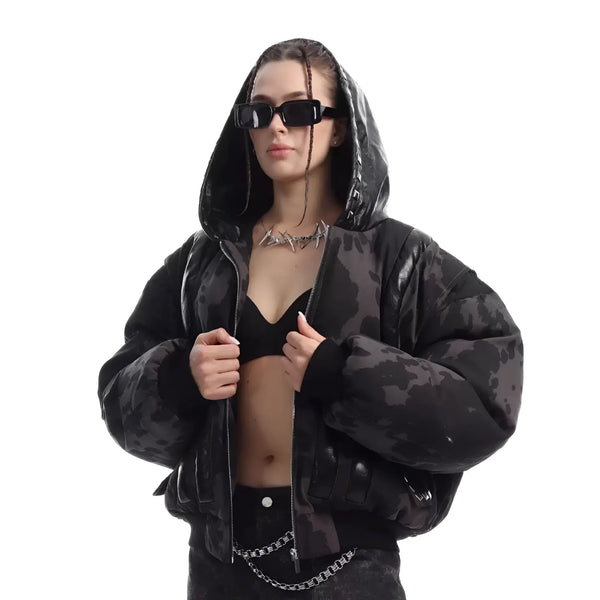
In Gothic Renaissance Fashion the coat or jacket is the piece with the largest surface and therefore the biggest effect. What you want is heavy fabric, dark colours and restrained ornament, a cross print on the back, a waxed finish that recalls cassocks and cloaks without being one. Avoid shiny synthetic jackets, they tip straight towards Halloween costume instead of streetwear. A matte, heavy bomber jacket with a single symbol print beats a printed faux-leather jacket with ten different motifs almost every time.
Once the jacket sits right, the top or shirt underneath decides how far you push the Renaissance share. This is where the ornament comes through most directly, because a print or a texture on the chest reads as a statement immediately, without any extra accessory.
Tops & shirts
Tops and shirts: print instead of corset
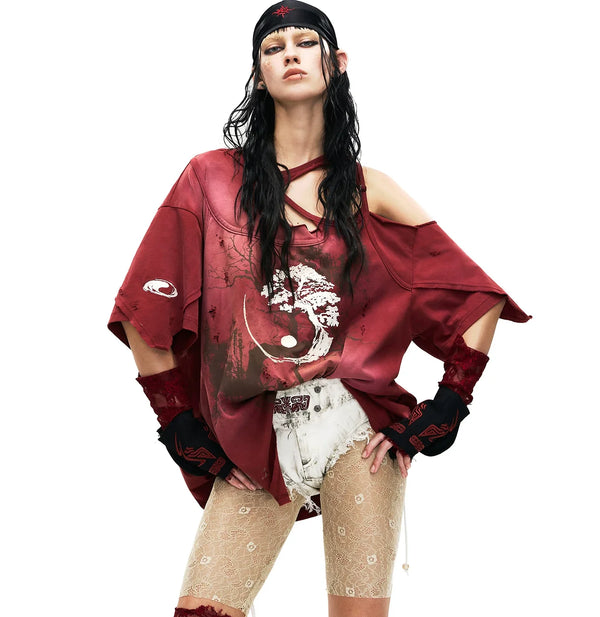
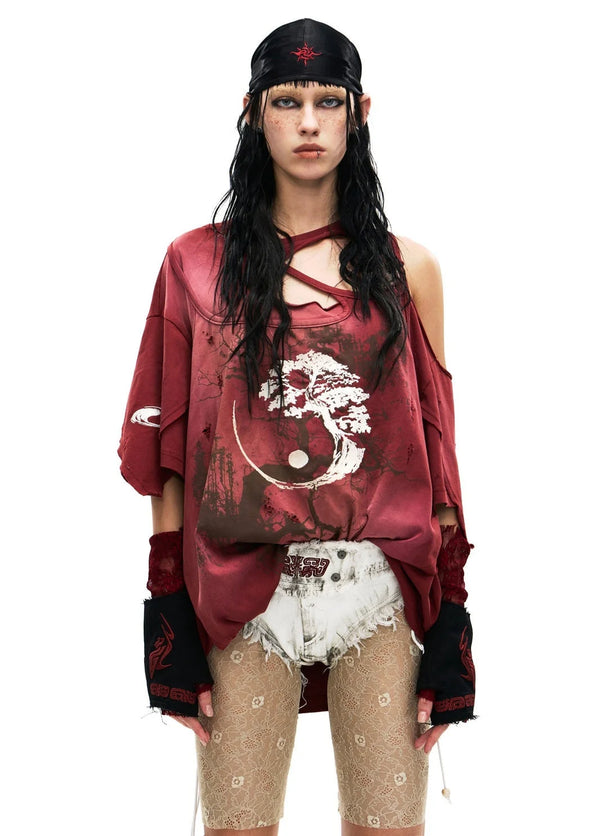
On the top, the print replaces the corset. Instead of lacing and hoop skirts, Gothic Renaissance Fashion wears its opulence as graphic: ornament frames, yin-yang or cross motifs, distressed washes that recall old, worn cloth instead of new factory goods. A one-shoulder cut works particularly well for the Dark Troubadour direction because it hints at the flowing, asymmetric line of historical robes without actually being a robe. For the edgier Cathedral Goth variant a classic T-shirt with a strong print is entirely enough, here the motif counts more than the cut.
Both pieces from the strip above work as standalone streetwear, even without the rest of the look. That is exactly how you tell whether a Gothic Renaissance piece is well chosen or not.
That line is not a marketing phrase but the fastest rule of thumb for the whole style: as soon as a piece would only work for a costume party, it does not belong in the everyday look. As soon as it passes as a standalone streetwear piece without context, it sits right. The rule applies to tops just as much as to the next category: trousers.
Trousers
Trousers: from cross denim to cargo
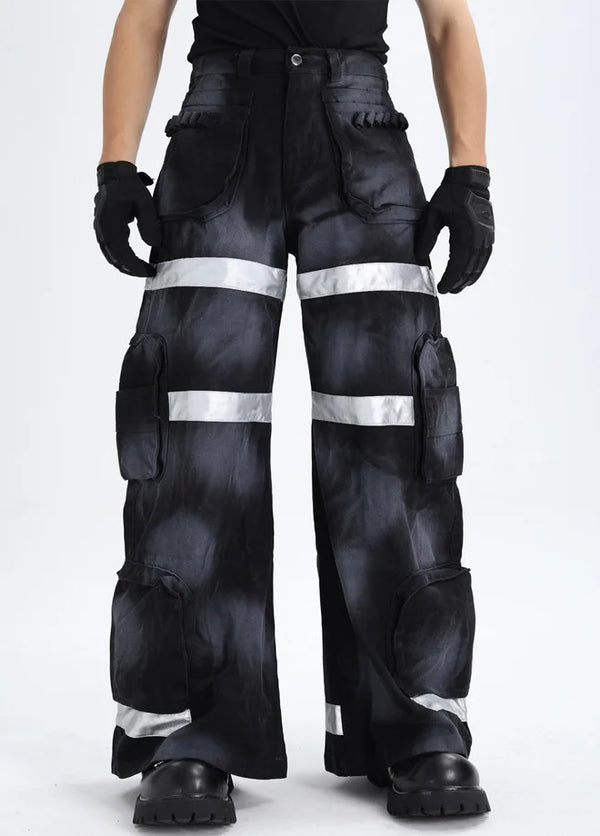
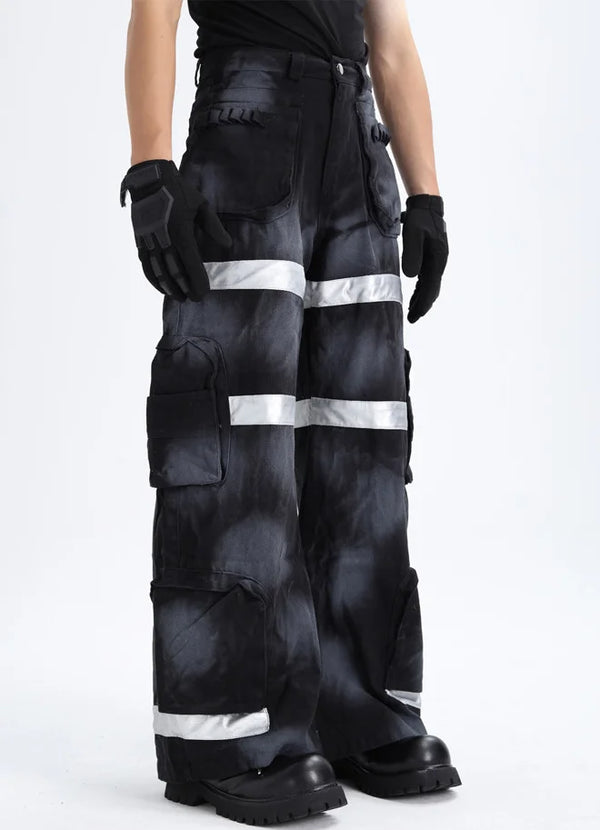
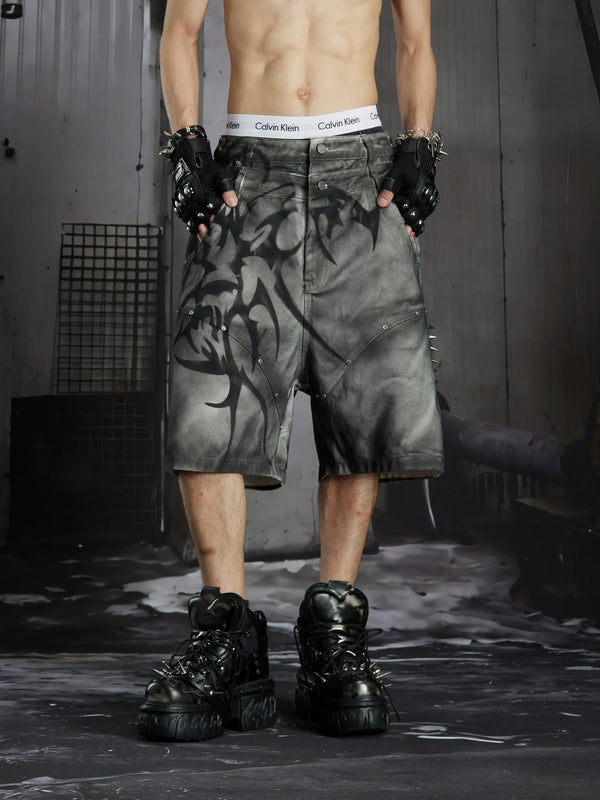
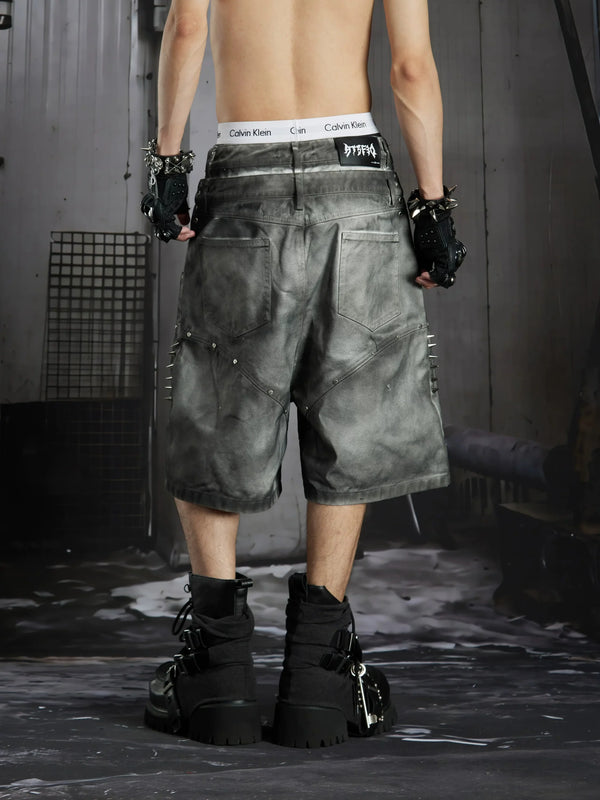
On trousers, Gothic Renaissance Fashion stays surprisingly close to classic dark streetwear, with one or two shifts. Cross-denim cargos with a visible cross print translate the symbolism straight into an everyday piece that works with a plain shirt just as well as with an ornament jacket. Studded jorts or shorts with tribal studs work better for the Bone Baroque direction, if you want to carry the ornament below the waistline too. The wash matters: a slightly faded, almost historical look fits the overall picture better than hard raw denim.
With jacket, top and trousers the base is set. For a quick start it is still worth looking beyond clothing alone, because a few collections deliver particularly much Renaissance note per piece.
These four collections cover the full range, from the most obvious Renaissance reference to the more academically dark variant. If you are unsure where to start: begin with the category that feels least like a new outfit and most like an addition to your existing wardrobe. From there the look can be built up piece by piece.
Accessories
Accessories: chains, belts, caps
In Gothic Renaissance Fashion accessories are often the fastest and cheapest entry, because a single strong piece is enough to reframe a neutral basic outfit. A cross leather belt with a visible buckle sets a statement at the waist immediately. A distressed cap with a cross motif also works for people who do not want to wear ornamented jackets or prints. Combine a maximum of two strong accessories at once, more quickly reads as overloaded instead of deliberately placed.
That completes the basic kit: jacket, top, trousers, one or two accessories. If you want to go deeper into the historical side of the symbolism, you will find an interesting crossover in the linked article.
Dark Editorial Style in Action
@fugastudios Elevate your wardrobe to shadowy sophistication with our fresh trend-inspired arrivals. 🕶️ Shop now! Link in Bio. #opiumcore #playboicarti #fashion #fashionstyle #outfitinspiration #streetwear #fy #fyp ♬ Originalton - Fuga Studios
This clip shows the same pattern as the first: a base outfit, one or two strong symbol pieces, done. No ornament overkill, no complete costume change. That restraint is exactly what separates a successful Gothic Renaissance fit from one that looks like fancy dress, more on that in detail now.
Ren Faire vs Streetwear
Historically accurate or streetwear interpretation?
The question of how to dress "for a Renaissance party" comes up online constantly, but it usually means historically accurate costuming: hoop skirt, doublet, real corsets. That is a completely different project from Gothic Renaissance Fashion as an everyday style. The streetwear look takes over colour, symbolism and fabric weight but deliberately skips historical construction. That is exactly why a bomber-jacket fit with a cross print works in everyday life and in photos, while a real Renaissance costume is simply not built for it, it is meant for stage and reenactment. Anyone going to a Ren Faire should therefore reach for market-typical clothing rather than streetwear, and the other way round: anyone looking for the everyday look should not shop at costume rentals. The two worlds overlap visually but run on different rules.
This rule of thumb settles most borderline cases immediately, from the question of the cloak to the question of the tiara. Even so there are a few mistakes that come up especially often in the Gothic Renaissance look, no matter how clear the rule actually is. The most important ones at a glance.
Mistakes
The most common mistakes in the Gothic Renaissance look
Most Gothic Renaissance fits fail not on missing taste but on two or three technical mistakes that are easy to avoid with a bit of attention. The list below collects the most common ones, sorted by how often we see them in submitted photos and comments.
The good news: all five mistakes can be avoided while shopping if you know what to look for, fabric weight, archetype consistency, streetwear cut instead of historical construction. That leaves only the question of what a look like this actually costs and where you best shop without commissioning a custom piece every time.
Price & shopping
What does Gothic Renaissance Fashion cost and where do you buy it?
A complete Gothic Renaissance look does not have to be a custom job. The base, a printed T-shirt or top, sits in the low double digits. A jacket with a symbol print moves in the mid price segment, accessories like belts or chains usually sit well below that. If you start with a single signal piece, a cross belt or a printed cap for example, you can test the look for under fifty euros before investing in jackets or several tops. It only gets more expensive once you go for high-quality velvet or brocade fabrics instead of printed cotton, and that is optional, not an entry requirement.
If you want to go deeper into prices and brands, the linked article has an overview of classic goth brands, many of them also supply the raw material for the Renaissance share, velvet overshirts or ornament chains for instance. For a direct start, though, the following two pieces from our own collection are entirely enough.
If you are unsure about individual pieces and whether they fit the look, the following questions help. They collect what we get asked most often about Gothic Renaissance Fashion, from the historical distinction to the price question.
FAQ
Frequently asked questions about Gothic Renaissance Fashion
The following five questions come up most often when people discover Gothic Renaissance Fashion for the first time, from the historical distinction to the price question.
What is the difference between Gothic and Renaissance in fashion?
How do I dress for a Renaissance party without looking like I am in costume?
Is Notre-Dame cathedral Gothic or Baroque, and what does that have to do with the fashion style?
What should you not wear to a Ren Faire?
What does a complete Gothic Renaissance look cost?
That sets the frame: symbolism from the Gothic, fabric language from the Renaissance, execution entirely in streetwear cuts. The rest is trying out which archetype fits your everyday life.
What do you think?
Tell us on @fuga_studios
About the author
Philipp Fuge — Founder · Berlin
Founder of Fūga Studios. Writes the journal himself. Berlin · Shanghai · Tokyo · Poznań — four cities, one logic.