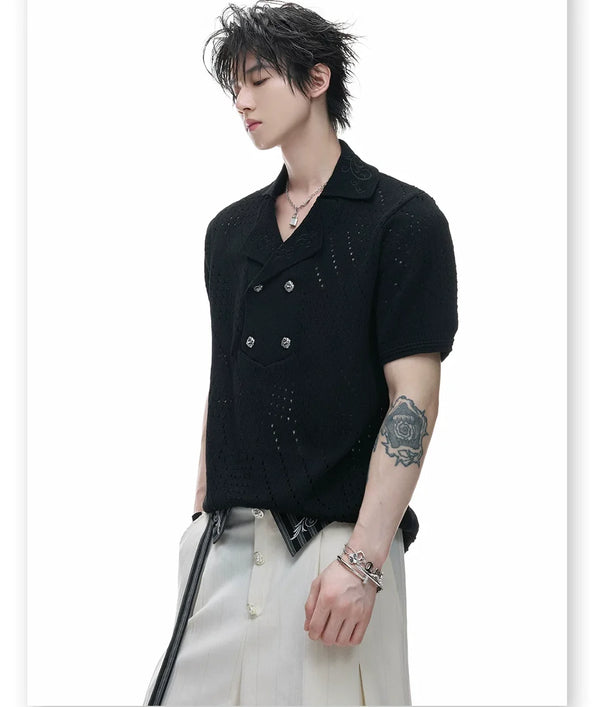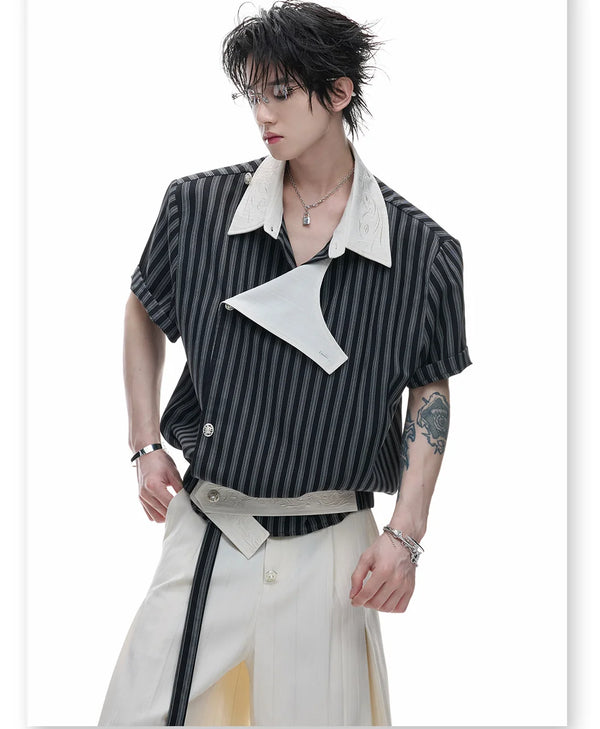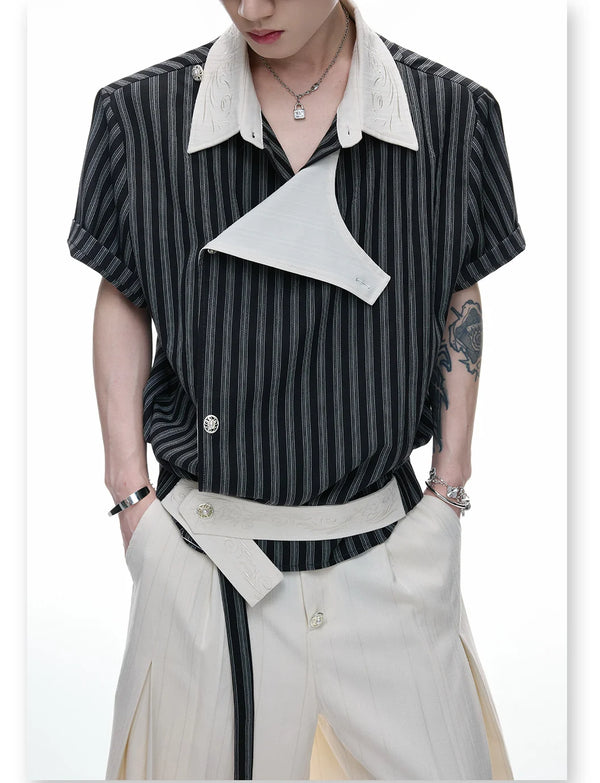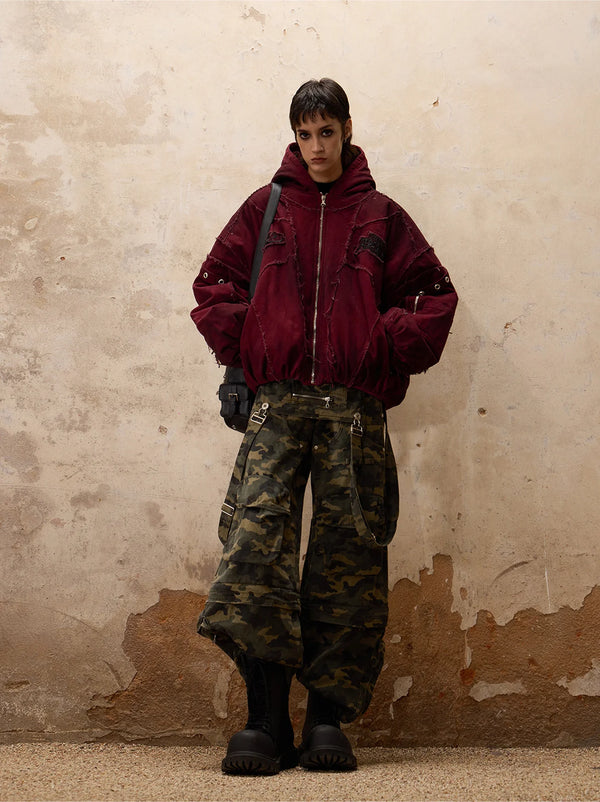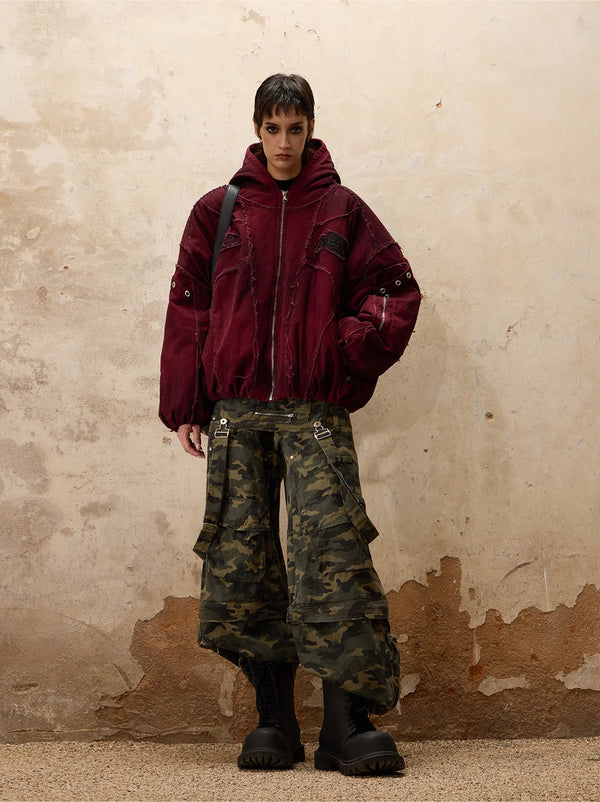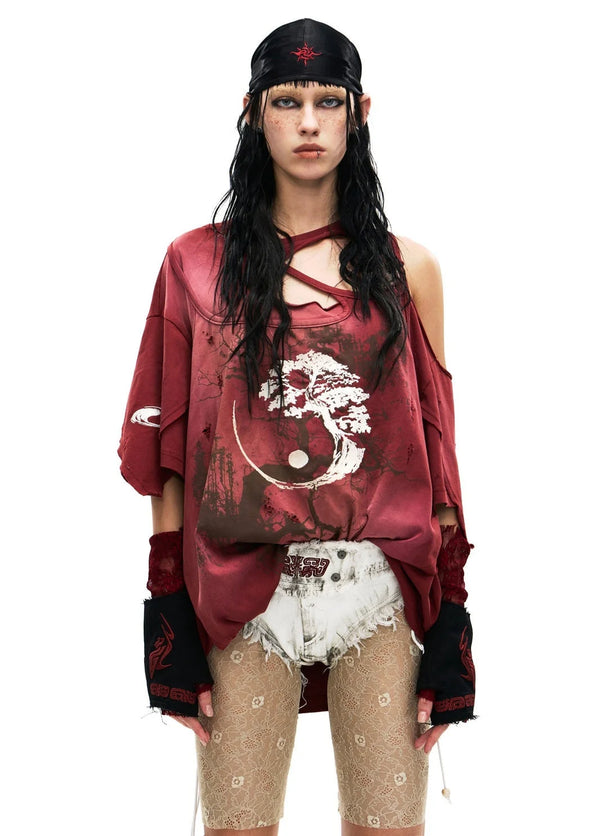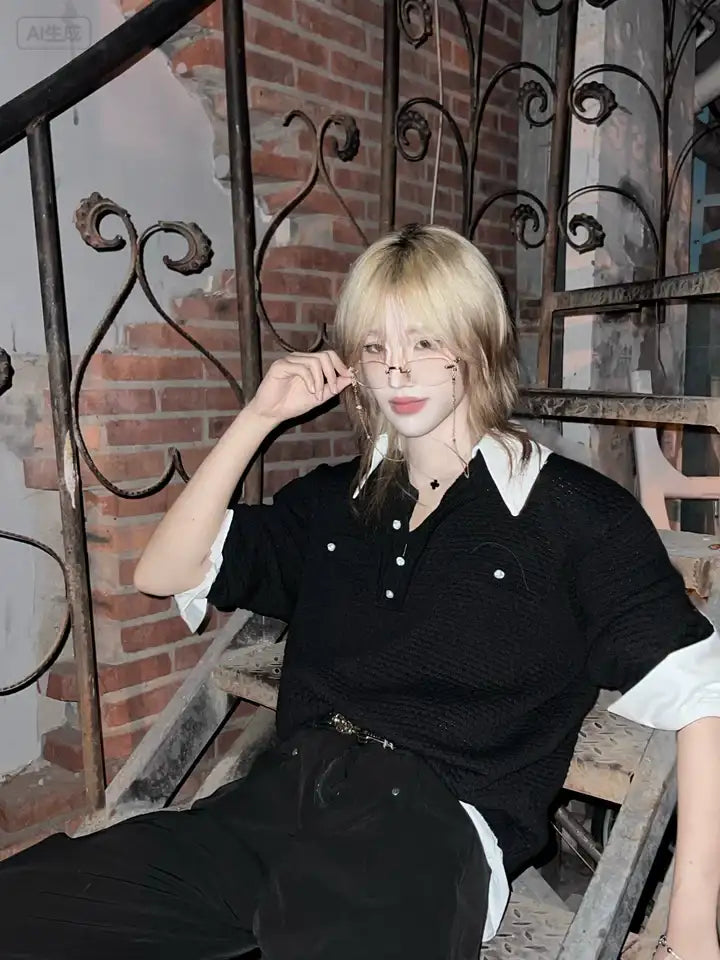

November morning, fog standing over the field behind the house. Someone walks through wet grass, black knit cardigan over a long dress, boots full of mud. A basket on the arm, mushrooms and a well-read book inside. The picture looks like a fairy tale that does not end well. That is exactly where this style lives.
Goth Cottagecore Fashion is the intersection of rural Cottagecore romance and gothic gloom: linen, lace and knit in black, moss green and rust brown instead of pastel. The silhouettes stay, the colour world tips. How far the field reaches is set out in the Dark Cottagecore guide.
The style has picked up a name of its own in recent years, Cottagegoth, and still gets confused with Whimsigoth or Fairy Grunge. Separating the three is worth it, because they use completely different cuts and materials. We go through it in order: definition, distinction, archetypes, colour, material, pieces, mistakes.
Definition
What Goth Cottagecore Fashion Really Is
Cottagecore celebrates slow country life: baking bread, drying herbs, dresses with puff sleeves. Goth Cottagecore takes the same stage and turns the light down. Instead of a sunflower field, a forest edge in fog. Instead of a buttercup, a thistle. The activities stay identical, the mood shifts from noon to dusk.
In practice that means floor-length or calf-length dresses, pinafore dresses, tunic cuts, wide sleeves, high collars, knit over everything. None of it is tight. The look lives on volume that is pulled together in the right places, at the wrist, the waist, the neck. Anything that just hangs loose reads tired, not romantic.
And it is not identical to Gothic. Classic Gothic works with city, night, leather, patent and hard edges. Goth Cottagecore works with land, weather, natural fibres and soft edges. Both are black. Only here black does not mean concrete, it means wet earth.
5
Archetypes in Cottage Goth
3
Layers as the minimum
0
Pastel tones needed
Anyone building the style for the first time almost always underestimates the layers. A black dress on its own is not Cottage Goth, it is a black dress. Only a slip, a dress and knit on top add up to the picture that works on Pinterest.
Distinction
Goth Cottagecore Vs. Dark Cottagecore: Where The Line Runs
Dark Cottagecore is the larger term. It describes every gloomy variant of the rural idyll, including brown, grey and deep green versions without any Goth reference. Goth Cottagecore is the subset in which Goth codes also show up: lace at the collar, crosses, silver jewellery, heavy lace-up boots, dark make-up.
The fastest test: take all natural fibres out of the outfit and replace them with leather. If a working Goth look is left, it was Goth Cottagecore. If the picture falls apart into arbitrary brown, it was Dark Cottagecore. Both answers are fine, they just lead to different purchases.
Whimsigoth in turn is the nineties variant with velvet, stars, moon motifs and fortune-teller energy. Fairy Grunge sits next to it and works with torn tulle, mesh and sneakers. If you move between these fields, Fairy Grunge and Vamp Romantic hold the matching pieces.
Typology
Cottage Goth Aesthetic: The 5 Archetypes
The Cottage Goth Aesthetic breaks down into five recurring figures. They are not boxes but starting points. Most people end up somewhere between two of them after a few months and build on from there.
The difference between the five rarely lies in the cut and almost always in the saturation. Cottage Witch goes towards deep black, Mushroom Goth works with washed-out black and earth tones beside it. The same tunic carries both roles, depending on what lies under it and over it.
Color
The Colour Code: Gothic Cottage Style Beyond Black
The biggest misconception about Gothic Cottage Style is that everything has to be black. It does not. Black is the anchor, but the palette next to it decides whether the look smells of forest or of wardrobe. The usable tones all come from what actually lies outside in late autumn.
Saturation is what matters. No tone may glow. A deep forest green works, a neon green destroys the picture immediately. If you are unsure, photograph the outfit and turn the saturation down on your phone. If it looks better afterwards, at least one piece was too colourful.
- Black, washed out · The base tone. Not deep black fresh from the factory, but the black after thirty washes.
- Moss green and fern green · The most important secondary tone. Works as a cardigan, a skirt or a scarf.
- Rust and dried red · For accents. A ribbon, a lining, a collar. Never as the main colour.
- Unbleached linen · The only light in the look. Slips, shirts, aprons.
- Charcoal and anthracite · For the Forest Mourner. Replaces black when black reads too hard.
- Dark brown · Leather, boots, belts. The bridge between clothing and ground.
These six tones are enough for a whole wardrobe. Take on more and you quickly land at a look that reads arbitrary. The rule: at most three colours per outfit, one of them as an accent on less than ten percent of the surface.
Material
Materials: Linen, Lace And Knit In Goth Cottagecore
Material matters more in Goth Cottagecore than any motif. A smooth polyester dress in black with a moon print reads like an online shop. A chunky knit cardigan without any motif reads right immediately. The surface does the work, not the print.
Four materials carry the whole style. Linen and washed cotton for everything that sits directly on the body. Chunky knit for the middle layer, ideally with a visible cable pattern or deliberately loose stitching. Lace and crochet for collars, cuffs and hems. And heavy cotton twill or corduroy for skirts and jackets.
Synthetics are not forbidden, they just must not shine. A matte fleece under the coat is invisible, a shiny satin skirt blows the picture apart. If you are unsure when buying, hold the fabric at an angle to the light. If it throws a hard reflection, it belongs in a different look.
Silhouette
Gothic Cottagecore Dress: Silhouette For Dress And Skirt
The Gothic Cottagecore Dress is the core piece, but it is rarely the only piece. The classic form is calf-length to floor-length, with a high or square neckline, wide sleeves and a waist that is either emphasised or dissolved completely. Nothing in between works.
If you do not wear dresses, you build the same silhouette from a skirt and a top. A long skirt in heavy fabric plus a tunic gives exactly the same picture. You will find matching cuts under Skirts and Gothic Tunic Tops. The only thing that matters is that the length does not end just above the knee, that is where the look tips into the arbitrary.
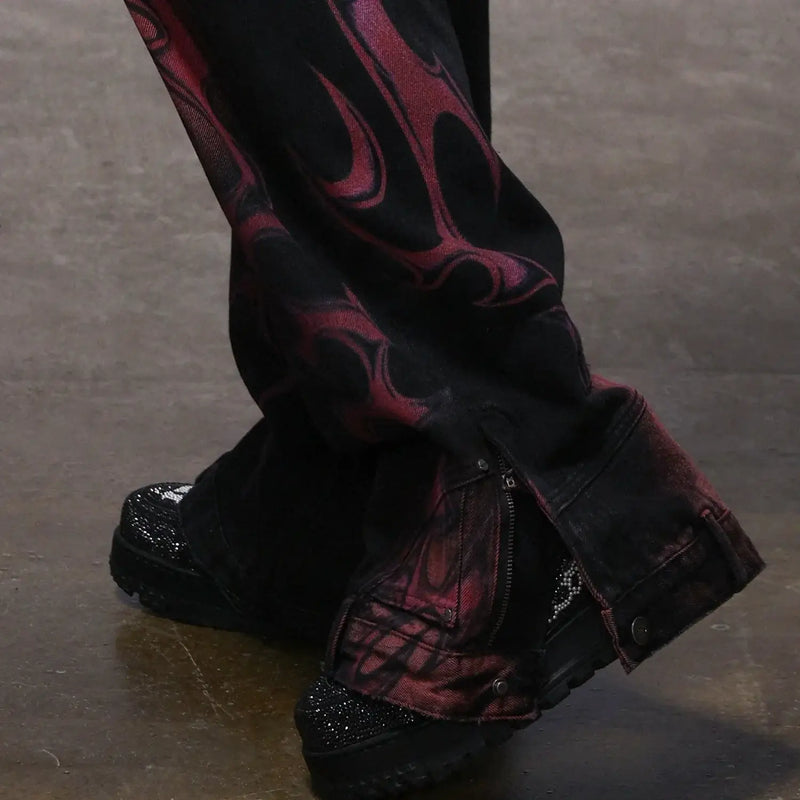
@fugastudios POV: You're the final boss and the outfit actually slaps 🔥 Gothic Warrior Denim Set got that main character energy fr#fugastudios #darkfashion #gothicstyle #OOTD #fyp ♬ Originalton - Fuga Studios
What holds for denim holds just as much for linen: the movement sells the silhouette. A dress that does not move with you when you walk is cut too stiff or too short. That is why washed fabrics work better than freshly starched ones.
Tops
Tops: Cardigan, Tunic And Layer Shirt In Cottage Goth
Tops in Cottage Goth are almost never single pieces but layers. At the very bottom a plain longsleeve or a linen shirt. Over it a tunic or a dress. On top knit, a vest or a scarf. Three levels are the minimum, four are normal.
With knit, chunky beats fine. A fine merino pullover looks tidy and is therefore wrong. What you want is visible stitches, slightly stretched sleeves, ideally a mended tear. In the range, Gothic Sweaters and Gothic Hoodies cover both ends of that span.
One detail that often gets overlooked: the bottom layer may well be a little longer than the one above it. When a hem peeks out from under a tunic or a dress, you get exactly the worn impression the style needs. Perfectly finished edges, by contrast, read like a costume rental.
Bottoms
Bottoms: Wide Trousers Instead Of A Petticoat
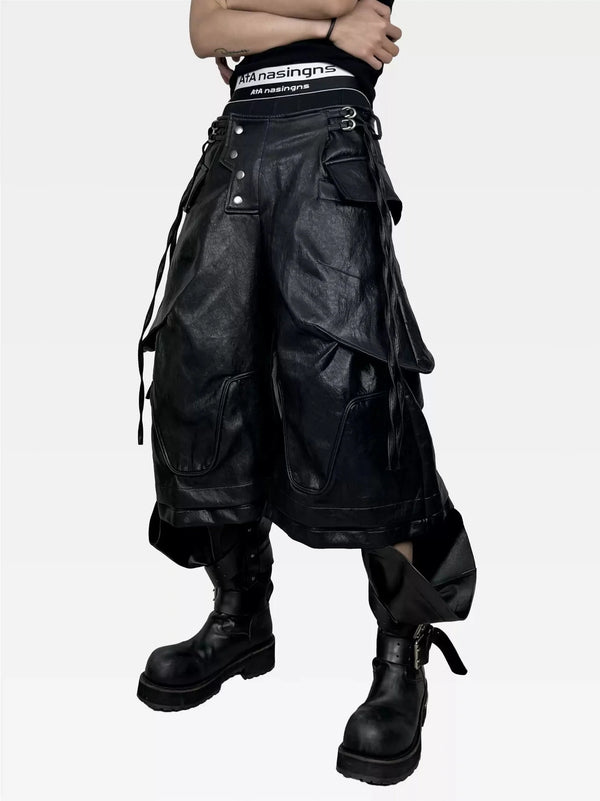
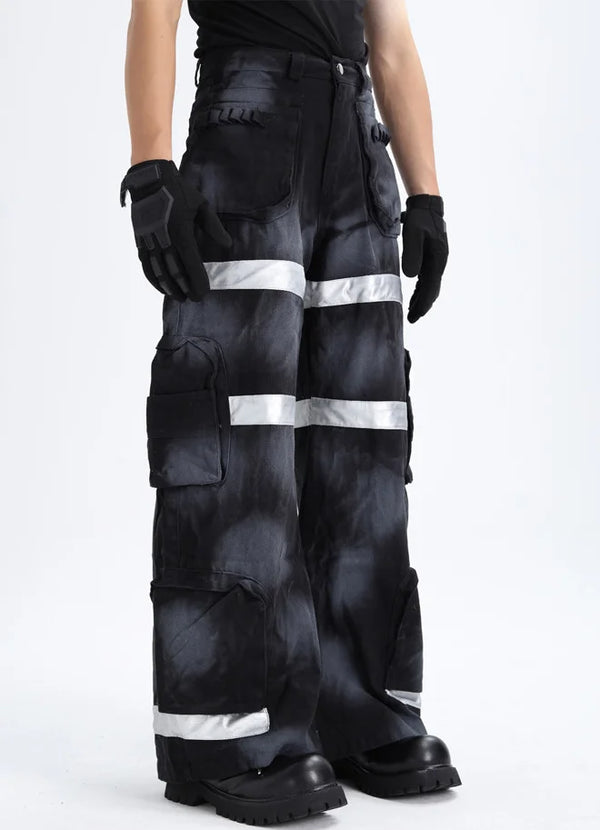
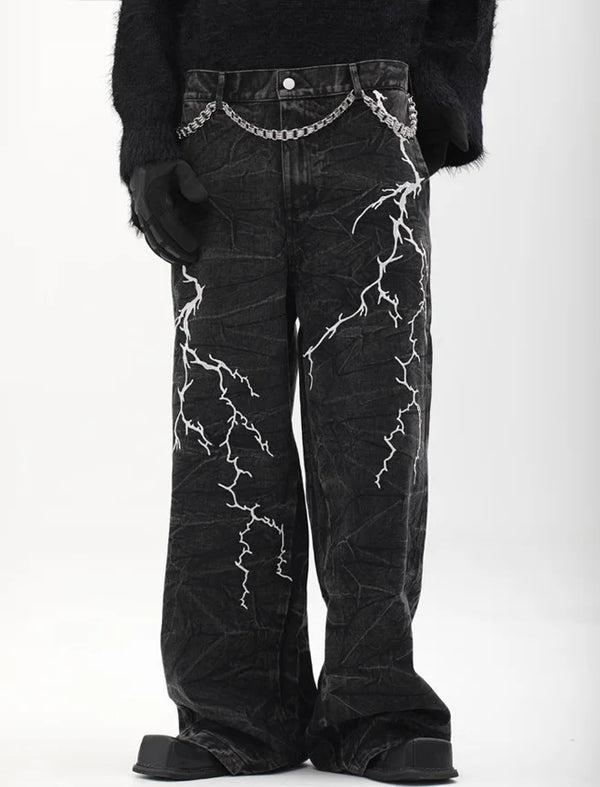
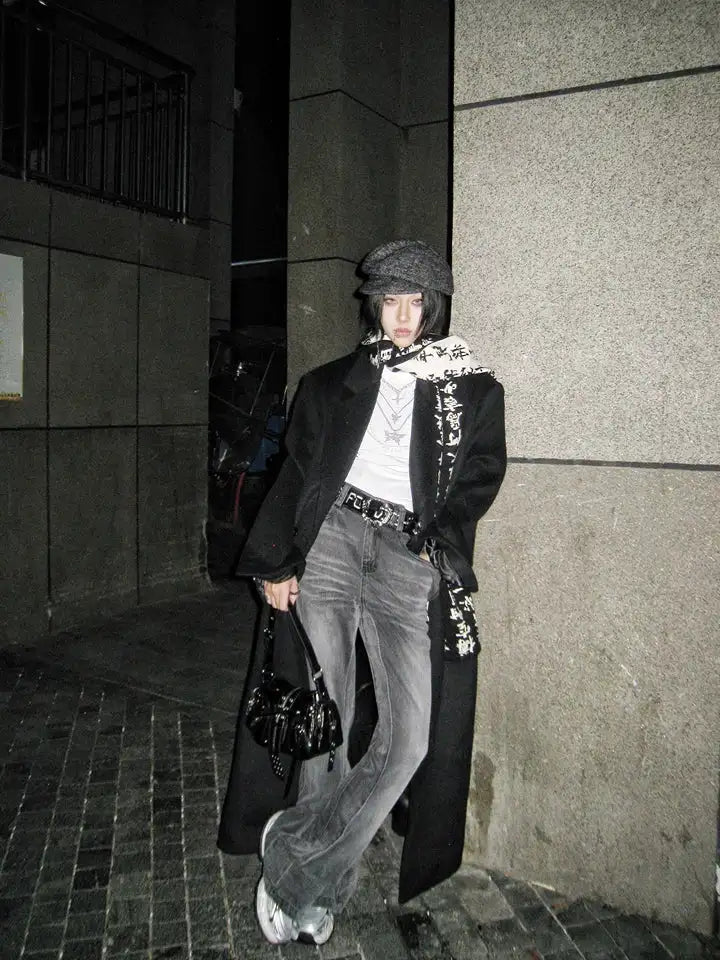
Not everyone wants to wear a skirt, and the style works without one. The translation into trousers runs through volume: wide legs, a high waistband, fabric that swings when you walk. Narrow black jeans do not do it, a wide-cut trouser in heavy fabric does it immediately.
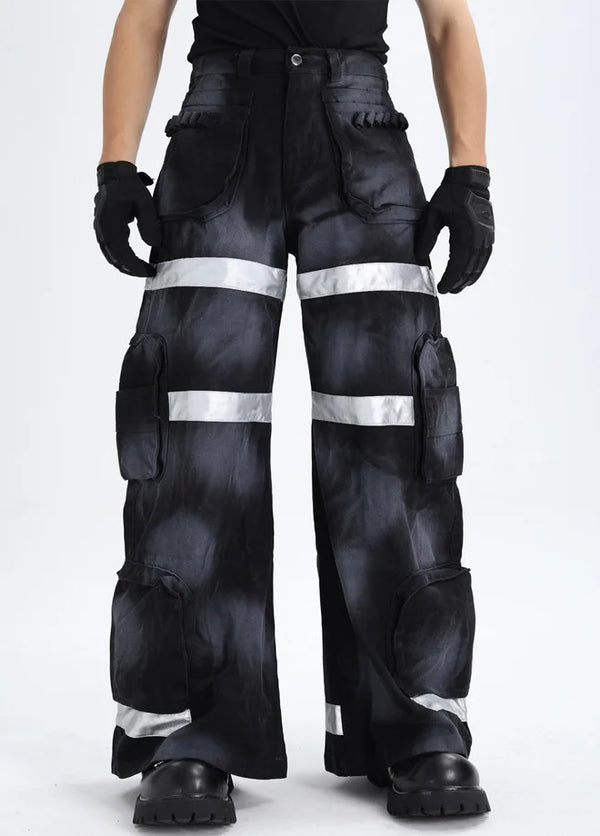
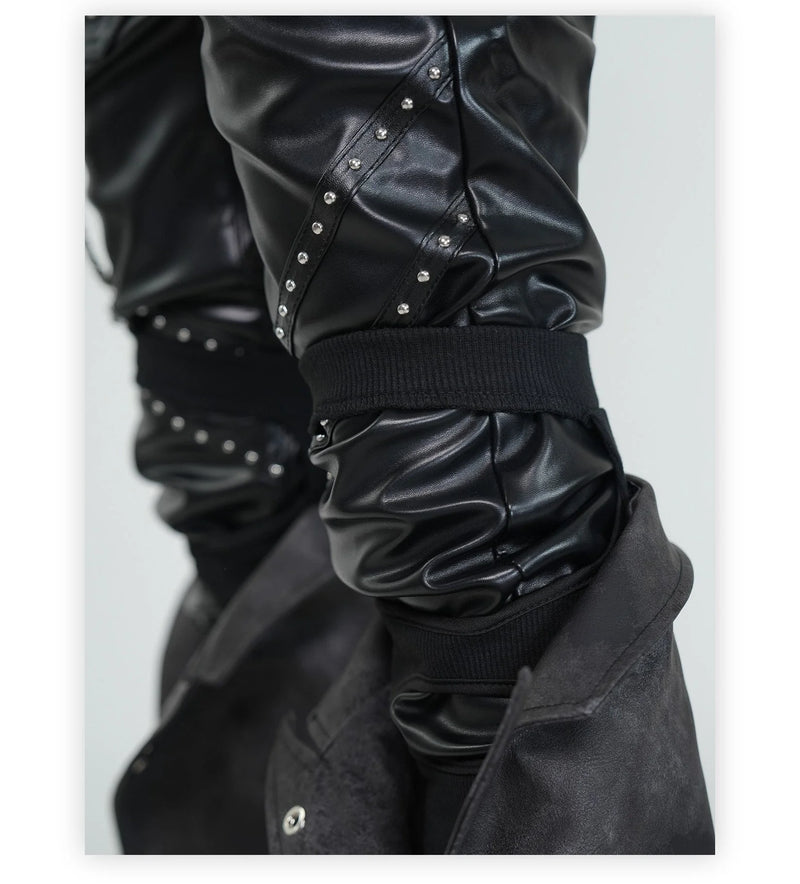
Layered cuts, flares with drape and anything that recalls old workwear trousers work well. What does not work are details that look technical: velcro fastenings, reflective stripes, nylon with shine. Those belong in other corners of the dark spectrum, for instance with Cyber Goth.
If you take the trouser version seriously, you need at least two lengths: one that rests on the boot, and one that ends just above it. The first for wet weather, the second for anything where the shoe should stay visible.
The cold half of the year is the natural season for this style, but summer is not lost. It just calls for different fabrics: thin linen instead of knit, short sleeves under an open vest, strappy sandals instead of boots. The colours stay identical.
What really tips in summer is the quantity. Four layers at twenty-eight degrees is not a style statement, it is a circulation problem. Two layers plus a long skirt are enough and read just as clearly.
Outerwear
Outerwear: Coat, Cape And Fur For Dark Cottagecore
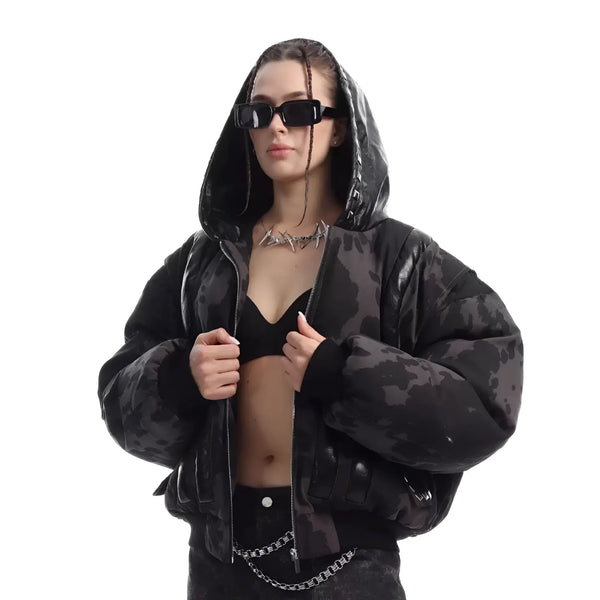
The outermost layer decides how seriously the outfit is read. A long coat turns three layers into one figure. A short jacket leaves the same layers looking unsorted. That is why length matters more here than material.
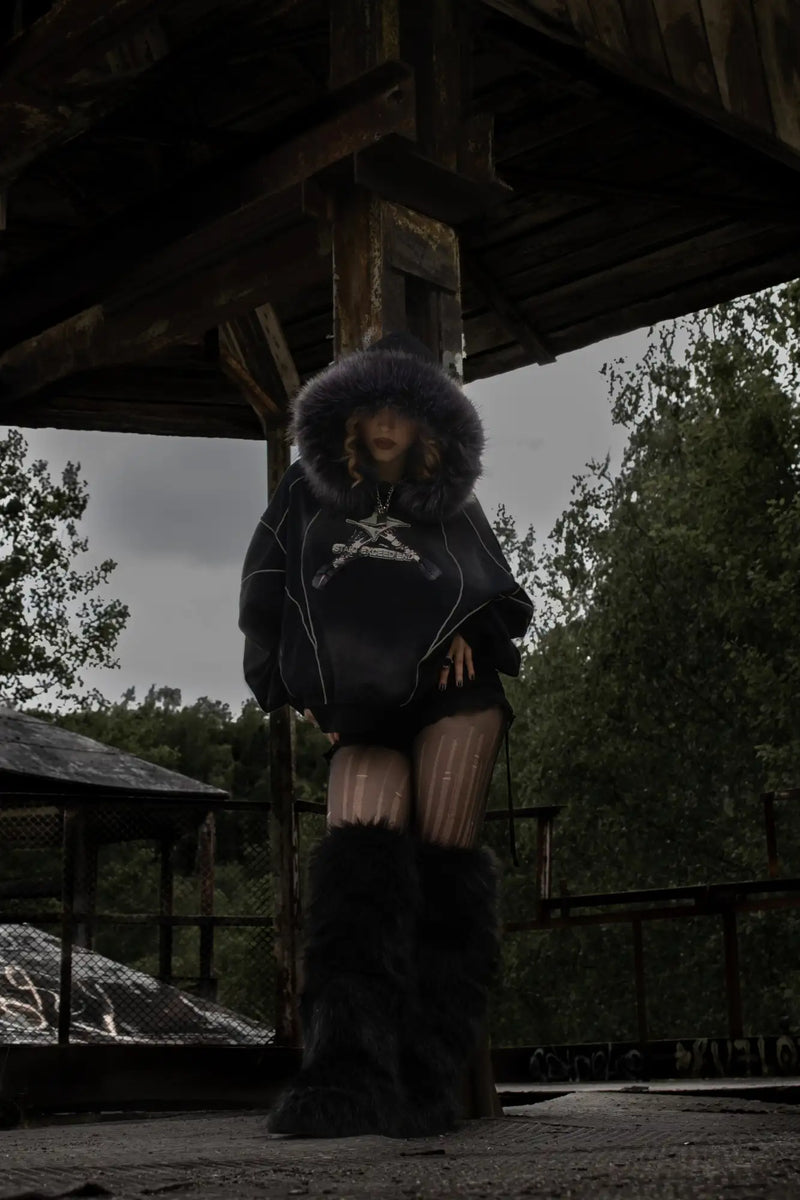
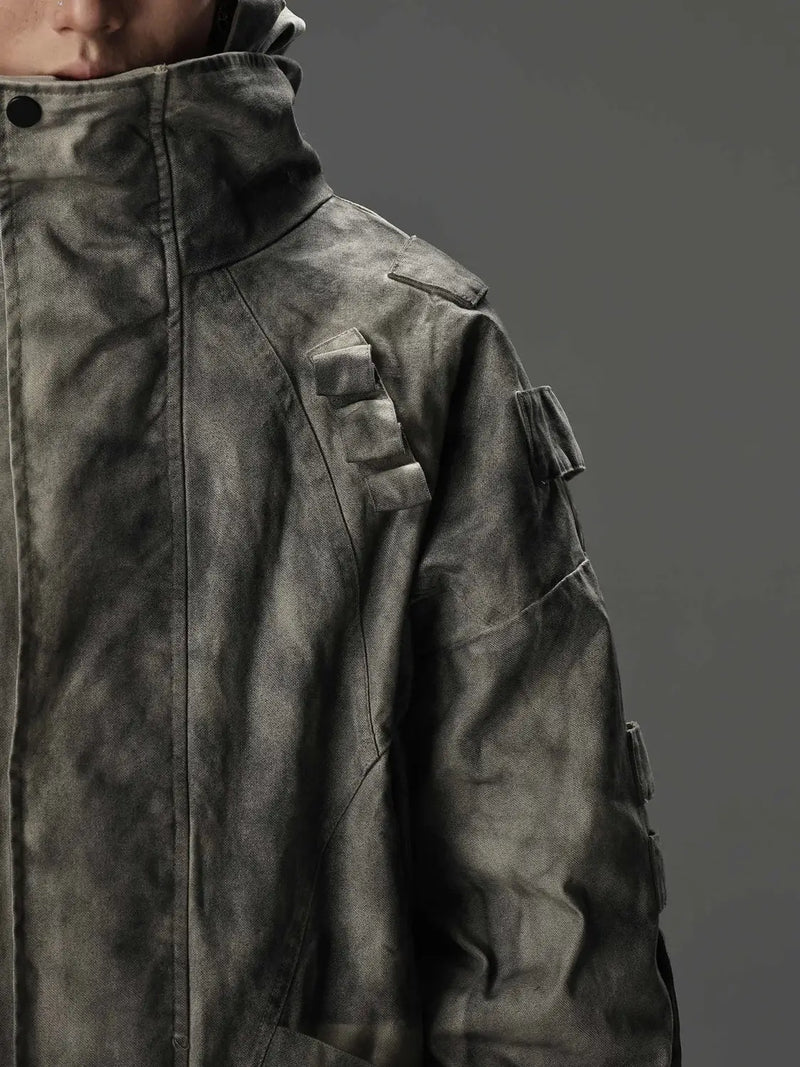
Three forms carry the style: the long wool coat, the cape or poncho, and the fur or teddy jacket. All three only work with visible weight. Anything that flutters reads thin. An overview of the heavy cuts sits at Gothic Jackets.
A cape is the riskiest choice, because it looks like fancy dress fastest. It works when everyday pieces sit underneath and the hood does not taper to a point. As soon as a pointed tip is in play, the eye reads medieval fair instead of everyday.
Details
Shoes And Accessories That Ground The Cottage Goth Look
Shoes are the most common breaking point. Everything else can sit perfectly, and one white sneaker pulls the whole picture into the present. What you need are shoes that look like they have stood in wet grass before: laced boots, heavy ankle boots, flat leather sandals in summer.
With jewellery, silver beats gold and old beats new. A single heavy ring reads stronger than five thin ones. Chains may be worn visibly, crosses are allowed but they are not compulsory. If you want the look softer, replace them with pendants carrying plant or insect motifs.
A belt is the most underrated piece in the whole style. It pulls a wide dress together at exactly one point and turns volume into shape. Wide leather belts with a visible buckle do more here than any piece of jewellery.
Headwear is optional but effective. A scarf, a hood or a plain beanie close the silhouette off at the top. Anything with a brim tips into costume quickly, which is why less shape is usually better here.
Surroundings
Goth Cottagecore Decor: When The Style Reaches The Flat
Unlike most fashion aesthetics, Goth Cottagecore does not stop at the wardrobe. A large share of the search queries is about interiors: dark kitchens, dried herbs on the wall, heavy curtains, candles instead of ceiling light. That is not a coincidence but part of the same logic.
The style describes a way of living, not an outfit formula. People who wear linen often put linen on the shelf too. For clothing that mainly means one thing: the surroundings supply the colour palette. If you keep your room in moss green and charcoal, you automatically find the right tones for the wardrobe.
In practical terms that carries over to materials: wood, clay, wool and unbleached fabric. What feels pleasant in the flat usually works on the body too. Glass, chrome and high gloss belong in neither area of this field.
Trend status
Is Cottagecore Still Relevant?
Pure pastel Cottagecore from the lockdown years has its peak behind it. What has remained are the dark offshoots. Cottagegoth, Dark Cottagecore and Mushroom Goth keep growing, because they combine with existing Goth wardrobes instead of demanding a completely new one.
That is the real reason for the staying power: the style is additive. Anyone who already owns black basics needs two or three pieces to switch over. A chunky cardigan, a long skirt, a pair of boots with tread. The rest is already in the wardrobe.
If you are looking for the larger context, you will find it there. Goth Cottagecore is one of many branches on a tree that has been growing since the late seventies, and it shares the same ground rules for cut, colour and attitude with the others.
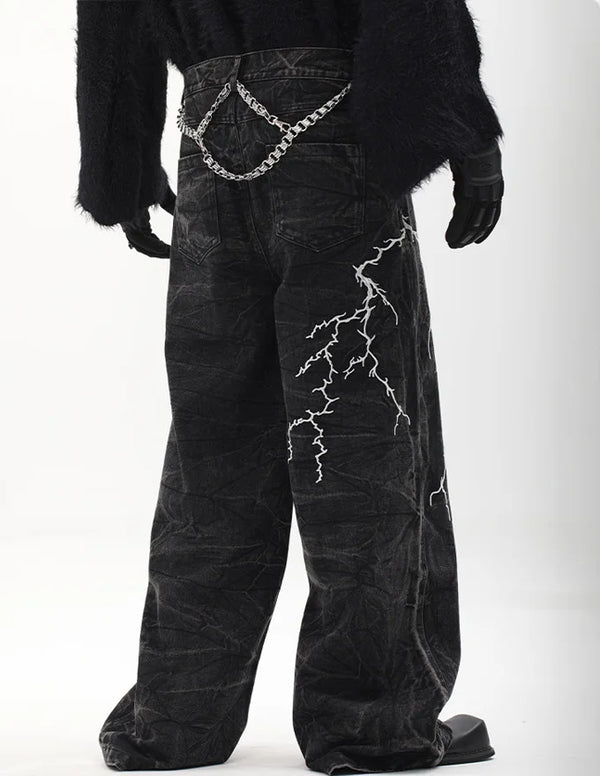
@fugastudios These pants ate and left no crumbs 🖤 walking chaos in denim form #fugastudios #darkfashion #widelegpants #fyp #distresseddenim ♬ Originalton - Fuga Studios
Here too it holds again: it is the movement, not the cut alone. A wide leg that takes shape as you walk makes the difference between a photo and a look that carries in real life.
Mistakes
The 6 Mistakes That Tip Goth Cottagecore Over
Almost all failed attempts fail on the same six points. None of them has anything to do with money, all of them with selection. Knowing them gets you considerably further with considerably fewer pieces.
If you are unsure about an outfit, go through the list backwards. In most cases it is point one and point six striking at the same time: new shoes and no waist.
Buying
Where You Buy Goth Cottagecore Fashion
The style traditionally lives on secondhand finds, and that stays the cheapest route. Flea markets, resale apps and the attic deliver exactly the worn surfaces that new goods only get after months. For knit, linen shirts and coats that is almost always the better source.
What gets bought new is mostly what is hard to find used: matching boots in your own size, basics in sufficient quantity, and pieces with Goth details that rarely sit on the secondhand rail. If you want to build close to Grunge textures, the Soft Grunge guide is the connection.
FAQ
Frequently Asked Questions About Goth Cottagecore Fashion
Five questions come up again and again when someone builds the style seriously for the first time. They are about origin, everyday wearability, care and budget.
Where does the term Cottagegoth come from?
Does Goth Cottagecore also work in the city, without a country house?
Does Goth Cottagecore Decor belong to the same style as the clothing?
How do I care for lace and linen so they do not lose their shape?
What does a complete Goth Cottagecore look cost?
That marks out the field. What remains is the work on your own wardrobe, and with this style it runs slower than with others, because the best pieces do not arrive in new condition.
What do you think?
Tell us on @fuga_studios
About the author
Philipp Fuge — Founder · Berlin
Founder of Fūga Studios. Writes the journal himself. Berlin · Shanghai · Tokyo · Poznań — four cities, one logic.