
A basement in Washington D.C., summer 1985. Four bands play to fifty people, and somewhere between hardcore riffs and lyrics about loss something starts that four decades later collects millions of views on TikTok. Nobody in the room wears eyeliner. Nobody wears skinny jeans. Still, this is where the line begins that runs through Chicago practice rooms, mall escalators and MySpace profile pictures into your feed.
Emo Fashion History describes how the Emo look developed from 1985 until today: from the deliberately unremarkable hardcore outfit of the D.C. scene, through the band-shirt-and-skinny-jeans canon of the 2000s, to the Gen Z revival on TikTok. This article walks the complete timeline, era by era. For an overview of today's look, see our Emo Style Guide.
Knowing the history explains the look. Every era left its own codes behind, and almost everything read as Emo today traces back to one of those phases. So it is worth looking at the whole line before talking about individual pieces.
Timeline
Emo Fashion History at a glance: five eras, one line
Four decades split roughly into five phases. Each phase has its own silhouette, its own shoes, its own stance on being seen. The early years did not want to stand out, the 2000s wanted nothing else, and the present picks whatever fits.
Important for context: Emo was always music first. Fashion followed, but it condensed into a recognizable code in every era. Those codes are what we go through now.
In order, then. It starts in a city you associate with politics rather than pop culture, and with a scene that wanted nothing to do with fashion.
Origin
Where Emo fashion started: Washington D.C., 1985
The answer to the origin question is clear: Emo started in the mid-80s in the hardcore scene of Washington D.C. Parts of the punk community there had grown tired of their own hardness. Bands around the label Dischord Records began writing about inner life instead of politics. The scene first called it emotional hardcore, mockingly, later just Emo.
In fashion terms that was a non-event, and that is exactly the point. The D.C. scene wore what hardcore wore: plain T-shirts, jeans or work pants, sneakers, short hair. Search for photos from 1985 today and you will not find a single studded belt. The visual code we attach to the word is twenty years younger than the music.
1985
Revolution Summer in Washington D.C.
2005
Mainstream peak of Emo fashion
2021
TikTok makes the look big again
Nobody back then would have signed off on the idea that a scene with no interest in clothing would trigger one of the defining youth fashions of the 2000s. But someone had to start it first.
Founding moment
Who was the first Emo? Rites of Spring and the Revolution Summer
If the question about the first Emo has an answer, it is Rites of Spring. The band around singer Guy Picciotto played hardcore in 1985 with a broken voice and lyrics about memory and loss. Their shows during the Revolution Summer are considered the founding moments of the genre. The irony of history: Picciotto never accepted the label and pushed back against it his whole life.
For fashion that means: the first Emo looked like every other hardcore kid of his time. The legacy of Rites of Spring is not in the wardrobe but in the stance of making vulnerability public. That stance later became the basis for every stroke of eyeliner and every too-tight band shirt.
After the Revolution Summer the first wave fell apart quickly. The idea travelled west though, out of the capital and into the college towns of the Midwest. There it got a new face, and for the first time something like a look of its own.
Second wave
The 90s: Midwest Emo and the anti-look
In the 90s the center moved to Illinois, Wisconsin and Missouri. Bands like Sunny Day Real Estate, The Promise Ring and American Football played intricate guitar music for people who sat in the library rather than the moshpit. The look followed the music: cardigans, checked shirts from the thrift store, narrow horn-rimmed glasses, Chucks. The scene looked like a year of literature students, and sounded exactly like it too.
This anti-look was the first deliberate fashion decision in Emo history, even though it came dressed as refusal. Looking normal was the statement. For the era in detail, see our guide to Emo Fashion of the 90s. Many of those pieces work again today because they never looked like a costume.
At the end of the 90s something happened that the quiet scene did not see coming: the internet learned to spread youth cultures. And a new generation of bands understood that a feeling can come with a picture.
Third wave
2000s: MySpace, Warped Tour and the mainstream peak
Between 2002 and 2005 Emo tipped from subculture code to youth culture. My Chemical Romance, Fall Out Boy and Panic! at the Disco ran on MTV, the Warped Tour hauled the scene through every American suburb, and MySpace turned every teenage bedroom into a photo studio. For the first time the look mattered more than the show: the profile picture from above, the fringe over one eye, the favorite band's logo across the chest.
Why exactly the 2000s turned so Emo can be explained fairly plainly. A generation got its first mass medium for self-presentation with MySpace, and Emo supplied the matching imagery: approachable, dramatic, copyable. The look was cheap to rebuild and instantly readable as belonging. Mall chains like Hot Topic translated the scene into unit prices under twenty dollars.
This peak had a uniform, and it was defined so precisely that you can rebuild it piece by piece today. Here is a look at the individual parts.
The canon
The Emo uniform of the 2000s: skinny jeans, band shirt, side part
The uniform of the peak was a closed system. Every piece had a function, and the sum made a look that was instantly recognizable in any pixelated phone photo. These were the load-bearing elements:
- Black skinny jeans, as tight as possible, ideally from the women's section. The silhouette was the foundation of the whole look.
- Band shirt, one or two sizes too small. The logo was proof of belonging and proof of music taste in one.
- Studded belt, often worn double and slanted across the hip. The hardware element that signalled the punk legacy.
- Zip-up hoodie, usually black, as a second skin over the shirt. Favorite spot for buttons and patches.
- Chucks or Vans, as worn-out as possible. New shoes were considered suspicious.
- Side part with a low-pulled fringe, dyed black and blow-dried flat. The hairstyle was the most expensive styling element of the era, measured in hairspray.
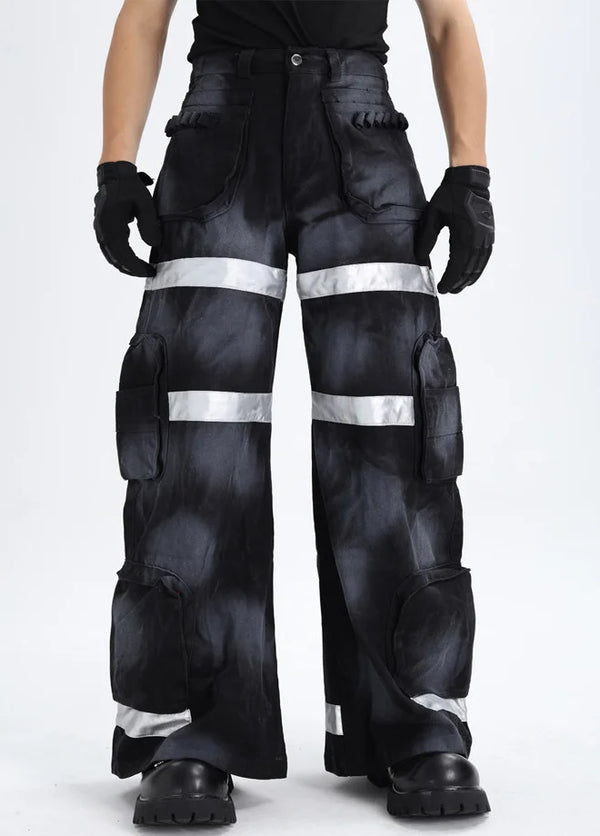
Add sweatbands, chokers and fingernails painted with a marker. To settle the pants question for today: the tight cuts of back then are available again, but the present also wears wide silhouettes with the same codes.
As precise as the uniform was on the body, the look was decided somewhere else: at the head. No youth fashion of the 2000s demanded as much time in front of the bathroom mirror.
Styling history
Emo hairstyles and make-up: the history above the collar
The hairstyle was the litmus test in every era. In the 90s unwashed center-parted hair was enough, from 2004 the asymmetric cut became a science: short and teased at the back, a fringe at the front covering one eye completely. Black was mandatory, single blonde or pink streaks the maximum amount of color allowed. Then came eyeliner, regardless of gender. Men with kohl were a provocation in the suburbs of 2006, and that is exactly what it was there for.
How the female part of the scene developed this code further is covered in its own guide. It also explains why the dividing line to today's E-Girl look runs exactly through the hairstyle.
That the band which shaped the look worldwide could never do anything with the term is one of the better punchlines of this history. The founding father of the scene saw it the same way.
While the founders distanced themselves, the scene itself turned up once more. Towards the end of the 2000s the black uniform look became something you could have seen from space.
Escalation
Scene era 2008 to 2012: when Emo turned colorful
The Scene phase was the loud sister of the Emo look. The base structure stayed the same, but the color dials went to maximum: neon shirts under black vests, leopard print in teased hair, streaks in pink and toxic green, plus shutter shades and kilos of silicone wristbands. The imagery moved from MySpace to the first YouTube tutorials, where 14-year-olds explained to each other how to blow-dry hair to double volume.
Musically, crunkcore and electro-pop ran in parallel, and the line between Emo and Scene became the most-debated question in every schoolyard. In hindsight Scene was the endpoint of a logic: if visibility is the goal, the loudest outfit wins. After that it could only get quieter, and that is exactly what happened.
The break
The crash: why Emo fashion disappeared after 2012
Around 2012 the look collapsed in record time. MySpace was dead, Instagram rewarded a completely different aesthetic, and the leading bands split up or changed their sound. My Chemical Romance broke up in 2013, and with them the uniform lost its transmitter. Anyone still wearing skinny jeans and a fringe suddenly counted as stuck. The scene moved into niche forums, the mainstream moved on to normcore and clean minimalism.
The code never disappeared though, it just sat in the archive. The pieces from back then live on as their own categories today, sorted by what the look actually needs:
For eight years it stayed quiet around the look. Then a new generation got a new medium, and the history started repeating itself, only faster.
Fourth wave
Emo revival: the Gen Z version of Emo
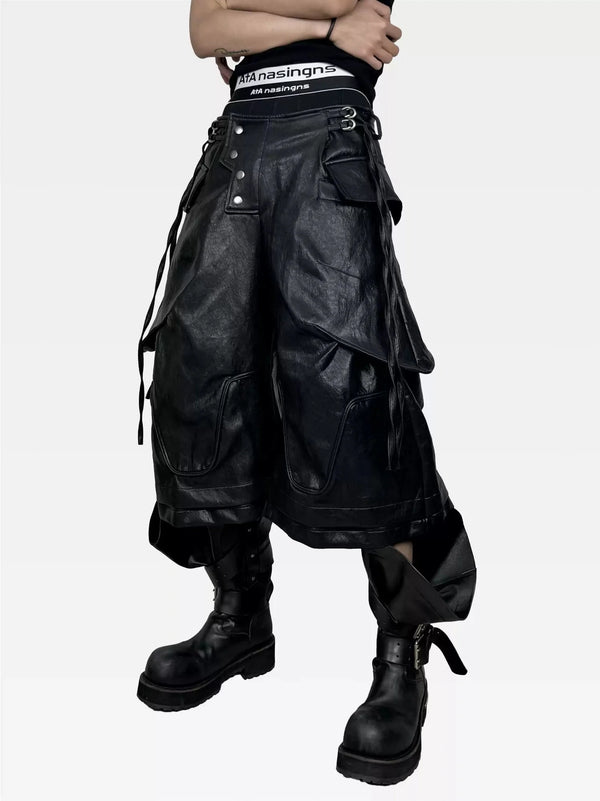
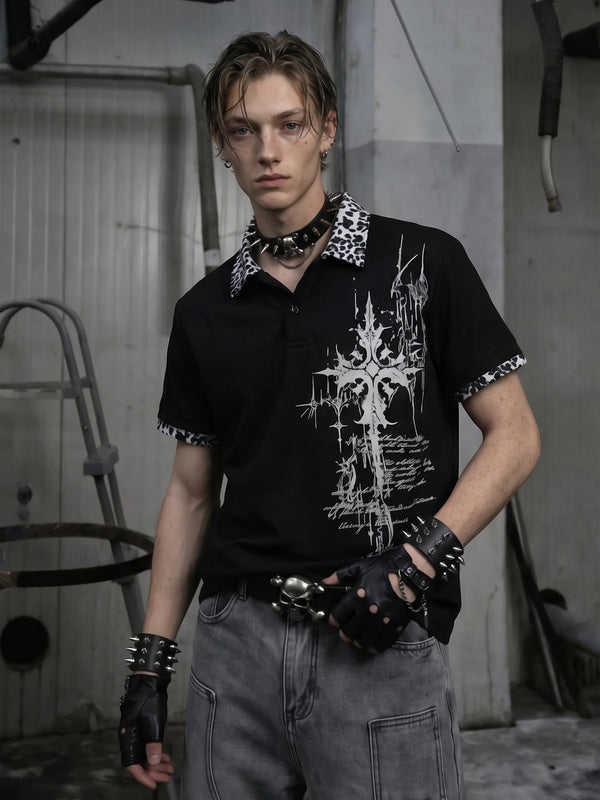
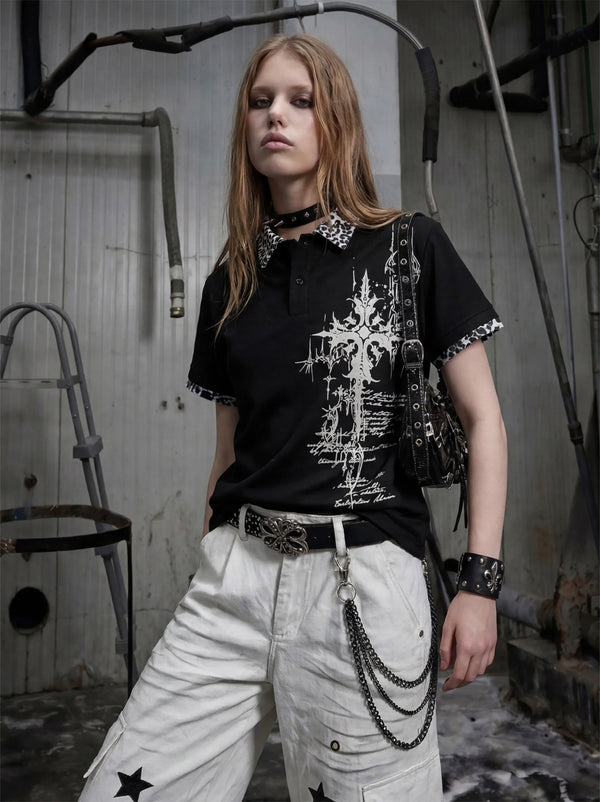
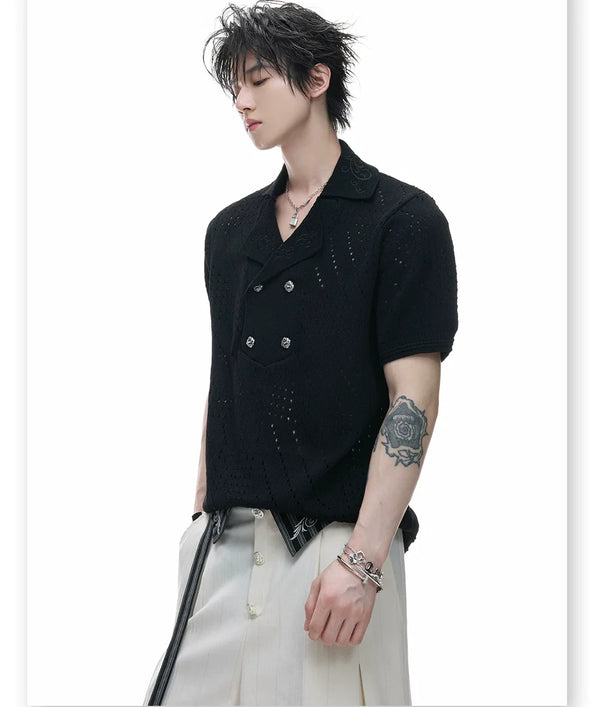
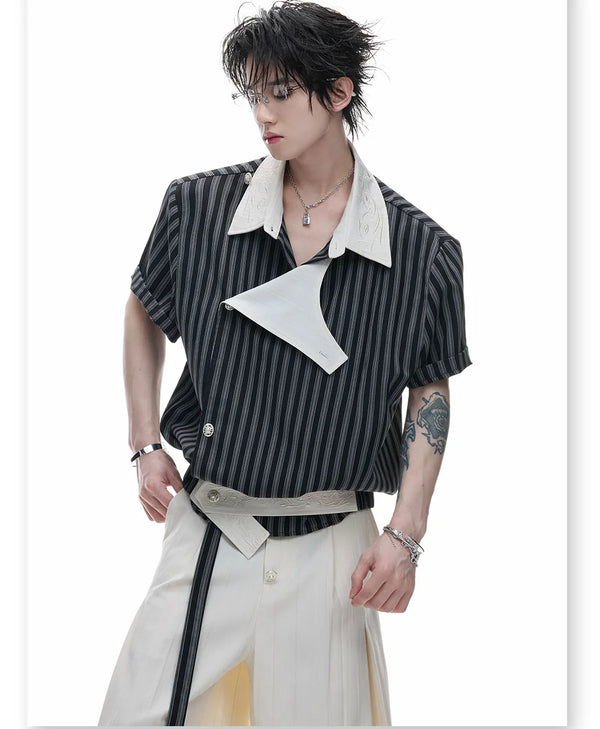
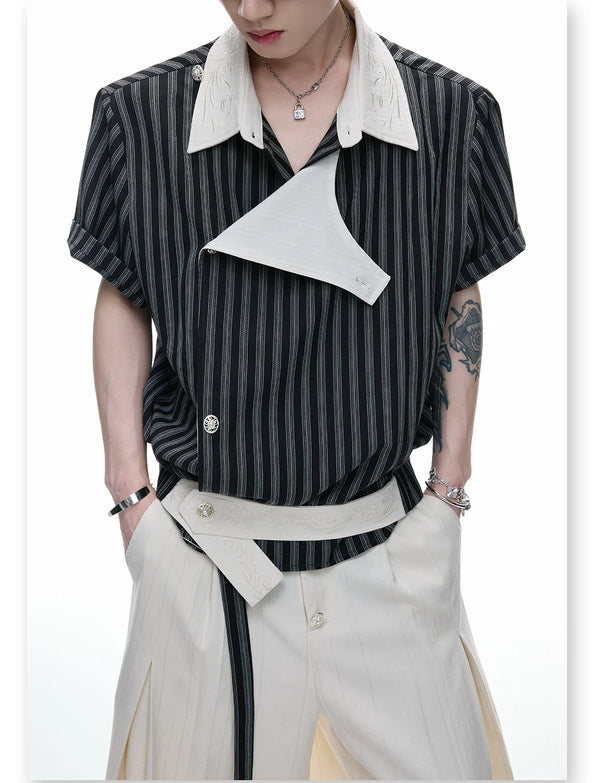
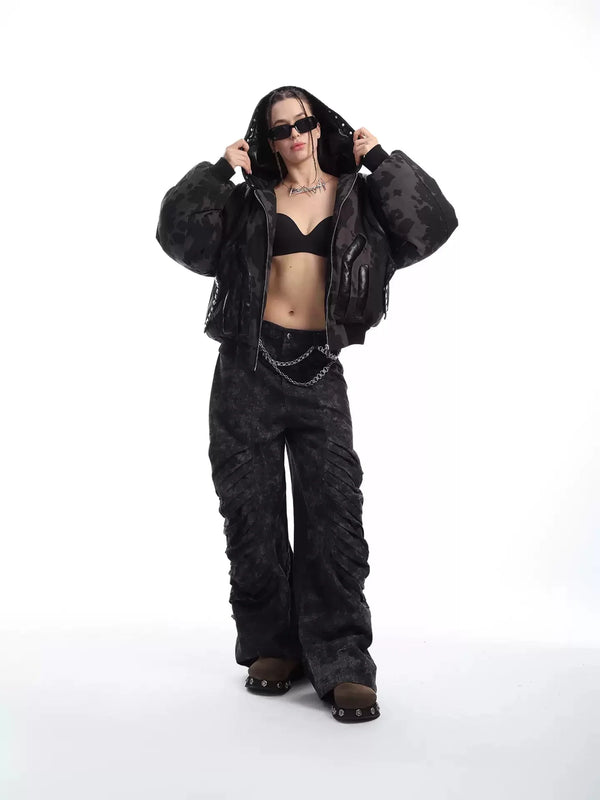
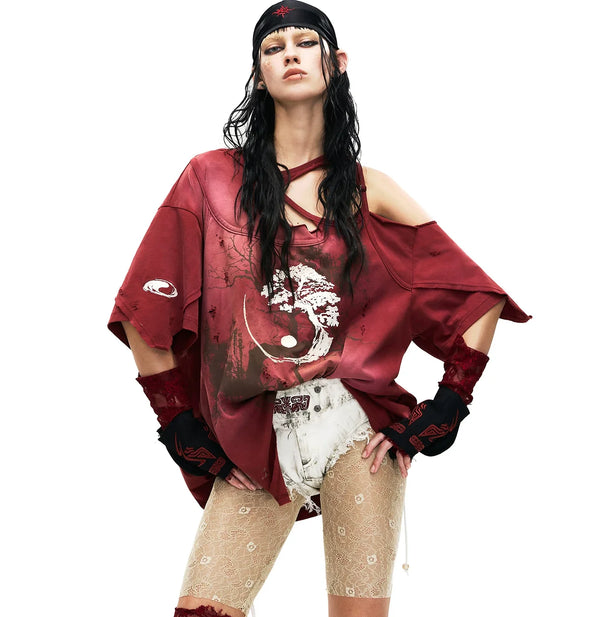
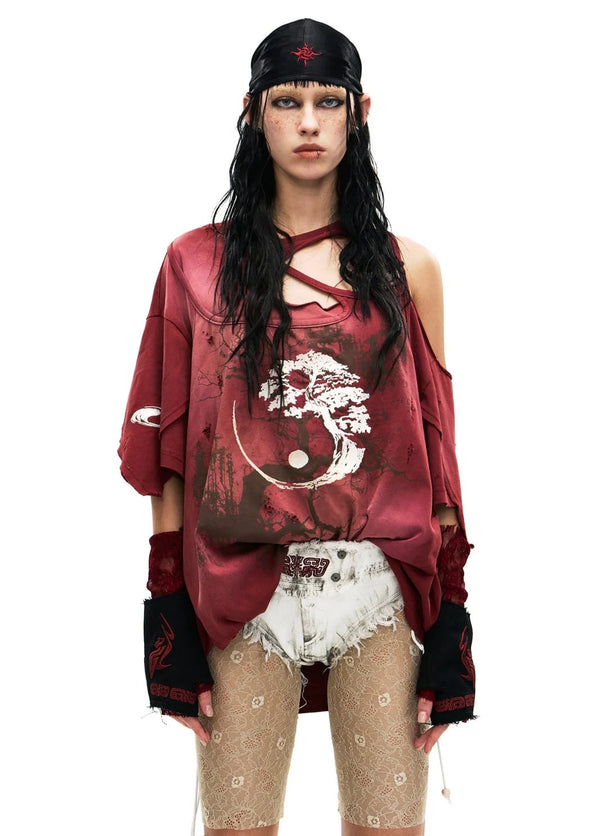
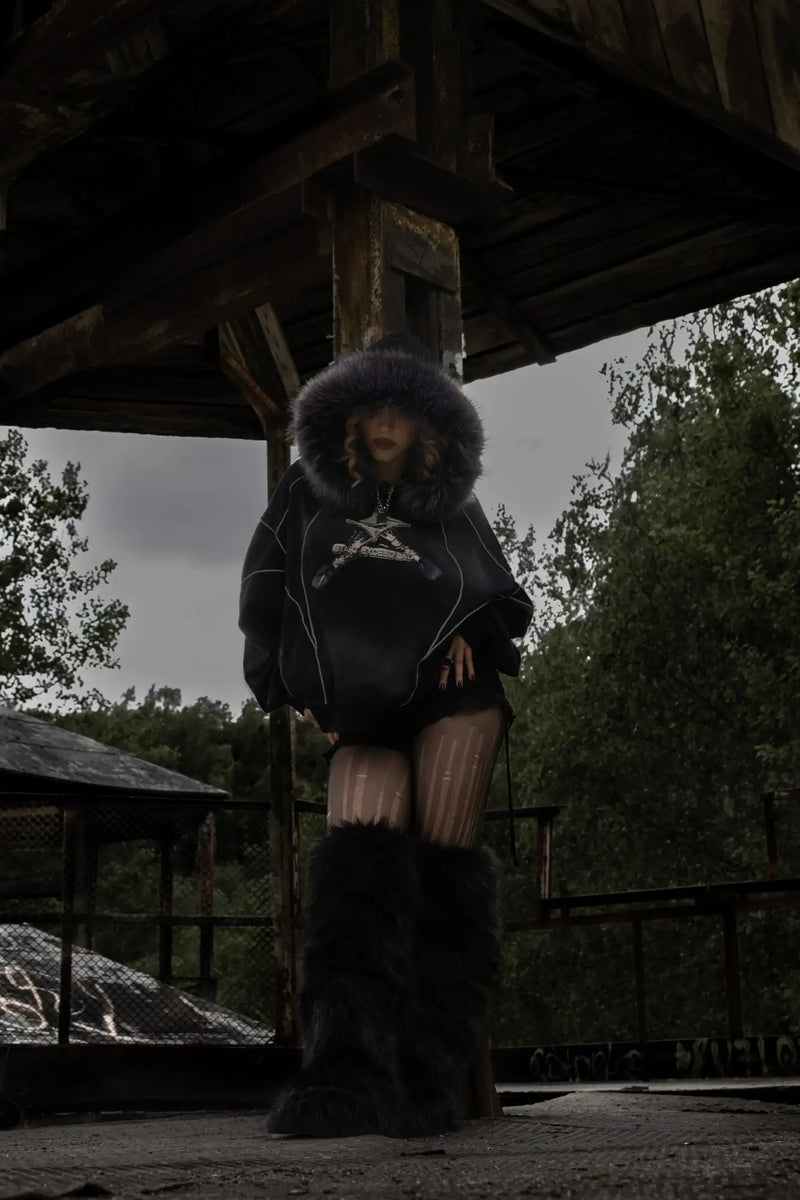
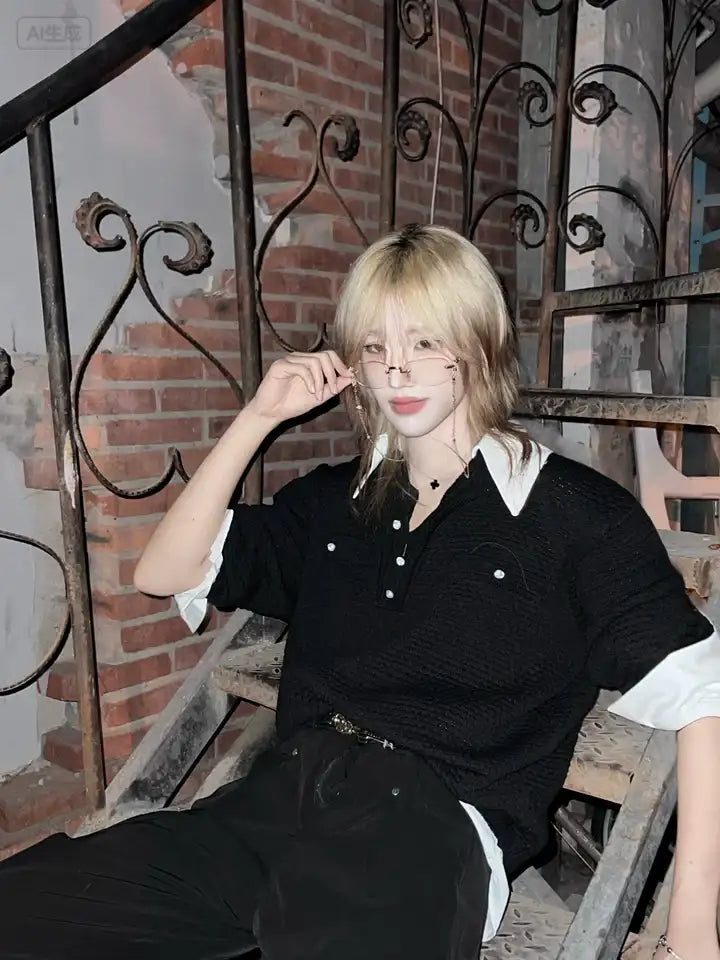
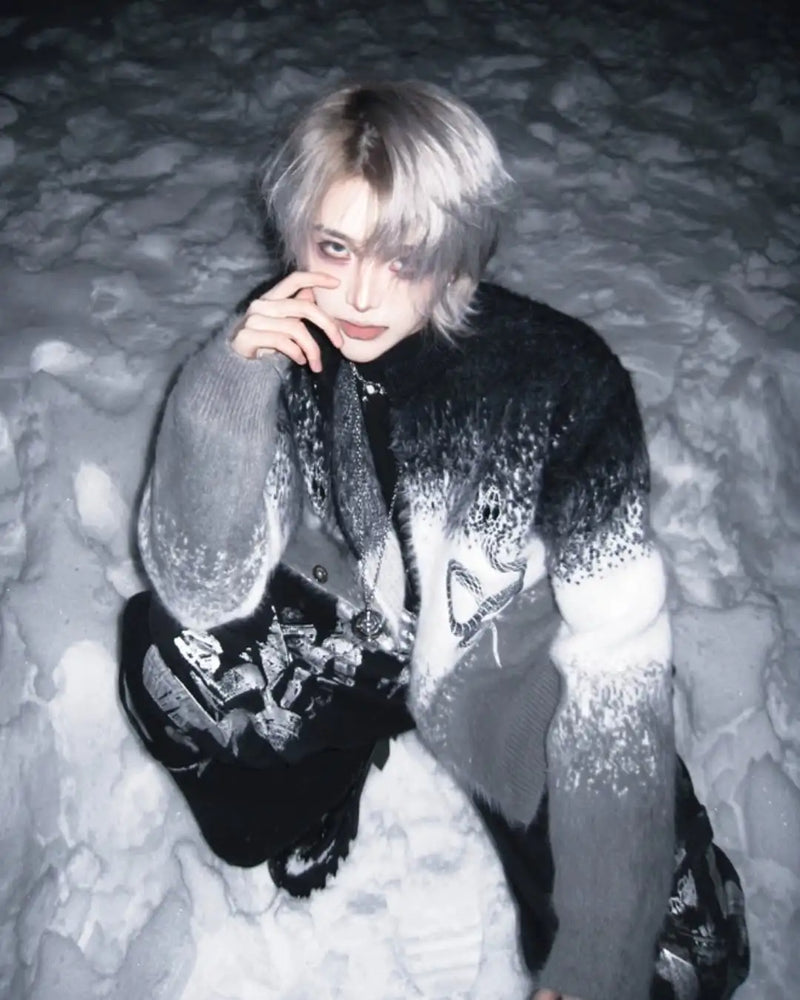
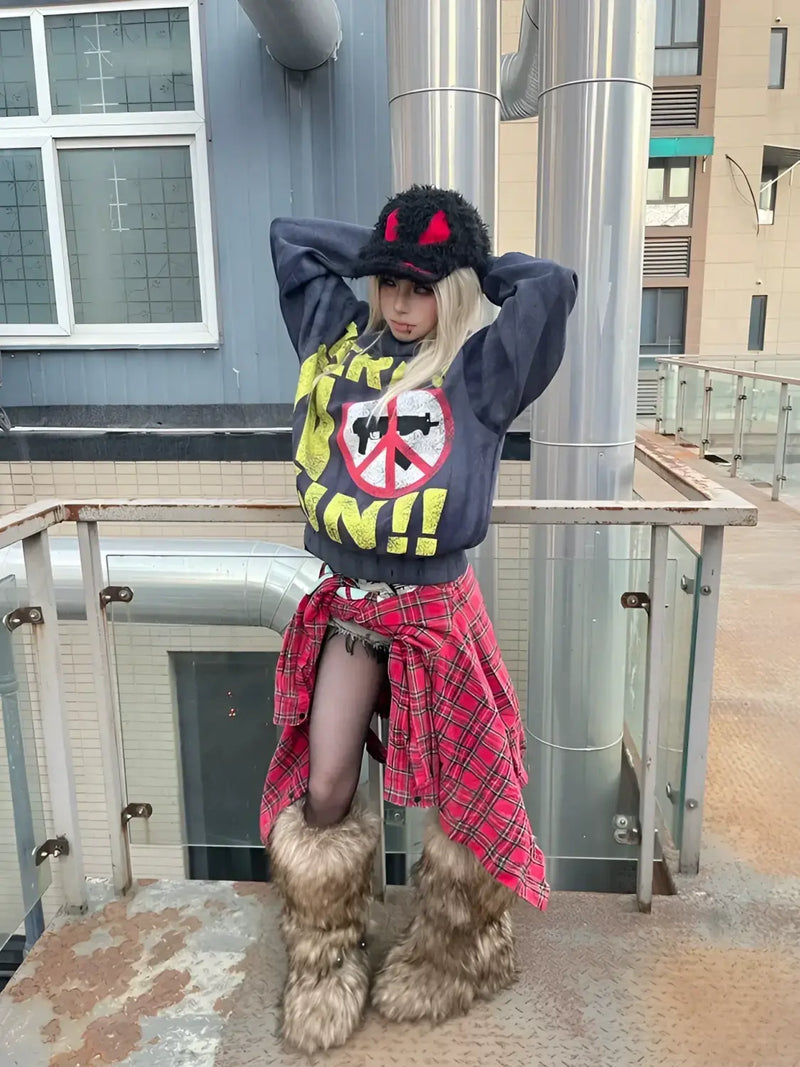
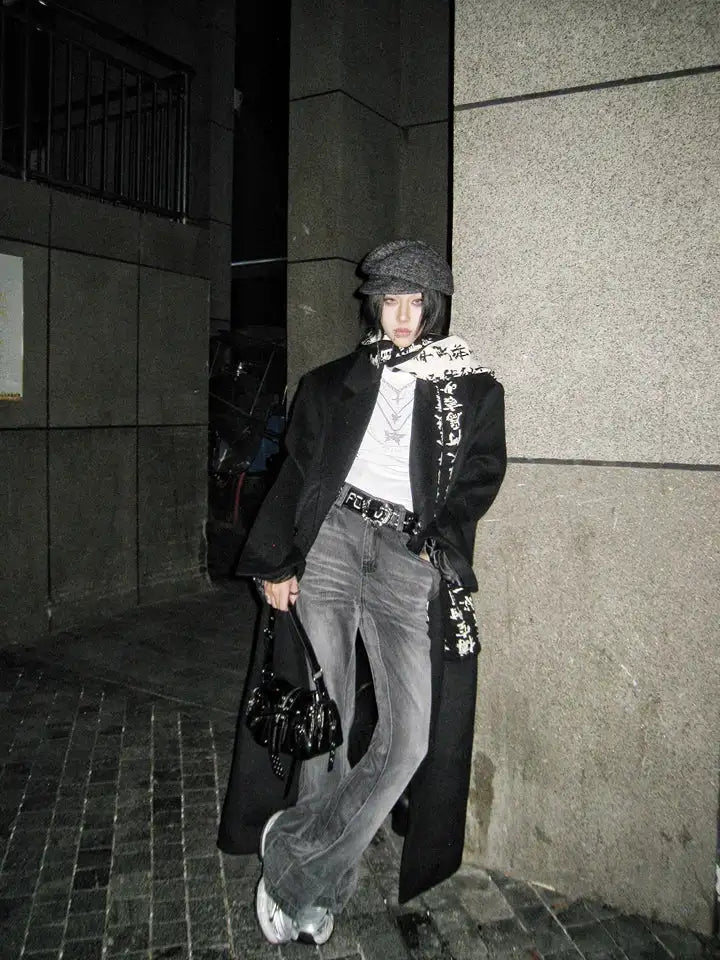
The Gen Z version of Emo is mostly called E-Girl and E-Boy online, and it works differently from every wave before it. Instead of a closed uniform there is a kit: chains and chokers from the 2000s box, platform boots from the Gothic shelf, pleated skirts from Harajuku, plus streaks in the hair as a direct quote of the Scene era. TikTok replaced MySpace as the stage, and sounds from Paramore to MCR ran under millions of videos from 2020 on, made by a generation that had not started school in 2005.
The difference to the old scene: belonging is no longer proven with the full outfit. A single element is enough as a signal, the rest of the outfit can come from any other world. This is how that looks on our side of the feed:
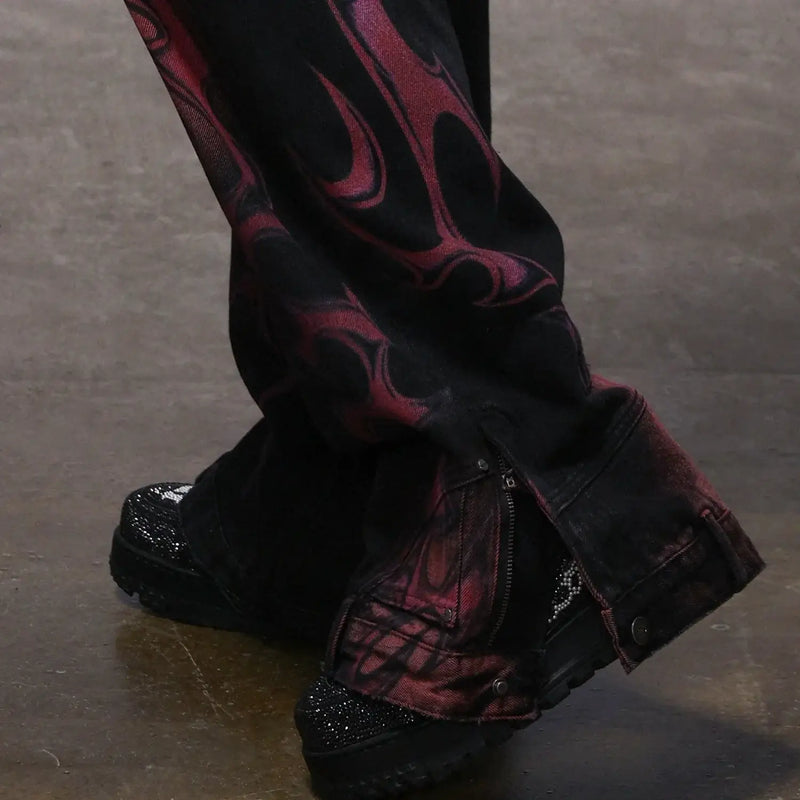
@fugastudios These pants ate and left no crumbs 🖤 walking chaos in denim form #fugastudios #darkfashion #widelegpants #fyp #distresseddenim ♬ Originalton - Fuga Studios
How the two camps of the new wave differ in detail, and why the same wardrobe covers both, is in its own guide:
That leaves the practical question: what do you do with forty years of reference material when you need to get dressed in the morning? The answer is simpler than the timeline suggests.
Practice
Wearing Emo fashion today: from the archive into everyday life
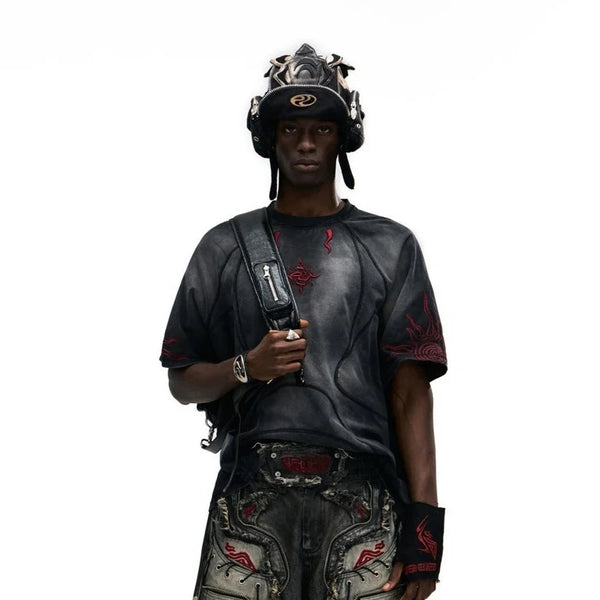
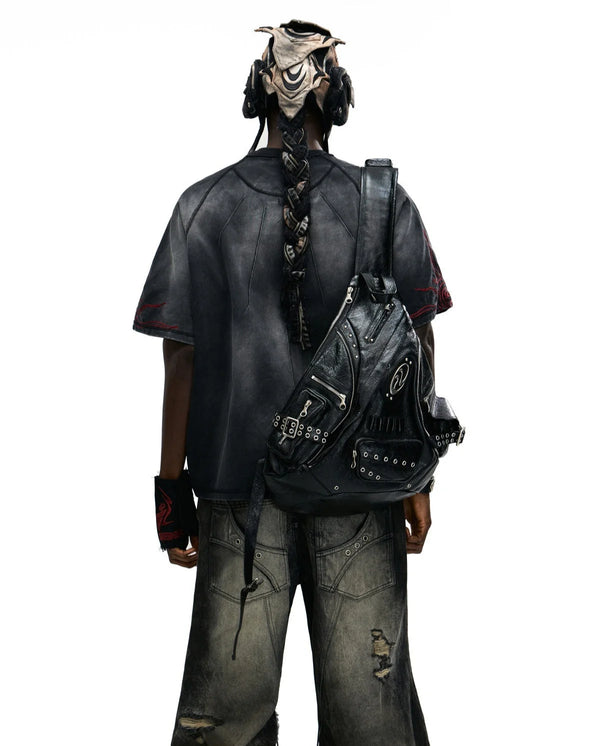
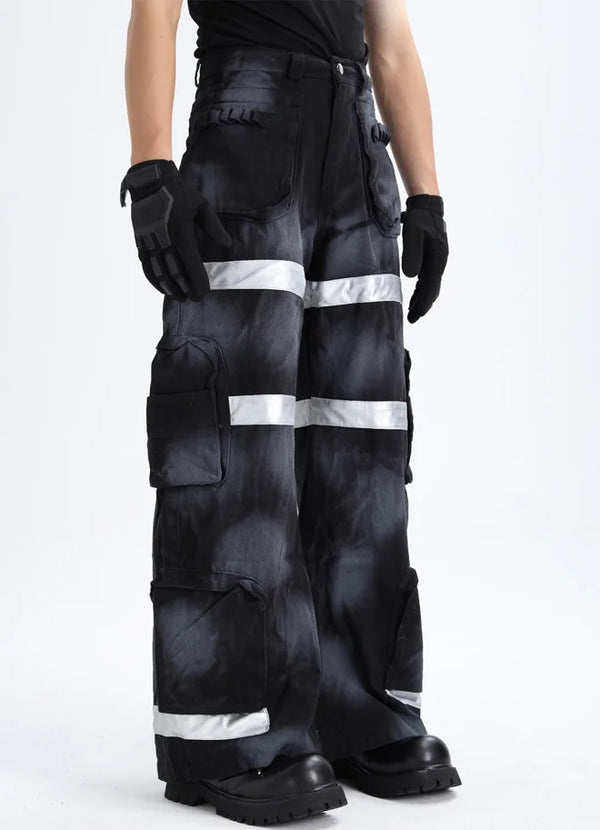
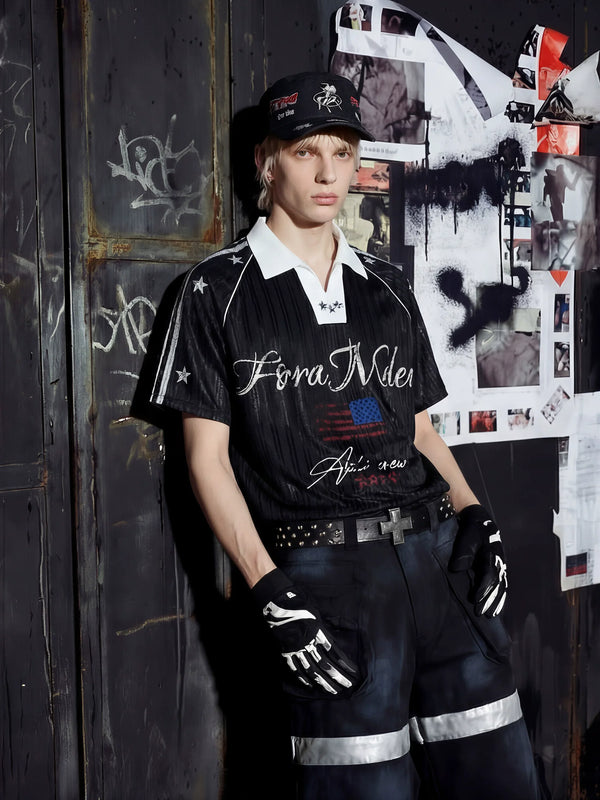
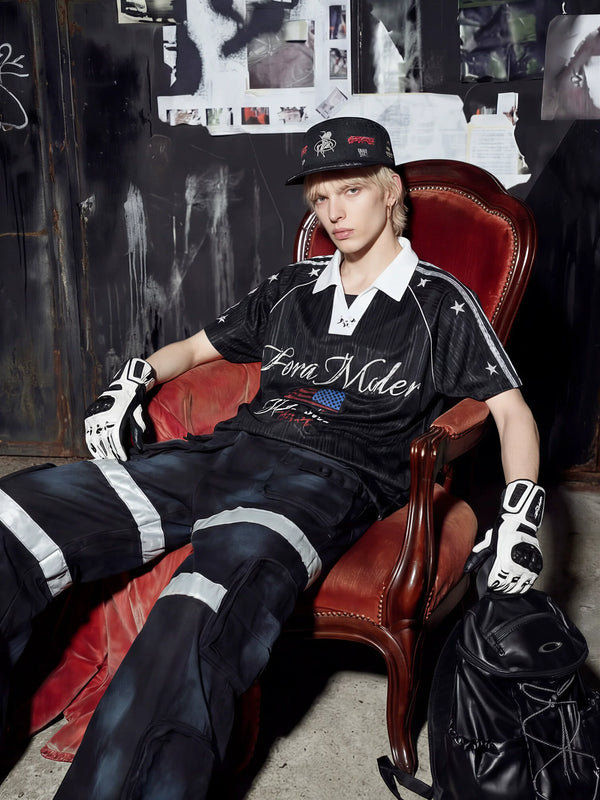
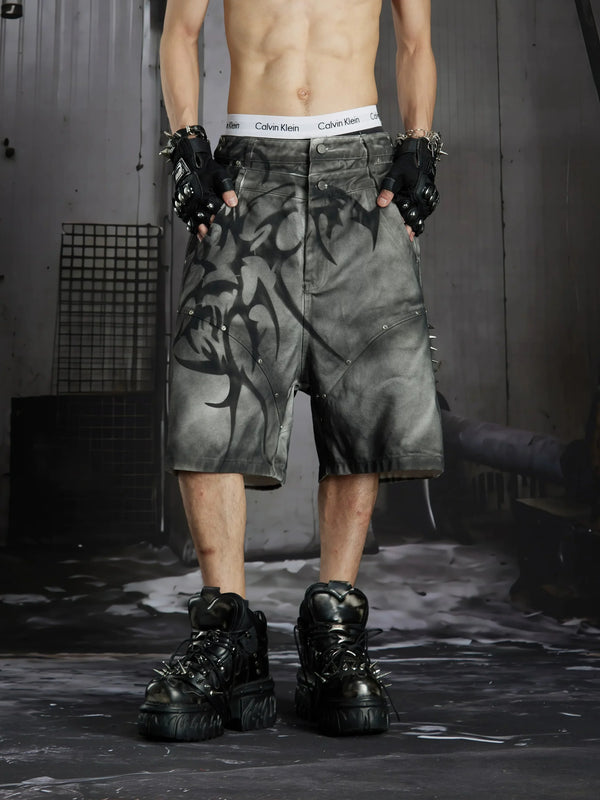
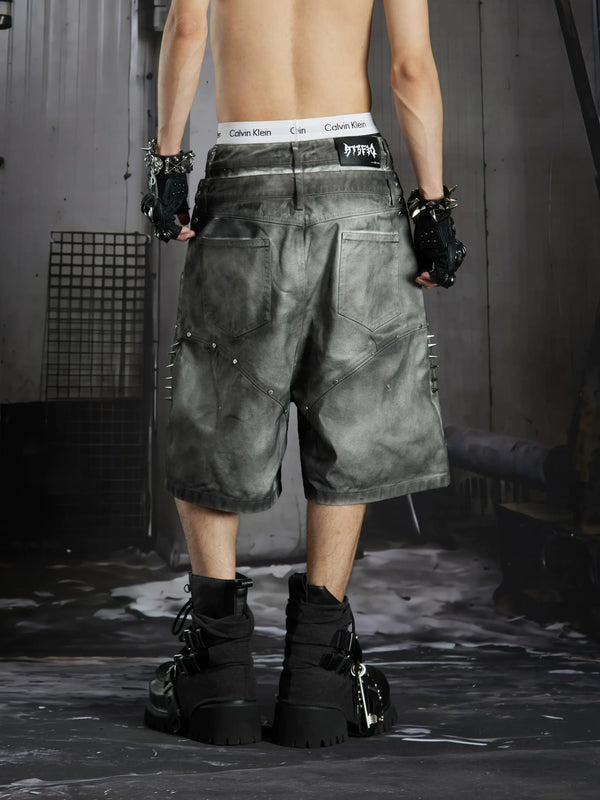
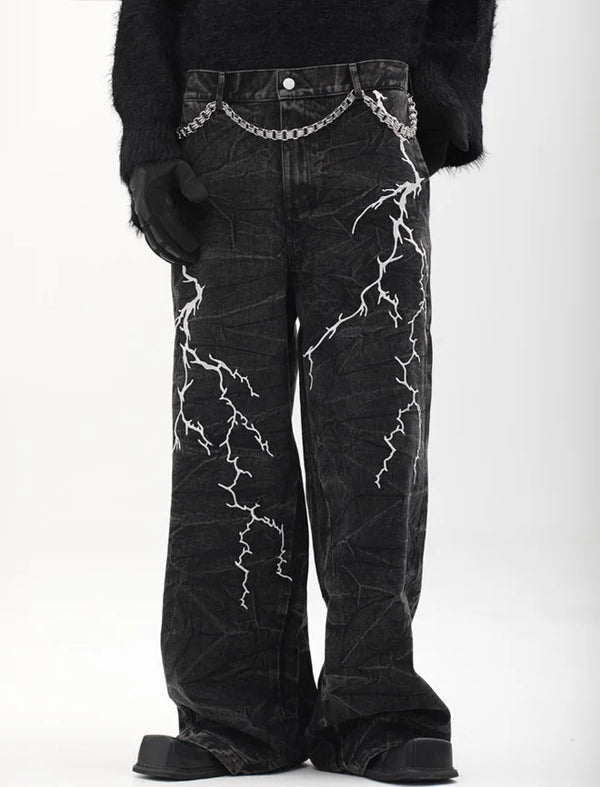
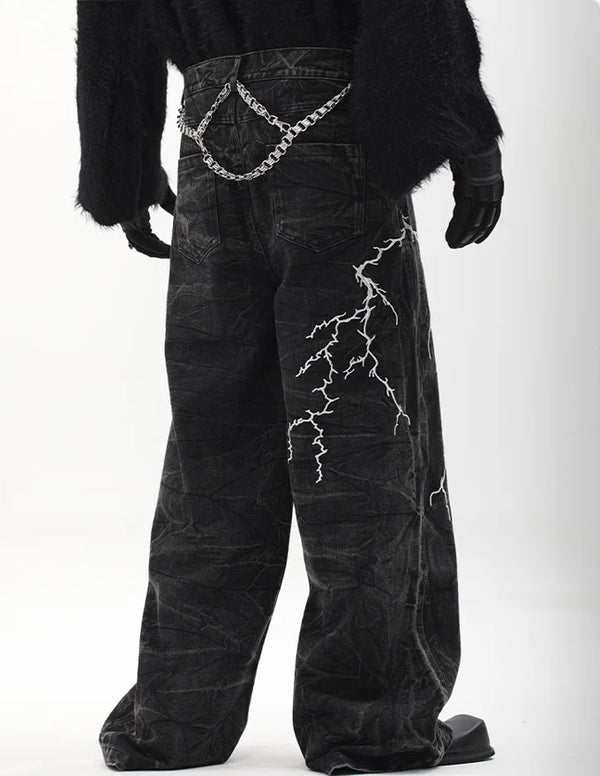
The present wears Emo as a quote, not as a reenactment. The approach that works: a base of current silhouettes plus one or two clearly readable archive elements. Wide pants plus band-shirt energy. Clean outfit plus a stud detail. Distressed denim plus black layering. Wear all five eras at once and you look like a theme night. Quote one and you look dressed.
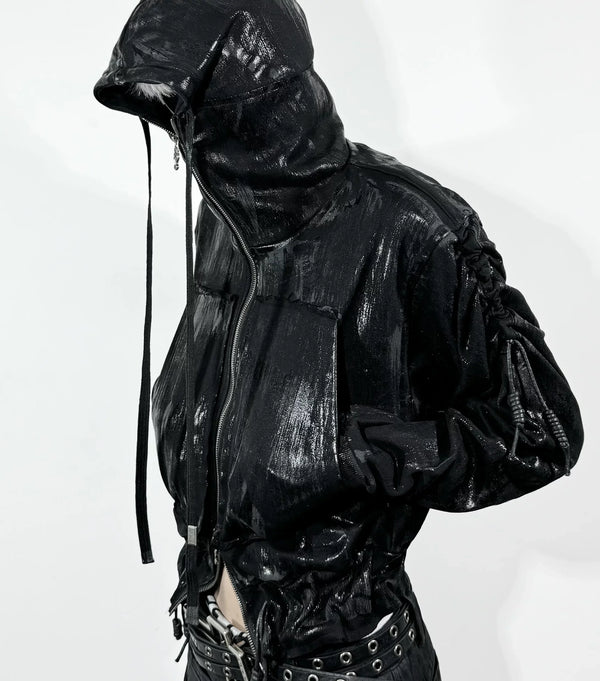
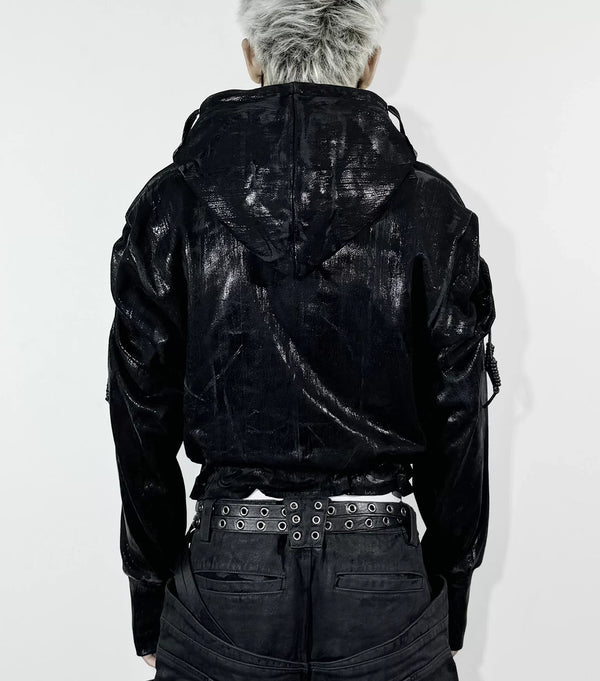
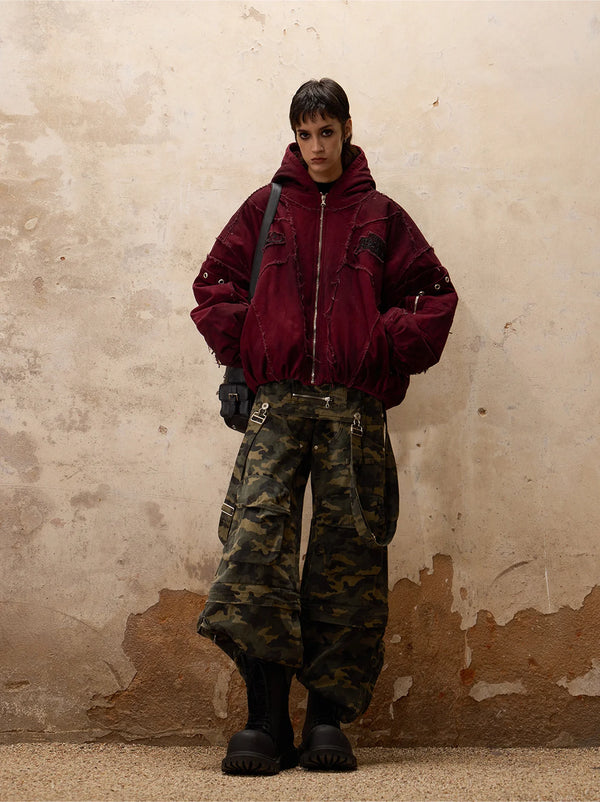
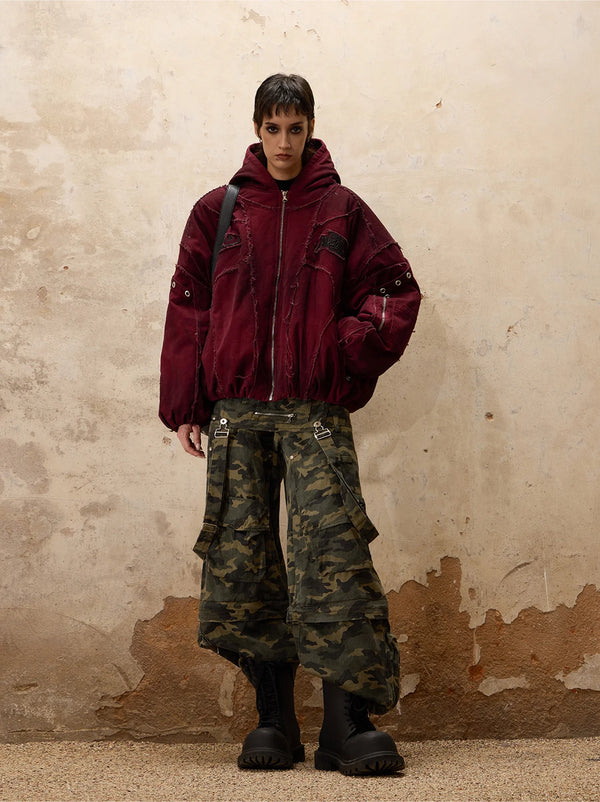
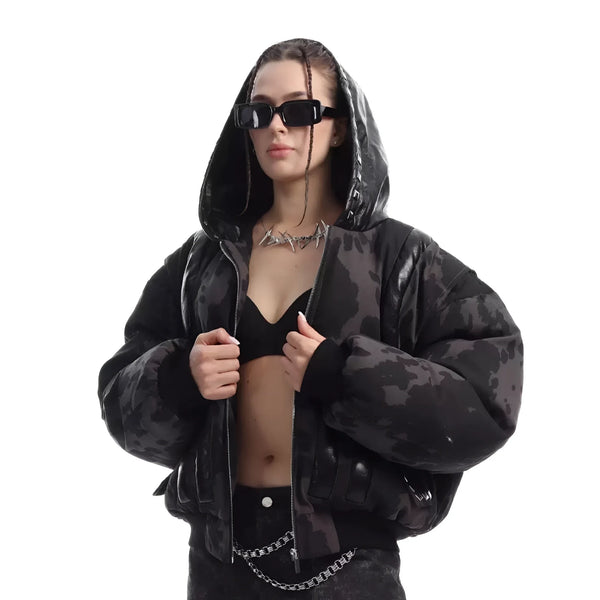
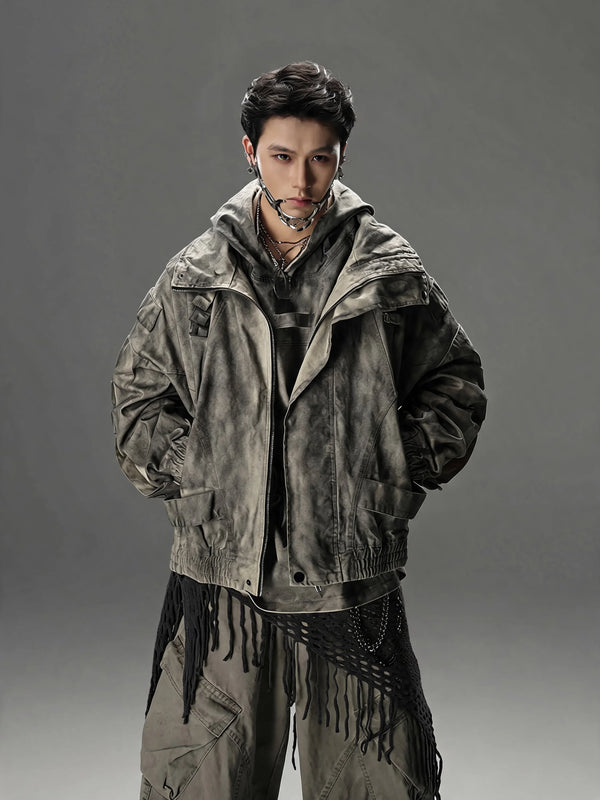
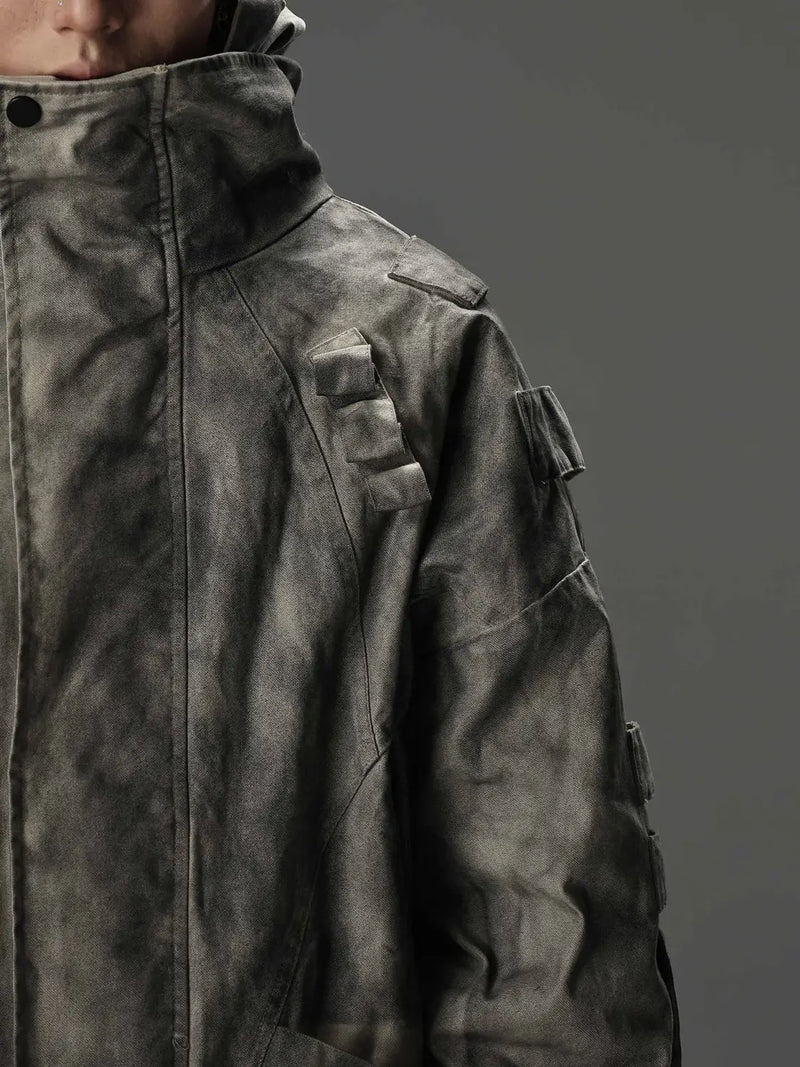
The same logic applies to layering over the shirt. The zip hoodies of back then have successors that do more: jackets with distressed surfaces, acid wash and hardware carry the code forward without smelling of 2006.
So much for the theory. In practice most historical Emo looks fail at the same points, and all of them are avoidable once you have seen them.
What goes wrong
Common mistakes with the historical Emo look
Forty years of references mean forty years of chances to reach for the wrong thing. These five mistakes are the ones we see most often, and each has a simple correction:
Solve those five points cleanly and the hard part is behind you. That leaves the shopping list, and after forty years of history it is surprisingly short.
Essentials
Emo Fashion History to wear: the essentials
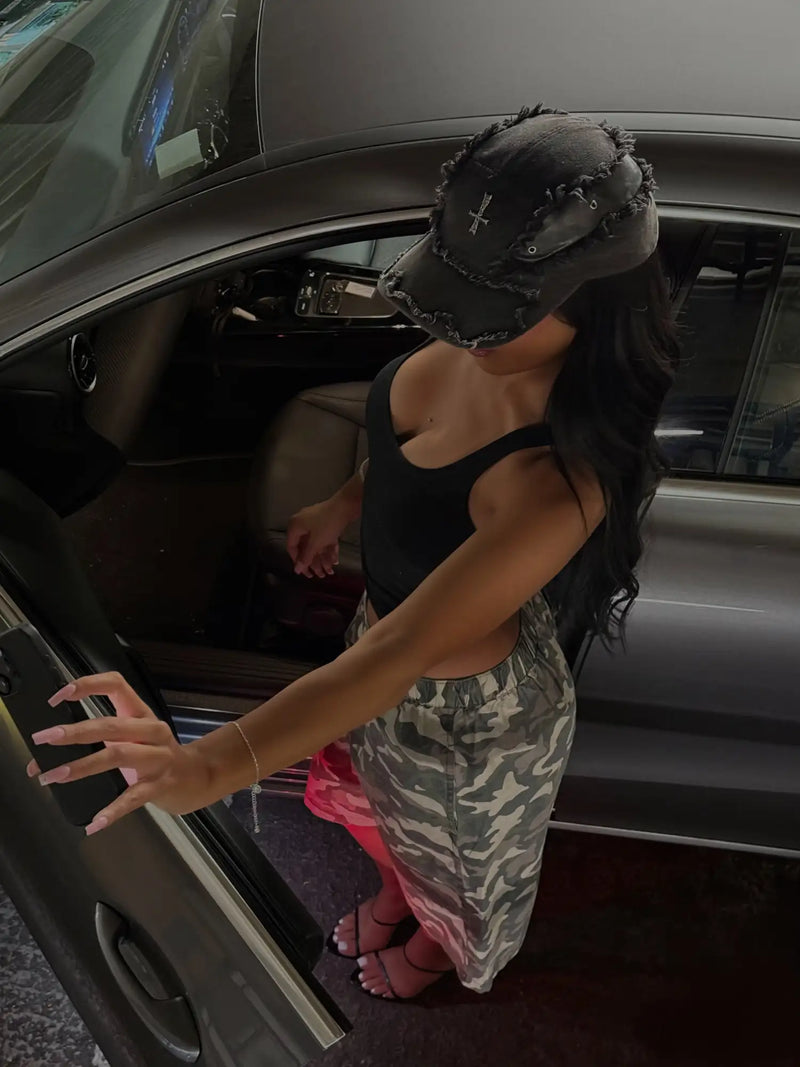
The shopping list for the present: a dark graphic tee, pants with a stance, a jacket with a surface story and hardware at the end. A belt with metal, a cap with a distressed finish, a chain. The entry needs no more than that, the rest is combination. Which brands shaped the history and who carries the legacy on today, we wrote up separately:
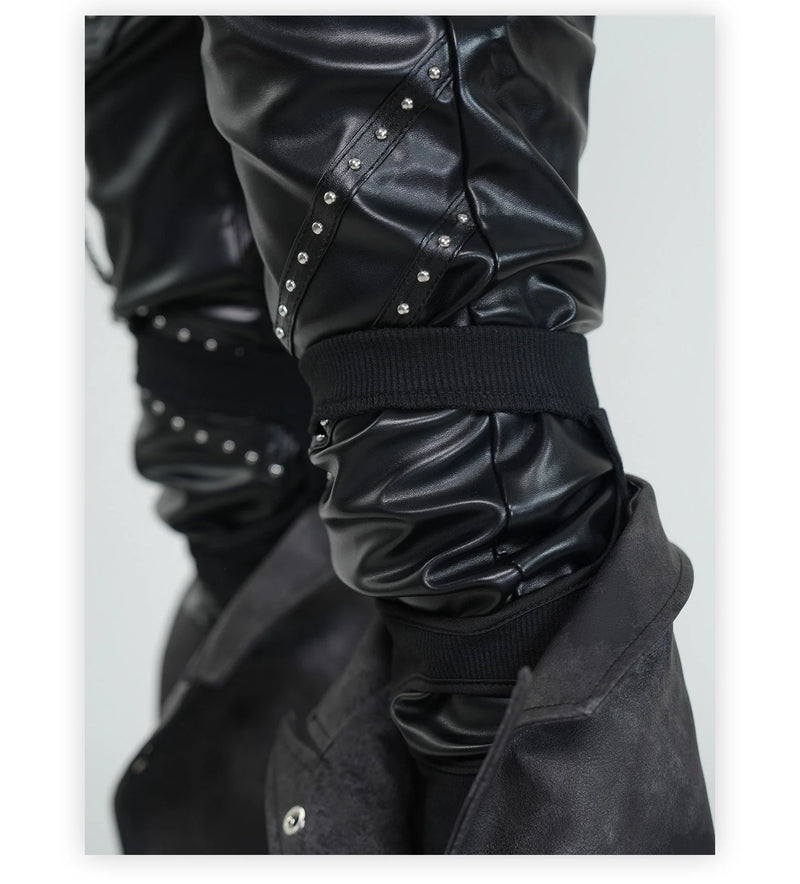
Hardware was the element with the longest shelf life in every era. Studded belts from 2005 still work as a logic today, only the execution has grown up:
FAQ
Emo Fashion History: frequently asked questions
A few questions keep coming up around the history of Emo fashion. Here are the short answers, from the MySpace era to the present.
Why were the 2000s so Emo?
Why do punks not like Emos?
Who are the Big Three of Emo?
What role did MySpace play for Emo fashion?
Is Emo fashion coming back?
From a basement in Washington D.C. into the algorithm: the history of Emo fashion is the history of how a feeling keeps looking for new clothes. What stays of it is decided anew by every generation.
What do you think?
Tell us on @fuga_studios
About the author
Philipp Fuge — Founder · Berlin
Founder of Fūga Studios. Writes the journal himself. Berlin · Shanghai · Tokyo · Poznań — four cities, one logic.