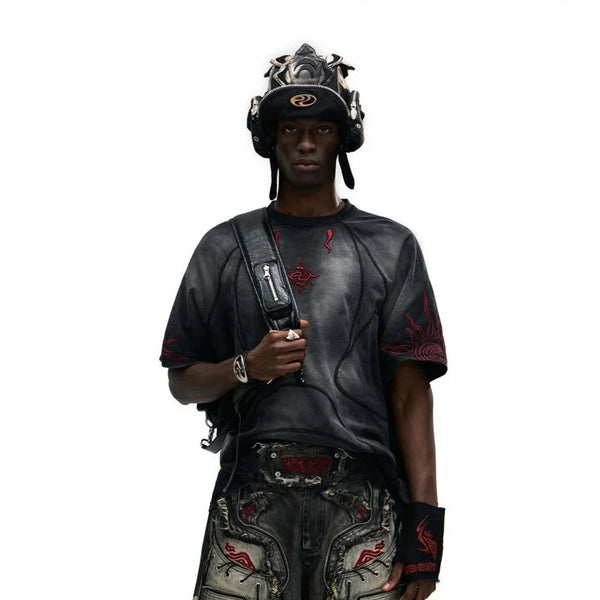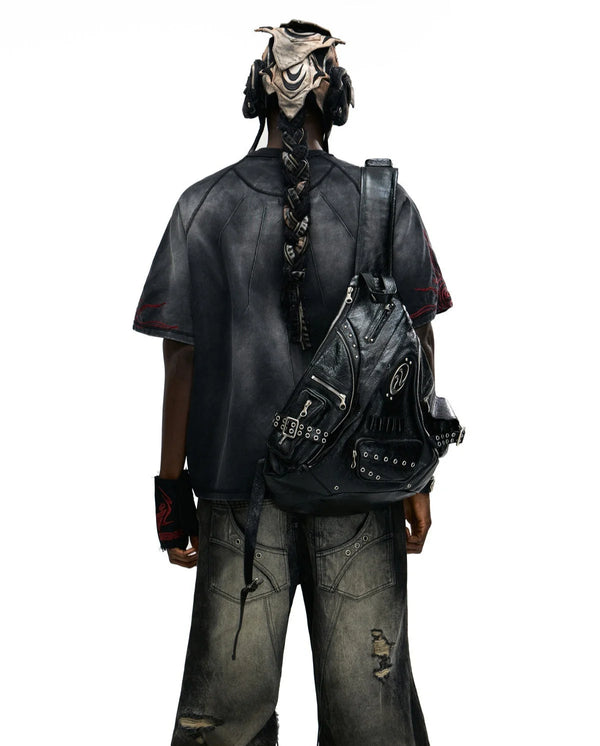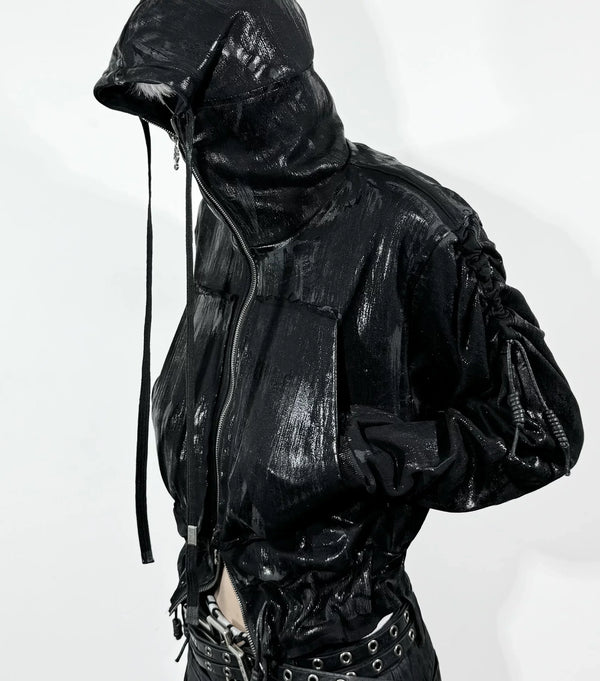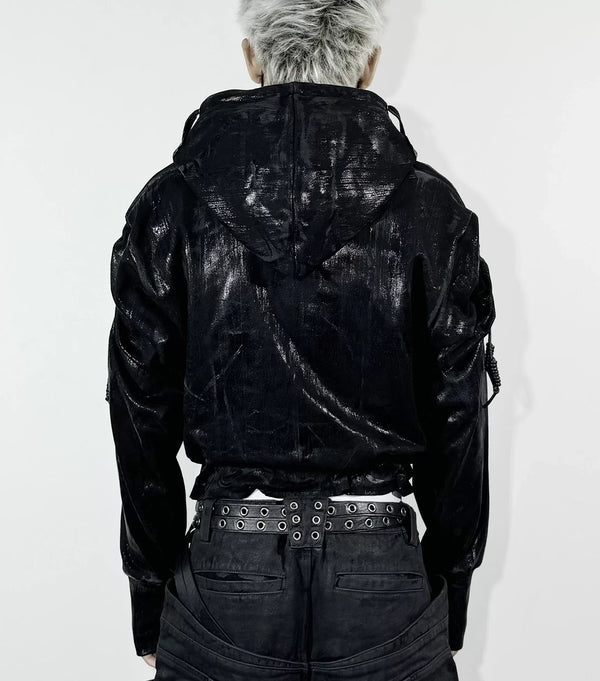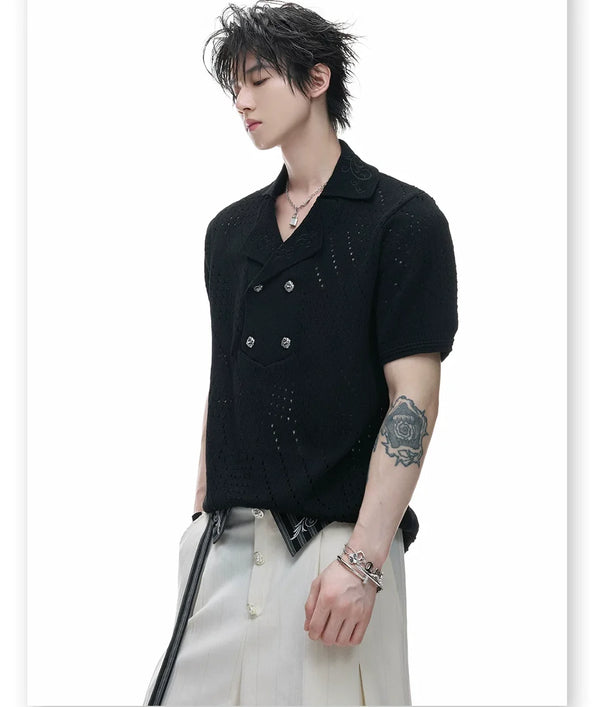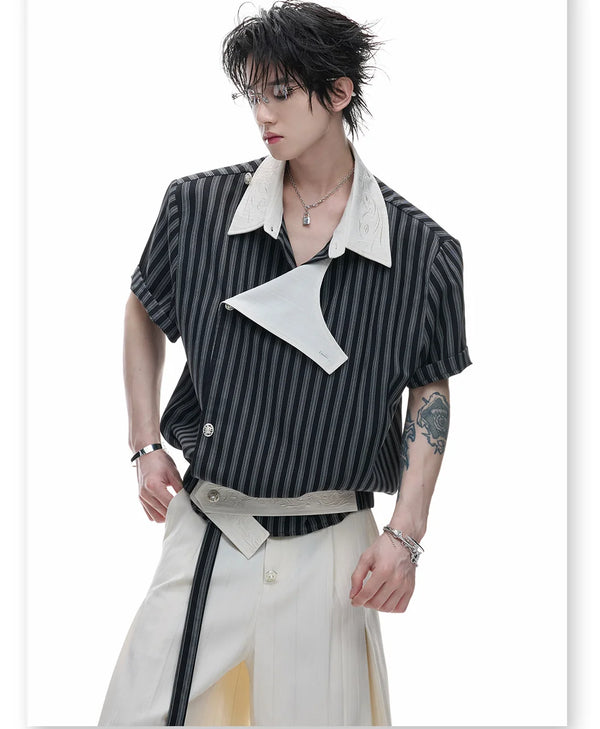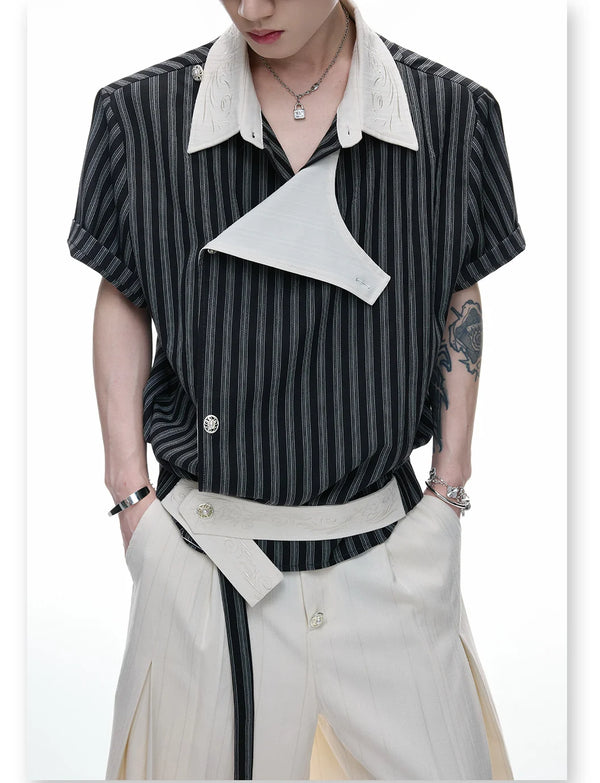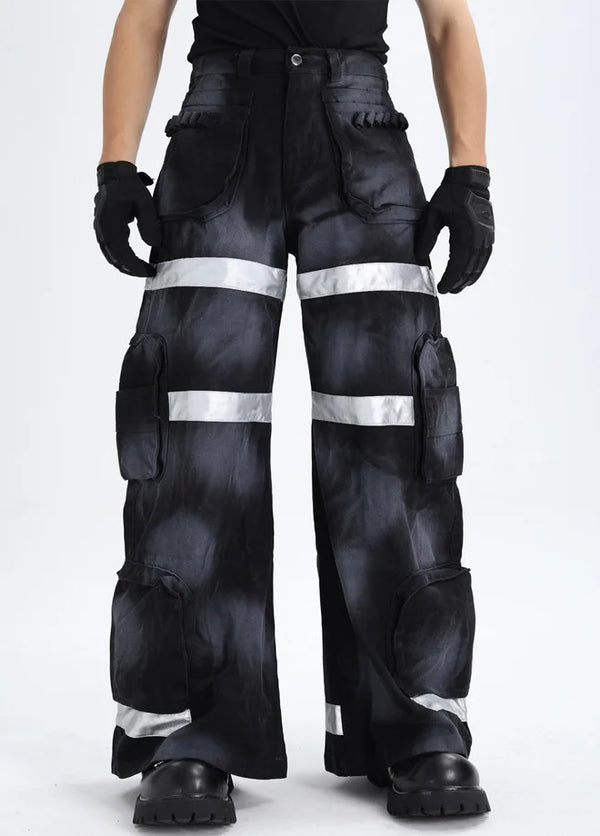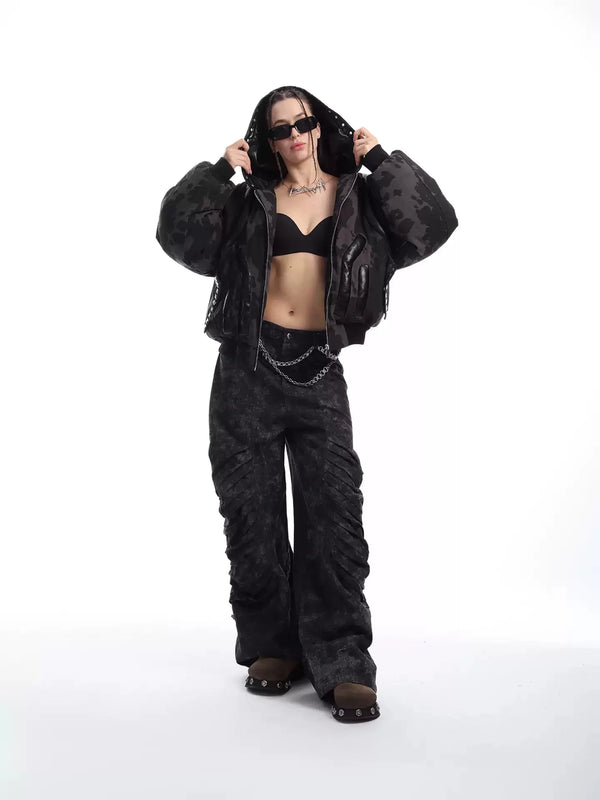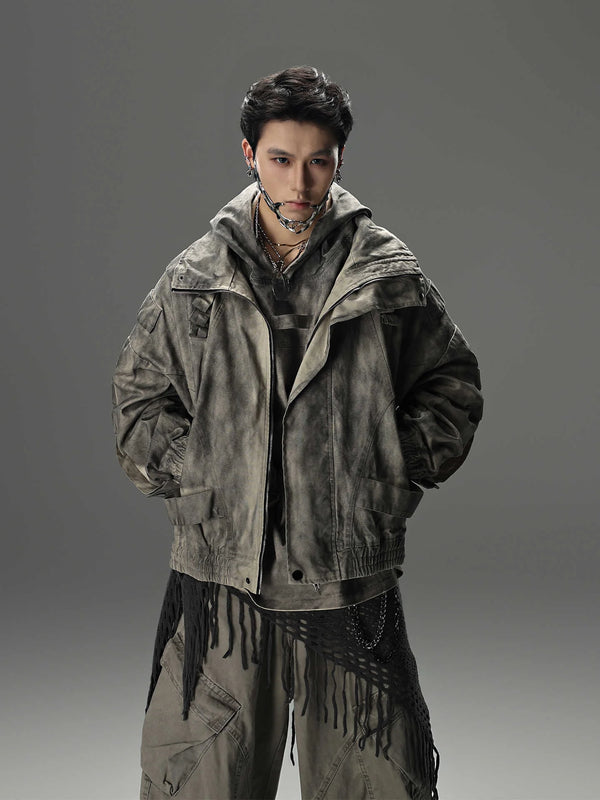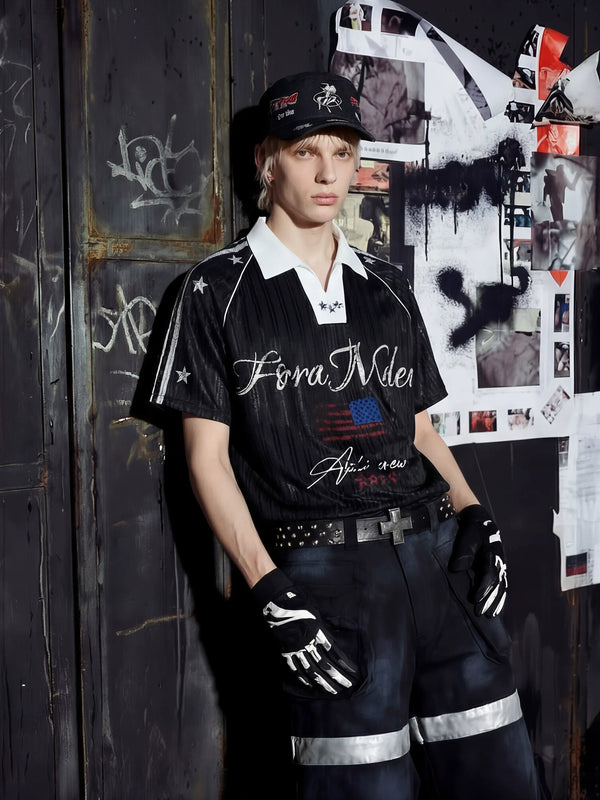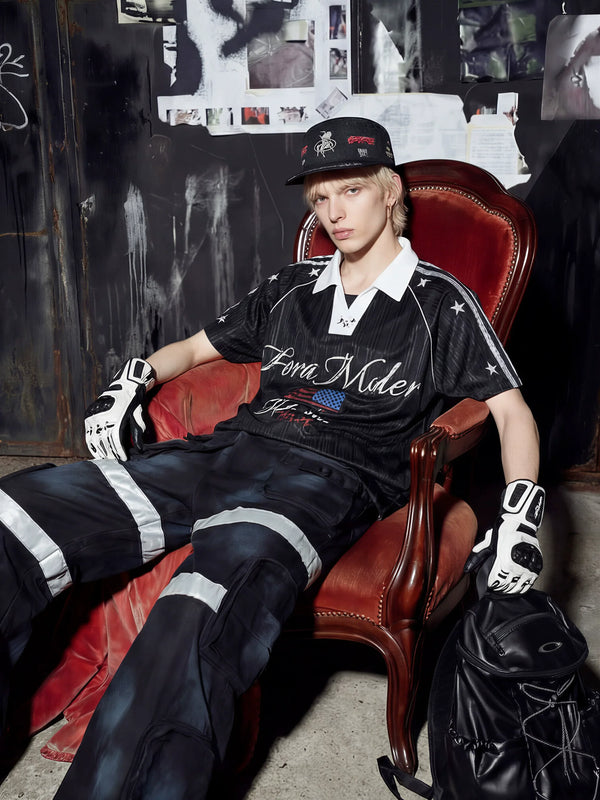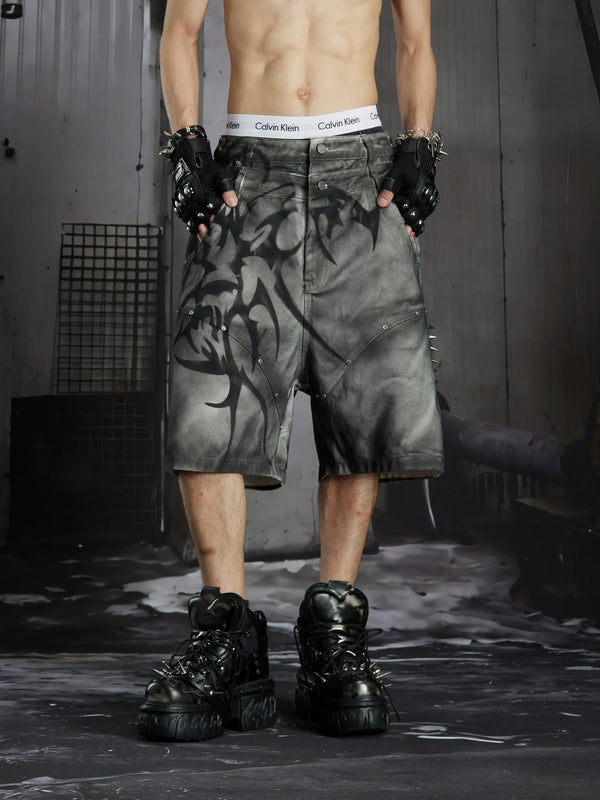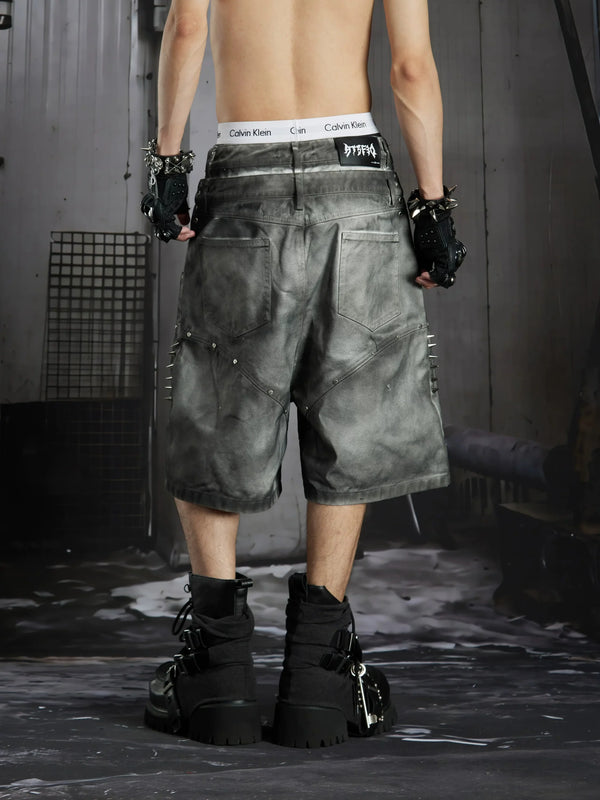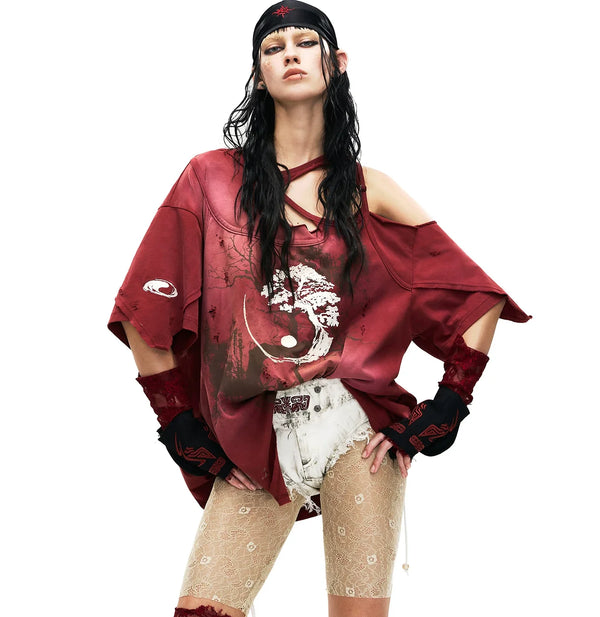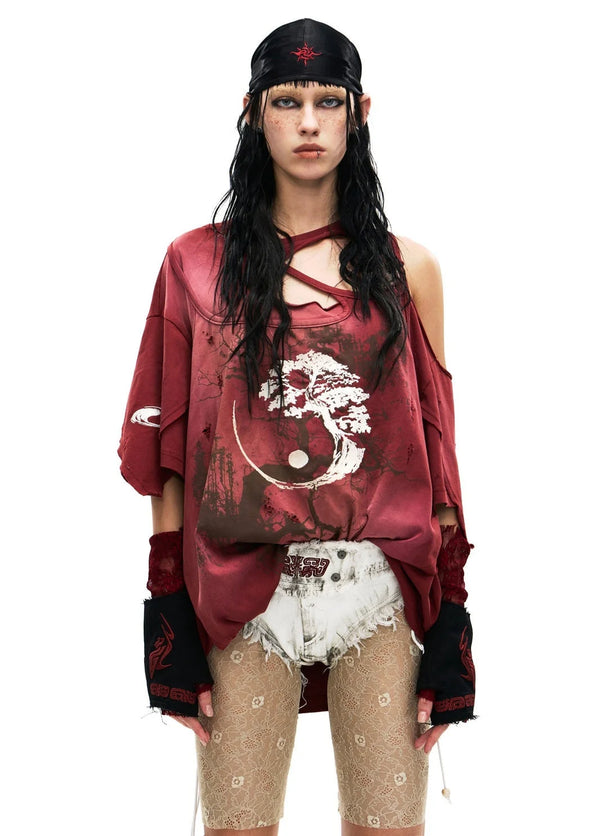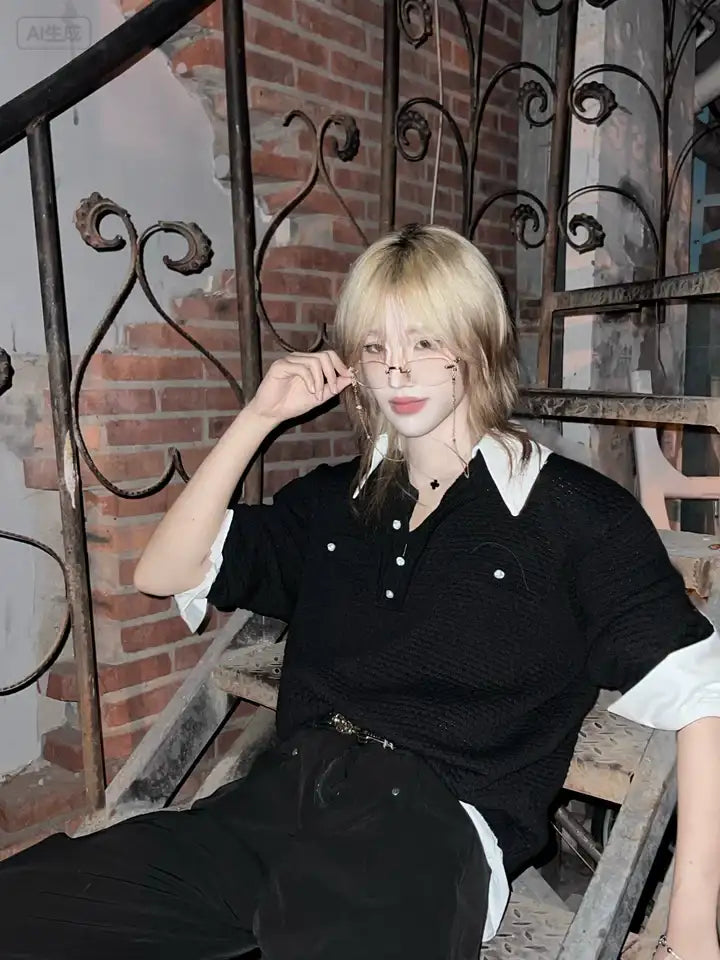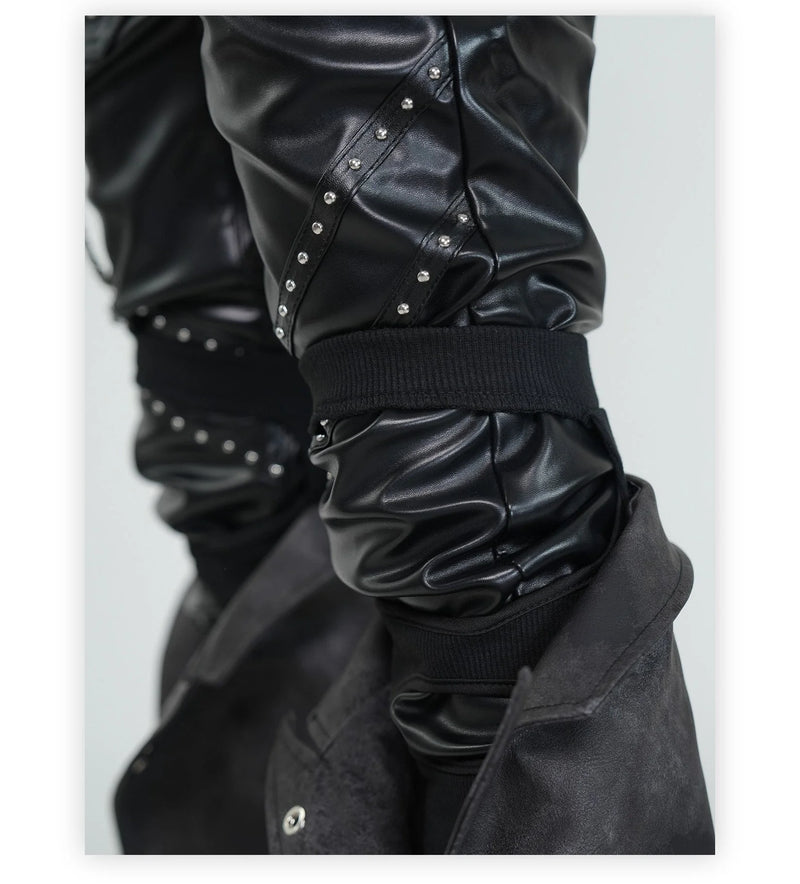
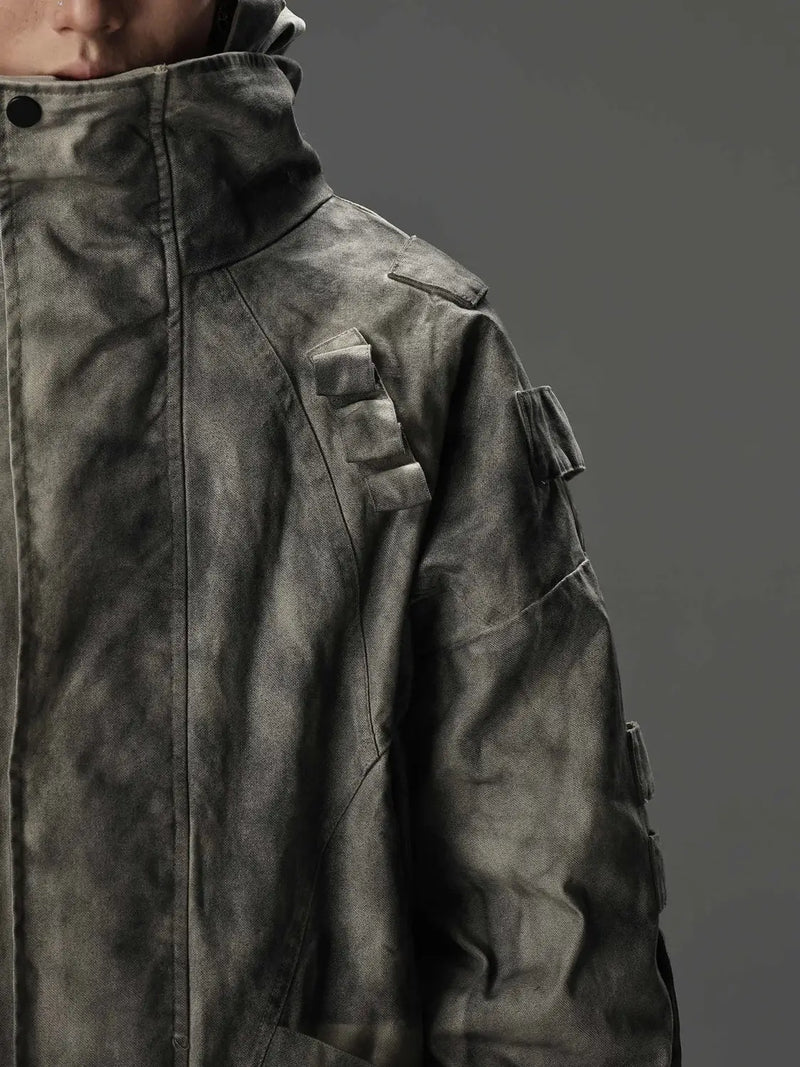
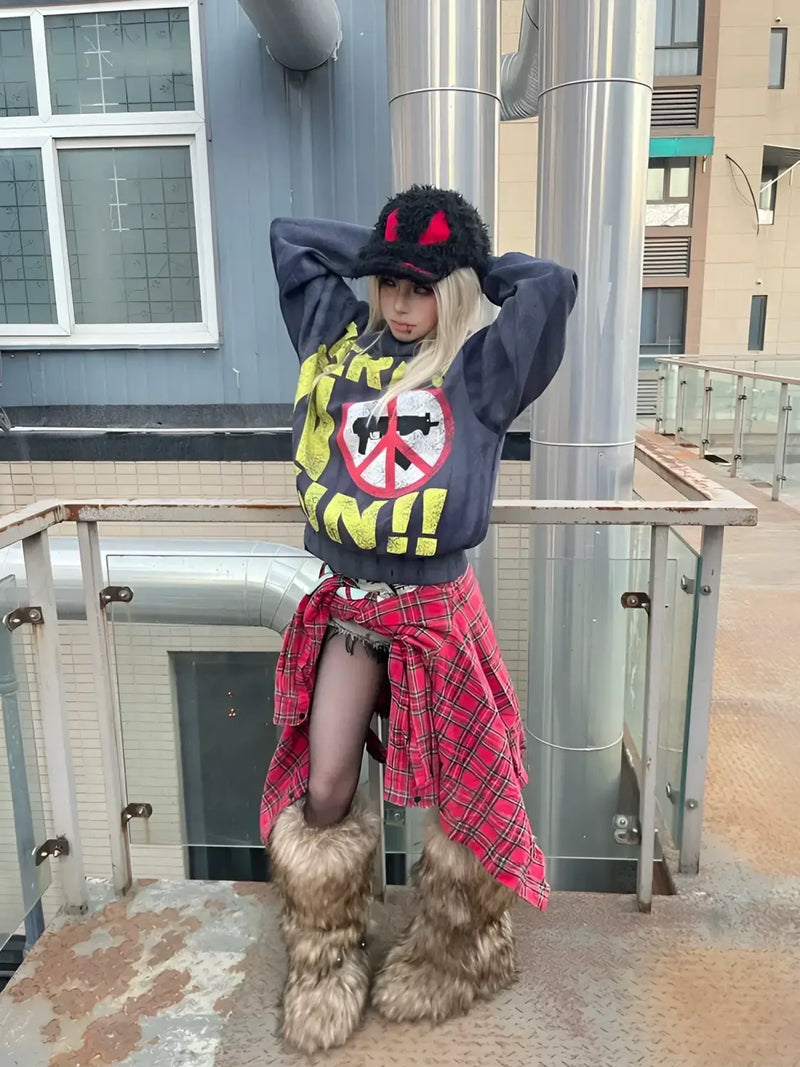

A rave doesn't last two hours. It lasts six, eight, sometimes the whole night into the morning. And the outfit that sat right in the mirror at 11pm is a different animal at three: sweated through, cutting in, a problem on your feet. Comfy rave outfits aren't the boring option. They're the only one that survives hour five without you thinking about leaving.
We've sold rave and techno pieces for years to people who stand on the floor, not in the photo. The feedback is always the same: the look doesn't matter if the fabric clings and the shoe pinches. Comfort isn't a question of style. Comfort is the condition for the style holding until the end.
The principle
What really keeps a rave outfit comfy over six hours
Comfort at a rave doesn't come from softness alone. Sweatpants made of dense polyester are soft and still hell, because they let no heat out. Comfort comes from three factors that have to work together: how the fabric handles sweat, how the fit allows movement, and whether your shoes survive six hours of standing. Miss one, and the whole outfit tips over after the third hour.
6+
Hours on the floor
3
Factors: fabric, fit, shoes
1
Layer for the cold night air
0
new shoes on the night itself
These numbers aren't marketing. They're the test every outfit has to pass before it goes out the door. If a piece fails on one of these points, you carry a problem with you for the rest of the night.
- Breathable fabric — cotton, mesh, light jersey, technical functional fibers. They release heat and dry fast. Dense shiny polyester traps the heat and keeps the sweat on your skin.
- A fit that allows movement — wide or with stretch. Dancing means arms up, knees low, constantly in motion. Stiff tight cuts cut in after hours, no matter how well they sat at the start.
- Shoes for standing, not for the photo — broken in, cushioned, firm fit. Your feet carry you the whole night. A nice shoe that pinches is the fastest way to leave early.
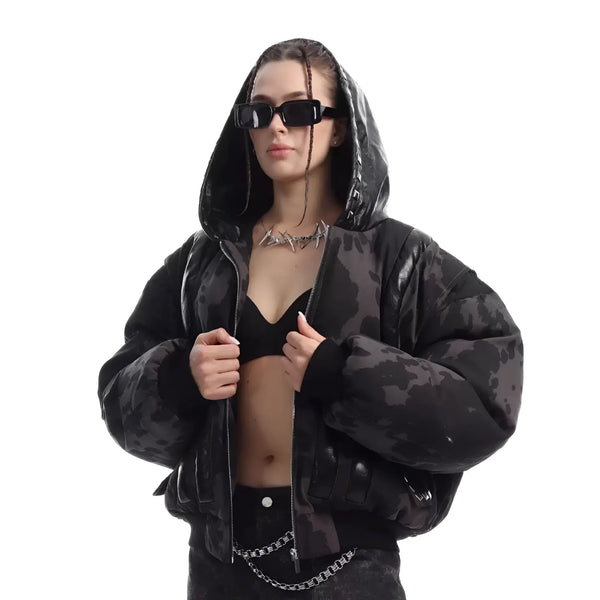
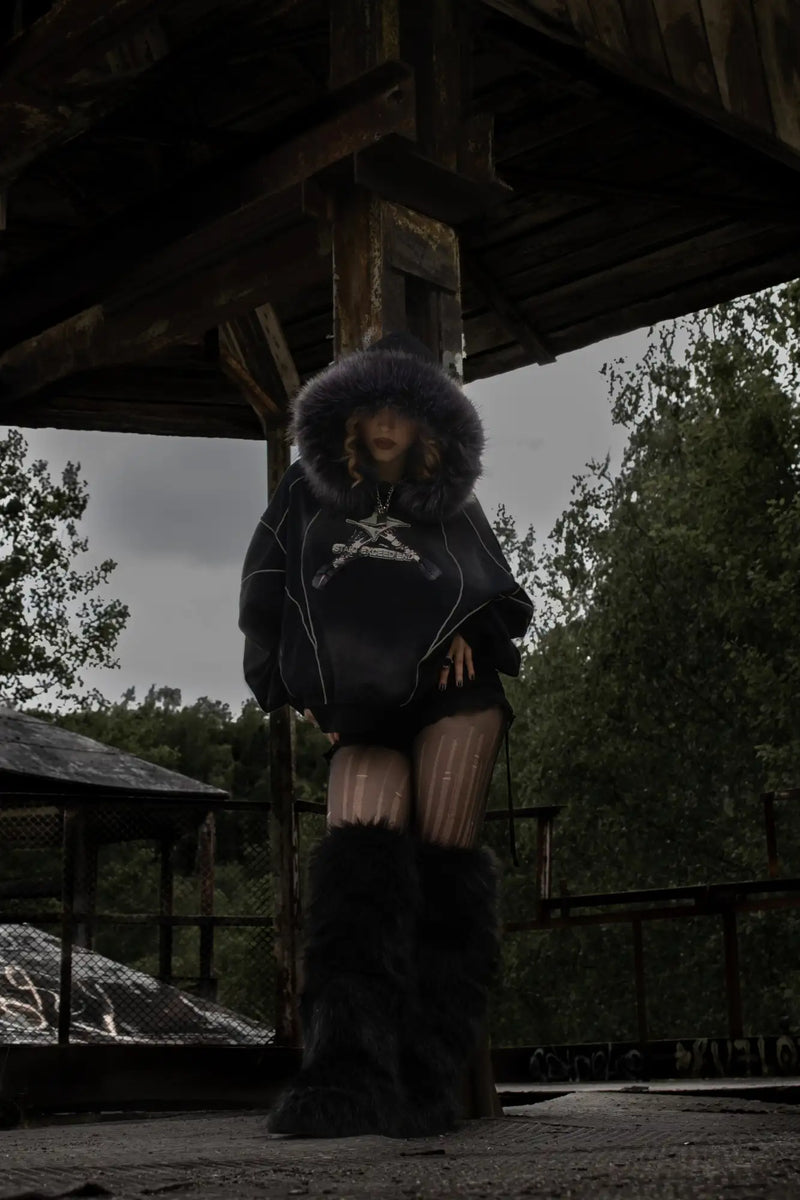
- A layer that moves with you — hoodie or light puffer. After sweating, the body cools down; outside or at the exit it gets cold. Something to throw on saves the last hours.
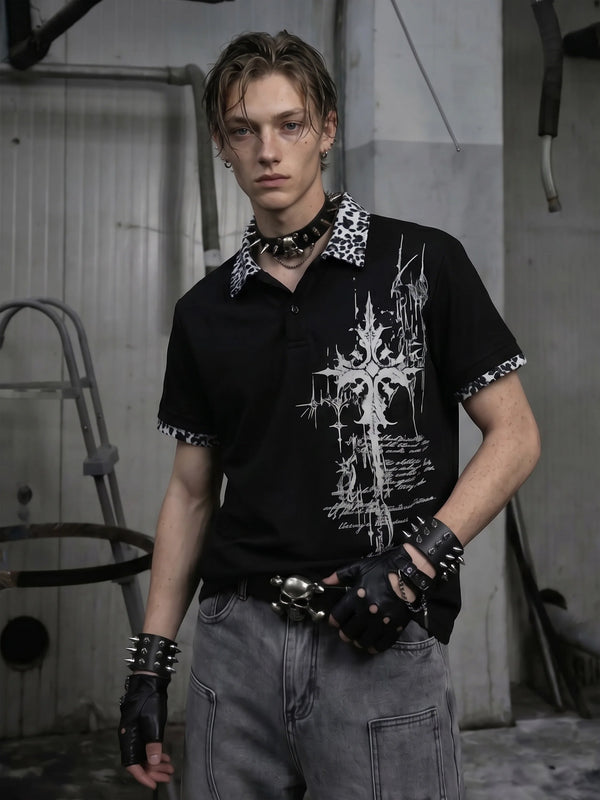
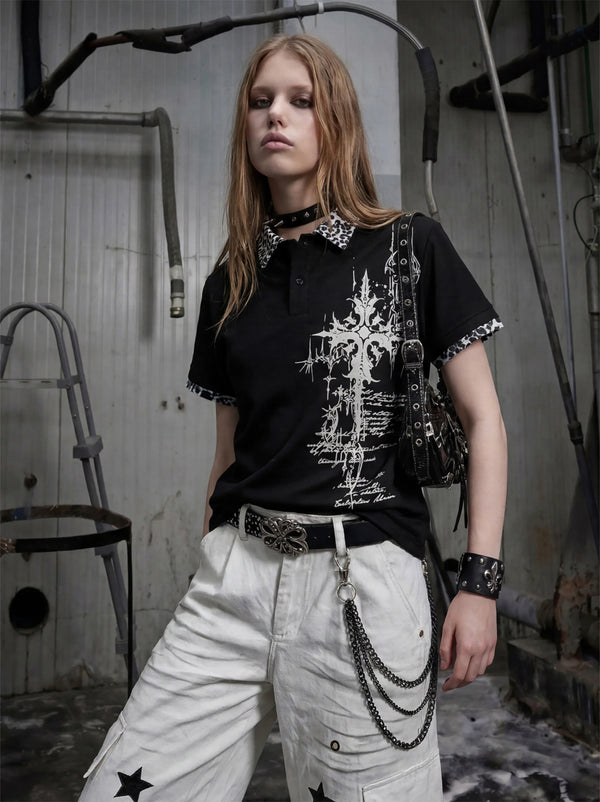
- Hardware that's not in the way — few chains, no chafing studs. Heavy metal weighs you down over hours, catches on other people and presses while you dance.
These three factors are the lens you look at every piece through in the rest of this guide. A look is only as comfy as its weakest point — and that one only shows up late in the night, when it's too late to change it.
The looks
The five comfy rave looks — from oversize tee to tracksuit
There isn't one comfy outfit. There are five routes, all carrying the same principle — fabric breathes, fit moves, shoes hold. Which one suits you depends on how hot the room gets, whether you're inside or open-air, and how much movement you're planning. Pick one and build it fully before you mix two.
The first two — oversize tee and tracksuit — are the safest entry points. Mesh is for people who know their floor gets hot. Techwear for those who don't want to carry anything in their hands. And cozy layer is mandatory once the event is open-air and runs past sunrise.
The question everyone asks
Does a rave outfit have to be revealing? Comfy in both directions
Short answer: no. The long answer is more interesting. Revealing and covered are both viable routes to a comfy outfit — they just solve the same problem differently. It's never about showing or hiding skin. It's about how your body handles the heat of the floor.
- Revealing comfy — mesh, crop, shorts. The skin regulates the heat directly, no fabric traps warmth. It works because less material means less of a sweat trap, not because it shows more.
- Covered comfy — light longsleeve, wide pants, thin jersey. Works just as well, as long as the fabric breathes. An airy long piece cools better than a tight short one made of polyester.
- The mistake in both directions — heavy dense fabric. Short or long, it doesn't matter: if the material lets no heat out, you sweat in it. Shiny material is always the loser, in any length.
Whoever feels more comfortable more covered gives up nothing by it. Modest rave looks — long mesh layer over the tank, wide pants instead of shorts — hold just as long and look just as right on the floor. Comfort is decided by the fabric, not the length.
Niemand auf dem Floor schaut, wie viel Haut du zeigst. Alle schauen, ob du noch tanzt. Comfort gewinnt das immer.
So build your outfit around your own comfort zone, not around a rule someone set up online. Both routes are comfy when the fabric is right.
Women vs men
Comfy rave outfits women vs men — where the difference lies
The principle stays identical: fabric breathes, fit moves, shoes hold. What differs is only the usual silhouette — and that's less fixed than the search terms suggest.
For women the most common comfy base is a mesh or tank top with shorts or wide pants — lots of movement, lots of air. For men it's usually the oversize tee with cargo or jogger. But those are tendencies, not boundaries. A wide jogger works on any body, a mesh layer too. Whoever wants to mix, mixes — the three factors don't change because of it.
If you're looking for Techno Rave pants for women or for men, the filter is the same: does the fabric let air through, does the cut allow movement. Your taste decides the rest.
Up top
Tops — mesh, oversize tee, tank
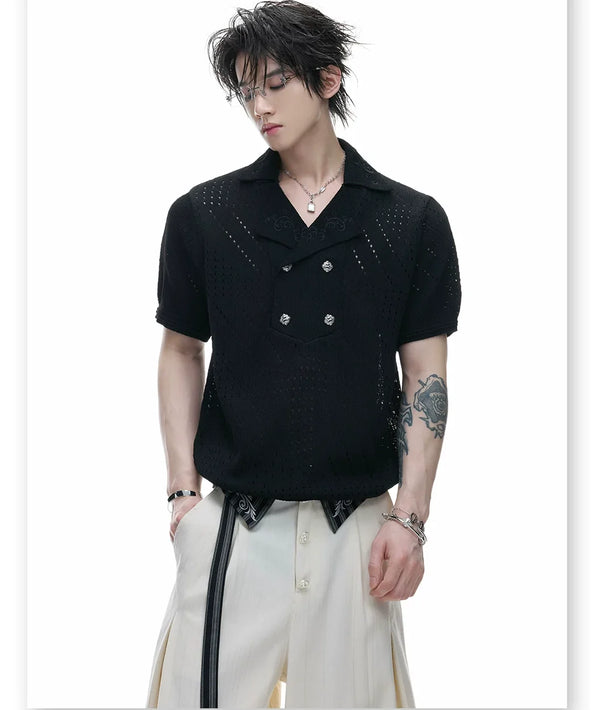
Up top is where the heat is decided. The upper body sweats the most, so the top has to breathe the hardest. Three options carry almost every comfy look: the cotton oversize tee for the standard, the mesh layer for hot rooms, the tank for maximum air. All three share that they let heat out instead of trapping it.
If the room tends to get hot — small club, full floor — reach for the mesh shirt or tank. For open-air with cool night air, the oversize tee plus layer is the safer choice.
Down below
Pants — cargo, jogger, parachute
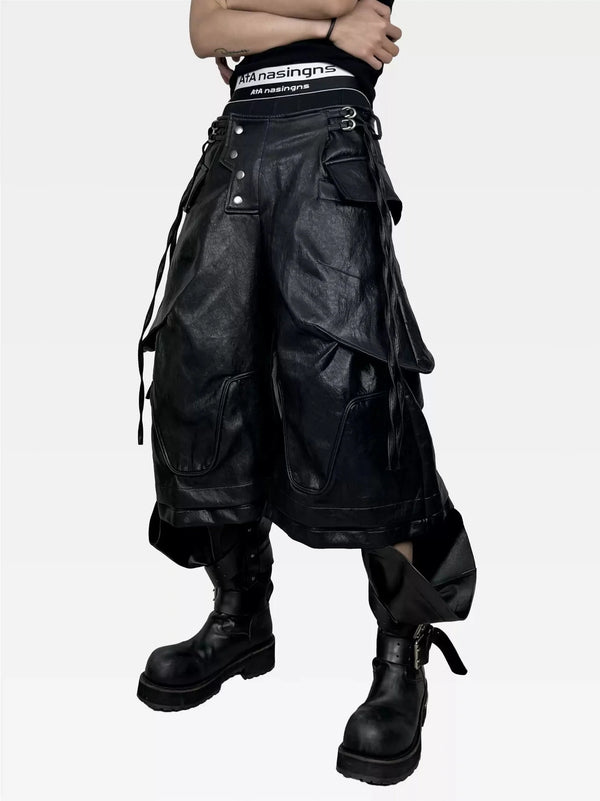
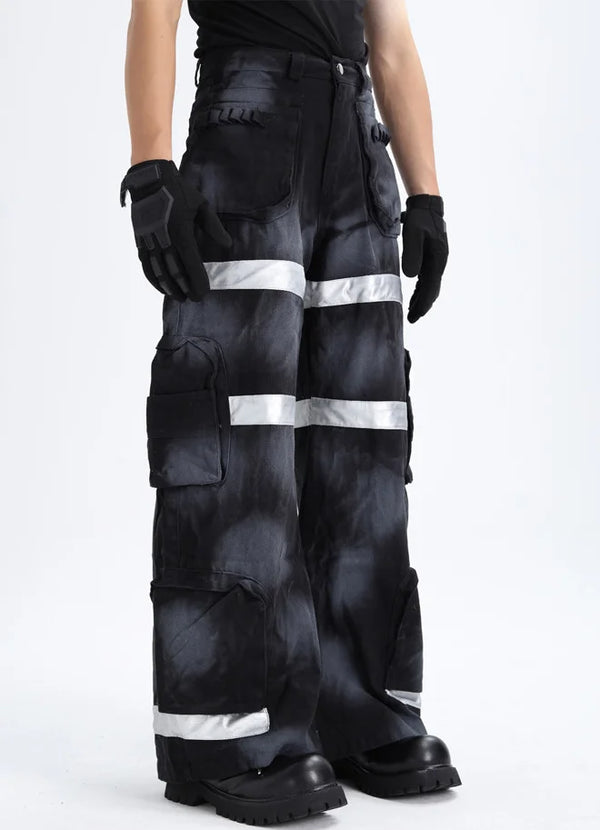
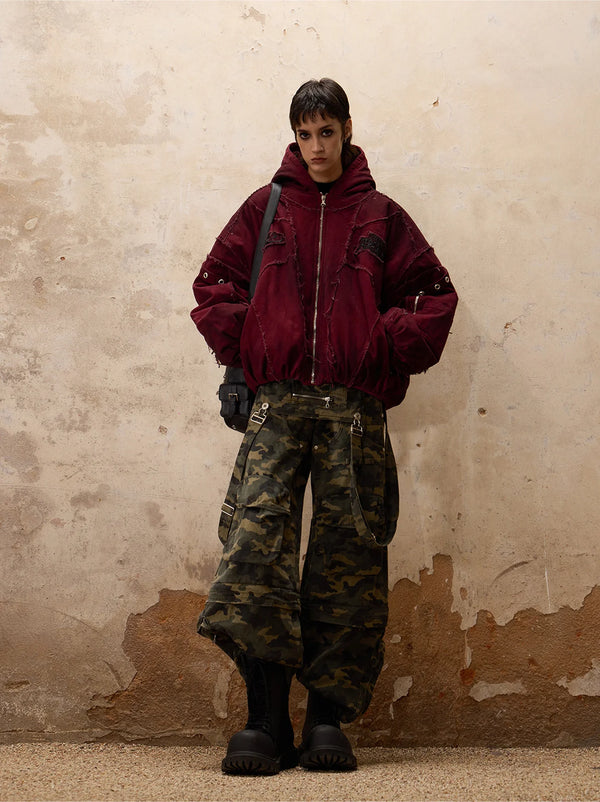
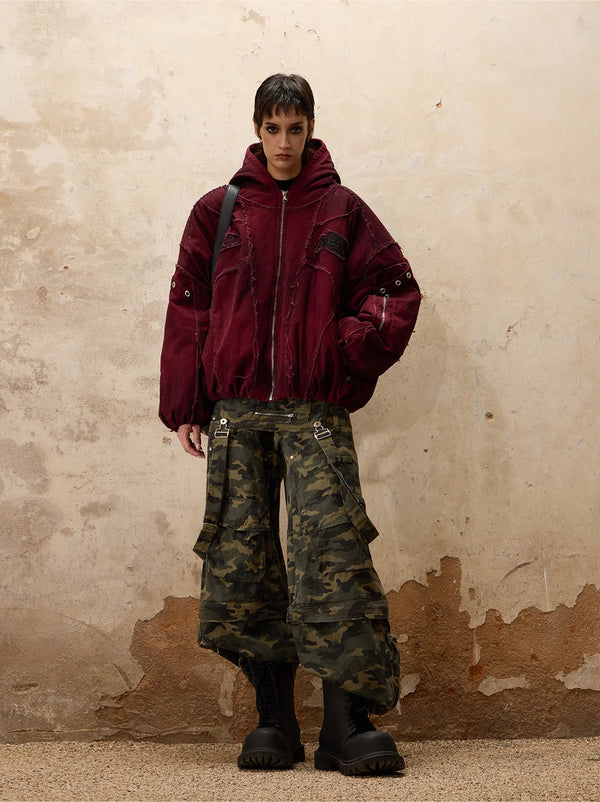
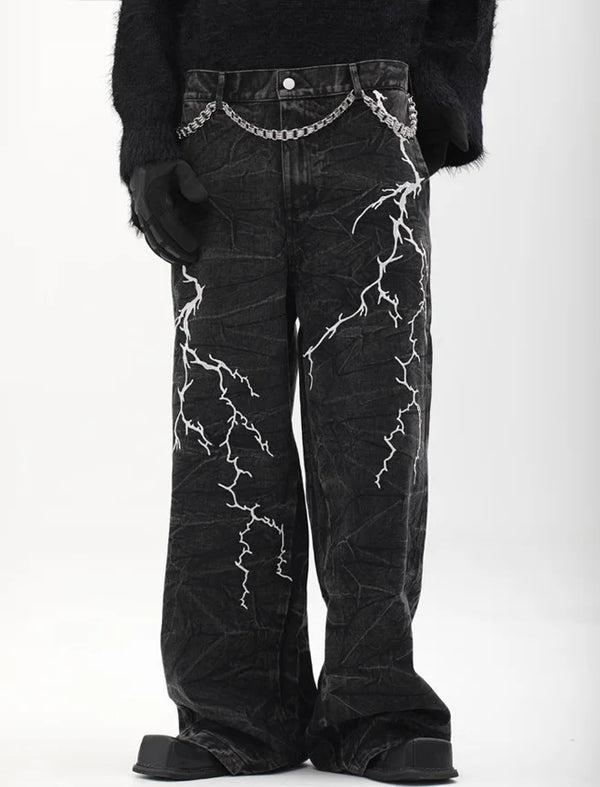
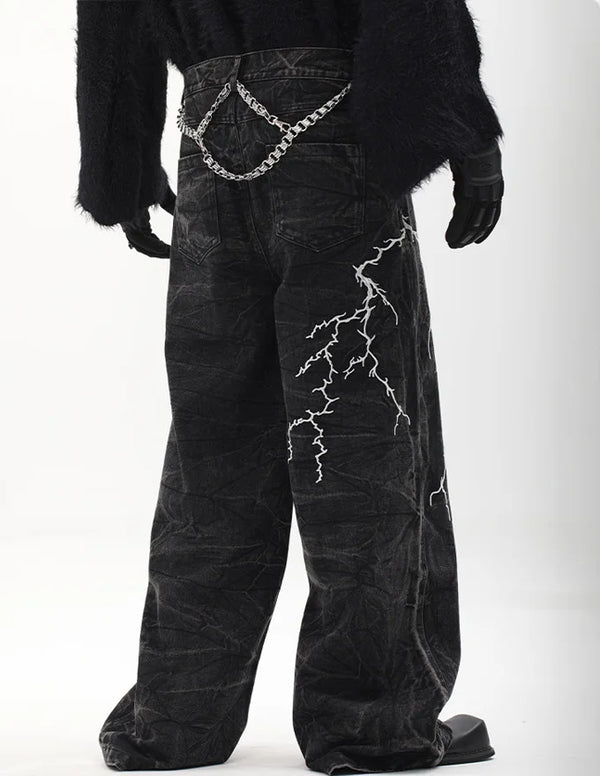
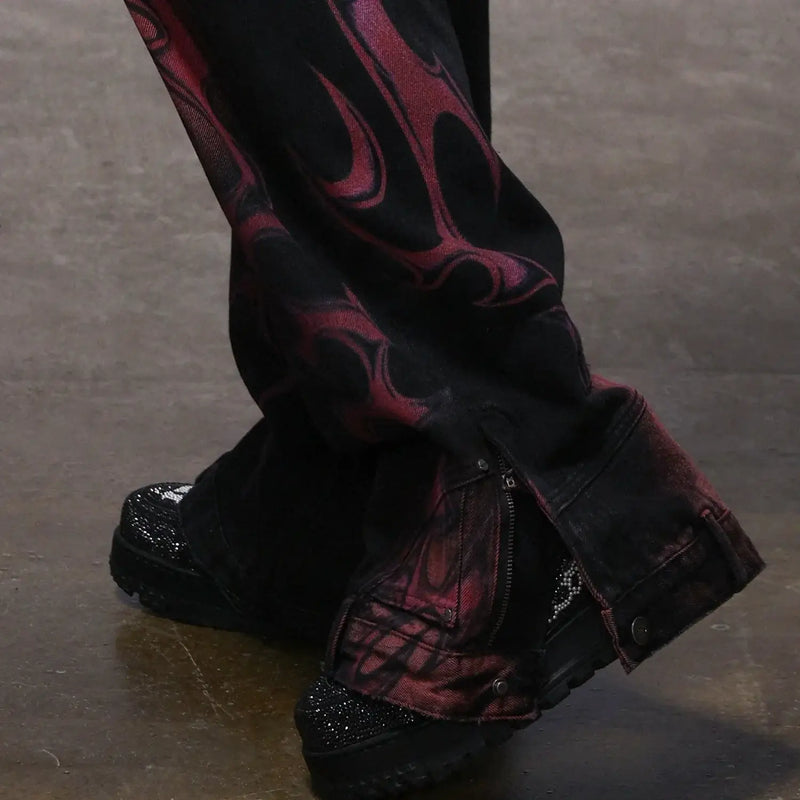
Down below is where the movement is decided. The pants have to handle deep knees, wide steps and hours of standing without cutting in. That's why jeans almost always drop out and cargo, jogger or parachute win: wide cut, light fabric, room for movement. If you're looking for pants that stay comfy, just ask whether you can crouch down deep in them without anything pulling.
For maximum comfort the route leads to the techwear jogger or the parachute pants — both light, both wide. Whoever likes it more structured stays with the cargo with a stretch share.
The feet
Shoes — why they decide your whole evening
No piece decides comfort as hard as the shoe. You stand and dance the whole night on the same two feet. An outfit can be perfect — if the shoe pinches from hour two on, you leave early. That's why the shoe is the one piece where you never optimize for the look, but always for the wearing.
The rules are short: broken in, cushioned, firm on the foot. A sturdy sneaker or a light boot you already know beats any new shoe, no matter how good it looks. On tight floors a closed shoe is also smarter than open models — feet get stepped on, and beer lands on the ground.
Reflective or eye-catching shoes are a nice bonus, but never the reason for the choice. First comes whether the shoe holds the night — then how it looks.
The conditions
Open-air summer, club winter, rain — comfy in any weather
Comfy in a summer club means something different than at a winter open-air. The three factors stay, but the layering changes with the conditions. Whoever plans that beforehand doesn't freeze out and doesn't cook in.
In a hot club, less is more: mesh or tank, shorts or wide pants, that's it. At an overnight open-air you need the layer — hoodie or light puffer that fits in the backpack, for the cold hours after sunrise. And in rain or mud, only one thing counts: that everything dries fast and the shoes give grip; cotton soaks up, technical fibers don't.
For the cold variant it's worth a look at the Winter Rave collection and at light puffers that fit in the backpack as a layer instead of making the floor uncomfortable.
The brands
Rave clothing brands — where comfy rave wear comes from
The rave-wear world splits roughly into three camps. Whoever's looking for comfy should know which camp delivers what — and where the fabric holds what the photo promises.
- US rave giants — iHeartRaves, One Stop Rave, Rave Wonderland. Huge selection, lots of festival glitter, often thin polyester. Good for statement pieces, weaker on fabric comfort over long nights.
- Functional and techwear brands — everything coming out of the outdoor and techwear corner. Best fabric comfort, breathable and movement-friendly, but less loud in the look.
- DTC streetwear with a rave focus — brands like Fūga Studios that translate techno and festival codes without sacrificing fabric comfort. Thought through to be floor-ready, not just for the photo.
- Resale and vintage — Depop, Vinted, local secondhand shops. Broken-in pieces are often the comfiest, because the fabric is already soft. Patience needed, but cheap and sustainable.
No matter which camp — the test stays the same as at the start of this guide. Grab the fabric, see if it breathes, check whether the cut allows movement. A known brand is no guarantee of comfort. The fabric in your hand is.
What tips the night
The six most common comfy mistakes — what you shouldn't do
Most uncomfortable rave nights aren't a streak of bad luck, but the same six mistakes, over and over. Each one only shows up late — when changing is no longer an option.
If you avoid these six, you've done most of the work. The rest is taste.
Start right away
Your first comfy rave outfit — the four pieces
You don't have to buy everything at once. Four pieces are enough for a complete comfy outfit that holds every night. Build them together cleanly once, and you have a base you can extend however you like.
Start with the pants — they carry the biggest part of the comfort. Then the top, by the heat of your floor. The layer comes for the cold hours, the accessory last of all. In this order you don't spend money on the wrong thing.
For real
Comfy rave outfits for real — how it looks on the floor
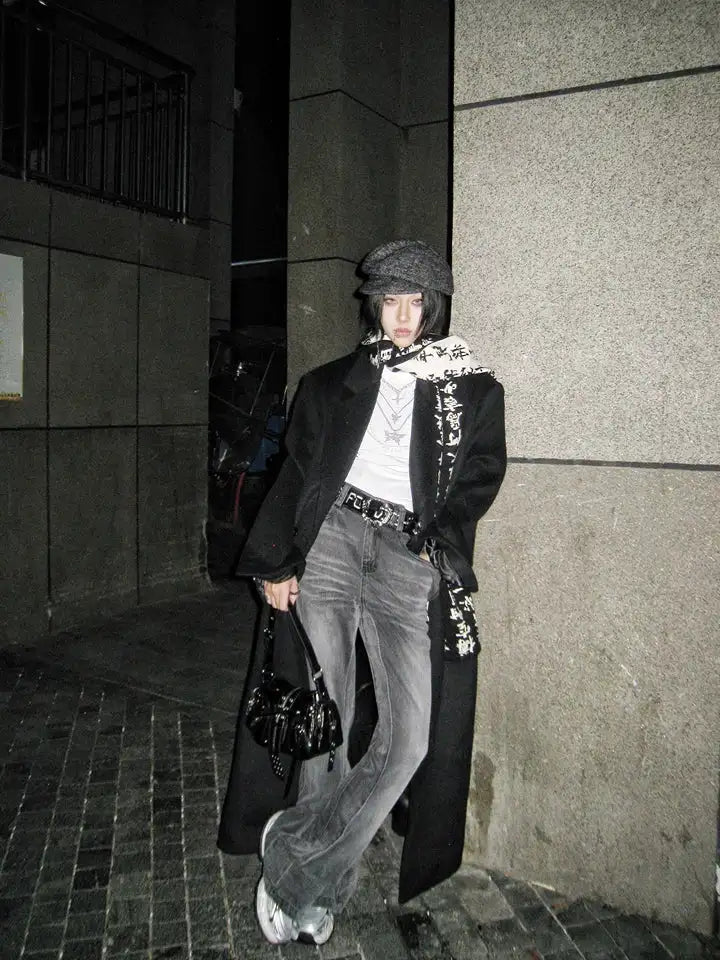
In the photo every outfit looks comfy. On the floor the truth only shows after hours. That's why it's worth looking at real looks from people who actually stayed until morning — not the lookbook, but the everyday.
Whoever wants to go deeper finds several guides with us that develop individual rave topics further — from the complete festival setup to the men-specific variant.
And here the most important neighbor guides, in case you want to read on in a particular direction:
In closing
Comfort beats show — every night after hour three
At the start of the night everything looks good. Comfy rave outfits don't win in the first hour — they win in the fifth, when the people in the wrong fabric are already sitting on the edge and you're still dancing. That's the whole point.
You don't have to get everything right at once. Start with the pants and a good pair of broken-in shoes — those are the two factors with the biggest effect. Top and layer come after. Wear the setup one night, and you immediately notice what fits and what you still want to change.
FAQ
Frequently asked questions about comfy rave outfits
The questions we often get by DM and email — short, clear, no detours.
What should I wear to a rave?
Do rave outfits have to be revealing?
How do I dress for a rainy rave or open-air?
What do you wear to a winter rave?
What is the 3-3-3 rule for clothing?
What is the 7-point rule for an outfit?
Which fabric is most comfortable at a rave?
What do you think?
Tell us on @fuga_studios
About the author
Philipp Fuge — Founder · Berlin
Founder of Fūga Studios. Writes the journal himself. Berlin · Shanghai · Tokyo · Poznań — four cities, one logic.