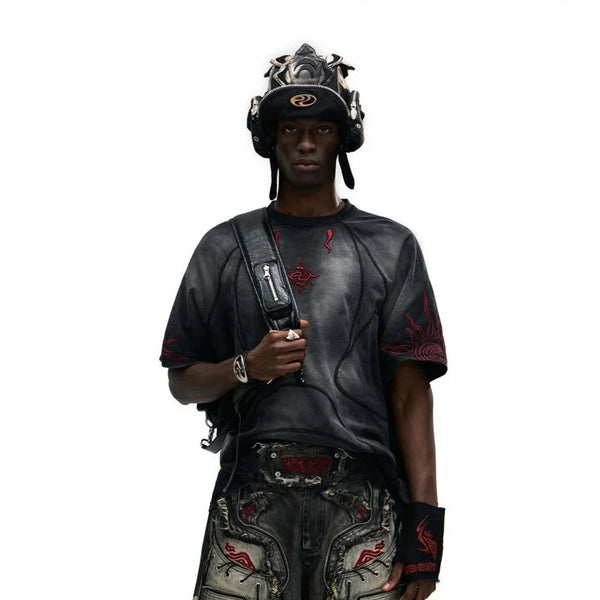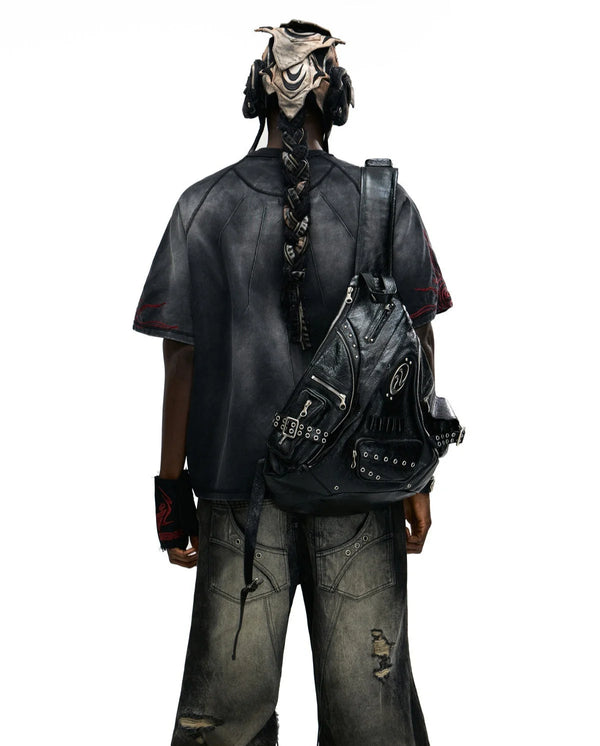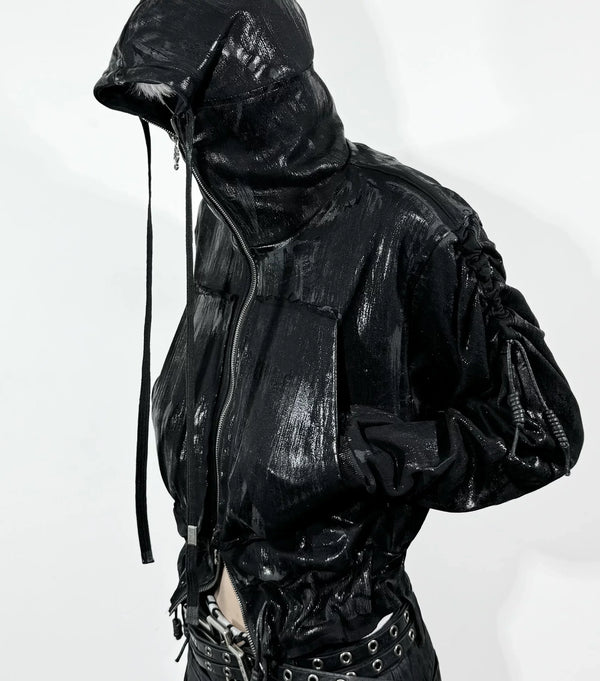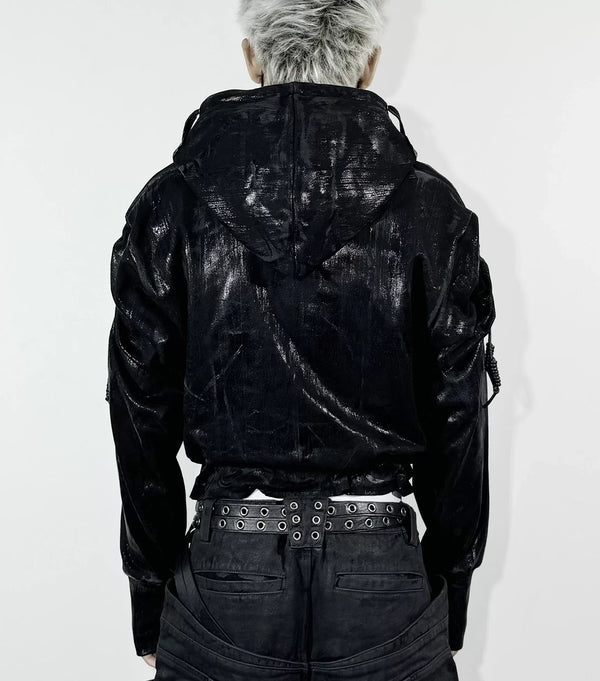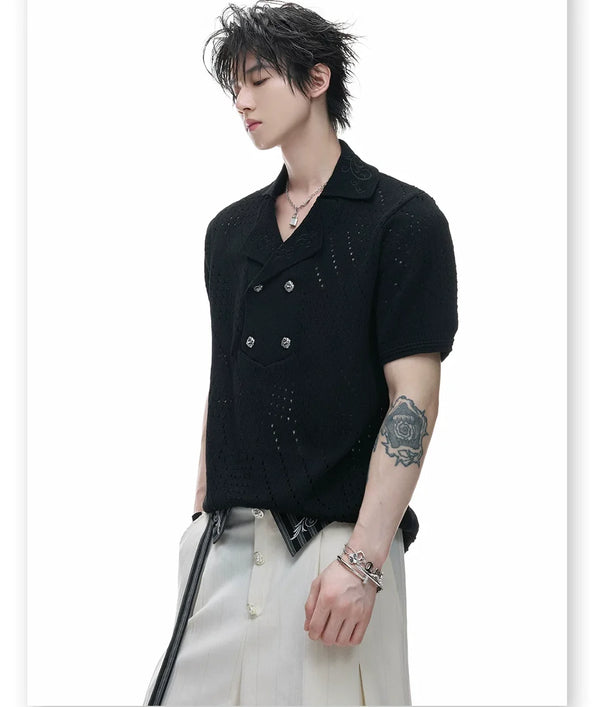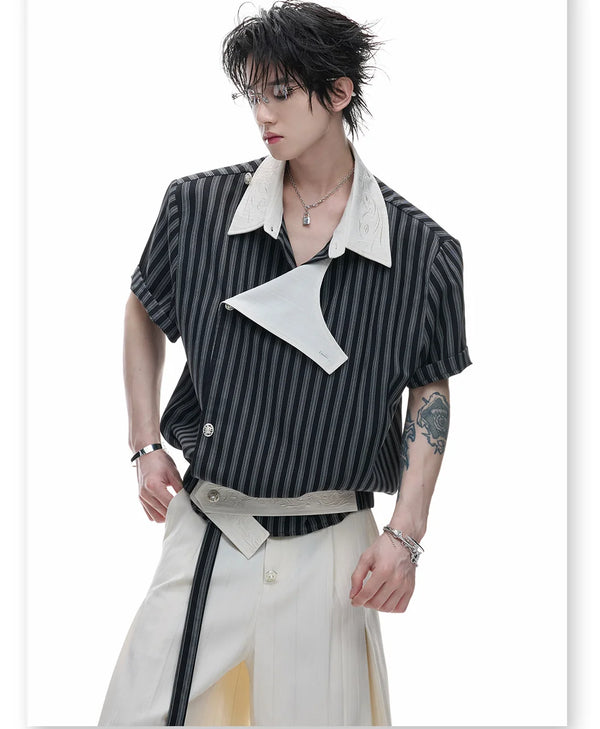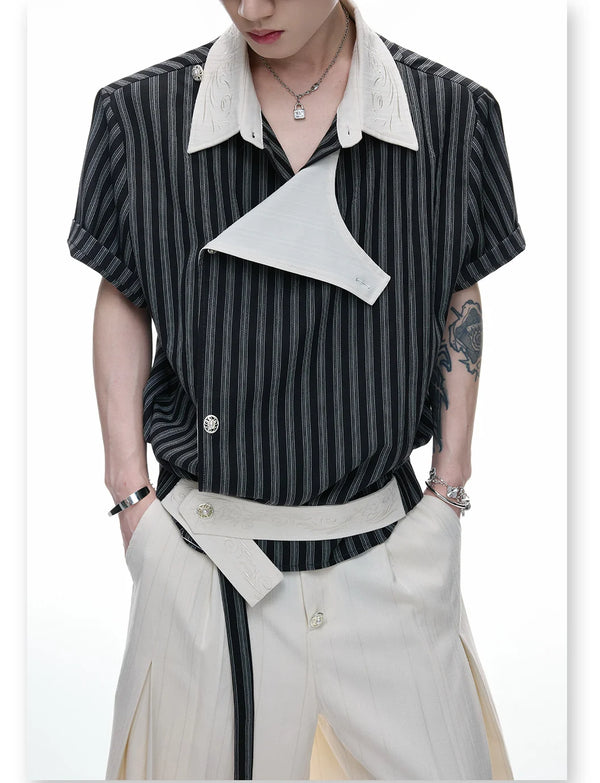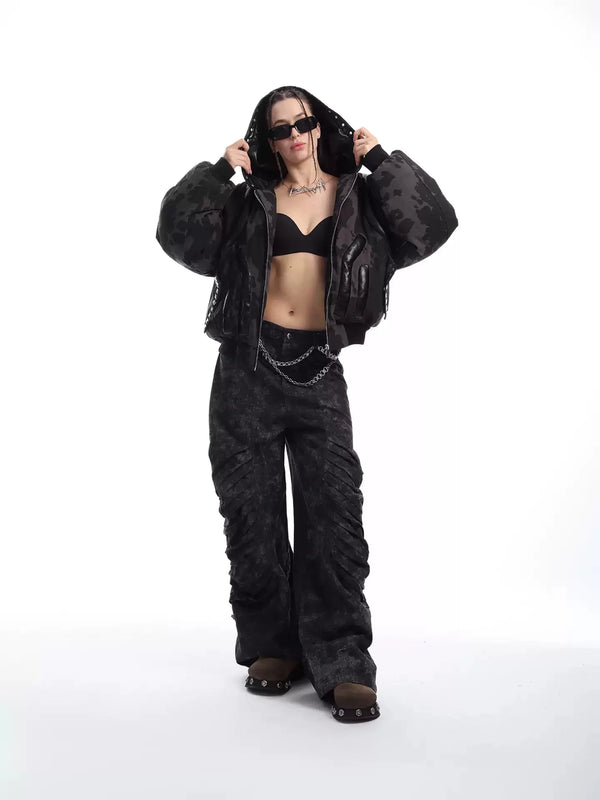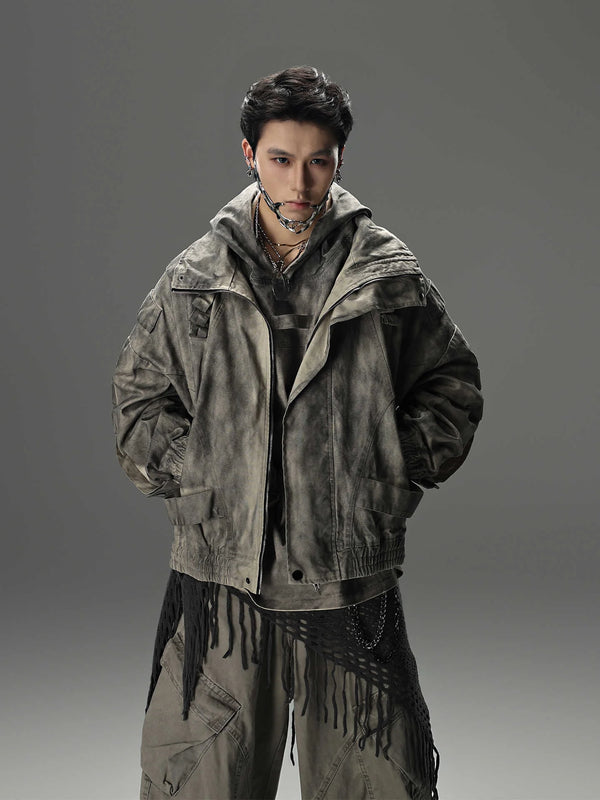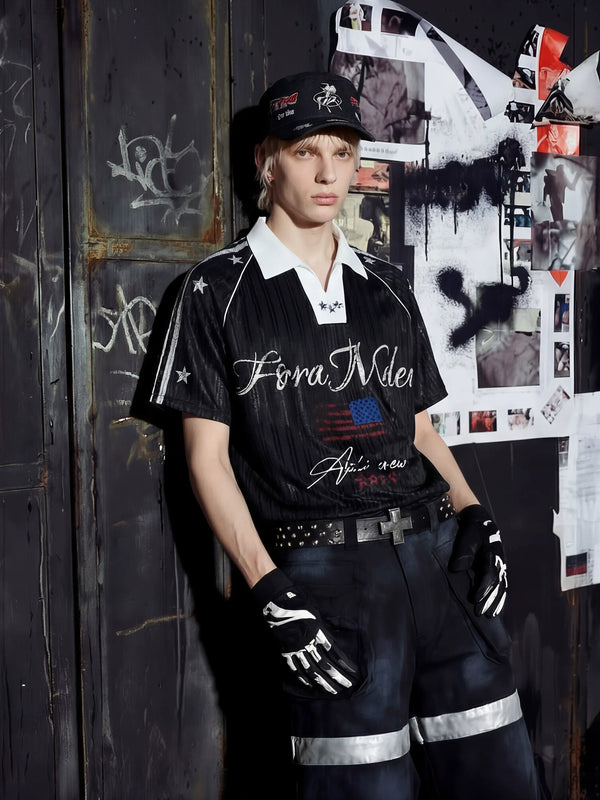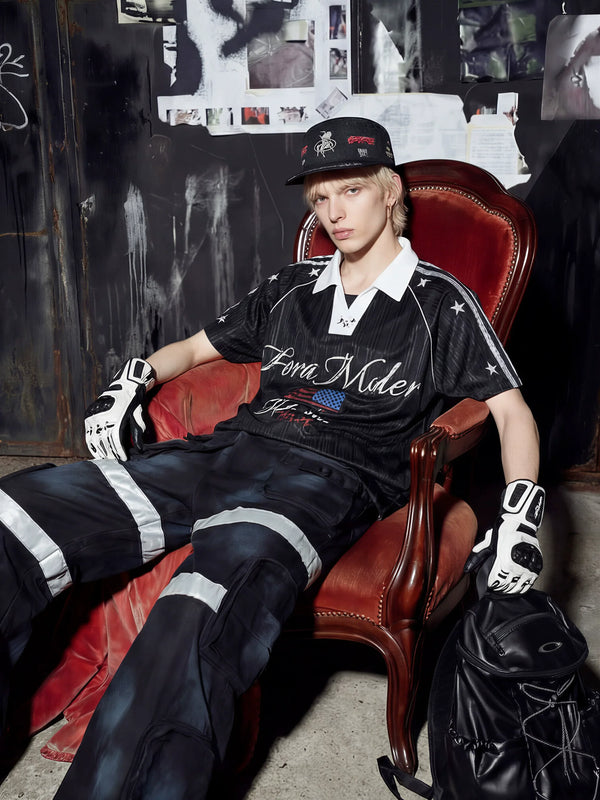
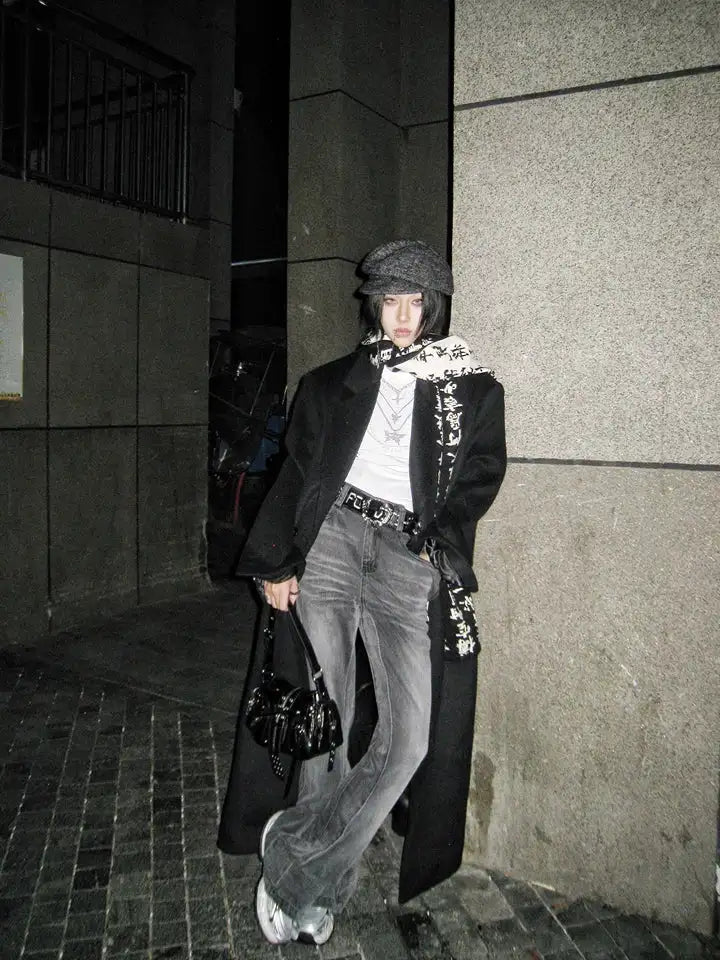

Black on the floor isn't a colour. It's a rule. In Berlin the door line at Berghain decides in under three seconds whether you get in — and black means: you know where you are. At Tresor, at Griessmuehle before it closed, at Renate, at about blank, at Wilde Renate: black-on-black isn't an outfit. It's an entry code. Whoever stands in neon pink in the Berghain queue signals they haven't read the floor.
That's exactly where most all-black rave outfits fail. They look black, but they don't wear the way the floor needs them to: after eight hours of strobe, 38 degrees of floor heat, sweat, cigarette burns, jostling at the bar, three trips to the toilet. Black is the baseline rule — fabric, cut and hardware are what make the look real on the floor.
We build the guide so that every section answers a question that actually gets asked in the Berghain queue or in the changing room before your first real rave. No glossary, no trend prose — cut logic, fabric rules, hardware points. First the code, then the pieces.
What counts as „all black“ on the floor — and why black at all?
All black at the rave isn't a fashion trend that gets rolled back at some point. The line leads straight back to the early nineties, when Tresor opened in the old vault hall at Potsdamer Platz and the industrial techno sound — Detroit hardness plus Berlin concrete — needed a uniform that matched the music. Black was cheap, black was grown-up, black swallowed the strobe flash. Black turned the Berghain predecessor Ostgut, Tresor and the WMF era into the visual standard the Berlin scene still works with today.
„All black“ means: everything visible is black. Not „mostly black with a grey sneaker“. No dark blue bomber that suddenly glows royal blue under UV light. No anthracite marl top that breaks grey between the lasers. That's the first test most first all-black outfits fail — they're black in daylight, but not black under the floor setup. Tresor floor, Berghain column hall, RSO garden — all three read colour under strobe differently from the bedroom mirror selfie at three in the afternoon.
8 h
average floor time Berlin
38°
floor temperature Berghain column hall
1993
year all black was codified at Tresor
The second rule: on the floor black isn't monochrome, it's a layer hierarchy. Nylon shines differently from leather, mesh differently from cotton, waxed denim differently from wool. A good all black has three to four different black surfaces — matte, semi-matte, glossy, transparent — that work with each other under the light. A bad all black is the same cotton black three times over, which looks like a dark smudge under strobe. That's the visual difference between „dressed“ and „put together“.
- Matte black — cotton, waxed canvas, sandwash denim. Swallows light. Anchor of the lower layer (pants, tee).
- Semi-matte black — wool, terry, brushed jersey. Slight depth, good readability under strobe.
- Gloss black — leather, nylon, coated synthetic. Reflects the light source in points. Accent, not base tone.
- Transparent black — mesh, thin tulle, organza. Lets skin or a second layer through. Creates depth without a colour change.
Three of these four surfaces in one outfit are mandatory. One isn't enough, five are too many. That's the most important blueprint almost all first all-black attempts skip — and the reason „black“ alone isn't yet a look.
All black rave outfit ideas — the 5 floor archetypes
Whoever googles „all black rave outfit ideas“ finds 400 images on Pinterest and Devil Walking that all look like they came from the same algorithm — and not a single blueprint. On the floor in Berlin there are five recognisable all-black archetypes, each with its own cut logic, its own fabric mix and its own floor habitat. Once you know which archetype suits you, you stop buying „more black“ and start building on purpose.
Most new all-black attempts fail because they mix two archetypes badly — Goth-Mesh with a Black-Gorpcore jacket, Industrial cargo with a Berghain-Minimal top. On the floor that reads as „don't know where I am today“. Pick one archetype and build it cleanly to the end before you start hybridising.
All black rave outfit men vs women — the cut difference
The searches „rave outfit men“ and „all black rave outfit women“ land on two different Pinterest boards with two different cut systems. That's not marketing — it's real on the floor. Men's all black swings differently on the Berghain floor than women's all black, and the difference isn't in the colour but in three specific cut points.
For men the shoulder line decides. A too-tight top over broader shoulders reads on the floor instantly as „bought the wrong size“. Men's all-black tops sit either deliberately oversized (Berghain Minimal code) or close to the body with a straight shoulder line (Industrial code) — both cuts have a gap in the middle that doesn't work. The pants underneath are almost always wide-leg or cargo with a drop at the knee, never slim fit. Slim black jeans are a 2018 festival outfit, not 2026 Berghain.
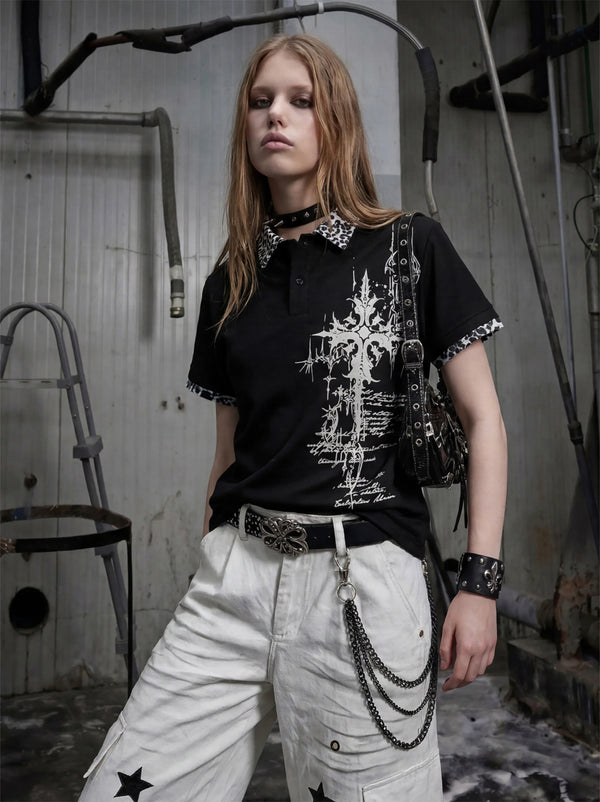
For women the cut point sits at the waist. Most all-black women's outfits that really work on the floor have a clear waist break — either through high-rise pants, a cropped top, a harness or a corset layer. Without a waist marker the silhouette disappears under strobe into a black column. With a waist marker the look becomes readable — that's the point where Berghain women's black moves away from Halloween black.
The second women-specific point: mesh layer. A black mesh bodysuit under a black cropped top creates two skin lines (at the neck and at the rib base) that make the outfit three-dimensional. The same outfit without a mesh layer is visually a black surface. In women's all black, mesh isn't an accent — it's a structural element.
Fabrics for 8 hours of black — what really survives the floor
On the Berlin floor, fabric is what kills 80% of first all-black attempts. An outfit can look optically perfect and turn greasy and shiny after three hours of floor, sit sticky, go see-through or tear. Black absorbs heat — on a floor at 38 degrees of floor temperature that means: your outfit is your second skin, and the second skin must not fail.
- Cotton (waxed or densely woven) — breathes, creases, holds. After 8 h slightly softer, not destroyed. Standard for the Berghain-Minimal pants and tee.
- Nylon (ripstop, coated) — light, fast-drying, robust against cigarette burns. Industrial-Tactical standard. Shines in points under strobe — that's intended.
- Leather (real or dense PU) — doesn't breathe, but lasts forever. Maximum one component per outfit; more and you'll sweat through the lining at floor temperature.
- Mesh (polyester knit) — breathes maximally, holds its shape. Structural element for depth, not a wear fabric for outside in February.
- Wool (dense knit) — swallows sweat, doesn't smell after 8 h. Excellent winter layer; unsuitable on the floor in summer.
Avoid on the floor: viscose (creases into a laundry-rag look after hour two), cheap uncoated polyester (develops sweat rings that look light grey on black), raw linen (creases instantly and looks in the morning as if you slept in the pants — which you probably did). If a piece feels like a polyester-viscose mix for 19.90 €, that's what it is — and after hour three you can see it.
All black rave pants — the cut hierarchy
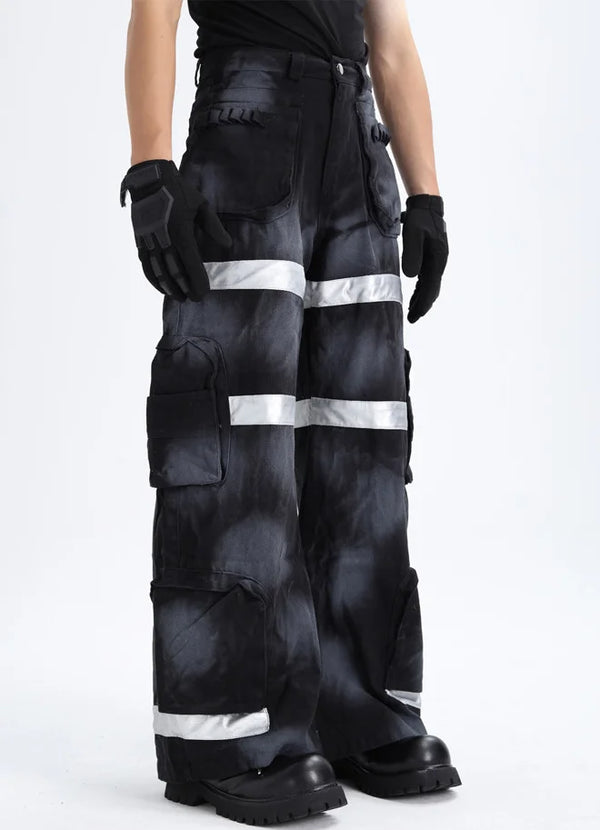
On the floor the pants are 60% of the outfit. They're what the crowd sees from a crouch, what swings while you dance, what still has to hold together after eight hours. Three pants cuts work reliably on the all-black floor — everything in between is a compromise.
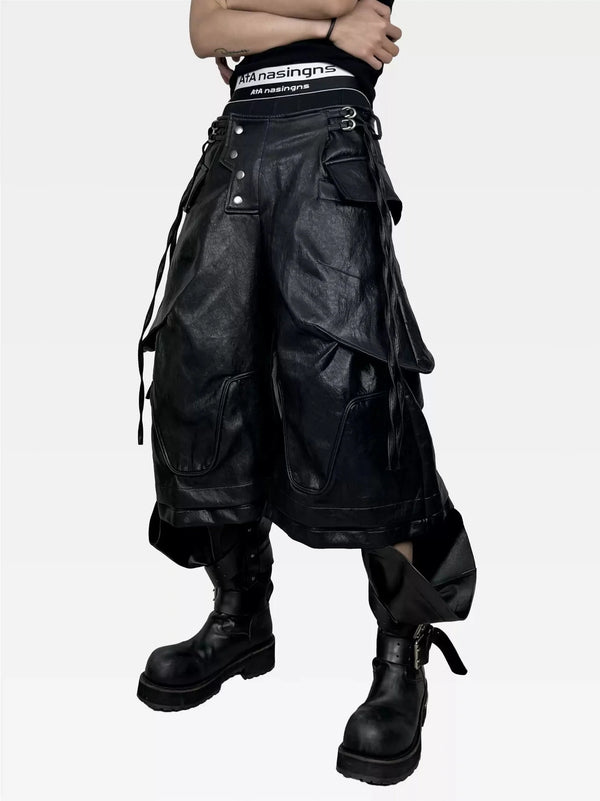
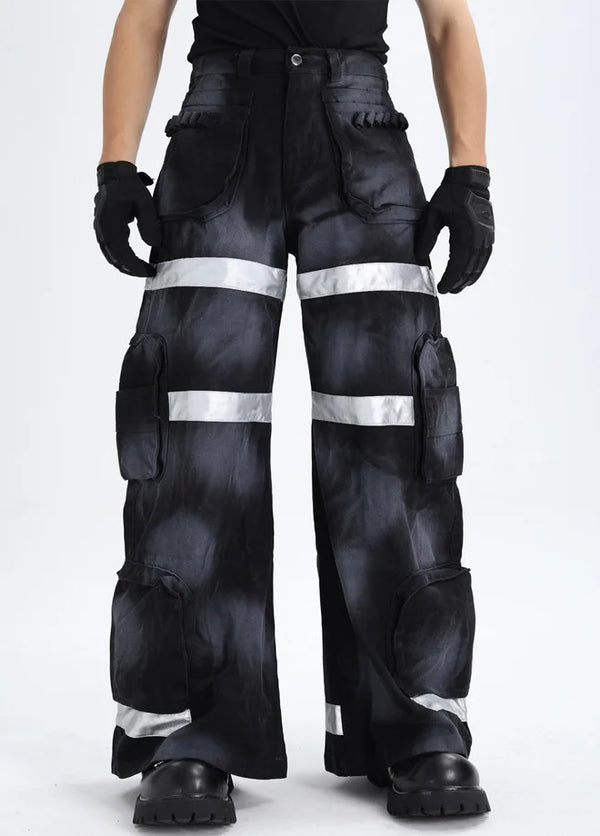
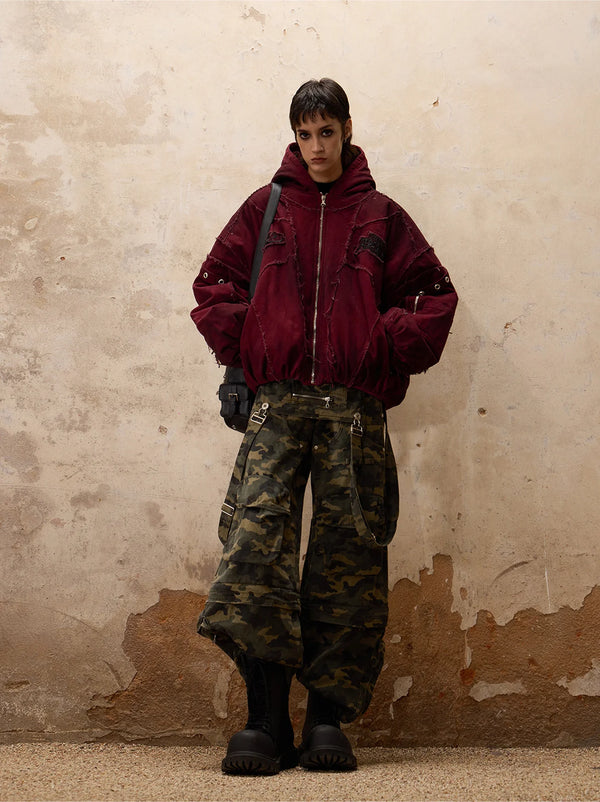
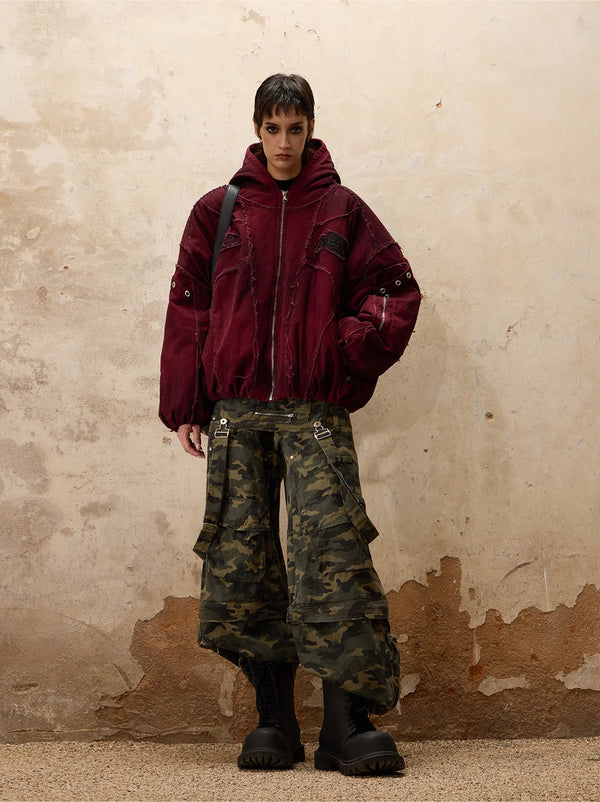
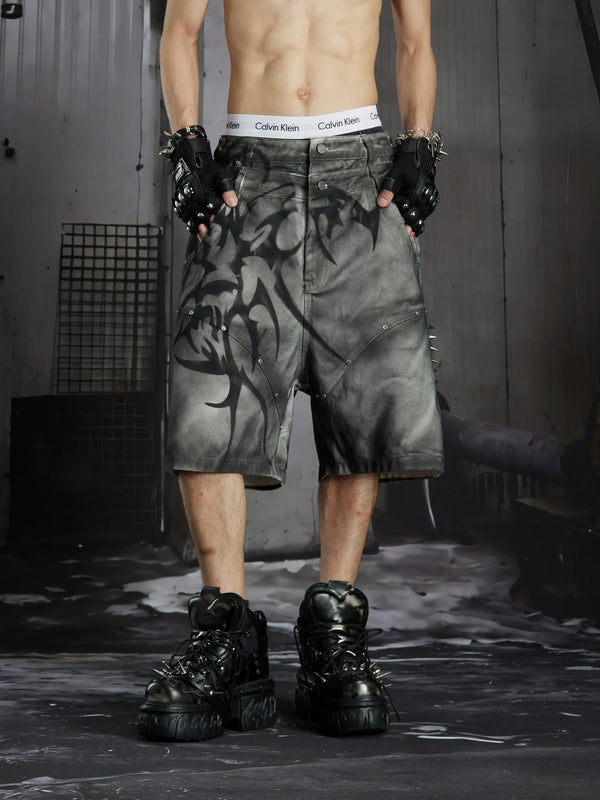
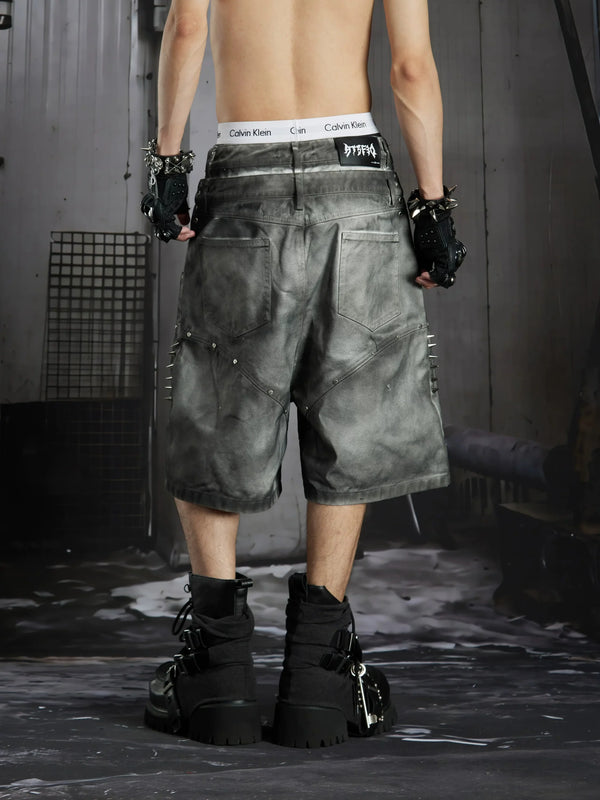
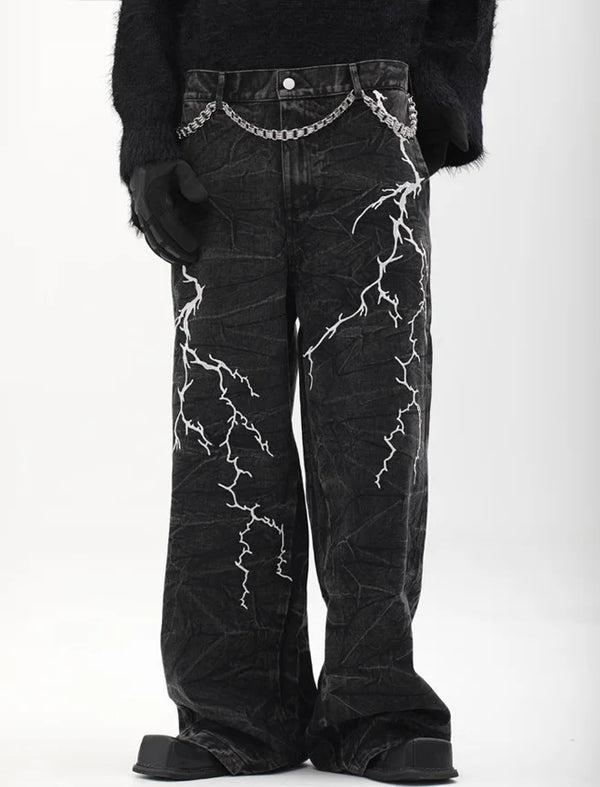
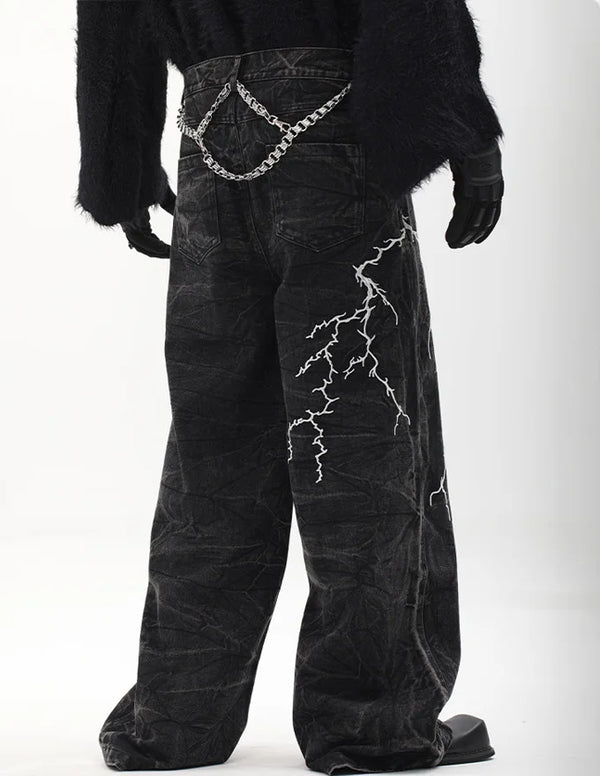
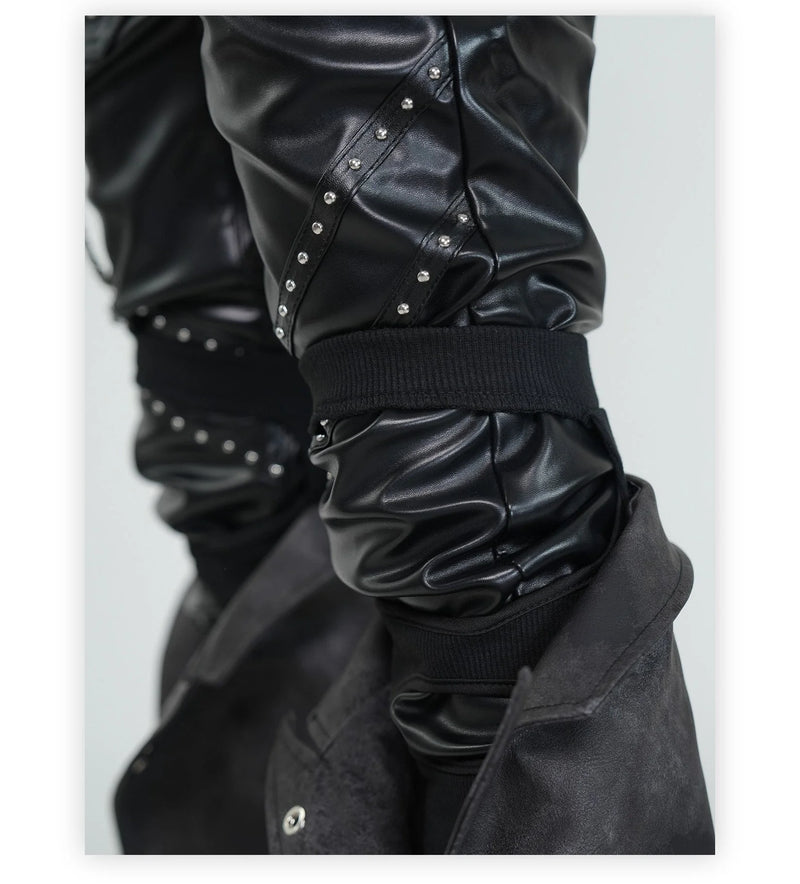
First: wide-leg. The wide-leg pant with a high waist and floor-length hem is the Berghain-Minimal standard. It swings with the beat, hides the shoes, lets the silhouette read as a column from the hip down. Second: cargo with pocket geometry. Industrial-Tactical pant with functional pockets (plate-carrier reference), a drop at the knee, slightly tapered run-out. Third: studded or leather flare. Goth-Rave cut with a trumpet run-out, often with hardware (studs, rings, chain detail) on the outer leg.
All black rave tops & mesh layers — what works under strobe
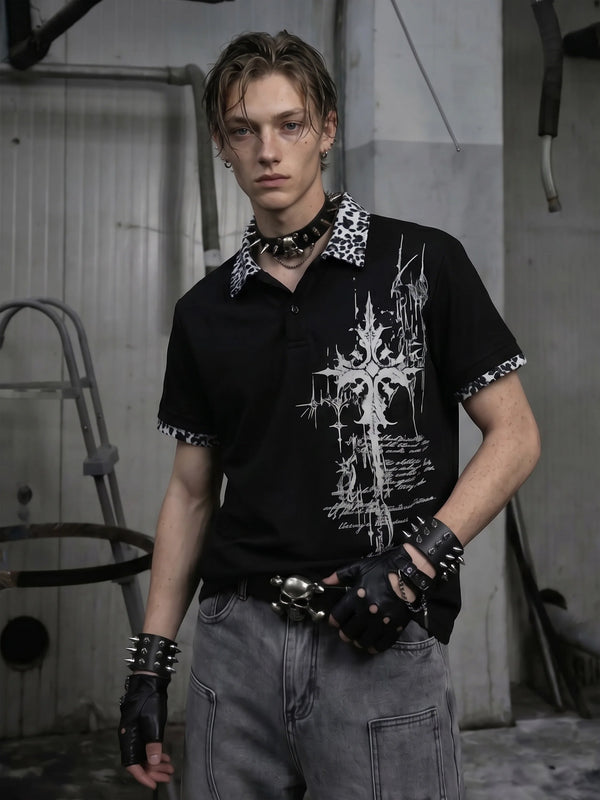
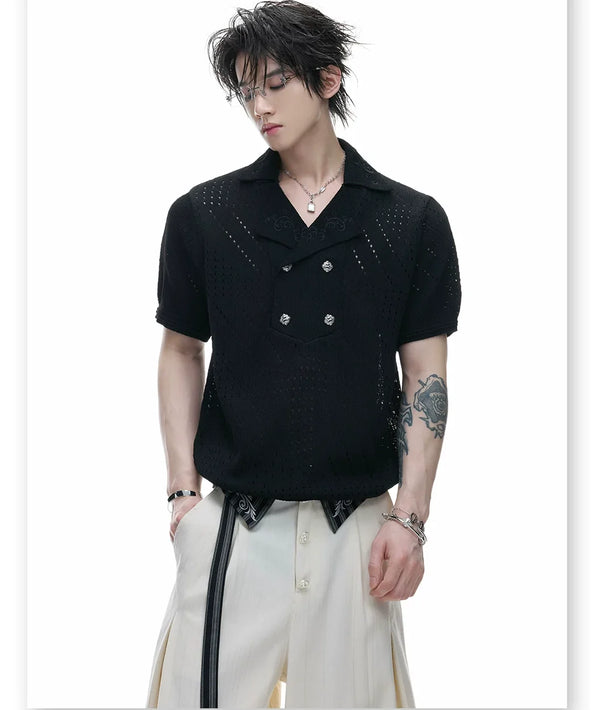
Tops on the all-black floor aren't the main thing — they're the middle. They connect trouser fall with shoulder line and decide whether the outfit has depth or flickers as a block. Three top types work on the floor: the black longsleeve (Berghain Minimal), the mesh top over bra/tank (Goth Rave + Tech-Mesh), and the tactical shirt with a harness reference (Industrial).
The longsleeve sits either slightly oversized with dropped shoulders or close to the body with a straight shoulder — the middle way looks like 2014 H&M. The mesh top is always over an underlying, also black layer (bra, tank, cropped tee), never directly on the skin without a layer — direct mesh is stripper-show code, not Berghain code. The tactical shirt has one or two functional pockets, a slight harness detail at the shoulder, and works better over a wide wide-leg pant than over cargo.
All black rave jackets — coat, bomber, puffer
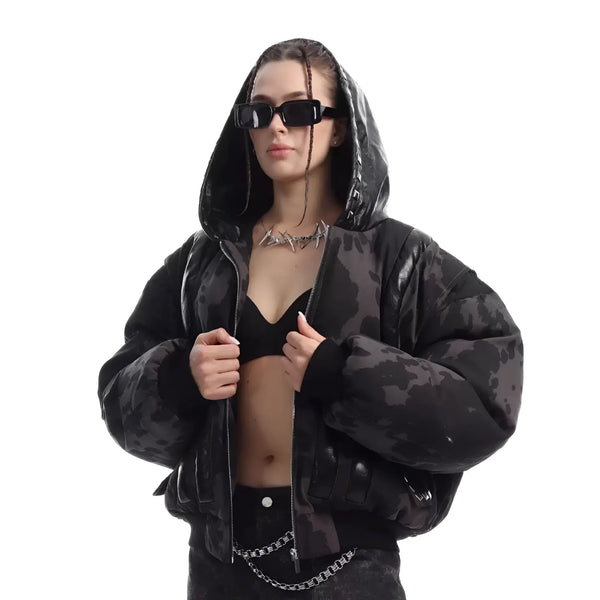
On the Berlin floor the jacket is split in two: inside, at the bottom by the floor entrance in the cloakroom, outside in the queue from November, active for five hours. Both functions have to be delivered by the same piece, because you can't change your outfit under the jacket. Three jacket types solve this reliably: long coat, snakeskin or studded bomber, and puffer.
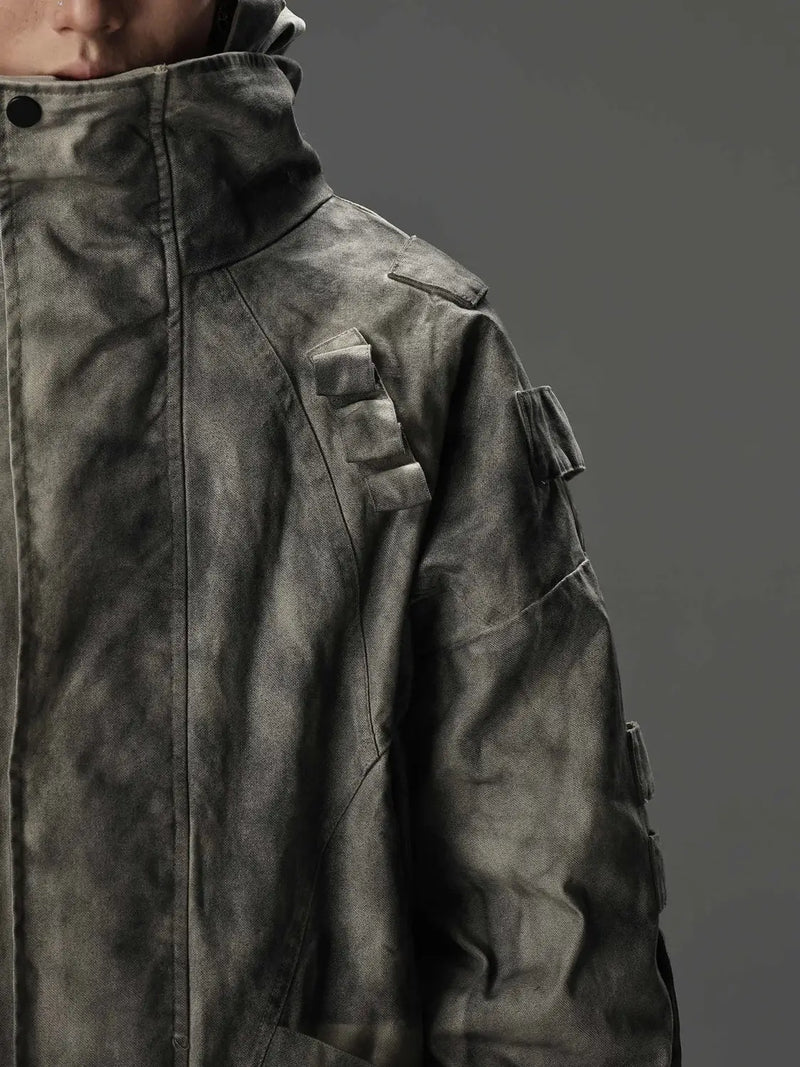
The long coat (leather or wool) is the Berghain-queue standard from November to March. It comes off at the cloakroom and the all-black outfit underneath reads clean. The studded or snakeskin bomber is an Industrial-Tactical to Goth-Rave crossover, holds down to about 5 degrees, doesn't become a burden on the floor. The puffer is the Black-Gorpcore open-air standard, mandatory from minus 5 degrees — at a free-party forest rave in January at minus 8 degrees the puffer decides whether you're still there at 4am or have gone home.
Shoes & hardware — boots, chains, harness
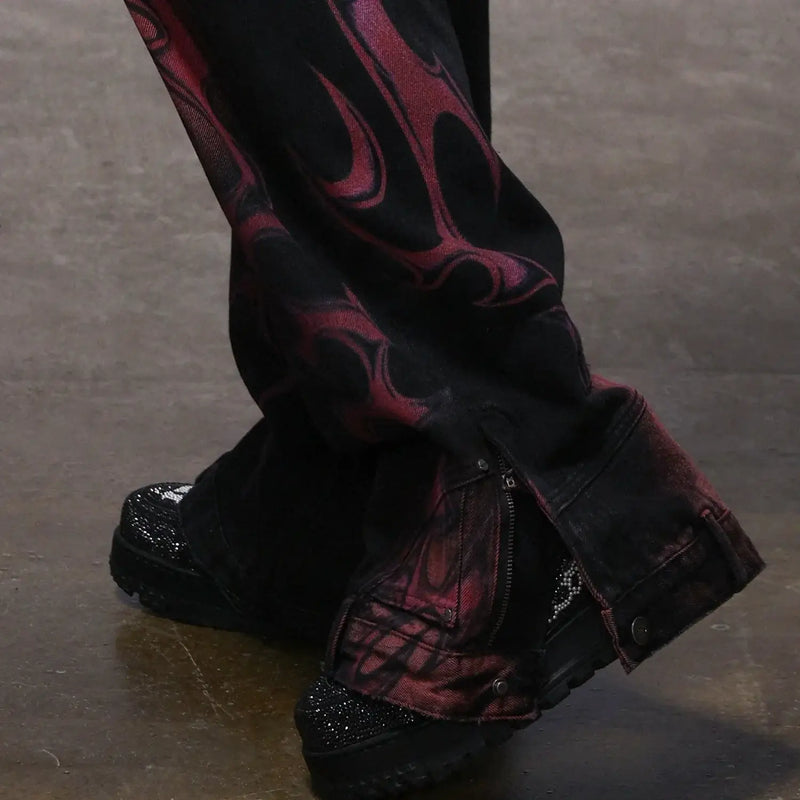
Shoes on the all-black floor fulfil three functions: they carry for eight hours, they widen the silhouette, they survive sweat and beer. Three shoe types work — platform boot, tech-trail sneaker, combat boot. Sneakers without a platform are a 2020 festival outfit, not 2026 Berghain. The platform boot lifts 4-7 cm and widens the wide-leg column. The combat boot is the Industrial standard. The tech-trail sneaker is the Black-Gorpcore open-air standard.
- Platform boot (leather or synthetic) — Berghain-Minimal and Goth-Rave anchor. Lifts 4-7 cm, shifts the trouser hem line, carries 8 h without pressure points.
- Combat boot with shaft strap — Industrial-Tactical code. Stabilises the ankle, swallows beer puddles, withstands cigarette burns.
- Tech-trail sneaker — Black-Gorpcore open-air. GORE-TEX capable, runs equally well in the forest and on the festival grounds.
- Chain belt or wallet chain — a point matte-black or silver accent at the hip. Maximum one chain per outfit; two look like Halloween.
- Harness or plate-carrier reference — Industrial-Tactical top detail or Goth-Rave chest strap. Not mandatory, but the recognition mark of the sub-code.
Hardware rule: maximum two metal accents per outfit. Whoever walks onto the floor with a wallet chain plus harness plus choker plus bracelet plus ring will flash under strobe like a Christmas tree. Berghain Minimal has zero hardware — that's part of the hardness. Industrial-Tactical has one to two (harness plus wallet chain). Goth-Rave has two (chain plus platform buckle). More gets tired on the floor.
Black festival outfits — when the floor lies outside
„Black festival outfits“ is the outdoor variant of the all-black code — free party in the forest, open-air on the industrial wasteland, forest rave at Müggelsee, Sisyphos summer floor garden, FUSION Black Forest stage. The same black, but a different function: weather, ground, wind, sun heat by day, temperature drop after midnight. Black Gorpcore isn't a style choice here, it's mandatory.
The most important adjustment from the indoor floor: layers instead of one layer. An all-black festival outfit has three layers in the morning (tee + longsleeve + hardshell) that get opened over the course of the day and closed again in the evening. What would count as „too much“ indoors is the outdoor standard. Shoes are always trail or combat type — no platform, no soleless sneaker, because the terrain won't carry it.
All black in summer vs winter — the temperature rule
Black absorbs heat faster than any other colour — that's physics, not fashion. On the summer floor (Tresor in the heatwave, FUSION in July, Sisyphos garden at 32 degrees) that means: fabric choice decides whether you survive the set. In winter, by contrast, black wool swallows the last warmth after three hours in the floor queue — in winter black is the standard, not a risk.
Summer all black: cotton and mesh dominate. No leather. No nylon-heavy. No wool cardigan indoors. Wide-leg cotton pants, mesh top with a tank underneath, platform boot. Maximum one hardware component, because metal on the skin gets hot at 32 degrees. Winter all black: wool, leather, puffer, combat boot. A long coat over the outfit is the standard from November. Hardware can get louder, because it half-disappears under layers and only becomes visible on the floor.
The 6 most common mistakes — what makes you look like Halloween, not Berghain
The line between all-black floor code and Halloween costume is thinner than it looks. Six mistakes keep turning up in Berlin door anecdotes — mistakes that still work in photos at home but get read as cosplay at the door instantly.
Most of these mistakes happen when you buy all black like a themed costume instead of like a uniform. A uniform has functional pieces that read together — a costume has decorative pieces that stand side by side. That's the most important mental switch when entering the all-black code.
How to start in all black — the first 4 pieces
If you're just starting out and don't fancy taking three rejections at the Berghain queue before you've understood what's going on — don't buy ten pieces. Buy four. The right four. You build the rest around them over a year.
Four pieces, one archetype. If you learn Berghain Minimal in the first year, you learn Industrial-Tactical on top in the second, Goth-Rave as a variant in the third. Nobody builds from zero to five archetypes on the floor in three months — whoever tries looks like Berghain in May, KitKat in June, Halloween in July.
Black is the condition. Cut is the code. Fabric is the uniform. Skip a step and you're standing in the queue.
Floor-Logik · Tresor-Türsteher-Anekdote
All black rave outfits for real — what it looks like on the floor
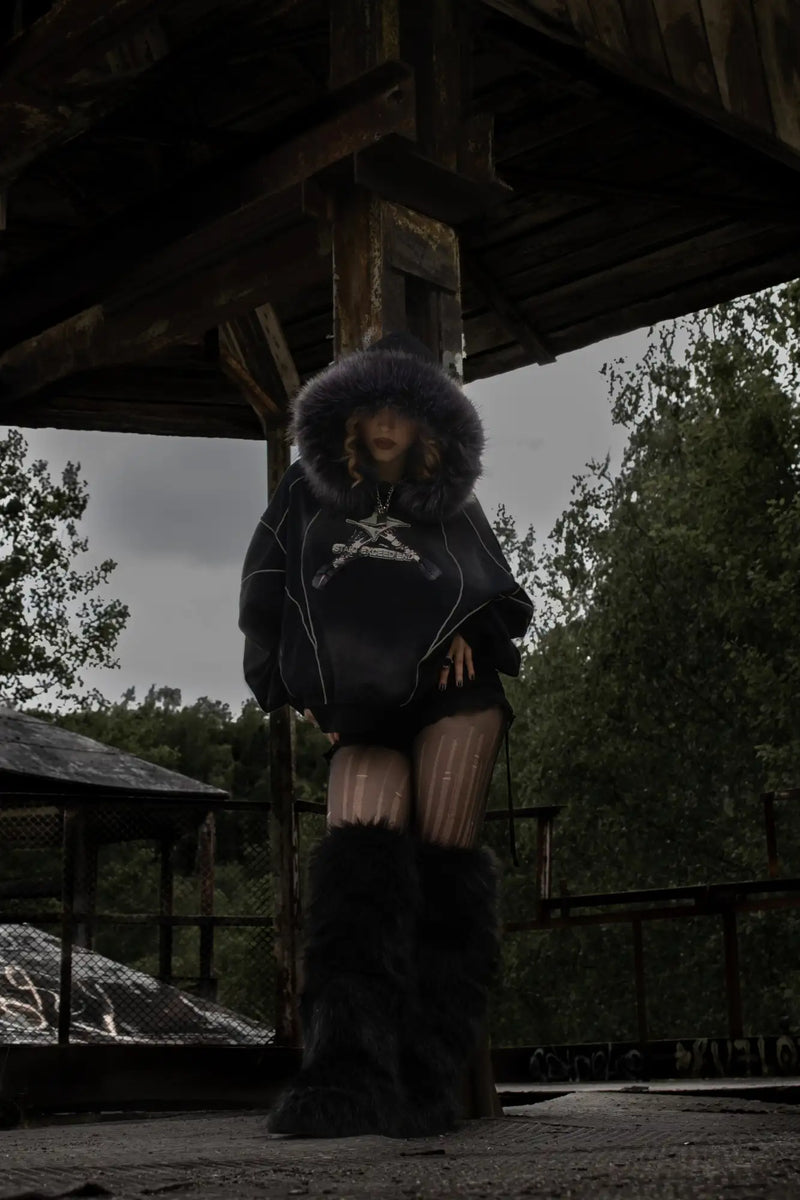
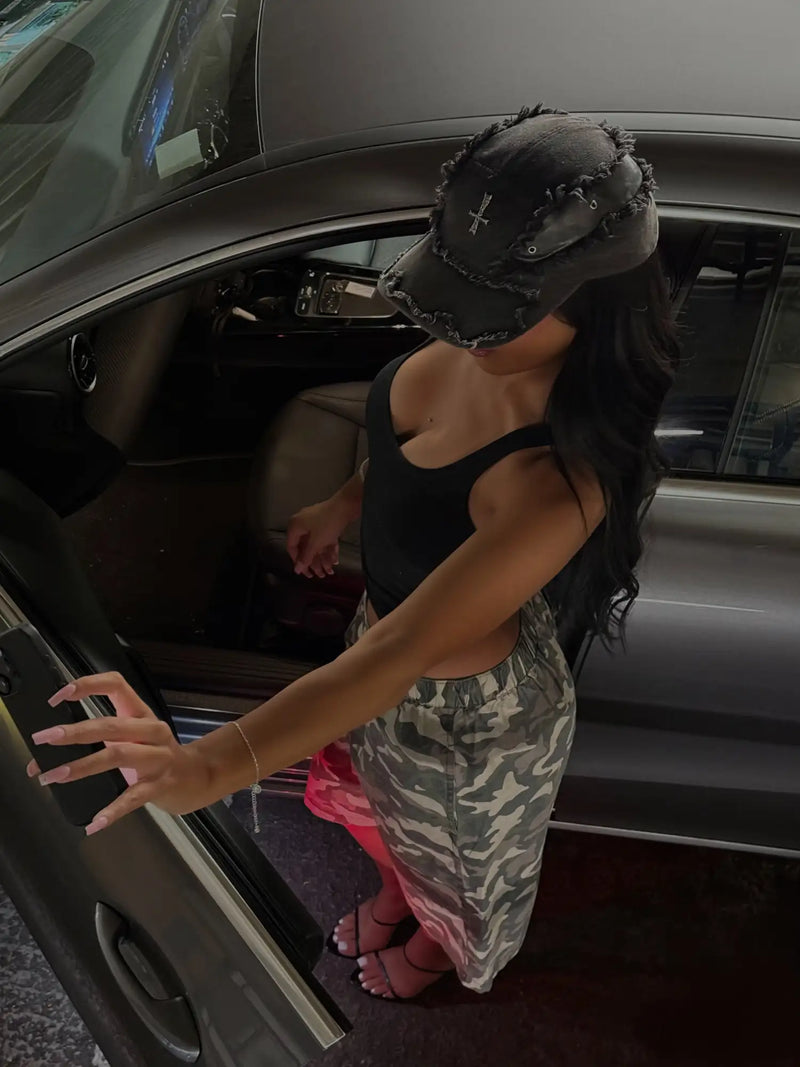
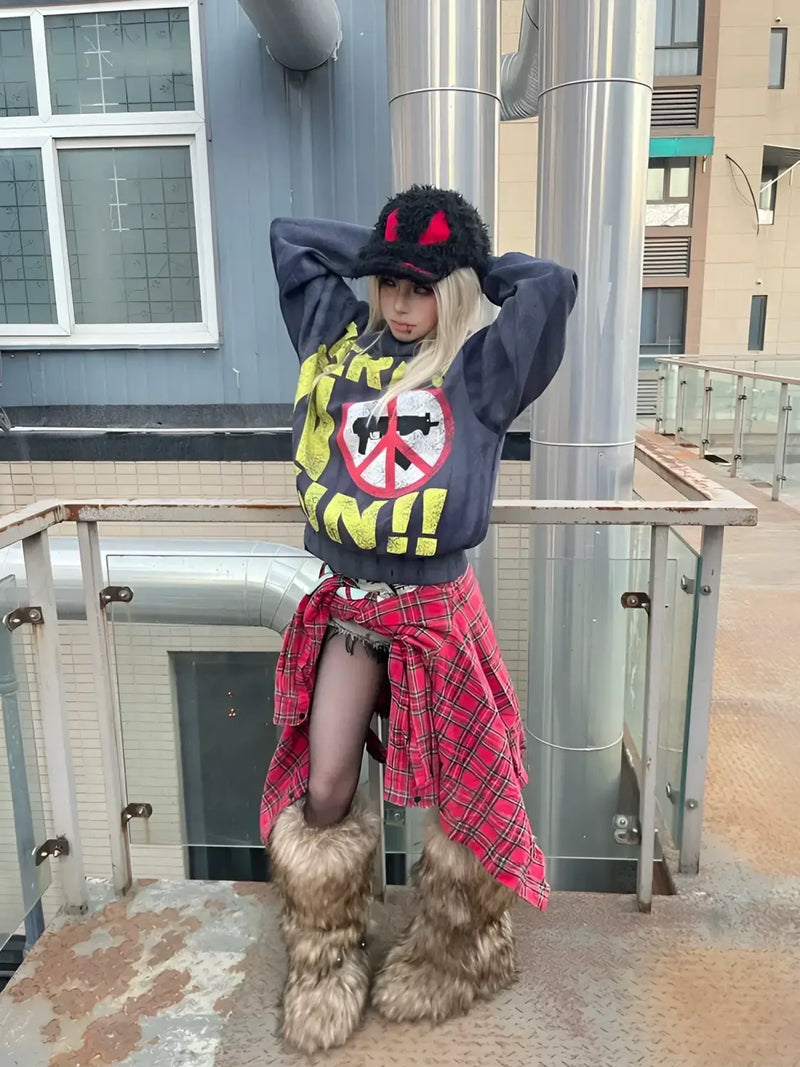
Before you buy the first set, look at how the code looks for real — not in the studio, but on the floor. The following posts come from the Berlin tech scene of the last season: Berghain queue February, Tresor column hall April, Sisyphos spring garden, RSO on 1 May. Look at layers, cut points, hardware sparseness — and at what you don't see (not a single slim-fit top, not a single piece of Halloween hardware).
What recurs in all four cases: three to four fabric surfaces, a clear silhouette hierarchy (either wide pants plus tight top or the reverse), maximum two hardware points, not a single plastic detail. That's the minimum common denominator — no matter which of the five archetypes.
Frequently asked questions about all black rave outfits
What do you wear for an all black rave outfit as a woman?
What does a man wear to an all black rave?
Which fabrics last 8 hours on the rave floor?
Why is black mandatory at Berghain?
Which shoes do you wear with an all black rave outfit?
What's the difference between all black rave and goth rave?
Which 4 pieces do I need for the all-black entry?
What do you think?
Tell us on @fuga_studios
About the author
Philipp Fuge — Founder · Berlin
Founder of Fūga Studios. Writes the journal himself. Berlin · Shanghai · Tokyo · Poznań — four cities, one logic.