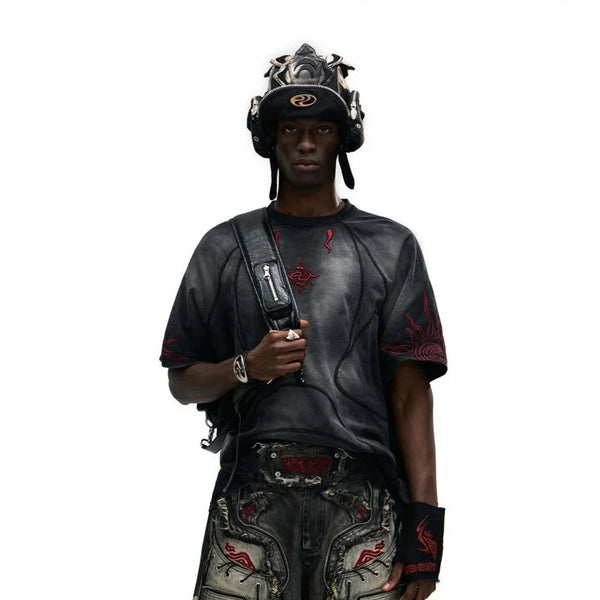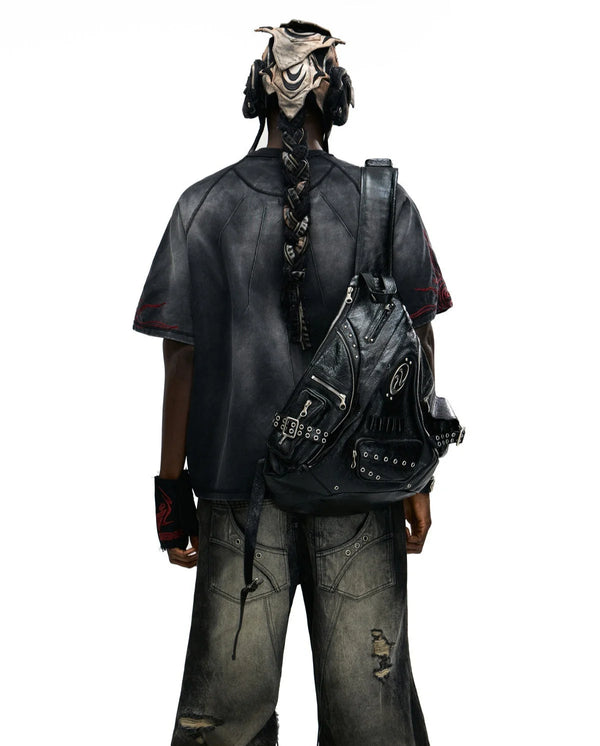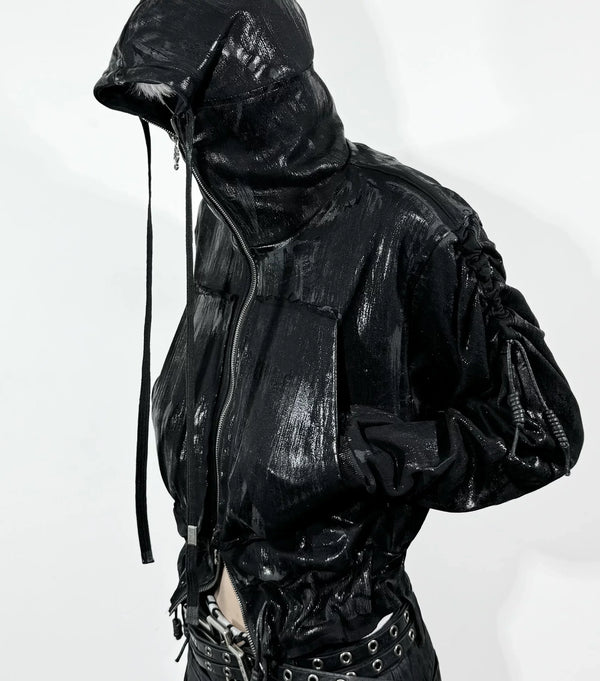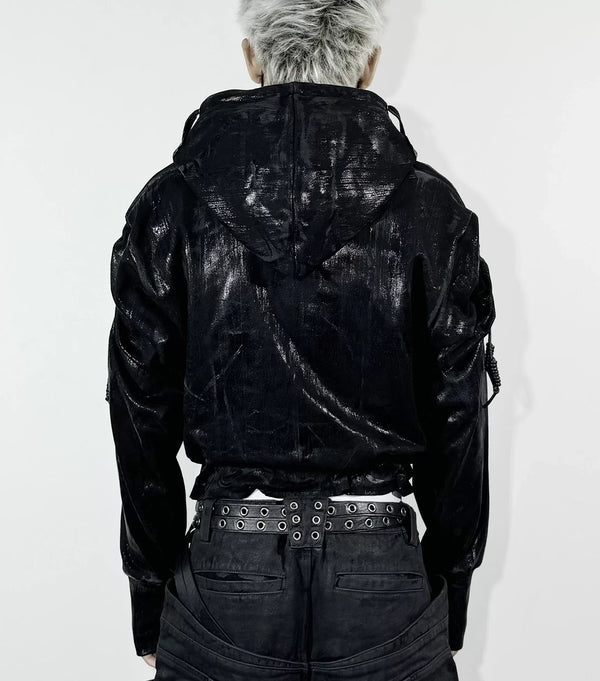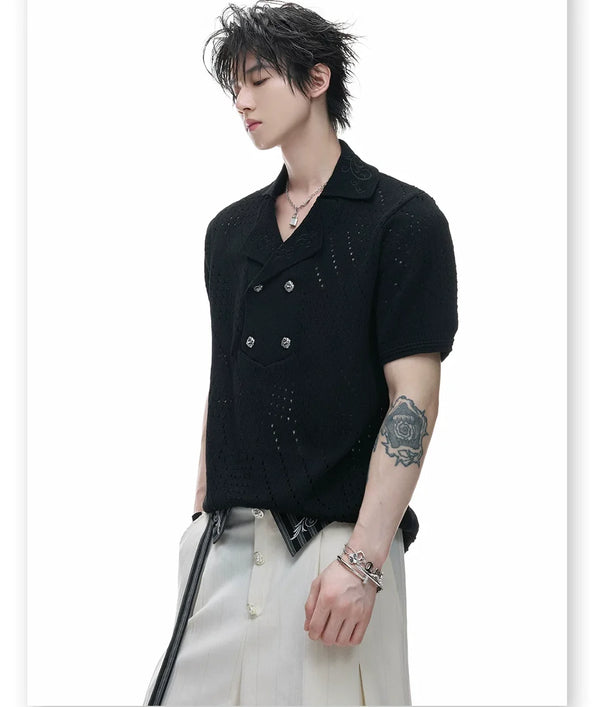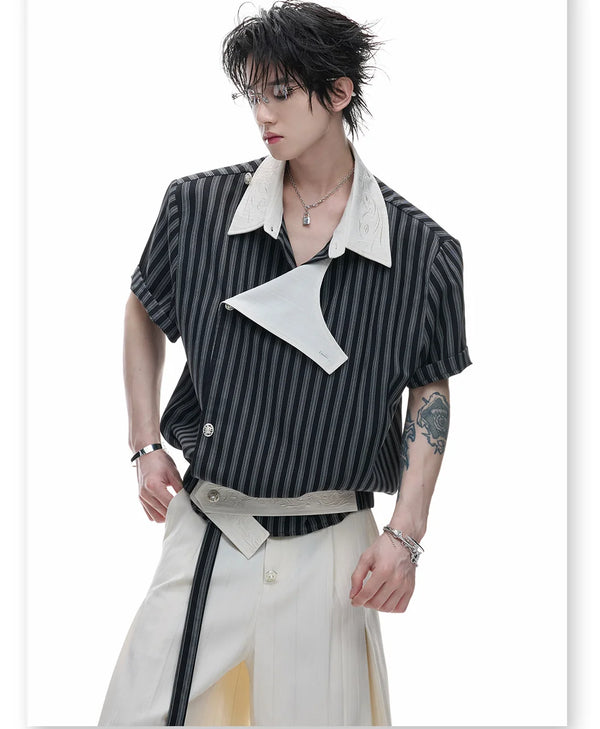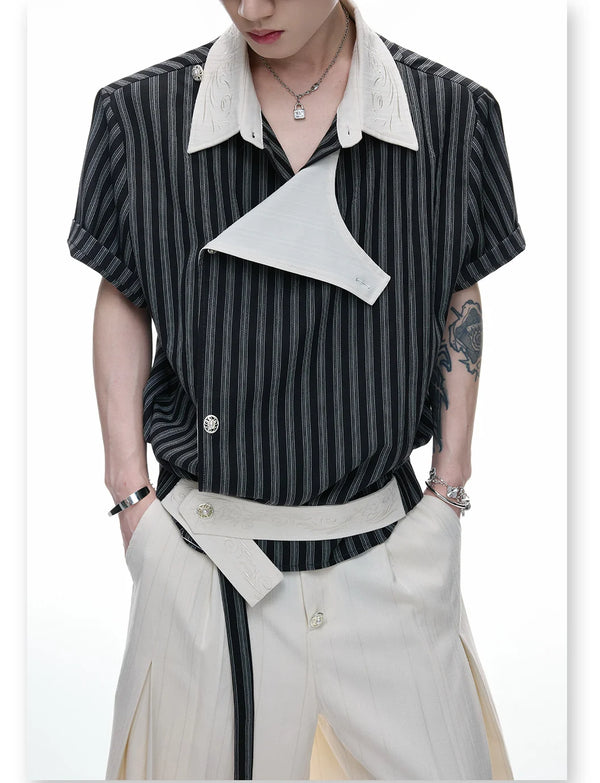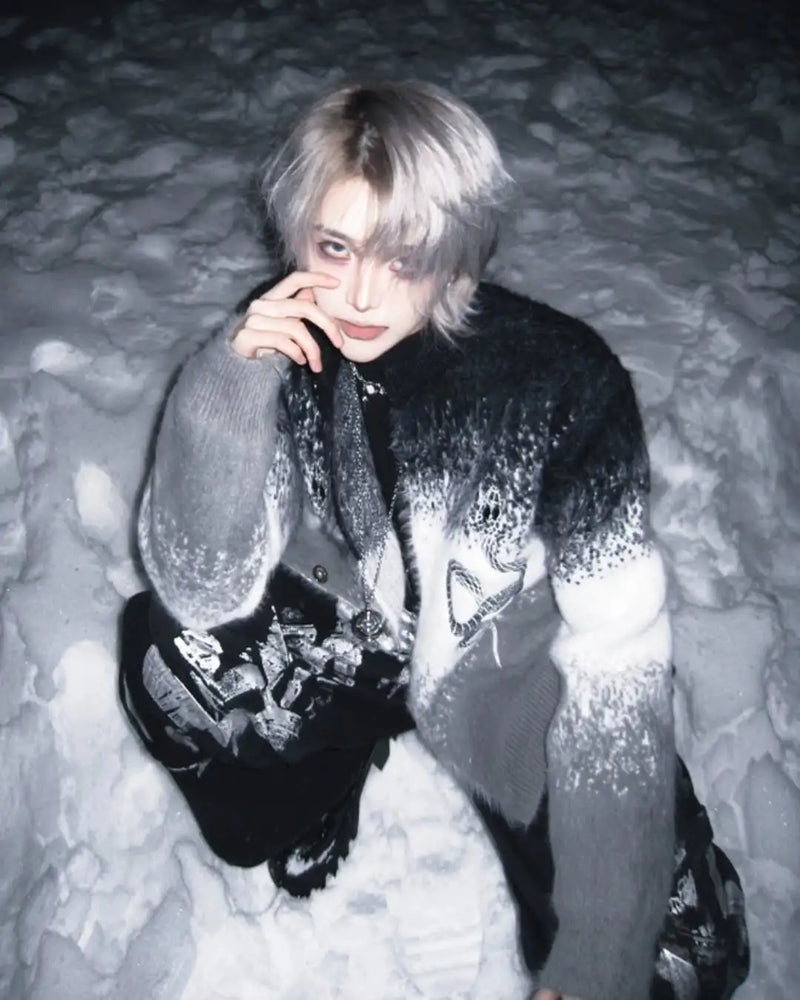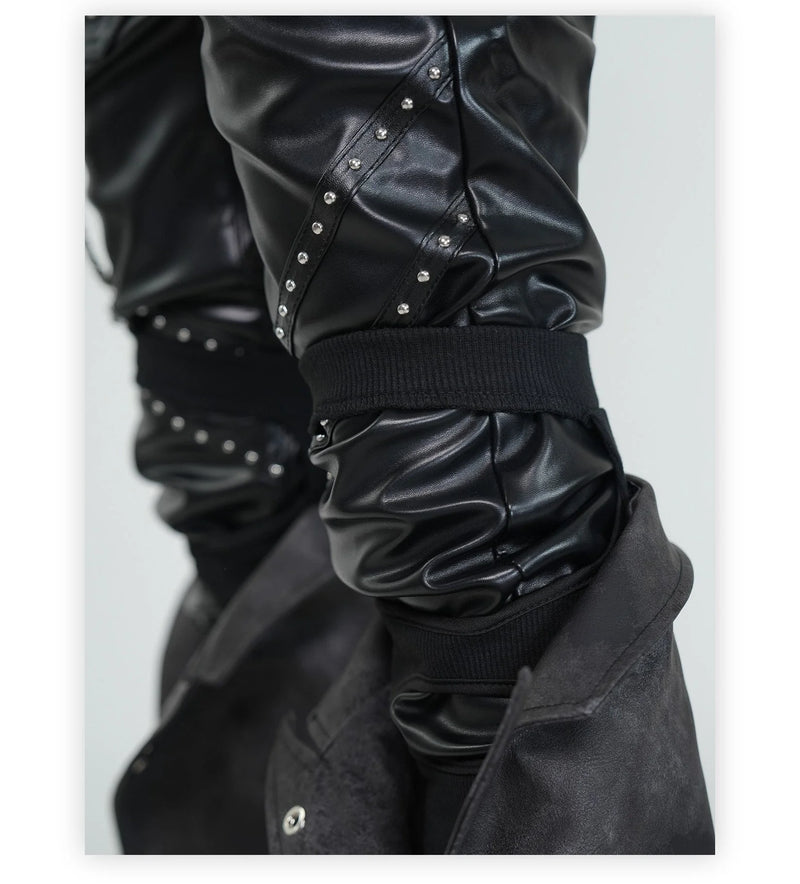
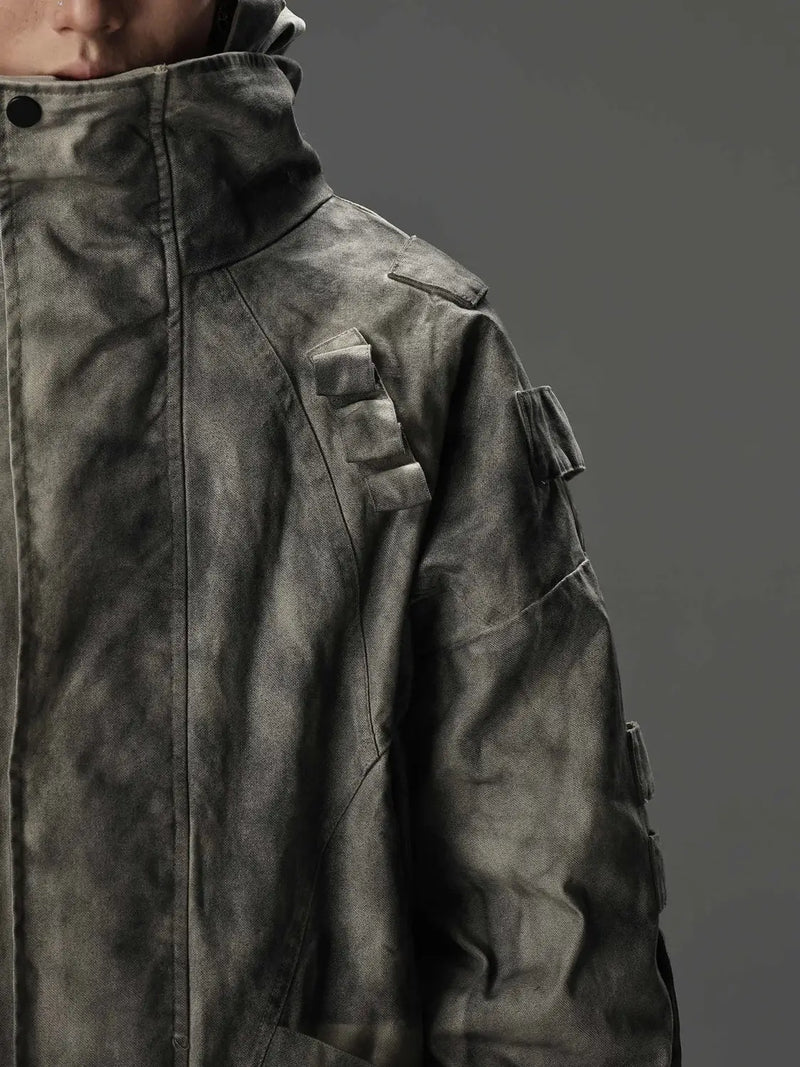
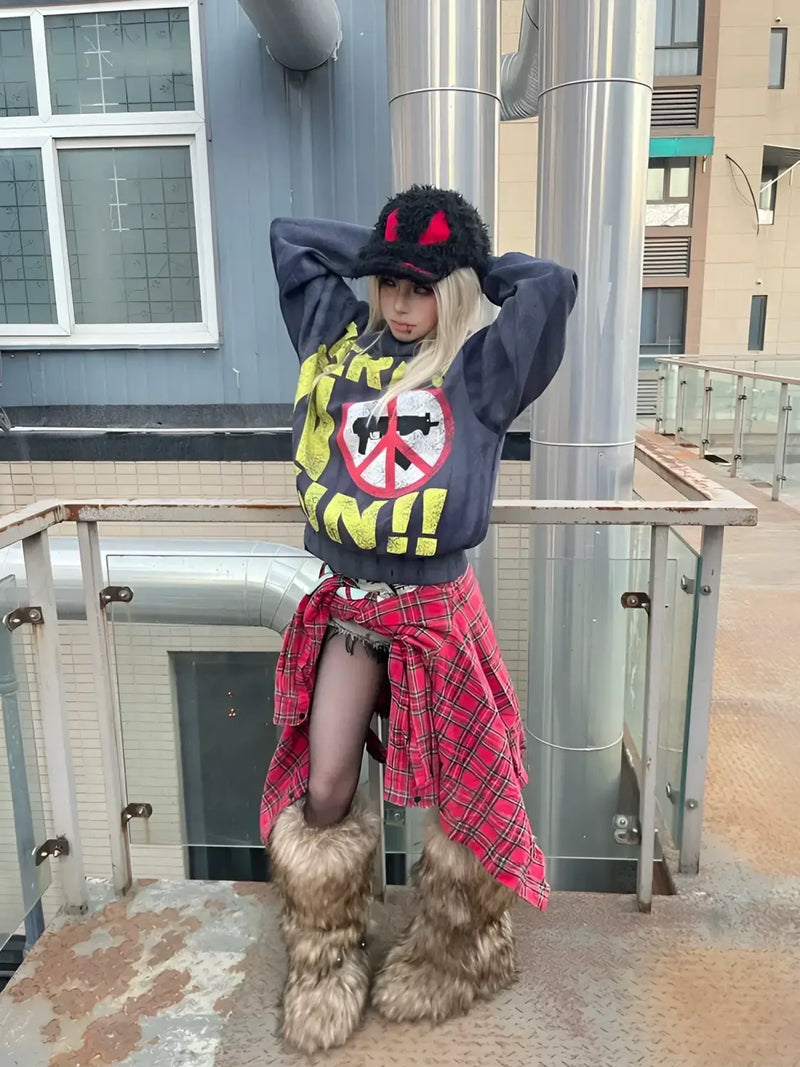

Everyone thinks men's techno fashion is „just all black". That's half the truth — and here the half-truth is the whole mistake. Black is the base colour, not the code. Show up in just a black T-shirt and you're as out of place at Berghain as you'd be in a polo shirt.
Men's techno fashion comes out of the Berlin club scene of the early 90s — after the Wall came down, in empty factory halls, at Tresor, at E-Werk, later at Berghain. The code isn't fashion in the classic sense, it's a function rule: dark, minimal, technical, made for six hours on the dance floor and a door that sees through logos and effort instantly.
Sell techno fashion as „black plus chain plus boots" and you've confused the Berghain door staff with a Halloween costume. This guide lays out what's really behind it: where the look comes from, what belongs to it, which types exist, how 90s ravers differ from today, how it translates into tops, trousers and jackets, which four pieces you need first — and which mistakes cost you at the door.
What it looks like in motion — twelve seconds, compact:
Origin
Where men's techno fashion comes from — Berlin, early 90s
The look came out of Berlin, not out of an atelier. In 1991 Tresor opened in an old department-store vault on Leipziger Platz. E-Werk, Bunker, later Ostgut and in 2004 Berghain — the spaces were empty industry, cold, dark, with no cloakroom for vanity. The clothing adapted: dark, so you don't stand out under the strobe, robust, so it lasts a whole night.
The second root is practical. Dance from Friday night to Sunday noon and you can't wear stiff jeans or an ironed shirt. So what worked won out: soft, wide trousers, technical fabrics, tank tops and mesh you can sweat in, boots that survive hours of standing. Function was never a style statement — it was the precondition.
The third root is the door. Berlin clubs still filter by attitude, not by money. Visible designer logos, visible effort, an outfit that screams „let me in" is exactly the wrong thing. The code rewards the opposite: understatement, black, no brand name. Once you get that, you don't wear techno fashion to stand out, but to blend in.
Definition
What is men's techno fashion — and what counts as part of it?
Men's techno fashion is an outfit system built from four fixed parts: colour, function, silhouette, anonymity. When all four land, the outfit reads as techno. Miss one and it tips — into streetwear, into Gothic, or worse: into costume.
90 %
matte black
0
visible logos
6 h+
on the dance floor
1991
Berlin, Tresor
These four numbers aren't decoration, they're the test. An outfit in 70 % black with a thick brand stripe across the chest isn't a techno look, it's streetwear with a dark coat of paint. And a piece that looks good but sticks and pinches after three hours drops out of the code by three in the morning at the latest.
Concretely, men's techno fashion includes:
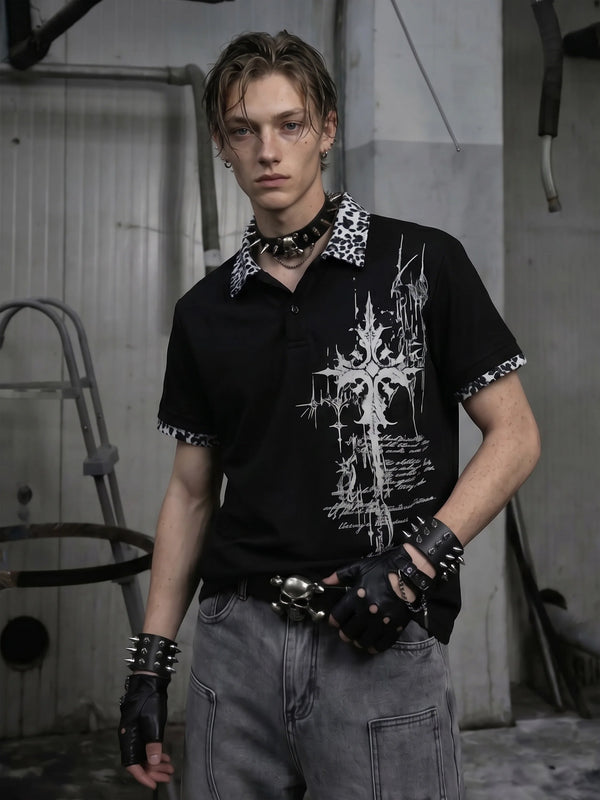
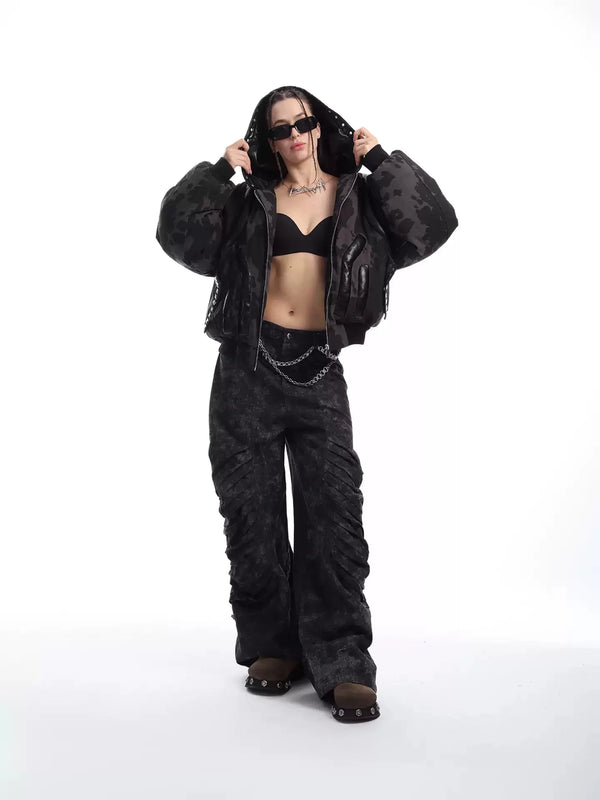
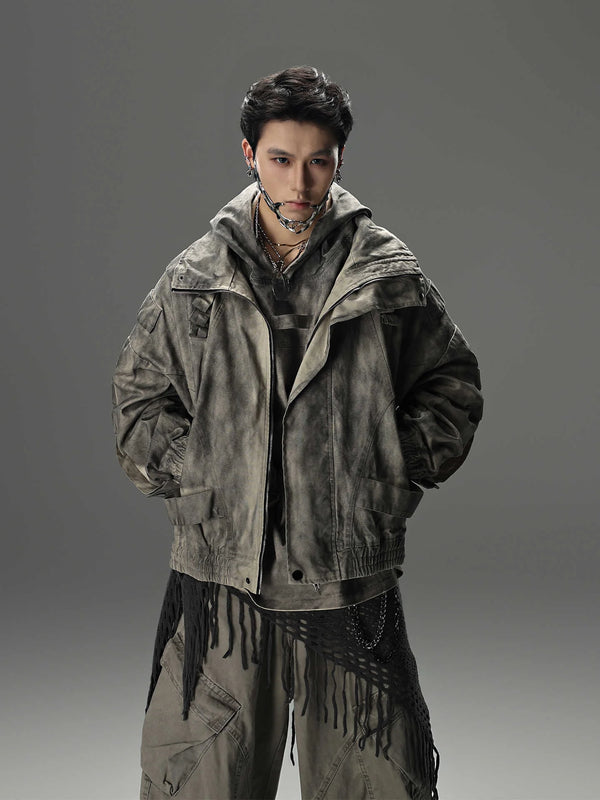
- Matte-black fabrics — cotton, mesh, technical nylon, leather without shine. Shiny polyester reflects in the light and reads instantly as a costume.
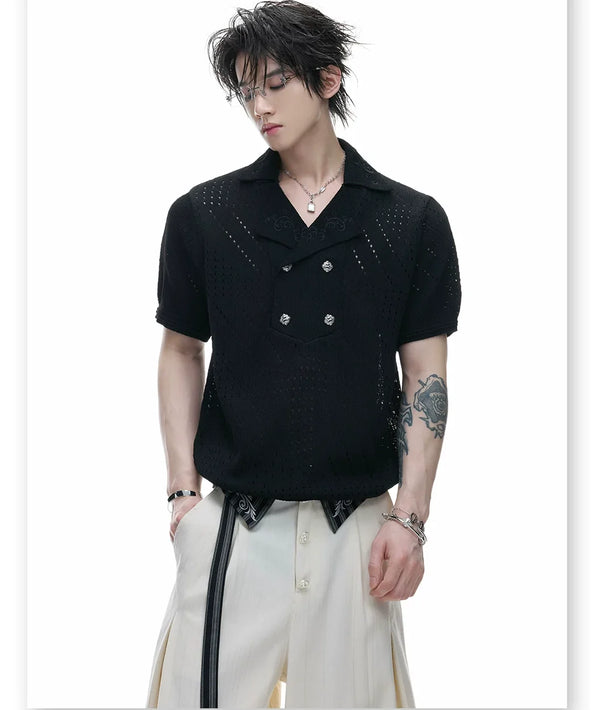
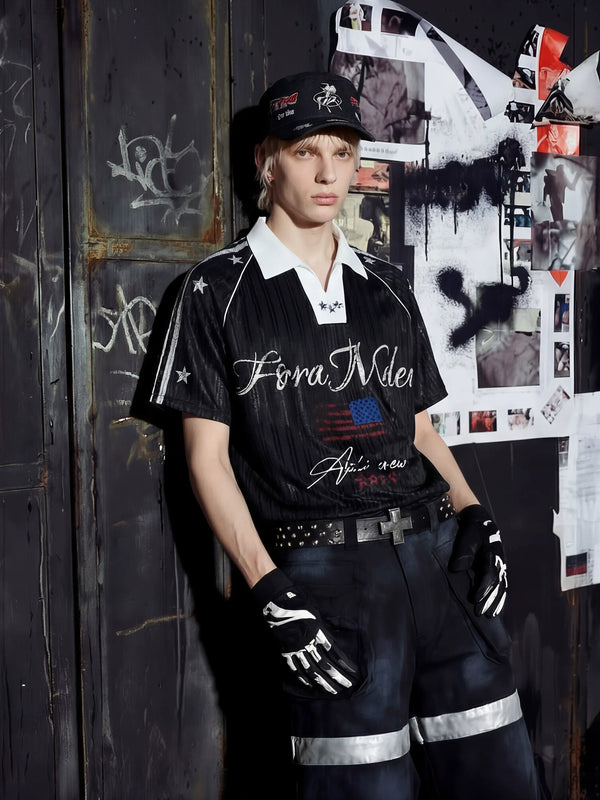
- Functional tops — tank top, close-fitting longsleeve, mesh shirt, technical tee. Fabric you're allowed to sweat in without everyone seeing it.
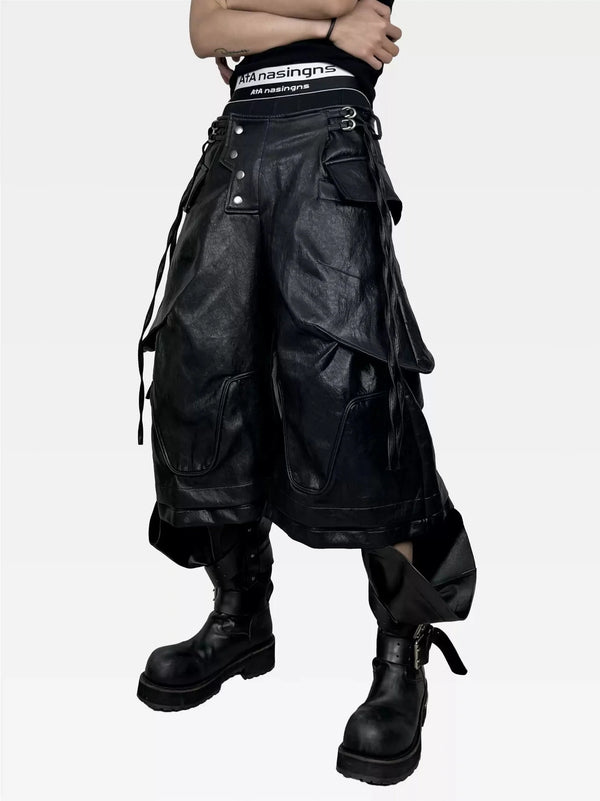
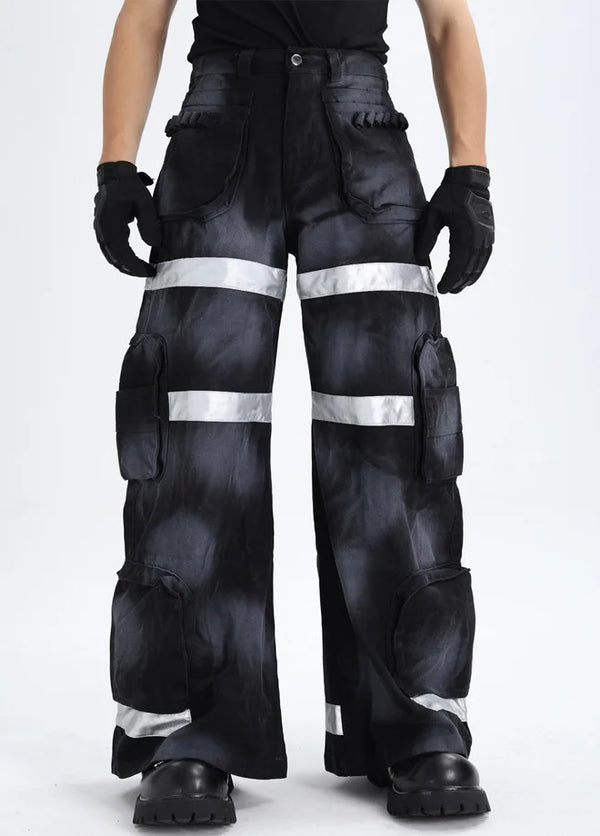
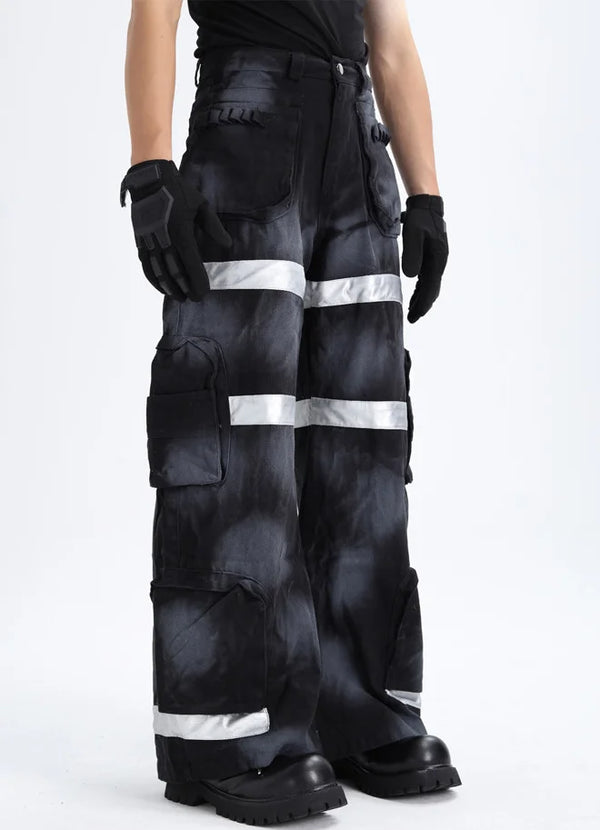
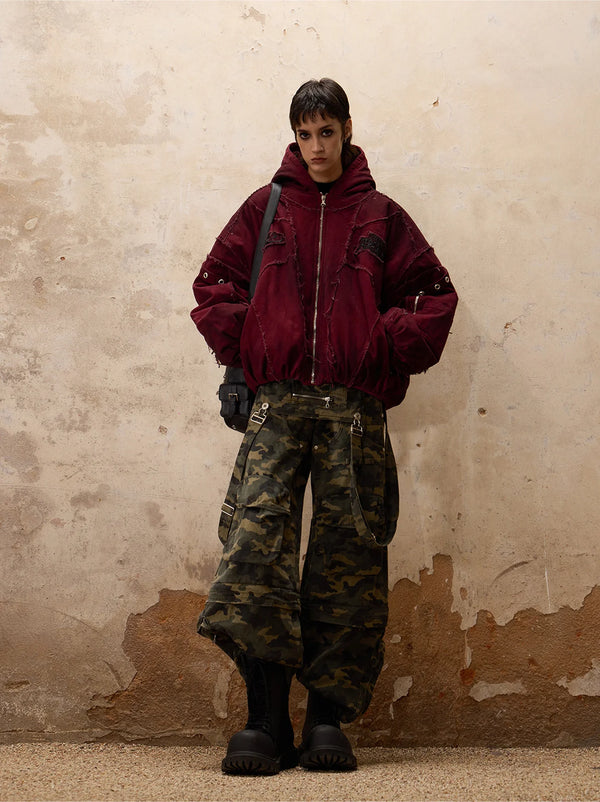
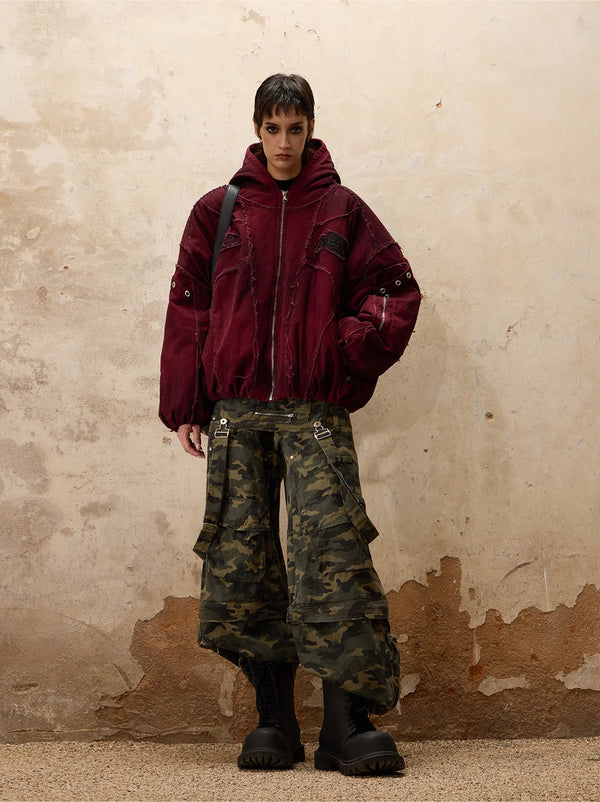
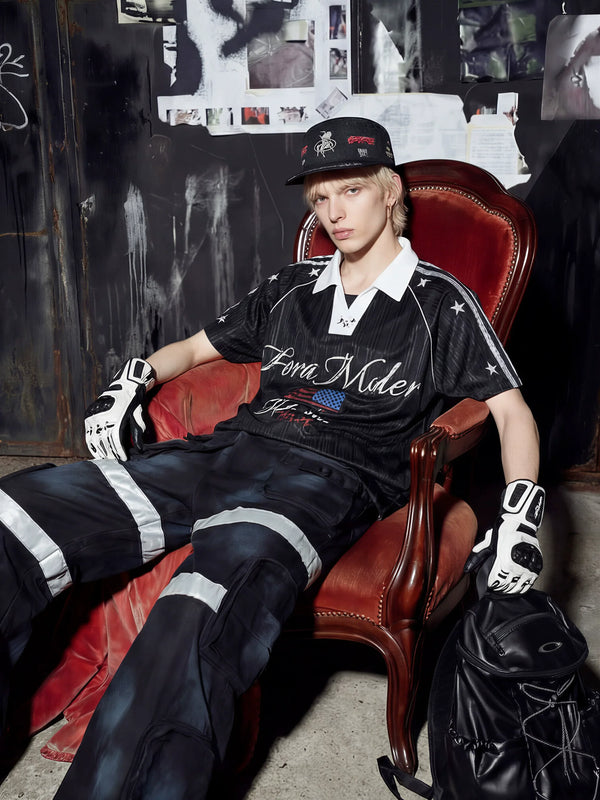
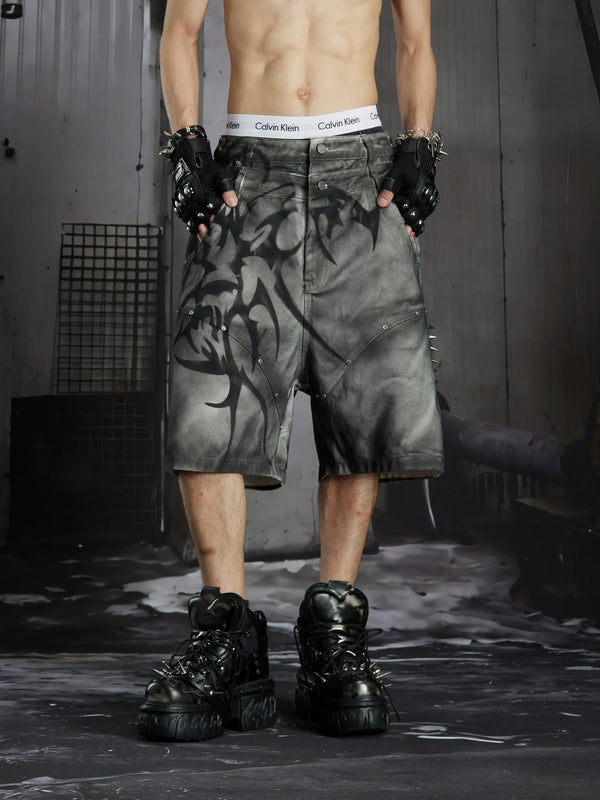
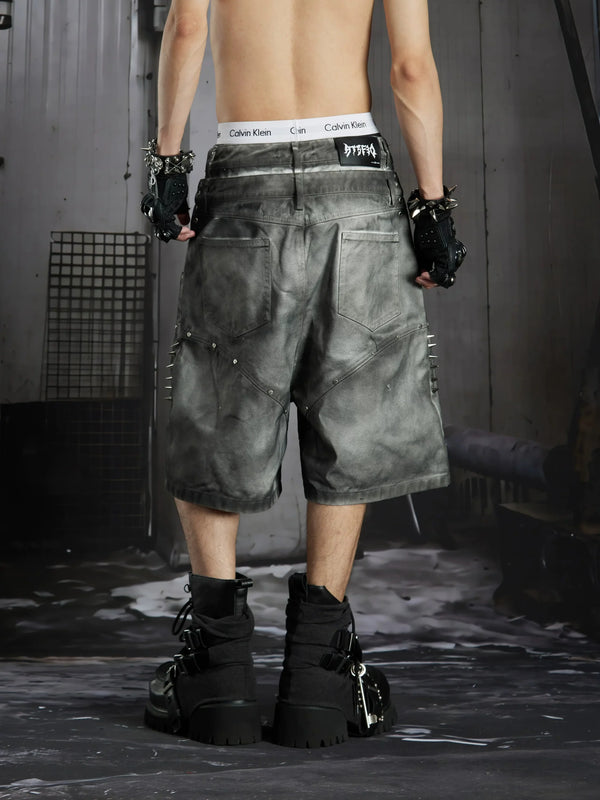
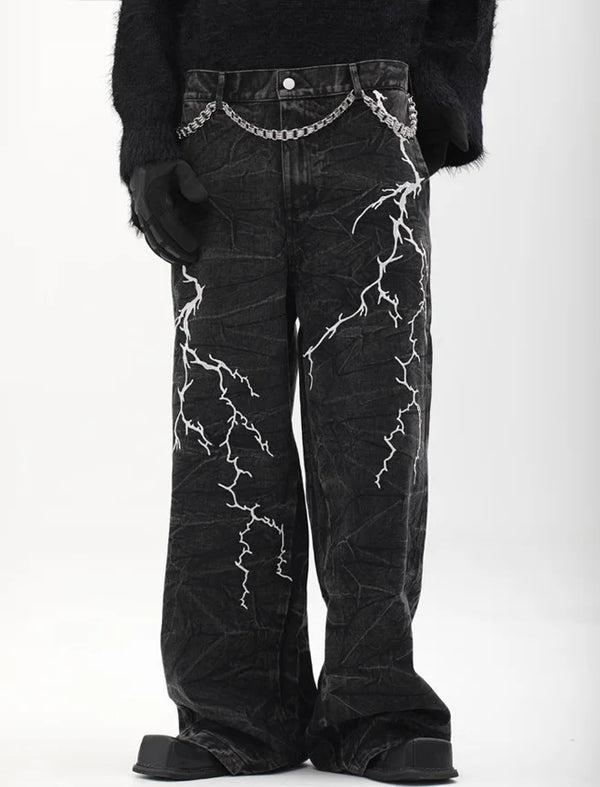
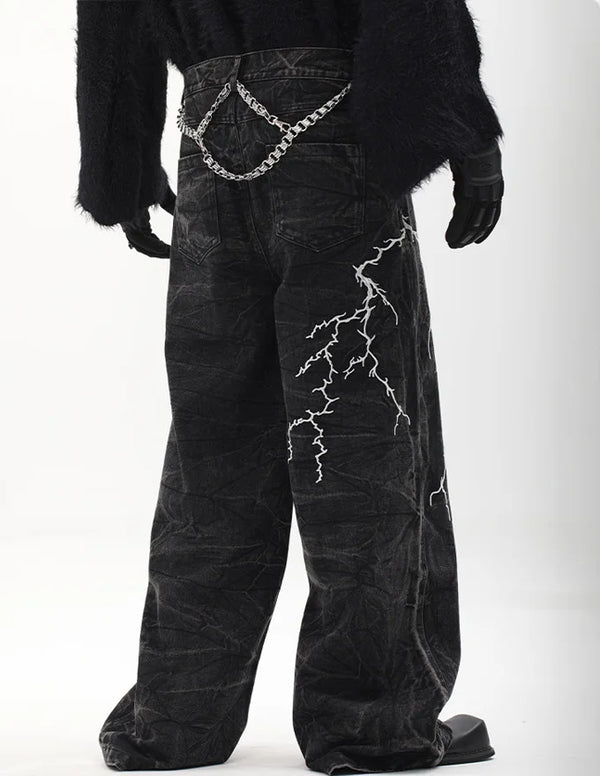
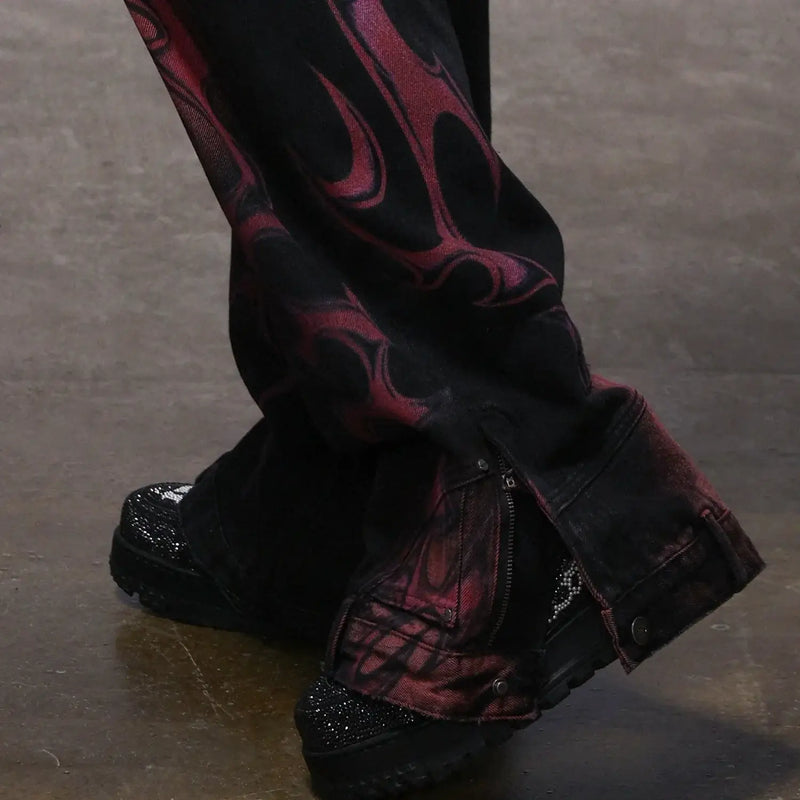
- Volume below — cargo, wide trousers, technical workwear pant. Movement over cut, material over figure.
- Boots or heavy sneakers — something that survives six hours of standing and a sticky club floor. No clean white soles.
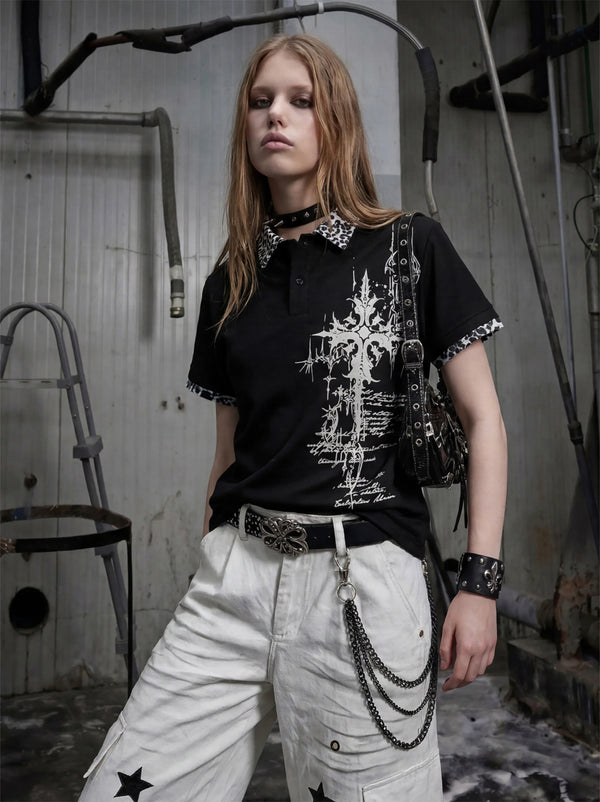
- Hardware instead of jewellery — a carabiner, a strap, a bag on the leg. Function that happens to look like decoration — never the other way round.
5 types
The five men's techno looks — from Berghain-Minimal to Hard-Techno
Techno fashion isn't one look but five that overlap at the edges. They differ in how much they show and how hard the sound is they're worn to. A Berghain minimalist and a Hard-Techno dancer stand in the same black — but at different ends of the same scale.
Which of the five suits you depends less on taste than on where you dance and how hard the sound is. Hard-Techno takes more hardware, Berghain-Minimal forgives none. If you live between worlds, start with the quietest and dial up from there.
90s vs today
Men's raver outfits in the 90s vs today — what stays, what goes
The 90s raver outfit was louder than today's code. Wide phat pants in neon, reflective sportswear, trilby hats, sunglasses in the dark club, technical fabrics in bright colours — the early Loveparade ran on visibility. Standing out meant belonging.
The Berlin club code later flipped that. Neon became black, visibility became understatement, „look at me" became „look away". What stayed is the function: the wide trousers, the technical fabric, the comfort. Wear 90s raver today and you quote the silhouette and the material — but turn the colour down and the reflex down to a single accent.
Category · Tops
Men's techno tops — tank, mesh, longsleeve
Up top a simple rule applies: little fabric or breathing fabric. A ribbed tank, a mesh shirt, a close-fitting longsleeve. You'll sweat, so the top has to keep up without sticking or going heavy and see-through. Cotton and technical knit win, polyester shine loses.
The second point is the silhouette. Up top it can be tight or close to the body, because the volume comes below. An oversize shirt over wide trousers makes the outfit shapeless and weak. Tight up top, wide below — that distribution carries the whole look.
If you don't own a technical top yet, start with a plain black tank. It's the cheapest half of the code — and the one that works on any night.
Category · Trousers
The trousers for techno — cargo, wide leg, technical fabric
The trousers are the heart of the look. The volume comes below, the material sits here. Cargo with real pockets, a wide workwear pant, a parachute trouser with drawcords — anything that allows movement and doesn't pinch at the back of the knee. Skinny has been out for years; the code lives on width.
What matters is the waistband and the weight. An elastic or adjustable waistband lasts a night, stiff jeans don't. And the fabric should fall heavy enough that the trousers have a line — too thin a material collapses and looks like pyjamas, not club.
If you buy only one new piece, buy the trousers. They carry more of the look than any top — and decide whether the silhouette stands or tips.
Category · Jackets
Jackets & layers — bomber, track set, technical puffer
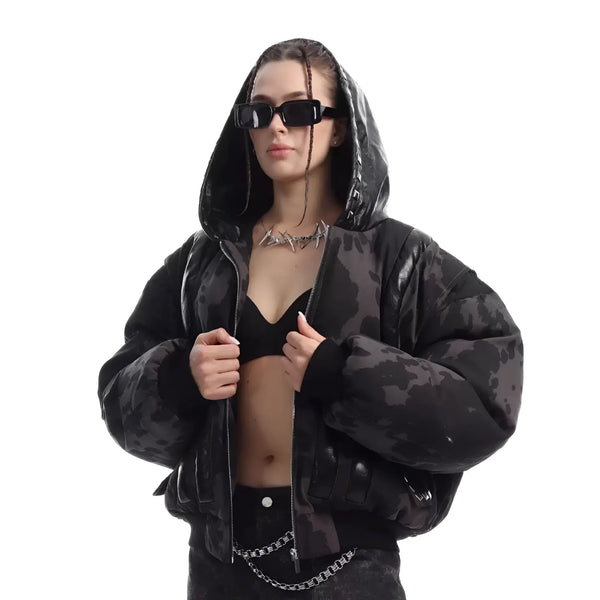
In Berlin the jacket is a door and a cloakroom problem at once. You need something warm for the queue outside and something you can take off and hand over inside without missing it. A bomber, a technical track jacket, a slim puffer — robust, dark, with no delicate surface.
In summer at open-airs the track set takes over the role: light, breathing, fast off and on. In winter at the club the puffer counts, the one that survives the queue and disappears inside. In both cases: matte, dark, no logo that gets the door talking.
Don't buy anything delicate as a club jacket. It ends up on a sticky floor, in a packed cloakroom, in the rain outside the door — and it should survive all of it without hurting you.
Styling
How to actually style techno fashion — the one rule
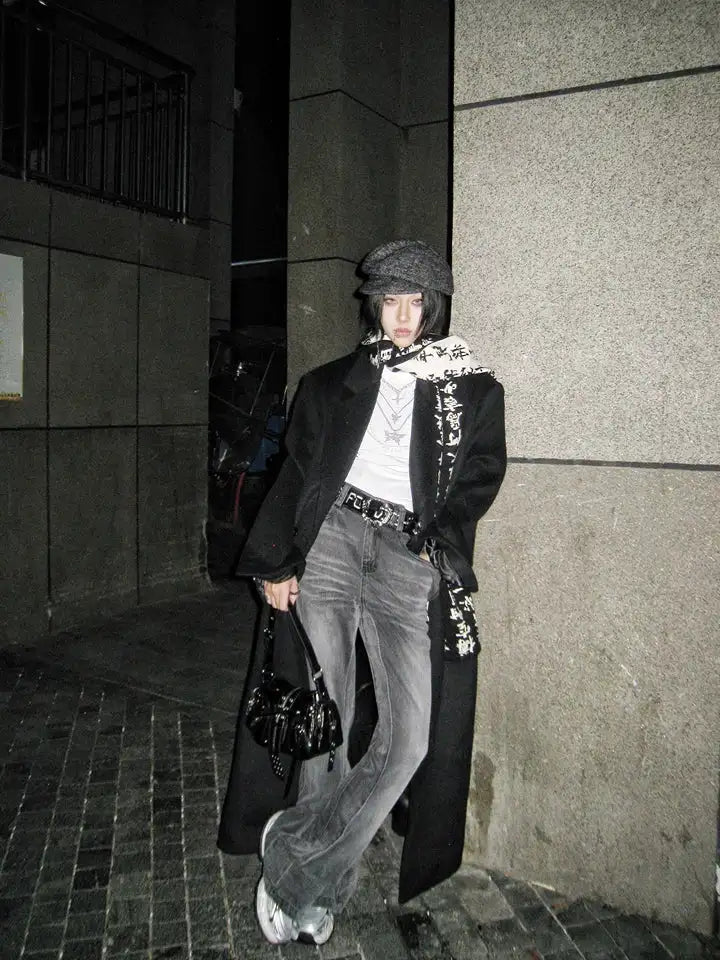
A techno outfit works on exactly one detail: where the weight sits. Little and tight up top, lots and wide below. Tank plus cargo. Longsleeve plus parachute pant. Never the other way round — an oversize hoodie over a skinny turns the whole look into a sack.
The second lever is discipline with accents. One reflective stripe, one strap, one bag on the leg — one accent, not three. The moment two statement pieces fight each other, neither wins, and the outfit reads as effort instead of as code.
Techno fashion isn't a wardrobe full of statements but five pieces that adapt to every night. Get the code down and you build a hundred outfits out of ten pieces.
Fūga Studios
Techno also doesn't stand alone. The code overlaps at several edges with other dark aesthetics — and once you understand it, you can read the neighbours deliberately without slipping into costume.
Here are the most important neighbours — each with its own guide, in case you want to go deeper:
Seasonal
Techno at summer open-air vs winter club
The code stays the same, the volume of the fabric changes. In summer at the open-air, breathing counts: mesh, tank, short cargo, light track jacket for the cool hour after sunrise. Black keeps the sun off, but technical fabric lets the heat through.
In winter at the club it's about the queue-cloakroom problem. The puffer survives the queue, disappears inside in the cloakroom, and below it stays tank and trousers — because inside it's hot, no matter how cold it was outside.
Here's what the summer cut looks like in motion — light, wide, dark:
Mistakes
The five most common techno-fashion mistakes men make
Most mistakes aren't matters of taste but code breaks. They cost you at the door or, at the latest, after three hours on the dance floor.
Getting started
How to start — the first four pieces
You don't need a full wardrobe to hit the code. Four pieces are enough for the first outfit that passes in Berlin. Start with the trousers — they carry the most of the look.
How the five types are actually worn you see best not in the lookbook but in everyday life — in the queue, in the club, the morning after.
In closing
Techno fashion is a system — not a costume
If you take one thing from this guide, take this: techno fashion works on rules, not on pieces. Get the rules down and you build a hundred outfits with ten pieces. Buy only pieces and you've got a full wardrobe and still nothing that passes in Berlin.
The whole logic of this guide reduces to one sentence:
The code has been stable since the early 90s and will stay that way as long as Berlin dances. You don't have to know it by heart before you start. Start with the quietest look — tank, wide trousers, boots — and dial up from there.
FAQ
Frequently asked questions about men's techno fashion
The questions we often get by DM and email — answered short and without detour.
What is men's techno fashion?
What does a man wear to Berghain?
What did ravers wear in the 90s?
What's the difference between a techno and a hardstyle outfit?
Which trousers do you wear to techno or rave?
Which top do you wear to techno?
What do you think?
Tell us on @fuga_studios
About the author
Philipp Fuge — Founder · Berlin
Founder of Fūga Studios. Writes the journal himself. Berlin · Shanghai · Tokyo · Poznań — four cities, one logic.