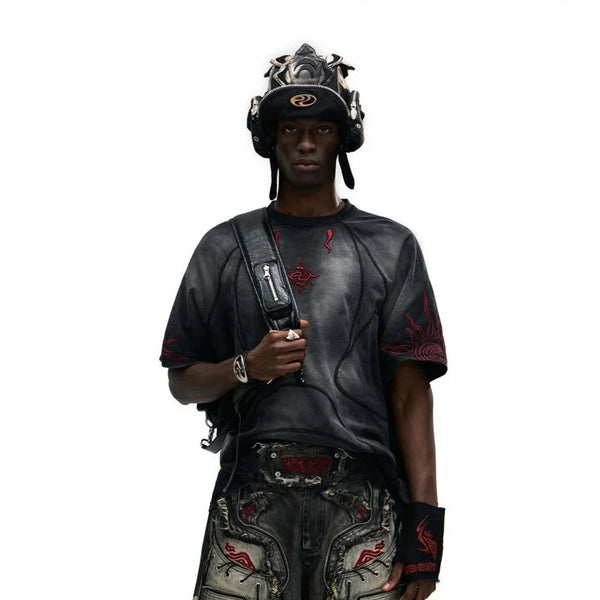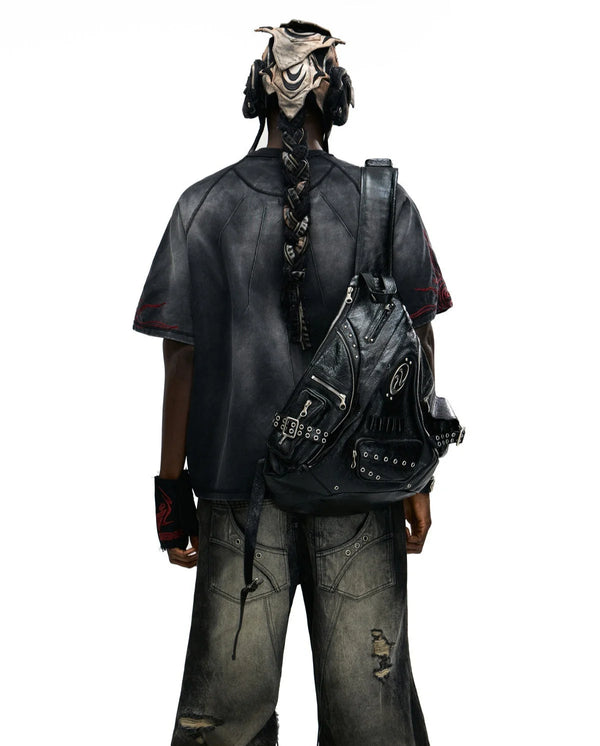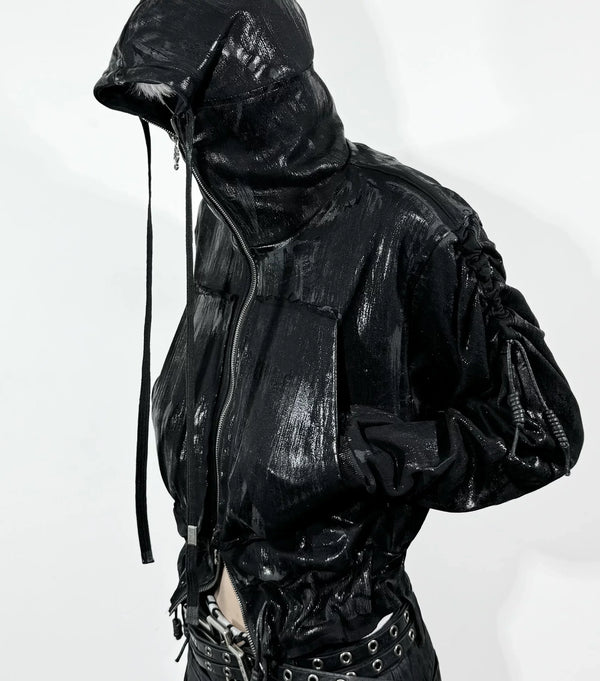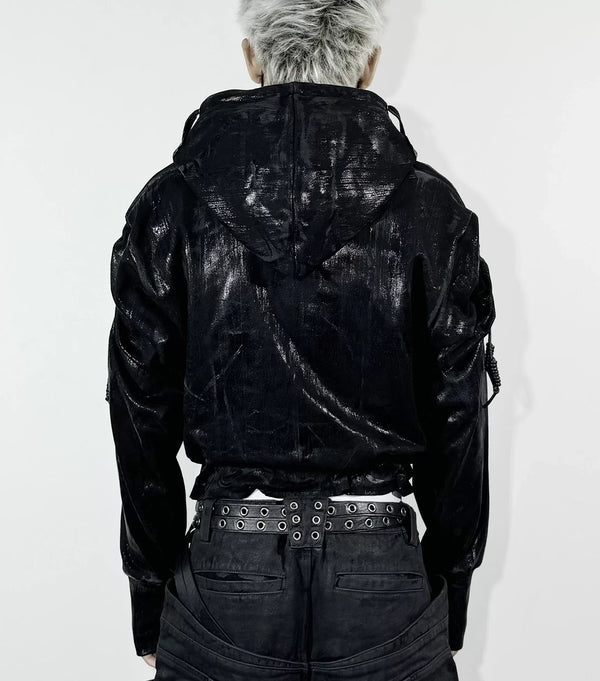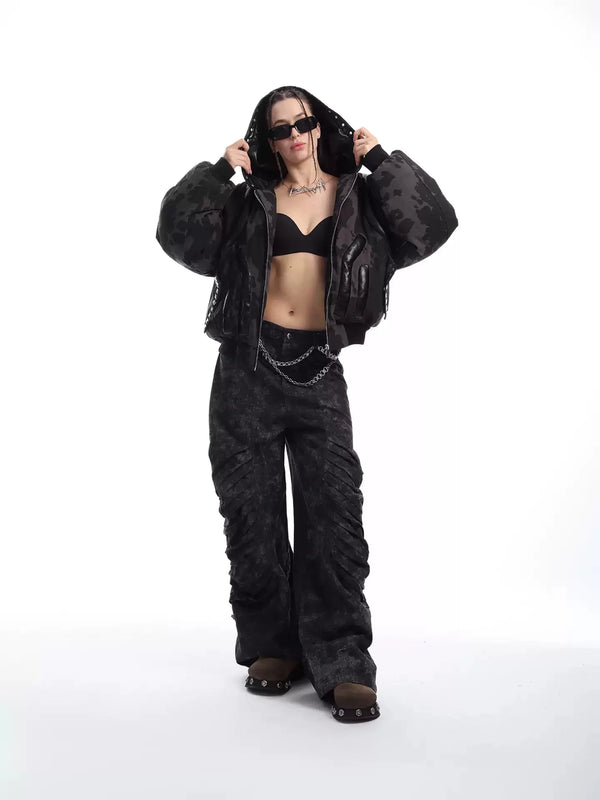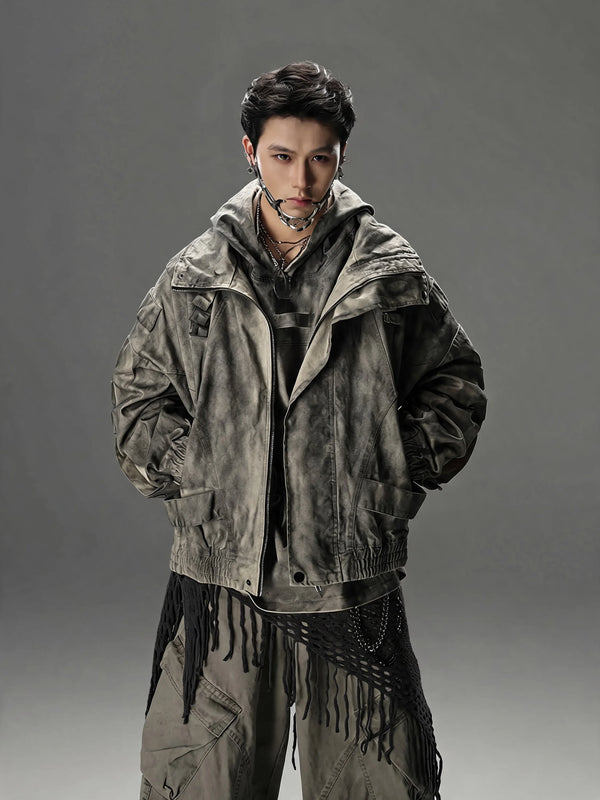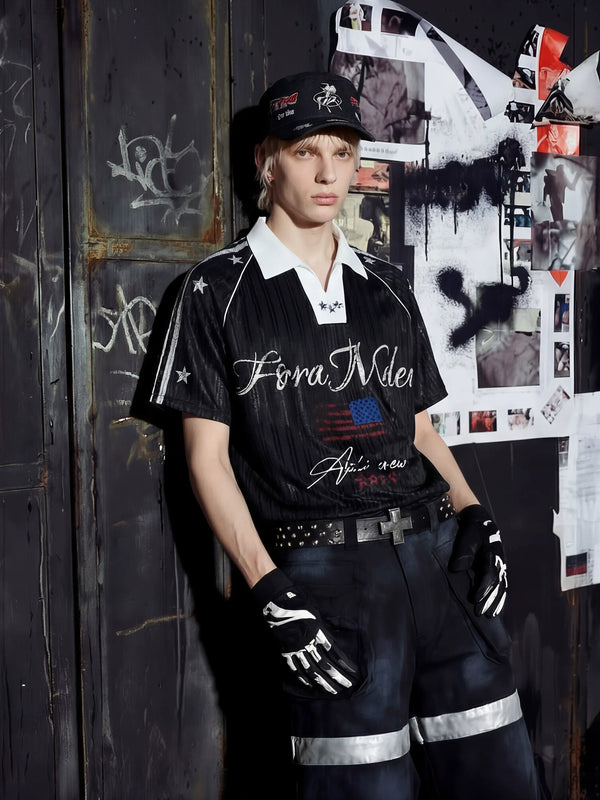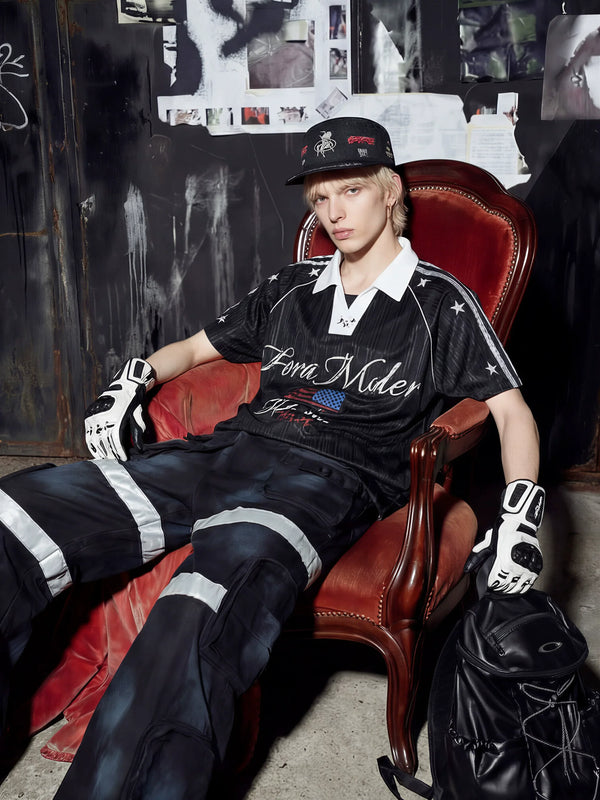

You pull everything black out of the closet, lay it on the bed, and still stand there like someone headed to a funeral — not like someone wearing Goth. The difference isn't the color. Everything is black. The difference is that the surface stays flat as long as no fabric works against another.
An all-black goth outfit isn't a pile of black clothes. It's a monochrome look that works through texture instead of color: matte against glossy, mesh against leather, raw against smooth. Understand that one rule and you build a look from five pieces that reads as Goth and not as a costume. Where this look sits in the larger vocabulary is covered by our Gothic Fashion Guide — here it's only about black on black.
Definition
What sets an all-black goth outfit apart from “just black”
Black clothing is neutral. Almost every wardrobe has black jeans, a black shirt, a black jacket. Together that makes a dark outfit — but not a Goth outfit. The reason is simple: when three matte cotton pieces sit on top of each other, nothing reflects differently from the rest. The eye reads a single flat surface and the look feels like everyday life in dark mode.
Goth turns the same color into a language. The look quotes post-punk, Bauhaus, and the early eighties, and it does so through surface, silhouette, and hardware. “Black clothes” become a “black goth outfit” as soon as at least two different surfaces sit in the look and a metal accent sets the contrast. Anything below that is simply dressed in dark.
4
Core surfaces
5
Pieces in the base framework
1
Metal tone as the break
The principle
The texture rule: why monochrome goth fashion works through fabrics
When color drops away, texture does all the work. That's the core of any good monochrome goth fashion: you no longer steer through color values but through how much light a fabric swallows or throws back. A matte washed tee, a glossy coated pant, and a mesh layer in between make three clearly separated shades of black, even though the label says the same black three times.
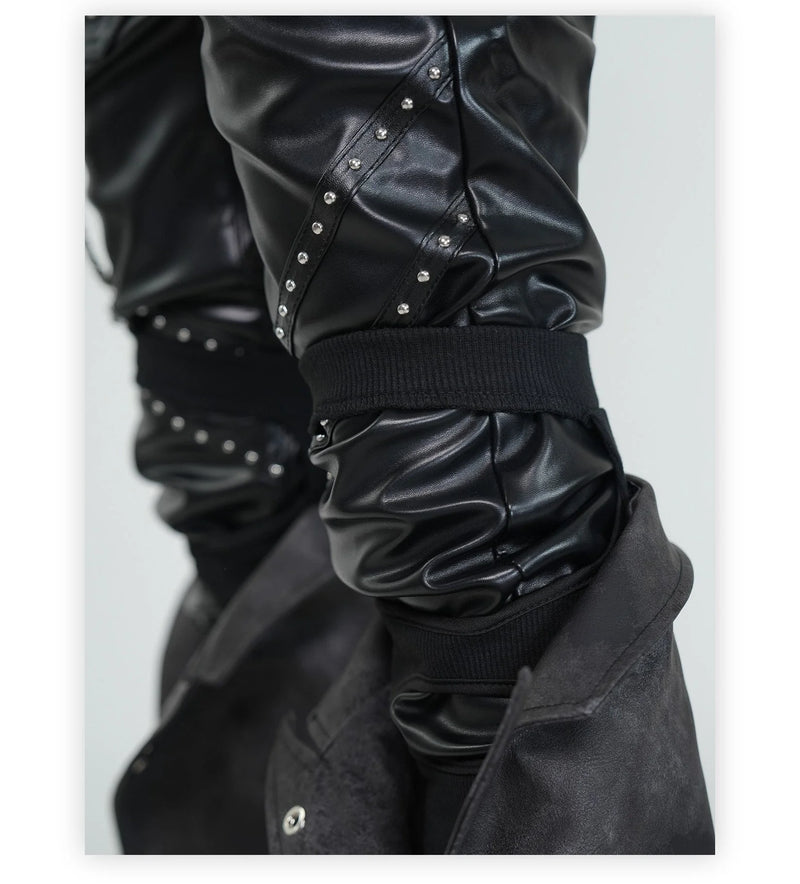
Think in four surfaces. Matte forms the base and swallows light. Gloss sets a hard reflection against it. Mesh breaks the surface open, transparent. Leather gives the look weight and a smooth, heavy edge. As soon as two or three of these layers sit in the same outfit, depth appears — and it's exactly this depth that the eye reads as Goth instead of as mourning wear.
Tops
Tops: from the mesh layer to the distressed tee
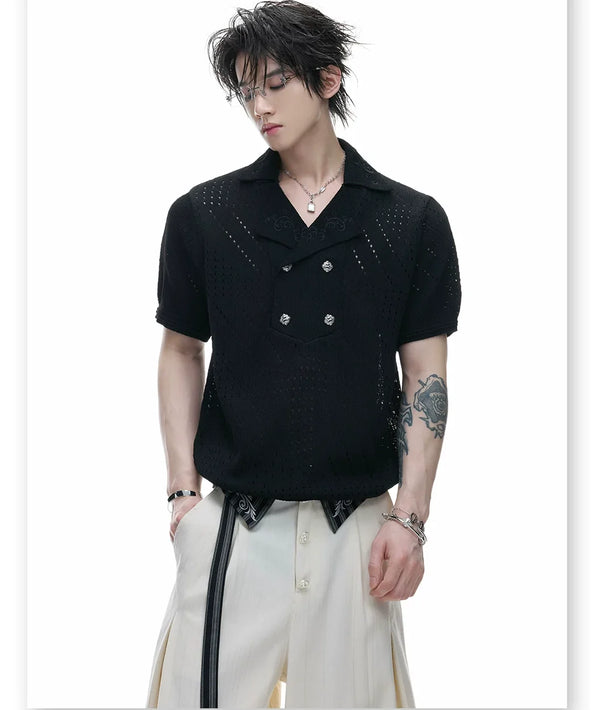
The top decides how much texture the look gets at all. A plain black shirt is the base, but on its own it stays flat. The trick is layering: a mesh or net longsleeve under a washed, lightly distressed tee. The mesh shows through at the collar and cuffs, breaks the cotton surface open, and delivers the first texture contrast without you straying a single millimeter from black.
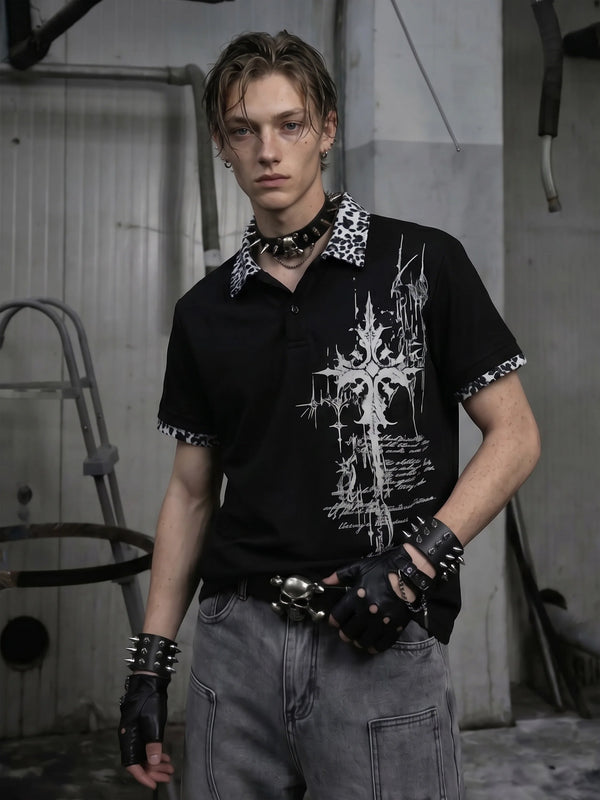
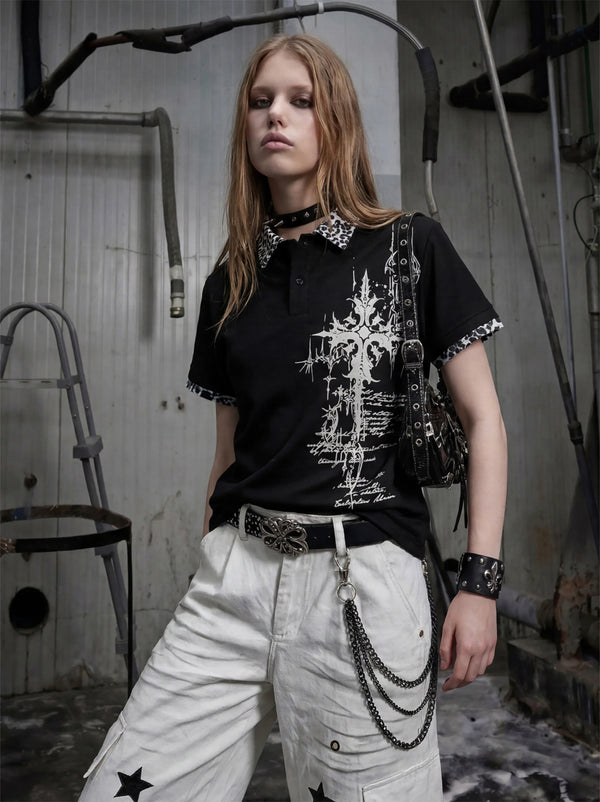
Distressing is the second lever. Frayed hems, thinly worn spots, and raw edges catch light differently from smooth fabric. A cross or graphic print in tone-on-tone black adds structure without bringing color into play. That way the upper body looks intentional from three meters away instead of like “had nothing colorful in the closet”.
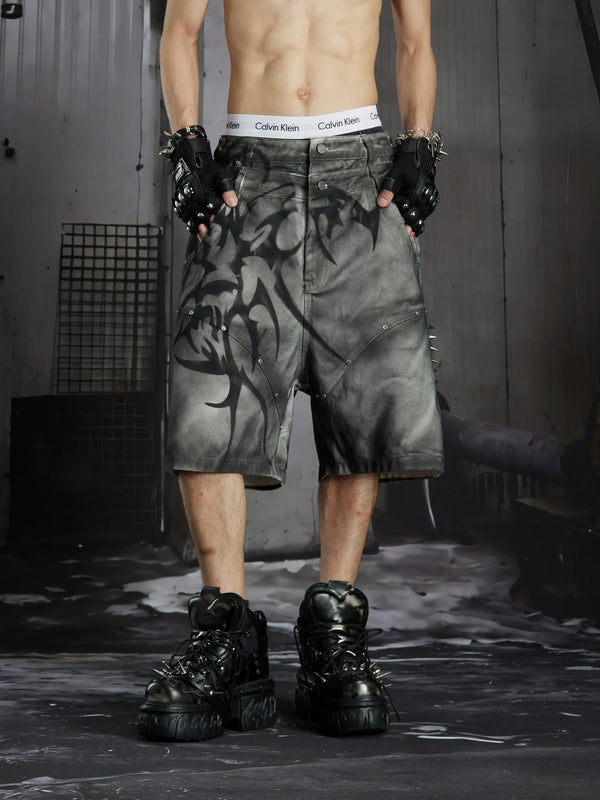
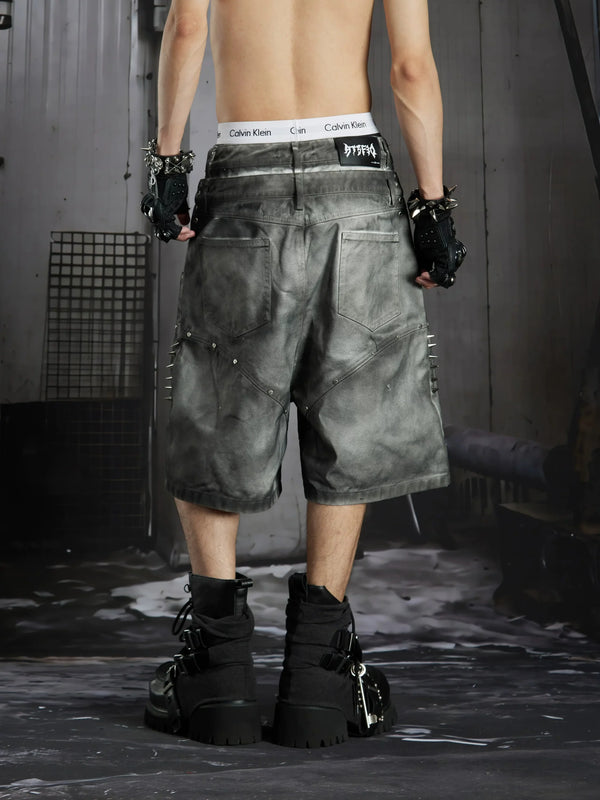
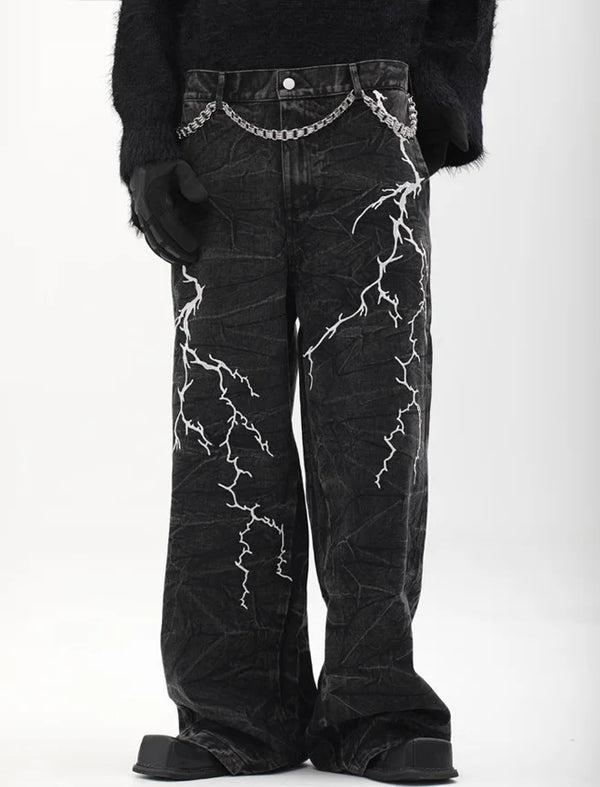
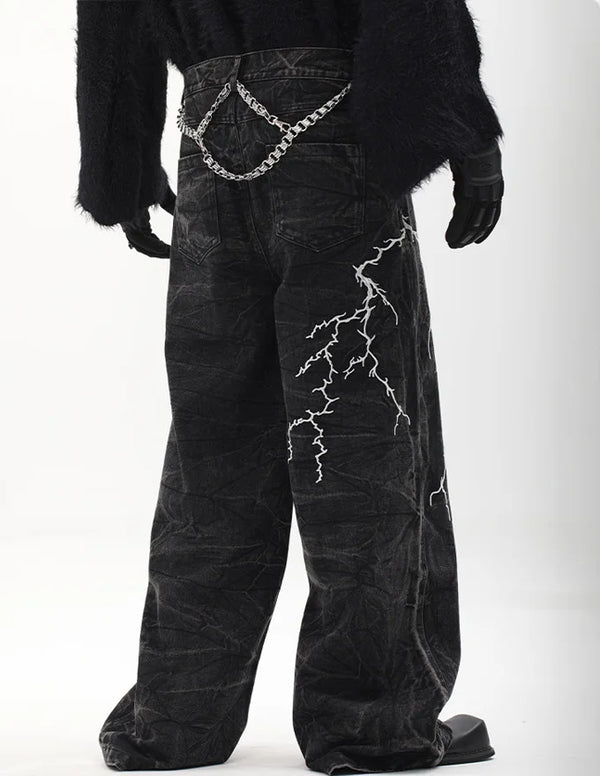
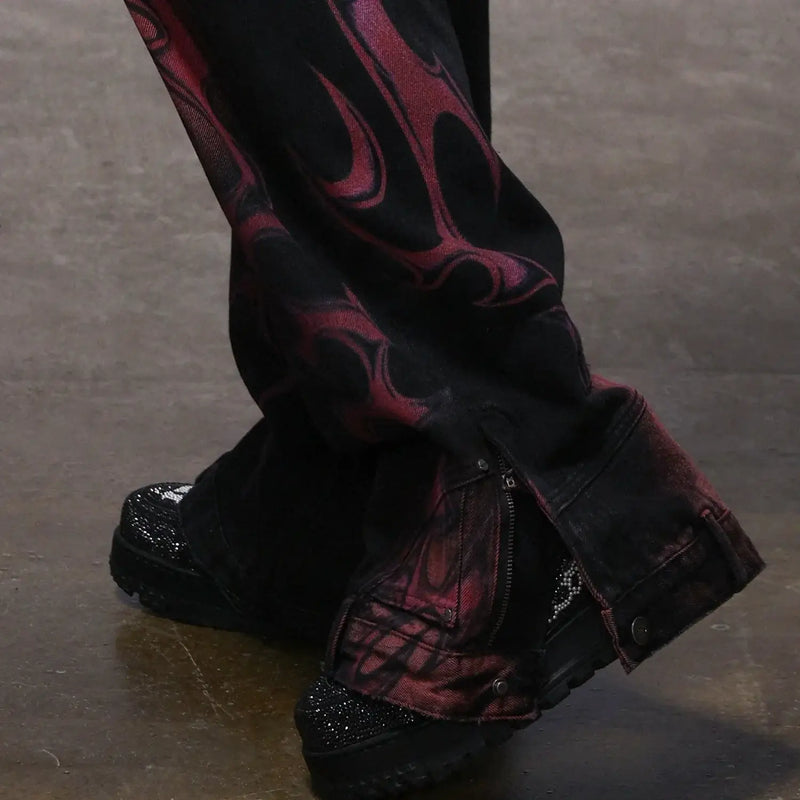
What that looks like in motion is shown by the denim-set clip: the same principle, just carried through top and bottom. The distressed edges and the heavy denim deliver two surfaces that carry each other.
Keep one rule of thumb for the top: never two smooth matte pieces directly on top of each other. As soon as the base layer is matte, the second layer belongs in mesh, ribbed knit, or a textured surface. The contrast happens up close, exactly where the person across from you sees it.
Men
Black goth outfit for men: the cut code
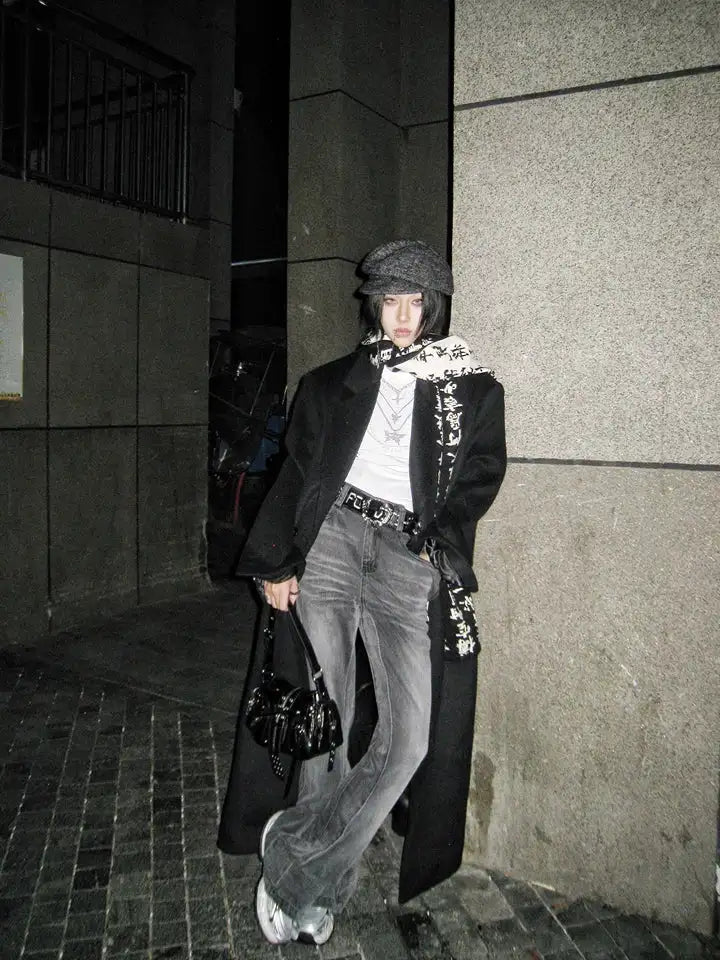
For a black goth outfit on men, most of the contrast runs through cut and length, not through decoration. A straight or slightly wide pant, a top with a clear shoulder line, and over it a jacket that has weight. A long open shirt or a longline shirt breaks the silhouette vertically and turns a “black outfit” into a dark vertical that lengthens the body.
Where women play with layer and transparency, men work with structure and hardness: angular cuts, visible seams, functional details like straps or pockets. Silver hardware — a chain, a ring, a belt buckle — is the only accent the look needs. Color would destroy the calm that lets the cut work in the first place.
A common entry point for men is the comparison with the rave floor, where black carries the same code but becomes faster and more functional. Know both worlds and you grasp faster what Goth actually is.
Trousers
Pants and silhouette: wide, cargo, or skinny in the all-black goth look
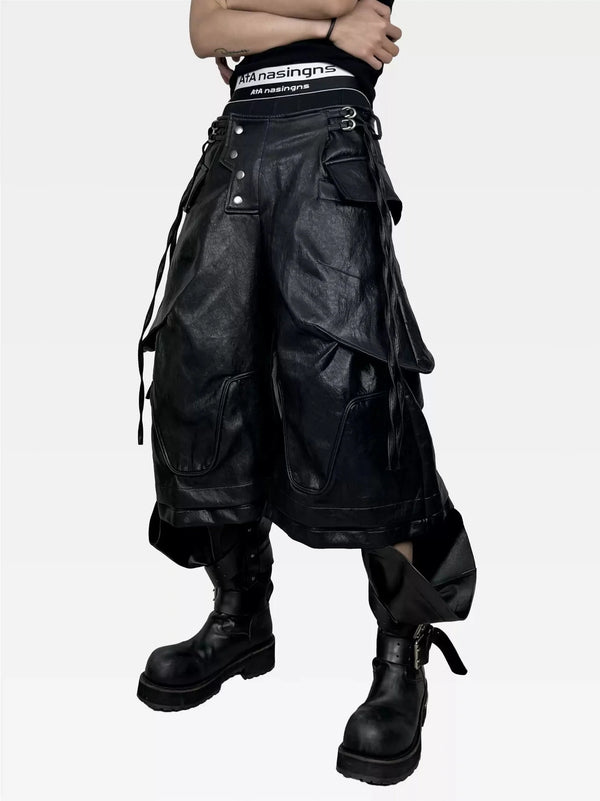
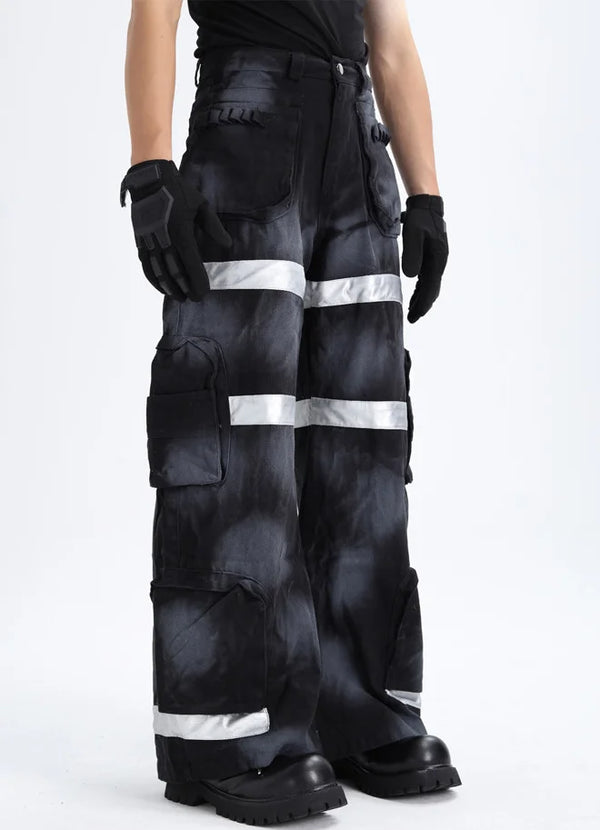
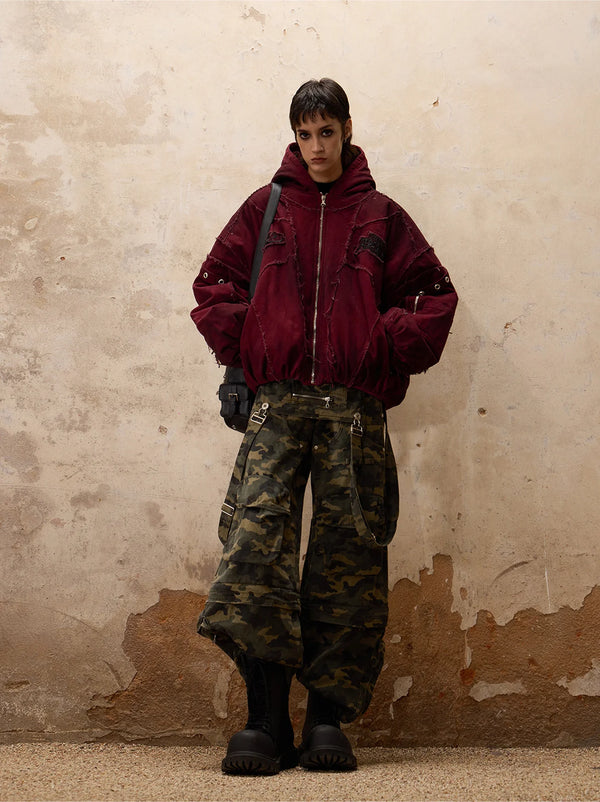
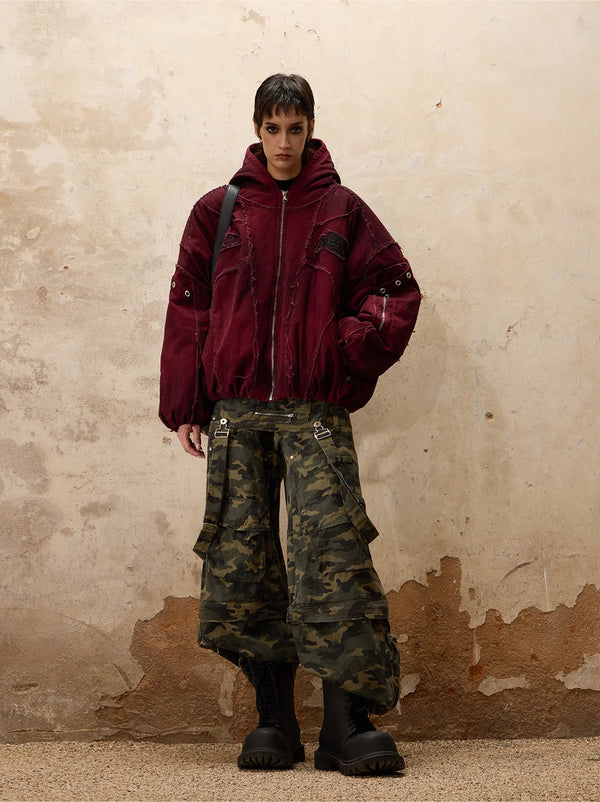
The pant sets the silhouette, and the silhouette decides the subgroup. Wide legs with a low crotch read modern and close to Opium. Cargo with straps and pockets pulls toward dark utility. Cut tight with chains and zippers stays closer to the classic trad Goth of the eighties. All three are right — they just tell different stories.
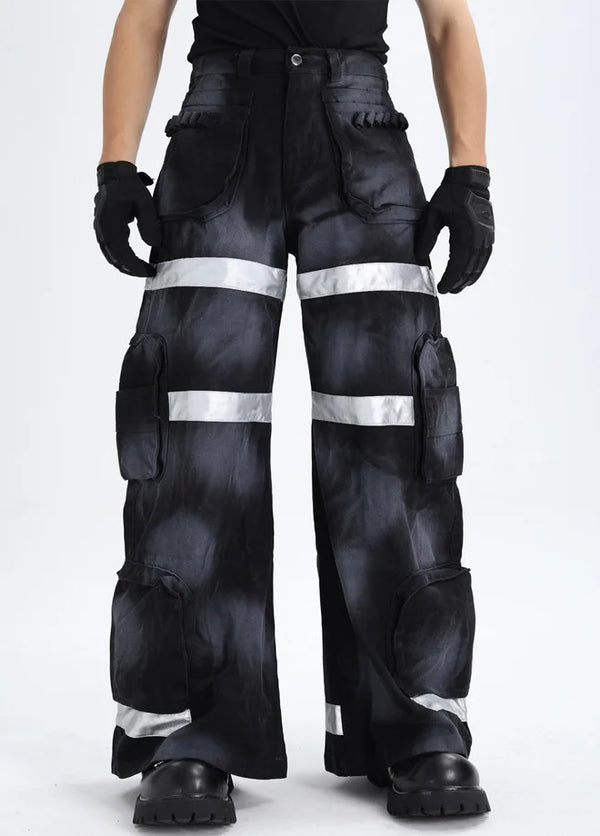
For texture contrast, coated or washed denim is worth it. The coating gives the gloss that works against a matte top; washed, distressed denim gives rough structure. Proportion matters: if a lot is going on up top, keep the bottom calmer, and vice versa. Two loud pieces on top of each other cancel each other out and the look tips into costume.
A good test in front of the mirror: hold the whole outfit against a window. If you see three different shades of black, the silhouette works. If everything blurs into one surface, a texture layer is missing at the top or bottom — usually the gloss.
Women
Black goth outfit for women: silhouette and layering
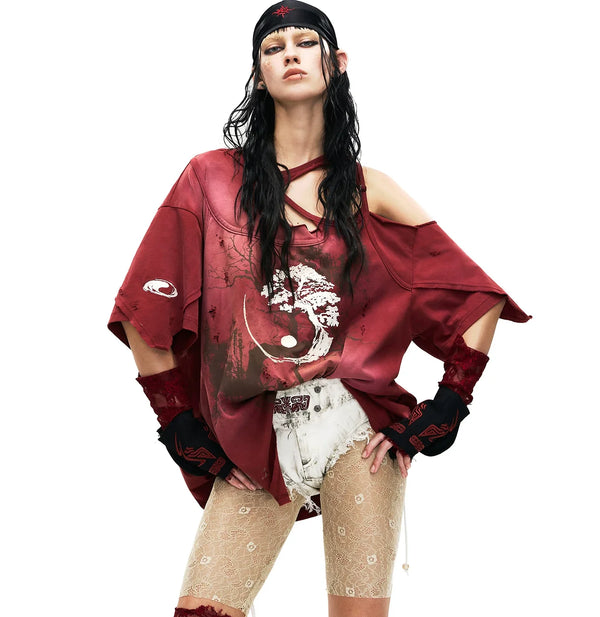
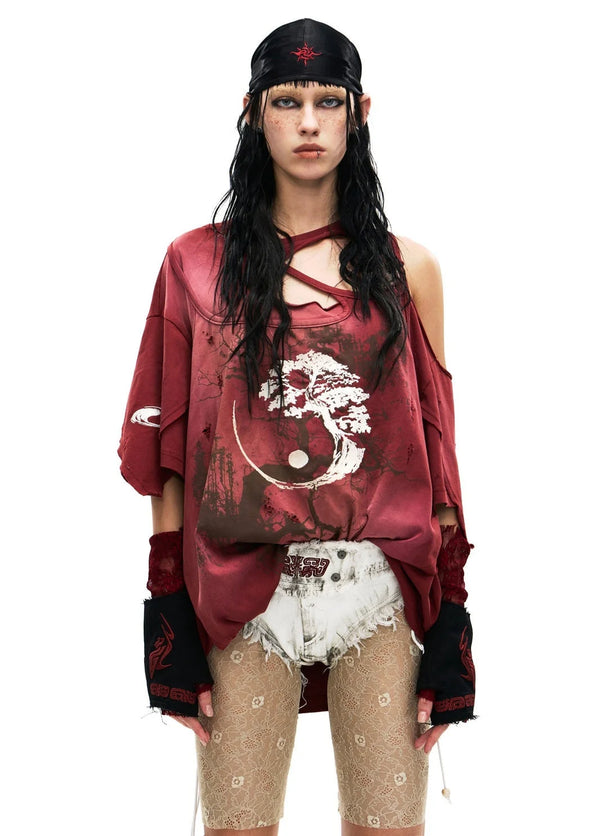
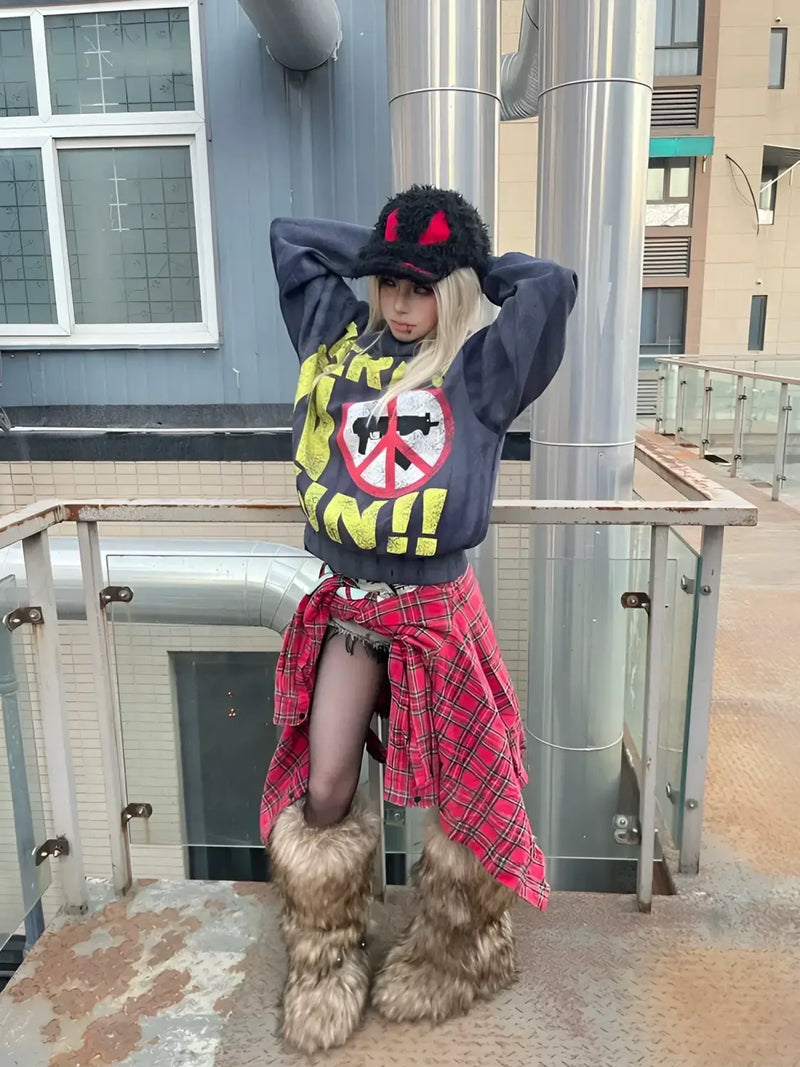
In the black goth girl look, layer takes on the role that cut plays for men. A mesh dress over a plain slip, a corset over a longsleeve, lace over smooth skin or matte fabric: each layer adds a surface and with it depth. Transparency is the strongest tool here, because it breaks black open without adding a single color value.
Silhouette works through the contrast of tight and wide. A tight top with a wide skirt or wide pants, or the reverse, a voluminous top with a slim line below. Fishnets, platform boots, and silver jewelry set the accents. The look stays completely black but reads romantic, hard, or playful — depending on which texture you put on top.
This rule holds for every gender and every subgroup. Whether mesh, lace, leather, or coated denim: the surface carries the meaning. From here on it's only about which pieces deliver these surfaces.
Outer layer
Jackets and outer layer: where the outfit gets weight
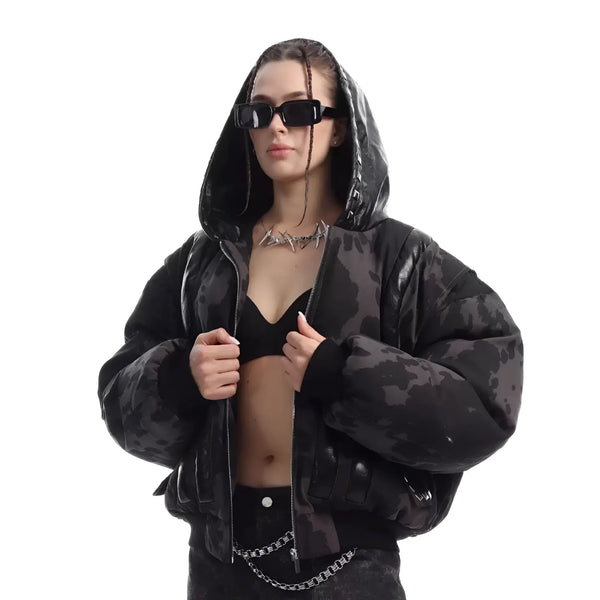
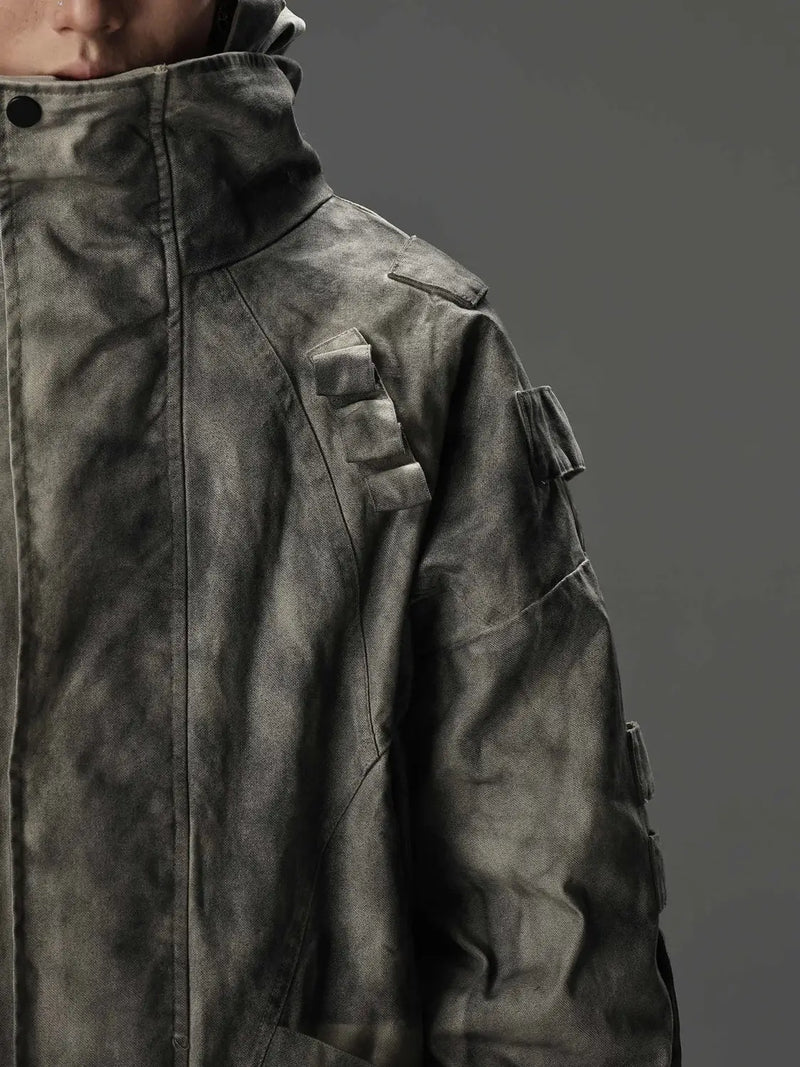
The jacket is the part that turns a thrown-together stack of black into an outfit. It brings the largest surface and with it the most weight. A bomber with a cross or graphic detail, a technical coat, or a distressed denim set over the shoulders sets the frame the rest of the look stands in.
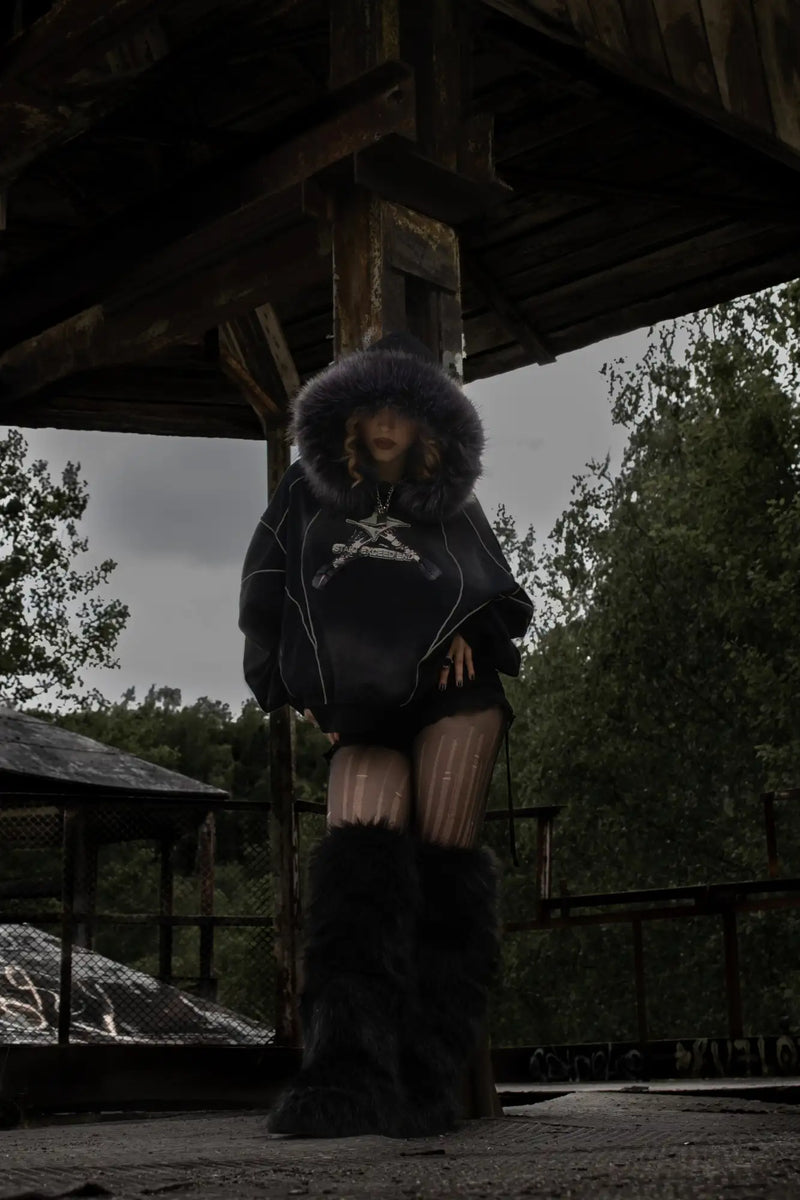
Watch the third surface. If matte sits up top and gloss below, the jacket should add something new — leather, heavy nylon, or textured fleece. That way the finished look has three to four layers of black, clearly separated from each other. That's the point where monochrome stops being boring and starts looking expensive and intentional.
If you want to wear the look to the office without losing the code, you'll find the more disciplined version in our guide to Corporate Goth — the same black logic, just with a blazer and straight edges instead of distressing.
Accessories
Accessories: silver hardware, leather, and the contrast within black
In the all-black goth outfit, accessories aren't decoration but the only allowed break. Silver is the standard metal tone: chains, rings, belt buckles, cross pendants. Silver reflects cold and hard against the black surfaces and delivers exactly the contrast that color would destroy. A single strong piece often works harder than five small ones.
Leather is the second building block: a wide belt, a harness, gloves, or boots give a smooth, heavy surface. A cap or a beanie in matte black frames the face and closes the silhouette at the top. Keep the number of metal tones at exactly one — silver and gold mixed tips the look into the arbitrary.
With these five categories in mind, the build is no longer a riddle. One decision remains: where in the look does the foundation sit? And that's almost always the shoe.
Shoes
Shoes: the foundation of every monochrome goth look
The shoe sets the dialect. Platform boots or combat boots pull the look toward trad and club Goth. Heavy sneakers or Tabi-like silhouettes make it street and modern. Pointed, hard loafers or Chelsea boots push it toward corporate and avant-garde. The same black outfit completely changes its statement as soon as the shoe changes.
That's why it pays to fix the shoe first and build the rest on it, not the other way around. Material fidelity applies here too: matte leather against a glossy pant, or the reverse. A shoe with the same surface as the pants disappears — a shoe with a contrasting surface anchors the look to the ground.
How strong a single outer layer plus the right base can be is shown by the puffer clip: a glossy black surface against matte pieces, a clear reflection in motion.
Statement
How to break all-black open without losing the Goth code
The most common reflex with too much black is to bring in a color. That's usually the wrong move. A look doesn't break open through color but through surface and proportion. A mesh insert, a glossy edge, a piece of bare skin between two layers — that creates air without betraying the monochrome code.
If you do want color, keep it small and cold: a silver detail, a deep burgundy, or a rich dark green as an accent on a single piece. Anything bright or warm tips the look straight out of the Goth register. The rule stays: black carries the look, texture carries the meaning, one accent carries the exception.
This original formula isn't new. It's already in eighties Goth, where leather, lace, and matte black played the same contrast trick. Know the root and you grasp faster why texture is still the only rule that counts.
Budget
The budget route: Black Goth without Blackmilk prices
A convincing all-black goth outfit doesn't cost a fortune. Brands like Blackmilk Clothing made the look known, but the price often sits in the name, not in the fabric. The cheap route starts with two or three core pieces with clearly separated surfaces: a matte layering tee, a textured pant, a jacket with weight. The rest grows over time.
Put your money where it counts: on the accessories and the shoes, because they set the dialect and last the longest. A solid silver accent and a good boot lift even cheap base pieces. The texture trick works regardless of price — it hangs on the combination, not on the label.
Mistakes
Common mistakes with the all-black goth outfit
Most failed all-black looks don't fail from missing pieces but from the same handful of thinking errors. Know them and you skip the detour through costume and build a look that reads as intention from the start.
If none of these mistakes carry weight, the look holds. What remains are the detail questions — and the last block answers those.
FAQ
Common questions about the all-black goth outfit
The short answers to the questions that keep coming up before the first complete black-on-black look.
What makes an outfit “all-black goth” and not just black?
How do I keep an all-black goth outfit from looking like a costume?
Which shoes suit a monochrome goth look?
Does a black goth outfit work for men too?
Does everything really have to be black, or is an accent allowed?
That leaves the question of how all this comes together when you stand in front of the closet in the morning. The answer is always the same order: surface before color, silhouette before decoration, one accent instead of many.
What do you think?
Tell us on @fuga_studios
About the author
Philipp Fuge — Founder · Berlin
Founder of Fūga Studios. Writes the journal himself. Berlin · Shanghai · Tokyo · Poznań — four cities, one logic.