

A photo from 1983, taken outside the Batcave in Soho: teased hair fighting gravity, a face white as chalk, a leather jacket over fishnet, silver crosses down to the navel. No costume. No Halloween decor. Just the Tuesday look of someone who went out dancing to Bauhaus. This is what the underground looked like before anyone wrote the word Goth into the dictionary.
80s Goth Fashion is the first, raw Gothic look, born between 1979 and 1989 out of British Post-Punk: lots of black, leather, lace and net, dramatic makeup and teased hair. This guide shows what Goths wore in the 80s, which sub-styles existed and how you style the look today — the whole vocabulary builds on our Gothic Fashion Guide.
Origin
Where 80s Goth Fashion really came from — Post-Punk, not Halloween
The look has a birth year: 1979. Bauhaus released Bela Lugosi's Dead, a nine-and-a-half-minute droning eulogy, and suddenly Post-Punk had a face darker than anything before it. Bands like Joy Division, Siouxsie and the Banshees and later The Cure delivered the sound — and their audience built a dress code out of it. So Goth was never a fashion idea off the drawing board, but what concertgoers put together from leather, black and the contents of second-hand shops.
Were Goths popular in the 80s? Not in the mainstream. The British press dismissively dubbed the scene positive punk in 1983; the kids themselves simply named themselves after their club or their band. That very outsider position was the point: the look wasn't meant to please, it was meant to divide. Whoever wore it belonged to a small, nocturnal minority — and knew it.
The core pieces
What Goths wore in the 80s — the uniform of the underground
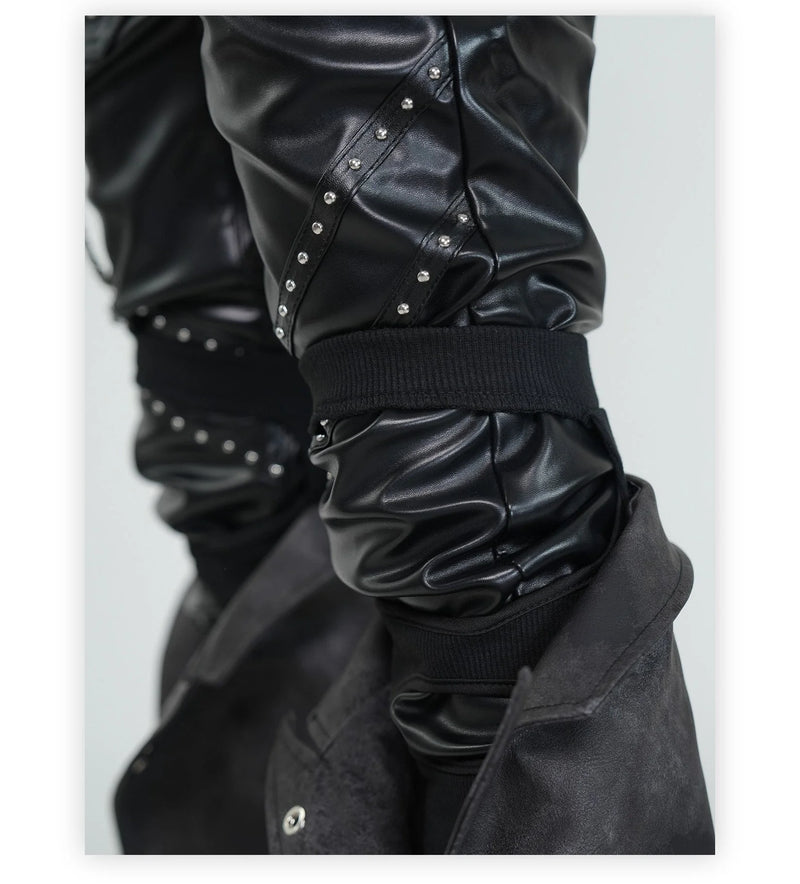
What Goths wore in the 80s followed no catalogue, but a clear logic. The base was black — and matte, worn-in black, not shiny new black. On top came textures that reacted differently in the light: lace at the wrists, fishnet on arms and legs, leather as jacket or trousers, velvet for the more romantic faction. The silhouette was tight, often layered, never sporty.
Added to that was a handful of fixed ingredients: torn band shirts of Bauhaus or the Sisters of Mercy, pointed Winklepicker boots or heavy boots, silver jewellery with crosses and ankhs, plus studded belts. Almost everything was DIY: torn by hand, held together with safety pins, dyed and unpicked again. Hardly anyone had money — the look lived on ingenuity, not on budget.
1979
First Goth wave
3
Sub-waves up to 1985
95 %
Black in the wardrobe
The sub-styles
The 5 sub-styles of 80s Goth Fashion
Goth in the 80s was not one uniform look, but a bundle of currents that fanned out year by year. Anyone rebuilding the style today should know which wave they mean — they differ in hardness, theatricality and the amount of romance. These five carried the decade.
Gender split
80s Goth Fashion male and female — where the look divides
The 80s Goth look was remarkably androgynous — and yet there were two focal points. For men it ran through The Cure and the Sisters of Mercy: smeared eyeliner, wild black hair, leather jacket, tight black trousers, often a net shirt underneath. Robert Smith's unmade-up-yet-made-up face became the blueprint for a whole generation of boys who refused to look masculine.
For women, Siouxsie Sioux was the reference: sharp cat-eye kohl, dark lips, teased hair, plus corset, lace, fishnet stockings and boots. The female 80s Goth image was more romantic and theatrical, without ever wanting to be pretty. Both sides shared the same basic rule: black, texture, drama — only the emphasis shifted.
Category · Tops
80s Goth tops — fishnet, band shirt, mesh
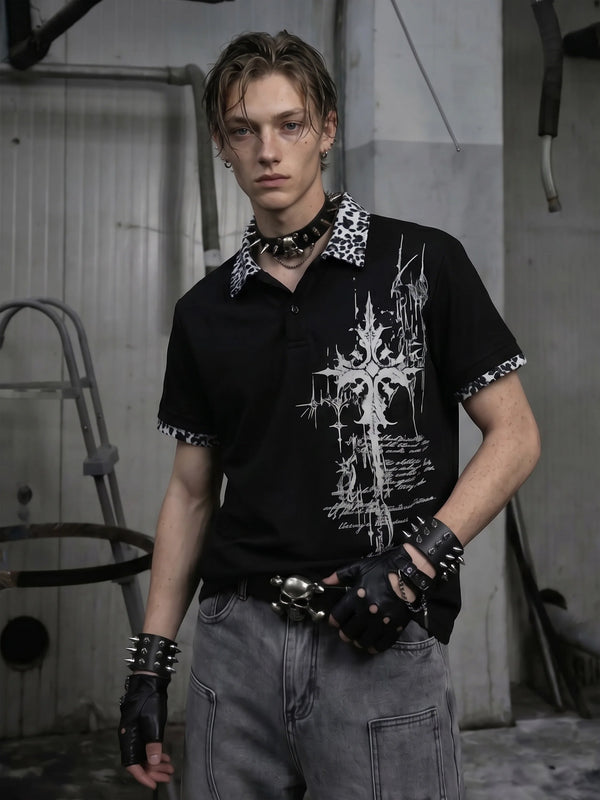
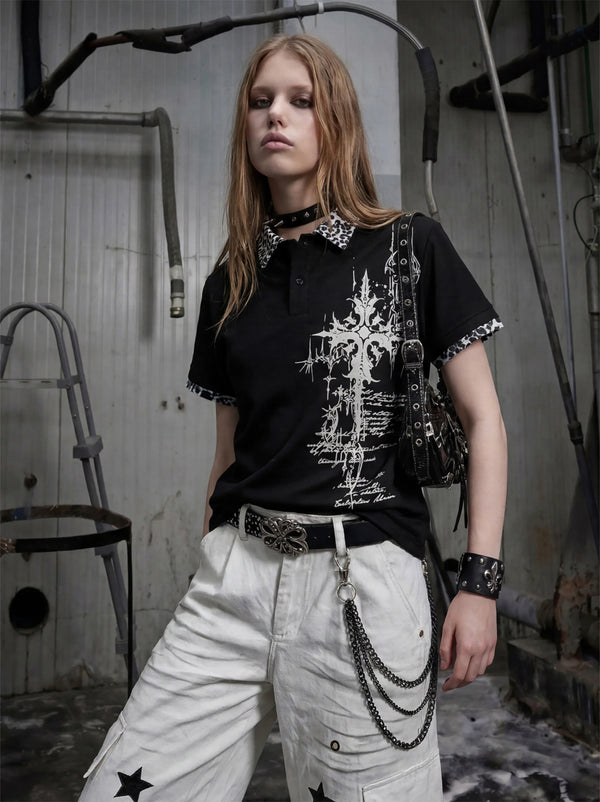
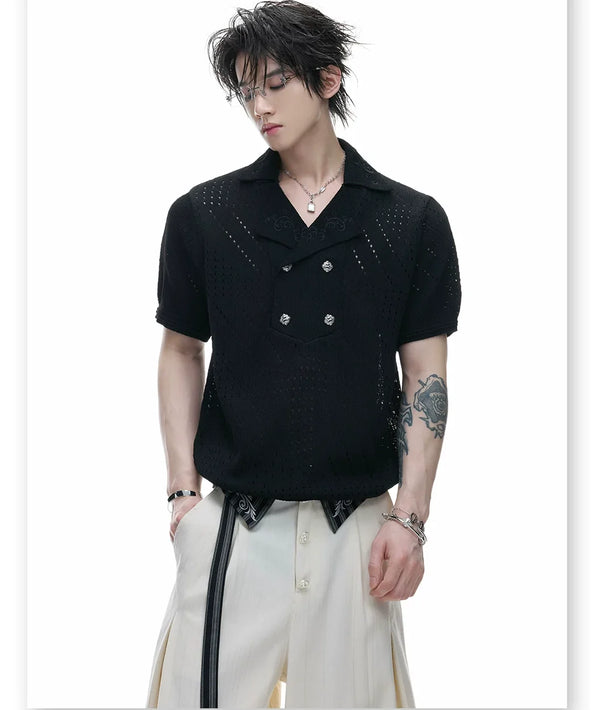
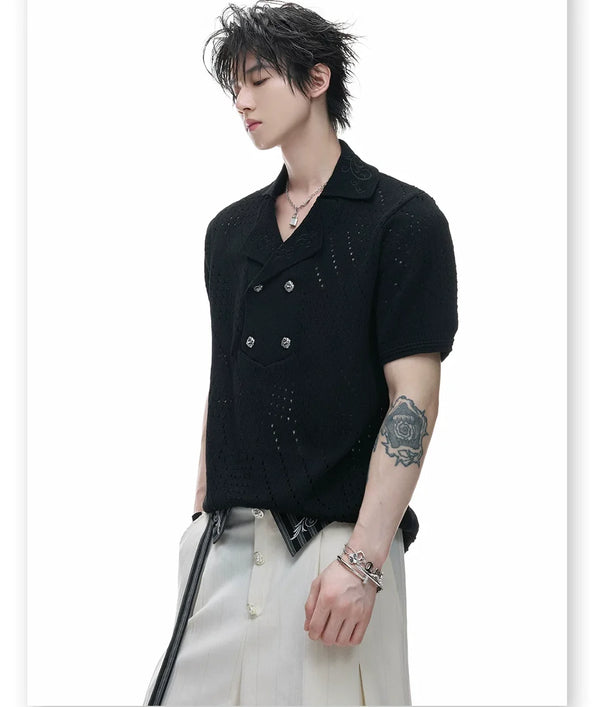
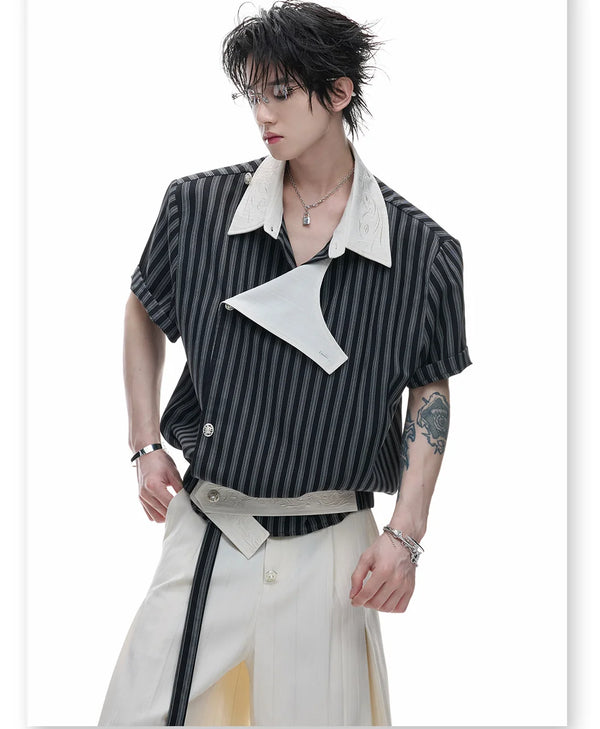
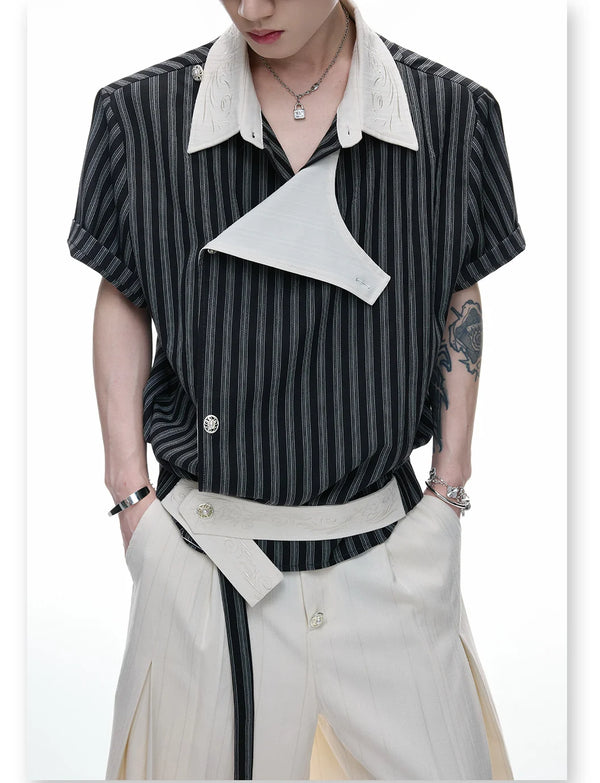
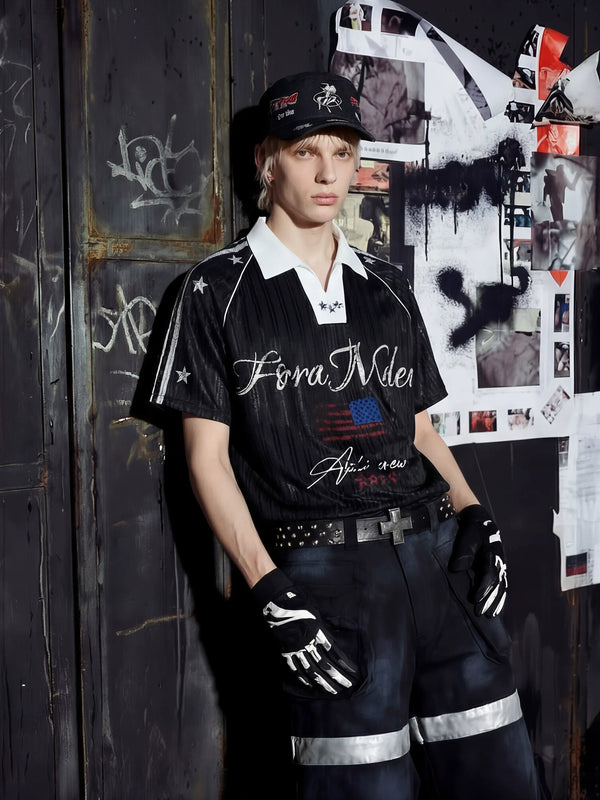
In the 80s Goth look the top was rarely a single piece, but a layering. Underneath a tight net or mesh shirt, over it a torn band shirt or an open-knit cardigan, plus maybe a lace collar. The appeal lay in the see-through: skin and texture alternating instead of a smooth surface.
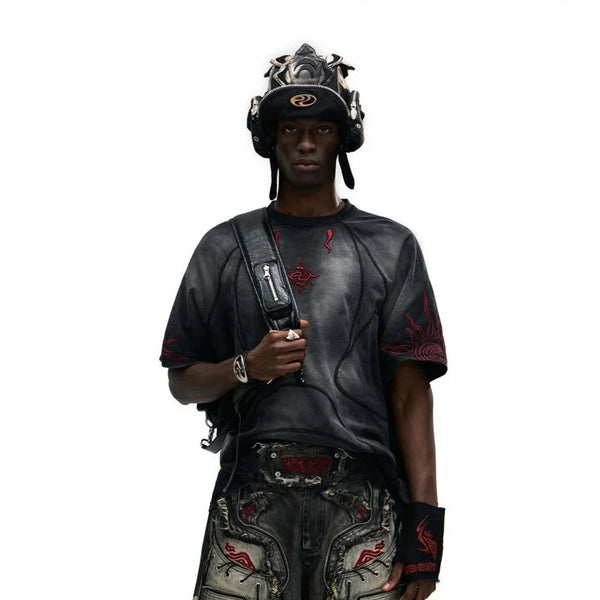
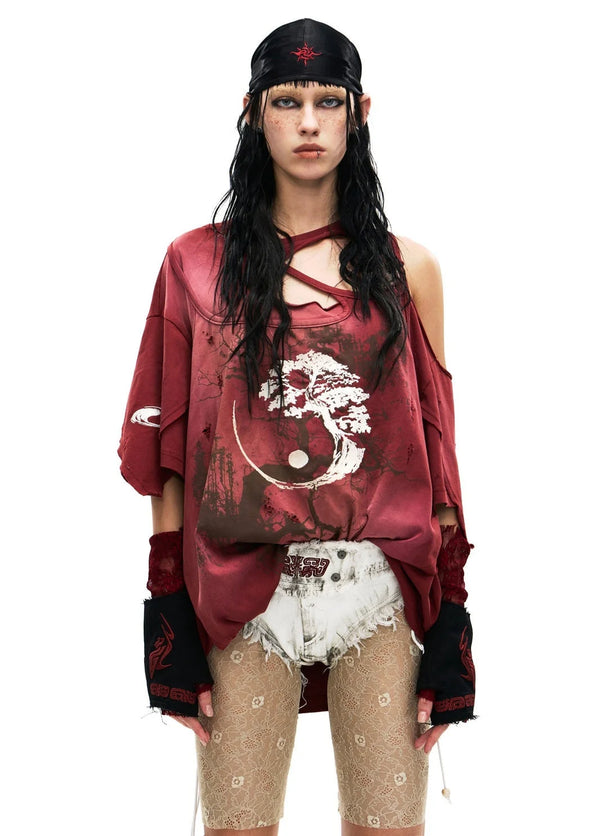
Anyone building the look today reaches for exactly this logic — layering instead of statement print. A washed distressed tee over a longer layer shirt hits the torn 80s spirit without looking like a costume. What matters is the matte tone and the worn-in look, not the brand on the chest.
Category · Trousers
80s Goth trousers — skinny, leather, torn
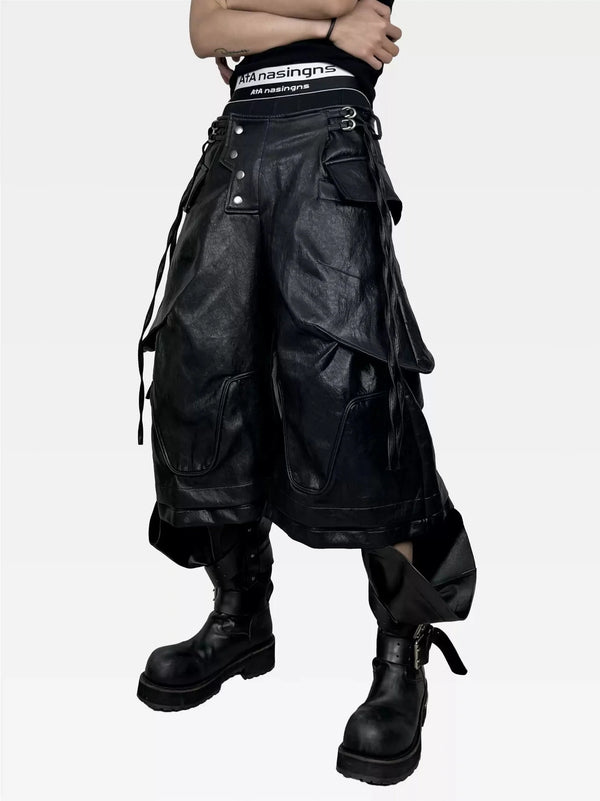
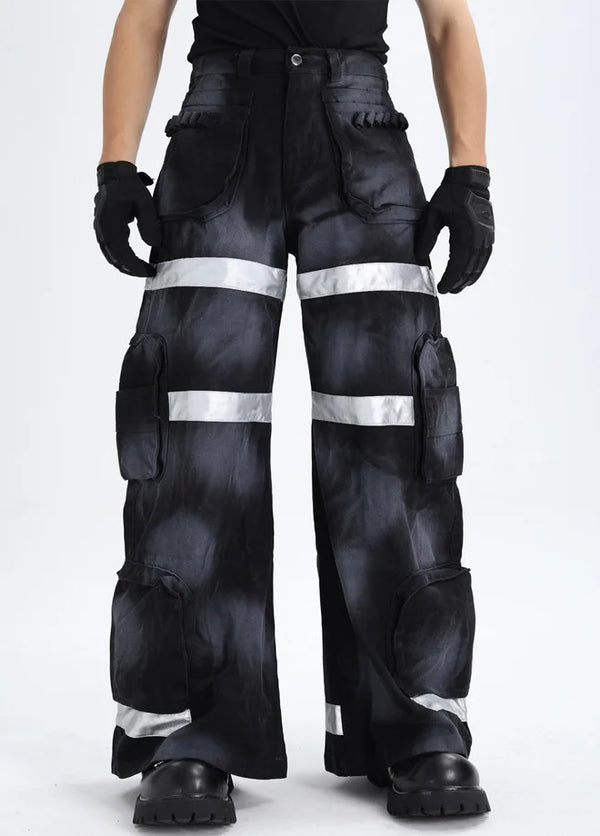
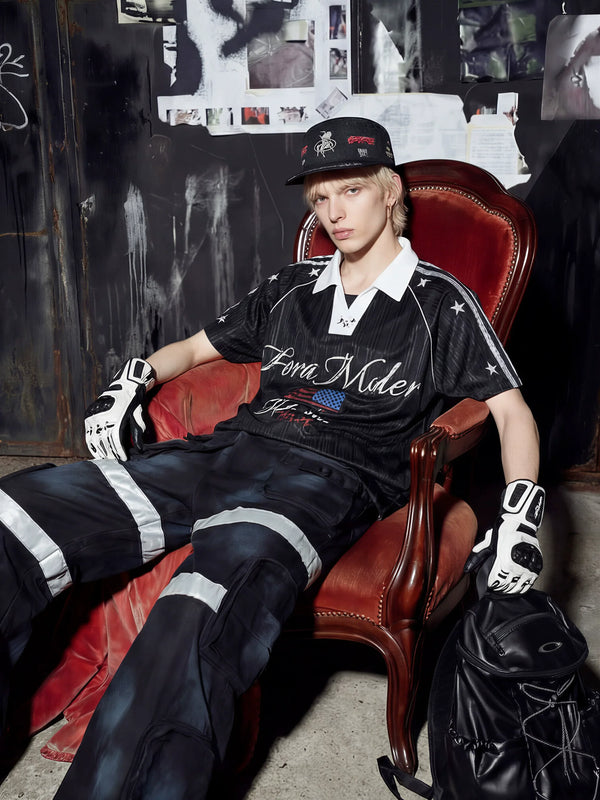
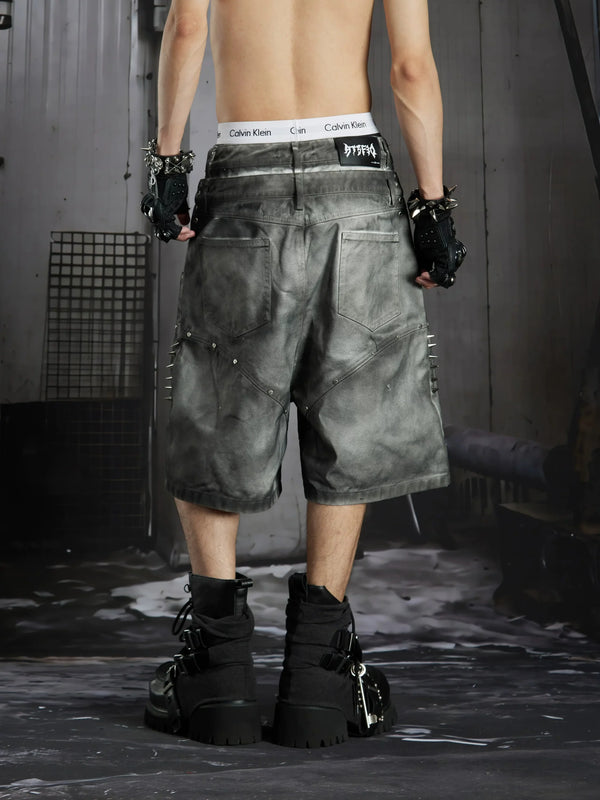
In the 80s Goth look, trousers were almost always tight. Skinny black tubes, leather trousers, torn jeans with safety pins — the silhouette emphasized the legs and left room for heavy boots. Wide cuts only came later; in the 80s the rule was: the narrower, the more dramatic the contrast to the teased head, the better.
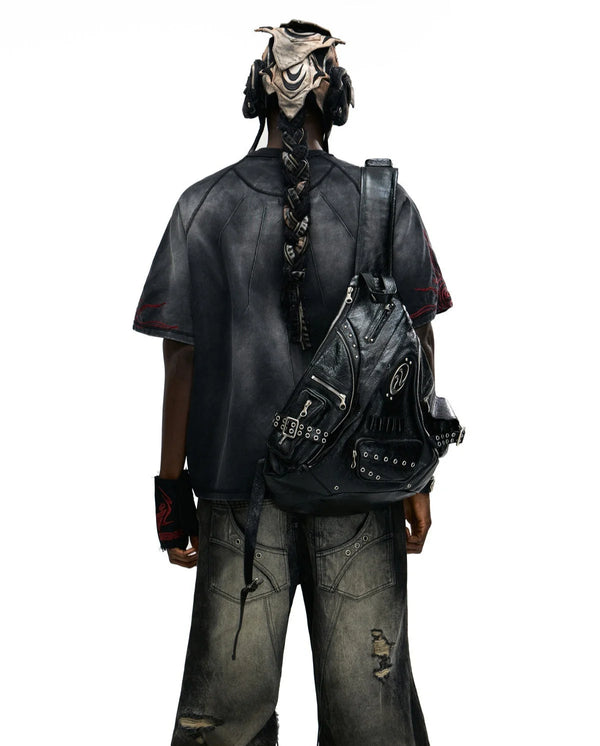
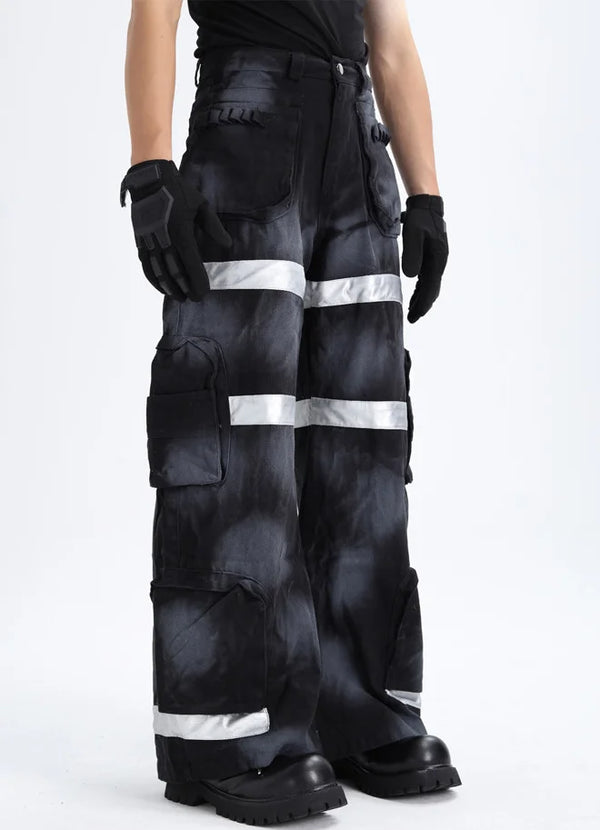
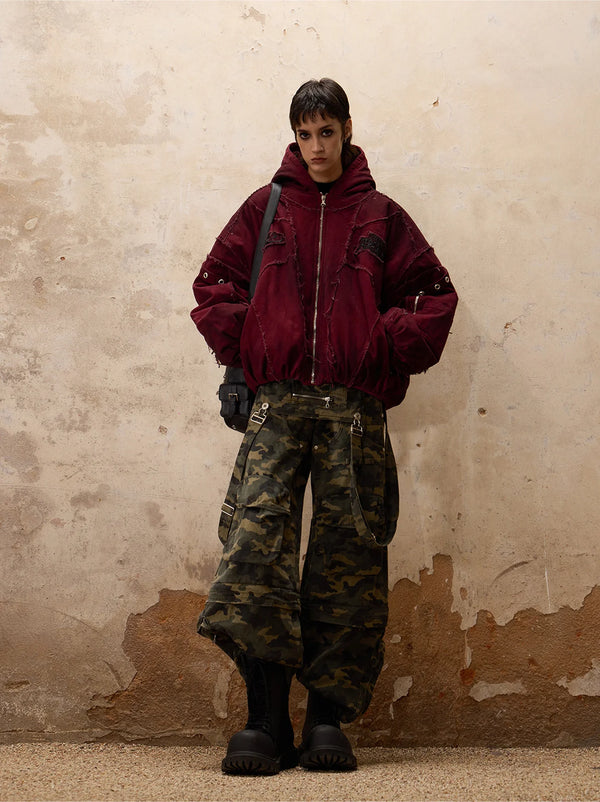
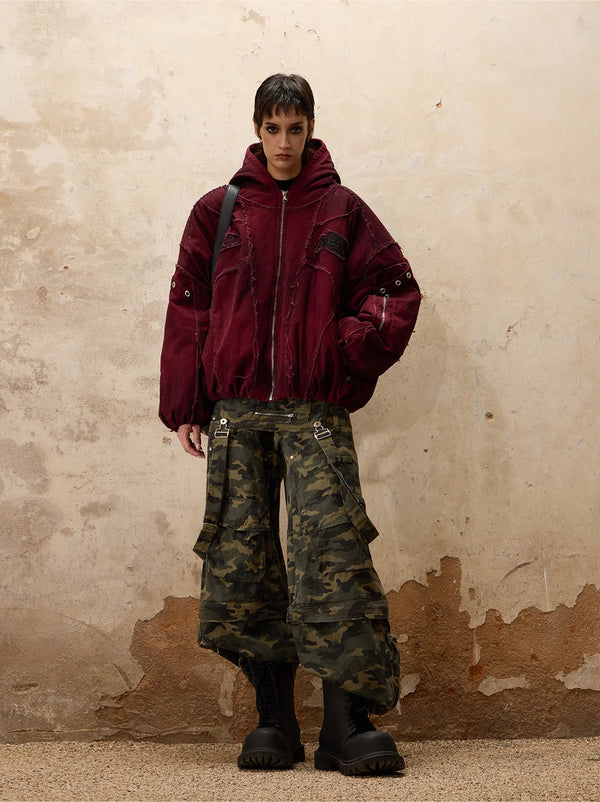
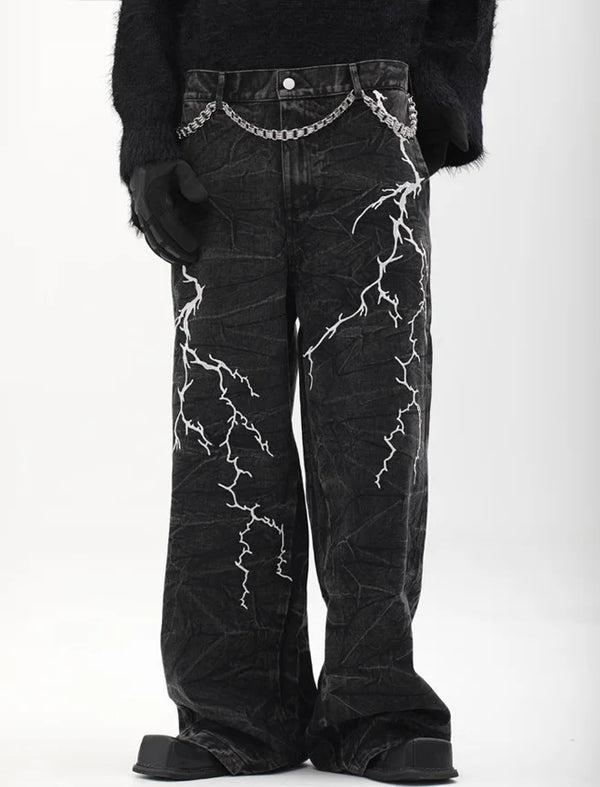
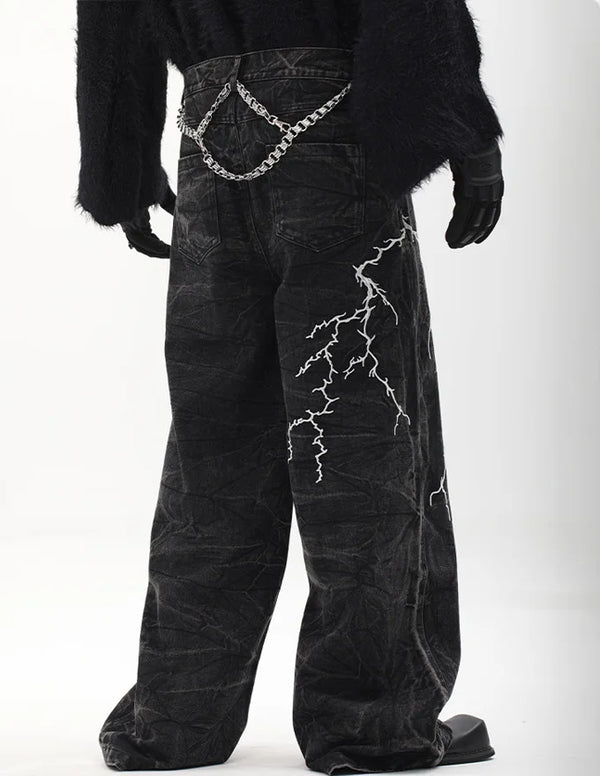
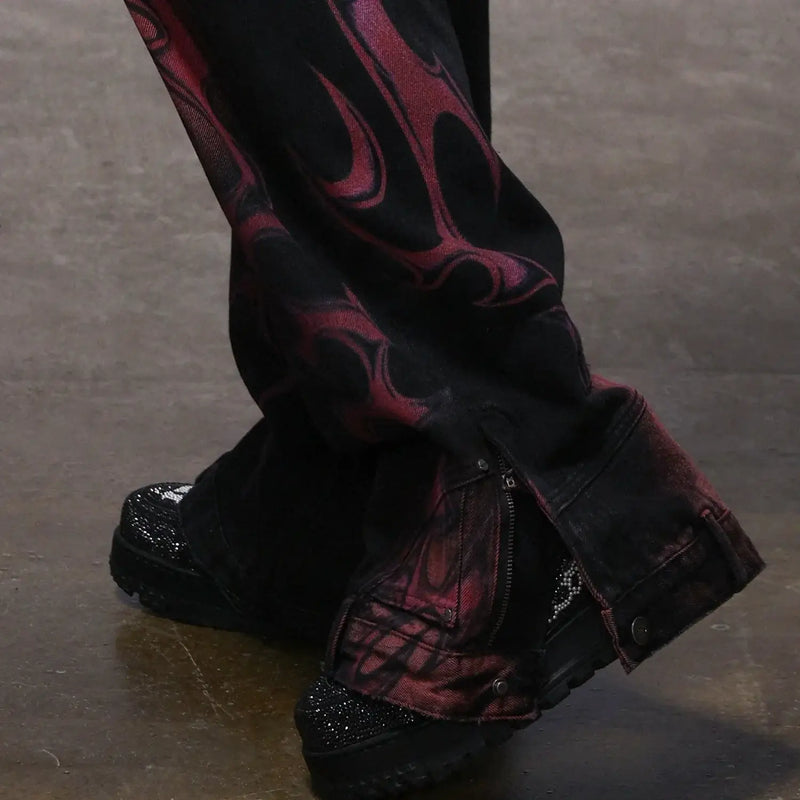
Today the spirit can be hit with modern cuts too, as long as the black is right and the details stay raw. A multi-layer wide pant brings the drama through volume instead of tightness, a torn cargo short quotes the DIY root. Both work if you stay tight up top — the 80s lived on the play between narrow and heavy.
The face
80s Goth makeup — the face of the look
Without makeup, 80s Goth is just dark clothing. The face carried half the look: a pale, almost white base, black kohl all around, dark — often almost black — lips. Plus sharply drawn brows and, for many, a touch of theatre in the form of painted-on tears or spider webs. The rule was contrast: light skin, dark openings.
The hair followed the same logic — teased, sprayed, set against gravity. Aquanet hairspray was practically a staple of the scene in the 80s. Anyone rebuilding the look today doesn't have to overdo it: a pale complexion, clean black kohl and dark lips already set the signal clearly enough.
What that looks like in motion is best shown by the denim-set clip further down — dark silhouette, hard edges, not a single sporty note. It's exactly this contrast of pale face and black fabric that makes the look instantly readable.
The clip makes clear why the look works through texture and attitude, not through logos. That was exactly the point back in the 80s too: impact through silhouette, not through brands.
The soundtrack
The bands that shaped the 80s Goth look
You can't separate 80s Goth Fashion from the music — the look was literally the audience of these bands. Anyone wanting to understand why a detail works looks to the stage it came from. Five names defined the visual vocabulary of the decade.
Each of these bands supplied a different building block: the female face, the male eyeliner, the fog-machine coldness, the Post-Punk base coat. Together they made up the code that the scene built on further in the street.
- Siouxsie and the Banshees — the blueprint for the female 80s Goth face: cat-eye, dark lips, teased hair.
- Bauhaus — Bela Lugosi's Dead from 1979 is seen by many as the starting shot of the whole scene.
- The Cure — Robert Smith's smeared red-black became the template for Goth men.
- The Sisters of Mercy — leather, sunglasses, fog: the hard Gothic Rock look.
- Joy Division — the grey, cold Post-Punk root from which the rest grew in the first place.
Anyone going back even further finds the actual germ cell in the seventies — where punk and the first dark wave overlapped. The line is direct, and it explains a lot about the 80s look.
Category · Outerwear
80s Goth jackets — leather, trench, batwing
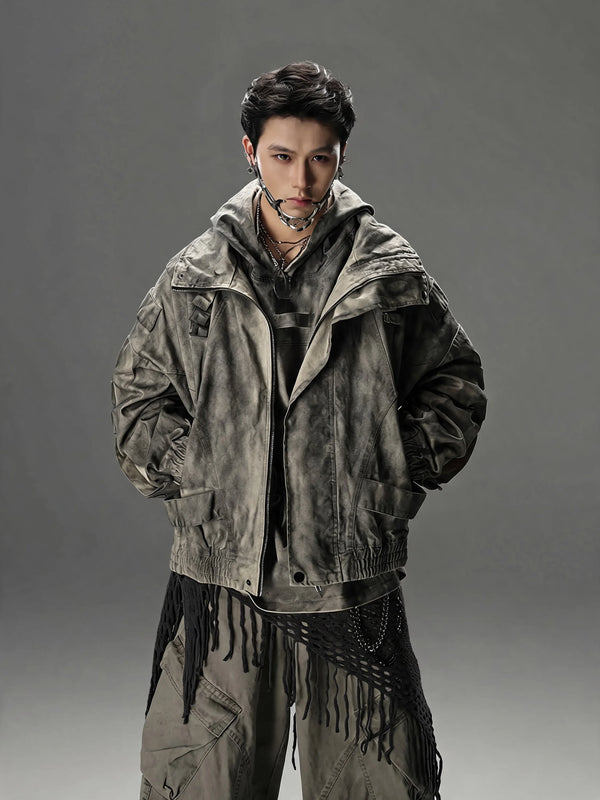
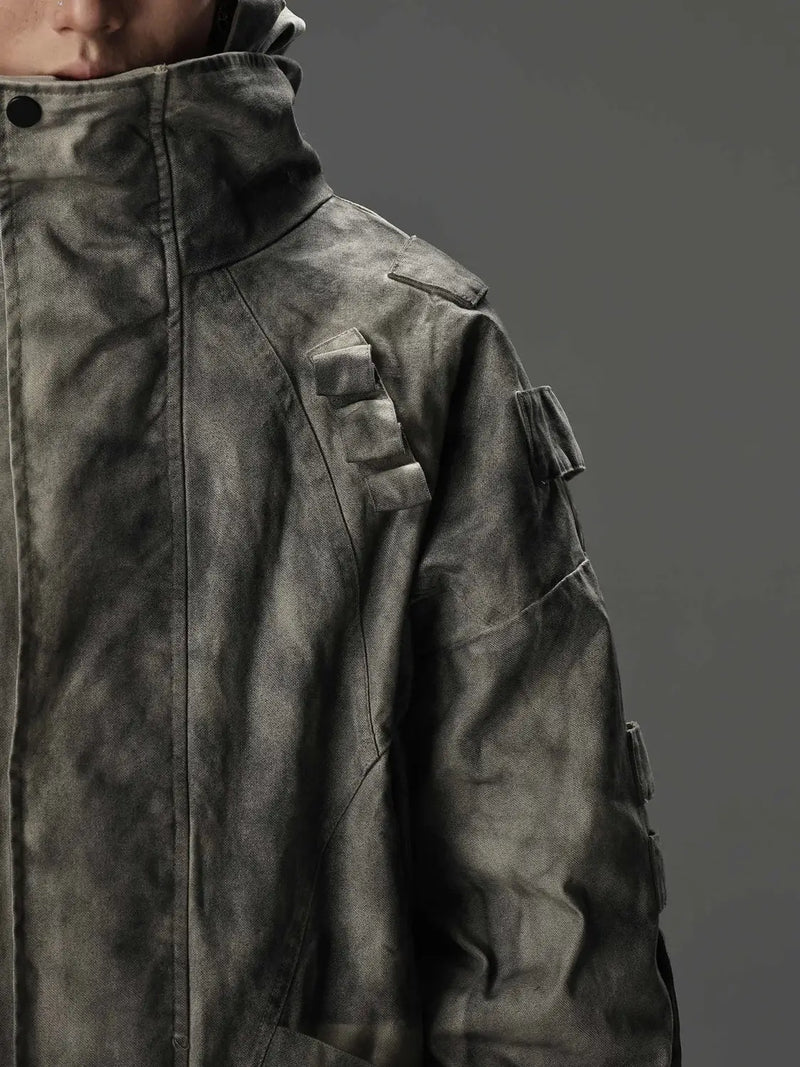
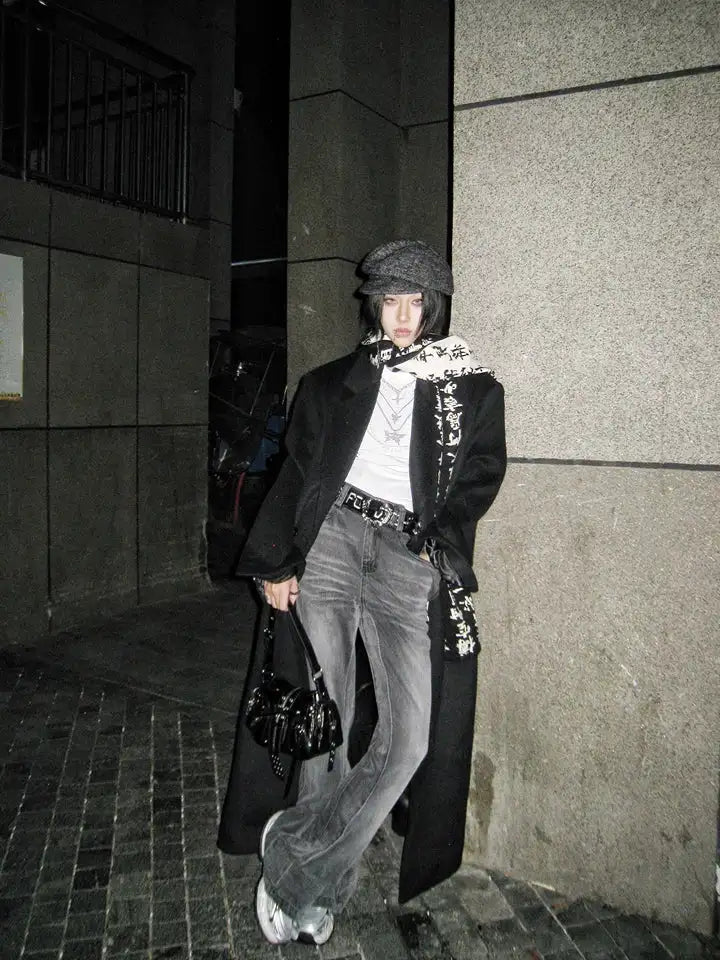
In the 80s Goth look the jacket was the dominant piece. Mostly leather — a tight blouson or a biker jacket, gladly covered in studs, patches and safety pins. For the more romantic faction there was the long black trench that swung dramatically as you walked. Both served the same purpose: surface and silhouette.
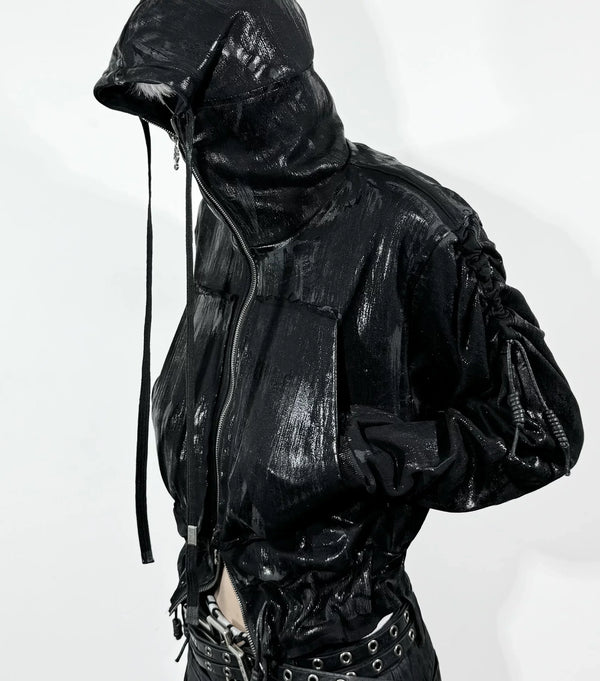
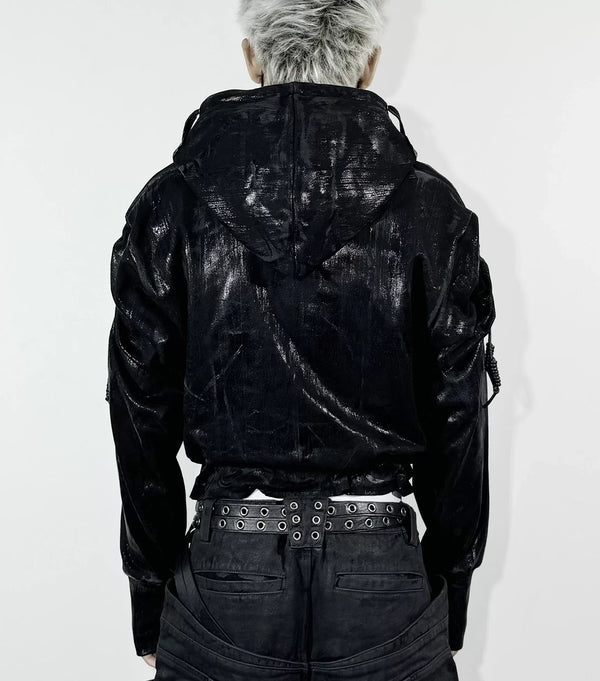
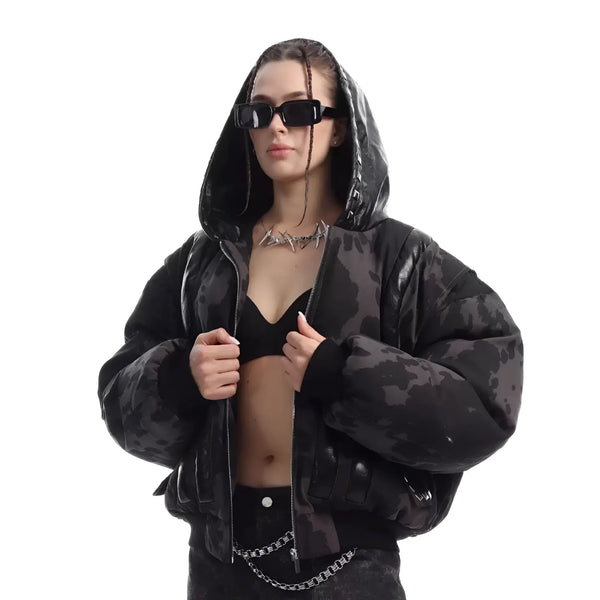
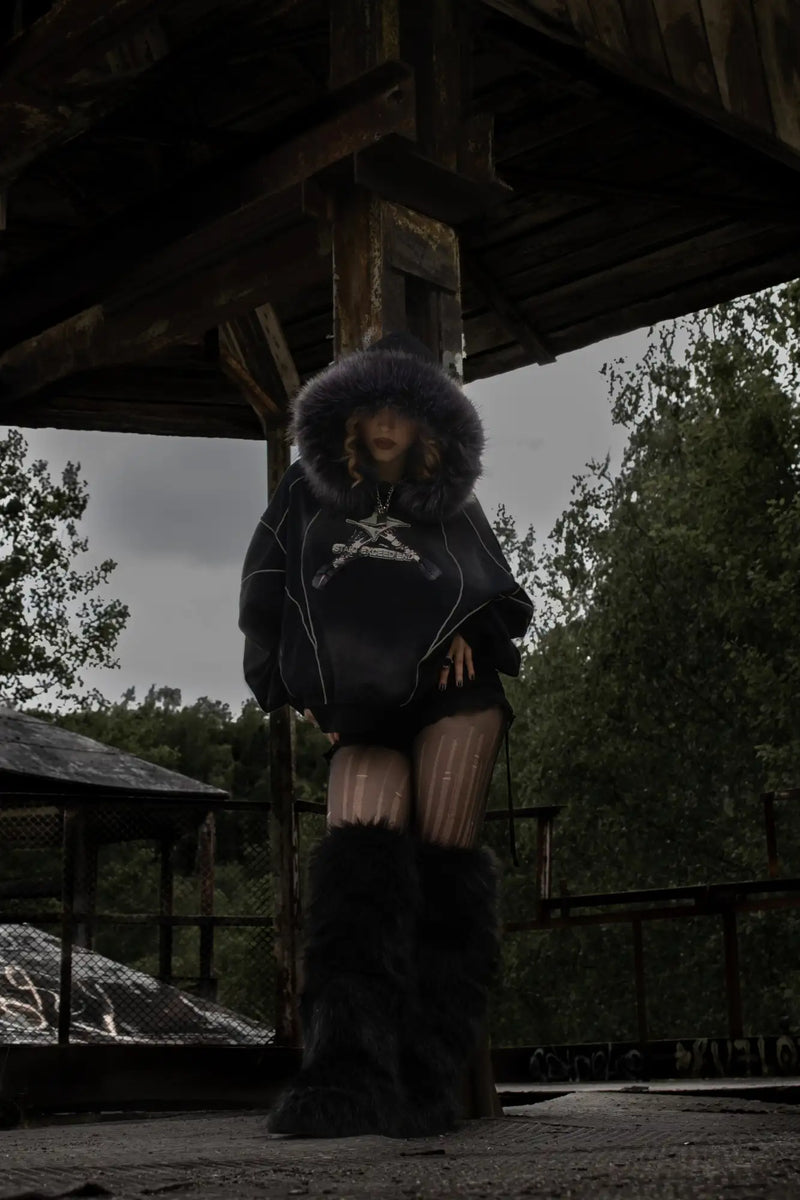
What mattered was the texture of the surface, not the shine. Matte, worn-in leather looked more credible than stiff new leather. Today a cross-bomber or a tactically cut set hits the same nerve, as long as they stay heavy and dark and don't tip into the sporty.
In the end all of this is about an attitude, not a shopping list. That's exactly what separated 80s Goth from merely wearing all black — and makes it hard to copy to this day.
The turning point
From 80s Goth to 90s Goth Fashion — what changed
The transition from 80s to 90s Goth was a shift from handmade to bought. In the 80s the look was DIY, expensive only in time, worn by a small scene. In the 90s Goth moved into the malls: chains like Hot Topic sold the code ready-portioned, and the subculture became a shelf.
Visually it became broader, cheaper and more practical — more net and PVC, less lace and velvet, plus influences from Industrial and later Nu Metal. The theatrical Batcave glam gave way to a harder, more everyday Mall Goth. Anyone who knows the root immediately recognizes what remained of the 80s in the 90s look.
How exactly 90s Mall Goth looked — and where Hot Topic dissolved the code between Trad Goth and Nu Metal — is in a separate article. The direct comparison sharpens the 80s look.
Category · Details
80s Goth accessories — silver, crosses, spikes
In the 80s Goth look, accessories were not decoration but statement. Silver jewellery with crosses, ankhs and pentagrams, earrings in rows, chokers of leather or velvet, plus studded belts and spiked bracelets. Almost everything was silver, never gold — gold felt too warm, too bourgeois for the scene.
Headwear and belts rounded off the look: a roughly cut cap or a cross-belt that marked the break between top and bottom. Anyone starting today collects exactly these details — a real silver tone and hard hardware lift the look out of the costume corner into something credible.
If you don't know where to start when building it up, it helps to break the look into categories and fill them piece by piece. These entry points cover the essentials.
Practice
How you put together an 80s Goth look today
How do you dress for an 80s Goth party without looking like a carnival costume? The answer is restraint with the props and seriousness with the basics. Start with a matte-black base, layer a texture over it — net, lace or torn knit — and put exactly one dramatic piece on top: the leather jacket or the trench.
Anyone wanting to go deeper into the brand history finds in the Mall Goth era the labels that commercialized the code later. Looking at them shows what stayed unsellable about the 80s original.
For the complete look you don't need 30 pieces, but three that play together: a layer top, dark trousers and a statement over it all. This combination carries the 80s spirit into everyday life.
Common mistakes
Common mistakes with the 80s Goth look
Most 80s Goth attempts fail not on will but on details. The look forgives little: a wrong tone, a too-clean silhouette or a plastic accessory instantly tip the whole thing into the costume-like. These five mistakes come up most often.
Anyone who avoids these traps has understood the look 90 percent. The rest is practice — and the willingness to set your hair against gravity in the morning.
FAQ
80s Goth Fashion — frequently asked questions
The questions that keep coming up around the 80s Goth look — answered briefly and without detours.
What did Goths wear in the 80s?
Were Goths popular in the 80s?
What were Goths called in the 80s?
How do I put together an 80s Goth look for a party?
How do 80s Goth and 90s Goth Fashion differ?
Which bands defined the 80s Goth look?
80s Goth Fashion was never just clothing. It was the visible part of a music scene that deliberately stood against the mainstream — and that's exactly why the look endures to this day.
What do you think?
Tell us on @fuga_studios
About the author
Philipp Fuge — Founder · Berlin
Founder of Fūga Studios. Writes the journal himself. Berlin · Shanghai · Tokyo · Poznań — four cities, one logic.