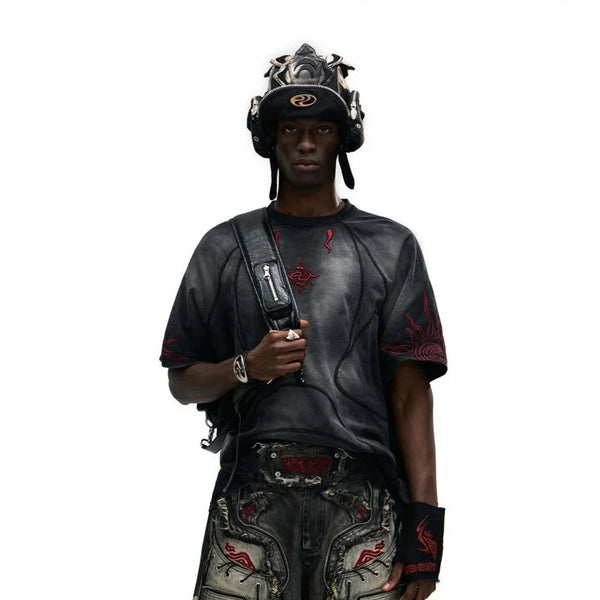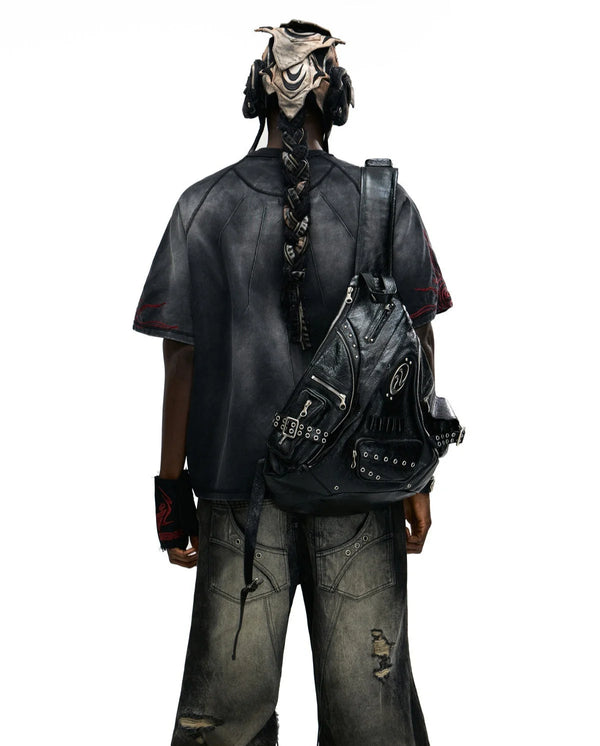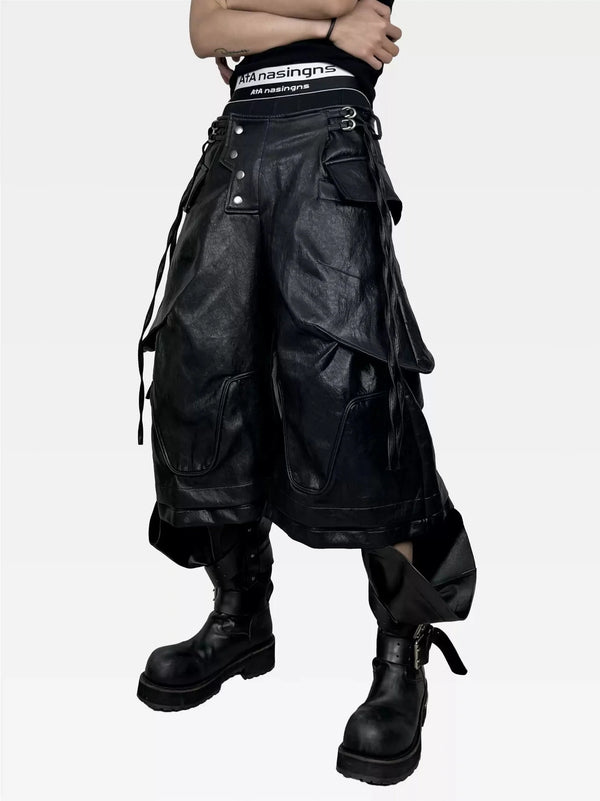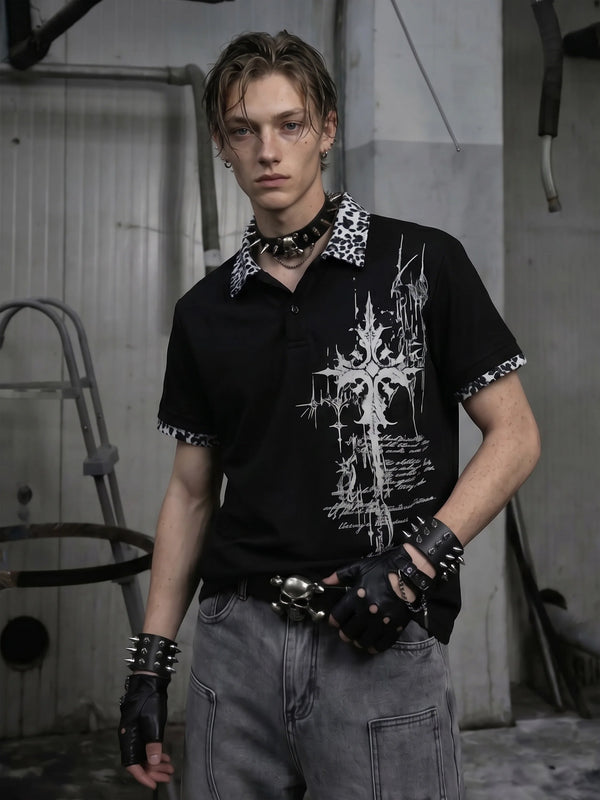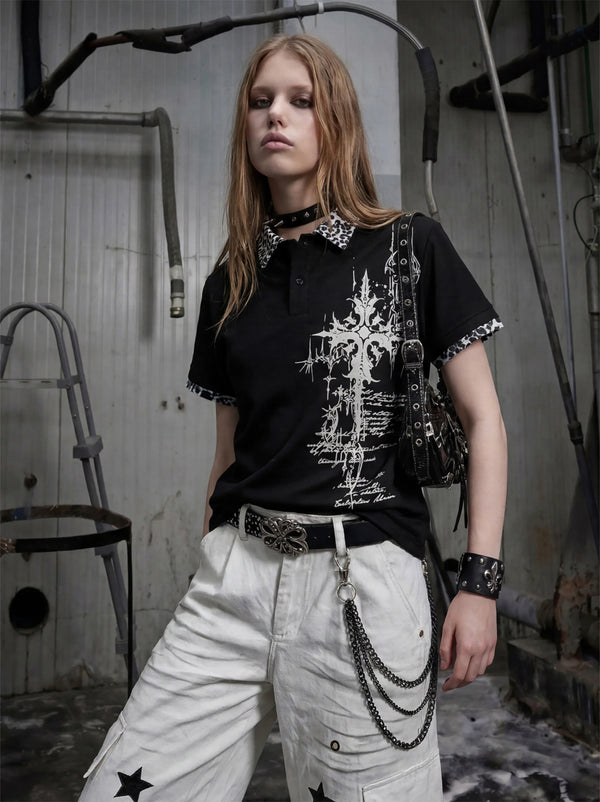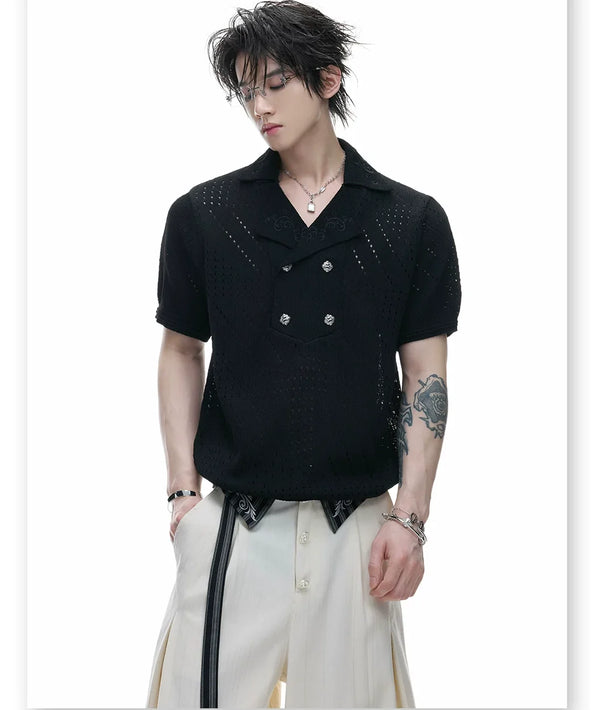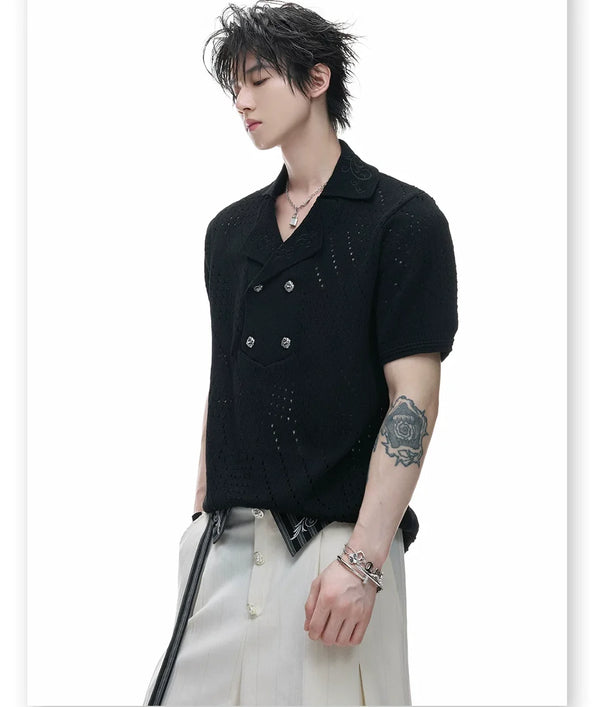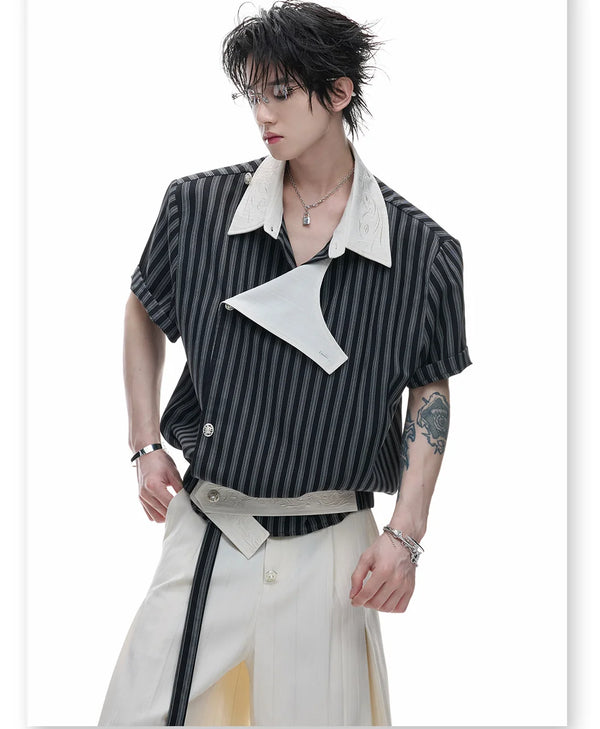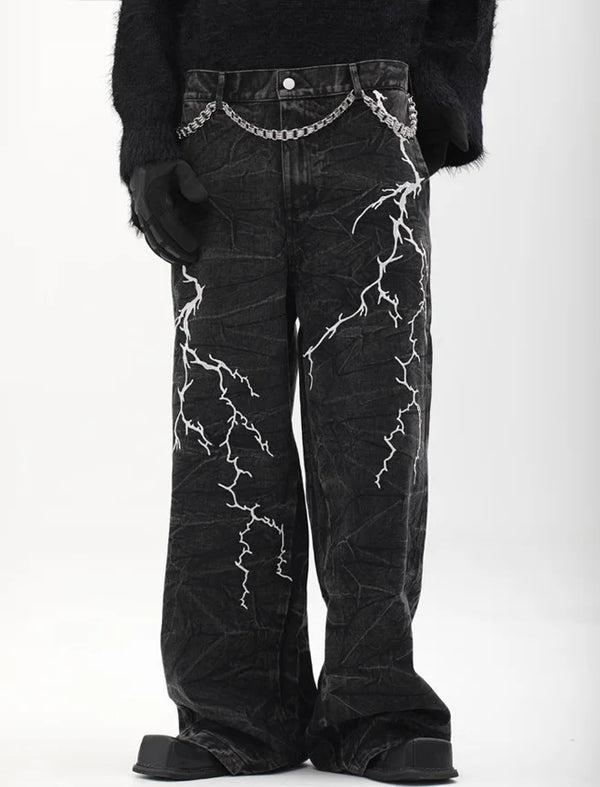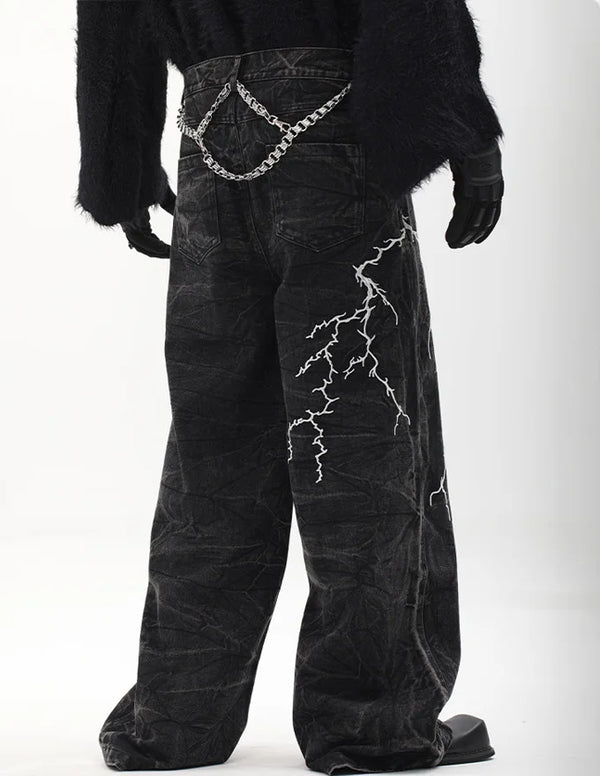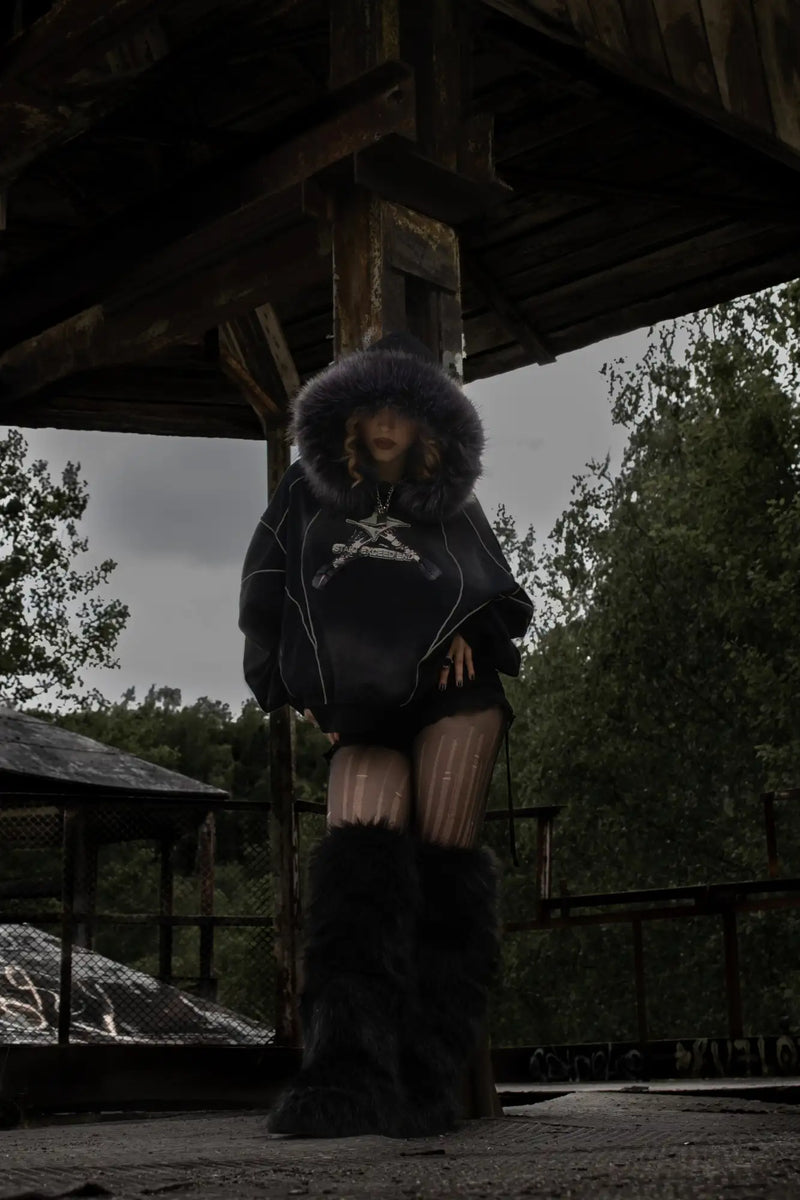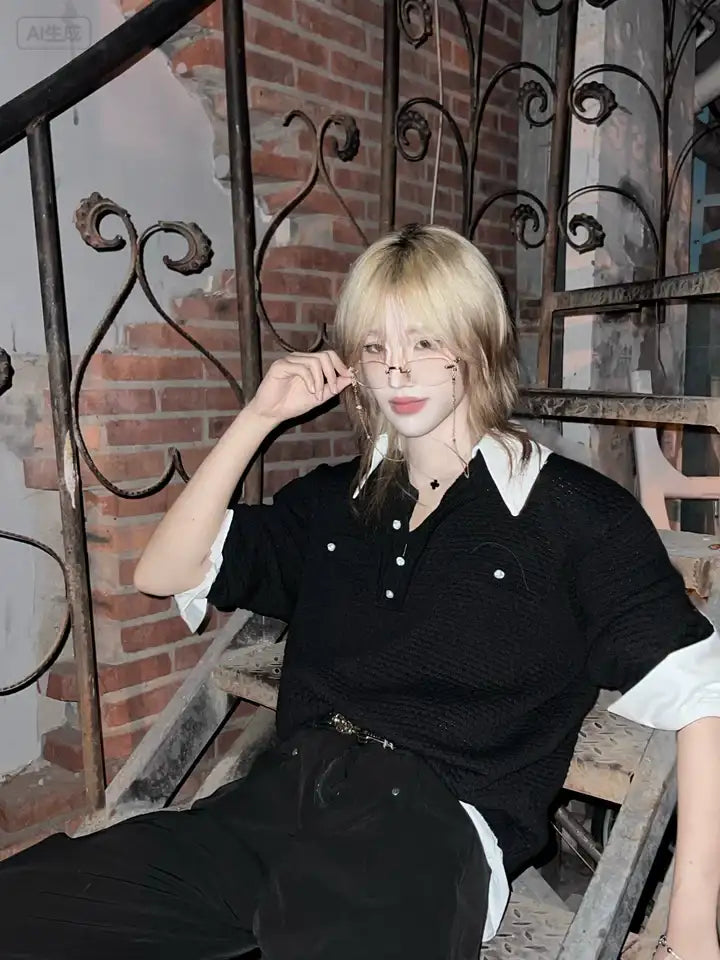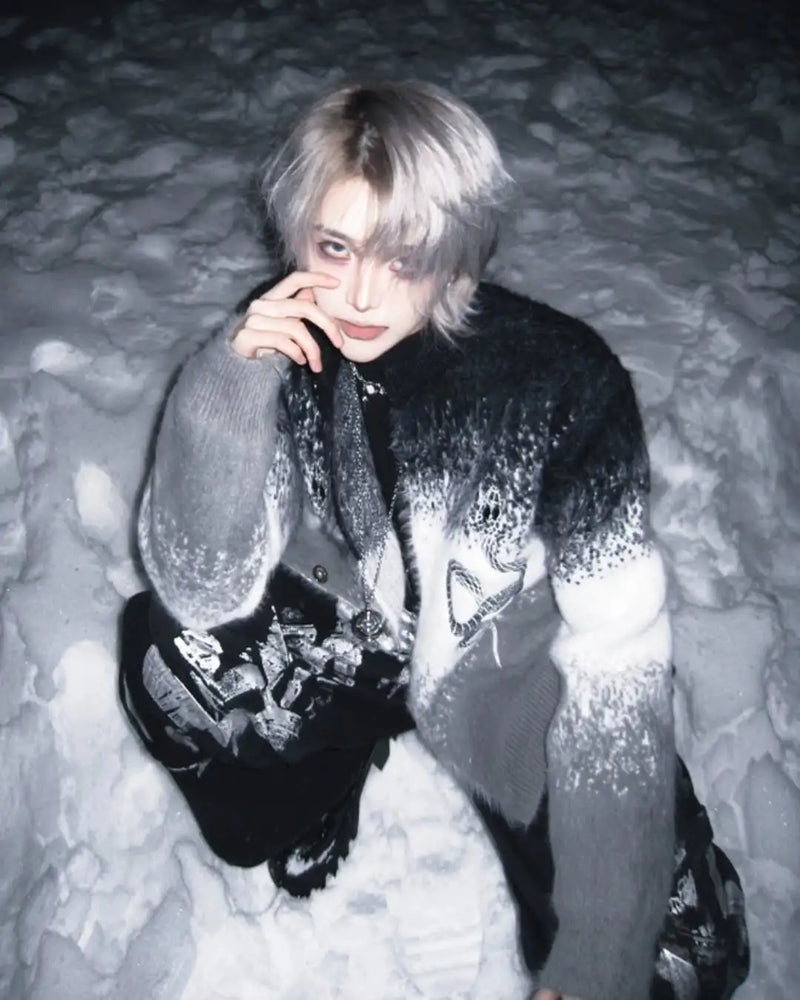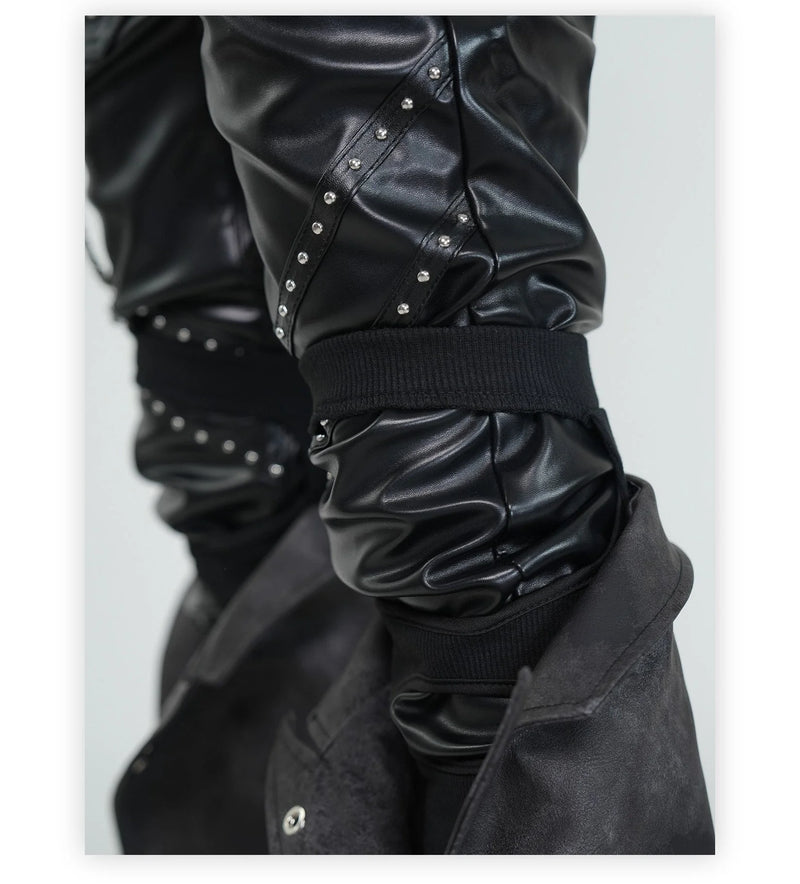

Saturday, 3 p.m., Takeshita-dōri. Between crêpe stands and pastel shop windows walks a girl in a knee-length black ruffle dress, platform boots and a plush backpack with fangs. Two metres behind her a guy in bondage pants, a tartan skirt over them, a mesh shirt, hair cut asymmetrically. Nobody turns around. In Berlin-Kreuzberg the same outfit would silence a café. The appeal sits in that gap between Tokyo and the rest of the world.
Harajuku Goth Fashion is the dark side of Tokyo street style: Gothic Lolita, Goth Punk, Kawaii Goth, Yami Kawaii and Visual Kei influences that meet on a black base. Unlike Western goth, the look allows a cute break, a plush toy, a pastel tone, a bow, and still stays dark. The basics of the scene are in our Gothic Fashion Guide. This is about the Tokyo variant and about how you wear it in Europe.
Before it goes to pants, jackets and brands, a clean distinction is needed. Harajuku Goth is often sold online as “Gothic Lolita with extras”. That falls short. The term covers several scenes that shared the same streets in Tokyo for decades without ever wearing the same wardrobe.
Definition
What is Harajuku Goth Fashion?
Harajuku Fashion is first of all just a place: the district around Harajuku station in the Tokyo ward of Shibuya, with Takeshita-dōri as its loud main artery and Omotesandō as the expensive counterpart. Since the late 70s young people have met there to set themselves apart from their school uniforms through clothing. Dozens of styles have come out of that meeting point, from Decora to Gyaru. Gothic Fashion, by contrast, is a vocabulary: black as the base colour, symbols like the cross and the bat, lace, leather, mesh and a silhouette that comes from the British post-punk scene around 1980.
Harajuku Goth Fashion is the intersection of the two. The gothic vocabulary is worn the Japanese way: in layers, on a platform sole, with a deliberately placed cute element that would count as a style break in London or Leipzig. A cross next to a bow, fishnet tights under a plush skirt, bondage pants with a teddy backpack. In Tokyo that is the rule.
1978
Laforet Harajuku opens
1997
FRUiTS first issue
1999
Moi-même-Moitié founded
6
styles under one term
Four signals show up in almost every Harajuku Goth outfit, whether it comes from the Lolita corner, the punk corner or the Visual Kei corner. If you know them, you spot the look on the street in two seconds and can build it yourself without importing a single piece from Tokyo.
- Black as the base: at least three quarters of the outfit, often more. Colour is an accent, never a surface.
- Platform sole: boots, Mary Janes or creepers with four to eight centimetres. The silhouette needs that foundation.
- One kawaii break: plush, a bow, pastel or a character print. Exactly one of them, not all four.
- Layering in levels: mesh under a shirt, skirt over pants, vest over hoodie. Tokyo rarely wears just one level.
The four signals also explain why the look often fails in Europe: people copy the cross and the platform boots but forget the layers and the break. What is left is ordinary Mall Goth. The way back runs through the history of the district.
Origin
Where does Harajuku Goth Fashion come from? Jingū Bridge, Laforet and Visual Kei
Three places built the look. The first is Jingū Bridge between Harajuku station and the Meiji Shrine. From the late 90s until around 2010, Gothic Lolitas, Visual Kei fans and cosplayers met there on Sundays to be seen and photographed. The bridge was runway and casting at the same time. The second place is the department store Laforet Harajuku, opened in 1978. For years its lower floors held the labels that sold the dark Harajuku look, and whoever wanted the look went down to the basement.
The third place is not an address but a stage. Visual Kei, the Japanese rock scene with bands like X Japan, Buck-Tick and Malice Mizer, carried the make-up, the asymmetric haircuts and the patent-and-lace combination onto the street. Mana, guitarist of Malice Mizer, founded the label Moi-même-Moitié in 1999 and gave the elegant branch a name: Elegant Gothic Lolita. From 2001 the Gothic & Lolita Bible printed the rules, the magazine FRUiTS photographed the street from 1997, KERA the punk side from 1998. The look was fully documented before the internet exported it.
The export ran through detours. In 2004 Gwen Stefani brought her “Harajuku Girls” onto Western stages, shortly after that Tumblr and LiveJournal discovered the Gothic Lolita communities, and around 2012 Pastel Goth grew out of it in the West. The street in Tokyo had already moved on by then. If you want to see the whole map of the Harajuku scenes, you find it in our overview of the subcultures.
Six styles have come out of this history, and today they all run under Harajuku Goth Fashion. They share the four signals above, but they differ in silhouette, in volume and in how much cuteness they allow.
Archetypes
The 6 styles of Harajuku Goth Fashion
The order runs from formal to raw. Gothic Lolita is the strictest form, with clear rules for skirt length and petticoat. Goth Punk and Visual Kei Street are the loudest. Kawaii Goth and Yami Kawaii Goth are the youngest and work hardest with the break. Dark Layering is the quiet branch that comes from Japanese avant-garde fashion and passes most easily in Berlin.
In practice very few people in Tokyo mix only one style. A Gothic Lolita skirt lands over bondage pants, a Yami Kawaii print on a Goth Punk shirt. The rule is: one main style, one guest appearance at most. The Goth Punk branch is the best entry point, because it sits closest to what European wardrobes already hold.
Goth Punk
Punk Gothic Harajuku Fashion: the Takeshita code
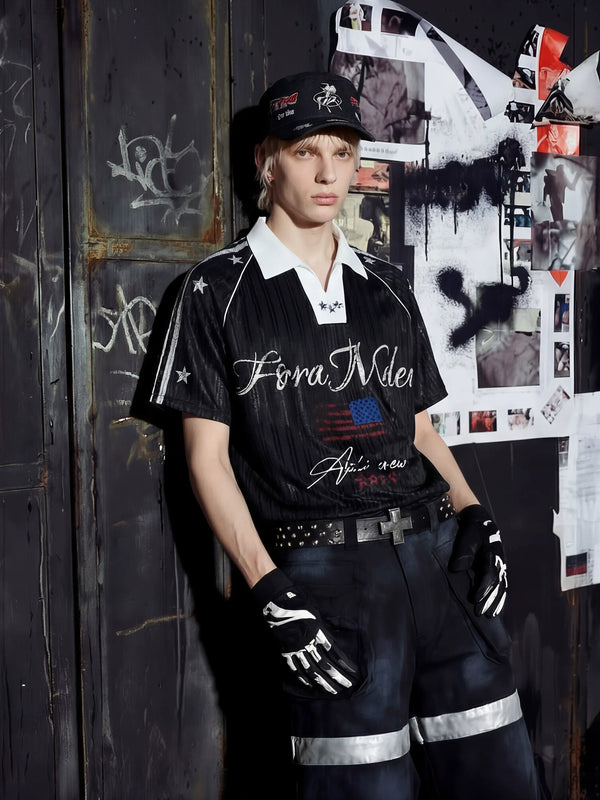
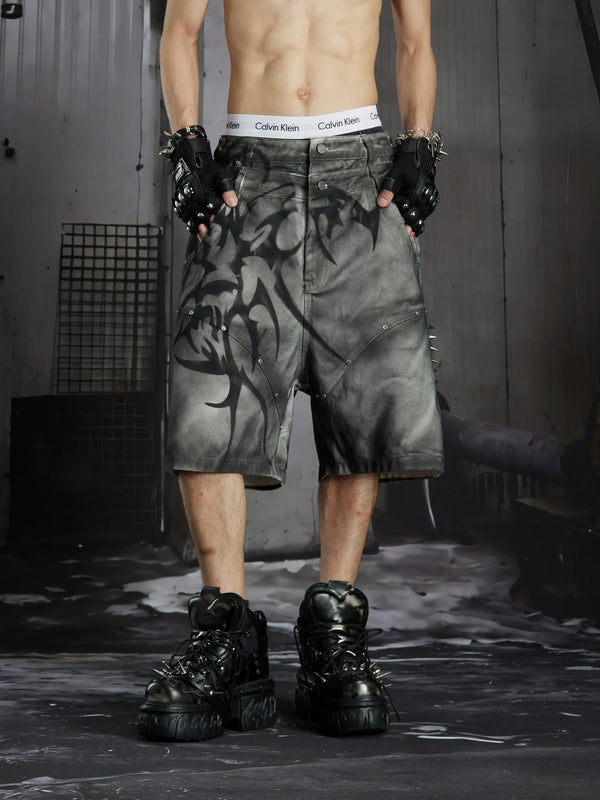
Punk Gothic Harajuku Fashion is the branch you see most often on Takeshita-dōri, because the shops for it sit right on the street. The formula: black skinny or bondage pants with straps, a tartan element in red or grey, a torn or printed shirt, mesh or a studded vest over it. With creepers or platform boots and a choker with a ring. The difference from London punk of the 70s lies in the cleanliness: in Tokyo the rips are planned, the studs are set straight, the hair is freshly dyed.
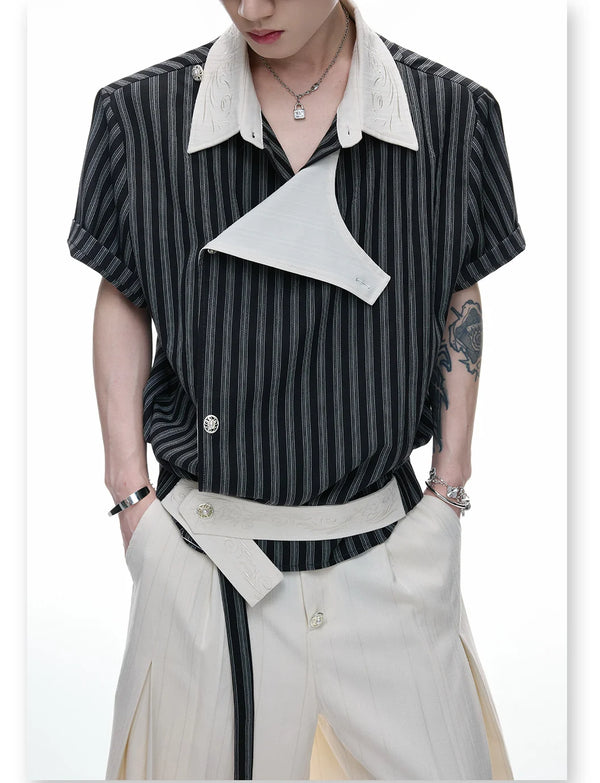
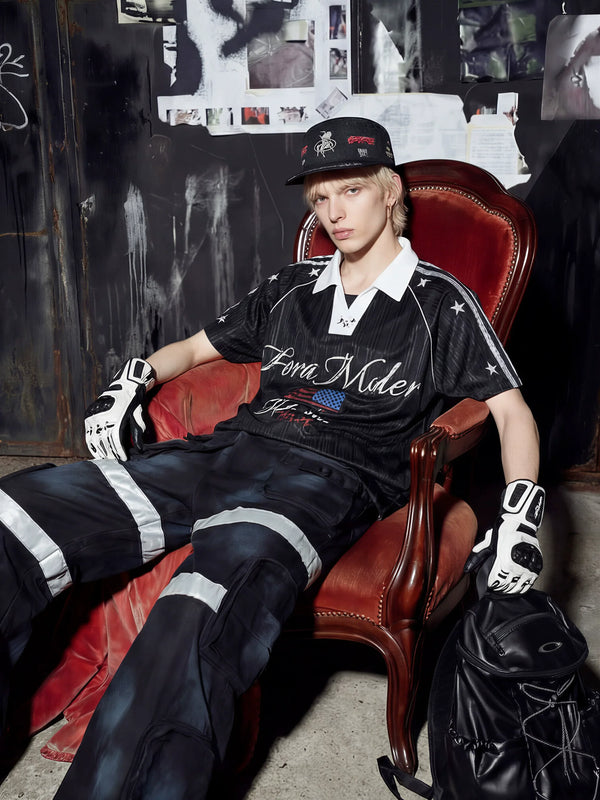
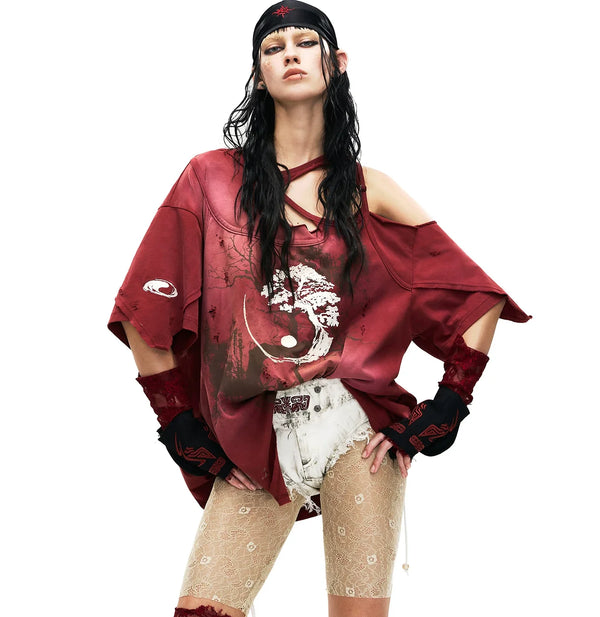
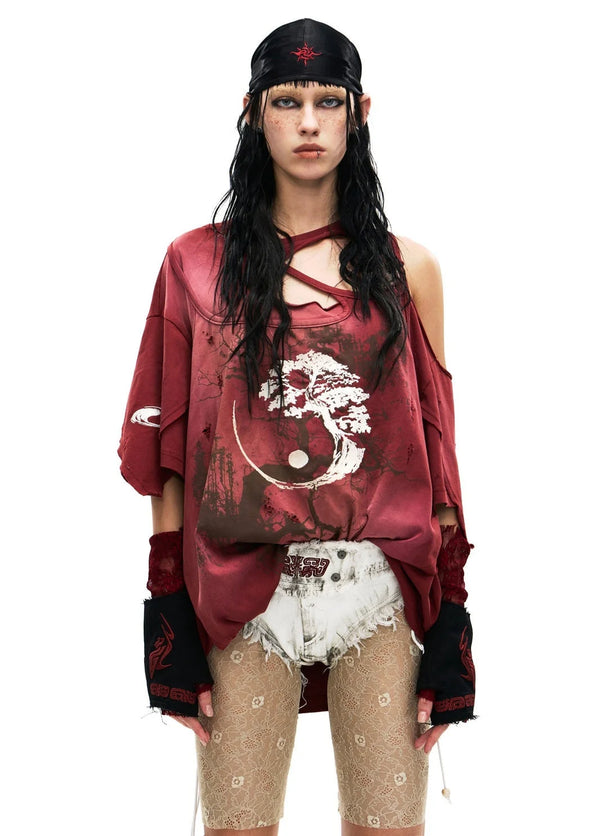
In this style the top carries most of the statement. A shirt with a yin-yang print or an asymmetric cut replaces the band shirt and works for people who do not want to wear a band whose discography they do not know. What matters is the break in the fabric: washed finish, distressed edges, one shoulder free. A smooth black basic shirt is the exception in Harajuku Goth, not the base.
If you wear the punk branch, keep the symbols small. A safety-pin detail or a single print is enough, because the pants and the shoes are already loud enough. The kinship with Visual Kei shows up mainly above the neck: eyeliner, a coloured fringe, an earring with a chain. The next style does not turn the volume down, it turns it in another direction.
Kawaii Goth
Kawaii Goth: how cute and black fit together
Kawaii Goth is the style the Western goth scene has argued with the longest. The idea is simple: an outfit stays three quarters black and dark, one single element is deliberately cute. In Tokyo the principle is called kimo-kawaii, “creepy-cute”, and it sits in figures like Gloomy Bear, the pink bear with blood on his claws. The blood does not make the bear less cute. The contrast makes him cuter. The whole look works that way.
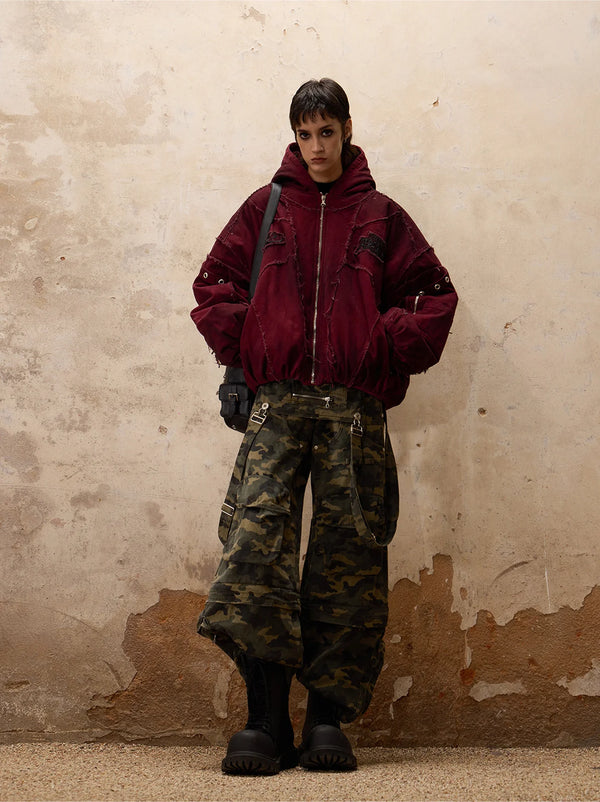
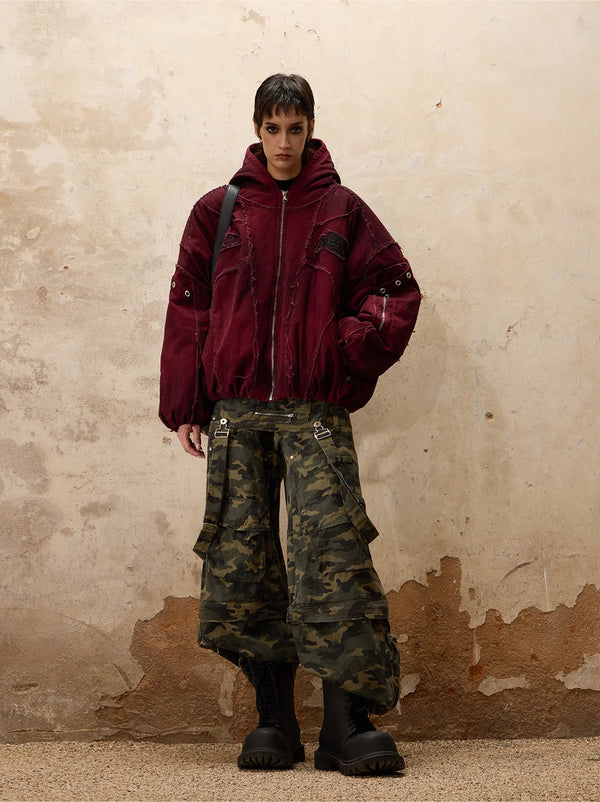
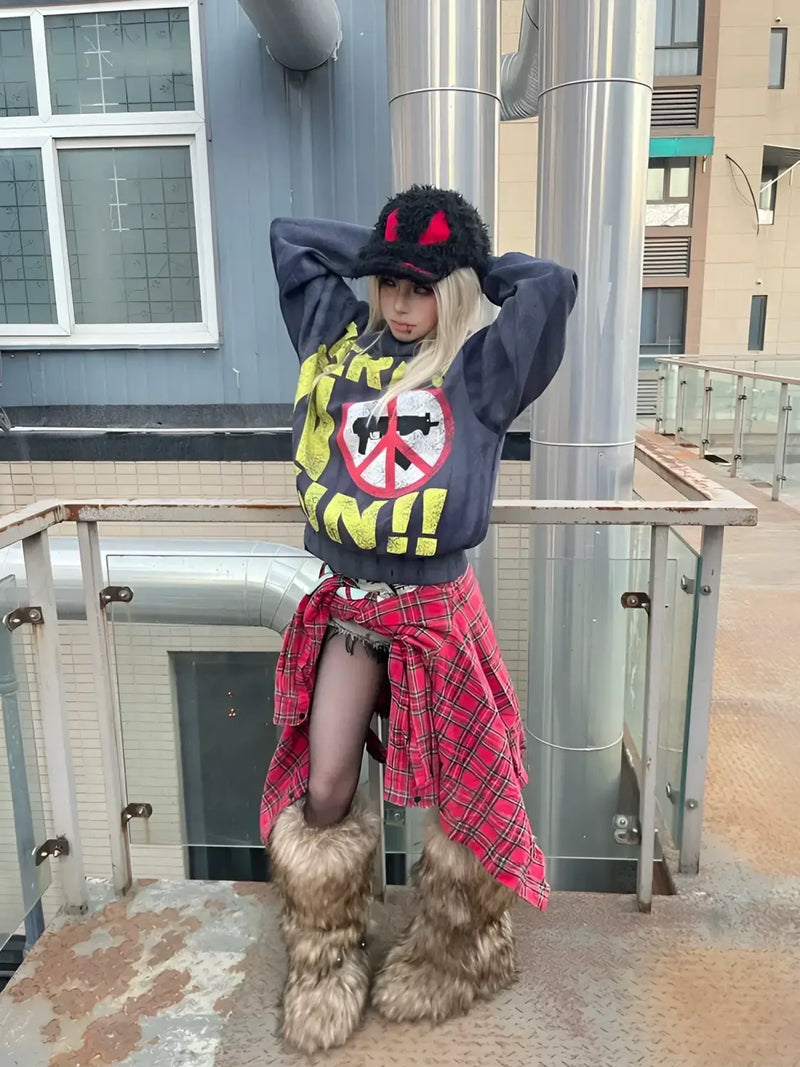
In practice that means: a black hoodie with plush horns, with camo cargo and a choker. Or a black dress with a backpack shaped like an animal with teeth. Or a fuzzy cap with devil horns over an otherwise strict Goth Punk outfit. The line to Pastel Goth runs along the surface: as soon as pink or purple take up more space than black, you are on the other side. Kawaii Goth stays goth in the surface, kawaii in one detail.
For men Kawaii Goth works through plush details on caps, hoodies and keychains, not through skirts. For women the break often runs through the bag or the tights. In both cases the same applies: the cute part should be a visible part of the outfit, not an accident. A Sanrio charm on an otherwise random outfit is everyday, not Kawaii Goth. The youngest variant of this principle has made the cute part harder again.
Yami Kawaii
Yami Kawaii Goth and Jirai Kei: the dark cute wave since 2016
Yami Kawaii literally means “sick-cute”. The style grew around 2015 out of the manga character Menhera-chan by the artist Ezaki Bisuko and became visible on Takeshita-dōri from 2016: pastel pink and light blue against black, with hospital motifs like syringes, pills, bandages and plasters. Yami Kawaii Goth is the dark version of it. Pink is reduced to one piece, the rest stays black, the motifs come as a print or as embroidery, not as a prop. The style speaks openly about mental health, and in Japan that is a bigger step than in Berlin.
Since around 2020 Jirai Kei has developed out of it, “landmine style”, with black and pink as a fixed colour pair, bows, platform Mary Janes and make-up with red eyeshadow under the eyes. Jirai Kei is worn in Shinjuku rather than in Harajuku, but it belongs to the same family: dark, cute, with a story that is not only pretty. If you want to wear the look, you should know the story and respect it, otherwise the statement turns into a costume.
The colour logic of Yami Kawaii can be transferred to each of the six styles: one accent, three dark pieces. If you can handle that, half the work is done. The other half is silhouette, and that starts with the pants.
Trousers & skirts
Pants and skirts: the silhouette of Harajuku Goth Fashion
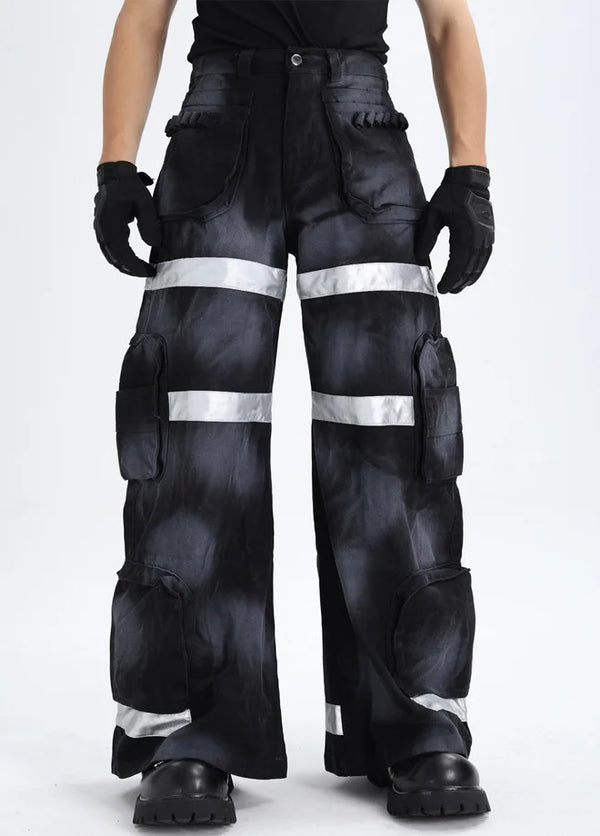
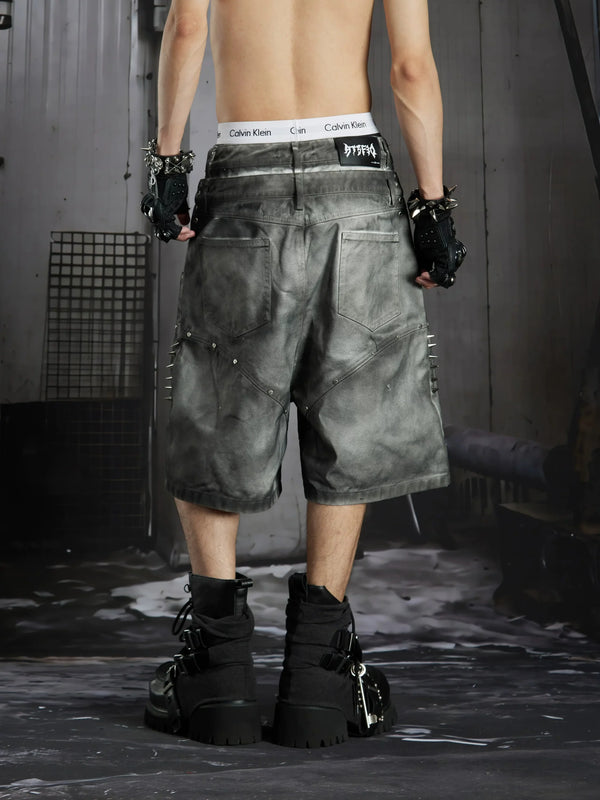
Harajuku decides silhouettes from the bottom up. The rule from the takeaways applies here literally: volume either on top or at the bottom, never both. If you wear wide cargo or a petticoat skirt, keep the top narrow. If you work with an oversized hoodie and a vest on top, take narrow bondage pants or shorts over tights at the bottom. Shorts over patterned or ripped tights are the Harajuku signature as such, in winter with fur boots, in summer with platform sandals.
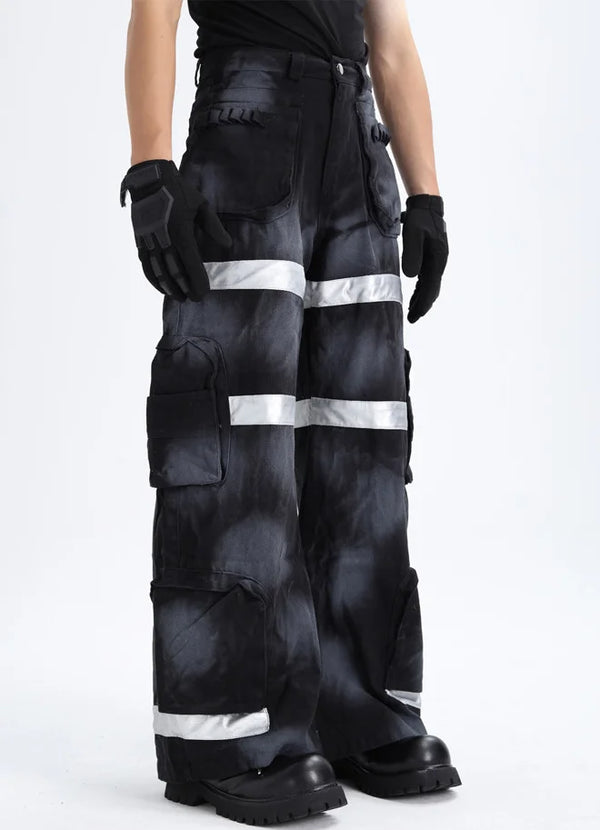
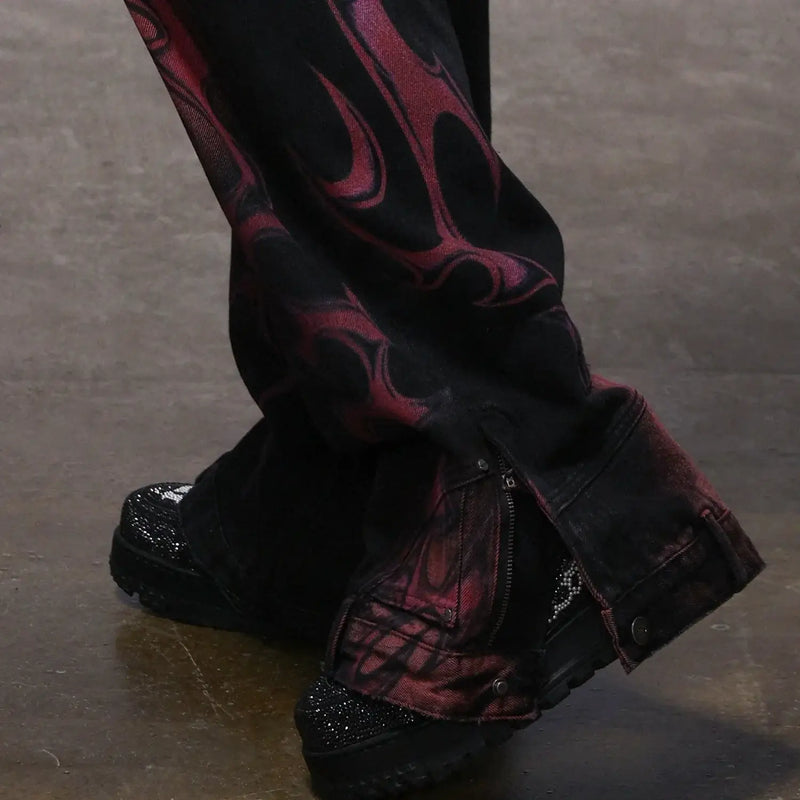
The pants themselves almost always carry hardware in Tokyo: chains at the side, studs at the waistband, a kanji print or a tribal stitch on the denim. Black or dark washed grey are the colours, burgundy is the only permitted exception in the punk branch. Jorts and cargo shorts have replaced the tartan skirt as an everyday piece in recent years, because they layer over tights just as well and raise fewer questions on the underground.
For the skirt, knee length is mandatory in Gothic Lolita; for every other style the mini over pants or tights is the more common choice. A tartan mini over black skinnies is the shortest formula for Goth Punk, a black tulle skirt over bondage pants the one for Visual Kei Street. What is missing in both cases: the expectation that a skirt is worn on its own. That is where the thinking behind the whole look sits.
The sentence also explains the order of getting dressed. First the black base of pants or skirt and top, then the layers, then the platform shoes, then the accent. If you start with the accent and build the outfit around it, you almost always end up with a costume. The layers themselves are the topic of the next section.
Jackets & layering
Jackets and layering: layers like in Tokyo
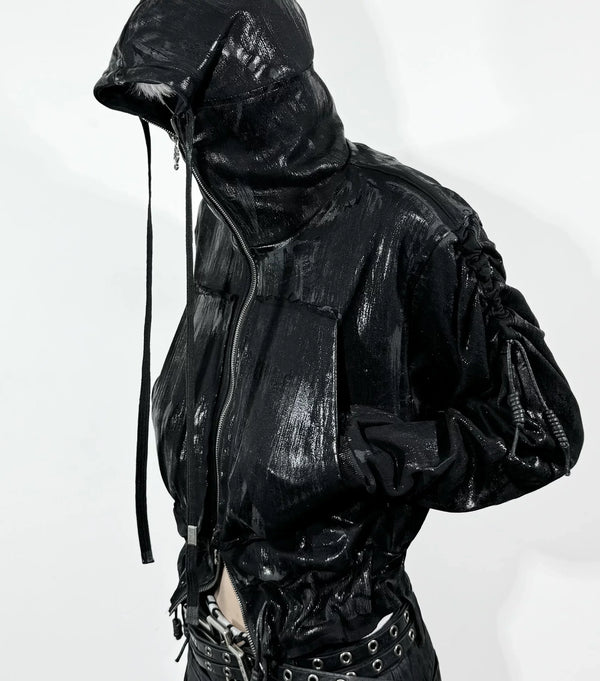
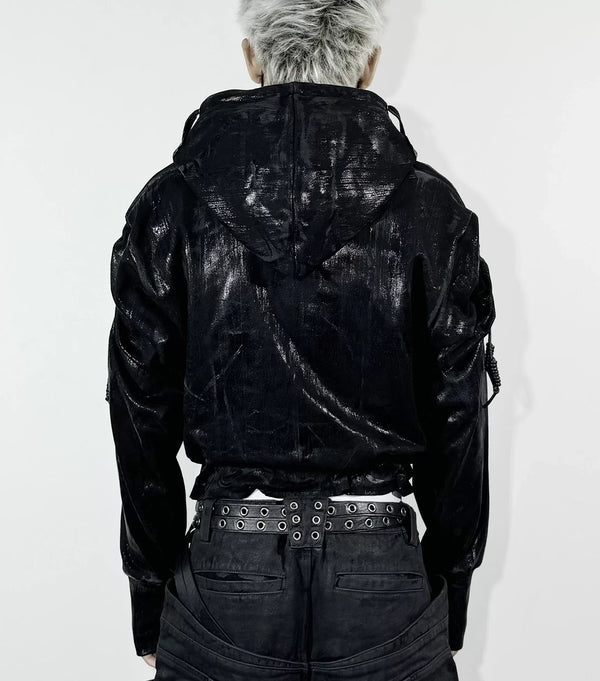
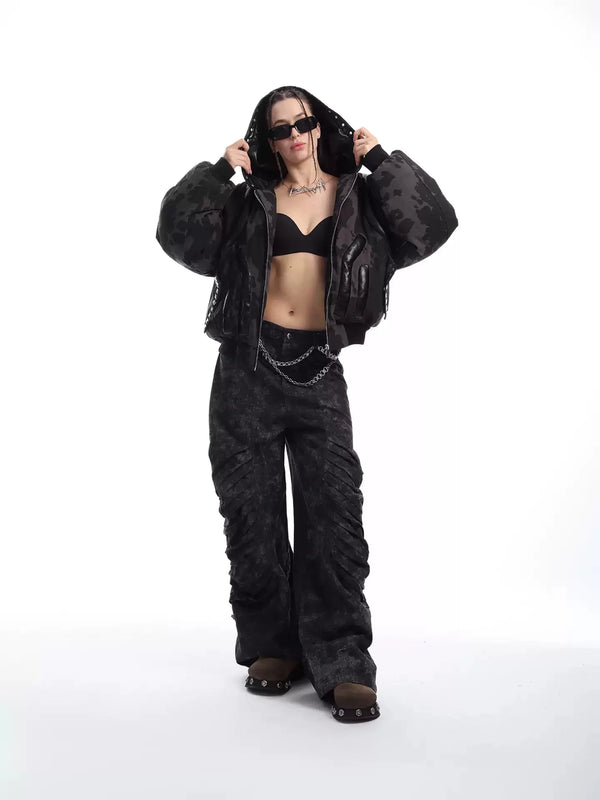
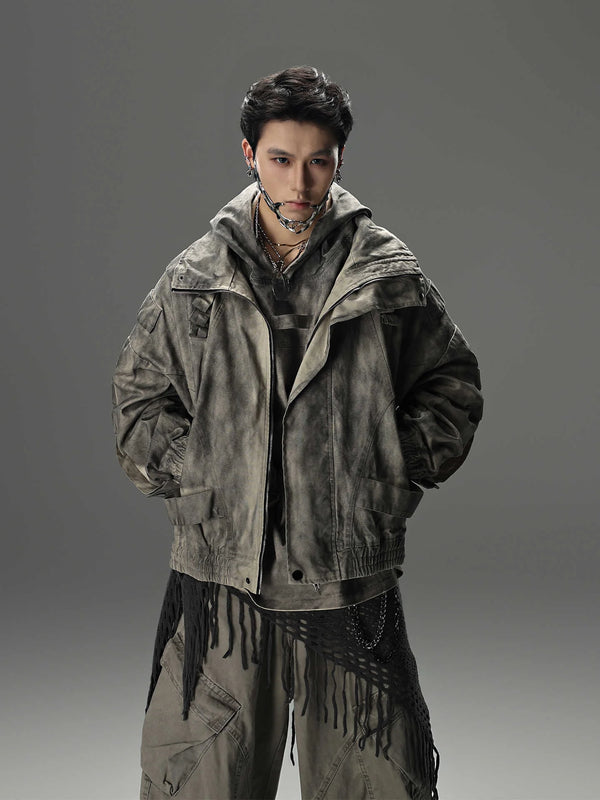
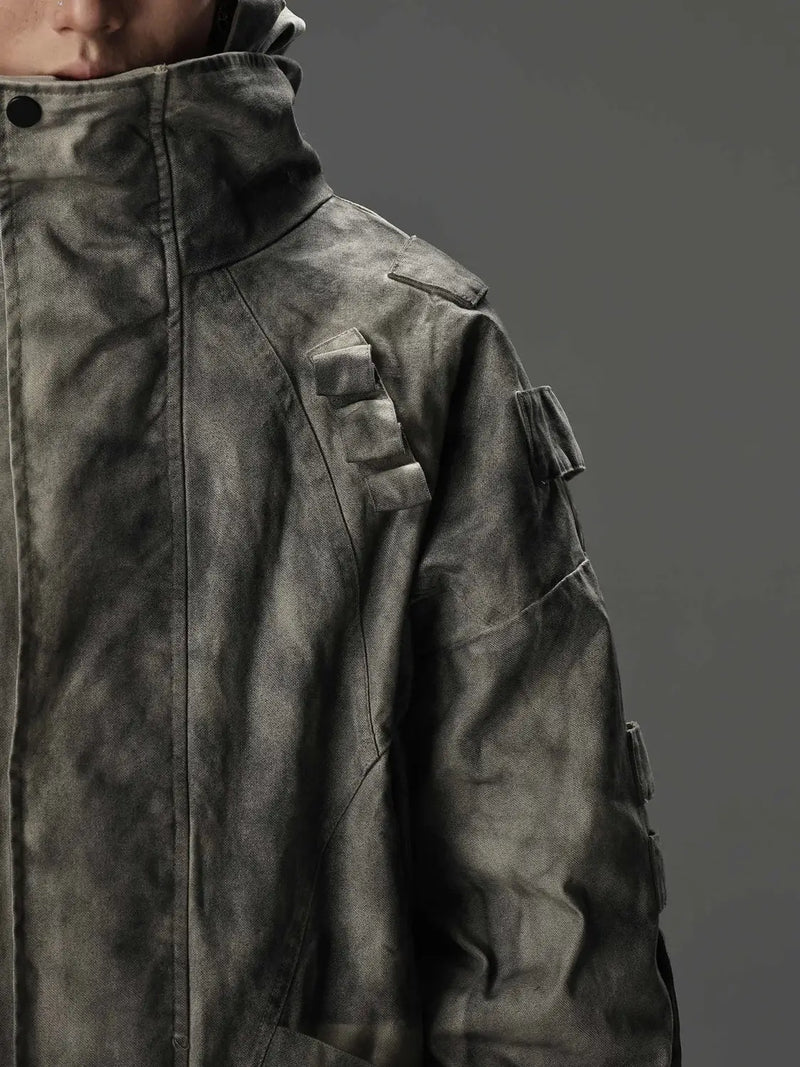
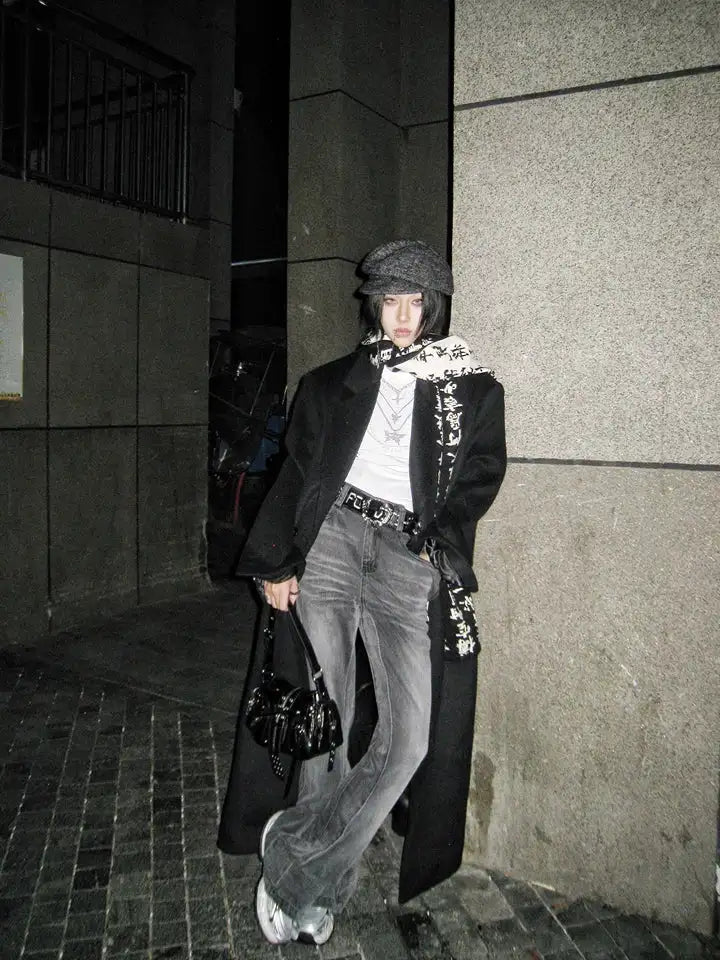
Tokyo layers out of habit, not out of cold. The air conditioning in trains and department stores runs cold, outside it is humid in summer, so people wear pieces that can be taken off. For Harajuku Goth Fashion that gives a fixed order: mesh or a longsleeve at the bottom, shirt or dress over it, then a vest, a cropped jacket or a mesh layer, on the outside in winter a long coat or a fuzzy jacket. Every layer is shorter or longer than the one underneath, never the same length.
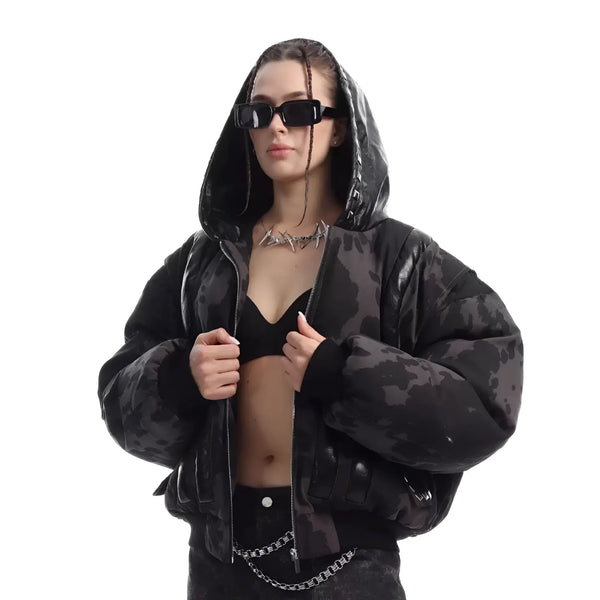
In the dark Harajuku look the jacket is rarely the statement level, but it is the level with the most interesting texture: skeleton mesh, fur, patent, washed leather. Cropped cuts emphasise the layers underneath, long cuts cover them and make the look more grown-up. For the cold months in Berlin or Poznań the second option is the one to take, with a mesh layer as a reminder of where the look comes from.
How that feels in motion is shown by the clip: a two-piece denim set in black, hardware in the right places, three layers, one colour. No skirt, no plush, and still readable as part of the same family, because silhouette and layering are right.
The clip also shows what many people get wrong about layering: they stack three pieces of the same length and wonder why everything looks like a block. Stagger the lengths, change the textures, wear one layer open. Then the formula works with pieces from any wardrobe. Which brands originally built them in Tokyo comes next.
Brands
Harajuku Goth brands and shops: who really makes the look
The question about Asian streetwear brands has a short answer for the dark Harajuku look: it is small Tokyo labels that mostly never sold outside Japan, and a few international shops that brought the look to Europe. If you are searching in Tokyo, go down into the basement of Laforet Harajuku, walk Takeshita-dōri and stop by Closet Child, the second-hand store where Lolita and Visual Kei pieces change owners.
- h.NAOTO: Gothic Punk from Tokyo, since 2000. Ruffles on studs, several sub-lines for every level of hardness from Lolita to punk.
- Moi-même-Moitié: Mana’s label, founded in 1999. Defined Elegant Gothic Lolita and Elegant Gothic Aristocrat, with the cross and the bat as its trademark.
- Sex Pot ReVeNGe: the punk address on Takeshita-dōri. Tartan, bondage straps, loud prints, creepers.
- Algonquins: punk meets Lolita. A lot of black and red, a lot of buckles, skirt over pants belongs to the repertoire.
- Listen Flavor and ACDC RAG: the kawaii punk corner. Plush, character prints, pastel against black.
- Punk Rave and Killstar: not Harajuku brands, but the shops through which the look usually arrives in Europe. More on that in our Punk Rave article.
The Tokyo labels are hard for Europeans to get: small runs, Japanese sizes, shipping only through proxy services. So over here the look is almost always built from pieces that follow the vocabulary without carrying the original label. Our collections are sorted exactly along those lines, by piece type instead of by brand, so you can put the formula together layer by layer.
No matter which shop the pieces come from: the look only becomes recognisable through what hangs, clips and rattles on the body. In Harajuku Goth Fashion, accessories make the difference between “dressed in black” and “understood Tokyo”.
Accessories
Accessories: choker, plush, cross and platform
Four zones, four decisions. At the neck sits a choker, with a ring in the punk branch, with lace in Lolita, with a bow in Kawaii Goth. On the head a cap with a cross or distressed denim, a headband with horns or nothing at all if the hair does the work. At the hip a belt with a cross buckle or a chain running from the belt loop to the bag. And at the bottom platform, in every variant from Mary Jane to boot. The sole is the one accessory you must not save on.
The mistake almost everyone makes: filling all four zones loudly at the same time. A cross belt next to a cross cap next to a cross choker is wallpaper. Two zones loud, two quiet, and the symbols should match each other. Cross and bat know each other. Cross and pentagram are two scenes. Cross and Sanrio are Kawaii Goth, but only with one of the two as the main figure.
Above the neck begins the territory where Harajuku Goth and Visual Kei can hardly be separated: eyeliner on men, coloured contact lenses, a fringe covering one eye. If you want to know how deep the kinship runs, read the Visual Kei article. It holds the six stage styles the street helped itself to.
With base, layers and accessories the look is complete. That leaves the question that reaches us most often: how do you wear this in a city where Saturday afternoon does not happen on Takeshita-dōri?
Everyday
Harajuku Goth Fashion in everyday life: Berlin instead of Takeshita
The short answer: the full look is a weekend look in Europe, and it is no different in Tokyo. There too, very few people wear a petticoat or bondage pants to the office during the week. Everyday life runs on Dark Layering, the sixth style: wide black pants, two layers on top, platform sole, one single signal. A kanji print, a choker, a cap with a cross. Wear that and you are inconspicuous in Berlin-Neukölln and at most interesting in Poznań.
For women the transition from everyday to the full look is usually the skirt: shorts over tights during the week, tulle or tartan over them at the weekend. For men it is the pants: cargo with a chain during the week, bondage straps and a tartan element at the weekend. In both cases the base stays identical. That keeps the look affordable. One wardrobe, two volumes.
What the clip lacks and what joins in at the weekend is the break: the plush detail, the bow, the character print. If you leave that out in everyday life, you are wearing a black layering look that also passes as anime goth. The line between the two is thin, and we drew it in an article of its own.
Before it goes to the shopping part, it is worth a look at the mistakes that tip the look over most often. Most of them happen out of over-eagerness: too much at once, too little base.
Mistakes
The most common mistakes in Harajuku Goth Fashion
Five patterns keep coming up, in Tokyo among tourists, in Berlin among beginners. None of them is a matter of taste. They are structural mistakes, and each one can be fixed with a single rule.
If you keep these five points in mind, you need no further rule. The rest is practice and the willingness to wear an outfit for a week before judging it. That leaves the question of where the pieces should come from.
Shop
Buying Harajuku Goth Fashion: what matters in a shop
Three things decide whether a shop works for the look. First the cuts: Harajuku lives off cropped, oversized and asymmetry, not off regular fit. Second the texture: washed, distressed, mesh, fur, patent. A shop whose black consists only of smooth cotton delivers basics, not a look. Third the hardware: chains, studs, buckles that hold. Cheap metal parts are the first thing to break on a Harajuku Goth outfit.
With us there is also the fact that the pieces run in small quantities. For this look that is the precondition: whoever gets photographed on Takeshita-dōri rarely wears something that three people in the same carriage have on as well. Two pieces are enough to start, a top with a break and a jacket with texture. The rest is probably already in your wardrobe.
A few questions stay open after every conversation about the look, mostly about distinctions and origin. We have collected the most common ones here and answered them briefly.
FAQ
Frequently asked questions about Harajuku Goth Fashion
Five questions that reach us most often about Harajuku Goth Fashion, from the distinction to Gothic Lolita to the question of what is really being worn in Tokyo right now.
Is Harajuku Goth Fashion the same as Gothic Lolita?
What is Japanese avant-garde fashion, and does it belong to Harajuku Goth?
Which Asian streetwear brands make Harajuku Goth Fashion?
What does Yami Kawaii Goth mean literally?
Which streetwear direction is popular in Harajuku right now?
That sets the frame: black as the base, platform as the foundation, layers as the method, a cute break as the signature. How loudly you wear which part is decided by your everyday life, not by Takeshita-dōri.
What do you think?
Tell us on @fuga_studios
About the author
Philipp Fuge — Founder · Berlin
Founder of Fūga Studios. Writes the journal himself. Berlin · Shanghai · Tokyo · Poznań — four cities, one logic.