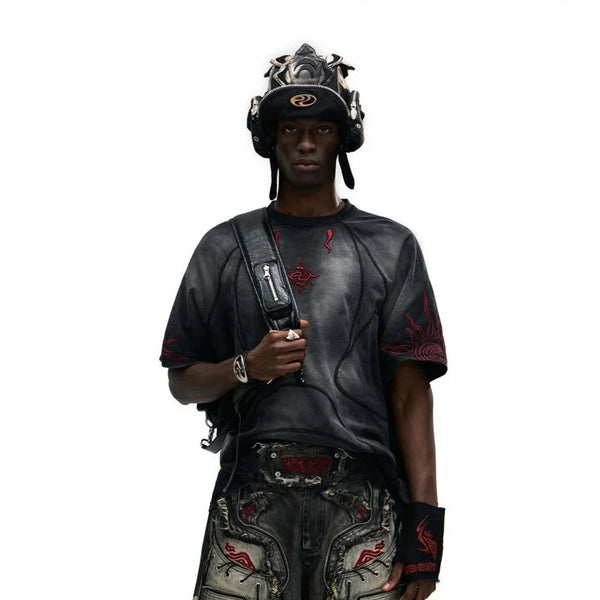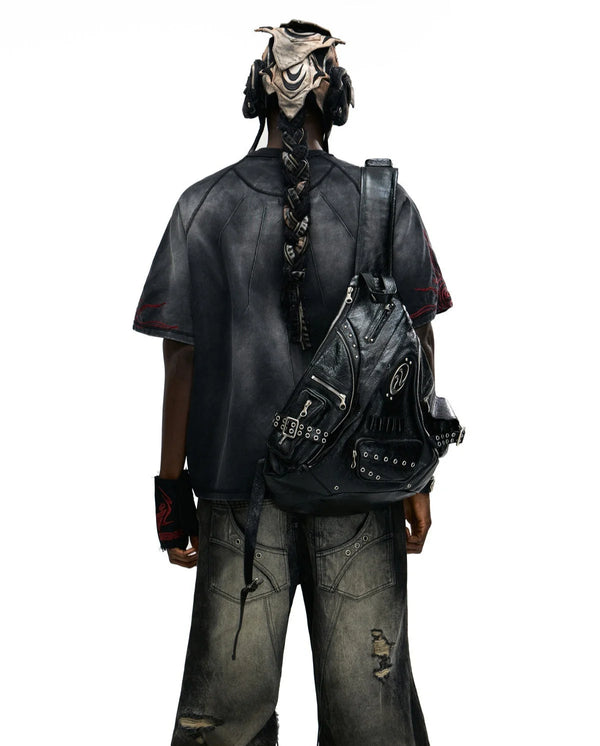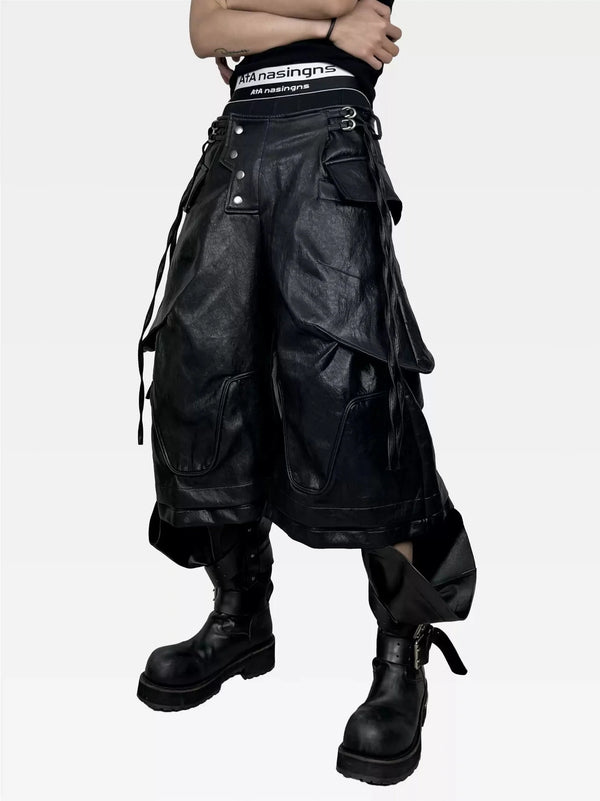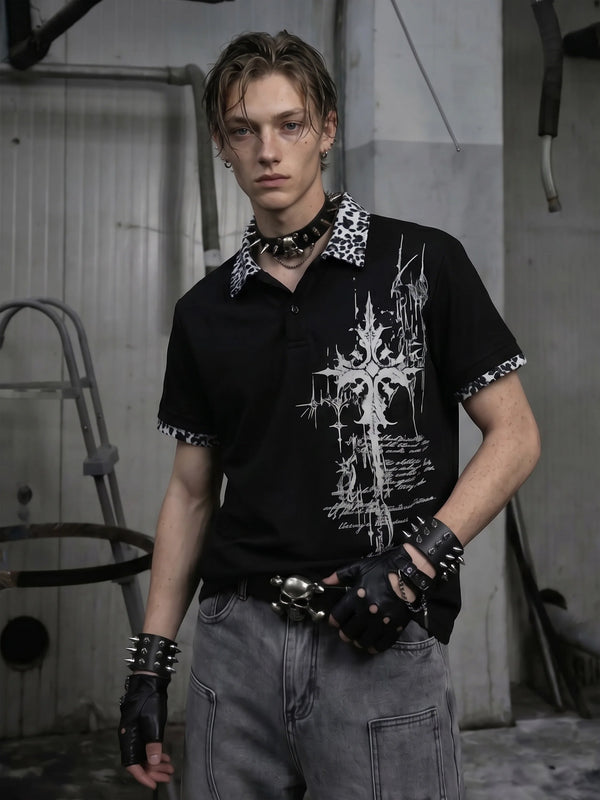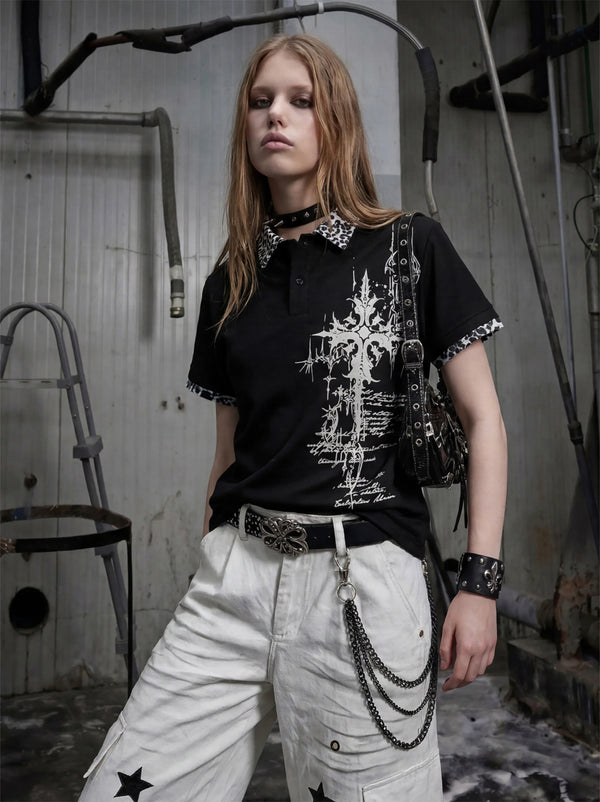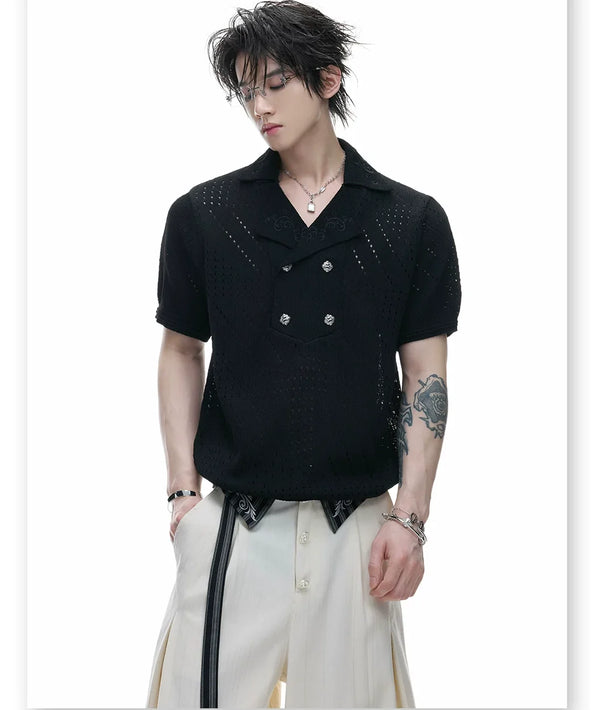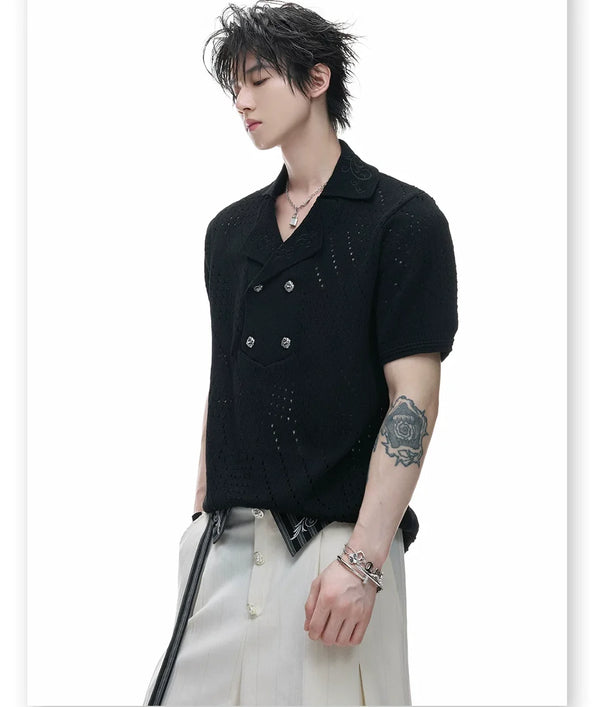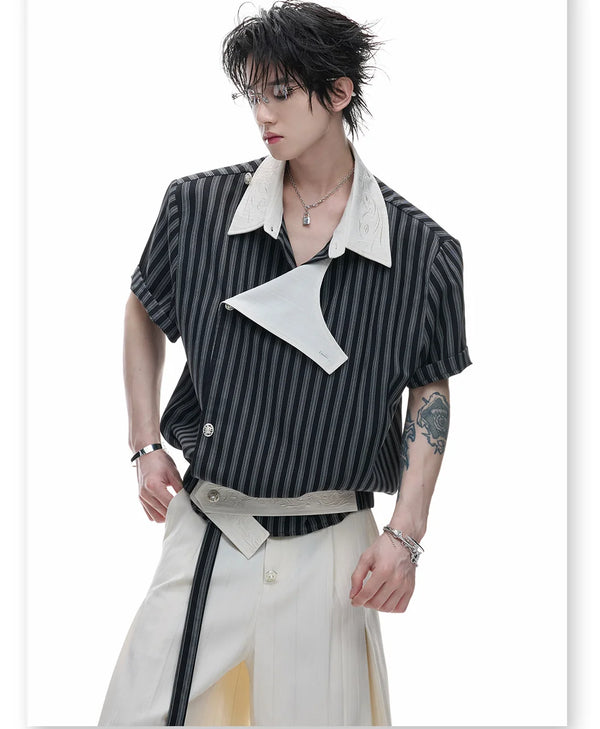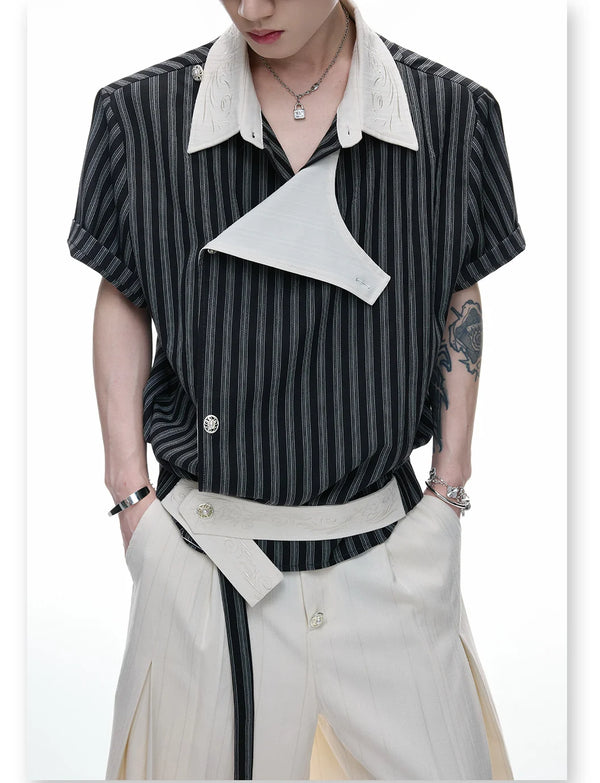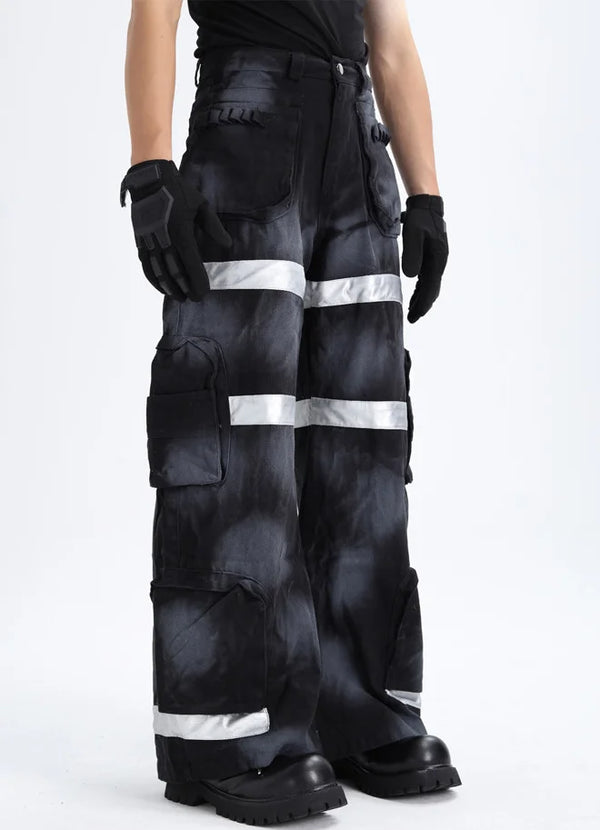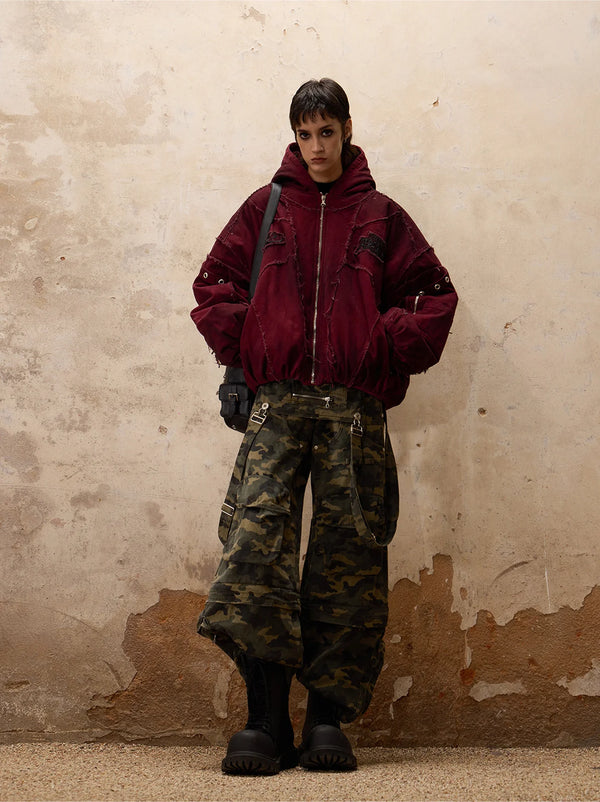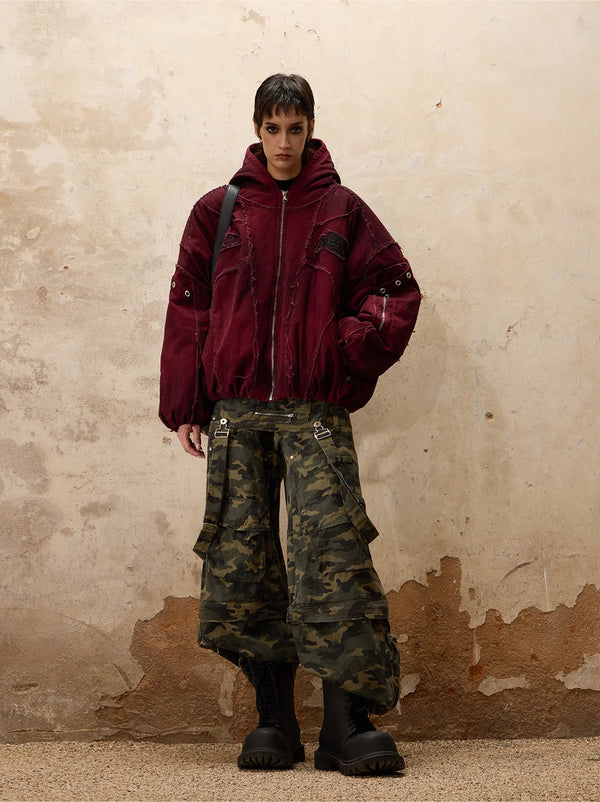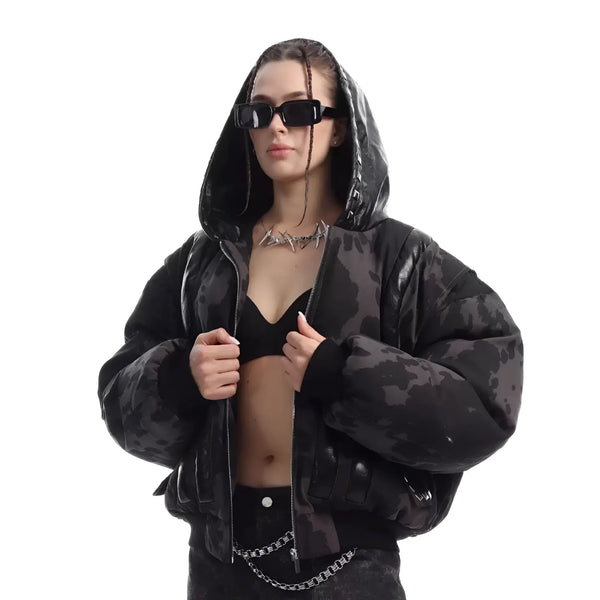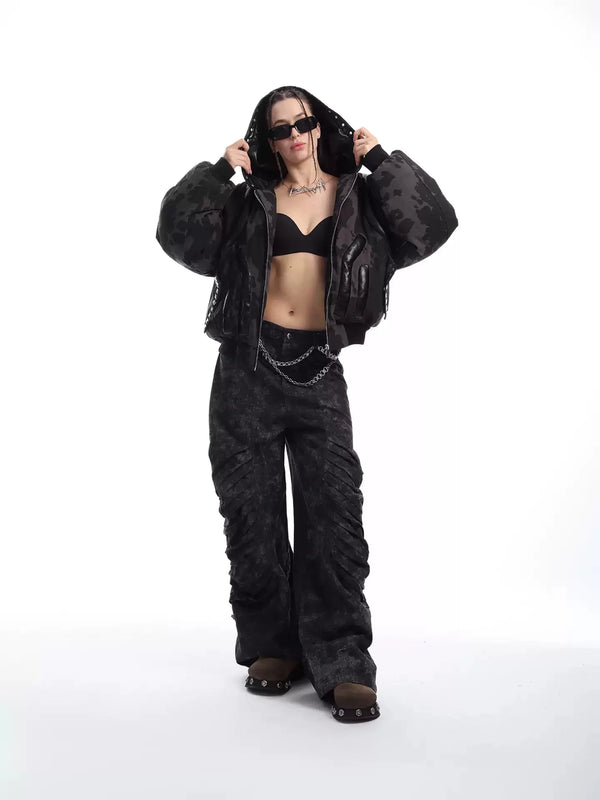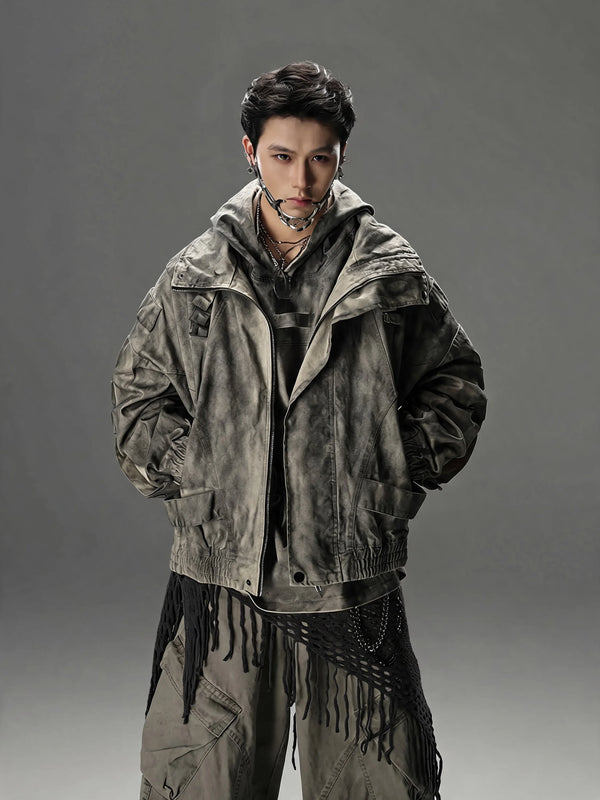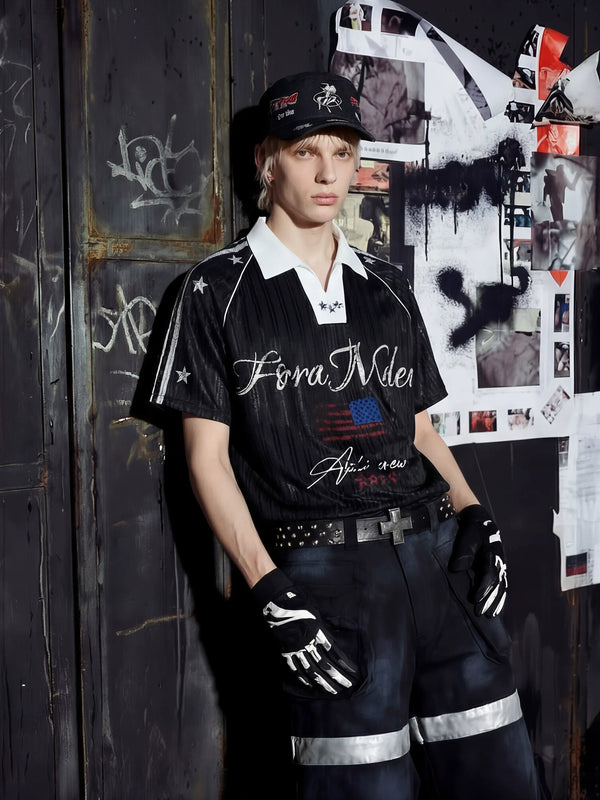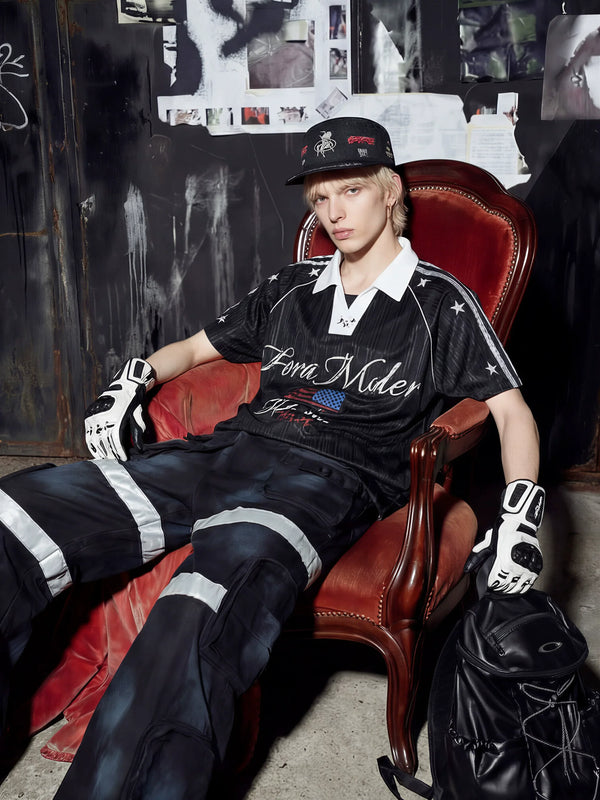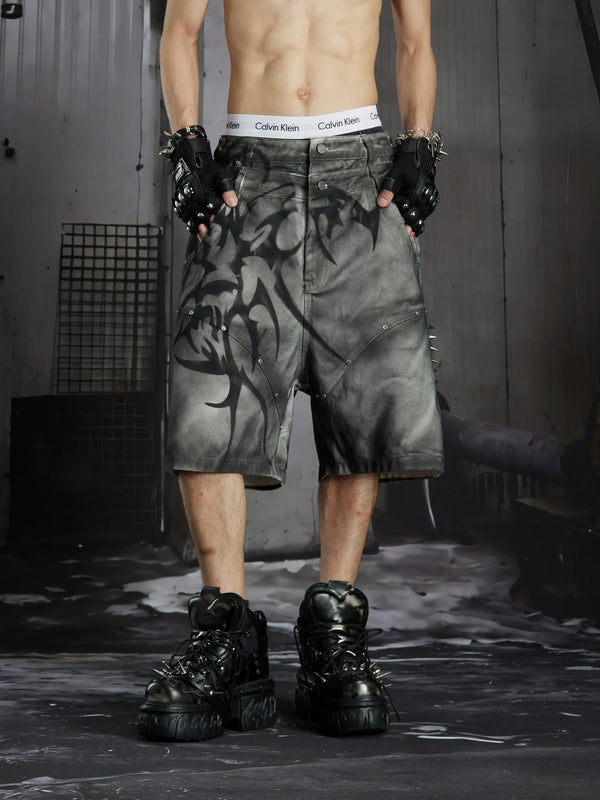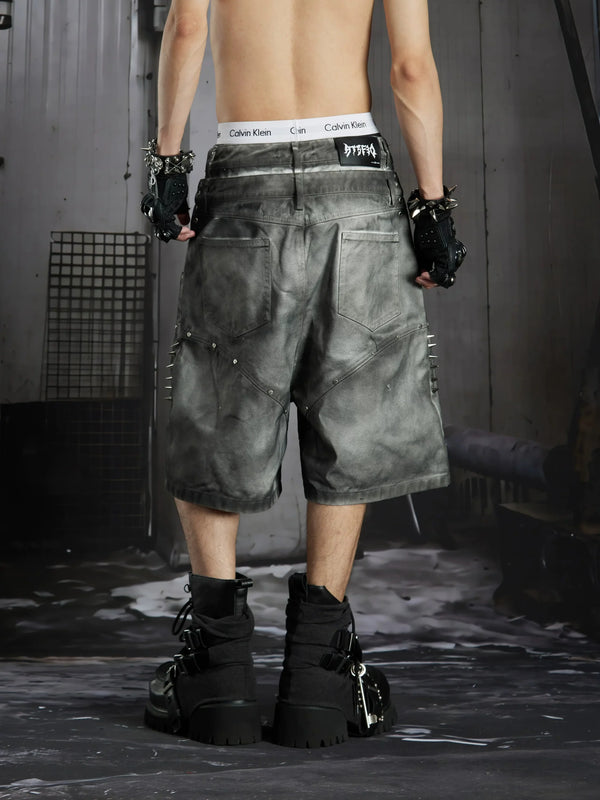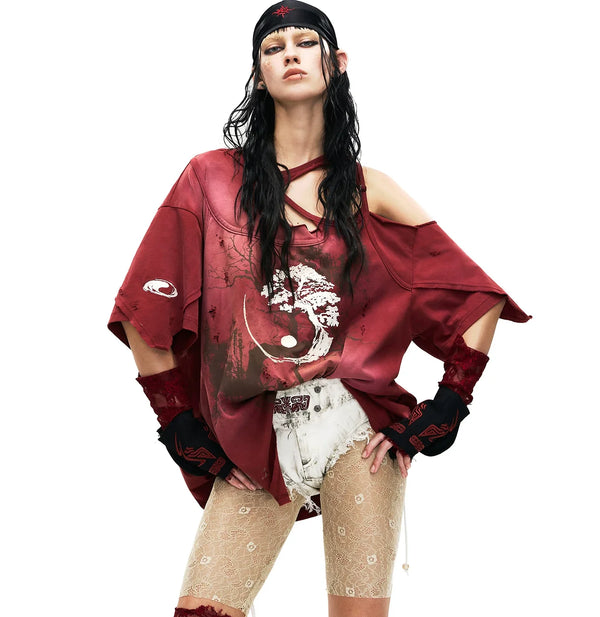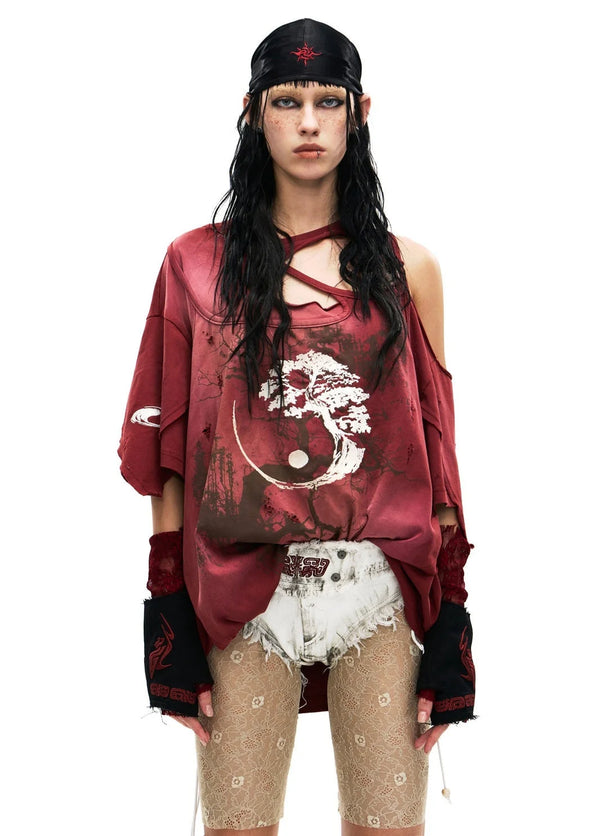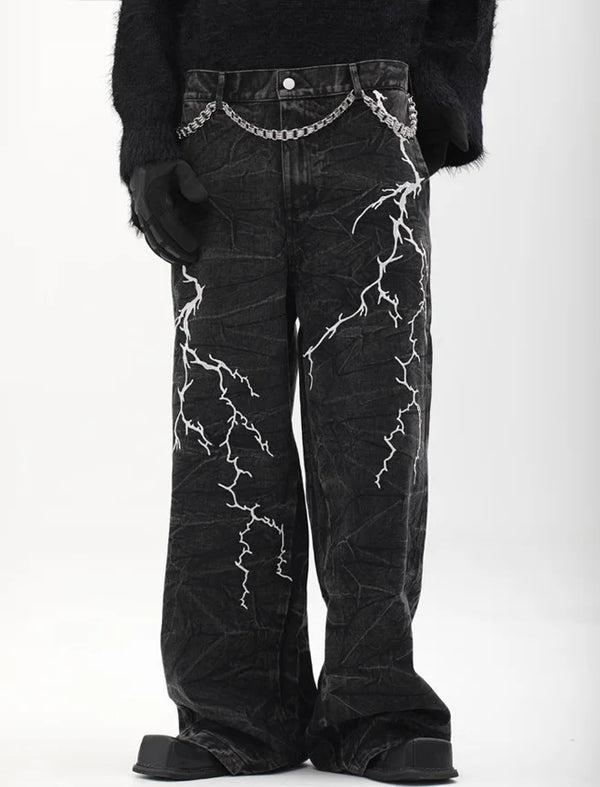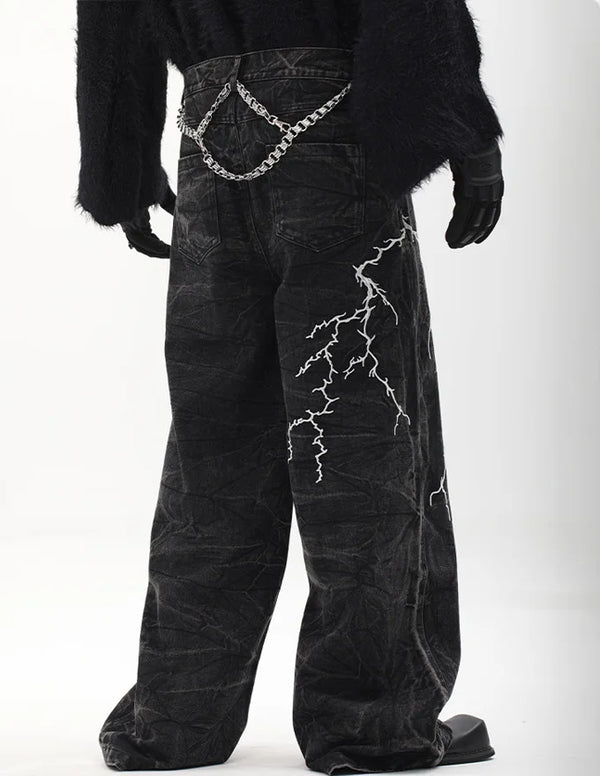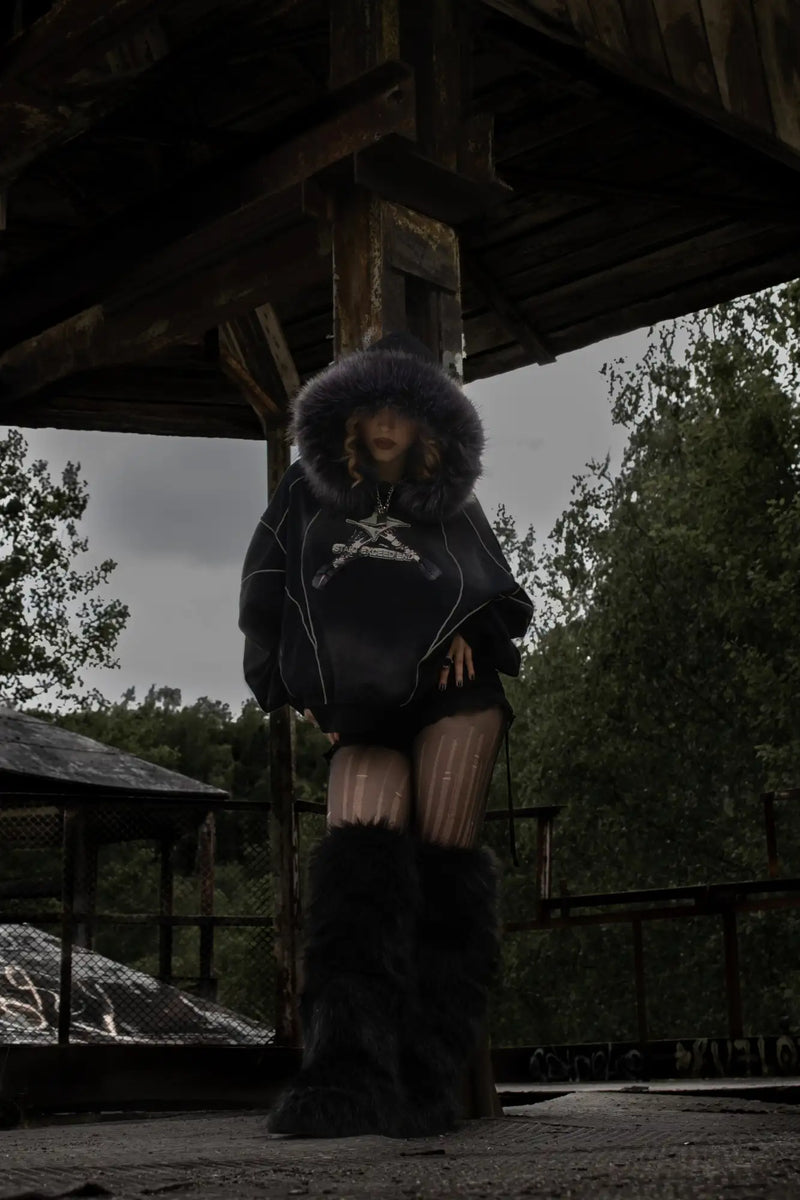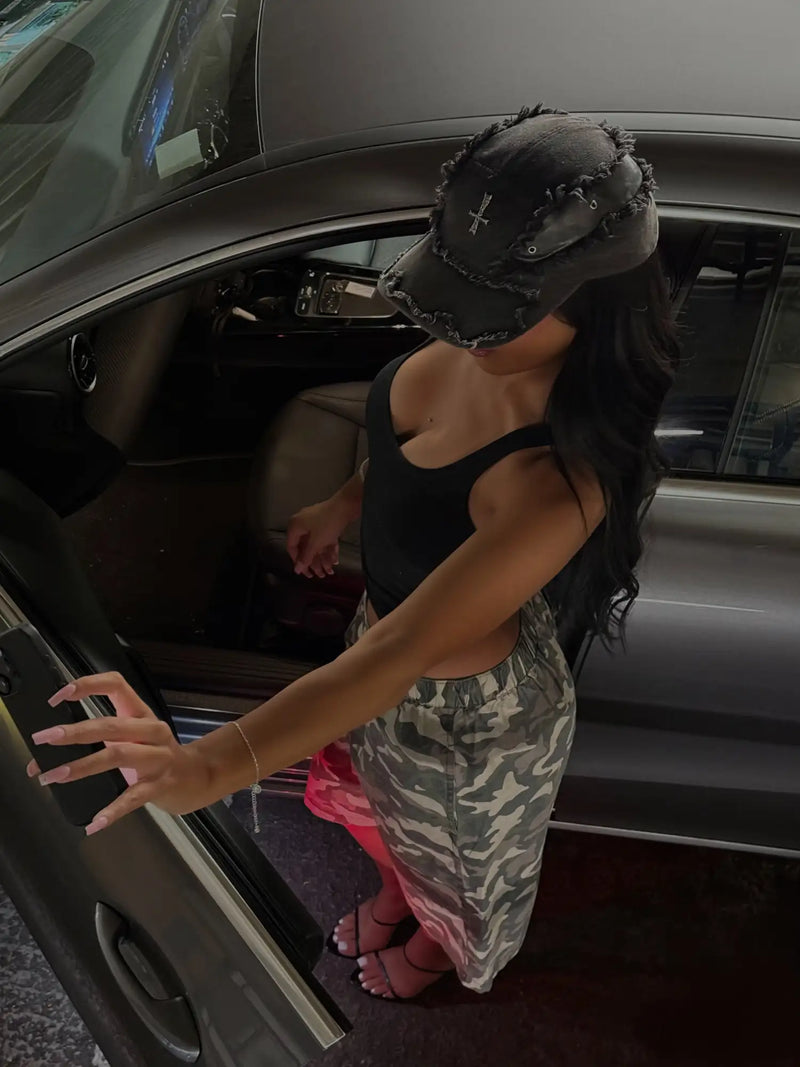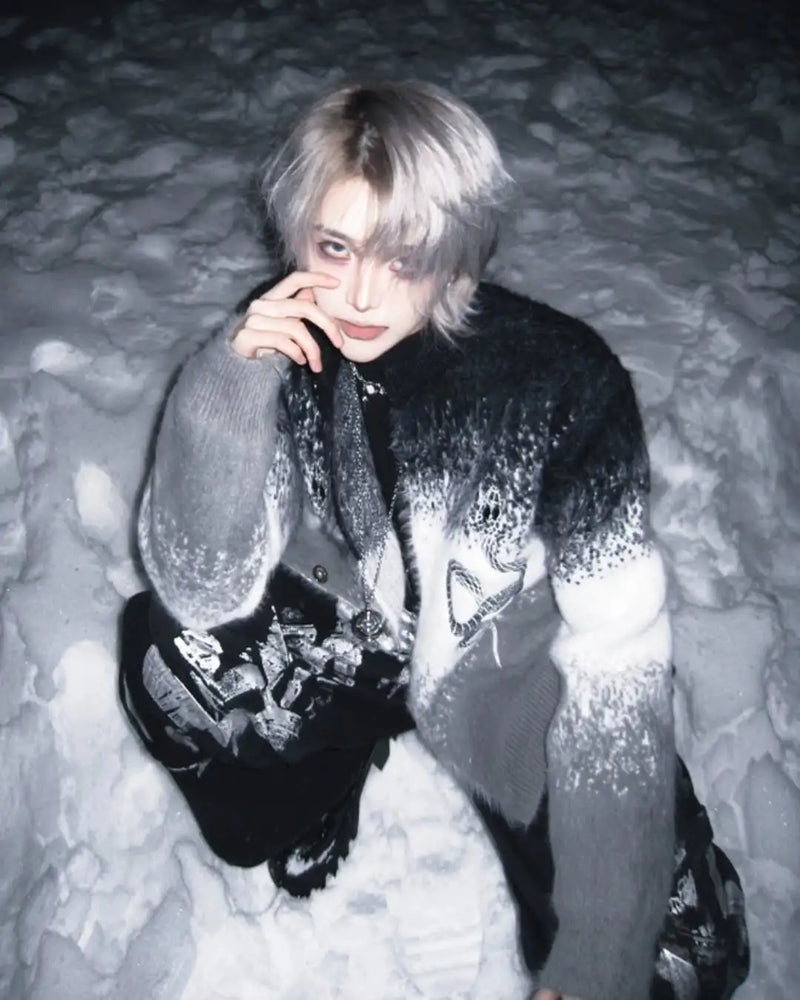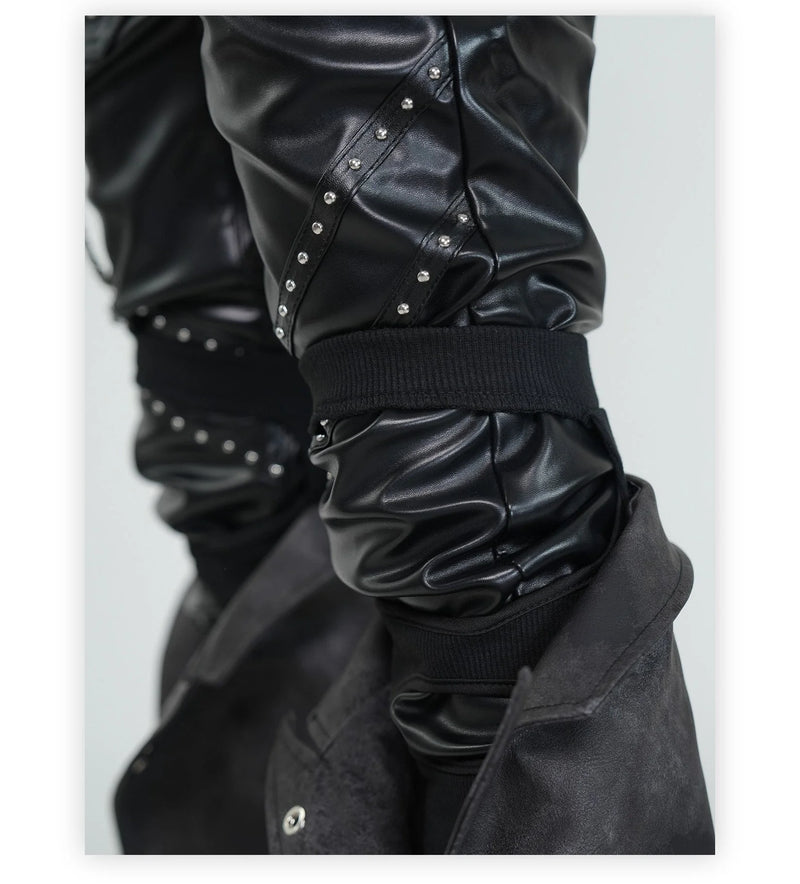
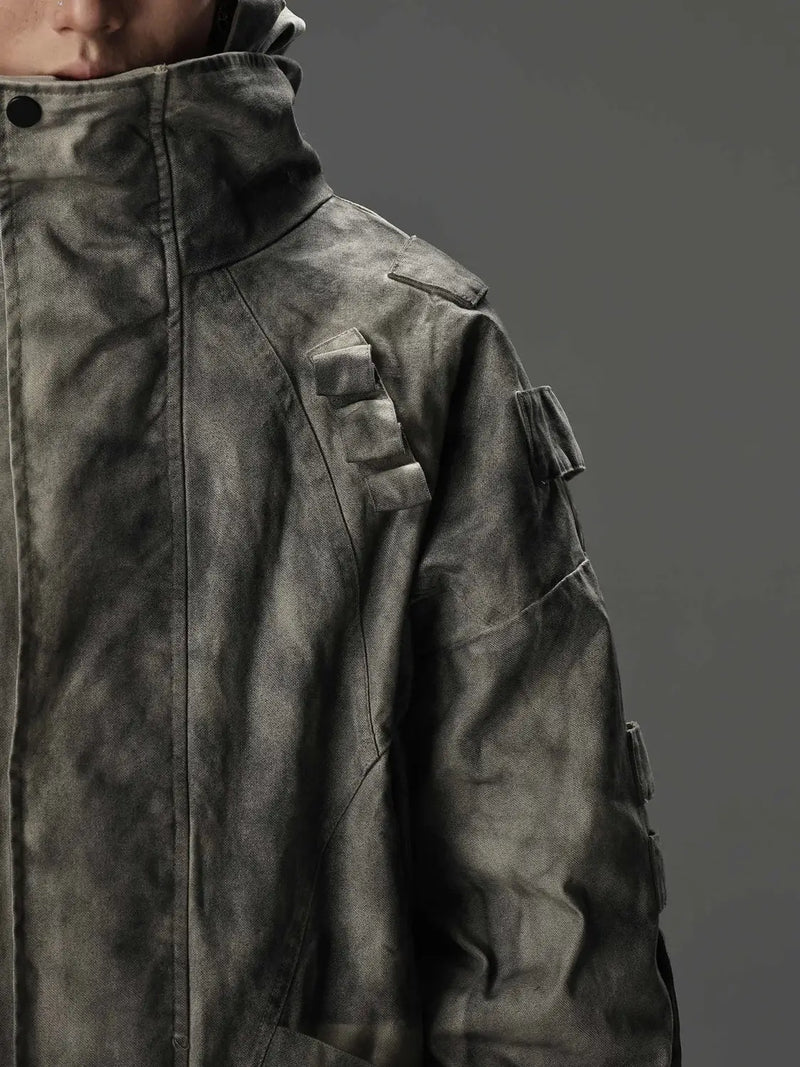
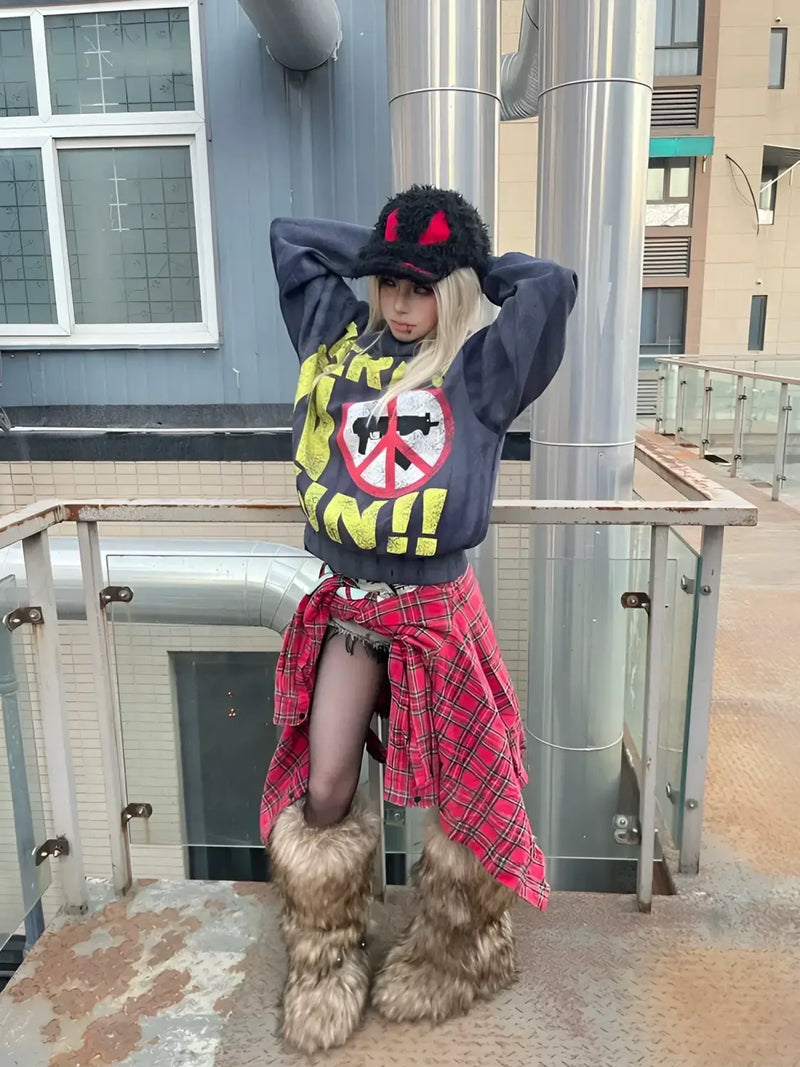
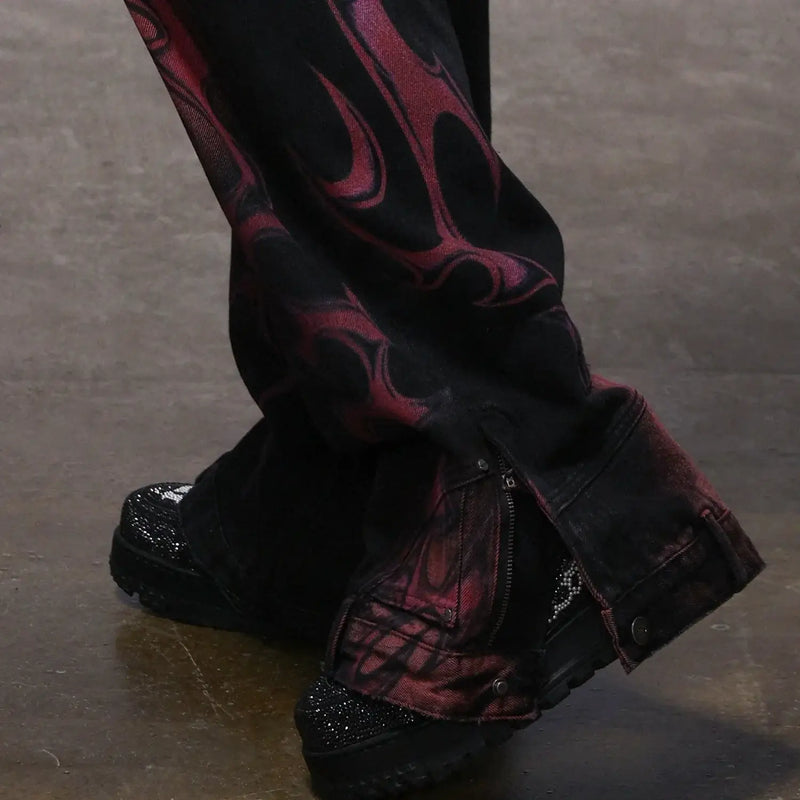
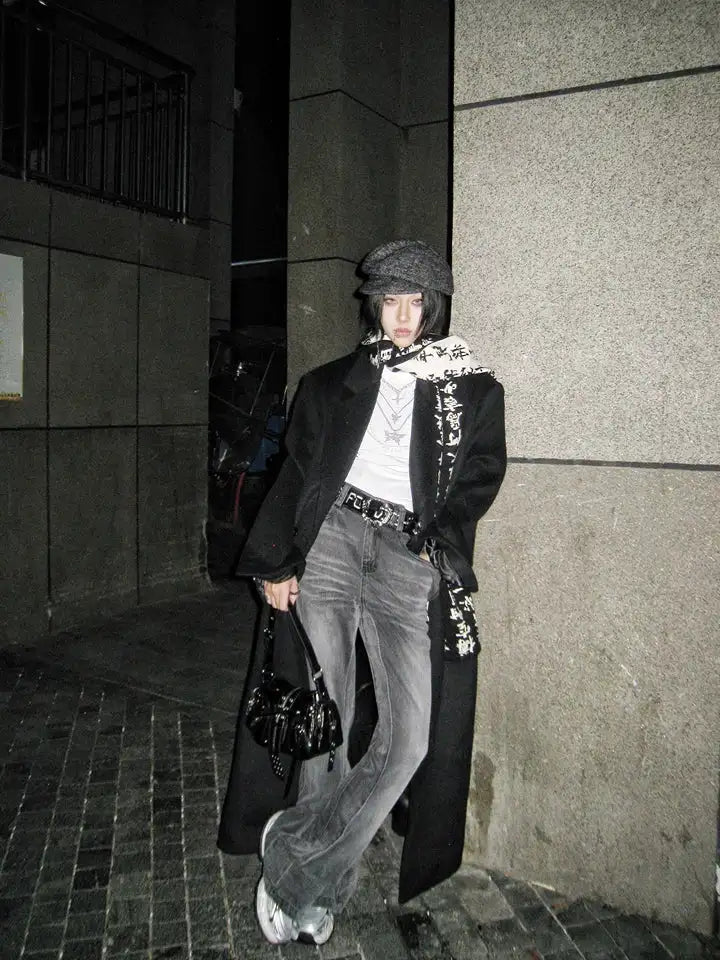

Y2K fashion in Germany isn't a throwback. It's a re-edit. What Britney wore in Los Angeles in 1999 looks completely different in Berlin, Hamburg and Munich in 2026 — colder, dirtier, more cargo than glitter. And that's exactly why most Y2K outfits fail here: they copy the US mall version from the Bratz movie instead of the German translation.
The original Y2K code formed between 1998 and 2003 in pop videos, tween magazines and the early reality-TV era. Low-rise jeans, baby tees, glitter, rhinestones, velvet tracksuits, logo mania, cyber optics. Most of these codes only work in Germany in translation — the German climate, the Berlin techno background and a different relationship to brand logos change every single building block.
Anyone who buys Y2K fashion in Germany without understanding the DE difference ends up in carnival. This guide explains how the code formed, what really belongs to it, which five Y2K types exist, how women and men wear it differently, how German cities re-edit the look, which brands wrote the sound, what you need in jackets / pants / tops / sunglasses, where to buy Y2K in Germany — and which six mistakes tip your outfit over.
This is what the wide-leg Y2K move looks like in motion — the common denominator of all five types:
Origin
Who started Y2K fashion — and why it lands differently in Germany
Y2K as a style code formed between 1998 and 2003 in a very narrow corridor: American mainstream pop, early reality TV, teen magazines like Seventeen and CosmoGirl. The wearers were Britney Spears, Christina Aguilera, Destiny's Child, TLC, Aaliyah, Paris Hilton and the Bratz doll universe. Cyber influences came from “The Matrix” in 1999 and the early internet aesthetic, where computer screens were still the main motif — not the background.
The second wave from 2002 got harder and more street-ready: Apple Bottoms, Baby Phat, Rocawear for the hip-hop branch. Diesel, Miss Sixty, Frankie B. for the low-rise denim wave. Tom Ford at Gucci and John Galliano at Dior for the luxury iteration — logo belts, monogram bikinis, the saddle bag.
In Germany the whole wave arrived two to three years late and met a completely different climate — literally. The Juicy Couture velvet tracksuit, a beach outfit in California, became a winter layer under the coat in Berlin. The Bratz midriff look rarely landed in pure form in Hamburg's grey weather. What Y2K became here was a translation from the start: darker, more covered, more cargo, more mesh, more Berghain prelude than mall kid.
Definition
What Y2K fashion is — the four building blocks
Y2K fashion is an outfit system of four fixed components. When all four sit right, the outfit reads as Y2K. When three sit and one is missing, it's inspiration. When only two sit, it's carnival. The ratios below aren't decoration — they're the test every outfit has to pass.
5 cm
below the navel (low-rise)
2 Cuts
flare or cargo at the bottom
1
statement accessory (usually glasses)
0
uncertain layers
These four numbers are strict. A high-waist pant is not Y2K, no matter how many rhinestones hang off it. Skinny jeans have been out since 2018 — the whole code lives on volume at the bottom. Without glasses the outfit stays half-done. And “uncertain layers” means: an extra cardigan that doesn't belong to the look but just covers cold shoulders tips every Y2K outfit back into everyday.
Concretely, what counts as Y2K fashion:
- Low-rise bottoms — the pant line sits 5 cm below the navel, not on the hip. High-rise belongs to the 2010s, not to Y2K.
- Wide-leg or flare at the bottom — bootcut, flare, cargo-wide, trumpet flare. Skinny has been out for years, and in Y2K skinny was never in.
- Cropped tops — baby tee, bandeau, crop top, mesh tank, long sleeve with a midriff cut. Dark or logo-printed, rarely both.
- Statement accessories — frameless or cat-eye sunglasses, a belt with an XXL buckle, a trucker cap, a plastic choker. One per outfit, not three.
- Cropped outerwear — a denim jacket just above the waist, a cropped bomber, a short puffer. Long coats are 2010s, not Y2K.
- Logo lust or distressed textures — either visible brand lettering in the Baby Phat / Apple Bottoms style, or grunge-distressed like the early Avril Lavigne vocabulary.
If you're missing three of these six points, it's no longer Y2K — it's “2000s-inspired”. And there's one rule that holds all six together:
5 types
The 5 Y2K types — from Bratz to Cyber
Y2K isn't one look — it's five that overlap at the edges. Lay Britney 2001, Aaliyah 2000, Paris Hilton 2003, Avril Lavigne 2002 and the Sporty-Spice era side by side and you see these five types cleanly separated. Each with its own colour palette, its own material language.
Which of the five suits you depends less on taste than on your city, your climate and how much glitter you want to tolerate day to day. How that splits between women and men comes next.
Gender split
Y2K style women vs men — where it really differs
Y2K women and Y2K men share the same four building blocks — low-rise, volume at the bottom, cropped on top, one statement accessory. What differs is material, skin shown and where the logo sits. The men's iteration is much closer to the early hip-hop vocabulary, the women's iteration closer to the pop video.
Women's version: the cropped top as the main image. Baby tee, bandeau, asymmetric mesh tank, sometimes a corset detail. Midriff is the rule, not the exception. Bottoms in flare or bootcut, often with a rhinestone pocket or embroidery. Sunglasses frameless or cat-eye. Accessories go toward sparkle: lip gloss, rhinestone choker, small shoulder bag.
Men's version: straighter and more solid-coloured on top. Vintage band shirt, oversized baseball tee, long sleeve with lettering. Midriff is rare. Bottoms in bootcut jeans or cargo wide-leg, with a visible brand logo on the boxer waistband. Sunglasses frameless or wraparound. Accessories: trucker cap, chain or dog tag, never both.
Both versions need the same low-rise line and the same statement accessory. What varies is skin shown and material — not the vocabulary.
Germany code
How Germany wears Y2K — Berlin, Hamburg, Munich compared
The US original is mall-driven. The German version is city-driven — and that means three very different Y2K iterations, depending on whether you grow up in Berlin, Hamburg or Munich. Anyone buying Y2K in Germany buys one of these three translations, not the Bratz-movie template.
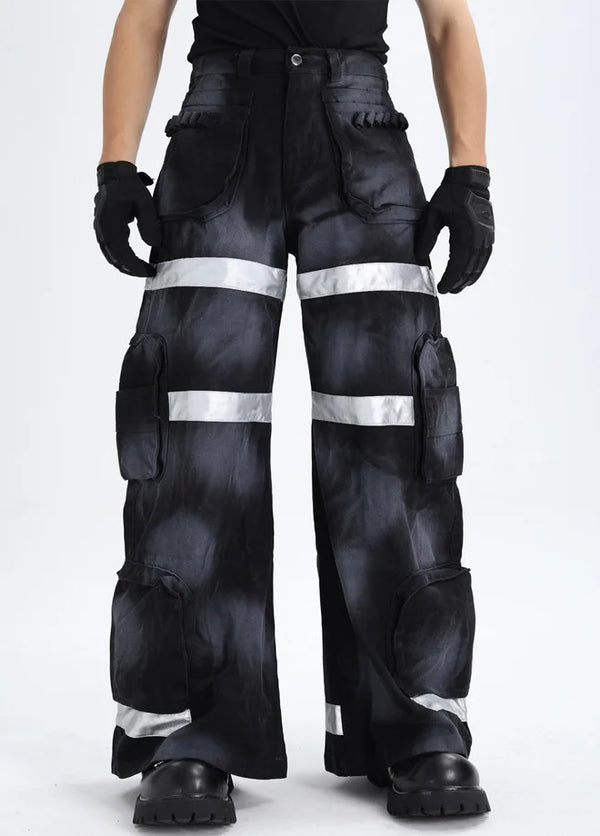
Berlin-Y2K. Black, cargo, mesh, platform boot. Here the US mall vocabulary meets twenty years of techno prelude, and the result is the darkest iteration. Glitter is allowed, but decimated — one chain, one rhinestone belt, never both. Sunglasses almost always frameless. The Berlin version is closer to Y2K-Grunge plus Cyber than to Bratz-Mall.
Hamburg-Y2K. More maritime, paler, washed out. Acid-wash denim, light blue, a bit of a stripe reference. More bootcut than flare. Hamburg Y2K reads more grown-up than Berlin's — less statement, more worn pieces. McBling almost never, Sporty-Spice often.
Munich-Y2K. Brighter, shinier, closer to the US original. Bratz-Mall works here — velvet tracksuit, visible logo, glitter accent, stiletto. The ALDI-Süd version doesn't exist, but Munich Y2K is the one German iteration that wears McBling cleanly. The mall-kid look works in Schwabing as in Riem.
Brands
Which brands wrote Y2K streetwear
Y2K didn't have one brand that defined the code — it was a cluster of eight or nine labels that built the vocabulary together between 1998 and 2004. Anyone who understands the code in its building blocks can build Y2K looks completely without the original labels. Still, the resale market is full of these names, and an original piece often ages better than a new piece in Y2K style.
The brands that wrote the Y2K vocabulary — chronologically:
- Diesel (1998-2003) — low-rise bootcut jeans, raw edge, distressed detail. The whole bottom line was largely defined by Diesel before Apple Bottoms and Frankie B. followed.
- Juicy Couture (1996, viral from 2001) — velvet tracksuit with lettering on the seat. The one suit that addressed mainstream pop and hip-hop at once. The McBling iteration wouldn't be possible without Juicy.
- Von Dutch (2002-2004) — trucker cap with the flame logo. The brand that made sunglasses-and-cap the standard Y2K bundle.
- Ed Hardy (Don Ed Hardy, from 2002) — tattoo print on long sleeves, trucker caps and hoodies. The iteration with the loudest graphics, the one that tipped over fastest and is coming back the strongest.
- Baby Phat (Kimora Lee Simmons, from 1998) — pink cat logo, velour sets, low-rise cargos. The Black women's iteration of the Y2K code, often copied, rarely matched.
- Rocawear & Apple Bottoms (Jay-Z, Nelly) — bootcut jeans with statement stitching, baseball jerseys, logo belts. The male hip-hop iteration, which connected better in Germany than the mall variant.
- Miss Sixty (1991, viral 1999-2003) — an Italian low-rise denim brand. A slimmer cut vocabulary than Diesel, stronger in Europe than in the US.
- Tom Ford for Gucci (1995-2004) & John Galliano for Dior (1996-2011) — the luxury iteration. Logo-monogram belts, saddle bags, a bikini top over jeans. Both designers lifted Y2K into the couture canon — the source of all today's resale prices.
Anyone who wants to wear Y2K without paying for these original labels searches the resale market (Vinted, Depop, Vestiaire) or DTC brands like Fūga that translate the vocabulary into German cut logic.
Category · Bottoms
Y2K Jeans & Trousers — Low-Rise, Flare, Cargo
The pants carry the Y2K outfit. They are the largest surface, the most dominant cut, the primary carrier of the silhouette. Unlike many styles, this is where it's first decided whether your outfit becomes Y2K or not — everything above builds on it.
Three pant types work in Y2K: wide-leg or flare jeans (Bratz-Mall, McBling, Y2K-Grunge), cargo wide-leg with multipockets (men's iteration, Berlin iteration, Cyber), and bootcut for the accessible iteration. Skinny and high-rise are out, no exception.
If you want to build a pant that fits all five Y2K types, take a wide-leg bootcut in a dark wash. That's the common denominator between Bratz and Berghain.
Category · Tops
Y2K Tops — baby tee, mesh, logo layer
In Y2K the top is the second voice. It comments on the pants without drowning them out. In 2001 Britney almost never wore a loud top with loud pants — either logo at the bottom or logo on top, never both. This rule works in Germany just as it did back then in the US.
Four top types work: baby tee (cropped, solid-coloured or with a small print, body-close), mesh long sleeve (Cyber and Berlin iteration, see-through or semi-see-through), crop hoodie (Sporty-Spice plus McBling hybrid), and vintage band tee (Y2K-Grunge plus men's iteration). Anything that covers the midriff line is no longer Y2K — that's 2010s streetwear.
If you want to test mesh, take a mesh long sleeve under an open-worn cropped jacket. That's the easiest entry into Cyber-Y2K — with no risk if it doesn't work out.
Category · Outerwear
Y2K Jackets & Outerwear — cropped, puffer, denim
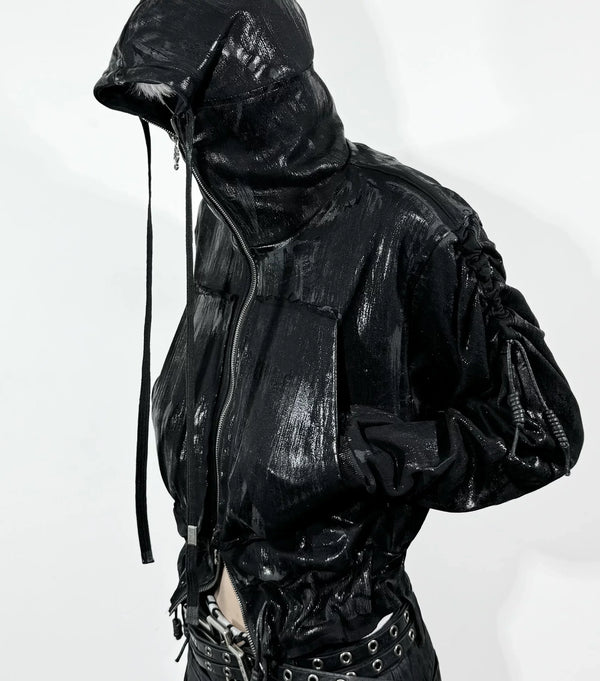
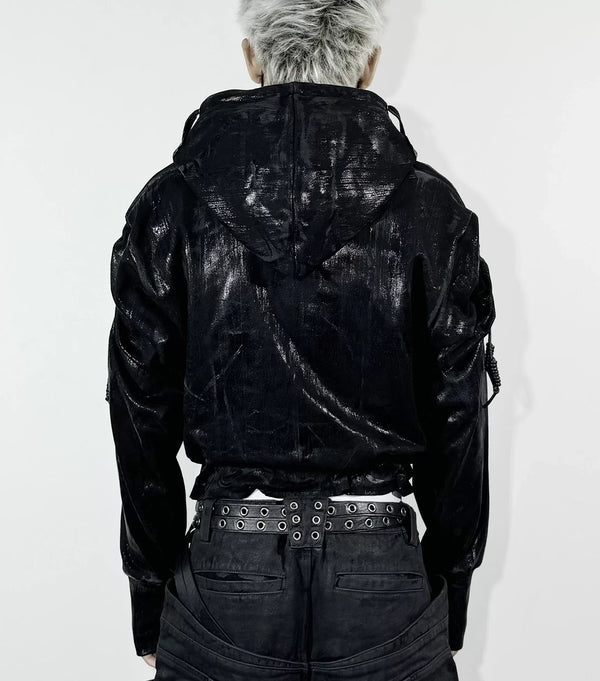
Outerwear matters more in German Y2K than in the US original — six months a year you need a jacket, and the wrong outerwear tips the whole look faster than anything else. Long coats are out. So is the supposedly neutral trench. The Y2K outerwear rule is: short, snug, often cropped.
Three jacket types work: cropped denim jacket (Bratz-Mall plus McBling), cropped puffer with a glossy surface (Cyber iteration), and a short acid-wash denim (Hamburg iteration plus Y2K-Grunge). Bombers work if they're short and either logo-printed or vintage-distressed.
If you don't own a cropped denim jacket yet, that's your first outerwear move. It works in four of five Y2K types — the only exception is Cyber, where the glossy puffer replaces it.
Category · Accessories
Y2K Sunglasses & Accessories — the most important move
In the Y2K code the sunglasses aren't an add-on — they're the one spot where the outfit gets a personality. Britney 2001, Aaliyah 2000, Paris Hilton 2003: each of these wearers had a glasses type as a signature, long before the pants were a statement.
Five glasses types work: frameless (Cyber, Berlin), cat-eye (Bratz-Mall, McBling), wraparound sport (Sporty-Spice, men's iteration), heart-shape (McBling, women's iteration), and flame-edge (Y2K-Grunge, the Ed Hardy line). One per outfit. If you change two pairs of glasses a day, you've misread the code.
More accessories: an XXL belt with a statement buckle, a trucker cap (sparingly, in Berlin and Munich, not in Hamburg), a choker (plastic or rhinestone, one per outfit), a mini shoulder bag. Trucker cap plus choker plus glasses is one bundle too many. Pick two.
Where to buy
Where to buy Y2K fashion in Germany
Y2K clothing in Germany comes from three channels — mainstream high-street, resale, and DTC online shops. Each channel serves a different iteration. Anyone who knows all three buys faster and ends up with the wrong Y2K pieces less often.
The mainstream high-street (H&M, Zara, Bershka) has been offering Y2K capsules on and off since about 2021. They mostly sit on Bratz-Mall plus Sporty-Spice — short crop tops, bootcut jeans, rhinestone print. Works for a first try, but ages badly: the cuts are rounded close to skinny and the fabrics last two seasons.
Resale (Vinted, Depop, Vestiaire Collective, Sellpy) is the source for original pieces. Here you find the real Diesel bootcuts from 2001, the Juicy suits, the Von Dutch caps. Prices swing a lot, the effort is higher, but the pieces age better than anything new. With a bit of patience you often buy original Y2K here below new-price level.
“Resale Y2K ages better because the fabrics from 2001 had real denim construction — today's fast-fashion stretch denim holds its shape for three washes.”
Pro-Tipp aus der Resale-Praxis
DTC shops like Fūga cover the re-edit iteration — Y2K codes translated into German cut logic, without a brand-name markup and without resale risk. We've put a more detailed map with concrete outfit examples per city in a separate article:
Y2K overlaps at several edges with other 2000s codes. 2000s Korean Fashion shares the Cyber line, 2000s Japanese Fashion shares the Bratz-Mall iteration with a kawaii drift, Y2K-Grunge shares the distressed textures with Mall-Goth. Anyone who has Y2K down can read these neighbouring codes and mix them deliberately.
Here are the five most important neighbours — each with its own guide, in case you want to go deeper:
Seasonal
Y2K in summer vs winter — the German year-round question
Y2K was beach-ready in the US original. In Germany that means: four months the original vocabulary works, eight months you need a translation. The summer version is the easier one — baby tee, bootcut jeans, sunglasses, platform sandal, done. The winter iteration is the harder one and the most common fail point.
Winter Y2K only works through layers that fit the line. Cropped puffer over a long sleeve. Mesh long sleeve under a thin knit vest. Cargo wide-leg over thick tights in winter. What does NOT work: a long winter coat over a Y2K outfit. That's a mall kid in a ski outfit. Long coats are a different code.
The year-round solution comes via cargo pants: they work in summer with a crop top and in winter with a knitted roll-neck underneath. The pant line stays visible, the outfit doesn't tip.
This is what the summer-to-winter transfer looks like in motion:
What does not work
The 6 most common Y2K mistakes — what you must NOT do
Y2K reliably tips at six points, no matter how expensive the individual pieces are. The order is sorted by frequency — mistake number one we see in 9 of 10 Y2K attempts.
Action
How to start in Y2K fashion — the first 4 pieces
You don't need 30 Y2K items to wear the look. You need four that will be in 80 % of your outfits. Everything else builds around them.
In order: a wide-leg bootcut jean in a dark wash (your biggest investment — lasts 5 years if you don't buy cheap). A baby tee or mesh long sleeve, solid-coloured or with a small print. A cropped denim jacket or cropped puffer. Sunglasses — frameless, cat-eye or heart-shape, depending on the type. A trucker cap as an optional fifth, but only once the four sit right.
Outfits for real
Y2K outfits for real — how it's worn in Berlin and Munich
Before you build your own Y2K outfit, look at how others wear it. The five types from above look different in the feed than in lookbook photos: tighter, dirtier, less perfect — and that's exactly why they work.
This is the fastest way to check whether Y2K sits on your body type and in your city at all — before you spend money.
To close
Y2K isn't nostalgic — it's a code
If you remember one thing from this guide, it's this: Y2K doesn't work through pieces, it works through the bottom line. Whoever has the line down builds sixty outfits from twelve pieces. Whoever only buys pieces ends up with a full closet and a few working sets.
The whole logic of this guide reduces to one sentence:
The five types have been stable since 2002 and stay that way — what changes is the material iteration. In 2003 it was velvet, in 2024 it's tech mesh. But the bottom line, the statement accessory and the cropped top are the same as in Britney's day. You don't have to wait until you know every iteration — start with the one type that fits your city best.
And that's the point too: Y2K reads in theory like a long list of rules but doesn't feel that way in practice. Once you've got the bottom line down, every further outfit is a variation on the same four or five building blocks — not a new invention.
FAQ
Frequently asked questions about Y2K fashion in Germany
The questions we often get by DM and email — short, clear, no detours.
What does Y2K mean literally?
Is Y2K still in?
Where do you find Y2K clothing in Germany?
Which brands were popular in Y2K streetwear?
Y2K style women vs men — what's the difference?
Are there Y2K shops nearby — that is, brick-and-mortar in German cities?
Y2K at H&M — is that authentic?
What's the difference between Y2K and 2000s fashion in general?
What do you think?
Tell us on @fuga_studios
About the author
Philipp Fuge — Founder · Berlin
Founder of Fūga Studios. Writes the journal himself. Berlin · Shanghai · Tokyo · Poznań — four cities, one logic.