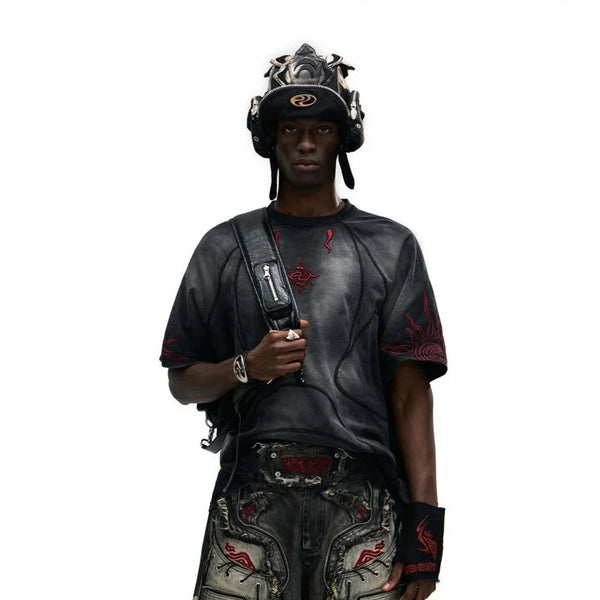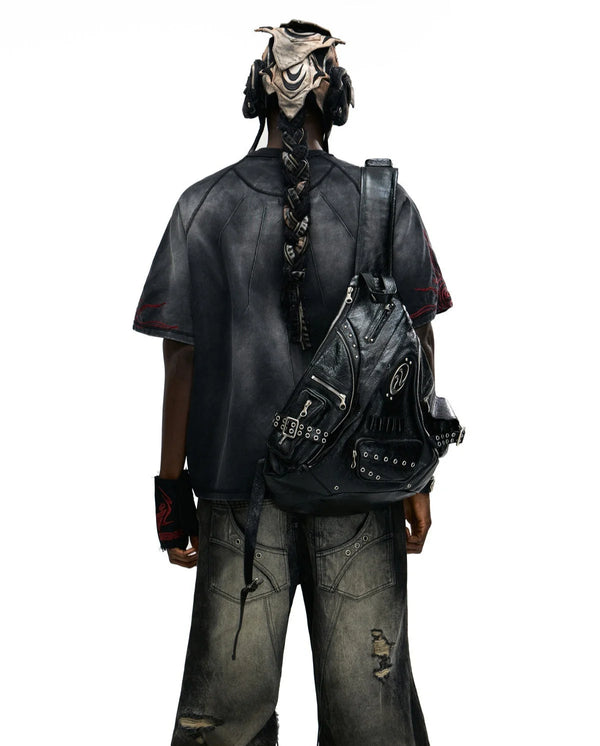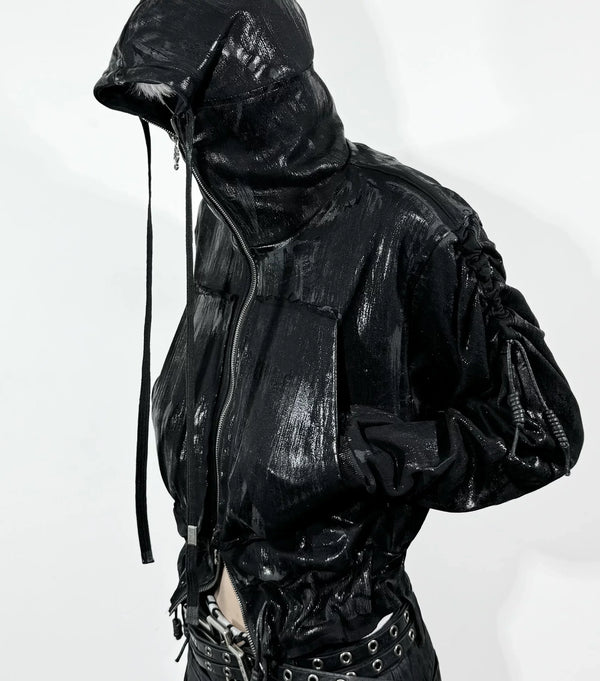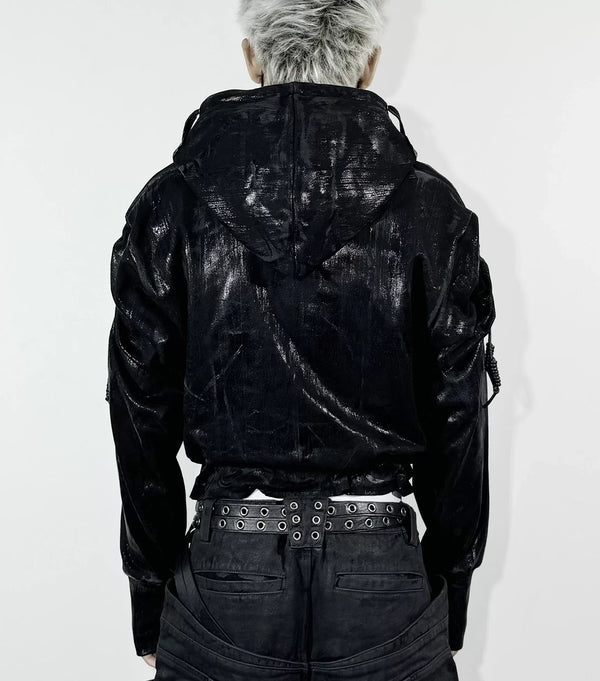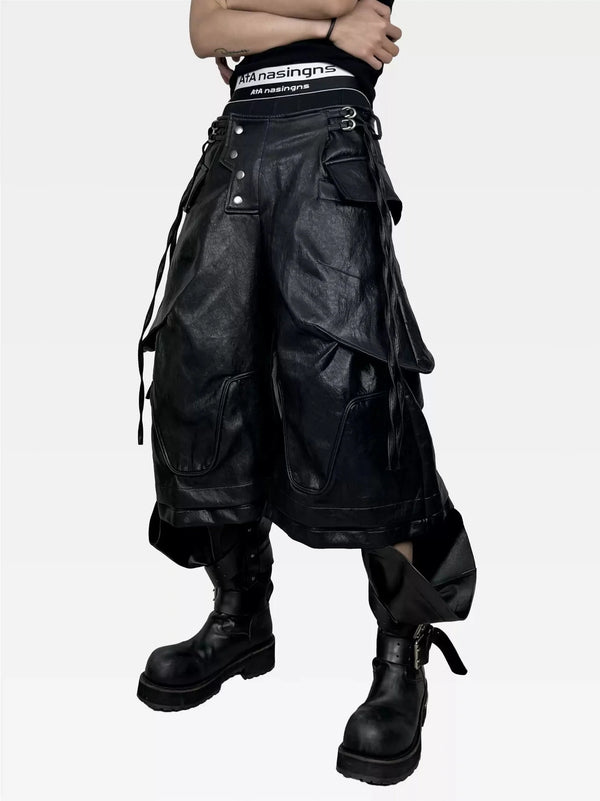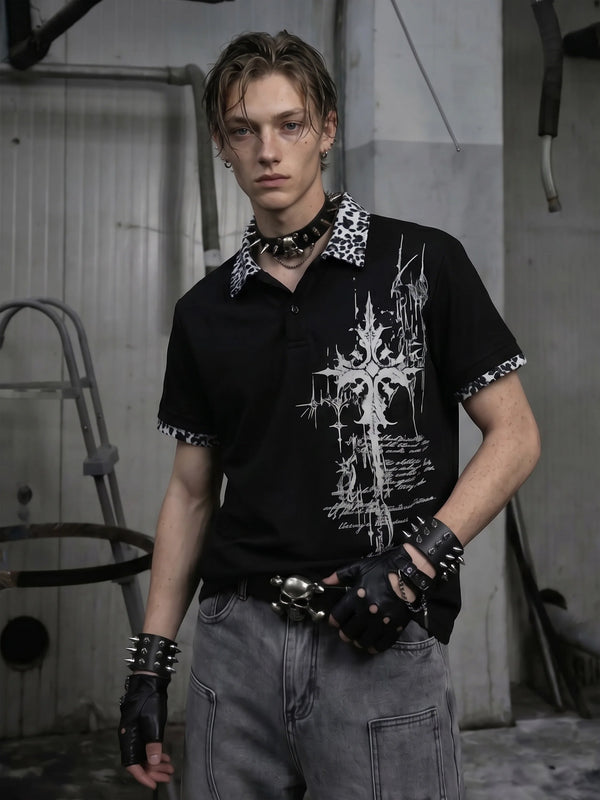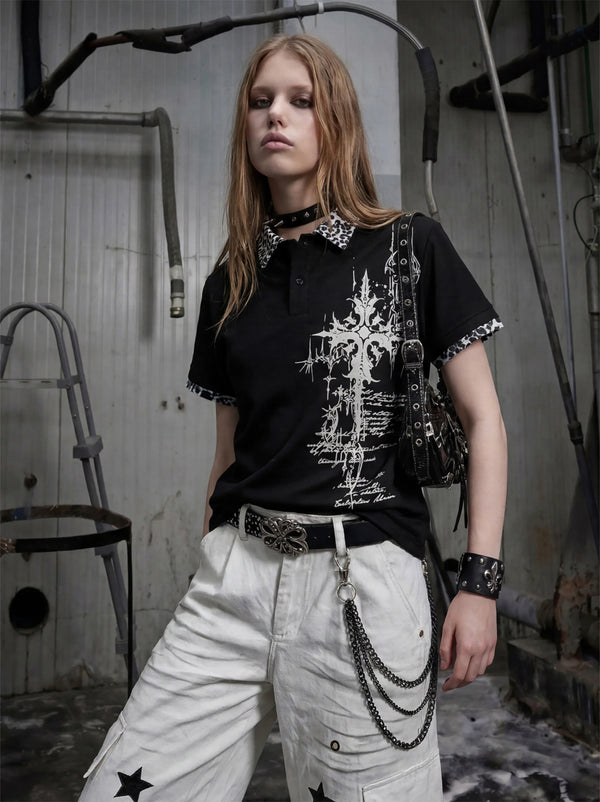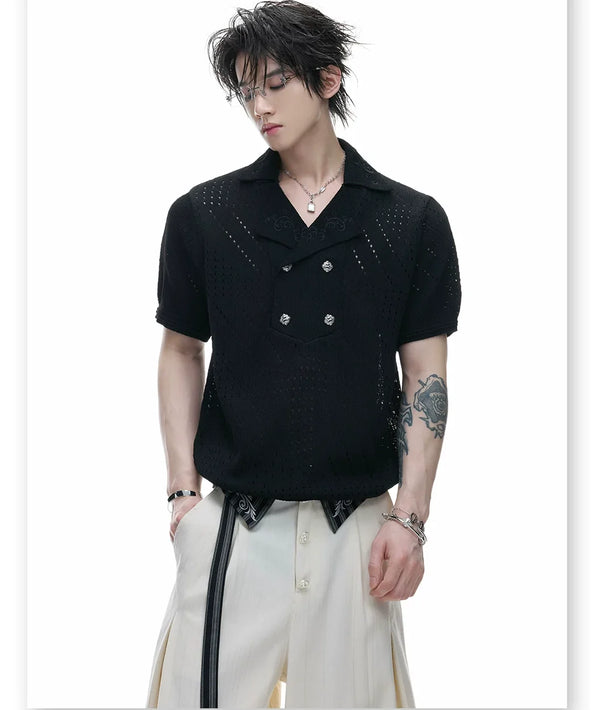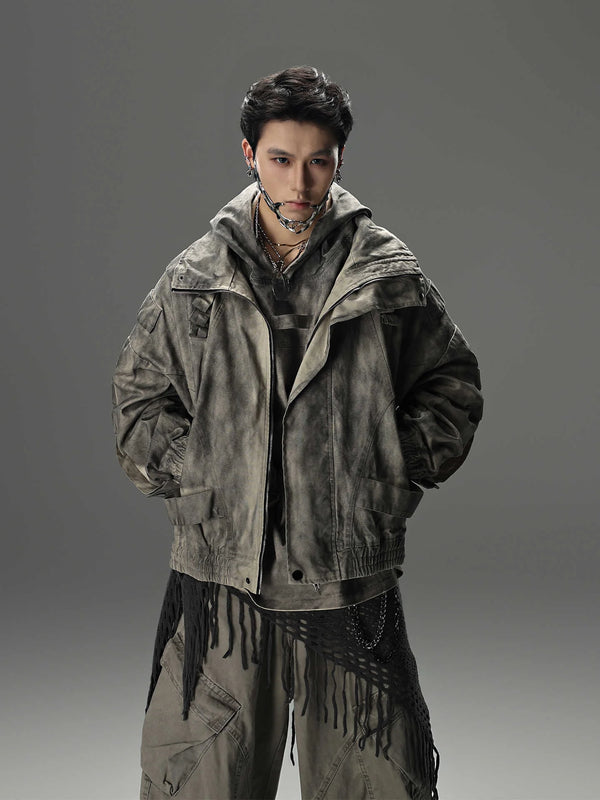
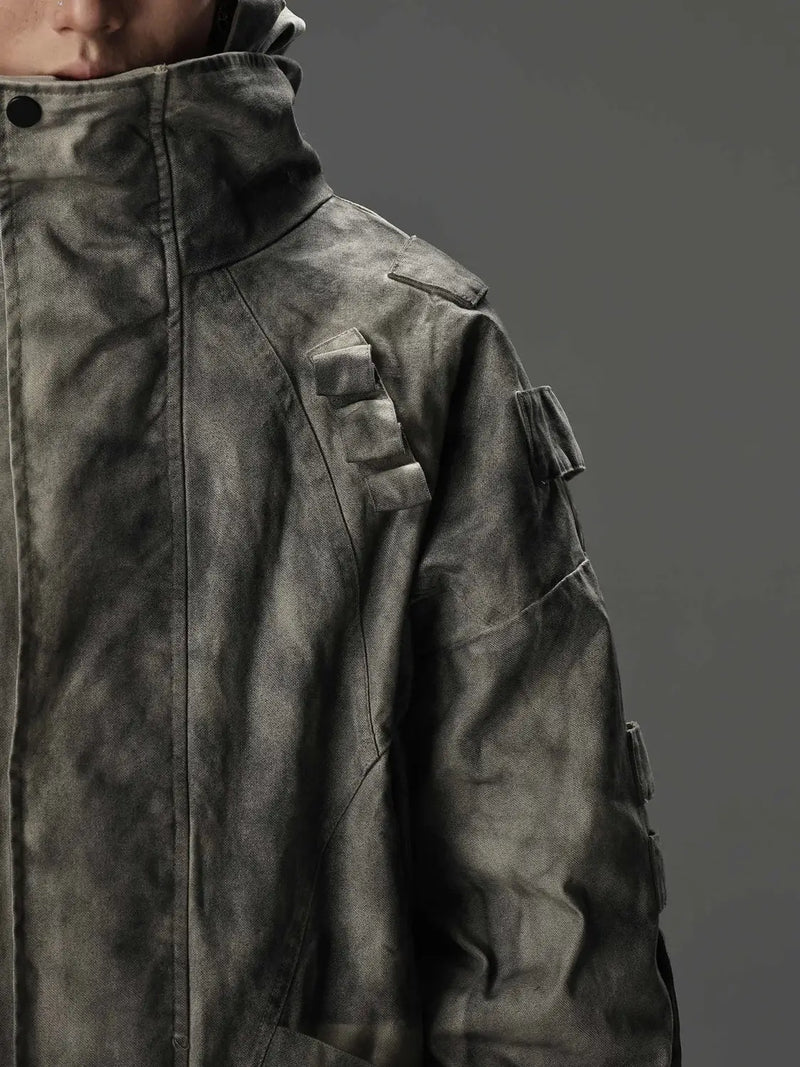

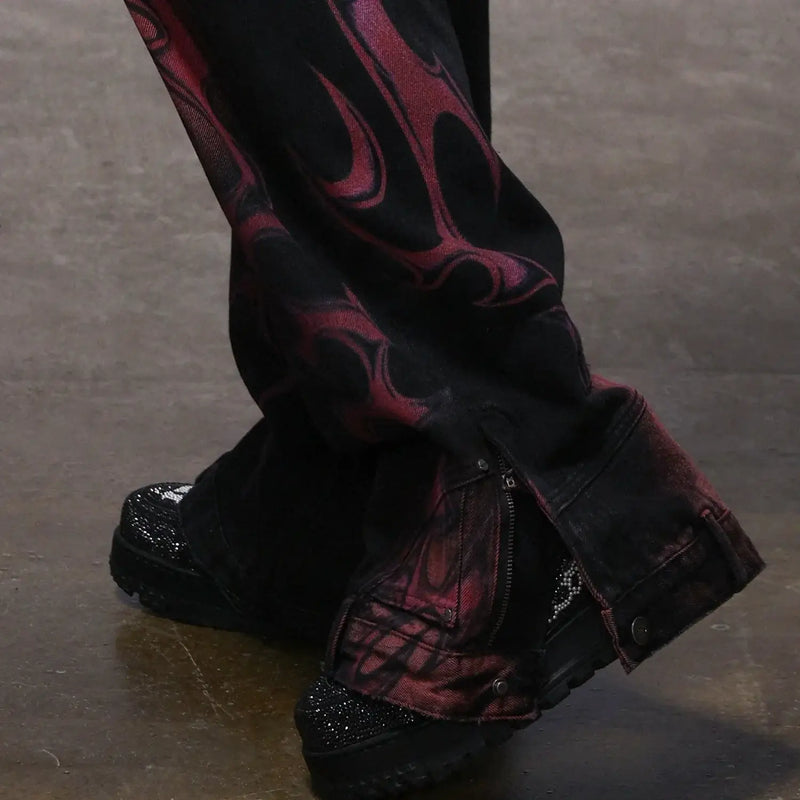


"Weatherproof" on the label means nothing by itself. It's a marketing word with no standard behind it. What actually protects a jacket from rain is a membrane with a water column rating, a sealed seam, and a DWR coating that still holds up after 20 washes.
Weatherproof techwear isn't a look. It's a 3-layer system made of base layer, mid layer, and shell — plus the material discipline to know three numbers before you spend €400: water column in millimeters, breathability (MVTR) in g/m²/24h, and whether the seams are taped or just allowed to say "water-resistant".
Anyone who understands the system buys one hardshell jacket and wears it for ten years. Anyone who just googles "rainproof" buys three anoraks in three years and is still wet. This guide breaks down: what a membrane and DWR actually are, how the 3-layer system works in practice, the five types of weatherproof techwear that exist, which brands wrote the vocabulary, and the six mistakes that tank your investment.
What technical layers look like in motion — twelve seconds, one piece:
Origin
Who invented weatherproof techwear — from Gore-Tex 1969 to its urban translation
Weatherproof techwear has two grandparents: the outdoor industry and avant-garde streetwear. Both meet in Berlin and Tokyo in the late nineties and turn into a language of their own in the early 2000s.
The membrane comes from the lab. In 1969, Wilbert Gore develops the expanded-PTFE process in Delaware — a microporous film with holes too small for water droplets but large enough for water vapor molecules. In 1976 this becomes Gore-Tex and lands in mountaineering jackets. Patagonia, The North Face, and Arc'teryx (founded 1989 in Vancouver) translate the material into outdoor apparel with clear function and no fashion vocabulary.
The second strand is urban. Errolson Hugh founds ACRONYM in Munich, later Berlin, in 1994, and in 2002 brings Gore-Tex and mil-spec hardware into streetwear form. Black hardshells with concealed zippers, magnetic closures, modular shoulder pockets. "Outdoor jacket" becomes "technical city outfit". Stone Island Shadow Project follows in 2008 with a similar language out of Italy.
What Gore-Tex invented was a membrane. What Hugh and Stone Island made of it was a style vocabulary. Weatherproof techwear is the intersection: material from the lab, silhouette from the city.
Definition
What weatherproof actually means in techwear — membranes, DWR, and the 3-layer system
A weatherproof techwear jacket isn't a fabric, it's a construction of four functional components. Miss one and it isn't weatherproof — it's "rain-resistant". That's a difference that can soak you from the fabric to your skin after 40 minutes outside.
10.000 mm
Water column = waterproof
20.000 g
MVTR breathability, fit for daily use
3
Layer in the system
20–30
Washes until DWR refresh
These four numbers are your buying test. A jacket with no water column rating is usually "only" DWR-treated, meaning water-repellent, not waterproof. A jacket with no MVTR value usually isn't breathable — you'll get just as wet from the inside as from the outside.
Specifically, a weatherproof techwear jacket needs:
- A membrane — Gore-Tex, eVent, Pertex Shield, Polartec NeoShell, or Sympatex. A microporous film that keeps water out and lets vapor escape from inside. Without a membrane, it's not a shell, it's a coated jacket.
- Sealed seams (seam tape) — critical seams and all seams get closed from the inside with a heat-activated tape. Without seam tape, water runs in through the needle holes even if the fabric itself holds.
- DWR coating — Durable Water Repellent. A fluorine-free or fluorine-based coating on the outer fiber. It makes water bead off instead of sitting in the fabric. A wear item — needs re-treating after 20–30 washes.
- Construction — storm flap in front of the zipper, adjustable hood with a brim, wrist cuffs, welded pockets or concealed zippers. A membrane without these details lets water in at the seams and openings.
- 3-layer setup — base layer (merino or synthetic, next to skin, moves sweat away), mid layer (fleece or down, warmth), shell (your membrane jacket, weather protection). One layer alone is never weatherproof.
- Care knowledge — reactivate DWR with Nikwax TX.Direct or Grangers Performance Repel. Machine wash at 40 °C with a membrane-safe detergent, no fabric softener. Tumble dry on low — heat reactivates the DWR.
If three of these six points are missing — no membrane name on the label, no water column rating, no seam sealing — it's not weatherproof techwear. It's a city jacket with an outdoor look. There's one rule that ties all six points together:
5 types
The 5 types of weatherproof techwear — from Tactical Hardshell to Urban Shell
Weatherproof techwear isn't one look, it's five — staggered by protection level, cut volume, and use case. Someone commuting to the train in Berlin needs a different jacket than someone hiking the Alps on the weekend. Both are "weatherproof", but with different material logic.
Which type fits you depends on three questions. First: how many hours a week are you outside in the rain — under two, Urban Shell is enough; over five, you want Tactical. Second: do you move a lot while wearing it — then breathability matters more than water column. Third: do you need warmth or weather protection — Winter Insulated combines both, all the others need a separate mid layer.
Cut split
Weatherproof techwear for women vs men — where the cut actually differs
Membrane and DWR are gender-neutral. What differs is the cut. A hardshell designed for men's shoulders sits too wide across the chest, too broad in the shoulders, and too long in the arms on a female torso. The result: wind gets in at the hem, the hood slips over the eyes, the sleeves collect water at the cuff.
Women's cut: narrower shoulders, defined waist, shorter sleeve lengths. Hip hem sits higher (waist warmth matters more than hip coverage). Hood cut narrower, cuffs adjustable. The shoulder pockets that emphasize a broad chest in the men's cut move down or disappear in the women's cut.
Men's cut: broader shoulders, longer arm length, longer hip hem (often to mid-thigh on hardshells). More volume in the chest area for mid-layer room. Larger hood, often helmet-compatible in the outdoor variant.
Both need the same four components — membrane, seam sealing, DWR, construction. What varies is how the volume is distributed. A weatherproof jacket that doesn't fit your body in cut is just as leaky as one missing a membrane. Wind and water find the gap.
Brands
Weatherproof techwear brands — who actually knows the material
Anyone buying weatherproof techwear is, in the end, buying the membrane, the seam sealing, and the zipper system behind it. The eight brands that have written this vocabulary since the nineties are worth knowing, because their spec sheet sets the standard — even if you rarely buy new.
The labels that wrote the weatherproof vocabulary — sorted by protection level and price tier:
- ACRONYM — Berlin, since 1994. Gore-Tex 3L, magnetic closures, modular pockets. The benchmark for urban hardshell. Prices €1,500–3,500.
- Arc'teryx Veilance — Vancouver, since 2009. Minimalist Gore-Tex Pro shells. The "grown-up" arm of the outdoor brand. Prices €800–2,500.
- Stone Island Shadow Project — Italy, since 2008. Tela Stella, reflective membranes, dyeing experiments with weather protection. Prices €1,000–2,800.
- GUERRILLA-GROUP — Berlin, since 2015. Mil-spec hardware, eVent membranes, urban tactical look. Prices €500–1,400.
- Norse Projects ARKTISK — Copenhagen, founded 2014. Scandinavian function, Pertex Shield, fit for daily wear. Prices €400–1,200.
- Snow Peak — Japan, since 1958. Camping heritage, Gore-Tex, Japanese cut. Prices €600–1,800.
- Riot Division — Kyiv/Poland, founded 2014. Constructivist techwear, Sympatex, sharp cut. Prices €300–900.
- Y-3 Adidas — Yohji Yamamoto, since 2003. Sport membranes translated into designer vocabulary. Prices €400–1,500.
Anyone who wants to wear weatherproof techwear without paying designer prices either searches the resale market (Grailed, Vinted, Heritage Auctions) for used pieces from these brands, or looks at DTC brands that competently translate the membrane vocabulary into a more accessible price tier.
Category · Outerwear
Weatherproof techwear jackets — hardshell, trench, bomber
The jacket is the largest functional surface in the outfit. It's your shell — the outer layer of the 3-layer system that stops wind and water. This is what decides whether you stay dry after 90 minutes of rain or need to change clothes as soon as you're home.
Four jacket types work in weatherproof techwear: hardshell (highest protection level, lightweight, packable), trench or field coat (longer silhouette, urban cut, hip hem to mid-thigh), bomber with membrane (shorter silhouette, city-ready, mid-layer function), and field jacket with multi-pockets (trekking-focused, often with a removable hood). What to check on all four: membrane name on the label, water column rating listed, visibly welded seams.
If you don't own a hardshell yet, that's your first investment. A good hardshell lasts eight to twelve years — with a DWR refresh every two years, proper washing, and zipper care.
Category · Bottoms
Weatherproof techwear pants — the DWR cargo and membrane logic
Pants are the second-largest surface and usually the forgotten layer. A weatherproof jacket over regular cotton cargos is half the job — the fabric soaks up water, your legs get cold, and you lose most of your weather protection. Weatherproof techwear pants solve this with three techniques.
First, DWR coating on the outer fabric so water beads off instead of soaking in. Second, membrane construction at the knee for direct protection while cycling or hiking in the rain. Third, sealed seams at the knees and hem. Avoid: pure cotton cargos with no DWR, polyester pants with no membrane, anything shiny in photos (shine usually means a cheap coating).
If you're after pants that work with all five types, get a multi-pocket cargo with a DWR coating and an elastic waistband. That's the common denominator between Tactical, Urban, and Trekking.
Category · Mid-layer
Weatherproof techwear tops and mid layers — what sits between skin and shell
The mid layer is the piece in the 3-layer system that holds in warmth and moves sweat along. Many buyers think a weatherproof jacket is enough. It isn't — without a mid layer, you get damp on the inside, and the membrane's breathability doesn't help if it has nothing to transport. The mid layer is half the system.
Three mid-layer types work: technical fleece (Polartec, breathable, quick-drying), synthetic down alternative (PrimaLoft, Climashield, holds warmth even when wet), and a zip hoodie made of technical fabric. What doesn't work: cotton sweatshirts (soak up water, take forever to dry), wool without a synthetic blend (too heavy in comparison), plain cotton T-shirts as a base layer (same logic).
If you're only buying one mid layer, get a technical zip hoodie in synthetic fabric. That's the piece that sits under the shell eight days out of ten.
Category · Gear
Weatherproof techwear backpacks and gear — when the fabric really matters
Most outfits lose their weatherproofing at the backpack. A membrane jacket over a canvas backpack that soaks up water — the backpack becomes a cold bag on your back, and the contents (laptop, notebook, sweater) are soaked within an hour. A weatherproof backpack is the invisible fourth layer of the system.
What to look for: roll-top or welded-seam construction, DWR coating on the outer fabric, ideally an internal waterproof liner. For shoes, distinguish: Gore-Tex sneakers for city rain under 60 minutes, hardshell boots with taped seams for longer trips. If you're standing in a storm for three hours, you need both.
A roll-top backpack with welded seams keeps its contents dry even through four hours of steady rain — as long as you roll it three times. Two turns aren't enough.
Styling physics
How to style weatherproof techwear correctly — the layer physics of an outfit
Weatherproof techwear works across two axes: vertically, the layer logic; horizontally, where the weight sits in the outfit. Vertically means three layers in the right order — base against skin, mid on top, shell outermost. Horizontally means the material sits low (wide cargo, taped trekking shoe), while the cut stays clean up top.
The membrane industry has been saying it since the eighties: a hardshell without a mid layer is like a roof without walls. It keeps the rain out, but you still freeze.
Outdoor-Industry-Standard, paraphrasiert
In practice this means: merino base or synthetic tech shirt directly on the skin, technical fleece or down hybrid on top of that, hardshell or trench on top of everything. Pants: DWR cargo, trekking pant, or membrane hardshell pant. Shoes: Gore-Tex sneaker or hardshell boot. Backpack: roll-top or welded. That's how the system sits.
The most common source of failure isn't the membrane. It's the second layer. Wear a cotton hoodie under a €1,200 hardshell and you've sabotaged the hardshell — the hoodie soaks up sweat, the membrane can't pass it through, and you end up just as wet from the inside as you would be without a jacket at all. Get the full breakdown in our functional techwear guide:
Weatherproof techwear also doesn't stand alone. It overlaps with several neighboring codes — Warcore shares the mil-spec hardware, Gorpcore shares the outdoor vocabulary, Cyberpunk techwear shares the sci-fi silhouette. Anyone who has the membrane system down can read these codes and combine them deliberately, without sliding into costume territory.
The five most important neighbors — each with its own guide, in case you want to go deeper:
Seasonal
Weatherproof techwear in winter vs summer — what changes in the system
In winter, the system is simple. Three layers, all three count, all three carry their weight. Merino base, down or synthetic mid, hardshell as outer protection. If you're facing minus ten degrees and wind, add a fourth mid layer (two thinner mids instead of one thick one — more flexible for temperature swings between outside and indoors).
In summer, the system collapses to two layers — sometimes one. In rain at 28 °C, you need base and shell, but no mid layer. The shell gets thinner (2.5-layer instead of 3-layer), more packable (trekking model, 300 g instead of 700 g), and more breathable (higher MVTR). Convertible constructions — removable sleeves, liner jackets — are ideal for transitional seasons, because you can adapt the system without buying two jackets.
The year-round solution is convertible hardware: jackets with removable sleeves, a liner system, or modular pockets. One jacket, three seasons. Here's what that looks like in motion:
What does not work
The 6 most common mistakes with weatherproof techwear — and how to avoid them
Weatherproof techwear reliably fails in six specific spots — no matter how expensive the individual pieces are. If you only avoid one thing, make it mistake number one. The other five won't cost you protection, but they will cost you the long-term value of your investment.
Action
How to start with weatherproof techwear — the first 4 pieces
You don't need twenty technical pieces to be weatherproof. You need four that will work with 80 percent of your outfits. Everything else builds around that.
In order: a hardshell jacket with at least 15,000 mm water column and sealed seams (your biggest investment — lasts eight to twelve years if you maintain it). A multi-pocket cargo with a DWR coating. A synthetic mid layer (tech hoodie or fleece). A roll-top or membrane backpack with DWR. A tube of Nikwax TX.Direct as an optional fifth item — but only once the first four are dialed in.
Outfits for real
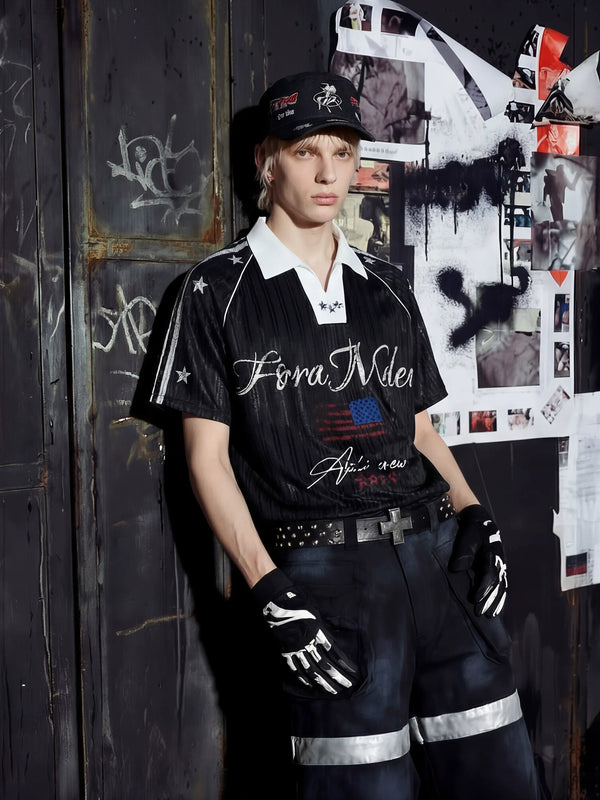
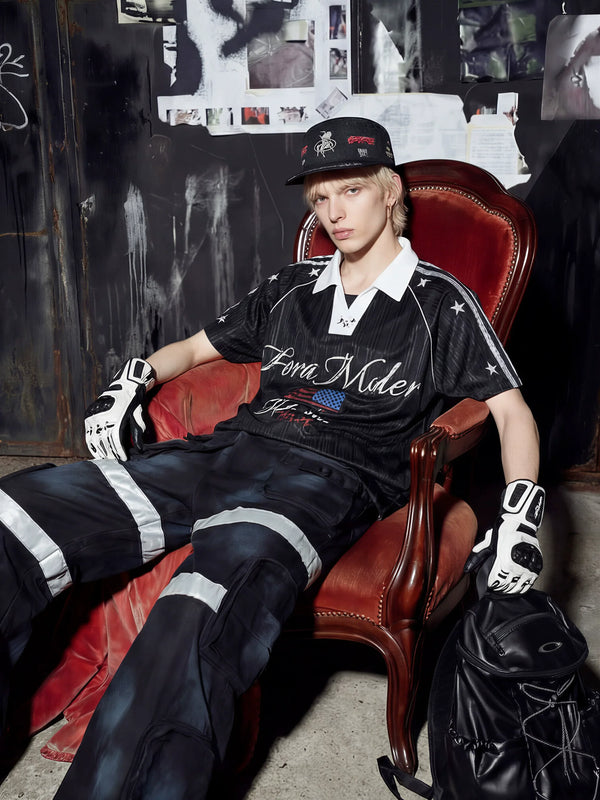
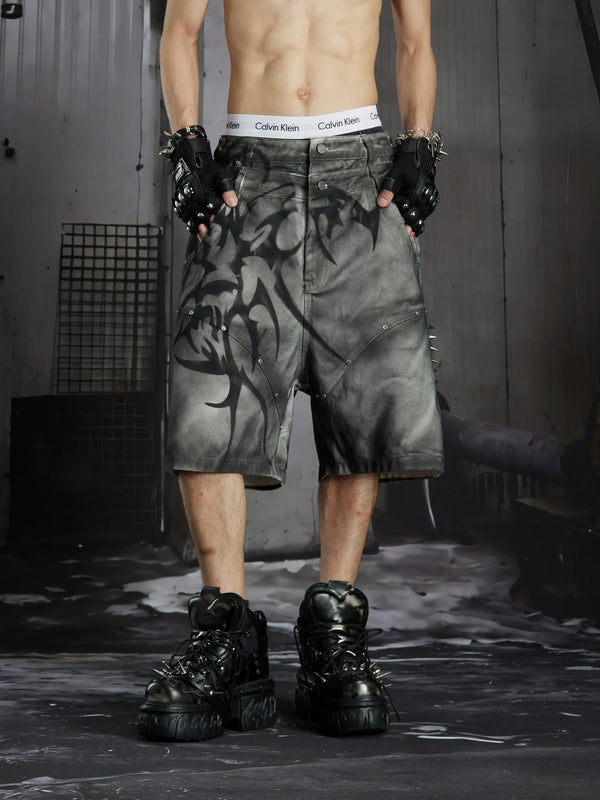
Weatherproof techwear in real life — what it actually looks like on the street
Before you build your own system, look at how others wear it. The five types from above look different in the feed than on spec sheets: more worn-in, dirtier, less perfect — and that's exactly why you can tell there whether the system actually works, or just works for the photo.
That's the fastest way to check whether a type actually fits your body before you spend any money.
To close
Weatherproof techwear is material discipline, not a trend
If you take one thing away from this guide, make it this: weatherproof techwear doesn't work through individual pieces, it works through a system. Anyone who has the system down can build a full year of outfits from eight pieces. Anyone who just buys pieces ends up with a full closet of items that are expensive individually and not dry together.
The whole logic of this guide reduces to one sentence:
The rules of the 3-layer system have been stable since the eighties and will stay that way, as long as Gore-Tex keeps making membranes and the outdoor industry keeps setting the specs. But you don't have to wait until you've memorized every membrane name. Start with the one type that best fits your everyday life. What you don't know yet, you'll learn by wearing it.
And that's the real point: weatherproof techwear reads like a material catalog in theory, but doesn't feel like one in practice. Once you have the system down, every new outfit is a variation on the same three layers — not a new invention.
FAQ
Frequently asked questions about weatherproof techwear
The questions we often get by DM and email — short, clear, no detours.
What does techwear actually mean?
What is a tech coat?
Which techwear brands are best for weather protection?
Why is techwear so expensive?
Is techwear still a current trend?
What's the difference between hardshell and softshell?
How do I properly care for a membrane jacket?
What do you think?
Tell us on @fuga_studios
About the author
Philipp Fuge — Founder · Berlin
Founder of Fūga Studios. Writes the journal himself. Berlin · Shanghai · Tokyo · Poznań — four cities, one logic.