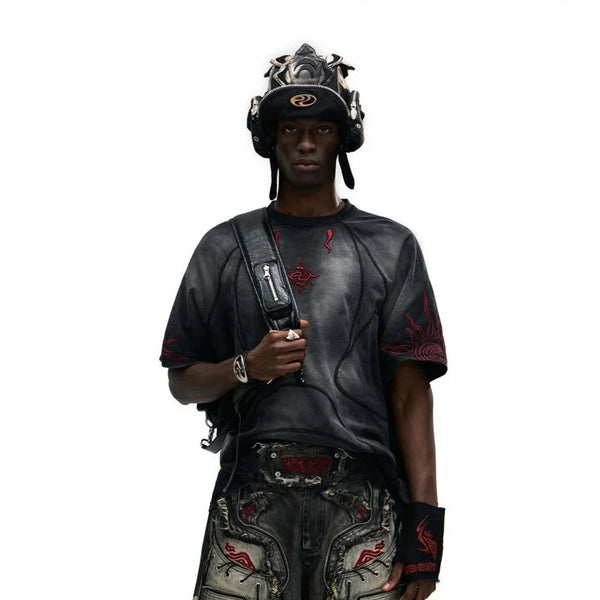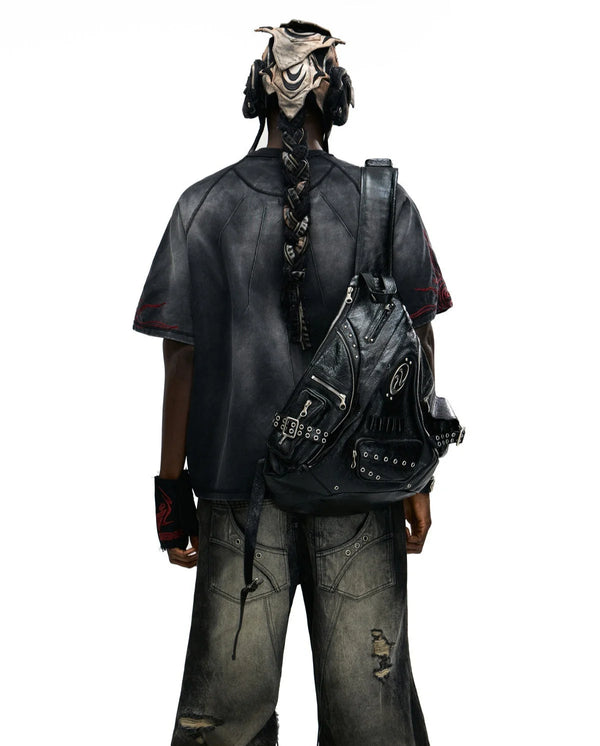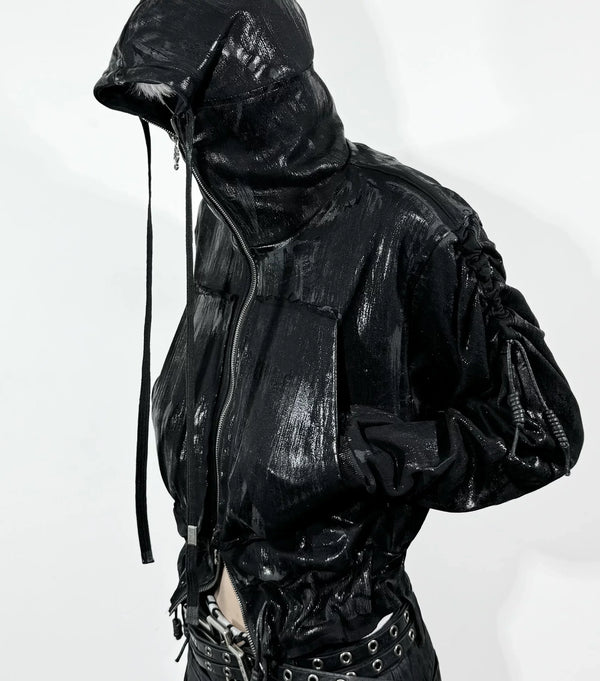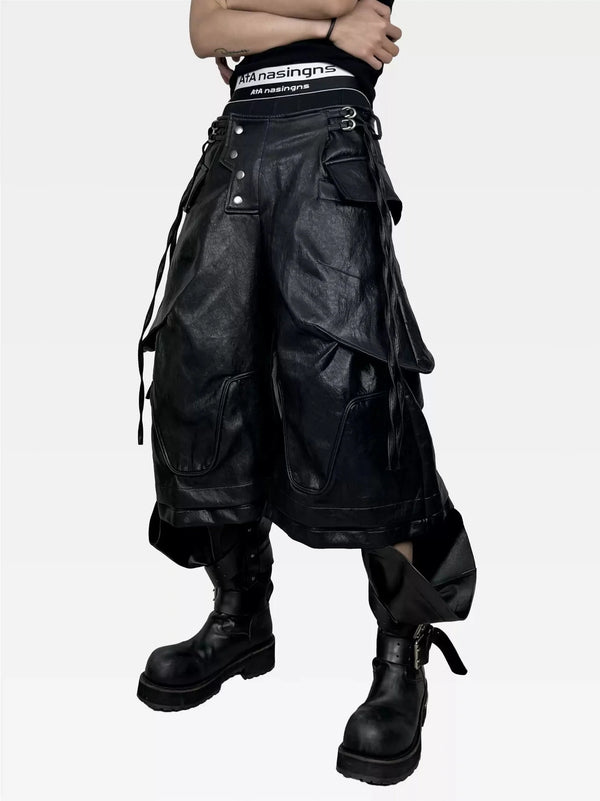



If you Google "Sports Vest", the first ten results are either Trigema performance shirts with reflective stripes or Under Armour tanks for running. Both are the opposite of what this is about.
Sports Vest in Streetwear is a different species. The cut comes from sport — Mesh, Cut-Off, athletic tank — but the outfit around it has nothing to do with cardio. It's a layer code: a piece that doesn't carry the core of the outfit but adds a layer that makes the outfit more legible. More function, less material, clean lines — without ending up as a "gym selfie".
This guide sorts it out in 14 steps: what a Sports Vest in Streetwear actually is, where it sits apart from the Tactical Vest and the gym tank, which five types exist, how men and women wear it differently, which brands wrote the vocabulary, which pants and shoes make the thing work — and which five mistakes tip the whole outfit over.
What this looks like in motion — twelve seconds:
Clarification
Sports Vest, gym tank or Tactical Vest — the three worlds finally separated
The term "Sports Vest" is broad in English. In the UK, every sleeveless top is called that — from the Mesh running singlet to the workout tank. In Streetwear it means something else: a vest with an athletic cut, but worn outside the sport context. Three categories sit right next to each other and get confused constantly.
The gym tank is built for movement — breathable synthetics, reflective details, brand logo on chest or back. Function is visible, the look is "on the way to the gym". Trigema, Under Armour, Nike Pro. Streetwear context: nearly zero.
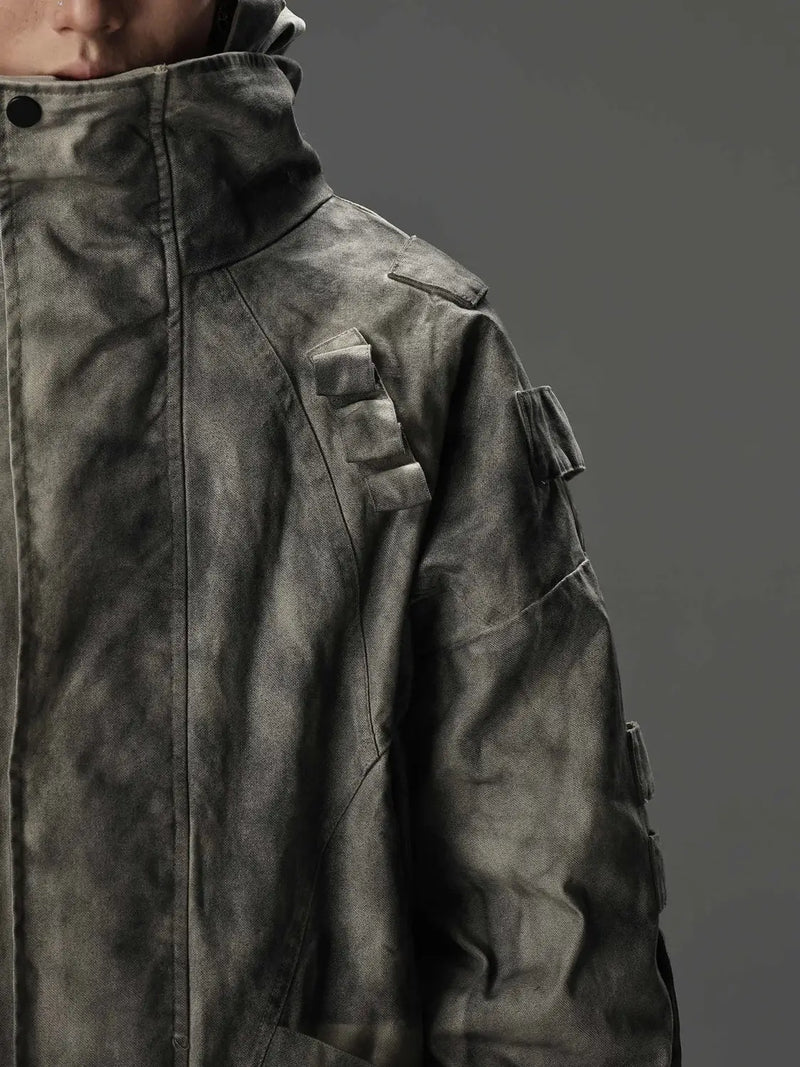
The Tactical Vest is modular-plate-carrier aesthetic — MOLLE webbing, Velcro patches, shoulder straps, often with a hood or chest pocket. Here function is quoted, not performed. Heavy, dark, almost always outerwear. Techwear and Warcore spectrum.
The Sports Vest in Streetwear sits in between. Cut from sport (athletic tank, Mesh, Cut-Off), but material and styling so that it reads on the high street instead of in the park. Distressed, oversized, combined with Cargo or Track Pant — and not with running shorts. That's the vocabulary meant here.
Definition
What a Sports Vest really is — the definition beyond the gym
A Sports Vest is, in the narrow sense, a sleeveless top with an athletic cut. Sounds simple, but it's exactly the spot where many outfits tip over. Four properties have to land, otherwise it's either a summer tank, a Tactical-Plate or a Goth Mesh layer.
2
minimum layers (vest + underneath)
0
visible sport logos
90 %
worn outside of sport
3
materials dominate (Mesh, cotton, Tech-Nylon)
These four numbers are the test. If you wear your vest solo, you've got a summer tank — not a Streetwear Sports Vest. If the Nike logo sits prominently, you're in gym-outfit territory. If the material is pure performance Mesh that dries fast in training, you're in the wrong category.
Concretely, a Sports Vest in Streetwear counts as:
- Athletic cut with Streetwear material — Cut-Off, Mesh detail or tank line, but in cotton, heavy jersey or Tech-Nylon instead of running polyester.
- Layer piece, not main piece — sits over a Long-Sleeve or Mesh top, never worn solo. The subordinate layer is the look.
- Oversized or cropped, never body-fit — standard slim sits too close to the gym tank. A long line over the hip or cropped just above the navel — both work.
- Utility detail over sport detail — chest pocket, zipper, MOLLE webbing strip or Velcro instead of reflective print and sweatband hem.
- Matte and dark as the default — black, charcoal, olive, off-white distressed. Neon and athletic color block tip straight into a training outfit.
- Boot or chunky sneaker as footwear — running shoes, tennis sneakers and slim Air Max are out. The sole has to have weight.
If three of these six points are missing, it's no longer a Sports Vest — it's a tank top. And there's one rule that holds all six together:
5 types
The 5 types of Sports Vest — from Mesh-Tank to Tactical-Plate
Sports Vest isn't one cut — it's five that overlap at the edges. Lay Athleisure editorials, Berlin Techwear feeds and the current Cargo wave next to each other and you see these five types clearly separated. Each with its own layer thickness, its own pants logic.
Which of the five suits you depends less on taste than on the season and on how much material you want on your body. How that splits between women and men comes next.
Gender split
Sports Vest men vs women — where it sits differently
The rules are the same. No sport logo, never solo, pants with volume, heavy sole. What differs is the line. Where on men the vest often sits as an extra outer layer over a Long-Sleeve, on women it more often becomes the visible statement piece — cut shorter, set higher, often with a Mesh layer or corset line underneath.
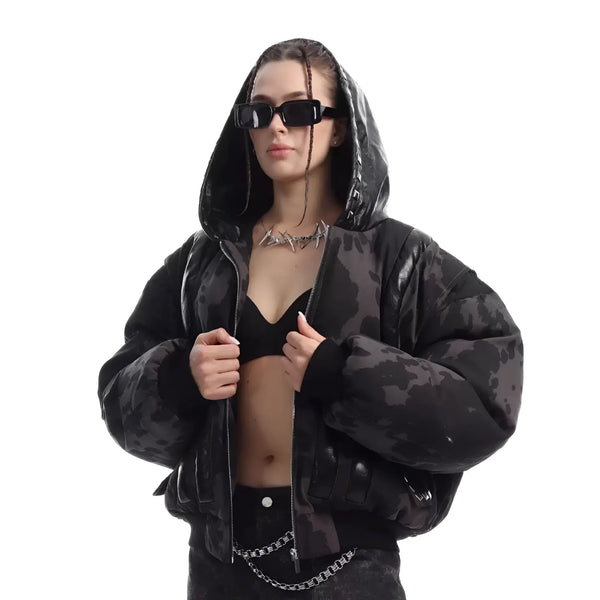
Women's version: the vest is cropped — hem just above the navel, waist-emphasized. Underneath sits Mesh, a bralette or a skintight Long-Sleeve. High-waisted pants, wide leg, so all the volume lands at the bottom. Cargo, Wide-Leg-Track or Parachute Pant.
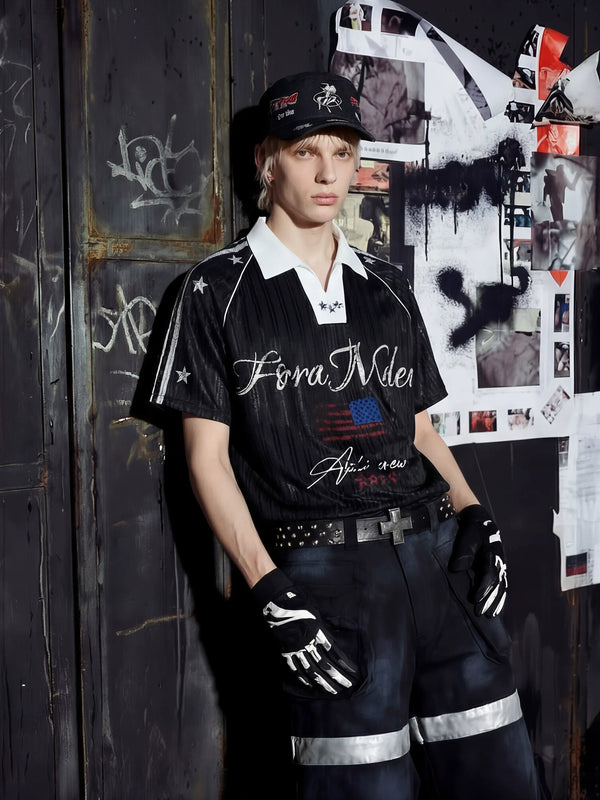
Men's version: the vest hangs longer over the hip. Underneath sits a tee, Long-Sleeve or Mesh in normal length. The pants are wide, but not extreme — Cargo with volume, Track Pant, or distressed denim with a loose leg. Layering logic goes more into depth (two layers under the vest) than into height (crop plus bralette).
Both need the same four properties from the definition: no sport logos, always layer, volume at the bottom, heavy shoes. What varies is the line — not the vocabulary.
Brands
Brands that translate Sports Vests into Streetwear
The Sports-Vest vocabulary in Streetwear has no single inventor brand. It comes from several worlds — Skate, Techwear, Athleisure-luxe, Tactical-avant — and was pulled together by eight to ten labels over twenty years into what runs on TikTok today under "utility vest fit".
The brands that wrote the vocabulary — roughly chronological:
- Stüssy — since the late 80s. The skater-tank line, the sleeveless hoodie iteration, the cropped-singlet wave of the 2010s — all of it sits in Stüssy's DNA. Say Mesh-Vest in Streetwear and you indirectly mean Stüssy.
- Acronym (Errolson Hugh) — since 1999 in Berlin. The Tech-Vest vocabulary: chest pocket, modular hardware, dark nylon composition. Acronym translated function into Streetwear before Techwear had the name.
- Patta — Amsterdam, since 2004. The athletic-tank wave with Streetwear branding. Mesh singlets, Cut-Off hoodies, crewneck vests — Patta pulled the cut out of sport into the sneaker-drop cycle.
- Yohji Yamamoto x Adidas (Y-3) — since 2003. The high-fashion bridge to the athletic line. Long Mesh tunic vests, asymmetric Cut-Offs, black nylon vests with drape. Anyone who wants to wear a Sports Vest "grown up" looks here.
- 1017 ALYX 9SM (Matthew Williams) — since 2015. The buckle-hardware wave, the Velcro vest, the industrial construction language. ALYX established tactical detail in the luxury segment.
- Heliot Emil — Copenhagen, since 2017. The Nordic iteration: monochrome Utility-Vests, plate-carrier cuts, drape with engineering. Cooler, quieter, less loud than ALYX.
- Final Home (Issey Miyake / Kosuke Tsumura) — Tokyo, since 1994. The conceptual origin of the multi-pocket vest in high fashion. Function as a form language, before Techwear invented the term.
- Maharishi — London, since 1994. The Cargo-Vest line, the Snopants DNA, the camo vocabulary without military cosplay. Maharishi married Utility and Streetwear when neither of the two was on Instagram yet.
Anyone who wants to wear Sports Vests without paying triple-digit prices for every piece searches the resale market for these brands or looks to DTC labels that translate the vocabulary competently — cut, pocket logic, layering capability.
Category · Bottoms
Sports Vest with Cargo, jeans or Track Pant — the pants question
The vest carries the upper half, the pants decide whether the outfit reads as Streetwear or as a tracksuit. This is where the outfit tips fastest — and most visibly. Three pants types work, one is forbidden.
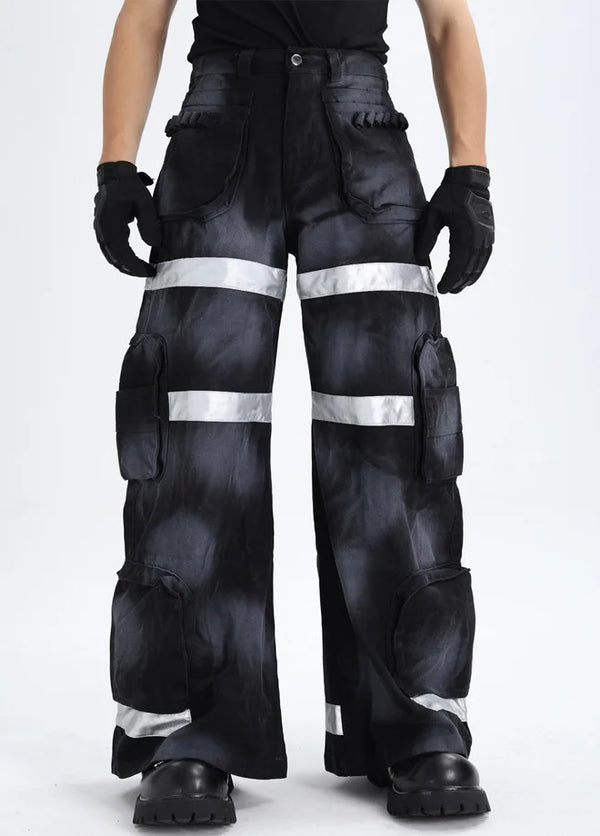
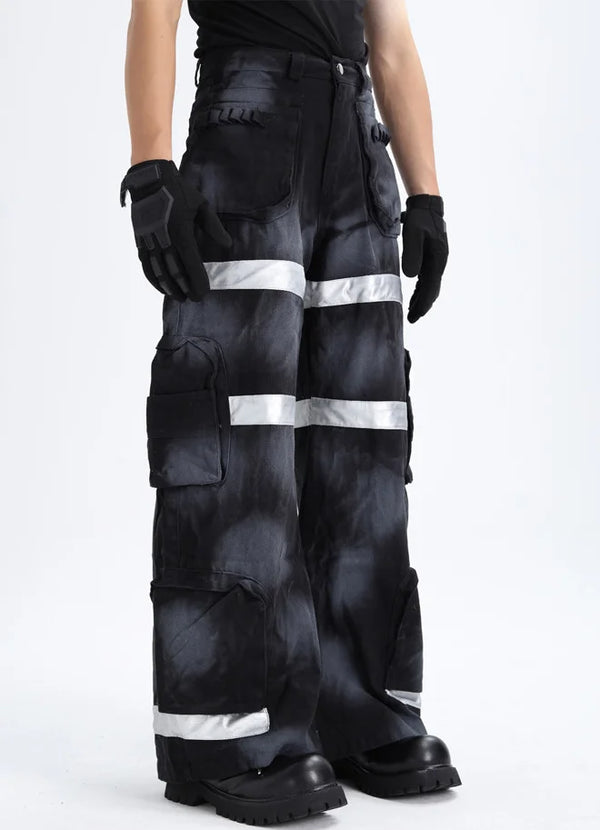
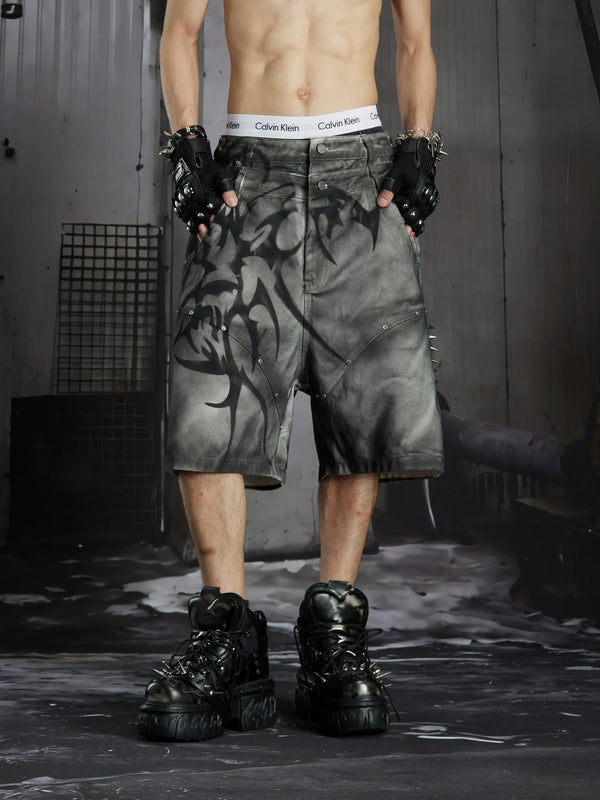
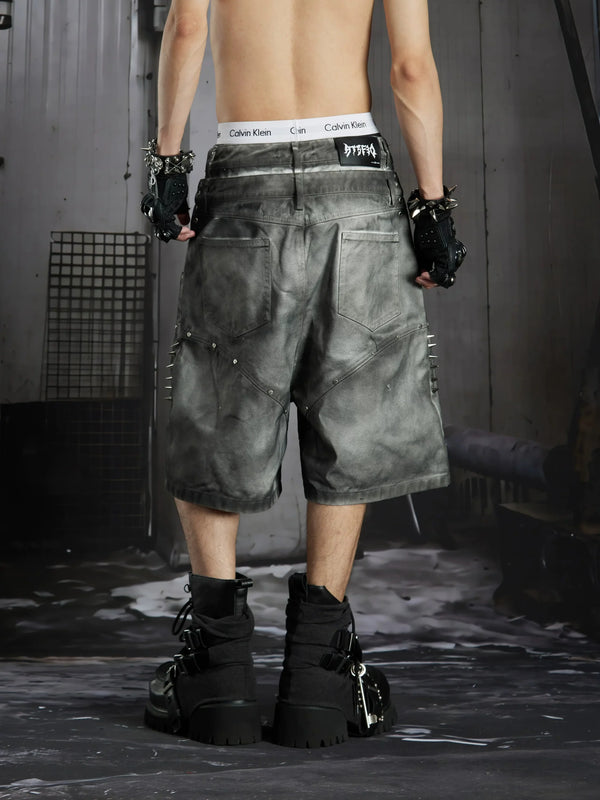
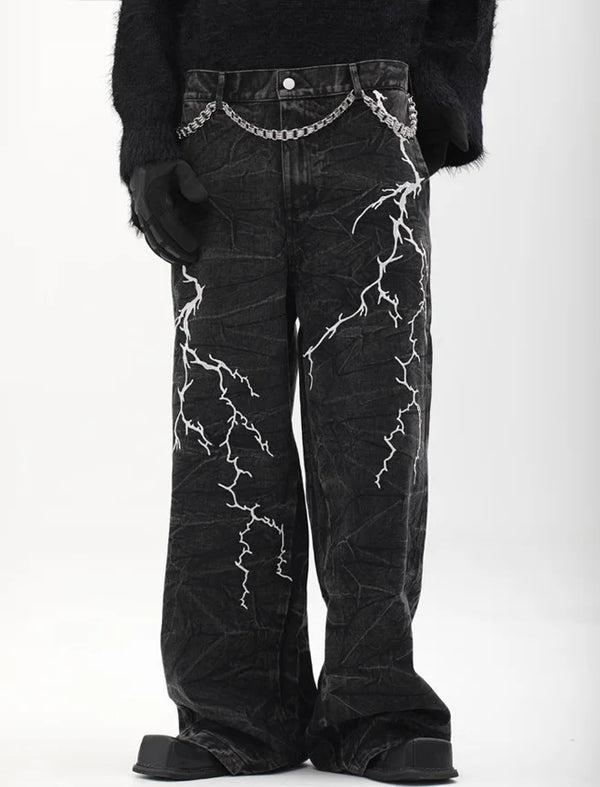
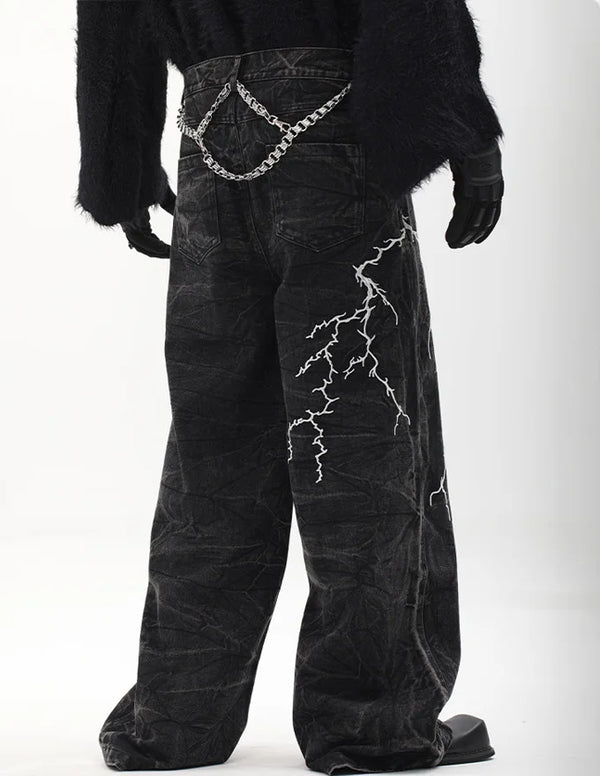
What works: Cargo with big pockets and a wide leg (the standard choice, because it doubles the utility vocabulary), Track Pant with a tape stripe or without (the Athleisure bridge, dosed carefully), and distressed denim with a loose leg (the Streetwear bridge, often the most discreet solution). Off-limits is skinny of any kind — whether jean, pant or joggers. Skinny below plus sleeveless above automatically reads as a training outfit, no matter how expensive the fabric.
If you don't know where to start: Cargo with a wide leg in black or olive. That's the pant that works with every one of the five vest types — from the Mesh-Tank to the Puffer-Vest.
Layering logic
What you wear UNDERNEATH — the layering logic
Most Sports-Vest outfits don't fail at the vest. They fail at the layer underneath. The vest is the outer layer — the subordinate layer actually creates the look. Without it you don't have a Sports Vest, but a summer tank over bare skin.
Three layer options work in 90 percent of cases:
Long-Sleeve in skintight, single color, dark. Mesh top in semi-transparent, sleeveless or long-sleeved. Or a normal tee in medium cut length that stays visible under the vest. What doesn't work: a printed tee with a brand logo, white performance underwear, or nothing at all.
Fūga Studios · Sports-Vest-Layering-Regel
Which of the three layers you take depends on the vest type. Mesh-Tank and Cut-Off-Athletic handle the skintight Long-Sleeve best — the transparent or sleeveless outer layer shows the line of the inner layer. Utility-Vest and Puffer-Vest work with a normal tee, because the outer layer already has volume.
If you want to go even deeper into the layering math, we unpacked the topic in its own article — with the exact layer ratios for each of the five types:
Sports Vest doesn't stand alone — it overlaps at several edges with other utility-driven codes. Techwear shares the hardware vocabulary, Berghain outfits share the heavy sole plus Mesh logic, Rave outfits share the Cut-Off, and Opium shares the tank-over-Mesh iteration. Whoever understands the vest system can read these neighboring codes and mix them deliberately.
Here are the four most important neighboring codes — each with its own guide, in case you want to go deeper:
Category · Footwear
Shoes with the Sports Vest — Combat-Boot, chunky sneaker or Cargo-Sandal
Shoes are the second spot where the Sports-Vest outfit reliably tips. Sleeveless above plus a thin running sole below automatically reads as sport. The correction is mechanical: the sole has to have weight. That's all.
What works: Combat-Boot or buckle boot in matte black for the heaviest iterations (Tactical-Plate, Utility-Vest). Chunky sneaker with a massive sole for the middle iterations (Cut-Off-Athletic, Mesh-Tank). Cargo-Sandal or platform mule for summer looks, when 32 degrees rules out any boot. What doesn't work: running shoes, tennis sneakers, any slim-profile sneaker with a white sole.
If you want to make just one shoe investment for the entire Sports-Vest system, take Combat-Boots in matte black with a normal shaft height. They work with every one of the five vest types, every pant and every season except high summer.
Seasonal
Sports Vest in summer vs winter — the layering math
Summer and winter play two different stories for Sports Vests — and both work, as long as you don't break the layering rule. The vest stays the vest. What changes is the layer underneath and the layer on top.
In summer the Sports Vest almost becomes the main piece — the layer on top falls away. Underneath sits either a Mesh Long-Sleeve (breathes better than bare skin, keeps the code intact) or a thin cotton tee in medium length. Sandal or platform mule instead of Combat-Boot. Pants stay wide — Cargo in thin Tech-Nylon, light Track Pant, or wide linen Cargo.
In winter the vest becomes the middle layer. On top comes a leather jacket, a bomber or a coat — mostly worn open, so the vest stays visible. Underneath sits a thick Long-Sleeve or a henley. Combat-Boot with a thick sole, Cargo with double fabric thickness.
The year-round solution also exists as hardware: pieces that adjust their layer thickness themselves. Convertible puffers with removable sleeves, for example — winter as a full jacket, spring as a vest, summer in the drawer. Here's what that looks like in motion:
What does not work
The 5 mistakes that tip every Sports-Vest look
Sports Vest has five spots where it reliably tips — no matter how expensive the piece itself was. If you avoid only one thing, make it mistake number one.
Action
First 4 pieces for your first Sports-Vest look
You don't need 15 vests to wear the code. You need four pieces that together make a complete outfit — everything else builds around that.
In order: a Utility-Vest in matte black or olive (your first investment — chest pocket, zipper, no visible logo). A skintight Long-Sleeve for the layer underneath (Mesh, if you're up for risk). A Cargo pant with a wide leg in black or olive. Combat-Boots in matte black. That's the complete starter set for 80 percent of Sports-Vest outfits.
Outfits for real
Sports-Vest outfits for real — how it looks on the street
Before you build your own outfit, look at how others wear it. The five types from above look different in the feed than in lookbook photos: layered tighter, dirtier, less perfect — and that's exactly why they work.
This here is the fastest way to check whether the Sports-Vest vocabulary even sits on your body type — before you spend money.
To close
Sports Vest is a layer code — not a gym outfit
If you remember one thing from this guide, make it this: Sports Vest in Streetwear works not through the vest itself, but through the layers around it. Whoever has the layer rule down builds twenty outfits with three or four vests. Whoever only buys vests and wears them solo has a full closet without a single outfit that sits.
The whole logic of this guide reduces to one sentence:
The rules are stable — pants with volume, the heavy sole, the layer underneath, no sport logo. They don't change, no matter which vest wave is trending. But you don't have to wait until you know them all by heart. Start with the one vest you like best — Mesh, Cut-Off or Utility. What you don't know, you learn by wearing.
And that's the point too: Sports Vest reads in theory like a rulebook, but doesn't feel that way in practice. Once you've got the code down, every further outfit is a variation of the same four or five building blocks — not a new invention.
FAQ
Frequently asked questions about the Sports Vest
The questions we often get by DM and email — short, clear, no detours.
What are vests, actually?
What does "Vesta" mean in German?
What does "vest" mean in the English-language Streetwear context?
Where can you buy Sports Vests without paying designer prices?
What's the difference between Sports Vest and Running Vest?
Does Sports Vest work without a trained body, too?
Which shoes go with the Sports Vest besides Combat-Boots?
What do you think?
Tell us on @fuga_studios
About the author
Philipp Fuge — Founder · Berlin
Founder of Fūga Studios. Writes the journal himself. Berlin · Shanghai · Tokyo · Poznań — four cities, one logic.