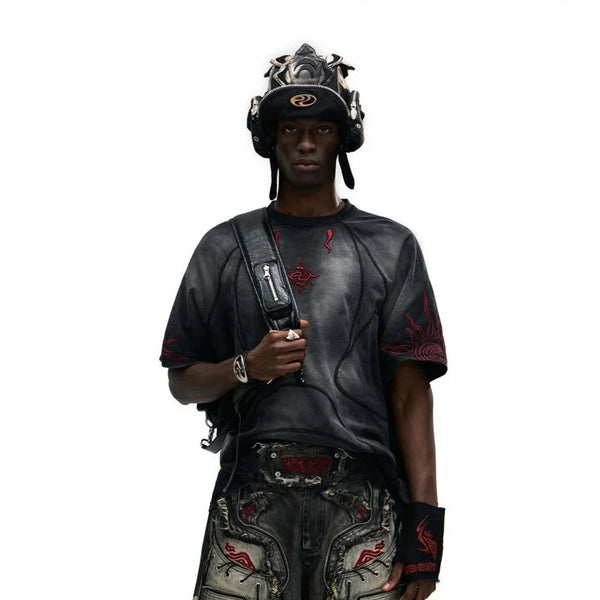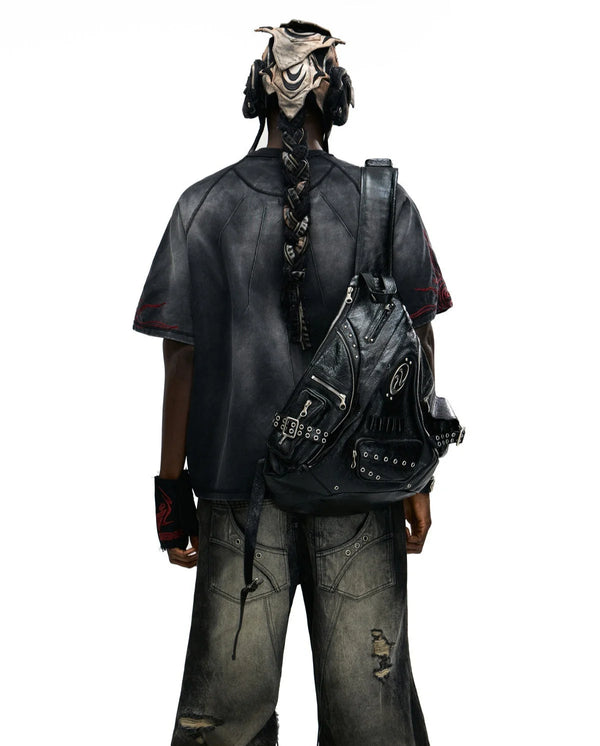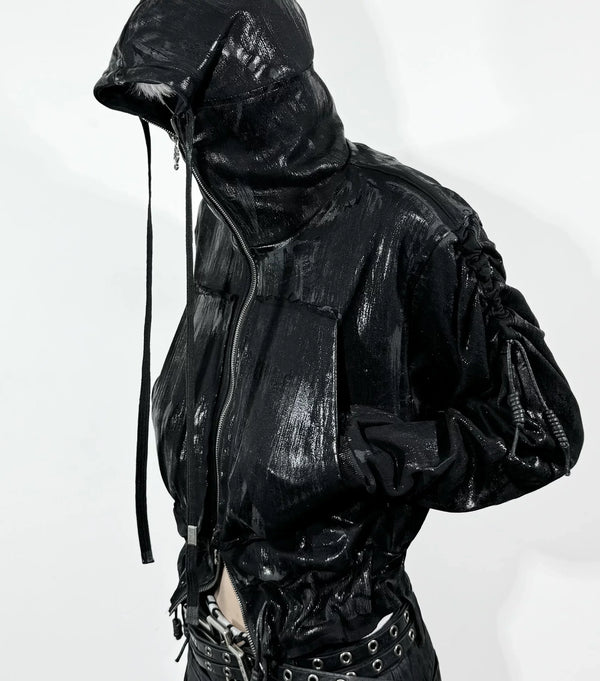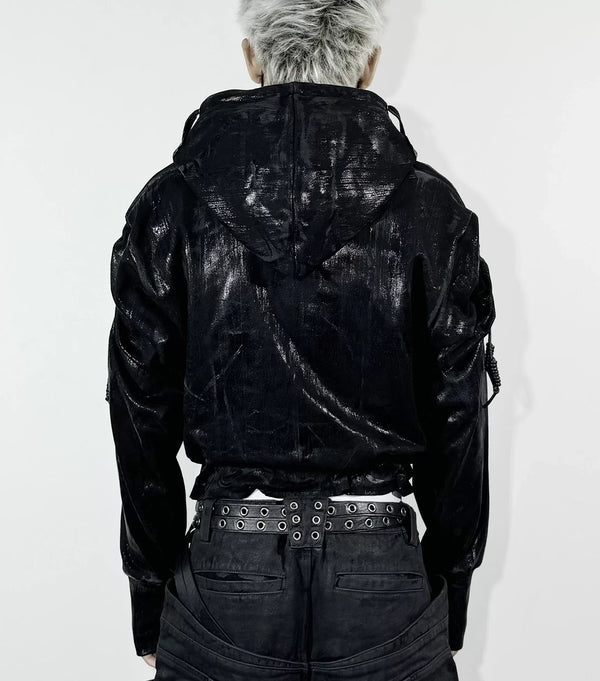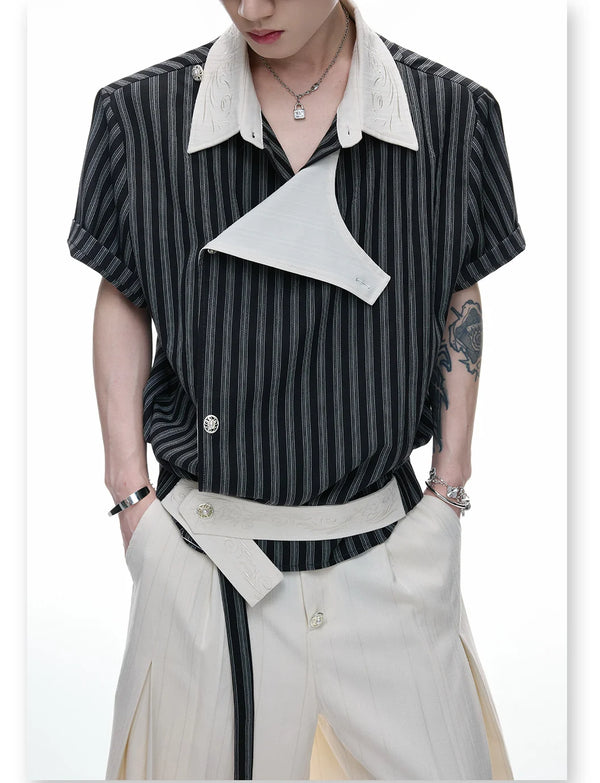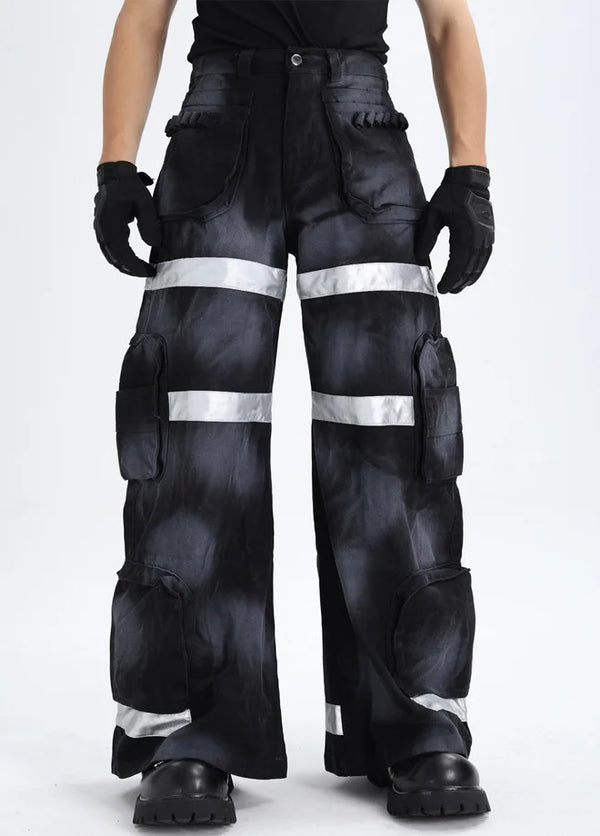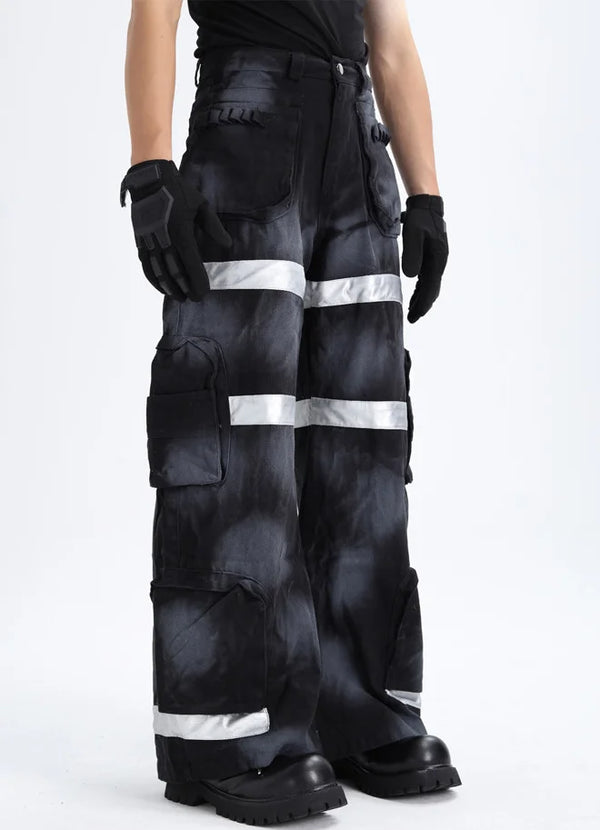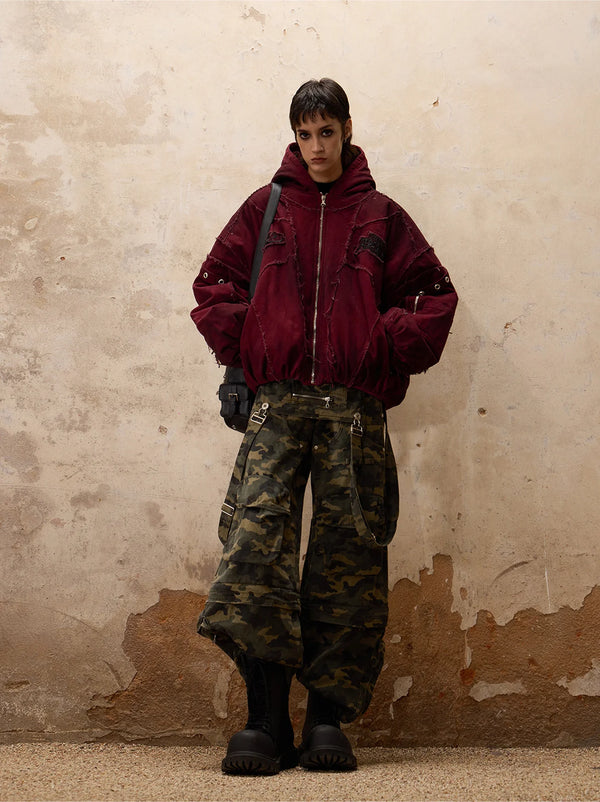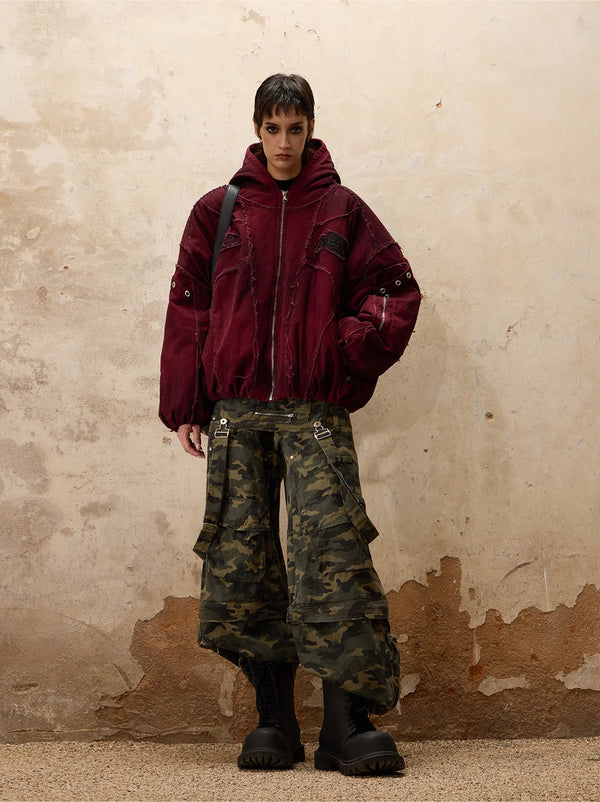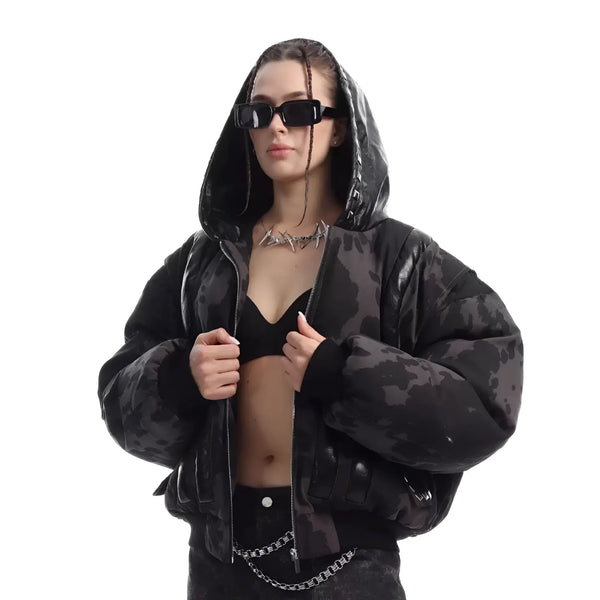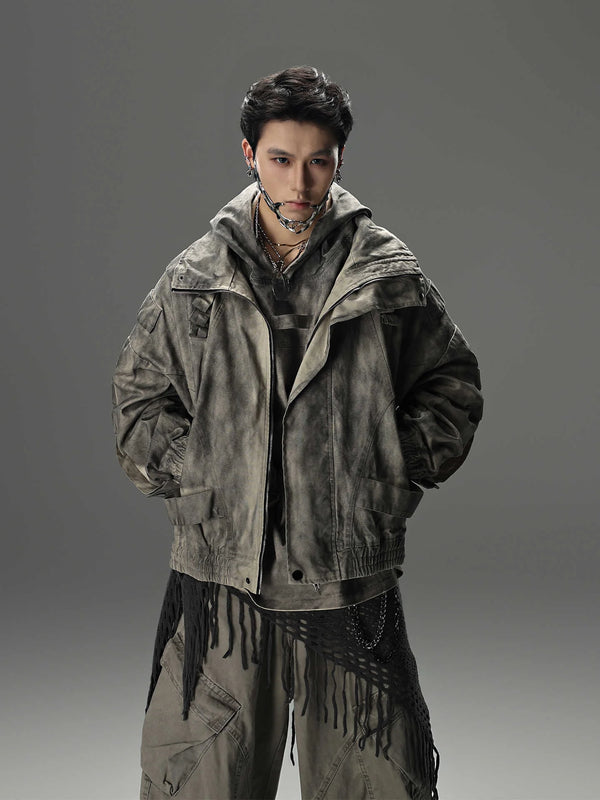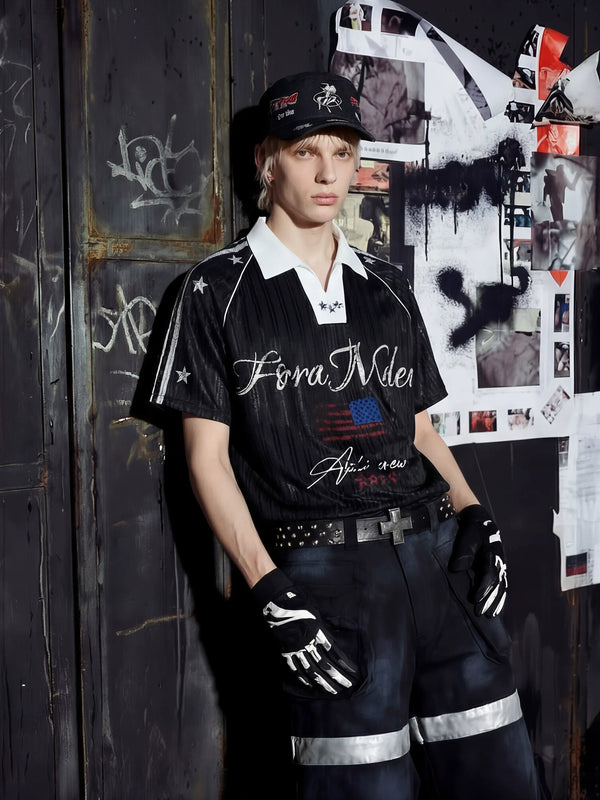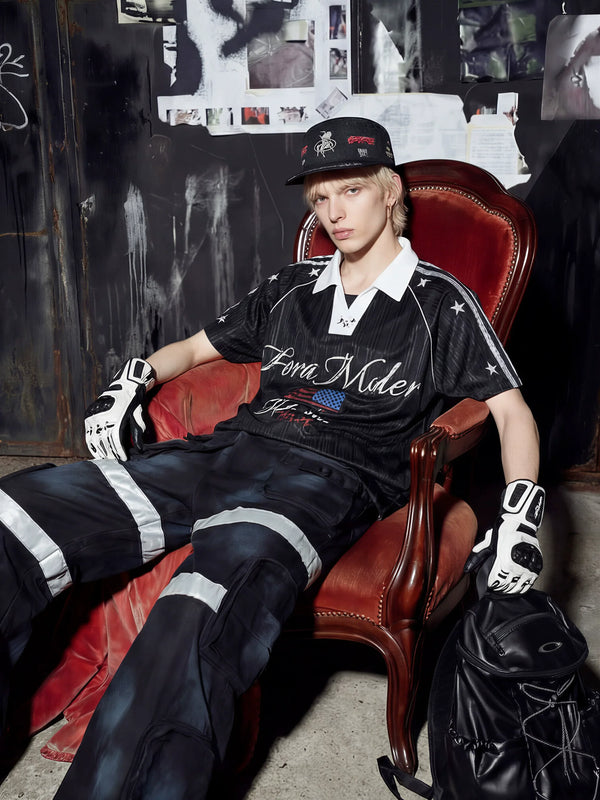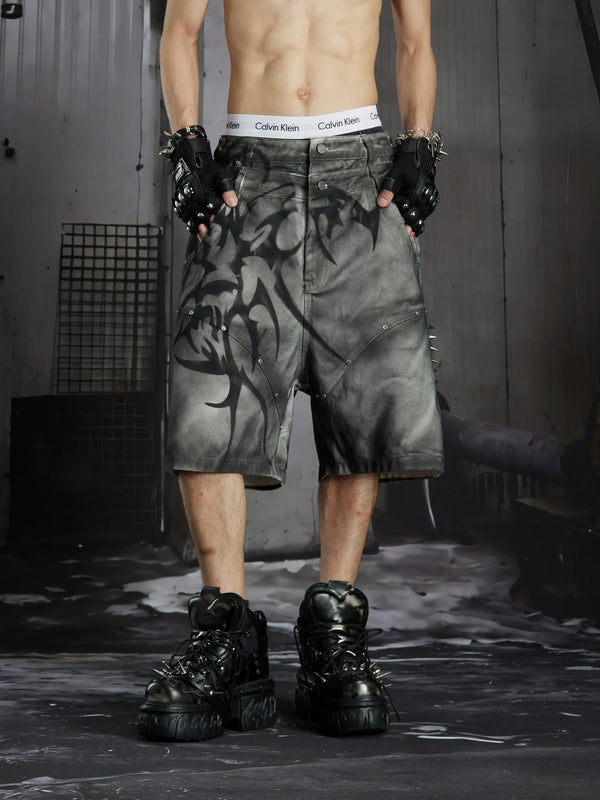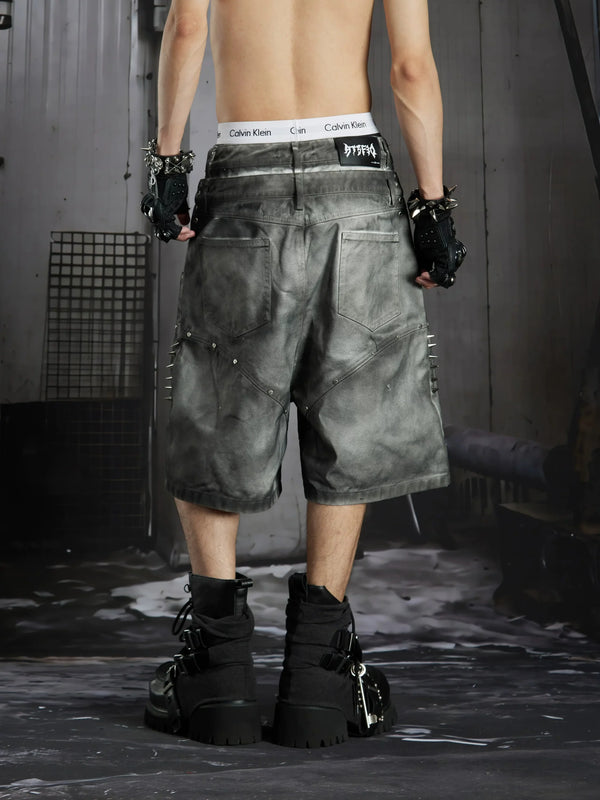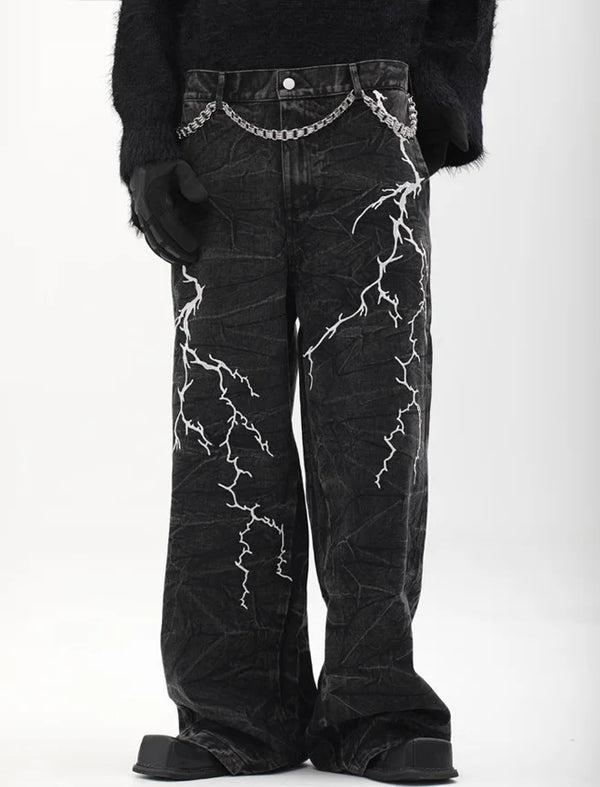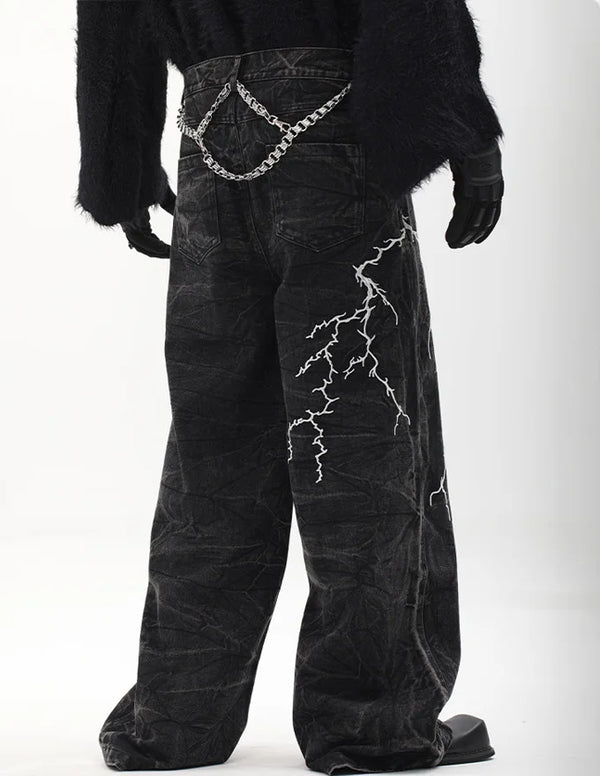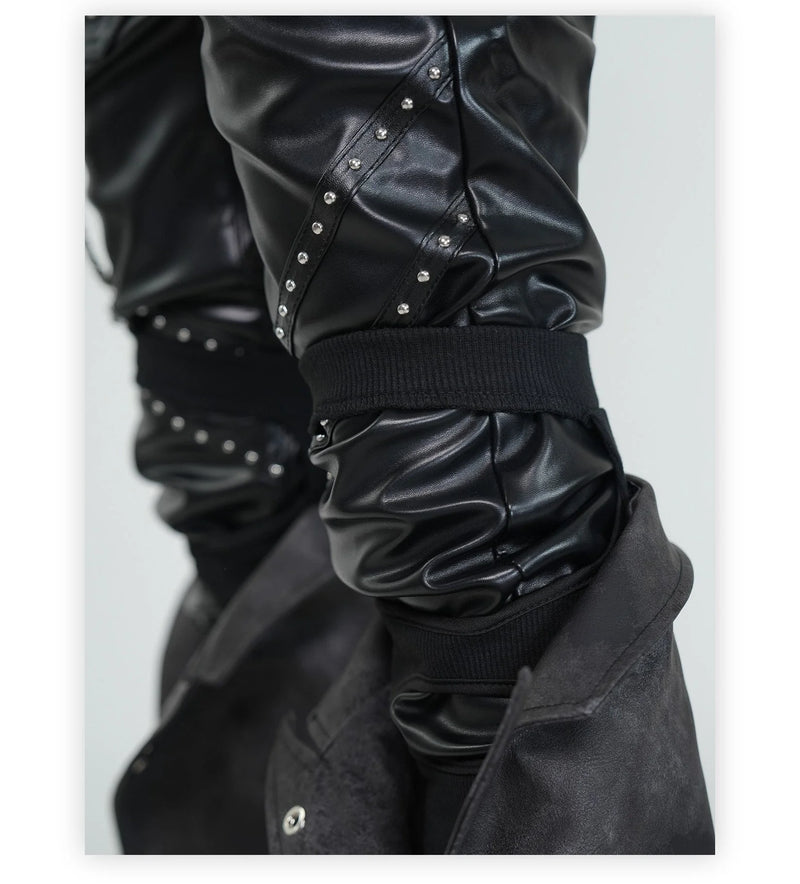
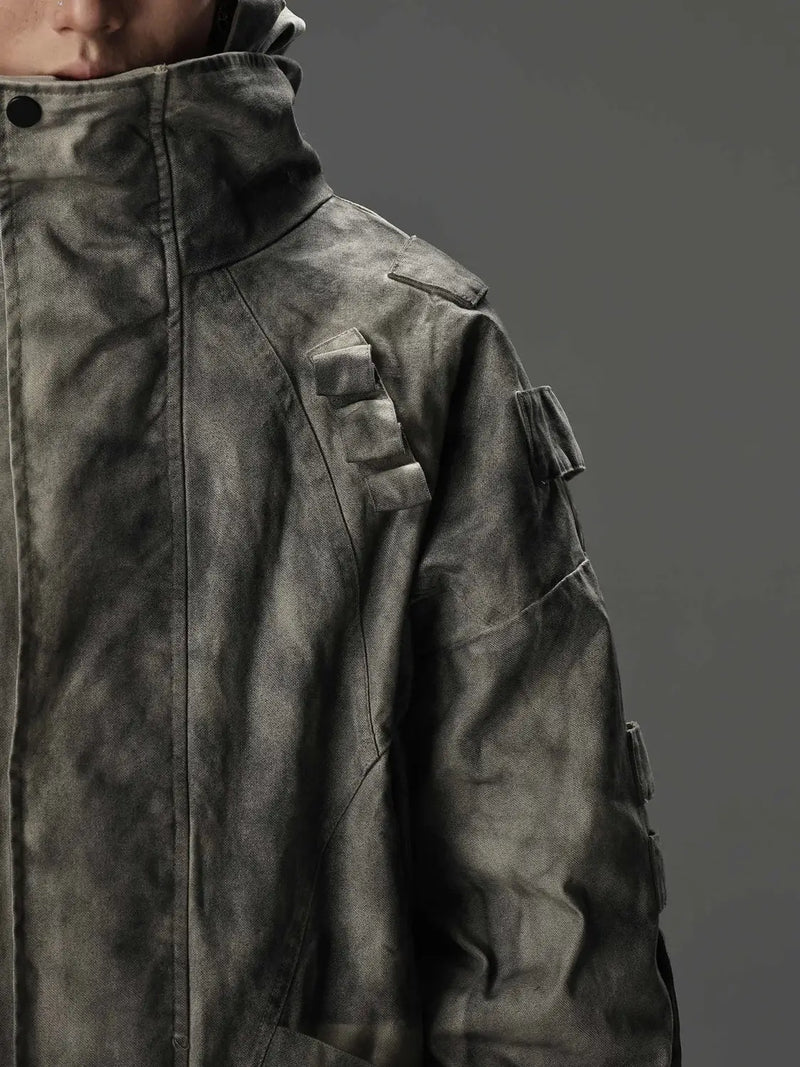

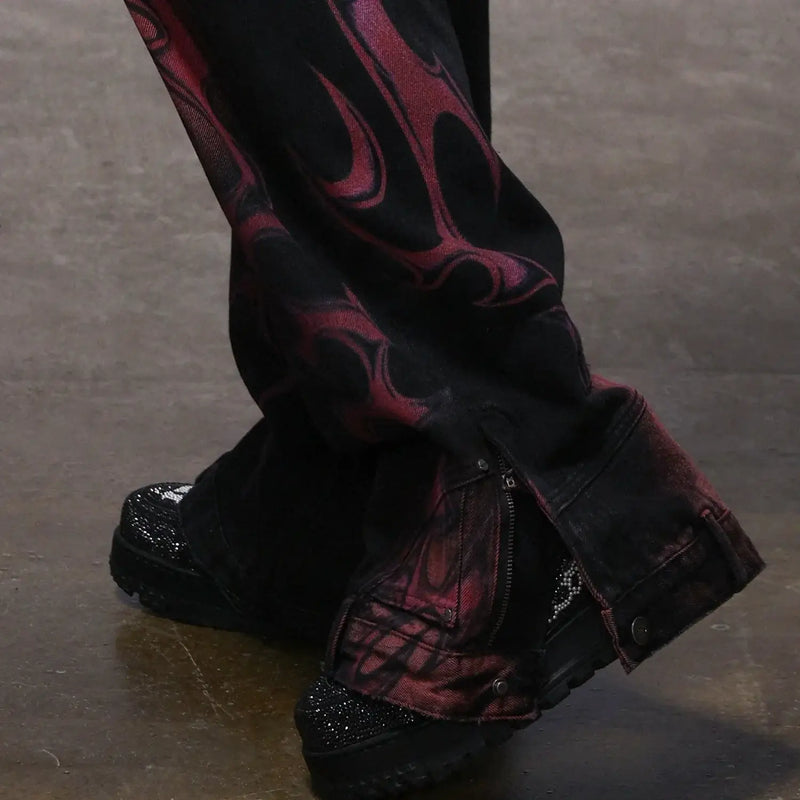


Everyone says futuristic techwear is ‘black clothes with buckles.’ They’re wrong. A pair of black pants with three zippers guarantees exactly as much techwear as a hi-vis vest guarantees a construction site — which is to say, nothing at all.
Futuristic techwear started in 1994 in Vancouver, when Errolson Hugh and Michaela Sachenbacher founded the label Acronym. It's not cyberpunk cosplay from an anime shop — it's a function system: technical membranes, modular cuts, a very clear hierarchy between shell, mid-layer and skin-layer — and a very concrete idea of what an outfit must not be if it wants to be taken seriously.
Anyone selling techwear as ‘clothes with RGB strips and an LED mask’ has confused Acronym, Veilance and the whole Tokyo workshop scene with a Halloween party. This guide clears up what's actually behind it: who invented it, what belongs to it, how the 5 iterations differ, how that translates into jackets, pants and hardware, what men and women do differently, what you need in your closet — and which 6 mistakes kill the outfit instantly.
What that looks like in a real outfit — compact, in 12 seconds:
Origin
Who invented futuristic techwear — and why does everyone call it Acronym?
Acronym has been the label since 1994, founded by Errolson Hugh and Michaela Sachenbacher in Vancouver. Hugh is an industrial designer, Sachenbacher is an architect — and you can hear it in the label. Acronym wrote the vocabulary everyone else has just been translating ever since: technical membrane, modular pocket, a zip system that's ventilation and strap at the same time. Before Acronym, a ‘technical jacket’ was an outdoor category. After Acronym, it was a city uniform.
As its own aesthetic, techwear has only existed since Acronym J47-A in 2003 — the first jacket that put Gore-Tex into a cut that didn't look like a mountaineer, but like a Tokyo cab. Errolson poured Schoeller fabrics, Riri zippers and Japanese architectural logic (Nigo, Hiroki Nakamura) into a cut that was weatherproof and urban at the same time. What used to be outdoor gear became a style code.
The vocabulary existed before Hugh too — at Issey Miyake since the '80s, at Helmut Lang in the mid-'90s, at Final Home by Kosuke Tsumura from 1994. Acronym's achievement isn't invention, it's compression. Errolson took what was scattered across the Japanese avant-garde spectrum and put it into an outfit a 24-year-old in Berlin or Tokyo understands instantly. That makes futuristic techwear the first sub-aesthetic that went viral through an outdoor membrane — not through Paris Fashion Week.
Definition
What is futuristic techwear — and what actually counts as it?
Futuristic techwear is an outfit system built from four fixed components. When all four are in place, the outfit reads as techwear. When one is missing, it instantly tips into something else — gorpcore, warcore, anime-cyber, or worse: a Halloween costume with an LED mask.
3
Layer (shell, mid, skin)
1
Metal language (matte grey)
5
Iterations
0
visible brand logos
These four counts aren't decoration. They're the test. An outfit that breaks one — two layers instead of three, or chrome hardware instead of matte grey, or a giant Acronym logo on the back — isn't futuristic techwear anymore. It's ‘technical streetwear with techwear influences.’ Which, in plain terms, means a hoodie with a few zippers on it.
Specifically, futuristic techwear includes:
- Technical membrane as the shell — Gore-Tex, Schoeller, eVent, Pertex. If your fabric soaks through in the rain, it's not a techwear shell, it's a polyester bomber.
- Modular hardware — zipper, buckle, magnet, Riri zip. Hardware has to do something (open, close, hold), not just glint.
- Tight skin layer — long-sleeve, technical T-shirt, mock-neck. Nothing loose sits under the shell.
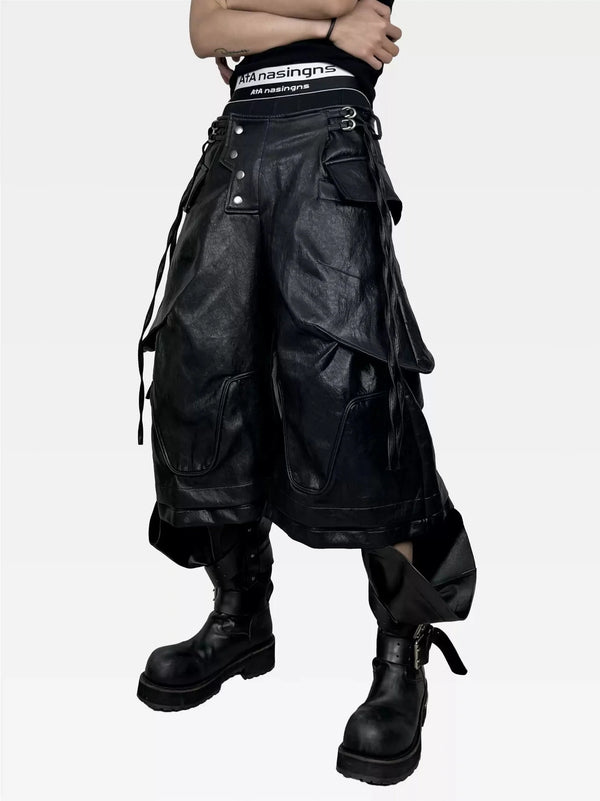
- Drop-crotch or wide cargo pants on the bottom — a deep crotch, volume at the knee, slim at the ankle. Skinny pants and slim cargos have been out since 2019.
- Functional pockets — stacked patches, magnet flaps, bellow cargos. Eight pockets that hold nothing are cosplay.
- Heavy boots or trail sneakers — Salomon XT-6, Acronym Nike, combat boots with a buckle. Air Force 1s aren't techwear, no matter the colorway.
If three of these six points are missing, it's not techwear anymore — it's inspiration. And there's one rule that holds all six together:
Iterations
The 5 iterations — from Stealth-Operator to Avant-Designer
Futuristic techwear isn't a single look, it's five parallel iterations. Each has its own code, its own color logic, its own city reference. Once you know the vocabulary, you can spot in 3 seconds which iteration someone's wearing — and where the outfit is tipping over because two iterations that don't belong together got mixed.
Brands
Futuristic techwear brands — the labels that wrote the vocabulary
There are about ten brands taken seriously — and about two hundred copying the vocabulary. Here are the ten. If you hear a name in a techwear discussion that isn't on this list, chances are it's one of the two hundred.
- Acronym (1994, Vancouver) — the original. Errolson Hugh and Michaela Sachenbacher. Say Acronym, and people think J47, J1A, P10. Membranes, magnet hardware, modular shoulder straps. Price range: €800–3,500.
- Veilance (2009, Vancouver) — Arc'teryx's avant-garde line. Cleaner than Acronym, less visible hardware. The quieter, upper price segment.
- Stone Island Shadow Project (2008–2022, Milan) — Errolson Hugh worked here as design director for eleven seasons. Discontinued in 2022, resale is still the benchmark for construction detail.
- Y-3 (2003, Tokyo × Adidas) — Yohji Yamamoto's sport crossover. Drape and athleticism in one cut. More avant, less spec-ops.
- Boris Bidjan Saberi (2007, Barcelona) — the avant-designer iteration. Hand-sewn leather, slim drapes, construction detail over function. The other end from Acronym.
- Riot Division (2014, Kyiv/Berlin) — the younger Acronym vocabulary at two-thirds of the price. Modular vests, cargo pants, bombers.
- Guerrilla-Group (2018, Shanghai) — Asia tech-workshop, heavy hardware game. More Industrial-Mil than Stealth.
- Demobaza (2015, Sofia) — the Wasteland iteration in its purest form. Dystopian drapes, asymmetric cuts, resin coatings.
- Errolson Hugh solo / Outlier / mnml — the mid-tier. Function without the €2,000 markup. Outlier and mnml make daily wear, Errolson himself experiments.
- Fūga Studios — a DTC translation of the vocabulary without the designer markup. Drop-crotch cargos, tactical windbreakers, modular vests — 6–11 day delivery, 14-day returns.
What you won't find here: every brand that writes ‘techwear’ in the product name and then sells a polyester bomber with snap buttons. If the fabric isn't on the spec sheet, it's not techwear.
Jacket
Techwear Jacket — Shell, Bomber, Cape
The jacket is the most important layer. When the shell fits, the outfit gets away with almost everything else. When it doesn't, even the most expensive pants tip over. Three cuts carry the whole load: the hooded shell (for Stealth and Cyber), the bomber with a high collar (for Industrial-Mil), and the cape or long coat (for Wasteland and Avant-Designer).
What the cuts have in common: all three have hardware that does something. Magnet flap instead of snap button. Yokohama storm cuff instead of a ribbed cuff. Water-repellent membrane instead of polyester felt. If your jacket doesn't have any of that, it's a jacket — not a techwear jacket.
Trousers
Techwear Pants — Cargo, Drop-Crotch, Strap
Pants are where most people tip over. Skinny has been out since the Acronym drop-crotch phase in 2014. Slim cargos with five symbolic pockets have been out since 2019. What's left: wide cargos with bellow pockets, drop-crotch with a deep seat, and strap pants with modular straps at the leg — all three in heavy-falling fabric, all three with volume at the knee and slim at the ankle.
The volume has to sit at the knee, not the ankle. Anyone wearing pants that flare out at the bottom (flare cargo, parachute with an open hem) isn't wearing techwear, they're wearing rave pants. Both work within their own system, but they're not the same system.
Hardware
Techwear jewelry & hardware — the metal language
Techwear doesn't have jewelry in the classic sense. It has hardware. The difference: jewelry decorates, hardware functions. An Acronym magnet belt holds the pants. A Riri Aquaguard zip keeps the water out. A buckle strap at the leg keeps the pants slim at the ankle. Anyone wearing techwear jewelry as a ‘silver chain with a big pendant’ hasn't understood the language.
What works — and at which points:
- Modular hip pouches — small, on a MOLLE loop or a carabiner. Not as jewelry, but as a phone pocket. Brands: Acronym 3A-7TS, Riot Division Modular Pouch.
- Carabiners with function — on the pants or the backpack. A carabiner with no function (hanging off a belt loop, clipped to nothing) is cosplay. A carabiner with function (holds the key, holds the pouch) is hardware.
- Magnet closures — on the jacket, the strap, the pocket. Modern Acronym vocabulary: a magnet closes faster than a zipper, holds better than a snap button, looks like it's from 2050.
- Mil-spec straps at the leg — keep the pants slim at the ankle. Look tactical, actually do function. Brands: Acronym P10A, Riot Division Tactical Pants.
- Hidden tech pockets — in the lining, with a magnet flap. Hold your passport, cards, cash. Invisible outside, fully functional inside.
- Headphone routing — continuous cable loops in the jacket lining. An Acronym invention, now standard. Function over jewelry.
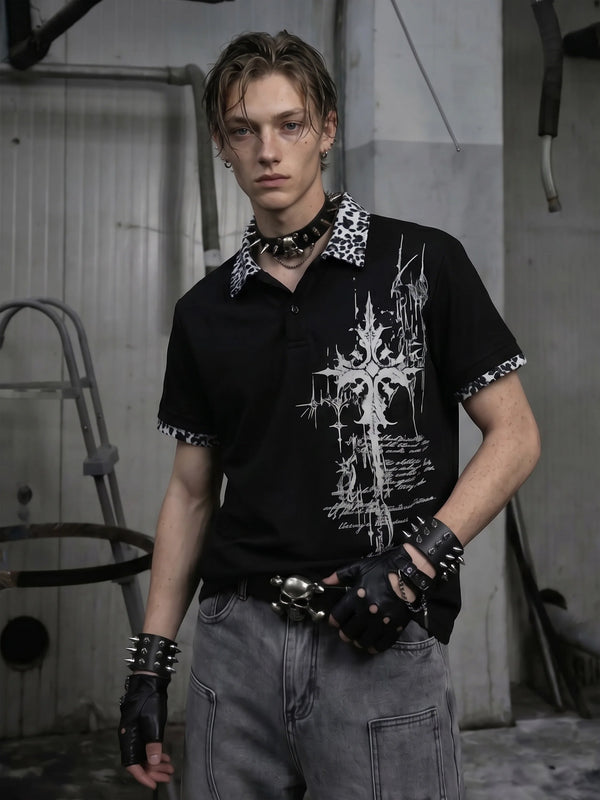
What does NOT work: LED necklaces, chrome rings with no function, EVA foam shoulder armor, backpacks with RGB strips, plastic anime masks. None of that is techwear — that's cosplay tech from the anime convention shop.
Gender
Female Techwear — where it really works differently
The standard answer to ‘female techwear’ is: smaller sizes of the men's cut. The standard answer is wrong. Female techwear has a different silhouette, a different layering logic, a different hardware ratio — not because women need less function, but because the city uniform reads differently on a different body.
Three points make the difference. First: the waist. Men's techwear works with consistent width from shoulder to knee (the Acronym J47 has no waist shaping). Female techwear brings the waist in (Veilance Cosima Coat, Riot Division Cropped Vest) — not for fashion reasons, but because the same drape would otherwise swallow the silhouette.
Second: pant length. Cropped cargos at 7/8 work cleanly on women with a higher boot. On men, the same outfit often reads as ‘pants too short.’ Third: layering. Female techwear works more often with a cape layer plus tight pants instead of bomber-plus-wide-pants. Less volume at the leg, more volume at the shoulder.
Styling
How to actually style futuristic techwear — the layer logic
Techwear works through layers, not pieces. Anyone who buys the right jacket and throws it over a cotton T-shirt has bought a jacket, not built an outfit. The layer logic isn't optional — it's the system that makes the look techwear in the first place.
Three layers, each with its own job. Skin layer (tight, technical, almost invisible) regulates moisture. Mid-layer (fleece, grid, Pertex) holds the warmth. Shell (membrane, waterproof, windproof) closes the system. Drop one layer and you either get cold or wet — and the city uniform reads as a weekend outfit again, not as a system.
It's not about putting on a lot of layers. It's about every layer having one job that it does cleanly on its own. An outfit made of three different hoodies isn't layering — that's a waste of material with a style claim attached.
Errolson Hugh, Acronym, im Interview mit Highsnobiety 2019
Three spoke articles cover the layer logic in detail — by weather, by iteration, by city:
Mistakes
The 6 most common techwear mistakes — what NOT to do
Techwear doesn't fail because of missing pieces. It fails because of pieces that look good in the concept image and break the system in the outfit. Here are the six mistakes we see most often — in the order they tip the outfit.
Getting started
First 4 pieces — how to get into futuristic techwear
Nobody needs ten Acronym pieces to get started. Four pieces are enough to build the complete Stealth-Operator look — and that's the iteration we recommend everyone start with, because it shows the vocabulary most clearly. Here's what you need:
Wear the four pieces for a full week in the same look. You'll notice right away where the system doesn't fit you, where it's too much, where you need a fifth piece. Only then do you buy the fifth. Not before — otherwise you end up with a full closet and not a single outfit that actually fits.
Real outfits
Real outfits — what it looks like on the street
The lookbook is one thing, the street is another. Here are current outfits from our Instagram feed — how the five iterations are actually worn, with real measurements, real layer combinations, real weather. Stealth-Operator in Berlin, Cyber-Neo-Tokyo in Shanghai, Wasteland-Survivor in Poznań.
Where to buy
Where to buy techwear — without falling into the cosplay trap
There are three safe ways to buy futuristic techwear — and about fifty unsafe ones. You spot the unsafe ones by the polyester spec sheet, the missing membrane specs, and model names that sound like a sci-fi movie instead of a cut code. Here are the three safe ones:
DTC
Fūga, Outlier, Riot Division
Resale
Grailed, Vestiaire, Yahoo JP
Boutique
SVMOSCOW, HBX, END
Direct-to-consumer is the easiest entry — brands like Fūga Studios, Outlier or Riot Division translate the Acronym vocabulary competently without the €1,500 markup. Resale (Grailed, Vestiaire, Yahoo Japan) is the second tier if you really want Acronym, Veilance or Stone Island Shadow — used, at 30–40% of retail. Boutique (SVMOSCOW, HBX, END Clothing) is the third tier for current drops in the full size range — and full price.
What you don't buy: anything from an anime convention shop, AliExpress packages with ‘techwear’ in the listing title, polyester bombers with sewn-on patches. If the fabric isn't on the spec sheet, it's not techwear — it's costume.
To close
Futuristic techwear is a system — not RGB cosplay
If you take one thing from this guide, make it this: techwear doesn't work through pieces, it works through rules. Three layers, one iteration per outfit, hardware only with function. Master that and you build forty outfits out of eight pieces. Buy pieces alone and you get a full closet without a single outfit that fits.
The whole logic of this guide reduces to one sentence:
The rules have been stable since 1994 and will stay that way as long as Errolson and the Acronym team are in the game. But you don't have to wait until you know them all by heart. Start with the Stealth-Operator look that fits your city best. What you don't know yet, you'll learn by wearing it.
And that's the point: techwear reads in theory like a construction manual, but doesn't feel that way in practice. Once you've got the code down, every further outfit is a variation on the same three or four building blocks — not a new invention.
FAQ
Frequently asked questions about futuristic techwear
The questions we often get by DM and email — short, clear, no detours.
What does ‘futuristic techwear’ actually mean?
Where can you buy futuristic techwear without paying designer prices?
What's the difference between techwear, warcore and gorpcore?
Does futuristic techwear work on broader bodies too?
What shoes go with futuristic techwear besides combat boots?
Is futuristic techwear the same as cyberpunk fashion?
What is ‘techwear jewelry’ and which pieces belong to it?
What do you think?
Tell us on @fuga_studios
About the author
Philipp Fuge — Founder · Berlin
Founder of Fūga Studios. Writes the journal himself. Berlin · Shanghai · Tokyo · Poznań — four cities, one logic.