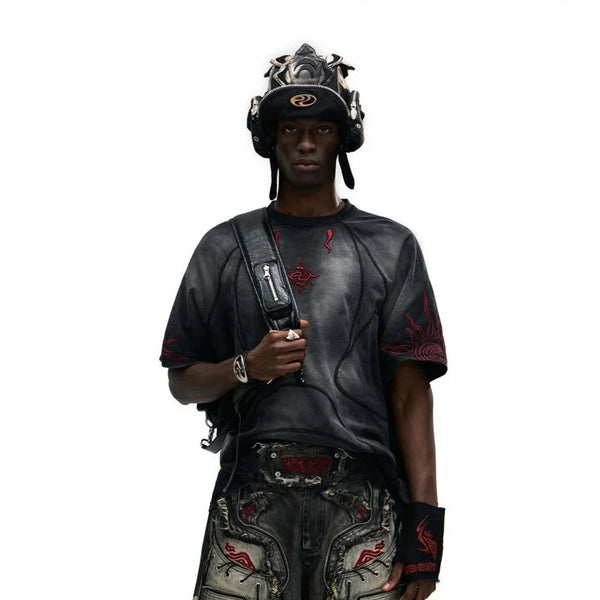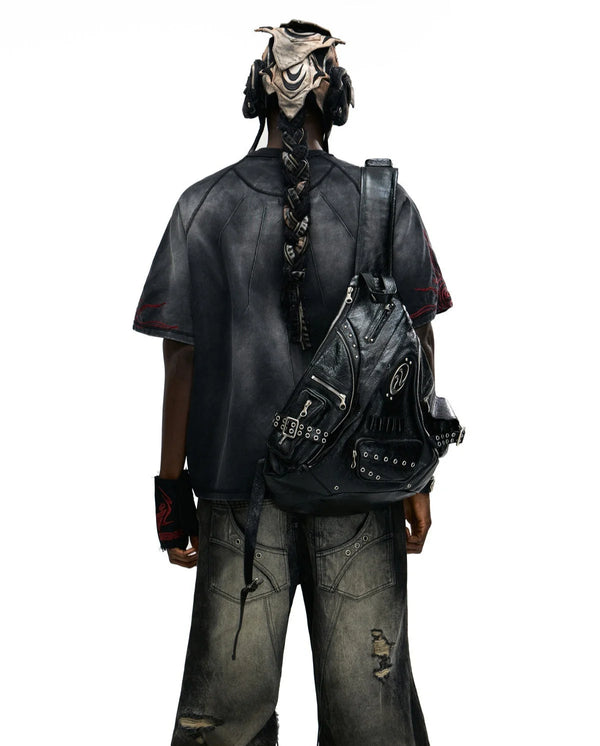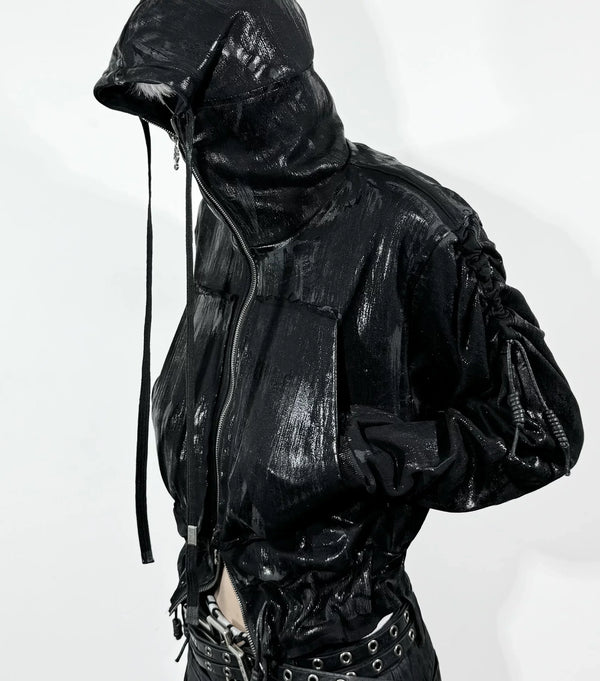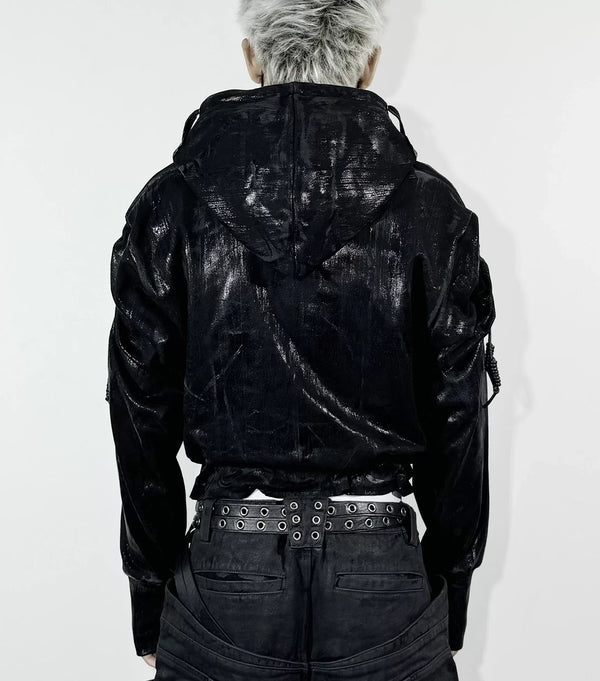
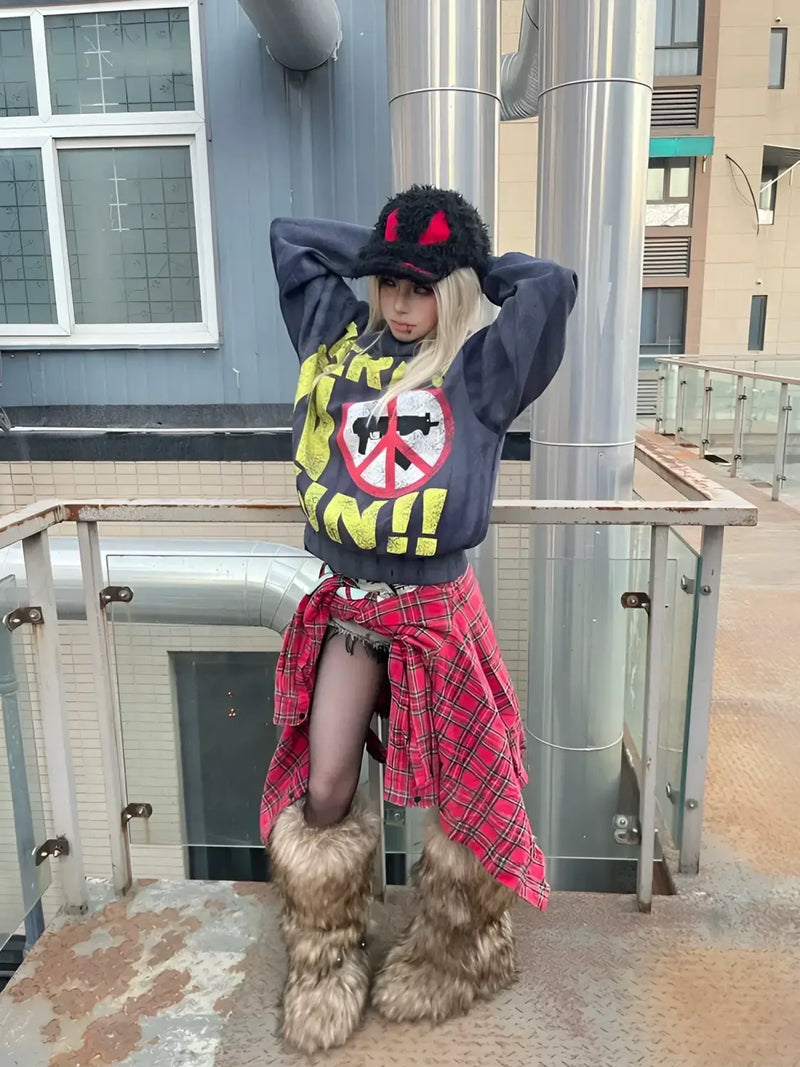
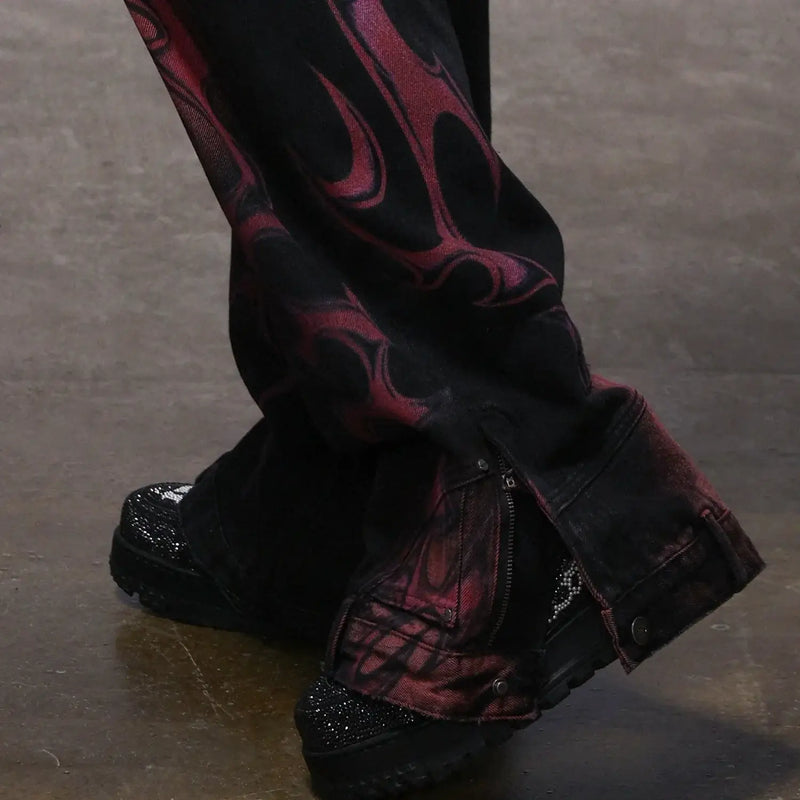
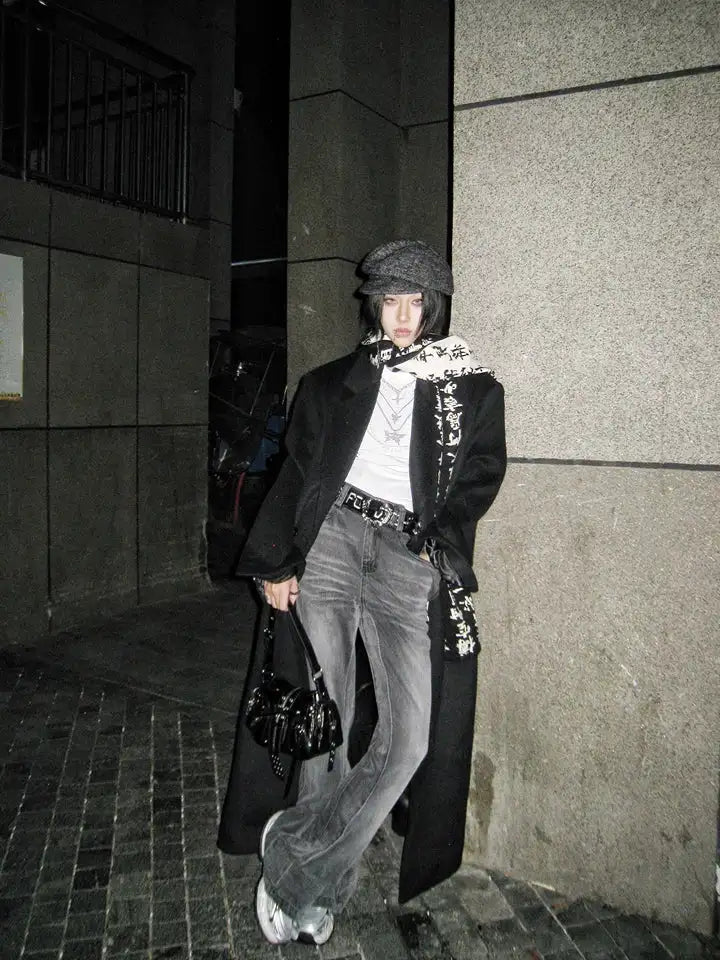

Cyberpunk Techwear is what happens when Acronym's engineering vocabulary collides with the visual legacy of Blade Runner and Ghost in the Shell. Functional fabric plus sci-fi narrative — not an LED mask over a plastic bomber jacket. We break the codes down: what this actually is, where it ends, which brands really write the vocabulary, and at what point the outfit tips into a Halloween costume.
Definition
What is Cyberpunk Techwear — and where does pure Techwear end?
Pure Techwear, as Errolson Hugh defined it with Acronym in 1999, is primarily engineering: Gore-Tex membranes, welded seams, magnetic closures, fabrics you can wear through a Berlin downpour. The outfit doesn't tell a story — it works. Cyberpunk Techwear layers a second dimension on top: the visual vocabulary of Blade Runner (1982), Akira (1988), Ghost in the Shell (1995). It keeps the construction logic but adds a narrative — you don't look like a hiker, you look like a Netrunner on a field job.
90 %
matte-dark
1
chromatic accent
5
Archetypes
0
holo-foils
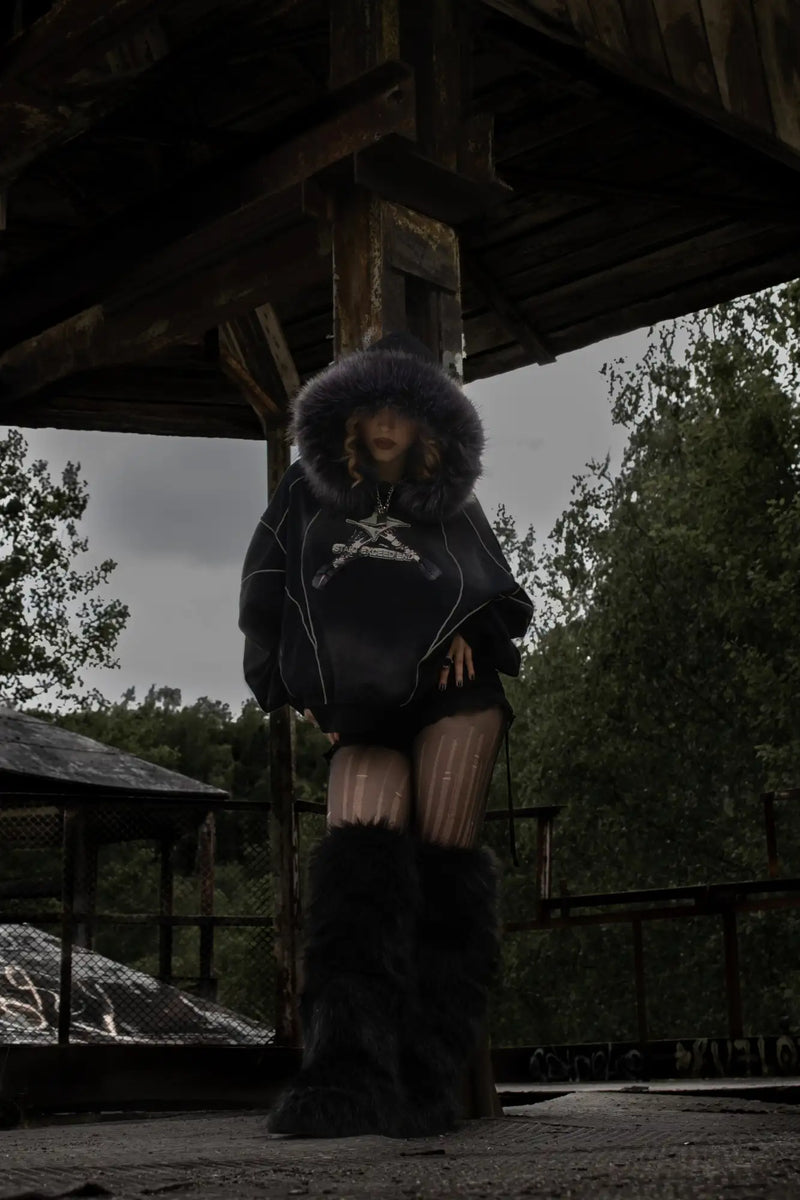
The dividing line to pure Techwear is the imagery. Acronym itself avoids any explicit sci-fi reference — black, grey, functional, done. Cyberpunk Techwear is allowed to quote: asymmetric hood cuts, visible tactical panels, offset pocket seams, mesh layers with reflective bands. The question is never whether the piece works, but whether it would also read in Night City.
- Fabric logic — ripstop, Cordura, Gore-Tex, coated nylons. Never glossy, never thin-cheap. If the fabric reflects in the photo, it's plastic.
- Silhouette — layerable, pronounced hood architecture, oversized shoulder, narrow below or deliberately wide. The body disappears into layers.
- Hardware — functional points: magnets, double zipper rows, buckle straps, carabiners. Never applied for decoration.
- Colour — black, asphalt, concrete, steel. One accent is allowed: chrome silver, brushed aluminium, occasionally a muted cyan.
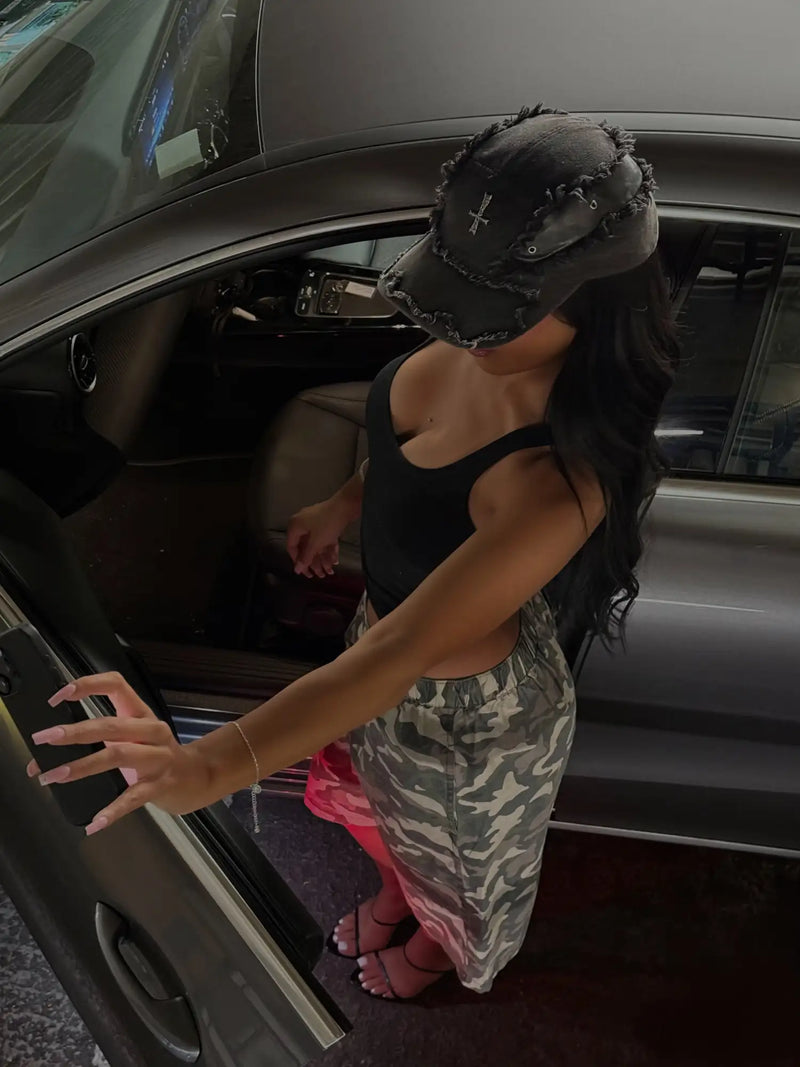
- Story — you need to be able to walk through a parking garage in the outfit and have no one ask where you got the costume.
Origin
Who invented Cyberpunk Techwear — Blade Runner, Akira, Ghost in the Shell
The aesthetic foundation is older than the term. William Gibson's 1984 novel Neuromancer built the literary world — console cowboys, netrunners, implants, a Tokyo-LA-Hong Kong skyline of neon and rain. Ridley Scott's Blade Runner delivered the visual preview in 1982: trench-coat silhouettes, technical eyewear, city architecture built from layers. Mamoru Oshii's Ghost in the Shell translated that into anime in 1995 — the black bodysuits, the tactical vests, the hooded coats. Cyberpunk 2077 (CD Projekt Red, 2020) mirrored the codes back into mainstream vocabulary.
The translation into wearable clothing didn't happen until the 2000s. Acronym with its technical jackets, Maharishi with its military vocabulary, Niepce Inc and Riot Division with the direct anime quote. What was designed as film costume in Tokyo, LA and Vancouver landed as a ripstop hoodie and tactical cargo on the Paris runways — and from there into Berlin and Tokyo off-hours looks.
5 archetypes
The 5 Cyberpunk Techwear archetypes — from Street Samurai to Netrunner
Cyberpunk Techwear isn't a single look. It's a family of five clearly separable archetypes, each with its own silhouette and accent. Wear all five at once and you end up with no clean outfit at all. Pick one, wear it consistently — only start combining once you've got the code down.
sub-genre split
Cyberpunk Streetwear vs Cyberpunk Techwear — where's the line
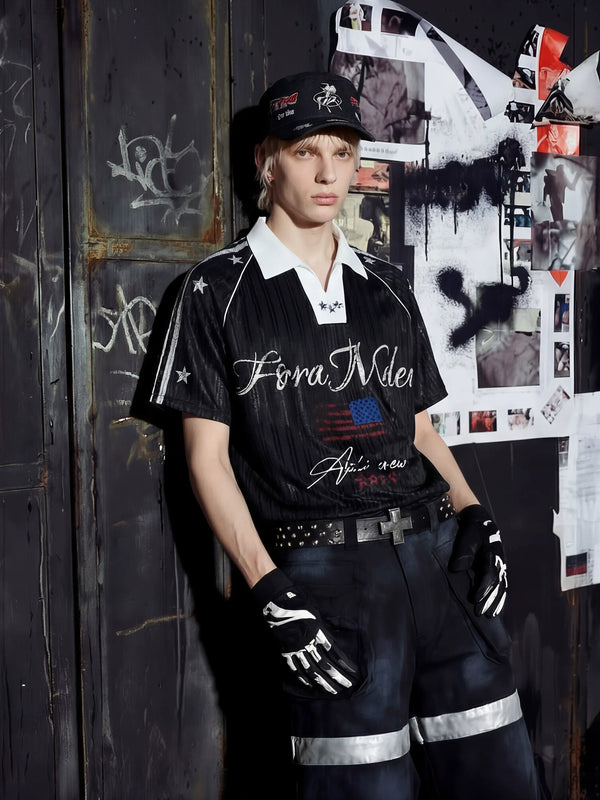
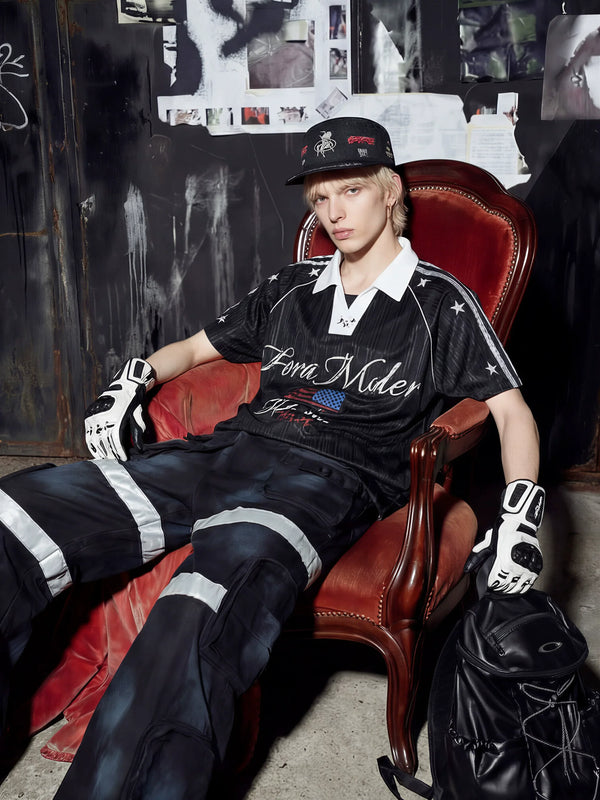
Both terms show up side by side in the SERP, but they don't mean the same thing. Cyberpunk Streetwear is organised visually and graphically — Akira bike prints, Tokyo skyline tees, glitch typography on hoodies. The shape is standard streetwear: straight crewneck, standard cargos, classic sneaker setup. The cyber layer sits in the print, not the cut.
Cyberpunk Techwear flips that relationship. Here the narrative sits in the construction: asymmetric cuts, visible panels, technical fabrics, buckle hardware. Prints are rare and reduced — if anything, a small tactical patch or a number code at chest height. Whoever wears Cyberpunk Streetwear is saying, "I like cyberpunk." Whoever wears Cyberpunk Techwear is saying, "I live in a city where the weather and the architecture demand this clothing."
Brands
Cyberpunk Techwear brands — who actually writes the vocabulary
The brand landscape is small, because the genre demands engineering. You need membrane fabrics, welded seams, magnetic closures — that's expensive and slow to produce. Six labels write the code; the rest are stuck in the print.
- Acronym (DE/CA) — Errolson Hugh since 1999. Engineering-first, almost no sci-fi quotes, but the cut architecture shapes the entire genre. Luxury price point.
- Demobaza (UA/RO) — avant-garde techwear with a pronounced sci-fi narrative. Asymmetric coats, mesh layers, often archetypal for Neo-Tokyo Femme.
- Riot Division (RU) — direct cyberpunk reference, clearly mid-tier pricing. Cargo architecture and tactical shirts with understandable cuts.
- Maharishi (UK) — military vocabulary, natural fabrics instead of synthetics. More Wasteland Drifter than Netrunner, but has shaped the genre since 1994.
- Niepce Inc (US/JP) — direct anime translation, asymmetric hoodies, mesh tops. Strong in the Street Samurai canon.
- Y-3 (DE/JP) — Yohji Yamamoto x adidas. Bridge between high fashion and techwear, often the entry brand for cyberpunk-adjacent looks.
Anyone growing up in Berlin or Tokyo and experimenting with this typically combines two of these houses plus one or two noticeably cheaper mid-tier pieces. Fuga sorts the mid-tier by function and silhouette, not by anime quote — the logic is the same one Acronym established in 1999: what works, stays.
Category · Outerwear
Cyberpunk Techwear jackets — bomber, wraith coat, asymmetric hood
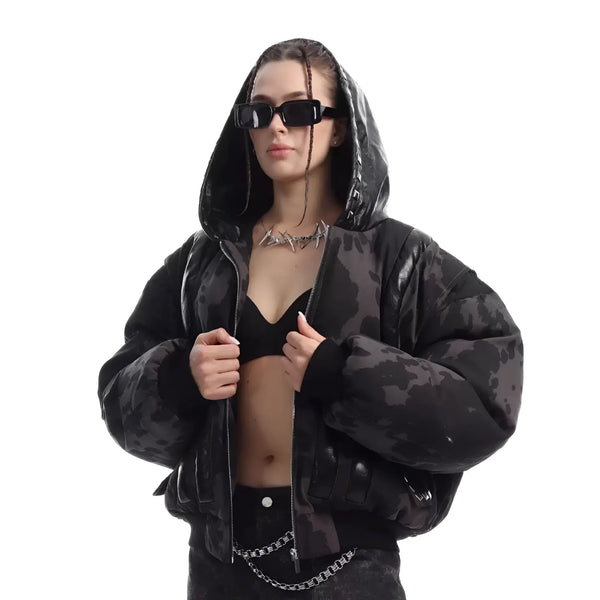
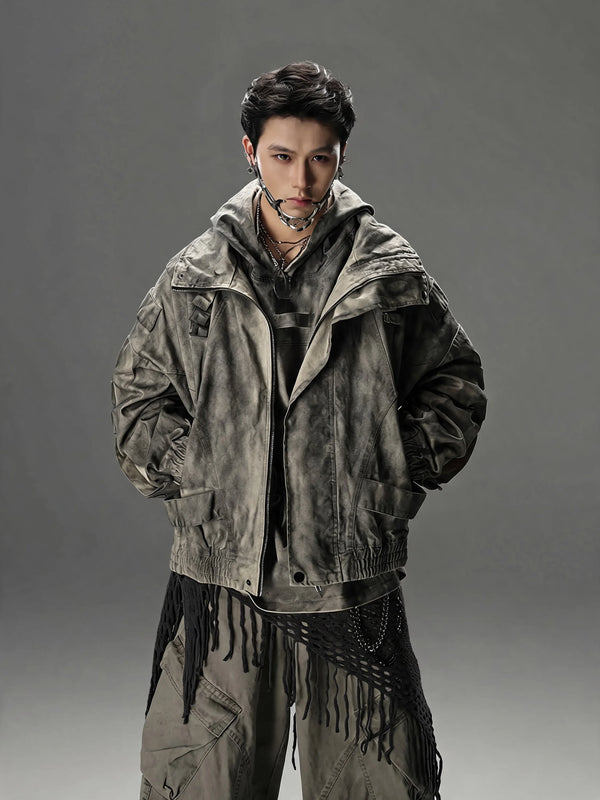
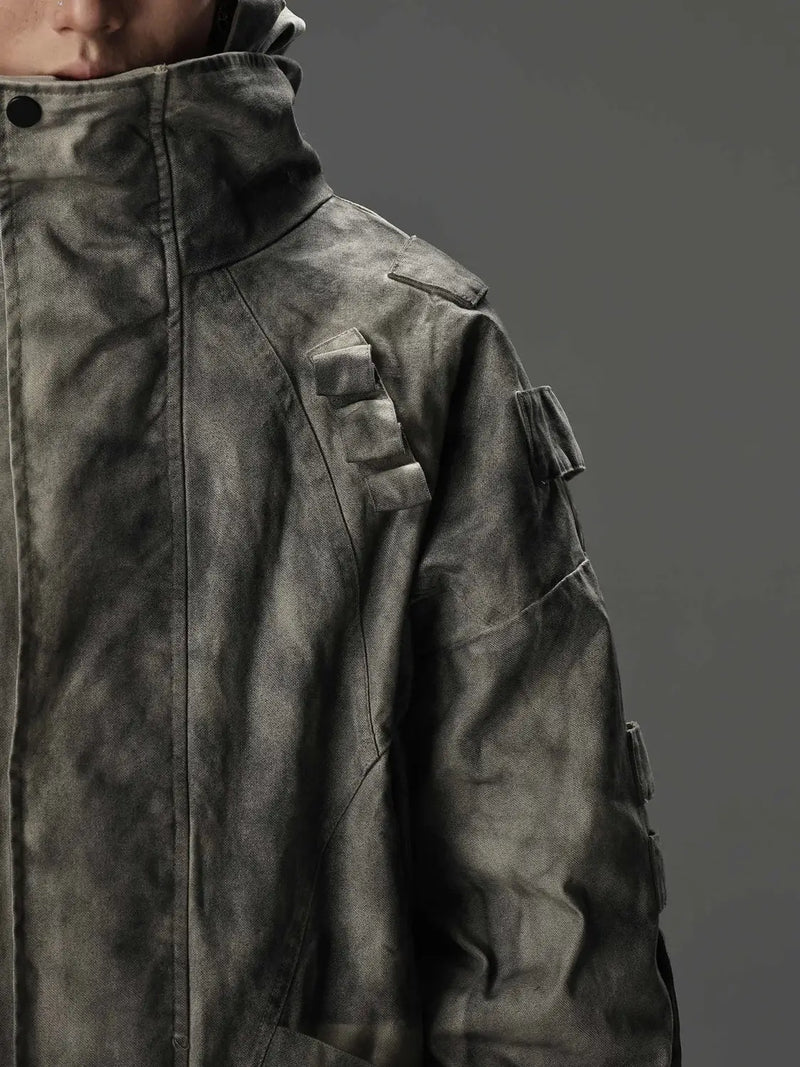
Outerwear is the most important piece, because it determines 70 percent of the silhouette. Three categories carry the vocabulary: the technical bomber with an asymmetric hood, the long wraith coat or scarf coat as a calm line, and the ruched windbreaker for the Wasteland Drifter variant. The fabric decides — ripstop and Gore-Tex beat any glossy polyester bomber in this genre.
Category · Bottoms
Cyberpunk Techwear trousers — cargo, tactical, ruched
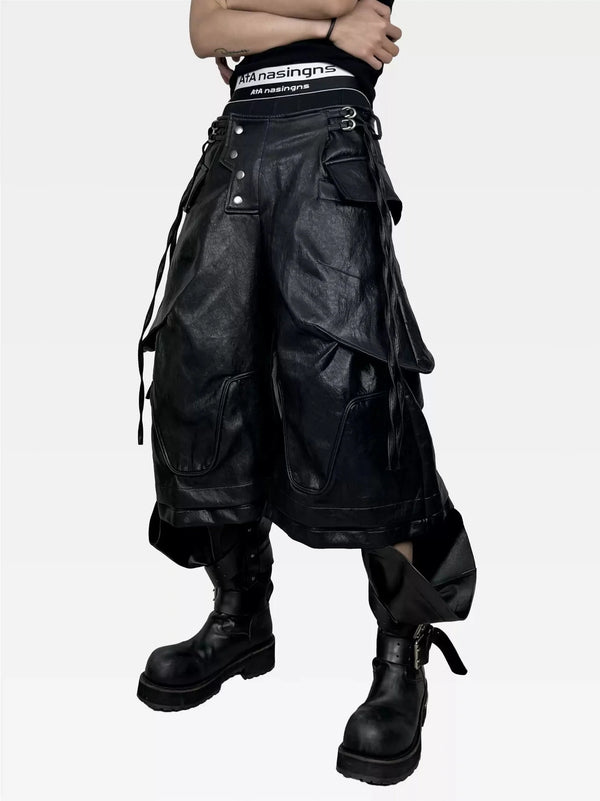
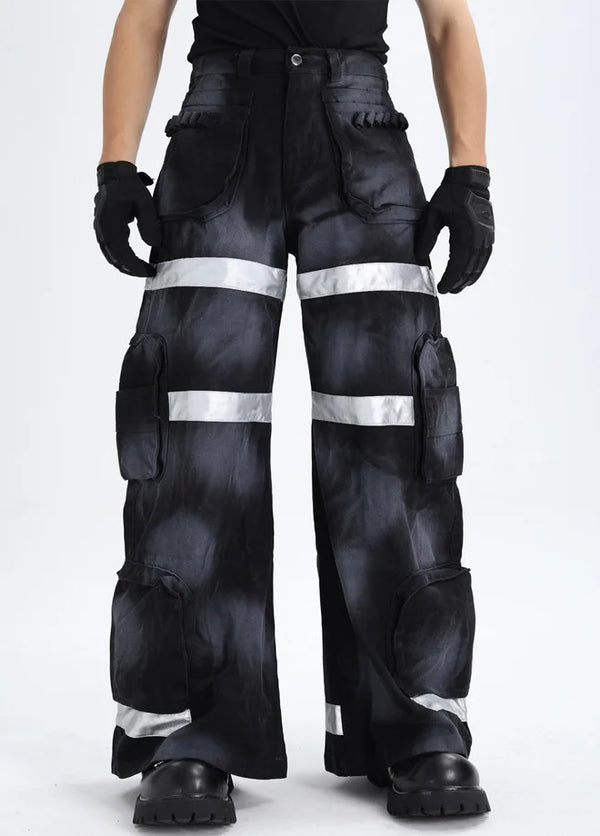
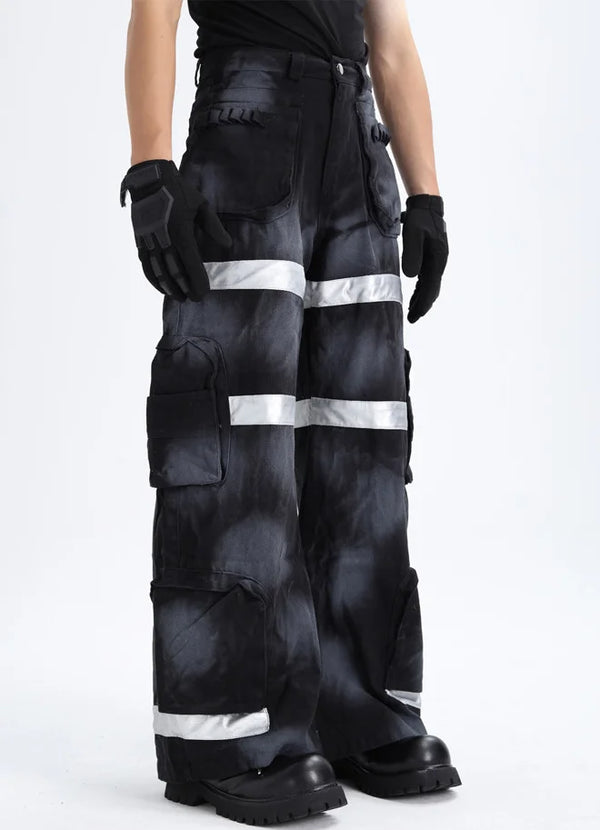
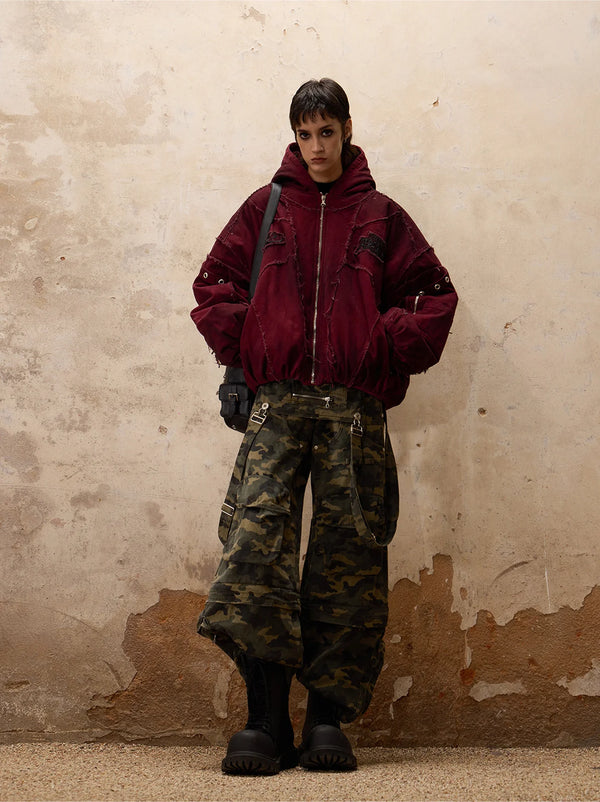
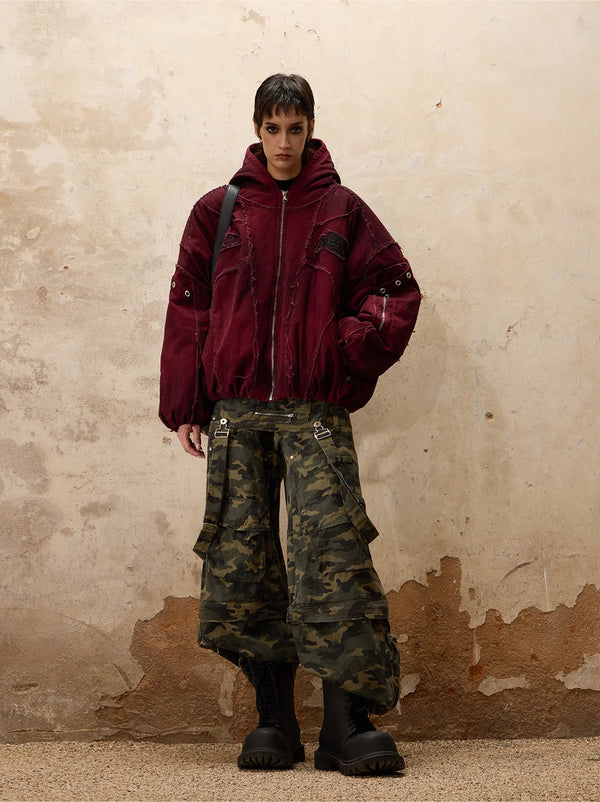
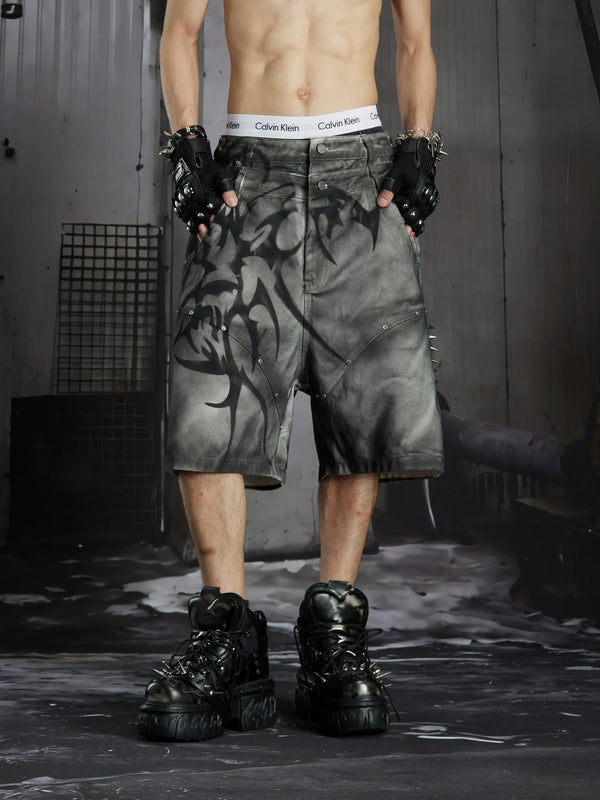
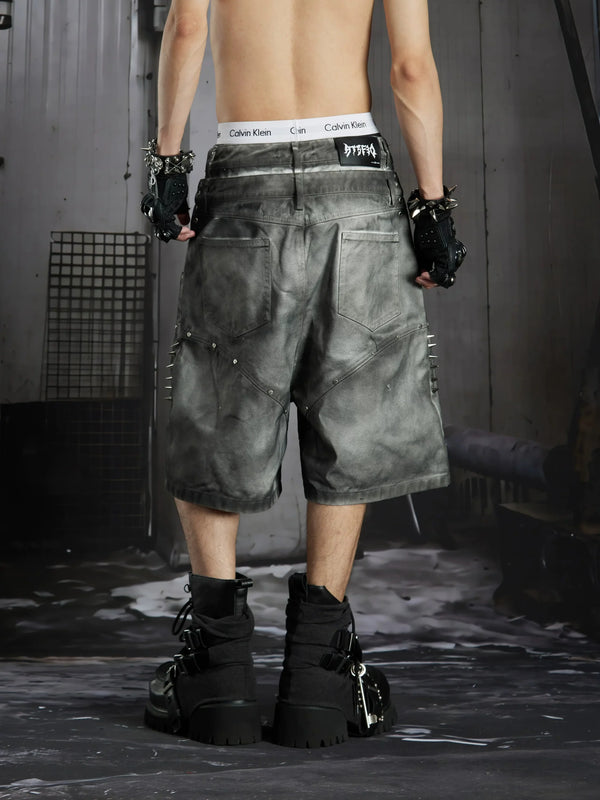
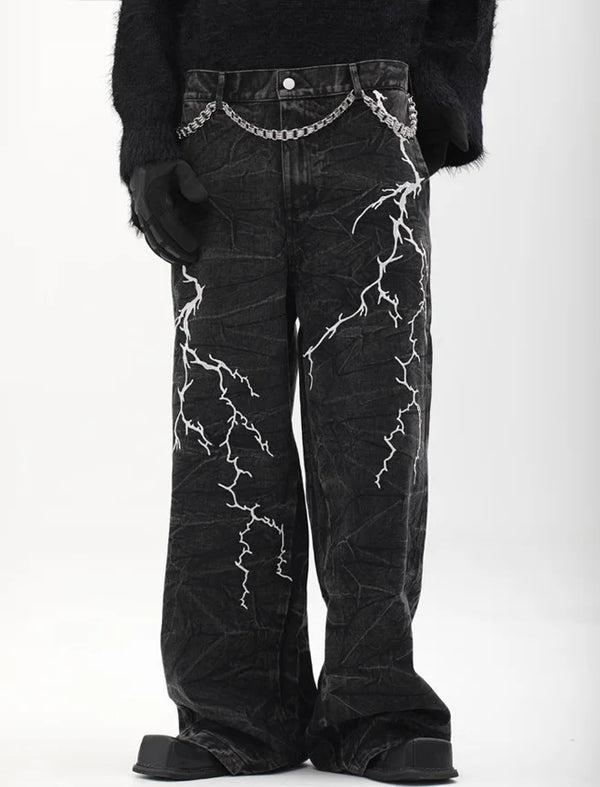
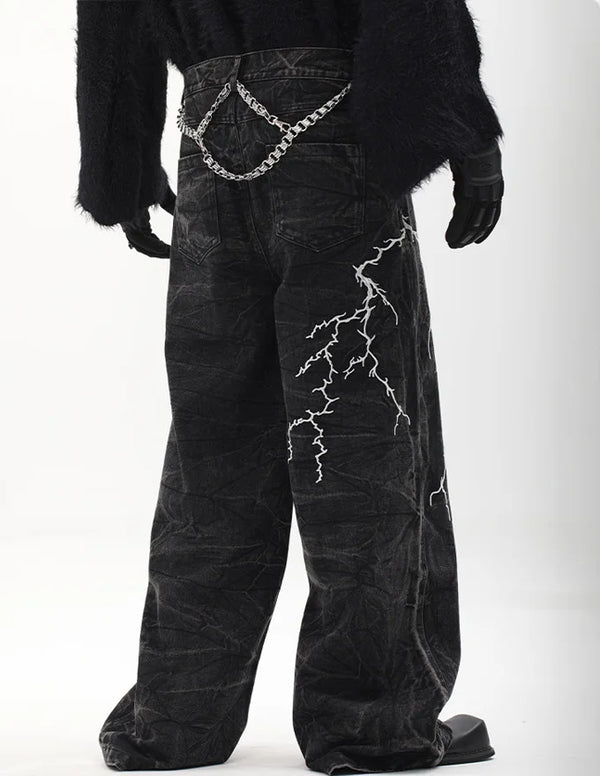
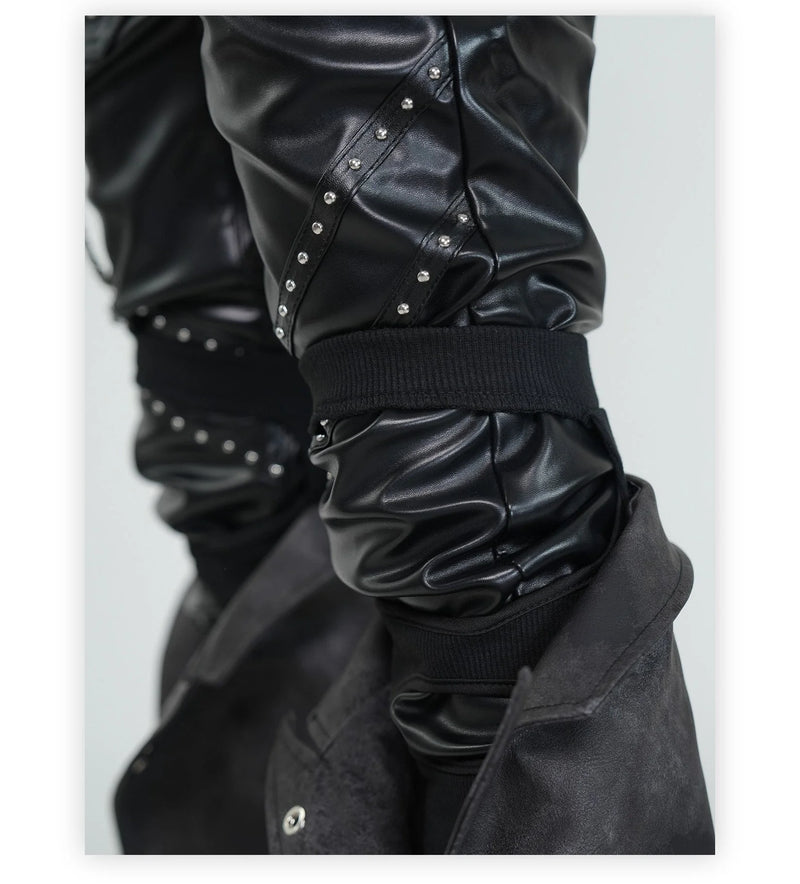
The trousers decide whether the outfit reads as Street Samurai or Wasteland Drifter. Narrow tactical cargo with clean panel lines gives you the Netrunner silhouette. Wide, ruched cargo with buckle detail pushes you toward Wasteland. Distressed with a magnet belt lands on the modern Street Samurai. Leather trousers with a tactical patch are the Neo-Tokyo Femme variant.
Category · Tops
Cyberpunk Techwear tops — tactical shirts, layered shells, mesh
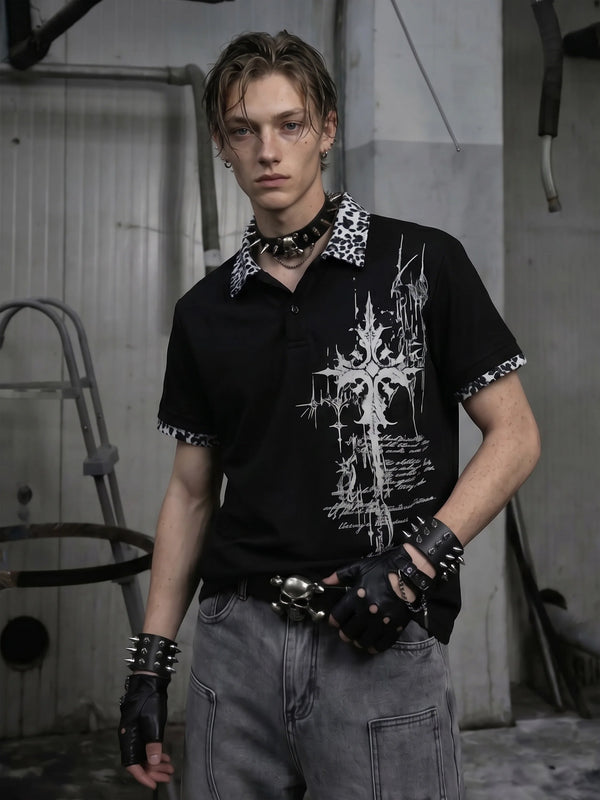
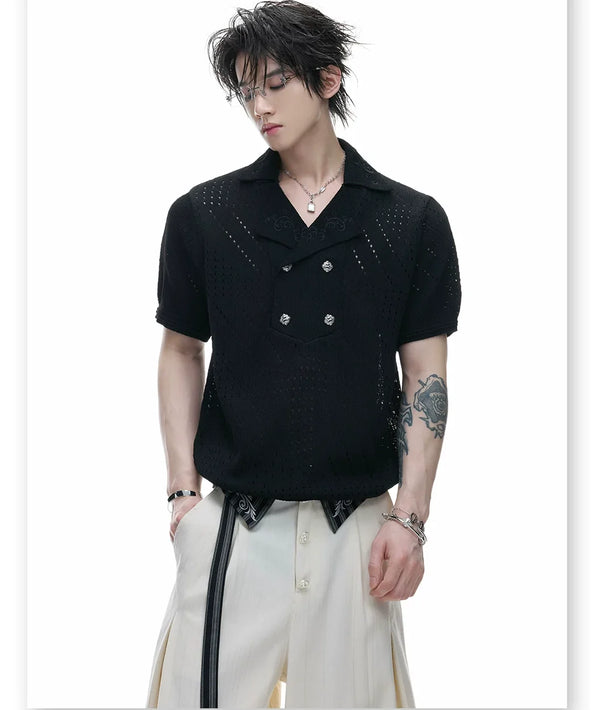
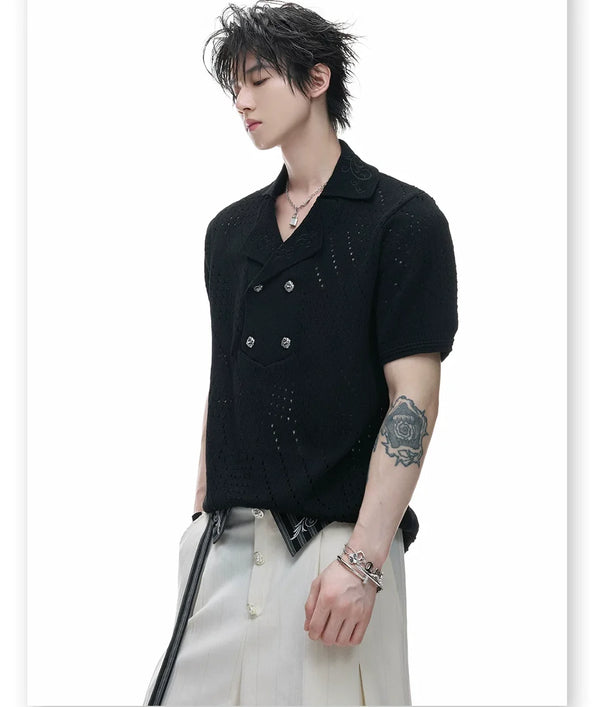
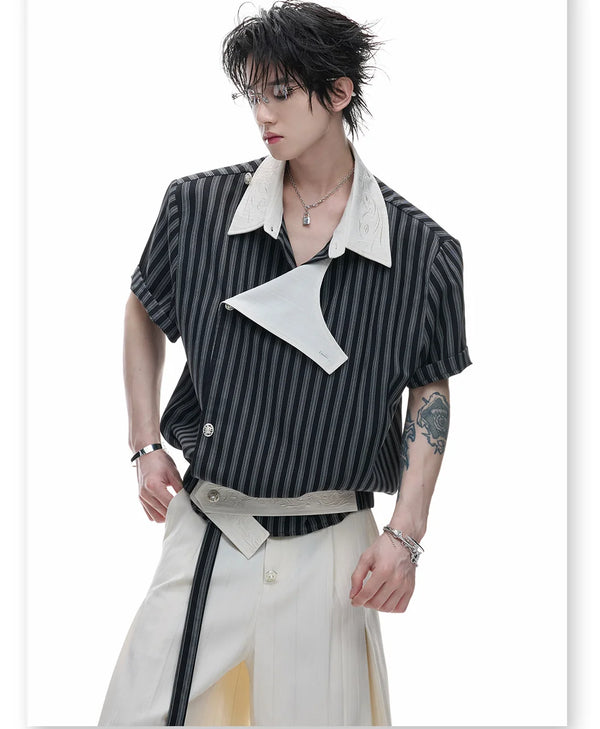
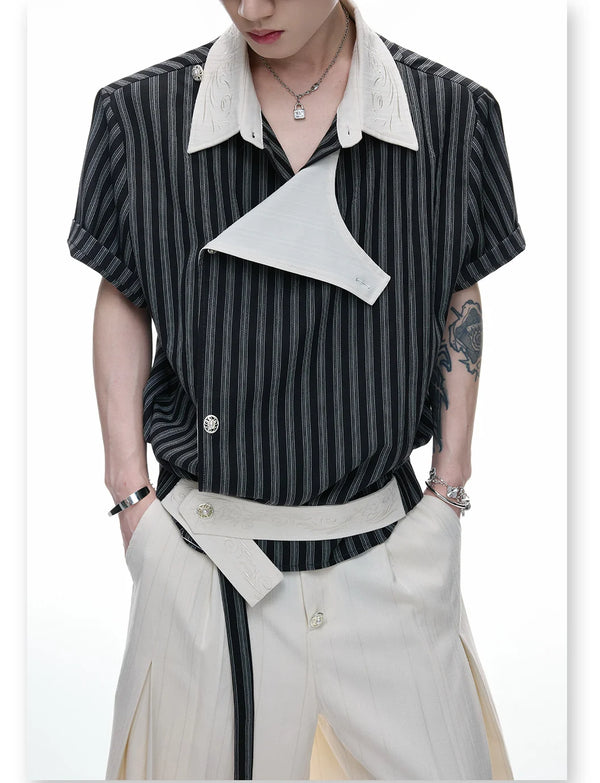
Tops are the second-loudest voice after outerwear. Three lines work consistently: the tactical shirt with an asymmetric shoulder and hood detail, the mesh long-sleeve as a skin layer under a vest, the distressed tactical hoodie as a mid-layer. Crewnecks and standard T-shirts belong in streetwear, not the techwear vocabulary.
Accessories
Masks & hardware — the cyberpunk accents without tipping into cosplay
The mask is the point where the whole outfit can tip over. An LED-lit full-face mask is game cosplay, nothing else — it works at conventions and ruins you on the way to the corner shop. What works are reduced, technical mouth-nose masks with a mesh insert, or a narrow tactical half-mask in matte black that you'd also wear cycling through a Berlin winter. Plus sunglasses with clean architecture instead of a bling frame.
Gender split
Cyberpunk Techwear women vs men — same codes, different lines
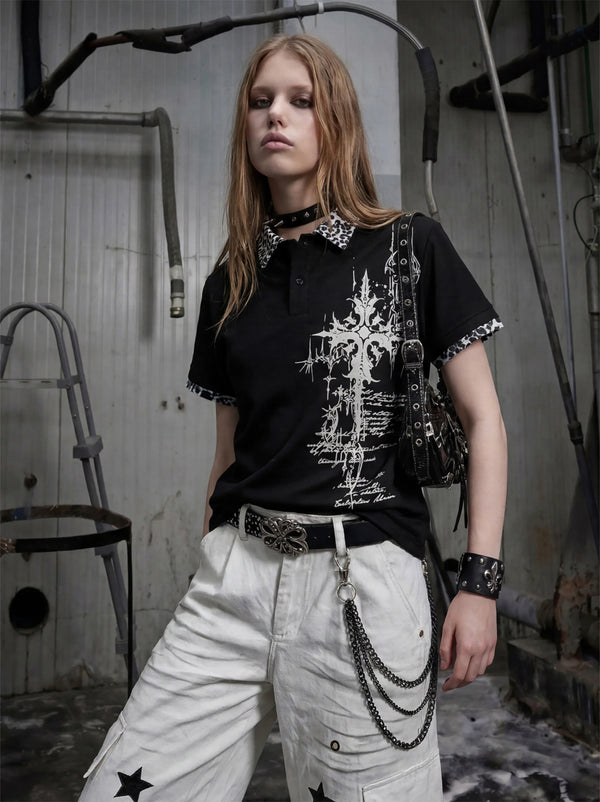
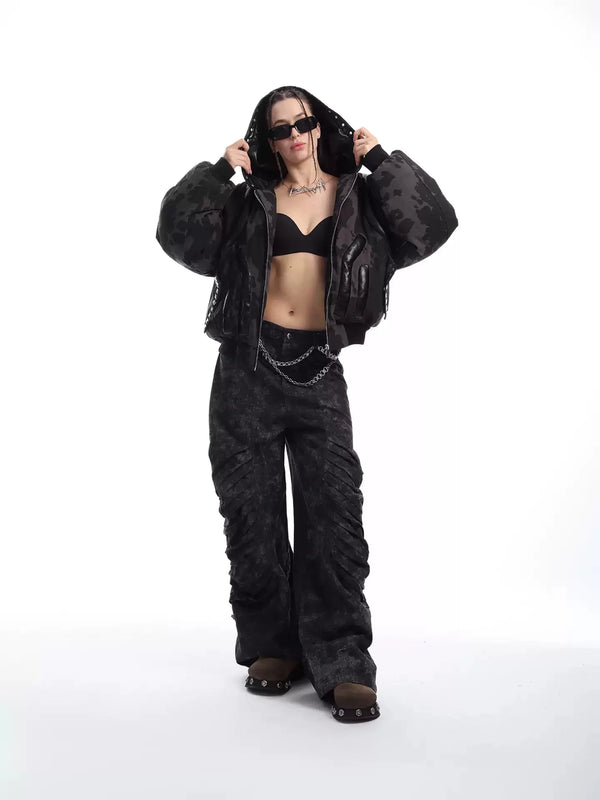
The codes are identical — fabric, silhouette, hardware, accent rule. The lines split because the body is modelled differently. Men land more often in the Street Samurai or Tactical Stealth canon: long hooded jacket, narrow cargo, combat boot, magnet belt as the only accent. Women more often move toward Neo-Tokyo Femme: cropped bomber or mesh-layered top over technical high-waist trousers, plus buckle boot or platform sneaker with a tactical build.
Styling physics
How to style Cyberpunk Techwear — the physics behind the outfit
Die Faustregel: ein Akzent, eine Asymmetrie, eine Funktion. Mehr ist Lärm.
Three levers decide whether the outfit reads or breaks. First, the layering logic: a skin layer (mesh or long-sleeve), a mid-layer (tactical shirt or vest), a shell (bomber or wraith coat). Four or five layers don't add up to "more cyberpunk" — they add up to an illegible silhouette. Second, asymmetry: exactly one visible off-balance line — a side zipper row, an offset hood, an open magnet flap. Two asymmetries in different spots don't feel "more complete," they cut the look apart. Third, the chromatic accent: a silver point, a steel edge, a muted cyan detail. If the hardware turns colourful, credibility goes.
Seasonal
Cyberpunk Techwear in summer vs winter
The genre is a winter language. Layers, membranes, hoods, boots — it all plays into the Berlin-February spectrum. In summer, the look doesn't disappear, it reduces to two layers: mesh tank or short-sleeve tactical top as a skin layer, plus a light ripstop vest or a technical crop bomber as a shell. Wide-leg cargo or tactical shorts below, combat sandal or a light hightop. The asymmetry stays, the accent stays, only the fabric density drops.
What does not work
The 6 most common Cyberpunk Techwear mistakes — what NOT to do
Action
How to start with Cyberpunk Techwear — the first 4 pieces
Anyone wearing the genre for the first time rarely buys right. The biggest impact per euro comes from outerwear, then trousers, then boots, then the top. Build in that order — not the other way around.
Outfits for real
Cyberpunk Techwear in real life — what it looks like on the street
Everyday life comes before the lookbook. Berlin, Tokyo, Seoul, Warsaw — wherever the city itself looks like cyberpunk, the genre shows up as lived clothing. Not as a show, but as function: rainproof outerwear, compact layering, hardware placed where it's actually used.
To close
Cyberpunk Techwear is a system — not a trend, not a costume
The genre has survived for over four decades because it isn't driven by seasonal trends. It's an answer to a city architecture that isn't going away — parking garages, high-rises, rain, artificial light. As long as that backdrop exists, the vocabulary that fits it exists.
FAQ
Frequently asked questions about Cyberpunk Techwear
What exactly is Cyberpunk Techwear?
What's the difference between Cyberpunk Streetwear and Cyberpunk Techwear?
Which brands make genuine Cyberpunk Techwear?
Do I need a mask for Cyberpunk Techwear?
Does Cyberpunk Techwear work in summer too?
What are the main Cyberpunk Techwear archetypes?
Which shoes go with Cyberpunk Techwear?
What do you think?
Tell us on @fuga_studios
About the author
Philipp Fuge — Founder · Berlin
Founder of Fūga Studios. Writes the journal himself. Berlin · Shanghai · Tokyo · Poznań — four cities, one logic.