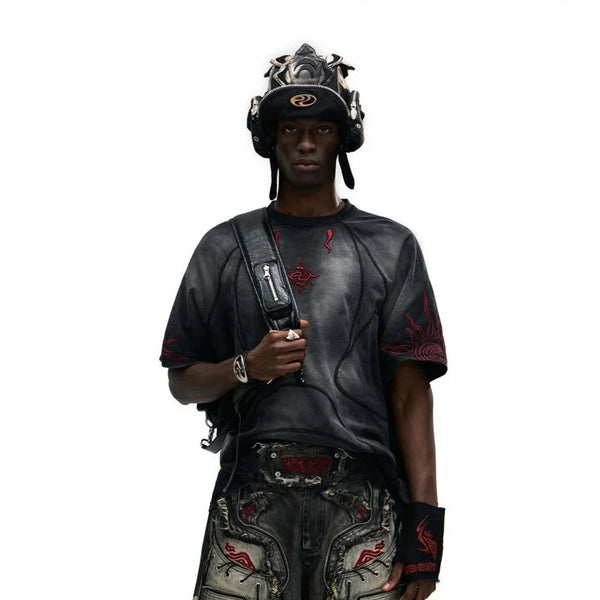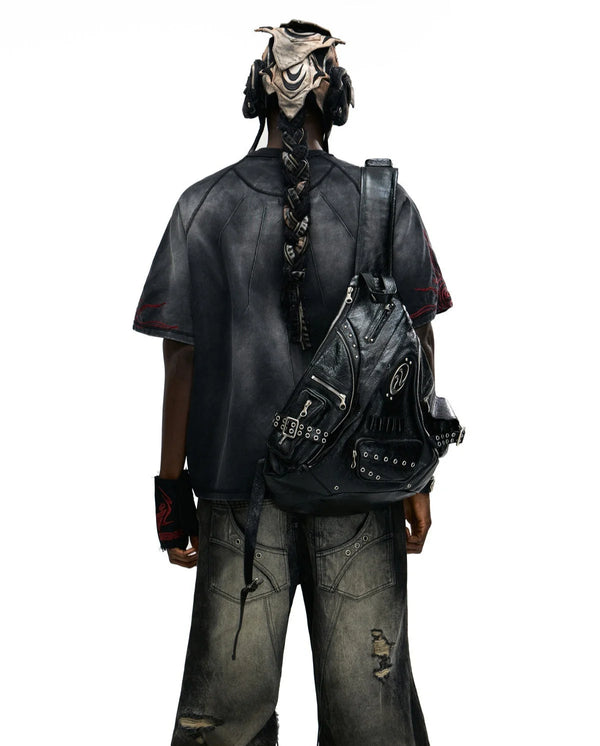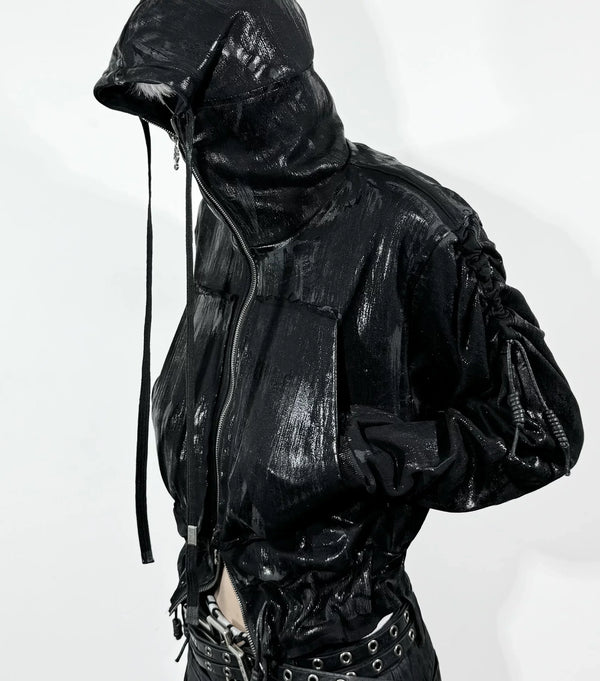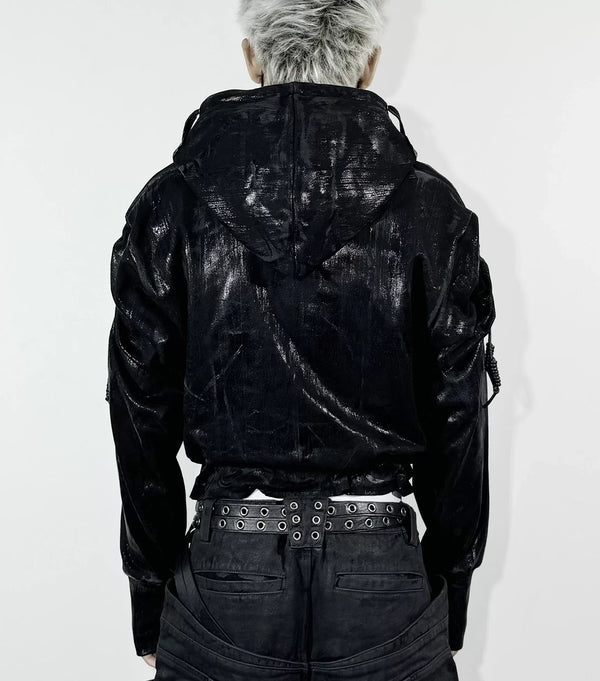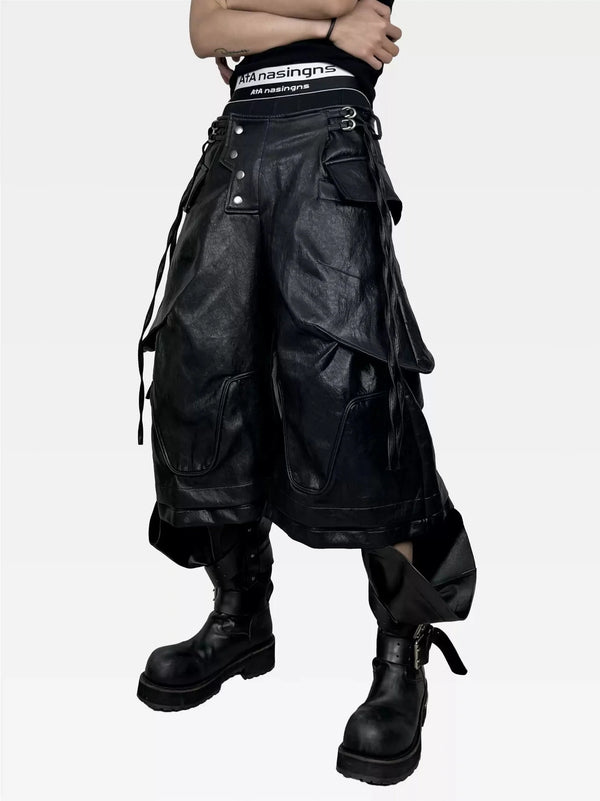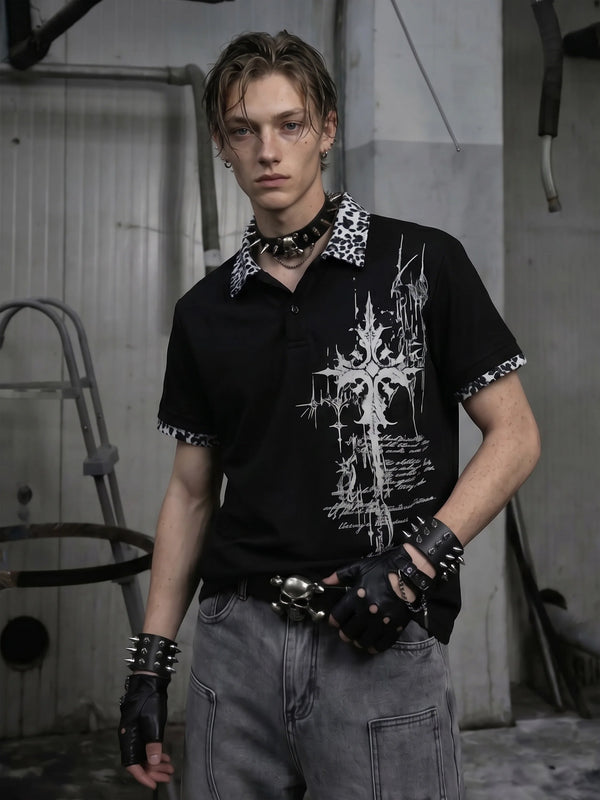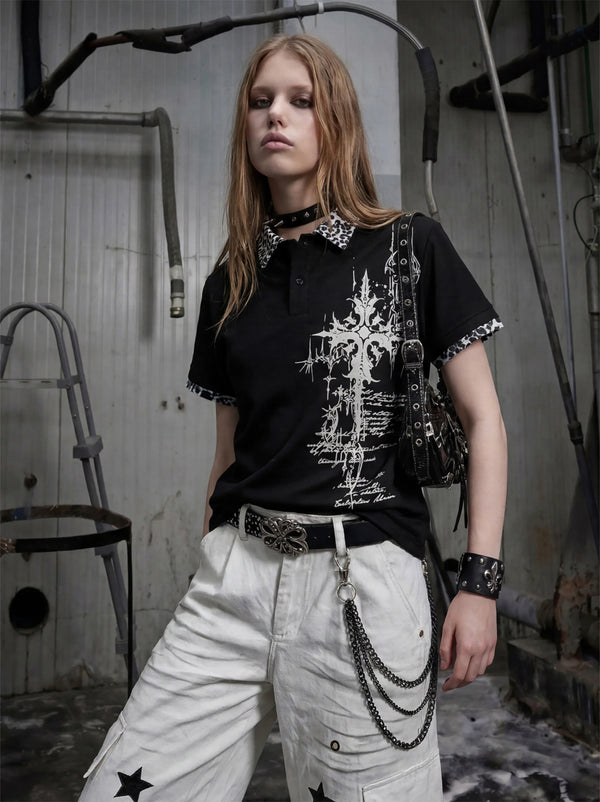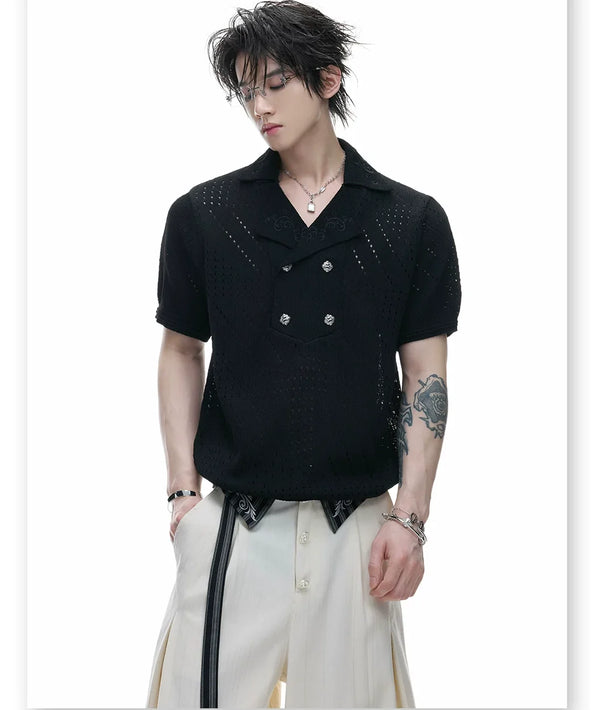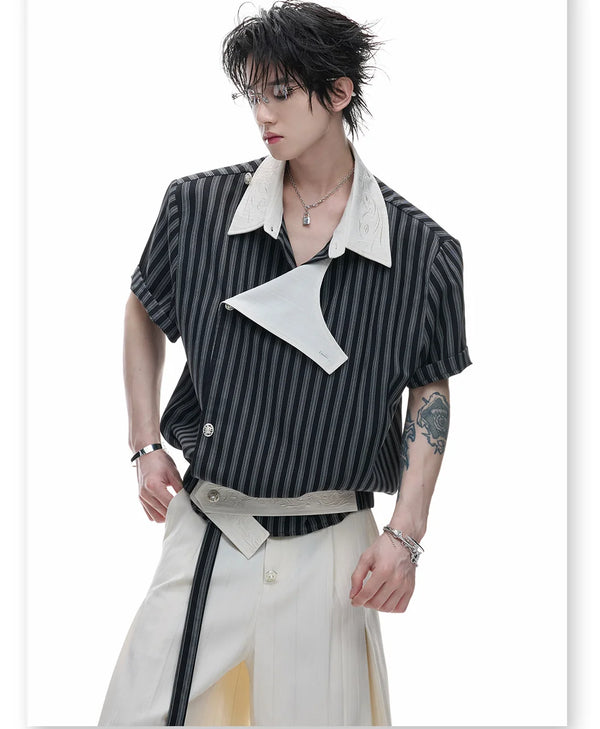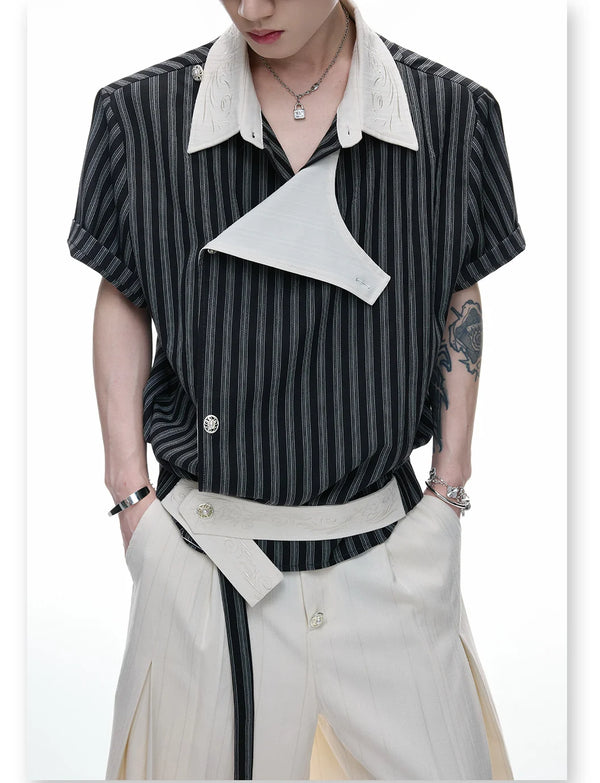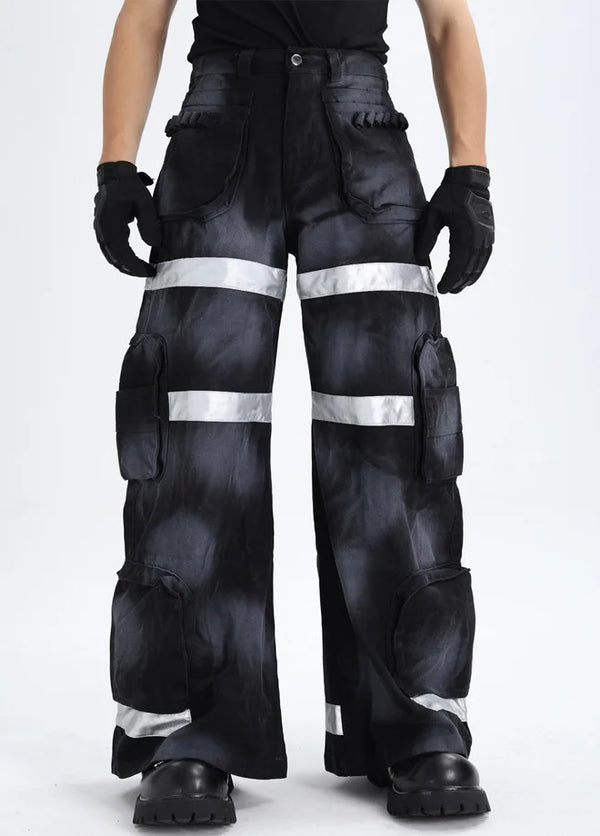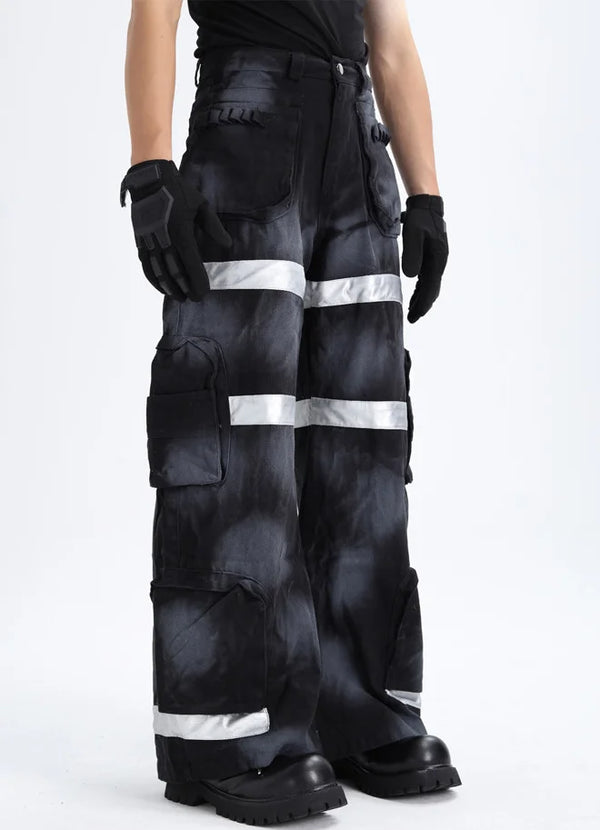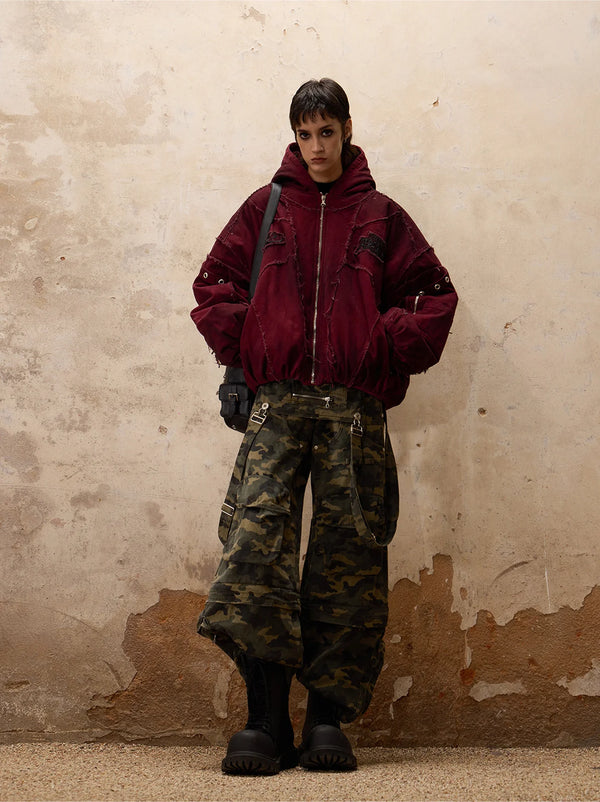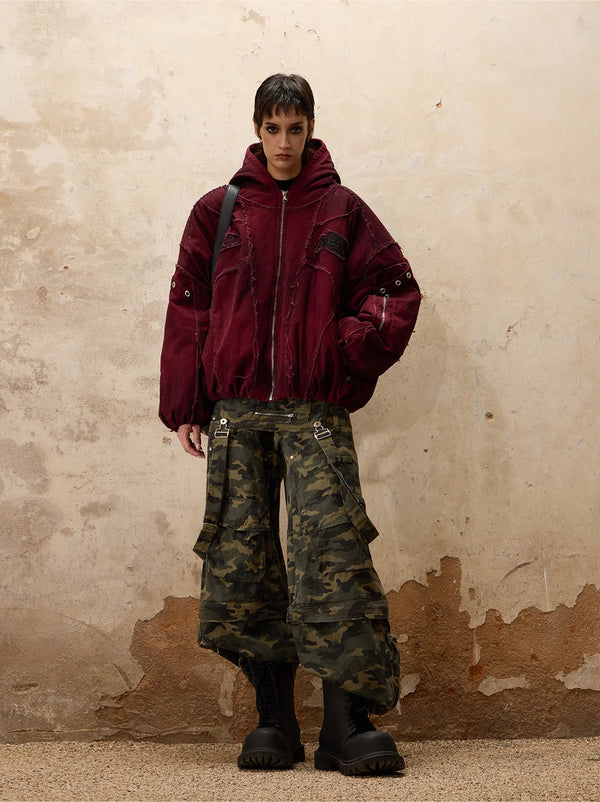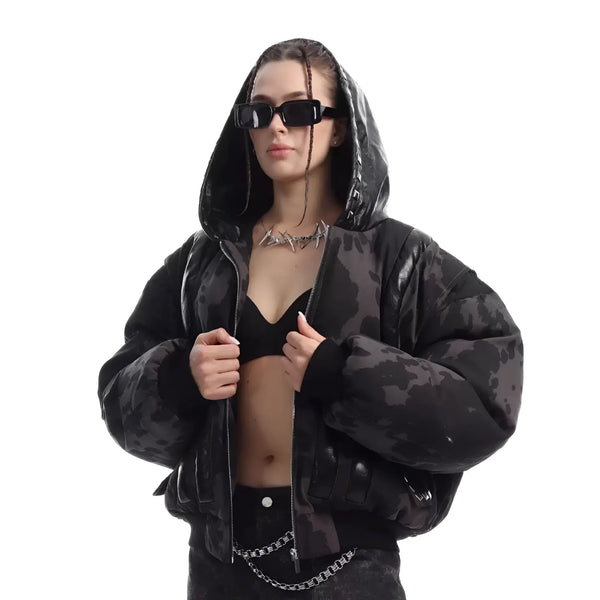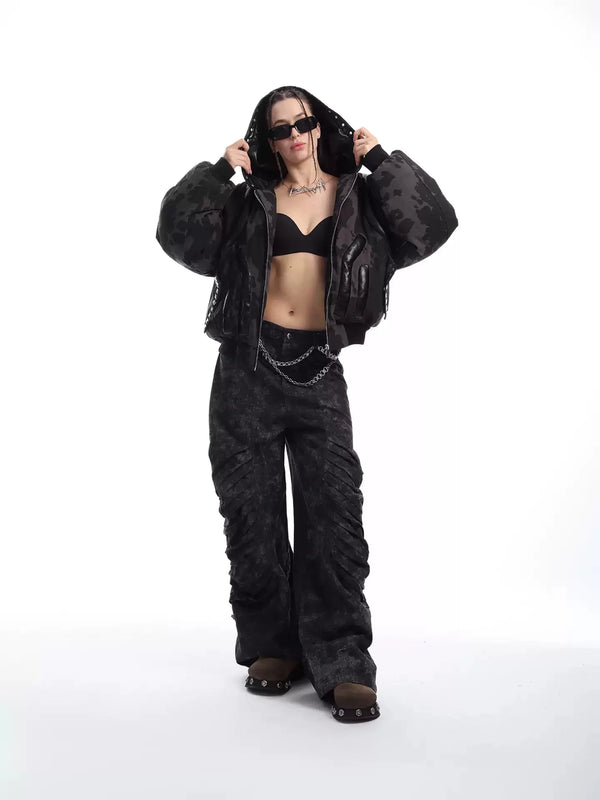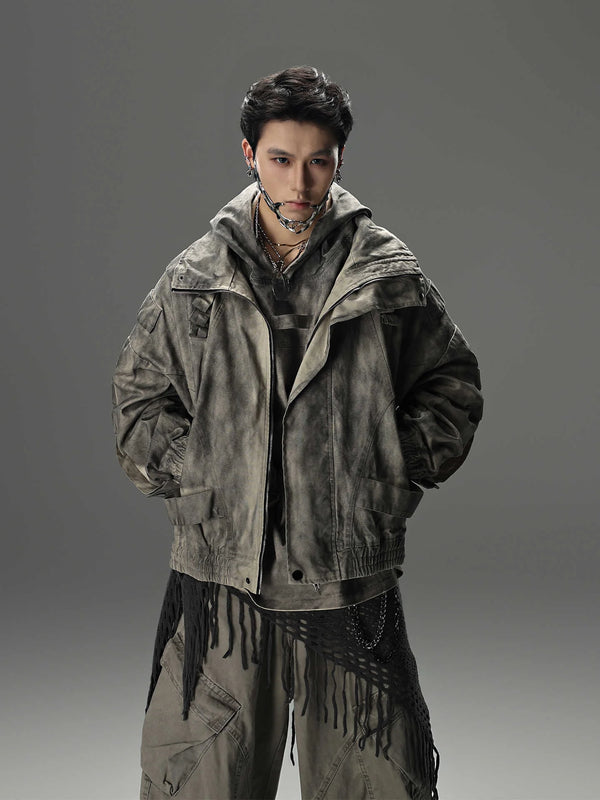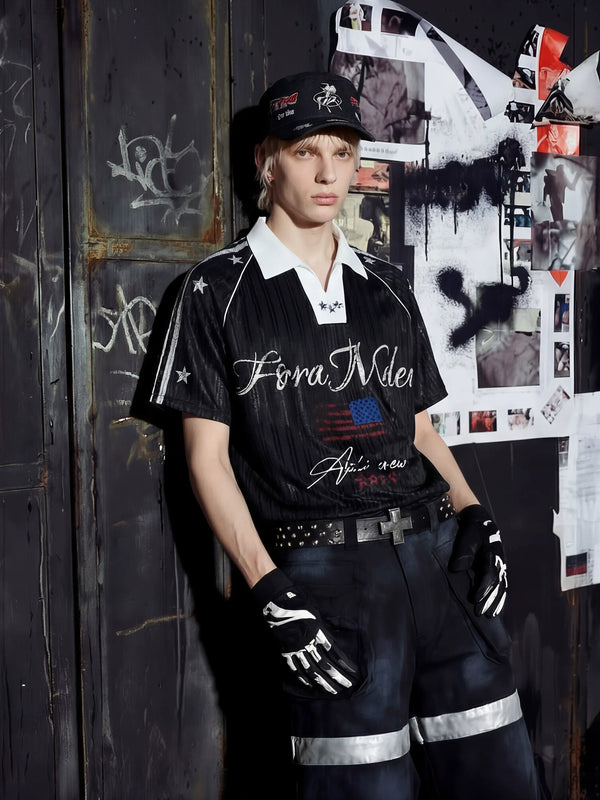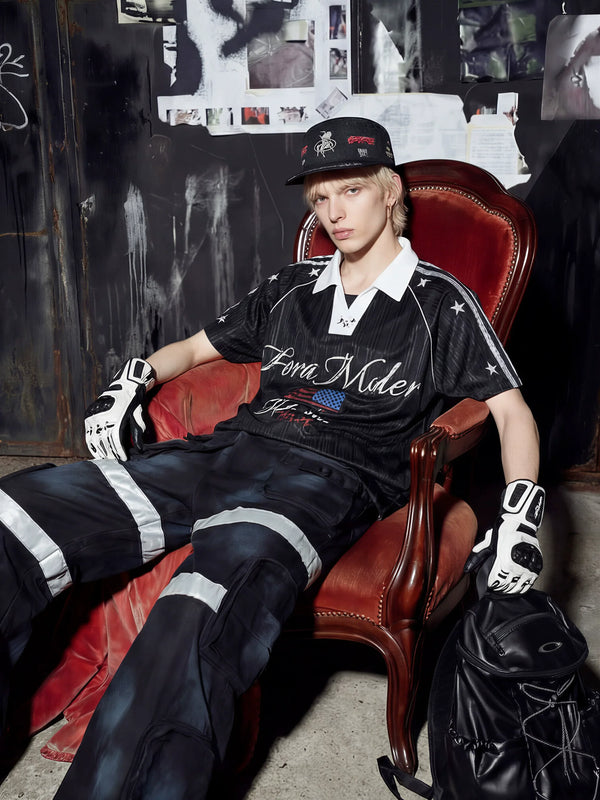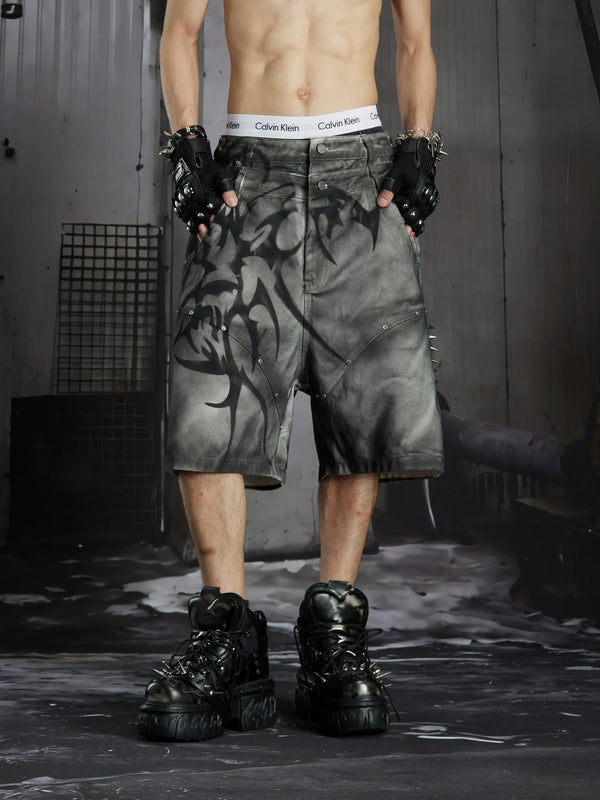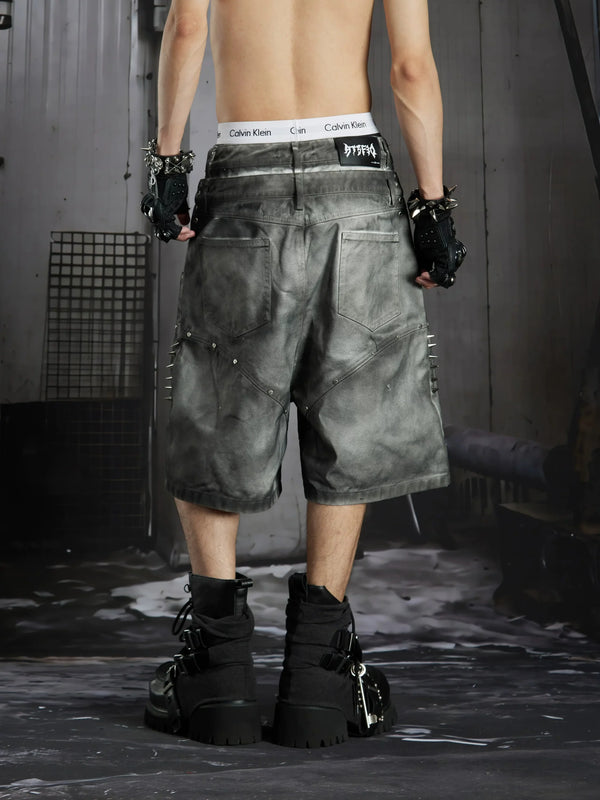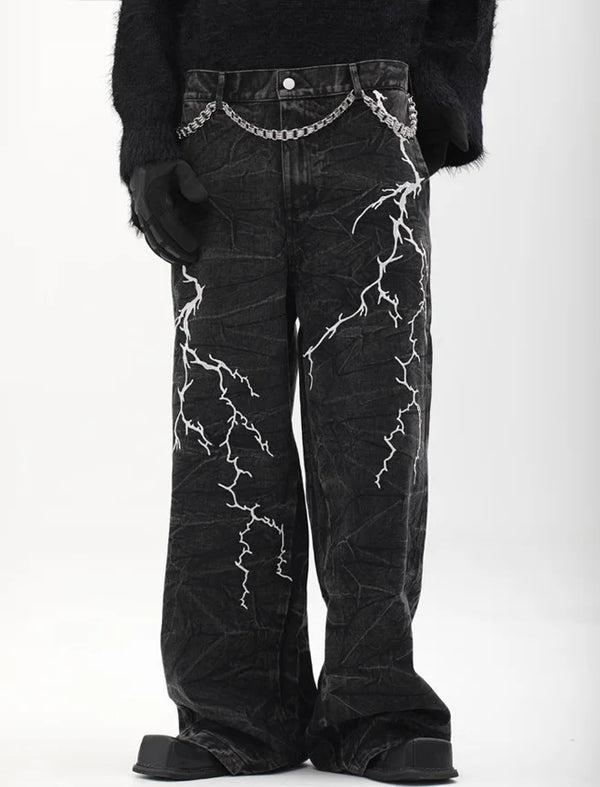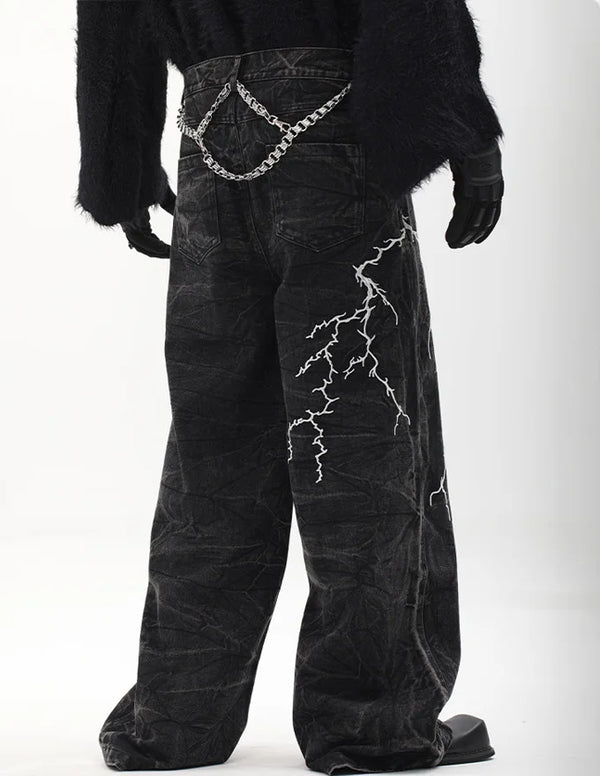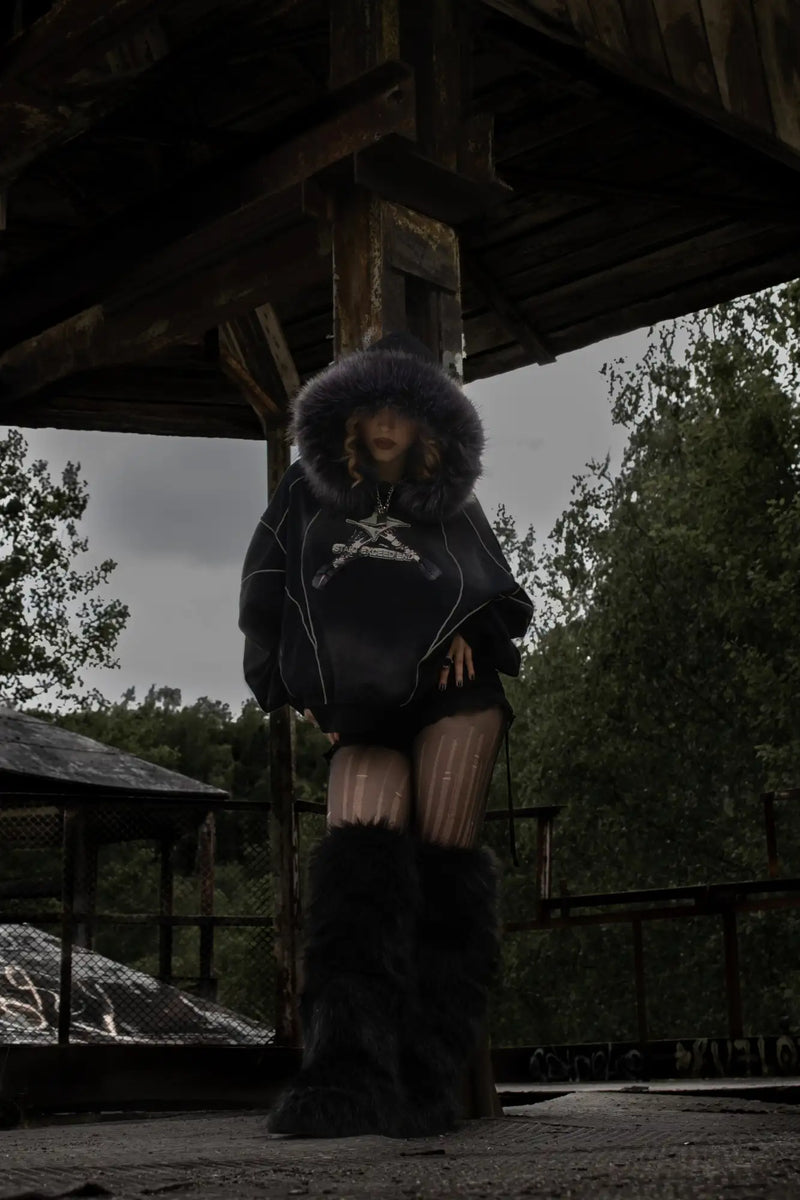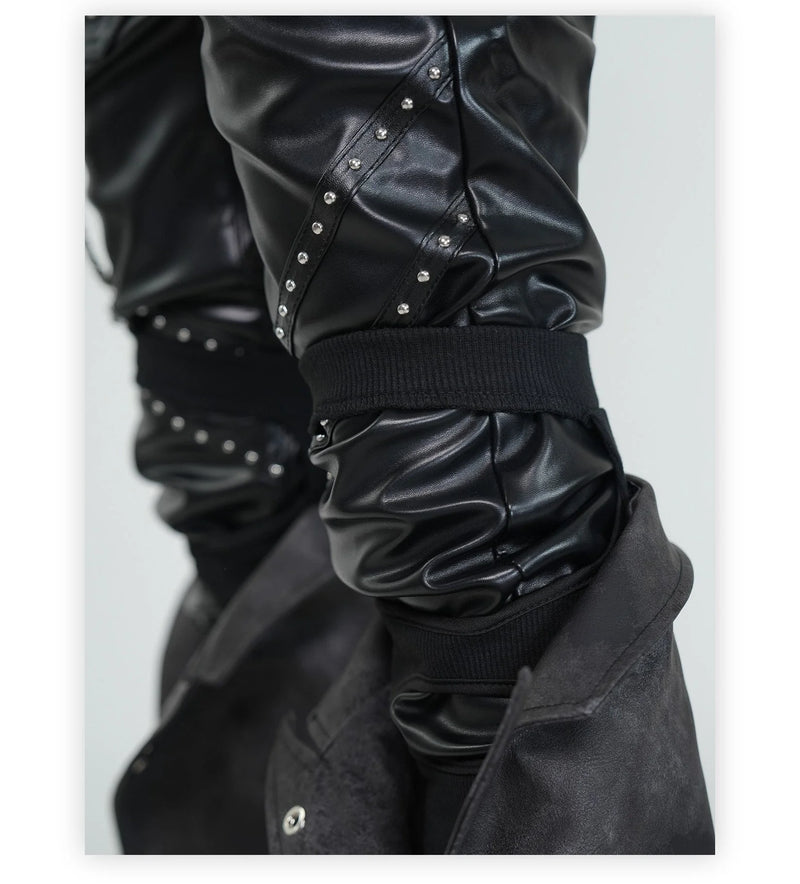
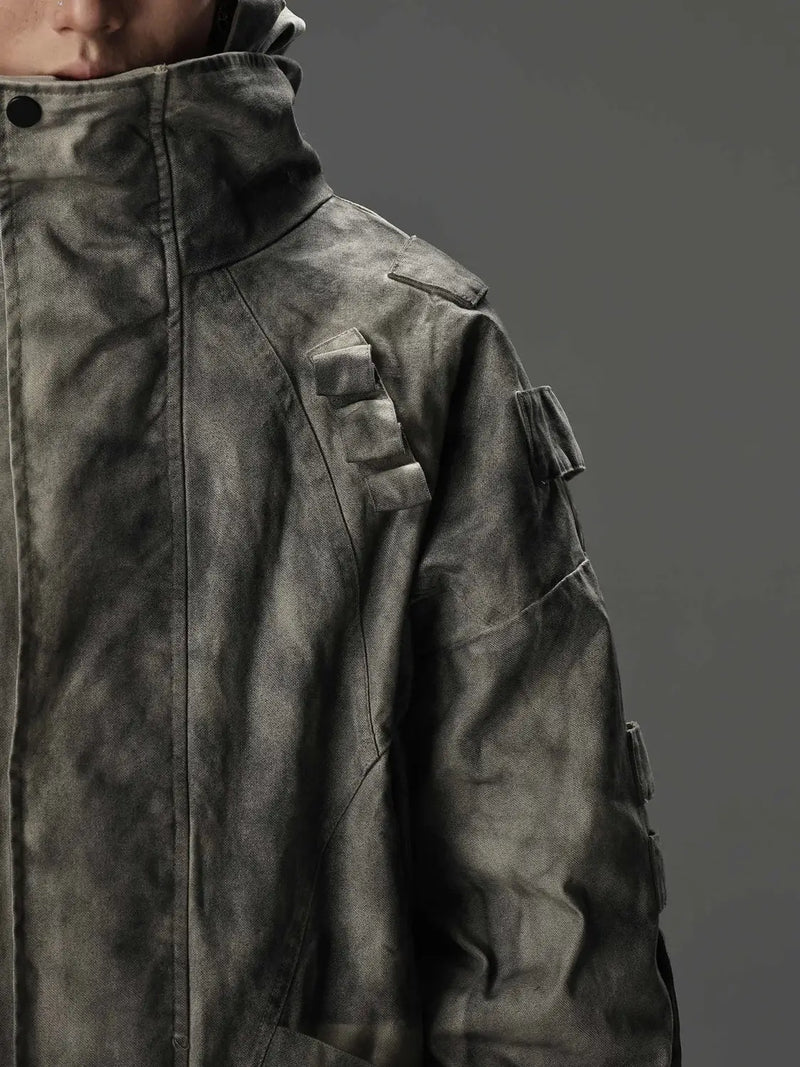

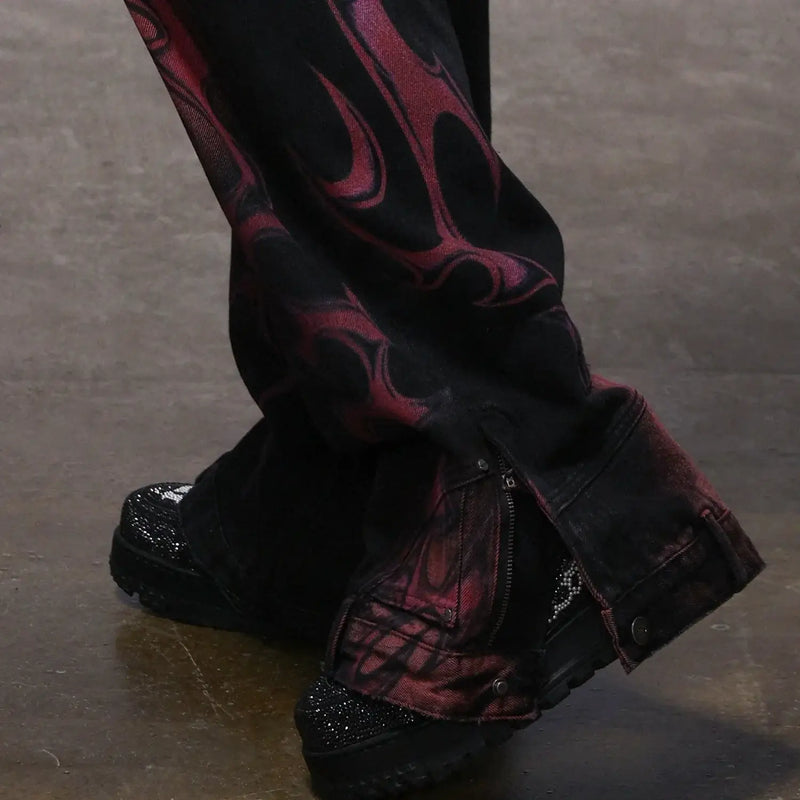
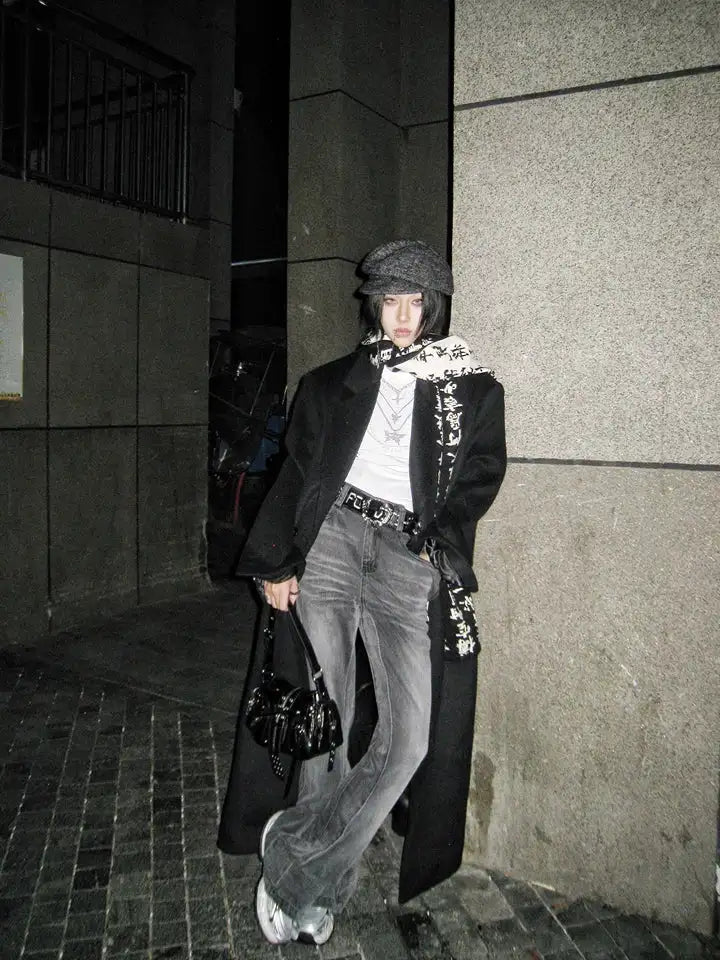

Search the internet for „Techwear“ and you get three different outfits. A Tokyo-Shibuya look with a GORE-TEX shell and straps. A matte-black Darkwear outfit with a leather jacket and combat boots. A tactical look with webbing, patches and a plate-carrier vest. Three outfits — three subcultures that hate each other, because each one thinks it is „the real Techwear“.
They are all wrong. Techwear, Darkwear and Warcore are three separate codes with their own origin, their own fabric vocabulary and their own outfit structure. Mix them up and you build an outfit that sits in none of the three camps — and on TikTok you then get the comment „bro picked all three and looks like none“.
This guide separates the three cleanly: where each code comes from, what counts and what has to go, where the vocabularies overlap, where they cancel each other out — and how to commit to one without losing the others.
Here is what that looks like in 12 seconds — the convertible puffer as a clean Techwear crossover:
Origin
Where Techwear, Darkwear and Warcore really come from
Each of the three codes has a specific year, a specific city and a specific brand it started from. Separate the origins and the differences fall into place on their own.
Techwear starts in 1994 with Errolson Hugh and Michaela Sachenbacher in Munich — Acronym as a brand in 2002. Function first: GORE-TEX shells, magnetic closures, modular three-layer logic. Outdoor engineering that migrates into everyday life. The look follows the function, not the other way around. The Japanese DNA comes in from 2010 onward via Sasayama, Acronym Hong Kong drops and the Reddit r/TechWear forum.
Darkwear has no fixed birth moment, but two axes: early-2000s Parisian avant-garde for the drape silhouette, and the slim black-leather line of the mid-2010s for the skinny vocabulary. It is the oldest of the three subcultures — and the only one that has nothing to do with function. Black is a look, not performance. If a fabric is breathable, that is a coincidence.
Warcore is the youngest of the three — TikTok era, post-2020, with no clean brand origin. It pulls from military surplus aesthetics (1990s Bundeswehr parka, US Army MOLLE webbing), from dystopian films (Mad Max, Blade Runner), and from the same Pinterest wave that also surfaced post-apocalyptic cosplay. Brands like Techwear Storm, Vendraft and smaller Etsy shops scaled the vocabulary via drop-shipping. The code did not grow historically — it was assembled algorithmically.
Definition · Techwear
What is Techwear clothing? — Function first, everything else second
Techwear is outdoor engineering in a city cut. Every piece has a functional reason — waterproof, windproof, breathable, weight-optimised, modular. If a detail is purely decorative, by definition it is not Techwear but costume Techwear (what Reddit calls „LARP-wear“).
3
Layer system (base, mid, shell)
2002
Acronym founded
20k
mm water column as a minimum
0
purely decorative details
The four numbers are the test. A „Techwear“ jacket with no membrane rating is a costume jacket. A tactical vest with MOLLE webbing that carries nothing is Warcore — not Techwear. The line always runs through function.
What concretely counts as Techwear:
- Shell layer with a membrane — GORE-TEX, eVent, Sympatex. 20,000 mm water column and up, taped seams, waterproof zips.
- Modular connection points — magnetic buttons (Acronym), removable hoods, zip-in liners. Every piece can be reconfigured.
- Functional cargo pants — water-repellent nylon, tactical pockets, articulated knees. Not cargo for the look, but cargo for the storage.
- Footwear with a tech sole — Salomon XT-6, Norda 001, Hoka. Trail engineering in a city cut. Sneakers with a white sole are out.
- Backpack as a mandatory layer — Mission-Workshop, Bagjack, Aer. Symmetrical, plenty of webbing, no visible brand logos.
- Palette of black, grey, camo tones — colour is allowed if it is functional (hi-viz for visibility). Otherwise monochrome.
If you are missing three of these six points, it is no longer Techwear — it is „streetwear in a tech look“. There is one rule that holds all six together:
Definition · Darkwear
What is Darkwear? — The black sister with no tech claim
Darkwear is the older vocabulary: matte-black fabrics, drape silhouette, construction over symbol. It is the subculture that Opium, Berghain techno fashion, Dark Academia and goth-adjacent styles all drew their shoots from. The common denominator: 95 percent black, no shine, no logos, no function claim.
Unlike Techwear, Darkwear does not have to do anything. A leather jacket is not waterproof. A trench coat has no taped seams. A mesh long-sleeve serves no athletic purpose. Darkwear works visually — through silhouette, through material, through the discipline of keeping every other colour out.
What concretely counts as Darkwear:
- Matte-black fabrics as the main surface — leather, heavy cotton, wool, mesh, distressed denim. Shine is Y2K, not Darkwear.
- Drape silhouette over falling cuts — long coat, trench, asymmetric tunic. Volume comes from weight, not from volume sprayed into the pattern.
- Silver hardware only at functional points — zipper, buckle, stud. As with Opium: silver is a detail, not a jewellery statement.
- Boots instead of sneakers — combat, buckle, Chelsea with a long shaft. Salomon XT-6 are Techwear, not Darkwear.
- No visible logos or symbols — no skull print, no brand strip, no patch. Darkwear is texture- and construction-driven, not symbolic.
- Tight on top, wide below — the silhouette rule from the Opium school. Tank or long-sleeve plus wide-leg bottom or leather pants.
Darkwear shares colour with Techwear and the heavy-material feel with Warcore — but at its core it is its own world. Build Darkwear and you build by Avant-Goth rules, not by tech-engineering rules.
Definition · Warcore
What is Warcore? — Tactical military as a style vocabulary
Warcore is a tactical look with no tactical function. Plate-carrier vests without plates, MOLLE webbing without equipment load, patches without a unit. Where Techwear carries outdoor engineering into a city cut, Warcore carries military equipment into outfit staging — the actual performance argument is missing.
That does not automatically make Warcore dishonest. It makes it a style code that is aware of its own theatrics. Wear Warcore and you signal „post-apocalyptic readiness“ as a pose — not as preparation. That is the rule Mad Max films have understood since the 80s.
What concretely counts as Warcore:
- MOLLE webbing as a visible detail — loops, straps, quick-release buckles. Even if nothing hangs from it — the webbing is the signal.
- Plate-carrier look — vests cut like ballistic vests but made from ordinary canvas. Visually armoured, materially not.
- Camo pattern or solid camo tones — Multicam, olive drab, black tactical, coyote brown. Black is allowed, but rarely the main colour.
- Cargo pants with knee-pad pockets — designed to be functional, often not worn functionally. Articulated knees as a style detail.
- Combat boots, often with reflective strips — Salomon Quest, Lowa Zephyr, or surplus Bundeswehr jump boots.
- Accessories as tactical theatre — tactical gloves, half-mask, backpack with patches. The use of a mask is Warcore-specific — none of the other three codes regularly wears masks.
Warcore is the subculture with the fastest spread — because the vocabulary is easy to reproduce on drop-shipping platforms. A MOLLE vest costs 40 euros, a tactical patch five. By contrast, a real Techwear shell jacket starts at 600 euros and up.
Direct comparison
Techwear vs Darkwear vs Warcore — the 3 in direct comparison
Lay the three side by side and what separates them is immediately obvious. Each code has a different answer to four questions: what is the mandatory material? What is the mandatory silhouette? What is the mandatory accessory? And which city code goes with it?
The visual result: three clearly separated silhouettes. Techwear is symmetrical and compact, Darkwear is falling and heavy, Warcore is armoured and front-heavy. Photograph the outfit from behind and you see immediately which of the three dominates.
Overlap
Where the 3 overlap — and where they don't
The confusion trap appears where two of the three codes share a detail and the third does not. That happens more often than you would think — and that is exactly where you accidentally build the cross-code outfit that sits in no camp.
The overlap map:
- Black as the main colour — Techwear uses it, Darkwear uses it, Warcore sometimes uses it. But in Techwear black is functional (UV-stable, dirt camo), in Darkwear it is vocabulary, in Warcore it is a camo variant. Same fabric, three different reasons.
- Cargo pants — all three codes wear cargo. Techwear cargo is nylon, water-repellent, tactically thought through. Darkwear cargo is matte-black heavy cotton, drape-capable. Warcore cargo is ripstop with knee pads and patches.
- Layering — all three stack. Techwear layers base-mid-shell with thermal logic. Darkwear layers for visual reasons (trench over leather jacket over mesh). Warcore layers vest-over-hoodie-over-long-sleeve for the armoured look.
- Where it does not overlap — footwear: Techwear wears trail sneakers. Darkwear wears combat boots. Warcore wears jump boots or tactical boots. Three different sole geometries, no overlap point.
- Where it does not overlap — accessories: Techwear has a backpack as a must. Darkwear has a silver chain or ring. Warcore has a half-mask or tactical gloves. Three different objects, each code with its own choice.
The clean mix runs through deliberate lead-cross-accent: 70 percent one code, 30 percent a second. Never 33/33/33. Three at once reads as „undecided“, not as „curated“.
Category · Outerwear
Jackets in the 3 styles — shell vs leather vs tactical
The jacket is the largest visual surface in the outfit — and so the point where you set the lead code. This is where it is decided whether your black outfit becomes Techwear, Darkwear or Warcore.
Techwear outerwear is shell first: GORE-TEX parka, M65 hardshell, Acronym J-Series. The construction is visible (taped seams, membrane texture, magnetic closures). Darkwear outerwear is material first: plush leather, long coat, distressed jacket. The construction reads as weight, not as function. Warcore outerwear is theatrics first: tactical bomber with patches, modular set with webbing, hoodies with distressed details.
If you are just starting out and do not know which of the three codes suits you best, outerwear is the cheapest test category. Wear the same outfit (black pants, long-sleeve, boots) for three days with three different jackets — the choice makes itself.
Category · Bottoms
Pants in the 3 styles — cargo, distressed, modular
Pants look similar at first glance — all three codes use wide cuts, cargo pockets, heavy material. On second look the differences are immediately obvious: nylon vs cotton vs ripstop, storage logic vs drape logic vs patch logic, trail function vs look function vs tactical theatre.
Techwear bottoms are nylon cargo with articulated knees and well-thought-out pockets — every pocket carries something, otherwise it would not be one. Darkwear bottoms are distressed wide-leg denim or leather pants with drape — the cut matters more than the pocket. Warcore bottoms are ripstop cargo with knee-pad pockets and patch loops — the function exists formally but is rarely filled.
A pair of pants that works in all three codes does not exist. The closest approximation: matte-black wide-leg cargo in heavy cotton with no patches — lands 80 percent Darkwear, 20 percent Techwear-capable, but is no real Warcore.
Category · Skin layer
Tops & layers — mesh, long-sleeve, tactical shirt
The skin layer is the component where the three codes are visually closest — and exactly why small mistakes show up most here. The wrong top tips the outfit, even when the jacket and pants are right.
Techwear tops are base-layer logic: thin merino, technical performance material, slim cut. Visible branding only if it is an Acronym or Veilance. Darkwear tops are slim, single-colour, with no print: mesh long-sleeve, plain black tank, henley. Distressed only if it looks matte. Warcore tops are tactical shirts with shoulder patches, color-block panels and a MOLLE detail at the chest.
If you set the lead code as Darkwear and want to build in a Warcore accent, do it through the top: a tactical shirt under a black leather jacket carries the mix cleanly. The other way round (tactical jacket over mesh long-sleeve) looks undecided.
Category · Hardware
Hardware & accessories — the small pieces decide it
Accessories are the category where the three codes diverge completely — zero overlap. Techwear hardware is functional (backpack with webbing, tactical pouches, GORE-TEX gloves). Darkwear hardware is construction-decorative (silver chain, ring, belt buckle). Warcore hardware is theatrical (half-mask, patches, tactical gloves, plate-carrier pouches).
If you want to set the code in a single accessory without changing the rest of the outfit — hardware is the place to do it. A silver chain turns a black look into Darkwear. A half-mask turns the same look into Warcore. A webbing sling makes it Techwear.
More than one hardware statement per outfit is a risk. In the Darkwear code you wear either a chain or a ring — not both. Acronym wearers have either a backpack or a belt bag, not both. Warcore is the only exception: there you may stack (mask plus vest plus gloves), because the theatrics are the rule.
Decision
Which style suits you? — The decision logic
Try to wear all three codes in parallel and you end up with nothing — an outfit that sits in none of the camps. The decision logic runs through three questions you answer for yourself honestly.
What do you want the photo to say — that you function in the rain, that you command the drama, or that you look prepared for everything that will not happen?
Techwear says the first. Darkwear the second. Warcore the third. Which statement honestly fits you, you know yourself. If you work at a tech company in Berlin, spend three hours out in the rain and know Acronym — Techwear. If you stand at Berghain or Salon zur Wild Renate at night and look at the silhouette first in the mirror — Darkwear. If you live for post-apocalyptic aesthetics on TikTok and want to show up in the weekly outfit reel — Warcore.
The longer logic with concrete outfit examples is in our direct Techwear-vs-Warcore comparison guide:
The three codes also have neighbours — sub-niches related to each of them without being identical. Once you have understood one of the three, you can often read these neighbouring codes and mix them deliberately:
Seasonal
Seasonal — summer and winter in the 3 styles
In winter all three codes are easy. Techwear stacks three layers with thermal logic. Darkwear layers a trench over a leather jacket. Warcore packs a vest over a hoodie over a long-sleeve. At zero degrees this looks good in all three camps, because the largest visual surface (the outer layer) is dominant.
Summer is the difficulty. The outer layer falls away, the code has to be held from the skin layer and the pants. Techwear works through an ultra-light shell with mesh linings. Darkwear works through a mesh tank and black wide-leg pants. Warcore gets thinnest in summer — without the vest it loses its mandatory silhouette. The usual summer Warcore solution: a tactical shirt with shoulder patches plus cargo shorts plus a half-mask.
Here is what a convertible transitional look looks like in motion — a winter puffer with removable sleeves that covers spring and autumn at the same time:
What does not work
The 6 mistakes when mixing — what instantly makes the 3 look confused
The most common mistakes happen not within a single code but at the interface between two. Build a lead code cleanly and you rarely slip up — mix, and you have five places where it can tip.
Action
Entry — the first 4 pieces for each of the 3 styles
You do not need twenty pieces to get into one of the three codes. You need four per code that are in 80 percent of the outfits. Everything else builds around them.
For Techwear: shell jacket with a membrane (your biggest investment), nylon cargo, merino long-sleeve, trail sneakers. For Darkwear: matte-black leather jacket, wide-leg black denim, plain black long-sleeve, combat boots. For Warcore: tactical vest or modular bomber, ripstop cargo with knee pads, tactical shirt, tactical boots plus half-mask. A silver chain for Darkwear, a webbing sling for Techwear, a patch collection for Warcore — those come in as an optional fifth once the first four are in place.
Outfits for real
The 3 styles for real — how it looks on the street
Before you choose the code, look at how it sits on a body that is not a lookbook model's. The three codes look different in real outfits than on Pinterest — tighter, dirtier, less perfect — and that is exactly why they work.
In the feed you see which silhouettes Berliners and Viennese and Parisians actually wear — and which mix ratios sit in practice. That is the fastest way to check which of the three codes lands on your body type before you spend money.
To close
Three styles, one logic — commit to one, do it right
If you take one thing from this guide, take this: the three codes are not interchangeable. Try to wear all three at once and you end up with not a single one that fits. Choose one and build it cleanly and you instantly have a recognisable outfit — and can mix the second in as an accent without slipping into cosplay.
The whole logic of this guide reduces to one sentence:
The three codes have been stable since 2020 and will stay that way — Techwear has 20 years of heritage, Darkwear even longer, Warcore is consolidating right now. You do not have to wait until you know all three by heart. Start with the one that honestly fits you. What you do not know, you learn by wearing it.
And that is the point: the three codes read in theory like a doctorate in subculture taxonomy, but in practice they do not feel that way. Once you have the code down, every further outfit is a variation on the same four or five building blocks — not a new invention.
FAQ
Frequently asked questions about Techwear, Darkwear & Warcore
The questions we often get by DM and email — short, clear, no detour.
What is the difference between Techwear and Warcore?
What is Techwear clothing at its core?
Is Techwear dying out?
Is Techwearclub legit?
What is the difference between Darkwear and Opium Fashion?
Can I combine Techwear and Warcore in one outfit?
Which shoes go with which of the 3 codes?
What do you think?
Tell us on @fuga_studios
About the author
Philipp Fuge — Founder · Berlin
Founder of Fūga Studios. Writes the journal himself. Berlin · Shanghai · Tokyo · Poznań — four cities, one logic.