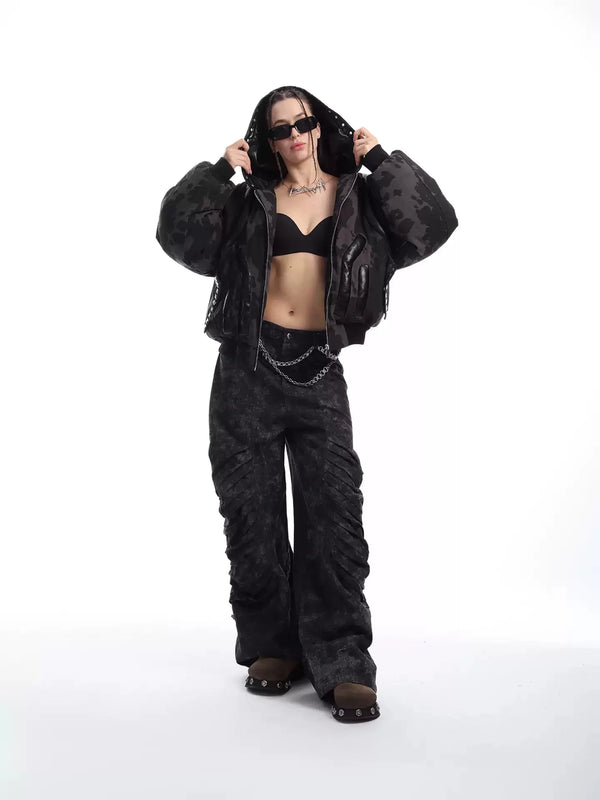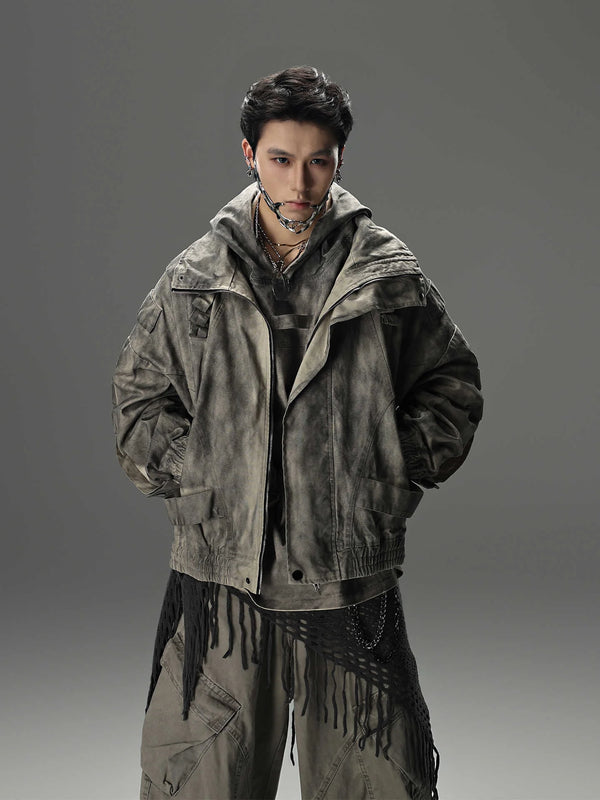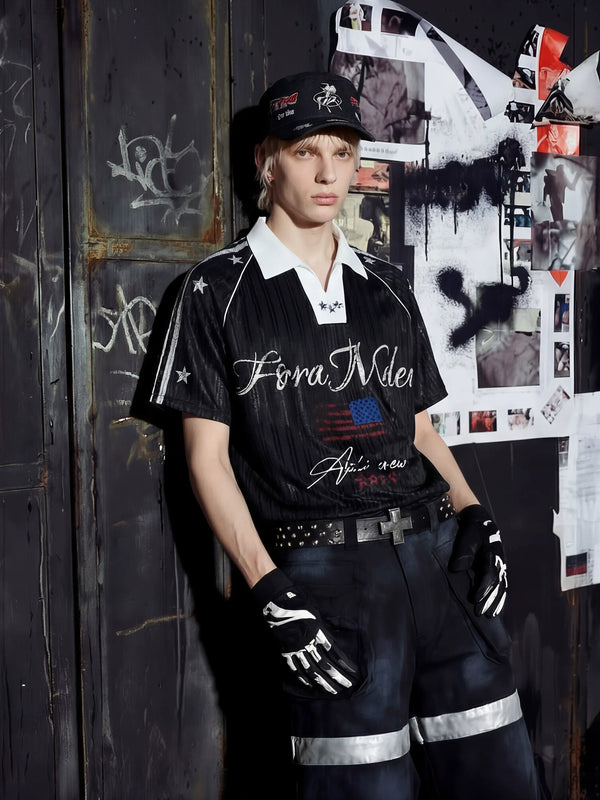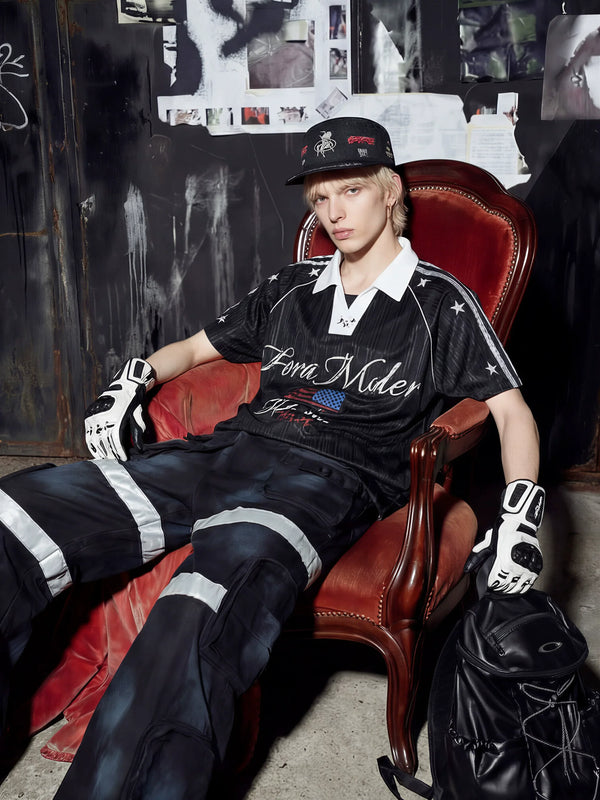

Everyone says Gorpcore is „just outdoor clothing in the city". That's not wrong, but it explains nothing. By the same logic, a tote bag in a Berlin museum would also just be a tote bag.
Gorpcore Fashion has, since 2017, been the vocabulary through which outdoor function tips over into the urban streetwear canon. Hardshell jackets from the Alps, trail runners from French ski resorts, fleece pullovers from Californian climbing camps — all dragged onto the asphalt, all without logo bling, all functional to the point of absurdity. The name comes from the trail mix of US hikers: Good Old Raisins and Peanuts. Gorpcore sounds like a geek, because it is one.
Anyone who dismisses Gorpcore as „North Face puffer on sneakers" has confused the code with a weekend outfit. This guide clarifies what actually sits behind it: where the name comes from, what counts and what doesn't, which five sub-types overlap at the edges, which brands wrote the vocabulary, how it translates into jackets, pants, mid-layers and shoes, which six mistakes turn the look into camping cosplay — and how you start with four pieces.
What this looks like in motion — compact:
Origin
What does Gorpcore mean — and where does the strange name come from?
Gorpcore has, since 2017, been the word for a movement that had been running longer: technical outdoor clothing finding its way from the hiking trail into urban everyday life. The term was coined by the journalist Jason Chen in the US magazine The Cut — in a piece about the first sneakerhead groups who suddenly wore Patagonia Synchilla fleeces instead of hoodies.
„GORP" is American trail slang for Good Old Raisins and Peanuts — the classic hiking snack of raisins, peanuts and sometimes M&Ms that every US hiker has carried in the chest pocket since the 70s. The „-core" suffix comes from internet fashion vocabulary and marks that this is about a consistent aesthetic, not a single piece. Cottagecore, Normcore, Goblincore — Gorpcore lines up there.
The look existed before the word. Climbing groups in Yosemite wore Patagonia from the 70s on, Swedish outdoor bands of the early 2010s wore Klättermusen, Tokyo kids of the late 2010s wore And Wander. What happened in 2017 was not the invention of the outfits but the realisation that they had become their own visual language — completely detached from the actual trail. The sneakerhead hype around the Salomon XT-6 from 2019, the Drake-wears-Arc'teryx phase, the resale explosion in vintage Patagonia Retro-X fleeces — all since 2020 — then swept Gorpcore from subculture joke to global streetwear standard.
Definition
What counts as Gorpcore — the four pillars
Gorpcore is an outfit system of four fixed building blocks. If all four sit, the outfit reads as Gorpcore. If one is missing, it tips immediately into something else — into workwear, into Techwear, into hiking advertising, or worse: into „dad-takes-us-to-the-woods" energy.
3
colours max in the outfit
2L
hardshell as minimum spec
5
Sub-types
0
visible lifestyle logos
These four numbers are not decoration. They are the test you run on your outfit before you walk out the door. An outfit that breaks one quota — five colours instead of three, a soft shell instead of a real hardshell, a BAPE logo across the chest — is no longer Gorpcore. It is „outdoor-inspired streetwear", which in plain terms means: camping cosplay.
Concretely, what counts as Gorpcore Fashion:
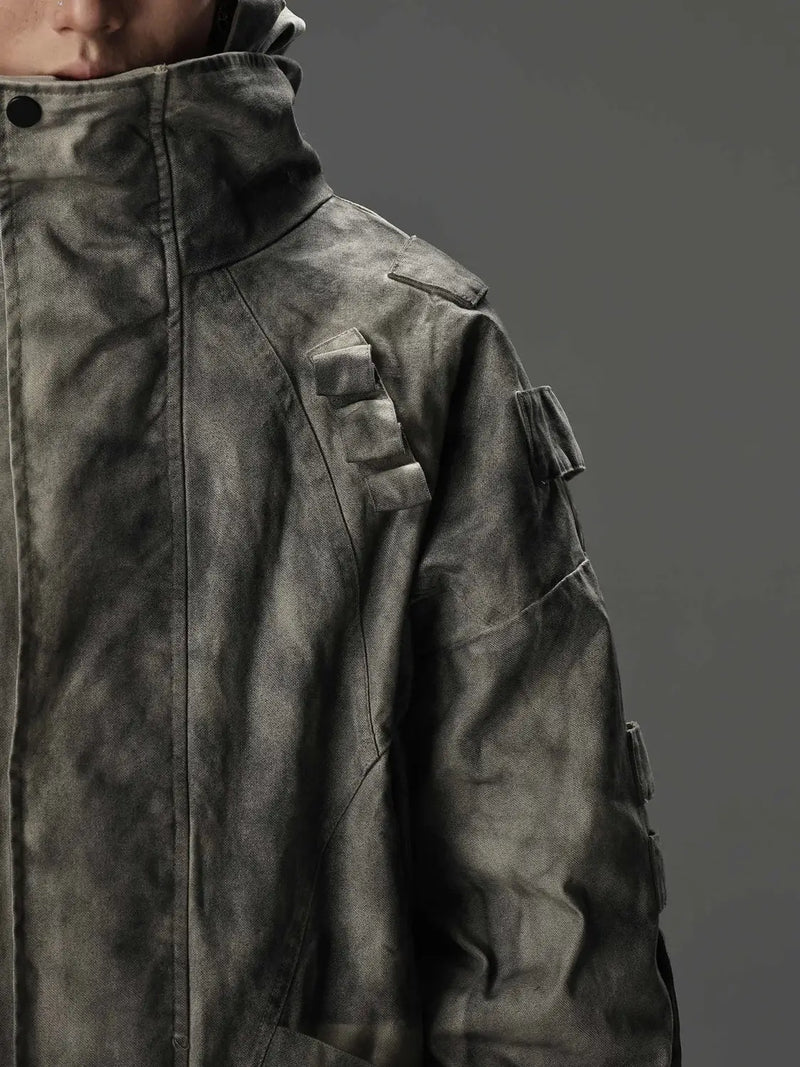
- Technical outer layers — Gore-Tex hardshell, waxed parka, Synchilla fleece, Primaloft puffer. The function must be legible in the material, not just in the logo.
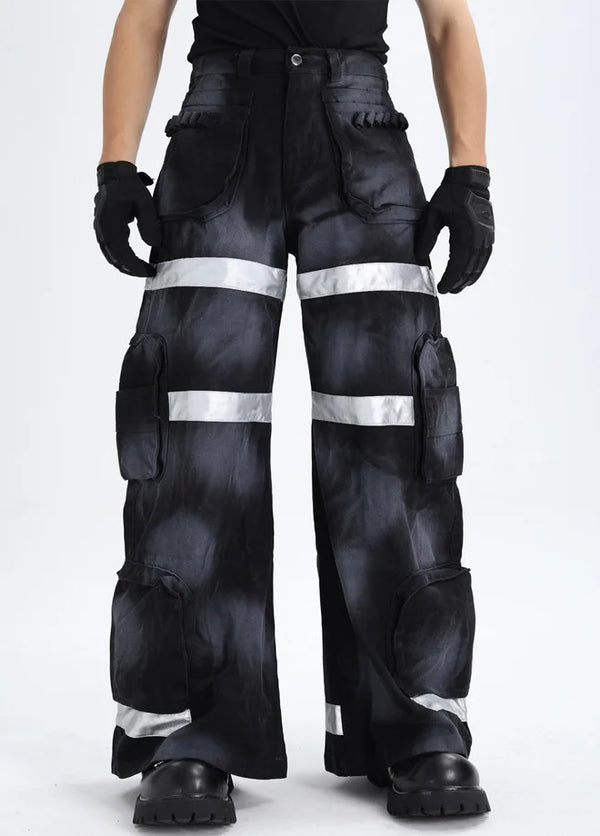
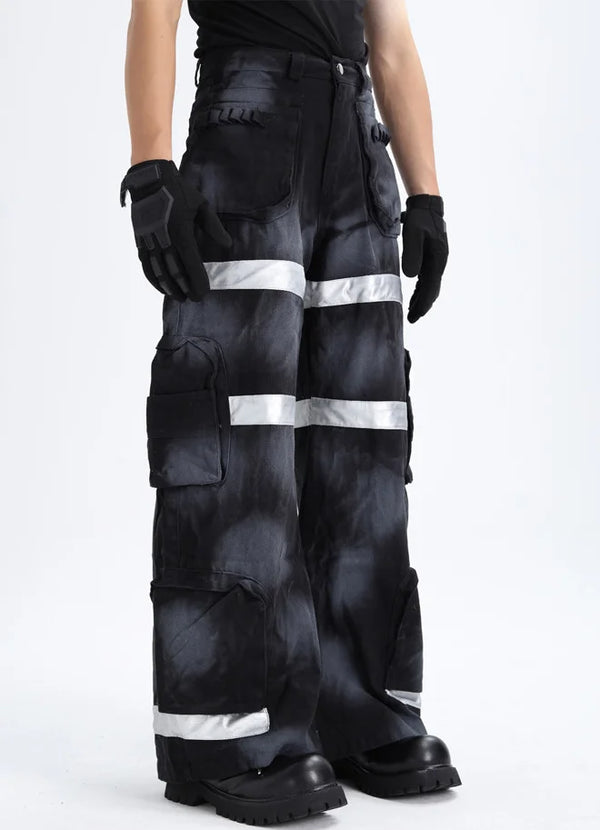
- Cargo, trail or side-zip on the bottom — wide, rugged pants with real pockets for real contents. Skinny is dead, slim is suspect.
- Mid-layer as a visible element — half-zip pullover, base layer, grid fleece. The layering is not hidden but part of the look.
- Trail runner or hiking shoe — Salomon XT-6, Hoka Speedgoat, Merrell Moab. Lifestyle sneakers (Air Force, Stan Smith) stay home.
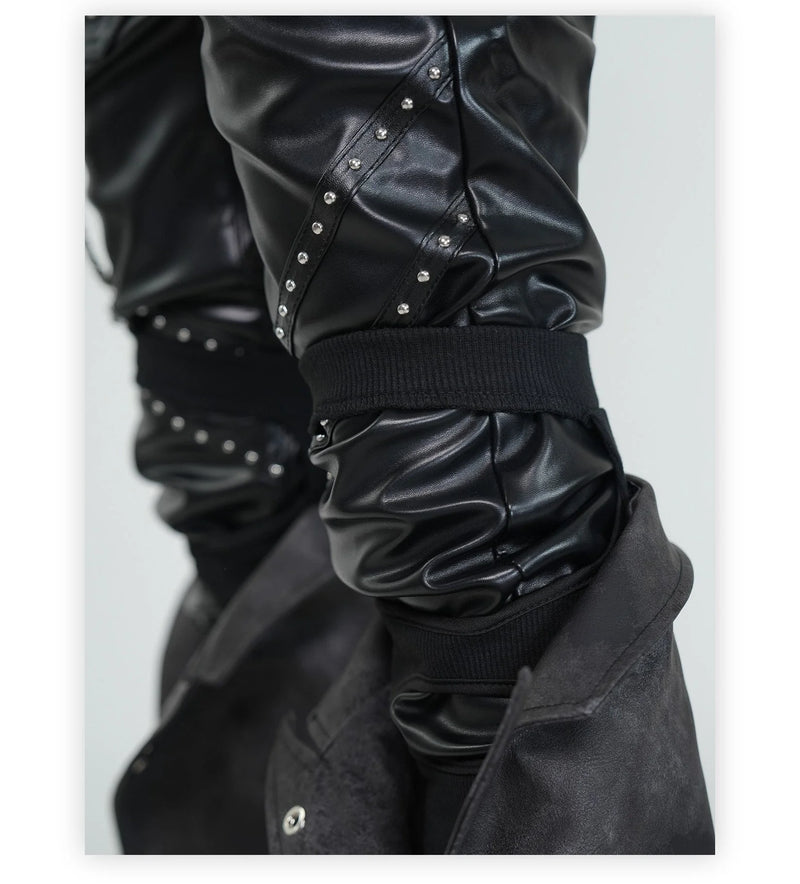
- Functional hardware — buckles, velcro, cord locks, MOLLE loops, detachable pouches. None of it is decorative, all of it carries load.
- Muted earth palette plus one accent — olive, stone, charcoal, sand as the main surface, plus a single functional colour point (neon orange, reflector silver, forest lime).
If three of these six points are missing, it isn't Gorpcore — no matter what the brand says.
5 types
The 5 Gorpcore types — from Trail Purist to Tech Crossover
Gorpcore isn't one look — it's five that overlap at the edges. If you lay Tokyo street-style photos, Berlin late-summer outfits and Californian sneaker communities side by side, you see these five types cleanly separated. Each with its own material density, its own colour logic, its own shoe choice.
Which of the five suits you depends less on taste than on the climate of your city, the money in your account, and the shoe you're already wearing anyway. Whoever lives in Berlin or Hamburg gets through the whole year with the Hardshell Layerer. Whoever lives in Milan or Lisbon builds around the Salomon Sneaker Gorp.
Subculture
Who wears Gorpcore — and why still in 2026?
Gorpcore today is no longer a niche code, but it isn't everywhere either. If you walk through Berlin Kreuzberg on a Wednesday, you see hardshell jackets and Salomon trail runners in the 20s and 30s cohort. In Tokyo Shibuya the same cohort wears them. In Milan Brera or Paris Marais too — only with more expensive brands and less visible function.
The original cohort were sneakerheads who switched from the Air Force hype to Salomon from 2019 on. From 2021 came climate-crisis-aware buyers who preferred real outdoor function over fast-fashion trends — Patagonia and Snow Peak suddenly sold to people who never wanted to climb a mountain. Since 2023 Gorpcore has arrived in mainstream menswear: Uniqlo, COS, Carhartt WIP all carry Gore-Tex pieces that nobody would have expected without the hype.
Why does the look stay stable in 2026? Three reasons. First: it works. A hardshell keeps you dry, a fleece keeps you warm, a trail runner holds the foot — all without having to dress up. Second: it ages better than trend streetwear. A 2018 Arc'teryx Beta AR doesn't read as old in 2026 but as proven. Third: it's gender-neutral enough that the whole family can wear it — outdoor cuts were never gendered, that's a feature.
Brands
The brands that actually write Gorpcore
Gorpcore has no fashion-house hierarchy of its own, because the brands that wrote the vocabulary are actually outdoor brands. They weren't built for streetwear — they slid into it because their products have real function. That's the difference from lifestyle streetwear, where the label comes before the function.
The brands that wrote the Gorpcore vocabulary — in chronological order:
- Patagonia — founded 1973 by Yvon Chouinard in California. The Retro-X and Synchilla fleece are the most iconic Gorpcore pieces of all. Patagonia's repair programme and pro-sale policy make the brand the ethical default choice.
- The North Face — founded 1966 in Berkeley. The Nuptse puffer line (since 1992) and the Denali fleece jacket have been streetwear standards since the 2010s. In the resale market TNF holds its value better than most lifestyle brands.
- Arc'teryx — emerged 1989 in Vancouver, specialist in Gore-Tex hardshells. The Alpha SV and Beta AR are the reference jackets — expensive, technical, lifetime guarantee. Whoever wears Arc'teryx signals function over logo.
- Salomon — founded 1947 in the French Alps. The XT-6 trail runner has been the meme shoe of Gorpcore since 2019 — from sneakerheads who've never seen a mountain to ultra-trail runners. Salomon Advanced (the fashion line) serves the asphalt variant.
- And Wander — founded 2011 in Tokyo by two Issey Miyake designers. The brand translates Japanese cut precision into outdoor function. Reflector details, asymmetry, technical fabrics as a style element.
- Snow Peak — 1958 in Tsubame, Japan. Originally camping equipment, also apparel since the 2010s. Indigo dyes, waxed cotton, Japanese heritage materials.
- Klättermusen — founded 1984 in Sweden by a mountaineer. Compostable outdoor wear, recyclable materials, Swiss precision in the cuts. The premium choice for Hardshell Layerers.
- Mammut — founded 1862 in Switzerland, originally as a rope maker. One of the oldest outdoor brands of all. Delivers the heritage reference that Salomon lacks.
- Hoka — emerged 2009 in Annecy, specialist in maximally cushioned running shoes. Speedgoat and Bondi are the trail and asphalt defaults. Optically more controversial than Salomon, functionally more uncompromising.
- ROA — Italian label from Genoa, founded 2014. Hiking boots that sit between outdoor and high fashion. Premium suede, asymmetric lacing, Vibram soles.
Anyone who wants to wear Gorpcore without burning four months' salary in the first season combines: a heritage piece from the resale market (vintage Patagonia or TNF), a workwear-adjacent bottom within Carhartt WIP or Dickies range, and a functional shoe that doesn't necessarily have to be Salomon. Merrell Moab does the job too.
Category · Outerwear
Gorpcore jackets — hardshell, fleece, puffer
The jacket carries the Gorpcore outfit. It is the largest surface, the most technical material, the primary signal that this outfit doesn't end at H&M. This is where it's decided whether your look becomes Gorpcore or „hiking advertising photo".
Four jacket types work in Gorpcore: the 3L hardshell (Gore-Tex or eVent, the maximum of function), the Synchilla or grid fleece (the iconic mid-layer statement), the Primaloft puffer (warmth without a volume explosion), and the waxed parka (heritage reference, often with a fur hood). Soft shells and lifestyle bombers stay out — they have neither the material nor the construction.
If you don't yet own a real hardshell, that's your first move. A 3L jacket lasts ten years if you care for it — re-spray the DWR coating once a year, keep the zippers dry, don't wash with fabric softener.
Category · Bottoms
Gorpcore pants — cargo, side-zip, trail pant
The pant does half the work in Gorpcore — it's the proof that the outfit isn't just an expensive jacket over a 39-euro pair of jeans. Skinny is dead, slim is suspect, and anything without real pockets fails.
Working Gorpcore bottoms are wide enough that trail runners or hiking boots fit underneath, rugged enough that they don't tear on the first outdoor weekend, and fitted with pockets that hold real contents — multitool, phone, small water bottle. Cargo cuts with side thigh pockets, side-zip pants with ventilation zippers, or classic trail pants with roll-up cuffs.
If you want to build a pant that fits each of the five Gorpcore types, take a multi-pocket cargo in olive or stone. That's the common denominator — works for the Trail Purist, the Tech Gorp, the Heritage Patagonia and the Sneaker Gorp at the same time.
Category · Tops & Mid-Layer
Gorpcore Tops & Mid-Layer — half-zip, base layer, grid fleece
In Gorpcore the mid-layer is not a hidden warmth trick but a visible style element. You show that you think in layers — the half-zip pullover over the merino base layer, the grid fleece between base and hardshell. The layering is the outfit, not a means to the outfit.
Working Gorpcore tops are made of real material: merino wool as the base, grid fleece as the mid-layer, technical synthetics (Capilene, Power Stretch) when it's about performance. Half-zip is the default cut choice — faster on and off, a more defined layering look. Crew-neck pullovers work too but are less clearly Gorpcore and more heritage outdoor.
The most iconic Gorpcore mid-layer is the Retro-X fleece in the Patagonia heritage line — sherpa wool outside, recycled fibre inside, contrast-coloured chest patch. Whoever can't find vintage Patagonia looks for „sherpa pile" or „boa fleece" in comparable constructions.
Category · Footwear & Hardware
Gorpcore shoes & hardware — trail runner, pack, GPS watch
Shoes are the fastest place in Gorpcore where the outfit tips. An Air Force 1 under a hardshell is instant game over — no matter how expensive the jacket was. Trail runners and hiking shoes are non-negotiable because they anchor the weight of the outfit to the ground.
Three shoe types work: the trail runner (Salomon XT-6, Hoka Speedgoat, La Sportiva Bushido — bicolour, low profile, aggressive sole), the hiking shoe (Merrell Moab, Keen Targhee, ROA Andreas — mid-cut or high shaft, rugged leather or suede), and the approach shoe (Five Ten, Scarpa Mojito — flatter, lighter, boulder reference).
Hardware is the quiet language of Gorpcore. A roll-top pack over the shoulder (15 to 30 litres for the city, 40+ for longer routes), a multifunction watch on the wrist (Garmin Fenix, Casio ProTrek, Suunto), a carabiner as a key holder on the belt frame — all functional, all non-decorative.
Styling physics
The 3-colour rule and the physics behind Gorpcore layering
A Gorpcore outfit works on exactly two principles: the 3-colour rule and the layer hierarchy. Whoever has both down builds a hundred outfits with ten pieces. Whoever has neither has a full closet of outdoor brands and not a single outfit that sits right.
The 3-colour rule: two muted earth or stone tones as main surfaces, plus one functional accent. More colours tip the look into the hiking advertising photo.
In practice that means: hardshell in olive plus cargo in stone plus trail runner in reflector silver. Or fleece in tan plus side-zip pant in charcoal plus hiking boot in brown suede. Three tones, clear hierarchy — main surface, secondary surface, accent. If your outfit has five tones, cut them to three.
The second principle is the layer hierarchy: base layer tight, mid-layer loose but visible, outer shell protective. Never two mid-layers on top of each other without a base — that looks dressed up, not layered. The full layer breakdown with materials and order is in a separate article:
Gorpcore also doesn't stand alone — it overlaps at several edges with other functional aesthetics. Techwear shares the material vocabulary, Warcore shares the tactical cuts, dystopian streetwear shares the earth palette. Whoever has Gorpcore down can read these neighbouring codes and mix them deliberately, without slipping into camping cosplay.
Here are the four most important neighbours — each with its own guide, if you want to go deeper:
Seasonal
Gorpcore in summer vs winter
In winter Gorpcore is easy. 3L hardshell, grid fleece underneath, merino base, cargo pant, trail runner with Gore-Tex membrane. Four or five layers, all muted tones, all functional. The challenge comes in summer, when the outer layer (= the largest visual surface) falls away and the look can suddenly seem naked.
Summer Gorpcore works through what was under the jacket. The half-zip pullover becomes the visible top, the merino base a crew-neck shirt. Cargo shorts replace the long cargo pant — but not the cheap sweat shorts, rather real trail shorts with two side and one back pocket. Trail runners run all year.
The year-round solution also comes as hardware: pieces that adjust their layer thickness themselves. Convertible pants that become shorts, detachable sleeves on hardshells, modular pack systems with MOLLE loops for season-specific add-ons.
Here's what that looks like in motion:
What does not work
The 6 most common Gorpcore mistakes — what ruins the look
Gorpcore has six places where it reliably tips — no matter how expensive the individual pieces are. If you avoid only one thing, make it mistake number one.
Action
How you start in Gorpcore — the first 4 pieces
You don't need 20 outdoor pieces to wear Gorpcore. You need four that will be in 80 % of the outfits. Everything else builds around them.
In order: a multi-pocket cargo in olive or stone (your greatest impact per euro — sits in each of the five sub-types). A half-zip or grid fleece in a muted tone (tan, charcoal, forest). A hardshell or a heritage puffer in a second muted tone (olive, stone, black). A pack with a roll-top or velcro closure (15 to 30 litres, outdoor brand). The shoes are the fifth piece — trail runners are your default if you don't have any yet.
Outfits for real
Gorpcore outfits for real — how it looks on the street
Before you build your own, look at how others wear it. The five types from above look different in the feed than in lookbook photos: looser, dirtier, with real wear — and that's exactly why they work.
This is the fastest way to check whether Gorpcore sits on your body type and in your city at all — before you spend money.
To close
Gorpcore is function, not costume
If you remember one thing from this guide, make it this: Gorpcore doesn't work through brands but through rules. Whoever has the rules down builds fifty outfits with eight pieces. Whoever only buys brands has a full closet of Patagonia and not a single outfit that sits right.
The whole logic of this guide reduces to one sentence:
The rules have been stable since 2017 and will stay that way — as long as the climate gets more unpredictable, function comes before form. But you don't have to wait until you know them all by heart. Start with the one look that best fits your city. What you don't know, you learn by wearing.
And that's the point too: Gorpcore reads theoretically like a corset of rules, but in practice it doesn't feel that way. Once you have the code down, every further outfit is a variation on the same five or six building blocks — not a new invention.
FAQ
Frequently asked questions about Gorpcore Fashion
The questions we often get by DM and email — short, clear, no detours.
What does Gorpcore actually mean?
What do you wear in the Gorpcore style?
Who wears Gorpcore?
Why is Gorpcore so popular?
What are examples of Gorpcore fashion?
What is the 3-colour rule in Gorpcore?
Does Gorpcore work in summer too?
What is the difference between Gorpcore and Techwear?
Where can you buy Gorpcore clothes without paying designer prices?
Can I wear Gorpcore in the office?
What do you think?
Tell us on @fuga_studios
About the author
Philipp Fuge — Founder · Berlin
Founder of Fūga Studios. Writes the journal himself. Berlin · Shanghai · Tokyo · Poznań — four cities, one logic.