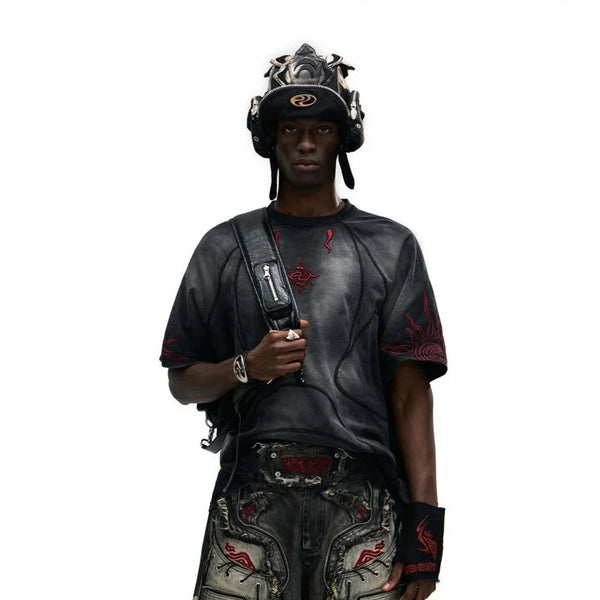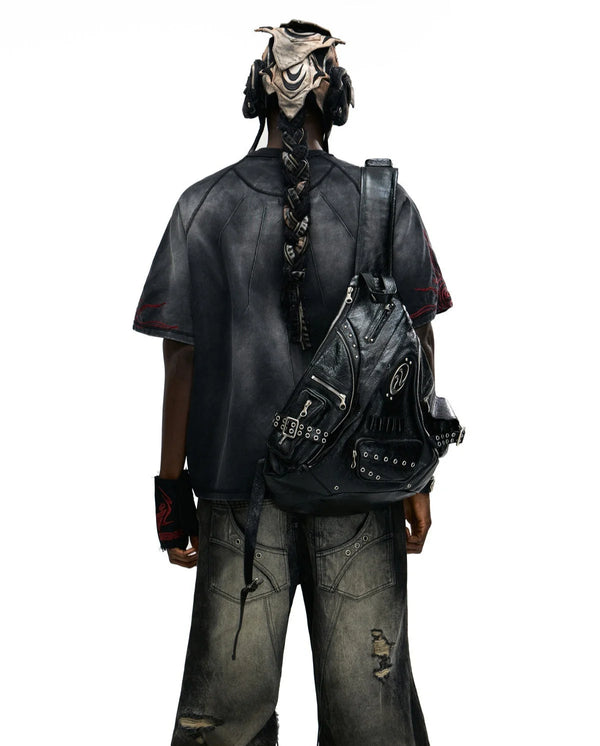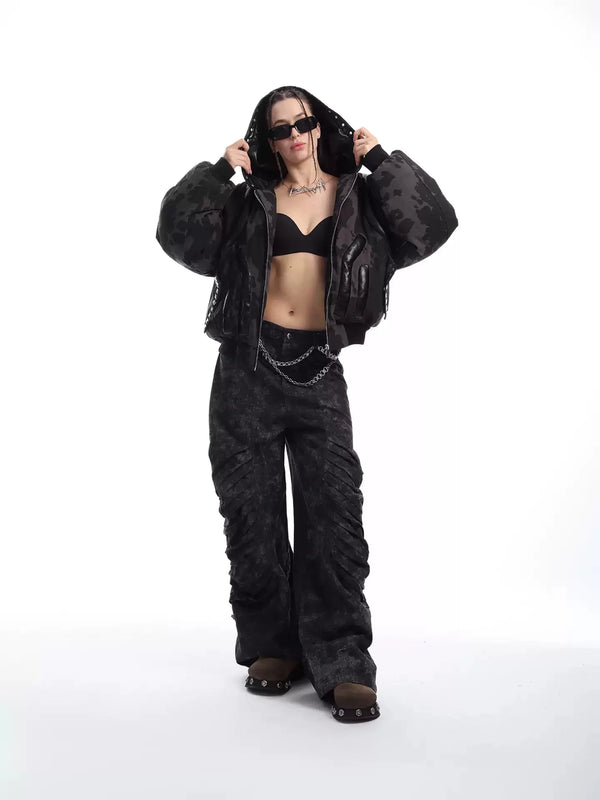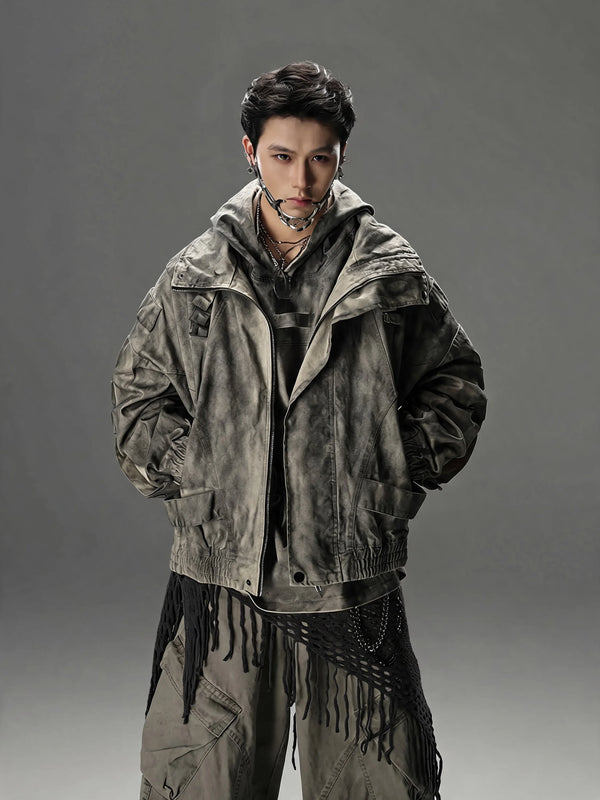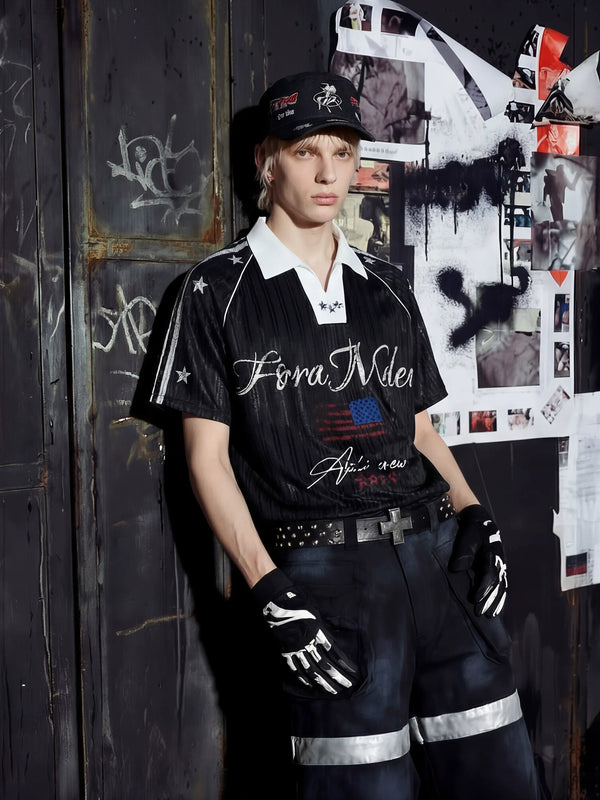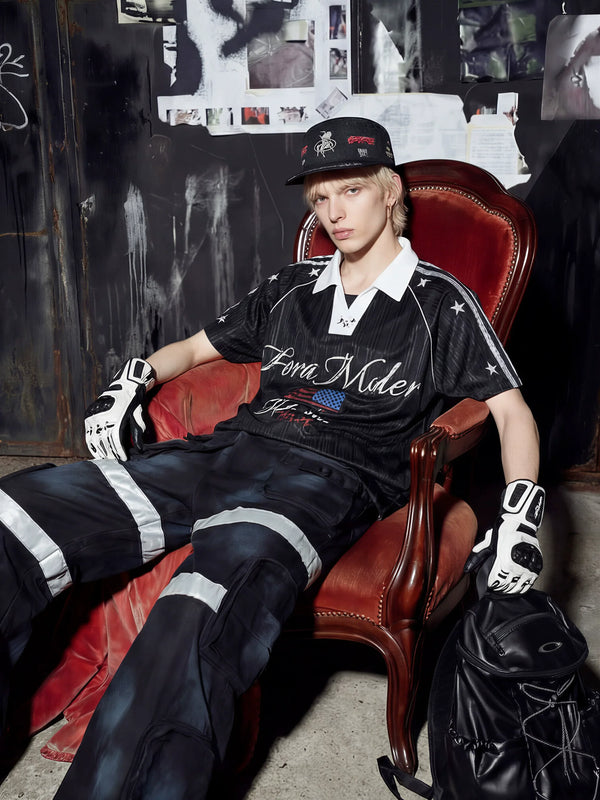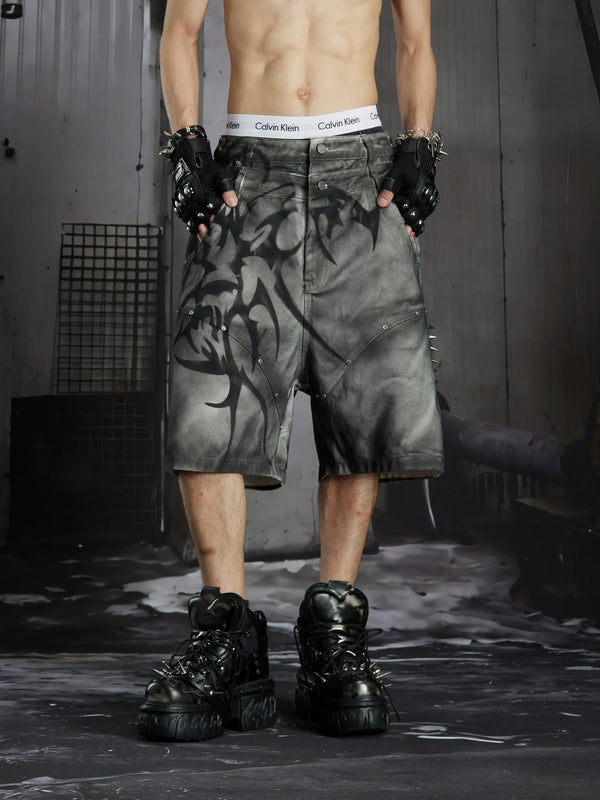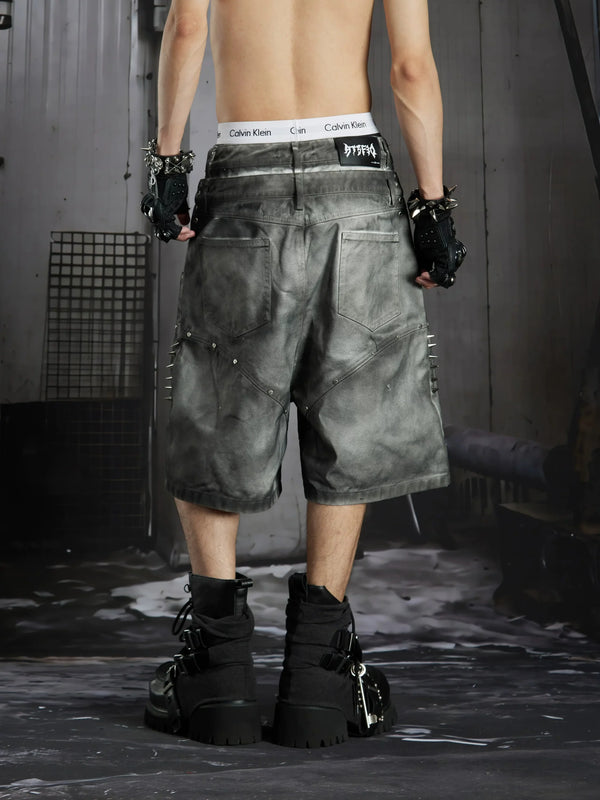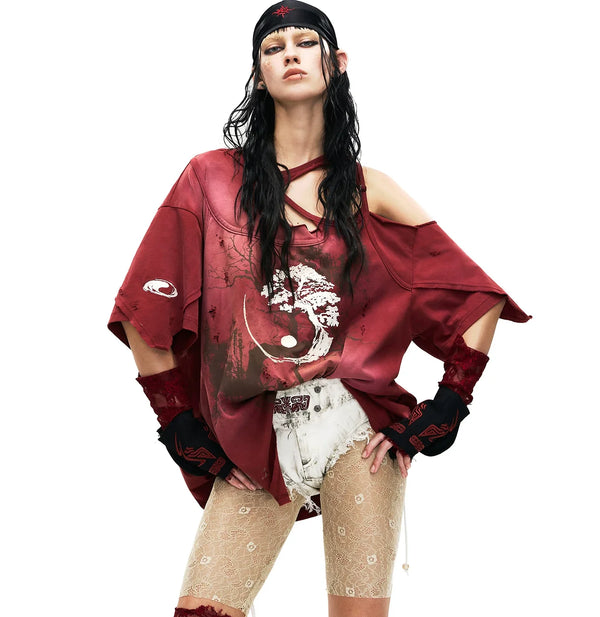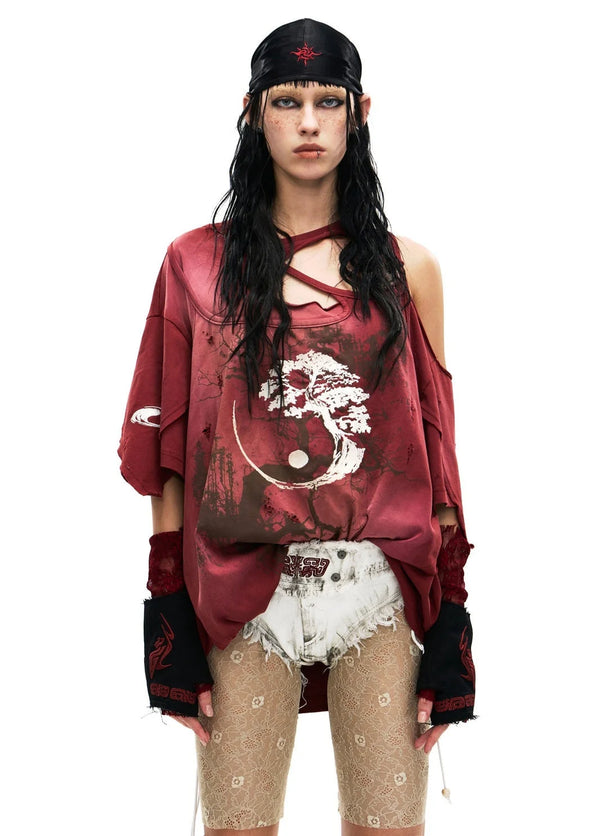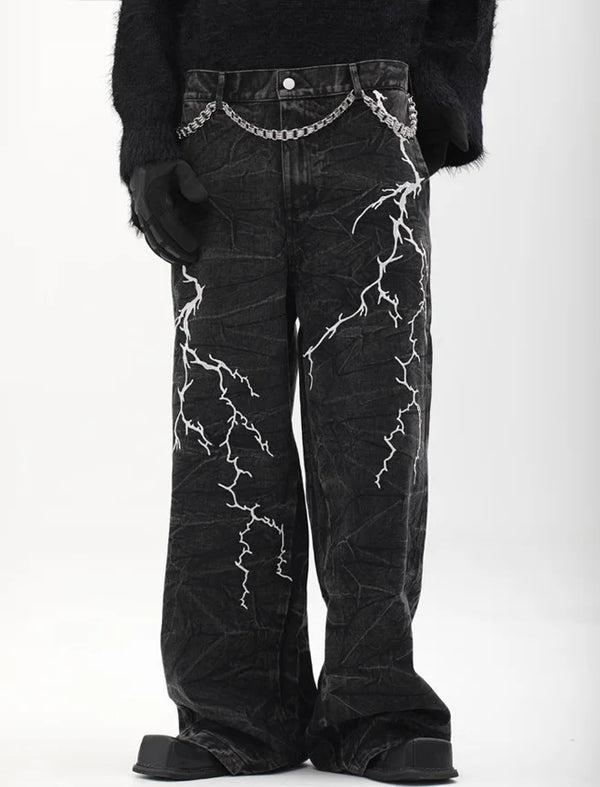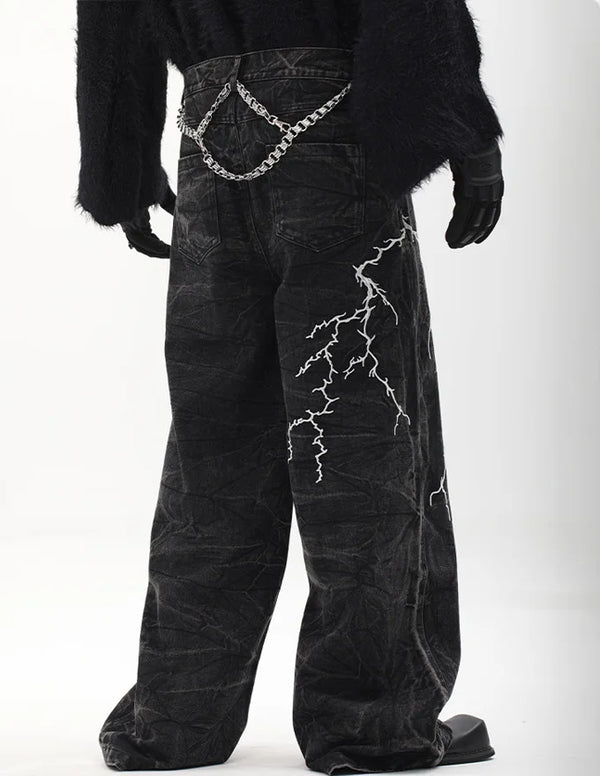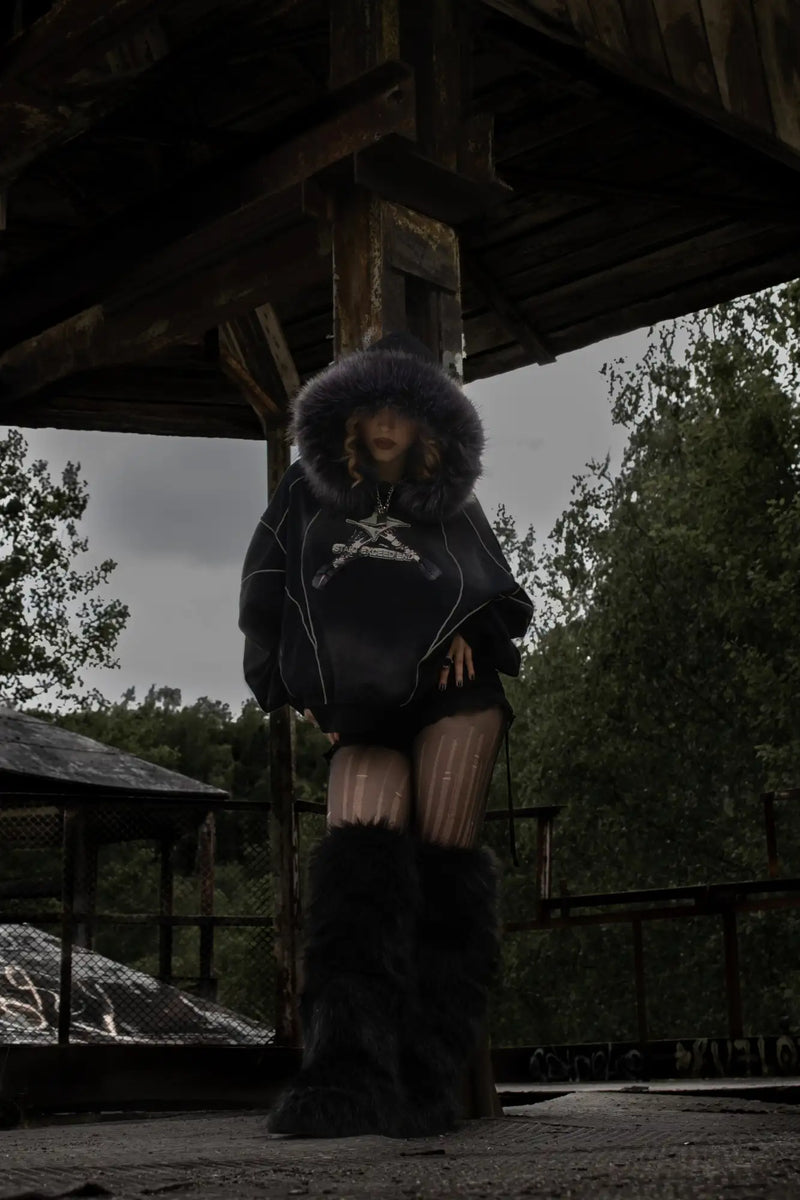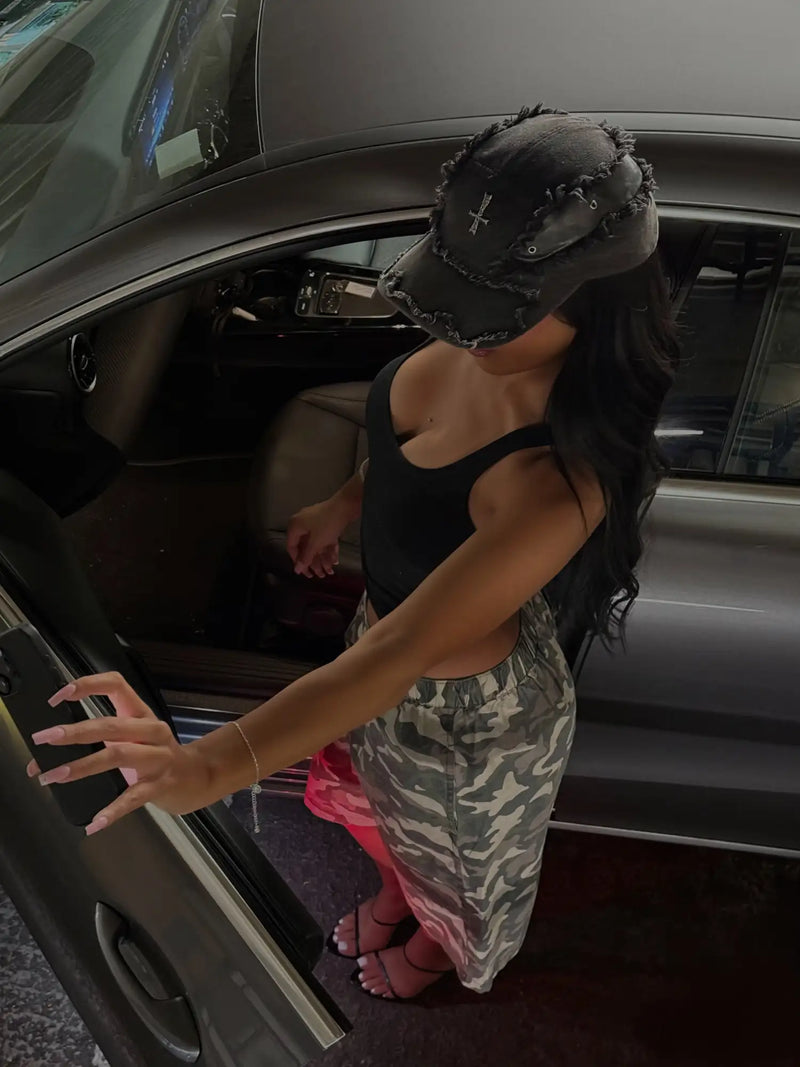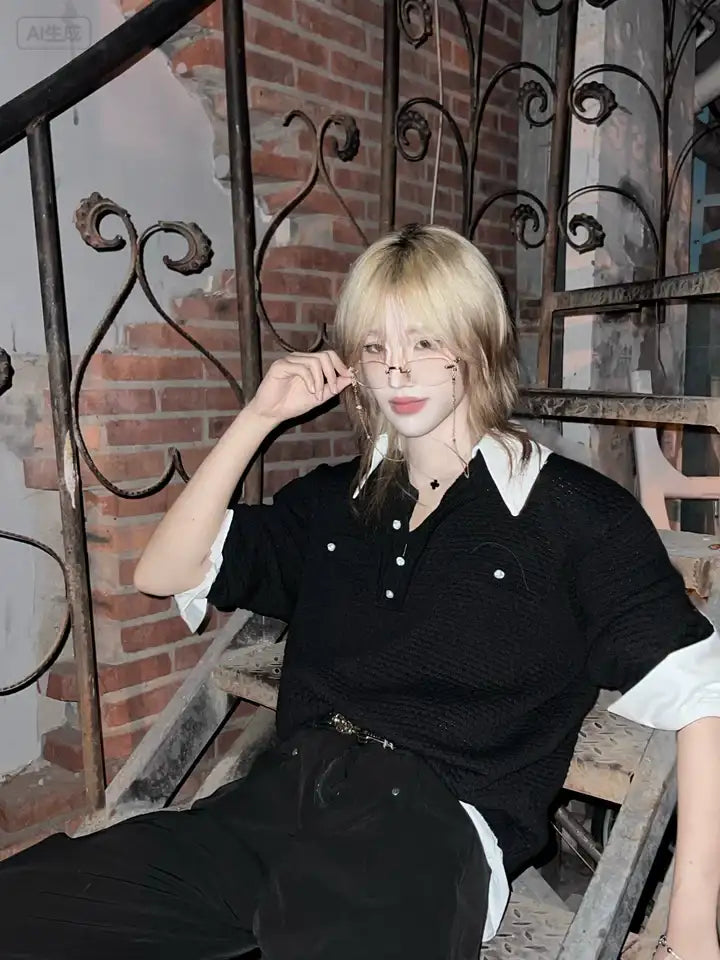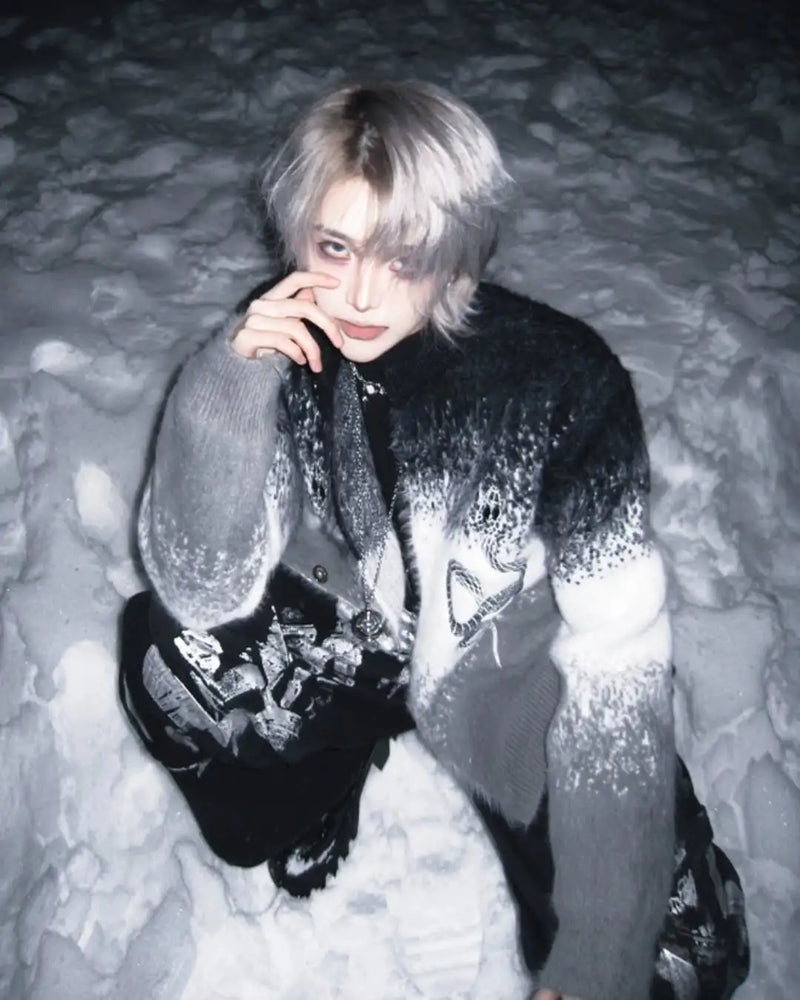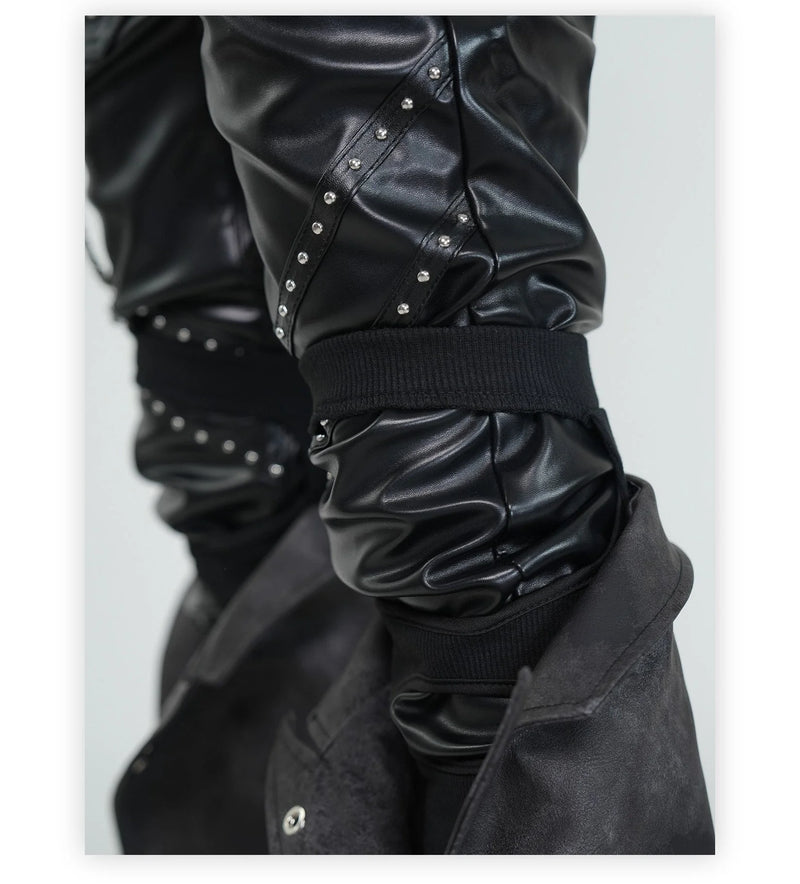
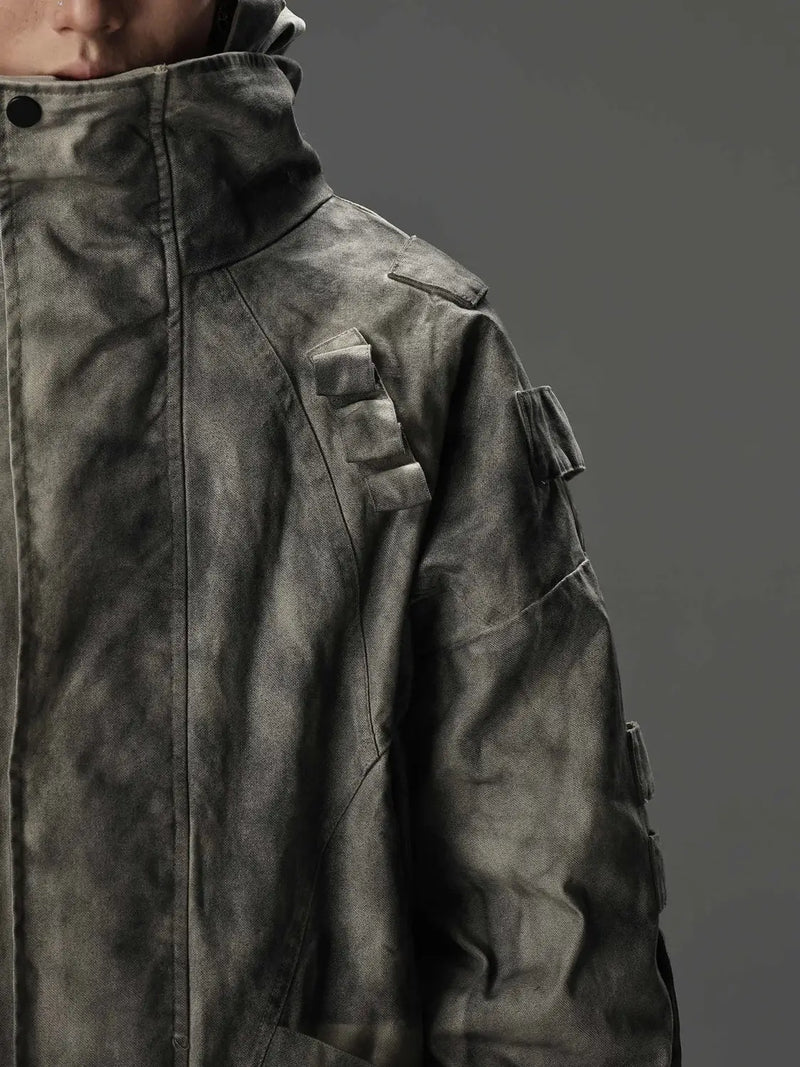
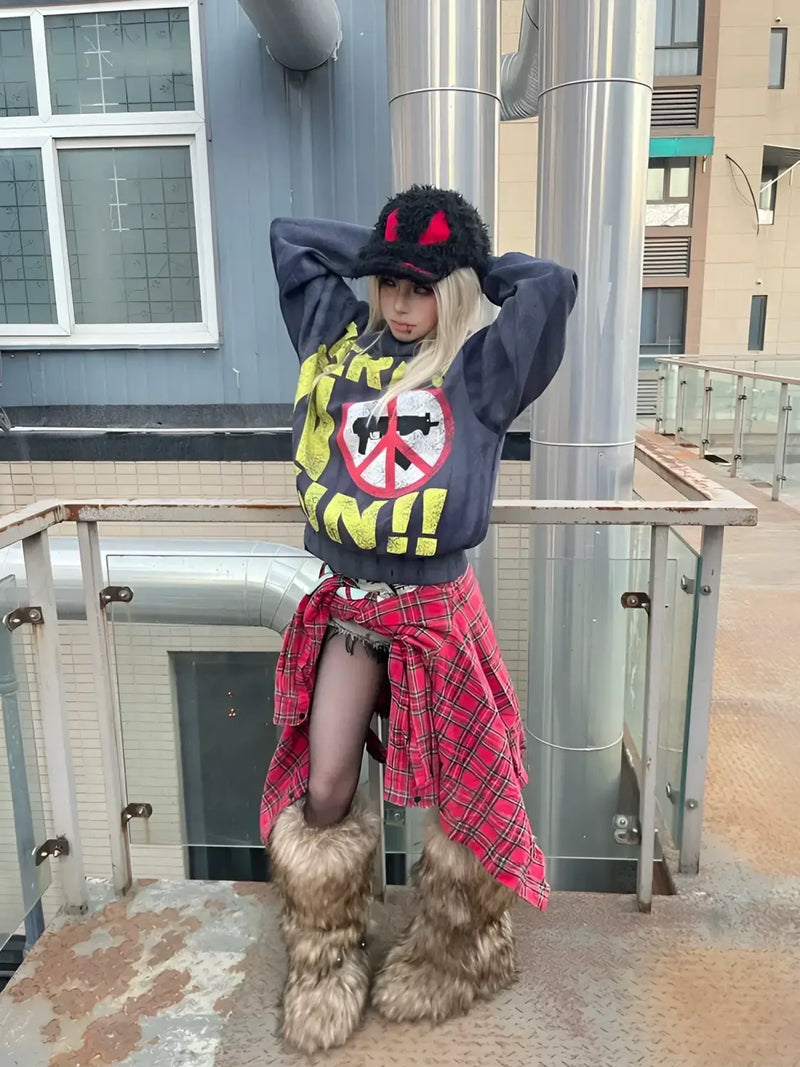
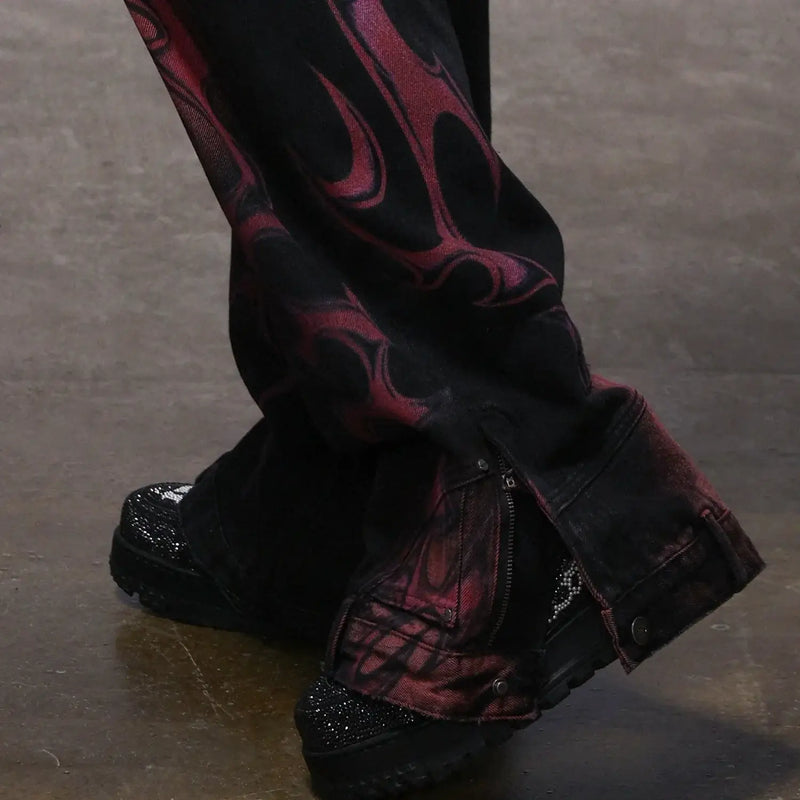
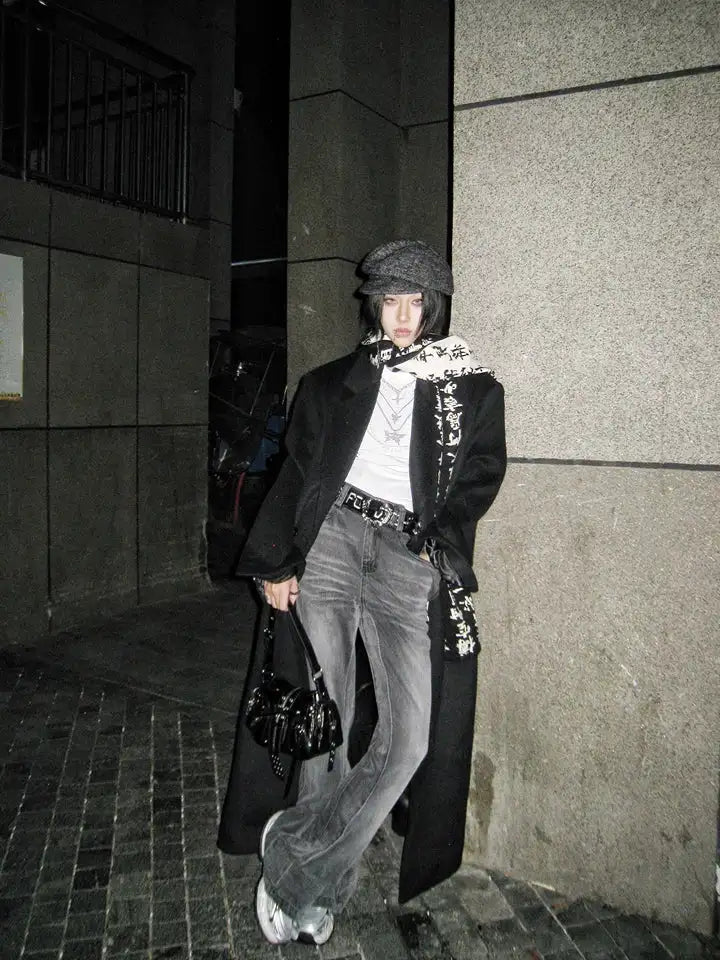

A €300 festival set does one thing reliably: it makes you interchangeable. Three rows over, someone stands in the exact same complete look from the same shop, and from there you're both just background.
Custom festival outfits flip the math. You start with a base that fits — tank, cargo, shell — and for €40 you add what nobody else has: patches, chains, reflective tape, a cut you set yourself. The piece costs less than the set and looks like you instead of lookbook page 4.
This guide shows how that works in practice: what “custom” really means for a festival outfit, the five ways to rework a piece, how the festival type (Techno, Hip-Hop, EDM, Open-Air) dictates the outfit, how you share a code as a group without ending up in matching looks, and how the whole thing survives a rainy day.
Let's start with the word most people talk past — “custom”.
Term
What “Custom” really means for a festival outfit
On Etsy and TikTok, “custom” has become a word that means everything and nothing. For a festival outfit a clear line is worth drawing: custom is a piece that carries a decision of yours the original product didn't have. A bought glitter body isn't custom. The same body with your sewn-on patches and a chain you set yourself — that is.
€40
Enough for a custom set
5
Ways to rework a piece
0
Others in the same outfit
There are four ways a festival piece becomes custom — and they cost different amounts of time and money:
- Self-made — you sew, glue, cut and dye it yourself. Maximum control, an afternoon of work, almost no budget.
- Made-to-order — handmade shops on Etsy or local sewists make it to your spec. Pricier, but cleanly finished.
- Personalized — a ready base plus your hardware: chains, chokers, patches, tape. The fastest route that still looks like you.
- Reworked — a thrift or vintage piece cropped, dyed, recombined. Sustainable, cheap, guaranteed one of a kind.
For most people “personalized” is the way in: buy a good base that fits anyway, and put the whole custom budget into the layer on top. That's the point where most set-buyers make their mistake.
The math
Custom or off-the-rack — the honest math
The ready set is tempting because it takes the work off your hands. One click, everything matches, done. The price for that isn't just money — it's visibility. A popular set sells by the thousand, and exactly the people going to the same festival buy it too. You pay a premium to disappear into the crowd.
Custom reverses that. A base for €30 to €60, plus €20 to €40 in hardware and material, an afternoon of work — and the outfit exists exactly once. Don't count in “expensive vs cheap”, count in “how many others wear this”.
Once that's settled, the practical question remains: how do you actually make a piece custom? There are five ways, and you rarely need more than two of them per outfit.
Methods
The 5 ways to make an outfit custom
Each method has its own tool, its own pace and its own effect. Use all five at once and you build a costume. Pick one main method and at most a second alongside it, and you build an outfit.
Which method you pick doesn't depend on your taste alone — it depends on which festival you're going to. A Berlin techno floor demands something different than an EDM mainstage.
Genre split
Festival type decides: Techno, Hip-Hop, EDM, Open-Air
“Festival outfit” isn't one style, it's four. The same custom piece that's right on an open-air field looks out of place in a dark Berlin club — and vice versa. Before you customize, clarify the code of the floor you're going to.
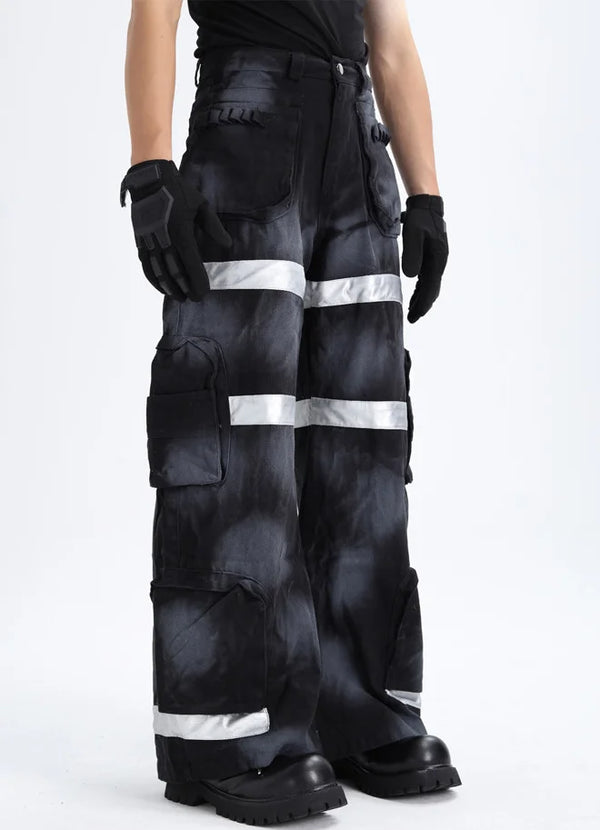
The Berlin techno code is the strictest: matte black, no color, function over show. Here you customize with reflective tape and mesh inserts, not glitter. The Hip-Hop code lives on volume — oversize tee, wide denim, a few well-placed gold chains. EDM and mainstage turn the volume up: print, glitter, kandi bracelets, everything can glow. Open-air and indie are more relaxed — denim, fringe, a layer that holds up in wind and rain.
Once the code is clear, it comes down to the pieces. Three layers carry every festival outfit: tops, pants, jackets. We go through them in order — each with the base that's easiest to customize.
Layer 1
Tops: the base layer you customize
The top is the surface where most of the customizing lands — and the one people see most often. A ribbed tank or a longsleeve in firm jersey is the ideal canvas: patches hold, chains fall clean, a crop sits right away. For techno you reach for the black mesh or rib tank, for EDM the print longsleeve that's already loud and only needs hardware.
Layer 2
Pants: cargo, parachute, reflective
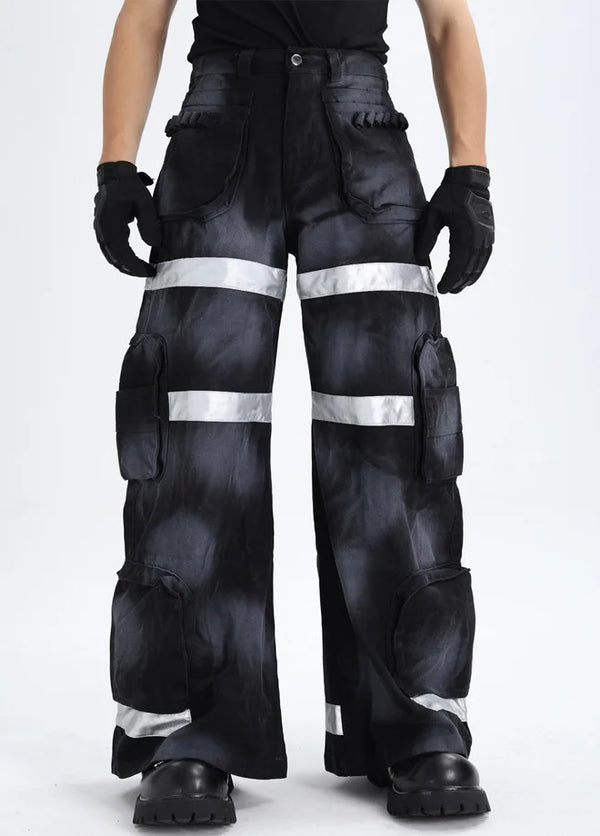
On a festival the pants do the most work — they stand in the mud, hold your phone, your water, your earplugs. A cargo with real pockets beats any pretty pants with no storage. For customizing, cargo and parachute are ideal: reflective tape on the side seams, a removable chain on the belt loop, patches on the pocket flaps.
Layer 3
Jackets & layers: for night, rain, field
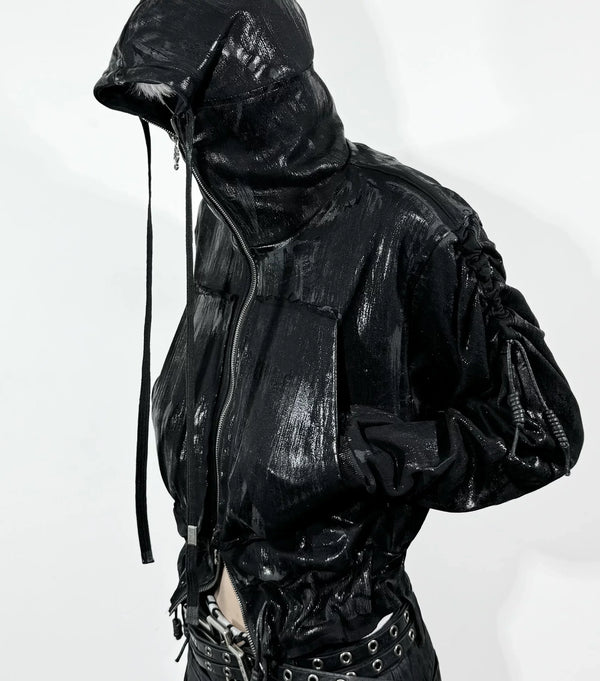
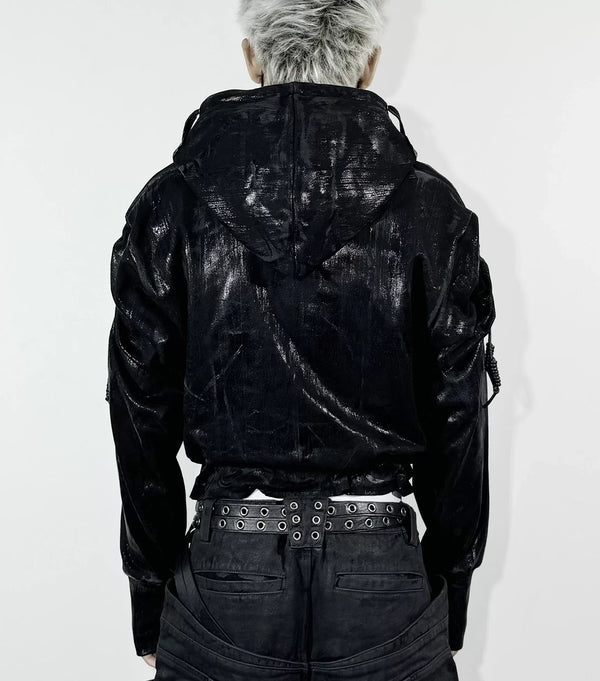
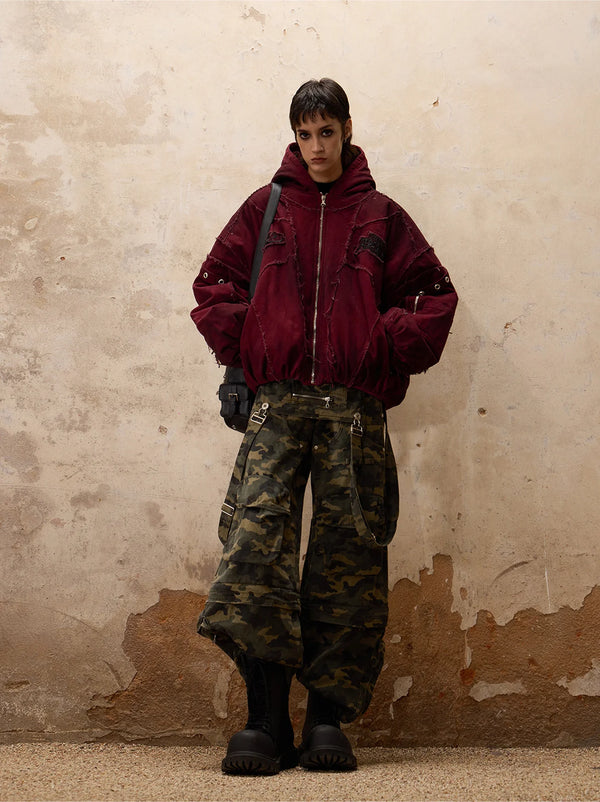
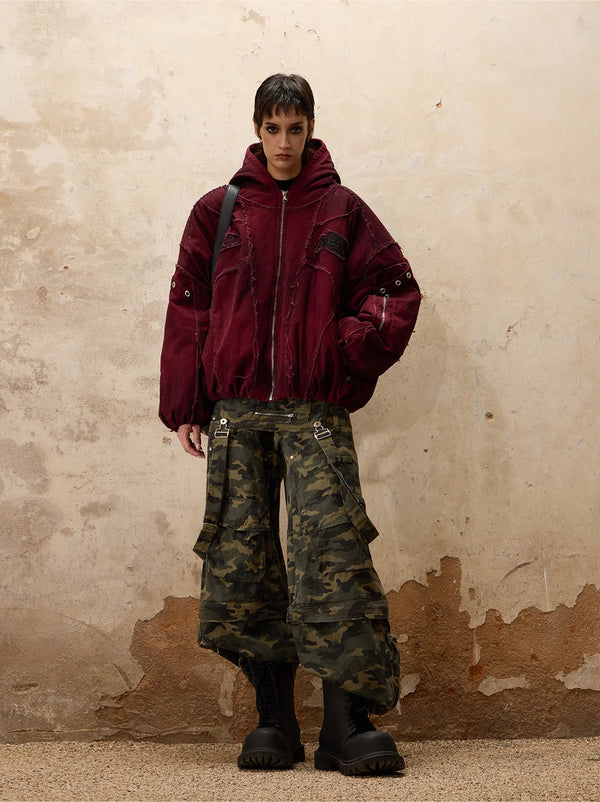
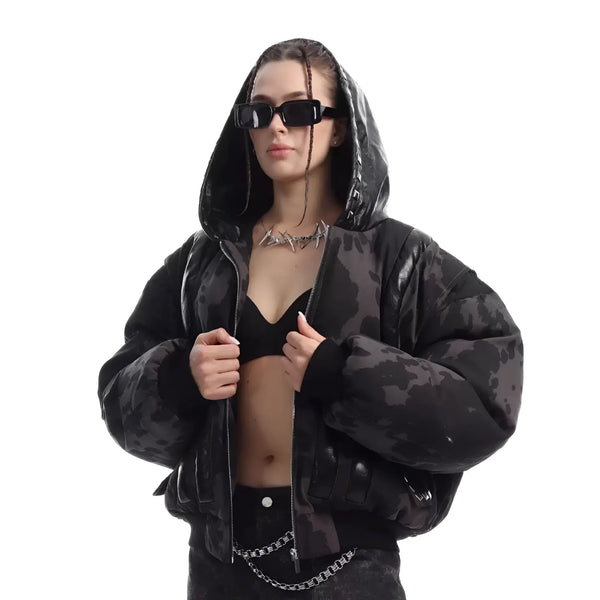
The jacket is the layer most people forget — until the sun's gone and the field's muddy. A bomber or a hooded shell isn't just warmth, it's the largest single surface for customizing: a back patch, tape along the sleeves, a chain on the zipper. By day you can tie it around your waist, by night it carries half the outfit.
Weather
Rain, mud, cold: the outfit that holds up
The finest custom outfit is worthless if the first shower dissolves it. Festival weather isn't an exception, it's the rule — so you plan for it instead of hoping it stays dry. The logic is simple: a shell that fits over everything, and materials that don't give up when wet.
The clever move is a jacket that does two jobs: statement layer in the sun, weather protection in the rain. A hooded shell over the custom outfit doesn't change the look — it just saves it when it comes to it.
Together
Group & couple looks without the matching-outfit trap
Going to a festival with friends or as a couple doesn't mean you have to show up in identical outfits. The matching look — everyone exactly the same — looks sweet in the first photo and tiring in the second. What really works is one shared element that everyone wears differently.
- Share a color — everyone wears an accent in neon green, but each in a different spot: top, laces, tape.
- Share a material — everyone has reflective somewhere on the outfit, so you read as a group at night without looking the same.
- Share a patch — the same self-made patch on different pieces: on your jacket, on the others' pants or bag.
- Leave a silhouette free — one oversize, the other fitted. Same signal, own body, own style.
That keeps you recognizable as a group — on a packed floor you find each other instantly — without anyone giving up their own line. That's the difference between a shared code and a uniform.
That leaves the question that decides outfit or costume: how do you customize so it looks intentional and not like craft hour?
Craft
How to customize without it looking like crafts
The difference between “custom” and “self-made in the bad sense” lies in restraint. An outfit with one strong intervention looks decisive. An outfit with eight small interventions looks unsure — as if you didn't know when to stop.
Customizing is subtraction, not addition. The best decision is often to leave the fourth element out.
Fūga · Studio-Notiz
In practice that means: one main signal per outfit. If the jacket carries the back patch, the pants stay quiet. If the pants are full of tape, the top stays plain. Clean finishing beats any effect — a straight sewn-on patch looks more expensive than a crooked one with three spikes around it. If you want to go deeper into styling, you'll find the genre-by-genre breakdown in the linked guides.
Mistakes
The 6 most common custom mistakes
Most failed custom outfits don't fail on courage, but on six predictable mistakes. Knowing them saves you the afternoon where a good piece gets ruined.
Getting started
Your first custom set: the 4 base pieces
Customizing for the first time doesn't take twenty pieces — just four that work together. One base per layer plus the accessories the customizing flows into. With that you build a complete festival outfit in an afternoon that exists exactly once.
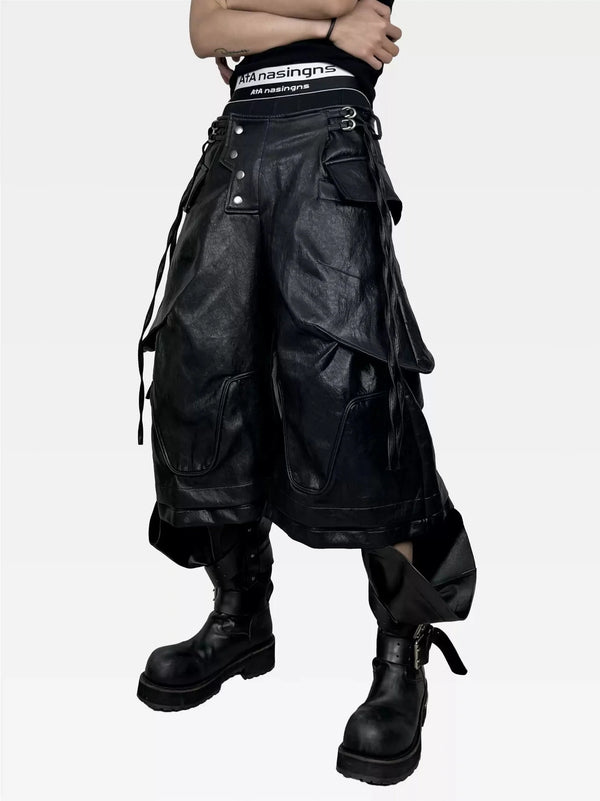
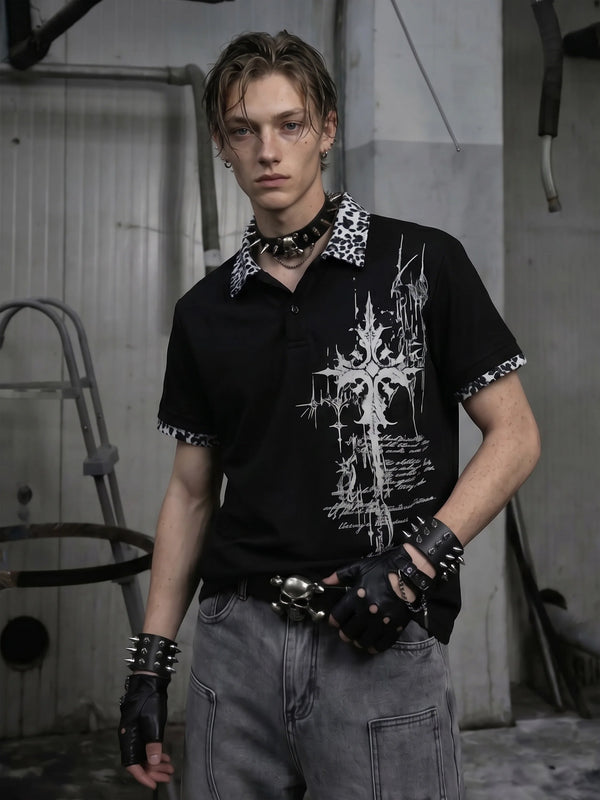
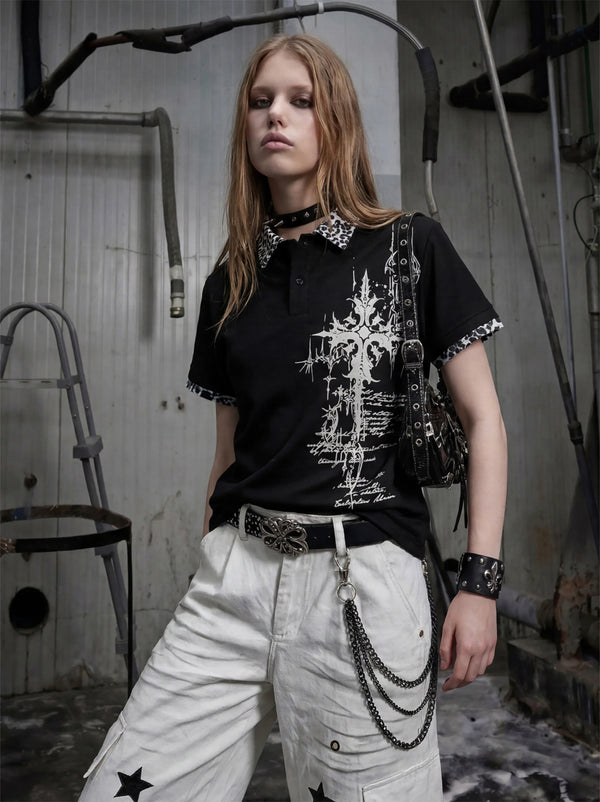
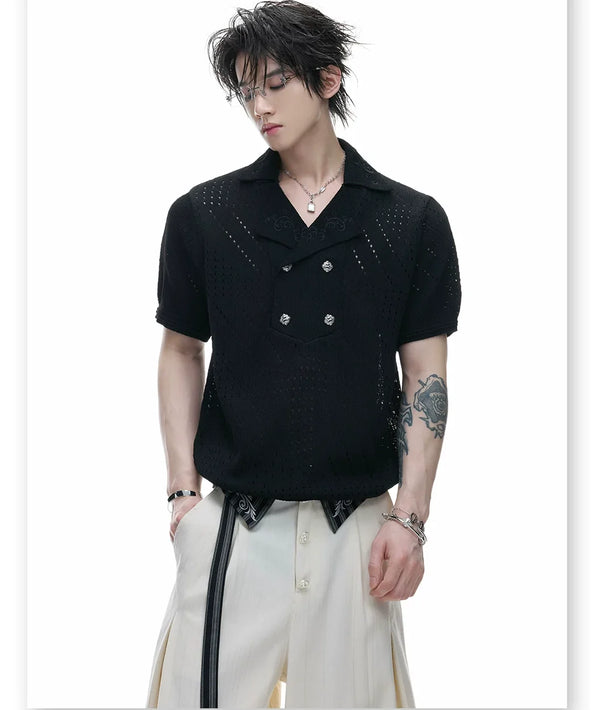
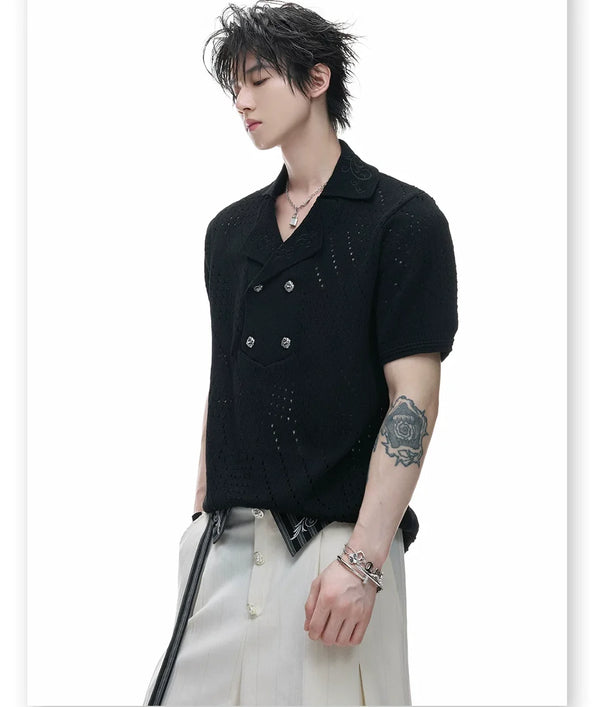
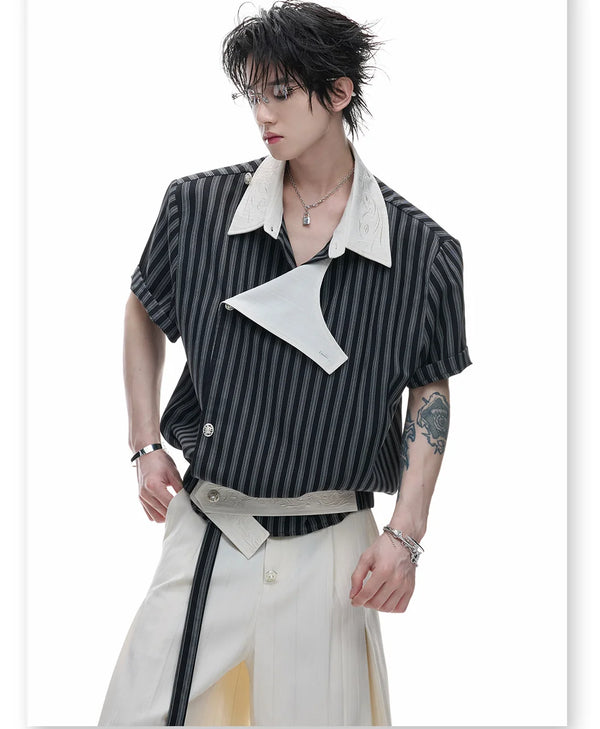
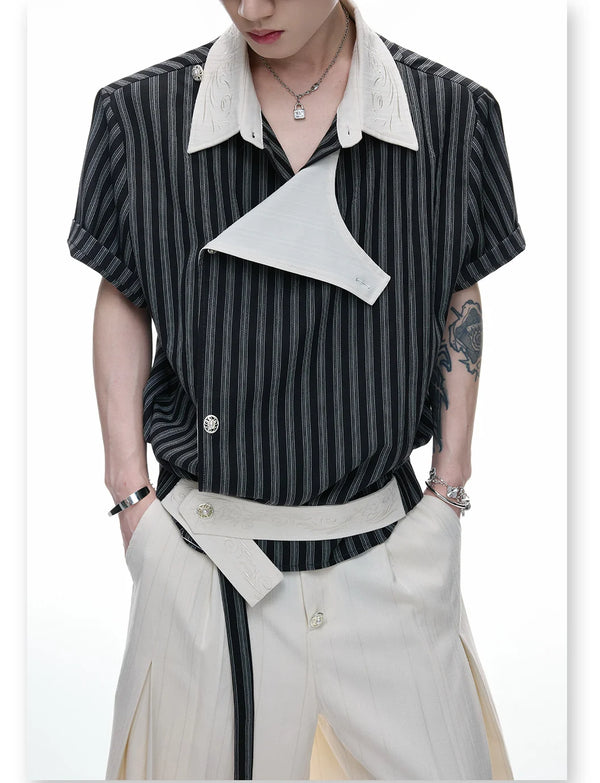
What this looks like for real shows best on people who wear it — not on a lookbook. Four custom looks, four floors, four decisions:
What connects all four isn't a single piece — it's the decision to take nothing off the rack.
Conclusion
Custom means: the outfit is yours
Custom festival outfits aren't a question of budget, but of order: first the base that fits, then a custom layer nobody else has. €40 in patches, tape and hardware make more difference than €300 in a set a thousand others wear too.
FAQ
Common questions about custom festival outfits
How much does a custom festival outfit cost?
Can I customize a festival outfit without sewing skills?
What do you wear to a festival as a group without ending up in matching looks?
How do I make my festival outfit rainproof?
Does a techno outfit differ from an EDM festival outfit?
Where do I find base pieces that customize well?
What do you think?
Tell us on @fuga_studios
About the author
Philipp Fuge — Founder · Berlin
Founder of Fūga Studios. Writes the journal himself. Berlin · Shanghai · Tokyo · Poznań — four cities, one logic.