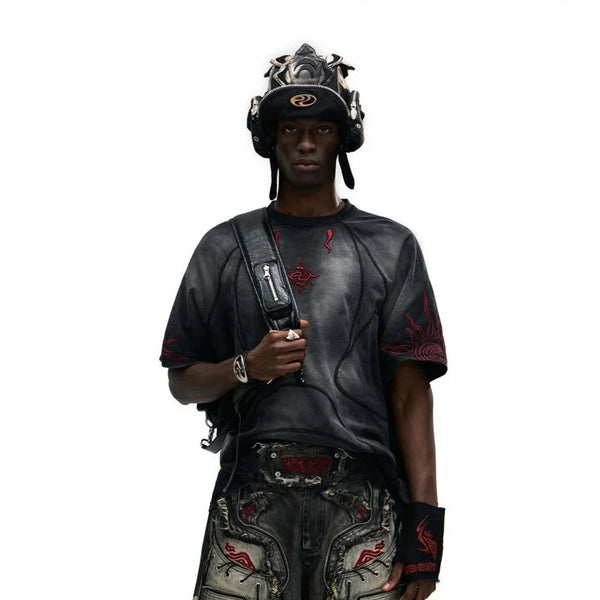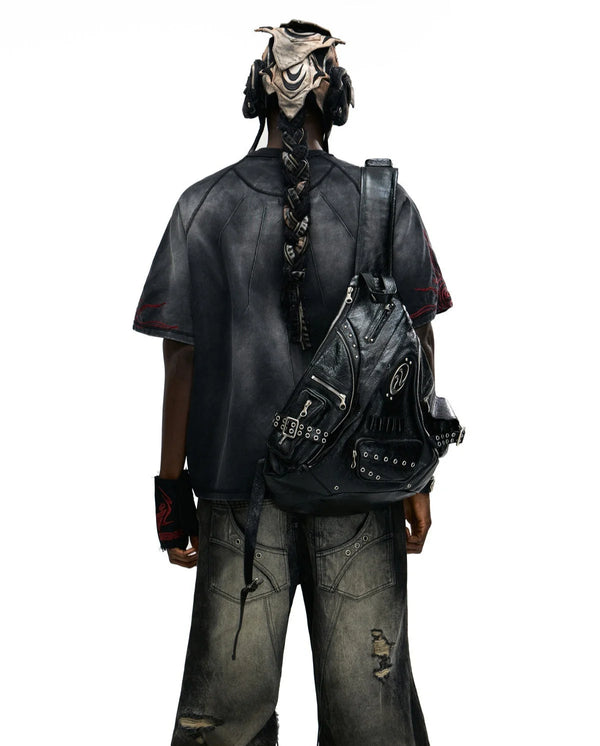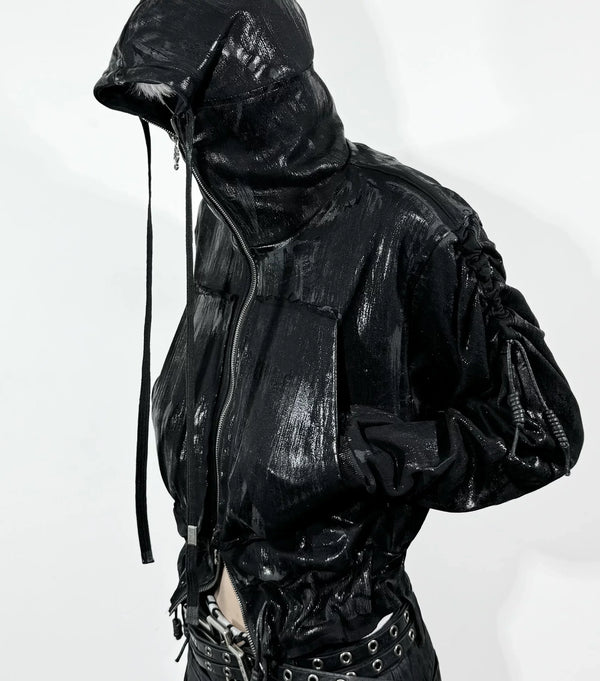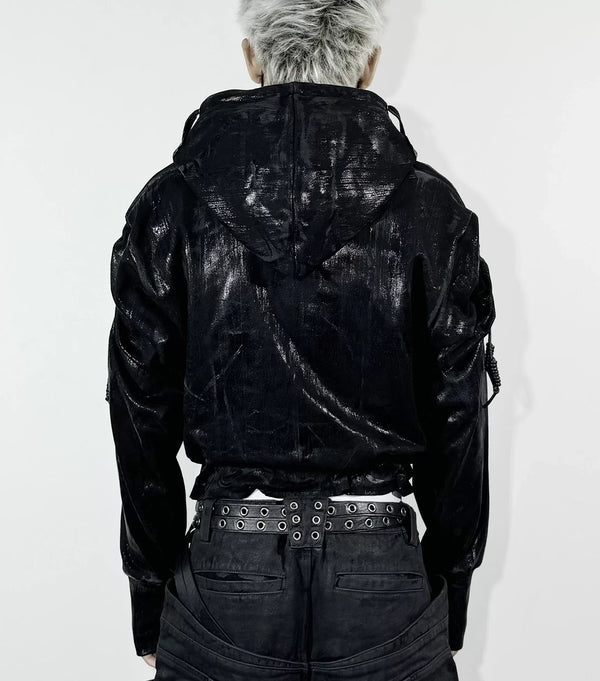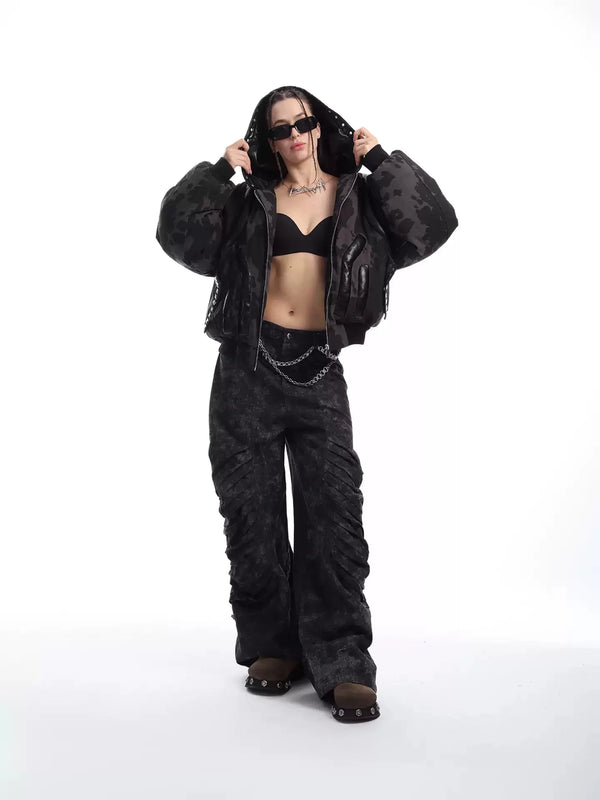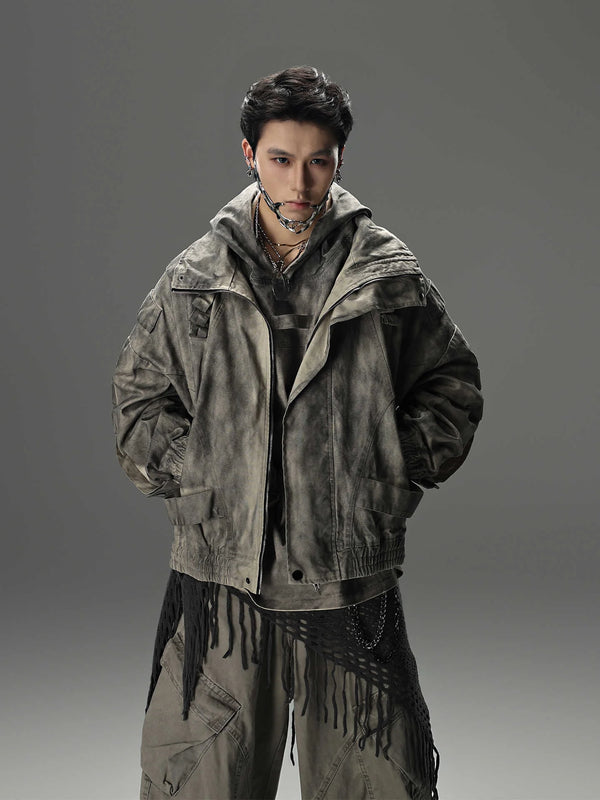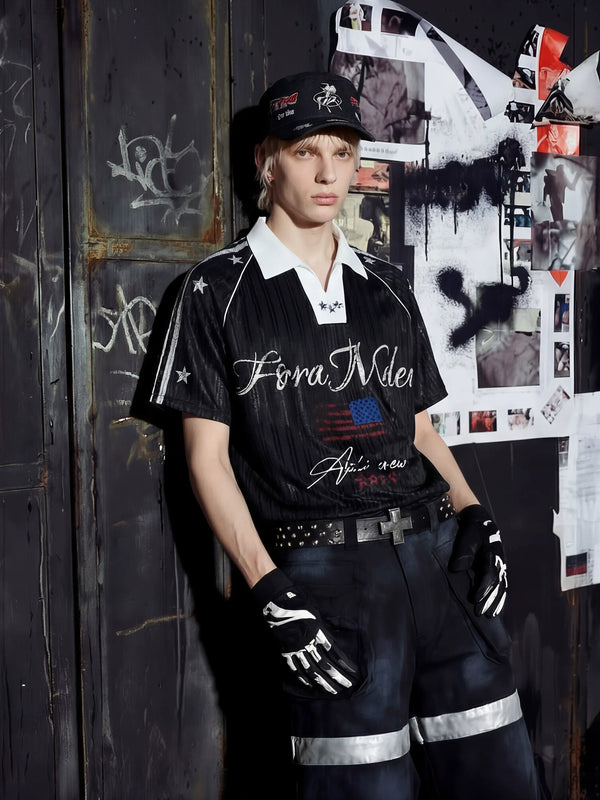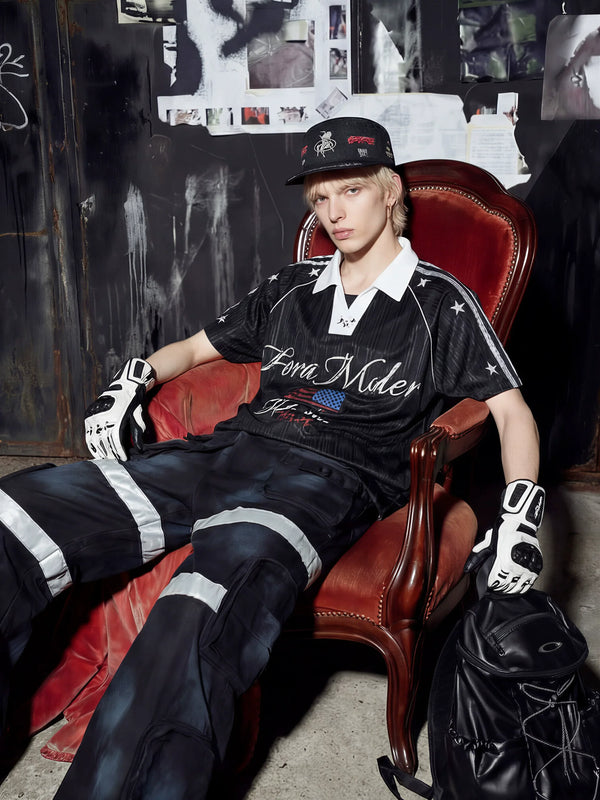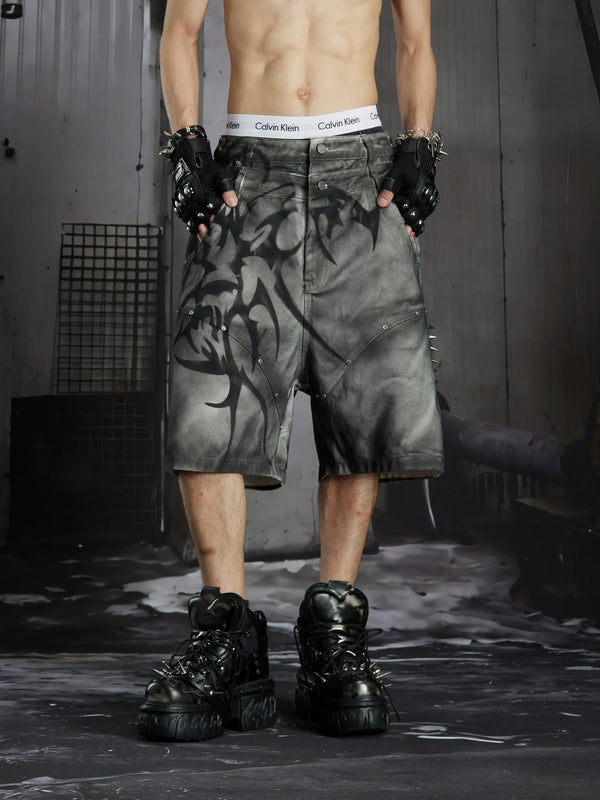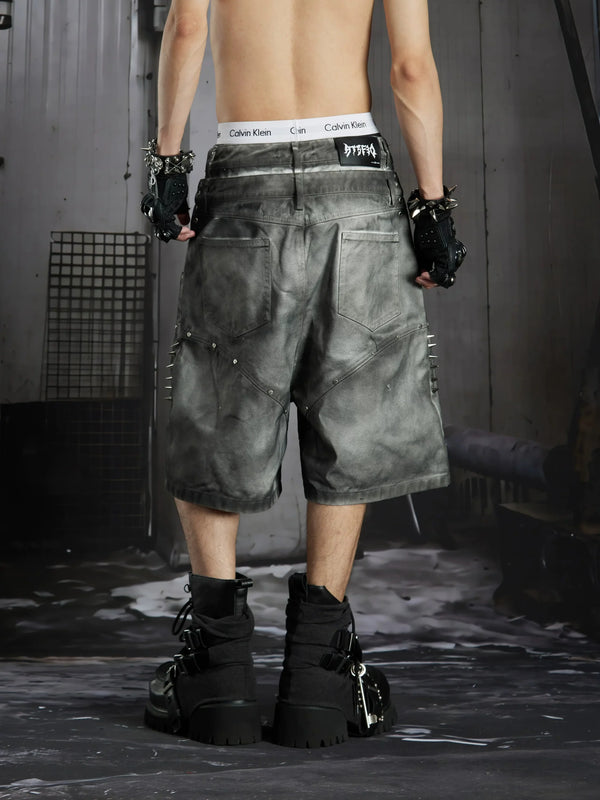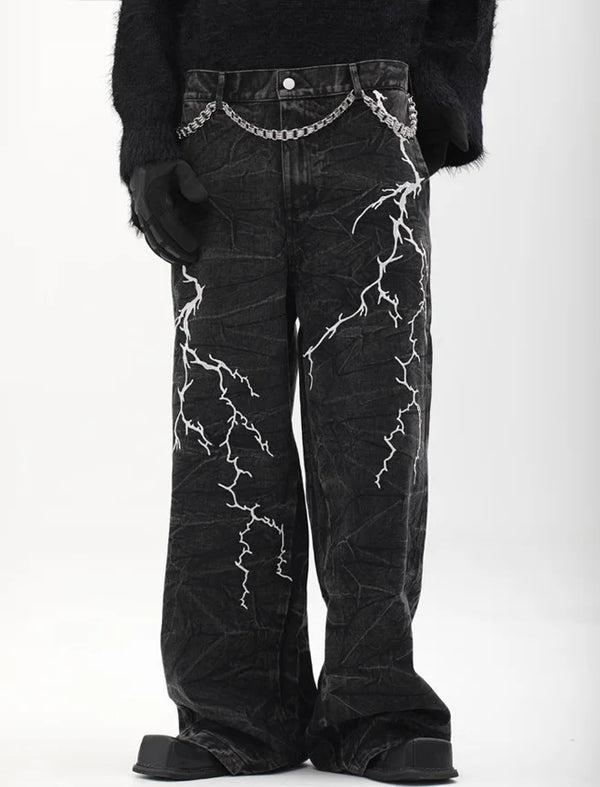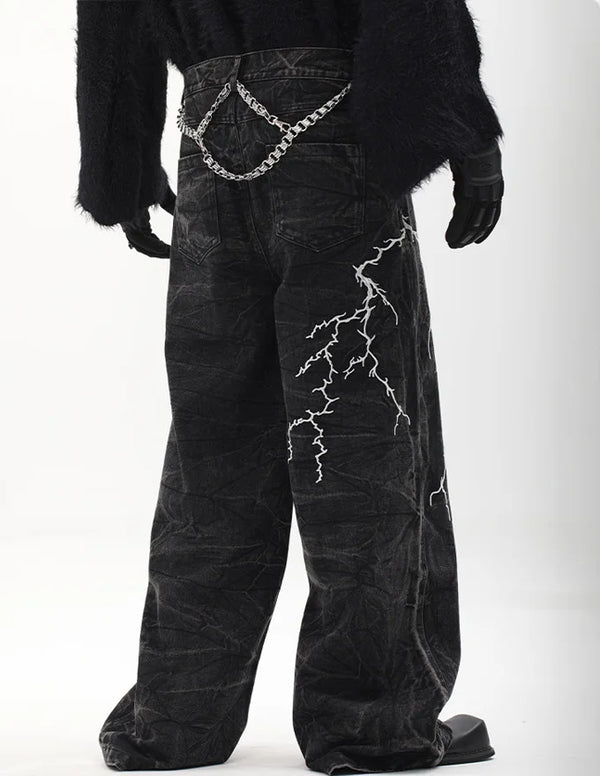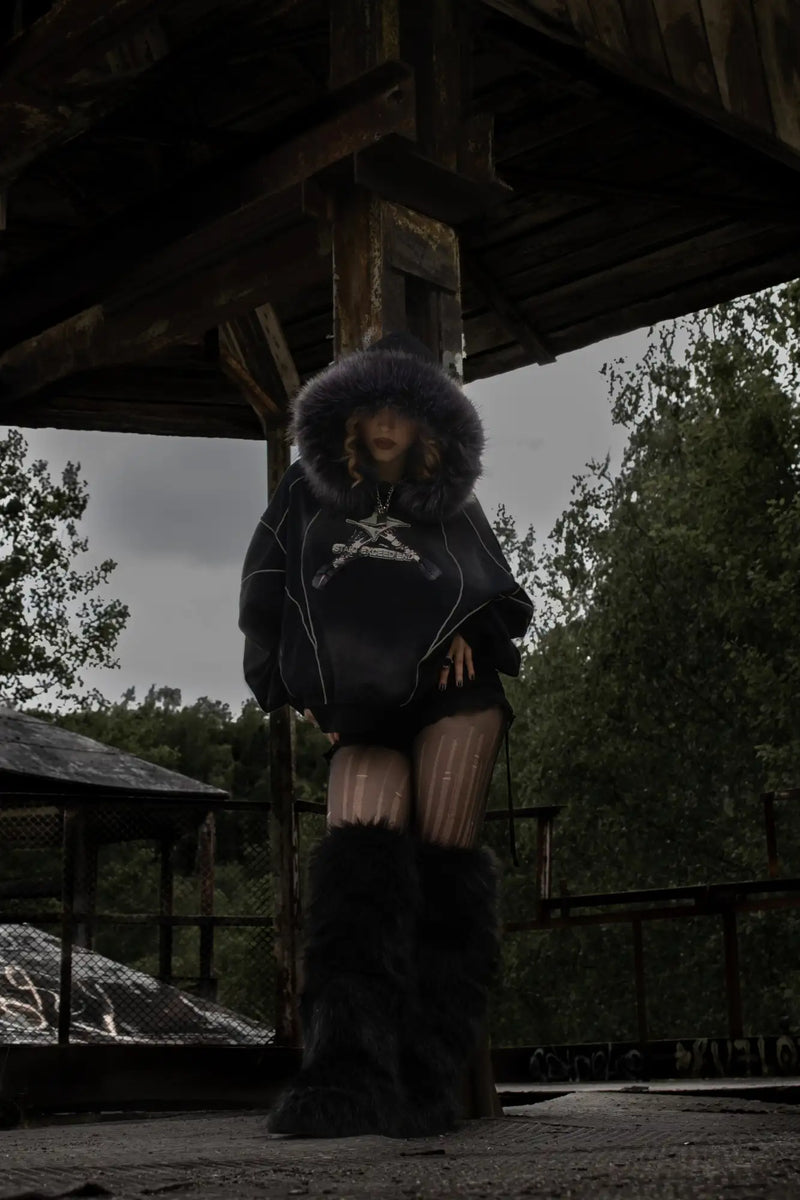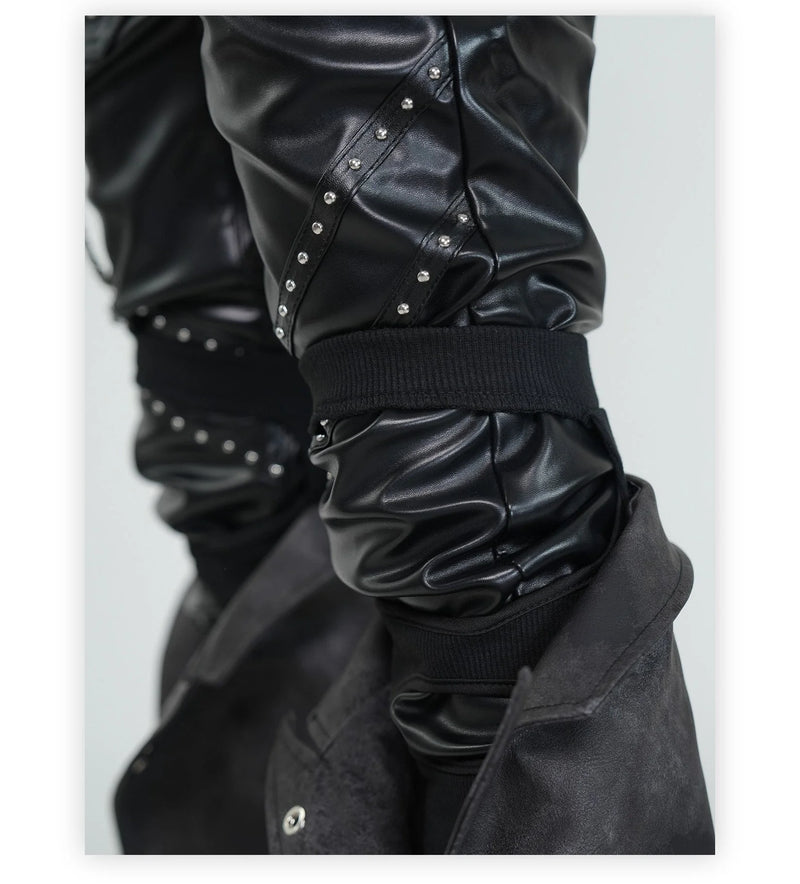
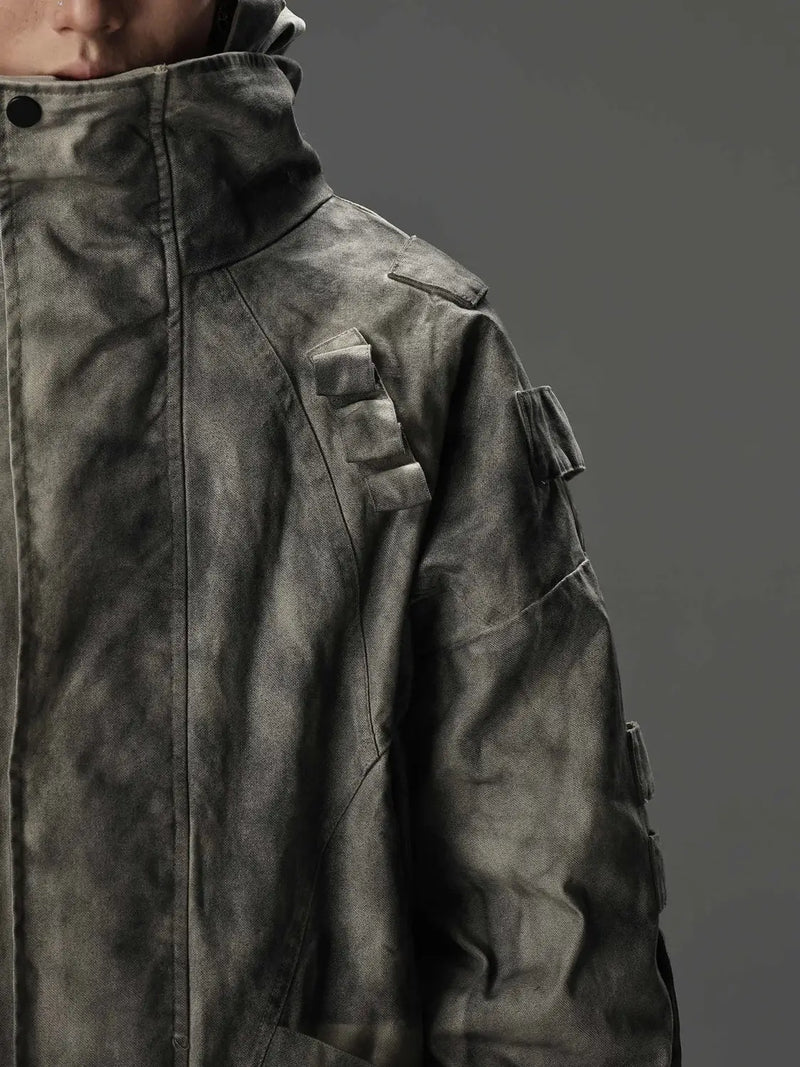

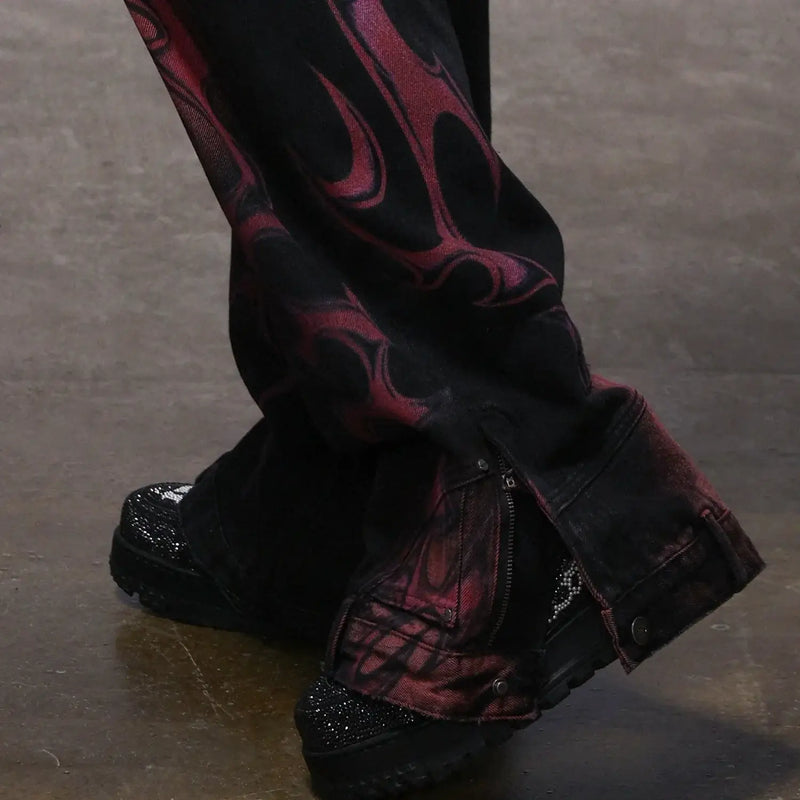


Everyone says techwear is "futuristic black with lots of pockets." They're wrong. A black cargo pant with three sewn-on pockets is exactly as much techwear as a hard hat is architecture — which is to say, none at all.
Techwear isn't a look. It's a build spec. The fabrics are functional (water-resistant, breathable, abrasion-resistant). The cut follows a 3-layer logic borrowed from outdoor sport. The hardware isn't decoration, it's tools. Break any one of these three rules and you're wearing techwear cosplay — and anyone who reads the language sees it instantly.
The term comes from Munich. Errolson Hugh and Michaela Sachenbacher founded the label ACRONYM in 1994 with one idea: build civilian clothing out of military and outdoor engineering. That became its own code, worn today in Berlin, Tokyo, and Hong Kong — and it found a very particular reading in DACH. This guide sorts out what's actually behind it: who invented it, what belongs to it, which five variants exist, how the jacket works, which brands write the language, and which five mistakes tip your outfit over instantly.
How it feels on the street — compressed into 14 seconds:
Definition
What techwear actually means — the definition beyond "black with pockets"
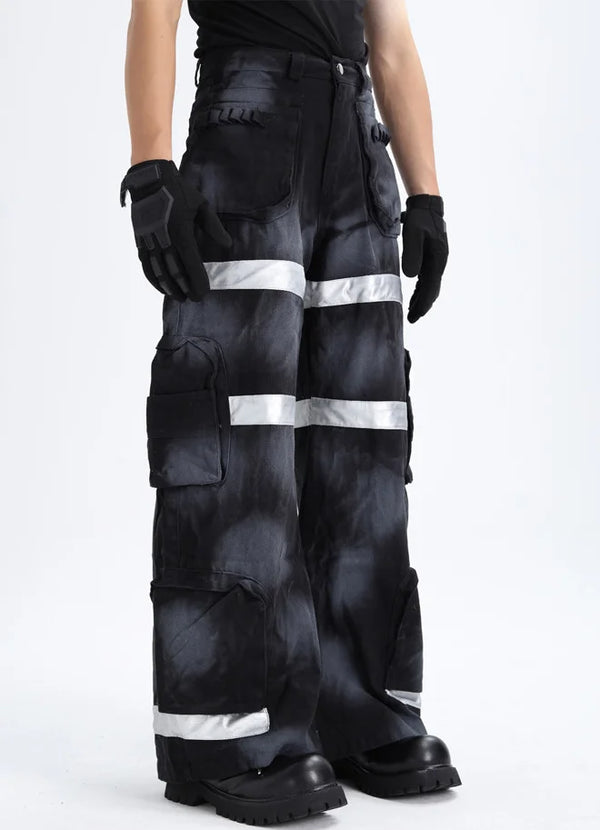
Techwear is short for Technical Wear. That doesn't mean "clothing that looks technical" — it means clothing built by the rules of the outdoor industry that just borrows the shape of a city outfit. The fabric is water-resistant (at least 5,000mm hydrostatic head, often 20,000mm and up). The seams are taped. The zippers are YKK Aquaguard or better. The pants have reflectors you need at night, not because they look cool.
That's the point 90% of Insta posts miss. A pair of pants only counts as techwear once it's functional. If it just "looks technical" — cargo pockets on regular cotton — it's a cargo outfit, not techwear.
1994
ACRONYM founding
3
Layers (Base, Mid, Shell)
20.000
mm hydrostatic head (hardshell)
0
visible logo lettering
These four numbers aren't arbitrary. They're the litmus tests. An outfit that breaks one — cotton instead of technical fabric, a single layer instead of three, or a huge brand logo on the chest — doesn't read as techwear. It reads as "dark streetwear outfit with an outdoor lean." Which in plain terms means: half measure.
Concretely, techwear includes:
- Technical outer fabrics — Gore-Tex, Schoeller Dryskin, Cordura, recycled nylon. All with a DWR coating. Cotton is out.
- Three-layer build — base layer (breathable), mid layer (insulating), shell layer (water- and wind-resistant). Every layer has a job.
- Functional hardware — YKK Aquaguard zips, Cobra buckles, MOLLE loops, magnetic clips. Every part has a purpose.
- Modular construction — detachable sleeves, zip-off collars, removable liners. One jacket replaces three.
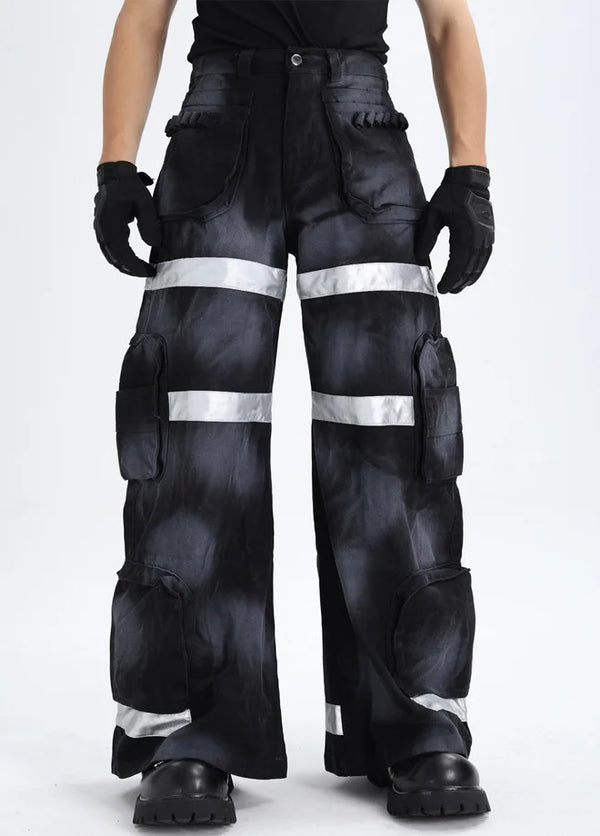
- Reflectors and coverage — reflective strips on pants and back, hoods with a visibility slot, front-pocket layout for cards and keys.
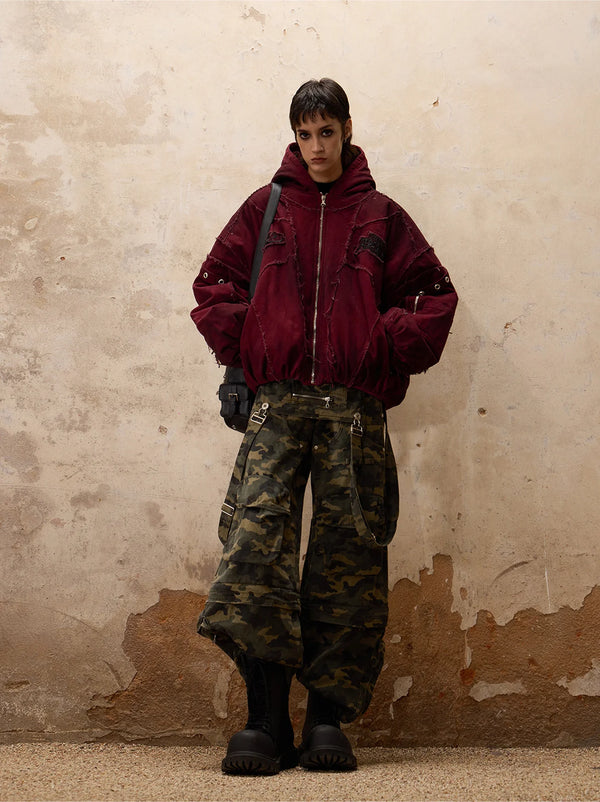
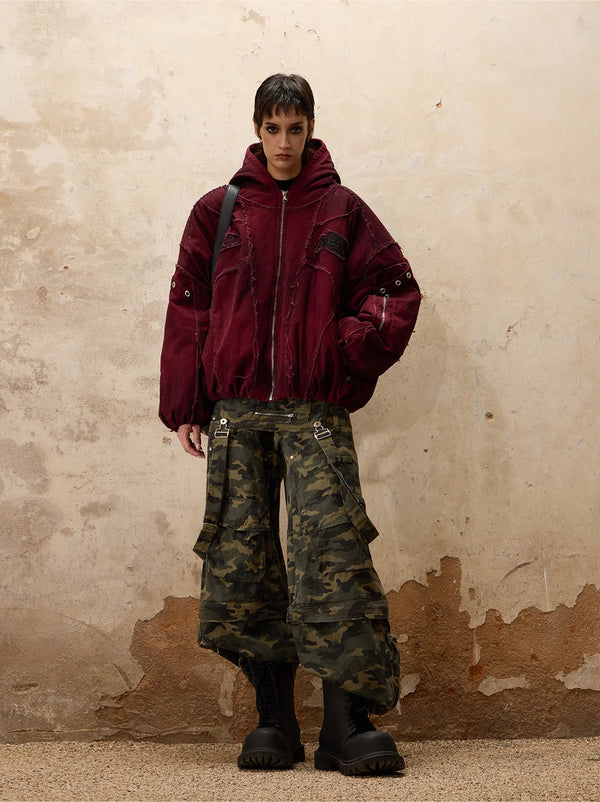
- Black-heavy palette — matte black, charcoal, dark olive, coyote. Rarely, a single accent in reflective grey or volt yellow.
If four of these six points check out, it's techwear. If only two do, it's streetwear with a techwear look. The difference is real — and visible from two meters away.
Origin
Who invented techwear — Errolson Hugh, ACRONYM, and the year 1994
Techwear has a concrete birth year and a concrete place: 1994, Munich. Errolson Hugh, a Canadian-Chinese designer with an industrial design background, and Michaela Sachenbacher, a Munich-based fashion designer, founded ACRONYM there. The idea was simple and radical: translate everything the outdoor industry had developed for extreme conditions — Gore-Tex, waterproof zippers, modular fastenings — into civilian clothing you could wear in the city without looking like a mountaineer.
ACRONYM didn't invent anything that didn't already exist. Hugh compressed it. Stone Island had already experimented with pigment-dye coatings in the '80s. Patagonia had Polartec, The North Face had the 3-layer outdoor system. What Hugh and Sachenbacher did: they translated the outdoor language into a city silhouette. Narrower cut, darker palette, fewer logos. And they pushed it into the tech community's mainstream with the Stone Island Shadow Project collaboration between 2008 and 2018.
Before ACRONYM, there were tendencies. Helmut Lang used industrial fabrics for couture starting in 1986. Issey Miyake experimented with technical pleating in Tokyo in the '80s. Cyberpunk streetwear from late-'90s Japan carries similar codes. But as a systematic city language derived from outdoor engineering, techwear has only existed since 1994 — and it lives on today in brands like Veilance, Guerrilla Group, and Riot Division, all writing from the ACRONYM codex.
Distinction
What counts as techwear — and what's just "black with a pocket"?
The line is mechanical, not stylistic. A piece counts as techwear if it meets two of three hard criteria: technical fabric, functional hardware, modular construction. If only one holds true, it's techwear-inspired — not techwear.
That's a hard line, because marketing softens it otherwise. Every second streetwear brand now has a "tech" mini-line that's nothing more than a black cargo pant with a few velcro patches. The real question: does the piece stay dry through 4 hours of Berlin drizzle, or does the shoulder get damp? Does the zipper hold at -8°C, or does it jam? Can you zip off the sleeves, or is that just a print? If the answers are yes twice over, it's techwear.
- Counts as techwear — hardshell jacket with Gore-Tex 3L, taped seams, and pit zips. Cargo pants in Schoeller Dryskin with reflective strips. Tactical vest with MOLLE loops and magnetic clips.
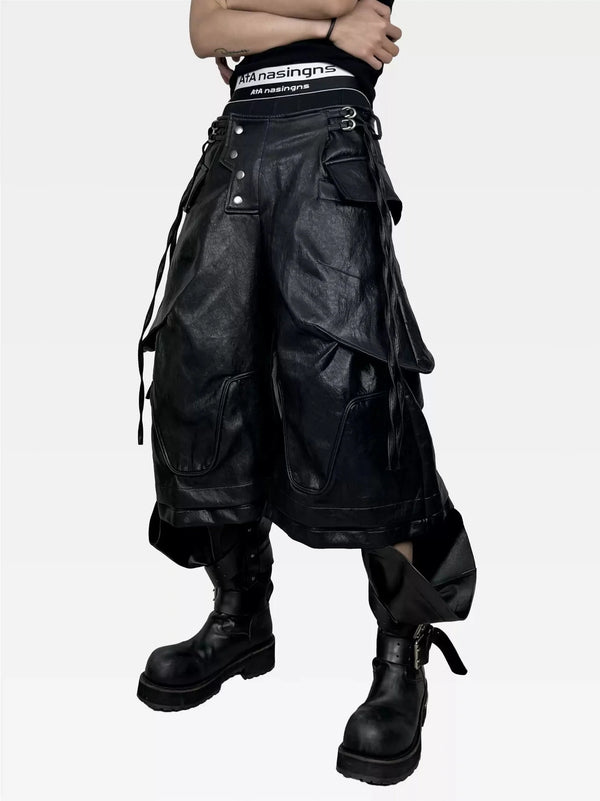
- Doesn't count as techwear — black cotton cargo pants with sewn-on pockets. Polyester anorak with no membrane. A nylon bomber that soaks through with every shower.
- Borderline case — a Salomon XT-6 is a trail sneaker that belongs to the techwear code through outfit context. The shoe itself is outdoor gear — but it's the lingua franca of the city techwear scene.
- Also borderline — a Veilance Field LT is a hardshell jacket from Arc'teryx's premium label. It counts as techwear, but also as gorpcore — because the silhouette is outdoor, not city-tailored.
The tactical vocabulary — MOLLE webbing, Cobra buckles, IR patches — is optional. You can build techwear without a single tactical element. But if you have tactical elements, they have to function. A MOLLE loop holding nothing is cosplay.
Trend vs. system
Techwear trend or techwear system — the difference
Techwear resurfaces as a "trend" in fashion coverage every three to four years. In 2017 with the first wave of Yeezy Season boots. In 2020, during pandemic lockdowns, as a function-over-statement movement. In 2024, in the TikTok renaissance, as "stealth black codes." Trend coverage misses the same point every time: techwear's function hasn't changed since 1994. What changes is only the volume of attention.
The difference matters because it changes buying behavior. Someone who buys techwear as a trend buys the cheapest look-alike, because the trend will be gone in 18 months. Someone who understands techwear as a system buys a hardshell jacket that lasts ten winters, because the system doesn't go away. It's outdoor engineering. Outdoor engineering isn't fashionable — it's useful.
If you look at techwear for the first time and think "this will look embarrassing in two years": compare it to your dad's Gore-Tex jacket from the '90s. It looks exactly the same today as it did in 1995, because it wasn't built for fashion, it was built for rain. Techwear inherits that logic.
5 iterations
The 5 variants of techwear — from Urban Tactical to Cyberpunk
Techwear isn't monolithic. Within the language there are five recognizable variants, distinguished by silhouette, hardware density, and color palette. Anyone who makes one their main line builds consistent outfits. Anyone who switches between all five looks like a different person every day — which doesn't help with techwear.
Category · Outerwear
What is a techwear jacket — shell, hardshell, softshell
The jacket is the single most important investment. In techwear, the outer layer is the only layer outsiders see — which means the whole language is spoken through it. A bad techwear jacket turns a good outfit mediocre. A good one turns a simple outfit into a convincing one.
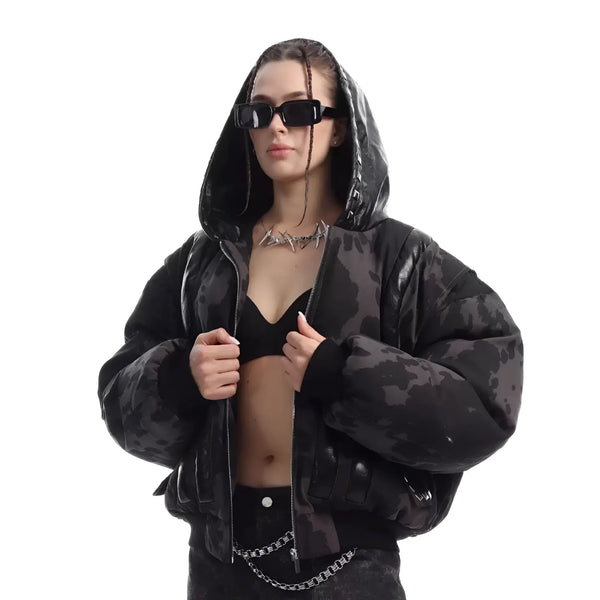
There are three types you need to understand. Hardshell — fully waterproof, often Gore-Tex Pro or a 3L membrane, for rain and snow. Softshell — water-resistant, more breathable, for in-between weather and dry-weather movement. Insulated — insulating, with down or synthetic fill, for winter. Most DACH techwear wearers own all three or combine them modularly.
Brands
Techwear brands — the labels that write the language
There's a small canon of brands that wrote the techwear code. Three come from Europe, three from Asia, one from Canada. Anyone who takes techwear seriously knows these names — not because they're status symbols, but because they define the language.
- ACRONYM — Munich, since 1994. Errolson Hugh, Michaela Sachenbacher. The origin. Price range €800-2,500. Collabs with Nike Lab, Stone Island Shadow Project, and Bagjack.
- Veilance — Vancouver, since 2009. Arc'teryx's premium label. Stealth lines, minimal hardware. Price range €400-1,200. The quiet variant.
- Guerrilla Group — Shanghai, since 2014. Tactical-heavy, asymmetric cuts. Price range €200-800. Very active on TikTok — a bridge effect to Gen Z.
- Riot Division — Kyiv, since 2010. Ukrainian brand with tactical roots, highly visible in Berlin distribution since 2022. Price range €300-900.
- Nemen — Bologna, since 2010. An Italian reading with garment-dyed fabrics and a Stone Island lean. Price range €350-1,100.
- Vollebak — London, since 2015. Extreme engineering — solar-charged jackets, graphene coats. Price range €500-2,000. More a lab project than daily wear.
- And Wander — Tokyo, since 2011. Outdoor crossover with Japanese cut logic. Price range €300-900. A gorpcore crossover bridge.
- Salomon — Annecy, a ski boot brand since 1947, a city sneaker brand for the techwear scene since 2020. XT-6, ACS Pro, XT-Wings as lingua franca.
What this list is missing — deliberately missing — are the brands that sell the "techwear look" without the engineering depth. Streetwear brands with one tech mini-line a year don't belong here. The canon criterion is: can the brand build an outfit that survives four hours of drizzle without anything soaking through?
Gender split
Techwear for women — where it really works differently
Techwear is unisex at its origin. That's not a marketing line, it's a consequence of outdoor engineering: function isn't gender-dependent. A Gore-Tex jacket protects every body equally from rain. What differs is the silhouette — and how the layer build sits on a narrower shoulder and tighter waist.
In the DACH techwear scene, women typically wear the Stealth Black variant: a narrower-cut hardshell, tactical cargo pants with a higher waistband, plain sneakers. Hardware density is lower, the silhouette quieter. The Cyberpunk variant is rarer, because its hardware look tips into costume quickly — and nobody puts on an outfit in the morning that looks like cosplay.
In practice, that means a woman starting out first looks for a shorter-cut hardshell jacket (not overlong), cargo pants with a higher waistband, a technical mid-layer top, and a Salomon or On Cloud sneaker. The same 3-layer logic as for men — just in a silhouette that fits.
Regional
Techwear Berlin — why the city wears more techwear than any other DACH city
Berlin is the only German-speaking city with an independent, visible techwear scene. Vienna has a small vintage-outdoor tendency. Zurich leans more gorpcore. Munich sees ACRONYM where it was born, but wears it less than Berlin. The reason isn't fashion — it's geography and climate.
Berlin has long distances with no subway connection, weather that flips from 12°C and sun to 6°C and rain in two hours, and a nightlife mode that means standing in line at four in the morning. Three conditions where hardshells, modular layers, and tactical vests make practical sense — not performative ones. Berghain door staff don't read techwear as a "statement," but as "this person dressed to survive the night, not for photos."
If you're moving to Berlin, or already live there, and wonder why the scene is so dense: it's because the city needs it. A Berliner walks through Friedrichshain in the same outfit system a Münchner would wear on a mountain trip.
Styling
How to actually style techwear — the 3-layer logic
Styling isn't "wear dark colors." It's layering by function. Layer 1 is base — a close-fitting, breathable shirt that wicks sweat away from the body. Merino wool or synthetic performance fibers, never cotton. Layer 2 is mid — an insulating sweater, a fleece jacket, or a down vest that holds body heat. Layer 3 is shell — the hardshell or softshell that blocks wind and rain.
The rule: every layer is removable. If you're on the subway and it gets warm, you take off the mid layer. If the rain stops, you take off the shell. The DACH approach isn't "always wear all three layers" — it's "have all three on hand and swap as needed." A modular jacket with a detach liner replaces two separate jackets.
What good layering looks like in practice — a modular winter jacket with a detachable liner:
Mistakes
The 5 most common techwear mistakes
These five mistakes tip an outfit from techwear into cosplay. They're common because the internet shows them — and all of them are mechanically fixable.
Getting started
How to start with techwear — the first 4 pieces
If you're starting today and don't have a closet full of outdoor gear, buy in this order. A hardshell jacket. Cargo pants in technical fabric. A tactical vest or multi-pocket vest. A backpack or shoulder bag with a MOLLE layout. Four pieces — and you can speak the full language.
Social proof
Techwear in real life — how it looks on the street
Theory is one thing — how the codes sit on a body is another. Here are the outfits we wear ourselves and photograph on the street. Berlin, Tokyo, Hong Kong as the main stages.
Conclusion
Techwear is a logic — not a look
If you take one thing from this guide: techwear isn't a fashion movement. It's the translation of outdoor engineering into a city silhouette. That's why it has existed in the same language since 1994, and won't be gone again in two years.
That's also why good techwear is expensive and still pays off. A hardshell jacket that lasts ten winters costs less per year than an H&M anorak that's worn through after one winter. Engineering lasts. Trend doesn't.
FAQ
Frequently asked questions about techwear
Short answers to the questions that come up in every techwear search — including the peripheral ones we didn't cover as their own section above.
What does techwear mean?
What counts as techwear?
What is a techwear jacket?
Is Techwear Club legit?
What is the techwear trend in 2025?
Where do I buy techwear in Germany?
Which techwear brands matter most?
What do you think?
Tell us on @fuga_studios
About the author
Philipp Fuge — Founder · Berlin
Founder of Fūga Studios. Writes the journal himself. Berlin · Shanghai · Tokyo · Poznań — four cities, one logic.