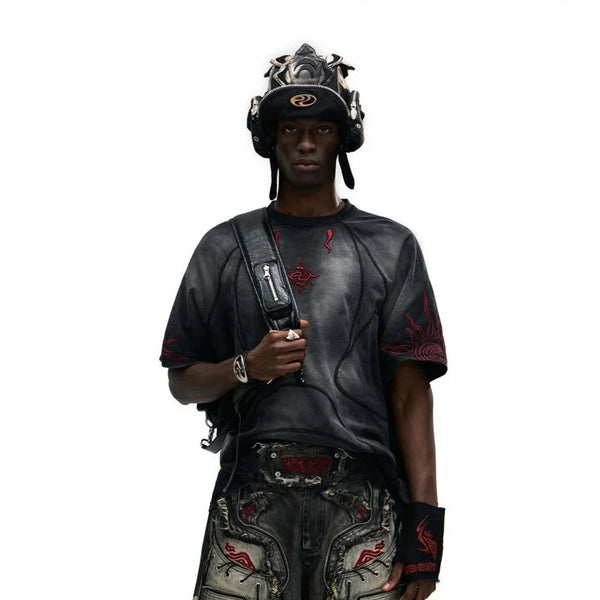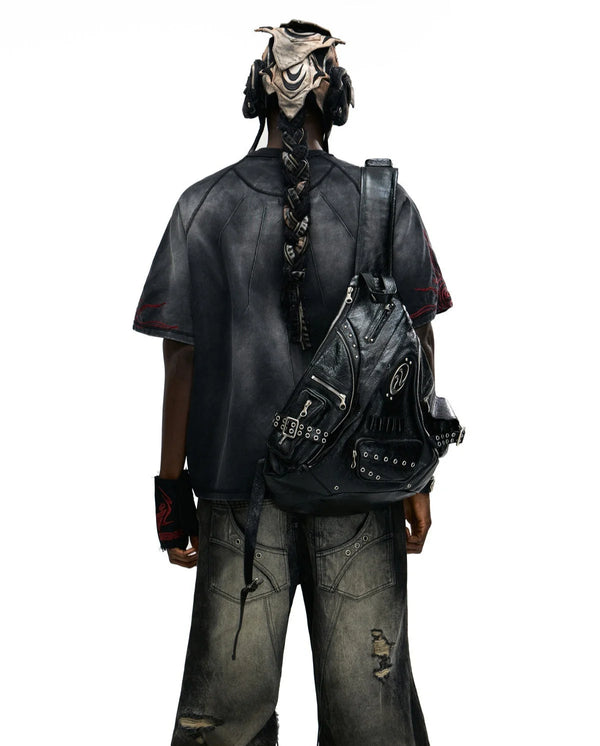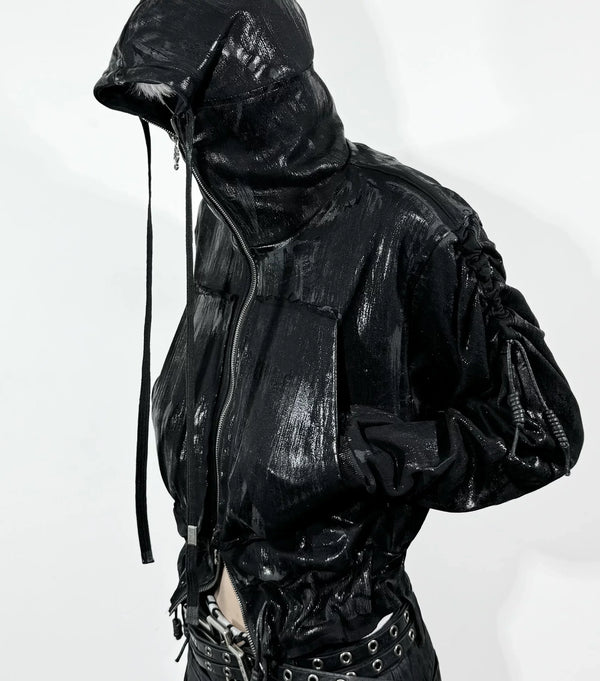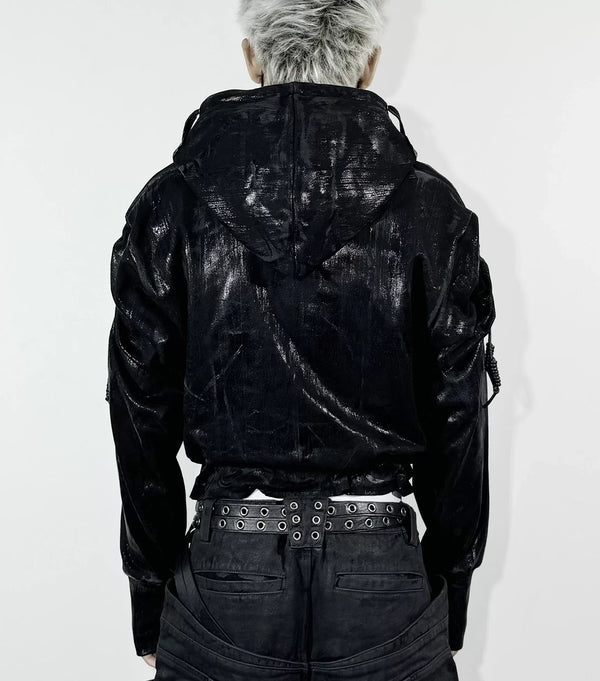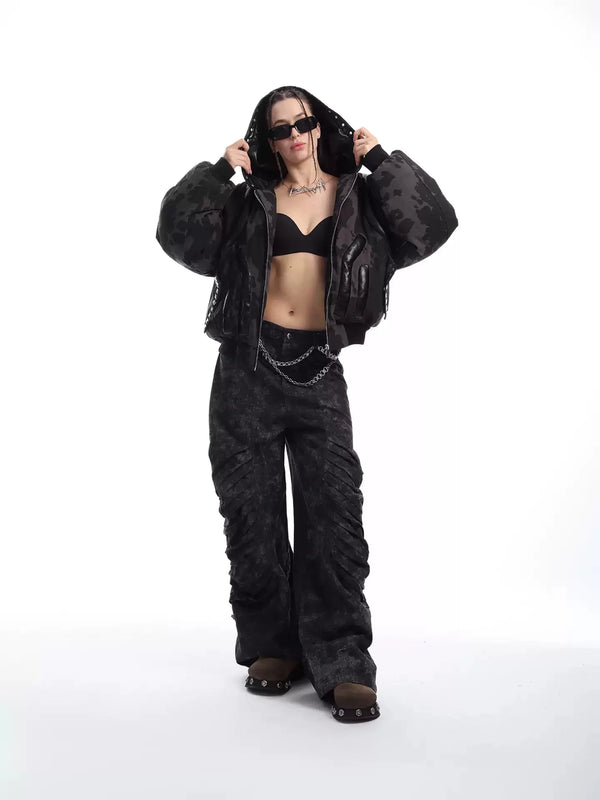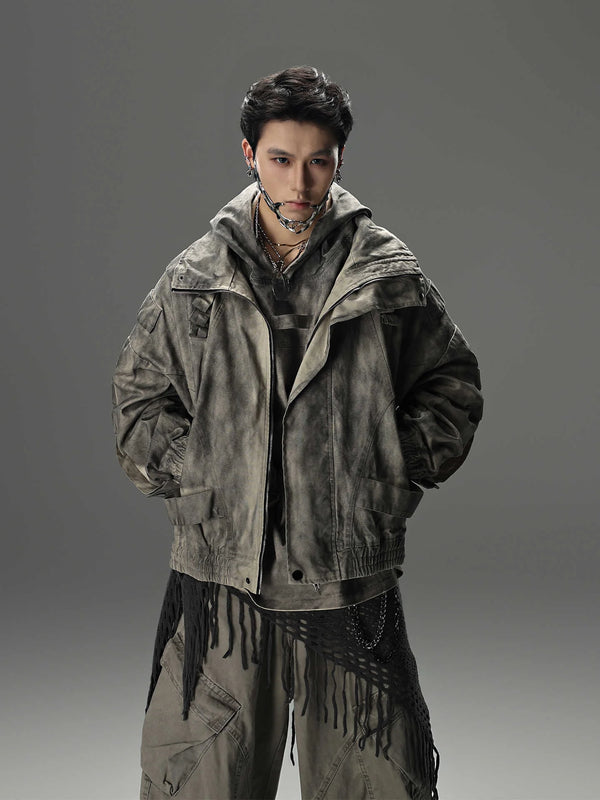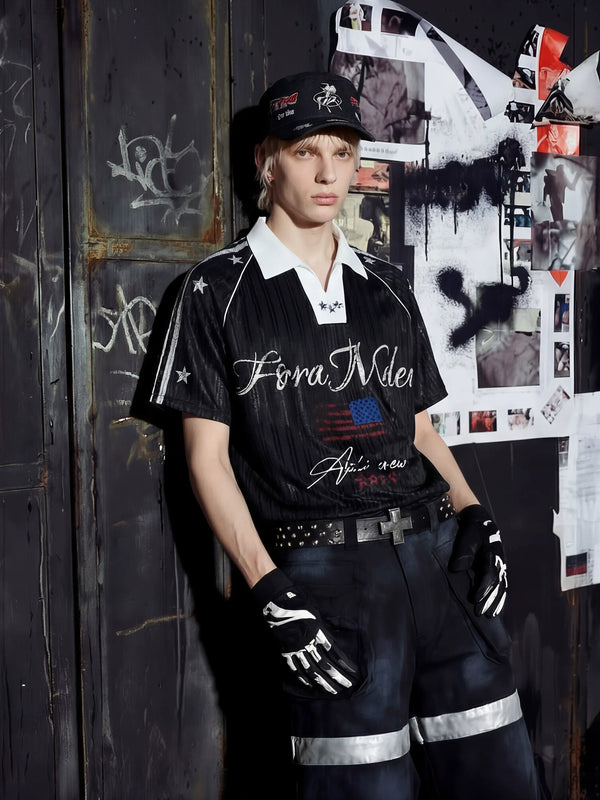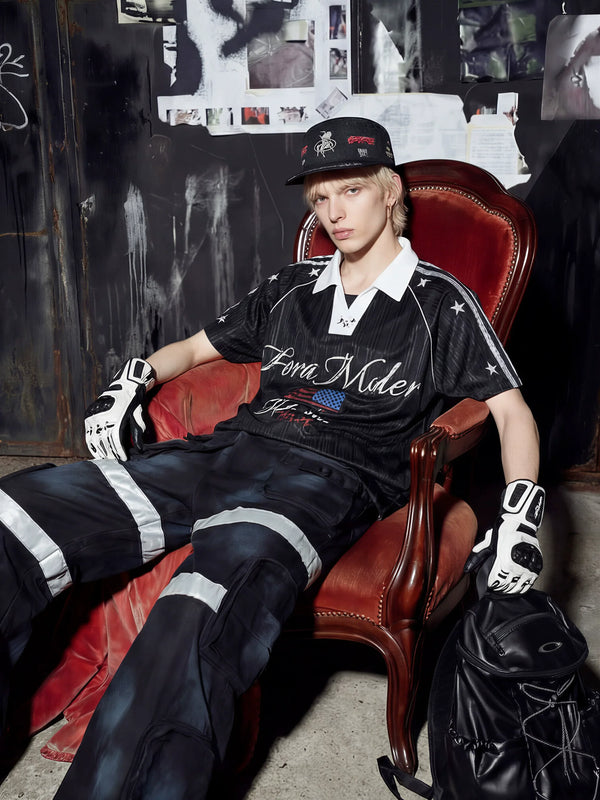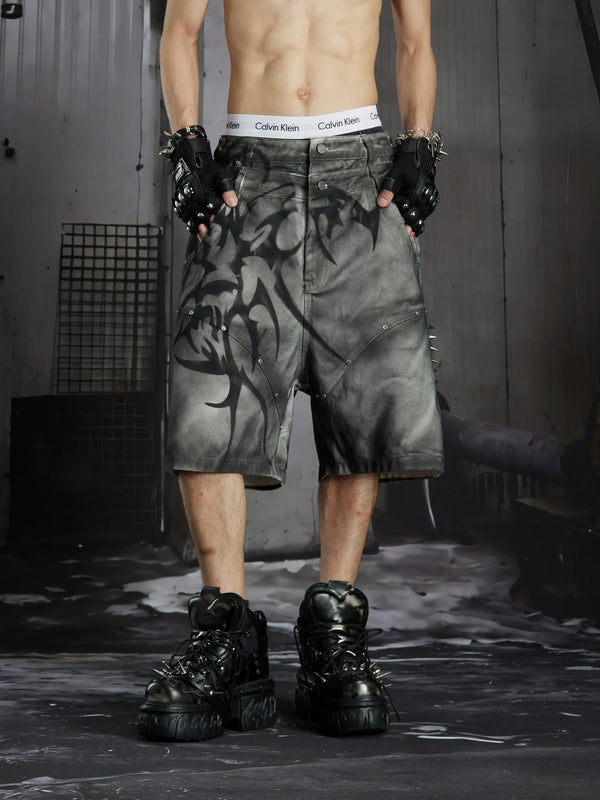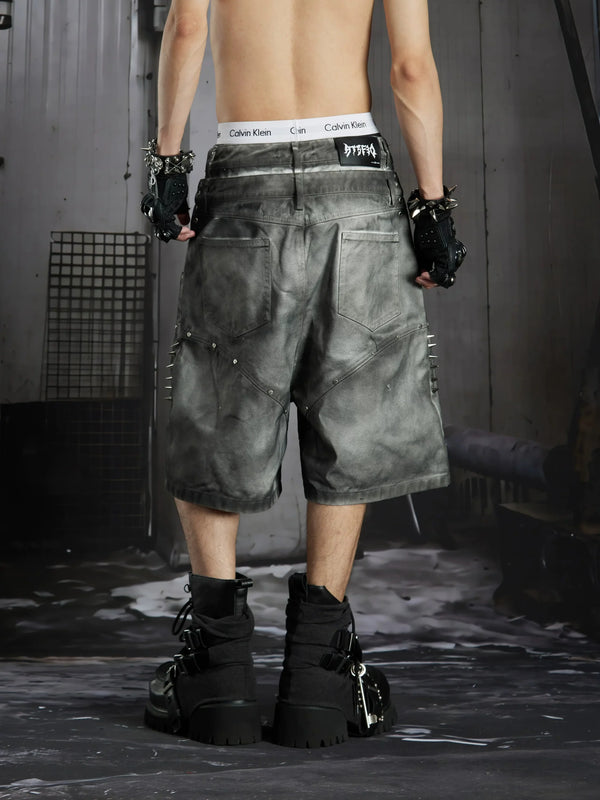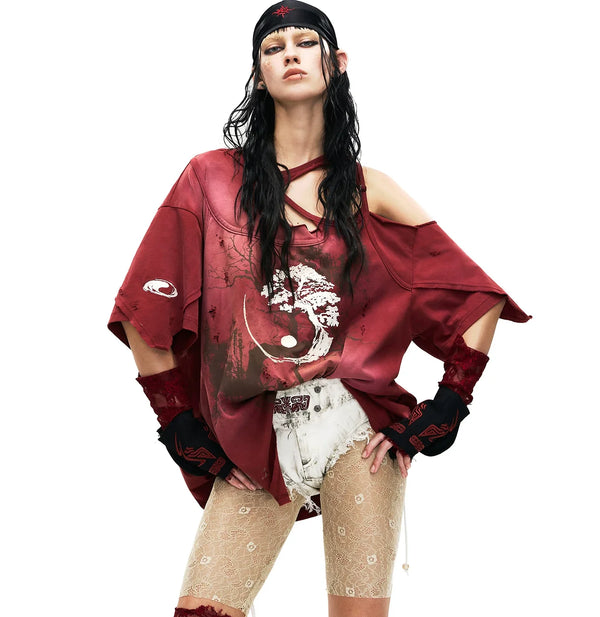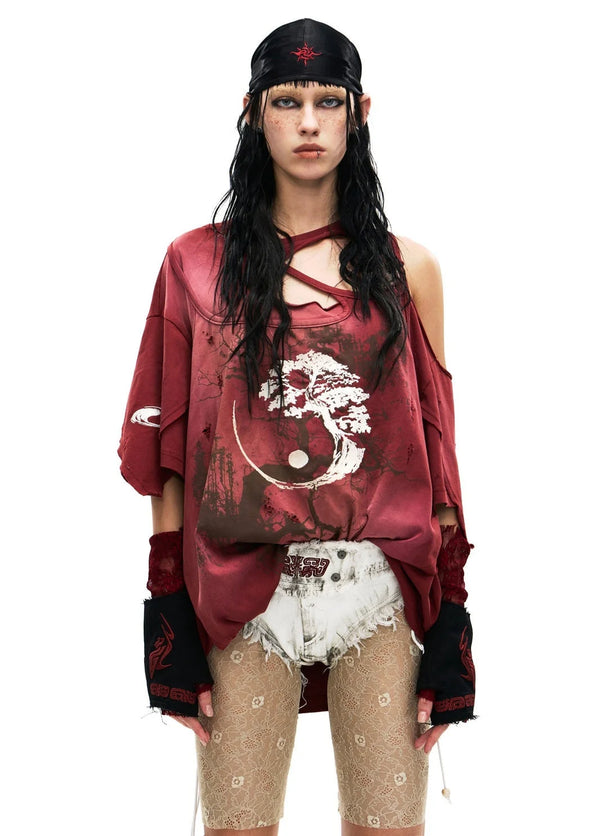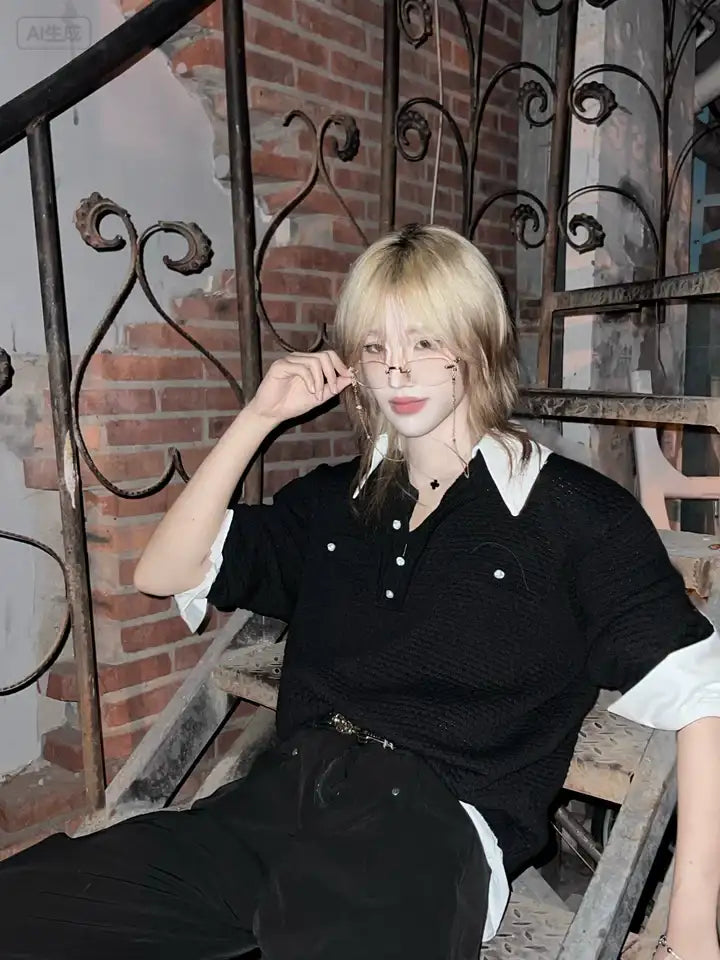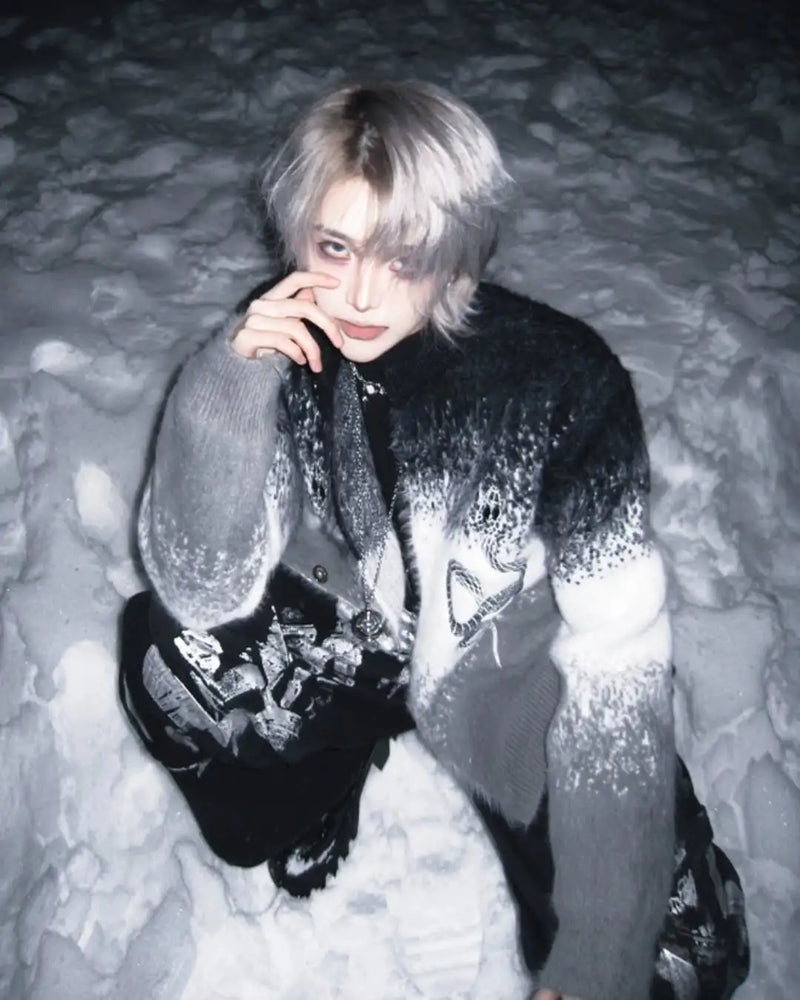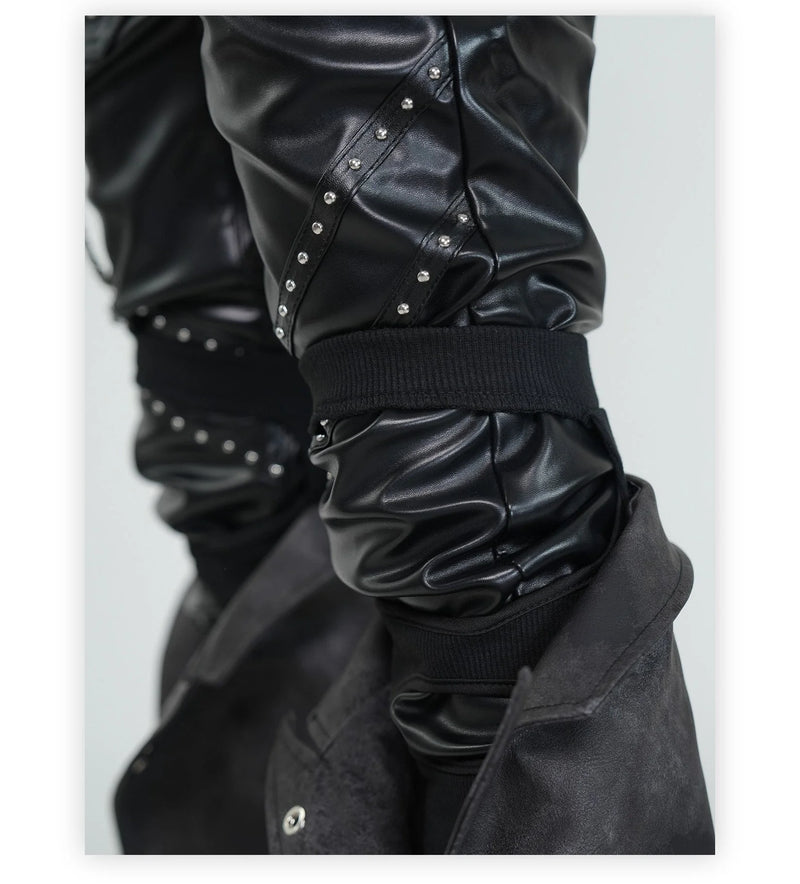
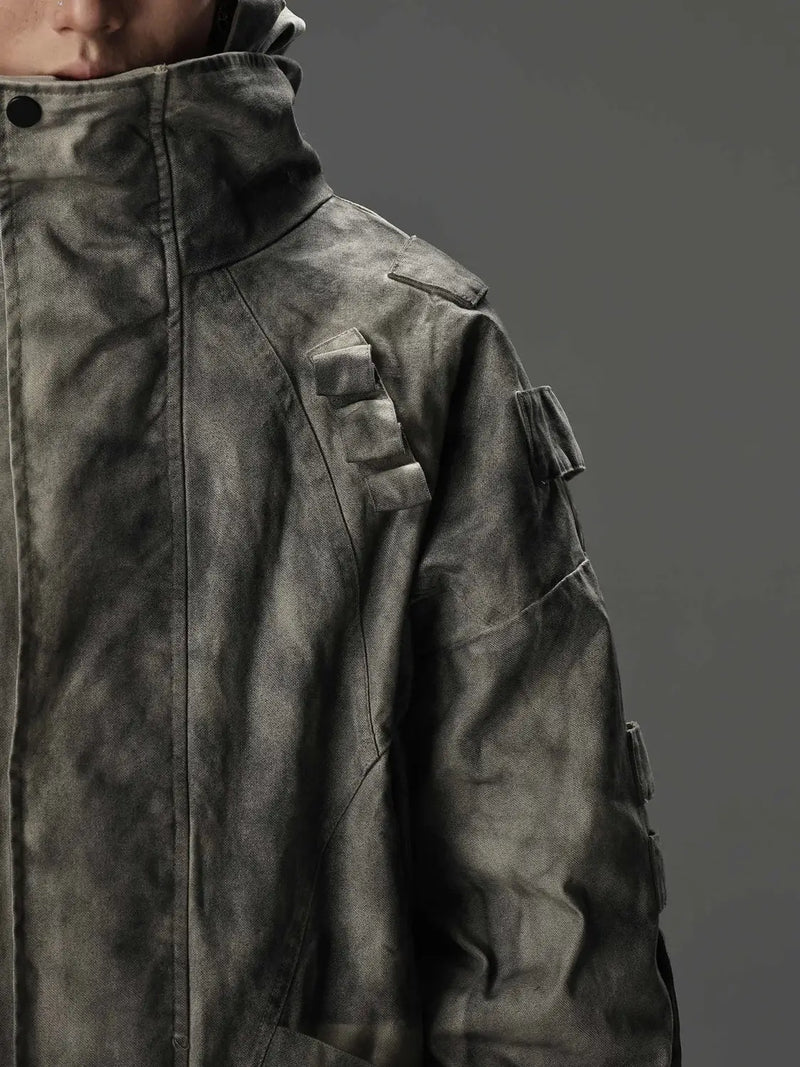
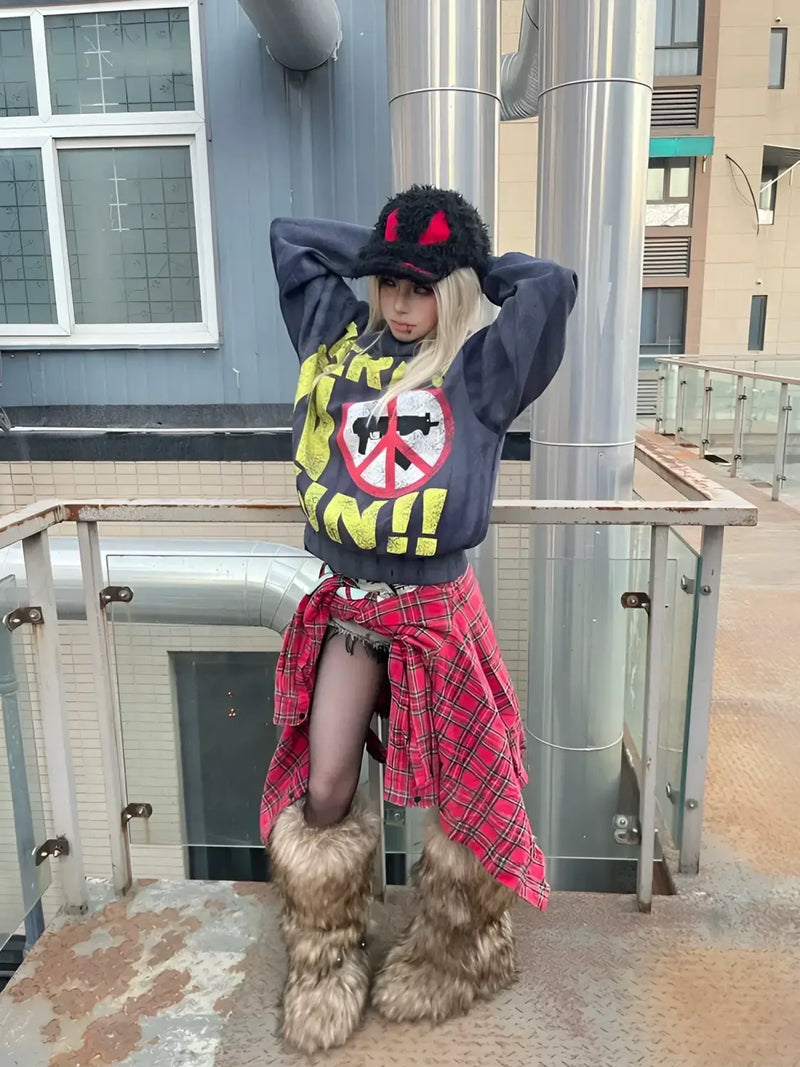
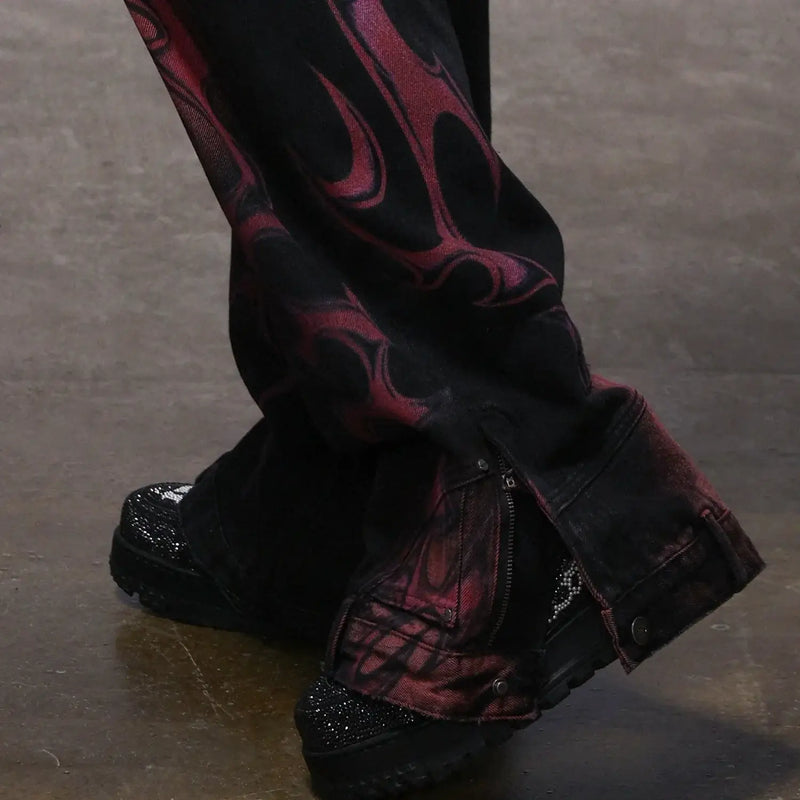
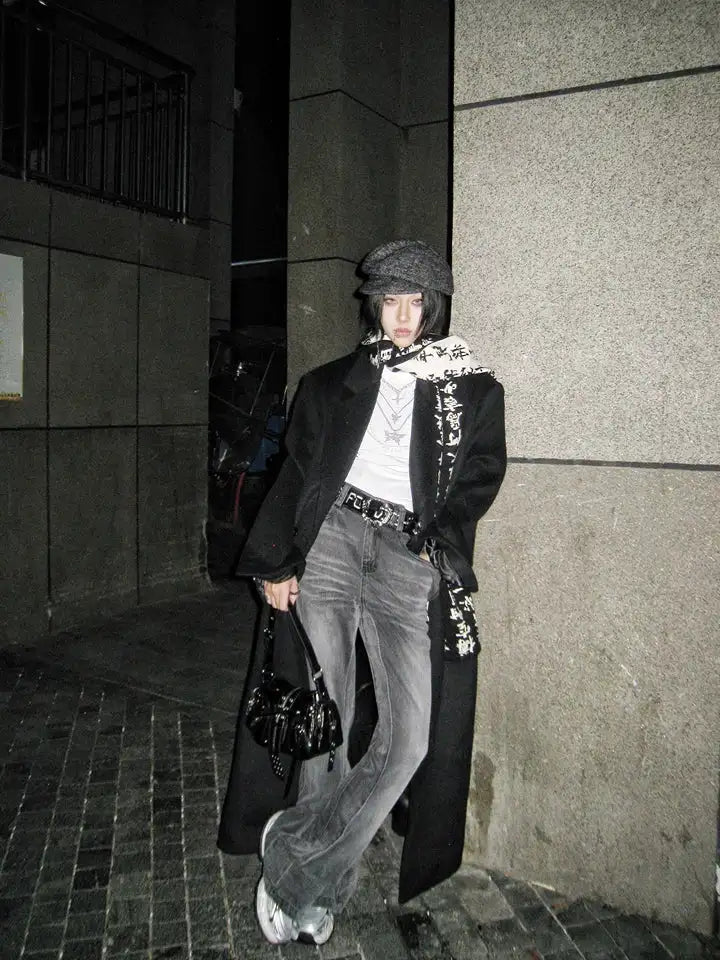

Filing Dark Boho under "normal boho, just in black" means you missed the code. A black tunic over black flares is not a Dark Boho look — it is a black outfit that happens to flow.
Dark Boho Fashion is the dark mutation of a style that started in the 70s with Stevie Nicks, moved through Mary-Kate Olsen in the 2000s, and crystallised into its own aesthetic from 2020 on Pinterest and TikTok. It is not a colour swap but a system: a muted earth palette, flowing layers, lace and velvet as the lead fabrics, silver hardware with an occult undertone — and a very clear idea of what an outfit must not be.
Anyone selling Dark Boho as a "goth-hippie mix" has not taken the roots, the textures and the silhouette seriously. This guide sorts out what really counts: where the look comes from, which five archetypes wear it, how it translates into jackets, trousers and tops, what you need in your wardrobe — and which six mistakes tip the whole look over.
What that looks like in a real outfit — compact, in 12 seconds:
Origin
Where does Dark Boho come from — and why now?
Bohemian style has two mothers: the 19th-century Parisian artist scene and the late-60s hippie movement. Both treated wide, flowing clothing as a break from the bourgeois cut. Dark Boho draws the dark line out of both: the mystical side of the Parisian bohème, the folk-occult of the post-Woodstock era.
The first clear appearance was Stevie Nicks from 1975 with Fleetwood Mac. Black lace, flowing capes, long skirts, a witch's-cauldron stage show. She fixed the link "bohemian plus occult plus dark" for a whole generation. In the 2000s Mary-Kate and Ashley Olsen translated the vocabulary into street-style format — cardigan over black maxi skirt, combat boots, oversized sunglasses. What is called "boho-grunge" today came from there.
As its own aesthetic with its own name, Dark Boho only surfaces from 2020 — carried by Pinterest boards, TikTok aesthetic collections and a generation taking Bohème seriously again. In 2025/26 Peek & Cloppenburg and Zalando write the term into season lookbooks for the first time — which means the mainstream has registered it. What used to live only in vintage stores and on Etsy now runs through big chains. Get in early and you can build the code cleanly before it gets diluted.
Definition
What is Dark Boho style — and what all counts as part of it?
Dark Boho is an outfit system built on four fixed components. When all four are in place, the look reads as Dark Boho. When one is missing, it tips into something else — Goth, Cottagecore, hippie cosplay or plain black.
80 %
dark earth tones
3
layers minimum
5
Archetypes
0
pastel accents
These four numbers are the test. An outfit with only one layer — a maxi dress on its own, no cardigan, no layering — is not Dark Boho but a dark dress. An outfit with pastel pink as an accent is not Dark Boho but boho with a hint of Stevie Nicks. And an outfit without dark earth tones is boho, full stop.
Concretely, Dark Boho Fashion includes:
- Dark earth palette — black, dark bordeaux, deep burgundy, muted olive green, stone-brown, iron red. No pure black outfits — Dark Boho lives off the tinting within the dark.
- Tactile fabrics — lace, velvet, suede, chunky knit, fringe, embroidery. Smooth synthetic surfaces read wrong. If your fabric looks matte and touchable in a photo, it works.
- Drape over cut — long flowy layers, wide flares, maxi skirts, open cardigans. The silhouette falls; it is not cut.
- Silver layered hardware — several necklaces, statement rings, talisman pendants (moon, stars, keys, snake). Gold is a rare player.
- Vintage traces — used look, worn edges, embroidery that looks like it came from your grandmother's drawer. Brand-new and smooth is wrong; used and worn is right.
- Witchy undertone — moon, star, pentagram, cross, tarot motif. Subtly scattered, not loud. A talisman, not a Halloween set.
If three of these six points are missing, it is no longer Dark Boho — it is a dark outfit. And there is one rule that holds all six together:
5 archetypes
The five Dark Boho archetypes — who wears which how
Dark Boho is not one look — it is five that touch at the edges. Lay Stevie Nicks tour photos next to current Pinterest boards and you see these five iterations cleanly separated. Each with its own fabric density, its own layer count, its own witchy share.
Which of the five suits you depends less on taste than on the vintage share of your wardrobe, your daylight-versus-nightlife ratio, and whether you wear combat boots or knee-high western boots. How that splits between women and men comes next.
Gender split
Dark Boho women vs men — where the code translates
The rules are the same. Dark earth palette, tactile fabrics, drape over cut, silver hardware — applies to every body. What differs is which layers dominate and where the flowing volume sits.
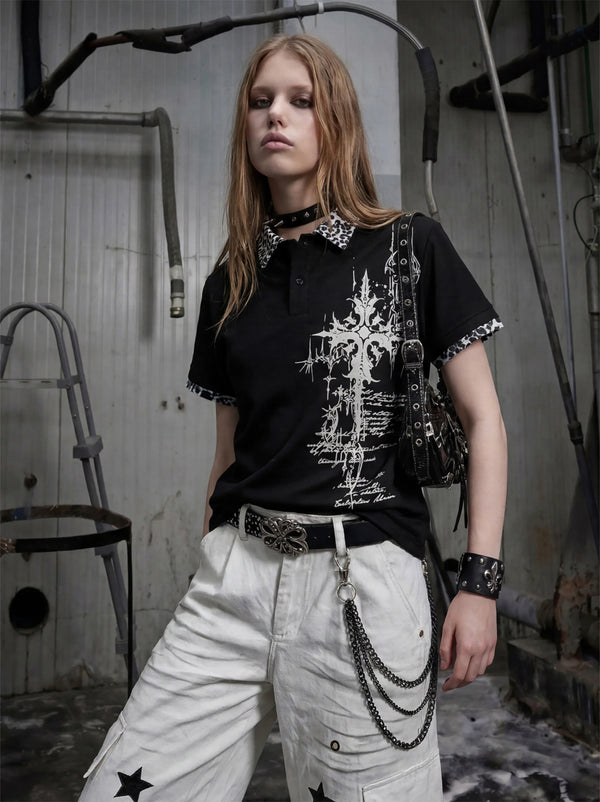
Women's version: the maxi dress or maxi skirt is often the central layer. Lace, velvet and brocade sit on the upper body as a skin-close layer (blouse, corset top), with an open cardigan or kimono over it. Jewellery layers are denser — three to five necklaces in different lengths, statement rings on several fingers. Boots go high (knee-high western, laced Victorian boots) or are replaced by ankle boots with a suede detail.
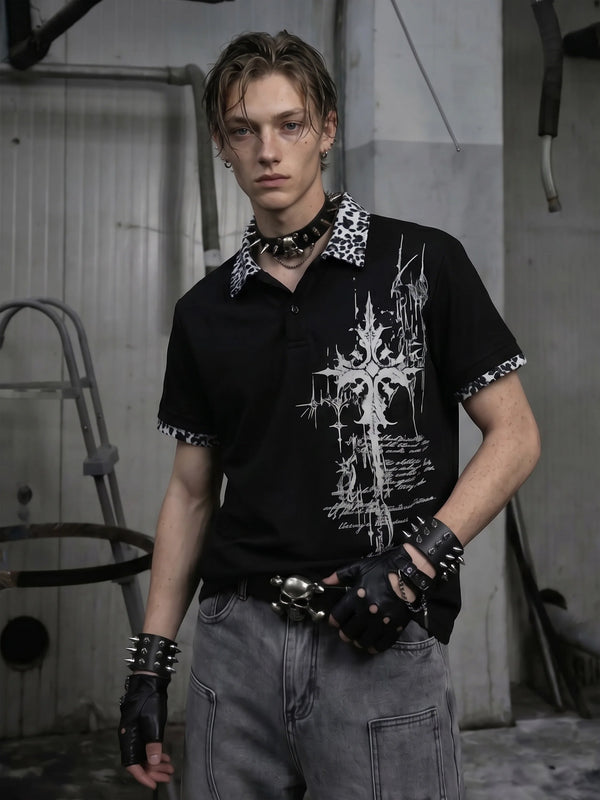
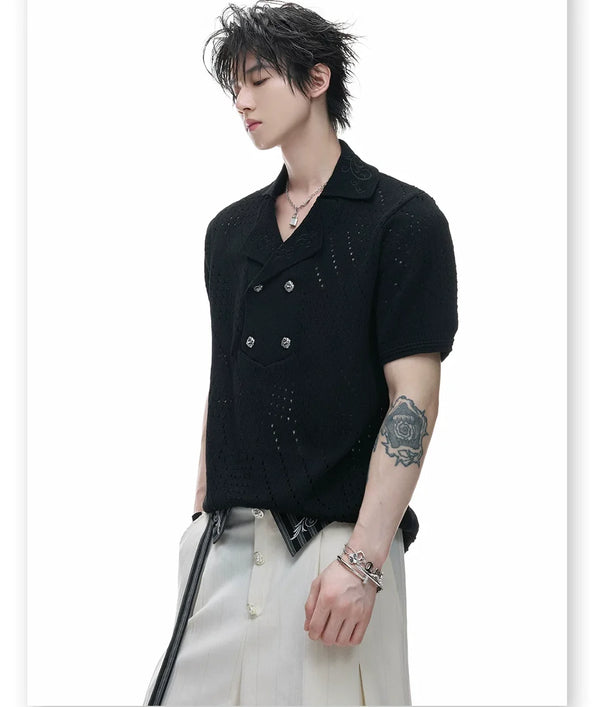
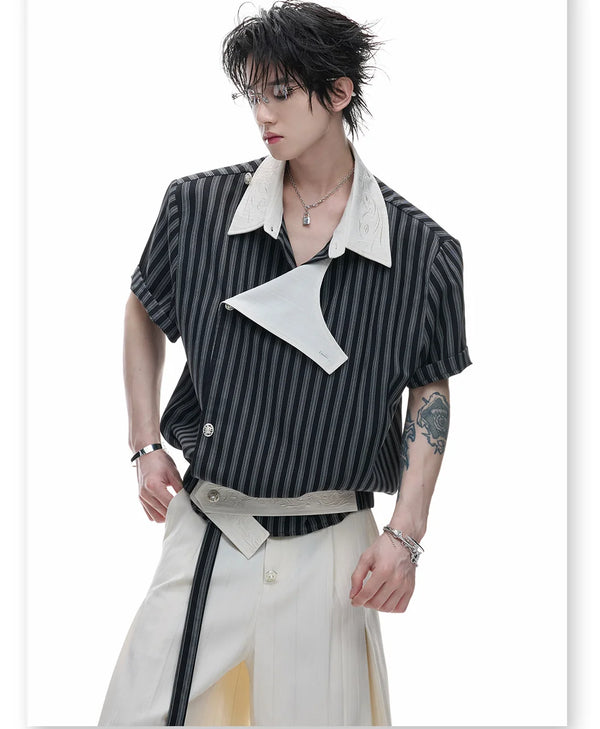
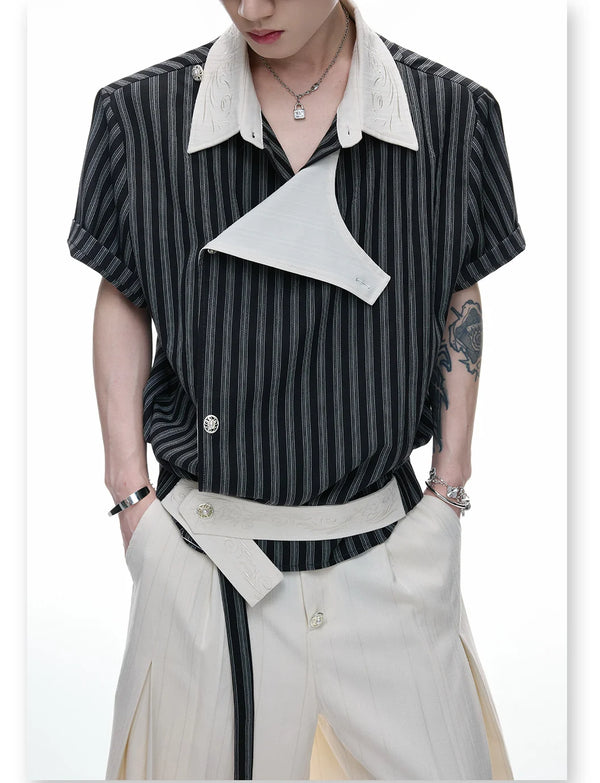
Men's version: less focus on lace and corset, more on the falling cardigan layer. A long, open knit cardigan or duster over a dark henley shirt — that is the male default layer. Trousers are wide (wide-leg denim, flares, linen trousers with drape), never skinny. Silver stays functional: two or three rings, a longer layered necklace with a talisman, a single statement bracelet.
Both versions need the same 80 percent earth-tone quota and the same three layers. What varies is the distribution — not the vocabulary. Transfer the women's look 1:1 onto a male body and you land in cosplay; transfer the logic and you land in a clean boho men's outfit.
Brands
Dark Boho brands — who wrote the vocabulary
Dark Boho has no single brand mother. It is a composition of several sources — vintage layers from 70s folk labels, designer contributions from the avant-garde spectrum, plus today's DTC brands that translate the look into current fabrics. Understand the vocabulary and you can build Dark Boho looks without buying a single designer piece.
The houses and labels that wrote or kept writing the vocabulary:
- Roberto Cavalli — since the 70s the most commercially visible link between bohème and gothic romance. Animal prints, lace, dramatic drapes — Cavalli made the opulent Dark Boho vocabulary socially acceptable.
- Ann Demeulemeester — the Belgian Antwerp-Six architect of dark romance. Asymmetric cuts, Patti-Smith reference, flowing long silhouettes in black. When a Dark Boho outfit feels too "grown-up", it is Demeulemeester-adjacent.
- Yohji Yamamoto — the Japanese drape master. Wide-leg trousers, long coats, asymmetric tunic cuts in deep black. Yamamoto delivers the architecture that Cavalli fills with decoration.
- John Galliano — theatrical romance in the 90s and 2000s at Dior and under his own name. The opulent, vampiric line that revived the Victorian boho vocabulary.
- Anna Sui — since the early 90s the bohème-witchy line at New York Fashion Week. Folk embroidery, black lace, Stevie-Nicks flares as a season standard.
- Free People (FP One, FP Movement) — the US mass-market reference for boho since 2008. Not heritage but the commercial bridge where many young wearers buy their first boho maxi skirt today.
- Spell — Australian boho label that systematically built out the darker line from 2015. Vintage-print maxis, suede, folk embroidery.
- Magnolia Pearl — US indie, lives off the worn vintage look. Patchwork, hand-embroidered layers, the "grandmother's drawer" vocabulary in its purest form.
If you want to wear Dark Boho without paying designer prices, look for these brands on the resale market, for 70s originals in vintage stores, or at DTC brands that translate the vocabulary competently into current fabrics.
Category · Outerwear
Dark Boho jackets — duster, faux fur, vintage denim
In Dark Boho the jacket is the largest falling surface and therefore the loudest carrier of the silhouette. This is where it is decided whether three dark layers become an outfit or a pile of dark pieces.
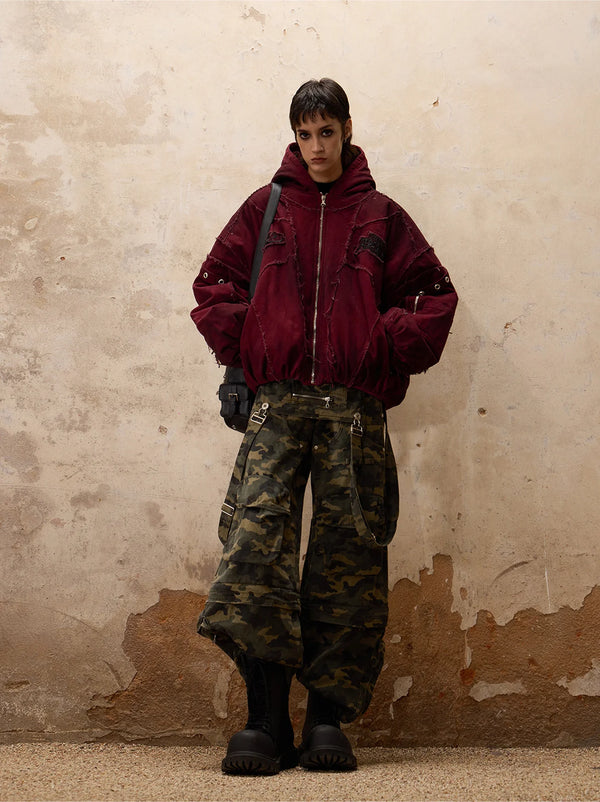
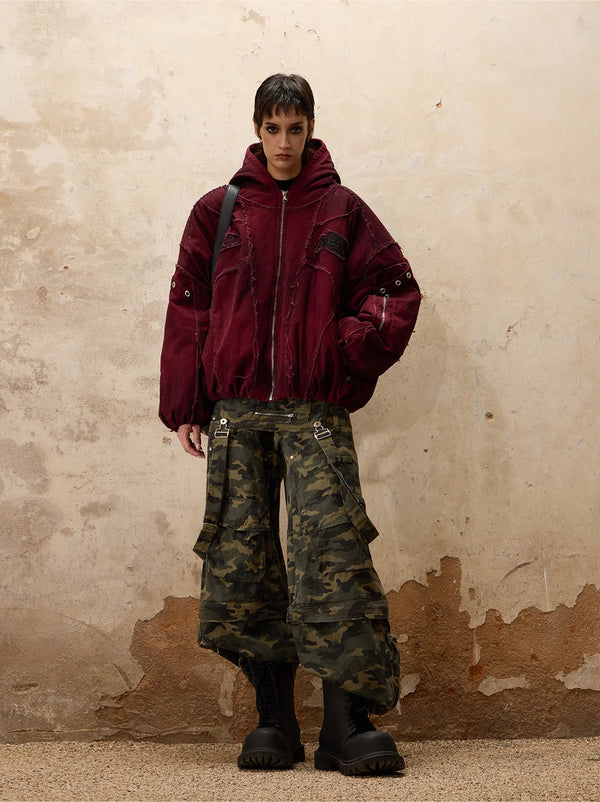
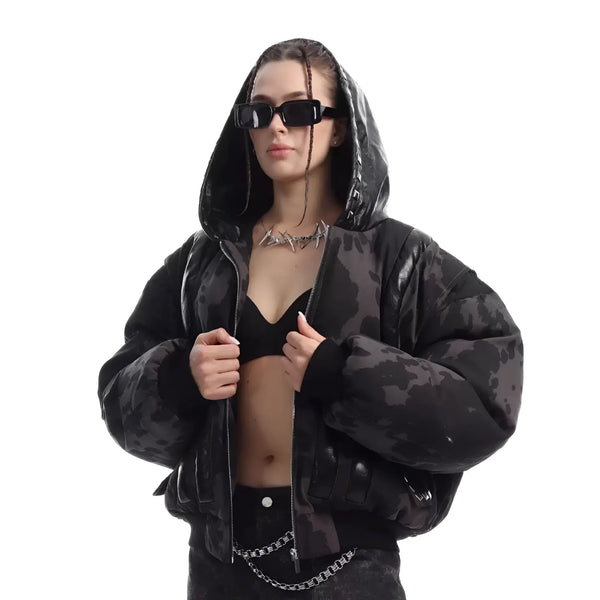
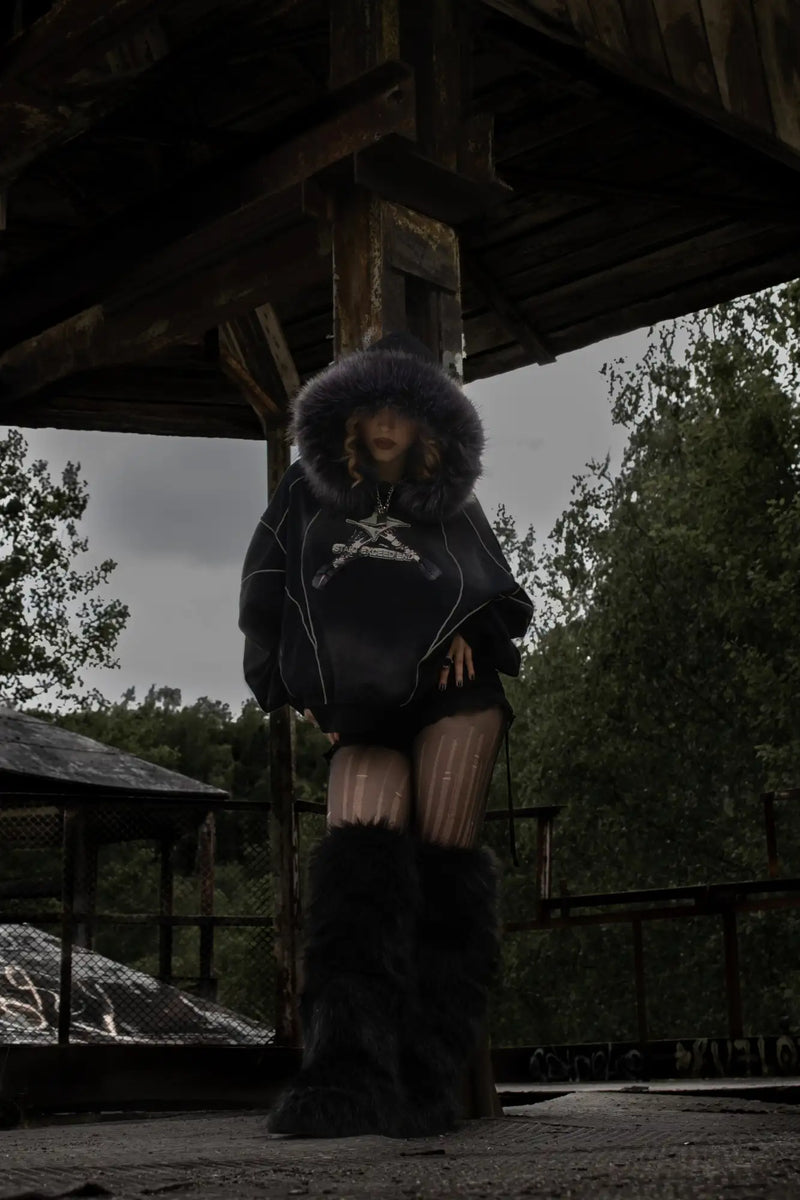
Four jacket types carry the look. The long duster or kimono (Stevie-Nicks default — falls to the knee or lower, worn open, often with folk embroidery or fringe). The faux-fur coat (gives the Vamp-Romantic iteration its opulent undertone). The vintage denim jacket (Mary-Kate-Olsen reference — best cropped or oversized, never standard trucker cut). And the short knit cardigan variant as a summer layer.
If you do not yet own a falling outer layer, that is your first move. Without a duster or kimono the look tips into goth streetwear — the falling line is not negotiable.
Category · Bottoms
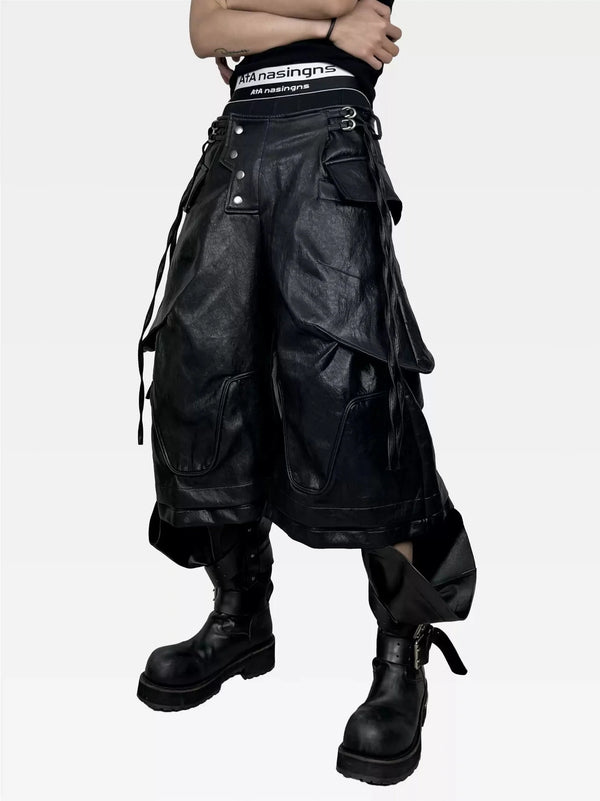
Dark Boho trousers & skirts — flares, wide-leg, maxi
Skinny is structurally wrong in Dark Boho. The whole style lives off the falling volume on the leg — flares, wide-leg denim, maxi skirt with drape. What Mary-Kate Olsen wore in 2007, what Stevie Nicks wore in 1976, what lands on Pinterest in 2025: always the same volume profile at the bottom.
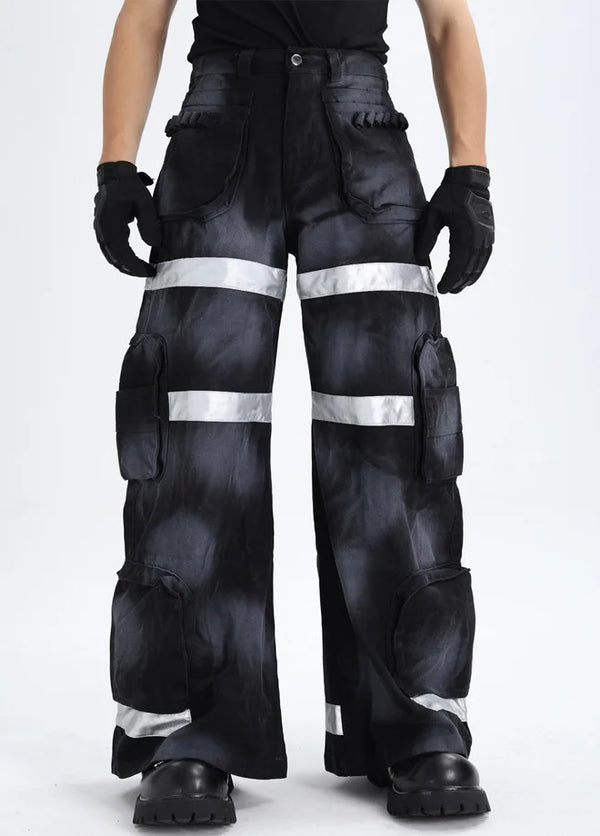
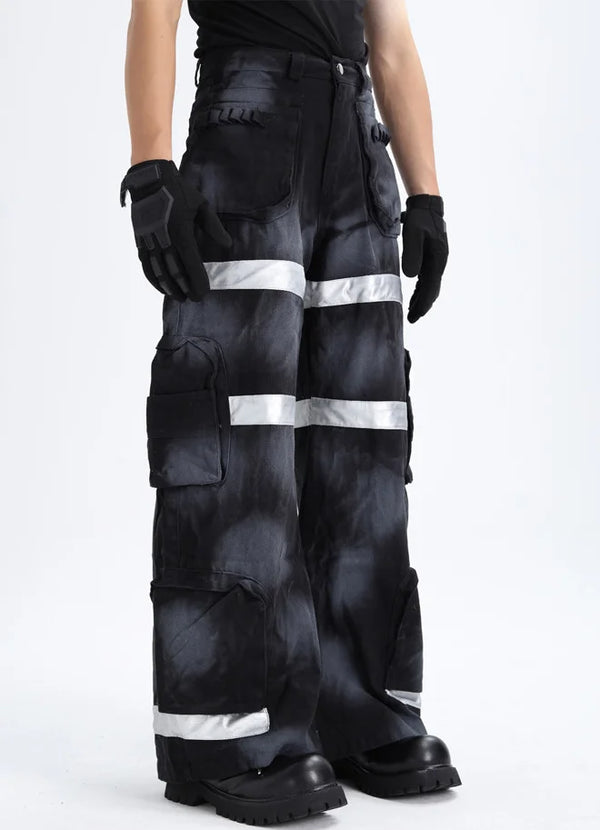
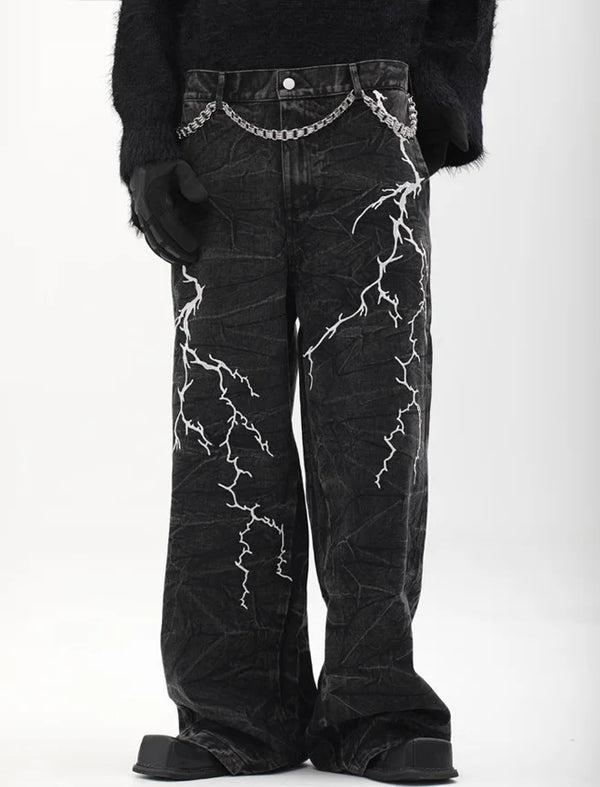
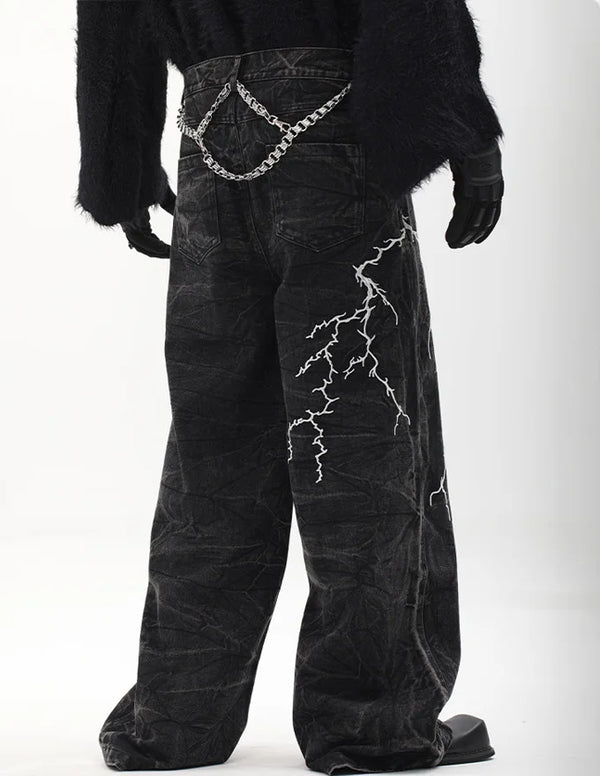
Working Dark Boho bottoms are wide, falling and matte. The flare with suede inserts or fringe detail is the default solution for the Witchy and Stevie iterations. Wide-leg denim in a dark wash carries Modern Streetwear-Boho. The maxi skirt in velvet, lace or brocade is the women's default for the Vamp-Romantic line.
If you want to build a pair of trousers that works in each of the five archetypes, take a wide-leg flare in dark indigo or black. That is the common denominator.
Category · Tops
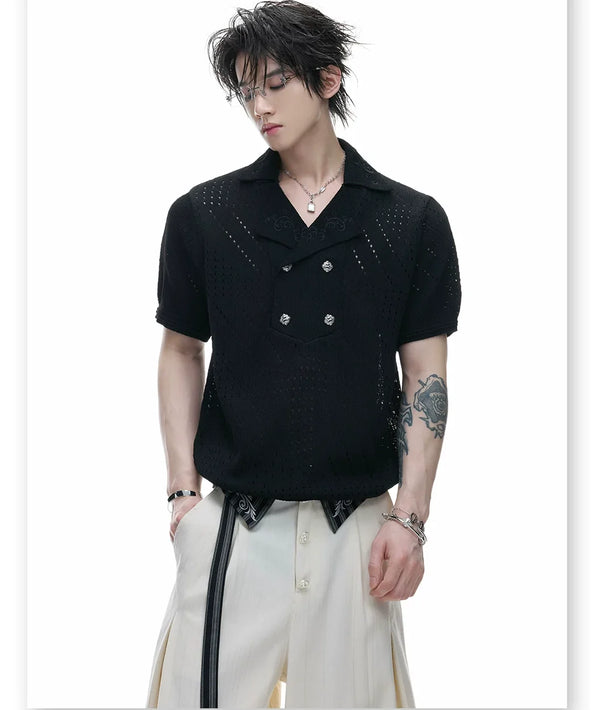
Dark Boho tops — lace, velvet, chunky knit
The top is the tactile layer on the body — the layer that shows in a photo whether you have the code down. Dark Boho lives off the skin-close layer not looking like standard streetwear. Lace, velvet, mesh-trimmed knit, a Victorian button placket, an embroidery detail at the hem — the top choice carries 40 percent of the look.
The rule: wide below, tactile above. A smooth t-shirt layer under an open cardigan is not wrong — but it does not use the potential. A lace tunic, a knit blouse with a lace-up detail or a velvet corset top over a black long sleeve carries the look instantly.
If you want to test the fabric mix, start with a lace blouse under a chunky knit cardigan. That is the easiest entry towards Vamp-Romantic — with no risk if it does not work out.
Styling physics
How to really style Dark Boho — the moon logic
A Dark Boho outfit works through two dials: the layer ratio and the hardware concentration. The layer rule: three visible layers, each with its own texture. Smooth on smooth on smooth gives a suit; lace on knit on suede gives Dark Boho. If your outfit mixes only two textures, you are one layer short.
Dark Boho is not a colour scheme. It is a three-layer mantra with silver dots — internalise that and you build a hundred outfits with fifteen pieces.
— the moon logic in one sentence
The hardware rule sits under the layers. A layered necklace with two or three lengths, a few statement rings on one hand (not both), a silver bracelet or cuff detail. Talismans — moon, star, key, snake ring — work when they appear as a single accent, not as a full setlist. We covered the full layering breakdown in a separate article:
Dark Boho does not stand alone — it overlaps at several edges with other dark aesthetics. Gothic shares the symbolism and the black, Dark Cottagecore shares the rustic and the nature motifs, Soft Grunge shares the vintage texture, Vamp Romantic shares the Victorian line. Anyone who has Dark Boho down reads these neighbour codes instantly and can mix deliberately without landing in cosplay.
Here are the most important neighbours — each with its own guide if you want to go deeper:
Seasonal
Dark Boho in summer vs winter
In winter Dark Boho is structurally simple. Maxi dress or wide-leg trousers, thick knit cardigan, long duster or faux fur over it, knee-high boots, layered jewellery. Three layers are mandatory; four or five become the comfort zone. The challenge comes in summer, when the duster drops away and you still have to hold the falling line and the three layers.
Summer Dark Boho works through lighter fabrics and shorter outer layers. Lace tunic or mesh top as the skin layer. Over it a crochet vest or an open lace blouse as the second layer. Third element: a long boho skirt in a dark print or a light linen flare. Heavy boots are replaced by suede sandals with fringe, strappy sandals or cropped western boots.
This applies to each of the five archetypes. The Stevie-Vintage iteration swaps the suede vest for a crochet vest, the Vamp-Romantic iteration swaps velvet for brocade-linen, the Modern-Streetwear iteration swaps combat boots for suede slides. The vocabulary stays; the material gets lighter.
Here's what that looks like in motion:
What does not work
The 6 most common Dark Boho mistakes — what you must NOT do
Dark Boho has six spots where it reliably tips over — no matter how expensive the individual pieces are. If you avoid only one thing, make it mistake number one.
Action
How to start in Dark Boho — the first 4 pieces
You do not need twenty vintage pieces to wear Dark Boho. You need four pieces that will be in eighty percent of your outfits. Everything else builds around them.
In order: a falling outer layer (long duster, kimono or faux-fur coat — your biggest investment, lasts 10 years if you do not buy cheap). A wide bottom layer (wide-leg flare or maxi skirt in a dark earth tone). A tactile top (lace blouse, velvet corset top or chunky knit cardigan). Knee-high boots or combat boots, matte black or dark-brown suede. A layered necklace with a talisman as an optional fifth — but only once the four are in place.
Outfits for real
Dark Boho outfits for real — how it looks in everyday life
Before you build your own outfit, look at how others wear it. The five archetypes look different in the feed than in lookbook photos — layered tighter, more worn, less perfectly arranged — and that is exactly why they work.
This is the fastest way to check whether Dark Boho sits on your body type — before you spend money:
To close
Dark Boho is an attitude — not a season trend
If you remember one thing from this guide, make it this: Dark Boho does not work through single pieces but through layers and texture. Have the logic down and you build a hundred outfits with fifteen pieces. Buy only single pieces and you have a full wardrobe without a single outfit that sits.
The whole logic of this guide reduces to one sentence:
The rules have been stable since Stevie Nicks in 1975 and will stay that way — as long as vintage, folk and the occult stay together as a vocabulary. But you do not have to wait until you know them all by heart. Start with the archetype that suits you best. What you do not know, you learn by wearing it.
And that is the point: Dark Boho reads like a dense rulebook in theory but does not feel like one in practice. Once you have the code down, every further outfit is a variation on the same three layers — not a new invention every time.
FAQ
Frequently asked questions about Dark Boho Fashion
The questions we often get by DM and email — short, clear, no detours.
What exactly is Dark Boho style?
What is the boho clothing style actually?
What does "boho" actually mean?
What is the "boho" dress code?
What does the 3-3-3 rule for clothing say?
Does Dark Boho work for men too?
What is the difference between Dark Boho and Goth?
Where can you buy Dark Boho without paying designer prices?
What do you think?
Tell us on @fuga_studios
About the author
Philipp Fuge — Founder · Berlin
Founder of Fūga Studios. Writes the journal himself. Berlin · Shanghai · Tokyo · Poznań — four cities, one logic.